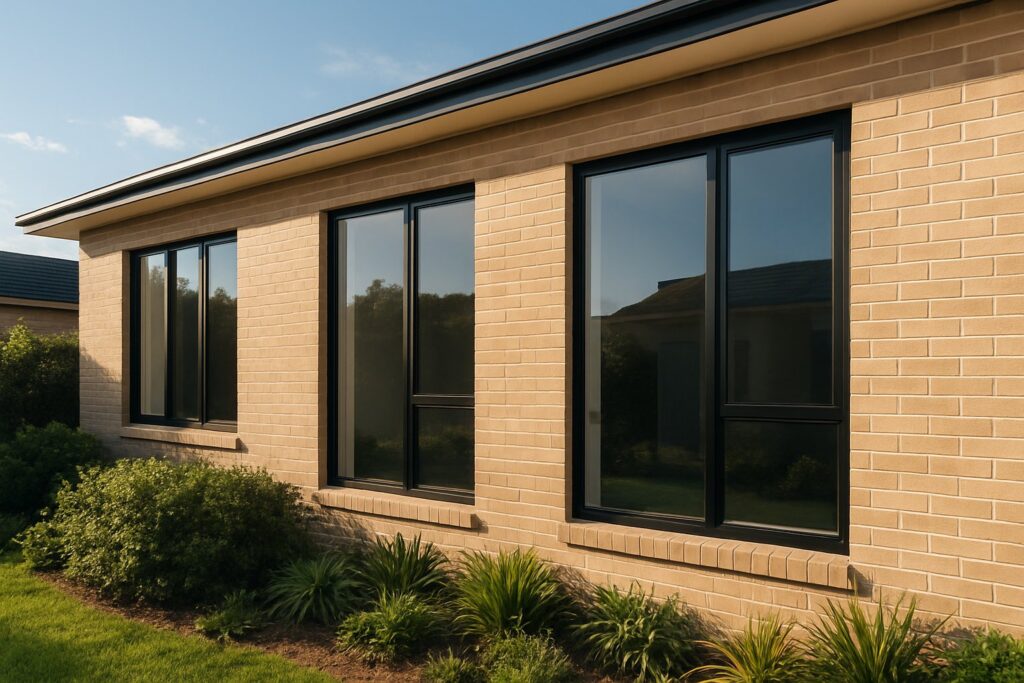
Choosing the Best Colour for Aluminium Windows
Why Your Aluminium Window Colour Matters More Than You Think
Over 200 RAL shades. Powder-coated, anodised, and woodgrain finishes. Heritage cottages, coastal builds, sharp contemporary boxes. The sheer number of aluminium colour options available turns what should be an exciting decision into a genuinely stressful one. Pick the wrong tone and your facade looks disjointed for decades. Pick the right one and the entire property lifts in cohesion, kerb appeal, and market value.
Colour is the single most public design call you will make on your home. Roof pitch, insulation, even floor plans stay hidden from the street. Your window frames do not. They sit front and centre on every elevation, framing views from outside and in. That visibility is exactly why the best colour for aluminium windows deserves more thought than a quick scroll through a swatch booklet.
Window frame colour is the most visible design decision on any facade — it influences how people perceive the size, style, and value of a property before they ever step inside.
What This Ranking Covers
This guide ranks the top aluminium window colours based on four practical criteria: longevity and fade resistance under harsh Australian UV, design versatility across property styles, real-world market popularity and resale impact, and availability as stock versus custom options. Whether you are building new in suburban Melbourne or renovating a Queenslander in Brisbane, the goal is simple — choose a colour that looks considered today and still feels right in fifteen years. The following sections break down exactly how each colour earned its place, what finishes suit it best, and which property types it complements.
How We Ranked These Aluminium Window Colours
A colour that looks stunning on a Pinterest board can underperform badly on an actual facade — chalking within five years, clashing with neighbouring homes, or adding weeks to your build timeline because it requires a custom order. To cut through the noise, every aluminium colour in this guide was measured against four criteria that reflect how Australian homeowners, builders, and architects actually experience their window frames over time.
Our Four Ranking Criteria Explained
Rather than ranking on aesthetics alone, each colour was scored across the factors that determine whether you will still love it a decade from now:
- Durability and fade resistance — How the colour holds up under intense Australian UV exposure, coastal salt air, and temperature cycling. Darker and more saturated pigments behave differently to lighter tones under these stresses, so UV stability varies significantly across the aluminium colour options available.
- Design versatility — How many property styles the colour complements. A shade that works on a contemporary box but fights with heritage detailing has narrower appeal than one that adapts across brick veneer, rendered, weatherboard, and mixed-material facades.
- Market popularity and resale impact — Whether the colour supports or detracts from property value at sale. Buyers respond to cohesive, deliberate palettes; polarising or dated tones can quietly chip thousands off perceived value.
- Availability as stock vs custom — Whether the colour ships as a standard option or requires a bespoke powder-coating run. Stock colours typically mean shorter lead times (days rather than weeks) and lower cost, while custom shades add both waiting time and a pricing premium that can catch homeowners off guard.
Colours were also assessed across matte, satin, gloss, and textured finishes. This matters more than many people realise — the same RAL code can read industrial in a flat matte or polished and refined in a satin sheen. Finish changes the personality of a colour as much as the hue itself.
How Finish Type Shapes Colour Performance
The color of aluminum in its raw, unfinished state is a dull silver-grey. Every colour you see on a finished window frame is the result of a surface treatment process, and each process comes with its own palette limitations and performance characteristics.
Powder coating is the dominant finish for residential aluminium windows in Australia. Dry powder is electrostatically applied to the frame and cured at high temperature, forming a tough film typically 50 to 125 microns thick. Its major advantage for colour selection is range — virtually any RAL shade can be powder coated, from brilliant whites through to deep charcoals and vivid feature colours. It also offers high resistance to weather, corrosion, and fading, with different certification tiers reflecting different levels of UV durability. The trade-off is that damaged areas cannot simply be touched up on site; significant chips may require professional re-coating.
Anodising takes a fundamentally different approach. Rather than adding a layer on top, an electrochemical process converts the aluminium surface itself into a harder oxide layer. The result is exceptional scratch resistance and corrosion protection — ideal for coastal environments. However, anodised aluminium is limited to a narrow range of metallic tones: natural silver, bronze, dark bronze, and black. If you want a specific grey, white, or any non-metallic hue, anodising is not the path. It is also more difficult to repair — because the finish is part of the metal itself, it cannot be simply recoated like powder coating.
Woodgrain finishes use sublimation printing or film transfer to recreate timber grain patterns on powder-coated aluminium profiles. The colour range here is dictated by available timber patterns rather than the RAL chart — think natural oak, walnut, rosewood, or spotted gum. These carry a pricing premium over solid colours and require a quality base coat for proper adhesion and longevity.
Each process shapes which aluminum colors are realistically available to you, how long they last under Australian conditions, and what you will pay. The rankings that follow account for these differences, noting where a colour excels in one finish type but may underperform in another.
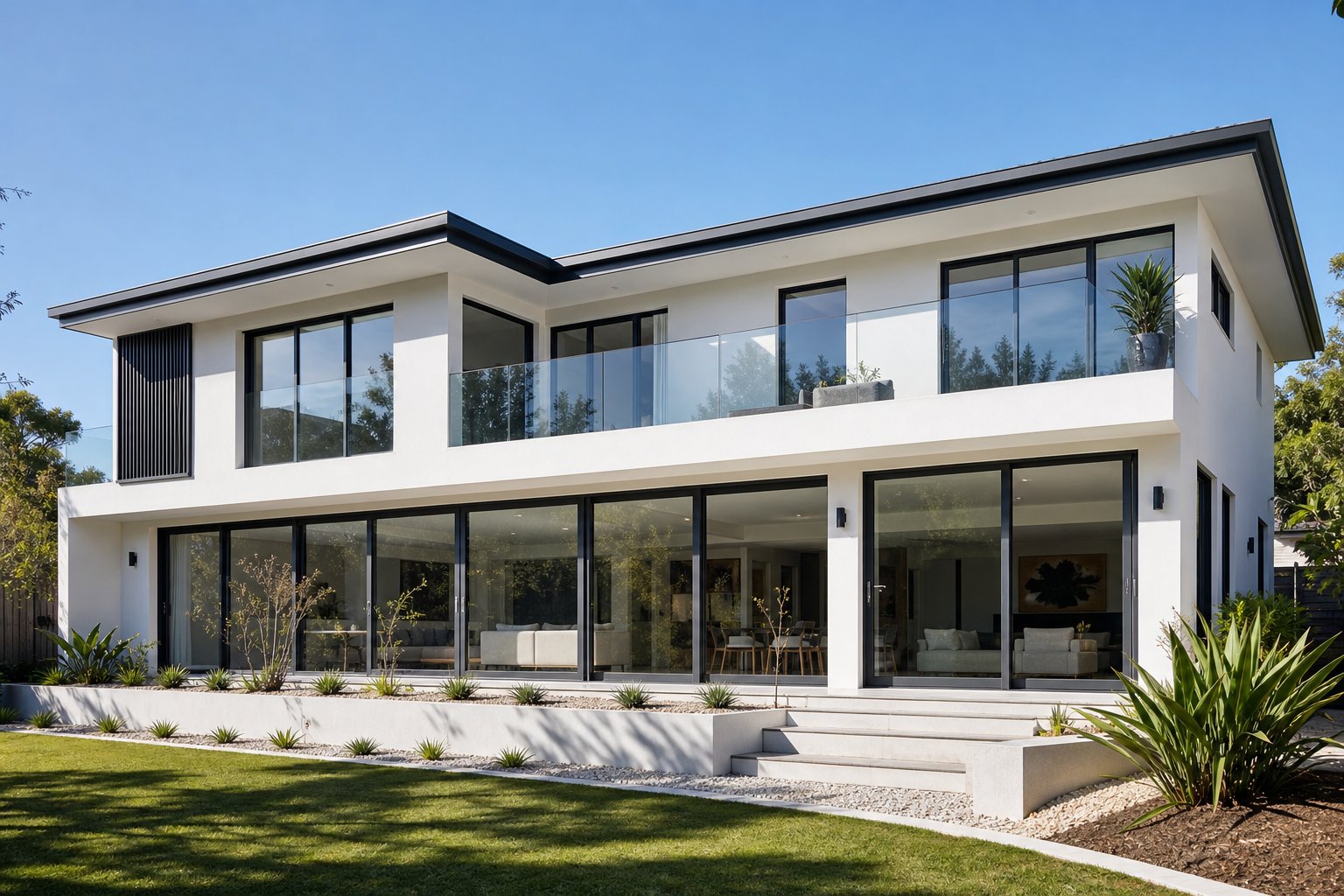
Anthracite Grey – The Modern Australian Favourite
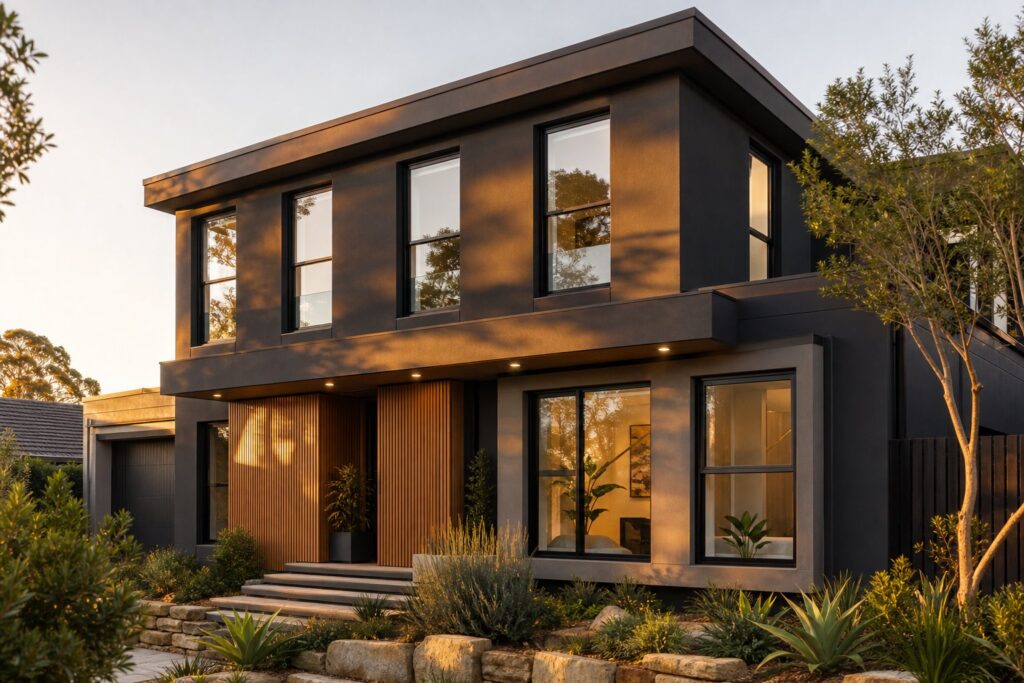
There is a reason anthracite grey appears on nearly every new-build elevation across Sydney, Melbourne, and Brisbane. RAL 7016 is a deep, near-black charcoal with subtle cool blue undertones — dark enough to create crisp architectural definition, yet restrained enough to avoid the maintenance headaches and thermal extremes of pure black. It occupies a sweet spot that no other aluminium colour quite matches, and it has done so consistently for over a decade without showing any sign of fading from relevance.
As an aluminium colour, anthracite grey has overtaken white as the most specified frame colour in contemporary residential construction. That dominance is not accidental. It reflects a combination of aesthetic flexibility, proven durability under harsh Australian UV, and practical advantages around stock availability and cost that make it the safest high-impact choice on the market.
Why Anthracite Grey Tops Every Colour List
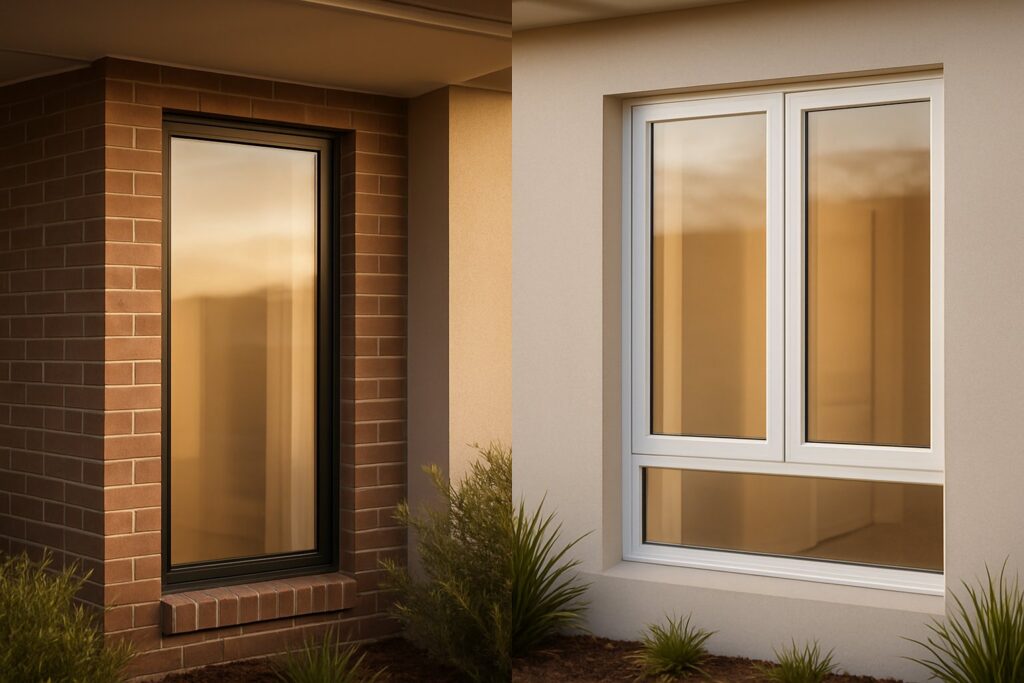
The secret to RAL 7016’s staying power is contrast without confrontation. Against a white rendered wall, dark grey aluminium frames create graphic lines that define each opening like a picture border — sharp, intentional, unmistakably modern. Against red or brown brick veneer, the same frames produce bold contrast that lifts an otherwise traditional facade into something more contemporary. Paired with timber cladding or natural stone, they add depth without competing for visual attention.
That range of compatibility is rare. Most colours work brilliantly in one context and awkwardly in another. Anthracite grey refuses to clash with the materials Australian homes are actually built from — brick, render, weatherboard, fibre cement, and mixed-material facades all sit comfortably beside it. The aluminium colour reads as a deliberate design choice regardless of what surrounds it.
From a durability standpoint, dark grey outperforms pure black in fade resistance under Australian conditions. Black pigments absorb maximum UV radiation, which accelerates chalking and can produce a visible whitening on the coating surface over time. Anthracite grey absorbs slightly less solar energy, resulting in lower surface temperatures and reduced thermal stress on the powder-coated finish. The difference is measurable: on a north-facing elevation in summer, a RAL 7016 frame will typically run 5 to 10 degrees cooler than a RAL 9005 black frame in the same position. Over twenty or thirty years of daily thermal cycling, that gap translates to better seal longevity and less coating fatigue.
Availability seals the deal. Because anthracite grey sits at or near the top of every Australian supplier’s order book, it is stocked as a standard colour by most manufacturers. That means no custom powder-coating surcharge, no four-to-eight-week wait for a bespoke batch run, and no risk of colour mismatch if you need a replacement frame down the track. For homeowners working to a tight build schedule, this practical advantage often matters as much as aesthetics. Manufacturers with in-house coating capabilities, such as MEICHEN, keep RAL 7016 in regular production across matte, satin, and textured finishes — giving you fast turnaround without sacrificing finish choice.
Best Property Styles for RAL 7016
Anthracite grey earns its number-one ranking partly because the list of property types it suits is longer than for any other single shade. Consider where it works and why:
- Contemporary new builds — The most natural pairing. Clean rendered walls, flat metal roofing, and minimal detailing all benefit from the graphic definition dark grey frames provide.
- Renovated brick veneer (1960s–80s) — Dark grey frames push older brickwork into a sharper, more current aesthetic without requiring a full facade overhaul.
- Heritage-modern hybrids — A Federation home with a rear extension or a Queenslander adding floor-to-ceiling glazing can use anthracite grey to bridge old and new without jarring contrast.
- Timber-clad coastal homes — The cool blue undertone in RAL 7016 complements both natural timber tones and coastal palettes built around greys, blues, and whites.
- Mixed-material facades — Homes combining render, cladding, stone, and metal find anthracite grey acts as a visual anchor that unifies disparate materials into a cohesive elevation.
The one context where anthracite grey can feel slightly off is pure heritage streetscapes — think rows of original Federation or Victorian terraces where lighter, warmer tones dominate. In those settings, it can read as too contemporary against ornate detailing and cream brickwork. A softer mid-grey like RAL 7012 or a warm mouse grey might integrate more naturally. But for the vast majority of Australian residential projects, RAL 7016 remains the standout aluminum window color.
Finish Recommendations for Dark Grey Frames
The same RAL 7016 code looks and feels different depending on the finish applied. This is where many homeowners get caught off guard — they approve a swatch without specifying the sheen level, and the installed result reads differently to what they imagined.
Matte finish delivers the most contemporary, industrial character. It absorbs light rather than reflecting it, giving frames a flat, understated presence on the facade. Matte is forgiving of minor surface imperfections and hides fingerprints well, making it practical for sliding doors and bi-folds that get frequent hand contact. The trade-off is that matte finishes can show surface chalking slightly earlier than higher-sheen options because there is no reflective layer masking the earliest stages of UV degradation.
Satin finish introduces a subtle sheen that softens the frame’s appearance. It reflects just enough light to feel refined without veering into glossy territory. Satin is the most popular choice for residential projects because it balances visual warmth with ease of cleaning — water spots and pollen rinse off more readily than on a dead-flat matte surface.
Textured (grained) finish adds a fine surface grain that mimics the tactile quality of anodised aluminium. It resists fingerprints, hides minor scuffs, and creates depth that flat finishes cannot replicate. Textured anthracite grey is a strong option for high-traffic areas like entry doors and ground-floor windows where hands regularly contact the frame.
Gloss finish is the least common for dark grey frames, and for good reason. While it looks dramatic in a showroom, gloss shows every fingerprint, water spot, and dust particle in real-world conditions. It also highlights any imperfection in the profile surface. Reserve gloss for small feature windows where impact matters more than day-to-day practicality.
Pros
- Timeless — over a decade of consistent popularity with no sign of dating
- Versatile across contemporary, transitional, and hybrid property styles
- Excellent UV stability compared to pure black, with lower surface temperatures under direct sun
- Widely available as a stock colour with most Australian manufacturers, meaning shorter lead times and no custom surcharge
- Coordinates naturally with matching guttering, fascias, and front door colours for a unified facade
Cons
- Can feel cold or overly contemporary on pure heritage properties with ornate detailing
- Shows fingerprints and dust in gloss finish, requiring more frequent cleaning
- On south-facing walls with limited sunlight, reads closer to black than charcoal — sample on-site before committing
Anthracite grey sets a high bar for versatility and performance. But not every project calls for subtlety. Some facades demand a harder visual punch — a frame colour that steps forward and commands attention rather than quietly defining edges. That is exactly where matt black enters the conversation.
Matt Black – Bold Contrast for Contemporary Homes
RAL 9005 jet black is not a safe middle-ground choice — it is a statement. Where anthracite grey quietly defines edges, matt black steps forward and commands the facade. Among popular window colours, it ranks second because its visual impact is unmatched, but it carries a few trade-offs that homeowners in harsh Australian climates need to understand before committing.
When Matt Black Makes a Bold Statement
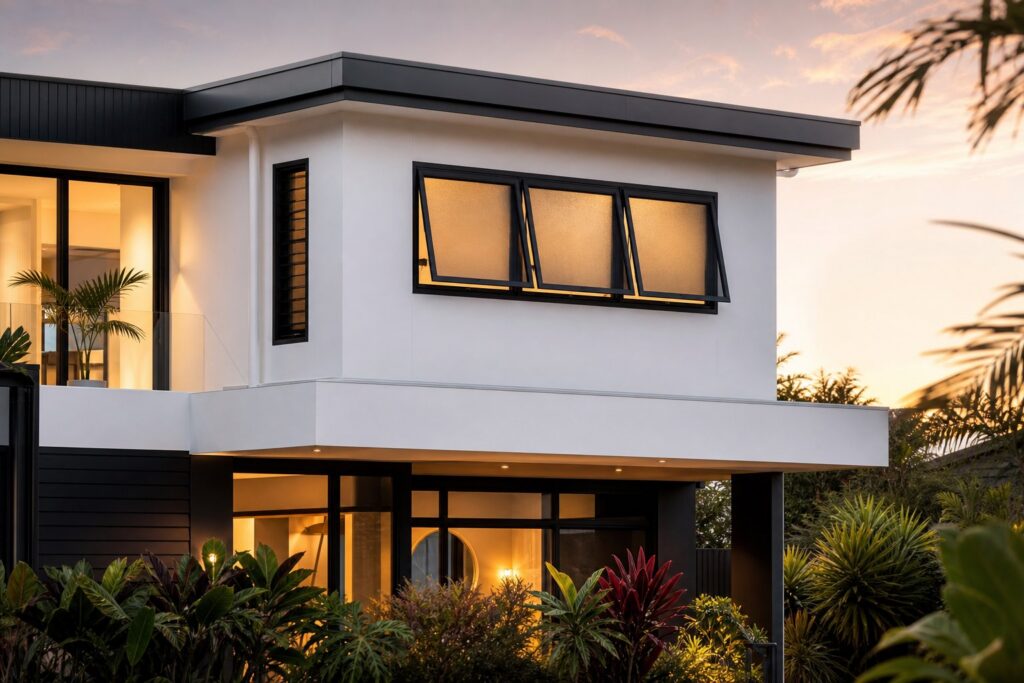
Black aluminium window frames have surged through contemporary architecture, barn conversions, and industrial-style homes for one simple visual reason: dark frames recede, letting glass dominate the opening while creating a crisp border that references traditional ironwork and steel glazing. Against white rendered walls, the contrast is graphic and intentional. Against natural timber cladding or raw concrete, black reads as bold without fighting the surrounding materials.
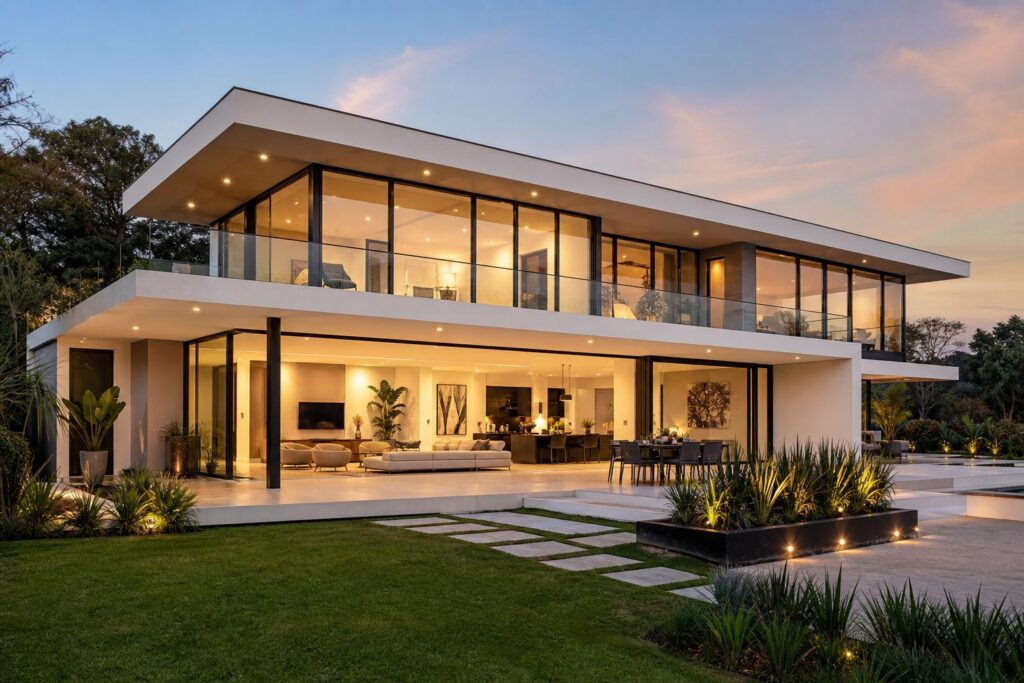
The aesthetic works especially well on homes with large expanses of glazing — floor-to-ceiling fixed panels flanked by operable casements, oversized bi-fold doors, or picture windows overlooking bushland. In each case, the thin dark frame disappears into shadow at a distance, maximising the visual glass area and producing that high-end, architect-designed look that photographs beautifully and lifts kerb appeal immediately.
Maintenance Reality for Black Aluminium Frames
The honest trade-off with jet black is visibility of wear. Every water spot, pollen film, and early sign of chalking that a lighter frame would hide becomes noticeable on a RAL 9005 surface. Chalking — that fine white powdery residue caused by UV degradation of the coating’s resin binder — shows against black more starkly than any other colour in the palette.
Standard polyester powder coatings on black frames can begin chalking within 7 to 10 years on exposed north or west-facing elevations. Super Durable formulations (Qualicoat Class 2) extend that to 15 to 20 years, while Hyper Durable grades rated to Qualicoat Class 3 maintain their appearance for 20 to 25 years even under intense Australian UV. The lesson is straightforward: specifying a premium coating grade on black frames is not optional luxury — it is baseline good practice. The cost difference between standard and Hyper Durable powder typically adds only a small percentage to the total window price, but the appearance payoff over two decades is substantial.
Minor scratches also read more clearly on black than on mid-tones. Matt finish (10 to 30 gloss units) softens this somewhat by diffusing light rather than reflecting it, which is exactly why satin and matte dominate residential black frame projects over high-gloss alternatives.
Coastal and High-Heat Considerations
A common concern is whether black frames overheat in Australian summers. The reality is more nuanced than the myth suggests. Black surfaces do absorb more solar radiation — a RAL 9005 frame will run hotter on its exterior face than a lighter colour in the same position. However, research confirms this rarely translates into a noticeable increase in room temperature when the frame includes a quality thermal break. Modern thermally broken aluminium profiles use polyamide strips (24 mm or wider on high-performance systems) that interrupt heat transfer between the exterior and interior face, keeping the inside surface close to room temperature regardless of how hot the black exterior gets.
Coastal environments introduce a second variable. Salt spray deposits chloride on the coating surface, interacting with UV-weakened areas to accelerate degradation. Significant airborne salt has been detected more than 80 kilometres from the shoreline, so even homes that do not feel beachside may still cop salt-related wear. For exposed coastal sites, specifying marine-grade powder coating (Qualicoat Class 3) or considering anodised black — which offers innate salt-spray resistance because the finish is integral to the aluminium itself — provides the best long-term protection.
Pros
- Striking architectural statement that creates immediate kerb appeal
- Strong contrast against light facades, making glass areas appear larger
- Photographs exceptionally well — a genuine asset for property marketing
- References heritage ironwork and industrial steel glazing without the maintenance burden
Cons
- Shows dust, water spots, and pollen more readily than mid-tone or light colours
- Potential thermal concerns in extreme heat if thermal breaks are undersized or absent
- May require marine-grade coating (Class 3) or anodising in coastal areas, adding cost
- Accelerated chalking visibility compared to near-black alternatives like RAL 7016
Matt black rewards homeowners who commit to a regular cleaning routine and specify the right coating grade for their exposure. It is not the most forgiving colour on the list, but it delivers a visual punch that subtler tones simply cannot replicate. For those who love the drama but want an easier ride on maintenance, white sits at the opposite end of the spectrum — and it brings its own set of strengths to heritage and coastal builds.
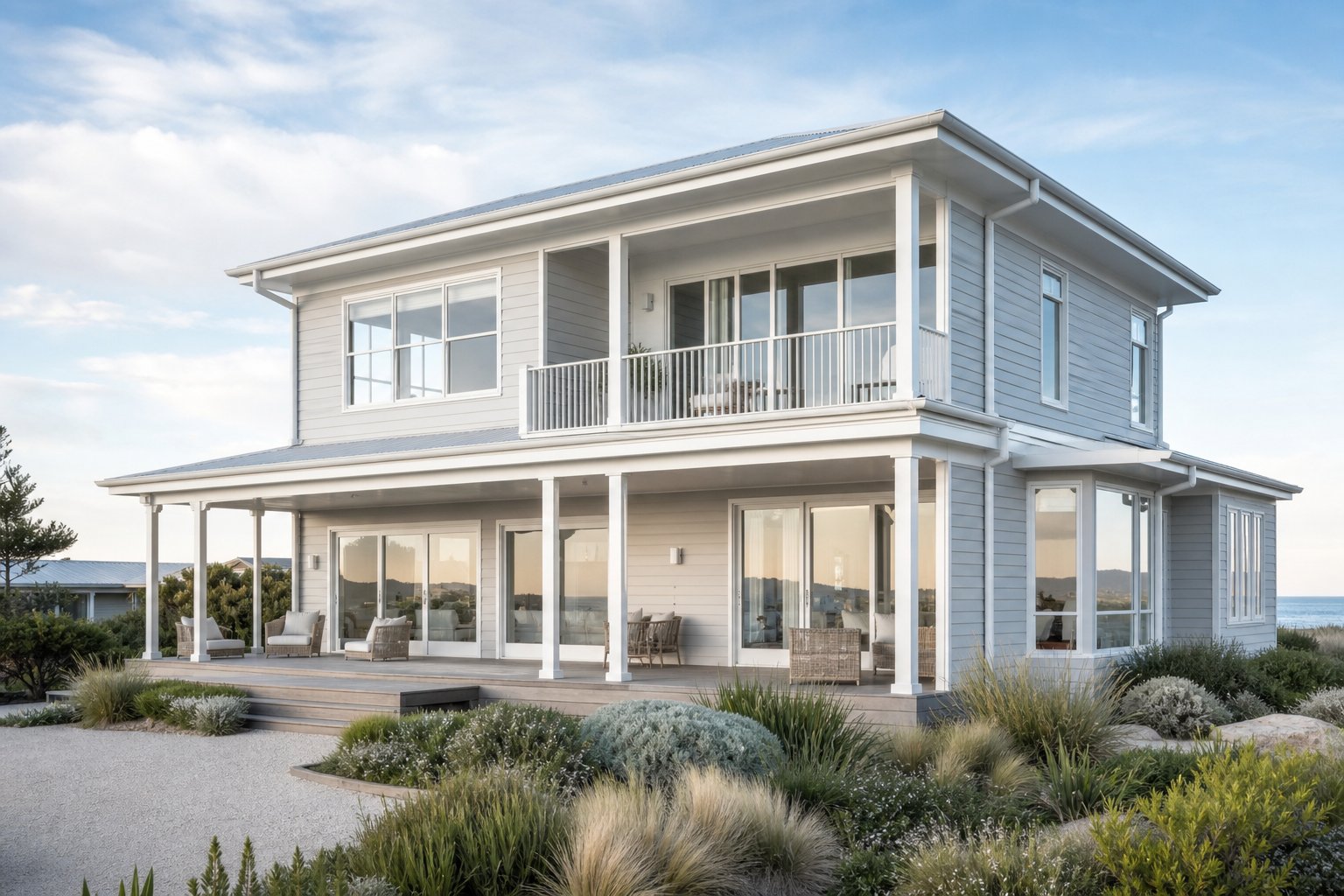
White – The Heritage and Coastal Classic
If matt black is all drama, white aluminium window frames represent the quiet confidence of a colour that has never gone out of style. RAL 9016 Traffic White — or its close relatives in Surfmist and Pearl White — remains the most widely installed aluminium frame colour across Australian heritage homes, Queenslanders, Hamptons-style coastal builds, and classic weatherboard cottages. It does not demand attention. It simply makes everything around it look right.
White Frames and Heritage Street Appeal
White frames succeed because they coordinate with virtually anything. Gutters, fascias, front doors, rendered walls, face brick, painted weatherboard — every one of these elements sits comfortably beside a white window frame without clashing. That universal compatibility is exactly why real estate agents consistently nominate white aluminium windows as the safest colour choice for resale value. Buyers never reject white. They might have opinions about charcoal or bronze, but white reads as clean, well-maintained, and intentional regardless of personal taste.
For heritage properties, the connection runs deeper than simple aesthetics. Traditional timber-framed windows on Federation, Victorian, and Edwardian homes were almost universally painted white or cream. When those homes eventually upgrade to aluminium for performance and longevity, white frames maintain the visual rhythm of the original streetscape in a way that darker contemporary tones cannot. Queenslanders, with their characteristic timber detailing and verandah posts, benefit from the same logic — white frames blend with the existing palette rather than imposing a new one.
Coastal homes lean on white for slightly different reasons. The Hamptons aesthetic that dominates much of Australia’s eastern seaboard relies on a palette of white, soft grey, and navy. White frames anchor that look, bouncing light off the facade and creating an open, airy impression that suits beachside living. They also make windows appear larger because the frame colour blends with light-coloured walls, reducing the visual mass of the profile.
Pure White vs Off-White — A Subtle But Important Choice
What colour is aluminium when powder coated white? That depends entirely on which white you choose — and the differences matter more than many homeowners expect. RAL 9016 Traffic White is a clean, neutral white with no visible undertone. It reads as crisp and modern but can feel stark against warm-toned brickwork or cream render. RAL 9010 Pure White leans slightly warmer, softening the contrast. Meanwhile, Surfmist — a popular Colorbond-matched shade — carries a subtle grey-green undertone that coordinates beautifully with Australian coastal palettes.
Cream tones (RAL 9001 Cream or Paperbark equivalents) step further into warm territory, complementing sandstone, heritage brick, and aged timber. The decision between pure white and a softer off-white often comes down to one question: what colour are your walls and fascias? If your render is a bright white, matching it with RAL 9016 frames creates seamless integration. If your exterior palette runs warm — think cream brick, sandstone, or natural timber — an off-white frame avoids the jarring cool contrast that a clinical white introduces.
The only way to get this call right is to hold physical swatches against your actual facade in natural daylight. On-screen colours and showroom samples under fluorescent light will mislead you every time.
Cleaning and Longevity for White Aluminium
From a performance standpoint, white is one of the strongest performers under UV exposure. Light colours reflect rather than absorb solar radiation, which means lower surface temperatures, less thermal stress on seals, and significantly slower coating degradation compared to dark tones. White powder-coated frames in a standard polyester formulation will typically resist chalking for 15 years or more on exposed elevations — longer than an equivalent black frame in the same position.
Heat reflection is another practical benefit. White frames contribute less solar heat gain to the building envelope, which can support NatHERS energy ratings on west-facing glazing where thermal performance is critical.
The trade-off sits firmly in the maintenance column. White shows every speck of dirt, dust, and organic growth. In humid coastal environments — think subtropical Queensland, the NSW North Coast, or northern WA — mould thrives on surfaces where moisture sits, and the dark spots it produces are impossible to ignore against a white frame. Where darker colours might hide a few months of neglect, white demands regular cleaning to look its best. A quarterly wash with mild detergent and a soft cloth keeps frames looking fresh, but homeowners in high-humidity areas should expect to clean more frequently — potentially monthly during the wet season.
Staining from water runoff is another consideration. Where metal roofing or flashing directs rainwater across frame surfaces, tannin stains from leaf litter or rust streaks from fasteners mark white frames conspicuously. Smart detailing — proper flashings, drip edges, and gutter maintenance — prevents most of these issues, but white is less forgiving than darker alternatives when something goes wrong.
Pros
- Maximises perceived window size by blending with light-coloured walls
- Suits heritage, coastal, and traditional property styles without any risk of dating
- Excellent UV stability — reflects solar radiation rather than absorbing it
- Best heat reflection of any standard colour, supporting energy efficiency
- Coordinates effortlessly with virtually any gutter, fascia, or front door colour
- Safest resale choice — universally accepted by buyers across all market segments
Cons
- Shows grime, dust, and mould growth readily, especially in humid coastal climates
- Can look dated or plain on ultra-modern facades that rely on dark, graphic contrast
- Requires more frequent cleaning than mid-tone or dark colours to maintain a fresh appearance
- Water staining and tannin marks from poor drainage are immediately visible
White is the reliable all-rounder — universally safe, heritage-friendly, and UV-resilient. Yet for homeowners drawn to warmth and sophistication without the maintenance visibility of white or the stark modernity of grey, a less obvious option exists. Dark bronze steps away from the achromatic palette entirely, offering an earthy richness that rewards those willing to look beyond the standard swatch card.
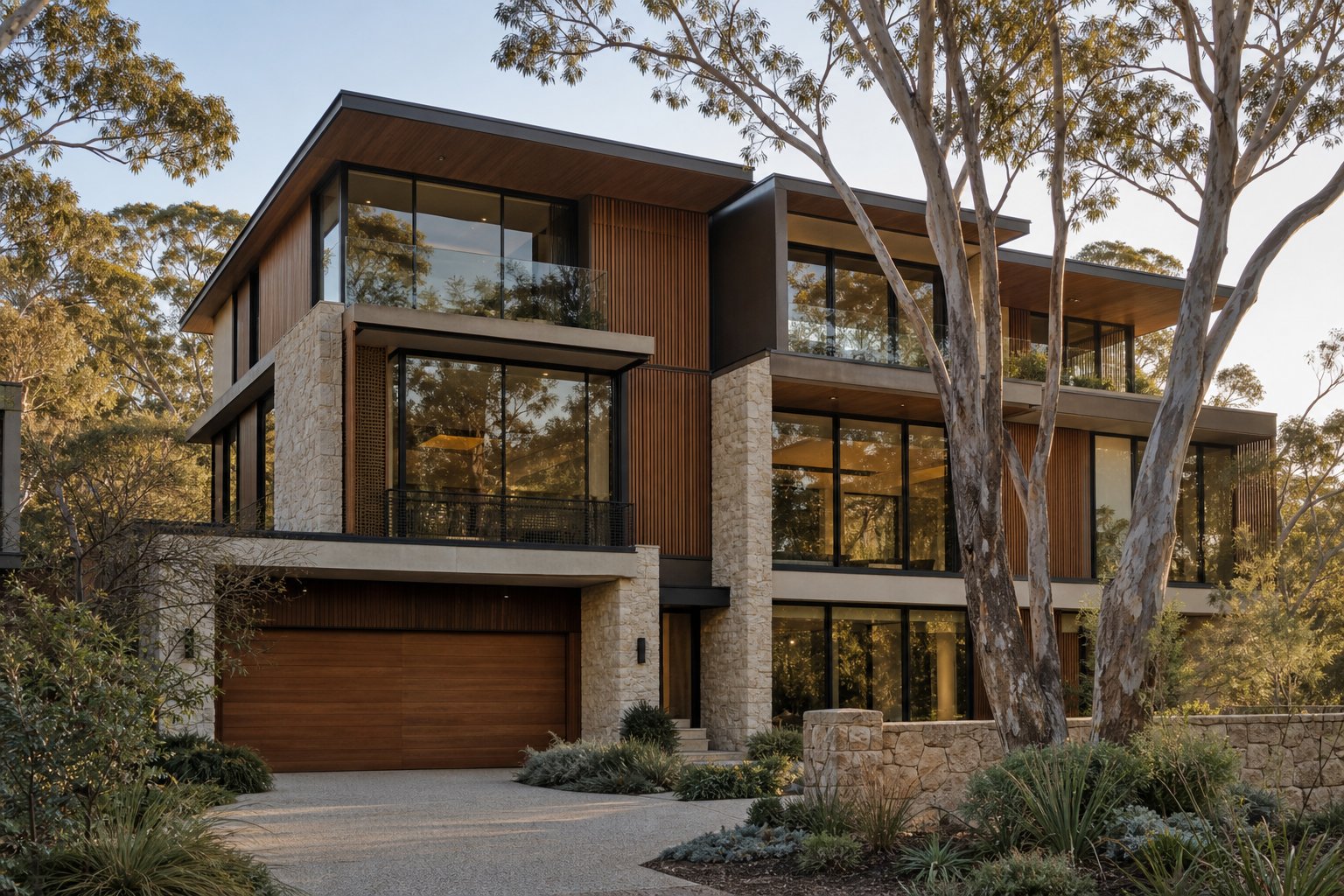
Dark Bronze – Warm Sophistication for Prestige Builds
Search online for the best colour for aluminium windows and you will find page after page devoted to greys and blacks. Bronze barely rates a mention in most consumer guides — yet walk through any high-end architectural project featuring natural stone, spotted gum cladding, or bushland views, and you will spot dark bronze frames doing exactly what grey and black cannot. They bring warmth. A bronze aluminium window colour sits somewhere between RAL 8014 Sepia Brown and RAL 8017 Chocolate Brown on the standard chart, though many specifiers opt for proprietary anodic bronze tones that offer a metallic depth standard powder coats cannot replicate.
This is a colour that rewards close attention. Its earthy character connects architecture to landscape in a way achromatic tones never quite manage, which is precisely why architects and builders working on prestige residential projects keep coming back to it.
Why Specifiers Choose Bronze Over Black
Dark brown aluminium tones solve a specific design problem. Black can feel too stark against sandstone, rammed earth, or natural timber — it draws a hard line where the building should blend into its surroundings. Grey sits comfortably in urban contexts but can read as cool and detached in bushland or rural settings. Bronze threads the needle. Its warm undertone complements the golden and amber hues found in hardwoods, natural stone, and autumn-toned gardens without demanding the same level of visual contrast.
There is a practical durability angle too. Anodic bronze finishes — where the colour is created through an electrochemical process rather than painted on — deliver exceptional colourfastness and salt-spray resistance. For coastal prestige builds that want warmth rather than the ubiquitous charcoal, anodised bronze holds its tone over decades with minimal maintenance. The surface does not chalk like a powder-coated finish; instead, it ages gracefully, developing a slight patina that many homeowners consider an asset rather than a flaw.
Bronze also hides dirt remarkably well. Where white shows every water spot and black reveals every dust film, the mid-value earth tone masks minor surface deposits between cleaning cycles — a genuine advantage for homes set among trees or exposed to red-dust environments inland.
Property Types That Suit Dark Bronze
Bronze aluminium window frames find their natural home in specific contexts:
- Bushland and acreage properties — Homes surrounded by eucalyptus canopy, native grasses, or established gardens benefit from a frame colour that echoes the landscape rather than contrasting with it.
- Natural stone or rammed earth facades — Sandstone, granite, and earth-built walls carry warm mineral tones that bronze complements instinctively.
- Timber-heavy designs — Spotted gum, blackbutt, and ironbark cladding pair beautifully with dark bronze frames, creating a cohesive palette grounded in natural materials.
- Heritage restorations with modern additions — On properties where black would feel too contemporary and white too expected, bronze offers a sophisticated middle path that respects original character.
- Prestige builds seeking streetscape differentiation — In grey-dominated new estates, bronze frames immediately distinguish a home from its neighbours without resorting to anything loud or trendy.
Coordination with surrounding elements matters here more than with neutral tones. Bronze frames pair naturally with matching guttering and fascias in a dark brown or similar warm tone — creating a unified edge that ties the roofline to the window plane. Front doors in deep red, forest green, or oiled timber work well alongside bronze without competing. The palette reads as considered and expensive because it is — bronze signals intentionality in a way that safer defaults do not.
Ordering Custom Bronze — Lead Times and Costs
The main practical barrier with bronze is availability. Unlike anthracite grey or white, bronze is not a stock colour with most Australian aluminium window manufacturers. It typically requires a custom powder-coating run or a specialist anodising process, each with distinct implications:
- Custom powder coating — Expect an additional lead time of three to six weeks beyond standard production, plus a premium of roughly 10 to 20 percent on the frame cost. Minimum batch quantities may apply, which is less of an issue on a full-house order but can be disproportionately expensive for a single replacement window.
- Anodic bronze finish — Anodising delivers superior metallic depth but is only available through specialist facilities. Lead times tend to be longer again, and pricing sits at the premium end of the spectrum. The trade-off is a finish that outlasts powder coating in terms of fade resistance and scratch durability.
Matching replacement parts years later can also be challenging. Because bronze is not a mass-produced stock shade, achieving an exact colour match on a single frame replacement depends on having the original RAL or anodising specification recorded. Keep your colour documentation — a detail many homeowners overlook at installation time but regret later.
Pros
- Warm tone suits natural surroundings — stone, timber, bushland, and earth-toned palettes
- Differentiates from grey-dominated streetscapes, signalling design intentionality
- Ages gracefully, especially in anodised form, with minimal visible degradation
- Hides dirt, pollen, and dust far better than white or black alternatives
- Coordinates naturally with timber doors, warm guttering, and earth-toned render
Cons
- Typically a custom order with longer lead time (three to six weeks beyond standard)
- Harder to match with replacement parts later if original specification is not recorded
- Limited finish options compared to grey or black — fewer texture and sheen variants available
- Higher cost due to custom production or specialist anodising
- Can feel out of place on stark modern facades with white render and minimal landscaping
Bronze rewards patience — both in the ordering process and in how it reveals its quality over years of quiet, graceful ageing. For homeowners who want warmth and natural connection but still need aluminium’s structural performance, it remains a trade favourite that online colour guides consistently undervalue. Yet there is one more option that pushes the connection to natural materials even further — recreating the appearance of timber itself, directly onto an aluminium profile.
Woodgrain Finish – Timber Aesthetics on Aluminium
Some homes need the warmth of timber without a single plank of real wood. Heritage renovations, conservation area requirements, and personal taste all drive homeowners toward a natural timber appearance — yet the reality of maintaining actual wooden frames in Australia’s climate (rot, swelling, termite risk, constant repainting) makes solid timber increasingly impractical. A woodgrain aluminium window finish bridges that gap entirely: the visual character of oak, walnut, or spotted gum permanently bonded to aluminium profiles that will never need sanding, sealing, or replacement due to decay.
Timber Look Without Timber Maintenance
The appeal is straightforward. Real timber windows demand cyclical maintenance — stripping, sanding, priming, and repainting every three to seven years depending on exposure. In humid subtropical zones or coastal areas, that cycle compresses further as moisture and UV work together to break down paint systems and expose the raw wood beneath. Aluminium with a woodgrain finish eliminates that entire maintenance burden. The frame itself is corrosion-resistant, dimensionally stable, and impervious to termites. The timber-look surface requires nothing more than periodic washing with mild detergent.
Modern woodgrain finishes have advanced significantly beyond the unconvincing flat prints of a decade ago. High-definition colour reproduction now captures fine grain details, knot patterns, and tonal variation that closely mimic real wood species — from light Victorian Ash through to rich rosewood. Premium products include an embossed surface texture that recreates the tactile feel of timber grain, not just the visual appearance. From street distance, a well-applied woodgrain finish is virtually indistinguishable from painted or stained hardwood.
The lifespan also stacks up. Properly applied woodgrain finishes on powder-coated aluminium can last 10 to 15 years outdoors and considerably longer in sheltered positions. That is comparable to many solid-colour powder coatings, though not quite matching the 20-plus year performance of Hyper Durable single-colour coatings in extreme UV environments.
When Planning Requirements Demand a Timber Appearance
Council planning restrictions present a real-world scenario where woodgrain finishes become more than an aesthetic preference — they become a compliance tool. Heritage overlays and conservation areas across Australian states often specify that window replacements must maintain the visual character of the original building. Where original windows were timber, local planning officers may require replacement frames to replicate that timber appearance.
Real timber replacements satisfy the visual requirement but introduce ongoing maintenance obligations that many homeowners and body corporates find unsustainable. Woodgrain-finished aluminium offers a practical middle ground: the appearance of timber that satisfies heritage aesthetic expectations while delivering aluminium’s structural performance, weather resistance, and longevity. Whether a specific council will accept aluminium with a woodgrain finish in place of actual timber depends on the individual planning scheme and heritage advisor — some are flexible, others are not. The key is to engage with council early in the design phase and present physical samples that demonstrate the finish quality.
Beyond formal heritage listings, woodgrain finishes also serve homeowners who simply love the warmth of timber in their street presence but want nothing to do with the upkeep. Properties surrounded by established gardens, those in bushland settings, or homes with significant timber cladding and decking find that woodgrain window frames complete a natural-materials palette without introducing a weak link in the maintenance chain.
How Woodgrain Finishes Are Applied
Two primary technologies produce woodgrain effects on aluminium window profiles, each with different quality outcomes:
Sublimation transfer is the more common method for architectural aluminium. The process begins with a standard powder-coated base layer — typically a light beige, white, or cream polyester coating — applied and cured onto the aluminium profile. A printed film carrying the woodgrain pattern is then wrapped tightly around the coated profile. Under vacuum pressure and heat (typically 180 to 200 degrees Celsius), the pigments on the film sublimate — converting directly from solid to gas — and penetrate into the powder-coated surface. Once cooled, the film is peeled away, leaving a permanently bonded wood pattern embedded within the coating layer rather than sitting on top of it. This deep penetration is what gives sublimated finishes their durability and resistance to peeling.
Laminate film wrapping uses a high-performance polyolefin or PVC film with a printed woodgrain pattern adhered directly to the aluminium surface using reactive hotmelt adhesive. Premium film systems — such as those using electron beam coating technology — offer superior scratch resistance and fade performance compared to sublimation, along with an embossed tactile texture that sublimation alone cannot achieve. However, laminate wraps carry a higher material cost and are more commonly seen on cladding and facade elements than on operable window frames, where edge details and hardware cutouts complicate application.
Both methods require a quality base preparation. The compatibility between the powder-coated substrate and the transfer medium is critical — polyester-based coatings are the most receptive to sublimation dyes, and poor adhesion on corners or complex profiles remains the most common quality issue in cheaper products.
Pros
- Satisfies heritage and conservation area requirements where a timber appearance is mandated or preferred
- Zero timber maintenance — no sanding, painting, sealing, or termite treatment required
- Realistic appearance from street distance, especially on premium embossed-texture products
- Unique character that differentiates from the grey-and-black dominance of contemporary streetscapes
- Eco-friendly alternative to harvesting hardwood for window frames
Cons
- Premium pricing over solid powder-coated colours — typically 20 to 40 percent more per frame
- Can look less convincing at close range on cheaper sublimation products with low print resolution
- Limited grain pattern options compared to real timber species diversity
- Surface texture on sublimated finishes may trap dirt in grain lines, requiring slightly more thorough cleaning
- Shorter proven outdoor lifespan than high-end single-colour powder coatings in extreme UV environments
Woodgrain rounds out a ranking that spans the full spectrum — from the graphic precision of dark grey and black through the quiet reliability of white, the earthy warmth of bronze, and now the natural character of timber-look finishes. Each colour earned its place for different reasons, serving different property types and climate conditions. Seeing them side by side, with their strengths and trade-offs laid out in one view, makes the comparison far easier to navigate.
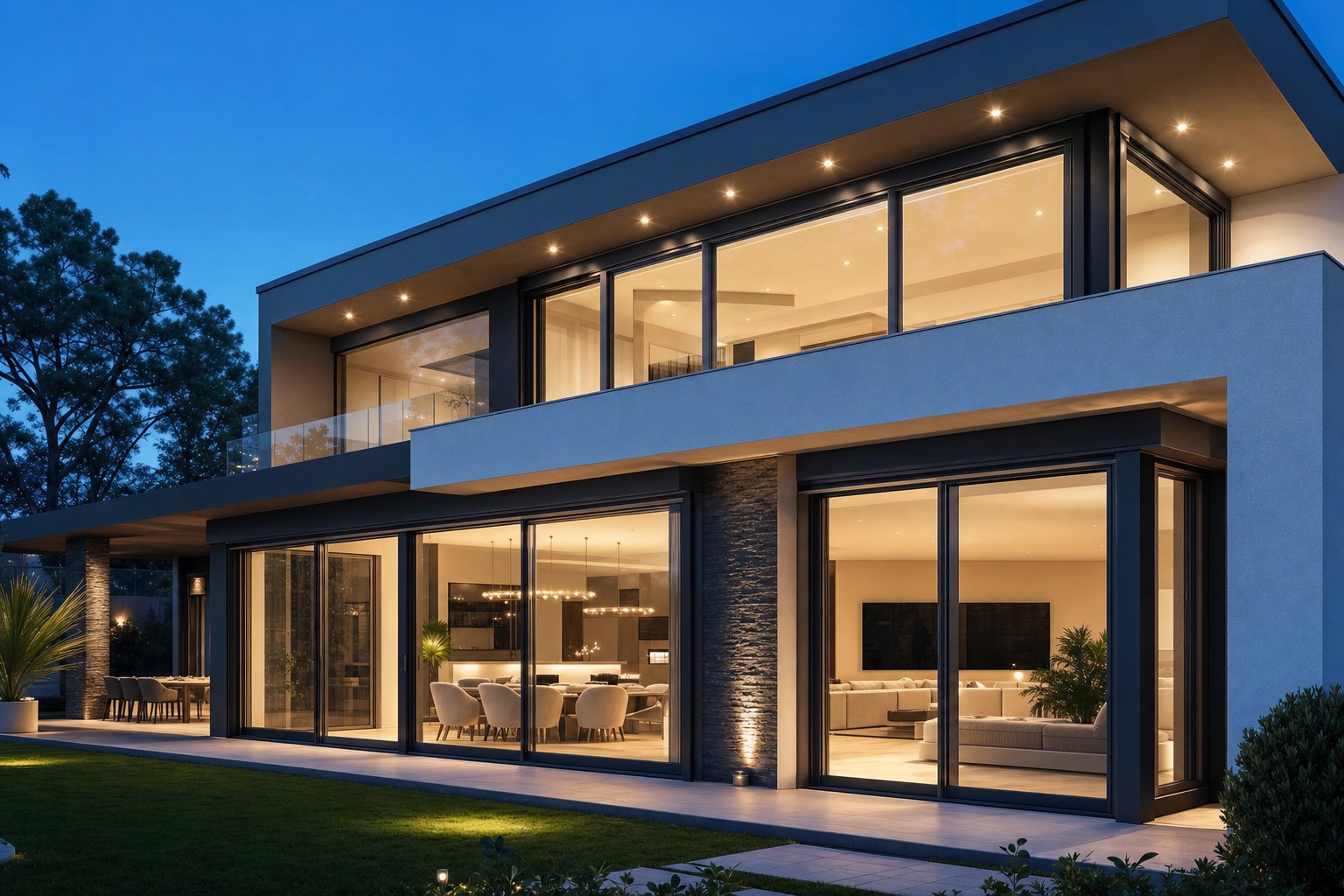
Aluminium Window Colour Comparison at a Glance
Five colours, five different strengths. Choosing between them means weighing UV durability against visual warmth, stock availability against unique character, and maintenance tolerance against street presence. The table below puts every key decision factor side by side so you can compare aluminium window frame colors without flipping between sections.
Side-by-Side Colour Comparison Table
| Colour | RAL Code | Best Property Style | UV Fade Resistance | Maintenance Level | Stock Availability | Relative Cost | Recommended Finish |
|---|---|---|---|---|---|---|---|
| Anthracite Grey | RAL 7016 | Contemporary, transitional, brick veneer renovations | High | Low — hides minor dust, minimal chalking | Stock (most manufacturers) | Standard $$ | Satin or textured matte |
| Matt Black | RAL 9005 | Contemporary, industrial, barn conversions | Moderate — chalking visible earlier | Moderate — shows dust and water spots | Stock (most manufacturers) | Standard $$ (add for marine-grade coating) | Matte (10–30 gloss units) |
| White | RAL 9016 | Heritage, coastal, Queenslanders, Hamptons | Very High — reflects UV | Higher — shows grime and mould in humid areas | Stock (all manufacturers) | Standard $ | Satin or low gloss |
| Dark Bronze | RAL 8014 / 8017 | Prestige builds, bushland, natural stone facades | High (excellent if anodised) | Low — hides dirt well | Custom order | Premium $$$ (custom coating or anodising) | Satin or anodised metallic |
| Woodgrain | Varies (timber species match) | Heritage overlays, conservation areas, natural settings | Moderate to High (substrate dependent) | Moderate — grain texture can trap fine dirt | Custom order | Premium $$$$ (sublimation or film transfer) | Embossed texture (sublimation or laminate) |
A few patterns emerge instantly. White and anthracite grey deliver the strongest combination of UV performance and stock availability — safe choices that will not blow out your timeline or budget. Bronze and woodgrain demand patience and a higher spend, but reward that investment with a character the stock palette simply cannot offer. Black sits in the middle: readily available, visually powerful, but more demanding in terms of coating specification and cleaning frequency.
The Dual-Colour Option Explained
You are not limited to the same colour inside and out. Most Australian aluminium window manufacturers offer dual-colour (or bicolour) profiles — a different powder-coated finish on the exterior face compared to the interior face. The concept is straightforward: present a dark, street-facing colour for kerb appeal while keeping a lighter interior tone that coordinates with your skirting, architraves, and internal trim.
The most common combination is anthracite grey or matt black on the outside with white or off-white on the inside. This gives you the graphic external definition these darker aluminum window colours deliver, while the interior frames disappear quietly against white walls — exactly the effect many architects and interior designers prefer. Other popular pairings include bronze exterior with cream interior, or woodgrain exterior with white interior for heritage compliance projects.
Cost is the main consideration. Dual-colour profiles require two separate powder-coating passes on different faces of the same extrusion, which adds labour and production complexity. Expect a premium of roughly 15 to 25 percent over a single-colour frame, depending on the manufacturer and the specific colour combination. Lead times also extend slightly — typically an additional one to two weeks — because the profiles cannot be batch-processed as efficiently as single-colour runs.
Whether the premium is justified depends on your interior palette. If your internal walls, skirting, and joinery are white (as they are in the majority of Australian homes), a dark exterior frame colour viewed from inside can feel heavy and visually dominant. A white interior face eliminates that heaviness, letting window frames blend into the room rather than framing every view in charcoal. For open-plan living areas with large glazing runs, the difference is noticeable.
How to Sample Colours Before Committing
No screen — laptop, tablet, or phone — can accurately replicate a powder-coated finish. The texture, sheen, and colour shift under different lighting conditions are physical properties that only a real swatch, viewed on your actual facade, will reveal honestly.
This is not a minor footnote. It is arguably the most common source of regret in window colour selection. Homeowners approve a colour based on a digital render, a small chip in a showroom, or a PDF colour chart, then feel blindsided when the installed frames look different under their home’s specific lighting conditions.
Light behaves differently depending on your facade orientation, and that behaviour directly changes how a colour reads. North-facing walls in Australia receive strong, warm direct sunlight for much of the day — colours appear lighter, warmer, and more vivid than they do on a swatch card viewed indoors. South-facing walls receive cooler, indirect light that makes the same colour look darker, flatter, and slightly blue-shifted. East-facing surfaces catch warm morning light and slip into shadow by afternoon, producing two distinct appearances from the same frame across a single day. West-facing walls do the reverse — flat and neutral in the morning, warm and intensified by late afternoon sun.
These shifts are subtle on lighter colours like white but pronounced on mid-tones and dark tones. Anthracite grey, for example, can read as near-black on a south-facing elevation while appearing as a rich charcoal with blue undertones on a sun-drenched northern wall. Bronze shifts from a warm cocoa in direct light to a cooler, almost grey-brown in shade.
The practical takeaway: request physical swatches from your window supplier and hold them against your facade at different times of day. Check them in morning light, at midday, and in the afternoon. Look at each elevation the windows will sit on, not just the front. Give yourself at least 24 hours of observation before signing off. This small investment of time is the single most reliable way to avoid colour regret on a decision you will live with for decades.
Which Aluminium Window Colour Should You Choose
You have seen the data, the pros and cons, and the comparison table. The question remains: what colour is aluminium going to be on your home? The answer depends less on personal taste in isolation and more on where your property sits in the landscape of Australian architecture and climate. Here is how the five ranked colours map to specific property types.
Quick Decision Framework by Property Type
Rather than overthinking the decision, work through these five steps in order. Each one narrows the field until the right colour becomes obvious rather than agonised over:
- Identify your property style — Contemporary new builds and renovations lean toward anthracite grey or matt black. Heritage homes, Queenslanders, and coastal builds suit white or off-white. Prestige properties set among natural stone, timber, or bushland call for dark bronze. Conservation areas with heritage overlays may require woodgrain.
- Consider your street context and neighbours — A bold colour choice that works in isolation can jar against a cohesive streetscape. Look at prevailing frame colours, rooflines, and facade materials on your street. Complement the context rather than fighting it.
- Check council or heritage restrictions — Heritage overlays, conservation zones, and some body corporate rules dictate acceptable colours and materials. Confirm these constraints before falling in love with a shade your council will not approve.
- Request physical swatches in natural light — Hold actual powder-coated samples against your facade on each elevation. Check them morning, midday, and afternoon. No screen or showroom sample will give you the truth that on-site observation provides.
- Confirm stock vs custom availability and lead time — If your build timeline is tight, stock colours (anthracite grey, matt black, white) avoid delays. Custom options (bronze, woodgrain) require three to eight weeks of additional lead time — factor that into your project schedule early.
Most homeowners find that steps one and two eliminate three of the five options immediately. The remaining choice between two colours usually resolves itself once physical swatches sit against the real facade in daylight.
Future-Proofing Your Colour Choice
Quality aluminium windows last 20 to 30 years. Your colour choice needs to hold up across that entire span — through exterior repaints, landscaping changes, and shifts in design fashion. The colours ranked in this guide were selected specifically because they have proven longevity. Anthracite grey has dominated for over a decade with no sign of dating. White has been relevant for a century. Bronze and woodgrain reference natural materials that never go out of style. Even matt black, the most fashion-forward option on the list, echoes traditional ironwork and steel glazing with roots stretching back generations.
Timeless beats trendy every time. A colour that references enduring materials — stone, iron, timber, or clean render — will still look intentional in 2045. A colour chosen because it trended on social media this year probably will not.
Avoid saturated feature colours (deep blues, greens, reds) on primary window frames unless you are absolutely certain you will love them for decades. These work beautifully on a front door where repainting is simple, but on fixed aluminium frames they become a permanent commitment. The five colours in this ranking all share one quality: they photograph well, coordinate broadly, and recede into the background of good design rather than demanding constant attention.
Your Next Step — From Colour Selection to Project Reality
Colour research only carries value once it connects to actual product specification. The gap between choosing a shade on paper and receiving installed frames that match your vision depends entirely on who manufactures your windows and how they handle the colour process — from powder-coating quality and finish options through to lead times on custom orders.
For homeowners, builders, and project teams ready to move beyond research, MEICHEN’s aluminium window range offers the full spectrum of colour options covered in this guide — stock colours like anthracite grey, matt black, and white with fast turnaround, plus custom powder coating for bronze and specialty finishes. Their in-house manufacturing means colour consistency across large orders and the flexibility to accommodate dual-colour profiles, textured finishes, and project-specific RAL matching for Australian residential and commercial builds.
Whether you are specifying windows for a single-storey renovation or a multi-unit development, the process starts the same way: confirm your colour, confirm your finish, and work with a manufacturer who can deliver both to the quality your facade deserves.
Frequently Asked Questions About Aluminium Window Colours
1. What is the most popular colour for aluminium windows in Australia?
Anthracite grey (RAL 7016) is currently the most specified aluminium window frame colour in Australian residential construction. It overtook white as the top choice for new builds due to its versatility across property styles, strong UV fade resistance, and wide stock availability with most manufacturers. Its deep charcoal tone with subtle cool blue undertones creates clean architectural lines against rendered walls, brick, and timber cladding without the maintenance concerns associated with pure black.
2. Do black aluminium windows get too hot in Australian summers?
Black aluminium frames do absorb more solar radiation and run hotter on their exterior face than lighter colours. However, this rarely causes noticeable interior temperature increases when the frame includes a quality thermal break. Modern thermally broken profiles use polyamide strips (24 mm or wider) that interrupt heat transfer between exterior and interior faces. The bigger concern with black frames in Australian conditions is accelerated chalking visibility under intense UV, which can be managed by specifying Super Durable or Hyper Durable powder coating grades rated to Qualicoat Class 2 or 3.
3. Can you have different colours on the inside and outside of aluminium windows?
Yes, most Australian aluminium window manufacturers offer dual-colour or bicolour profiles with different powder-coated finishes on each face. The most common pairing is anthracite grey or matt black on the exterior for street presence, with white or off-white on the interior to match skirting and architraves. This option typically adds a 15 to 25 percent premium over single-colour frames and extends lead times by one to two weeks due to the additional powder-coating pass required.
4. Which aluminium window colour is best for heritage homes?
White (RAL 9016 or warmer off-white variants like RAL 9010) remains the strongest choice for heritage properties including Federation homes, Victorians, and Queenslanders. Traditional timber windows on these homes were almost universally painted white or cream, so white aluminium frames maintain the original streetscape rhythm. For heritage overlays or conservation areas where a timber appearance is required, woodgrain-finished aluminium provides the look of painted hardwood with zero timber maintenance, though council acceptance varies by local planning scheme.
5. How long does powder coating last on aluminium windows in coastal areas?
Standard polyester powder coatings on aluminium windows can begin showing signs of degradation within 7 to 10 years in exposed coastal positions, particularly on darker colours. Super Durable formulations (Qualicoat Class 2) extend this to 15 to 20 years, while Hyper Durable grades (Qualicoat Class 3) maintain appearance for 20 to 25 years. Significant airborne salt has been detected over 80 kilometres from the shoreline, so marine-grade coatings are recommended even for homes that do not feel directly beachside. Anodised finishes offer an alternative with innate salt-spray resistance since the protective layer is integral to the metal itself.
More Window & Door Guides