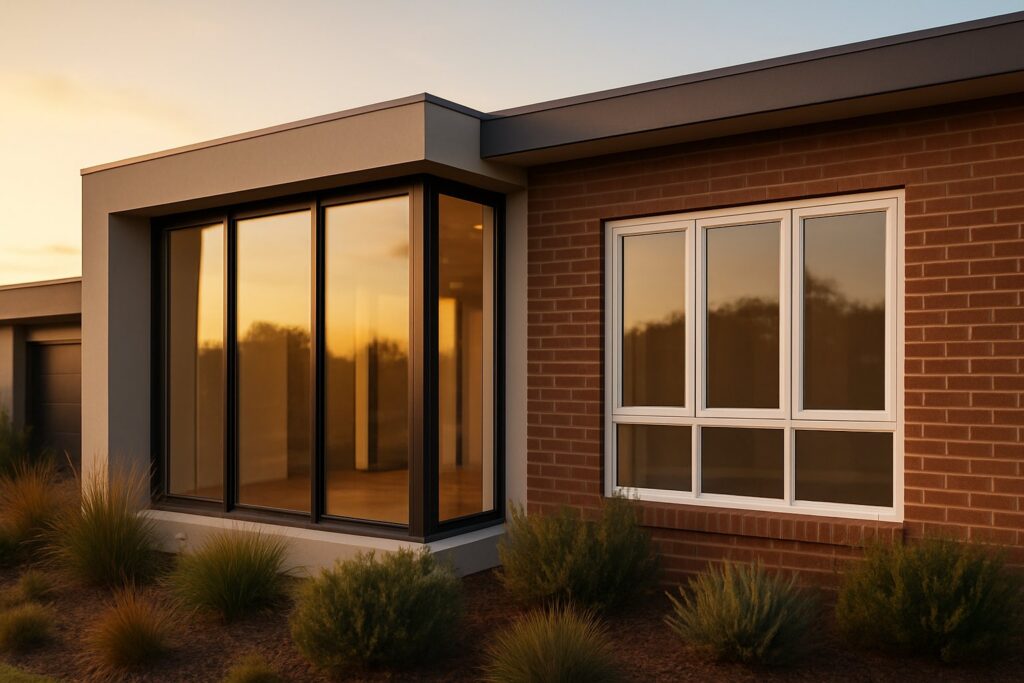
uPVC and Aluminium Windows Explained
Choosing between uPVC vs aluminium windows is one of the first real decisions in any window project, and it shapes everything that follows — from how your home looks to how it performs decades down the track. The two materials sit at opposite ends of the spectrum: one is a rigid engineered plastic, the other a lightweight structural metal. Each brings a genuinely different set of strengths to the table.
uPVC (unplasticised polyvinyl chloride) is a rigid plastic compound, reinforced with stabilisers and tough modifiers instead of chemical plasticisers, making it hard, weather-resistant, and naturally insulating.
Aluminium is a lightweight yet strong metal prized for its slim profile capability, corrosion resistance, and longevity — widely used in both residential and commercial window framing across Australia.
What Is uPVC and How Is It Used in Windows
uPVC starts life as PVC with the plasticisers removed. That absence is what gives it rigidity. Additives like calcium carbonate and titanium dioxide are blended in during manufacturing to boost strength and UV resistance. The raw material is extruded into hollow profiles, cut to size, and fusion-welded at the corners. Steel or aluminium inserts are then placed inside the hollow cavities for structural reinforcement. The result is a frame that resists rot, corrosion, and warping — and requires very little upkeep over its service life.
What Is Aluminium and Why Is It Popular for Window Frames
Aluminium’s appeal comes down to its strength-to-weight ratio. It can support larger spans of glass with far slimmer frame profiles than plastic alternatives, which is why architects and builders lean on it for contemporary designs, bi-fold doors, and floor-to-ceiling glazing. Modern aluminium windows use powder-coated finishes for colour durability and incorporate thermal breaks to address the metal’s natural conductivity — a development that has reshaped the aluminium vs uPVC windows conversation entirely.
Why This Comparison Matters for Your Project
Most online comparisons of uPVC windows vs aluminium windows are written by manufacturers or installers with a clear commercial interest in one material. That bias skews the picture. This guide takes a neutral editorial approach, weighing both options honestly across the factors that actually drive a good decision: thermal performance, durability and lifespan, upfront and long-term cost, aesthetic fit, climate suitability for Australian conditions, and which material matches which property type. The goal is practical clarity — not a sales pitch.
Where those differences really start to show is in the physical design of the frames themselves: how thick they are, how much glass they allow, and what that means for the light and feel inside your home.
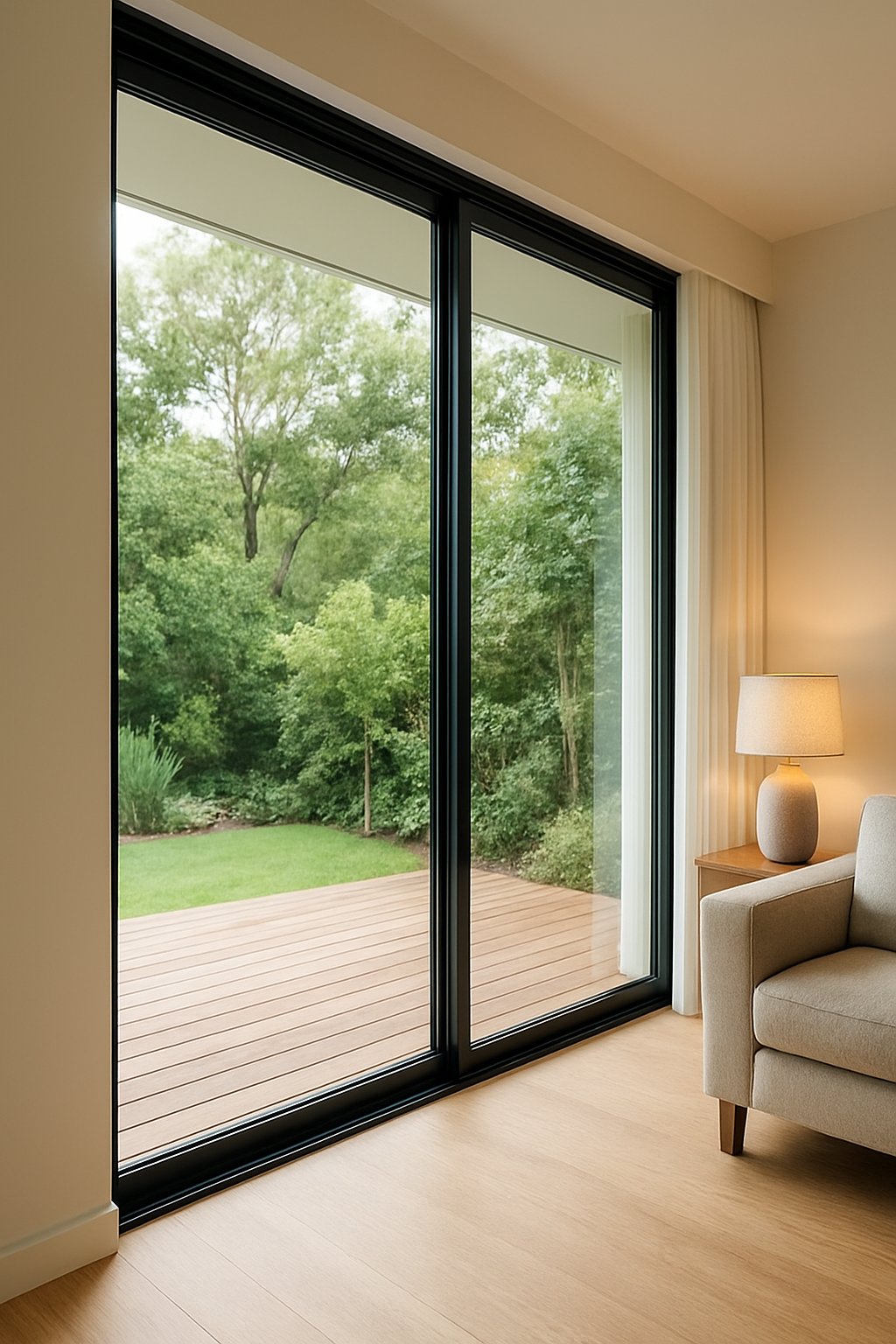
Profile Design, Sightlines, and Structural Strength
Pick up any two window samples — one uPVC, one aluminium — and the difference you notice first isn’t colour or weight. It’s thickness. The visible frame border around the glass, known in the industry as the sightline, varies dramatically between these two materials. That variation has a direct impact on how much natural light enters a room, how large an opening you can glaze, and ultimately how the finished window looks on your home.
Frame Profile Width and What It Means for Natural Light
Aluminium window frames can be as narrow as 20 mm on the visible face, with most quality systems sitting in the 35–55 mm range. uPVC profiles, by contrast, typically measure 70–80 mm deep. That’s a significant chunk of real estate eaten up by frame rather than glass.
In practical terms, slimmer sightlines mean a larger glass area per opening. For a standard 1200 mm x 1200 mm casement, the difference can translate to noticeably more daylight reaching the interior. In compact rooms — think a Melbourne terrace bathroom or a narrow Sydney apartment bedroom — that extra glass makes a tangible difference to how bright and open the space feels. It’s one of the key reasons the best aluminium windows are so popular in contemporary Australian architecture, where maximising light and connection to outdoor spaces is a design priority.
Structural Strength for Large Openings and Bi-Folds
Aluminium’s strength-to-weight ratio is where the gap between these two materials really widens. The extruded alloy (typically 6063 T6 grade) is naturally rigid. It doesn’t flex under load the way plastic does, which means it can support very large spans of glass — panels exceeding 2 m x 2 m — without needing bulky internal reinforcement. That rigidity is what makes aluminium the go-to choice for floor-to-ceiling glazing, wide bi-fold doors, and expansive sliding door systems that Australian homeowners increasingly want in living areas and extensions.
uPVC frames rely on a different structural approach. Because the plastic itself is flexible, steel or aluminium inserts are placed inside the hollow profile cavities to prevent sagging and maintain shape. This works well for standard-sized windows, but it introduces limits. uPVC can span up to roughly 1.2 m unsupported, compared to around 1.8 m for aluminium. Push beyond those limits and the uPVC frame needs progressively heavier reinforcement, which adds weight, cost, and profile bulk — eroding the very sightline advantage you might be trying to preserve.
For anyone planning a rear extension with stacking bi-folds opening onto a deck, or a new build with large-format fixed glazing, aluminum windows vs upvc becomes less of a preference question and more of an engineering one. The structural demands of big openings often make the decision for you.
| Feature | Aluminium | uPVC |
|---|---|---|
| Visible frame width | 20–55 mm | 70–80 mm |
| Maximum unsupported span | ~1.8 m | ~1.2 m |
| Internal reinforcement needed | No (inherently rigid) | Yes (steel or aluminium inserts) |
| Glass-to-frame ratio | Higher (more glass area) | Lower (more frame visible) |
| Best aesthetic fit | Contemporary, minimalist, heritage-sensitive | Traditional, period-style homes |
| Large-format glazing suitability | Excellent (bi-folds, floor-to-ceiling) | Limited without heavy reinforcement |
The Hybrid Option Worth Knowing About
Not every project fits neatly into one camp. Composite or aluminium-clad frames offer a middle path — typically a timber or uPVC core wrapped in an aluminium exterior skin. The idea is to combine the natural insulation properties of the inner material with the slim aesthetics, weather resistance, and colour durability of aluminium on the outside. These hybrid systems have gained traction in the Australian market, particularly for homeowners renovating older properties who want improved thermal performance without sacrificing a modern external appearance.
The trade-off is cost and complexity. Composite windows generally sit at a higher price point than either standalone material, and not every fabricator offers them. Still, for projects where upvc windows vs aluminium feels like an impossible compromise — say, a heritage Queenslander that needs to look traditional from the street but perform like a modern home inside — a hybrid frame can thread that needle.
Design and sightlines tell part of the story. The other part is what happens at the molecular level when heat tries to pass through the frame — and that’s where the thermal performance conversation picks up.
Thermal Performance and Energy Efficiency Compared
Energy efficiency is where the aluminium versus upvc windows debate gets genuinely technical — and where a lot of misinformation circulates. Both materials can deliver strong thermal performance, but they get there through very different mechanisms. Understanding how heat moves through a window frame, and what the numbers actually mean, puts you in a much better position to compare quotes and specifications without relying on a salesperson’s interpretation.
Understanding U-Values in Plain Language
A U-value measures how easily heat passes through a building element. The lower the number, the better the insulation. In Australia, the Window Energy Rating Scheme (WERS) and the National Construction Code (NCC) both use U-values to assess window performance, and they look at the whole window — frame, glass, seals, and spacers combined — not just one component in isolation.
A typical double-glazed uPVC window might achieve a whole-window U-value around 1.4–1.8 W/m²K. A standard aluminium frame without a thermal break sits considerably higher, often above 3.0 W/m²K, because the metal conducts heat so readily. Thermally broken aluminium windows close that gap significantly, landing in the 1.6–2.2 W/m²K range depending on the glazing and break design. The numbers shift with glass type, gas fills, and spacer quality, but the pattern holds: uPVC has a natural insulation advantage at the frame level, while aluminium needs engineered intervention to compete.
Here’s the perspective that often gets lost in the upvc windows vs aluminium argument: the glazed area typically accounts for 70–80% of a window’s total surface. That means the glass unit — its coating, gas fill, and spacer system — contributes far more to overall thermal performance than the frame material alone. A well-specified double-glazed or triple-glazed unit can largely neutralise the frame-level difference between the two materials.
How Thermal Breaks Changed Aluminium Performance
Raw aluminium conducts heat roughly 1,000 times faster than uPVC. Left unaddressed, that conductivity turns the frame into a highway for energy loss — warm air escapes in winter, heat floods in during summer. For decades, this was aluminium’s biggest weakness in the residential market.
Thermal break technology solved the problem. A thermal break is an insulating strip — usually polyamide (nylon) or polyurethane — inserted between the inner and outer sections of the aluminium profile. It physically interrupts the conductive path, forcing heat to pass through a low-conductivity barrier instead of straight through the metal. The result is a dramatic improvement in the frame’s insulating capacity.
Modern thermally broken aluminium systems compliant with AS 2047 and NCC energy provisions can meet or exceed the minimum performance thresholds required across all Australian climate zones. In practice, when paired with quality Low-E coated, argon-filled double glazing, thermally broken aluminium windows perform close enough to uPVC that the frame material alone rarely determines whether a home passes its NatHERS energy rating. Both materials can get you there — the specification just needs to match the climate zone.
Condensation Risk and Indoor Air Quality
Condensation forms when warm, moist indoor air meets a cold surface. Because aluminium without a thermal break stays cold in winter, it’s a prime candidate for interior condensation — those familiar water droplets running down the frame and pooling on the sill. Over time, persistent condensation feeds mould growth, damages paint and plaster, and degrades indoor air quality. It’s a genuine health concern, not just a cosmetic nuisance.
uPVC’s low conductivity means the interior face of the frame stays closer to room temperature, significantly reducing condensation risk. Thermally broken aluminium narrows this gap considerably, though in very cold or humid conditions — think a Hobart winter or a poorly ventilated bathroom — uPVC still holds a slight edge in keeping the frame surface above the dew point.
Ventilation matters here too. Regardless of frame material, a well-sealed window without adequate ventilation traps moisture inside. Trickle vents, which are small integrated ventilators built into the frame head, are common in uPVC systems and increasingly available in aluminium. They allow a controlled flow of fresh air without opening the window, helping manage humidity and reduce condensation risk in tightly sealed modern homes.
Thermal performance is one piece of the long-term equation. The other is how each material holds up physically — not just over a few winters, but across decades of Australian sun, rain, and coastal air.
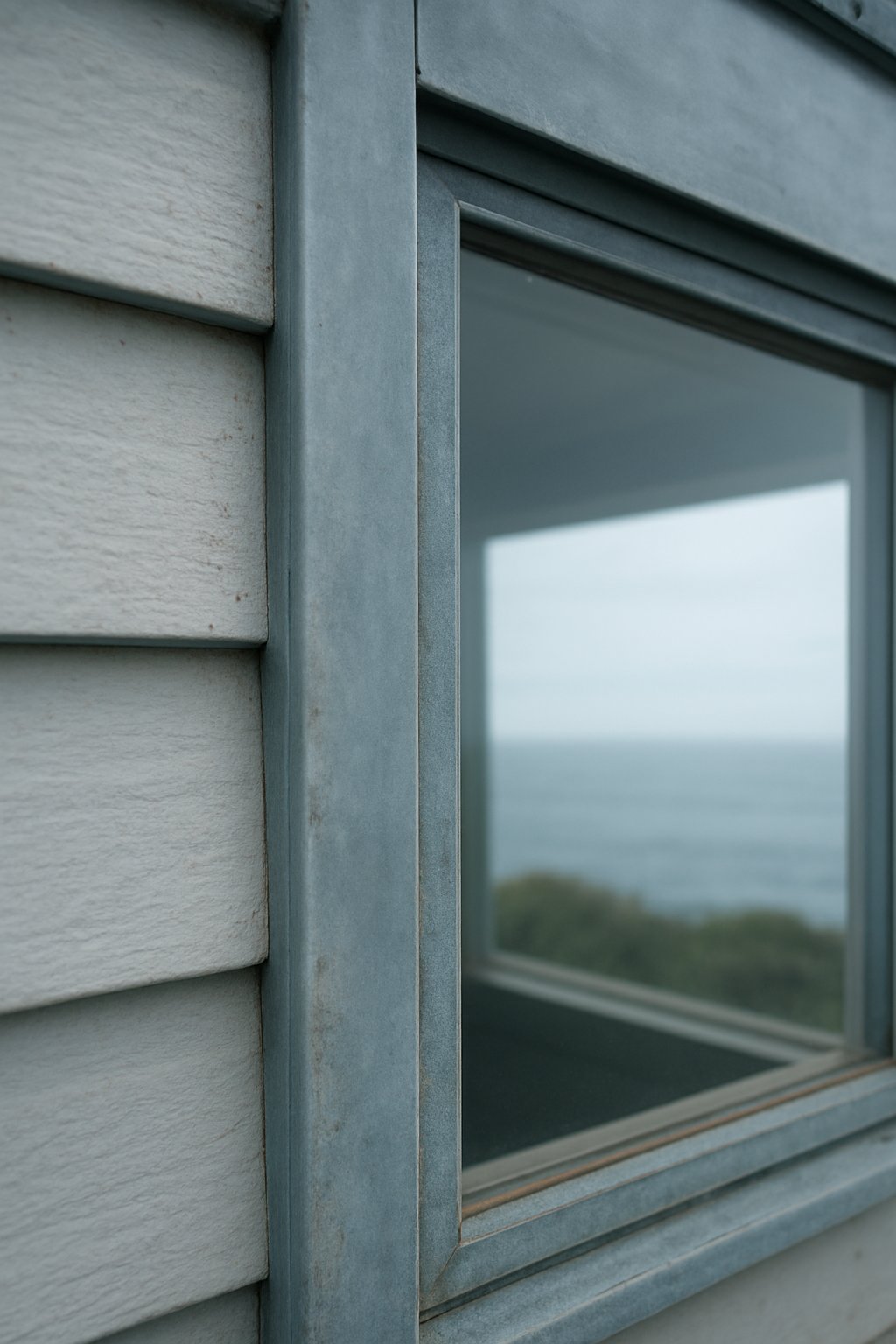
Durability, Maintenance, and Long-Term Performance
Australian conditions test windows relentlessly. Intense UV across summer, driving rain in winter, salt-laden coastal air year-round in many suburbs — a window frame that looks fine at five years can tell a very different story at twenty. When comparing upvc versus aluminium windows, the durability question isn’t just about which material survives longer. It’s about how gracefully each one ages, what maintenance it demands along the way, and when you’ll realistically need to replace it.
Expected Lifespan and Replacement Cycles
How long do aluminium windows last? In well-maintained conditions, aluminium frames can serve 40–50 years or more, with some industry sources citing 60+ years for premium powder-coated systems in moderate climates. The metal itself doesn’t degrade the way organic materials do — it won’t rot, warp, or absorb moisture. Seal and gasket replacement may be needed at the 15–20 year mark, but the frame structure typically outlasts the home’s other finishes by a wide margin.
The upvc window lifespan vs aluminium gap is real, though not as dramatic as some installers suggest. Quality uPVC windows generally last 25–30 years before showing signs of seal degradation, minor warping, or surface wear. High-quality profiles with modern UV stabilisers can push toward the upper end of that range, particularly in temperate southern climates like Melbourne or Adelaide where UV intensity is lower than in tropical Queensland.
Think about what those numbers mean in practice. If you install aluminium windows on a new build at age 35, there’s a strong chance you’ll never replace them during your ownership. uPVC, on the other hand, may need one full replacement cycle within a 40–50 year period. That second replacement — including removal, disposal, supply, and installation — adds a cost layer that rarely features in upfront price comparisons.
Colour Retention and Finish Longevity
Colour fade is one of the most visible signs of ageing, and it’s where the two materials diverge sharply. uPVC frames — especially white and lighter shades — can yellow or chalk after prolonged UV exposure. Modern formulations include titanium dioxide and UV stabilisers that slow this process considerably, but in north-facing positions across Australia’s harsh sun belt, some discolouration over 15–20 years is realistic. Darker uPVC colours tend to hold better, though they absorb more heat, which can accelerate thermal expansion.
Powder-coated aluminium tells a different story. Quality coatings applied to Australian standards maintain their colour and gloss for decades, even under intense UV. The finish is baked onto the metal at high temperatures, creating a hard shell that resists fading, chalking, and peeling far longer than pigmented plastic. Anodised finishes offer an alternative with even greater abrasion resistance, though the colour palette is more limited.
Refinishing options differ too. uPVC can be spray-painted by specialists, but adhesion on plastic is tricky — results vary, and the finish rarely matches the original factory quality. Aluminium frames can be professionally stripped and re-powder-coated, essentially restoring them to as-new condition. It’s not cheap, but it extends the frame’s useful life by another couple of decades without full replacement.
Warranty Coverage and What to Look For
Warranties are often quoted as proof of durability, but the fine print matters more than the headline number. In the Australian market, aluminium window maintenance requirements are minimal enough that manufacturers typically offer 7–15 year warranties on the powder-coat finish and 10–20 years on the frame itself. uPVC warranties tend to sit in a similar range — commonly 10–12 years on the frame and profile colour stability.
What most warranties don’t cover is equally important. Hardware (hinges, locks, handles) is usually warranted separately for 2–5 years. Glazing units — particularly the seal integrity of double-glazed units — carry their own warranty, often 5–10 years against fogging or seal failure. Colour-specific coverage varies: some uPVC manufacturers exclude discolouration from UV exposure, while premium aluminium suppliers include finish integrity as a core warranty term.
Before signing off on any quote, ask the installer to break the warranty down by component: frame, finish, hardware, seals, and glass unit. A 25-year headline warranty that only covers the frame profile — not the parts most likely to fail first — isn’t as reassuring as it sounds.
| Factor | Aluminium | uPVC |
|---|---|---|
| Typical lifespan | 40–60+ years | 20–30 years |
| Routine maintenance | Annual wash, periodic seal and hinge checks | Occasional wipe-down with soapy water |
| Colour durability | Excellent — powder coat holds for decades | Good — may yellow or chalk after 15–20 years in harsh UV |
| Refinishing option | Professional re-powder-coating available | Spray-painting possible but results vary |
| Typical frame warranty | 10–20 years | 10–12 years |
| Typical finish warranty | 7–15 years (colour and gloss) | Often limited or excluded for UV discolouration |
| Hardware warranty | 2–5 years (separate) | 2–5 years (separate) |
| Coastal-specific care | Regular freshwater rinse to remove salt deposits | Minimal — naturally resistant to salt corrosion |
Durability sets the foundation for long-term value, but it’s only half the financial picture. The real question most homeowners wrestle with is whether the longer-lasting material justifies its higher price tag — and that calculation looks quite different when you factor in total cost of ownership rather than just the initial quote.
Pricing, Value, and Total Cost of Ownership
A sticker price only tells you what a window costs today. It says nothing about what it costs you over the next 30 or 40 years — and that’s where the upvc vs aluminium windows price comparison gets interesting. The upfront gap between these two materials is real, but it’s smaller than most people assume, and it can actually reverse once you account for lifespan, energy savings, and resale impact.
Upfront Cost Differences and What Drives Them
In the Australian market, the price of upvc windows for a standard double-glazed casement typically falls in the $500–$900 range per window, supply and install. Equivalent aluminium windows — thermally broken, powder-coated, double-glazed — generally sit between $700 and $1,200 per window installed. That puts the aluminium windows cost vs upvc premium at roughly 20–40% for like-for-like specifications, not the “double the price” figure that gets thrown around in outdated comparisons.
Several factors drive that gap. Aluminium raw material costs more than PVC resin. Powder coating adds a finishing step that uPVC doesn’t require. And thermally broken profiles involve a more complex extrusion process — the polyamide break has to be precision-inserted between the inner and outer aluminium sections. On the other hand, uPVC frames need internal steel reinforcement for structural integrity, which adds its own material and labour cost. The net difference is narrower than the headline numbers suggest, and it shifts further depending on window style, size, and glazing specification. A large bi-fold door in aluminium, for instance, may cost only marginally more than the same configuration in heavily reinforced uPVC — because the uPVC version needs so much additional structure to handle the span.
Project scale matters too. For multi-unit developments or whole-home replacements involving 15+ openings, bulk aluminium pricing and fabrication efficiencies can compress the per-window premium to 10–15%. Builders working at volume often find the cost difference far less significant than homeowners replacing a single bathroom window.
Total Cost of Ownership Over the Life of Your Windows
Are aluminium windows worth the extra cost? The honest answer depends on how long you plan to own the property and how you calculate value. Upfront price is just one input. The full picture includes maintenance spend, replacement timing, energy bill impact, and what the windows add to your home’s market value.
Here’s a practical framework you can apply to your own project:
- Start with the installed cost per window, multiplied by the number of openings. This is your baseline investment for each material.
- Estimate annual energy savings by comparing the whole-window U-value and WERS rating of each option against your current windows. Even a modest improvement — say, a 15–20% reduction in heating and cooling load — compounds meaningfully over a decade.
- Factor in the expected lifespan. If uPVC lasts 25 years and aluminium lasts 45, the uPVC option carries a second full replacement cycle within the aluminium frame’s working life. Price that replacement at future costs, not today’s.
- Add maintenance costs. Both materials are low-maintenance, so this line item is small — but seal and hardware replacements over a longer ownership period do add up.
- Estimate the property value uplift. Quality aluminium windows are consistently viewed as a premium feature by valuers and buyers, particularly in metro markets like Sydney, Melbourne, and Brisbane. uPVC adds value too, but typically less per dollar spent.
- Divide the total spend (initial cost + replacement + maintenance, minus energy savings and resale uplift) by the number of years you expect to own the home. Compare the annual cost of each material on a like-for-like basis.
Run those numbers for a 10-year ownership horizon and uPVC often wins — the lower upfront cost hasn’t been offset yet. Stretch to 20 or 30 years and the equation tilts toward aluminium, because you avoid a full replacement cycle and benefit from stronger resale positioning. Neither answer is universal. Your timeline is the deciding variable.
When Planning Rules Decide for You
Sometimes the budget conversation is beside the point entirely. In heritage overlay zones, conservation areas, and properties subject to local council character controls, the material choice may be dictated before you ever request a quote. Many Australian councils — particularly in inner-city suburbs of Sydney, Melbourne, and Adelaide with significant heritage streetscapes — require window replacements to match the original material character of the building or the surrounding area. Aluminium is frequently the specified or preferred material in these contexts, because slim profiles can replicate traditional steel-framed window proportions that uPVC’s bulkier sections cannot.
If your property falls within a heritage overlay or you’re lodging a development application (DA) in a character-controlled zone, check your council’s specific requirements early. Discovering a material restriction after you’ve committed to a uPVC quote wastes time and money. A quick call to your local council’s planning department — or a check of the heritage overlay maps on your state’s planning portal — can save you from an expensive backtrack.
Cost and compliance frame the financial side of the decision. But windows don’t exist in a spreadsheet — they exist in a climate, on a street, facing weather that varies enormously across Australia. How each material handles those real-world conditions is the next piece worth examining closely.
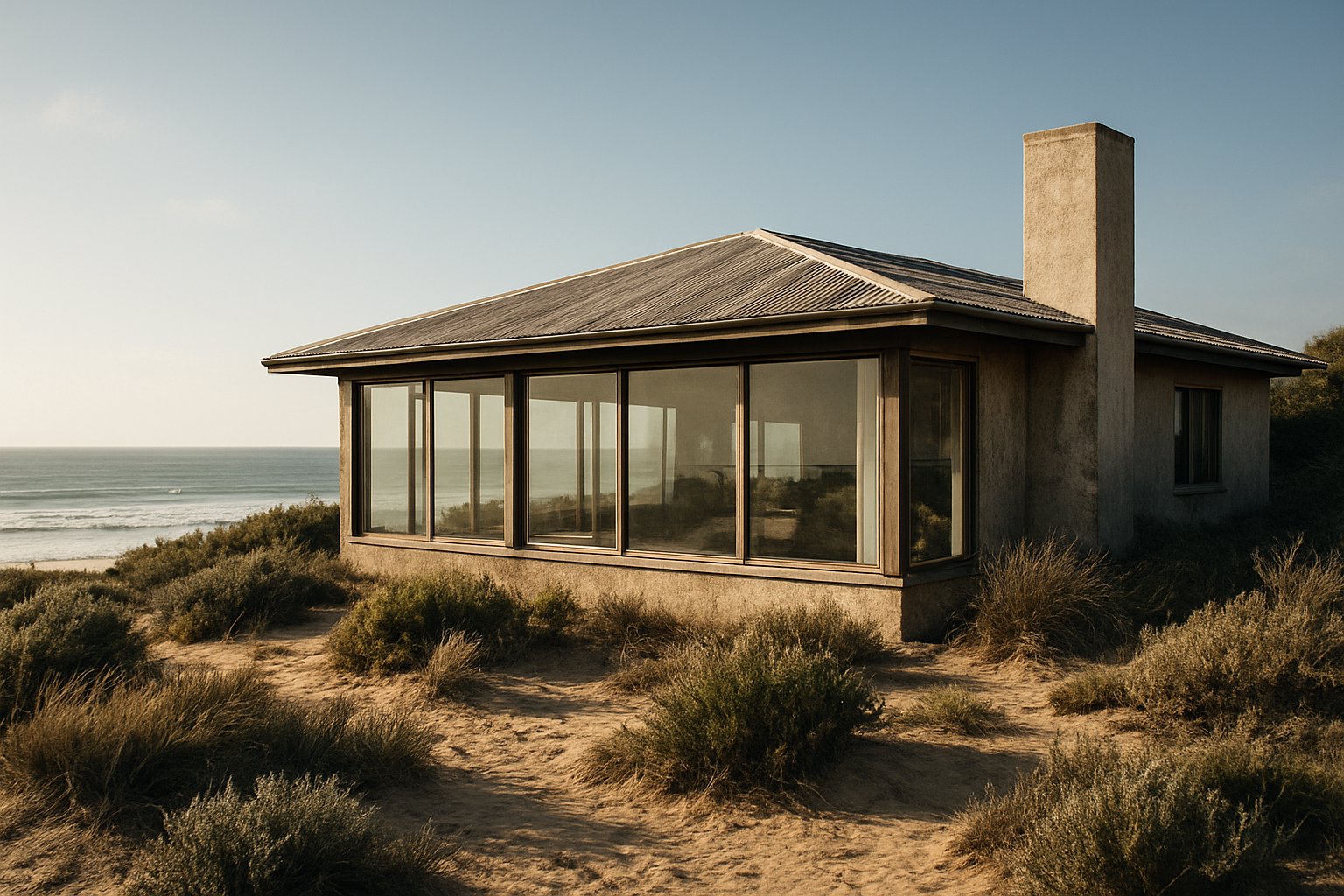
Climate Suitability, Acoustics, and Environmental Impact
Australia doesn’t have one climate — it has dozens. A window that performs beautifully in a temperate Melbourne suburb faces a completely different test bolted to a beachfront home in Cairns or a west-facing wall in Perth’s 42°C summers. Where your property sits on the map should carry as much weight in the material decision as budget or aesthetics, yet most comparisons barely touch on it.
Coastal, Extreme Weather, and Climate Considerations
Salt air is the headline concern for coastal properties, and it’s a legitimate one. Aluminium is naturally corrosion-resistant, but prolonged exposure to salt-laden moisture can pit unprotected surfaces over time. The fix is well-established: marine-grade powder coating and anodising treatments create a protective barrier that holds up in even aggressive coastal environments. For aluminium windows for coastal areas, the key is specifying the right finish at the outset — standard inland-grade coatings won’t cut it within a few kilometres of the shoreline. Regular freshwater rinsing (quarterly is a sensible rhythm) removes salt deposits before they can work into joints and fixings.
uPVC, by contrast, is inherently immune to salt corrosion. The plastic simply doesn’t react with saline air the way metals can. That’s a genuine advantage for beachside homes. The trade-off shows up elsewhere: uPVC expands and contracts more than aluminium under temperature swings. In regions with extreme heat — think inland WA, western NSW, or northern Queensland — repeated thermal cycling can stress welded joints and seals over the years, potentially leading to minor warping or seal gaps. Aluminium’s lower coefficient of thermal expansion makes it more dimensionally stable in those conditions.
Wind resistance is another climate factor worth weighing. Aluminium’s inherent rigidity gives it a structural edge in high-wind zones, including cyclone-rated areas across northern Australia where windows must comply with specific wind-load requirements under AS 2047. uPVC can meet these ratings too, but it typically requires heavier internal reinforcement to do so, adding weight and cost. For the best windows for extreme weather conditions — whether that’s cyclone-prone Darwin or storm-battered Tasmanian coastline — the frame’s ability to resist deflection under sustained pressure matters as much as the glass specification.
In cold climates like Hobart or the alpine regions, uPVC’s natural insulation gives it a slight comfort edge at the frame surface, reducing that cold-to-the-touch feeling on winter mornings. Thermally broken aluminium narrows the gap substantially, but in the coldest pockets of southern Australia, uPVC still holds a marginal advantage in minimising heat loss through the frame itself.
Sound Insulation and Noise Reduction Performance
For anyone living near a busy arterial road, under a flight path, or in a dense urban pocket, the upvc vs aluminium windows sound insulation question matters more than thermal performance. Traffic noise, aircraft rumble, neighbourhood activity — unwanted sound affects sleep quality, concentration, and general wellbeing in ways that are easy to underestimate until you’ve lived with it.
Here’s the reality: both materials deliver good acoustic performance when properly glazed and sealed. The glass unit does the heavy lifting — laminated acoustic glass with a PVB interlayer, thicker pane combinations (e.g., 6.38 mm laminated outer, 12 mm air gap, 6 mm inner), and asymmetric configurations all reduce sound transmission far more effectively than the frame material alone. A well-sealed uPVC window with standard glass will outperform a poorly sealed aluminium window with premium acoustic glazing every time. Seal quality and installation precision are the real variables.
That said, frame rigidity plays a supporting role. Aluminium’s stiffness means less micro-vibration in the frame under sound pressure, which can contribute a small improvement in higher-frequency noise reduction. uPVC’s softer profile absorbs some vibration but can also transmit low-frequency rumble slightly more readily. In practice, the difference is marginal — perhaps 1–2 dB — and unlikely to be the deciding factor. Spend your acoustic budget on the glazing specification and professional installation, not on switching frame materials.
Sustainability, Recyclability, and Environmental Impact
Are aluminium windows sustainable? The answer is more nuanced than a simple yes or no. Aluminium is one of the most recyclable materials on the planet — it can be melted down and reformed indefinitely without losing structural properties, and recycled aluminium requires only about 5% of the energy needed to produce virgin metal. At end of life, aluminium window frames have genuine scrap value, which means they’re far more likely to be recycled than landfilled.
The catch is upfront. Primary aluminium smelting is energy-intensive, carrying a higher embodied carbon footprint than uPVC production. Australia’s aluminium industry has been progressively shifting toward renewable energy sources for smelting, which is improving the lifecycle equation, but the gap hasn’t closed entirely.
uPVC is also recyclable in theory — the material can be reprocessed multiple times. In practice, recycling rates for uPVC windows in Australia remain lower than for aluminium, partly because collection and reprocessing infrastructure is less developed and partly because mixed-material frames (plastic with steel inserts) complicate the process. uPVC that isn’t recycled ends up in landfill, where it persists for centuries.
Both materials align with tightening NCC energy efficiency requirements when properly specified. From a whole-of-life environmental perspective, aluminium’s recyclability and longevity give it an edge in sustainability conversations — particularly as net-zero building targets push the industry toward materials with genuine circular-economy credentials. uPVC’s lower manufacturing footprint offers a counterpoint, but only if the frames are actually recycled at end of life rather than discarded.
Climate and sustainability shape the broader context. The more immediate, personal question — how safe your home feels behind those windows — comes down to security performance, and that’s where some persistent myths deserve a closer look.
Security Performance and Myths Worth Debunking
A window’s ability to keep intruders out depends less on whether the frame is plastic or metal and more on the locking hardware, glazing specification, and installation quality behind it. Still, the frame material does play a role — particularly in how the profile resists physical force. Understanding the aluminium vs upvc window security picture means looking past marketing claims and into the mechanics of how each system actually performs under pressure.
Security Features and Break-In Resistance
Both uPVC and aluminium windows available in the Australian market use multi-point locking systems as standard — typically three, five, or more locking bolts that engage simultaneously along the frame when you turn the handle. This distributes force across the full perimeter rather than concentrating it at a single point, making the window dramatically harder to lever open than older single-lock designs. Key-lockable handles, hinge-side security brackets, and anti-lift devices are common additions across both material types, and quality systems from either camp can meet AS 2047 requirements for residential security.
Where the materials diverge is frame rigidity under forced entry. Aluminium is inherently stiff — the extruded alloy resists bending and deformation when someone tries to pry or lever the frame apart. That rigidity means the locking points stay engaged even under significant force, because the frame itself doesn’t flex enough to release them. Are aluminium windows more secure than upvc? At the frame level, they hold a structural advantage.
uPVC achieves comparable resistance through a different route. The plastic profile alone would flex under sustained force, so manufacturers insert steel or aluminium reinforcement into the hollow cavities to stiffen the frame. When properly reinforced and fitted with quality multi-point locks, uPVC windows perform well in security testing. The key word is “properly” — the reinforcement needs to be continuous and correctly positioned. A budget uPVC window with minimal or poorly placed inserts won’t match a well-specified aluminium frame under the same break-in scenario.
In practical terms, both materials can deliver strong security when specified and installed correctly. The hardware and glazing matter at least as much as the frame. Laminated glass, for instance, holds together when struck rather than shattering into an accessible opening — and that upgrade is available regardless of whether the frame around it is aluminium or uPVC.
Common Myths About Aluminium Windows Debunked
A few stubborn misconceptions still circulate about aluminium, most of them rooted in how the material performed decades ago rather than how it performs today. Here’s what the myths about aluminium windows look like against current reality:
- Myth: Aluminium windows are cold and cause condensation. Reality: This was true of older, non-thermally-broken frames. Modern aluminium windows use polyamide thermal breaks that interrupt heat transfer through the metal, bringing their insulating performance close to uPVC. Condensation risk on a quality thermally broken frame is minimal in most Australian climates.
- Myth: You can’t get aluminium in traditional styles. Reality: Heritage-style aluminium windows are widely available from Australian fabricators. Slim profiles can replicate the proportions of original steel and timber frames found on Federation, Art Deco, and interwar homes — often more convincingly than uPVC, which struggles to match those narrow sightlines.
- Myth: Aluminium windows are all the same industrial grey. Reality: Powder coating offers virtually unlimited colour options, including matte, satin, and textured finishes. Dual-colour systems — one shade outside, another inside — are standard across most quality ranges.
Common Myths About uPVC Windows Debunked
uPVC carries its own baggage from earlier generations of the product. Weighing the upvc vs aluminium windows pros and cons fairly means setting these straight too:
- Myth: uPVC always looks cheap and plastic. Reality: Modern uPVC profiles are available in realistic woodgrain foil finishes — oak, walnut, rosewood, and anthracite grey among them — that are convincing from normal viewing distance. Colour-through technology, where pigment runs through the full profile rather than sitting on the surface, has further improved the material’s visual credibility.
- Myth: uPVC windows aren’t secure enough. Reality: Quality uPVC windows with steel reinforcement, multi-point locking, and laminated glazing meet the same Australian security standards as aluminium. The locking hardware does the heavy lifting, and it’s available across both frame types.
- Myth: uPVC can’t handle Australian heat. Reality: Modern formulations include heat stabilisers and UV-resistant compounds designed for high-UV environments. While extreme thermal cycling can stress joints over very long periods, well-manufactured uPVC windows perform reliably across most Australian climate zones for their expected 20–30 year lifespan.
Stripping away these outdated assumptions makes the real comparison clearer. The genuine differences between these two materials aren’t about security gaps or aesthetic limitations — they’re about matching the right frame to the right property, which is exactly where the decision gets personal.
Which Material Suits Your Property Type
Every property has its own set of demands — structural, visual, regulatory. A blanket recommendation of one material over the other ignores the fact that a Queenslander renovation in Brisbane and a new apartment block in inner Melbourne are fundamentally different projects with different priorities. Matching the frame material to the property type is where all the performance data, cost analysis, and climate considerations from earlier actually become a practical decision.
| Property Type | Recommended Material | Key Reason |
|---|---|---|
| Modern new builds and extensions | Aluminium | Slim profiles support large-span glazing and contemporary design lines |
| Period and traditional homes | Either — depends on heritage controls | Heritage aluminium replicates original steel sightlines; uPVC woodgrain suits traditional aesthetics on a budget |
| Apartments and urban properties | Aluminium | Superior frame rigidity for security, strong acoustic performance with quality glazing |
| Coastal homes | Either — with correct specification | uPVC resists salt naturally; aluminium needs marine-grade coating but offers better wind resistance |
| Conservation and heritage overlay zones | Aluminium | Slim profiles meet council requirements for replicating original steel or timber proportions |
| Large-scale developments | Aluminium | Bulk pricing narrows the cost gap; specification consistency across many openings |
| Budget-conscious whole-home replacements | uPVC | Lower upfront cost per window with solid thermal performance |
Best Match for Modern Builds and Extensions
If you’re building new or adding a rear extension with stacking bi-folds opening onto a deck, aluminium is the natural fit. Its strength-to-weight ratio handles the large glass panels that define contemporary Australian living — floor-to-ceiling fixed lights, wide sliding doors, corner-opening configurations — without the bulky reinforcement uPVC would need. The best windows for new build homes tend to be thermally broken aluminium systems that meet NCC energy provisions while delivering the clean, minimal aesthetic architects and builders specify. For homeowners, renovators, and builders comparing energy-efficient aluminium configurations across different window styles, MEICHEN’s aluminium windows range offers AS 2047-compliant systems suited to a variety of project scales — a practical starting point when you’re weighing up options.
Best Match for Traditional and Period Properties
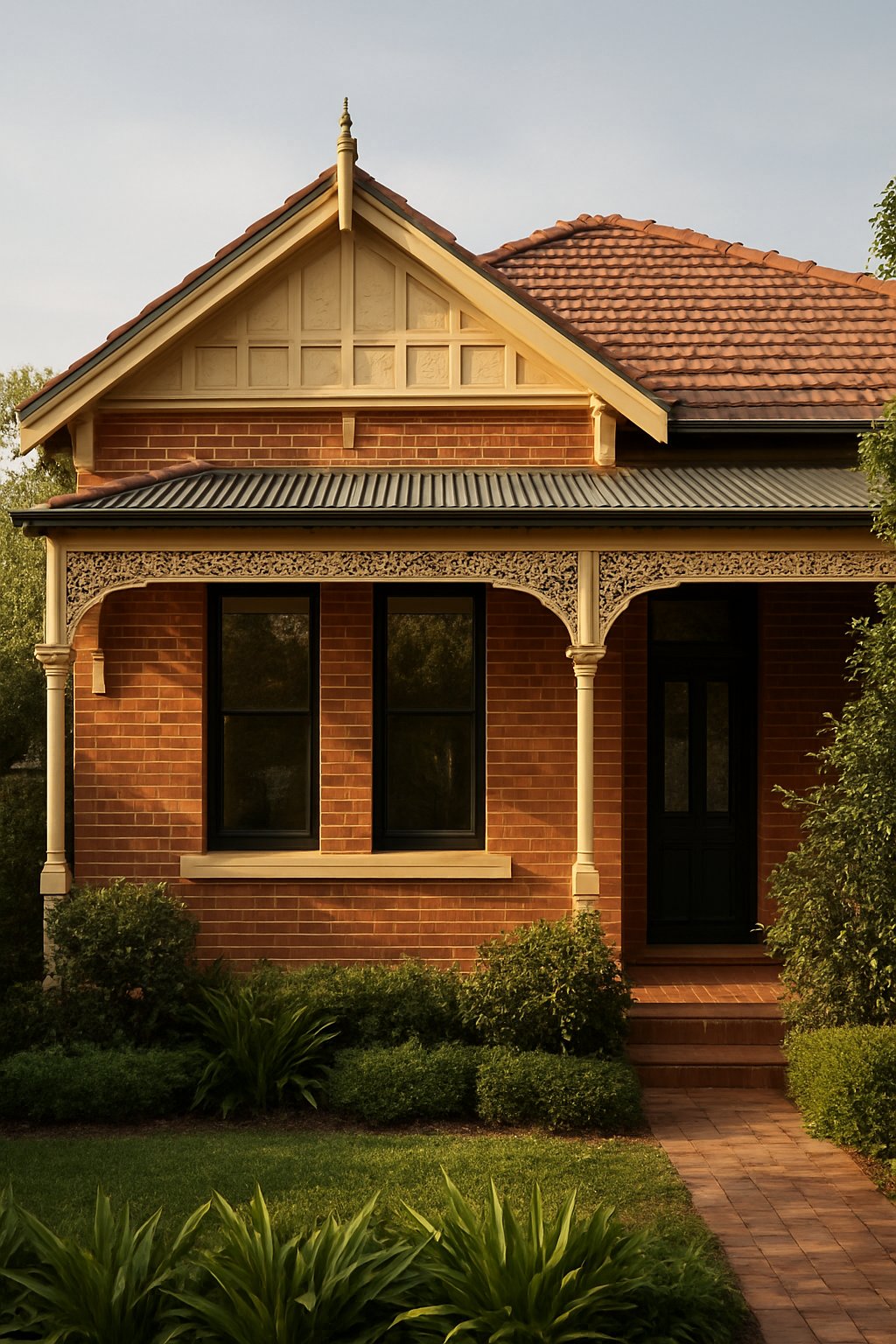
Older homes present a different challenge. A Federation cottage in Adelaide or a 1930s brick veneer in Sydney’s inner west needs windows that respect the building’s character without sacrificing modern performance. Two paths work here. uPVC with woodgrain foil finishes delivers a traditional look at a lower price point — convincing enough from the street and thermally efficient out of the box. Aluminium windows for period properties take the other route: heritage-style slim profiles that replicate the proportions of original steel-framed windows, often more accurately than uPVC can manage. In heritage overlay zones, councils frequently require this level of visual fidelity, making aluminium the only compliant option regardless of preference.
Best Match for Apartments, Coastal Homes, and Developments
Apartment living prioritises security and noise control. Aluminium’s rigid frame supports multi-point locking systems without flex, and when paired with laminated acoustic glazing, it handles urban noise effectively. For upvc or aluminium for apartments, the deciding factor is often the body corporate’s specification or the developer’s standard — and in multi-storey builds, aluminium dominates because of its structural performance and fire-resistance properties.
Coastal properties need a more nuanced call. The best window material for coastal homes depends on proximity to the waterline and local wind exposure. uPVC shrugs off salt air without any special treatment, making it a low-fuss option for beachside holiday homes. Aluminium with marine-grade powder coating performs equally well in salt environments and adds superior wind resistance — a meaningful advantage in exposed positions or cyclone-rated zones across northern Australia.
For large-scale developments — townhouse projects, multi-unit builds, display villages — aluminium’s bulk pricing advantage and specification consistency across dozens or hundreds of openings make it the pragmatic choice. The per-window premium shrinks at volume, and the uniformity of finish and performance across an entire project simplifies quality control for builders and developers.
Knowing which material fits your property type narrows the field. The final step is pulling all these threads together into a decision framework you can actually act on.
How to Choose Between uPVC and Aluminium Windows for Your Project
Property type, budget, climate, ownership timeline — every factor covered in this guide points to the same conclusion: there is no single best window frame material for home renovation. There’s only the right material for your specific situation. The trick is knowing which variables matter most to you and weighting them honestly.
The Key Trade-Offs at a Glance
uPVC wins on upfront affordability and natural thermal insulation at the frame level. It’s the pragmatic pick for budget-conscious projects, standard-sized openings, and homes where you plan to sell within 10–15 years. Aluminium wins on longevity, structural strength, slim sightlines, colour durability, and the ability to handle large-span glazing without compromise. It costs more today but avoids a full replacement cycle down the track — and it consistently adds more to resale value in metro markets.
When people ask upvc or aluminium windows which is better, the honest answer is: better for what? A three-bedroom brick veneer in suburban Adelaide getting a whole-home window refresh on a tight budget? uPVC makes perfect sense. A contemporary extension on a Sydney terrace with 3-metre bi-folds opening to the garden? Aluminium is the only realistic option. The material should serve the project, not the other way around.
A Simple Decision Framework for Your Project
Before committing to either material, work through these questions. Your answers will point you clearly in one direction:
- What is your realistic budget — and are you comparing upfront cost or total cost of ownership over your expected time in the property?
- How long do you plan to own this home? Under 15 years favours uPVC’s lower entry cost. Over 20 years shifts the equation toward aluminium’s lifespan advantage.
- Do any openings exceed 1.2 m in width, or are you planning bi-folds, sliding doors, or floor-to-ceiling glazing? If yes, aluminium’s structural capacity becomes a practical necessity.
- Does your property sit within a heritage overlay, conservation area, or character-controlled zone? Check your local council’s planning requirements early — the material choice may already be made for you.
- What’s your climate exposure? Coastal salt air, cyclone zones, extreme inland heat, and high-UV positions all influence which material performs more reliably over time.
- Is acoustic performance a priority? If so, invest in the glazing specification and seal quality rather than agonising over frame material.
- How important is aesthetic consistency with the architectural style of your home — and does one material replicate that style more convincingly than the other?
Future-Proofing Your Window Investment
Australia’s NCC energy efficiency requirements are tightening, and NatHERS targets continue to push new builds and major renovations toward higher-performing building envelopes. Both materials can meet current standards when properly specified, but the trajectory favours systems with longer service lives and genuine end-of-life recyclability. A future proof window material choice accounts for where regulations are heading, not just where they sit today.
Aluminium’s infinite recyclability and 40–60 year lifespan align well with circular-economy principles and net-zero building targets. uPVC’s lower embodied energy at manufacture offers its own environmental argument, provided the frames are actually recycled rather than landfilled at end of life. Either way, specifying thermally broken frames, Low-E coated double or triple glazing, and quality seals ensures your windows won’t become a compliance liability when standards next ratchet up.
For those leaning toward aluminium, comparing specific window styles, energy ratings, and configurations across a dedicated product range helps translate the general principles in this guide into a concrete shortlist. MEICHEN’s aluminium windows collection is a useful starting point — it covers multiple window types built to Australian standards, making it straightforward to match the right system to your project scale and performance requirements.
The right window material isn’t the one with the best spec sheet — it’s the one that matches your budget, your property, your climate, and how long you plan to call the place home. Start with those four variables and the answer usually becomes clear.
Frequently Asked Questions About uPVC and Aluminium Windows
1. Are aluminium windows better than uPVC for Australian conditions?
Neither material is universally better — the right choice depends on your property type, climate zone, and budget. Aluminium excels in coastal and high-wind areas thanks to its rigidity and corrosion-resistant powder coatings, and it handles extreme heat with less thermal expansion than uPVC. However, uPVC offers naturally strong insulation and is immune to salt corrosion without any special treatment. In cyclone-rated regions across northern Australia, aluminium’s structural strength gives it an edge, while uPVC performs reliably in temperate southern climates like Melbourne and Adelaide. Matching the material to your specific location and exposure is more important than picking a blanket winner.
2. How much more do aluminium windows cost compared to uPVC in Australia?
In the Australian market, thermally broken aluminium windows typically cost around 20-40% more than equivalent uPVC windows — not double, as older comparisons often claim. A standard double-glazed uPVC casement runs roughly $500-$900 supply and install, while a comparable aluminium window sits between $700 and $1,200. The gap narrows further at project scale; bulk orders of 15 or more openings can compress the aluminium premium to 10-15%. When you factor in aluminium’s longer lifespan of 40-60 years versus uPVC’s 20-30 years, the total cost of ownership over a 30-year period can actually favour aluminium because you avoid a full replacement cycle. Collections like MEICHEN’s aluminium windows range (https://meichenwindows.com.au/aluminium-windows/) let you compare AS 2047-compliant configurations across different styles and budgets.
3. Do aluminium windows cause condensation problems?
Modern thermally broken aluminium windows rarely cause condensation issues in most Australian climates. Older aluminium frames without thermal breaks were notorious for interior condensation because the metal stayed cold in winter, creating a surface where warm moist air would form water droplets. Today’s aluminium windows use polyamide thermal breaks that interrupt heat transfer through the frame, keeping the interior surface much closer to room temperature. In very cold or humid conditions — such as a Hobart winter or a poorly ventilated bathroom — uPVC still holds a slight edge in condensation resistance. Regardless of frame material, adequate ventilation through trickle vents or mechanical systems is essential for managing indoor moisture.
4. Which window material is more environmentally sustainable?
Both materials have sustainability strengths, but from different angles. Aluminium is infinitely recyclable without losing structural properties, and recycled aluminium uses only about 5% of the energy required for virgin production. Its frames carry genuine scrap value at end of life, making recycling economically viable. The trade-off is that primary aluminium smelting has a higher embodied carbon footprint than uPVC manufacturing. uPVC can also be reprocessed, but recycling rates in Australia remain lower due to less developed collection infrastructure and the complication of mixed-material frames with steel inserts. Over a full lifecycle, aluminium’s 40-60 year lifespan and strong recyclability give it an edge in circular-economy terms, particularly as net-zero building targets tighten across Australia.
5. Can I use aluminium windows on a heritage or period-style home?
Yes — heritage-style aluminium windows are widely available from Australian fabricators and are often the preferred or required option in conservation areas and heritage overlay zones. Aluminium’s slim profiles can replicate the proportions of original steel and timber window frames found on Federation, Art Deco, and interwar homes more convincingly than uPVC, which has bulkier sightlines. Many inner-city councils in Sydney, Melbourne, and Adelaide specifically require replacement windows to match the original material character of the building or streetscape. If your property sits within a heritage overlay, checking your council’s planning requirements early can save you from committing to a material that won’t gain approval.
More Window & Door Guides