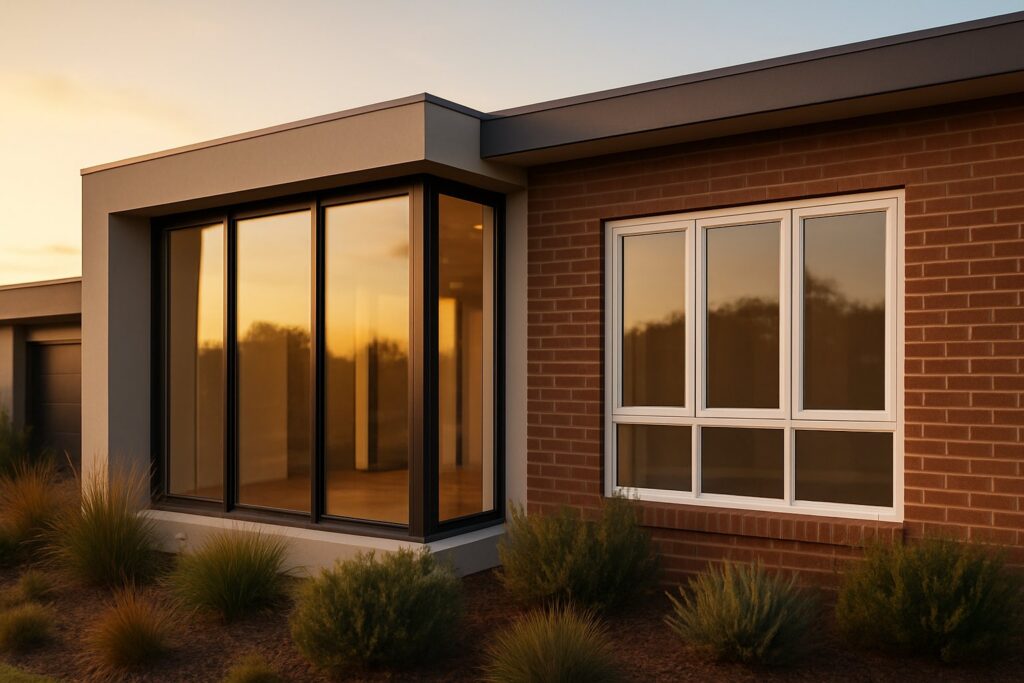
What It Really Costs to Install Aluminium Windows
So, how much does it cost to install aluminium windows in Australia? The short answer: it depends. A single standard window might run you anywhere from around $700 to $2,000 or more fully installed, while a whole-house project with 15 to 20 windows can land between $15,000 and $35,000+. That range is wide for a reason. Your final number hinges on the window styles you choose, the glazing specification, how many openings you’re dealing with, and what your installer charges for labour in your part of the country.
Most online resources blur the line between the aluminium window price for the product alone and the total installed cost. They’ll quote you a figure that sounds reasonable, but it only covers the frame and glass sitting in a warehouse. This article takes a different approach. We’re walking through the full financial picture, from the initial site measure right through to the final coat of paint around your new frames, so you can budget with confidence and avoid the surprises that catch so many homeowners off guard.
What Drives Aluminium Window Installation Costs
A handful of variables shape the cost of aluminium windows on any given project. Window size is the obvious one — a large fixed-lite panel costs considerably more than a standard casement. Style matters too: sliding windows and awnings sit at the more affordable end, while bi-fold configurations and custom architectural shapes push the price up. Beyond the windows themselves, glazing specification plays a major role. Standard double glazing is the baseline, but upgrades like low-E coatings, argon gas fills, or triple glazing each add to the per-unit cost.
Then there are the site-specific factors. A straightforward ground-floor replacement in an accessible brick veneer home is a very different job from installing windows on the upper storey of a two-storey weatherboard that needs scaffolding. Whether you’re fitting into existing openings or creating new ones with structural work and council approval changes the scope — and the bill — dramatically.
Why Installation Costs Are Often Misunderstood
Here’s where most homeowners get tripped up. A quote might list aluminium windows prices per unit, but it won’t always break out what happens after those windows arrive on site. Labour, removal and disposal of old frames, skip hire, internal plastering, external rendering, new sills, and final clean-up — these ancillary items add up fast. When they’re bundled into a single lump sum or, worse, left out entirely, it’s easy to underestimate the true project cost by thousands of dollars.
The window product itself often represents only 40–60% of the total installed cost. The rest goes to labour, waste disposal, making-good, and other ancillary expenses that rarely get their own line in a basic quote.
The sections ahead break every one of those cost layers apart — supply-only versus supply-and-install pricing, labour rates, glazing upgrades, hidden fees, and the long-term value equation — so you can compare quotes on a level playing field and know exactly where your money is going.
Supply-Only vs Supply-and-Install
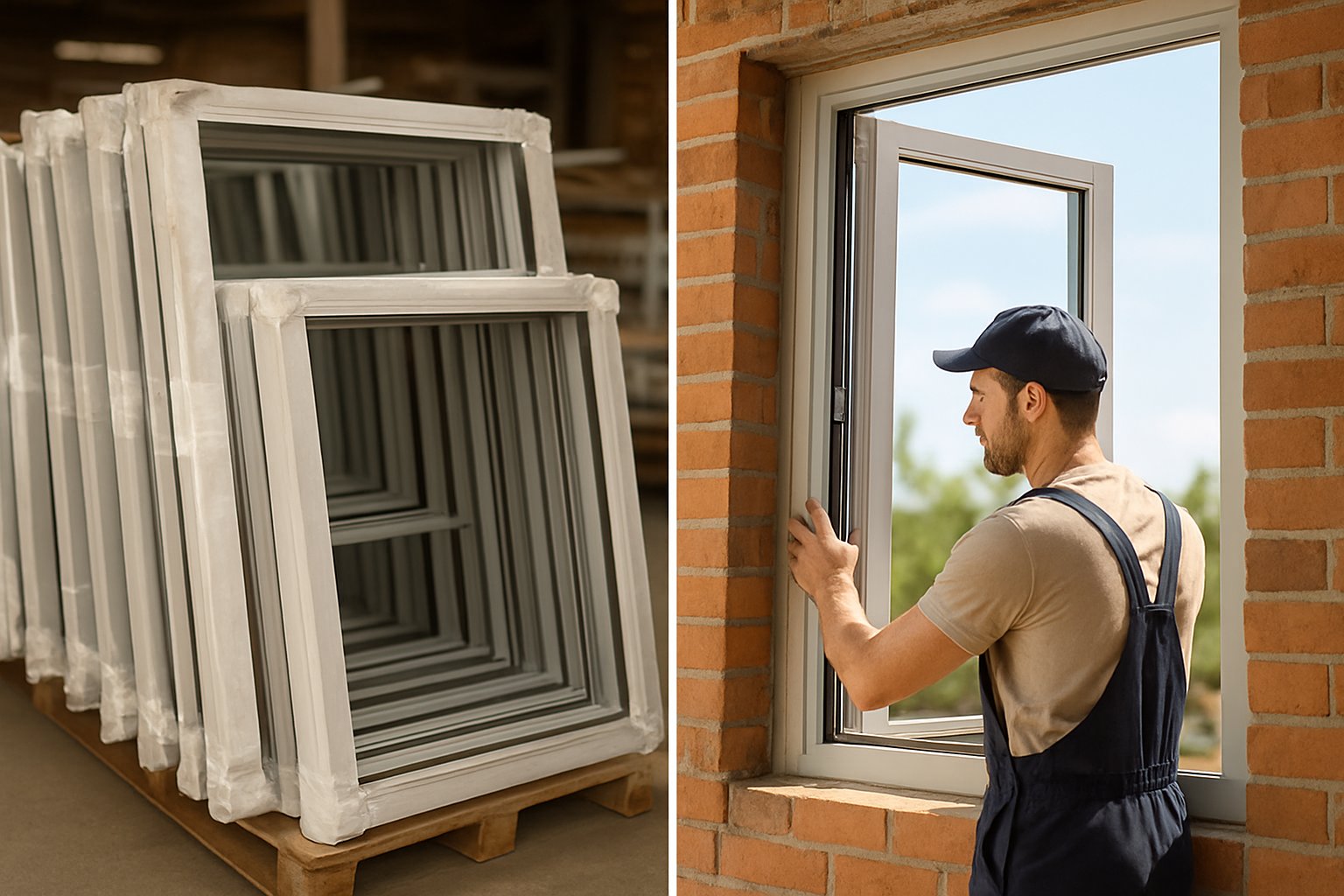
The first fork in the road when pricing aluminium windows is deciding whether you’re buying the product alone or paying someone to fit it as well. This distinction shapes your budget, your responsibilities, and your warranty coverage — yet most aluminium windows price lists you’ll find online don’t make it clear which scenario they’re quoting.
Supply-Only Pricing Explained
A supply-only purchase gets you the physical window: the aluminium frame, glazing unit, hardware (handles, locks, hinges), and sometimes an external sill. That’s it. No one shows up to install it. You’re responsible for organising a glazier, builder, or qualified tradesperson to handle the fitting, sealing, and any making-good around the opening.
This route appeals to renovators running their own projects, builders with dedicated trades on site, and anyone comfortable coordinating installation separately. It can also be a path to finding cheap aluminium windows — or at least cheaper upfront costs — because you’re stripping out the installer’s margin on labour.
To give you a sense of the aluminium windows price range for supply-only in standard sizes, here’s what you might see from Australian suppliers:
- Fixed windows: roughly $150 for a small 600 x 600mm unit, up to around $755 for a larger 1800 x 1810mm panel
- Sliding windows: from about $165 for a compact 514 x 610mm size, through to $680 for a 2057 x 2650mm opening
- Awning and hinged windows: starting near $180 for a 600 x 600mm hinged unit, climbing to around $788 for a larger 800 x 2650mm awning configuration
These figures reflect standard double-glazed aluminium frames in common sizes. Custom dimensions, premium finishes, or upgraded glazing push the price higher — sometimes significantly.
Supply-and-Install Pricing Explained
A supply-and-install quote bundles everything into one package. Typically, that covers the initial site measure, window manufacture to your specifications, delivery, installation labour, perimeter sealing, and basic making-good (trimming around the frame so it looks finished). Some installers also include removal and disposal of your old windows, though this isn’t universal — always check.
The real advantage here goes beyond convenience. When a single company supplies and installs your windows, the warranty generally covers both the product and the workmanship. If a seal fails or a frame isn’t sitting right, there’s one phone call to make, not a finger-pointing exercise between a supplier and a separate installer. For homeowners, that single point of accountability is worth a lot.
Expect supply-and-install pricing to sit noticeably above supply-only figures. The labour component, site logistics, and warranty obligation all factor in. For a standard replacement window, the installed cost can be roughly 40–60% more than the product alone — which aligns with the cost split we flagged earlier.
| Supply-Only | Supply-and-Install | |
|---|---|---|
| What’s included | Frame, glazing unit, hardware, sometimes sill | Site measure, manufacture, delivery, installation, sealing, basic making-good |
| Old window removal | Homeowner arranges separately | Often included (confirm in quote) |
| Installation labour | Homeowner’s responsibility | Installer’s responsibility |
| Waste disposal | Homeowner arranges skip or tip run | Usually included or quoted as a line item |
| Product warranty | Manufacturer warranty on product only — does not cover fitting issues | Manufacturer warranty on product plus installer’s workmanship guarantee |
| Compliance responsibility | Homeowner and their chosen tradesperson | Installer ensures compliance with AS 2047 and NCC requirements |
Which Option Suits Your Project
If you’re a builder managing a new build or a large renovation with a licensed glazier already on the team, supply-only gives you flexibility and can trim costs across a high-volume order. It also works for owner-builders who want granular control over every trade.
For most homeowners replacing windows in an existing home, supply-and-install is the safer bet. You get a single contract, a single warranty, and someone accountable for the finished result — from the aluminium windows price you agreed on right through to the final bead of sealant. When something goes wrong six months down the track, you’re not caught between a supplier saying the product is fine and an installer saying the product was faulty.
Whichever route you choose, the labour portion of the job deserves its own close look — because that’s where costs vary the most from one quote to the next.
Installation Labour Costs Broken Down
Labour is the line item that swings most wildly between quotes — and it’s the one homeowners have the least visibility into. Separating it from the cost of aluminium windows themselves is the only way to judge whether a quote is genuinely competitive or just hiding an inflated margin.
What Installers Actually Charge for Labour
Australian window installers typically price labour in one of three ways. The most common is a per-window flat rate, where each opening carries a fixed charge regardless of how long it takes. The second model is a per-opening rate that adjusts for window size and complexity — a small fixed lite costs less to fit than a large awning window. The third is a day rate for a two-person crew, which suits larger projects where the installer can work through multiple openings in a single visit.
For a standard ground-floor replacement into an existing opening, labour in Australia generally falls in the range of $250 to $500 per window, adjusted upward from comparable US market data to reflect higher Australian trade rates and compliance requirements under AS 2047. More complex installs — upper-storey work, oversized frames, or aluminium double-glazed windows with heavy sealed units — can push labour costs well beyond that baseline. Structural modifications or difficult access add further again.
How Project Size Affects Per-Unit Labour Cost
Replacing a single window is disproportionately expensive on a per-unit basis. The installer still has to load the van, drive to your property, set up, and pack down — all for one opening. Spread those mobilisation and travel costs across ten or fifteen windows and the per-unit figure drops noticeably.
This economy of scale is real and measurable. Industry data suggests that large-scale installs of ten or more windows can reduce per-unit material and labour costs by 15–25%. Most Australian installers start offering volume pricing at around five windows, with the best rates reserved for whole-house projects. If you’re only replacing one or two, expect the aluminium windows cost per opening to sit at the higher end of any quoted range.
Regional Price Variations
Where you live matters more than most people realise. A two-person crew in inner Sydney or Melbourne charges considerably more than the same crew in a regional centre like Ballarat or Toowoomba. Higher overheads, stronger demand, and elevated cost of living in capital cities all feed into the hourly and per-window rates tradespeople charge. Coastal areas with salt-exposure compliance requirements can also attract a premium, particularly in cyclone-rated zones across northern Queensland and the NT where additional fixing and certification standards apply.
The best way to cut through regional noise is simple: get at least three itemised quotes from local installers, each covering the same window specification. That gives you a realistic benchmark for your area rather than relying on national averages that may not reflect local conditions.
When comparing those quotes, keep an eye on the factors that push labour rates up or down:
- Geographic location — capital city vs regional, coastal vs inland
- Project scale — single window vs whole-house replacement
- Access difficulty — ground floor vs upper storey, scaffolding requirements
- Window size and weight — larger, heavier units take longer to handle and secure
- Installer experience and licensing — specialists with proven compliance track records often charge more, but the quality and warranty backing tend to justify it
Labour rates set the floor for your installation budget, but they’re far from the only variable. The glazing you specify inside those aluminium frames can shift the total project cost just as dramatically — and that’s a layer most pricing guides skip entirely.
How Glazing and Upgrade Choices Affect the Total Aluminium Window Price
The aluminium frame gets most of the attention in pricing discussions, but the glass sitting inside it has just as much influence on your final bill. Every upgrade you select — from coatings to gas fills to extra panes — adds incrementally to the cost of replacing aluminium windows, and the cumulative effect across a whole-house project can be substantial.
Standard Double Glazing vs Premium Options
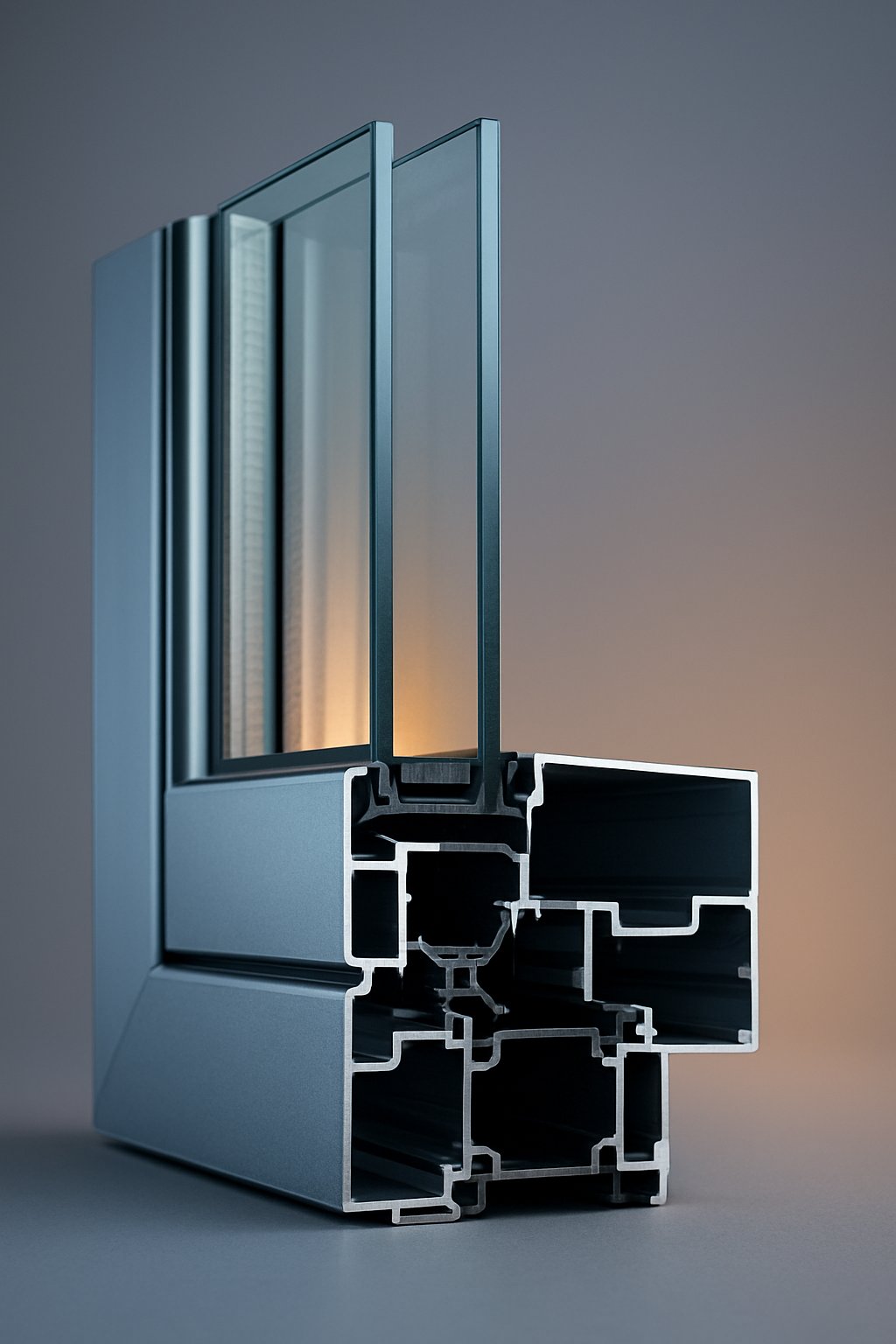
Most aluminium windows sold in Australia ship with standard double glazing as the baseline: two panes of glass separated by a sealed air gap. This configuration delivers decent thermal and acoustic performance for the price, with U-values generally ranging between 1.2 and 1.6 W/m²·K. For many homes in temperate climate zones, it’s perfectly adequate.
Step beyond that baseline, though, and the options — and costs — start climbing.
Low-E (low-emissivity) coatings are the first upgrade most homeowners encounter. These microscopically thin metallic layers reflect infrared heat, keeping warmth inside during winter and blocking solar heat gain in summer. The good news: low-E coatings paired with argon gas fills have become so standard in quality aluminium windows that many manufacturers include them without a standalone surcharge. If you’re quoted a window without low-E, you’re likely looking at a budget-tier product.
Krypton gas fills offer a step up from argon, providing better insulation within the same cavity width. The trade-off is cost — krypton is a rarer gas, and the upgrade can add roughly $30 to $60 AUD per sash once you account for Australian supply pricing.
Triple glazing is where the cost jump becomes more noticeable. Adding a third pane and an extra sealed cavity drops U-values as low as 0.7 W/m²·K, which is a dramatic improvement in insulation. The triple glazed aluminium windows price premium typically sits around 20–35% above an equivalent double-glazed unit, partly because the heavier glass package demands a beefier frame to support it. For homes in colder regions — think alpine areas of Victoria and NSW, or Tasmania — that premium can pay for itself through reduced heating bills over the window’s lifespan. In milder climates, the payback period stretches out, making it harder to justify purely on energy savings.
Acoustic laminated glass is another option worth considering if you live near a busy road, flight path, or rail corridor. Laminated panes dampen sound transmission more effectively than standard float glass, and using different pane thicknesses within the unit further disrupts sound waves. Tinted and obscure glass serve privacy and solar control purposes, with modest cost additions that vary by glass type and supplier.
How Energy Ratings and Building Regulations Affect Costs
Your glazing choices aren’t made in a vacuum — Australian building regulations set a floor that every window must meet. The National Construction Code (NCC) establishes minimum thermal performance requirements for windows in residential buildings, factoring in your climate zone, window orientation, and the ratio of glass to wall area. The Window Energy Rating Scheme (WERS) provides a star-rating system that makes it easier to compare products, while NatHERS modelling determines whether your overall home design meets the required energy efficiency targets.
What this means in practice: you can’t simply pick the cheapest aluminium double glazed windows cost option and call it done. If your home sits in a cooler climate zone or has large west-facing openings, the NCC may require higher-performing glazing to achieve compliance — and that higher-performing glazing costs more. The regulation effectively sets a baseline specification, and therefore a baseline price, that you cannot go below.
On the upside, investing in windows that exceed minimum requirements can work in your favour. Some state-based energy efficiency programs — such as the Victorian Energy Upgrades scheme or the NSW Energy Savings Scheme — offer rebates or incentives for high-performance building upgrades. It’s worth checking what’s available in your state before finalising specifications, as a rebate can offset part of the premium you’d pay for better glazing.
Aesthetic and Functional Add-Ons
Glazing performance isn’t the only specification that moves the needle on cost. Colour, hardware, and security features all layer onto the base price, and they’re easy to overlook when you’re focused on the glass.
Here’s a rundown of common add-ons and where they sit on the cost spectrum:
- Standard powder coat finish (white, black, monument, surfmist) — low cost impact; typically included in the base price or adds a minimal premium
- Custom RAL or Dulux colour matching — moderate cost impact; specialty finishes can add 10–15% to the per-unit price due to custom factory processing
- Dual-colour frames (different colour inside and out) — moderate cost impact; requires two separate coating runs during manufacture
- Premium hardware (designer handles, soft-close mechanisms) — low to moderate cost impact depending on brand and finish
- Multi-point locking systems — low cost impact; increasingly standard on quality aluminium windows for improved security and seal compression
- Laminated safety glass or security glass — moderate to significant cost impact; thicker laminated panes add weight and require compatible frame profiles
- Key-locking handles — low cost impact; a simple but effective security addition, especially for ground-floor windows
- Integral blinds (blinds sealed between the glass panes) — significant cost impact; a premium option that eliminates external blind maintenance but adds considerably to the unit price
Each of these choices feels small in isolation. Multiply them across ten or fifteen windows and the total cost to replace aluminium windows can shift by several thousand dollars. The key is deciding which upgrades deliver genuine value for your situation — coastal corrosion resistance and security glass might be non-negotiable in some locations, while a custom colour is purely aesthetic preference.
Glazing and finishes shape the per-unit cost, but the type of installation your project requires can shift the overall budget even more dramatically. A straightforward swap into an existing opening is a fundamentally different job from cutting a new hole in a load-bearing wall — and the price gap between the two reflects that.
Aluminium Window Replacement Cost
A straightforward window swap and a brand-new opening in a masonry wall are two entirely different jobs — yet most pricing guides treat them as one. The gap between the aluminium window replacement cost for a simple retrofit and the new build aluminium windows cost for a structural installation is often the single biggest variable in a project budget, and it deserves a closer look than it usually gets.
Replacement Into Existing Openings
Replacing old aluminium or timber windows within their existing openings is the simpler, faster, and less expensive scenario. The structural opening is already there — lintel, framing, and all. Your installer removes the old frame, cleans up the reveal, fits the new aluminium window, seals the perimeter, and makes good.
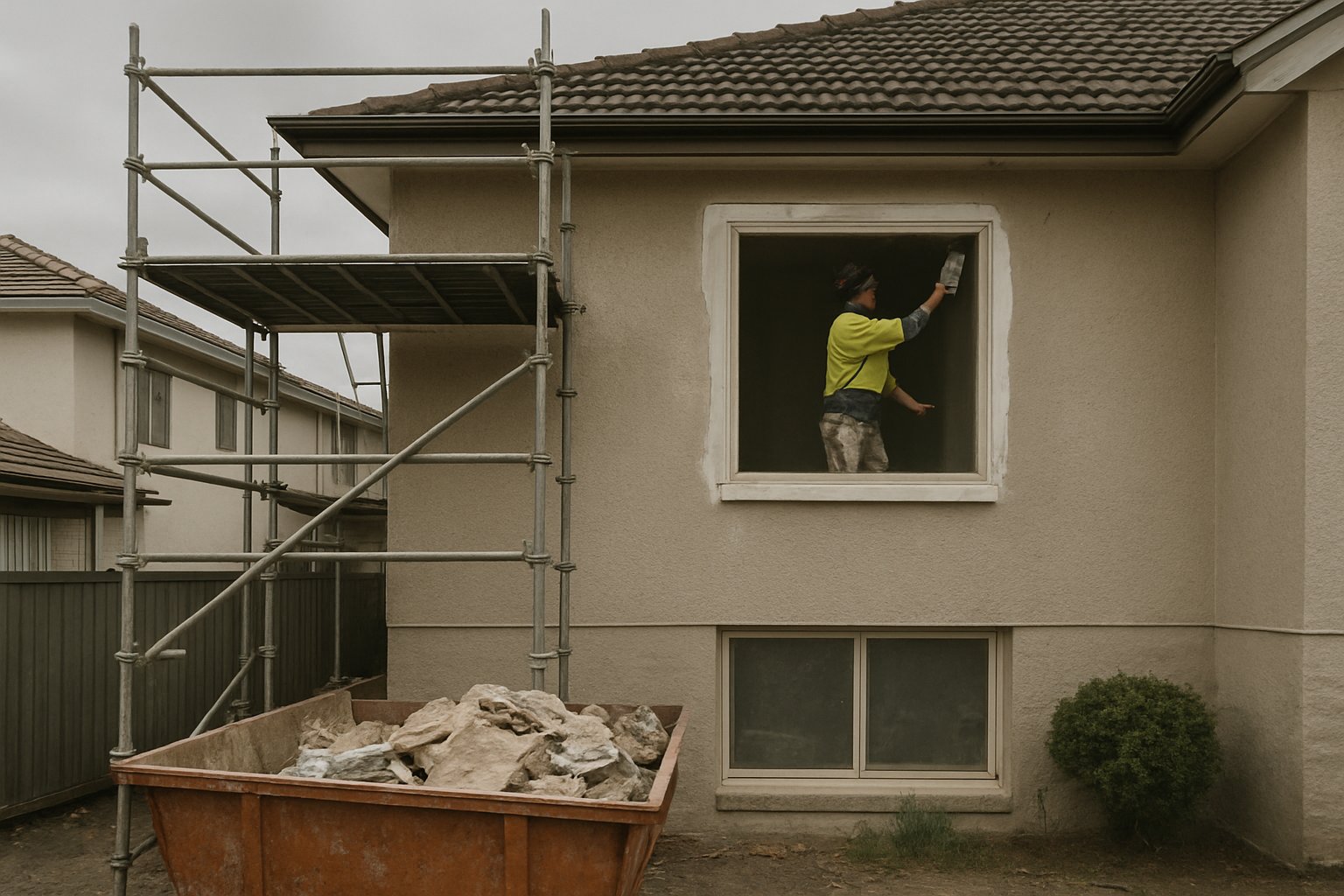
That last part — “making good” — sounds minor, but it covers a surprising amount of work. On the exterior, it typically means patching or re-rendering around the frame where the old unit was cut out, repairing any damaged cladding (common on weatherboard and fibro homes), and ensuring flashings and weatherproofing details are watertight. On the interior, it involves filling and re-plastering the window reveal where old fixing straps or expanding foam left a rough finish, fitting new architraves or cover strips if the old ones were damaged during removal, and repainting the surrounding trim.
The cost of making good varies with the condition of your existing walls. Industry data on post-installation repairs suggests budgeting roughly $250 to $500 AUD per window for exterior render touch-ups and $150 to $400 AUD per window for interior plastering and repainting — adjusted for Australian trade rates. Newer homes with clean reveals and intact cladding sit at the lower end. Older properties, particularly period homes with lime render or multiple layers of paint, tend to push toward the higher end. Some installers include basic making-good in their supply-and-install quote; others leave it to you entirely. Always confirm before you sign.
New Openings and Structural Work
Creating a new window opening in an existing wall is a fundamentally different proposition. You’re not just fitting a window — you’re modifying the building’s structure, and that brings a cascade of additional costs and trades.
Before anyone picks up a saw, you’ll need a structural engineer to specify the lintel (the beam that carries the load above the opening). Lintel sizing depends on the wall material, the span of the opening, and the loads bearing down from above — roof, upper storey, or both. Engineering fees alone can run $500 to $1,500 AUD depending on complexity. You’ll also need council approval in most jurisdictions, which may involve a development application (DA) or a complying development certificate (CDC), each carrying its own fees and processing times.
The physical work requires a builder or structural contractor in addition to your glazier. The builder cuts the opening, installs temporary propping to support the structure while the lintel goes in, sets the lintel, and makes the opening ready for the window. Only then does the glazier step in to fit the aluminium frame. After that, the builder returns to finish external cladding, internal lining, and any waterproofing details.
All of this adds up. The aluminium window installation price for a new opening can realistically run two to three times the cost of a straightforward replacement into an existing opening, once you factor in engineering, council fees, the builder’s labour, and the extended making-good required on both sides of the wall.
Upper-Floor and Hard-to-Access Installations
Scaffolding is the cost that catches people off guard, particularly on double-storey homes. Any window above ground-floor reach typically requires scaffolding for safe access, and scaffolding hire is priced as a fixed project cost — not per window. A standard residential scaffold setup in Australia generally runs between $500 and $2,000 AUD depending on the height, footprint, and hire duration.
That fixed cost changes the maths dramatically. If you’re replacing ten upper-storey windows, the scaffolding expense spreads thin across each unit. Replace just one, and that same scaffold hire lands entirely on a single opening, inflating the per-window cost significantly. For this reason, it almost always makes financial sense to batch upper-floor work together rather than tackling windows one at a time.
Access difficulty goes beyond scaffolding, too. Properties with steep blocks, narrow side passages, or heritage-listed facades can require specialised equipment or additional labour time, all of which feed into the final aluminium window installation price.
Here’s how the two main installation scenarios compare side by side:
| Replacement (Existing Opening) | New Opening (Structural Work) | |
|---|---|---|
| Typical tasks | Remove old frame, prepare reveal, fit new window, seal, make good | Structural engineering, council approval, cut opening, install lintel, prop structure, fit window, rebuild internal and external finishes |
| Trades required | Glazier (plus plasterer/painter for making good) | Structural engineer, builder, glazier, plasterer, painter, possibly renderer |
| Council approval | Generally not required for like-for-like replacement | Usually required — DA or CDC depending on scope and jurisdiction |
| Structural modifications | None | Lintel installation, temporary propping, possible reinforcement |
| Relative cost level | Baseline | 2–3x baseline per window |
| Typical timeframe per window | 1–3 hours | 1–2 days (across multiple trades) |
Whether your project falls into the replacement column or the new-opening column — or a mix of both — shapes the overall budget more than almost any other single factor. But even within a straightforward replacement, there are ancillary costs lurking in the margins that rarely show up in headline pricing. Those hidden line items are what we’ll unpack next.
Hidden Costs That Catch Homeowners Off Guard
Every chapter so far has dealt with costs you can see coming — the windows, the labour, the glazing upgrades, the structural work. This section is about the ones you don’t see until they’re already on the invoice. These ancillary expenses sit in the margins of almost every aluminium window project, and they’re the primary reason real-world budgets blow past initial estimates. Accounting for them upfront is the difference between a controlled spend and a stressful scramble for extra funds mid-project.
Costs Before Installation Begins
The meter starts running well before anyone removes an old frame. A site survey or measure-up is the first step — some installers include this in their aluminium window installation quote, while others charge a separate fee, typically $100 to $300 AUD depending on the number of openings and travel distance. If your project involves structural changes like creating new openings or significantly altering existing ones, you’ll likely need council approval. A development application (DA) or complying development certificate (CDC) carries its own fees, which vary by local government area but commonly sit between $200 and $1,500 AUD. Where NCC energy compliance sign-off is required, a building certifier’s inspection fee adds another layer — usually $300 to $800 AUD per visit.
None of these costs appear in a standard per-window price. They’re project-level overheads, and skipping them isn’t an option when compliance is on the line.
Costs During Installation
Scaffolding was covered in the previous section, but it bears repeating here as a hidden cost because it’s rarely itemised in headline pricing. Beyond access equipment, the aluminium window fitting cost also absorbs several expenses that only surface once work is underway.
Removal and disposal of old windows and frames is one. Timber frames, broken glass, old sealant, and packing materials all need to go somewhere. If your installer doesn’t include disposal in their quote, you’re looking at skip bin hire — roughly $250 to $600 AUD for a small to mid-sized bin, depending on your location and the volume of waste. Older homes built before the mid-1980s may also contain lead-based paint on existing window frames or asbestos in surrounding cladding, both of which require licensed removal and safe disposal at additional cost.
Temporary weatherproofing is another expense that catches people off guard. If there’s a gap between removing old windows and fitting new ones — common when custom-manufactured aluminium frames have a lead time of several weeks — the openings need to be sealed against rain, wind, and dust. Plastic sheeting and temporary boarding aren’t expensive in isolation, but the labour to install and later remove them adds to the overall cost to fit aluminium windows.
Any structural work discovered mid-project falls here too. Removing old frames sometimes reveals rotted timber, water damage, or deteriorated lintels in the rough opening — issues invisible until the old window comes out. Remediation can add hundreds of dollars per affected opening, and it’s not something any installer can quote accurately in advance.
Costs After Installation
The glazier finishes, the new windows are sealed and operational — but the project isn’t done. Making-good is the final cost layer, and it’s frequently the homeowner’s responsibility unless explicitly included in the supply-and-install contract.
Internally, this means plastering and painting the window reveals, fitting new architraves or cover strips where old ones were damaged, and touching up surrounding wall paint. Externally, it can involve re-rendering or patching cladding, replacing or repainting window sills, installing new flashings, and ensuring all weatherproofing details are watertight. These interior and exterior finishing costs are almost always the homeowner’s responsibility to arrange and fund separately, even when the installation itself was handled by a single contractor.
A final professional clean of the glass, frames, and surrounding surfaces rounds out the job. It’s a small cost, but it’s one more item that rarely appears in the original quote.
To keep track of every potential expense from start to finish, here’s a chronological checklist you can use as a budgeting tool when reviewing any aluminium window installation quote:
- Site survey or measure-up fee
- Structural engineering report (if new openings are involved)
- Council approval fees — DA or CDC application
- Building certifier inspection fees for NCC compliance
- Window manufacture and delivery charges
- Scaffolding hire (for upper-storey or difficult-access work)
- Removal and disposal of old windows and frames
- Skip bin hire for construction waste
- Hazardous material removal — lead paint or asbestos (if applicable)
- Temporary weatherproofing during any gap between removal and installation
- Structural remediation of damaged reveals, lintels, or framing discovered during removal
- Installation labour
- Internal plastering and painting of window reveals
- New architraves or cover strips
- External rendering, cladding repair, or repainting
- New window sills — internal and external
- Flashing and weatherproofing details
- Final clean-up of glass, frames, and surrounding areas
Not every project will hit all eighteen items. A simple like-for-like ground-floor replacement might only trigger half of them. But a multi-storey renovation with new openings could tick every box — and the cumulative cost of those ancillary items can easily reach 20–30% of the total project spend.
What to Look for in a Quote
A thorough aluminium window installation quote should itemise each cost component separately rather than rolling everything into a single lump sum. Industry guidance on evaluating window replacement quotes consistently recommends that every detail of the project be noted — materials, labour, disposal, council fees, and making-good — as distinct line items. This transparency lets you compare quotes on a like-for-like basis, which is impossible when one installer gives you a detailed twelve-line breakdown and another hands you a single figure scrawled on the back of a business card.
When comparing multiple quotes, make sure each one covers the same specification: identical frame material, glazing type, colour, hardware, and scope of making-good. A quote that looks $2,000 cheaper might simply be excluding disposal, scaffolding, or internal plastering that the more expensive quote includes.
Watch for these red flags:
- Vague lump-sum pricing with no itemisation — you can’t verify what’s included or challenge what’s missing
- No mention of waste disposal or old window removal — these costs exist whether they’re quoted or not
- Missing compliance references — a reputable installer will note AS 2047 compliance and NCC requirements
- No separation of product cost from labour — makes it impossible to assess whether the aluminium window fitting cost is reasonable for your area
- Verbal promises not reflected in the written quote — if it’s not on paper, it’s not in the contract
Building a contingency buffer of 10 to 15 percent above your expected project cost is a smart safeguard against the surprises that inevitably surface once old frames come out and hidden conditions are revealed. It’s not pessimism — it’s realistic planning.
With the full cost picture mapped out — product, labour, glazing, installation type, and every hidden extra — the natural question becomes whether aluminium is actually worth the investment compared to other frame materials. That comparison deserves more than a passing mention.
Are Aluminium Windows Worth the Cost Compared to Other Frame Materials?
Knowing what aluminium windows cost is only half the equation. The other half is understanding what you get for that money relative to the alternatives. Most pricing guides compare aluminium against uPVC and stop there. Timber and composite frames rarely get a mention, which leaves homeowners with an incomplete picture when they’re trying to decide where their renovation dollars deliver the best return.
Aluminium vs uPVC vs Timber vs Composite Frames
Each frame material occupies a different position on the cost-versus-value spectrum. The table below lays out the key dimensions side by side so you can weigh them against your priorities — whether that’s upfront budget, long-term durability, thermal performance, or the look you’re after.
| Attribute | Aluminium | uPVC | Timber | Composite |
|---|---|---|---|---|
| Upfront cost per window | Medium–High | Low–Medium | Medium–High | High |
| Expected lifespan | 30–45 years | 20–25 years | 50+ years (with maintenance) | 30–40 years |
| Maintenance requirements | Low — occasional clean and hardware lubrication | Very low — wipe-down and gasket checks | High — repainting every 3–5 years, termite treatment, rot inspection | Low — periodic cleaning |
| Thermal performance (U-value range) | 1.2–2.0 W/m²·K (thermally broken with double glazing) | 1.1–1.6 W/m²·K (multi-chamber with double glazing) | 1.2–1.6 W/m²·K (natural insulator) | 1.0–1.4 W/m²·K |
| Aesthetic flexibility | Extensive — slim profiles, large spans, modern lines | Limited — bulkier frames, fewer profile options | Unlimited — carving, staining, painting to any style | Good — can mimic timber or aluminium appearance |
| Colour and finish options | Full powder coat range including custom RAL and dual-colour | Standard range; wood-grain laminates available at extra cost | Any paint or stain colour | Factory-applied range; limited field customisation |
| Recyclability | 100% recyclable, infinitely, without quality loss | Recyclable but limited cycles (up to 7 times) | Biodegradable and renewable | Mixed — depends on material composition |
| Best suited for | Contemporary homes, large openings, coastal and high-exposure sites, multi-storey builds | Budget-conscious projects, standard residential sizes, bedrooms and bathrooms | Heritage properties, traditional aesthetics, dry climates | High-performance builds, Passivhaus-style projects |
A few things stand out. The aluminium vs uPVC windows cost gap is real at the point of purchase — uPVC is genuinely cheaper upfront. But that gap narrows over time. Industry comparisons consistently show aluminium lasting 40 to 50 years with minimal upkeep, while uPVC typically reaches end-of-life at 20 to 25 years. Replace a set of uPVC windows twice over the same period that a single set of aluminium frames serves you, and the lifetime cost equation flips.
The aluminium windows vs timber cost comparison tells a different story. Timber can match or exceed aluminium on raw longevity — premium hardwood frames last decades — but only with consistent, hands-on maintenance. In the Australian context, that means repainting or re-staining every three to five years, annual termite inspections, and vigilant rot checks after every wet season. Timber also struggles in humid coastal environments and tropical regions where moisture and pest pressure are relentless. Factor in the cumulative cost of that maintenance over 30 years and aluminium’s higher purchase price starts looking like a bargain.
Composite frames deliver excellent thermal performance and low maintenance, but they sit at the top of the price scale and are less widely available from Australian manufacturers. They’re a strong fit for ultra-high-performance builds but overkill for most standard residential projects.
Aluminium’s other trump card is its slim sightlines. Because the material is structurally strong relative to its weight, frame profiles can be kept narrow — maximising the glass area within any given opening. That means more natural light, better views, and a cleaner architectural line. uPVC frames, by contrast, need thicker profiles to achieve the same structural integrity, which eats into the visible glass area. It’s a subtle difference on a single window, but across a wall of glazing it’s immediately noticeable.
And then there’s recyclability. Aluminium is 100% recyclable without any loss in quality, infinitely. At end-of-life, the frames go back into the aluminium supply chain rather than into landfill. For homeowners factoring sustainability into their decision, that’s a meaningful advantage over uPVC’s limited recycling potential and composite’s mixed-material disposal challenges.
When Aluminium Is the Clear Choice
So, are aluminium windows worth the cost? In several common scenarios, the answer is a straightforward yes.
Large openings are the first. If your design calls for wide sliding doors, expansive fixed-lite panels, or stacking configurations that span several metres, aluminium’s structural strength is hard to match. It handles the load without requiring the chunky frame sections that uPVC or timber would need at the same span, keeping the visual emphasis on the glass rather than the frame.
Contemporary and modern architectural styles lean heavily on aluminium for exactly this reason. Clean lines, minimal framing, and large glass areas are defining features of modern Australian home design — and aluminium delivers all three without compromise.
Coastal and high-exposure environments are another scenario where aluminium pulls ahead decisively. Powder-coated aluminium resists salt air corrosion far better than untreated timber, and it doesn’t degrade under sustained UV exposure the way uPVC can over time. For properties within a few kilometres of the coastline — common across much of Australia’s populated fringe — or in cyclone-rated zones across northern Queensland and the NT, aluminium’s durability under harsh conditions is a practical necessity, not just a preference.
Projects where kerb appeal and resale value matter also favour aluminium. The material’s association with quality, its colour versatility, and its clean aesthetic all contribute to a property’s perceived value. Estate agents consistently note that modern aluminium windows and doors are a selling point, particularly in competitive metro markets like Sydney, Melbourne, and Brisbane.
If you’re weighing up aluminium for your own project, MEICHEN’s aluminium windows collection is a practical starting point. Their range covers casement, sliding, awning, and fixed configurations — all built to Australian standards including AS 2047 — so you can compare specifications across styles and request project-specific quotes without needing to piece together information from multiple suppliers.
Material choice sets the long-term trajectory of your investment. But even after you’ve settled on aluminium, there are practical steps you can take during the buying and installation process to bring the overall project cost down without sacrificing quality.
Practical Ways to Get the Best Price on Aluminium Windows
Aluminium’s long-term value is well established — but that doesn’t mean you should pay more than necessary upfront. A few strategic decisions during the planning and purchasing phase can shave hundreds, sometimes thousands, off your total project cost without downgrading the product or the finish.
Timing Your Installation for Better Pricing
Demand for window installers peaks through spring and summer, when renovation activity across Australia is at its highest. Book during that rush and you’ll compete with every other homeowner chasing the same crews, which means longer lead times and less room to negotiate. Schedule your project in late autumn or winter, though, and the dynamic shifts. Installer workloads typically drop during the cooler months, and many businesses offer more competitive labour rates to keep their teams busy. Shorter wait times are a bonus — you may get from quote to completion weeks faster than you would in peak season.
Choosing Standard Sizes Over Custom
Standard aluminium window sizes are manufactured in volume, which keeps unit costs low. Custom-sized windows can cost roughly 25–75% more than standard equivalents because they require bespoke manufacturing runs, longer lead times, and sometimes specialised tooling. Before committing to custom dimensions, check whether your openings can accommodate a standard size — even a minor adjustment to the reveal during installation may let you fit an off-the-shelf unit and avoid the bespoke premium entirely. This is one of the simplest paths to finding affordable aluminium windows without compromising on quality.
Bundling Multiple Windows
Replacing all your windows in a single project is almost always cheaper per unit than doing them one at a time. Mobilisation, delivery, scaffolding, and waste disposal are largely fixed costs — they don’t double just because you double the window count. Installers know this, and most will sharpen their pricing for larger jobs. Five windows is typically the threshold where volume discounts start appearing in quotes, with the aluminium windows best price reserved for whole-house projects of ten or more openings. If you’re planning to replace windows in stages, it’s worth running the numbers on doing everything at once instead.
Getting Quotes Right
The cheapest aluminium windows on paper aren’t always the cheapest in practice — not if the quote is missing half the costs. To compare fairly, collect at least three itemised quotes and make sure every one covers the same specification: identical frame profile, glazing type, colour, hardware, and scope of making-good. Ask each installer to break out labour, materials, disposal, and finishing work as separate line items. A detailed, itemised quote is the only reliable way to spot where one installer is genuinely more competitive and where another has simply left costs out.
Here’s a quick-reference checklist of cost-reduction strategies you can act on straight away:
- Schedule installation during late autumn or winter to access off-peak labour rates
- Use standard window sizes wherever your openings allow — avoid custom manufacturing premiums
- Bundle all window replacements into a single project for volume pricing on labour, delivery, and disposal
- Obtain at least three itemised quotes covering identical specifications for genuine like-for-like comparison
- Request that every quote separates product cost, labour, waste disposal, and making-good as distinct line items
- Ask about manufacturer promotions or end-of-line stock in standard colours and sizes
- Confirm whether the site survey fee is included or charged separately — and negotiate its inclusion on larger jobs
- Batch upper-storey windows together to spread scaffolding hire across more openings
Each of these moves is straightforward on its own. Stack several together and the cumulative savings can meaningfully close the gap between your budget and the installed cost you’re quoted. What matters most, though, is that cutting costs today doesn’t come at the expense of performance and durability over the decades ahead — and that’s where the long-term value conversation picks up.
Are Aluminium Windows Worth It Over Their Lifespan?
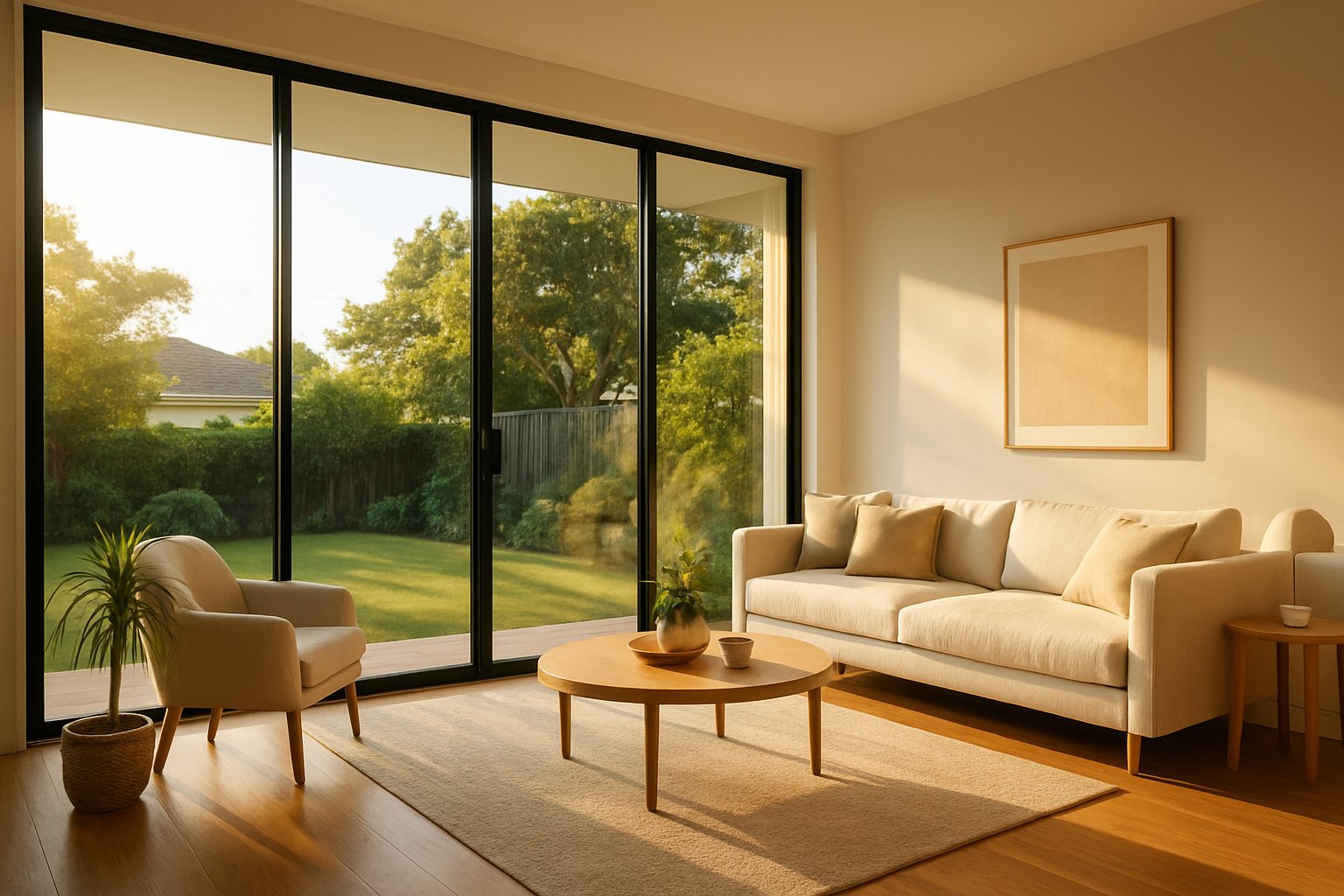
Upfront cost is the number everyone fixates on. It’s the figure on the quote, the one that triggers sticker shock or relief. But windows aren’t a consumable — they’re a building component you’ll live with for decades. Judging aluminium purely on purchase price is like evaluating a car solely by its sticker without considering fuel economy, servicing costs, or how long it runs before you need another one. The real question isn’t just how much aluminium windows cost today. It’s what they cost you over their entire working life.
Lifespan and Maintenance Savings
The aluminium windows lifespan is one of the material’s strongest selling points. Quality aluminium frames routinely last 30 to 45 years, and some industry sources cite 40-plus years as a realistic expectation with minimal upkeep. That upkeep amounts to occasional cleaning with soapy water and periodic hardware lubrication — no repainting, no re-staining, no rot treatment.
Compare that to the alternatives. uPVC frames typically reach end-of-life at 20 to 25 years, meaning you’d likely replace them at least once — possibly twice — within the same timeframe a single set of aluminium windows serves you. Timber demands repainting or re-staining every three to five years, plus annual termite inspections in most parts of Australia. Over a 30-year period, those recurring timber maintenance costs — paint, labour, pest treatment — accumulate into a figure that can rival or exceed the original aluminium premium you were trying to avoid.
Energy Savings and Thermal Performance
Modern aluminium windows with thermally broken frames and quality double or triple glazing deliver strong aluminium windows energy efficiency. The thermal break — a polyamide barrier between the inner and outer frame sections — reduces heat transfer by 40 to 60 percent compared to non-thermally-broken aluminium. That translates directly into lower heating and cooling bills, particularly in climate extremes: cold winters in southern Victoria and Tasmania, scorching summers across western Sydney and inland Queensland.
Energy savings compound year on year. A modest annual reduction in your electricity or gas bill might not feel dramatic in year one, but multiply it across 30 or 40 years of window life and the cumulative figure becomes significant. Pair that with the fact that thermally broken aluminium frames also reduce condensation and improve indoor comfort — fewer cold spots near windows in winter, less radiant heat in summer — and the performance case strengthens beyond raw dollar savings.
Manufacturers like MEICHEN build their aluminium window systems to meet Australian standards including AS 2047 and NCC energy compliance requirements, with thermally broken profiles and WERS-rated glazing options designed for long-term performance across Australian climate zones. For homeowners weighing energy efficiency alongside durability, that kind of standards-backed specification provides confidence that the windows will deliver on their thermal promises for the full extent of their lifespan.
Impact on Property Value
New aluminium windows improve three things that buyers notice immediately: kerb appeal, energy ratings, and security. Remodelling cost data suggests window replacements return roughly 70 to 80 percent of their cost in added resale value — and that figure tends to climb when the windows are high-quality, energy-efficient, and visually striking. Aluminium ticks all three boxes. Slim profiles, clean lines, and a broad colour palette give properties a contemporary edge that photographs well in listings and stands out during inspections.
In competitive Australian metro markets — Sydney, Melbourne, Brisbane — updated windows signal to buyers that the home has been well maintained and won’t need immediate work. That perception alone can accelerate the sale timeline and attract stronger offers.
Warranty and Aftercare Considerations
Warranty coverage is the safety net that protects your investment after the installers leave. From reputable manufacturers, expect 10-plus years on aluminium frames and sealed glazing units, with hardware warranties typically sitting in the 5 to 10-year range. These timeframes reflect the manufacturer’s confidence in the product’s durability — and they’re considerably longer than what most uPVC suppliers offer.
There’s an important distinction to understand here. The manufacturer’s warranty covers the product itself — frame integrity, powder coat finish, sealed unit failure. The installer’s workmanship warranty covers how the window was fitted — sealing, alignment, flashing details. You need both. A product warranty won’t help if a poor installation causes water ingress, and a workmanship guarantee is meaningless if the sealed unit fogs up due to a factory defect. Always confirm that your supply-and-install contract includes both warranties in writing, with clear terms on what’s covered and for how long.
Investing in quality aluminium windows is a long-term financial decision, not just an upfront cost. When you factor in a 30 to 45-year lifespan, minimal maintenance, compounding energy savings, and stronger resale value, the higher purchase price often proves to be the more economical choice over the life of your home.
Aluminium Window Installation Costs: Common Questions
1. How much does it cost to install a single aluminium window in Australia?
A single standard aluminium window typically costs between $700 and $2,000 AUD fully installed, depending on the window style, glazing specification, and your location. This figure covers both the product and installation labour. However, single-window replacements tend to sit at the higher end of per-unit pricing because fixed costs like travel, setup, and mobilisation are not spread across multiple openings. For a more accurate estimate, request at least three itemised quotes from local installers covering identical specifications. Suppliers like MEICHEN (meichenwindows.com.au/aluminium-windows/) offer a range of Australian-standard-compliant aluminium windows across multiple styles, making it straightforward to compare specifications and request project-specific pricing.
2. Is it cheaper to buy aluminium windows supply-only or supply-and-install?
Supply-only is cheaper at the point of purchase because you are only paying for the frame, glazing unit, and hardware without any installation labour included. However, supply-and-install pricing bundles the site measure, manufacture, delivery, fitting, sealing, and basic making-good into one package, and it typically includes warranty coverage for both the product and the workmanship. When you factor in the cost of hiring a separate glazier, arranging waste disposal, and managing compliance with AS 2047 yourself, the real-world savings from supply-only can be smaller than expected. Supply-only suits builders and experienced renovators with trades already on site, while supply-and-install offers most homeowners a single point of accountability and fewer coordination headaches.
3. Are aluminium windows more expensive than uPVC windows?
Yes, aluminium windows carry a higher upfront cost than uPVC. On a per-window basis, aluminium typically sits in the medium-to-high range while uPVC falls in the low-to-medium bracket. However, the lifetime cost comparison tells a different story. Aluminium frames last 30 to 45 years with minimal maintenance — just occasional cleaning and hardware lubrication — whereas uPVC frames generally reach end-of-life at 20 to 25 years. Over a 30-year period, you may need to replace uPVC windows once or even twice, which can make aluminium the more economical choice long-term. Aluminium also offers slimmer frame profiles for more glass area, full recyclability, and superior corrosion resistance in coastal environments — advantages that uPVC cannot match.
4. What hidden costs should I budget for when replacing aluminium windows?
Several ancillary expenses sit outside the headline per-window price and can add 20 to 30 percent to your total project spend. Before installation, you may face site survey fees ($100-$300 AUD), council approval costs for structural changes ($200-$1,500 AUD), and building certifier inspection fees. During installation, scaffolding hire for upper-storey work ($500-$2,000 AUD), skip bin hire for waste disposal ($250-$600 AUD), and temporary weatherproofing can all add up. After installation, making-good costs — internal plastering, external rendering, new sills, architraves, and repainting — are frequently the homeowner’s responsibility. Always confirm which of these items are included in your quote and build a contingency buffer of 10 to 15 percent above your expected total.
5. How can I reduce the cost of installing aluminium windows without sacrificing quality?
Several practical strategies can lower your total project cost. Scheduling installation during late autumn or winter takes advantage of off-peak labour rates when installer demand drops. Choosing standard window sizes over custom dimensions avoids bespoke manufacturing premiums, which can add 25 to 75 percent to the per-unit price. Bundling all window replacements into a single project spreads fixed costs like delivery, scaffolding, and mobilisation across more openings, with volume discounts typically starting at five or more windows. When collecting quotes, ensure each covers identical specifications — frame profile, glazing type, colour, and hardware — so you can compare on a genuine like-for-like basis. Asking installers to itemise labour, materials, disposal, and making-good separately helps you identify where real savings exist.
More Window & Door Guides