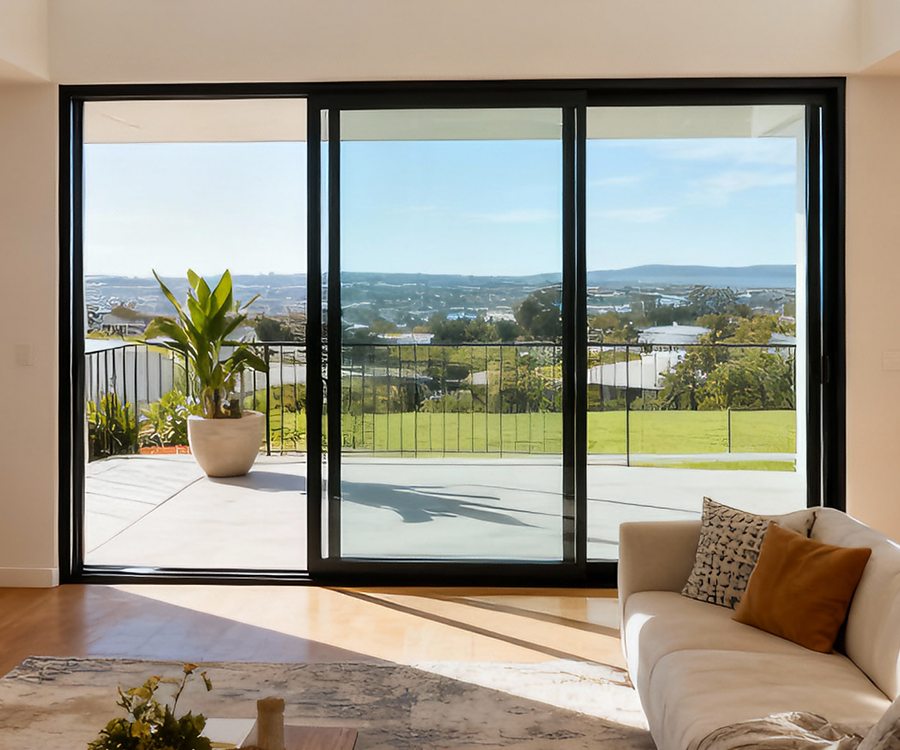
Grey Aluminium Windows and Why They Lead Modern Architecture
Grey aluminium windows are window systems built from extruded aluminium profiles and finished with a powder-coated grey surface. They combine the structural strength of aluminium with a colour palette that ranges from soft agate tones to deep anthracite, delivering a refined look suited to both new builds and renovation projects across Australia. This guide covers shade selection, window styles, thermal performance, and the practical decisions that separate a result you love from one you regret.
Grey has overtaken white as the most specified frame colour in contemporary residential construction, making powder coated grey aluminium frames the default reference point for architects, builders, and homeowners designing modern Australian homes.
What Are Grey Aluminium Windows
At their core, these are window frames manufactured from aluminium alloy extrusions, then electrostatically coated with a dry grey powder and oven-cured to form a hard, weather-resistant finish typically 60 to 80 microns thick. That process sets them apart from raw mill-finish aluminium, which oxidises unevenly over time, and from anodised aluminium, which produces a limited metallic sheen rather than a broad spectrum of grey tones. The powder coating locks in a consistent colour, resists fading under harsh Australian UV, and requires no repainting over the frame’s lifespan of 40-plus years.
Why Grey Became the Leading Frame Colour
For decades, white uPVC dominated Australian streetscapes. The shift started as contemporary architecture embraced industrial-minimal aesthetics, exposed materials, and darker contrast elements that define window openings rather than blend into walls. Grey answered that brief perfectly. It sits neutral enough to complement brick veneer, rendered facades, and timber cladding without clashing, yet it carries enough visual weight to feel intentional. Heritage-modern hybrids, where a Queenslander or Federation home gains a rear extension with floor-to-ceiling glazing, lean on grey frames to bridge old and new without jarring contrast. That versatility explains why grey aluminium windows for modern homes remain the go-to specification, and why the colour shows no sign of fading from favour.
The real question is not whether to go grey, but which grey. The answer lives in RAL colour codes, and the differences between shades are bigger than most people expect.
RAL Colour Codes and Grey Shade Selection Explained
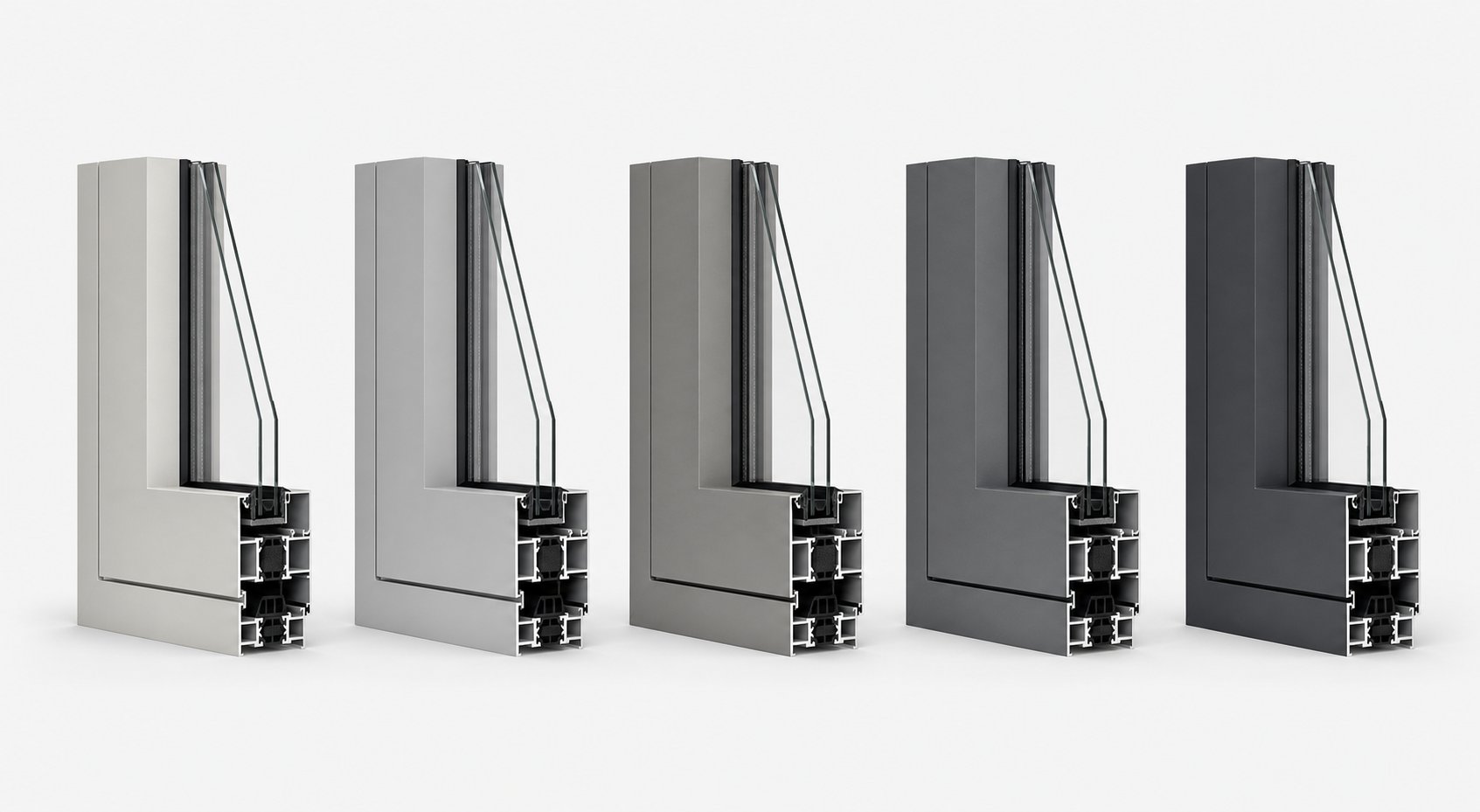
Five different greys can look like five different colours once they sit in a wall. The RAL colour standard removes guesswork by assigning each shade a unique four-digit code, so you, your builder, and your window supplier are always talking about the exact same tone. For grey aluminium window RAL colour codes, the most commonly specified options fall within the 7000 series, but they vary dramatically in warmth, depth, and visual impact depending on the property they frame.
Popular RAL Codes for Grey Aluminium Frames
Rather than relying on shade names alone, which tell you very little about how a colour actually reads on a facade, the table below describes each option as it appears in real-world conditions.
| RAL Code | Shade Name | Visual Description | Best Application |
|---|---|---|---|
| RAL 7016 | Anthracite Grey | A deep, near-black grey with cool blue undertones. Reads almost charcoal in overcast light, slightly lighter in direct sun. | Contemporary new builds, rendered facades, modern extensions |
| RAL 7015 | Slate Grey | A rich, blue-leaning mid-dark grey. Softer than anthracite but still distinctly dark. Evokes natural slate. | Transitional designs, stone-clad homes, commercial facades |
| RAL 7012 | Basalt Grey | A true mid-tone grey with neutral undertones. Neither warm nor cool, it balances between light and dark. | Versatile across styles; suits brick veneer, mixed-material facades |
| RAL 7005 | Mouse Grey | A warm, earthy mid-grey with subtle green-brown undertones. Understated and organic in feel. | Period properties, rural settings, homes with natural stone or timber |
| RAL 7038 | Agate Grey | A light, warm grey with a slightly creamy base. Closer to a tinted off-white than a conventional grey. | Heritage homes, cottages, federation-era properties, lighter facades |
RAL 7016 anthracite grey windows remain the single most requested shade from Australian suppliers, sitting just behind white as an overall colour choice. Its popularity comes from the bold contrast it creates against light-coloured render and pale brickwork, giving buildings a sharp, defined edge.
How Light and Dark Grey Tones Differ in Practice
Choosing between light vs dark grey aluminium windows is not purely aesthetic. It changes how your home reads from the street and how the frames interact with shifting daylight throughout the day.
Lighter greys like RAL 7038 agate grey window frames recede visually into the wall. They soften the window opening rather than framing it, which makes them a natural fit for heritage properties where you want modern performance without bold contemporary contrast. On overcast days, agate grey almost disappears into a white or cream rendered wall. In direct sunlight, it warms up slightly, picking up the creamy undertone.
Darker tones do the opposite. RAL 7016 and RAL 7015 push forward visually, creating graphic lines that define each opening. On a north-facing elevation drenched in Australian sun, anthracite grey can appear slightly lighter than expected. On a shaded southern wall, it reads closer to black. Orientation matters more than most homeowners anticipate, so viewing a physical sample against your actual facade, in natural light, at different times of day, is worth the effort before committing.
Mid-tones like RAL 7012 sit in the safest visual territory. They carry enough depth to feel intentional without the drama of near-black, and they forgive surrounding colour shifts better than either extreme.
Choosing Between Standard and Custom Grey Shades
Most Australian aluminium window suppliers stock a core range of standard RAL greys, typically RAL 7016, RAL 7021, and RAL 7038, because high demand keeps these in regular production. Selecting a standard shade means shorter lead times and, in many cases, no colour surcharge at all.
Custom RAL matching opens the full 213-colour Classic palette, plus British Standard colours for precise heritage matching. The trade-off is cost and time. Expect a 10 to 20 per cent premium on the frame price and an additional four to eight weeks on your lead time, since the manufacturer batches custom powder-coating runs rather than coating individual orders. For a single window replacement, that surcharge feels steep. Across a full-house package of ten or more openings, it spreads thin and may be worth every dollar for the best grey shade for aluminium windows on your specific property.
Knowing your shade is only half the decision. The other half is deciding what style of window that grey frame will take, because profile shape, opening mechanism, and glass configuration all influence how your chosen colour presents on the finished facade.
Every Window Style Available in Grey Aluminium
A grey frame only performs as well as the style behind it. The wrong opening mechanism in the wrong room creates daily frustration, no matter how perfect the colour looks from outside. Here is how the main styles rank for versatility across Australian residential and commercial projects:
- Casement (side-hung and top-hung) — suits almost every room and property type
- Flush casement — ideal for heritage-sensitive facades requiring a flat, clean profile
- Fixed pane — maximises glass area for light and views where ventilation is handled elsewhere
- Tilt-and-turn — best for upper-storey apartments and hard-to-reach openings
- Sliding sash (vertical) — maintains period proportions with modern performance
- Bay and oversized assemblies — creates architectural focal points and wide-span glazing
Casement and Flush Casement Grey Aluminium Windows
Grey aluminium casement windows remain the workhorse of the market. Side-hung sashes swing outward to provide full ventilation, while top-hung variants work well above kitchen benchtops and in bathrooms where privacy and airflow need to coexist. The slim aluminium profile, typically 45 to 65 mm, means you see more glass and less frame compared to the same opening fitted with uPVC.
Flush casement aluminium windows in grey take that clean profile a step further. The sash sits perfectly flat within the frame when closed rather than projecting forward, which eliminates the visible step between sash and outer frame. This creates a smooth, uniform facade particularly suited to heritage homes, federation-era cottages, and conservation-sensitive streetscapes where the council wants understated window detailing. The flush design also reduces wind resistance and simplifies cleaning, since there is no protruding edge to catch dirt.
Sliding Sash and Tilt-and-Turn Options
Period homes across Sydney, Melbourne, and Brisbane often feature traditional double-hung proportions. Grey aluminium sliding sash windows replicate those vertical proportions and sight lines while delivering thermal performance and low maintenance that timber originals cannot match. Counterbalanced spring mechanisms replace old rope-and-weight systems, and the narrow aluminium sections disappear behind the glazing bars, preserving authentic character from the street.
Tilt and turn grey aluminium frames offer a different kind of flexibility. In tilt mode, the sash angles inward at the top, allowing secure ventilation without fully opening the window. In turn mode, it swings inward like a door for unrestricted airflow and easy cleaning from inside. This dual function makes them a practical choice for apartments, multi-storey homes, and any upper-floor room where leaning out to clean is not an option.
Fixed, Bay, and Oversized Grey Aluminium Glazing
Where views matter more than ventilation, oversized grey aluminium fixed windows deliver the largest uninterrupted glass area possible. Aluminium’s structural rigidity allows single panes to span widths of 1,500 mm or more without requiring a central mullion, something uPVC simply cannot achieve at equivalent dimensions without reinforcement. Picture windows, corner glazing, and full-height feature panels all benefit from this strength-to-weight ratio.
Bay and bow window assemblies combine multiple angled panels into a projecting structure that adds floor space and dramatic natural light. The slender grey frames keep sightlines minimal, letting the geometry of the bay itself become the design statement. For readers weighing up which style and configuration suits their project, MEICHEN’s aluminium window range offers a practical starting point for exploring custom colour, hardware, and opening-type combinations tailored to Australian residential and commercial builds.
Style determines how the window looks and operates. What determines how it performs against the elements, and how it stacks up against other frame materials over a 30-year ownership period, comes down to engineering and material science.
Grey Aluminium vs uPVC vs Timber Windows Compared
Three materials dominate the grey window market in Australia, and each earns its place in different contexts. The trouble is, most comparisons stop at vague claims about one being “better” without quantifying where and why. The table below puts measurable differences side by side so you can judge which material genuinely fits your project rather than relying on a supplier’s preferred recommendation.
| Factor | Grey Aluminium | Grey uPVC | Grey Timber |
|---|---|---|---|
| Frame thickness (sightline) | 45–65 mm | 70–80 mm | 55–70 mm |
| Typical lifespan | 40–50 years | 20–35 years | 30–60 years (species dependent) |
| Recyclability | 95%+ indefinitely, no quality loss | Recyclable up to 10 times; limited infrastructure | Biodegradable; renewable if FSC-sourced |
| Maintenance | Wash twice yearly; no repainting | Wash twice yearly; no repainting | Refinish every 5–7 years |
| Maximum single span width | 1,500 mm+ without mullion | ~1,200 mm (steel-reinforced) | ~1,200 mm (hardwood) |
| Colour stability over time | Excellent; powder coat holds 30–40 years | Can yellow or discolour under UV after 15–20 years | Depends entirely on refinishing schedule |
| Structural strength | Highest strength-to-weight ratio | Adequate with internal steel reinforcement | Good, but limited by moisture sensitivity |
Frame Profiles and Sightline Comparison
If you are wondering whether aluminium windows are better than uPVC for maximising natural light, the aluminium window frame sightlines comparison tells a clear story. At 45 to 65 mm, slimline grey aluminium window profiles are roughly 30 to 40 per cent narrower than their uPVC equivalents. In practical terms, that means more glass and less frame for the same rough opening. On a standard 1,200 mm wide window, the difference can translate to an additional 30 to 50 mm of visible glass on each side. Scale that across a full-house replacement of ten or more openings and the cumulative gain in daylight and view is immediately noticeable.
Aluminium achieves this because of its superior tensile strength. The frame does not need the thick, multi-chambered profile that uPVC relies on for rigidity, nor the material bulk that timber requires to prevent warping. Slimmer sections also mean the window looks lighter on the facade, which is why architects gravitate toward aluminium for contemporary elevations and oversized glazing assemblies where every millimetre of frame competes with the view.
Lifespan and End-of-Life Recyclability
A grey aluminium frame specified today can realistically serve 40 to 50 years before hardware or seals need attention, with the frame itself outlasting multiple sets of hinges and gaskets. Comparing aluminium window lifespan vs timber, hardwood timber can match that figure, but only with diligent maintenance cycles. Softwood timber falls shorter at 25 to 35 years. uPVC sits at the lower end, typically lasting 20 to 35 years before seals degrade, hardware fatigues, and profiles start to look tired.
At end of life, the environmental story diverges sharply. Aluminium is 95 per cent recyclable and can be reprocessed indefinitely without any loss in structural quality, using only five per cent of the energy required to produce virgin material. uPVC can technically be recycled up to ten times, but collection infrastructure in Australia remains limited and each cycle introduces minor degradation. Timber biodegrades naturally and scores well on embodied carbon if sustainably sourced, though treated or painted timber complicates the disposal path. For homeowners factoring long-term environmental responsibility into their decision, aluminium’s circular recyclability is difficult to beat.
Maintenance and Long-Term Ownership Costs
Upfront price is only one part of the equation. Grey aluminium vs grey uPVC windows diverge significantly once you account for ongoing ownership costs over two or three decades.
Aluminium frames need a wash with pH-neutral soapy water twice a year and an annual lubrication of hinges. That is the full extent of routine care. No sanding, no priming, no recoating. Timber, on the other hand, demands refinishing every five to seven years, which means professional repainting or staining at each cycle. Over a 30-year ownership period on a home with ten windows, that adds up to four or five refinishing rounds at $300 to $700 per window per cycle — a cumulative maintenance spend of $12,000 to $35,000 in addition to the higher purchase price. uPVC matches aluminium for low hands-on effort, but its shorter lifespan means you may face a full replacement within 25 years, effectively doubling the initial outlay.
When you spread the higher initial cost of aluminium across its 40-to-50-year service life and factor in zero repainting, zero replacement, and sustained colour stability, the cost per year of ownership often comes in lower than either alternative. The material that appears most expensive on the quote frequently costs the least over the life of the home.
Cost and longevity paint an important part of the picture, but performance under Australian climate extremes, particularly heat absorption on dark-coloured frames and thermal bridging through metal profiles, deserves equally close attention.
Thermal Performance and Energy Efficiency of Grey Aluminium
Aluminium conducts heat roughly 1,000 times faster than timber and around 4,000 times faster than uPVC. On paper, that sounds like a disqualifying flaw for any material tasked with keeping Australian homes comfortable year-round. In practice, a single engineering solution transforms the equation entirely: the thermal break. Understanding how it works, and why your chosen shade of grey adds a specific wrinkle to the thermal picture, puts you in a stronger position to specify frames that perform rather than just look the part.
How Thermal Breaks Work in Aluminium Window Frames
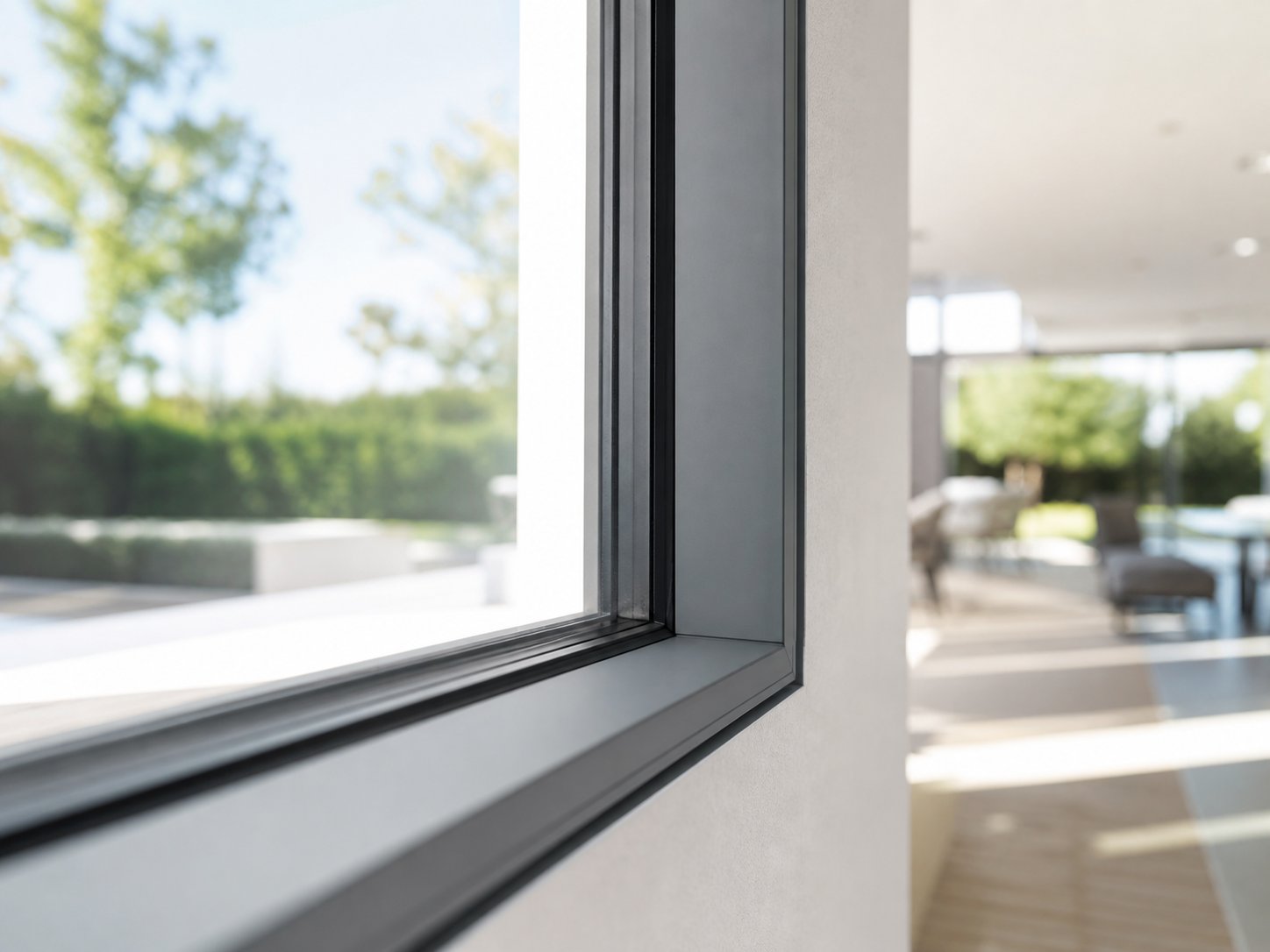
A thermal break is a non-conductive barrier built into the aluminium profile itself. Rather than one continuous metal extrusion running from the outside face to the inside face, thermally broken aluminium frame designs split the profile into two distinct sections: an outer aluminium shell exposed to the weather, and an inner aluminium shell facing the conditioned room. Bridging the gap between them is a rigid strip of polyamide (nylon), mechanically bonded to both halves.
Polyamide has extremely low thermal conductivity. It blocks heat from migrating through the frame the way a continuous metal section would allow. The result is that the interior surface of the frame stays close to room temperature, even when the exterior face is baking in summer sun or chilled by a winter morning. This eliminates the cold-bridging that plagued older single-skin aluminium windows from the 1970s and 80s, and it dramatically reduces the condensation risk that gave aluminium frames their outdated reputation for being “cold.”
Not all thermal breaks deliver the same performance. Wider polyamide strips improve insulation. A 24 mm break performs noticeably better than a 16 mm break, reflected directly in the frame’s U-value. Higher-quality systems also reinforce the polyamide with glass fibre for structural rigidity, ensuring the break does not compromise the frame’s ability to support large or heavy glazing units. When evaluating suppliers, ask for the thermal break width and whether the system has been tested to AS 2047 for structural adequacy and weather resistance under Australian conditions.
Why Dark Grey Frames Absorb More Heat
Here is where shade selection intersects with physics. Darker colours absorb more solar radiation than lighter ones. A deep anthracite grey frame (RAL 7016) can reach surface temperatures above 70°C on a north or west-facing elevation during an Australian summer, while a lighter agate grey (RAL 7038) on the same wall might peak around 50°C. That temperature gap is not trivial.
Higher surface temperatures increase thermal expansion in the frame material. Aluminium expands and contracts with heat cycles, and darker frames experience wider swings. Over years of daily thermal cycling, poorly engineered frames can stress seals, hardware fixings, and glazing pockets. The good news is that aluminium handles this far better than uPVC. Where dark PVC frames risk softening and warping at around 60 to 70°C, aluminium remains dimensionally stable well beyond typical surface temperatures encountered on Australian facades.
Quality thermal break engineering mitigates the heat absorption concern further. Because the polyamide barrier separates inner and outer profiles, the heat absorbed by the dark exterior face does not conduct through to the interior section. The room-facing surface stays comfortable regardless of how hot the outside shell gets. For sun-exposed orientations, specifying a wider thermal break (20 mm or above) adds a practical margin of safety that keeps the system performing across decades of harsh UV and heat cycles.
U-Values and Glazing Pairings for Grey Aluminium
A window’s energy efficiency is measured as a whole system, not just the frame or the glass in isolation. The U-value, expressed in watts per square metre per degree Kelvin (W/m²K), captures how quickly heat passes through the complete assembly. Lower numbers mean better insulation.
Australian data from Cooee Architecture’s window performance research illustrates the scale of difference between system types:
- Single glazed, standard aluminium frame: U-value 6.7
- Double glazed, standard aluminium frame (no thermal break): U-value 4.8
- Double glazed, thermally broken aluminium frame: U-value 3.6
- Double glazed, timber or PVC frame: U-value 3.3
Thermally broken aluminium closes the gap significantly, landing within striking distance of timber and PVC performance. It is worth noting that even at U 3.6, a window still loses heat roughly eight times faster than a standard insulated brick veneer wall, which reinforces why glazing specification and window placement both matter so much in energy-efficient design.
Triple glazing pushes the whole-window U-value lower again, typically into the 1.4 to 2.0 range depending on the system, by adding a third pane and an additional sealed air cavity. Argon gas fills between panes further reduce convective heat transfer within the unit, since argon is denser and less conductive than air. For most Australian climate zones, double glazing with argon fill in a thermally broken aluminium frame meets NCC Section J energy requirements comfortably. Triple glazing makes most sense in alpine regions, highly exposed coastal locations, or projects targeting NatHERS ratings of 8 stars and above.
The Solar Heat Gain Coefficient (SHGC) adds another layer to the decision. In cooler southern climates like Victoria and Tasmania, a higher SHGC allows winter sun to passively heat interiors through the glass, reducing reliance on mechanical heating. In tropical Queensland or western-facing walls in Perth, a lower SHGC blocks unwanted solar heat from overloading your cooling system. An energy assessor working with your WERS (Window Energy Rating Scheme) data can recommend the ideal balance of U-value and SHGC for each orientation of your home.
Thermal performance determines comfort and running costs. What determines whether your frames still look sharp and function smoothly in year 20, 30, and beyond comes down to the durability of the powder-coated finish and how you maintain it.
Durability, Maintenance, and Finish Longevity
Suppliers love to call their frames “low maintenance” and leave it at that. But longevity is not an inherent property of a grey aluminium frame. It is the measurable outcome of a specific coating process, a specific pretreatment protocol, and an owner who understands what keeps the finish performing versus what quietly degrades it. Here is the full picture.
Powder Coating Technology and Warranty Coverage
Every grey aluminium window starts as a raw extrusion. Before any colour touches it, the aluminium must be pretreated to seal the substrate and create a surface the coating can grip. This step is easy to overlook, yet it is critical. As QUALICOAT notes, powder coatings are air-permeable, so if the pretreatment is poorly applied or skipped entirely, oxidisation creeps beneath the finish over time and causes it to lift. Licensed applicators undergo routine independent inspections to ensure pretreatment protocols stay consistent.
With pretreatment complete, grey powder particles are applied electrostatically. The charged particles cling evenly to the aluminium profile, wrapping corners and recesses uniformly. The frame then enters a curing oven at around 180 to 200°C, where the powder melts, flows, and cross-links into a continuous, hard film typically 60 to 80 microns thick. The result is a finish that resists chipping, peeling, and UV degradation far longer than wet-applied paint.
For coastal properties, marine grade powder coating for aluminium windows adds another layer of protection. These formulations and pretreatments are designed to withstand the corrosive salt-laden atmosphere found within a few kilometres of the shoreline. Manufacturers applying to QUALICOAT’s “Seaside” classification must meet stricter salt spray and weathering standards, and the recommended cleaning frequency increases to at least quarterly as a warranty condition.
Premium powder compositions using robust binder systems offer life expectancies well beyond 30 years, often approaching the lifespan of the building itself. Manufacturer warranties typically range from 10 to 25 years on finish integrity depending on the specification class and installation environment, with some high-end systems guaranteeing colour retention and gloss levels over that period.
The structural frame beneath that coating matters equally. Frames tested to PAS 24 security standards demonstrate that the aluminium system, including frame, glazing, locks, and hardware, resists forced entry as a complete assembly. That level of structural testing gives confidence that the frame will not flex, distort, or fatigue over decades of use, which in turn protects the powder-coated finish from stress cracking at corners and joints.
How Different Grey Shades Show Dirt and Weathering
Here is something no sample swatch will tell you: your choice of grey shade directly affects how much cleaning your windows demand in practice.
Lighter greys like RAL 7038 reflect more light and appear cleaner at a distance, but they show water streaks, bird droppings, and organic staining with unforgiving clarity up close. A white-grey frame beneath a roofline without guttering will display every rain trail within weeks. Do grey aluminium windows fade over time? Lighter shades resist visible UV chalking better than rich reds or blues, but they accumulate surface grime that mimics dullness if neglected.
Darker tones like RAL 7016 anthracite hide organic staining and water marks more effectively, yet they reveal a different enemy: fine dust, pollen, and the chalky residue from atmospheric pollutants. In spring, a dark grey frame on a garden-facing elevation can develop a visible film of pollen within a fortnight. Coastal salt deposits also show as a white haze on dark surfaces before they become apparent on lighter ones.
Mid-tone greys, RAL 7012 basalt grey and RAL 7005 mouse grey, strike the most practical balance. They mask both organic streaking and dust accumulation reasonably well, extending the interval between cleans without looking neglected. If minimising visible dirt is a priority alongside aesthetics, mid-tones earn their place.
Cleaning and Care for Long-Term Finish Performance
A grey aluminium window maintenance guide does not need to be complicated, but it does need to be followed. The Window and Glass Association of New Zealand recommends a washdown every three months as standard. For homes in coastal zones, near construction sites, or in high-pollution urban environments, monthly cleaning prevents corrosive deposits from etching into the coating surface.
Here is how to clean grey aluminium window frames properly: use a soft-bristled brush or microfibre cloth with a dilute solution of pH-neutral liquid dishwashing detergent in warm water. Rinse thoroughly with clean water afterwards. That is genuinely all it takes for routine care. Some brushes with built-in detergent dispensers connect directly to the garden hose, making the rinse step seamless.
What degrades powder coating over time is not age alone. It is the accumulation of specific missteps:
- Using abrasive cloths, steel wool, or scouring pads that scratch through the finish
- Applying aggressive solvents such as turpentine, thinners, kerosene, or citrus-based cleaners
- Allowing sunscreen to contact coated surfaces, as titanium dioxide and zinc oxide in sunscreen can accelerate degradation up to 100 times faster than normal weathering
- Neglecting drainage channels, allowing water to pool and concentrate corrosive pollutants against the frame
- Leaving squeegee residue from glass cleaning sitting on frame surfaces, which concentrates airborne contaminants onto the coating
- Cleaning in direct sun or when surface temperature exceeds 25°C, which can cause cleaning solution to dry onto the finish before rinsing
If your frames do develop surface chalking from prolonged UV exposure (appearing as a faint whitening on darker shades), this is not a sign the coating has failed. Regular cleaning prevents it, and a light automotive cutting polish can restore the surface in more advanced cases. Touch-up paint from the manufacturer or a recoat by a specialist refinisher handles localised damage without removing frames from the building.
Annual lubrication of hinges and hardware with a silicone-based spray rounds out the routine. Check seals and gaskets at the same time, and clear any debris from drainage slots at the sill. These small actions preserve both the powder coated aluminium window durability and the operating performance of the frame for decades.
A frame that holds its finish for 30-plus years still needs to look right on the building from day one. Choosing the correct grey for your specific facade material is where shade theory meets streetscape reality.
Matching Grey Shades to Your Property and Exterior Materials
“Grey suits everything” is technically true and practically useless. A deep anthracite frame that looks stunning on a white-rendered coastal build can overpower a soft sandstone cottage. And a delicate agate grey that harmonises beautifully with heritage brickwork can look washed-out and indecisive against dark modern cladding. Knowing what grey RAL suits your house requires matching the frame tone to the specific materials surrounding it.
The table below maps common Australian exterior finishes to the grey shades that work best with each, and explains why.
| Exterior Material | Recommended RAL Codes | Why It Works |
|---|---|---|
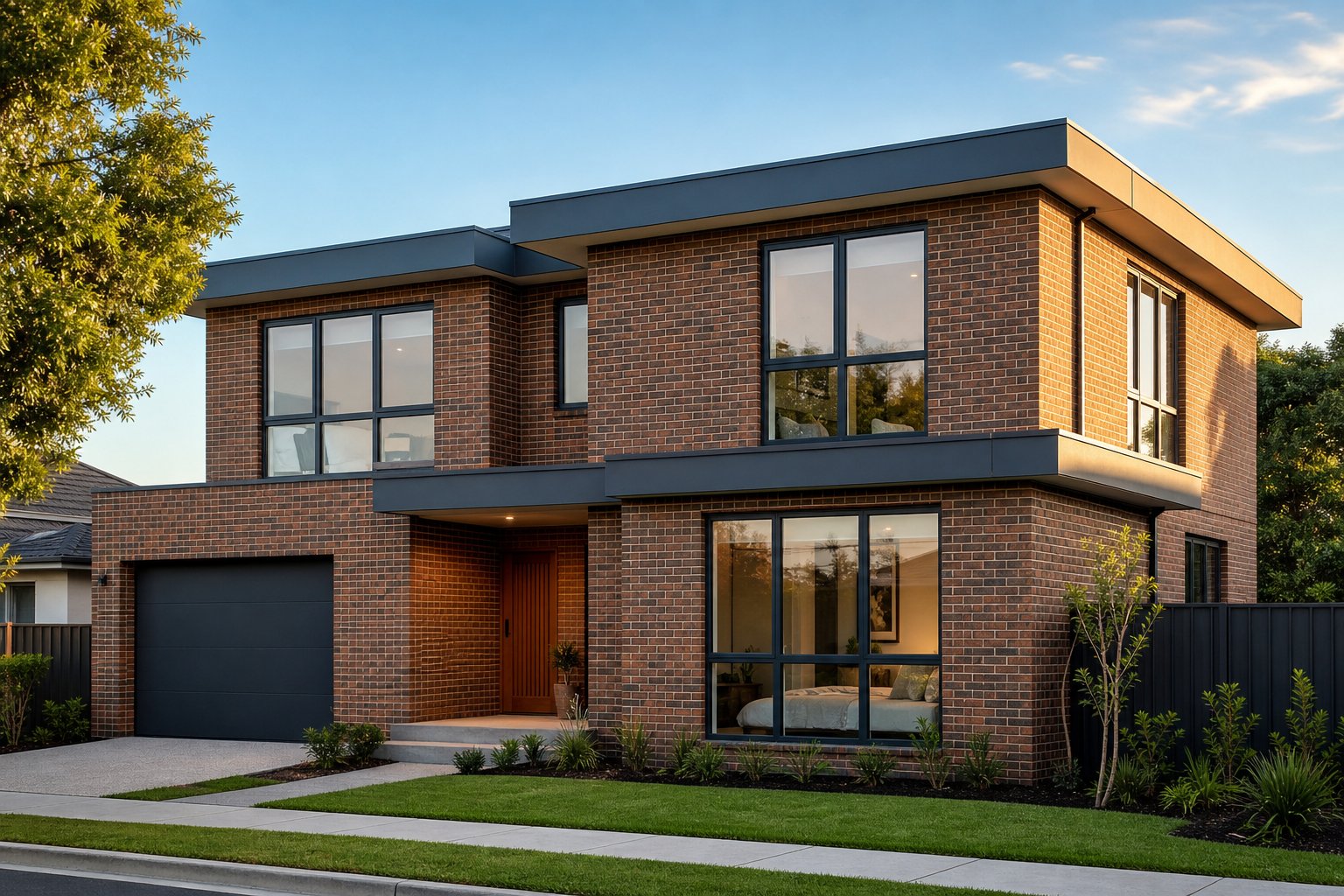
| Red brick / brown brick | RAL 7016 (Anthracite), RAL 7012 (Basalt) | Dark greys create sharp contrast against warm tones; mid-greys offer subtlety without disappearing |
| Yellow / cream brick (London stock style) | RAL 7038 (Agate), RAL 7032 (Pebble Grey) | Lighter warm greys harmonise with yellow undertones rather than fighting them with cool darkness |
| White render | RAL 7016 (Anthracite), RAL 7015 (Slate) | Darker frames define window openings crisply against pale walls, delivering graphic modern contrast |
| Coloured render (cream, grey, sage) | RAL 7016 (Anthracite), RAL 7012 (Basalt) | Two to three shades darker than the wall creates definition without clashing |
| Natural stone (sandstone, bluestone, granite) | RAL 7012 (Basalt), RAL 7005 (Mouse Grey) | Mid-tones complement natural variation in stone without competing for attention |
| Timber cladding (weatherboard, shiplap) | RAL 7038 (Agate), RAL 7005 (Mouse Grey) | Earthy, warm greys echo the organic palette of wood tones |
| Dark modern cladding (charcoal, black metal) | RAL 7038 (Agate), RAL 7012 (Basalt) | Lighter or mid-grey frames provide tonal separation; matching too dark loses definition |
Grey Aluminium Windows on Brick Properties
Brick veneer dominates Australian residential construction, so getting this pairing right matters for most homeowners. The best grey window colour for red brick depends on how much contrast you want. RAL 7016 anthracite against traditional red or brown brick produces a bold, contemporary statement. The deep frame draws the eye, frames each opening like a picture border, and gives the facade a defined, architectural feel. It works particularly well on renovated 1960s and 70s brick homes where the goal is to push the property into a more modern aesthetic.
For a softer result, RAL 7012 basalt grey is slightly lighter than anthracite and reads as understated rather than dramatic. It adds depth without dominating the brickwork. On cream or yellow brick, cool dark greys can feel jarring. Lighter warm shades like RAL 7038 agate grey, with its subtle green undertone, blend naturally with the warmer brick palette and suit grey aluminium windows on period properties that want a measured update rather than a dramatic transformation.
Pairing Grey Frames with Render, Stone, and Cladding
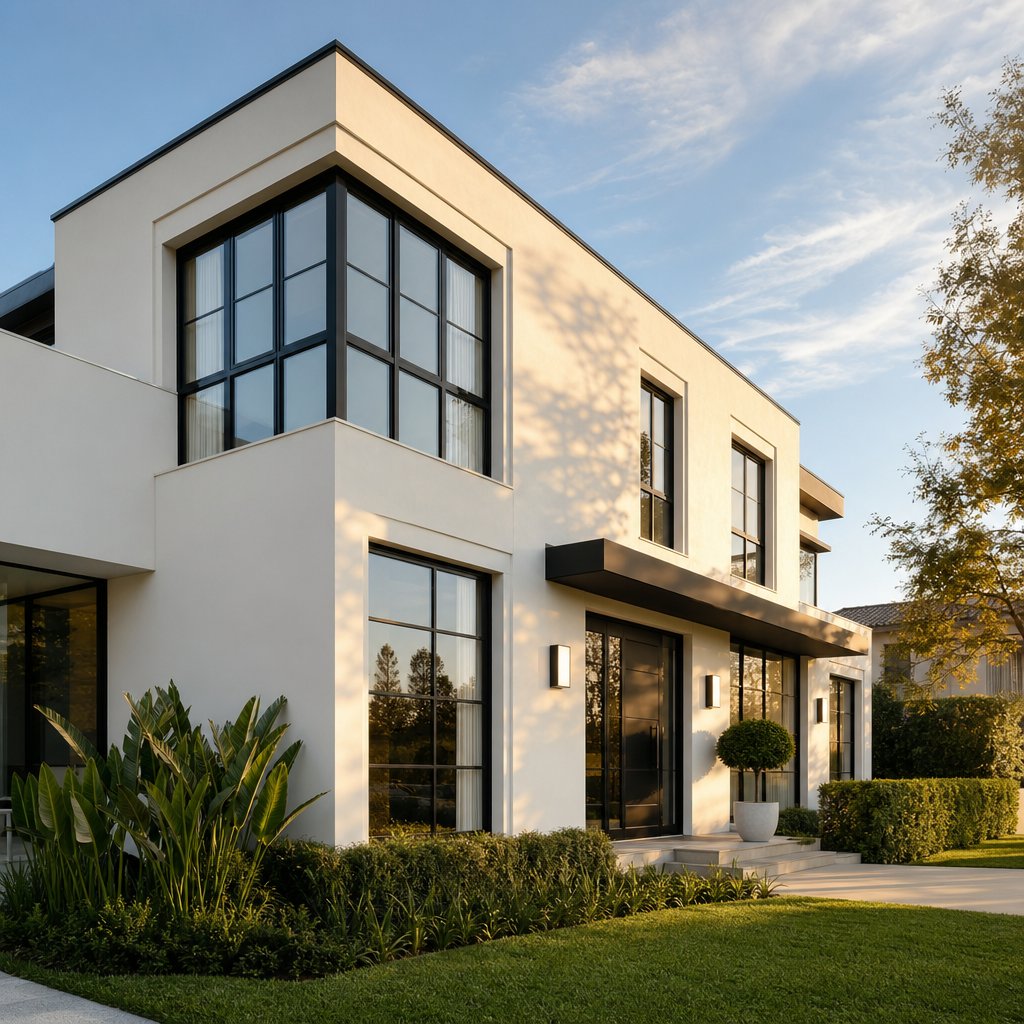
Grey aluminium windows on white render is one of the most popular pairings in Australian new builds for good reason. The pale wall becomes a canvas, and a dark grey frame provides the graphic contrast that makes the architecture feel intentional and designed. Anthracite or slate grey frames on a crisp white rendered facade read as clean, confident, and distinctly modern.
Natural stone requires more restraint. Sandstone and bluestone carry their own visual complexity through colour variation, veining, and texture. A mid-tone grey like basalt or mouse grey sits alongside that complexity without demanding attention, letting the stone remain the hero material. Darker frames can make stone facades feel heavier than intended.
On homes with dark modern cladding, the instinct to match frame colour to cladding colour is common, but it flattens the facade. A slightly lighter grey frame creates subtle tonal layering that gives the elevation depth and prevents windows from vanishing into the wall. Think of it as grey-on-grey done with intentional separation rather than camouflage.
Interior Design Continuity with Grey Window Frames
Windows are viewed from inside as much as outside, and a frame colour that looks perfect on the street can feel cold or intrusive in a white-walled living room. This is where dual colour aluminium window frames solve a real design problem. Most Australian aluminium manufacturers offer different finishes for the interior and exterior faces of the same frame. A common configuration is anthracite grey outside with white or light grey inside, giving you bold kerb appeal without compromising the brightness and neutrality of interior spaces.
If your interior leans toward warmer tones, timber floors, and natural textures, a lighter internal grey like RAL 7038 or even a custom warm grey maintains visual warmth rather than introducing a cool industrial note. Conversely, homes with polished concrete, dark joinery, or industrial-style fixtures benefit from carrying the exterior grey straight through to the interior for continuity. The flexibility to specify each face independently means the answer to “what grey RAL suits my house” can legitimately be two different codes on the same window.
Settling on the right shade and dual-colour configuration is a major design decision, but it is far from the last one. Glazing type, hardware finish, and handle colour all interact with your chosen grey to shape the final result.
Specifying Grey Aluminium Windows for Your Project
Choosing a shade of grey is one decision among dozens. Glazing type, hardware finish, handle profile, threshold style, and ventilation integration all feed into the final specification, and each choice interacts visually and functionally with the others. Treating these as afterthoughts leads to mismatched results. Treating them as a coordinated package produces windows that feel resolved from every angle. Here is a practical grey aluminium window specification checklist to work through before you sign off on an order:
- External RAL colour and internal RAL colour (if dual-colour)
- Glazing build-up: double or triple, gas fill, coatings
- Handle style and hardware finish
- Hinge type and colour
- Threshold material and profile
- Trickle vent requirement and colour match
- Obscure or specialty glass for bathrooms and street-facing openings
- Acoustic rating requirements (if applicable)
- Security hardware grade (compliance with relevant standards)
- Drainage and weatherseal colour
Glazing Options That Complement Grey Frames
The glass you pair with your grey frame affects both performance and aesthetics more than most homeowners expect. Clear float glass is the default, offering maximum light transmission and colour-neutral views. It works universally with every grey shade because it introduces no competing tone.
Low-E (low emissivity) coatings add a barely perceptible reflective layer to one surface of the glass, bouncing radiant heat back into the room during winter and rejecting solar heat in summer. Visually, modern low-E coatings are almost invisible, though some budget variants carry a faint blue or green tint that can subtly shift how the grey frame reads from outside. Ask for a sample glazed unit before committing if you are pairing low-E with lighter greys like RAL 7038 where any tint shows more readily.
Tinted glass, typically grey, bronze, or green body-tinted options, reduces glare and solar heat gain. Grey-tinted glass paired with a grey frame creates a monochromatic depth that looks cohesive and deliberately layered on modern facades. Bronze tint adds warmth that complements mid-tones like RAL 7005 mouse grey on timber-clad or earthy-palette homes.
For bathrooms, ensuites, and street-facing ground-floor openings, obscure glass in varying grades of opacity provides privacy without sacrificing natural light. Acoustic glazing, which uses laminated glass with a sound-dampening interlayer, suits urban properties facing busy roads. And self-cleaning coatings break down organic dirt using UV light and rinse clean with rainwater, a practical choice for hard-to-reach upper-storey fixed panes where ladder access is impractical.
Hardware Finishes and Handle Colours for Grey Windows
Hardware is where many projects quietly lose their visual coherence. A carefully chosen anthracite grey frame fitted with a mismatched chrome handle can feel unresolved, as though the specification ran out of attention at the last step. The best handle colour for grey aluminium windows depends on the aesthetic you are building.
Matt black handles and hinges create a unified, tonal look against dark greys like RAL 7016 and RAL 7015. The hardware recedes into the frame, letting the glazing dominate. This pairing suits minimal, contemporary facades where restraint is the goal.
Brushed stainless steel or satin chrome introduces a deliberate metallic contrast that reads as refined and slightly industrial. It works well on mid-tone greys (RAL 7012, RAL 7005) where the frame is not dark enough for black hardware to disappear and not light enough for chrome to feel cold.
Colour-matched grey hardware, available from most Australian suppliers in anthracite or graphite finishes, delivers the most seamless result. Handles, friction stays, and trickle vent covers all blend into the frame profile, creating an uninterrupted line. ERA’s hardware range demonstrates the breadth of finish options now available for aluminium systems, including finishes tested to BS EN 1670 Grade 5 for corrosion resistance, which is worth specifying for coastal Australian properties.
Thresholds deserve equal thought. Low-profile aluminium thresholds in matching grey maintain the clean line at the sill, while contrasting stainless steel thresholds suit homes with polished concrete or tile flooring that benefits from a visual dividing line between inside and out. Trickle vents, now required in many NCC compliance pathways for background ventilation, should be specified in the same RAL code as the frame. A white trickle vent on an anthracite frame is an avoidable mistake that catches the eye for the wrong reason.
From Specification to Installation
Understanding how to order grey aluminium windows removes uncertainty from the timeline. The process follows a predictable sequence, though lead times vary based on complexity and whether you have selected standard or custom colours.
It starts with a site survey. A technician measures each opening, checks structural tolerances, assesses existing lintels and reveals, and notes any access constraints for installation day. These measurements become the basis for manufacturing, so accuracy here prevents costly remakes.
Next comes specification sign-off. You confirm every detail: RAL colour, glazing build-up, opening type per window, hardware finish, handle style, threshold profile, and any special requirements like acoustic glass or obscure panels. Reputable suppliers provide a written schedule itemising each window with its unique specification. Review it carefully. Changes after sign-off typically mean delays and additional charges once production has begun.
Manufacturing lead times for standard grey aluminium window hardware options and stock RAL colours typically run four to six weeks in Australia. Custom colours, non-standard configurations, or peak-season orders can extend that to eight to twelve weeks. As industry lead time frameworks illustrate, the schedule moves through engineering approval, material procurement, fabrication, quality control, and dispatch as distinct phases, each with its own potential for variation.
Installation itself usually takes one to three days for a typical residential project of eight to twelve windows. Existing frames are removed, new frames are fitted, sealed, and flashed, and internal reveals are made good. Expect some disruption to internal finishes around the openings, which your builder or installer should discuss during planning.
For homeowners, renovators, and project teams ready to move from research into specification, MEICHEN’s aluminium window systems offer a clear path from custom grey configurations and hardware selection through to project-ready integration for Australian residential and commercial builds.
With the practical decisions mapped out, a few persistent myths still hold people back from committing to grey aluminium. Most stem from outdated experiences with older-generation frames that bear little resemblance to current technology.
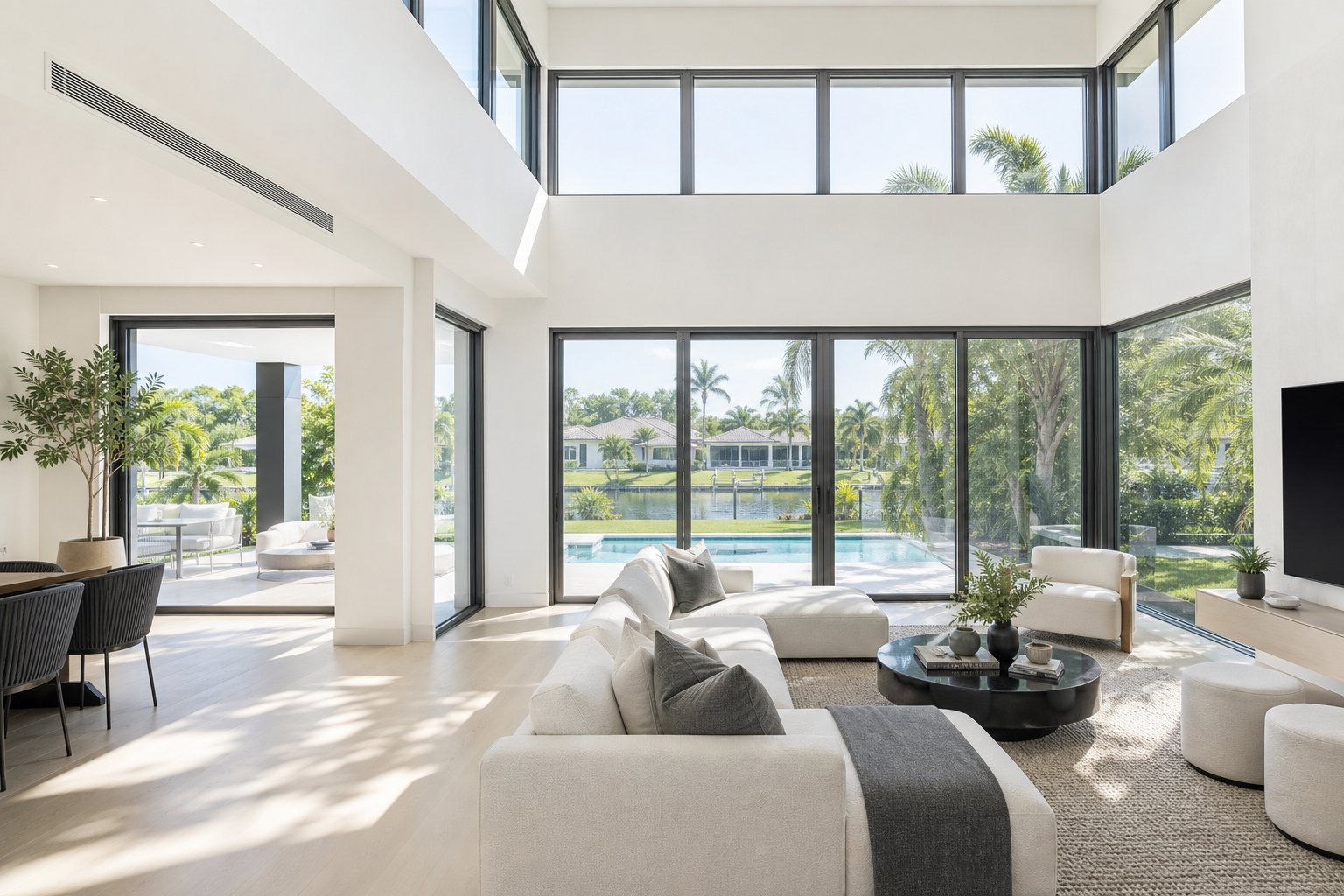
Common Myths About Grey Aluminium Windows Debunked
Hesitation around grey aluminium often traces back to assumptions that made sense decades ago but no longer reflect what modern frames actually deliver. Three concerns come up more than any others.
Do Dark Grey Frames Make Rooms Darker Inside
“Dark frames block light and make interiors feel gloomy.”
The glass area determines how much daylight enters a room, not the colour of the narrow border surrounding it. On a standard 1,200 mm window, the frame occupies roughly 10 to 15 per cent of the total opening. Whether that slim perimeter is white, anthracite, or jet black changes measurable light transmission by less than 2 to 3 per cent in controlled tests, a difference the human eye cannot perceive in everyday conditions.
Here is the twist that actually works in your favour: do grey aluminium windows make rooms dark? No. And aluminium’s slimmer sightlines (45 to 65 mm versus 70 to 80 mm for uPVC) mean less frame and more glass in the same rough opening. Replacing thick white uPVC with dark grey aluminium often results in a net gain of visible glass area, delivering slightly more natural light than before despite the darker frame colour.
Will Grey Aluminium Windows Date Quickly
“Grey is just a trend. It’ll look dated in ten years.”
Colour trends that date fastest are the ones that spike suddenly and peak sharply. Grey took a different path. Its rise has been long and steady rather than explosive, spreading gradually from commercial architecture into mainstream residential over more than a decade. Installations fitted eight or nine years ago still look entirely current.
Will grey windows go out of fashion? Consider what grey actually is: a neutral positioned between black and white, two colours nobody questions as timeless. It carries no era-specific association the way avocado green screams the 1970s or terracotta ties to the 1990s. Grey sits alongside natural stone, exposed concrete, and raw timber as a material-driven choice rather than a fashion-driven one. Those materials have sustained relevance for generations because they connect to texture and tone rather than fleeting palette trends. Grey aluminium follows the same logic.
Is Aluminium Cold to the Touch and Prone to Condensation
“Aluminium frames sweat in winter and feel icy cold inside.”
This reputation is earned, but it belongs to a previous generation. Single-skin aluminium frames fitted through the 1970s and 80s had no insulating barrier between the exterior and interior faces. The metal conducted cold straight through, dropping the inside surface below dew point and triggering condensation on every cold morning. Those frames deserved every complaint they received.
Modern thermally broken aluminium is a fundamentally different product. As Sheerline’s technical analysis confirms, a polyamide thermal break built into the frame separates the inner and outer aluminium sections entirely, eliminating cold bridging. The interior surface stays close to room temperature even when the outside face is near freezing. Are aluminium window frames cold to touch? With a properly specified thermal break (20 mm or wider), the room-facing profile feels comparable to timber or uPVC under the same conditions.
Aluminium windows condensation problems still occur occasionally, but the cause is almost always high indoor humidity or inadequate ventilation rather than frame deficiency. Cooking, showering, and drying clothes indoors all raise moisture levels. Without sufficient airflow, that moisture condenses on the coldest available surface, which may be the glass rather than the frame. Trickle vents, extractor fans, and steady heating address the root cause. The frame technology is no longer the weak link it once was.
Frequently Asked Questions About Grey Aluminium Windows
1. What is the most popular grey for aluminium windows in Australia?
RAL 7016 Anthracite Grey is the most requested shade from Australian aluminium window suppliers. It is a deep, near-black grey with cool blue undertones that creates bold contrast against light-coloured render and pale brickwork. Its popularity stems from delivering a sharp, defined edge on contemporary facades. RAL 7038 Agate Grey follows as the preferred choice for heritage properties and lighter facades, offering a softer, warmer tone that recedes visually rather than framing each opening dramatically.
2. Are grey aluminium windows energy efficient?
Yes, modern grey aluminium windows use polyamide thermal breaks that separate the inner and outer frame sections, preventing heat from conducting through the metal. A thermally broken aluminium frame paired with double glazing and argon gas fill achieves U-values around 3.6 W/m²K, which meets NCC Section J energy requirements for most Australian climate zones. Darker grey shades absorb more solar radiation on the exterior face, but the thermal break prevents that heat from reaching the interior surface, keeping the room-facing profile close to room temperature regardless of orientation.
3. Do grey aluminium windows make rooms darker?
No. Frame colour has negligible impact on interior light levels because the glass area, not the frame border, determines light transmission. On a standard window, the frame occupies roughly 10 to 15 per cent of the total opening, and changing its colour from white to dark grey alters measurable light by less than 2 to 3 per cent. Aluminium’s slimmer profiles (45 to 65 mm versus 70 to 80 mm for uPVC) actually allow more glass in the same opening, so replacing white uPVC with dark grey aluminium often delivers a net gain in visible glass area and natural light.
4. How do you maintain grey aluminium window frames?
Wash frames every three months with a soft cloth or brush using dilute pH-neutral dishwashing liquid in warm water, then rinse thoroughly. Coastal and high-pollution locations benefit from monthly cleaning. Avoid abrasive cloths, solvents, citrus-based cleaners, and contact with sunscreen, which can accelerate coating degradation. Annually, lubricate hinges with silicone spray, inspect seals and gaskets, and clear debris from drainage slots. Mid-tone greys like RAL 7012 require less frequent cleaning than very light or very dark shades because they mask both water streaks and dust buildup effectively.
5. How long do grey aluminium windows last before needing replacement?
Grey aluminium window frames typically last 40 to 50 years before requiring attention, with the powder-coated finish retaining colour stability for 30 to 40 years under Australian UV conditions. Hardware such as hinges and seals may need replacement during that time, but the frame itself outlasts multiple sets of components. By comparison, uPVC frames last 20 to 35 years and timber requires refinishing every 5 to 7 years to achieve its potential 30 to 60 year lifespan. Aluminium is also 95 per cent recyclable indefinitely without quality loss, adding long-term environmental value.
More Window & Door Guides