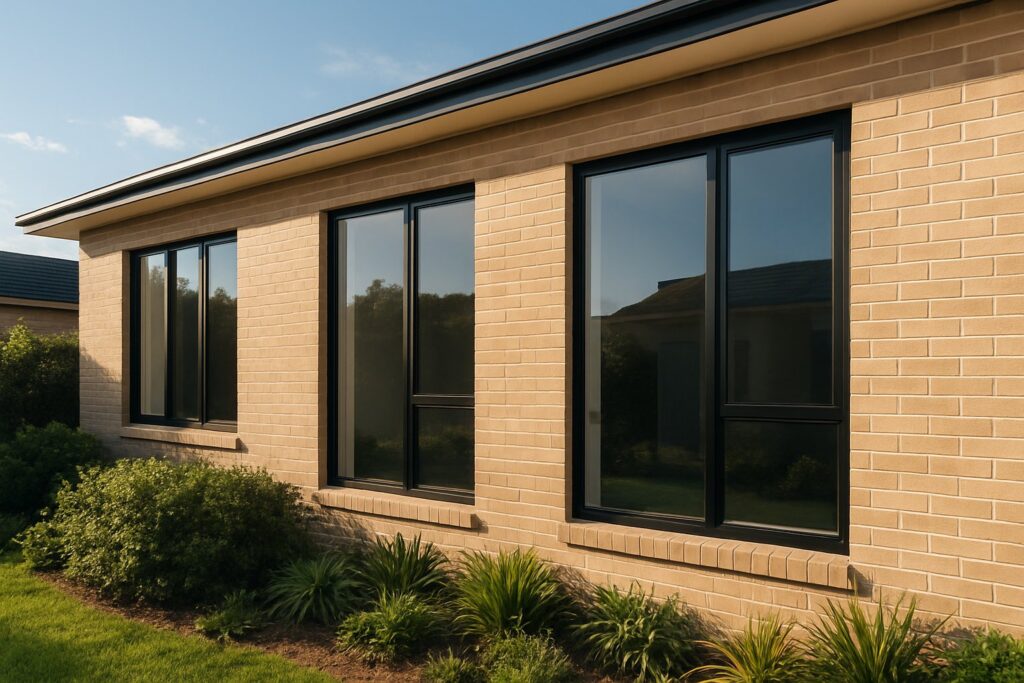
What Aluminium Windows Actually Cost in Australia
A single aluminium window price can range from around $150 for a small fixed pane to well over $1,000 for a large bi-fold or specialty unit, supply only. That spread is wide enough to make budgeting feel like guesswork. The reality is that most Australian homeowners and builders land somewhere in the middle, typically spending between $300 and $800 per standard window depending on type, size, and specification.
Why Aluminium Dominates the Australian Window Market
Aluminium accounts for the majority of Australian window installations, and climate is the main reason. The material shrugs off coastal salt air, handles intense UV without degrading, and meets bushfire compliance requirements in BAL-rated zones. It also suits the slim, contemporary profiles that dominate new builds from Brisbane down to Melbourne. Unlike timber, it demands virtually no repainting or refinishing over its lifespan. For a country with harsh sun, humid coastlines, and bushfire-prone fringes, aluminium simply fits the conditions better than most alternatives.
What This Pricing Guide Covers
This guide breaks down aluminium windows prices across every factor that shapes your final bill: window type, dimensions, glazing upgrades, colour finishes, installation context, and long-term ownership costs. It also compares aluminium against timber and uPVC so you can weigh value rather than just sticker price.
There is no single flat rate for aluminium windows. Your actual cost depends on the combination of window type, size, glazing, powder coat finish, and whether you are fitting out a new build or replacing existing frames in a renovation.
Whether you are pricing a full house lot for a new project or replacing a few tired openings in an older home, the sections ahead give you the detail you need to interpret quotes confidently and avoid budget surprises.
Price Ranges by Window Type
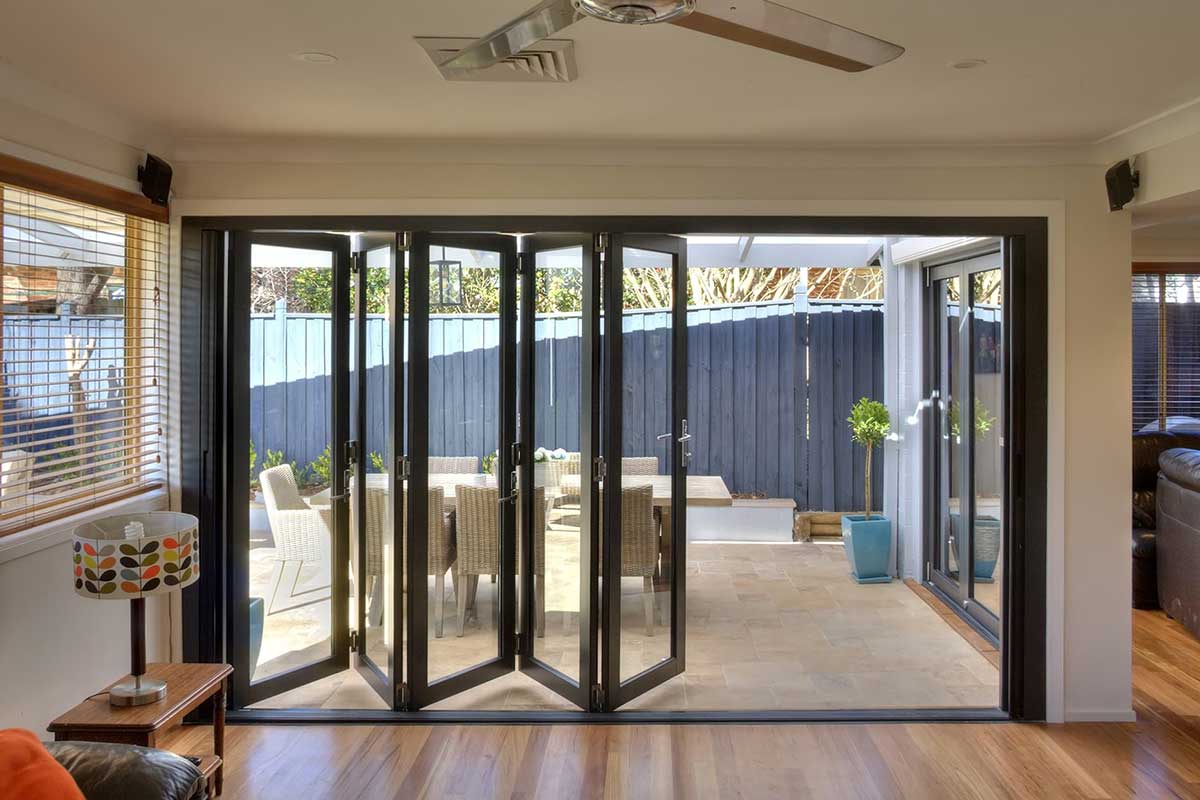
Not all aluminium windows carry the same price tag. The style you choose has a direct effect on cost because each type involves different hardware, moving parts, and fabrication complexity. A simple aluminium fixed window with no opening mechanism costs far less to produce than a multi-panel bi-fold that needs heavy-duty tracks, rollers, and precision alignment.
The table below gives indicative supply-only starting prices for standard configurations in the Australian market. Actual quotes will vary based on your specific dimensions, glazing, finish, and supplier.
| Window Type | Typical Size Range | Starting Price Range (AUD, Supply Only) |
|---|---|---|
| Fixed | 600mm x 600mm to 1200mm x 1200mm | $150 – $400 |
| Sliding | 900mm x 900mm to 1800mm x 1200mm | $250 – $600 |
| Awning | 600mm x 600mm to 1500mm x 1200mm | $300 – $700 |
| Casement | 600mm x 900mm to 1200mm x 1500mm | $350 – $750 |
| Louvre | 600mm x 900mm to 1200mm x 1500mm | $400 – $900 |
| Bi-Fold | 1800mm x 2100mm to 4000mm x 2400mm | $800 – $2,500+ |
These figures represent indicative starting points for standard single-glazed units in common powder coat colours. Double glazing, custom finishes, or non-standard dimensions will push costs higher.
Sliding Window Price Ranges
Aluminium sliding windows consistently sit at the affordable end of the spectrum. Their straightforward construction, with panels gliding horizontally along a track, means fewer moving parts and simpler fabrication compared to hinged styles. That mechanical simplicity translates directly to lower manufacturing and installation costs.
For a standard two-panel aluminium sliding window around 1200mm x 1200mm, expect to pay roughly $300 to $500 supply only. Larger three-panel sliding aluminium windows or those with upgraded hardware push toward $600 to $900. If you see the term sliding windows aluminum used in product listings, it refers to the same category. The price advantage makes them the go-to choice for bedrooms, living areas, and anywhere ventilation matters without a premium budget.
Awning and Casement Window Costs
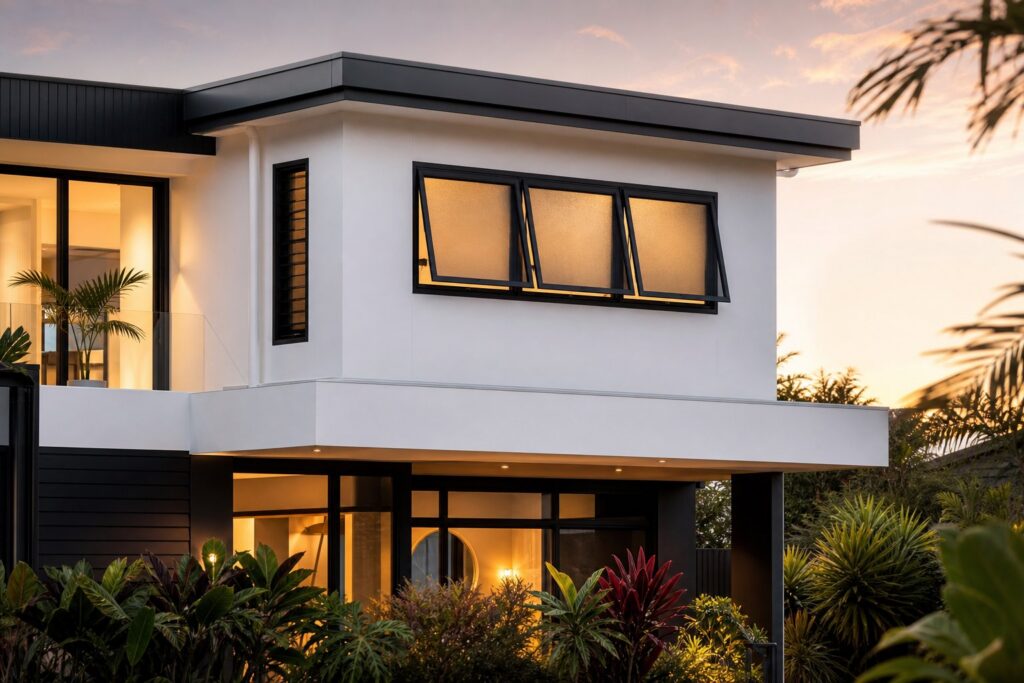
Awning and casement windows cost more than sliders because they rely on hinged mechanisms, friction stays, and winding hardware that adds both material and assembly time. Awning windows hinge at the top and push outward, making them popular in bathrooms and kitchens where rain protection during ventilation is useful. Casement windows hinge at the side and offer a wider opening angle.
Both styles typically start around $300 to $400 for smaller units and climb to $700 or beyond as the panel size increases. The hardware quality matters here. Budget units use basic friction stays, while higher-spec versions feature stainless steel components rated for coastal environments, and that upgrade adds $50 to $150 per window.
Bi-Fold and Specialty Window Pricing
Bi-fold windows sit at the premium end. Multiple panels fold and stack against each other using heavy-duty top and bottom tracks, precision rollers, and complex locking systems. A standard four-panel bi-fold spanning around 3000mm can easily start at $1,200 and reach well beyond $2,500 depending on glazing and finish. They deliver dramatic openings that connect indoor and outdoor spaces, but that architectural impact comes at a price.
Louvre windows occupy the mid-to-upper range. Their adjustable glass blades, housed in an aluminium frame, provide fine-tuned airflow control. Expect to pay $400 to $900 for a standard louvre unit, with motorised versions costing considerably more. Specialist louvre systems that include operable blades or sliding screen configurations can reach $850 to $1,700+ per square metre for manual operation.
Across every type, the pattern holds: more moving parts, more complex hardware, and larger openings all push the price upward. The key is matching the window style to where it genuinely adds function or value in your home, rather than defaulting to a premium type where a simpler aluminium sliding window would do the job just as well.
How Window Size Affects Your Final Price
Window type sets the baseline, but dimensions determine where you land within each price bracket. A small sliding window and a large one use the same operating mechanism, yet the bigger unit can cost three to four times more. That price jump is not just about using more glass. It reflects heavier aluminium window frame profiles, structural engineering requirements, and fabrication complexity that scale with every additional millimetre.
Standard Sizes and Their Price Advantages
Manufacturers produce stock windows in common dimension brackets because it keeps production efficient and costs low. These standard sizes run through fabrication lines without custom setup, use pre-cut aluminium sliding windows material in optimised lengths, and ship from warehouses rather than being made to order. The savings flow directly to buyers.
Using sliding windows as an example, here is how supply-only pricing typically scales with size in the Australian market:
| Size Bracket | Example Dimensions | Indicative Price (AUD, Supply Only) |
|---|---|---|
| Small (under 1000mm width) | 514mm x 610mm | $165 – $250 |
| Medium (1000mm – 1800mm width) | 1200mm x 1200mm | $300 – $500 |
| Large (1800mm+ width) | 2057mm x 2650mm | $550 – $800+ |
Prices sourced from hipages.com.au indicate these supply-only figures for standard configurations. The pattern is clear: doubling the window area does not simply double the cost, it can push it significantly higher because of what happens structurally at larger spans.
Larger windows need thicker wall sections within the window aluminium frame to handle wind loads and support heavier glass. A small awning window might use a 44mm profile depth, while a floor-to-ceiling unit could require 60mm or deeper. That extra aluminium sliding windows material adds weight and raw material cost, and the glass itself must be thicker too, often jumping from 4mm to 6mm or beyond for safety compliance under AS 1288.
Custom Sizing and When It Makes Sense
Custom fabrication typically adds 15 to 30 percent over equivalent standard sizes. The premium covers individual measurement verification, bespoke cutting and machining, and the loss of production-line efficiencies that stock runs enjoy. For a wall window frame that must fit an unusual opening in an older home, though, custom is not optional. It is the only way to achieve a proper seal and finish.
Custom sizing makes genuine sense in a few scenarios: heritage renovations where original openings are non-standard, architectural designs with unusual proportions, or situations where a slightly larger window captures a view that a stock size would clip. In each case, the cost premium buys a precise fit that avoids the shimming, packing, and compromised weatherproofing that comes from forcing a standard aluminium window frame into a non-standard hole.
Where budget matters most, designing around standard dimension brackets during the planning stage is one of the simplest ways to control costs, a detail worth discussing with your architect or builder early in the process.
Size determines how much material goes into each frame, but it is not the only specification that reshapes your quote. The finish you choose and the glazing you specify can shift costs just as dramatically.
Colour Finishes and Glazing Options That Change the Price
Two windows can share identical dimensions and hardware yet carry very different price tags. The difference often comes down to what colour coats the frame and what sits between the glass panes. Both choices are customisable, and both add cost in ways that are easy to overlook when scanning a quote.
Powder Coating Colours and Price Tiers
Almost every aluminium window sold in Australia receives a powder coat finish, a baked-on layer that protects against UV, moisture, and salt air. The base cost of powder coating is built into your quote, but the colour you pick determines whether a surcharge applies. Manufacturers group colours into tiers based on demand volume and production scheduling:
- Standard colours (lowest premium) — includes common shades like monument, surfmist, and paperbark that run through production lines frequently with minimal changeover cost.
- Popular architectural colours (moderate premium) — deeper tones and on-trend finishes that require dedicated batch runs, adding $20 to $50 per window in some cases.
- Custom-matched colours (highest premium) — bespoke Dulux or Interpon colours matched to a specific project brief, often adding $80 to $150+ per window due to small-batch processing and colour verification.
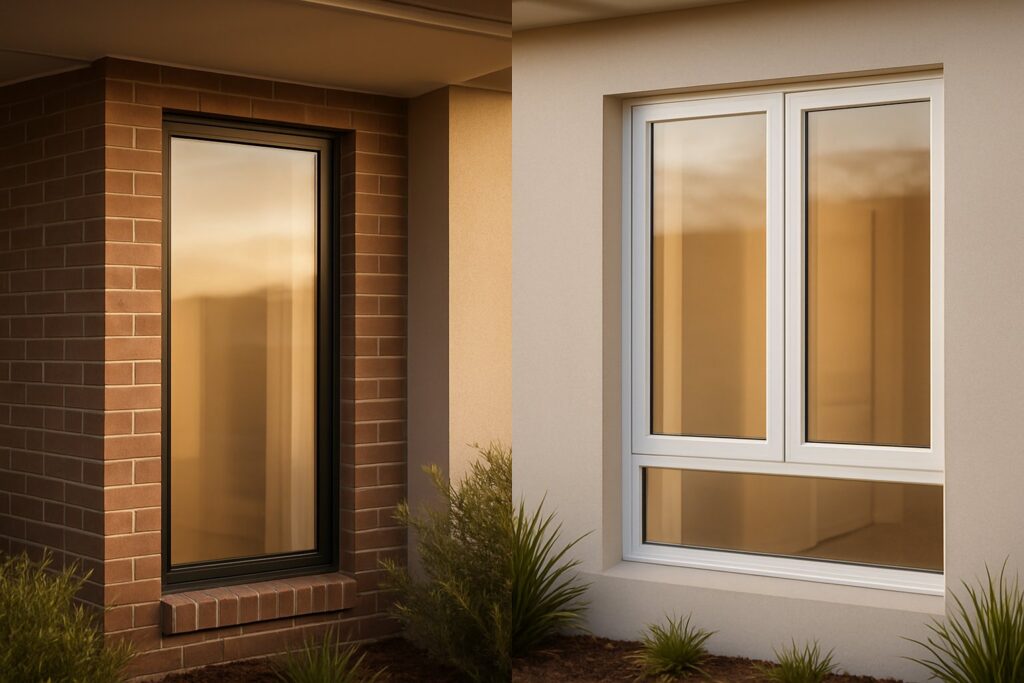
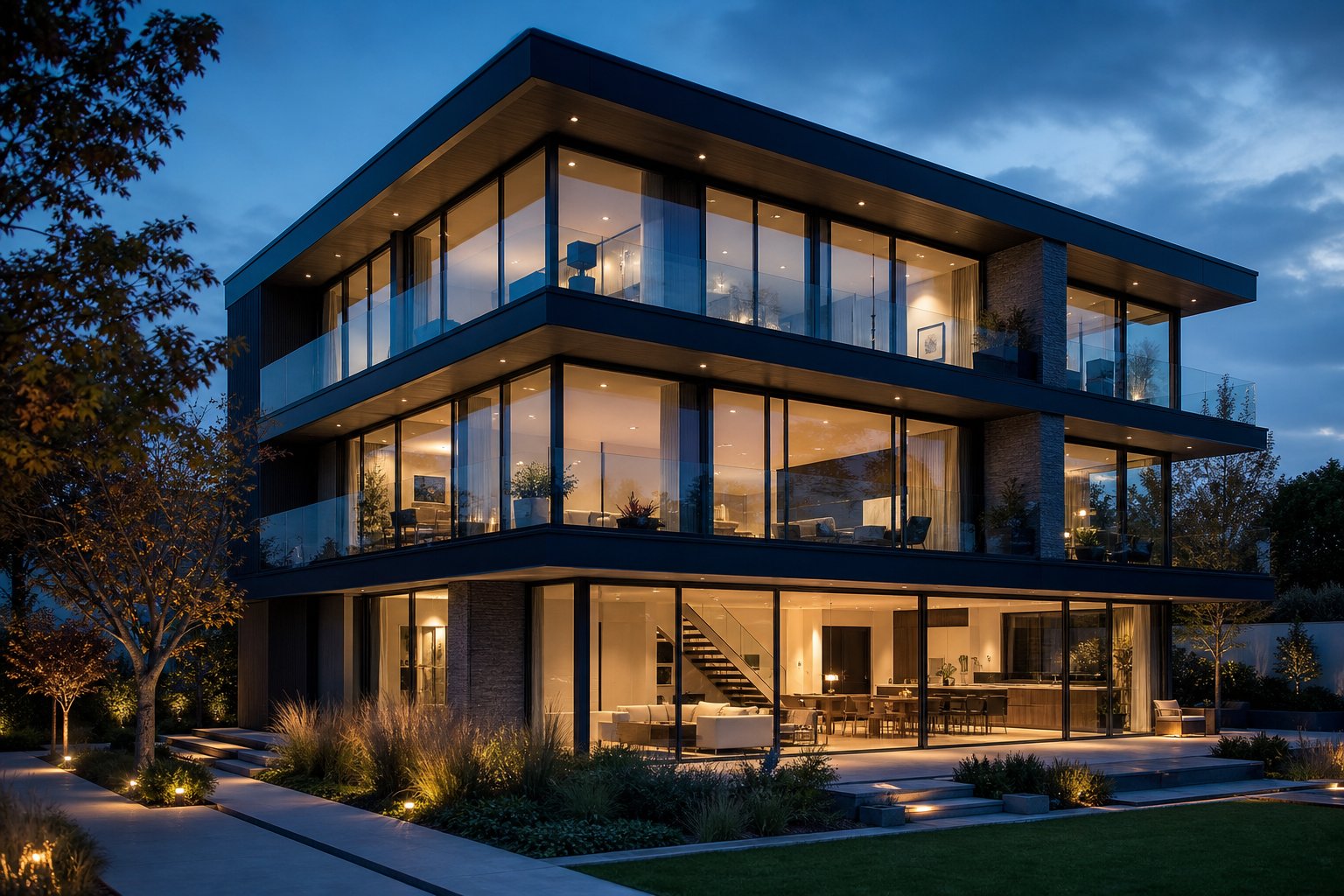
Black aluminium windows and white aluminium windows remain the two most specified finishes across residential projects. Their popularity keeps them in constant production, which translates to shorter lead times and lower per-unit cost compared to less common shades. Anodising offers an alternative to powder coating with a metallic, low-maintenance appearance, though it tends to cost more per square metre and limits your colour palette to silvers, bronzes, and dark tones.
Double Glazing and Energy-Efficient Glass Upgrades
Glazing is where costs can shift substantially. A standard aluminium glazed window with single 4mm clear glass represents the baseline price in most quotes. Stepping up to double glazing introduces a sealed air gap between two panes, improving thermal and acoustic performance, but it also adds roughly 25 to 35 percent to the base window cost. Data from hipages.com.au indicates double-glazed glass starts from around $200 per square metre supply only, while low-emission (low-E) glass begins at approximately $220 per square metre.
Aluminium double glazing makes the strongest financial case in climate zones with extreme summer heat or cold winters, think Melbourne’s temperature swings or the tropical humidity of Far North Queensland. The upfront premium pays back through reduced heating and cooling loads, particularly as Australian energy prices continue to climb. Low-E coatings take this further by reflecting radiant heat while letting natural light pass through, a meaningful upgrade for west-facing windows that cop intense afternoon sun.
For most homeowners, the practical decision comes down to balancing upfront spend against long-term comfort and energy bills. A basic single-glazed window in a standard colour is the cheapest path, but pairing aluminium double glazing with a well-chosen finish delivers a window that performs better across every measure, thermal efficiency, noise reduction, and street presence, for decades without additional maintenance.
Finish and glazing choices are personal, but they also interact with a broader question: how does aluminium stack up against timber and uPVC when you compare all the costs together?
Aluminium vs Timber vs uPVC Windows Compared
Sticker price alone tells you very little about what a window actually costs over its life. The real cost of aluminium windows, or any framing material, includes maintenance cycles, durability under local conditions, and how well it handles the specific climate your home sits in. Australian windows need to survive UV bombardment, salt spray, humidity, and in some regions, bushfire and cyclone exposure. Each material responds to those pressures differently.
Upfront Cost Differences Between Materials
On a supply-only basis for a standard double-glazed unit, here is how the three materials generally position in the Australian market:
| Factor | Aluminium | Timber | uPVC |
|---|---|---|---|
| Upfront Cost (per standard window, supply only) | $400 – $900 | $600 – $1,500+ | $450 – $950 |
| Maintenance Cost Over 20 Years | Minimal — occasional wash, hardware lubrication | High — repainting every 5–7 years, seal checks, potential timber repairs | Very low — periodic cleaning and hardware checks |
| Expected Lifespan | 30–40+ years | 20–30 years (dependent on maintenance) | 25–35 years |
| Climate Suitability | Excellent in coastal, bushfire-prone, and high-humidity zones | Best in temperate, sheltered locations | Strong in extreme thermal zones (hot and cold) |
| Best Use Case | New builds, coastal homes, BAL-rated areas, contemporary design | Heritage homes, character renovations, sheltered inland properties | Energy-focused retrofits, extreme climates, noise reduction priority |
These figures are indicative for standard residential configurations. The aluminium windows price shifts upward once you specify thermally broken profiles, which close the energy performance gap with uPVC and timber but add 30 to 50 percent to the base frame cost.
Timber sits at the highest upfront price point for most configurations. Species choice drives much of that variation — hardwood joinery windows cost considerably more than pine or engineered options. Meanwhile, uPVC and aluminium often compete closely on upfront cost, with the gap narrowing or widening depending on the specific system and glazing package specified.
When Aluminium Is the Better Investment
The cost of aluminium windows makes most sense when your environment is harsh and your tolerance for ongoing upkeep is low. Three conditions tip the value equation firmly in aluminium’s favour:
- Coastal locations — salt air accelerates timber decay and can affect uPVC hardware. Powder-coated aluminium with marine-grade finishes handles salt spray with nothing more than periodic washing.
- Bushfire zones — aluminium meets BAL-rated requirements up to BAL-FZ. Timber struggles in higher BAL categories without expensive shielding, and uPVC, being a plastic, cannot achieve compliance in flame-zone applications.
- High-humidity climates — from tropical Queensland through to humid coastal NSW, aluminium resists the mould and rot that shortens timber’s lifespan in these regions.
Aluminium also suits projects demanding slim frame profiles and large glass spans. Its structural strength allows narrower sightlines than both timber and uPVC, which need bulkier profiles to achieve equivalent load-bearing capacity. For architects and builders designing open, light-filled Australian windows and facades, that slender aesthetic is difficult to replicate in other materials.
That said, editorial honesty matters here. Timber remains the superior thermal performer in its natural state, with frame U-values often around 1.4 to 2.2 W/m²K compared to 5.5 to 7.0 W/m²K for non-thermally broken aluminium. If you live in a cold climate zone — parts of Victoria, Tasmania, or alpine areas — and thermal efficiency is your primary concern, uPVC or timber will outperform standard aluminium without requiring the premium for thermal breaks. Heritage overlay zones present another scenario where timber is often the only council-approved material, regardless of price preference.
uPVC earns its place for homeowners chasing maximum energy efficiency at moderate cost. Its multi-chambered profiles deliver inherent insulation without any additional thermal break technology, making it a strong contender in colder southern regions or anywhere noise reduction is a priority.
The bottom line: no single material wins across every scenario. Your location, climate exposure, design intent, maintenance appetite, and compliance requirements should guide the choice rather than upfront price alone. For the majority of Australian new builds and coastal renovations, aluminium delivers the best balance of longevity, low maintenance, and design flexibility — but it pays to understand exactly what your quote includes before committing to any material.
What Is Included and Excluded in a Window Quote
A quote that looks affordable on paper can become expensive on site. The gap between quoted price and final invoice is where most budget blowouts happen, and it often comes down to assumptions about what is covered. Two quotes for the same aluminium windows in Sydney can differ by 20 to 30 percent not because the product costs more, but because one supplier bundles services the other charges as extras.
Understanding exactly what sits inside and outside your quote is the single most effective way to prevent cost surprises on installation day.
What Should Be Included in Your Quote
A properly itemised aluminium window quote should clearly list what you are paying for. At minimum, look for these components spelled out as individual line items rather than buried in a lump sum:
- Window unit — the fabricated aluminium frame, glazing, seals, and weather stripping as a complete assembled product.
- Hardware — handles, locks, friction stays, or rollers appropriate to the window type.
- Standard installation labour — fitting the window into the prepared opening, shimming, fixing, and sealing.
- Flashing and weatherproofing — head flashings and sill trays to direct water away from the frame junction.
- GST — all pricing should state whether figures are GST-inclusive or exclusive. A 10 percent difference is significant across a full house lot.
- Product warranty — the manufacturer’s coverage on frame, hardware, and sealed glazing units.
If any of these items are missing from a written quote, ask for clarification before signing. A reliable supplier will break these down without hesitation. Industry guidance on comparing quotes consistently flags that missing line items are among the top red flags in window and door quotations.
Hidden Costs Most Suppliers Do Not Mention
The items that blow budgets rarely appear on the first quote you receive. They surface during or after installation, when it is too late to shop around. Here is what commonly falls outside a standard aluminium window quote:
- Removal and disposal of existing windows — pulling out old frames, transporting waste, and paying landfill or recycling fees. Expect $80 to $200 per opening depending on frame material and access.
- Scaffolding or elevated access equipment — any upper-storey window that cannot be reached from ground level needs scaffolding hire. Costs range from $500 to several thousand dollars depending on the extent and duration of hire.
- Plastering, patching, and internal finishing — removing old frames often damages reveals, cornices, or plasterboard that must be repaired before painting.
- External painting and rendering — window replacement in rendered or weatherboard homes typically leaves exposed areas around the new frame that need finishing by a separate trade.
- Council permits — most standard window replacements are exempt development, but changes to window size, location, or configuration in heritage areas or strata properties may trigger a development application (DA) with associated fees.
- Asbestos testing and removal — homes built before 1990 may contain asbestos in eaves linings, window surrounds, or fibro cladding. Disturbing this material without testing is illegal, and licensed removal adds substantial cost, often $1,500 to $3,000 or more depending on the extent of contamination.
- Structural modifications — widening or raising an opening involves lintel replacement and potential engineering certification, which sits well outside a window supplier’s standard scope.
Cumulatively, these exclusions can add $2,000 to $10,000 or more to a multi-window replacement project. The variance depends on your home’s age, construction type, storey height, and site access.
Transparent aluminium window suppliers in Sydney and across Australia will flag these potential extras upfront, even when they cannot price them precisely without a site inspection. Suppliers like MEICHEN break down quote components clearly, explaining real cost drivers rather than offering misleading fixed-price claims that inevitably attract variations later. That transparency at the quoting stage lets you budget for the full project cost, not just the window units themselves.
A practical rule of thumb: if a quote looks too simple, it probably is. Ask every supplier to state explicitly what is included and what is excluded. Request a separate line for delivery, installation, and any provisional allowances for site-specific work. That discipline makes comparing sydney aluminium windows quotes genuinely like-for-like, rather than comparing one supplier’s stripped-back product price against another’s fully loaded installed figure.
Quote transparency protects your budget, but the type of project you are running also shapes cost in ways that a standard price list cannot capture. Replacing windows in an existing home carries a fundamentally different cost structure to fitting them during a new build.
Renovation Windows vs New-Build Pricing
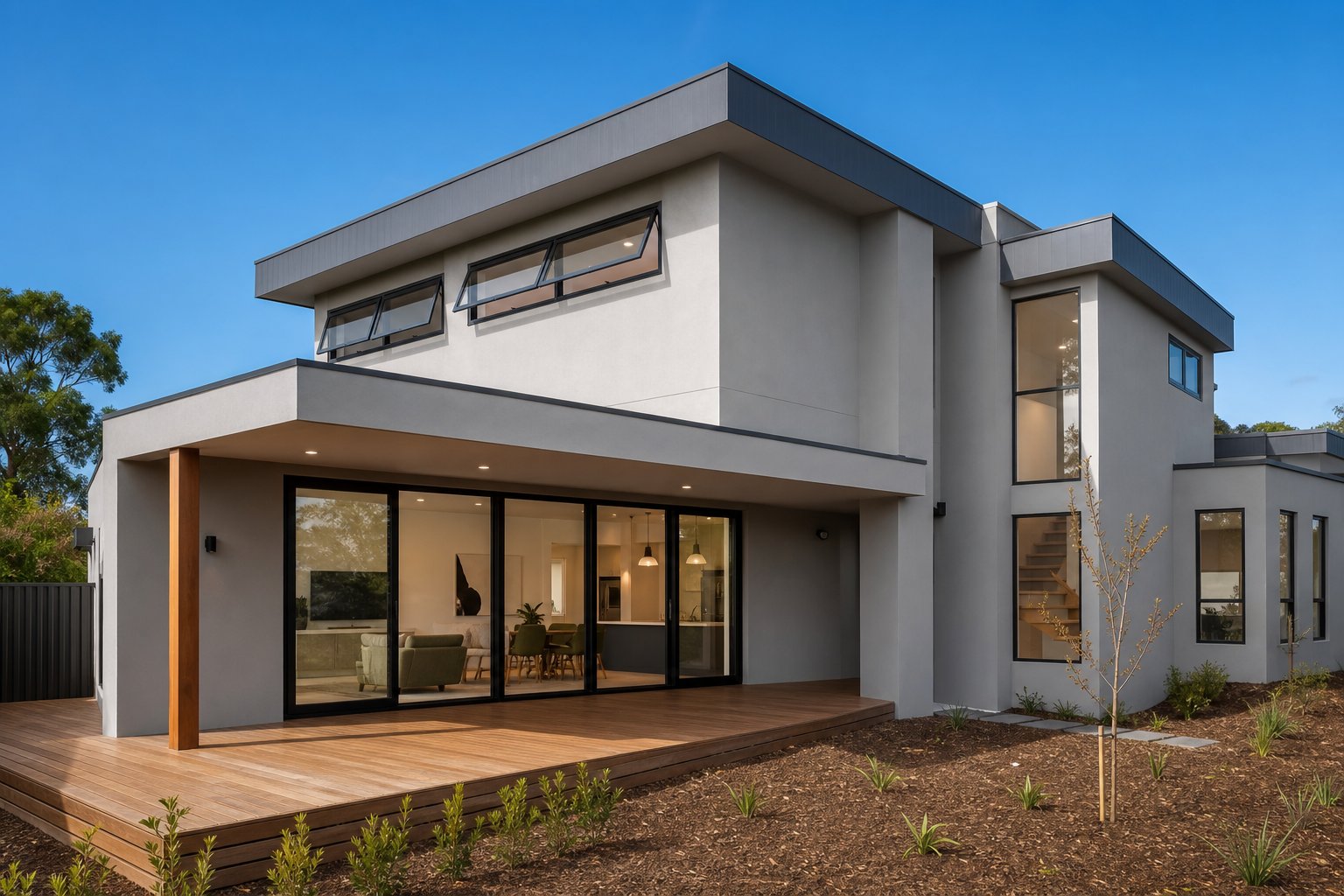
A homeowner replacing four windows in a 1970s brick veneer and a builder fitting forty into a new slab-on-ground project are buying the same product, yet they will pay very different per-window costs. The gap is not about the aluminium frame itself. It is about everything surrounding it: access, preparation, site complexity, and ordering scale.
Renovation and Replacement Window Costs
Renovation projects almost always carry a higher installed cost per window. The reasons stack up quickly once demolition starts. Old frames must be carefully removed without damaging surrounding brickwork, render, or plasterboard. The openings left behind are rarely clean, square, or sized to match today’s standard dimensions. Industry experience with renovation windows shows that older Perth homes, and the same applies to ageing stock across Sydney, Melbourne, and Adelaide, frequently have openings that vary by 10 to 30mm from room to room, even on the same elevation.
That dimensional inconsistency triggers custom fabrication. Instead of ordering stock units at bulk pricing, you are paying for individually measured, made-to-order windows with lead times of six to fourteen weeks rather than two to four. The fabrication premium alone sits around 15 to 30 percent above standard sizing, before you factor in the site work needed to prepare each opening.
Additional cost drivers specific to renovations include:
- Asbestos risk in pre-1990 homes — window surrounds, eaves linings, and fibro cladding in older Australian homes may contain asbestos. Licensed testing and removal is mandatory if the material will be disturbed, often adding $1,500 to $3,000 per affected area.
- Non-standard openings — walls that have settled, reveals that are out of square, or previous patch jobs that hide structural irregularities all require remediation before a new frame can be fitted properly.
- Scaffolding for upper-storey access — any first-floor or double-storey window that cannot be reached safely from ground level needs scaffolding hire, typically $500 to $2,000+ depending on the extent and duration required.
- Making good — plastering, repainting, and finishing work around new frames is a separate trade cost that rarely appears in the window supplier’s quote.
Altogether, renovation projects across aluminium windows Melbourne, aluminium windows Adelaide, and aluminium windows Sydney markets commonly see installed costs run 30 to 60 percent higher per window than equivalent new-build installations. That premium reflects genuine additional labour and complexity, not supplier markup.
New-Build Window Pricing Advantages
New constructions sidestep nearly every complication that inflates renovation costs. Openings are framed to precise, standardised dimensions that match off-the-shelf product. There is no demolition, no asbestos testing, no patching, and no scaffolding hire beyond what the build already requires. Access is straightforward because windows are installed before internal linings go up.
The economics improve further at scale. Builders ordering a full house lot, or multiple lots across a subdivision, benefit from volume pricing that wholesale supply models make possible: discounts of 20 to 35 percent compared to single-unit retail pricing at mid-volume quantities. Production runs are more efficient when most openings share common sizes, and lead times tighten to two to four weeks for standard configurations held in stock.
Simpler logistics also play a role. A single delivery to a ground-level site with clear access costs far less in freight and handling than multiple trips to an occupied home with limited parking and narrow side access. Installation labour is faster too, with experienced crews fitting eight to twelve windows per day on a new build compared to three to five in a renovation where each opening demands individual preparation.
For anyone planning a renovation, the practical takeaway is straightforward: build your budget around the installed cost rather than supply-only figures, and request site inspections before locking in any quote. For new builds, focus on locking in specifications early and leveraging volume to secure better per-unit pricing and shorter lead times. Both scenarios benefit from understanding what drives cost beyond the window unit itself, a perspective that extends naturally into how much each option costs you over the window’s full lifespan.
Total Cost of Ownership Over Time
Upfront price is one number on one day. It tells you what leaves your account at purchase, but nothing about what the window costs you in year five, fifteen, or twenty-five. For a product expected to last decades, that single figure is a poor basis for comparison. A cheaper window that demands regular maintenance, hardware replacements, or early full replacement can quietly outspend a pricier option that simply sits in the wall and performs.
Evaluating material choice on lifetime value rather than purchase price alone shifts the economics considerably, and almost always in aluminium’s favour within Australian conditions.
Maintenance Costs Over the Window Lifespan
Aluminium’s maintenance profile is close to zero. A periodic wash with soapy water, a squirt of silicone lubricant on rollers and hinges every couple of years, and a visual check of seals. That is genuinely it. There is no repainting, no sanding back, no timber filler, and no risk of rot or warping that demands emergency remediation. Industry lifecycle data shows 92 percent of aluminium frames remain fully functional after 25 years of service, compared with around 65 percent of timber frames over the same period.
Timber tells a different story. Every five to seven years, exterior timber windows need sanding, priming, and repainting to prevent moisture ingress. Skip a cycle and the consequence is not cosmetic — it is structural. Exposed end grain absorbs water, leading to rot that undermines the frame’s integrity. In humid coastal zones or tropical regions of Queensland and northern NSW, that maintenance interval can shrink to three to four years. Each repaint cycle costs roughly $150 to $300 per window when you factor in preparation, paint, and labour.
uPVC sits closer to aluminium on maintenance effort. It needs no painting, handles UV reasonably well, and resists moisture. The catch is longevity. Once uPVC seals fail or frames warp after 25 to 30 years, repair is rarely viable — full replacement is the only practical path. That replacement event resets your cost clock entirely.
The following table estimates what each material costs over 25 years when you account for maintenance cycles, hardware replacement, seal upkeep, and the probability of needing a full replacement within that timeframe:
| Cost Factor (25-Year Period) | Aluminium | Timber | uPVC |
|---|---|---|---|
| Initial Cost (per window, double glazed) | $500 – $900 | $700 – $1,500 | $500 – $950 |
| Repainting Cycles | None required | 4–5 cycles at $150–$300 each | None required |
| Hardware Replacements | 1 set (rollers/stays) at $80–$150 | 1–2 sets at $100–$200 each | 1–2 sets at $80–$150 each |
| Seal and Gasket Maintenance | 1 reseal at $50–$100 | 2–3 reseals at $60–$120 each | 1–2 reseals at $50–$100 each |
| Full Replacement Likelihood | Very unlikely (lifespan 30–45+ years) | Possible if maintenance neglected | Possible toward end of period |
| Estimated 25-Year Total Cost | $630 – $1,150 | $1,400 – $2,800+ | $680 – $1,250 |
Aluminium and uPVC appear close on a 25-year horizon. Extend the comparison to 35 or 40 years, however, and the picture diverges sharply. The uPVC unit is approaching end-of-life and likely needs full replacement, doubling its lifetime spend. The aluminium window keeps going with nothing more than a fresh set of seals.
Energy Savings That Offset the Initial Investment
Around 40 percent of Australian household energy use goes to heating and cooling, and windows are the weakest thermal link in most homes. Single-glazed aluminium conducts heat readily — that is the material’s one genuine weakness. But double-glazed aluminium windows with thermally broken profiles transform that equation, creating an insulating barrier that keeps conditioned air inside where it belongs.
The savings are tangible. Energy-efficient windows can reduce heating and cooling costs by 7 to 15 percent annually. For an average Australian household spending $2,000 to $2,800 per year on energy, that translates to roughly $140 to $420 in annual savings. Over 25 years, the cumulative figure reaches $3,500 to $10,500 — often exceeding the premium paid for double glazing in the first place.
Double-glazed aluminium windows are particularly effective in climates with large temperature swings. Melbourne’s winters and summers, Canberra’s extremes, and the tropical heat of North Queensland all present conditions where the sealed air gap and low-E coatings work hardest. West-facing windows in any Australian city cop intense afternoon solar gain; upgrading these to aluminium double glazed units with a low-E coating can noticeably reduce air-conditioning load during summer peaks when electricity prices are highest.
Australian energy prices have trended upward consistently, making the payback period for glazing upgrades shorter with each passing year. A double-glazing upgrade that took ten years to break even at 2020 energy rates might achieve payback in seven or eight years at current pricing. That trajectory makes the case for specifying double-glazed aluminium windows from the outset, rather than retrofitting later at greater expense.
The cost-of-ownership perspective reframes the buying decision entirely. A window is not a one-off purchase — it is a 30-to-40-year commitment to a specific maintenance profile and energy performance level. Choosing on upfront price alone is like picking a car based on the sticker without considering fuel economy or service costs. The smarter approach is to weigh total spend across the window’s full service life, then decide what level of investment makes sense for your project’s timeline and your tolerance for ongoing upkeep.
How to Get Accurate Quotes for Your Aluminium Window Project
Knowing what drives cost is only useful if you can translate that knowledge into quotes you can actually compare. Too many buyers search for aluminium windows near me, fire off a few enquiries with vague descriptions, and end up with three quotes that measure different things. The result is confusion rather than clarity. A structured approach solves this.
Preparing Your Project Information for Accurate Quotes
The quality of your quote depends entirely on the quality of information you provide. Suppliers cannot give you a meaningful price from a phone call that says “I need about eight windows.” They need specifics. Before requesting any pricing, work through these steps:
- Prepare a window schedule with sizes and types — list every opening by room, noting width and height in millimetres and the window style required (sliding, awning, casement, fixed). For new builds, your architect’s drawings will contain this. For renovations, measure each opening individually since older homes rarely have uniform dimensions.
- Determine glazing and finish requirements — decide whether you need single or double glazing, whether low-E coatings are warranted for sun-exposed elevations, and what powder coat colour you want. These choices shift price significantly, so locking them in before quoting ensures consistency across suppliers.
- Request itemised quotes from at least three suppliers — avoid lump-sum figures. Ask for line items covering product, hardware, installation labour, delivery, flashing, and any provisional allowances. An itemised aluminium windows price list lets you see exactly where each dollar goes.
- Compare like-for-like including installation scope — verify whether each quote includes removal of existing windows, making good, scaffolding, and waste disposal. Two quotes that appear $3,000 apart may be within $500 once you account for differing inclusions.
- Assess supplier capability for full project support — particularly for larger jobs, evaluate whether the supplier can manage the entire delivery chain or simply sells product ex-factory.
Evaluating Suppliers Beyond the Lowest Price
Chasing discount aluminium windows without examining the broader offering is a false economy. The cheapest quote often omits services you will need to source and pay for separately, or it reflects thinner profiles and lower-grade hardware that underperform within a few years.
Instead, evaluate suppliers on their ability to support your project end to end. Can they review architectural drawings and recommend appropriate systems? Do they handle material calculation, manufacturing coordination, and quality control? Will they manage logistics and delivery scheduling to align with your build programme?
For builders, developers, architects, and contractors running multi-window projects, a supplier that functions as a project partner rather than just a product vendor saves time and reduces risk. MEICHEN’s services model illustrates this approach — supporting the process from initial drawings and window schedules through to system recommendations, fabrication coordination, quality assurance, and delivery planning. That depth of involvement means fewer gaps between your quote and your final installed cost, because the supplier understands the full scope from day one rather than pricing a product in isolation.
Whether your project is a single-storey renovation or a multi-unit development, the discipline of preparing clear specifications, requesting itemised pricing, and assessing suppliers on capability rather than price alone will consistently deliver better outcomes. The cheapest window is never the one with the lowest quote — it is the one that performs reliably, arrives on schedule, and costs exactly what you were told it would.
Frequently Asked Questions About Aluminium Window Prices in Australia
1. How much do aluminium windows cost per window in Australia?
Australian aluminium window prices typically range from $150 for a small fixed pane to over $2,500 for large bi-fold units (supply only). Most homeowners spend between $300 and $800 per standard window. The final figure depends on window type, dimensions, glazing specification, powder coat colour, and whether the project is a new build or renovation. Double glazing adds roughly 25 to 35 percent to the base price, while custom sizing adds 15 to 30 percent over standard dimensions. For accurate budgeting, request itemised quotes from multiple suppliers that clearly separate product, installation, and ancillary costs.
2. Are aluminium windows cheaper than timber or uPVC in Australia?
On upfront cost, aluminium ($400 to $900 per standard double-glazed window) is generally more affordable than timber ($600 to $1,500+) and comparable to uPVC ($450 to $950). Over a 25-year ownership period, aluminium often proves the most economical choice because it requires virtually no maintenance — no repainting, no rot repair, and no seal degradation common with timber. Timber windows need repainting every five to seven years at $150 to $300 per window per cycle. When you factor in lifetime maintenance, aluminium’s estimated 25-year total cost sits around $630 to $1,150 compared to $1,400 to $2,800+ for timber.
3. What hidden costs should I watch for in aluminium window quotes?
Common exclusions that inflate your final bill include removal and disposal of existing windows ($80 to $200 per opening), scaffolding for upper-storey access ($500 to $2,000+), plastering and internal finishing around new frames, external painting or rendering, council permits for heritage or strata properties, and asbestos testing and removal in pre-1990 homes ($1,500 to $3,000 per affected area). Cumulatively, these can add $2,000 to $10,000 to a multi-window project. Always request itemised quotes that explicitly state inclusions and exclusions. Transparent suppliers like MEICHEN (meichenwindows.com.au/services/) break down every cost component upfront to prevent budget surprises.
4. Is double glazing worth the extra cost for aluminium windows in Australia?
Double glazing typically adds 25 to 35 percent to the base aluminium window price, with double-glazed glass starting from around $200 per square metre supply only. The investment pays back through reduced energy bills — energy-efficient windows can cut heating and cooling costs by 7 to 15 percent annually. For an average Australian household, that equates to $140 to $420 in yearly savings, accumulating to $3,500 to $10,500 over 25 years. The payback period is shortest in climates with significant temperature swings (Melbourne, Canberra) and for west-facing windows that receive intense afternoon sun. Rising Australian energy prices continue to shorten the break-even timeline.
5. Why do renovation window replacements cost more than new-build installations?
Renovation projects typically run 30 to 60 percent higher per window than new-build installations due to several compounding factors. Old frames must be removed without damaging surrounding materials, openings are rarely standard sizes (requiring custom fabrication at 15 to 30 percent premium), and pre-1990 homes may need asbestos testing. Additional costs include scaffolding for upper-storey access, plastering and making good around new frames, and longer lead times of six to fourteen weeks for custom orders. New builds avoid these complications through standardised openings, bulk ordering discounts of 20 to 35 percent, simpler access, and faster installation rates of eight to twelve windows per day versus three to five in renovations.
More Window & Door Guides