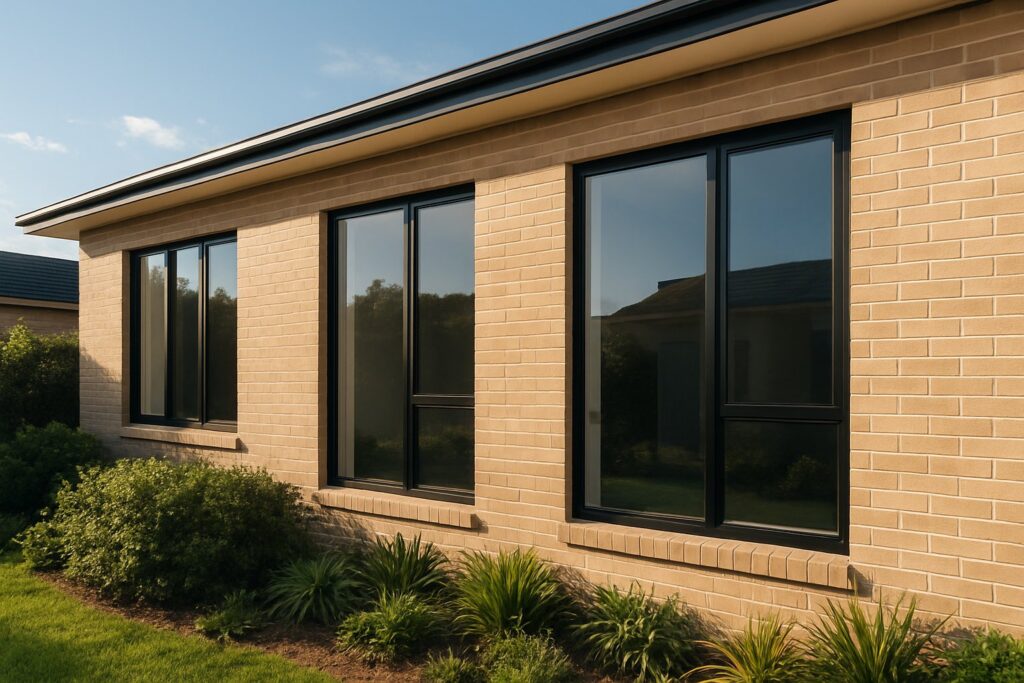
What Are Aluminium Sliding Windows With Grill
A sliding window that refuses to rust, glides open with one hand, and keeps intruders on the wrong side of the glass — that combination explains why aluminium sliding windows with grill remain a go-to choice for Australian homes and commercial fitouts alike. They pair a lightweight yet rigid aluminium frame with a horizontal sliding sash and integrated grill bars, delivering security and airflow without eating into your floor space the way a casement window would.
An aluminium sliding window with grill is a window system where one or more glass sashes move horizontally along tracks within an extruded aluminium frame, combined with metal grill bars — mounted externally, internally, or between glass panes — to provide security, child safety, and decorative detail.
What Defines an Aluminium Sliding Window With Grill
Strip one of these windows down and you find five core components working together:
- Aluminium frame — the extruded perimeter section fixed into the wall opening, providing structural rigidity and weather sealing.
- Sliding sash — the moveable panel that holds the glass. It sits on tracks (typically two or three) and glides on nylon or stainless-steel rollers housed in the bottom rail.
- Tracks and rollers — precision-machined aluminium channels reduce friction and wear, allowing smooth operation for years without binding or jamming.
- Glass pane — single, double-glazed, or laminated depending on thermal and safety requirements.
- Grill bars — aluminium or steel bars arranged in a pattern and attached externally (bolted or welded to the frame), internally (clip-on), or sandwiched between double-glazed panes for a low-maintenance finish.
The grill sits independently of the sliding mechanism, so the sash travels freely regardless of bar placement. That separation is key — it means you can choose ornate or minimal grill patterns without compromising the window’s operability.
Why Homeowners and Builders Choose This Window Style
Demand stays strong for a few practical reasons. Ventilation tops the list: sliding one sash open gives you controllable airflow without a protruding pane catching wind or blocking a walkway. Security follows closely — grill bars create a physical barrier that deters forced entry even if the glass is broken, and they double as child-safety protection on upper storeys.
Aesthetics play a role too. Slim aluminium profiles allow more glass area than timber or UPVC frames of the same strength, and grill designs range from clean horizontal lines for a contemporary facade to diamond lattice patterns on heritage-style builds. Maintenance is minimal — aluminium resists rot, warping, and termite damage, and a quality powder-coated finish holds its colour for decades under Australian UV and coastal conditions.
All of these advantages, however, hinge on getting the details right: the alloy grade, the grill pattern, the glass type, the finish. Get one wrong and you pay twice — once to install, and once to fix. The chapters ahead break down each decision so you can specify with confidence.
Grill Design Options and Architectural Styles
Picking the right grill pattern is where function meets facade. A mismatch — say, ornate scrollwork on a flat-roofed minimalist build — sticks out immediately and drags down the entire elevation. The good news is that aluminium sliding window grill pattern designs fall into a handful of families, each tied to a recognisable architectural language.
Popular Grill Patterns for Every Architectural Style
Think of grill patterns as visual dialects. Each one signals a certain era or design intent, and consistency across your windows keeps the exterior cohesive. Here are the main categories you will encounter when specifying for Australian projects:
- Modern minimalist — slim horizontal bars spaced evenly across the pane, or a single mid-rail divider. The profile stays thin (often flat bar under 16 mm wide), keeping sightlines open and letting the glass do the talking. This modern grill design for sliding windows suits contemporary double-storey homes with clean rooflines and rendered facades.
- Colonial grid — evenly spaced vertical and horizontal bars forming a rectangular grid of smaller “panes,” typically dividing the glass into six, eight, or nine sections. A colonial style aluminium window grill complements symmetrical facades, Georgian-inspired builds, and federation homes across Australia’s older suburbs.
- Traditional diamond lattice — bars set at 45-degree angles to form repeating diamond shapes. Often paired with floral corner motifs or scrollwork accents. Suits Victorian, Edwardian, and heritage-listed properties where council guidelines may require period-appropriate detailing.
- Contemporary geometric — asymmetric compositions using triangles, hexagons, or staggered rectangles. These patterns lean artistic and work best as a feature element on one or two key windows rather than across an entire elevation. Laser-cut aluminium makes intricate shapes achievable without the weight penalty of steel.
Whichever family you lean toward, confirm that your fabricator can execute the pattern in aluminium flat bar or round bar to match the window’s profile thickness. A heavy grill on a slim frame looks unbalanced and can stress the sash over time.
How Grill Bar Spacing Affects Security and Aesthetics
Spacing is where aesthetics and protection negotiate. Wider gaps between bars let more natural light through and reduce the visual weight of the grill, but they also make it easier for a person — or a child — to pass through.
For security applications, window grill bar spacing for security generally sits at around 100 mm to 150 mm between bars. At 150 mm, an adult cannot fit through but the grill still feels relatively open. Tighten the gap to 100 mm and you gain child-safety compliance — critical for windows above ground level where a fall could be fatal. Australian standards and the National Construction Code place obligations on barriers near openable windows in upper storeys, so check your specific requirements before locking in a pattern.
Visually, tighter spacing creates a heavier screen effect. In darker powder-coat colours (black, charcoal), close bars can make a window feel caged. Lighter colours or thinner bar profiles offset this, giving you security without the fortress look. The trick is to match spacing to purpose: ground-floor windows in exposed areas deserve tighter bars, while upper-level windows already out of easy reach can afford wider gaps and a lighter aesthetic.
Pattern and spacing decisions also ripple into glass selection — because a heavily grilled window admits less light, choosing the right glass type becomes even more important for maintaining interior brightness.
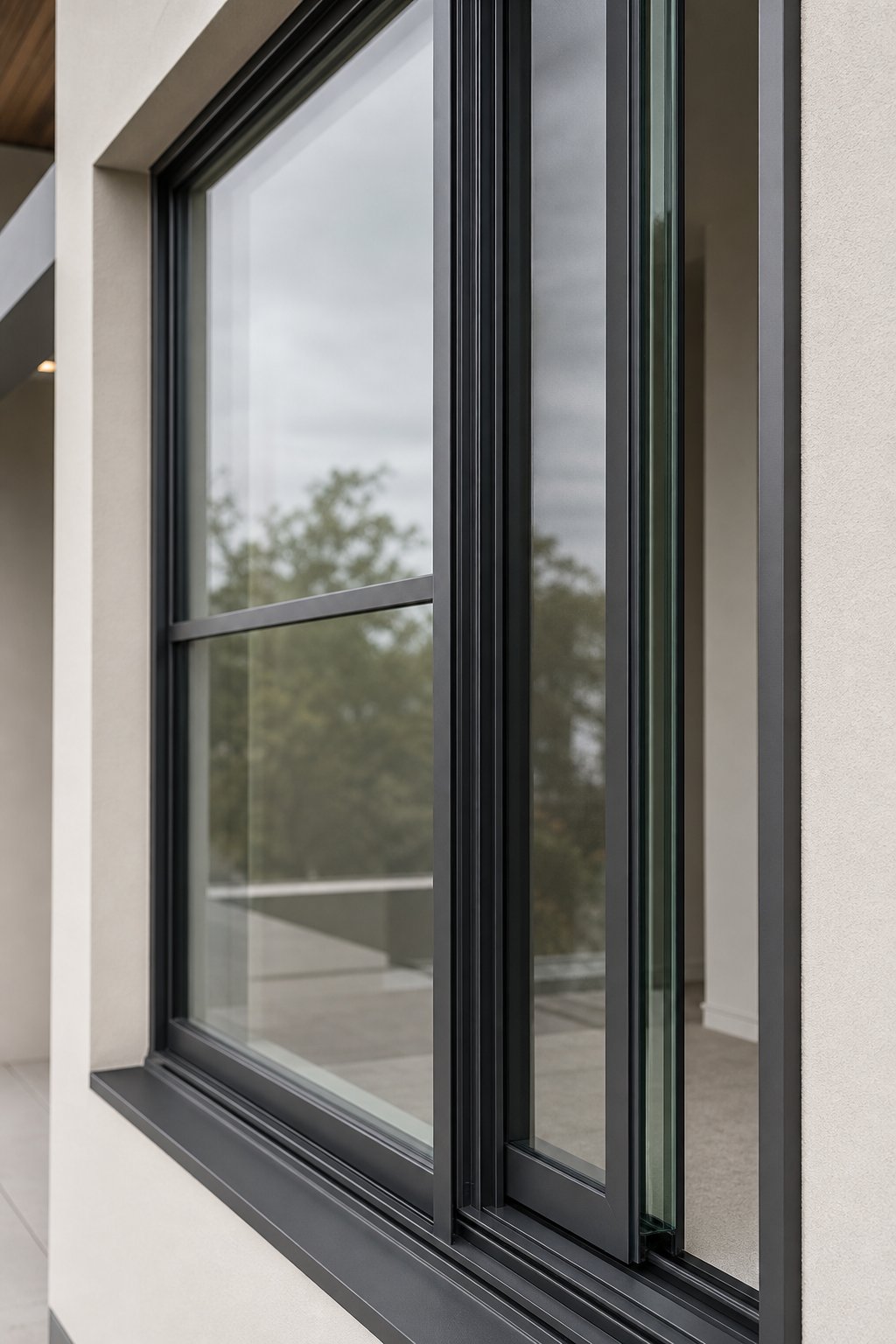
Glass Types Compatible With Grill Window Systems
Grills handle the security side of the equation. Glass handles everything else — thermal comfort, noise control, UV protection, and safety if a pane ever breaks. Pairing the wrong glass with your grill window means you get one layer of defence instead of two, and in an Australian climate that swings between blazing summers and cold winter mornings, that gap shows up fast on your energy bills.
Four glass options appear regularly in aluminium sliding window specifications. Each solves a different problem, and understanding the tradeoffs helps you land on the best glass type for aluminium sliding window with grill setups without overspending.
Single Pane vs Double Glazed Glass for Grill Windows
Single-pane clear glass — standard 5 mm or 6 mm float glass — remains the most affordable choice. It lets maximum light through, keeps total sash weight low (important for smooth roller operation), and works fine in mild climates where extreme heat or cold is rare. The catch is thermal performance: a single pane does almost nothing to slow heat transfer, so air conditioning works overtime in summer and warmth escapes quickly in winter. Noise insulation is minimal too, typically around 26–28 dB reduction.
A double glazed sliding window with grill adds a second pane separated by a 10–12 mm air gap sealed with a desiccant spacer. That trapped air layer acts as an insulator, cutting heat gain and loss significantly compared to single glazing. Acoustic performance jumps to roughly 30–34 dB when the two panes differ in thickness — a noticeable difference if your home faces a busy road or flight path.
Double glazing justifies the higher upfront cost in several scenarios: homes in NatHERS climate zones that demand better energy ratings, properties near traffic noise, and anywhere you run heating or cooling for extended periods. The sealed unit also eliminates internal condensation during humid Queensland summers or cold Melbourne mornings. For budget renovations in temperate coastal areas with minimal noise exposure, single pane may still be practical — but it is increasingly the exception rather than the rule in new Australian builds aiming for six-star energy compliance.
Toughened and Laminated Glass for Added Safety
Security grills stop a person getting through the opening. Safety glass stops the glass itself from becoming a hazard. Together, they create layered protection — a principle worth paying attention to, especially on ground-floor windows and any glazing near high-traffic areas inside the home.
Toughened (tempered) glass is heated to around 620°C then rapidly cooled, making it four to five times stronger than standard annealed glass. If it does break, it shatters into small, blunt granules rather than dangerous shards. Toughened glass for aluminium window security is the minimum specification recommended under AS 1288 for windows in critical locations — near doors, below 800 mm from floor level, and in wet areas.
Laminated glass bonds two panes together with a polyvinyl butyral (PVB) interlayer. On impact, the glass cracks in a spider-web pattern but the interlayer holds every fragment in place, maintaining the barrier even when broken. Laminated glass sliding window benefits extend beyond safety: the PVB layer blocks up to 99% of UV radiation (protecting furniture and flooring from fading) and delivers superior sound reduction — roughly 33–34 dB in a standard 6.4 mm configuration, or up to 40+ dB in acoustic-rated variants.
For grill windows specifically, laminated glass adds a meaningful second line of defence. Even if an intruder manages to crack the pane, the film prevents the glass from falling away and creating an easy access point — buying time that a grill alone cannot.
| Glass Type | Thermal Performance | Safety Rating | Noise Reduction | Typical Use Case |
|---|---|---|---|---|
| Single pane (5–6 mm float) | Low — minimal insulation | Basic only; breaks into sharp shards | ~26–28 dB | Budget builds, mild climates, low-risk locations |
| Double glazed (IGU) | High — sealed air gap cuts heat transfer significantly | Depends on pane composition (can include toughened or laminated) | ~30–34 dB | Energy-rated homes, noisy streets, climate zones requiring NatHERS compliance |
| Toughened (tempered) | Same as equivalent float thickness | 4–5× stronger than annealed; shatters safely (AS 1288 compliant) | ~29–31 dB | Ground-floor windows, wet areas, near doors, child-safety zones |
| Laminated (PVB interlayer) | Marginal improvement over single pane; better in IGU configuration | Holds fragments on break; resists forced entry; blocks 99% UV | ~33–34 dB (standard) up to 40+ dB (acoustic) | High-security grills, upper-storey child safety, UV-sensitive interiors, noise-prone areas |
Many specifiers combine these options — for instance, a double-glazed unit with one toughened pane and one laminated pane delivers thermal efficiency, impact strength, and post-break barrier performance in a single assembly. The additional weight does affect roller and track loads, so your aluminium frame profile and hardware need to match the glass specification, a factor that leads directly into the importance of alloy grade and frame construction.
Aluminium Grades and Surface Finishes That Last
Your glass choice sets the thermal and safety baseline. But the frame and grill bars holding everything together need to survive decades of Australian sun, salt air, and temperature swings without warping, corroding, or losing their colour. That longevity starts at the molecular level — with the aluminium alloy grade used to extrude the profiles — and is locked in by the surface finish applied on top.
Most buyers never ask about either detail. They compare prices, pick a colour, and assume all aluminium is the same. It is not. The difference between a well-specified frame and a cheap one only becomes visible three to five years down the track, when fading, chalking, or pitting appears on the grill bars sitting in full weather exposure.
Understanding 6000-Series Aluminium Alloys in Window Frames
Nearly every aluminium window frame sold in Australia is extruded from 6000-series alloy — a family that uses silicon and magnesium as its primary alloying elements. Two grades dominate: 6063 and 6061. Here is why they matter for your sliding window and grill system.
6063 aluminium is the workhorse of the architectural window industry. It extrudes beautifully into the complex hollow profiles needed for frame tracks and sash rails, producing smooth surfaces straight off the die. Its strength-to-weight ratio sits in the sweet spot for residential and commercial windows — rigid enough to span wide openings without flex, yet light enough that sashes glide easily on rollers. Corrosion resistance is naturally high, and the alloy accepts both anodising and powder coating exceptionally well. When you see slim-profile frames with crisp edges and a flawless painted finish, that is typically 6063 at work.
6061 aluminium brings higher tensile and yield strength to the table — roughly 40–50% stronger than 6063 in comparable temper states. That extra muscle comes at the expense of surface finish quality; 6061 extrusions tend toward a slightly rougher texture. For window applications, 6061 shows up in heavy-duty commercial framing, large-span mullions, or security grill bars where strength under forced-entry loads is the priority rather than visual refinement.
In practical terms, most residential aluminium sliding windows with grill use 6063-T5 or 6063-T6 for both the frame and the grill bars. A project-grade specification might call for 6061-T6 grill bars on ground-floor windows in high-security zones while keeping 6063 for the frame itself. The key takeaway: always confirm the aluminium alloy grade for window frames on your supplier’s specification sheet. “Aluminium” alone tells you nothing about the profile’s long-term performance.
Powder Coating vs Anodising for Grills and Frames
Raw extruded aluminium resists rust naturally — a thin oxide layer forms on contact with air and provides basic protection. But “basic” is not enough for grill bars exposed to direct rain, coastal salt spray, UV radiation, and temperature cycling. A proper surface finish multiplies that natural resistance and adds the colour or texture you want. Two methods lead the field in Australia: powder coating and anodising.
- Powder coating
Pros
- Huge colour range — virtually any RAL or custom colour, including matte, satin, gloss, and textured finishes.
- Film thickness of 60–80 microns provides strong barrier protection against moisture, UV, and abrasion.
- More affordable than anodising for standard production volumes, making it the budget-friendly option for most residential projects.
- Repairable — localised chips or scratches can be touched up with colour-matched paint pens, and frames can be fully recoated if needed.
- Low VOC process, aligning with sustainability goals.
Cons
- Can chip or crack under heavy mechanical impact, exposing bare aluminium underneath.
- Colour fading and chalking occur over time in high-UV environments if the coating does not meet higher durability standards.
- Quality varies dramatically between suppliers — a thin, poorly cured coat may fail within a few years, while a properly applied architectural-grade coating lasts decades.
- Anodising
Pros
- Creates a hard oxide layer that becomes part of the metal surface rather than sitting on top, resulting in exceptional scratch and abrasion resistance (300–400 Vickers hardness).
- Superior corrosion performance in marine and coastal environments — ideal for homes along the NSW, QLD, or WA coastline.
- Will not peel, flake, or chip because the finish is integral to the aluminium itself.
- Low maintenance — regular washing is usually all that is needed.
- Environmentally friendly process that enhances the metal’s existing properties without harsh chemical coatings.
Cons
- Limited colour palette — mostly natural silver, bronze, champagne, and black tones with a metallic matte appearance.
- Difficult to repair; a damaged section cannot simply be touched up and may require full replacement of the affected piece.
- Higher cost per unit compared to powder coating, particularly at scale.
- Colour matching between production batches can be challenging, especially for larger projects ordered over time.
For most Australian homes, powder coating in a quality architectural grade (look for specifications meeting durability requirements equivalent to extended outdoor exposure testing) delivers the best balance of colour freedom, cost, and performance. If your property sits within a few hundred metres of the coast or in a high-humidity tropical zone like Far North Queensland, anodising — or at minimum a marine-grade powder coat — is worth the premium. The best surface finish for aluminium window grill bars depends less on personal preference and more on how aggressively the local environment will attack exposed metal over time.
One detail often overlooked: grill bars cop more weather punishment than the frame itself. The frame sits partially recessed in the wall opening and benefits from eaves or veranda cover. Grill bars, by contrast, face outward with no protection — rain runs directly over them, salt deposits accumulate in bar joints, and UV hits at full intensity. If you economise on finish quality anywhere, do not let it be the grill. A frame with a 20-year finish and grill bars with a 5-year finish will look mismatched long before the windows need replacing.
Finish choice also connects to how your windows handle the broader environment — temperature extremes, humidity, and salt exposure all interact with both the alloy and its coating to determine real-world lifespan.
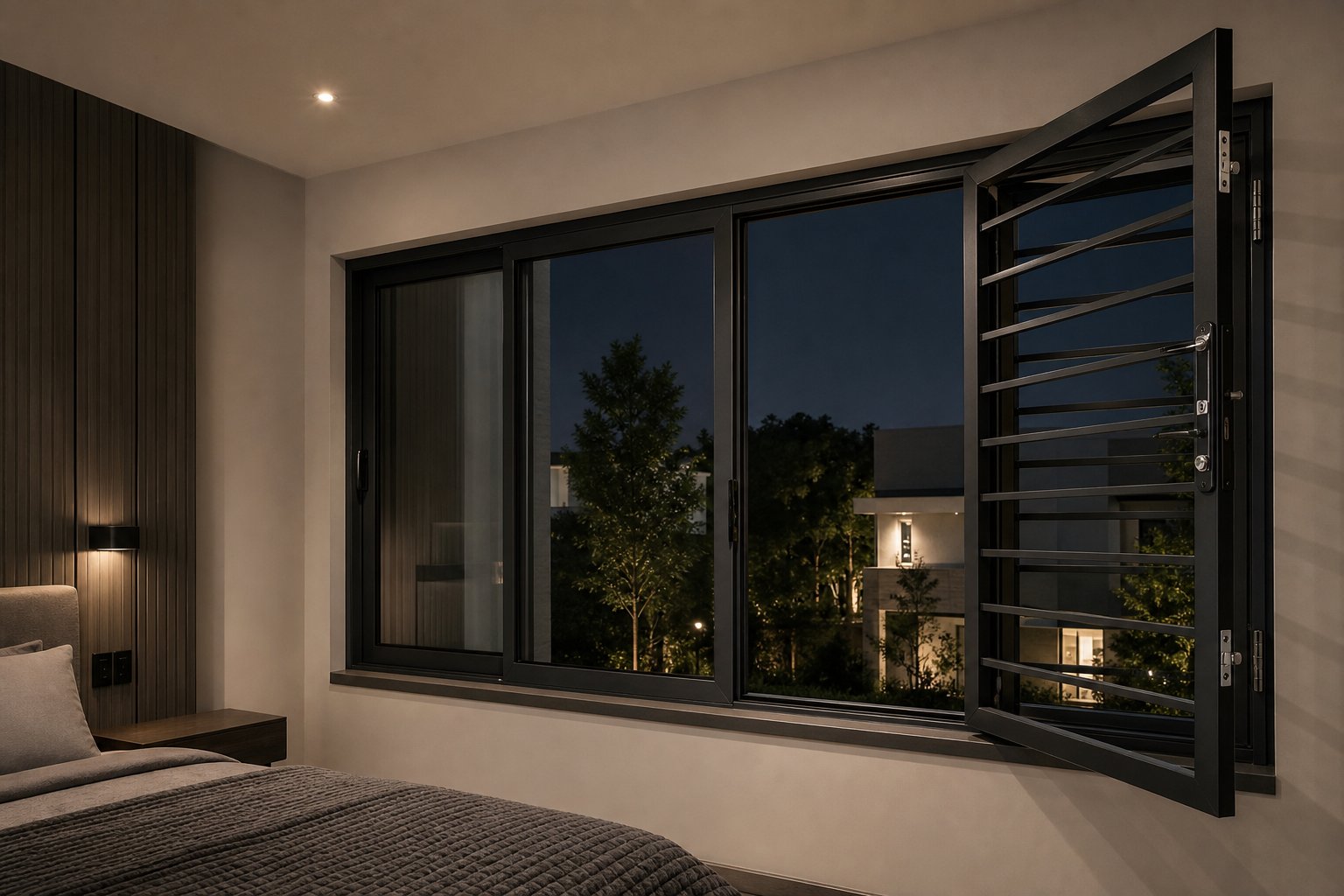
Fixed vs Removable Grills and Fire Safety Codes
Alloy grade and finish determine how long your grill lasts. But the way that grill is attached to the window determines something more urgent — whether the people inside your home can escape if a fire blocks the hallway at 2 a.m.
This is the decision most buyers never think about until an inspector flags it or, worse, until it matters in an emergency. Choosing between fixed vs removable window grill for safety is not a preference question. It is a compliance question, and in some cases, a life-safety question.
Fixed Grills for Maximum Security
A fixed grill is permanently attached to the window frame or surrounding wall structure. The bars are either welded directly to a steel or aluminium subframe, or mechanically fastened with tamper-resistant screws accessible only from inside the building. From the exterior, there is no exposed bolt head to unscrew, no hinge pin to knock out, no clip to release.
This makes fixed grills the strongest deterrent against forced entry. Even after breaking the glass, an intruder faces a rigid metal barrier that requires power tools and significant time to defeat — exactly the kind of noise and delay that sends opportunistic burglars elsewhere. For ground-floor windows facing laneways, car parks, or poorly lit side elevations, a permanently fastened grill offers peace of mind that no other window treatment can match.
The tradeoff is absolute: what cannot be removed from outside also cannot be opened from inside. And that creates a serious problem the moment you need to get out rather than keep someone from getting in.
Removable and Sliding Grills for Emergency Egress
Australia’s National Construction Code (NCC) and supporting standards set requirements for emergency egress from habitable rooms. While specific provisions vary between classifications and states, the underlying principle is consistent: occupants must have a viable escape route that does not depend on keys, tools, or special knowledge to operate. Fire safety egress requirements for window grills mean that a bedroom window fitted with a permanently fixed grill — one that cannot be opened from inside — may render that window non-compliant as an emergency exit.
In practice, building surveyors and council certifiers will look at whether at least one openable window in each bedroom provides an unobstructed path large enough for a person to climb through. A window blocked by a permanent barrier fails that test regardless of how wide the opening is behind the bars.
Three solutions satisfy both security and egress:
- Quick-release hinged grills — the grill panel is hinged on one side and secured with an interior latch on the other. In an emergency, the occupant releases the latch from inside and swings the grill open. No tools, no keys.
- Removable aluminium grill panels — clip-mounted grill sections that lock in place under normal conditions but can be lifted out from inside with a simple push-and-lift action. A removable aluminium grill for emergency exit allows full clearance of the window opening within seconds.
- Sliding grill mechanisms — a grill panel mounted on its own track, independent of the window sash. The grill slides open horizontally to clear the opening, much like the window glass itself. This design is particularly effective on multi-track sliding windows where the grill track sits outboard of the glass tracks, allowing the grill to be swept aside without interfering with the window’s operation.
Each option maintains a physical barrier against external intrusion during normal use while giving occupants an unobstructed escape path when every second counts. Sliding grill building code compliance hinges on that dual function — the mechanism must be operable by anyone inside, including children and elderly residents, without requiring strength, tools, or prior instruction.
Grill design must balance security with emergency escape requirements. A grill that cannot be opened from inside in an emergency is not just non-compliant — it is a potential death trap. Always confirm that your chosen grill configuration allows occupants to clear the opening without tools or keys.
Beyond fire safety, removable and sliding grills offer a practical maintenance benefit: they allow full access to both sides of the glass for cleaning. Fixed grills make exterior glass cleaning awkward at best and impossible at worst, particularly on upper storeys where you cannot reach around the bars from outside.
If you are specifying for a new build or renovation, discuss grill type with your building certifier early. The wrong choice discovered at inspection means ripping out installed grills and replacing them — exactly the kind of double-up cost this article’s title warns about. The question is not simply “fixed or removable” in isolation; it depends on the window’s location, the room’s classification, and the climate conditions that grill will endure over its lifetime.
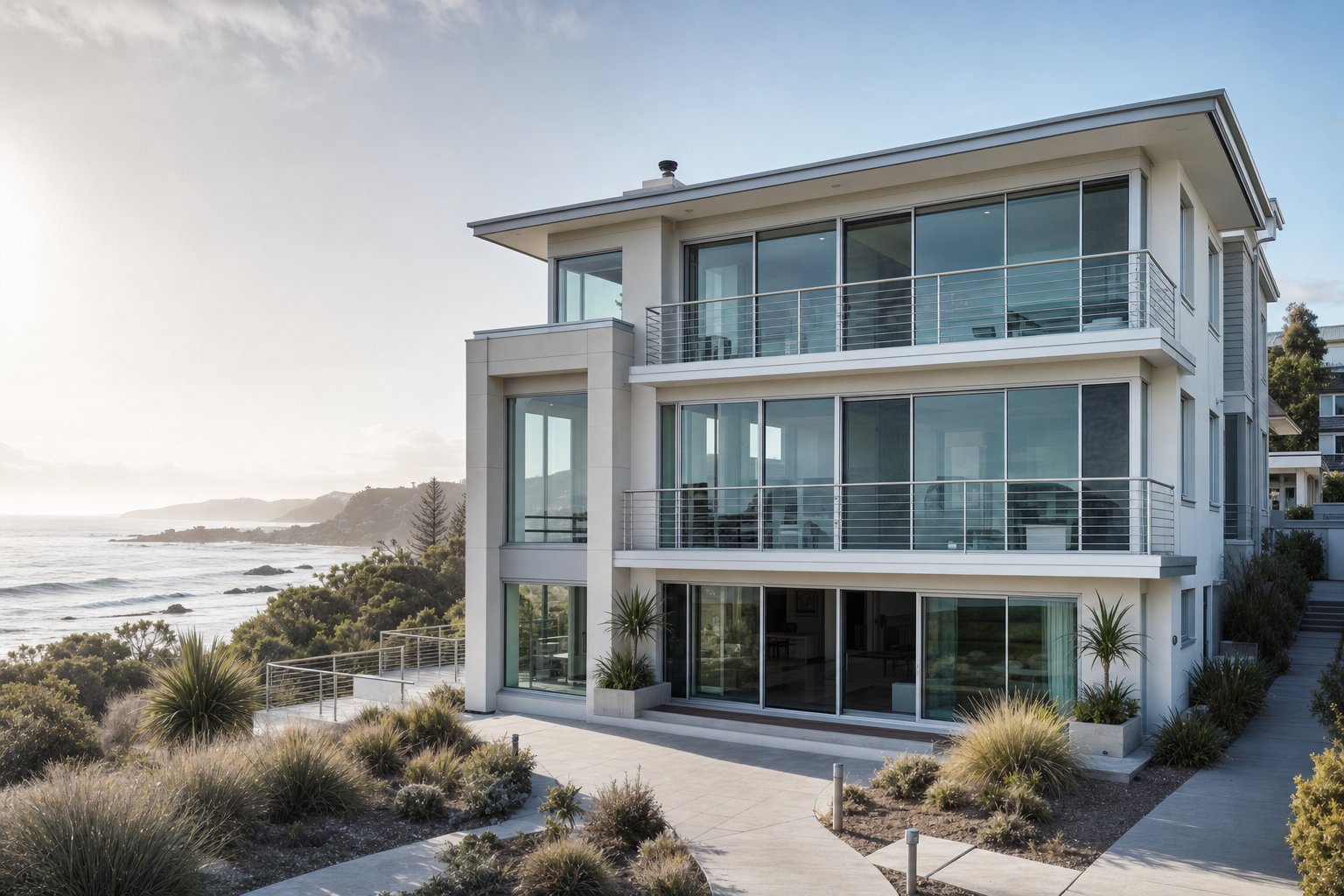
How Climate Affects Aluminium Grill Window Performance
Location dictates lifespan. A window that performs flawlessly in Adelaide’s dry, temperate conditions can pit and seize within a few years on a beachfront property in Far North Queensland. Climate does not just test your finish — it tests the alloy beneath it, the rollers inside the track, and the seal between glass and frame. Understanding how your environment attacks aluminium sliding windows with grill helps you specify the right combination of finish, glass, and hardware from day one rather than discovering the mismatch after corrosion sets in.
Coastal and Humid Climate Performance
Aluminium does not rust. That single advantage keeps it ahead of mild steel grills in any environment where moisture is present. Steel window grills in coastal areas develop visible orange corrosion within months if the galvanising fails; aluminium forms a thin oxide layer that protects the metal underneath. But “rust-proof” does not mean “maintenance-free” near the ocean.
Salt spray — airborne chloride carried inland from breaking waves — is the real threat. Chloride ions overwhelm aluminium’s natural oxide layer, causing visible pitting within weeks on unfinished extrusions. That pitting deepens over time and can compromise structural integrity. The problem is not limited to absolute beachfront homes; significant salt deposition has been measured more than 80 kilometres from shore in certain wind conditions, meaning properties across much of coastal NSW, QLD, WA, and VIC face some level of salt exposure.
For an aluminium sliding window for coastal areas, the finish is your front line. A quality architectural-grade powder coat — one tested to withstand extended salt spray exposure — creates a barrier thick enough (60–80 microns) to keep chloride away from the base metal. Marine-grade anodising provides even stronger aluminium window grill corrosion resistance to salt spray because the hardened oxide layer is integral to the metal rather than applied on top. It cannot chip or peel the way a poorly applied powder coat might.
Humid tropical climates add a compounding factor. Sustained high humidity keeps salt deposits damp rather than letting them dry and blow away, prolonging the contact time between corrosive chlorides and your window surfaces. Combine that with monsoonal rain driving moisture into joints and weepholes, and you have an environment where the best window finish for humid tropical climate is not a cost-saving decision — it is a survival decision for the product.
Practical steps for coastal and tropical installations:
- Specify minimum 60-micron architectural powder coat or Class I anodising for all exposed grill bars and frame surfaces.
- Ensure weepholes in the bottom track are adequately sized and unobstructed so water drains freely rather than pooling around rollers.
- Schedule regular cleaning — a simple rinse with fresh water every few weeks removes salt deposits before they can attack the finish. Even the most durable coatings need this basic maintenance in coastal zones.
- Choose stainless-steel or marine-grade nylon rollers and fasteners rather than zinc-plated components, which corrode rapidly in salt air.
Extreme Temperature and Thermal Expansion Considerations
Aluminium expands when heated and contracts when cooled — a basic physical property that has real consequences for sliding window operation. The coefficient of thermal expansion for aluminium sits at roughly 23 x 10⁻⁶ per degree Celsius, meaning a 1-metre frame member will lengthen by approximately 1.15 mm across a 50°C temperature swing. That sounds trivial, but in a dark-coloured frame absorbing direct summer sun, surface temperatures can climb well above 70°C while the shaded interior side stays near ambient — creating uneven expansion across the profile.
This uneven expansion causes a phenomenon called “thermal bow”, where the hotter exterior face of the frame tries to grow longer than the cooler interior face. The result, if the system is not designed to accommodate it, is a framing member that bows outward — potentially jamming the sliding sash in its tracks. The issue is most pronounced in large openings with dark-coloured frames and is amplified in thermally broken profiles where the insulating strip deliberately prevents heat from equalising across the section.
Good track design accounts for thermal expansion in aluminium sliding window tracks through several strategies:
- Clearance tolerances — tracks sized slightly wider than the sash rollers allow the frame to expand without binding against the sash.
- Butt joints over mitred corners — mitred corners fix both ends of a frame member, forcing expansion energy sideways as bow. Butt joints allow longitudinal movement.
- Lighter frame colours — a white or light grey frame absorbs far less solar radiation than a black one, keeping maximum operating temperature lower and reducing total expansion.
- Stiffer extrusion profiles — deeper, more rigid sections resist lateral bowing even under thermal stress.
For Australian homes in areas with extreme diurnal temperature ranges — think inland Queensland, western NSW, or South Australia’s arid zones where summer days hit 45°C and winter nights dip below zero — these design details are not optional extras. A window that slides freely in the showroom can lock tight after its first summer if the frame has inadequate expansion allowance.
Connecting this back to alloy grade: 6063-T5 and 6063-T6 share the same expansion coefficient, so alloy choice does not change the thermal movement itself. What it changes is stiffness and resistance to deformation — a well-tempered profile holds its shape under thermal stress rather than permanently bowing. And finish colour, as noted, directly influences how hot the extrusion gets. Choosing a lighter shade is a free thermal management strategy.
Climate Challenges Ranked: Finish and Glass Recommendations
- Coastal tropical (e.g., Cairns, Darwin, coastal QLD) — the most demanding combination: salt spray, sustained humidity, cyclone-rated wind loads, and intense UV. Specify marine-grade anodising or premium architectural powder coat on all surfaces, double-glazed laminated glass for wind resistance and UV blocking, and stainless-steel hardware throughout.
- Coastal temperate (e.g., Sydney’s Eastern Suburbs, Gold Coast, Perth coast) — salt exposure is significant but humidity and temperature extremes are less relentless. Architectural-grade powder coat (minimum 60 microns) performs well here. Double glazing with a Low-E coating balances thermal comfort and UV protection.
- Inland arid and semi-arid (e.g., Broken Hill, Alice Springs, Mildura) — minimal salt but extreme temperature swings and high UV. Choose lighter frame colours to manage thermal expansion. Double glazing handles the hot days and cold nights. Standard quality powder coat is sufficient since corrosion risk is low, but UV-resistant formulations prevent chalking.
- Temperate inland (e.g., Canberra, Ballarat, Toowoomba) — cold winters, mild summers, negligible salt. Standard powder coat in any colour performs well. Double glazing is recommended for thermal comfort and energy compliance; toughened single pane remains viable for budget builds in lower-risk locations.
Climate is the one variable you cannot change after installation. Every other decision — grill pattern, glass type, alloy grade, finish — should be filtered through the question: “What will my environment do to this window over the next 20 years?” The answer shapes not only the specification but also the budget, which is exactly where the next layer of decision-making begins.
Cost Factors and Budgeting for Grill Windows
Specification drives price. Every choice discussed so far — alloy grade, glass type, grill pattern, surface finish, climate suitability — lands on a quote sheet sooner or later. The frustration most buyers hit is that aluminium sliding window with grill price factors are rarely broken out clearly. You get a lump-sum figure and no visibility into what is costing you money versus what is costing you pennies. That opacity makes it impossible to budget intelligently or know where to push back.
So here is a transparent breakdown of how much an aluminium grill window costs relative to each variable, without fabricated dollar figures that would be outdated the moment material costs shift.
What Drives the Price of Aluminium Sliding Windows With Grill
Eight factors carry the most weight. Some have an outsized impact on the final number; others matter less than you might expect.
| Cost Factor | Impact Level | What to Look For |
|---|---|---|
| Overall window size | High | Larger openings require longer extrusions, heavier glass, and stronger hardware. Price scales roughly with area but jumps disproportionately once the frame exceeds standard die lengths and requires structural reinforcement. |
| Glass type | High | Single pane is the cheapest baseline. Double glazing roughly doubles the glass cost component. Add toughening, lamination, or Low-E coatings and the premium stacks further. Confirm whether the quote specifies the glass you actually need for compliance. |
| Aluminium grade and wall thickness | Medium–High | Thicker-walled extrusions (1.6 mm vs 1.2 mm) use more raw material and produce stiffer, longer-lasting frames. Higher-grade alloy and heavier profiles add cost but significantly affect structural integrity and lifespan. |
| Grill complexity | Medium | Simple horizontal or vertical bars require straight cuts and minimal welding — low fabrication time. Ornate patterns (diamond lattice, geometric laser-cut designs) demand more material, tighter tolerances, and additional labour. The jump from a basic three-bar grill to an intricate colonial grid can add noticeably to the per-window cost. |
| Number of tracks | Medium | Two-track systems are standard. Three-track or four-track configurations widen the frame depth, use more aluminium, and require additional rollers and interlocking seals. Each extra track adds material and hardware cost. |
| Powder coat colour and finish | Low–Medium | Standard colours (white, black, matt monument) are stocked in bulk and cost less than custom RAL colours requiring dedicated coating runs. Textured or metallic finishes attract a further premium. Anodising is typically more expensive per unit than standard powder coating. |
| Hardware quality | Medium | Rollers, locks, and handles range from basic zinc-plated to marine-grade stainless steel. Cheap rollers fail early and create replacement costs that dwarf the initial saving. Look for nylon-wheeled or stainless-steel rollers and multi-point locking systems on security-rated windows. |
| Order volume | Medium | Single residential windows are priced at retail margins. Project orders — a full house or multi-unit development — unlock volume pricing on extrusions, glass, and coating. Consolidating your order with one fabricator rather than splitting across suppliers often yields a better unit rate. |
Notice that size and glass type sit at the top. These two factors alone can account for the majority of price variation between quotes for what appears to be the same window style. If two quotes differ dramatically, check the glass specification first — one may include double-glazed toughened glass while the other prices single-pane float.
Budgeting Tips for Residential and Project Orders
Smart budgeting is not about choosing the cheapest option across the board. It is about knowing where quality spending pays dividends and where simpler choices carry no penalty. A budget aluminium sliding window with grill can still perform well for decades if you allocate dollars to the components that wear, corrode, or fail — and economise on the elements that are purely cosmetic.
Where to invest:
- Thicker frame profiles (minimum 1.4 mm wall thickness) — these resist racking under wind loads and support heavier glass without flexing. Thin-walled frames save a few dollars per window but telegraph every gust as a rattle and bow under thermal stress.
- Quality rollers and locking hardware — a window you cannot open smoothly or lock securely is a daily irritation. Nylon-wheeled tandem rollers and multi-point locks cost modestly more upfront but avoid the expense of hardware replacement within five years.
- Appropriate glass for your climate zone — underspending on glass to hit a budget number often triggers higher energy bills that erode the “saving” within two or three years. Double glazing in NatHERS-demanding zones is an investment, not a luxury.
- Finish quality on grill bars — as covered earlier, grill bars face full weather exposure. Architectural-grade powder coat or anodising on the grill is non-negotiable in coastal or tropical areas.
Where savings are safe:
- Simpler grill patterns — horizontal bars or a basic rectangular grid deliver comparable security to ornate designs at a fraction of the fabrication cost. Unless heritage or architectural guidelines require a specific motif, keep the pattern clean.
- Standard powder coat colours — choosing from a fabricator’s stock range (typically 8–12 popular shades) avoids custom-batch surcharges. Monument, surfmist, and woodland grey cover the majority of Australian exterior palettes.
- Two-track over three-track systems — unless your opening requires three sliding panels, a two-track configuration is structurally simpler and more cost-effective. Add a third track only when the opening width genuinely demands it for usable ventilation area.
The aluminium window grill cost vs quality equation is ultimately about alignment. Match the specification to your environment, your security needs, and your compliance requirements — then trim the cosmetic extras. A well-specified standard window will outlast an under-specified ornate one every time.
With budget parameters clear, the next logical step is comparing aluminium sliding windows against the alternative systems competing for the same spot in your wall — UPVC, steel, and casement configurations — to confirm whether aluminium delivers the best value for your particular scenario.
Aluminium Sliding Windows vs Alternative Window Types
Knowing what drives the price of an aluminium sliding window with grill is one thing. Knowing whether aluminium is even the right material for your opening is another. Three alternatives compete for the same wall space — UPVC sliding windows with grill, steel-grilled window systems, and aluminium casement windows with grill. Each carries distinct strengths and blind spots, and the best material for sliding window with grill applications depends on your climate, your security requirements, your aesthetic goals, and your tolerance for ongoing maintenance.
Aluminium vs UPVC Sliding Windows With Grill
UPVC (unplasticised polyvinyl chloride) sliding windows have carved out a solid market share in budget-conscious residential projects. The frames insulate well by default — UPVC’s low thermal conductivity means you get reasonable energy performance without paying for a thermal break. Upfront cost sits noticeably below aluminium, often 50–70% lower for standard window sizes.
The tradeoffs become clear once you look at profile dimensions and longevity. UPVC frames need thicker sections to achieve the same structural rigidity as aluminium, which means fatter sightlines and less visible glass area per opening. Colour options are limited — roughly 30 finishes compared to 200-plus with powder-coated aluminium — and dark UPVC colours absorb heat, risking expansion and warping under intense Australian sun. For homes in northern QLD or western NSW where summer surface temperatures push past 60°C on a dark frame, that thermal instability is a real concern.
When it comes to an aluminium vs UPVC sliding window with grill comparison, aluminium wins on slimness, colour freedom, and dimensional stability in heat. UPVC wins on raw insulation value and entry-level price. If your project needs large openings, slim profiles, or dark frame colours in a hot climate, aluminium is the safer long-term bet. If budget is tight and the windows sit on a shaded elevation in a temperate zone, UPVC can do the job adequately.
Aluminium vs Steel Grills on Sliding Windows
Steel grills offer brute strength. The material is roughly three times stronger than aluminium in equivalent sections, meaning bars can be thinner while still resisting forced entry. That strength advantage appeals to high-security commercial applications and ground-floor residential windows in vulnerable positions.
But the aluminium vs steel window grill comparison tilts decisively toward aluminium once you factor in corrosion and weight. Steel’s density — approximately 7.8 g/cm³ versus aluminium’s 2.7 g/cm³ — adds substantial dead load to the window assembly, stressing rollers and tracks. More critically, steel requires active corrosion protection (galvanising plus paint) and ongoing maintenance to prevent rust, particularly in coastal or humid environments. Aluminium’s natural oxide layer handles the same conditions with minimal intervention.
Steel also costs significantly more — fabrication requires welding rather than aluminium’s simpler mechanical joining, and anti-corrosion treatments add further expense. For most Australian residential projects, aluminium grill bars in 6063-T6 alloy at appropriate spacing deliver ample security without the weight, maintenance burden, or price premium of steel.
Aluminium Casement vs Sliding: Which Suits Your Opening
This is less a material comparison and more an operational one. Both use aluminium frames. The difference is how they open — and that changes everything about sealing, ventilation control, and space usage.
Casement windows hinge outward (or inward) and pull tight against the frame when closed, creating a compressed seal that outperforms sliding systems on air infiltration and acoustic insulation. They allow nearly 100% of the opening area for ventilation. The downside: they need clearance space to swing, they protrude into walkways or patios, and they catch wind when open.
An aluminium casement vs sliding window with grill decision often comes down to location. Sliding windows suit balconies, corridors, bedrooms facing walkways, and any spot where a protruding sash would be impractical. Casements suit walls with clear external space, rooms demanding maximum airflow, or positions where superior acoustic sealing matters — like bedrooms facing busy roads. For grill integration, both styles accommodate external or internal bars equally well, though sliding grills (covered earlier) pair most naturally with sliding sashes for consistent horizontal operation.
| Window System | Durability | Maintenance | Design Flexibility | Weight | Cost Range | Climate Suitability |
|---|---|---|---|---|---|---|
| Aluminium sliding with grill | 40–60 years with quality finish | Minimal — periodic wash, roller check | 200+ colours, slim profiles, multiple grill patterns | Light (~2.7 g/cm³) | Mid-range | All Australian climates with appropriate finish |
| UPVC sliding with grill | 25–40 years; degrades in high UV | Low maintenance but no refinishing option | ~30 finishes, thicker profiles, limited grill attachment methods | Moderate | Lower upfront | Best in temperate, shaded orientations; risky in extreme heat |
| Steel grill on sliding window | 50+ years if maintained | High — regular rust prevention, repainting cycles | Thinnest possible bars; ornate fabrication via welding | Heavy (~7.8 g/cm³) | Higher (4–5× aluminium for comparable grill) | Requires diligent maintenance in coastal/humid zones |
| Aluminium casement with grill | 40–60 years | Minimal — hinge lubrication, seal replacement | Same colour and grill options as sliding; superior sealing | Light | Comparable to sliding (hardware differs) | All climates; excellent acoustic sealing for noisy areas |
For projects where slim frames, low maintenance, and climate versatility sit at the top of the priority list, aluminium sliding windows consistently land as the benchmark. For example, systems like MEICHEN’s MA100 2-track sliding window demonstrate how project-grade aluminium frames accommodate various grill and glazing configurations — multi-track design, quality seals, and robust hardware all integrated into a single system ready for residential or commercial specification.
Material choice settles one layer of the decision. But even the right material, poorly ordered, leads to expensive rework — which is exactly where most buyers trip up next.
Common Ordering Mistakes and How to Avoid Them
Choosing the right material and grill configuration is half the battle. The other half is translating those decisions into an accurate order — and this is where money gets wasted. Common mistakes ordering aluminium sliding windows rarely stem from ignorance about the product itself. They stem from rushed measurements, vague specifications, and assumptions that the fabricator will “figure it out.” Fabricators build what you tell them to build. If the instruction is wrong, so is the window.
Measurement and Specification Errors to Avoid
Knowing how to measure for sliding window with grill installations is not complicated, but it demands patience. A few millimetres off on a width measurement might sound trivial until the frame arrives and will not fit the opening — or worse, fits loosely with visible gaps that compromise weathersealing and security.
The most common aluminium window grill specification errors fall into a predictable pattern:
- Measuring the opening only once, in one spot — Wall openings are rarely perfectly square. Measure width at the top, middle, and bottom, and height at both sides and the centre. Use the smallest dimension as your ordering size, then allow clearance for packing and levelling. A single measurement taken at the widest point produces a frame that binds at the narrower end.
- Ignoring track depth requirements — A two-track sliding window needs a certain frame depth to house both sashes, rollers, and interlocking seals. A three-track system needs more again. If you specify a multi-panel window without confirming that your wall thickness and reveal depth can accommodate the frame, the window either will not sit flush or will require expensive structural modification to the opening. Always measure reveal depth from front to back before selecting a track configuration.
- Specifying grill bar spacing that violates safety codes — Ordering a grill pattern purely on aesthetics, without checking whether the bar spacing complies with NCC requirements for fall prevention or child safety, means the grill may fail inspection. This is particularly critical on upper-storey windows where barriers must prevent a 125 mm sphere from passing through — roughly equivalent to a small child’s head. A decorative pattern with 180 mm gaps looks elegant but will not pass certification in those locations.
- Confusing structural opening vs finished frame size — The rough opening in the wall is not the same as the window frame size. Failing to subtract the necessary clearances for shimming, sealing, and squaring produces an oversized frame that physically cannot be installed without chiselling out brickwork or trimming the extrusion on site.
Finish and Hardware Mistakes That Cost Money Later
Specification errors show up on delivery day. Finish and hardware mistakes are slower — they reveal themselves six months or two years down the track, long after the warranty conversation becomes awkward.
- Choosing a standard powder coat for a coastal installation — A property 500 metres from the surf faces salt spray levels that will pit and chalk a basic-grade coating within a few years. Specifying architectural-grade or marine-grade finish at the outset adds a modest premium. Recoating an installed window — if it is even possible without removing it from the wall — costs multiples of that premium.
- Selecting the cheapest rollers available — This is the single most common sliding window hardware mistake to avoid. Budget zinc-plated rollers with plastic wheels feel smooth in the showroom. Under the weight of double-glazed panels and the grit that accumulates in Australian tracks, they wear flat, corrode, and seize. Nylon-wheeled tandem rollers or stainless-steel bearing rollers cost marginally more and last the life of the window. Roller replacement involves removing the sash, which on upper-storey windows may require scaffolding — transforming a $30 part into a $400 service call.
- Prioritising grill aesthetics over security spacing — Wide-spaced ornamental bars may suit the design vision, but if they sit on a ground-floor window facing an alley, they offer minimal deterrent. Conversely, installing prison-tight spacing on an upper-storey window where it is unnecessary adds cost and visual heaviness without meaningful security benefit. Match spacing to risk level and compliance requirements for each specific window location.
- Overlooking lock and seal specifications — A multi-point lock with a flush-mounted handle costs more than a basic snib latch but provides substantially better security and air-tightness. Cheap seals harden in UV and lose compression within a few years, allowing drafts, dust, and water ingress. These are not visible on a quote comparison but define the lived experience of the window.
Most of these errors share a root cause: ordering from a specification sheet without fully understanding what each line item means in practice. Working with established sliding window manufacturers who offer project-level technical support — not just order-taking — gives you a second set of eyes on the specification before fabrication begins. Reviewing detailed product pages like MEICHEN’s MA100 sliding window system can help you understand track depth, seal types, and hardware options before placing an order, giving you a concrete reference point for what a properly specified system looks like versus a stripped-back budget offering.
The difference between getting it right the first time and paying to fix it later is rarely about spending more. It is about spending accurately — matching every specification line to the environment, the compliance requirements, and the daily use that window will face for decades.
Frequently Asked Questions About Aluminium Sliding Windows With Grill
1. What is the best grill bar spacing for security on aluminium sliding windows?
For security-rated aluminium sliding windows, grill bar spacing between 100 mm and 150 mm is recommended. At 150 mm, an adult cannot pass through the opening while maintaining a relatively open visual feel. Tightening the spacing to 100 mm provides child-safety compliance, which is critical for upper-storey windows where fall prevention is required under Australia’s National Construction Code. The ideal spacing depends on the window’s location and risk level — ground-floor windows in exposed positions benefit from tighter spacing, while upper-level windows can use wider gaps for a lighter aesthetic.
2. Can you have a fixed grill on a bedroom window in Australia?
In many cases, no. Australia’s National Construction Code requires habitable rooms to have viable emergency escape routes. A permanently fixed grill that cannot be opened from inside may render the window non-compliant as an emergency egress point. Building certifiers check whether at least one openable window per bedroom provides an unobstructed path large enough for a person to exit. Solutions that satisfy both security and compliance include quick-release hinged grills, removable clip-mounted panels, and sliding grill mechanisms on independent tracks — all operable from inside without tools or keys.
3. What aluminium alloy is used for window frames and grills?
Most aluminium window frames and grill bars in Australia are extruded from 6000-series alloy, primarily 6063-T5 or 6063-T6. This alloy offers an ideal balance of extrudability, corrosion resistance, and strength-to-weight ratio for architectural profiles. It also accepts powder coating and anodising exceptionally well. For high-security applications where forced-entry resistance is the priority, 6061-T6 may be specified for grill bars due to its 40-50% higher tensile strength compared to 6063. Systems like MEICHEN’s MA100 sliding window use project-grade aluminium extrusions designed to accommodate various grill and glazing configurations.
4. Is powder coating or anodising better for aluminium window grills in coastal areas?
For properties within a few hundred metres of the coastline, marine-grade anodising generally provides superior protection because the hardened oxide layer is integral to the metal and cannot chip, peel, or flake like a coating might. However, premium architectural-grade powder coat (minimum 60 microns, tested for extended salt spray resistance) also performs well in coastal zones and offers far more colour options. The critical factor is that grill bars face full weather exposure without the shelter that wall-recessed frames enjoy, so whichever finish you choose must be specified to a higher durability standard than you might use for inland installations.
5. How do aluminium sliding windows with grill compare to UPVC sliding windows?
Aluminium sliding windows offer slimmer profiles (more visible glass area), over 200 colour options via powder coating, superior dimensional stability in high heat, and a lifespan of 40-60 years. UPVC sliding windows cost less upfront and provide better inherent thermal insulation without requiring a thermal break. However, UPVC frames need thicker sections for equivalent rigidity, offer roughly 30 colour finishes, and can warp under intense Australian sun — particularly in dark colours. For large openings, hot climates, or projects requiring slim sightlines and long-term durability, aluminium is the stronger choice. UPVC suits budget-conscious projects in temperate, shaded orientations.
More Window & Door Guides