What Aluminium Windows Wholesale Actually Means
Buying aluminium windows at wholesale is not just about getting a cheaper price on a single unit. It is a fundamentally different procurement model — one built around volume, consistency and trade-level pricing that sits well below retail markup.
Aluminium windows wholesale refers to the bulk purchase of aluminium window units directly from manufacturers or authorised distributors at trade pricing, bypassing retail channels and their associated markups. Buyers typically purchase defined quantities against a project schedule or resale plan, receiving unit costs 25–50% lower than retail depending on supplier, volume and specification.
Wholesale vs Retail Aluminium Window Purchasing
The retail path is straightforward: a homeowner walks into a showroom, picks an aluminium window, and pays a price that covers the showroom lease, sales staff, display stock and marketing overhead. Wholesale strips most of that away. Instead, the buyer deals closer to the source — often directly with the fabricator or an authorised distributor — and commits to larger quantities in exchange for significantly lower per-unit costs.
That cost gap matters. On a single window, the difference might seem modest. Spread it across 80 windows for a townhouse development or 300 units for a commercial fit-out, and the savings reshape an entire project budget. Wholesale windows and doors follow the same logic across the broader fenestration category: volume commitment unlocks pricing that retail simply cannot match.
Who Are Wholesale Aluminium Window Buyers
This market is not designed for someone replacing a single kitchen window. The typical buyers fall into a few distinct groups, each with different drivers but a shared need for trade-level supply of windows and window frames:
- Residential builders managing multi-lot subdivisions or townhouse projects where every opening requires a consistent aluminium window specification.
- Commercial developers specifying windows for office towers, retail precincts or mixed-use buildings.
- Renovation contractors juggling multiple simultaneous jobs and consolidating orders to improve margins.
- Window dealers who purchase at wholesale pricing and resell to end consumers or smaller trade clients.
- Commercial glaziers who supply and install across large-scale projects.
Understanding where you sit in this buyer landscape shapes every decision that follows — from which suppliers will take your call, to the minimum order quantities you will face, to the pricing tiers available. That supply chain, and the way each link in it adds cost between the raw aluminium extrusion and the finished window on your job site, is where the real purchasing leverage lives.
The Wholesale Supply Chain from Manufacturer to Job Site
Every dollar you pay for a wholesale aluminium window has been shaped by the journey that unit took from raw metal to finished product. The more links in that chain, the more margin gets layered on. Knowing how each stage works — and where your supplier sits within it — gives you real leverage when negotiating price, lead times, and customisation.
From Aluminium Extrusion to Finished Window
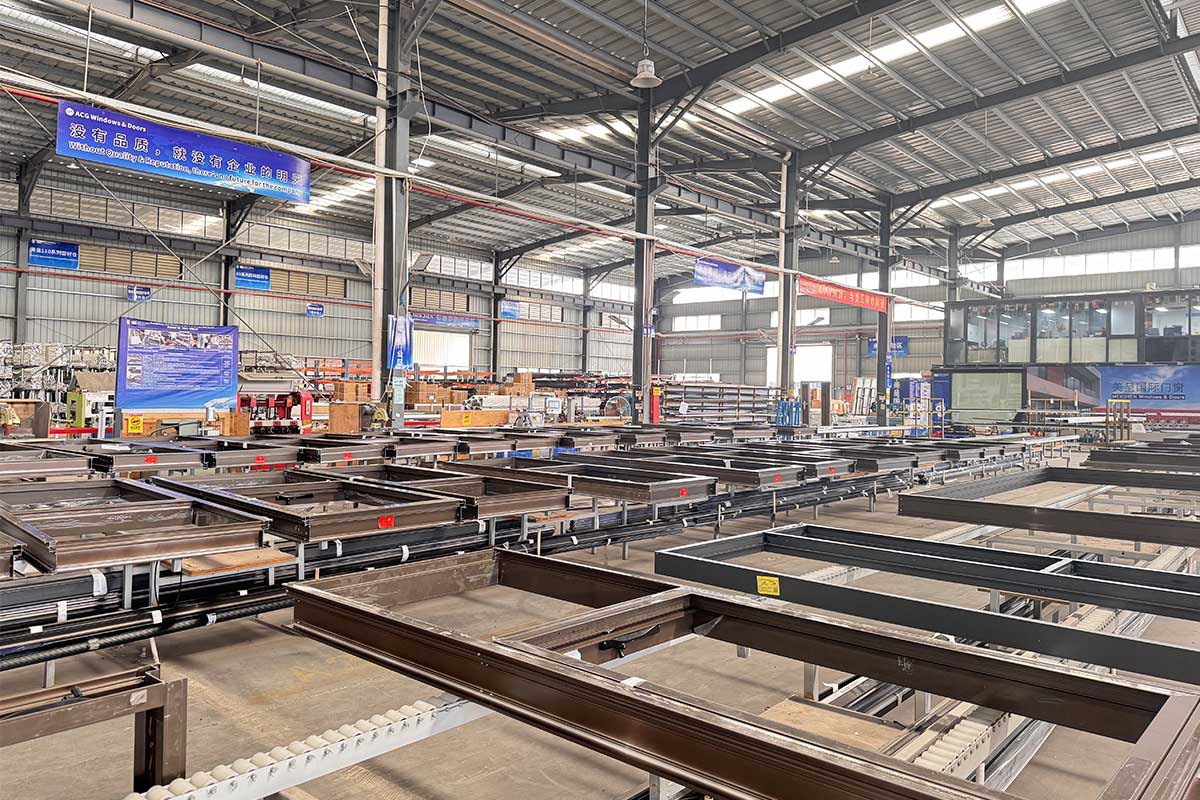
Window manufacturing begins long before anyone cuts a frame or fits a pane of glass. It starts with aluminium billets — cylindrical blocks of raw aluminium alloy — heated to roughly 375°C–500°C and forced through a precision-shaped die. This extrusion process produces the aluminium window extrusions that form the skeleton of every frame, sash, and mullion. The die determines the profile’s cross-section, including channels for drainage, gasket grooves, and thermal break cavities.
From there, the production sequence moves through several distinct stages:
- Profile cutting and machining — Extruded lengths are cut to the exact dimensions required for each window unit. CNC machinery handles corner notching, screw ports, and drainage slots with tight tolerances.
- Surface treatment — Raw aluminium is either anodised or powder coated. Powder coating is the dominant finish in the Australian market, offering a durable colour layer that resists UV degradation and coastal salt-air corrosion.
- Frame assembly — Cut profiles are joined using mechanical crimping, corner cleats, or screw-fixed connections to form the complete frame and sash.
- Glass unit integration — Insulated glass units (IGUs) — whether double or triple glazed — are seated into the frame using compression gaskets and sealed to prevent moisture ingress.
- Hardware fitting — Handles, locks, hinges, stays, and weatherstripping are installed. Hardware grade varies significantly between budget and premium aluminium window components, affecting both longevity and security ratings.
- Quality inspection and packing — Finished windows are checked for operational function, seal integrity, and visual defects before being packed for dispatch.
Each of these stages adds cost, skill, and time. A window factory running all steps under one roof can control quality and pricing far more tightly than one relying on outsourced processes.
How Each Supply Chain Link Affects Your Price
Between the extrusion press and your job site, multiple businesses may handle the product — and each one adds margin. The table below simplifies this into four tiers to show how pricing accumulates as a window moves through the chain.
| Supply Chain Tier | Role | Typical Margin Added | What the Buyer Gets |
|---|---|---|---|
| Tier 1 — Manufacturer | Extrudes profiles, fabricates complete window units in-house | Base production cost | Lowest unit price; requires higher volume commitment; direct access to engineering and customisation |
| Tier 2 — Distributor | Buys in bulk from manufacturers, warehouses stock, supplies regional markets | 10–20% above manufacturer | Broader product range from multiple brands; regional stock availability; moderate MOQs |
| Tier 3 — Dealer / Reseller | Purchases from distributors or manufacturers and resells to trade or retail | 15–30% above distributor | Smaller order quantities accepted; showroom and sales support; less pricing power |
| Tier 4 — End Buyer (Retail) | Purchases individual units at full retail pricing | Full retail markup | Convenience and small-quantity access; highest per-unit cost |
The pattern is straightforward: buying closer to Tier 1 cuts out intermediary margins. For builders and developers placing orders of 50, 100, or 500-plus units, sourcing from aluminium window manufacturers who extrude and fabricate in-house typically delivers the strongest wholesale pricing. The trade-off is that these manufacturers often set higher minimum order quantities and expect detailed specifications upfront.
This is where a critical distinction comes into play. A vertically integrated manufacturer controls the entire process — from aluminium billet through to the packed, finished window. They design their own profile systems, manage window fabrication internally, and can adjust production runs to suit project-specific needs. A fabricator, by contrast, purchases pre-designed aluminium profiles and components from a separate system supplier, then assembles windows under licence. Both can produce quality product, but the implications for wholesale buyers differ sharply.
With a fabricator, there is an inherent separation between the company that engineered the profile system and the company building your windows. That gap can introduce risks: potential inconsistencies between what the system supplier’s documentation specifies and what the fabricator actually produces, supply chain delays when the fabricator is waiting on profile stock from their supplier, and limited ability to modify or value-engineer designs because the fabricator does not control the profile tooling. A full supply chain manufacturer, on the other hand, manages everything under one roof — from profile design and stocking through to final quality control — which typically translates to tighter tolerances, faster turnaround, and a single point of accountability.
For wholesale buyers evaluating aluminum window manufacturers, the question worth asking is not just “what price per unit?” but “how many hands does my order pass through before it reaches site?” Fewer links in the chain generally means less margin stacking, fewer communication breakdowns, and greater flexibility when project scope inevitably shifts. That structural advantage becomes even more pronounced when the order involves custom sizing or non-standard configurations — the subject that separates a smooth procurement from an expensive headache.
Standard Sizes vs Custom Fabrication at Wholesale Scale
Every wholesale aluminium window order eventually lands on this fork in the road: do you specify standard sizes and keep things simple, or go custom and match every opening exactly? The answer shapes your budget, your timeline, and whether the finished product fits the project — or fights it.
When Standard Sizes Make Financial Sense
Standard aluminium windows follow a set of commonly produced dimensions — typically ranging from 600mm x 600mm for small utility openings through to 2100mm x 1800mm for larger living areas. Because manufacturers produce these sizes on continuous or short-cycle production runs, they carry several advantages for wholesale buyers: faster turnaround, lower per-unit cost, and greater minimum order flexibility.
Projects with repetitive, uniform openings benefit most. Spec homes across a multi-lot subdivision, apartment buildings with identical floor plans, and commercial fit-outs with standardised shopfronts all lend themselves to standard sizing. In these scenarios, the aluminium window design is essentially locked in early and repeated across dozens or hundreds of openings, which keeps production efficient and costs predictable.
Lead times for standard wholesale orders generally fall in the 2–4 week range when the manufacturer holds profile stock and common glass units. That speed advantage compounds across an entire build programme — fewer delays waiting on windows means fewer days paying site overheads.
Custom Fabrication for Complex or Unique Projects
Not every opening is 1200mm x 1500mm, and not every project wants to look like the one next door. Custom aluminium windows become essential when architectural drawings call for non-standard dimensions, unusual configurations — such as a cantilevered window projecting beyond the building envelope — or specific performance requirements that off-the-shelf units cannot meet.
The trade-off is real. Custom wholesale orders demand detailed architectural drawings, precise site measurements verified on-site rather than taken from plans alone, and engineering coordination between the fabricator, architect, and builder. Each tailor made window specification triggers additional work at the factory: design review, possible tooling adjustments, small-batch production runs that interrupt standard scheduling, and extended quality checks. As reference material from industry analysis notes, this diversion of manufacturing resources is a primary driver behind the price premium on custom orders — typically 25–50% above comparable standard units, though highly complex designs can push beyond that range.
Engaging with the fabricator early — ideally during the design development phase — prevents the most expensive mistakes. When custom window distributors or manufacturers receive finalised drawings too late, there is no room to value-engineer profiles, rationalise glass sizes, or consolidate similar units into more efficient production batches. Early collaboration often reduces both cost and lead time compared to a rushed specification handed over at the eleventh hour.
| Factor | Standard Sizes | Custom Fabrication |
|---|---|---|
| Typical Lead Time | 2–4 weeks | 6–14 weeks (varies with complexity) |
| Unit Cost | Lower — benefits from production efficiency | Higher — 25–50%+ premium over comparable standard units |
| Minimum Order Flexibility | Often as low as 10–20 units | Higher minimums to justify setup and tooling costs |
| Design Freedom | Limited to catalogue dimensions and configurations | Full flexibility on size, shape, operation type, and performance spec |
| Best Suited To | Spec homes, apartment builds, uniform commercial openings | Architecturally designed homes, heritage conversions, unique commercial facades |
Many wholesale buyers land somewhere in between — specifying standard sizes for the majority of openings and reserving custom fabrication for feature windows or structurally demanding locations. That hybrid approach captures production efficiencies where they matter most while still allowing the aluminium window design to meet the project’s aesthetic and performance intent where it counts.
Whichever path you choose, the specifications written into the order determine everything that follows. A vague spec sheet produces vague results — and at wholesale volumes, even a minor oversight in thermal performance, glazing type, or frame profile selection multiplies across every single unit in the shipment.
Technical Specifications Every Wholesale Buyer Needs to Know
A specification error on a single retail window is an inconvenience. A specification error on a wholesale order of 200 units is a financial disaster. Yet many bulk buyers treat the technical details as the manufacturer’s problem rather than their own — and pay dearly when non-compliant or underperforming windows arrive on site. Getting the spec sheet right before the order goes in is not optional; it is the single most effective way to protect both your budget and your build programme.
Thermal Performance and Energy Code Compliance
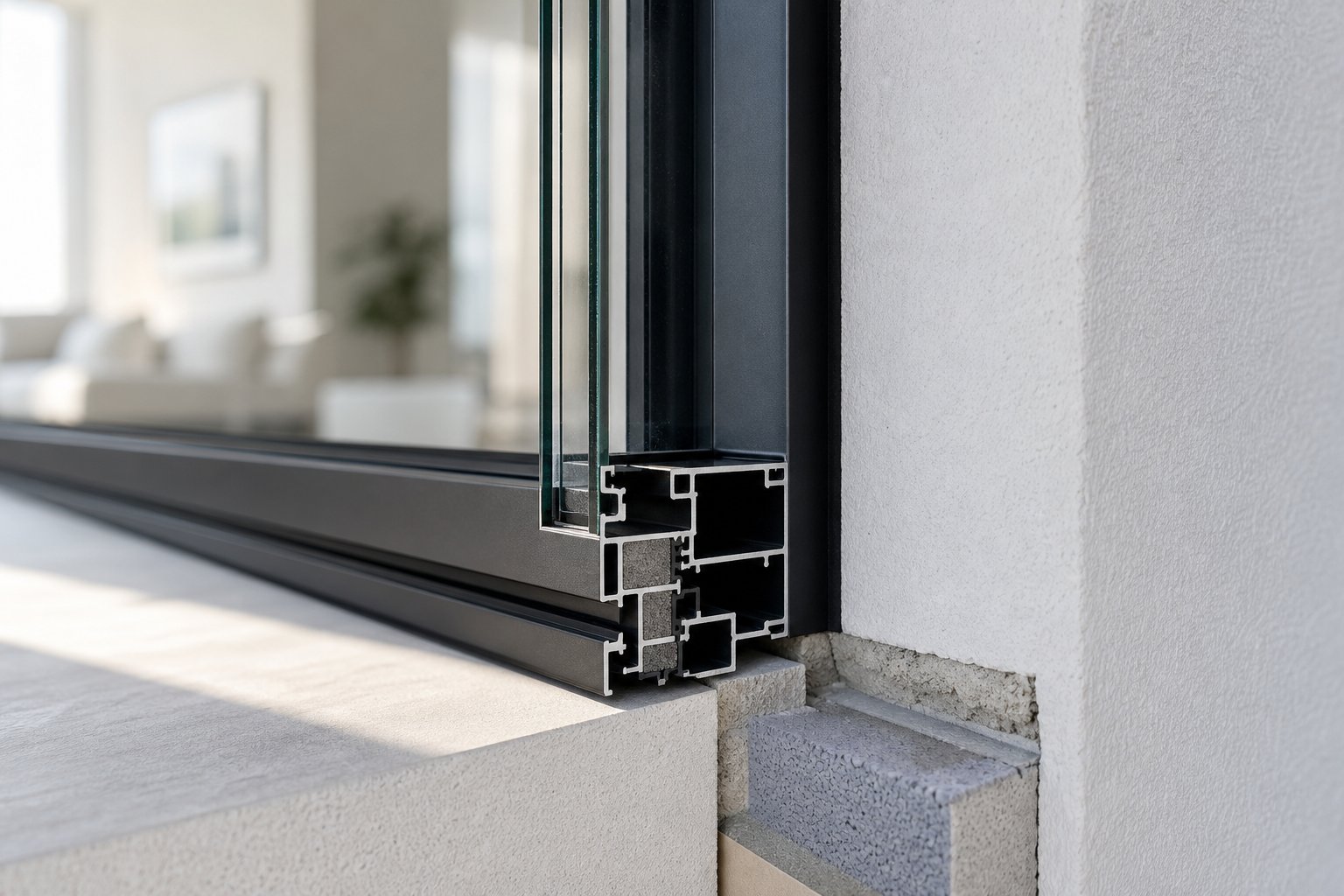
Aluminium is an exceptional structural material — strong, lightweight, corrosion-resistant — but it conducts heat roughly 1,000 times faster than timber. Without intervention, an aluminium window frame acts as a thermal highway, shuttling heat straight through the building envelope. That is where thermal break technology changes the equation entirely.
A thermally broken aluminium frame splits the profile into two separate sections — one facing the interior, one facing the exterior — joined by a low-conductivity strip, typically polyamide (nylon) or polyurethane. This strip acts as a thermal dam, dramatically reducing heat transfer through the frame while maintaining full structural integrity. The polyamide thermal break is the most widely used approach globally, and it is now standard in quality aluminium window systems across the Australian market.
Why does this matter for wholesale buyers specifically? Because Australia’s National Construction Code (NCC) and the NatHERS energy rating framework impose minimum thermal performance requirements that vary by climate zone. In cooler southern regions — Melbourne, Hobart, Canberra — stringent U-value thresholds make thermally broken frames essentially mandatory for code compliance. Even in warmer climates, tightening energy regulations are pushing non-thermally-broken systems out of the compliant product range.
Two metrics sit at the centre of every thermal performance conversation:
- U-value — Measures the rate of heat transfer through the entire window assembly (frame plus glazing), expressed in W/m²·K. Lower numbers mean better insulation. A standard non-thermally-broken aluminium window might sit around 5.0–6.0 W/m²·K, while a quality thermally broken system with double glazing can achieve 2.0–3.0 W/m²·K or lower.
- Solar Heat Gain Coefficient (SHGC) — Measures how much solar radiation passes through the window as heat, expressed as a value between 0 and 1. A lower SHGC reduces unwanted heat gain — critical for west-facing windows in Queensland or Western Australia — while a higher SHGC allows beneficial solar warmth in cooler climates.
Wholesale buyers should request certified U-value and SHGC data from every supplier they are evaluating. In Australia, the Window Energy Rating Scheme (WERS) provides standardised ratings that allow direct comparison between products. If a supplier cannot provide WERS data or equivalent test certification, treat that as a serious red flag — you have no way to verify whether those windows will pass the energy assessment required for your project’s building approval.
Glazing Options and Frame Profile Considerations
The glass in a window typically accounts for 70–80% of the total unit area, so glazing selection has an outsized impact on thermal performance, acoustic control, safety, and overall cost. Wholesale buyers need to specify glazing with the same precision they apply to structural steel or concrete — vague requests lead to vague results.
The primary glazing configurations available at wholesale include:
- Single glazing — A single pane of glass. Still found in older buildings and some budget applications, but increasingly non-compliant with current energy codes for habitable rooms. Rarely specified in new wholesale orders.
- Double glazing (IGU) — Two panes of glass separated by a sealed air or gas-filled cavity, typically 12mm–20mm wide. This is the current baseline for most residential and commercial projects in Australia. As the U.S. Department of Energy notes, insulated glazing units primarily lower the U-value while also reducing solar heat gain — a principle that applies equally to the Australian context.
- Triple glazing — Three panes with two sealed cavities. Delivers superior thermal and acoustic performance but adds weight, cost, and frame depth. Most commonly specified for high-performance commercial buildings or projects targeting premium energy ratings.
Within these configurations, several enhancements affect performance significantly:
- Low-E coatings — Microscopically thin metallic oxide layers applied to one or more glass surfaces that reflect radiant heat while allowing visible light to pass through. Low-E coatings can reduce energy loss through the glazing by 30–50% compared to uncoated glass, and different coating types can be tuned for high, moderate, or low solar gain depending on climate and orientation.
- Gas fills — Replacing the air inside the IGU cavity with argon or krypton gas improves thermal performance. Argon is cost-effective and works well in standard 12mm–16mm cavities. Krypton performs better in narrower cavities but costs substantially more.
- Safety glass — Australian Standard AS 1288 mandates safety glass in specific locations including doors, sidelights, bathrooms, and low-level glazing. Options include toughened (tempered) glass, which shatters into small, relatively harmless pieces, and laminated glass, which holds together when broken thanks to an interlayer film. Laminated glass also delivers superior acoustic performance and UV protection.
Frame profile dimensions deserve equal attention. The sightline width — the visible aluminium face when the window is closed — directly affects the building’s aesthetic. Slimmer sightlines maximise the glass area and deliver a cleaner, more contemporary look, which is why premium aluminium window frames increasingly feature profiles as narrow as 35mm–45mm. Frame depth, meanwhile, affects structural capacity and determines what glazing thickness the profile can accommodate. A shallow 45mm-deep frame might only accept a basic double-glazed unit, while a 70mm or deeper profile can house thicker IGUs, heavier glass, and more robust thermal break chambers.
Before requesting any wholesale quote, ensure your specification sheet addresses each of the following:
- U-value (whole-of-window, not glass-only)
- SHGC
- Air infiltration rate
- Water penetration resistance
- Structural wind load rating (critical in cyclone-prone regions of northern Australia)
- Frame profile dimensions (sightline width, frame depth, mullion width)
- Acoustic rating (Rw value — particularly important for projects near roads, flight paths, or commercial zones)
- BAL (Bushfire Attack Level) compliance where applicable
Missing even one of these from a quote request makes price comparison meaningless. A window quoted at $380 per unit with single-glazed, non-thermally-broken aluminium window frames is not comparable to one quoted at $620 with thermally broken profiles, Low-E double glazing, and a structural wind load rating suitable for coastal exposure — yet both might simply appear as “aluminium sliding window” on a vague quotation.
Operational Types and Their Applications
The way a window opens — or whether it opens at all — determines its suitability for a given location, its air leakage characteristics, and its long-term maintenance profile. Wholesale orders frequently include a mix of operational types across a single project, so understanding each option helps you specify accurately across every opening on the schedule.
Awning windows are hinged at the top and swing outward from the bottom. They seal tightly when closed because the sash presses against the frame, resulting in lower air infiltration compared to sliding types. Awning windows are the workhorse of Australian residential construction — versatile, weather-resistant even when partially open during rain, and available in a wide range of sizes.
Casement windows are side-hinged, opening outward like a door. They share the awning window’s compression-seal advantage for air tightness and offer excellent ventilation because the entire sash area becomes an opening. They suit both residential feature windows and commercial applications where maximum airflow is needed.
Aluminium sliding windows feature one or more sashes that travel horizontally along a track. They are popular for their simplicity, minimal interior clearance requirements, and cost-effectiveness at larger sizes. The trade-off is that sliding windows — as an operable window type — generally exhibit higher air leakage than hinged alternatives because the sash-to-frame seal relies on weatherstripping contact rather than compression.
Aluminum double hung windows feature two sashes stacked vertically, both of which can slide up and down. They suit traditional and heritage-style architecture and allow flexible ventilation — opening top, bottom, or both. Like sliding windows, they use a weatherstrip-contact seal rather than compression, so air infiltration rates tend to be higher than awning or casement types.
Single hung windows look identical to double hung units, but only the bottom sash operates. They are slightly more economical and carry a marginally lower air leakage risk since the fixed upper sash creates a permanent seal.
Fixed windows do not open at all. When properly installed, they are essentially airtight and deliver the best thermal and acoustic performance of any configuration. Fixed glazing is commonly specified for feature walls, highlight windows above operable units, and large-format openings where ventilation is not required or is handled by adjacent operable windows.
For wholesale buyers, the specification of operational types is not just an aesthetic choice — it carries real implications for energy compliance, hardware costs, and long-term maintenance obligations. A project overloaded with sliding windows where awnings would have been appropriate, for example, may struggle to meet air infiltration targets during the energy assessment. Conversely, specifying casement or awning hardware where a simple fixed pane would suffice inflates both the unit cost and the number of moving parts that will eventually require servicing.
Getting these technical details locked down before you approach suppliers is what separates a procurement process that runs smoothly from one that spirals into change orders and rework. It also puts you in a far stronger position when the quotes arrive — because the real cost differences between suppliers only become visible when every quote is built against an identical, precisely defined specification.
Bulk Pricing Structures, MOQs, and Volume Discounts Explained
A precisely defined specification sheet is only half the equation. The other half — the one that determines whether a project comes in on budget or bleeds margin — is understanding how wholesale aluminium window pricing actually works. Unlike retail, where a window carries a fixed sticker price, wholesale pricing is fluid. It shifts based on what you order, how much you order, and how your supplier structures their commercial terms. Buyers who grasp these mechanics negotiate from strength. Those who don’t end up paying more than they should or, worse, committing to quantities they cannot absorb.
How Wholesale Pricing Is Typically Structured
There is no single pricing model in the wholesale aluminium window market. Instead, suppliers typically use one of three approaches — or a blend of all three — depending on the order profile:
- Per-unit pricing based on size and configuration — Each window is priced individually according to its dimensions, operational type, glazing specification, hardware grade, and finish. A 600mm x 900mm fixed window with clear single glazing costs a fraction of a 2400mm x 1800mm thermally broken sliding unit with Low-E double glazing and marine-grade powder coat. This model works well when a project’s window schedule includes a wide variety of sizes and types.
- Tiered volume discounts — Unit costs decrease at specific quantity thresholds. Buy 20 windows and you pay one rate; buy 100 and the per-unit cost drops meaningfully. Buy 300 or more and a further reduction kicks in. The logic is straightforward: larger production runs reduce the manufacturer’s per-unit setup, handling, and logistics overhead, and those savings get passed through to the buyer.
- Project-based pricing — For large or complex custom orders, some manufacturers quote the entire project as a package rather than pricing each unit separately. This approach factors in production scheduling efficiencies, bulk material purchasing, consolidated freight, and the engineering coordination involved. It is common for multi-storey developments or large commercial builds where the window schedule runs to dozens of unique configurations.
Regardless of the model, the variables driving the final number remain consistent. Window type, frame profile system, thermal break inclusion, glazing specification, hardware selection, powder coat colour, and total order volume all feed into the calculation. A wholesale window supplier quoting without clarity on each of these variables is not giving you a real price — they are giving you a guess that will be revised upward once the details emerge.
Minimum Order Quantities and Volume Discount Tiers
Minimum order quantities vary significantly across the industry. Some manufacturers — particularly larger operations running continuous production lines — set MOQs as low as 10–20 units for standard-size aluminium windows. These are units they can pull from stock profiles, cut, assemble, and ship without disrupting their primary production schedule. Custom orders sit at the other end of the spectrum: non-standard dimensions, bespoke finishes, or unusual hardware configurations may require minimums of 50 units or more to justify the setup, tooling, and quality control overhead.
Volume discount structures are where the real financial leverage lives for builders and developers placing substantial orders. Industry pricing data indicates that wholesale aluminium window discounts can range from 15–25% at mid-volume quantities (50–100 units), 25–35% at larger volumes (100–500 units), and 35–45% for container-scale orders exceeding 500 units — compared to single-unit retail pricing. The exact depth of each tier depends heavily on the supplier’s cost structure, capacity utilisation, and appetite for the work.
| Volume Tier | Typical Quantity Range | Indicative Discount vs Retail | Lead Time Impact | Notes |
|---|---|---|---|---|
| Tier 1 — Base Wholesale | 10–50 units | 10–20% | 2–4 weeks (standard sizes) | Entry-level wholesale access; standard sizes and finishes only at the lower end |
| Tier 2 — Mid-Volume | 50–150 units | 20–30% | 4–8 weeks | Greater negotiating power; custom colour and configuration options open up |
| Tier 3 — Large Project | 150–500+ units | 30–45% | 8–12 weeks | Dedicated production runs; project-based pricing often available; staged delivery scheduling |
These tiers are illustrative — every wholesale window and door supplier structures their pricing differently. Some reward loyalty across multiple projects rather than volume on a single order. Others offer sharper pricing on standard product but hold firm on custom work. The critical point is that discount depth varies significantly between suppliers, so collecting quotes from multiple sources against the same specification is essential to understanding where the real market sits.
For builders managing their window supply across several concurrent projects, consolidating orders through a single contractor window supply relationship can push total volume into a higher discount tier, even when individual projects would not qualify on their own. It is a straightforward strategy, but one that requires coordination and forward planning to execute well.
Getting Accurate Quotes and Comparing Apples to Apples
Here is where many buyers lose money without realising it: they collect three or four quotes, pick the cheapest number on the page, and assume they have found the best deal. The problem is that wholesale aluminium window quotes are only comparable when they are built against identical specifications. A $480 per unit quote with standard clear double glazing, non-thermally-broken frames, and basic lever handles is a completely different product to a $680 quote specifying Low-E argon-filled IGUs, thermally broken profiles, and multi-point locking hardware — even if both are described as “aluminium sliding window, 1200 x 1500mm.”
To make genuine comparisons, every quote you evaluate should explicitly specify:
- Glazing type, thickness, gas fill, and coating (e.g. 5mm Low-E + 12mm argon cavity + 5mm clear)
- Thermal performance data — whole-of-window U-value, not just the glass U-value
- Frame profile system and whether thermal breaks are included
- Hardware brand and grade — locks, handles, hinges, stays
- Surface finish — powder coat colour, film thickness, and coating standard
- Compliance certifications — AS 2047 testing, WERS ratings, BAL compliance where applicable
Beyond the unit price itself, request itemised quotes that separate the core window cost from ancillary charges. Flashing kits, subframe components, reveal trims, and delivery fees are frequently excluded from headline pricing but can add 8–15% to the total landed cost. A double glazing supplier quoting $550 per unit “supply only, ex-factory” looks very different once you add $45 in flashing, $30 in reveal trim, and $60 per unit in freight for a regional job site.
Window wholesale distributors who provide genuinely transparent, itemised pricing — with every specification line called out — are signalling that they stand behind their numbers. Vague lump-sum quotes, by contrast, leave room for scope gaps that surface as expensive variations after the order is placed. The few extra minutes spent insisting on detailed breakdowns from every builders window supply partner you evaluate will pay for themselves many times over across a multi-unit project.
With pricing mechanics understood and quotes structured for honest comparison, the next challenge is one that catches even experienced buyers off guard: the logistics of actually receiving, storing, and coordinating delivery of hundreds of window units without damage or delay.
Lead Times, Shipping, and Delivery Planning for Bulk Orders
Securing the right price on a wholesale aluminium window order feels like a win — until 180 units arrive three weeks late and there is nowhere safe to store them, or they show up on schedule but half the project’s framing is not ready. Logistics is where procurement theory meets job-site reality, and it is the stage where poorly planned orders unravel fastest. The gap between placing an order and installing the last window involves lead time management, freight coordination, careful receiving procedures, and tight alignment with the broader construction programme.
Typical Lead Times for Standard and Custom Orders
Lead times in the wholesale aluminium window market are not fixed — they flex based on the type of product ordered, the manufacturer’s current production load, finish requirements, and whether glass units are stocked or need to be fabricated to order.
For standard-size aluminium windows in commonly specified configurations and finishes, most Australian suppliers and import channels deliver within 2–6 weeks from order confirmation. That range tightens toward the lower end when the manufacturer holds profile stock in the required colour and has glazing units on hand. It stretches toward the upper end during peak building season (typically September through March in Australia) or when a specific powder coat colour needs to be batched.
Custom-fabricated orders operate on a different calendar entirely. Expect 6–14 weeks as a baseline, with highly complex specifications — large-format commercial aluminium windows, non-standard shapes, or specialised performance requirements like high BAL ratings — potentially pushing beyond that. Manufacturer data from major export-focused factories shows lead times of 25–35 days for production alone, before international shipping adds another 3–5 weeks for sea freight to Australian ports. Add customs clearance, local transport, and potential weather delays, and the total door-to-site timeline for imported commercial aluminium windows can stretch well beyond three months.
One non-negotiable rule: get your lead time confirmed in writing at the point of order placement. Verbal estimates given during the quoting stage are not commitments — they are forecasts, and they are frequently optimistic. A written confirmation that specifies the manufacturing completion date and estimated dispatch date gives you a contractual anchor if delays arise. It also forces the supplier to check their actual production schedule rather than offering a generic timeframe.
Seasonal demand swings catch buyers off guard regularly. Australian residential construction tends to spike in spring and summer, which means manufacturers and window warehouse operations face heavier order books from September onward. Placing orders in the quieter winter months — even if delivery is not needed until later — can shave one to two weeks off lead times and occasionally unlock better pricing from suppliers looking to fill production capacity.
Shipping, Delivery, and Site Logistics
A wholesale window order is not a pallet of bricks. Aluminium frames scratch, glass breaks, powder coat finishes chip, and hardware bends — all of it during transit if packaging and handling are not up to standard. The larger the order, the more exposure there is to damage, and the more critical the logistics chain becomes.
Freight costs deserve attention early in the quoting process, not as an afterthought. Bulk window shipments are heavy, bulky, and fragile, which makes them expensive to move. For domestic orders, freight can add $40–$80 per unit depending on distance, access difficulty, and whether the delivery requires a crane truck or tail-lift. Regional and remote job sites — common in Australian construction — push costs higher still. International shipments from overseas manufacturers add sea freight, port handling, quarantine inspection fees, and last-mile delivery on top of the unit price. These charges can collectively represent 10–20% of the total order value for imported windows for commercial buildings, so they must be factored into the landed cost comparison, not treated as an invisible surcharge.
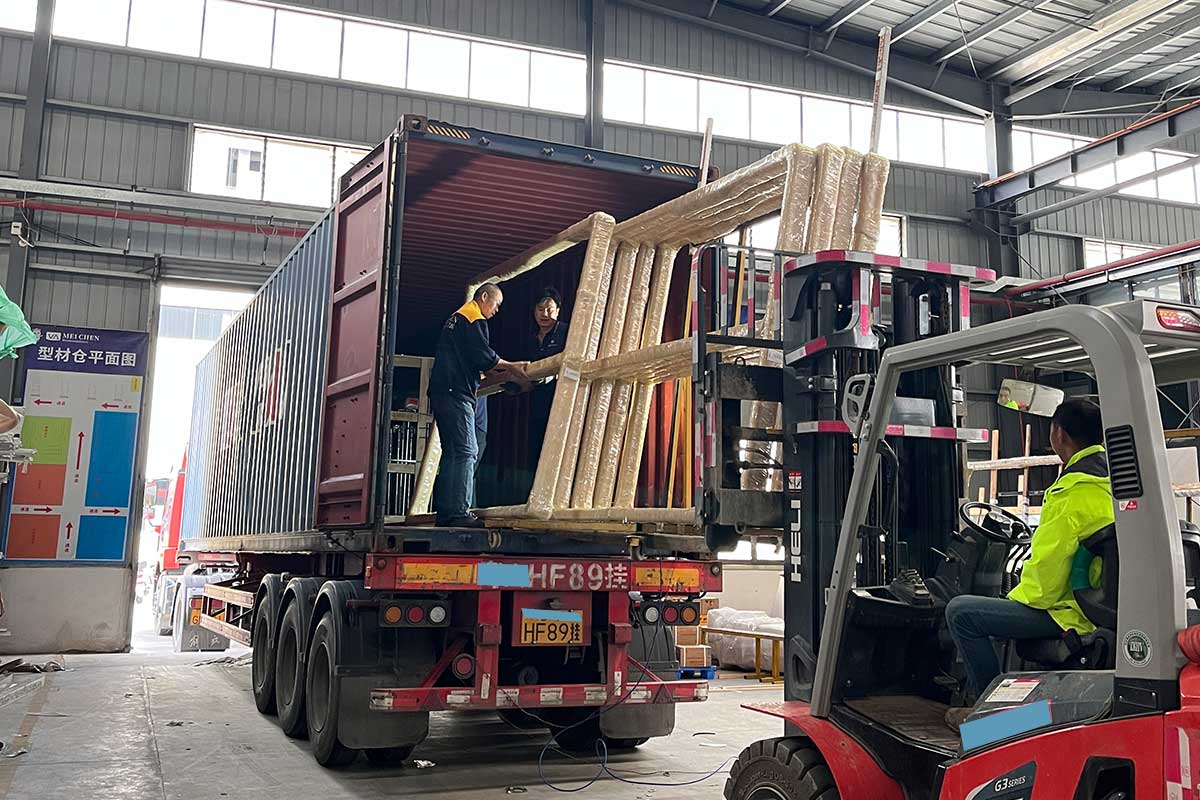
Packaging quality varies enormously between suppliers. At a minimum, each window unit should be individually wrapped in protective film, corner-protected with foam or cardboard buffers, and secured onto A-frame stillages or custom crates designed to prevent glass-to-glass contact during transit. Cheap packaging — loose stacking, insufficient edge protection, shrink wrap without internal bracing — is a reliable predictor of damage claims. Ask your supplier for packaging specifications or photos before the order ships. As experienced exporters note, requesting a packaging video or detailed packing images before shipment protects both parties and streamlines any damage resolution.
Unloading at the job site requires advance planning. Will the delivery vehicle have access to drive close to the staging area, or will units need to be hand-carried across unfinished ground? Is a forklift available, and does the site have a flat, hard-standing area to unload stillages safely? For multi-storey projects, will windows need to be craned to upper levels? These are questions to resolve before the truck arrives, not while the driver is idling on the street with a 12-tonne load.
Storage before installation creates its own risks. Windows staged outdoors are exposed to UV, rain, dust, and passing tradies with barrows and scaffold poles. The best practice is to store units in a dedicated, weather-protected area — a locked shipping container or an enclosed section of the ground floor — and install them as soon as the openings are ready. Leaving windows stacked on-site for weeks invites damage that no warranty will cover if the supplier can demonstrate the units left the factory in good condition.
Every delivery should be inspected thoroughly before signing off. Rushing through this step because the site is busy or the driver is waiting is how damaged units slip through unnoticed and become the builder’s problem rather than the supplier’s. Use a systematic approach:
- Verify the total unit count against the delivery docket and your original order schedule
- Inspect every frame for dents, scratches, bowing, or powder coat damage — run a hand along edges and corners
- Check glass integrity on both faces of each unit — look for cracks, chips, scratches, and failed IGU seals (visible as fogging or moisture between panes)
- Confirm all hardware is present and correctly fitted — handles, locks, hinges, stays, and weatherstrips
- Match each unit against the window schedule by size, type, and configuration to ensure the right windows have been delivered for the right openings
- Photograph any issues immediately, including close-ups of damage and wide shots showing the unit’s identifying label — this documentation is essential for warranty claims and freight damage disputes
Signing a delivery docket marked “received in good order” without completing this inspection waives your strongest leverage for claiming against transit damage. Take the time. It rarely exceeds 30–45 minutes, even for large deliveries, and it can save thousands.
Coordinating Delivery with Project Timelines
Getting the windows to site is one thing. Getting them there at the right moment in the construction sequence is another entirely — and arguably more important. As construction logistics specialists emphasise, window installation sits at a critical intersection of structural framing, weatherproofing, insulation, and interior finishing. Mistiming the delivery in either direction creates problems that ripple across the entire programme.
Windows arriving too early force you into extended on-site storage, increasing the risk of damage from other trades working around them. Plasterers, bricklayers, and scaffold crews are not gentle neighbours for glazed units leaning against a wall. Every additional day a storefront window or residential unit sits on-site before installation is another day of exposure to accidental impact, dust contamination of seals, and UV degradation of protective films.
Windows arriving too late stall the weatherproofing phase, which in turn delays insulation, internal lining, and every finishing trade that follows. On a tight programme, a two-week window delivery delay can cascade into four or five weeks of cumulative project slippage — particularly if subcontractors have moved on to other jobs and cannot return at short notice. For commercial window projects where multiple trades are sequenced tightly across floors, a late delivery on one level can block progress on every level above it.
The solution is not simply to order early and hope for the best. It is to establish a clear delivery schedule with the supplier that aligns with the construction programme — ideally broken into staged deliveries for phased projects. A 200-unit order for a multi-storey apartment building, for instance, might be split into four deliveries of 50 units each, timed to coincide with framing completion on each level. This approach keeps the window warehouse or factory dispatching product on a rolling schedule rather than in a single massive shipment, reduces on-site storage requirements, and limits the financial exposure tied up in materials sitting idle.
Staged deliveries do require more coordination — both with the supplier’s production schedule and with your site supervisor’s programme — but the reduction in damage risk, storage headaches, and cash-flow pressure makes it worthwhile for any project beyond a simple single-stage build. Confirm each staged delivery date in writing, build a one-week buffer into the programme for each drop, and nominate a single point of contact on site who is responsible for receiving and inspecting each shipment.
Even with flawless logistics, though, the best delivery plan cannot rescue an order that was wrong from the start. The costliest mistakes in wholesale aluminium window procurement rarely happen on the loading dock — they happen weeks earlier, buried in a specification sheet that nobody double-checked or a compliance requirement that nobody flagged.
Common Mistakes to Avoid When Buying Aluminium Windows Wholesale
A single specification error on a retail purchase affects one window. The same error on a wholesale order multiplies across every unit in the shipment — turning a minor oversight into a five-figure problem. The mistakes outlined below are not hypothetical. They surface repeatedly across residential subdivisions, commercial fit-outs, and aluminium window replacement projects of every scale, and they are almost always preventable with disciplined preparation.
Specification Errors That Lead to Costly Rework
Ordering without verified site measurements is the single most expensive mistake in wholesale procurement. Architectural drawings are a starting point, not a guarantee — wall openings shift during construction, and tolerances that look fine on a CAD file can be dangerously wrong in a 40-year-old brick veneer where nothing is quite square. Replacement aluminium windows for renovation projects carry even higher risk, because removing old aluminium windows often reveals reveal depths, lintel conditions, and framing irregularities that were invisible before demolition. Measure on site. Measure twice. Then confirm the figures against the drawings before the order goes in.
Beyond raw dimensions, three specification gaps cause the most grief. First, failing to specify the correct reveal depth — the distance from the outer face of the wall to the window frame — which determines flashing details, sill extensions, and whether the installed unit will sit flush, recessed, or proud of the facade. Second, overlooking flashing and weatherproofing requirements entirely, leaving the installer to improvise solutions that may not comply with AS 4654 or the manufacturer’s installation guidelines. Third, assuming every aluminium frame includes a thermal break. Many budget wholesale options still use non-thermally-broken profiles, which can be perfectly adequate for some applications but will fail energy compliance in most climate zones under current NCC requirements. If the quote does not explicitly state “thermally broken,” do not assume it is.
Overlooking Compliance and Certification Requirements
Non-compliant windows cannot legally be installed. It does not matter how sharp the unit price was or how quickly they arrived — if the product lacks the certifications required for your jurisdiction, every unit becomes waste that must be replaced at full cost.
In Australia, the compliance landscape includes multiple overlapping requirements that wholesale buyers must verify before placing an order:
- AS 2047 certification — the primary Australian Standard covering the design, testing, and performance of windows. Any aluminium window installed in a building regulated under the NCC must be tested and certified to this standard. Ask for the test report, not just a general claim of compliance.
- Energy code compliance — verified through WERS ratings or project-specific NatHERS energy modelling. Non-thermally-broken frames or single-glazed units will not pass current energy assessments in most jurisdictions, particularly in climate zones 6, 7, and 8 across southern Australia.
- BAL (Bushfire Attack Level) ratings — mandatory for projects in designated bushfire-prone areas across NSW, VIC, SA, WA, TAS, and the ACT. BAL-rated windows require specific glazing types (typically toughened or bushfire-resistant glass), metal mesh screens, and tested frame-to-wall sealing details. Ordering standard aluminium retrofit windows for a BAL-29 or BAL-40 site is a mistake that gets caught at the building inspection stage — after the windows are installed and the cost of ripping them out lands squarely on the builder.
- Structural wind load certification — critical in cyclone-prone regions of northern Queensland, the Northern Territory, and parts of Western Australia. Windows must be rated to withstand the design wind pressure specified for the building’s location and height. Underspecified units can fail catastrophically in severe weather events.
- Acoustic performance ratings — increasingly required by councils for projects near major roads, rail corridors, airports, and commercial zones. A minimum Rw value may be stipulated in the development approval conditions, and windows that fall short will need to be swapped out.
For projects involving the removal of old aluminium window frames from existing buildings, the compliance bar often rises rather than falls. Older homes may have been built under less stringent codes, but replacement windows aluminium must meet current standards — not the standards that applied when the house was originally constructed. This catches renovation contractors off guard more often than any other compliance issue, particularly on aluminium replacement windows for 1970s and 1980s-era homes where the original non-rated frames are being swapped for modern units that now fall under full NCC scrutiny.
Communication Failures with Suppliers
Technical errors get the most attention, but communication breakdowns cause just as much damage — and they are harder to recover from because they erode trust and slow down every subsequent interaction. Industry guidance on evaluating supplier quotes consistently highlights the same warning signs that distinguish a reliable wholesale partner from one likely to cause problems mid-project.
Watch for these red flags during the quoting and ordering process:
- Vague lead time commitments — responses like “around 6–8 weeks” or “we’ll get back to you” without a confirmed manufacturing and dispatch date. If the supplier cannot pin down a timeline at order placement, they are unlikely to meet one.
- Quotes missing key specifications — no U-value listed, no glazing detail beyond “double glazed,” no frame profile system identified. As quote comparison specialists note, if at least three core specification details are absent, the quote is not yet ready for meaningful price comparison.
- No clear warranty documentation — a verbal promise of “10 years” means nothing without a written warranty document specifying what is covered, what is excluded, and how claims are processed.
- Reluctance to provide test certification data — a supplier who cannot or will not produce AS 2047 test reports, WERS certificates, or BAL compliance documentation on request is either selling untested product or product that failed testing. Neither outcome ends well for the buyer.
- Inability to supply shop drawings for approval before manufacturing begins — shop drawings are your last line of defence against specification errors. They show exactly what will be manufactured — dimensions, profile sections, hardware placement, glazing makeup — and give you the opportunity to catch mistakes before they are built into 200 window units. Any wholesale supplier unwilling to produce shop drawings for review is asking you to accept risk that should be theirs to manage.
The common thread across all three categories of mistakes — specification errors, compliance gaps, and communication failures — is that they compound at wholesale scale. A single overlooked detail does not just affect one window; it cascades across every unit on the order. The discipline of getting specifications right, verifying compliance proactively, and demanding transparency from suppliers is not bureaucratic overhead. It is the cheapest insurance available on a bulk aluminium window purchase — and it sets the stage for a procurement relationship that improves with every subsequent order rather than deteriorating into disputes and rework.

Emerging Trends Shaping the Wholesale Aluminium Window Market
Avoiding mistakes protects margin on today’s order. But the wholesale aluminium window market does not stand still, and buyers who only look backward at what went wrong on the last project miss the shifts that are actively reshaping product availability, pricing structures, and specification expectations right now. Two parallel forces — tightening energy regulation and evolving architectural taste — are converging to change what “standard” means in wholesale aluminium window procurement. Understanding where these trends are heading puts you ahead of the curve rather than scrambling to catch up when an architect’s specification or an energy assessor’s report demands something your current supplier cannot deliver.
Thermally Broken Frames and Slim Sightline Profiles
Thermally broken aluminium systems are no longer a premium upgrade. They are rapidly becoming the baseline. As NCC energy requirements tighten and NatHERS modelling grows more stringent — particularly across climate zones 4 through 8 — non-thermally-broken aluminium frames are being squeezed out of compliant product ranges for habitable rooms. For wholesale buyers, the pricing implication is significant: thermally broken profiles carry a higher material cost due to the polyamide or polyurethane insulation strip and the more complex extrusion process, but the volume gap between thermally broken and non-thermally-broken product is narrowing as production scales up and manufacturers retool their lines around the newer systems. What once commanded a 20–30% premium over standard frames is compressing as demand pushes thermal break technology into the mainstream.
Running in parallel is a design trend that has shifted from niche architectural preference to broad market expectation: slim-frame aluminium profiles. These thin frame windows — with sightlines as narrow as 19mm to 37mm in some premium aluminium windows — maximise the glass area within each opening, flooding interiors with natural light and delivering the clean, minimalist aesthetic that dominates contemporary Australian residential and commercial design. Aluminium’s inherent strength-to-weight ratio makes this possible; unlike timber or uPVC, aluminium can carry substantial glazing loads with far less visible framing material.
The wholesale impact is practical and immediate. Architects and developers increasingly specify slim-profile systems by default, particularly for living areas, feature walls, and commercial facades where uninterrupted views are central to the design intent. Black aluminum windows with ultra-slim sightlines have become especially popular — a finish and profile combination that barely existed in wholesale catalogues five years ago but now accounts for a growing share of orders. Bronze aluminum windows are gaining traction too, particularly on projects drawing from mid-century or warm-toned design palettes. For wholesale buyers, stocking or specifying thin frame windows and thermally broken profiles is no longer about chasing a trend — it is about staying relevant to what project specifiers are actually requesting.
The intersection of these two movements creates an engineering challenge worth understanding. Building a thermally broken frame and keeping the sightline slim requires precise profile design — the thermal break strip occupies space within the frame section, and reducing the visible face without sacrificing structural capacity or insulation performance demands sophisticated extrusion engineering. Not every manufacturer has the capability. Wholesale buyers evaluating suppliers should ask whether the slim profiles on offer are genuinely thermally broken or whether the narrow sightline has been achieved by cutting corners on the thermal barrier — a trade-off that saves millimetres on the face but costs real performance.
Larger Glazing Units and Sustainability Demands
Glass panels are getting bigger. Stronger aluminium profile engineering, improved corner joining techniques, and advances in insulated glass unit (IGU) construction have expanded the maximum panel sizes that aluminium frames can safely support. A clear frame window spanning 3,000mm or more in a single fixed pane is no longer an exotic architectural indulgence — it is a catalogued option from capable manufacturers. This shift is enabling design approaches that were previously reserved for structural glazing or curtain wall systems: expansive floor-to-ceiling aluminium glazed window walls, corner window configurations where two large glass panels meet at a building’s edge without a structural mullion, and oversized sliding systems that open up entire living areas to outdoor spaces.
For wholesale procurement, larger glazing units affect logistics, pricing, and handling in ways that smaller standard units do not. Freight costs increase with panel size and weight. Packaging requirements become more demanding — large IGUs are more susceptible to flexural stress during transport. And installation on site may require mechanical lifting that adds to the builder’s programme. These are not reasons to avoid larger units, but they are reasons to plan for them explicitly in your procurement schedule rather than treating them as just another line on the window order.
The other force reshaping wholesale specifications is sustainability — not as a vague marketing sentiment, but as a documented, auditable procurement requirement. Architects and developers are increasingly asking their window suppliers to provide verified environmental credentials for the products being specified. Environmental Product Declarations (EPDs) — standardised lifecycle reports that quantify a product’s carbon footprint, resource consumption, and environmental impact from raw material extraction through manufacturing — are becoming a standard part of tender documentation on larger projects, particularly those targeting Green Star ratings or other sustainability benchmarks.
Aluminium is infinitely recyclable without any loss of structural quality or material properties. Recycling aluminium requires approximately 95% less energy than producing it from primary ore, making it one of the most sustainable framing materials available for window and door construction.
That recyclability is not just a talking point. It is a measurable advantage that shows up directly in EPD data and lifecycle assessments. Metal clad windows using timber or composite cores generate complex end-of-life waste streams, while aluminium frames can be recovered, remelted, and re-extruded indefinitely. For wholesale buyers supplying projects where sustainability credentials matter — and that category is expanding rapidly — the ability to provide EPD-backed aluminium products is shifting from a competitive advantage to a basic qualification for tendering.
Low-carbon manufacturing processes are accelerating this shift further. Major aluminium producers are investing heavily in renewable-energy-powered smelting, increased recycled content in billets, and process efficiency improvements that reduce the embodied carbon of extruded profiles. Wholesale buyers who source from manufacturers using higher proportions of recycled aluminium — industry data indicates typical billet composition now sits around 47% prime and 53% recycled aluminium — can offer a genuinely lower-carbon product without compromising on performance or durability.
These trends are not operating in isolation. The project that specifies thermally broken, slim-profile frames with large glazing areas and documented sustainability credentials is not a rare outlier — it is becoming the standard brief from forward-thinking developers and architects across Australian residential and commercial markets. Wholesale buyers who align their supply partnerships and product knowledge with these shifts will find themselves better positioned for the next quote, the next tender, and the next long-term supplier relationship. That positioning starts with choosing the right partner — and knowing exactly what to ask for before the first conversation begins.
How to Evaluate Suppliers and Prepare Your First Wholesale Order
Knowing what the market demands is only useful if you can find an aluminium window supplier capable of delivering it. The gap between a supplier who simply fills orders and one who actively supports your project from drawings through to delivery is enormous — and it shows up in every quote accuracy, every lead time commitment, and every unit that arrives on site. Choosing among aluminium window suppliers is not a price-shopping exercise. It is a partnership decision that will either streamline your next twelve months of procurement or make every project harder than it needs to be.
Key Criteria for Evaluating a Wholesale Supplier
A cheap unit price from a supplier who cannot deliver on time, provide shop drawings, or hold specification consistency across batches is not a bargain — it is a liability. When comparing wholesale window manufacturers, evaluate each candidate against a structured set of criteria that goes well beyond the bottom line on a quote:
- Manufacturing capability — Does the supplier fabricate in-house, or are they assembling purchased profiles from a third party? In-house fabrication gives tighter quality control and faster response to design changes.
- Range of window systems and profiles — Can they supply thermally broken and non-thermally-broken options, slim-profile systems, and the full range of operational types your projects require?
- Engineering coordination and shop drawings — Will they produce detailed shop drawings for your review and approval before manufacturing begins? This step is your last defence against costly specification errors at scale.
- Quality control processes — What inspection stages does every unit pass through? Ask for specifics: incoming material checks, in-process inspection, finished product testing, and packing verification.
- Certifications held — AS 2047 test reports, WERS ratings, BAL compliance documentation, and structural wind load data should be available on request without hesitation.
- Lead time reliability — Ask for references or case studies from previous projects. A supplier’s quoted lead time is only meaningful if they have a track record of meeting it.
- Logistics and delivery capability — Can they manage staged deliveries timed to your construction programme, not just a single bulk dispatch?
- Willingness to support projects end-to-end — The best aluminium window supplies partners do more than manufacture product. They offer system recommendation, material calculation, and project-based supply coordination that reduces risk on your side.
That last point separates genuine wholesale partners from order-takers. A supplier who engages early — helping you select the right profile system for the application, calculating material requirements from your architectural drawings, coordinating engineering details, managing manufacturing quality, and planning logistics — is absorbing complexity that would otherwise land on your desk. MEICHEN’s service model illustrates this approach well: their process spans system recommendation, engineering coordination, material calculation, manufacturing, quality control, and logistics, structured specifically around the needs of builders, developers, architects, and contractors. That end-to-end support is the benchmark to look for when evaluating any aluminium window and door partner, because the real cost of a supplier who only handles one slice of the process — leaving you to bridge the gaps — is measured in coordination hours, rework, and programme delays rather than dollars per unit.
For buyers trying to work out how to find a manufacturer of a window system that meets their project needs, the evaluation criteria above provide a practical filter. Commercial aluminum window manufacturers serving the Australian trade market should be able to answer every one of those points clearly and with documentation. If they cannot, keep looking.
Preparing Your Specification Sheet Before Approaching Suppliers
Approaching aluminium window suppliers with a vague brief — “we need about 120 windows, mostly sliding, some fixed, standard colour” — guarantees you will receive quotes that are impossible to compare, riddled with assumptions, and almost certainly inaccurate. The quality of the quotes you receive is directly proportional to the quality of the information you provide. A thorough specification sheet does the heavy lifting before the first conversation even starts.
Before requesting wholesale quotes from any supplier, prepare the following:
- Complete your window schedule — List every opening with its unique reference number, dimensions (width x height in millimetres), operational type (awning, casement, sliding, fixed, double hung), and quantity. Group identical units together to highlight volume efficiencies.
- Define performance requirements — Specify the required U-value, SHGC, acoustic rating (Rw), structural wind load rating, and any BAL compliance needs. These should come from your energy assessor, acoustic consultant, or project engineer — not from guesswork.
- Identify the preferred frame profile system — State whether thermally broken profiles are required, the acceptable sightline width range, and the frame depth needed to accommodate your specified glazing. If you do not have a preference, ask the supplier for a system recommendation based on your performance brief.
- Specify glazing in detail — Call out the glass configuration for each unit: single, double, or triple glazed; Low-E coating position; gas fill type; safety glass requirements per AS 1288; and any laminated or acoustic interlayer needs.
- Confirm finish and colour — Nominate the powder coat colour by code (not just “black” or “grey”), film thickness, and coating standard. If multiple colours are required across the project, note which units receive which finish.
- Detail hardware requirements — Specify handle style, lock type, hinge or stay grade, and any keying or access control requirements for commercial applications.
- Provide delivery logistics — Include the delivery address, site access constraints (narrow streets, overhead clearance, crane access), available unloading equipment, and any staging or storage limitations.
- Set target delivery dates — Align these with your construction programme. For phased projects, indicate the preferred staged delivery schedule with quantities and dates for each drop.
Walking into a supplier conversation with this level of detail accomplishes three things simultaneously. It produces quotes that are genuinely comparable across multiple aluminium window suppliers because everyone is pricing against the same brief. It dramatically reduces the likelihood of change orders after manufacturing has started — changes that are expensive at best and catastrophic at worst on a wholesale run. And it signals to the supplier that you are a serious, organised buyer, which in practice tends to result in sharper pricing, faster turnaround, and a higher level of service from their project team.
Thorough preparation is not a bureaucratic exercise. It is the most reliable path to accurate quotes, fewer surprises during production, and a smoother procurement experience from specification through manufacturing and delivery. The wholesale aluminium window market rewards buyers who do the work upfront — and it punishes those who treat preparation as something they will get around to later.
Frequently Asked Questions About Buying Aluminium Windows Wholesale
1. What is the minimum order quantity for wholesale aluminium windows?
Minimum order quantities vary by supplier and product type. For standard-size aluminium windows, many Australian manufacturers and distributors set MOQs as low as 10 to 20 units, making wholesale accessible even for smaller multi-dwelling projects. Custom-fabricated orders typically require higher minimums — often 50 units or more — because non-standard dimensions, bespoke finishes, and specialised hardware configurations involve additional setup, tooling, and quality control overhead that manufacturers need to amortise across a larger batch. When approaching suppliers, always confirm MOQs in writing alongside your specification sheet to avoid surprises after quoting.
2. How much cheaper are wholesale aluminium windows compared to retail?
Wholesale aluminium windows generally cost 25 to 50 percent less per unit than equivalent retail-priced products, though the exact savings depend on order volume, specification complexity, and your position in the supply chain. At base wholesale quantities of 10 to 50 units, discounts typically sit around 10 to 20 percent versus retail. Mid-volume orders of 50 to 150 units can unlock 20 to 30 percent savings, while large project orders exceeding 150 units may achieve 30 to 45 percent reductions. Buying directly from a vertically integrated manufacturer — one that extrudes profiles and fabricates windows in-house — generally delivers the sharpest pricing because fewer intermediary margins are stacked into the unit cost.
3. What lead times should I expect for wholesale aluminium window orders in Australia?
Standard aluminium windows in commonly specified sizes and finishes typically ship within 2 to 6 weeks from order confirmation when the manufacturer holds profile stock and glazing units on hand. Custom-fabricated orders take significantly longer — 6 to 14 weeks as a baseline — depending on complexity, finish requirements, and factory capacity. For imported commercial aluminium windows, add 3 to 5 weeks of sea freight plus customs clearance and local transport, which can push total lead times beyond three months. Always get lead times confirmed in writing at order placement and consider placing orders during quieter winter months to shave time off delivery schedules.
4. Do wholesale aluminium windows need to meet Australian building standards?
Yes — every aluminium window installed in a building regulated under the National Construction Code must comply with relevant Australian Standards, regardless of whether it was purchased retail or wholesale. Key requirements include AS 2047 certification for design and performance, WERS or NatHERS-verified energy ratings, AS 1288 safety glazing compliance, BAL ratings for bushfire-prone areas, and structural wind load certification for cyclone regions. Non-compliant windows cannot be legally installed and must be replaced at full cost. Before placing any wholesale order, request certified test reports and compliance documentation from your supplier — not just verbal claims of conformance.
5. How do I compare wholesale aluminium window quotes accurately?
Accurate quote comparison requires every supplier to price against an identical specification. Each quote should explicitly state the glazing type and configuration, whole-of-window U-value, frame profile system and thermal break inclusion, hardware brand and grade, powder coat colour and film thickness, and all applicable compliance certifications. Request itemised breakdowns that separate the core window unit cost from ancillary charges such as flashing kits, reveal trims, subframes, and freight — these extras can add 8 to 15 percent to the landed cost. A supplier like MEICHEN, whose service model at meichenwindows.com.au/services covers everything from system recommendation through to logistics, can provide the transparent, fully specified quotes that make genuine comparison possible.
More Window & Door Guides