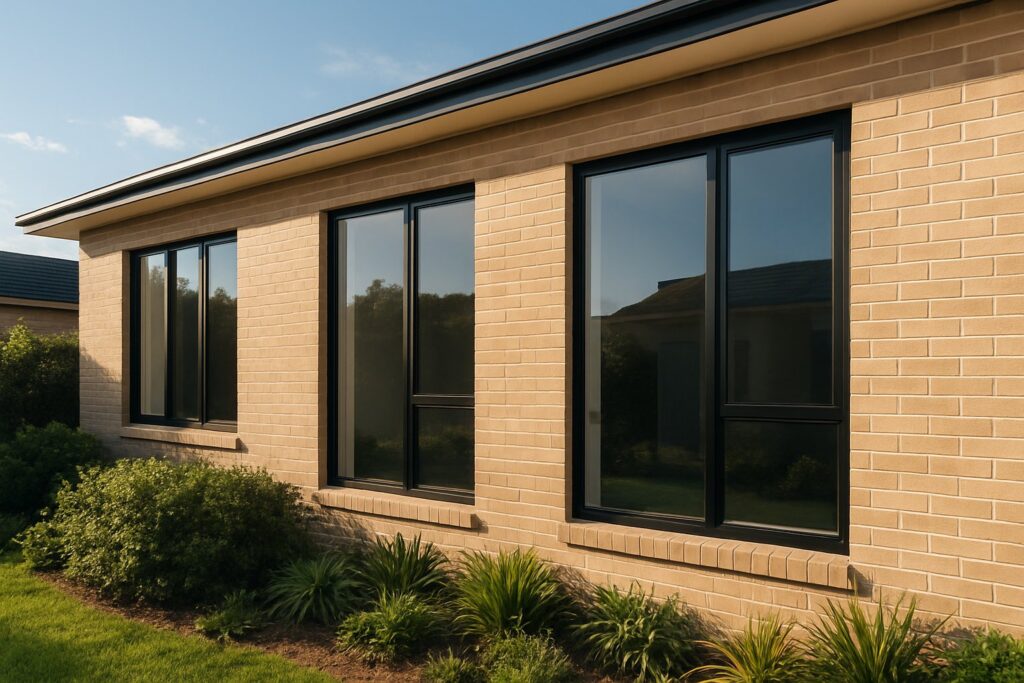
What Timber Look Aluminium Windows Actually Are
Timber look aluminium windows are fully aluminium-framed windows finished with a decorative wood-grain coating that replicates the appearance of natural timber. They are not hybrid products. There is no timber core, no timber veneer on the structural frame, and no wood involved in the load-bearing assembly. The entire frame is extruded aluminium, and the timber aesthetic comes from a surface treatment — typically sublimation printing or laminated film — applied over a powder-coated base.
That distinction matters more than most buyers realise. Search for aluminium windows with wood grain finish and you will land on product pages selling at least four different things under overlapping names. This guide covers the full picture — manufacturing methods, climate performance, cost comparisons, heritage compliance, and how to choose the right product for your project.
What Makes These Different From Real Timber Frames
A real timber window relies on wood as its structural material. It expands and contracts with moisture, requires periodic sanding and repainting, and remains vulnerable to rot, termite damage, and UV degradation over time. Timber look aluminium windows vs timber windows is not a subtle difference — it is a fundamentally different product category.
Wood effect aluminium window frames retain every performance characteristic of standard aluminium: dimensional stability, corrosion resistance, non-combustibility, and minimal maintenance. The grain pattern you see and feel is purely cosmetic. Structurally, the frame behaves identically to any other powder-coated aluminium window system.
Why the Naming Confusion Exists
The market uses several terms that sound interchangeable but describe distinct products. Timber look aluminium refers to an aluminium frame with a decorative wood finish. Aluminium-clad timber is the opposite — a structural timber core wrapped in a protective aluminium shell on the exterior face. Composite windows can mean either, depending on the manufacturer. Wood-clad aluminium typically describes a thin timber strip bonded to the interior of an aluminium frame for tactile warmth indoors.
Supplier brochures rarely clarify which category their product falls into, and marketing language blurs the lines further. Understanding what are timber look aluminium windows — and what they are not — is the first step toward making a confident purchasing decision. The manufacturing method behind that wood-grain surface determines how realistic the finish looks, how long it lasts, and how much it costs.
Three Manufacturing Methods Behind the Wood Grain Effect
Not all wood-grain finishes are created equal. How wood grain finish is applied to aluminium windows varies significantly depending on the method used, and each approach delivers a different balance of realism, durability, and cost. Three distinct techniques dominate the market — sublimation printing, cold lamination with timber-effect film, and real timber veneer bonding. Understanding the differences helps you match the right finish to your project’s priorities.
Sublimation Printing and Thermal Transfer
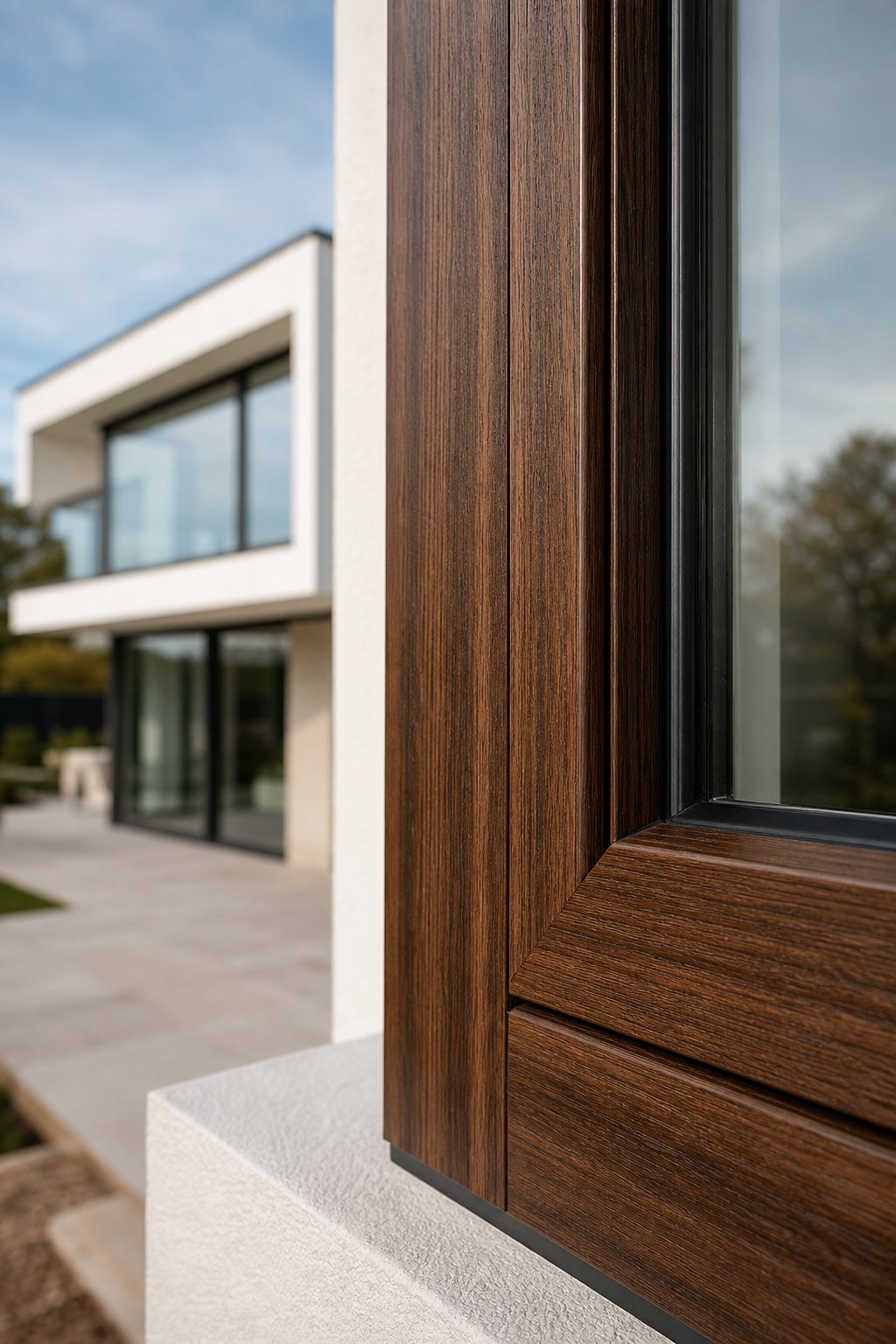
Sublimation printing on aluminium window frames is the most widely used method for residential applications in Australia. The process starts with a standard powder-coated aluminium profile. A specialised transfer paper or PET film printed with a high-resolution wood-grain image is wrapped tightly around the profile, then vacuum-sealed to ensure full contact with the surface. The wrapped profile enters an oven at 160 to 180 degrees Celsius for five to eight minutes, during which heat and pressure cause the ink to sublimate — converting directly from solid to gas — and penetrate into the powder coat layer.
This is not a surface-level print sitting on top of the coating. The colour actually migrates into the powder coat itself, creating depth and permanence that a simple decal cannot achieve. The result is a crisp, three-dimensional texture with realistic grain variation that holds up well under close inspection. Because the image is embedded within the coating rather than applied over it, sublimation-printed finishes resist scratching and peeling far better than adhesive alternatives.
For most Australian homeowners choosing timber look aluminium windows, sublimation is the best method for timber look aluminium finish when balancing realism, longevity, and value. It handles UV exposure well, maintains colour stability over years of direct sun, and requires nothing more than occasional cleaning to stay looking sharp.
Cold Lamination With Timber-Effect Film
The second approach bonds a pre-printed PVC or acrylic film directly onto the aluminium profile using adhesive or heat lamination. Think of it as a high-quality wrap rather than an embedded print. The film carries the wood grain pattern and is pressed onto the frame surface, creating an immediate visual effect at a lower production cost than sublimation.
Wood grain laminate film aluminium profiles can look convincing at a glance, particularly with newer films that incorporate textured surfaces mimicking the tactile feel of timber grain. The limitation sits in longevity and environmental resilience. Adhesive bonds can degrade over time, especially in high-heat or high-humidity conditions common across northern Queensland and coastal NSW. Film edges may lift at joints or corners if the lamination quality is inconsistent.
UV stability is another consideration. Surface-applied films tend to fade faster than sublimation-printed finishes because the pigment sits exposed on the outer layer rather than being protected within the powder coat. For interior-facing surfaces or sheltered applications, laminated film performs adequately. For fully exposed exterior frames in harsh Australian climates, sublimation remains the more durable choice.
Real Timber Veneer Bonding
The premium tier involves bonding actual timber strips — typically thin veneers of oak, walnut, or other hardwoods — to the interior face of an aluminium frame. This approach, used in high-end European window systems, creates a genuine timber interior that you can touch and smell, while the exterior remains fully aluminium with weather-resistant powder coating or anodising.
Timber veneer bonded to aluminium windows delivers unmatched authenticity on the room-facing side. There is no print or film to question — it is real wood. The trade-off is cost and complexity. These systems sit at the top of the pricing scale, and the timber veneer still requires some level of interior maintenance (periodic oiling or sealing) to prevent drying or discolouration from indoor climate variations.
This method suits architecturally significant projects where the interior timber aesthetic is non-negotiable but the homeowner wants to eliminate exterior timber maintenance entirely. It bridges the gap between a fully aluminium product and a traditional aluminium-clad timber window, offering real wood where you interact with it and bulletproof aluminium where the weather hits.
| Method | Realism | Durability | Cost Level | Best Application |
|---|---|---|---|---|
| Sublimation Printing | High — embedded grain with three-dimensional depth | Excellent — UV and scratch resistant | Medium | Residential exterior and interior frames |
| Cold Lamination (Film) | Moderate — convincing visually, less tactile depth | Good for sheltered areas; lower UV stability | Low to Medium | Interior-facing surfaces, budget projects |
| Real Timber Veneer | Authentic — genuine wood look and feel | Aluminium exterior excellent; veneer interior needs periodic care | High to Premium | Architecturally significant homes, luxury builds |
Each method serves a different segment of the market. The best choice depends on where the window sits in your home, how much weather exposure it faces, and whether you prioritise visual authenticity from a distance or tactile realism up close. That realism question becomes especially pointed when comparing these products against their closest competitor in the market — aluminium-clad timber windows, which take the opposite structural approach entirely.
Timber Look Aluminium vs Aluminium-Clad Timber Windows
These two products sit at opposite ends of the same design intent — delivering a timber aesthetic without the full maintenance burden of exposed wood. But the difference between aluminium clad timber and timber look aluminium is structural, not cosmetic. Confusing them leads to mismatched expectations on price, upkeep, thermal performance, and lifespan. Suppliers do not always help clarify the distinction, so let’s break it down properly.
Structural Differences Explained
Timber look aluminium windows start with an aluminium core. The entire load-bearing frame is extruded aluminium alloy, and the wood-grain appearance comes from a surface finish — sublimation print, laminated film, or veneer — applied over the top. Structurally, there is zero timber in the system. The frame is lightweight, dimensionally stable, non-combustible, and immune to rot or insect attack.
Aluminium-clad timber flips that arrangement completely. The structural core is solid timber — typically engineered hardwood or laminated softwood — and a precision-cut aluminium shell wraps the exterior face as a protective weather barrier. The timber does the heavy lifting structurally and thermally, while the aluminium shields it from rain, UV, and temperature extremes. Premium alu-clad systems use a ventilated cavity between the timber and aluminium layers, allowing moisture to drain and preventing condensation from building up behind the cladding.
This structural difference cascades into every performance metric. Aluminium-clad timber windows are heavier due to the solid wood core. They deliver superior thermal insulation — wood has a significantly lower thermal conductivity than aluminium — making them popular in passive house builds and cold-climate applications. However, the timber core still requires some interior maintenance (periodic oiling or refinishing), and the overall system costs considerably more to manufacture.
Timber look aluminium, by contrast, weighs less, costs less, and requires virtually no maintenance beyond cleaning. Its thermal performance depends on the aluminium profile design — specifically whether it uses a thermally broken frame — rather than the natural insulating properties of wood.
When Each Product Makes Sense
The choice between these two products comes down to what you actually want from the timber element. If you value the tactile warmth of real wood on your interior window frames — the grain under your fingertips, the natural patina that develops over years — aluminium-clad timber delivers that authentically. It suits homeowners building high-performance homes who refuse to compromise on interior materiality.
If your priority is the visual appearance of timber from the street or across a room, without any of the ongoing care that real wood demands, timber look aluminium is the practical choice. You get the aesthetic at a fraction of the long-term effort and cost.
| Product Type | Core Material | Interior Appearance | Exterior Appearance | Maintenance Level | Typical Price Range | Best For |
|---|---|---|---|---|---|---|
| Timber Look Aluminium | Aluminium alloy | Wood-grain finish (printed or filmed) | Wood-grain finish or standard powder coat | Very low — periodic cleaning only | $$ | Low-maintenance homes, renovations, coastal properties, budget-conscious builds wanting timber aesthetics |
| Aluminium-Clad Timber | Solid or engineered timber | Real timber — natural grain, oiled or painted | Powder-coated or anodised aluminium | Low to moderate — interior timber needs periodic oiling or refinishing | $$$ | High-end new builds, passive house projects, buyers who want genuine timber interiors with weather protection |
How to Tell Which Product a Supplier Is Offering
Marketing language muddies this distinction constantly. Brochures use phrases like “timber and aluminium window system” or “wood aluminium combination” without specifying which material forms the structural core. Here are practical ways to identify what you are actually being quoted on:
- Ask about the core material directly. “Is the structural frame aluminium or timber?” cuts through ambiguity faster than any brochure will.
- Check the weight. Aluminium-clad timber windows are noticeably heavier than timber look aluminium. If a supplier offers to show you a sample sash, pick it up — the difference is immediately obvious.
- Look at the interior face. If the inside of the frame shows real wood grain with natural variation, knots, and tactile texture that feels like timber under your hand, it is likely aluminium-clad timber. If the grain pattern repeats or feels like a smooth coating, it is a printed or laminated aluminium frame.
- Review the maintenance section of the warranty. Aluminium-clad timber warranties typically include clauses about interior timber care — oiling schedules, acceptable humidity ranges, and finish maintenance. Pure aluminium systems with decorative finishes will not mention any of this.
- Compare the price. If the quote sits significantly above standard aluminium windows — often 40 to 60 percent more — you may be looking at aluminium-clad timber rather than a timber look aluminium product, which typically carries a more modest premium of 15 to 30 percent over standard powder coat.
Getting this distinction right before you sign a contract saves more than money. It sets accurate expectations for how your windows will look, feel, and perform across their full lifespan — which, for either product done well, should comfortably exceed 30 years. The next consideration is how that lifespan holds up under the specific climate pressures Australian homes face, from coastal salt to extreme UV and bushfire exposure.
How Timber Look Finishes Perform in Harsh Climates
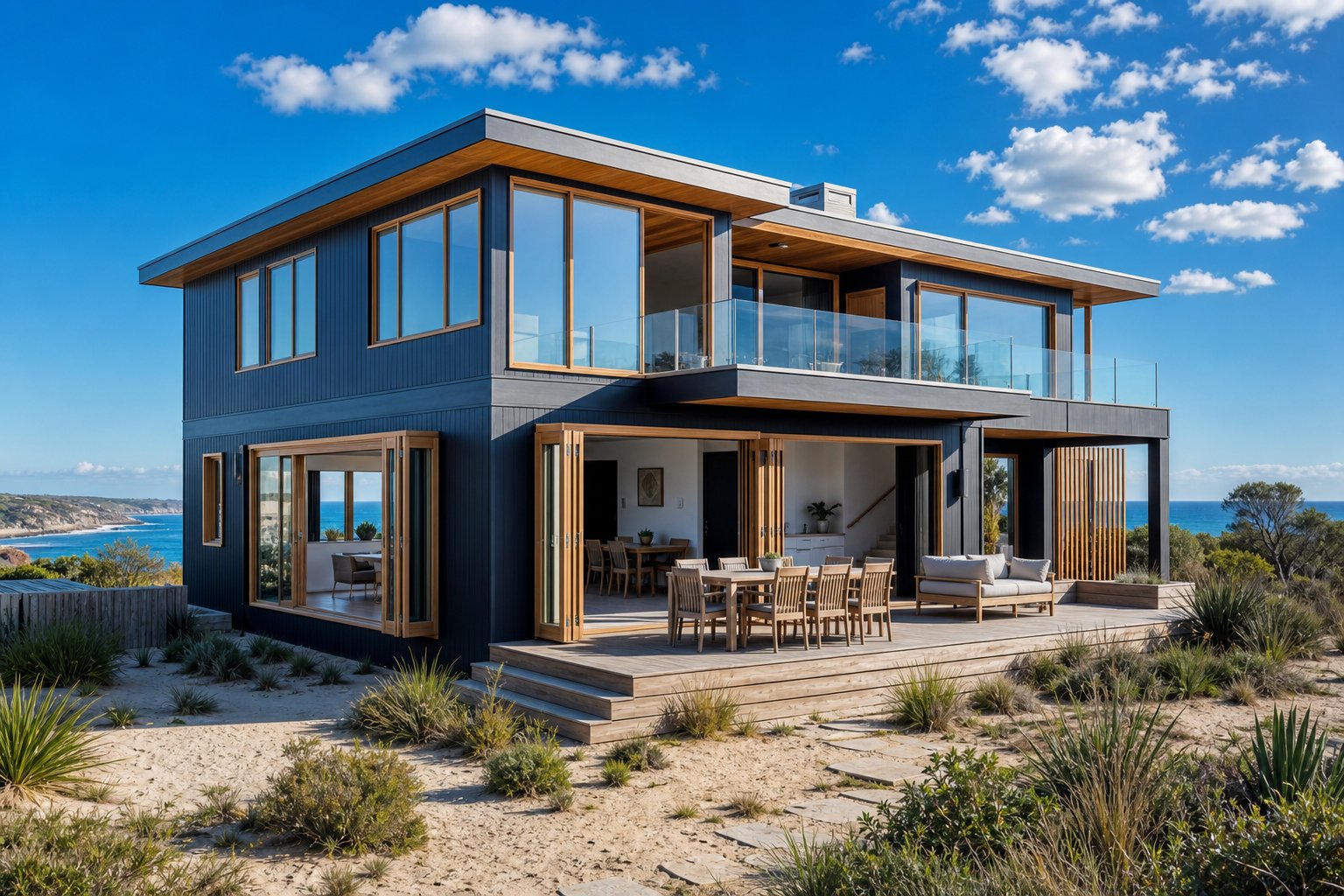
Australia does not offer gentle conditions for building materials. Between relentless UV, salt-laden coastal winds, tropical humidity in the north, and bushfire risk across vast stretches of the landscape, any exterior finish faces a punishing test. Real timber struggles visibly in these environments — peeling paint, greying surfaces, swelling joints, and accelerated rot near the coast are familiar headaches for homeowners who chose wood frames. Timber look aluminium windows coastal areas Australia represent a fundamentally different proposition, but the decorative finish still needs to withstand the same climate pressures.
Coastal and Salt Spray Environments
Salt air corrodes unprotected metals and strips coatings from timber within a few years. Homeowners in coastal suburbs from the Gold Coast to the Mornington Peninsula know the cycle: sand, prime, repaint, repeat. Every three to five years, real timber windows demand a full refinishing if they face ocean exposure.
Aluminium itself resists salt corrosion well, particularly when powder coated to a marine-grade standard. The question for timber look finishes is whether the decorative wood-grain layer holds up equally. Sublimation-printed finishes have a clear advantage here. Because the pigment is embedded within the powder coat rather than sitting on top as a separate film, salt deposits cannot work their way beneath the finish to cause lifting or delamination. Regular washing with fresh water — the same maintenance any coastal window needs — removes salt residue before it can cause surface etching.
Laminated film finishes carry more risk in marine environments. Adhesive bonds can weaken where salt moisture penetrates film edges, particularly at mitred corners or joints. For properties within 500 metres of the shoreline, sublimation remains the best window finish for salt spray environments, offering the closest thing to a set-and-forget solution.
High UV Exposure and Fade Resistance
Do wood grain aluminium windows fade in sun? The short answer: all pigmented finishes degrade under UV over time, but the rate varies dramatically depending on the application method. Australia’s UV index regularly exceeds levels found in Europe and North America, so fade resistance matters more here than almost anywhere else these products are sold.
Sublimation-printed wood-grain finishes benefit from the UV resistance timber look aluminium finish gains through being encapsulated within the powder coat layer. Quality powder coatings are formulated with UV stabilisers that protect both the base colour and the transferred grain pattern. Most reputable Australian suppliers offer finish warranties in the range of 10 to 15 years against significant fading or colour shift, though actual performance often extends well beyond that in practice.
Surface-applied laminate films face a tougher battle. The printed layer sits directly exposed to solar radiation without the protective depth of a powder coat matrix around it. Fading tends to appear earlier — sometimes within five to seven years on north-facing elevations — and manifests as a washed-out, bleached appearance that undermines the timber illusion. If your home has windows receiving sustained afternoon sun on western facades, sublimation is the safer long-term investment.
Bushfire Zone Considerations
Aluminium’s non-combustible nature gives it an inherent advantage over timber in BAL-rated areas. Under AS 3959, which governs construction in bushfire-prone zones, aluminium frames are recognised as suitable for bushfire zones due to their durability, stability, and resistance to ember attack. Timber frames, by contrast, can ignite, char, and lose structural integrity under radiant heat exposure.
The critical question for timber look products is whether the decorative wood-grain finish compromises that BAL compliance. It does not. Sublimation-printed and powder-coated finishes are inorganic surface treatments — they do not add combustible fuel load to the frame. The window system’s BAL rating depends on the combined performance of the frame material, glazing type, seals, and screening, not the colour or pattern of the powder coat. An aluminium window rated for aluminium windows for bushfire zones BAL rated applications retains that rating regardless of whether it carries a standard colour or a timber-look finish.
For homeowners in BAL-12.5 through BAL-40 zones who want the warmth of a timber aesthetic without introducing combustible framing into their build, this combination delivers both compliance and character. The finish choices available — from pale oak to deep walnut — open up a range of design possibilities that do not exist with standard aluminium colour palettes.
Available Wood Grain Finishes and Where Each Works Best
Knowing a timber look finish will survive your climate is one thing. Picking the right shade from a sample board is another challenge entirely. The range of timber look aluminium window colour options has expanded well beyond the single generic “woodgrain” that suppliers offered a decade ago. Today, manufacturers reproduce specific timber species — each with distinct grain density, colour warmth, and tonal depth — giving homeowners the ability to match their frames to a particular architectural era or design direction.
Choosing well means thinking about context: the colour of your cladding or brickwork, the period of your home, and whether you want the windows to blend quietly or anchor the facade. Here is how the main finish categories break down.
Light Timber Finishes for Contemporary Homes
Pale, understated grain patterns suit homes that lean into natural light and clean geometry. These finishes read as warm without competing with other materials on the facade, making them a popular choice for Scandinavian-influenced designs, coastal new builds, and open-plan living spaces where the window frames should recede rather than dominate.
- Natural Oak / Light Oak — A soft honey tone with fine, even grain lines. Pairs naturally with white render, pale brick, and light-toned timber cladding. The go-to for modern coastal homes from Byron Bay to the Bellarine Peninsula.
- Ash — Cooler and more neutral than oak, with a subtle grey undertone. Works well alongside concrete, zinc cladding, or grey-washed weatherboard where warmth needs to be present but restrained.
- Maple / White Pine — The lightest option in most supplier ranges, with minimal grain contrast and a creamy, almost blonde appearance. Ideal for minimalist interiors where you want a timber reference without visual weight. Windowmakers includes White Pine among its decorative woodgrain finishes for this reason.
Oak look aluminium windows Australia remain the single most requested light finish across residential projects. The tone bridges contemporary and transitional styles without locking you into a narrow aesthetic — it works equally well on a two-storey coastal box as it does on a renovated 1970s brick veneer.
Medium and Rich Timber Finishes for Traditional Architecture
Step into the mid-tone range and the grain becomes more pronounced, the colour warmer, and the character more assertive. These finishes carry enough depth to hold their own against detailed facades — think ornate fretwork on a Queenslander verandah, decorative mouldings on a federation cottage, or the textured render of a heritage-adjacent infill build.
- Walnut / Light Walnut — A rich brown with flowing, cathedral-style grain patterns. Delivers the gravitas of a traditional hardwood frame without the maintenance burden. Suits federation homes, Edwardian terraces, and any property where the original joinery was stained rather than painted.
- Western Red Cedar / Light Cedar — Warm reddish-brown tones with straight, consistent grain. Cedar reproductions are the best timber finish for federation home windows where the original frames were oiled cedar — the colour match can be remarkably close.
- Teak — Golden-brown with a slightly oily visual quality and tight grain. Popular for mid-century renovations and homes with exposed brick or sandstone, where the frame colour needs to echo the earthy palette of the surrounding materials.
For heritage renovations, the ability to select a specific species reproduction rather than a generic “brown woodgrain” makes a genuine difference at council assessment. A light cedar finish replicating the original joinery reads far more convincingly than an off-the-shelf mid-brown that does not reference any particular timber.
Dark Timber Finishes for Statement Facades
At the deep end of the spectrum, dark wood grain finish colours for aluminium windows deliver drama and contrast. These are not background finishes — they anchor a facade, frame views with intensity, and create a sense of weight and permanence that lighter tones cannot achieve.
- Dark Walnut — Deep chocolate-brown with bold grain movement. Creates a striking contrast against white or light-grey exteriors. Works for contemporary homes seeking a natural material reference without the softness of mid-tones.
- Dark Cedar / Mahogany — Rich, reddish-dark brown with dense grain. Suits period restorations where original joinery was a deep-stained hardwood, and contemporary designs using dark timber cladding as a feature element.
- Dark Oak / Ebony-Stained — The darkest available option in most ranges, approaching near-black with visible grain texture still present. Provides the architectural weight of matt black frames but with organic depth and warmth that a flat colour cannot replicate. Ideal for luxury builds where the facade needs gravitas without resorting to a purely industrial palette.
Dark finishes absorb more heat than lighter tones — a consideration worth noting for west-facing frames in hot climates. The structural aluminium handles thermal expansion without issue, but surface temperature can climb on summer afternoons. This rarely causes finish damage on quality sublimation prints, though it is worth discussing with your supplier if your project sits in a particularly extreme climate zone.
With the aesthetic direction sorted, the next practical question most homeowners land on is cost — specifically, how much more these wood-grain finishes add to the bottom line compared to standard powder-coated aluminium or the real timber frames they are designed to replace.
Real Cost Differences Between Window Types
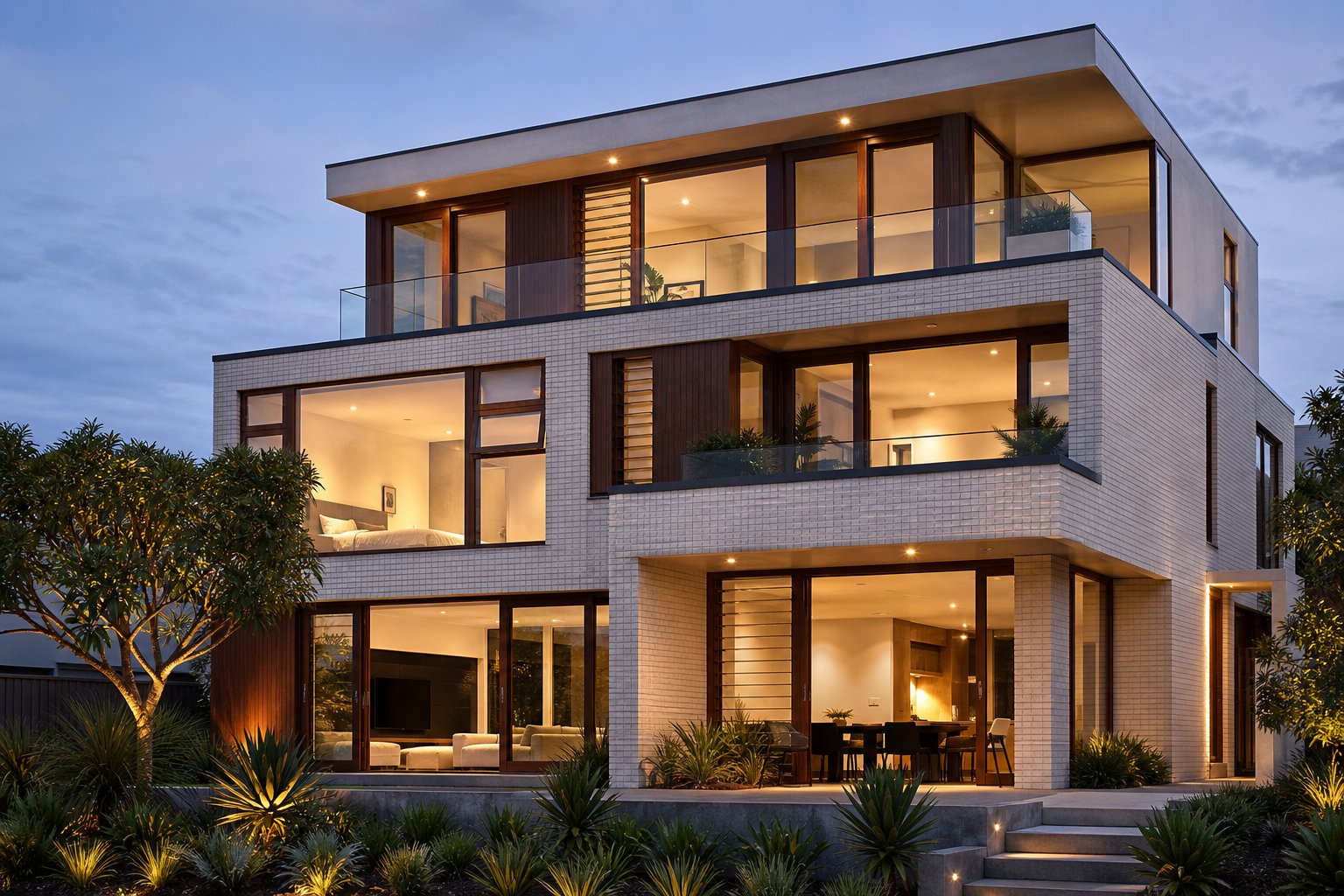
The premium for a wood-grain finish over standard powder-coated aluminium is real, but it is far smaller than most people assume — and it shrinks dramatically once you factor in what each window type costs to maintain over its full lifespan. Understanding how much wood grain aluminium windows cost relative to the alternatives requires looking at both the purchase price and the decades of ownership that follow.
Upfront Cost Positioning
Standard aluminium windows sit at the accessible end of the market. Hipages reports supply-only prices for standard aluminium frames ranging from around $150 for a small fixed window up to $788 for larger awning configurations, depending on size and style. These are base powder-coated frames in standard colours — your Monument, Surfmist, or Woodland Grey.
Timber look aluminium windows cost Australia buyers roughly 15 to 30 percent more than those standard powder-coated equivalents. The premium covers the additional manufacturing step — sublimation printing or film lamination — applied to the same aluminium profile. It is a finish upgrade, not a structural one, which keeps the price increase modest relative to the visual transformation it delivers.
Move up to aluminium-clad timber and the jump is substantial. Hipages lists these systems from around $720 for a small fixed unit to $1,250 per square metre for bifold configurations — supply only. That positions them at roughly double the cost of standard aluminium, reflecting the engineered timber core, precision aluminium cladding, and more complex manufacturing process.
Real timber windows occupy a similar or slightly lower bracket than aluminium-clad systems at purchase, depending on the species and joinery quality. uPVC sits below standard aluminium in most cases, offering the lowest upfront cost but with trade-offs in longevity and aesthetic flexibility that matter in the Australian market.
In relative terms, the timber vs aluminium windows price comparison stacks up like this: uPVC is cheapest, standard aluminium sits just above, timber look aluminium adds a modest premium, real timber and aluminium-clad timber occupy the upper tiers.
Long-Term Cost of Ownership
Upfront price tells half the story. The long term cost of timber windows vs aluminium reveals where the real financial gap opens up — and it favours aluminium decisively.
Real timber windows require full external repainting every five to seven years to maintain their protective coating and prevent decay. Industry data on maintenance cycles puts the cost of professional preparation and repainting at roughly $250 to $400 per window per cycle in Australian labour markets. Over a 30-year period, that means five to six repaint cycles per window — a cumulative maintenance spend of $1,250 to $2,400 per window, before accounting for any rot repairs, timber replacement, or hardware degradation caused by moisture ingress.
Timber look aluminium windows require none of this. No sanding, no priming, no repainting, no rot inspection. Maintenance consists of washing with soapy water a few times a year — more often near the coast, less in sheltered suburban locations. The cumulative maintenance cost over 30 years is effectively zero beyond basic cleaning you would do anyway.
That difference compounds across an entire home. A property with 15 windows in real timber could accumulate $18,000 to $36,000 in maintenance costs over three decades. The same home fitted with timber look aluminium spends virtually nothing. Even accounting for the higher upfront cost of the wood-grain finish, the total cost of ownership sits well below real timber within the first decade.
| Window Type | Relative Upfront Cost | Maintenance Frequency | Estimated Lifespan | Long-Term Value Rating |
|---|---|---|---|---|
| uPVC | Low | Minimal — periodic cleaning | 20-30 years | Moderate (lower lifespan limits value) |
| Standard Aluminium (powder coated) | Low to Medium | Minimal — periodic cleaning | 40-60+ years | High |
| Timber Look Aluminium | Medium | Minimal — periodic cleaning | 40-60+ years | Very High (timber aesthetic, no timber upkeep) |
| Real Timber | Medium to High | Repaint every 5-7 years, regular rot inspection | 30-60+ years (with diligent maintenance) | Moderate (high ongoing costs erode value) |
| Aluminium-Clad Timber | High to Premium | Low — interior timber needs periodic oiling | 40-60+ years | High (premium product, reduced exterior maintenance) |
The pattern is clear. Timber look aluminium occupies a sweet spot — a moderate upfront investment that eliminates the recurring costs dragging down real timber’s long-term value proposition. For budget-conscious homeowners who still want that warm, natural facade, it delivers the strongest return over the life of the home. What it asks in return is remarkably little — just some basic cleaning knowledge and an understanding of what to avoid, which is where maintenance guidance becomes practical rather than theoretical.
Maintenance Requirements Compared to Real Timber
Timber look aluminium windows maintenance is about as demanding as washing your car — and roughly as infrequent. The decorative wood-grain finish, whether sublimation-printed or laminated, sits within or atop a powder-coated surface that was engineered to resist weather, not surrender to it. There is no paint film to crack, no exposed grain to absorb moisture, and no organic material waiting to rot. Your job is simply to keep the surface clean so grime and salt deposits do not get a chance to etch into the coating over time.
Compare that to the annual ritual real timber demands, and the gap between these two products becomes viscerally clear.
Routine Cleaning for Timber Look Finishes
How to clean timber look aluminium windows comes down to a few basic principles. The goal is removing surface contaminants — dust, pollen, salt residue, bird droppings, atmospheric grime — without disturbing the finish beneath them.
Start with a bucket of warm water and a few drops of mild dish soap. Use a soft cloth, sponge, or microfibre mitt to wipe down the frames, working gently in one direction rather than scrubbing in circles. Rinse with clean water from a hose or second bucket, then dry with a soft rag to prevent water spotting. That is the entire process.
Frequency depends on your environment. Coastal properties within a few hundred metres of the shoreline benefit from a wash every three to four months to clear salt accumulation before it can cause surface etching. Sheltered suburban homes further inland can stretch to twice a year without issue. Properties near busy roads or construction zones may need more frequent attention simply because airborne particulates settle faster.
Beyond cleaning the frames themselves, check the hardware periodically. Lubricate hinges and locking mechanisms with a light silicone spray once or twice a year to keep everything operating smoothly. Clear the drainage slots in the sill with a soft brush so water can escape freely during heavy rain. These are standard aluminium window tasks — the timber-look finish adds nothing extra to the routine.
What matters equally is knowing what to avoid. Certain products and techniques can damage sublimation prints or laminated films permanently:
- Abrasive cleaners or scouring pads — these scratch through the decorative layer and expose the base powder coat or raw aluminium beneath.
- Solvent-based products — acetone, turpentine, methylated spirits, and similar solvents can dissolve adhesive bonds on laminated films or strip colour from sublimation prints.
- High-pressure washers at close range — the concentrated jet can lift film edges or blast through the powder coat surface. If you must use a pressure washer, keep it on a low setting and maintain at least 300 mm distance from the frame.
- Bleach or ammonia-based cleaners — these attack the powder coating itself, causing discolouration and accelerating breakdown of UV stabilisers in the finish.
- Steel wool or wire brushes — obvious, but worth stating. Any metal-on-metal contact will gouge the decorative surface irreparably.
For stubborn marks — tree sap, adhesive residue, or dried insect matter — a paste of baking soda and water applied gently with a soft cloth will lift most contaminants without harming the finish. Rinse thoroughly afterwards. If a chip or scratch does occur, resist the urge to touch it up yourself with paint — consult your supplier about professional repair options to maintain colour consistency.
How This Compares to Maintaining Real Timber Windows
Real timber windows operate on an entirely different maintenance calendar. Wood is a living material that responds to moisture, temperature, and UV exposure by expanding, contracting, cracking, and eventually decaying if left unprotected. The coating system — paint or stain — is not decorative luxury. It is the only barrier between the timber and the elements. Once that barrier fails, deterioration accelerates rapidly.
Do wood grain aluminium windows need repainting? Never. That single word eliminates the most labour-intensive and expensive aspect of timber window ownership. A real timber frame on an exposed elevation needs full preparation and recoating every few years, with south and west-facing frames degrading fastest under Australian sun. Coastal properties face even shorter cycles as salt and wind wear coatings down more aggressively.
Here is what each window type actually demands over its lifespan:
Timber look aluminium — maintenance tasks:
- Wash frames with mild soapy water every 3-6 months (more often near coast)
- Lubricate hinges and locks with silicone spray twice yearly
- Clear drainage slots annually
- Inspect seals for wear every 1-2 years
- No sanding required — ever
- No priming required — ever
- No repainting required — ever
- No rot inspection required — ever
- No insect treatment required — ever
Real timber windows — maintenance tasks:
- Wash frames with mild soapy water every 3-6 months
- Lubricate hinges and locks twice yearly
- Inspect all faces for paint cracking, peeling, or bubbling annually
- Check for early signs of rot at joints, sills, and bottom rails annually
- Sand back, prime, and repaint exterior faces every 3-7 years depending on exposure
- Inspect for termite or borer activity annually (critical in many Australian regions)
- Replace putty or glazing compounds as they crack and shrink
- Repair or splice rotted timber sections as needed
- Re-seal or re-oil interior timber faces every 2-5 years if stained rather than painted
- Address swelling or binding caused by moisture absorption seasonally
The contrast speaks for itself. Timber look aluminium is a low maintenance alternative to timber windows in the most literal sense — it removes roughly 80 percent of the tasks from the ownership equation while delivering a comparable visual result from the street. For homeowners who love the look of wood but have no interest in spending weekends with sandpaper and a paintbrush, the maintenance profile alone often settles the decision.
That practical ease extends into another area where these windows prove their worth — heritage renovations, where replacing deteriorating timber frames with something that looks identical but performs indefinitely can satisfy both the homeowner and the local council.
Heritage Homes and Renovation Applications
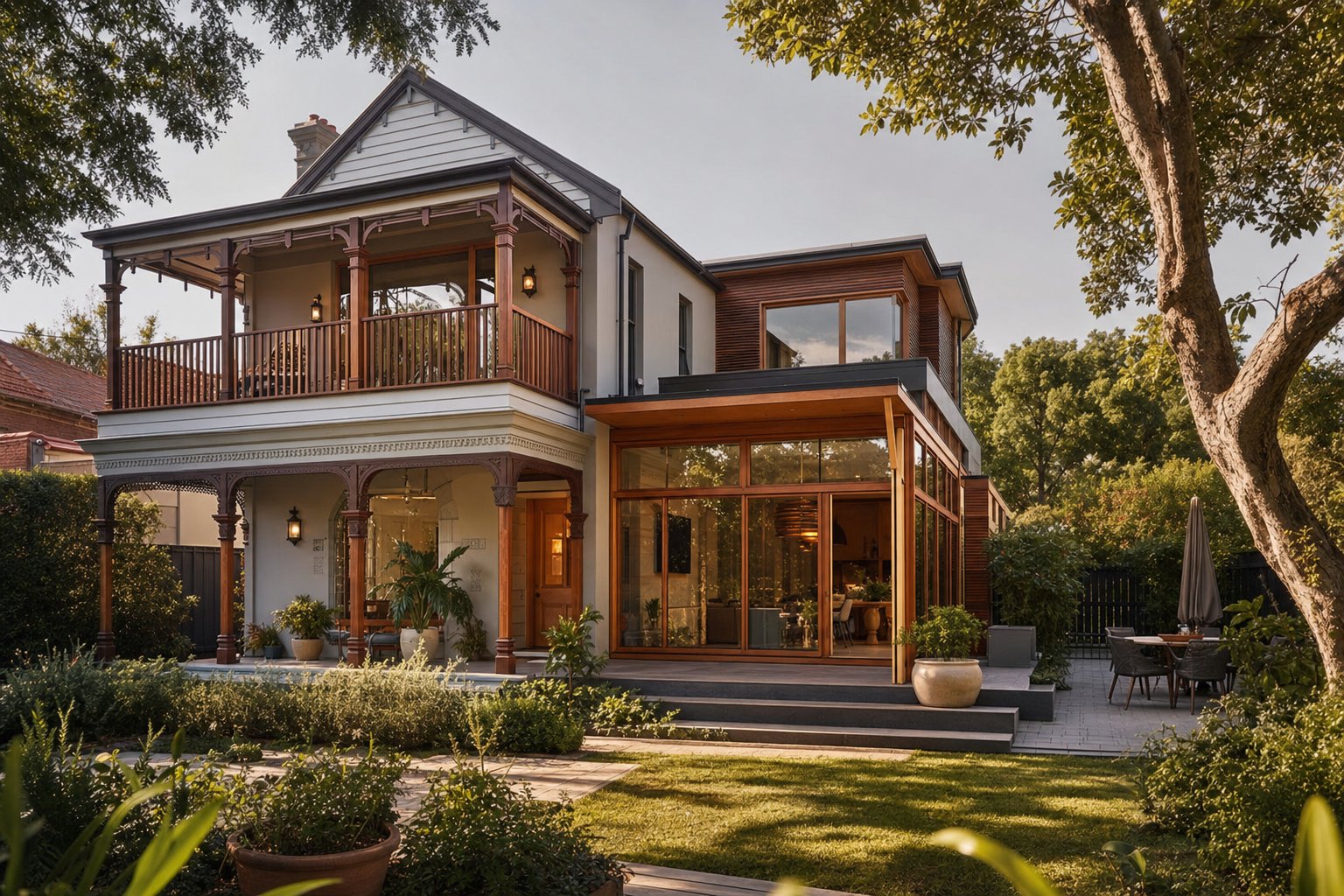
Heritage overlays and conservation areas add a layer of complexity that most window buyers never encounter until they lodge a development application and receive a request for further information. For homeowners replacing timber windows in heritage home Australia properties, the question is not just what looks right — it is what the local planning scheme will accept. Timber look aluminium windows heritage overlay compliance depends entirely on your council, your property’s grading, and which faces of the building are visible from the street.
Heritage and Conservation Area Compliance
Council requirements for window replacement in heritage-listed properties are not uniform across Australia. Each local government area applies its own heritage policy through the planning scheme, and the rules differ based on how significant your building is deemed to be.
Take the City of Yarra in Melbourne as an example. Their heritage policy grades properties as Individually Significant, Contributory, or Not Contributory within a heritage overlay. For full window replacement on Individually Significant buildings, a planning permit is required for all windows regardless of location. On Contributory and Not Contributory buildings, a permit is needed only for windows visible from the principal street frontage. Windows at the rear or on non-visible side elevations can often be replaced without triggering the permit process at all.
Here is where it gets nuanced. Some councils — Yarra included — specify that replacement windows on significant heritage buildings “must be constructed of timber” and maintain the appearance and dimensions of original components like rails, stiles, and glazing bars. In those jurisdictions, timber look aluminium will not satisfy the planning requirement for street-facing windows on high-graded buildings, regardless of how convincing the finish appears.
Other councils take a less prescriptive approach. Their heritage policies focus on outcome rather than material — requiring new windows to be of “similar appearance” to the originals without mandating a specific substrate. In these jurisdictions, a high-quality sublimation-printed aluminium frame that accurately replicates the profile dimensions, colour, and grain character of the original timber joinery may satisfy the “like for like appearance” test. The key deciding factors typically come down to three questions:
- How closely do the proposed windows resemble the originals in profile, proportion, and finish?
- Are the windows visible from the street or a public place?
- What is the heritage grading or significance level of the building?
The practical advice is straightforward: before committing to any heritage compliant window replacement options, contact your council’s planning or heritage team directly. Ask whether the heritage overlay on your property mandates timber as a material, or whether it permits alternative materials that replicate the original appearance. Get this in writing before you order anything. A pre-application meeting or written confirmation from a heritage planner can save thousands in redesign costs if your initial assumption turns out to be wrong.
Replacing Rotting Timber Windows in Older Homes
Not every older home sits within a heritage overlay. Thousands of weatherboard cottages, federation semis, and interwar bungalows across Australian suburbs carry no formal heritage protection but still possess a character their owners want to preserve. For these homeowners, the motivation for choosing aluminium windows that look like timber for renovations is purely practical — they want to stop the rot cycle without changing the face of their home.
The scenario is familiar. Original timber windows have reached the end of their serviceable life after decades of inadequate maintenance or harsh exposure. Sills are soft, bottom rails have decayed, paint is peeling in sheets, and some sashes no longer close properly because the frames have warped. Repairing them is possible but expensive, and the repaired timber will eventually need the same attention again in another decade. Replacing with standard aluminium solves the durability problem but introduces a stark, modern appearance that clashes with the home’s period character.
Timber look aluminium bridges that gap. A sublimation-printed frame in a carefully matched wood-grain finish maintains visual continuity with the rest of the home’s joinery — existing timber doors, verandah posts, fascia boards — while eliminating the maintenance cycle permanently. The aluminium frame will not rot, warp, swell, or attract termites, and the decorative finish requires nothing beyond periodic washing.
Colour matching is the critical detail in renovation contexts. If the home retains original timber elements elsewhere — a front door, sidelights, or verandah detailing — the new window frames need to sit comfortably alongside them. Most suppliers offer a broad enough range of wood-grain finishes to get close to common Australian timbers like western red cedar, spotted gum, or Victorian ash. Request physical samples and hold them against your existing joinery in natural daylight before finalising. Sublimation prints photograph differently than they appear in person, and screen colours are unreliable for this kind of matching.
For properties that do sit within a heritage overlay but only need rear or side windows replaced, timber look aluminium often passes without issue. Many planning schemes exempt non-street-visible windows from heritage permit requirements entirely, giving homeowners freedom to choose any material on those elevations. This creates a practical compromise: retain or replicate original timber on the heritage-sensitive front facade, and install low-maintenance timber look aluminium everywhere else. The visual result from inside the home remains consistent, while the maintenance burden drops dramatically across the majority of the window openings.
Choosing the Right Window Type for Your Project
Every project carries its own mix of constraints — budget ceilings, site exposure, council rules, personal tolerance for upkeep. How to choose between timber and aluminium windows is not a single answer but a sequence of priorities that narrows the field until one product type clearly fits. Rather than defaulting to whatever your builder quotes or your neighbour installed, run your project through the decision criteria below and let your specific circumstances point you toward the right choice.
Decision Criteria That Matter Most
Australian homeowners consistently weigh the same factors when selecting the best window type for Australian homes, though the order shifts depending on whether the project is a new build, a renovation, or a coastal property upgrade. Ranked by how often each factor becomes the deciding issue:
- Budget constraints — Both upfront supply cost and long-term maintenance spend. A tight build budget may favour standard aluminium now, but factoring in 30 years of timber repainting often reverses that calculation.
- Property location and climate exposure — Coastal salt, high UV, cyclone zones, and bushfire ratings each eliminate certain products outright. A BAL-29 site rules out timber frames entirely. A beachfront position makes laminated film finishes risky.
- Maintenance willingness — Be honest about this one. If you will not sand and repaint every five years, real timber is not for you regardless of how much you love the look.
- Aesthetic priorities — Do you need real timber you can touch on the interior, or is a convincing visual from the street sufficient? This single question separates aluminium-clad timber buyers from timber look aluminium buyers.
- Heritage compliance needs — Council mandates override personal preference. If your planning scheme requires timber on street-facing elevations, that settles the material choice for those openings.
- Project type — New builds offer full flexibility. Renovations often need to match existing joinery colour and profile, which narrows the finish options considerably.
Work through these in order. By the time you reach item three or four, most homeowners have already eliminated at least two product categories from consideration.
Which Window Type Suits Your Project
Matching your profile to a product type saves hours of comparing quotes that were never relevant to your situation. The matrix below pairs common buyer scenarios with the window type that best serves their top priority — whether that is timber look aluminium windows for new builds, heritage-sensitive replacements, or maximum durability in harsh conditions.
| Buyer Profile | Top Priority | Recommended Window Type | Why |
|---|---|---|---|
| Coastal homeowner (within 500 m of shoreline) | Durability and salt resistance | Timber look aluminium (sublimation finish) | Aluminium resists corrosion; sublimation embeds colour within powder coat for maximum longevity in marine environments |
| Heritage renovator (overlay applies) | Council compliance on street-facing windows | Real timber (front) + timber look aluminium (rear and sides) | Satisfies heritage material mandates where required while eliminating maintenance on non-visible elevations |
| Budget-conscious builder | Lowest total cost of ownership | Timber look aluminium | Modest upfront premium over standard aluminium; zero repainting costs over 30+ year lifespan delivers strongest long-term value |
| Design-focused architect | Specific timber species aesthetic with slim profiles | Timber look aluminium or aluminium-clad timber (depending on interior requirements) | Sublimation offers species-specific grain reproduction; alu-clad delivers genuine timber interiors for tactile authenticity |
| Bushfire zone homeowner (BAL-12.5 to BAL-40) | Non-combustible compliance with warm aesthetic | Timber look aluminium | Aluminium frames meet BAL requirements; wood-grain finish adds character without introducing combustible material |
| Low-maintenance lifestyle (holiday home or rental) | Minimal upkeep, maximum durability | Standard or timber look aluminium | No repainting, no rot inspection, no seasonal adjustments — wash occasionally and forget about it |
If you have landed on aluminium as your direction — whether standard powder coat or a timber-look finish — the next step is configuring the specifics: frame profile, glazing type, colour, and hardware. MEICHEN’s aluminium window range offers custom configurations across residential and commercial applications, with a broad selection of colours, wood-grain finishes, and glazing options suited to Australian conditions. Their project-based supply model means you can spec which aluminium window finish is best for my home based on your site’s exposure, your design intent, and your energy performance targets — rather than choosing from a limited off-the-shelf catalogue.
Whatever product you choose, the decision framework stays the same: lead with your site constraints, be realistic about maintenance, and let the numbers — not the marketing — guide you toward the window that will still look and perform well two decades from now.
Frequently Asked Questions About Timber Look Aluminium Windows
1. What are timber look aluminium windows made of?
Timber look aluminium windows are fully aluminium-framed windows with a decorative wood-grain coating applied to the surface. There is no timber in the structural frame. The wood appearance comes from sublimation printing, cold lamination with timber-effect film, or real timber veneer bonding on the interior face. The aluminium core retains all its standard performance characteristics including corrosion resistance, dimensional stability, and non-combustibility, while the finish provides a realistic timber aesthetic without any timber maintenance requirements.
2. How long do wood grain finishes last on aluminium windows in Australia?
Sublimation-printed wood grain finishes on aluminium windows typically carry manufacturer warranties of 10 to 15 years against significant fading, though actual performance often extends well beyond that. The longevity depends on the application method and climate exposure. Sublimation prints, where pigment is embedded within the powder coat layer, offer the best UV and scratch resistance. Laminated film finishes may show fading within five to seven years on north or west-facing elevations under intense Australian sun. Coastal properties benefit from regular washing to prevent salt etching, which helps maintain finish integrity over decades.
3. Are timber look aluminium windows compliant for heritage overlay properties?
Compliance varies by council and property grading. Some heritage overlays mandate real timber for street-facing windows on individually significant buildings, while others accept materials that replicate the original appearance. Councils focused on outcome rather than material may approve high-quality sublimation-printed aluminium frames that match original profile dimensions and colour. For rear and side elevations not visible from the street, many planning schemes exempt windows from heritage permit requirements entirely, allowing timber look aluminium without restriction. Always confirm requirements with your local council’s heritage planner before ordering.
4. How much more do timber look aluminium windows cost compared to standard aluminium?
Timber look aluminium windows typically cost 15 to 30 percent more than standard powder-coated aluminium equivalents. The premium covers the additional sublimation printing or film lamination process applied to the same aluminium profile. However, when compared against real timber windows over a 30-year lifespan, timber look aluminium delivers significantly lower total cost of ownership. Real timber requires professional repainting every five to seven years at roughly $250 to $400 per window per cycle, accumulating thousands in maintenance costs that timber look aluminium eliminates entirely.
5. Can timber look aluminium windows be used in bushfire zones?
Yes. Aluminium frames are non-combustible and meet BAL (Bushfire Attack Level) requirements under AS 3959 for construction in bushfire-prone zones. The decorative wood-grain finish does not compromise this compliance because sublimation-printed and powder-coated finishes are inorganic surface treatments that add no combustible fuel load. A BAL-rated aluminium window retains its rating regardless of whether it carries a standard colour or a timber-look finish, making it an ideal choice for homeowners in BAL-12.5 through BAL-40 zones who want timber aesthetics without combustible framing.
More Window & Door Guides