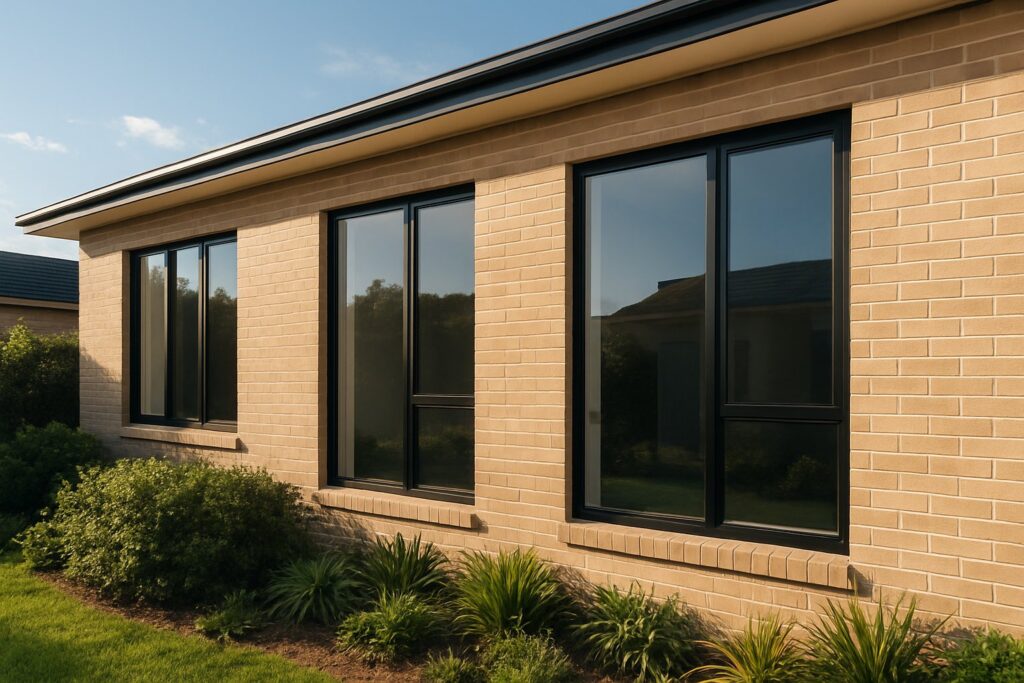
What Is an Aluminium Sash Window and How Does It Work
An aluminium sash window is a vertically sliding window where one or two movable panels (called sashes) travel up and down within a lightweight aluminium frame. The sash holds the glazing, and the frame houses the balance mechanism that makes smooth, controlled movement possible. If you’ve seen traditional timber sash windows on older homes and wondered whether a modern, low-maintenance version exists, aluminium is the answer.
A quick note on terminology: in Australia and the UK, we spell it “aluminium” and commonly use “sash window.” In the US, you’ll see “aluminum” and “double-hung window” used interchangeably. They describe the same operating principle — vertical sliding panels counterbalanced within a frame.
How Aluminium Sash Windows Work
The mechanical operation is straightforward. When you lift the lower sash, a concealed balance mechanism — typically a spiral balance using a spring-loaded tube — counterweights the panel so it stays open at any height. This replaces the traditional cord-and-weight pulley system found in heritage timber sash windows, resulting in a slimmer frame profile and less internal cavity space required.
The aluminium frame itself provides the structural rigidity that keeps everything aligned. Because aluminium is inherently strong yet lightweight, the profiles can be narrower than timber or uPVC equivalents while still supporting double-glazed units without flex or distortion.
Core components of an aluminium sash window system include:
- Aluminium outer frame — the fixed perimeter structure secured into the wall opening
- Sash panels — one or two movable frames holding the glazing
- Spiral balance mechanism — spring-loaded counterbalance allowing smooth vertical travel
- Weatherstripping and seals — compression seals around the sash perimeter for draught and water resistance
- Glazing unit — typically double-glazed insulated glass seated within the sash
Single-Hung vs Double-Hung Variants
The distinction is simple. A single-hung window has one operable sash — the bottom panel slides up while the top panel stays fixed. A double-hung window lets both sashes move independently, so you can open the top, the bottom, or both simultaneously.
Double-hung designs offer superior ventilation control. Opening the top sash allows warm air to escape while cooler air enters through the lower opening, creating natural convection without relying on mechanical cooling. They’re also safer in homes with young children, since you can ventilate from the top sash alone and keep the lower panel locked.
Single-hung variants cost less and have fewer moving parts, which can mean marginally better long-term air tightness. For most Australian homes, though, the flexibility of a double-hung aluminium sash window makes it the more practical choice — particularly in climates where cross-ventilation matters year-round.
With the mechanics and terminology sorted, the real question becomes how aluminium stacks up against timber and uPVC when you’re choosing a material for your sash windows.
Aluminium vs Timber vs uPVC for Sash Windows
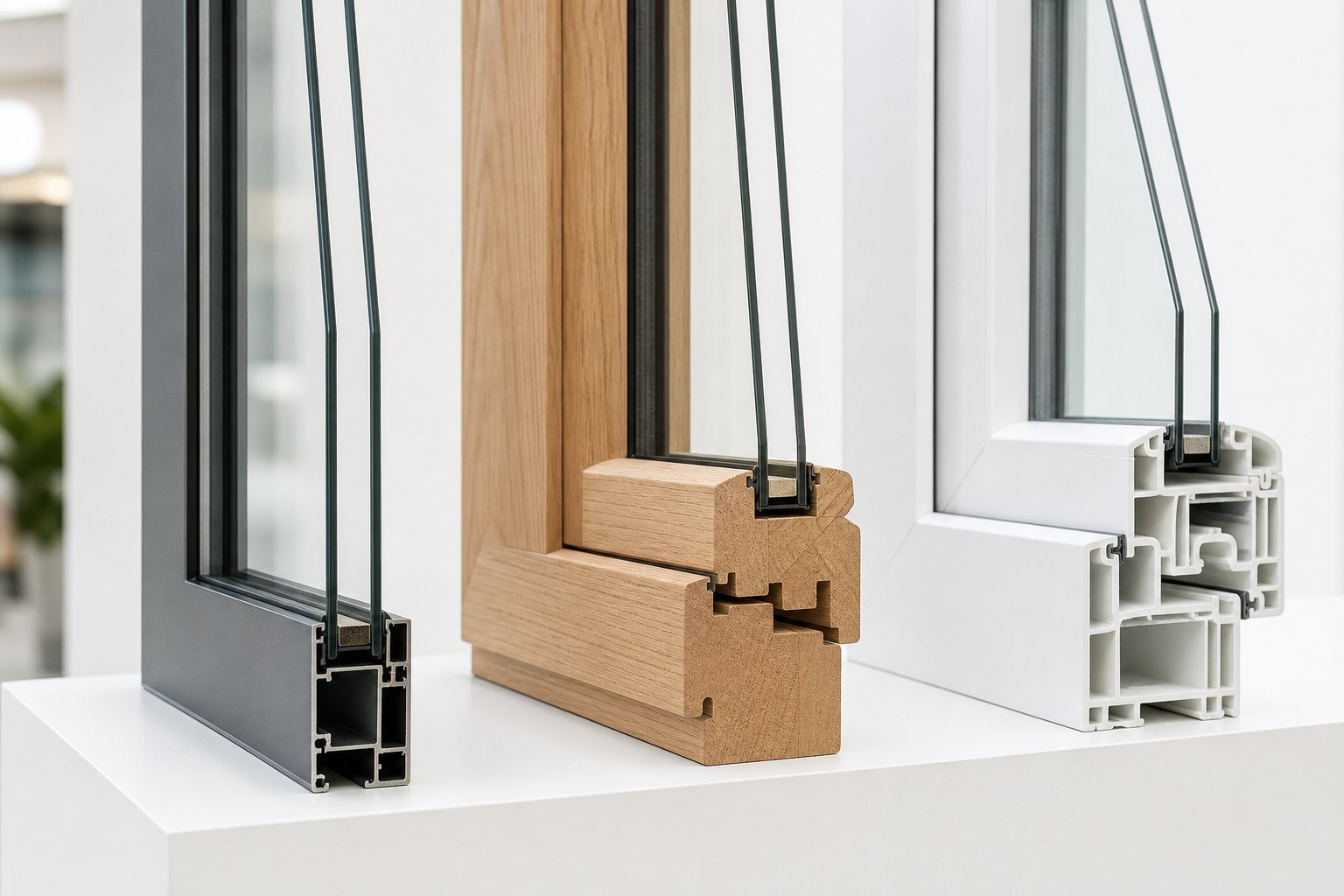
Choosing a frame material shapes everything that follows — how often you maintain your windows, how long they last, what colours are available, and what you pay over the life of your home. Here’s how aluminium stacks up against timber and uPVC in a direct comparison for sash window applications.
Durability and Lifespan Across Materials
Aluminium sash windows routinely deliver 45+ years of service without structural degradation. They won’t rot in humid coastal air, won’t warp under intense UV, and won’t become brittle with age. Timber, by contrast, can last 30 to 60 years — but only with diligent maintenance. Skip a few paint cycles and moisture finds its way in, turning a premium investment into a rotting liability. uPVC sits at the lower end with a 20 to 30 year lifespan before seals fail, frames yellow, and the entire unit needs replacing.
The degradation patterns differ fundamentally. Timber deteriorates from the outside in through moisture ingress. uPVC degrades through UV exposure and seal breakdown — problems that can’t be repaired, only replaced. Aluminium’s oxide layer forms a natural protective barrier that actually strengthens over time, making it the only frame material that improves its own corrosion resistance without human intervention.
Thermal Efficiency and Modern Innovations
The old criticism that aluminium conducts too much heat no longer holds. Modern thermal break technology in aluminium windows uses polyamide strips — glass-reinforced nylon inserts — to physically separate the interior and exterior aluminium profiles. This creates an insulation zone within the frame that reduces heat transfer by 500 to 1,000 times compared to a continuous aluminium profile.
Premium thermally broken systems achieve frame U-values between 0.8 and 1.5 W/m²K, putting them in the same performance bracket as quality timber and closing the gap with the best uPVC profiles. When paired with double-glazed units featuring low-E coatings and argon gas fills, thermally broken aluminium sash windows comfortably meet NCC Section J energy efficiency requirements across all Australian climate zones.
For homeowners chasing strong WERS (Window Energy Rating Scheme) star ratings, the frame is only part of the equation. The real efficiency gains come from matching the thermal break system to appropriate glazing — something aluminium handles well because its structural strength supports heavier glass configurations without flex.
Aesthetic Versatility and Finish Options
One persistent misconception paints aluminium as cold and industrial-looking. Modern aluminium sash window powder coating finishes tell a different story entirely. Powder coating bonds a durable colour layer to the aluminium at a molecular level, offering hundreds of RAL colours plus woodgrain effects that convincingly replicate the look of painted or stained timber.
Crucially, aluminium’s strength allows for slimmer frame profiles — often 40 to 50% narrower than uPVC equivalents. This means more glass area, more natural light, and proportions that closely match the elegant sightlines of traditional timber sash windows. For period homes or heritage-style builds, these slim profiles make aluminium the material that best replicates original window aesthetics while delivering contemporary performance.
uPVC, by comparison, typically comes in white, cream, or a limited range of foil-wrapped colours that can peel or fade after a decade of Australian sun exposure. Timber offers beautiful natural grain but demands repainting every five to seven years to maintain its appearance.
| Category | Aluminium | Timber | uPVC |
|---|---|---|---|
| Expected Lifespan | 45+ years | 30–60 years (with maintenance) | 20–30 years |
| Maintenance Frequency | Occasional clean only | Repaint/reseal every 5–7 years | Occasional clean only |
| Thermal Performance | Strong (with thermal break) | Naturally good | Good to excellent |
| Colour Options | Hundreds (powder coat + woodgrain) | Any paint colour (requires recoating) | Limited (foil wraps can peel) |
| Frame Weight | Lightweight | Heavy | Medium |
| Recyclability | 100% infinitely recyclable | Biodegradable / reusable | Limited recycling infrastructure |
| Relative Cost Band | Mid–High | High–Premium | Low–Mid |
On a whole-life cost basis, the picture shifts. uPVC’s low entry price resets every 20 to 25 years when full replacement becomes unavoidable. Timber’s premium upfront cost compounds with ongoing maintenance spend. Aluminium’s mid-range initial investment, paired with near-zero maintenance and decades of additional service life, often makes it the most economical choice over a 40 to 60 year horizon — particularly relevant for Australian homeowners building or renovating for the long term.
Material performance only tells part of the story, though. For owners of older homes — especially those in heritage overlay zones or character-protected streetscapes — the question isn’t just which material performs best, but which one your local council will actually approve.
Heritage Properties and Conservation Area Considerations
Older homes carry a certain weight — not just structurally, but culturally. If your property sits within a Heritage Conservation Area (HCA), carries a local heritage listing, or appears on a state heritage register, replacing windows isn’t a simple trip to the showroom. Councils protect these streetscapes for good reason, and the rules around what you can and can’t change exist to preserve exactly the character that makes your neighbourhood distinctive.
The good news: aluminium sash windows for heritage properties are increasingly accepted as compliant replacements, particularly where the originals have deteriorated beyond practical repair. The key lies in understanding what your council requires and specifying profiles that satisfy those requirements.
Planning Permission and Conservation Area Rules
Do you need council approval to replace sash windows on a heritage-listed property? In most cases, yes. Unlike standard residential builds where window replacement may qualify as exempt development, properties under heritage overlays typically require a development application (DA) — even for like-for-like replacements in the same material.
Heritage overlay controls in Local Environmental Plans (LEPs) and local planning schemes function similarly to what the UK calls Article 4 directions. They remove the usual exemptions and bring window replacement under full planning control. Some overlays apply only to the primary street-facing elevation, while others cover the entire building envelope.
Key considerations when proposing window replacement in a heritage overlay zone:
- Check whether your property has a local heritage listing, contributory status within an HCA, or state-level heritage registration — each carries different obligations
- Contact your council’s heritage advisor early, before ordering anything, to clarify acceptable materials, profiles, and glazing configurations
- Prepare a heritage impact statement demonstrating how the proposed windows maintain the building’s character and proportions
- Document existing windows thoroughly with photographs, dimensions, and details of glazing bar patterns and hardware
- Understand that front elevations face stricter scrutiny than rear or side elevations — some councils permit different materials at the back
- Budget for DA fees and allow 6 to 12 weeks for assessment, longer if heritage referral is required
A brief conversation with your council’s heritage team before committing to any purchase can save months of delay and the frustration of a refused application. Most heritage advisors welcome early engagement — they’d rather guide you toward an approvable solution than reject a non-compliant one after the fact.
Retrofitting Period Properties Without Losing Character
Here’s where aluminium sash windows genuinely shine in heritage applications. The inherent strength of aluminium allows frame profiles as narrow as 45 to 55 mm — slim enough to replicate the sightlines of original timber sash windows from the Victorian and Federation eras. uPVC, by comparison, requires bulkier profiles (often 70 mm or more) that look visibly heavier and rarely satisfy heritage officers assessing proportional accuracy.
Modern aluminium profiles can match period proportions in several ways: replicating traditional putty-line detailing on the exterior, incorporating decorative horns on the upper sash, and using powder-coated finishes in heritage-appropriate colours like off-white, cream, or dark bronze. The result reads as a traditional sash window from the street while delivering thermally broken, double-glazed performance behind the facade.
For properties with original steel-framed windows — common in interwar and Art Deco homes across Australian suburbs — aluminium is often the preferred replacement material among heritage advisors. Its slim profiles naturally echo the narrow steel originals in a way no other modern material can achieve.
Secondary Glazing as an Alternative Approach
When full replacement isn’t approved — particularly for individually significant heritage items or state-listed properties where original fabric must be retained — secondary glazing offers a practical workaround. A slim aluminium-framed glazed panel is fitted to the interior side of the existing window opening, leaving the original sash completely untouched from the outside.
The air gap between the original window and the secondary panel reduces heat transfer and is especially effective at cutting external noise, often outperforming standard double glazing for acoustic insulation. It’s also fully reversible — the secondary unit can be removed in future without any damage to the heritage fabric. For owners navigating strict heritage controls, this approach delivers meaningful thermal and acoustic improvement without triggering a DA at all.
Regulatory compliance is only one piece of the puzzle, though. Once you’ve confirmed what your council will approve, the next question becomes whether those windows can actually keep your home secure — and how their technical performance compares on paper.
Security Features and Technical Performance Ratings
A window can look beautiful and insulate perfectly, but if it folds under a crowbar in seconds, none of that matters. Security is where aluminium sash windows hold a structural advantage that no amount of steel reinforcement can replicate in uPVC — because the frame itself is the reinforcement.
Aluminium’s inherent rigidity means the profiles resist prying, flexing, and deformation under force. uPVC frames rely on internal galvanised steel or aluminium inserts to achieve structural strength, creating potential weak points at joints and corners where the reinforcement doesn’t fully extend. With aluminium, the entire frame is a continuous load-bearing structure. There’s no hidden skeleton to miss — the material is the security.
Multi-Point Locking and Forced Entry Resistance
Modern aluminium sash window security features go well beyond a single latch. Multi-point locking sash windows engage the frame at multiple positions along the sash perimeter — typically three to five locking points on each operable panel. When the handle turns, shoot bolts or mushroom cam locks simultaneously secure the top, bottom, and sides of the sash into reinforced keeps within the frame.
This distributed locking approach means an intruder can’t simply lever one corner free. Force applied at any single point is resisted by the remaining locks, and the aluminium frame doesn’t flex enough to create the gap needed to defeat them.
For Australian homeowners, look for systems tested to AS 2047, which covers structural performance, weather resistance, and operational force requirements for windows. While Australia doesn’t have a direct equivalent to the UK’s Secured by Design police-backed certification, the principles translate directly: laminated security glass, multi-point locking, reinforced frames, and hinge-side protection all contribute to genuine forced-entry resistance.
Security features homeowners should look for when specifying aluminium sash windows:
- Multi-point locking with a minimum of three engagement points per operable sash
- Mushroom cam or hook-bolt locks that resist lateral prying
- Laminated inner pane — stays intact when struck, preventing an intruder from creating an opening
- Internal glazing beads so glass cannot be removed from the outside
- Keyed sash locks or restrictors for ventilation without full opening
- Anti-lift blocks preventing the sash from being forced upward out of the frame
- Reinforced strike plates anchored into the aluminium frame (not screwed into plastic)
Ground-floor windows and any sash accessible from a flat roof, balcony, or fence line deserve the full security specification. Upper-storey windows can often use a lighter hardware package, which helps manage costs without compromising where it counts.
Understanding Window Performance Ratings
Beyond security, technical performance data tells you how a window handles heat, sound, air, and water. These ratings let you compare products on a level playing field — but only if you know what the numbers mean.
U-values (thermal transmittance): Measured in W/m²K, this tells you how much heat passes through the window assembly. Lower is better. A thermally broken aluminium sash window with quality double glazing typically achieves whole-window U-values between 1.4 and 2.2 W/m²K, depending on glass specification and frame design. Ask your supplier for the whole-window U-value, not just the centre-of-glass figure — the frame contributes significantly to overall thermal performance.
Air permeability: Tested under AS 2047, this measures how much air leaks through the closed window under pressure. Classifications run from 0 (worst) to 4 (best), with Class 4 indicating minimal air leakage even under high wind pressure. Quality aluminium sash windows should achieve Class 3 or 4 — anything less suggests poor weatherstripping or frame tolerances.
Water penetration resistance: Also tested under AS 2047, this simulates driving rain at increasing pressure. Ratings range from 0 to 9, with higher numbers indicating the window withstood greater water pressure for longer before any internal leakage occurred. For exposed coastal or elevated sites, aim for a minimum rating of 5A or above.
Wind resistance: Measures how much the frame deflects under wind loading without damage or permanent deformation. This matters particularly for upper-storey installations and properties in high-wind regions like coastal Queensland or elevated sites in Tasmania. Your supplier should provide wind load ratings appropriate to your specific location and building height.
Acoustic performance (Rw rating): Expressed in decibels (dB), the Rw value indicates how much airborne sound the window blocks. Standard double-glazed aluminium sash windows typically achieve Rw 30 to 35 dB. Upgrading to acoustic-laminated glass or asymmetric glass pairings (different thicknesses in each pane) can push this to Rw 38 to 42 dB — a meaningful difference for homes near busy roads, flight paths, or rail corridors.
When comparing quotes, request the full test data sheet for each product. Any reputable supplier will provide AS 2047 test results covering air, water, and wind performance. If they can’t produce documentation, treat that as a red flag — it likely means the product hasn’t been independently tested to Australian Standards.
Strong security hardware and verified performance data give you confidence in what your windows can handle day to day. But the real endurance test isn’t a laboratory simulation — it’s decades of exposure to salt air, UV radiation, driving rain, and temperature swings across Australia’s varied climate zones.
Weather Resistance and Climate Performance Across Australia
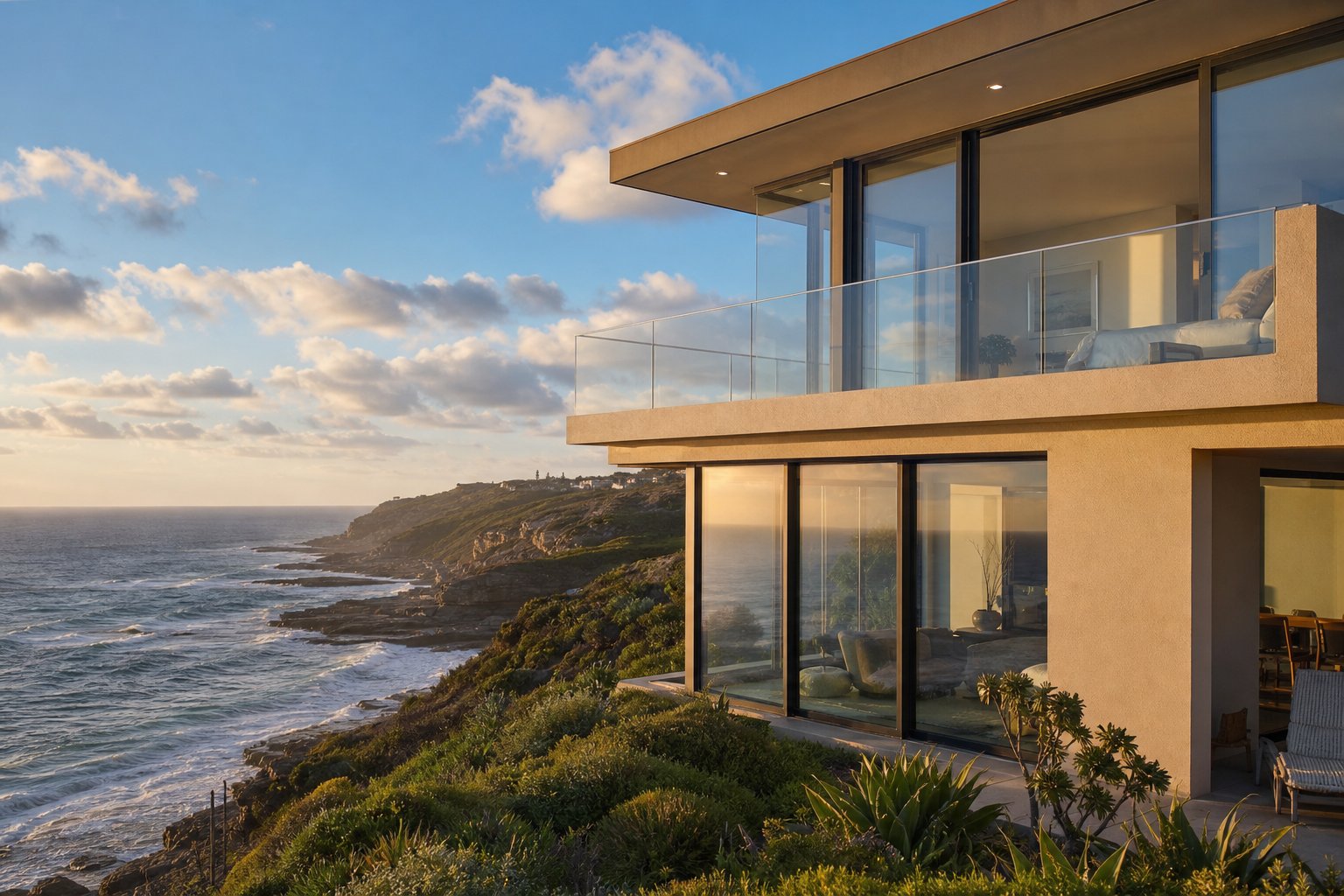
Australia throws everything at a window. Tropical humidity in the north, salt-laden coastal gales along thousands of kilometres of shoreline, searing UV in the west, and freezing alpine mornings in the south. A window material that handles one of these conditions but fails under another isn’t fit for purpose here. Aluminium handles all of them — and it does so without the cyclical maintenance burden that timber demands or the gradual UV breakdown that shortens uPVC’s useful life.
Powder-coated aluminium resists corrosion, UV degradation, and moisture damage simultaneously. The powder coating bonds electrostatically to the aluminium surface and is cured at high temperature, creating a finish far more durable than conventional wet paint. Beneath that coating, aluminium naturally forms a thin oxide layer that acts as its own corrosion shield — a self-healing barrier that reforms even if the surface is scratched.
Coastal and Exposed Locations
Do aluminium windows resist salt corrosion? In short, yes — and better than any other mainstream frame material. Properties within a few kilometres of the coast or tidal estuaries face constant exposure to chloride-laden air, which accelerates metal breakdown and destroys timber from the inside out. Aluminium sash windows in coastal areas hold up because the material itself is inherently resistant to salt spray oxidation, and marine-grade powder coatings add a further protective layer.
For severely exposed sites — beachfront homes, cliff-top properties, or anything directly facing prevailing onshore winds — specifying marine-grade hardware becomes essential. This means 316 stainless steel hinges, locks, and friction stays rather than standard zinc or ferrous components that seize up within a few seasons of salt exposure. The aluminium frame won’t corrode, but cheaper hardware fitted into it certainly can if not specified correctly.
Aluminium is one of the few building materials whose corrosion resistance actually improves over time. Its natural oxide layer self-repairs when damaged, unlike timber that rots progressively once moisture breaches the paint film, or uPVC that becomes brittle and irreparable after prolonged UV exposure.
Pre-anodised coatings offer an additional tier of protection for the most demanding coastal environments. Anodising thickens the natural oxide layer through an electrochemical process, creating a harder, more abrasion-resistant surface than standard powder coating alone. Some manufacturers offer dual-protection systems combining anodising with a powder-coat topcoat for maximum longevity in marine conditions.
Weatherstripping and Draught Prevention
Traditional sash windows earned a reputation for draughtiness — rattling frames, whistling gaps, and cold air streaming through worn joints. That reputation belongs to an older era of loose-fitting timber and cord-and-weight mechanisms. Modern aluminium sash windows eliminate these problems through engineered sealing systems designed to maintain weather tightness across decades of daily operation.
Full-perimeter compression seals — typically polyurethane foam or EPDM rubber strips — press against the sash at every contact point when the window is closed. Unlike brush seals that merely trap air within bristles, compression seals create a continuous airtight barrier that blocks both air infiltration and water ingress. The tight manufacturing tolerances of aluminium extrusions mean these seals compress evenly across the entire frame, with no warping or seasonal movement to create gaps.
Draught-proof sash windows aren’t just about comfort — they directly affect your energy bills and your home’s NatHERS rating. A well-sealed aluminium sash window achieves air permeability ratings of Class 3 or 4 under AS 2047 testing, meaning negligible air leakage even under significant wind pressure. That’s a measurable performance standard, not a marketing claim.
The sliding mechanism itself incorporates interlocking meeting rails where the upper and lower sashes overlap. These rails feature their own weatherstripping and are designed so that wind pressure actually pushes the seals tighter together rather than forcing them apart — a detail that makes a real difference during storm events.
Urban Pollution and Low-Maintenance Performance
Coastal salt isn’t the only environmental aggressor. City homes face diesel particulates, industrial fallout, acid rain residue, and general atmospheric grime that dulls surfaces and accelerates material degradation over time. Timber absorbs pollutants into its grain, requiring more frequent repainting in urban environments. uPVC attracts static charge that holds dirt against the surface, and its porous texture gradually discolours in ways that can’t be reversed.
Aluminium’s smooth, non-porous powder-coated surface sheds urban pollution readily. A periodic wipe-down with soapy water restores the original finish — no solvents, no repainting, no specialist products required. The coating itself resists UV breakdown, so colours stay true for decades rather than fading or chalking as painted timber inevitably does under Australian sun exposure.
For homes near major roads, rail corridors, or industrial zones, this low-maintenance performance translates directly into time and money saved. You’re not scheduling painters every five years or watching your window frames slowly yellow and degrade. The aluminium simply endures — quietly doing its job while you focus on other things.
Weather resistance keeps your home protected from the outside. But understanding how these windows arrive at your property — and what the installation process actually involves — helps set realistic expectations before you commit to a supplier and a timeline.
The Aluminium Sash Window Installation Process From Survey to Completion
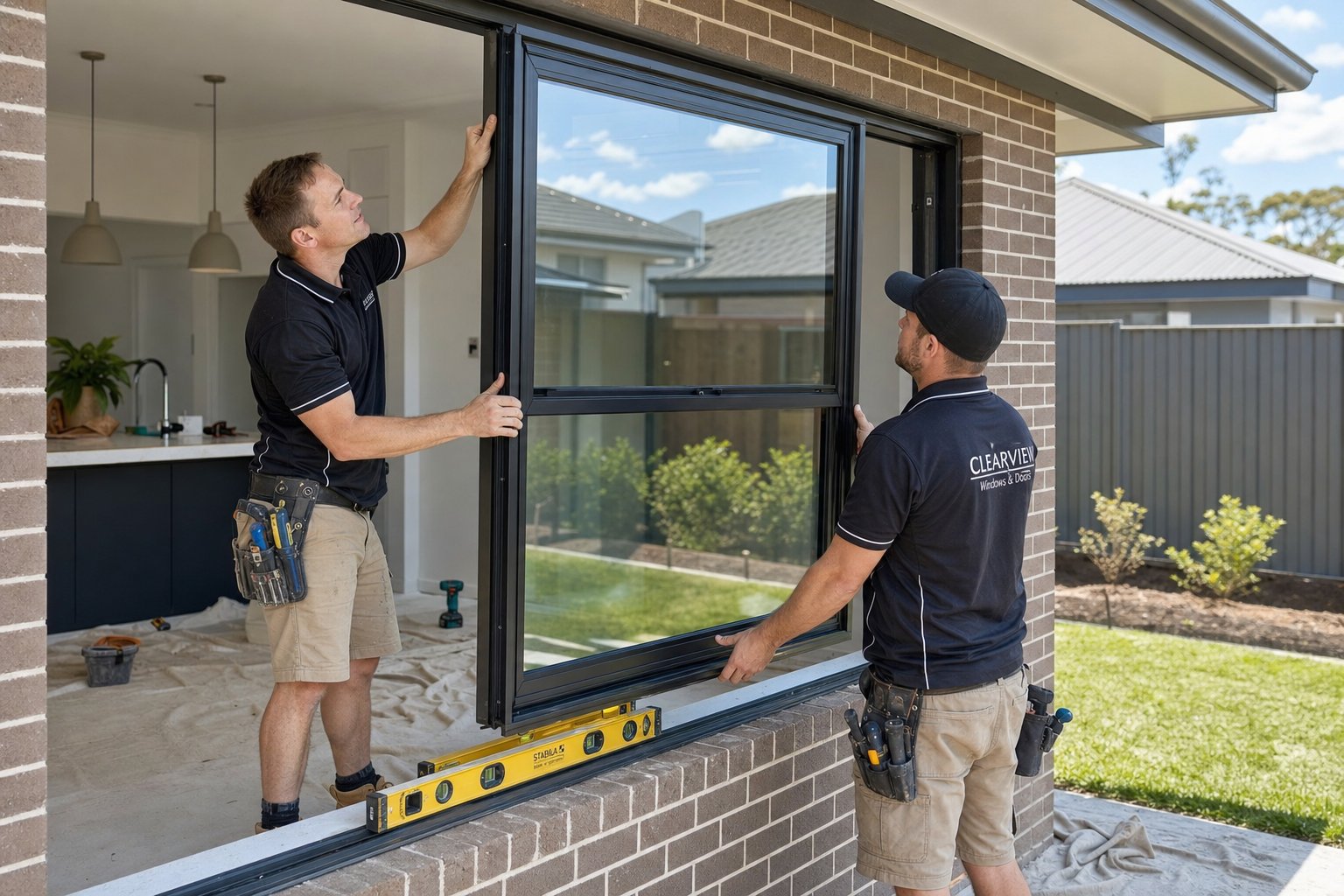
Most homeowners have a clear picture of what their finished windows will look like — but far less clarity on what happens between signing the quote and admiring the result. The aluminium sash window installation process follows a predictable sequence, and knowing each stage helps you plan around disruption, set realistic timelines, and avoid surprises on fitting day.
Here’s the typical sash window replacement timeline for an Australian residential project:
- Initial site survey and precise measurement of all openings
- Specification confirmed — profiles, colour, glazing, hardware, and locking options finalised
- Manufacturing period (bespoke aluminium windows typically require 6 to 12 weeks)
- Delivery scheduling and installation date confirmed with homeowner
- Existing windows carefully removed one at a time
- Openings inspected, cleaned, and prepared — lintels, reveals, and sub-sills checked
- New aluminium frames positioned, levelled, and permanently fixed
- Insulation foam and weatherproofing applied around the frame perimeter
- Sash panels hung and balance mechanisms calibrated
- Internal trims, architraves, and external sealant applied
- Hardware fitted — locks, handles, and restrictors installed
- Final operational checks, cleaning, and homeowner handover
From Survey to Manufacture
Everything starts with a technical survey. An installer visits your property to take exact measurements of each opening — frame depth, reveal dimensions, structural clearances, and any irregularities in older walls. This visit typically takes one to two hours depending on how many windows are involved. For retrofit replacements in older homes, the surveyor also assesses the condition of lintels, sub-sills, and surrounding brickwork or weatherboard to identify any structural work needed before fitting.
Once measurements are locked in, you’ll confirm your specification: frame colour (from the full RAL powder-coat range), glazing type, hardware finish, and whether you want single-hung or double-hung operation. Because aluminium sash windows are manufactured to order rather than pulled from stock, lead times typically run 8 to 12 weeks for bespoke systems. Some suppliers with local manufacturing can deliver in 4 to 6 weeks for standard configurations.
This manufacturing window is actually useful. It gives you time to arrange council approvals if needed, schedule any preparatory building work, and coordinate with other trades if the window replacement is part of a broader renovation.
New-build installations follow a simpler path — openings are purpose-built to exact dimensions, so there’s no removal stage and fewer site variables. Retrofit replacement in existing openings is more involved because older homes rarely have perfectly square or consistent reveals. The surveyor accounts for these irregularities during measurement so the manufactured frames arrive ready to fit without on-site modification.
Installation Day and What to Expect
How long does sash window installation take? For a typical home, professional fitting teams install four to six windows per day. A small project — say three or four windows in one room — wraps up within a single day. A full-home replacement of 10 to 15 windows usually spans two to three days.
The process on the day follows a logical room-by-room sequence. Installers remove one window at a time to maintain security and minimise exposure to weather. The old frame comes out carefully — pried from the reveal, fixings removed, and the opening cleaned back to solid substrate. For homes with original timber sash windows, this means extracting the entire box frame including any internal weight pockets and pulleys.
With the opening clear, the team checks levels and inspects the structural lintel above. If the lintel is sound and the reveal is square, the new aluminium frame goes straight in. It’s positioned, shimmed to perfect plumb and level, then permanently fixed with masonry anchors or frame screws depending on the wall construction — brick veneer, rendered masonry, weatherboard, or fibro each require slightly different fixing methods.
Expanding foam fills the gap between frame and wall, providing both insulation and a degree of structural cushioning. External sealant — typically a flexible silicone or polyurethane — seals the frame to the outer wall surface, preventing water tracking behind the frame. Internal trims and architraves are then fitted and colour-matched to the window finish.
Disruption is real but manageable. Expect dust during removal, brief periods where openings are exposed (usually no more than 30 to 60 minutes per window), and some noise from drilling and fixing. Furniture near windows should be moved or covered beforehand. Most installers lay dust sheets and clean up at the end of each day, but clearing fragile items from windowsills yourself saves time and worry.
Post-Installation Checks and Snagging
Once fitting is complete, a thorough inspection protects your investment. Don’t rush this step — it’s far easier to address issues while the installer is still on site than to chase them up weeks later.
What to expect when replacing sash windows at the handover stage: your installer should demonstrate the operation of every sash, show you how the locking system engages, and confirm that each window opens, closes, and locks smoothly. Beyond that demonstration, here’s what you should independently verify:
- Smooth operation — slide each sash fully open and closed several times. Movement should be even with no sticking, grinding, or excessive resistance. The balance mechanism should hold the sash at any height without creeping.
- Frame alignment — check that frames sit plumb and level. A spirit level across the head and down the jambs confirms this. Permitted deviation should not exceed 1.5 mm per metre of frame length.
- Seal integrity — run your hand around the closed sash perimeter feeling for draughts. Check that external sealant is continuous with no gaps or missed sections.
- Locking engagement — operate every lock point and confirm the handle turns fully without excessive force. Multi-point locks should engage cleanly at all positions.
- Glass condition — inspect panes for scratches, chips, or condensation between the sealed unit (which would indicate a failed seal).
- Finish quality — look for scratches or chips in the powder coating, particularly around fixing points and where frames meet trims.
- Internal making good — confirm that plaster, trims, and architraves are finished neatly with no exposed foam or rough edges.
Document anything that needs attention and have the installer note it on the completion paperwork before signing off. Reputable companies include a snagging visit in their service — a return trip within a few weeks to address any minor adjustments once the windows have settled into the opening.
Request all documentation at handover: warranty certificates, AS 2047 compliance paperwork, care and maintenance instructions, and a record of the products installed (including colour codes and hardware specifications). You’ll need these for any future warranty claims and they add value if you sell the property.
With installation complete and everything operating as it should, the focus shifts to keeping your windows performing at their best over the coming decades — and understanding just how little ongoing effort aluminium actually demands compared to the alternatives.
Maintenance Requirements and Long-Term Durability
“Low maintenance” gets thrown around loosely in the window industry. Every material claims it. The difference is what that phrase actually means in practice — how many hours per year, what products you need, and what happens if you skip a season or two. Here’s a straightforward aluminium sash window maintenance guide based on what the material genuinely requires versus what timber and uPVC demand over the same timeframe.
Routine Cleaning and Care Schedule
Cleaning aluminium sash windows is about as involved as wiping down a kitchen benchtop. A soft cloth or sponge, warm water with a mild pH-neutral detergent, and five minutes per window covers it. No specialist products, no solvents, no repainting — just remove the accumulated dust, salt residue, or urban grime before it sits long enough to dull the powder-coated finish.
For most Australian homes, a quarterly clean keeps frames looking fresh. Coastal properties benefit from monthly attention during summer when salt deposits build faster. The key cleaning tips to remember:
- Use a soft-bristled brush or microfibre cloth — never abrasive pads or steel wool
- Stick to pH-neutral cleaners (pH 6 to 8) to protect the powder coating
- Vacuum window tracks and sill channels to prevent grit buildup affecting sash movement
- Rinse frames with clean water after washing to remove detergent residue
- Dry hardware and hinges after cleaning to prevent moisture sitting on metal components
Compare that to timber, which needs sanding and a fresh coat of paint or stain every five to seven years — a job that costs $200 to $400 per window if you hire a painter, or a full weekend of your own time if you don’t. uPVC requires similar cleaning effort to aluminium initially, but once it starts yellowing or chalking from UV exposure (typically after 10 to 15 years in Australian conditions), no amount of cleaning restores the original colour. The discolouration is permanent.
Hardware Servicing and Balance Mechanism Care
The aluminium frame itself needs almost nothing beyond cleaning. The moving parts — locks, hinges, and the spiral balance mechanism — are where periodic attention pays dividends. Industry maintenance guidelines recommend lubricating all hardware twice yearly, ideally in spring and autumn when temperature shifts affect component performance.
The process takes minutes: apply a silicone-based dry lubricant to hinges, locking points, and the balance mechanism, then operate the sash several times to distribute it evenly. Silicone spray is preferred over grease or oil because it doesn’t attract dust or grit that would create an abrasive paste inside the mechanism.
The balance system — the spring-loaded spiral that counterweights each sash — typically lasts 15 to 20 years before tension adjustment or replacement becomes necessary. You’ll notice it needs attention when the sash starts creeping downward instead of holding position, or when opening requires noticeably more effort than it used to. A qualified window technician can retension or replace the balance unit without removing the entire frame — it’s a straightforward service call, not a major repair.
EPDM rubber gaskets and weatherstripping seals have a service life of 10 to 20 years depending on UV exposure and how frequently the window operates. Conditioning them with a silicone-based rubber treatment during your bi-annual lubrication routine extends their flexibility and delays replacement. When gaskets do eventually harden or crack, they’re replaceable components — not a reason to replace the entire window.
Expected Lifespan and Warranty Coverage
How long do aluminium sash windows last? With basic care, well-manufactured aluminium windows deliver 40 to 50 years of reliable service. That figure assumes periodic cleaning and hardware lubrication — not heroic maintenance efforts. Consistent care can extend service life beyond 50 years, while complete neglect (particularly in coastal or high-pollution environments) can shorten it to 25 to 30 years through preventable hardware failure and seal degradation.
Factors that most influence longevity include:
- Quality of the original powder coating or anodising
- Grade of hardware specified (marine-grade stainless steel vs standard zinc)
- Environmental exposure — coastal, tropical, and high-UV locations accelerate component wear
- Frequency of basic maintenance — even minimal care dramatically extends lifespan
- Quality of the polyamide thermal break strips (high-grade PA66 lasts 25 to 30 years)
Understanding what aluminium window warranty coverage to expect helps you evaluate suppliers. Reputable manufacturers typically offer:
- Frame and finish warranty: 10 to 25 years (covering powder coating integrity and frame corrosion)
- Hardware warranty: 5 to 10 years (covering locks, hinges, and balance mechanisms)
- Sealed glazing unit warranty: 10 to 15 years (covering seal failure and internal fogging)
- Installation warranty: 5 to 10 years (covering fitting workmanship)
Read the fine print carefully. Some warranties require evidence of regular maintenance — typically annual cleaning and bi-annual lubrication — to remain valid. Others exclude coastal properties unless marine-grade hardware was specified at the time of order. A warranty that sounds generous but contains exclusions for your specific environment isn’t worth much in practice.
| Maintenance Factor | Aluminium Sash Windows | Timber Sash Windows | uPVC Sash Windows |
|---|---|---|---|
| Annual Time Investment | 2–4 hours (cleaning + lubrication) | 15–30 hours (sanding, painting, repairs) | 2–4 hours (cleaning only) |
| Annual Cost (DIY) | $20–$50 (cleaning products + lubricant) | $150–$400 (paint, brushes, filler, sandpaper) | $20–$40 (cleaning products) |
| Professional Maintenance Cost (per window/year) | $30–$60 (periodic service) | $200–$400 (repainting cycle averaged annually) | $30–$50 (periodic service) |
| Repainting Required | Never | Every 5–7 years | Never (but discolouration is permanent) |
| Component Replacement Frequency | Gaskets at 10–20 years; hardware at 10–15 years | Putty/seals every 5–10 years; cords every 8–12 years | Gaskets at 10–15 years; hardware at 8–12 years |
| Expected Total Lifespan | 40–50+ years | 30–60 years (maintenance-dependent) | 20–30 years |
| End-of-Life Outcome | Fully recyclable aluminium | Biodegradable / landfill | Limited recycling; mostly landfill |
The numbers tell a clear story. Aluminium matches uPVC’s minimal time commitment while lasting nearly twice as long. Timber can theoretically match aluminium’s lifespan — but only if you invest the hours and dollars to maintain it religiously. Miss a few paint cycles in the Australian sun and timber’s theoretical 60-year life drops to a practical 25 to 30 years before rot forces replacement.
Knowing what your windows need over their lifetime is one thing. Knowing who to trust with the supply and installation — and what credentials separate a quality operator from a fly-by-night outfit — is the final piece before committing your budget.
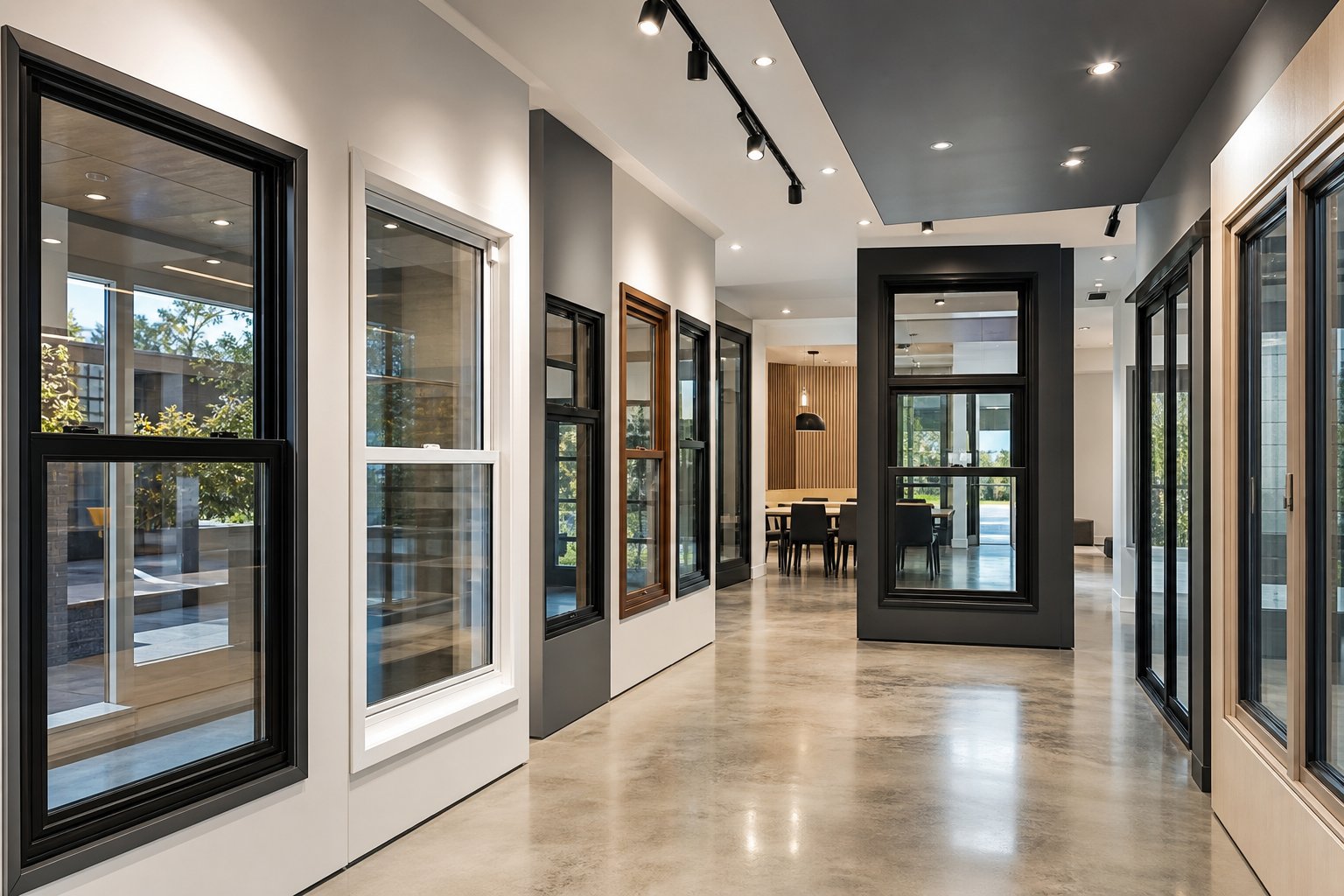
How to Choose an Aluminium Sash Window Supplier
A quality aluminium sash window is only as good as the company behind it. The best-engineered frame in the world underperforms if it’s measured wrong, fitted poorly, or backed by a warranty from a business that won’t exist in five years. Knowing how to choose an aluminium window supplier separates a smooth project from an expensive headache — and the signals that distinguish reliable operators from questionable ones are surprisingly consistent.
Essential Certifications and Accreditations
Certifications exist to give you confidence that a supplier or installer meets independently verified standards. In Australia, the credentials worth checking include:
- AWA (Australian Window Association) membership — members commit to quality standards, product testing, and ethical business practices. AWA accreditation indicates the supplier’s products are tested to AS 2047 and AS 1288.
- AS 2047 compliance — this is the Australian Standard for windows and external glazed doors. Any aluminium sash window sold in Australia must be tested and certified to this standard. Ask for the test certificate, not just a verbal claim.
- WERS (Window Energy Rating Scheme) registration — products rated under WERS carry independently verified thermal performance data, giving you reliable U-values and solar heat gain figures rather than marketing estimates.
- State licensing — window installers require trade licensing in most states. In NSW, that means a contractor licence from NSW Fair Trading. In Victoria, it’s registration with the Victorian Building Authority. Check your state’s requirements and verify the licence number before signing anything.
- Master Builders or HIA membership — while not window-specific, membership in the Master Builders Association or Housing Industry Association signals a business that invests in professional development and carries appropriate insurance.
A supplier who can’t produce documentation for these credentials on request is waving a red flag. Legitimate businesses keep this paperwork accessible because they’re asked for it regularly.
Questions to Ask Before Committing
The quoting stage is your best opportunity to separate thorough operators from those cutting corners. These questions to ask a window replacement company reveal more than any brochure:
- Can you provide AS 2047 test reports for the specific window system you’re quoting?
- What is the full warranty structure — frame, hardware, sealed units, and installation workmanship — and what maintenance is required to keep it valid?
- Who manufactures the profiles, and where? (Local fabrication typically means faster lead times and easier warranty claims.)
- Will the same company survey, manufacture, and install — or is any stage subcontracted?
- What happens if a window arrives damaged or doesn’t fit the opening correctly?
- Can you show me completed projects similar to mine, ideally in a similar property style?
- What’s included in the quote — removal, disposal, internal making good, scaffolding if needed?
- How do you handle snagging issues after installation?
- Are your installers direct employees or subcontractors, and what qualifications do they hold?
- What is the realistic lead time from order to installation for my project size?
Pay attention to how these questions are answered as much as what’s said. A confident supplier welcomes scrutiny. Evasiveness, vague timelines, or reluctance to provide written documentation suggests you’re dealing with someone who won’t stand behind their work when it matters.
Red flags to watch for: quotes that arrive without a site visit, pricing dramatically below competitors (often indicating inferior hardware or unrated profiles), no fixed business address, and pressure to sign immediately with “today only” discounts. Reputable aluminium sash window supplier certifications and trade memberships take years to build — businesses that invest in them don’t need high-pressure sales tactics.
Project-Based Supply for Developments and Apartments
Individual homeowners replacing three or four windows have different needs from a developer fitting 60 identical units across a multi-storey apartment block. The supplier landscape reflects this split. Retail-focused companies excel at bespoke one-off projects with personalised colour choices and varied configurations. Project-supply specialists, by contrast, are geared for volume — consistent specifications, streamlined ordering, architectural documentation, and the capacity to deliver large quantities on a coordinated schedule.
For builders, architects, and developers specifying aluminium double-hung windows across multiple dwellings, project-supply systems offer distinct advantages: standardised profiles that simplify construction detailing, bulk pricing structures, dedicated project management, and technical support during the design phase rather than just at point of sale.
Systems like MEICHEN’s MA150 Double Hung Window illustrate this project-supply approach — an aluminium double-hung system designed specifically for volume specification across residential developments, with consistent performance data and architectural documentation that streamlines the approval process for multi-unit projects.
If you’re specifying for a development rather than a single home, look for suppliers who offer: project-specific engineering calculations, coordination with other facade trades, staged delivery aligned to construction programming, and a dedicated account manager rather than a retail sales team. The quoting process for project supply typically involves architectural drawings and NCC compliance documentation rather than a simple site measure — a fundamentally different workflow that retail suppliers aren’t set up to handle efficiently.
Whether you’re replacing windows in a single home or specifying across an entire development, the supplier you choose shapes the outcome. The final step is pulling together everything covered so far — material performance, heritage compliance, security, weather resistance, installation, maintenance, and supplier credentials — into a clear decision framework for your specific property.
Making the Right Choice for Your Property
Every property is different — and so is every homeowner’s tolerance for ongoing maintenance, budget flexibility, and aesthetic priority. Are aluminium sash windows worth it? For most situations, yes. But the strongest answer depends on matching the material to your specific circumstances rather than assuming one solution fits all.
When Aluminium Sash Windows Are the Ideal Choice
Aluminium is the standout option when several factors converge. If you want period-appropriate sash proportions without the repainting cycle timber demands, aluminium delivers. If your property faces coastal salt air, high UV, or driving rain, it endures where other materials degrade. If you need a specific colour match across dozens of windows — or simply refuse to spend weekends maintaining frames — it’s the practical winner.
The best sash windows for period properties balance heritage aesthetics with modern thermal and security performance. Aluminium achieves that balance more convincingly than uPVC (too bulky) and more sustainably than timber (too maintenance-intensive for most owners over a 40-year horizon).
Should you choose aluminium or timber sash windows? Timber still makes sense in two narrow scenarios: where a heritage officer specifically mandates natural timber as a condition of approval, or where budget is so constrained that only the lowest upfront cost matters and you’re willing to accept the long-term maintenance trade-off. For everyone else, aluminium’s whole-life value proposition is difficult to argue against.
Your Decision Checklist
Use this aluminium sash windows buying guide as a final filter before committing:
- Does your property sit in a heritage overlay zone — and if so, have you confirmed aluminium is acceptable with your council’s heritage advisor?
- Is low ongoing maintenance a priority, or are you comfortable with regular repainting and timber care?
- Are you in a coastal, high-UV, or high-pollution environment where material durability matters most?
- Do you need a specific colour or finish that must last decades without recoating?
- Does your budget account for whole-life cost (purchase + maintenance + replacement) rather than upfront price alone?
- Have you verified your supplier holds AS 2047 certification, appropriate state licensing, and offers transparent warranty terms?
- For multi-unit projects — is your supplier equipped for project-based volume supply with architectural documentation and staged delivery?
If you ticked yes to most of those points, aluminium sash windows align with your needs. For readers exploring aluminium double-hung options for residential projects or multi-dwelling developments, MEICHEN’s MA150 Double Hung Window system offers a useful reference point for what modern project-supply aluminium sash windows deliver in terms of specification, performance data, and design flexibility. It’s worth reviewing as a benchmark when comparing what different suppliers bring to the table.
Frequently Asked Questions About Aluminium Sash Windows
1. How long do aluminium sash windows last compared to timber and uPVC?
Well-manufactured aluminium sash windows typically deliver 40 to 50 years of reliable service with basic maintenance such as periodic cleaning and hardware lubrication. Timber sash windows can match this lifespan but only with diligent repainting every five to seven years — skip a few cycles and rot sets in, reducing practical life to 25 to 30 years. uPVC sits at the lower end with a 20 to 30 year lifespan before seals fail and frames discolour irreversibly. Aluminium’s natural oxide layer actually strengthens its corrosion resistance over time, making it the only frame material that improves its own protective barrier without human intervention.
2. Are aluminium sash windows suitable for heritage and conservation areas in Australia?
Yes, aluminium sash windows are increasingly accepted in Heritage Conservation Areas across Australia. Their inherent strength allows frame profiles as narrow as 45 to 55 mm, closely replicating the slim sightlines of original Victorian and Federation-era timber sash windows. Heritage advisors often prefer aluminium over uPVC because its slimmer profiles achieve proportional accuracy that bulkier uPVC frames (typically 70 mm or more) cannot. However, properties under heritage overlays usually require a development application before replacement. Contact your council’s heritage advisor early to confirm acceptable materials, profiles, and glazing configurations before ordering.
3. Do aluminium sash windows resist salt corrosion in coastal areas?
Aluminium handles coastal salt exposure better than any other mainstream frame material. The metal naturally forms a thin oxide layer that acts as a self-healing corrosion barrier, reforming even if the surface is scratched. Powder-coated finishes add a further protective layer bonded at molecular level. For severely exposed beachfront or cliff-top properties, specifying marine-grade 316 stainless steel hardware and pre-anodised coatings provides maximum protection. The aluminium frame itself won’t corrode, though cheaper zinc or ferrous hardware fitted into it can seize up within a few seasons if not specified correctly for marine environments.
4. What maintenance do aluminium sash windows require?
Routine care involves a quarterly wipe-down with warm soapy water using a soft cloth — roughly five minutes per window. Coastal properties benefit from monthly cleaning during summer when salt deposits build faster. Beyond cleaning, lubricate all hardware (locks, hinges, and balance mechanisms) twice yearly with silicone-based dry lubricant. The balance system typically lasts 15 to 20 years before needing retensioning, and EPDM weatherstripping seals last 10 to 20 years before replacement. Annual time investment totals just 2 to 4 hours — compared to 15 to 30 hours for timber sash windows that require sanding and repainting every five to seven years.
5. What is the difference between single-hung and double-hung aluminium sash windows?
A single-hung aluminium sash window has one operable panel — the bottom sash slides up while the top remains fixed. A double-hung window allows both sashes to move independently, so you can open the top, bottom, or both simultaneously. Double-hung designs offer superior ventilation through natural convection — warm air escapes through the top opening while cooler air enters below. They also provide a safety advantage in homes with young children, since you can ventilate from the top sash alone with the lower panel locked. Single-hung variants cost less and have fewer moving parts. For Australian homes where cross-ventilation matters year-round, double-hung systems like the MEICHEN MA150 are the more practical choice for residential projects.
More Window & Door Guides