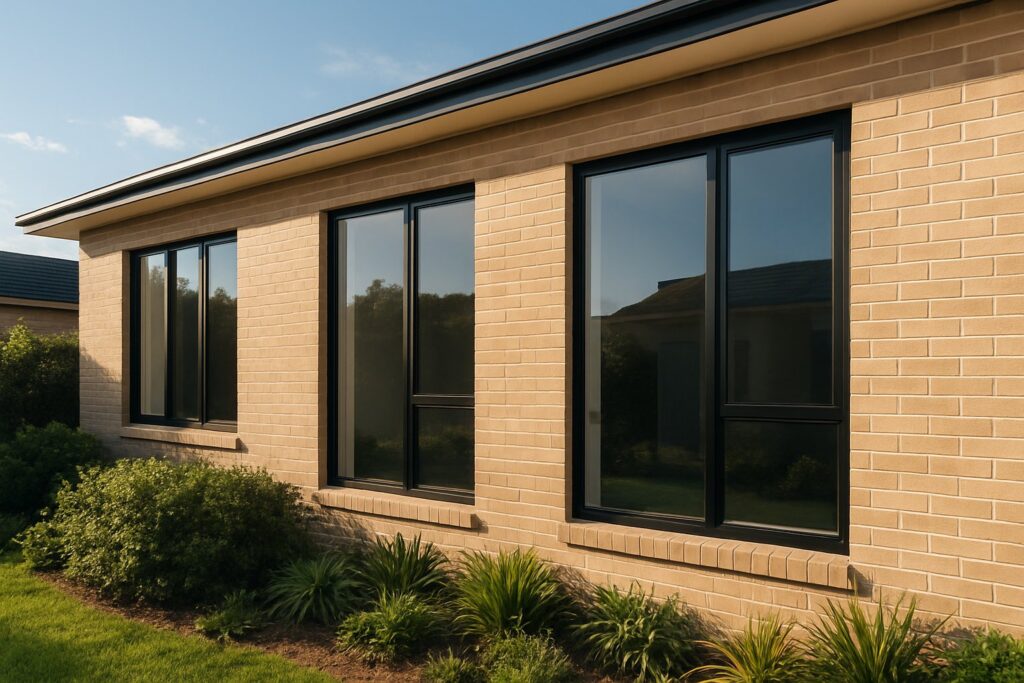
Yes, Aluminium Windows Can Be Double Glazed
Aluminium windows can absolutely be double glazed. Whether you’re building new or upgrading an older home, a double glazed aluminium window is not only possible but increasingly common across Australian properties. The real question isn’t if it can be done, but which approach suits your situation.
The Short Answer for Homeowners
Three factors determine feasibility. First, the condition of your existing frames. Aluminium that’s corroded, warped, or structurally compromised won’t support a retrofit. Second, the frame type matters. Thermally broken profiles perform differently from standard aluminium, and this distinction shapes what level of improvement you can realistically expect. Third, your performance goals play a role. Someone chasing maximum energy efficiency needs a different solution than a homeowner simply looking to reduce street noise.
Can you double glaze existing aluminium windows? In many cases, yes. The frame needs adequate rebate depth to accommodate the thicker sealed unit, and it must be structurally sound. A professional assessment will confirm whether your specific windows are candidates.
Two Paths to Double-Glazed Aluminium
Homeowners generally face two options. The first is retrofitting: removing the existing single-glazed pane and installing a sealed double-glazed unit into the current frame. This preserves the original window structure and tends to cost less upfront. The second path is full replacement with new double-glazed aluminium windows built on modern thermally broken profiles. This delivers superior whole-window performance but involves a larger investment.
Aluminium is fully compatible with double glazing when the right system and approach are chosen. The frame material itself is not a barrier — it’s the configuration, condition, and technology behind the system that determine results.
Each path comes with trade-offs around cost, thermal performance, and longevity. Understanding the difference between thermally broken and standard aluminium frames is where the real decision-making begins.
Why Aluminium Frames Need Double Glazing for Thermal Performance
Aluminium is strong, lightweight, and resistant to corrosion. It also happens to be one of the most thermally conductive materials used in building construction. That single property explains why so many older Australian homes with aluminium windows feel drafty in winter and stifling in summer.
Why Aluminium Conducts Heat
Metals transfer thermal energy rapidly. Aluminium does this exceptionally well — it’s roughly 1,000 times more conductive than the polyamide insulating strips used in modern window profiles. In practical terms, a standard aluminium frame acts as a direct bridge between outdoor and indoor temperatures. Heat flows through the frame with almost no resistance.
This is why older single-glazed aluminium windows are notorious for condensation. The interior surface of the frame drops close to the outside temperature, hitting the dew point and collecting moisture. Beyond the obvious annoyance, that condensation promotes mould growth and can damage surrounding timber reveals and plasterwork.
How Double Glazing Compensates
A sealed double-glazed unit tackles the problem at the glass level. Two panes separated by a gap of trapped air or inert gas (typically argon) create an insulating barrier that dramatically slows conductive heat transfer. The gas layer is a poor conductor, which is exactly the point — it resists the movement of thermal energy between panes.
Add a Low-E coating to one of the glass surfaces and you also reduce radiated heat loss. The coating reflects infrared energy back into the room while still allowing visible light through. Together, these elements can reduce heat loss by up to 50% compared to single glazing. For double glazed windows aluminium frame systems, this glass-level improvement is significant even before addressing the frame itself.
The Role of Thermal Breaks
Double glazing solves the glass problem. Thermal breaks solve the frame problem. A thermal break is a strip of insulating material — usually glass-reinforced polyamide — mechanically crimped between the interior and exterior sections of an aluminium profile. It physically interrupts the metal path that heat would otherwise travel along.
The performance difference is substantial. Non-thermally broken aluminium frames typically have U-values around 5.8 to 7.0 W/m²K, while thermally broken systems drop to 2.5–3.5 W/m²K for standard breaks and as low as 0.8–1.5 W/m²K for premium multi-chamber designs. When paired with quality double glazing, aluminium framed double glazed windows deliver whole-window thermal performance that rivals any frame material on the market.
This layered approach — sealed gas-filled glazing handling the glass area, thermal breaks handling the frame — is what makes modern aluminium frame double glazed windows competitive in every Australian climate zone. But the distinction between frames that have thermal breaks and those that don’t changes the equation entirely.
Thermally Broken vs Standard Aluminium Frames
That distinction between frame types isn’t a minor technical footnote. It’s the single biggest factor most installers gloss over when quoting on aluminium windows double glazed upgrades. Two homes can both receive double glazing and end up with wildly different thermal outcomes, purely because of what’s happening inside the frame profile.
Non-Thermally Broken Frames Explained
If your home was built before the mid-2000s, there’s a strong chance your aluminium windows use a continuous metal profile. One solid piece of aluminium connects the exterior face to the interior face with no interruption. This design creates what engineers call a thermal bridge — a direct highway for heat to travel along.
Old aluminium double glazed windows retrofitted into these frames still suffer from frame-level heat loss. The glass area performs well, but the frame itself remains close to the outdoor temperature. On a cold Canberra morning or a frosty Melbourne night, that cold frame surface hits the dew point and condensation forms along the interior edges. The moisture isn’t just cosmetic — it can promote mould growth and damage surrounding plasterwork over time.
Standard aluminium frames from this era were designed for strength and low maintenance, not insulation. They do both of those jobs well. Thermal performance simply wasn’t a priority when most of these profiles were extruded.
Thermally Broken Frame Technology
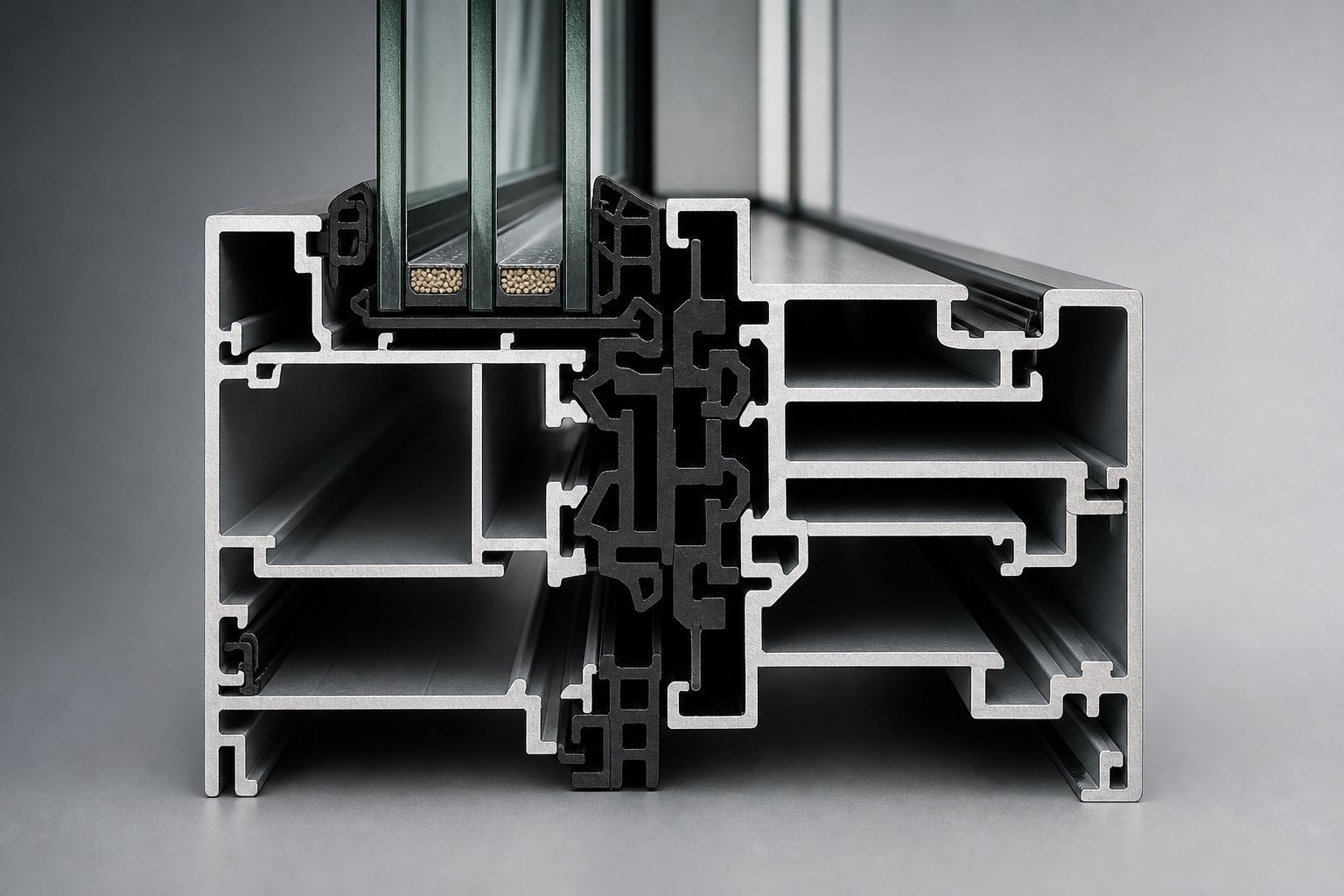
A thermally broken profile splits the aluminium into two separate sections — one facing outdoors, one facing indoors — connected by an insulating strip rather than continuous metal. That strip is typically glass-reinforced polyamide, a material with extremely low thermal conductivity that effectively blocks heat from migrating through the frame.
The result is a double-glazed aluminium window where both the glass and the frame resist heat transfer. The interior aluminium section stays close to room temperature, virtually eliminating frame condensation and reducing the cold radiant effect you feel when sitting near older windows.
Modern thermally broken systems achieve aluminium double glazed window U-values between 1.5 and 2.5 W/m²K for the whole window — frame and glass combined. That’s a dramatic improvement over the 5.5 to 7.0 W/m²K typical of non-thermally broken frames with single glazing.
How Frame Type Affects Your Double Glazing Decision
Here’s what many installers won’t spell out clearly: retrofitting double glazing into a non-thermally broken frame delivers a glass-level improvement, not a whole-window improvement. You’ll notice a difference — less radiated cold from the glass area, reduced noise, fewer drafts. But the frame itself remains a thermal weak point.
For some homeowners, that partial improvement is perfectly acceptable. The frames are in good condition, the budget is limited, and the comfort gain is still meaningful. For others — particularly those chasing NatHERS compliance or targeting significant energy bill reductions — the frame limitation makes full replacement with thermally broken profiles the smarter long-term investment.
| Factor | Non-Thermally Broken (Standard) | Thermally Broken |
|---|---|---|
| Heat transfer through frame | High — continuous metal path allows rapid conduction | Low — insulating strip interrupts thermal bridge |
| Condensation risk | High — interior frame surface drops near outdoor temperature | Low — interior section stays close to room temperature |
| Suitability for retrofit double glazing | Possible if rebate depth allows, but frame remains a weak point | Excellent — frame and glass work together for whole-window performance |
| Whole-window U-value (with double glazing) | 3.5–5.0 W/m²K | 1.5–2.5 W/m²K |
| Overall energy performance | Moderate improvement over single glazing | Significant improvement — meets current NCC requirements |
| Typical age of installation | Pre-2005 Australian homes | Post-2005, and all quality new installations |
Identifying which type you have is straightforward. Look at the frame profile from the side. A thermally broken frame shows a visible strip of darker material (usually black or grey) separating the aluminium sections. A standard frame is uniform metal all the way through. If you’re unsure, any glazing specialist can confirm during a site assessment.
The frame type question feeds directly into the next decision: what glass configuration goes into that frame, and how do the components of a sealed unit affect the performance you actually get.
Double Glazing Options for Aluminium Windows Explained
Knowing your frame type is only half the picture. The sealed glass unit sitting inside that frame — its gas fill, coatings, spacer, and sealing method — determines how much thermal and acoustic improvement you actually receive. Not all double glazing is created equal, and the configuration options available for double glazed aluminium sliding windows, casement styles, awning types, and sash designs vary more than most homeowners realise.
Anatomy of a Sealed Double-Glazed Unit
A genuine insulated glass unit (IGU) is a precision-engineered assembly, not simply two pieces of glass stuck together. The term “hermetically sealed” means the unit is airtight — no moisture or outside air can enter the cavity once manufactured. Double glazed hermetically sealed glazing in aluminium windows consists of four core components working together:
- Two panes of glass — Typically 4mm, 5mm, or 6mm float glass. Thicker panes improve acoustic performance and structural strength. Combinations like 6mm outer / 4mm inner are common for noise-prone locations.
- Spacer bar — A perimeter frame that holds the panes at a precise distance apart (usually 12–16mm). Contains desiccant to absorb residual moisture and prevent internal fogging. Aluminium spacers are cheap but create a thermal bridge at the glass edge. Warm-edge spacers (stainless steel, composite, or thermally broken aluminium) reduce edge heat loss by up to 10% and dramatically cut condensation risk.
- Gas fill — The cavity between panes is filled with air or an inert gas. Argon and krypton are denser than air, reducing convection and conduction within the gap.
- Dual seal system — A primary polyisobutylene (PIB) seal creates the moisture and gas barrier. A secondary silicone or polyurethane seal provides structural bonding and weather protection. Together, they keep the unit performing for 20+ years.
Every component influences the final U-value. Upgrade the spacer from aluminium to warm-edge and you gain 0.1–0.2 W/m²K. Switch from air to argon and you gain another 0.2–0.3 W/m²K. These incremental improvements compound into meaningful real-world comfort differences — particularly across double glazed aluminium awning windows and double glazed aluminium sash windows where the glass-to-frame ratio is high.
Gas Fill and Low-E Coating Options
Argon is the standard gas fill for residential double glazing in Australia. It’s a noble gas — non-toxic, colourless, and naturally present in the atmosphere. Research shows that 90% argon fill improves insulating value by up to 16% compared to air. Krypton pushes that figure to 27%, but costs roughly 40 times more than argon and is rarely practical for residential projects.
Gas retention is a common concern. Properly fabricated units lose less than 1% of their argon per year, with larger panels performing even better — commercial-sized IGUs can register loss rates as low as 0.11% annually. Quality seals and manufacturing standards ensure performance holds for the window’s full service life.
Low-E (low emissivity) coatings pair with gas fill to tackle radiated heat. These microscopically thin metallic layers — often silver-based — reflect infrared energy while allowing visible light through. Coating position matters:
- Surface 2 (inner face of outer pane) — Best for cooling-dominated climates. Reflects solar heat before it enters the cavity. Ideal for north and west-facing windows in Queensland or northern NSW.
- Surface 3 (outer face of inner pane) — Best for heating-dominated climates. Retains interior warmth. Suits southern states like Victoria, Tasmania, and the ACT.
Softcoat Low-E using silver delivers superior performance over hardcoat alternatives, with triple-silver configurations offering the highest thermal efficiency available. The right combination of gas fill, Low-E position, and glass thickness depends on your climate zone, window orientation, and whether heating or cooling is your primary energy cost. Systems like the MEICHEN MC100 Awning Window demonstrate how thermally broken aluminium manufacturers specify these configurations — offering project-specific glass build-up support so homeowners can select the optimal combination for their location rather than accepting a one-size-fits-all unit.
Why Sealed Units Outperform Alternatives
Secondary glazing — an additional pane fitted to the room side of existing windows — is sometimes marketed as an equivalent solution. It isn’t. While secondary glazing provides reasonable noise reduction and some thermal benefit, it lacks the hermetic seal that makes genuine double glazing effective long-term.
Without a sealed cavity, secondary glazing can’t maintain a controlled gas fill. Moisture migrates into the gap, causing fogging and reducing insulating performance over time. The air space is also typically much wider than an IGU cavity, which actually increases convection currents rather than suppressing them.
Plastic film overlays are even less effective. They offer a marginal draught reduction but provide negligible thermal resistance and degrade within months under UV exposure.
The performance gap is clear. Genuine double glazed aluminium casement windows and aluminium double glazed sliding windows with sealed IGUs deliver measurably lower U-values, better acoustic insulation, and decades of reliable service. Secondary glazing has its place — particularly in heritage-listed properties where external changes aren’t permitted — but for homeowners with the option to install proper sealed units, it’s not a comparable investment.
With the glazing configuration sorted, the next question becomes practical: do you install that sealed unit into your existing frames, or does the whole window need to go?
Retrofitting Existing Frames vs Full Window Replacement
Both paths lead to double glazing, but they deliver different outcomes over different timeframes. Choosing between them comes down to what your frames can realistically support and how long you want the upgrade to last.
When Retrofitting Makes Sense
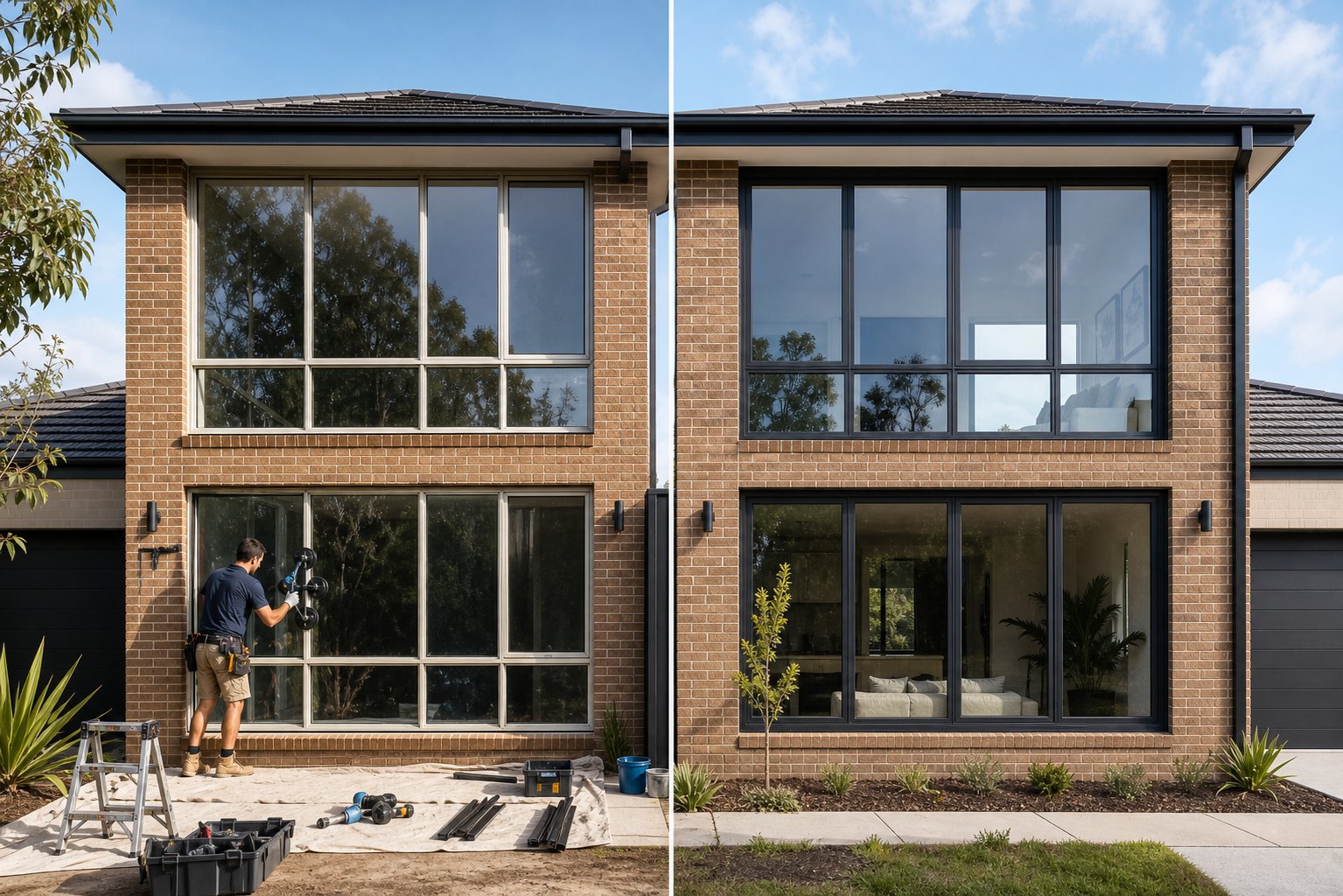
Retrofitting means keeping your existing aluminium frames in place and swapping the single-glazed pane for a sealed insulated glass unit. The process involves removing the original glass, modifying glazing beads or rebates if needed, and installing the IGU with new seals and packers. It’s less invasive, faster, and typically costs around half what full replacement runs.
You can double glaze existing aluminium windows when the frames are structurally sound, free of significant corrosion, and have enough rebate depth to accommodate the thicker unit (typically 20–24mm for a standard IGU versus 4–6mm for single glazing). Homes built in the 1990s and early 2000s with well-maintained aluminium joinery are often good candidates. The approach also suits heritage-listed properties or strata situations where external appearance changes aren’t permitted.
The limitations are real, though. You can’t change the window’s opening style or configuration. Non-thermally broken frames remain a thermal weak point regardless of how good the glass is. And if the existing frame has limited depth, you may be restricted to narrower cavity widths that reduce the IGU’s insulating potential. Retrofit services for aluminium windows — whether in Australian cities or across the Tasman in places like Dunedin where retrofit double glazed aluminium windows are equally popular — share these same physical constraints.
When Full Replacement Is the Better Investment
Full replacement removes the entire window assembly and installs a new purpose-built system. You’re starting fresh with thermally broken profiles, optimised frame depth, integrated drainage, modern hardware, and a factory-engineered seal between frame and glass.
This path makes more sense when frames show corrosion or structural deterioration, when you’re chasing NCC compliance for a renovation, or when the existing windows are approaching end-of-life anyway. Coastal properties in Queensland or NSW where salt air has pitted the aluminium are a common example — retrofitting into deteriorating frames in these conditions is rarely wise.
Full replacement also lets you upgrade to double glazed aluminium windows and doors as an integrated system — matching sliding doors, awning windows, and fixed panels in a consistent thermally broken profile. You gain the flexibility to change opening types, adjust sizes for compliance, and select aluminium double glazed doors and windows that suit your home’s orientation and ventilation needs.
Lifespan and Longevity Considerations
A purpose-built double-glazed aluminium window system carries a typical service life of 30 to 40+ years. The frame, seals, hardware, and glass are all engineered to age together. Warranties commonly cover 10 years on the IGU seal and longer on the frame itself.
Retrofitted units face a different equation. The sealed glass unit may last 20+ years, but it’s sitting inside a frame that’s already aged. If that frame needs replacement in 8 to 10 years, you’ve effectively shortened the useful life of your glazing investment. The older the frame at the time of retrofit, the greater this risk becomes.
Think of it this way: if you plan to stay in the home long-term and the frames are already 20 years old, the maths often favours replacement. If the frames have a decade or more of solid life ahead and your budget is constrained, retrofitting delivers meaningful improvement without the larger outlay.
| Factor | Retrofit Double Glazing | Full Window Replacement |
|---|---|---|
| Typical cost per opening | Lower — roughly 40–60% of replacement cost | Higher — includes new frame, hardware, seals, and IGU |
| Thermal improvement | Glass-level only (frame remains a thermal bridge if non-thermally broken) | Whole-window improvement — thermally broken frame plus sealed IGU |
| Frame requirements | Must be structurally sound with adequate rebate depth | No existing frame requirements — old frame is removed entirely |
| Installation timeline | Faster — typically completed from inside, less disruption | More involved — removal, fitting, patching of reveals and architraves |
| Expected lifespan | Limited by remaining frame life (often 10–20 years total) | 30–40+ years as a complete integrated system |
| Design flexibility | None — locked into existing style and configuration | Full — change opening type, size, colour, and hardware |
| NCC compliance | May not meet current energy performance requirements | Designed to meet or exceed current building standards |
Many homeowners end up combining both approaches across a single property — full replacement on the worst-performing or most exposed elevations, and retrofit where frames are sound and the budget needs stretching. The key is matching the method to each window’s condition rather than applying a blanket solution to the whole house.
Whichever path you lean toward, the next question is inevitably about money — and it’s the one area where most online guides go suspiciously quiet.
Cost Factors and Pricing Considerations
Most guides on double glazed aluminium windows prices dodge the money question entirely. There’s a reason for that — pricing varies so widely based on specification, location, and project scope that publishing a single aluminium double glazed window price list would be misleading. What’s more useful is understanding the variables that drive cost, so you can interpret quotes intelligently and compare suppliers on a level playing field.
What Drives the Cost of Double-Glazed Aluminium Windows
The cost of aluminium double glazed windows isn’t a fixed number. It’s the sum of interconnected decisions about glass, frame, hardware, and installation. Two quotes for the same opening can differ by 30% or more simply because the specifications aren’t equivalent — a pattern industry research confirms is common across window and door quotations.
Here are the key variables that shape aluminium double glazed windows cost:
- Window size and configuration — Larger openings require more aluminium, bigger glass panels, and stronger hardware. Floor-to-ceiling designs or multi-panel sliding systems cost significantly more than standard-sized awning or casement windows.
- Glass specification — Standard clear double glazing is the baseline. Add Low-E coatings, tinted glass, laminated panes, or acoustic-rated configurations and the IGU cost rises accordingly.
- Gas fill type — Argon-filled units cost marginally more than air-filled but deliver measurably better insulation. Krypton is rarely justified for residential projects due to its premium pricing.
- Frame type — Thermally broken profiles cost more than standard aluminium due to the additional manufacturing complexity of integrating polyamide insulating strips.
- Hardware quality — Handles, hinges, locking mechanisms, and rollers vary enormously in quality and price. Premium hardware improves daily operation and longevity.
- Colour and finish — Standard powder coat colours (black, white, monument) are typically included. Custom colours, wood-grain finishes, or dual-colour options add to the cost.
- Number of windows — Volume matters. Replacing all windows at once usually reduces per-unit costs through economies of scale in manufacturing and installation.
- Accessibility and installation complexity — Upper-storey windows, difficult access, brick veneer versus weatherboard construction, and the need for scaffolding all affect labour costs.
- Location — Metropolitan areas generally have more competitive pricing due to supplier density. Regional and remote locations attract higher delivery and labour charges.
Retrofit vs Replacement Cost Factors
Retrofitting double glazing into existing frames typically costs 40–60% less than full replacement per opening. You’re paying for the sealed glass unit, new glazing beads, seals, and labour — but not for a new frame, hardware set, or the removal and disposal of the old window.
That upfront saving narrows over time if the existing frame has limited remaining life. A retrofit that lasts 12 years before the frame fails delivers less value per dollar than a full replacement lasting 35 years. When evaluating aluminium double glazed windows suppliers, ask them to quote both options so you can compare the long-term cost per year of service rather than just the day-one figure.
The cost of double glazed aluminium windows NZ homeowners face follows a similar pattern to Australia — retrofit is cheaper initially, but thermally broken replacement systems deliver better lifetime value in cooler climates where heating costs dominate energy bills.
Building a Cost-Benefit Case
Energy savings alone rarely justify the investment on a pure payback calculation — particularly in mild Australian climates where heating and cooling costs are moderate. US Department of Energy data suggests windows account for 25–30% of residential heating and cooling energy use, and upgrading from single to double glazing can reduce that portion by 15–30% annually. Australian figures will vary by climate zone, but the principle holds.
The stronger case combines multiple benefits: reduced energy bills, improved comfort (fewer drafts, less condensation, more even room temperatures), noise reduction from traffic or neighbours, and increased property value. Industry data suggests quality window upgrades recoup 69–78% of their cost at resale. For homes with visibly dated single-glazed aluminium, the aesthetic and comfort transformation can shift buyer perception significantly.
When requesting quotes, don’t just compare bottom-line prices. Ask each supplier to specify the glazing unit composition, frame system, U-values, hardware brand, warranty terms, and what’s included in the installation scope. A cheaper quote with vague specifications often signals lower-grade components that cost more in the long run through reduced performance and shorter service life.
Common Mistakes When Double Glazing Aluminium Windows
Getting the pricing right is one thing. Getting the specification wrong can cost you more than the difference between quotes — it can leave you with underperforming windows, voided warranties, or condensation aluminium double glazed windows shouldn’t produce. These are the errors that keep coming up across retrofit and replacement projects alike.
Choosing the Wrong Glass Specification
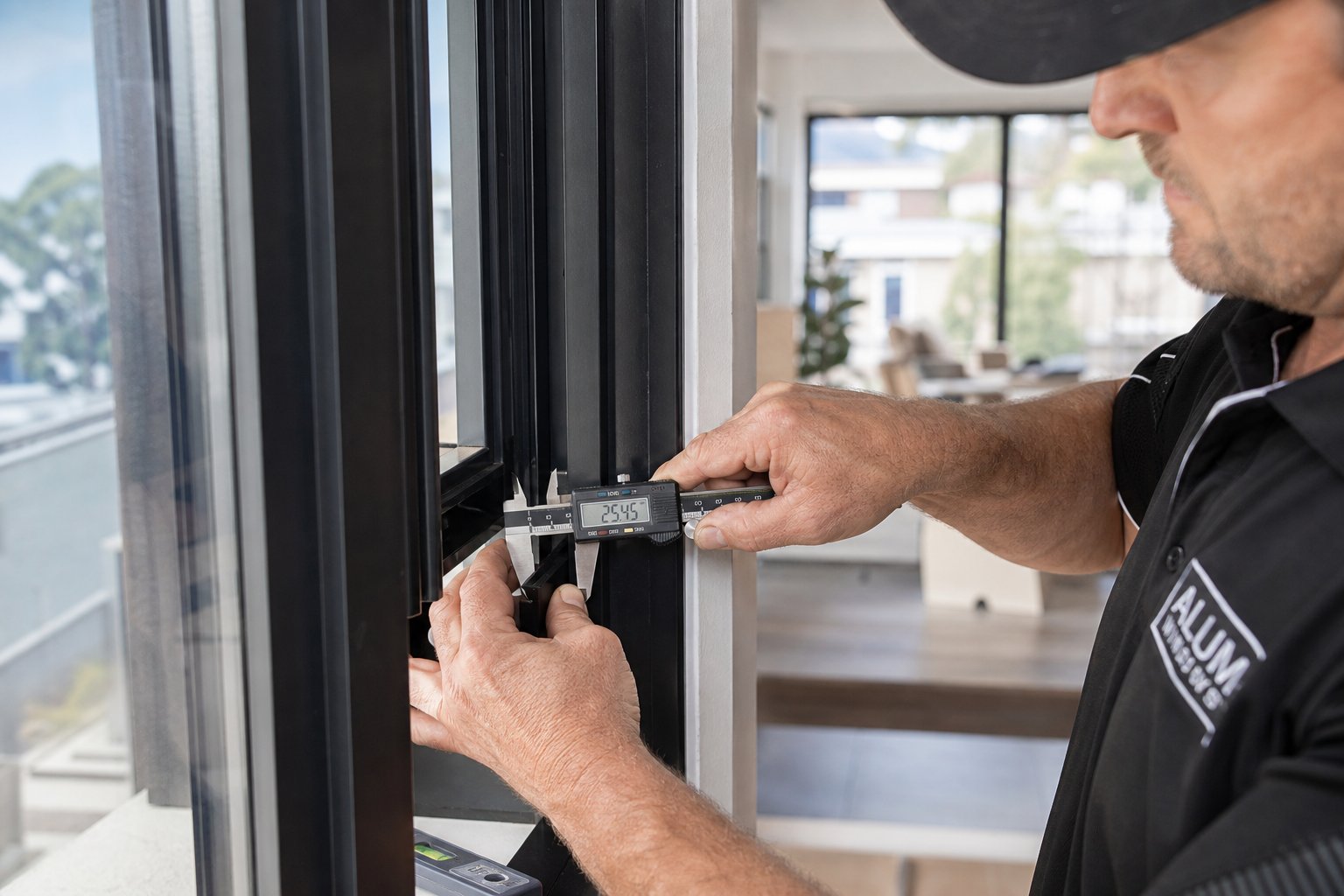
The most common technical mistake is ordering an IGU that physically doesn’t fit the existing frame. A standard sealed double-glazed unit runs 20–24mm thick. Older aluminium frames designed for single glazing often have a rebate depth of just 10–12mm. Forcing a thicker unit into a shallow rebate means inadequate sealing, exposed glass edges, and a unit that’s vulnerable to premature seal failure.
Spacer width matters too. A 16mm cavity delivers better insulation than a 12mm one, but only if the frame can accommodate the overall IGU depth. Homeowners chasing cheap diy double glazed aluminium windows sometimes order standard-sized units online without measuring rebate depth first — then discover the glass simply won’t seat properly. Even with diy double glazed aluminium windows kits, the frame’s physical dimensions dictate what’s possible. Measure the rebate, not just the glass opening.
Hardware compatibility is another overlooked detail. Thicker glazing changes the weight balance of operable sashes. Existing aluminium double glazed window hinges may not support the additional load, and aluminium double glazed window handles can bind or fail to latch if the sash geometry shifts. A professional installer checks these tolerances. A DIY approach often discovers them after the fact.
Ignoring Frame Thermal Performance
This mistake is subtler and more expensive. Homeowners invest in quality double glazing expecting a dramatic drop in energy bills, then feel disappointed when condensation still forms along the frame edges and the room still feels cold near the window. The glass is performing exactly as specified — the problem is the non-thermally broken frame conducting heat straight through.
As Supaglass notes, forgetting the significance of a thermal break means the frame itself becomes a conduit for heat transfer, undermining the overall energy efficiency of the upgrade. If your frames lack thermal breaks, understand that you’re buying a glass-level improvement only. That’s still worthwhile — but set expectations accordingly rather than assuming whole-window performance from a glass-only upgrade.
The diy double glazed aluminium windows cost equation shifts when you factor this in. Spending $400–$600 per opening on retrofit glazing into a frame that needs replacing in five years delivers poor value compared to investing in a thermally broken replacement from the start.
Overlooking Building Regulations and Compliance
Window replacements in Australia aren’t always a simple swap. Under the National Construction Code, replacement windows in renovations may need to meet current energy performance standards — particularly if the work requires council approval or forms part of a broader development application. Minimum glazing performance requirements vary by climate zone, and some states enforce stricter thresholds than others.
Heritage-listed properties and homes in conservation areas face additional restrictions. External appearance changes — including frame colour, profile shape, or glazing bar patterns — may require approval before work begins. Ignoring this can result in orders to remove non-compliant installations at the homeowner’s expense.
Drainage and ventilation requirements also catch people out. Aluminium frames rely on weep holes and drainage channels to manage condensation and water ingress. Retrofitting thicker glass without maintaining clear drainage paths leads to water pooling inside the frame, accelerating corrosion and potentially causing internal leaks. Trade Heroes recommends confirming that drainage holes in aluminium frames remain clear after any glazing work so water doesn’t pool around the glass.
Before committing to any double glazing project — retrofit or replacement — work through these questions with your supplier:
- What is the rebate depth of my existing frames, and what maximum IGU thickness can they accept?
- Are my current frames thermally broken or standard aluminium?
- Will the existing hinges and hardware support the additional weight of double glazing?
- Does this work require council approval or a development application in my area?
- Are there heritage overlays or conservation restrictions on my property?
- How will drainage and ventilation be maintained after the new glass is installed?
- What U-value will the completed window achieve — glass only, and whole-window?
- What warranty covers the sealed unit, and what voids it?
- Does the proposed specification meet NCC requirements for my climate zone?
- Can you provide WERS ratings or NatHERS-compliant data for the installed system?
Any installer who can’t answer these clearly either hasn’t assessed your windows properly or doesn’t understand the compliance landscape. Either way, it’s a red flag worth heeding before you sign anything.
Getting the specification and compliance right still leaves one question most homeowners struggle with: how do you actually compare the performance numbers different suppliers quote, and what do those U-values mean in practice for your climate?
Performance Specifications and Making the Right Choice
U-values appear on every window quote and product datasheet, yet most homeowners have no idea what the numbers actually mean or how to use them for comparison. Suppliers know this. Some quote glass-only figures that look impressive on paper but don’t reflect real-world performance. Others bundle vague claims about “energy efficiency” without providing measurable data. Understanding these specifications puts you in a position to compare products honestly and choose the best aluminium double glazed windows for your situation.
Understanding U-Values and Energy Ratings
A U-value measures how quickly heat passes through a building element. It’s expressed in watts per square metre Kelvin (W/m²K). Lower numbers mean less heat transfer — and better insulation. Think of it as the opposite of an R-value: while higher R-values indicate better resistance to heat flow, lower U-values indicate the same thing. They’re reciprocals. A window with R0.28 has a U-value of 3.6 W/m²K.
Here’s where it gets practical. Cooee Architecture provides a useful comparison of common Australian window systems:
| Window System | R-Value | U-Value (W/m²K) |
|---|---|---|
| Single glazing, aluminium frame | R0.15 | 6.7 |
| Single glazing, timber frame | R0.19 | 5.4 |
| Double glazing, aluminium frame (non-thermally broken) | R0.21 | 4.8 |
| Double glazing, thermally broken or composite frame | R0.28 | 3.6 |
| Double glazing, timber or PVC frame | R0.33 | 3.3 |
The aluminium double glazed windows U value story is clear from this data. A non-thermally broken aluminium frame with double glazing (U4.8) still loses heat more than twice as fast as a thermally broken system (U3.6). And even that thermally broken figure loses heat roughly eight times faster than a typical insulated brick veneer wall (U0.45). Windows are always the weakest thermal link in your building envelope — the goal is minimising that weakness, not eliminating it.
For context, modern thermally broken aluminium systems with Low-E coatings and argon gas fill push whole-window U-values down to 1.2–2.5 W/m²K depending on the profile and glass build-up. That’s a massive improvement over the 6.7 W/m²K of a single-glazed aluminium window — roughly 65–80% less heat transfer through the opening.
Whole-window U-value — combining frame and glass performance together — matters more than glass-only ratings. A supplier quoting a centre-pane Ug of 1.1 W/m²K might deliver a whole-window Uw of 2.5 W/m²K or higher once frame and edge effects are factored in. Always ask for the Uw figure.
Australia’s Window Energy Rating Scheme (WERS) provides a standardised way to compare products. WERS rates windows on heating and cooling performance using a star system (up to 10 stars), factoring in U-value, Solar Heat Gain Coefficient (SHGC), and air infiltration. When comparing aluminium double glazed windows vs uPVC alternatives, WERS ratings offer a level playing field because they account for the complete window system rather than isolated components.
Climate-Specific Glass Selection
Australia spans multiple climate zones, and the ideal glass specification shifts dramatically depending on whether you’re trying to keep heat in, keep heat out, or manage both across seasons.
Cold climates (Canberra, Hobart, alpine regions, inland NSW and Victoria): The primary goal is heat retention. You want a low U-value to minimise heat escaping, combined with a higher Solar Heat Gain Coefficient (SHGC) on north-facing windows. A higher SHGC allows winter sun to passively warm your rooms — free heating that reduces reliance on mechanical systems. Low-E coatings positioned on surface 3 (the outer face of the inner pane) reflect interior warmth back into the room while still allowing solar energy through. This is where black aluminium double glazed windows perform particularly well on south-facing elevations, as the darker frame absorbs minimal solar heat on the cold side while the Low-E glass does the thermal heavy lifting.
Hot climates (Darwin, Cairns, northern Queensland, inland WA): Heat rejection dominates. You want Low-E coatings on surface 2 (the inner face of the outer pane) to reflect solar radiation before it enters the cavity. Lower SHGC values — around 0.25–0.40 — block excess solar heat while maintaining reasonable daylight. Tinted outer panes add another layer of solar control. White aluminium double glazed windows suit these climates well, as lighter frame colours reflect more solar radiation and reduce frame-level heat absorption on sun-exposed facades.
Mixed climates (Sydney, Melbourne, Brisbane, Perth, Adelaide): Most Australian homes fall here. The specification needs to balance winter heat retention with summer heat rejection. Orientation becomes critical — north-facing windows benefit from higher SHGC to capture winter sun, while west-facing openings need aggressive solar control to manage afternoon heat loads. An energy assessor can model the optimal balance for your specific home, orientation, and shading conditions.
As Cooee Architecture notes, working with an energy assessor is a non-negotiable for getting this balance right. Their Tumbarumba case study found that adding Low-E to double-glazed windows cost just $930 upfront but delivered a projected $3,640 in heating and cooling savings over 20 years. That same project demonstrated that non-thermally broken aluminium — even with double glazing — increased heating and cooling requirements by more than a third compared to thermally broken alternatives.
Your Decision Framework
Pulling all of this together into a practical decision requires weighing five factors against each other. No single factor should dominate — the right answer balances all of them for your specific circumstances.
1. Frame condition. If your existing aluminium frames are structurally sound with 15+ years of life remaining, retrofit is viable. If they’re corroded, warped, or non-thermally broken in a cold climate, replacement delivers better long-term value.
2. Performance goals. Chasing NatHERS compliance or significant energy savings? You need thermally broken frames with optimised glass. Simply reducing drafts and noise? Retrofit into sound frames may be sufficient.
3. Climate zone. Colder regions benefit most from thermally broken systems because the temperature differential across the window is larger. In mild coastal climates, the payback period for premium specifications extends — though comfort improvements remain immediate.
4. Budget. A staged approach works. Replace the worst-performing windows first (typically west-facing or the largest openings), then address remaining windows as budget allows. Partial improvement now beats waiting years for a complete overhaul.
5. Aesthetic preferences. Modern thermally broken systems come in virtually any powder coat colour and slim profile design. Whether you prefer black aluminium double glazed windows for a contemporary look or white aluminium double glazed windows for a classic facade, the colour choice doesn’t compromise thermal performance in quality systems.
For homeowners evaluating new double glazed aluminium awning window or fixed-panel options, systems like the MEICHEN MC100 Awning Window provide a useful reference point. It’s a thermally broken aluminium system that publishes U-value data and supports multiple glass configurations — letting you explore specific build-up options for your climate zone rather than guessing at performance from generic marketing claims.
The bottom line: aluminium windows can absolutely be double glazed, and when specified correctly for your climate, frame type, and performance goals, they deliver decades of measurable comfort and energy improvement. The homeowners who get the best results are the ones who understand what the numbers mean, ask the right questions, and refuse to accept vague specifications. Armed with the knowledge in this guide, you’re now one of them.
Frequently Asked Questions About Double Glazing Aluminium Windows
1. Can you retrofit double glazing into existing aluminium window frames?
Yes, retrofitting is possible when existing aluminium frames are structurally sound, free of significant corrosion, and have sufficient rebate depth to accommodate a sealed insulated glass unit (typically 20-24mm thick). Frames from the 1990s and early 2000s are often good candidates. However, if your frames are non-thermally broken, the upgrade improves glass-level thermal performance only — the frame itself remains a thermal weak point. A professional glazing specialist can assess rebate depth, frame condition, and hardware compatibility during a site visit to confirm whether your specific windows are suitable for retrofit.
2. What is the difference between thermally broken and non-thermally broken aluminium frames?
Non-thermally broken frames use a continuous aluminium profile connecting the exterior and interior faces, creating a direct path for heat transfer. Thermally broken frames split the aluminium into two sections joined by an insulating polyamide strip that interrupts heat flow. The performance gap is significant: non-thermally broken frames with double glazing achieve whole-window U-values of 3.5-5.0 W/m²K, while thermally broken systems reach 1.5-2.5 W/m²K. Homes built before 2005 in Australia typically have non-thermally broken frames. You can identify your frame type by looking at the profile from the side — thermally broken frames show a visible darker strip separating the aluminium sections.
3. How much do double glazed aluminium windows cost in Australia?
Pricing varies widely based on window size, glass specification (standard, Low-E, tinted, or acoustic), gas fill type, frame system (retrofit vs new thermally broken), hardware quality, powder coat colour, number of openings, accessibility, and location. Retrofitting typically costs 40-60% less per opening than full replacement. Rather than relying on generic price lists, request itemised quotes from multiple suppliers specifying the IGU composition, frame system, whole-window U-value, hardware brand, and warranty terms. This allows genuine comparison rather than simply choosing the cheapest bottom-line figure, which often signals lower-grade components.
4. Is it worth double glazing aluminium windows or should I replace them with uPVC?
Modern thermally broken aluminium with quality double glazing achieves whole-window U-values of 1.2-2.5 W/m²K — competitive with uPVC systems. Aluminium offers advantages in strength-to-weight ratio (allowing slimmer sightlines and larger spans), durability in coastal environments, colour stability under UV exposure, and design flexibility. uPVC can offer marginally better frame-level insulation in some configurations but may not suit all architectural styles or withstand harsh Australian UV as well long-term. Use WERS ratings to compare specific products on a level playing field rather than making decisions based on frame material alone.
5. Do double glazed aluminium windows reduce condensation?
Double glazing significantly reduces condensation on the glass surface because the inner pane stays closer to room temperature rather than dropping to the dew point. However, if your aluminium frames are non-thermally broken, condensation may still form along the frame edges where the metal bridges indoor and outdoor temperatures. For complete condensation elimination, thermally broken aluminium frames paired with warm-edge spacer bars in the sealed unit are necessary. Warm-edge spacers reduce edge-of-glass condensation by preventing the thermal bridge that standard aluminium spacer bars create at the perimeter of the IGU.
More Window & Door Guides