What Makes White Aluminium Windows So Popular
White aluminium windows are powder-coated aluminium-framed window systems finished in a white colour, combining the structural strength of aluminium with a clean, light-reflective aesthetic. They suit residential homes, commercial fitouts, and multi-storey developments alike. And despite the growing popularity of charcoal and matt black frames, white remains the single most specified frame colour for Australian residential construction.
White is the most commonly selected aluminium window colour in Australian residential projects, chosen for its versatility across every architectural style from coastal weatherboard to contemporary rendered facades.
Why White Remains the Top Aluminium Window Colour
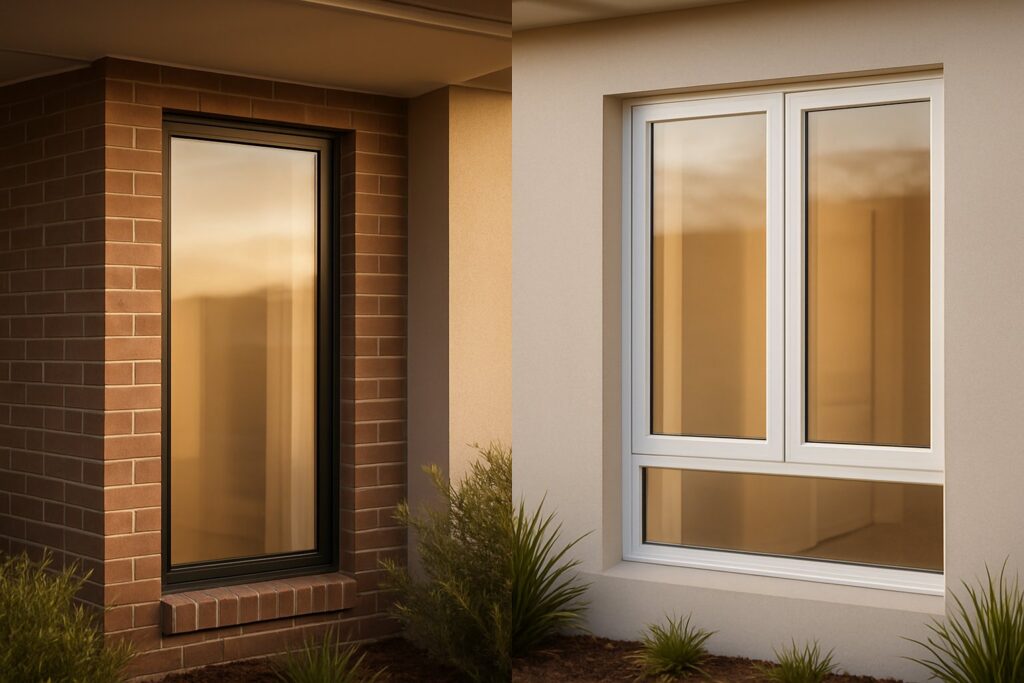
The appeal is straightforward. White frames complement virtually any facade material — brick veneer, timber cladding, rendered concrete, or stone. They reflect harsh Australian sunlight rather than absorbing it, which keeps frame temperatures lower and helps interiors feel brighter and more open. Houses with white aluminium windows carry a timeless quality that doesn’t date the way bolder colour trends can. Whether the exterior is painted dark navy or pale grey, white trim creates contrast or blends seamlessly without competing for attention.
Modern white aluminium windows also benefit from advances in powder coating technology, thermal break design, and glazing options that make them perform far better than the single-glazed aluminium frames common in older Australian homes. The result is a frame that looks classic but delivers contemporary energy efficiency and security.
Who This Guide Is For
This guide is built for homeowners planning a renovation, builders specifying windows for new builds, and architects weighing up colour and material options. Over the following sections, we cover shade variations most buyers never consider, the best window styles available in white, how aluminium compares to uPVC, thermal performance, maintenance, painting options, installation, and realistic cost factors for the Australian market.
Choosing the right white is where most projects quietly go wrong — and that starts with understanding just how many shades sit under the umbrella of “white.”
Shades of White and How to Choose the Right One
Walk into any paint shop and you will find dozens of whites on the swatch wall. Aluminium window powder coatings work the same way. The white you picture in your head may not be the white that arrives on site — and that mismatch creates headaches when frames sit next to rendered walls, fascia boards, or existing door hardware. Specifying the correct aluminium window white colour upfront saves costly recoating and avoids the jarring patchwork effect that plagues poorly coordinated projects.
Understanding RAL White Colour Codes
Powder coaters in Australia use the RAL colour system as the standard reference for aluminium window finishes. Within that system, several whites look almost identical on a screen yet behave very differently in real-world light.
RAL 9003 (Signal White) carries a cool, slightly greyish undertone. It reads as crisp and modern — a strong pick for minimalist facades and commercial fitouts where you want clean lines without warmth. RAL 9010 (Pure White) sits at the opposite end, offering a soft creamy undertone that feels warmer and more residential. It pairs naturally with timber flooring, sandstone, and neutral interior palettes.
RAL 9016 (Traffic White) is the brightest of the three — a near-neutral white with minimal undertone. It is the closest match to the stark white of most uPVC window profiles, which makes it useful when you need aluminium frames to sit alongside existing plastic trims without a visible colour clash. Beyond these, off white aluminium windows in shades like RAL 9001 (Cream) or pearl white aluminium windows in custom blends suit heritage homes and softer colour schemes where a bright white would feel too stark.
| RAL Code | Common Name | Undertone | Best Use Scenario |
|---|---|---|---|
| RAL 9003 | Signal White | Cool grey | Modern and commercial facades, industrial aesthetics |
| RAL 9010 | Pure White | Warm cream | Residential homes, classic or heritage-style builds |
| RAL 9016 | Traffic White | Neutral bright | Matching uPVC trims, bright contemporary exteriors |
| RAL 9001 | Cream | Yellow-warm | Federation and period homes, softer palettes |
Matt White vs Gloss White Finishes
Surface texture shifts how the eye perceives colour. A matt white aluminium windows finish absorbs light and appears slightly darker or softer than the same RAL code in a gloss finish. Gloss reflects surrounding colours — a green garden or red brick wall can cast subtle tints across a high-gloss white frame, making it look different at various times of day.
Matt and satin finishes hide minor surface imperfections and fingerprints better, which is why they have become the preferred choice for residential projects. Gloss finishes deliver a sharper, more polished look suited to shopfronts and feature windows where visual impact matters. If you are choosing white color aluminium windows for a large project, request a physical sample in your chosen finish and hold it against the facade material in direct sunlight — photos and digital swatches rarely tell the full story.
Matching White Shades Across Your Project
Colour consistency becomes critical when your aluminium windows white colour needs to coordinate with entry doors, garage frames, louvre screens, and fascia. Different manufacturers may default to different RAL whites, so specifying the exact code on every order prevents mismatches. A window in RAL 9010 beside a door in RAL 9016 will look noticeably different once installed — one warm, one cool — even though both are technically “white.”
The safest approach is to lock in a single RAL code at the design stage and communicate it to every supplier involved. If you are matching new frames to existing ones that have weathered over several years, ask your powder coater for a colour-match service rather than assuming the original code will still align visually.
Getting the shade right is the foundation. The next decision — which window style to pair with that white finish — determines how the frames actually perform on your facade.
Best Window Styles Available in White Aluminium
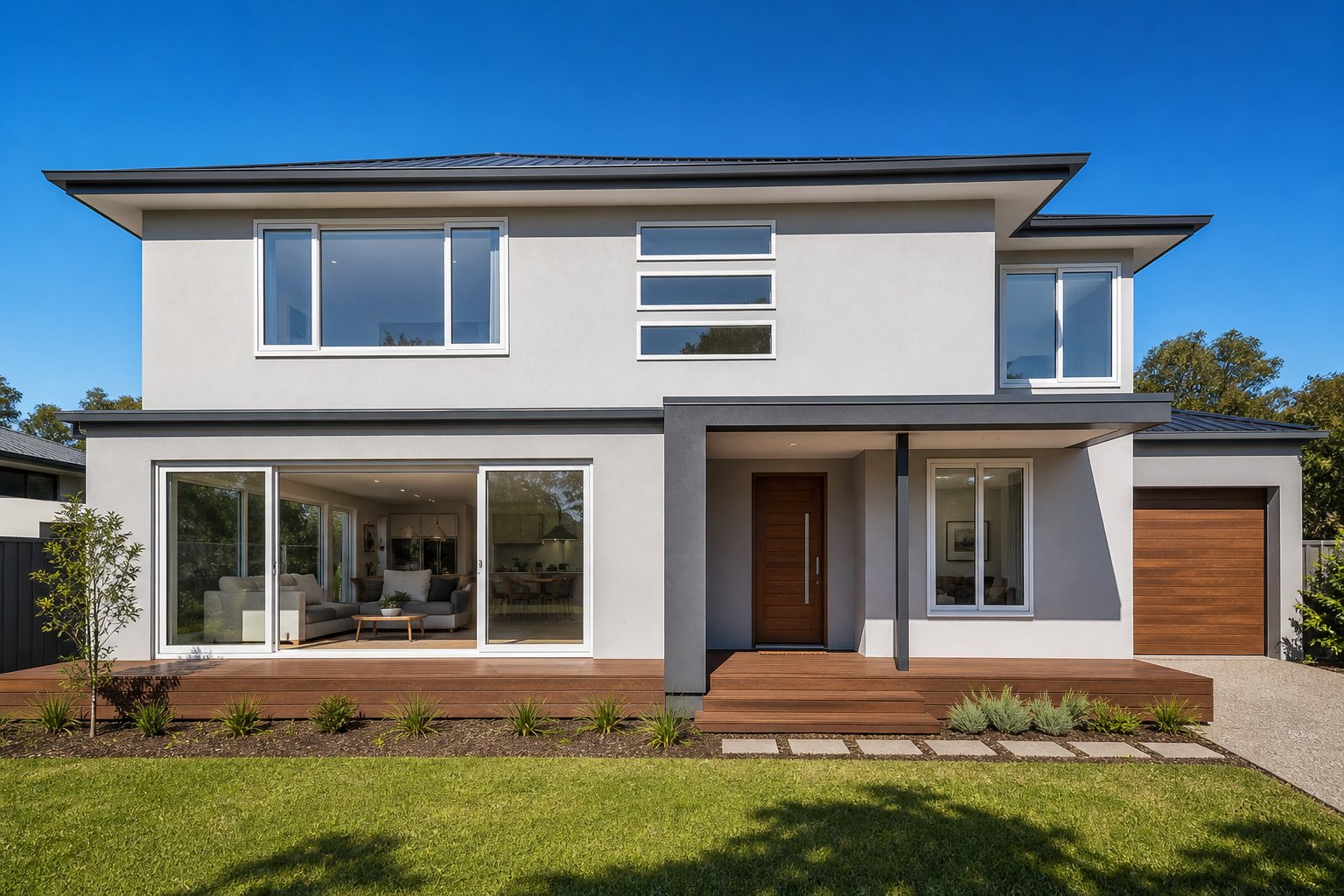
A white finish flatters every aluminium window style differently. Slim frames in white visually recede against a facade, letting the glass — and the view beyond it — take centre stage. That optical trick makes white one of the few colours that works equally well on a bold contemporary box home and a traditional red-brick cottage. But the style of window you pair with that white frame shapes the overall character of the building just as much as the colour itself.
Here is a quick overview of the main styles and where they shine:
- Casement windows — hinged at the side, opening outward. Best for mid-century and contemporary homes where clean lines and unobstructed views matter.
- Awning windows — hinged at the top, swinging out from the bottom. Ideal for wet areas, kitchens, and stacked configurations on modern facades.
- Sliding windows — panels glide horizontally within the frame. Suited to areas with limited external clearance and minimalist architectural styles.
- Louvre windows — angled glass blades that pivot open for controlled airflow. A natural fit for tropical Queensland homes and breezeways.
- Double-hung (sash) windows — two panels slide vertically within the frame. The go-to choice for heritage restorations and period-style new builds.
White Casement and Awning Windows
White aluminium casement windows are the workhorse of Australian residential construction. They swing outward on side hinges, providing full ventilation and easy cleaning access. In white, the slim aluminium frame almost disappears against a light-coloured wall, which maximises the sense of openness — particularly useful in compact rooms or narrow hallways where you want as much glass area as possible.
Awning windows follow a similar logic but hinge at the top. They can stay open during light rain without letting water in, making them a practical pick for bathrooms, laundries, and kitchen splashback areas. Stacking two or three white awning windows vertically creates a striking grid pattern on a facade while keeping individual pane sizes manageable for ventilation and compliance with fall-prevention requirements under AS 2047.
Both styles pair naturally with white rendered walls, fibre cement cladding, and pale brickwork. On darker facades — charcoal, navy, or deep green — white casement and awning frames provide sharp contrast that defines the window openings and adds visual rhythm to the elevation.
White Sliding Windows for Modern Homes
A white aluminium sliding window is the default choice for bedrooms, living areas, and anywhere external space is tight. Because the panels glide within the frame rather than projecting outward, sliding windows sit flush against walkways, balconies, and boundary fences without encroaching on clearance zones.
White aluminium sliding windows deliver a low-profile, horizontal emphasis that suits single-storey contemporary homes and apartment buildings. The minimal sightlines of modern aluminium profiles — some as narrow as 45 mm — mean the white frame reads as a thin border around the glass rather than a dominant visual element. For open-plan living areas that face a garden or pool, a large sliding window in white keeps the indoor-outdoor connection feeling light and seamless.
Sliding windows also work well in pairs or banks across a wide opening. Three-panel configurations with one fixed lite and two sliding sashes can span over 3 metres without requiring the thicker frames that uPVC would need for the same structural load. The result is more glass, less frame, and a cleaner facade line.
Heritage Style Options in White Aluminium
Period homes — Federations, Victorians, Edwardians, and Queenslanders — traditionally featured timber-framed sash windows. Replacing deteriorated timber with white aluminium sash windows replicates that vertical sliding action and proportional balance without the ongoing cycle of sanding, priming, and repainting that timber demands in the Australian climate.
White aluminium double-hung windows suit these properties because the colour matches the original painted timber aesthetic, and the slim aluminium profiles can be designed with traditional-looking horns, run-through sash rails, and deeper frame sections that echo heritage proportions. For homeowners who want the divided-light look of colonial glazing bars, white aluminium stick on window grids offer a cost-effective solution. These applied bars sit on the exterior glass surface, creating the appearance of individual panes without the expense or thermal penalty of true divided lites.
White aluminium louvre windows also have a place in heritage-adjacent design, particularly on Queenslander-style homes where louvred openings were a hallmark of the original architecture. Finished in white, aluminium louvre blades blend with traditional timber verandah posts and lattice screens while delivering far better corrosion resistance in humid subtropical climates.
Across all these styles, white frames share one practical advantage: they visually recede. Whether the facade is dark brick, painted weatherboard, or textured render, white lets the architectural form speak first and the window hardware stay quietly in the background. That versatility is precisely why white remains the safest — and often the smartest — colour choice regardless of the window style you select.
Style determines how a window operates and looks on the wall. The next consideration — how white aluminium stacks up against white uPVC — determines what sits behind that finish in terms of strength, longevity, and long-term value.
White Aluminium vs White uPVC Windows
Both materials arrive in white. Both look clean on the day of installation. But the similarities thin out quickly once you factor in how each frame performs over a decade or more under Australian UV exposure, how much glass you can fit into a given opening, and what happens to the finish after years of sun, salt air, and rain. This is the comparison most buyers face early in the decision process — and the details that separate the two are worth understanding before you commit.
Frame Slimness and Sightlines Compared
The visible frame width around the glass — known as the sightline — directly affects how much natural light enters a room and how open the window feels on the facade. White aluminium window frames can achieve sightlines as narrow as 20 mm to 45 mm because the extruded alloy (typically 6063 T6 grade) is inherently rigid. It does not need bulk to hold its shape.
White uPVC frames rely on a different structural approach. The plastic profile is hollow and multi-chambered, and openings wider than about 600 mm require internal galvanised steel reinforcement to prevent sagging. That engineering necessity pushes uPVC sightlines out to 70 mm to 80 mm — roughly double the visible frame of a comparable aluminium unit. On a standard bedroom window, the difference is subtle. On a floor-to-ceiling living room opening or a bank of stacked awning windows, it becomes obvious. More frame means less glass, less light, and a heavier visual presence on the elevation.
For homeowners choosing between white or black aluminium windows and white uPVC, the sightline advantage holds regardless of colour. Aluminium’s slimness is a material property, not a finish characteristic — so whether you opt for white, charcoal, or a dual-colour combination, the frame stays lean.
How Powder Coating Protects White Finishes
White powder coated aluminium windows get their colour through an electrostatic application process. Finely ground pigment and resin particles are sprayed onto the aluminium extrusion, which carries an opposite electrical charge. The coated frame then enters a curing oven at around 200°C, where the powder melts and fuses into a continuous, chemically bonded film typically 60 to 80 microns thick.
This baked-on finish creates a UV-resistant barrier that resists chalking, fading, and yellowing for decades. High-quality powder coatings used on white coated aluminium windows in Australia are formulated to withstand the intense solar radiation common across most climate zones — from tropical Queensland to the high-UV environments of inland NSW and Western Australia. The result is a white that stays white, without the gradual shift toward cream or grey that affects other materials over time.
White uPVC tells a different story. The plastic itself is the colour — there is no protective coating sitting on top. Over years of UV exposure, the polymer chains in uPVC break down, causing the surface to yellow, chalk, or develop a greyish cast. UV damage from sunlight is the most common cause of uPVC yellowing, and once the degradation begins, it cannot be reversed through cleaning alone. Lower-quality uPVC profiles without adequate UV stabilisers are particularly vulnerable, with visible discolouration sometimes appearing within 10 to 15 years.
White anodised aluminium window frames offer an alternative protective finish where the aluminium surface is electrochemically converted into a hard oxide layer rather than coated. Anodising provides excellent corrosion resistance and a subtle metallic sheen, though the colour range is more limited than powder coating. For a true opaque white, powder coating remains the standard choice in Australian residential and commercial projects.
When uPVC May Be Sufficient
None of this means uPVC is a poor product. For standard-sized openings — a bathroom awning window, a bedroom slider, or a kitchen casement — white uPVC performs adequately and costs significantly less upfront. Industry data suggests aluminium windows typically cost 70% to 200% more than equivalent uPVC units when comparing like-for-like glazing and hardware specifications.
uPVC also has a natural thermal advantage. Plastic is an insulator by default, so even without a thermal break, a uPVC frame resists heat transfer reasonably well. For budget-driven projects where the windows are standard sizes and the spans are modest, uPVC delivers acceptable performance without the premium price tag.
The trade-off becomes clear over time. Aluminium windows carry a lifespan of 40 to 60 years, while uPVC typically needs replacement around the 20 to 35 year mark. Factor in colour retention, recyclability, and the ability to span larger openings without bulky reinforcement, and the long-term value equation shifts toward aluminium — particularly for homeowners planning to stay in the property.
| Category | White Aluminium | White uPVC |
|---|---|---|
| Typical sightline width | 20–45 mm | 70–80 mm |
| Colour retention | Excellent — UV-stable powder coat, no yellowing | Moderate — prone to yellowing and chalking after 10–15+ years |
| Maximum unsupported span | 2 m+ without additional reinforcement | Limited above 600 mm without internal steel |
| Recyclability | 100% infinitely recyclable with no quality loss | Recyclable but often downcycled; complex reprocessing |
| Expected lifespan | 40–60+ years | 20–35 years |
| Indicative cost (supply and install, per window) | Higher — approximately 70–200% more than uPVC | Lower — most budget-friendly option |
The comparison is not about declaring a winner. It is about matching the material to the project. For large openings, long-term colour stability, and slimmer frames, white powder coated aluminium windows are the stronger choice. For tighter budgets and standard openings where longevity is less critical, uPVC does the job.
Material and finish determine how a frame looks and lasts. But the frame is only part of the thermal equation — what sits inside it, and how the frame itself handles heat transfer, shapes the energy performance of the entire window system.
Energy Efficiency and Thermal Performance of White Frames
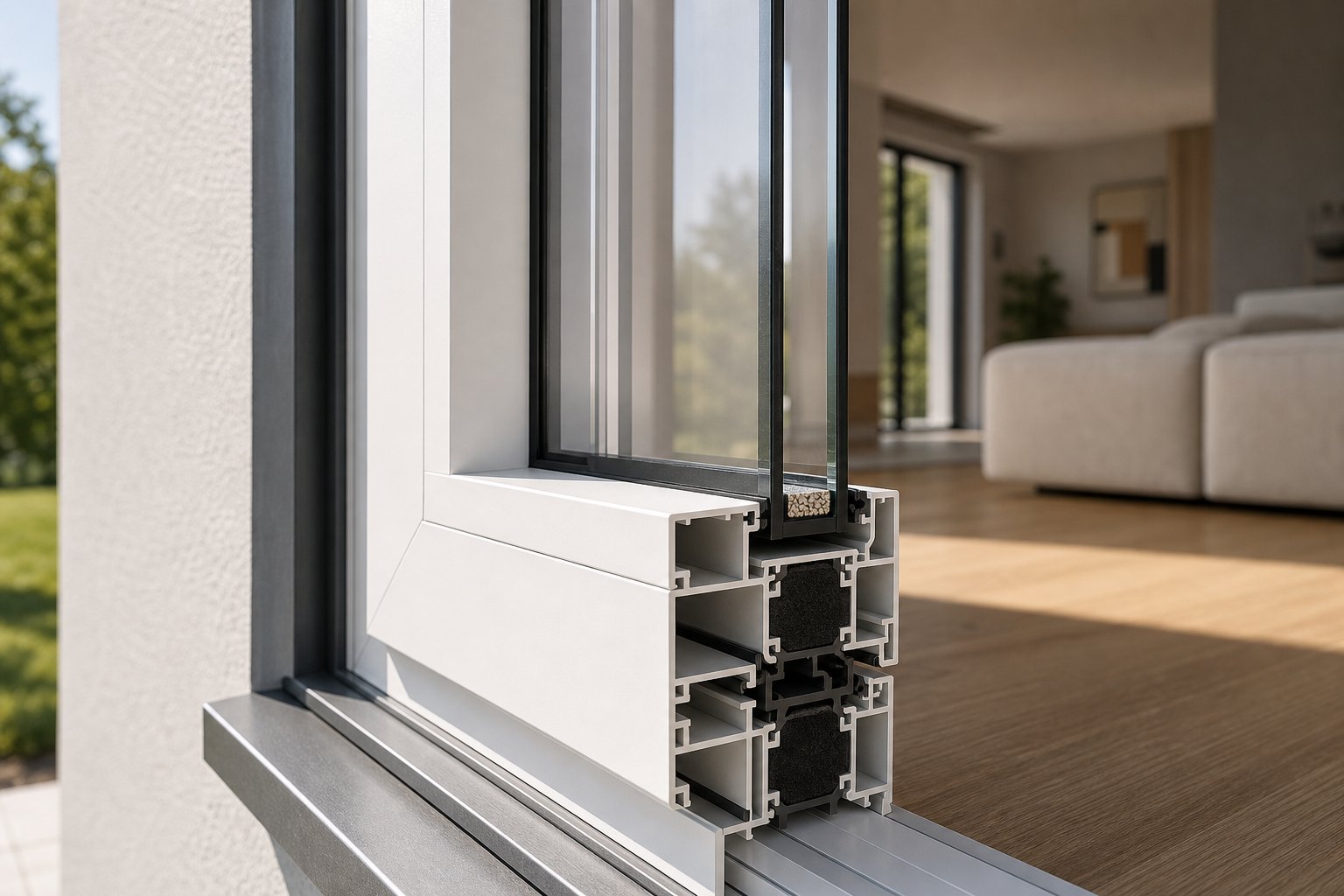
Aluminium conducts heat roughly 1,000 times more efficiently than the polyamide inserts designed to stop it. That conductivity is what makes a raw aluminium frame problematic in both summer and winter — heat races through the metal, warming interiors you are trying to cool or bleeding warmth you are paying to generate. Thermal break technology exists to interrupt that transfer, and it is the single biggest factor separating a high-performing white aluminium window from a basic one.
How Thermal Break Technology Works
A thermal break is a continuous strip of insulating material — typically glass-fibre-reinforced polyamide — mechanically crimped between the interior and exterior aluminium profiles. This strip physically separates the two halves of the frame, creating a barrier with extremely low thermal conductivity. In quality systems, these inserts range from around 15 mm to 35 mm in width, and the wider the break, the longer the path heat must travel to cross the frame.
The result is measurable. Default window performance data published by the Australian Fenestration Rating Council (AFRC) for use in NatHERS-accredited software shows that a standard aluminium double-glazed hinged window with air fill records a U-value of 4.8 W/m²K. The same glazing configuration in a thermally broken aluminium frame drops to 3.6 W/m²K — a 25% improvement in thermal resistance from the frame design alone. Swap the air fill for argon and add a Low-E coating, and thermally broken aluminium reaches U-values around 2.9 to 3.0 W/m²K, bringing performance much closer to timber and uPVC equivalents.
Beyond insulation, thermal breaks also reduce condensation on the interior frame surface by keeping it warmer than the dew point — a practical benefit in cooler southern climates where moisture on window frames leads to mould and paint damage.
Does Frame Colour Affect Energy Efficiency
Colour plays a secondary role, but it is not irrelevant. A white aluminium window reflects a greater proportion of solar radiation than a dark charcoal or black frame. In direct summer sun, a dark frame can reach surface temperatures 20°C to 30°C higher than a white one. That additional heat stresses weatherseals, accelerates thermal expansion in the aluminium extrusion, and marginally increases the heat load conducted inward through the frame.
For white aluminium windows Australia’s harsh UV environment actually works in their favour here. Lighter frames stay cooler, which reduces long-term fatigue on gaskets and hardware — components that degrade faster when repeatedly heated and cooled through wide temperature cycles. Over a 30-year lifespan, that reduced thermal stress can translate to fewer seal replacements and better ongoing airtightness.
That said, the energy savings from frame colour alone are modest compared to glazing specification and thermal break width. Colour might shift frame surface temperature, but the glass accounts for 70% to 80% of the total window area. The glazing unit is where the real thermal gains — or losses — occur.
Double Glazing Options for White Frames
White aluminium double glazed windows are now the baseline specification for new builds and serious renovations across most Australian climate zones. The insulating glass unit (IGU) paired with the frame determines overall window performance far more than the frame colour or even the frame material.
Key glazing variables include:
- Glass type — clear, tinted, or Low-E coated. Low-E (low emissivity) coatings reflect infrared energy while admitting visible light, reducing solar heat gain in summer and heat loss in winter.
- Gas fill — air or argon. Argon is denser than air and conducts heat less efficiently, improving the IGU’s insulating value by roughly 5% to 10% over an air-filled cavity.
- Spacer type — standard aluminium spacers or warm-edge spacers. Warm-edge options reduce heat transfer at the glass perimeter where condensation typically forms first.
According to AFRC default window data, a thermally broken aluminium hinged window with double glazing, argon fill, and a high solar gain Low-E coating achieves a U-value of 2.9 W/m²K and an SHGC (Solar Heat Gain Coefficient) of 0.44. Switch to a low solar gain Low-E coating and the SHGC drops to 0.27 — useful for west-facing openings where afternoon heat gain is the primary concern. These specifications apply regardless of whether the frame is white, grey, or black; the thermal break and glazing do the heavy lifting.
For white aluminium doors and windows across a whole-of-home project, the practical takeaway is this: invest your performance budget in the thermal break width and glazing specification first. The white finish contributes a small but genuine advantage in reduced frame temperature and seal longevity — think of it as a bonus that compounds over decades rather than a primary energy strategy.
Performance keeps the home comfortable. Keeping the frames themselves looking sharp over those decades requires a different kind of attention — one that starts with understanding how white powder-coated surfaces respond to dirt, salt, and time.
How to Clean and Maintain White Aluminium Windows
White frames show dirt. That is the trade-off nobody hides. Dust, pollen, cobwebs, and water stains are more visible on a white surface than on charcoal or bronze — but the flip side is equally true: you notice grime early, clean it before it bonds, and the frames stay looking fresh with surprisingly little effort. Knowing how to clean white aluminium window frames properly protects the powder-coated finish that gives them their colour, UV resistance, and longevity.
Routine Cleaning Steps for White Frames
Cleaning white powder coated aluminium window frames does not require specialist products. The powder coating itself is designed to resist dirt adhesion, so regular light cleaning prevents buildup from becoming a stubborn problem. Origin Global recommends cleaning frames every two months and glass monthly as a general guide — though homes near busy roads, construction sites, or the coast may benefit from monthly frame cleaning as well.
Here is a straightforward routine that keeps white frames in top condition:
- Dust or vacuum the frame surfaces, tracks, and sill areas to remove loose dirt and debris before introducing any moisture.
- Mix a solution of mild pH-neutral detergent in warm water — roughly one tablespoon of liquid soap per litre is sufficient.
- Wipe all frame surfaces with a soft non-abrasive cloth or sponge soaked in the solution, working from top to bottom so dirty water does not drip onto already-cleaned areas.
- For stubborn grime in corners or along the white aluminium window trim, use a soft-bristled brush (an old toothbrush works well) to agitate the dirt without scratching the coating.
- Rinse with clean water using a low-pressure hose or a fresh damp cloth. Avoid high-pressure nozzles — concentrated water jets can damage sealant beads and force moisture into drainage channels.
- Dry all surfaces with a clean soft cloth. Standing moisture on hardware and in frame crevices accelerates corrosion, particularly in humid climates.
What to avoid is just as important as what to use. Solvents, bleach-based cleaners, abrasive creams, steel wool, and scouring pads all risk damaging or dulling the powder-coated finish. Once that protective layer is compromised, the bare aluminium beneath becomes vulnerable to oxidation — and on a white frame, oxidation shows as dull grey patches that no amount of soap will shift.
Preventing Discolouration and Staining
White frames face a few specific threats that darker colours largely avoid. In coastal areas across Australia — from the Gold Coast to the Mornington Peninsula — airborne salt deposits settle on frame surfaces and, if left uncleaned, create a hazy film that dulls the white finish over time. Industry maintenance data identifies salt air as the most aggressive accelerant of hardware and finish degradation, recommending monthly cleaning for homes within a few kilometres of the shoreline.
Mould and green algae staining tend to appear on the shaded side of a home — south-facing frames in particular. These organic growths thrive in damp, low-light conditions and show up starkly against white surfaces. A solution of one part white vinegar to four parts water, applied with a soft cloth and left for a few minutes before rinsing, handles most mild mould without harming the powder coat. For heavier infestations, a purpose-made mould remover safe for painted metal surfaces is a better option than reaching for household bleach, which can discolour the finish.
Oxidation marks on older or damaged frames appear as chalky white or grey spots where the protective coating has worn through. A 50/50 mix of white vinegar and water can address light surface oxidation, but frames showing widespread chalking or pitting likely need professional assessment rather than a DIY fix.
Long-Term Care and Hardware Maintenance
Cleaning white aluminium window frames keeps them looking good. Maintaining the hardware and seals behind those frames keeps them functioning properly for decades. A structured approach covers three areas beyond surface cleaning:
- Lubricate moving parts — hinges, friction stays, locking mechanisms, and sliding track rollers all benefit from a silicone-based dry lubricant applied every six months. Silicone spray does not attract dust the way petroleum-based greases do, which matters on white frames where oily residue collects visible grime quickly.
- Inspect weatherseals and gaskets — EPDM rubber seals around the glass and frame perimeter harden and crack over time, particularly in high-UV environments. Check them twice a year for splits, compression set, or corner separation. Applying a silicone-based rubber conditioner extends their flexibility, but seals that have lost elasticity need replacement — they cannot be restored.
- Clear drainage slots (weep holes) — every aluminium window has small drainage channels at the sill designed to let trapped water escape. Blocked weep holes cause water to pool inside the frame, leading to internal corrosion and potential water ingress into the wall cavity. A fine probe or compressed air clears debris quickly — check quarterly, or monthly in areas with heavy leaf litter or insect activity.
The practical reality is that white aluminium windows reward consistent light maintenance far more than occasional intensive cleaning. A five-minute wipe-down each month prevents the kind of ingrained staining that requires aggressive treatment — and keeps the powder coat intact for the full 40 to 50 year lifespan the frame is engineered to deliver.
Maintenance preserves what is already there. But what if the frames you have are faded, discoloured, or simply the wrong colour — can you paint aluminium windows white, and is it worth the effort?
Painting Aluminium Windows White and When It Makes Sense
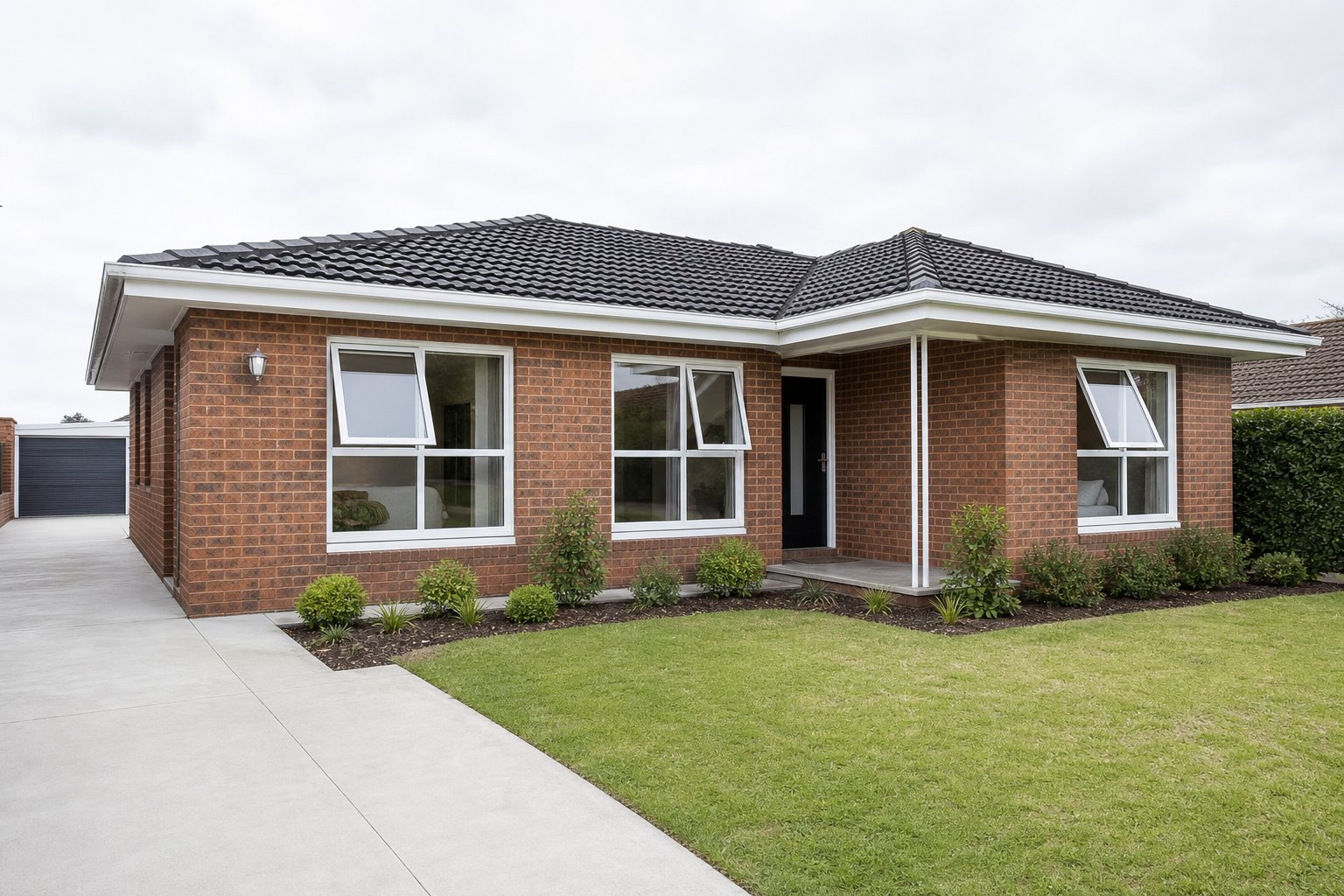
Replacing an entire set of windows is not always practical or affordable. Sometimes the frames are structurally sound but the finish has chalked, faded, or simply no longer suits the home’s updated colour scheme. In those situations, painting aluminium window frames white offers a legitimate middle ground — provided you understand what the job demands and where its limits sit.
Can You Paint Aluminium Windows White
The short answer: yes, you can paint aluminium windows white. The longer answer involves a few caveats. Aluminium is non-porous, and its surface instantly forms a thin oxide layer that actively resists paint adhesion. Skip the preparation steps and you will end up with flaking, peeling paint within a year or two — regardless of how good the topcoat looked on day one.
Painting aluminium windows white works for two common scenarios. The first is refreshing existing white frames that have chalked or dulled over time. The second — and more challenging — is changing colour entirely, such as painting brown aluminium window frames white. A dark-to-light colour change demands more coats for full opacity and makes any missed spots or adhesion failures far more visible. Both are achievable, but the darker the starting colour, the more meticulous the preparation and application need to be.
Professional recolouring services report that repainting aluminium joinery costs roughly one-third of full replacement while delivering a near-identical visual result — making it a compelling option when the frames, hardware, and seals are still in good working order.
Surface Preparation and Paint Selection
Preparation accounts for about 80% of a successful result. If you want to know how to paint aluminium window frames white properly, the process starts well before any paint leaves the tin. Industry guides emphasise that inadequate cleaning or skipping the etching step virtually guarantees adhesion failure within three years.
Here is the preparation checklist before any paint is applied:
- Mask all glass, weatherstripping, hardware, and surrounding walls with quality painter’s tape and plastic sheeting.
- Degrease the entire frame surface using a heavy-duty cleaner such as tri-sodium phosphate (TSP) or a dedicated aluminium degreaser. Rinse thoroughly with clean water.
- Remove the oxide layer using an aluminium etching solution (phosphoric acid based) to create a chemical key for the primer.
- Lightly scuff all surfaces with 180 to 220 grit sandpaper — just enough to create a mechanical tooth, not deep scratches.
- Wipe down with a tack cloth or isopropyl alcohol to remove every trace of sanding dust.
- Apply a self-etching primer or two-part epoxy primer in thin, even coats. Allow full drying time per the manufacturer’s instructions.
For the topcoat, two paint types suit aluminium frames best. Direct-to-metal (DTM) acrylic is the more accessible option — it is flexible enough to handle thermal expansion, dries quickly, and cleans up with water. Two-pack polyurethane delivers a harder, more durable finish closer to a factory result, but requires precise mixing and is better suited to professional application. Both should be applied in two thin coats rather than one thick pass, with full drying between each coat.
Realistic expectations matter here. A carefully executed DIY job using quality materials can last 8 to 12 years in a moderate climate. A professional spray application with epoxy primer and polyurethane topcoat pushes that toward 12 to 15 years. Neither matches factory powder coating, which bonds at 200°C and routinely lasts 25 to 30 years without chalking or peeling. If you are painting aluminium window frames white as a cosmetic refresh to buy time before a full upgrade, the economics make sense. If you expect a permanent, maintenance-free result, powder-coated replacement frames remain the benchmark.
When Replacement Beats Repainting
Painting makes sense when the aluminium extrusion is straight, the hardware operates smoothly, seals are intact, and the existing glazing meets your performance needs. It does not make sense when the underlying problems go deeper than cosmetics.
Consider replacement rather than repainting if:
- The frames are single-glazed and you need improved thermal or acoustic performance — paint cannot upgrade the glass.
- Corrosion has pitted the aluminium surface beyond light sanding, particularly in coastal homes where salt damage penetrates the metal.
- Seals have failed and the frames no longer keep water or air out reliably.
- The window style itself is outdated or non-compliant with current safety standards (for example, missing fall-prevention features required under AS 2047).
- You are already replacing several windows and the cost gap between repainting the remainder and replacing the full set narrows significantly at volume.
The decision ultimately comes down to what you are solving for. If the goal is a fresh white appearance on sound frames at minimal cost, learning how to paint aluminium windows white and executing the preparation properly delivers genuine value. If the frames need performance improvements — better glazing, thermal breaks, or modern hardware — no amount of paint addresses those gaps, and new white powder coated aluminium windows become the more rational investment.
Whether you paint existing frames or order new ones, the next step in either path involves the same practical question: what does the installation process actually look like, and how long should you expect it to take?
Installation Process and What to Expect
Ordering white aluminium windows and doors is one thing. Getting them from a quote on screen to a sealed, functioning unit in your wall is another process entirely — and it is the stage where most homeowners feel least informed. Knowing what each phase involves removes the guesswork, helps you plan around disruption, and gives you the confidence to hold installers accountable for a quality result.
What Happens During a Site Survey
Every custom window project begins with a site survey. A qualified measurer visits the property to record precise dimensions of each opening — width, height, and critically, the diagonal measurements that reveal whether an opening is square. Even a few millimetres of variance matters because aluminium frames are manufactured to tight tolerances and cannot flex to accommodate an out-of-square reveal the way timber can.
Beyond raw measurements, the surveyor assesses:
- Wall construction type — brick veneer, double brick, timber frame, or steel frame each require different fixing methods and may influence frame depth selection.
- Existing frame condition — whether the old frames can be removed cleanly or whether surrounding render, cladding, or plaster will need making good after removal.
- Access constraints — upper-storey windows, narrow side passages, or heritage-listed facades may require scaffolding or specialist handling that affects scheduling and cost.
- Regulatory considerations — fall-prevention requirements under AS 2047, bushfire attack level (BAL) ratings, and any council conditions on the development application.
A thorough site survey typically takes 30 to 60 minutes for a standard residential project. The data collected feeds directly into the manufacturing drawings, so accuracy here prevents costly remakes down the track. If you are sourcing white aluminium windows for sale through a white aluminium windows supplier who handles both supply and installation, the survey and specification stages are usually bundled into a single consultation — streamlining communication and reducing the risk of measurement errors being introduced between separate parties.
Custom Configuration and Lead Times
White aluminium windows are rarely off-the-shelf products. Each unit is fabricated to order based on the opening size, selected style (casement, awning, sliding, or fixed), glazing specification, hardware finish, and security requirements. That custom nature means lead times vary depending on how complex the configuration is and how busy the manufacturer’s production schedule is at the time of order.
As a general guide for the Australian market:
- Standard configurations — single-colour white frames with clear or standard Low-E double glazing and basic hardware — typically run 3 to 5 weeks from confirmed order to delivery.
- Mid-complexity orders — thermally broken profiles, argon-filled IGUs, upgraded security locks, or specific RAL white shades outside the manufacturer’s standard range — push lead times to 5 to 8 weeks.
- High-complexity or large-volume projects — multiple opening styles, BAL-rated glazing, acoustic glass, or whole-of-home packages with coordinated white aluminium windows and doors — may require 8 to 12 weeks depending on the white aluminium windows manufacturer and their current capacity.
Colour choice itself rarely adds time when you select white, because it is a standard production colour for virtually every Australian fabricator. Choosing a non-standard RAL white or a custom colour match, however, can add one to two weeks for powder coating batch scheduling.
Suppliers who offer project-based supply capabilities — coordinating multiple window and door types across a single build — can often consolidate production runs and deliver everything in one shipment rather than piecemeal. MEICHEN’s aluminium window range, for example, provides custom configuration options across multiple glazing choices and white shade variations for Australian residential and commercial projects, allowing builders and homeowners to specify an entire project through a single source rather than juggling separate orders from different fabricators.
Installation Day and Aftercare
For a typical residential project — say, 8 to 12 windows across a single-storey home — installation usually takes one to two days with a two-person crew. Larger homes, double-storey properties requiring scaffolding, or full-frame replacements where existing openings need structural modification extend that timeline accordingly.
Here is what the day generally looks like:
- Site protection — drop cloths cover flooring and furniture near each opening. Dust and debris from removal are inevitable, so protecting internal surfaces is the first priority.
- Old frame removal — the existing window is carefully extracted. In a pocket (retrofit) installation, the outer frame stays in place and the new unit slides into the existing reveal. In a full-frame replacement, everything comes out including the sub-sill, and the opening is prepared fresh.
- Frame positioning and levelling — the new aluminium frame is lifted into the opening, supported on packers, and checked for level and plumb using a spirit level. Packers are adjusted until the frame sits perfectly square — critical for smooth sash operation and proper seal compression.
- Fixing and sealing — the frame is anchored to the reveal with mechanical fixings (screws into masonry or timber studs), then sealed around the perimeter with exterior-grade silicone sealant and weatherproofing tape to prevent water and air infiltration.
- Sash fitting and hardware check — glass panels, sashes, or sliding units are installed into the secured frame. Every opening mechanism is tested multiple times, locks are checked for alignment, and rollers are adjusted for smooth travel.
- Cleanup and handover — excess sealant is trimmed, protective film is removed from the aluminium, and the work area is cleaned. A good installer walks you through operation and locking of each window before leaving site.
Disruption is the concern most homeowners raise. Realistically, each window takes 30 to 60 minutes for a pocket replacement and up to several hours for a full-frame swap that involves cutting render or re-plastering reveals. The opening is exposed briefly during changeover — long enough to feel a draught but not long enough to cause any real temperature or security issue when managed by experienced installers working one window at a time.
Aftercare is straightforward. Avoid operating new windows aggressively for the first 48 hours while sealant cures fully. Check that drainage weep holes are clear of construction debris. And schedule a follow-up inspection at the 4 to 6 week mark to confirm all hardware is still correctly adjusted after the frames have settled under load — most reputable installers include this in their service.
Installation transforms a product into a performing part of your home. The final variable that shapes the whole decision — and the one most buyers want answered earliest — is what all of this actually costs.
Cost Factors and Pricing Guidance for White Aluminium Windows
Pricing is the question that drives most early research — and the hardest to answer without a specific project on the table. White aluminium windows prices vary widely because no two projects share the same combination of opening sizes, styles, glazing requirements, and site conditions. Rather than quoting a single number that may mislead, understanding which variables carry the most weight helps you read quotes critically and compare suppliers on a level playing field.
What Affects the Price of White Aluminium Windows
Several factors stack on top of each other to produce a final white aluminium windows cost. Some carry heavy influence; others shift the total only marginally. The table below breaks down the main variables and their relative impact on what you will pay.
| Cost Factor | Impact on Price | Notes |
|---|---|---|
| Window size (height x width) | High | Larger openings require more aluminium, more glass, and heavier hardware. Price scales roughly with area. |
| Opening style | Medium–High | Fixed windows are cheapest. Awning and casement cost more due to hinges and friction stays. Bi-fold and stacking sliders sit at the top. |
| Glazing specification | High | Single glazing to double glazing adds 25–35%. Low-E coatings, argon fill, and acoustic laminate each add further. |
| Thermal break inclusion | Medium | Thermally broken profiles cost more than standard aluminium but are increasingly required for NCC compliance in climate zones 1–8. |
| Hardware grade | Low–Medium | Standard zinc-alloy locks and stays vs stainless steel multi-point locking systems. Security upgrades add $50–$150 per window. |
| Quantity ordered | Medium | Whole-of-home orders attract volume pricing. Single replacement windows carry higher per-unit fabrication and delivery costs. |
| Installation complexity | Medium–High | Pocket (retrofit) installs cost less than full-frame replacements. Upper-storey access, scaffolding, and structural modifications add labour. |
| Removal and making good | Low–Medium | Stripping old frames, patching render, and repainting reveals are often quoted separately — confirm what is included. |
To put rough numbers around these variables: hipages.com.au reports supply-only prices for standard aluminium windows starting from around $150 for a small 600 x 600 mm fixed unit, through to $680 or more for a large sliding window at 2057 x 2650 mm. Hinged and awning windows fall between $180 and $788 supply-only depending on size. These figures represent budget to mid-range systems — premium architectural-grade profiles with thermally broken frames and high-performance glazing sit considerably higher, often two to three times the base cost for equivalent opening sizes.
Total project cost also includes installation labour, which in Australia typically adds $150 to $400 per window for straightforward pocket replacements, and more for full-frame work requiring structural modification or scaffolding. Always confirm whether a quote covers supply only or supply and install, and whether removal of existing frames and disposal is included or charged separately.
White vs Other Colours and Cost Differences
Here is a genuine advantage of choosing white: it almost never attracts a colour surcharge. White is a standard production colour for every major Australian aluminium window fabricator and white aluminium windows factory operation. Because white powder coat runs continuously through production lines — rather than requiring a batch changeover — it sits at the base price tier alongside silver anodised finishes.
By contrast, premium colours like anthracite grey (RAL 7016), matt black, or custom RAL shades typically add 15% to 35% on top of the base frame cost. Wood-grain sublimation finishes push that premium to 30% to 50%. Choosing white eliminates that variable entirely, which matters when you are pricing a full home’s worth of openings and every percentage point compounds across 10, 15, or 20 windows.
This cost neutrality also applies to wholesale white aluminium windows orders. Builders and developers sourcing white aluminium sliding windows wholesale for multi-unit projects benefit from the same base-tier pricing without the batch scheduling delays that non-standard colours introduce. Volume orders in white move through production faster precisely because the colour requires no line changeover.
Getting Accurate Quotes for Your Project
Ballpark figures are useful for budgeting, but accurate pricing requires a site-specific quote based on measured openings and confirmed specifications. A few practical steps improve the quality of the quotes you receive:
- Get at least three quotes from different suppliers, ensuring each is quoting on the same glazing specification, hardware level, and installation scope so you are comparing like with like.
- Specify your exact white RAL code upfront — it confirms you are ordering a standard colour and avoids any ambiguity about custom colour surcharges.
- Ask whether the quote includes GST, delivery, removal of old frames, patching of reveals, and a post-installation adjustment visit.
- For larger projects, ask about project-based supply — a single supplier coordinating all window and door types across the build often delivers better pricing and fewer coordination headaches than splitting orders across multiple fabricators.
If you are at the stage of comparing options and want to explore what is available for Australian residential and commercial builds, MEICHEN’s aluminium window range offers a useful starting point — covering multiple styles, glazing choices, and white colour options with project-based supply for both individual homes and larger developments. Browsing a supplier’s full range before requesting a quote helps you arrive at the conversation knowing what configurations exist, which speeds up the specification process and ensures nothing critical gets overlooked.
White aluminium sliding windows for sale through project-focused suppliers often come with volume pricing structures that reward whole-of-home orders — so if your scope includes doors, fixed lites, and operable windows, bundling everything through one source typically delivers a lower per-unit cost than piecemeal purchasing.
Ultimately, the best value in white aluminium windows comes not from chasing the cheapest quote but from matching the specification to your actual performance needs, confirming total installed cost rather than supply-only figures, and choosing a supplier whose production quality and after-sales support justify the investment over the frame’s 40 to 60 year working life.
Frequently Asked Questions About White Aluminium Windows
1. What is the difference between RAL 9010 and RAL 9016 white for aluminium windows?
RAL 9010 (Pure White) has a warm, creamy undertone that suits residential homes, heritage builds, and neutral interior palettes. RAL 9016 (Traffic White) is a brighter, near-neutral white with minimal undertone, making it the closest match to standard white uPVC profiles. Choosing between them depends on your facade material and whether you need to coordinate with existing plastic trims or timber elements. Always request a physical powder-coated sample and view it against your wall material in natural sunlight before committing.
2. Do white aluminium windows yellow over time like uPVC?
No. White aluminium windows are finished with a UV-resistant powder coating that is baked onto the frame at approximately 200 degrees Celsius, forming a chemically bonded barrier against chalking, fading, and yellowing. This finish routinely lasts 25 to 30 years without visible colour change. White uPVC, by contrast, relies on the plastic itself for colour and can begin yellowing within 10 to 15 years due to UV degradation of the polymer chains — a process that cannot be reversed through cleaning alone.
3. Can you paint existing aluminium window frames white?
Yes, provided you follow proper surface preparation. The process involves degreasing the frame, applying an aluminium etching solution to remove the oxide layer, lightly sanding with 180 to 220 grit paper, and using a self-etching or epoxy primer before applying a direct-to-metal acrylic or two-pack polyurethane topcoat. A well-executed DIY job lasts 8 to 12 years, while professional spray application can achieve 12 to 15 years. Factory powder coating still outperforms site-applied paint, so painting works best as a cosmetic refresh on structurally sound frames rather than a permanent solution.
4. Are white aluminium windows more expensive than other colours?
White is a standard production colour for virtually every Australian aluminium window manufacturer, which means it sits at the base price tier with no colour surcharge. Premium colours like anthracite grey, matt black, or custom RAL shades typically add 15 to 35 percent on top of the base frame cost. Wood-grain sublimation finishes push that premium even higher. Choosing white eliminates the colour variable entirely, which compounds into meaningful savings across a whole-of-home order of 10 to 20 windows.
5. How do you clean white powder-coated aluminium window frames?
Clean white aluminium frames every one to two months using a mild pH-neutral detergent mixed in warm water and a soft non-abrasive cloth. Work from top to bottom, rinse with low-pressure clean water, and dry with a soft cloth. Avoid solvents, bleach, abrasive creams, steel wool, and high-pressure washers, as these damage the powder-coated finish. For coastal homes, monthly cleaning prevents salt film buildup. Mould or algae staining responds well to a one-part white vinegar to four-parts water solution applied gently and rinsed off after a few minutes.
More Window & Door Guides