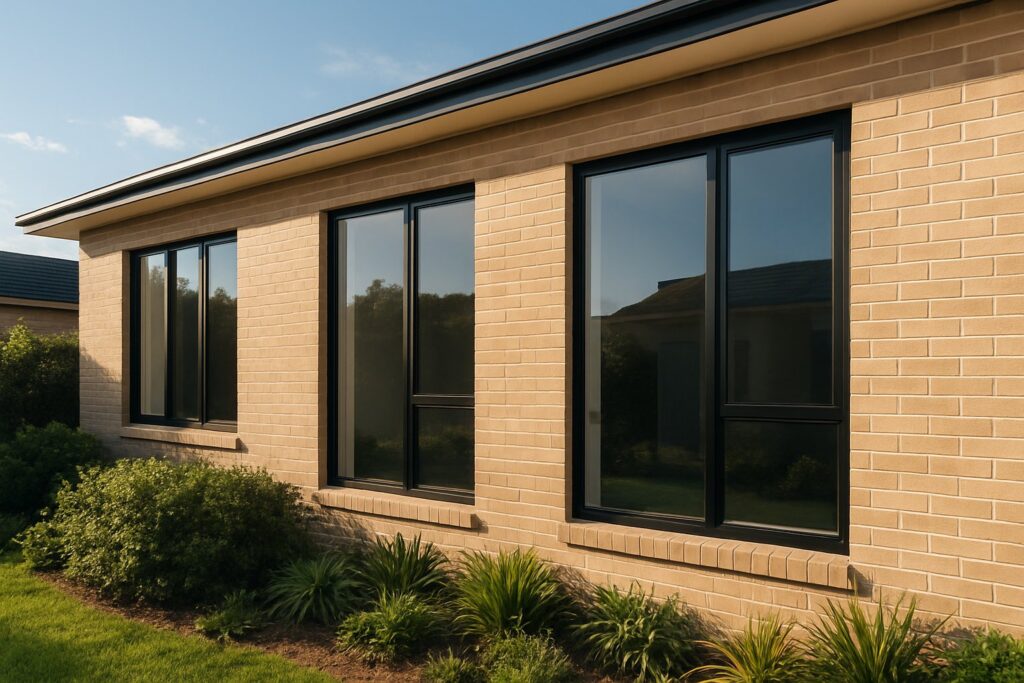
What Makes Aluminium a Smart Residential Window Material
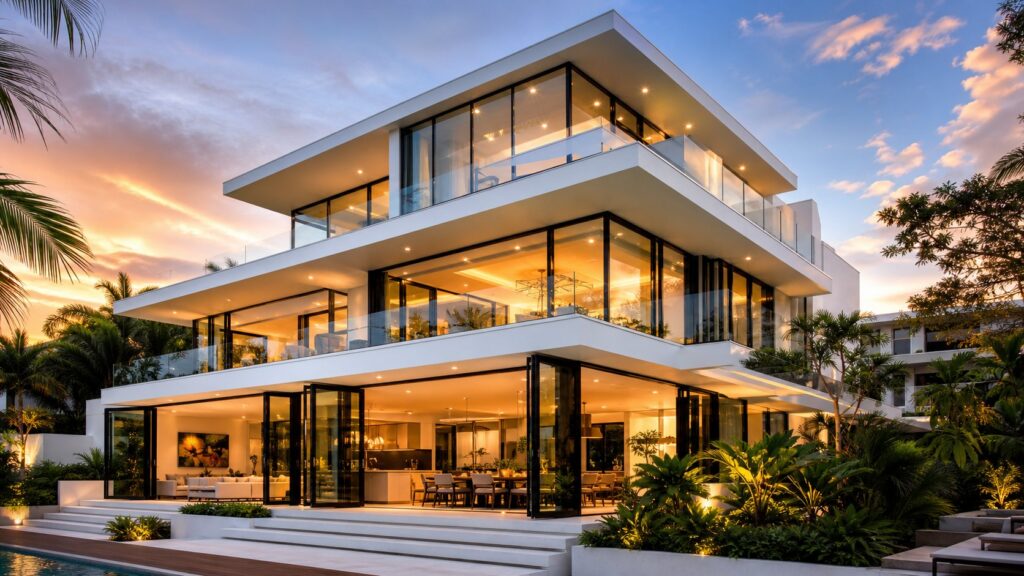
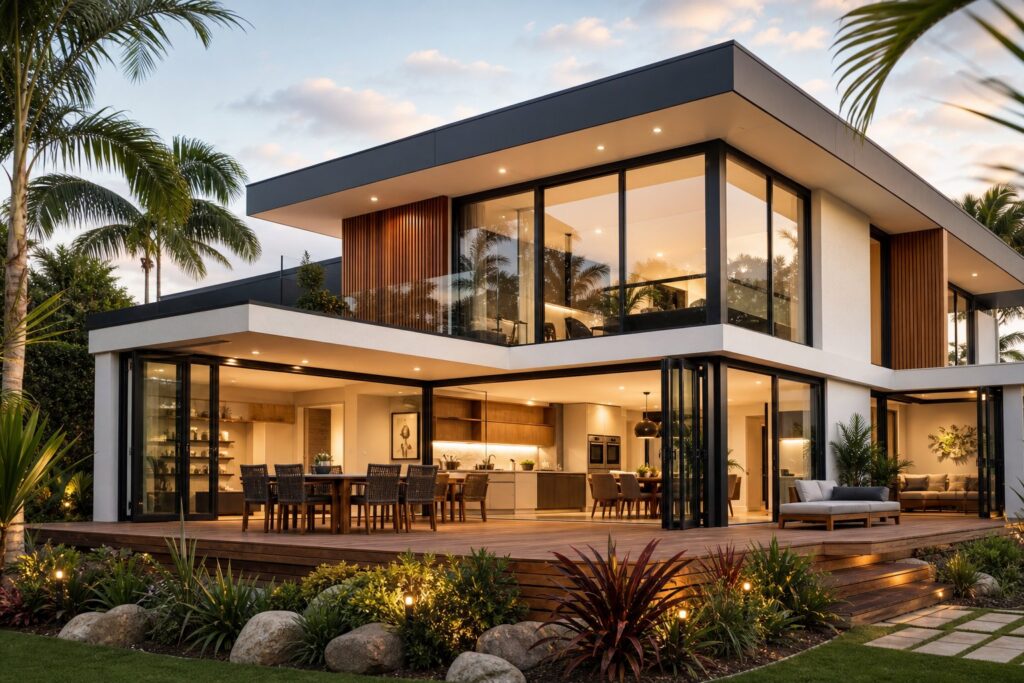
If you picture aluminium windows only in office towers and shopping centres, you are working from an outdated mental image. Aluminium framing has quietly become one of the fastest-growing choices for Australian homes, from coastal weatherboard renovations in Sydney to new double-storey builds across Melbourne’s outer suburbs. The material’s combination of structural strength, slim profiles, and design flexibility makes it a genuinely compelling option for residential projects.
What Are Residential Aluminium Windows
Residential aluminium windows are window systems built with extruded aluminium frames specifically engineered for houses, townhouses, and low-rise apartment buildings. They balance aesthetic appeal, thermal comfort, and long-term durability at a scale suited to everyday home use.
In practical terms, an aluminium window designed for a home differs from its commercial counterpart in several important ways. Commercial aluminium windows are engineered for high-rise facades, heavy wind loads, and intensive daily operation in public buildings. They use thicker, reinforced profiles and must meet stricter structural testing requirements. Residential-grade systems, by contrast, prioritise slimmer sightlines, ease of operation, broader colour choices, and cost efficiency appropriate for single-family homes and low-rise developments. The hardware is lighter-duty, the frame depths are shallower, and the focus shifts toward livability rather than extreme structural performance.
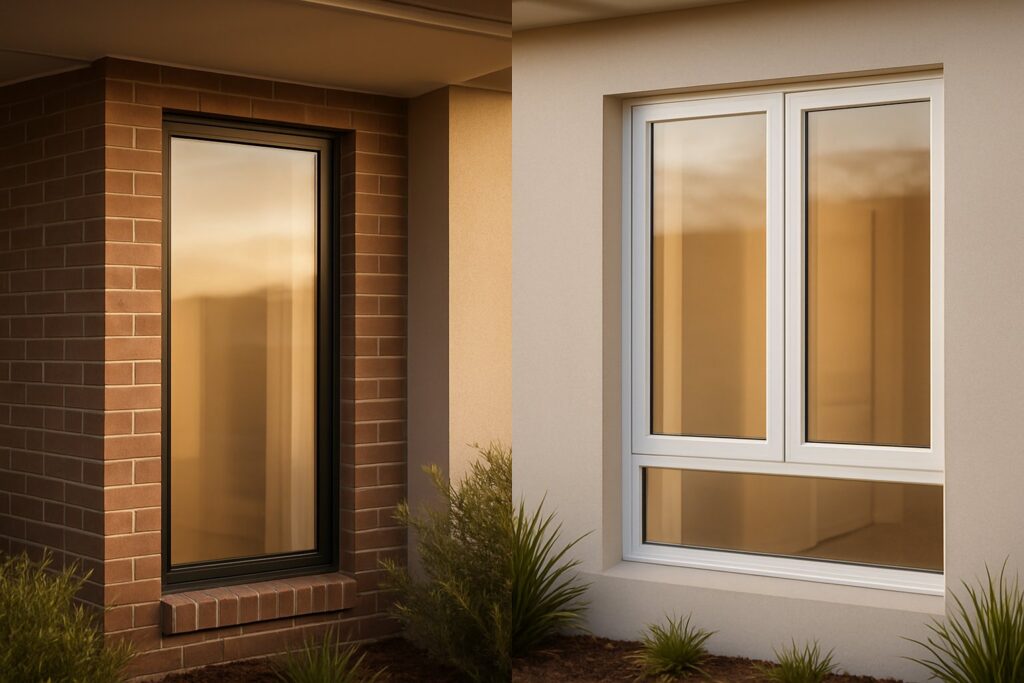
That distinction matters because homeowners sometimes assume they need commercial-grade specifications, or conversely, that windows in aluminium are inherently industrial-looking. Neither is true. A quality aluminium window built to Australian Standard AS 2047 for residential use delivers the strength, weather resistance, and longevity the material is known for, without the bulk or price premium of a commercial system.
Why Aluminium Is Making a Residential Comeback
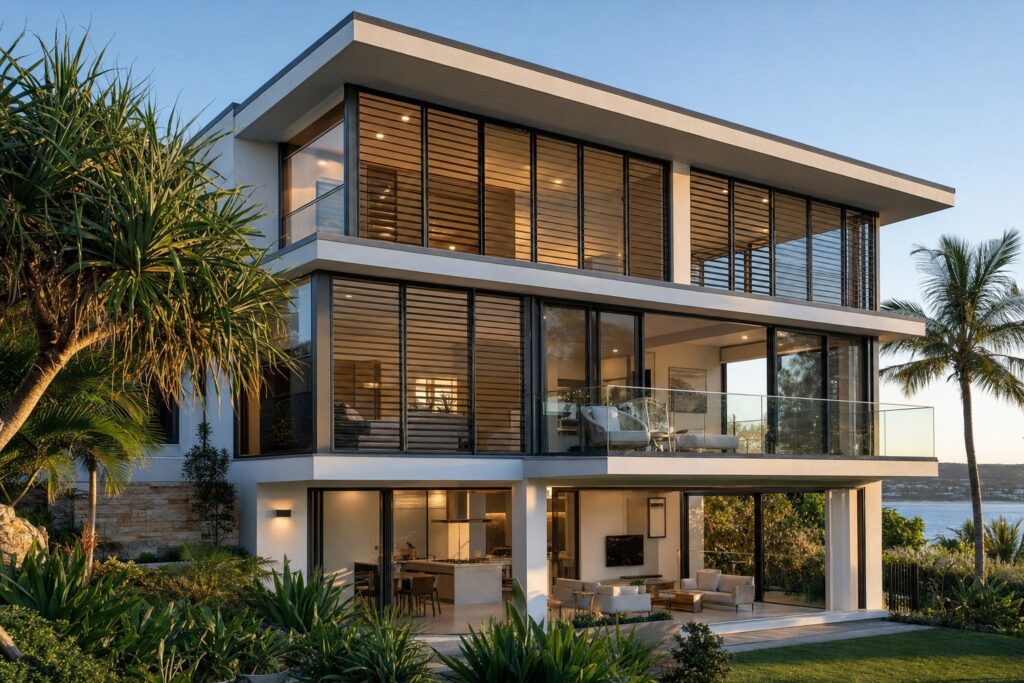
Several shifts explain why aluminium residential windows are gaining ground again. Modern thermal break technology has eliminated the old energy-efficiency concerns. Powder-coating advances offer virtually unlimited colour options with decades-long fade resistance. And architecturally, the trend toward larger glass areas and minimalist frames plays directly to aluminium’s greatest strength: its ability to hold big panes of glass with remarkably thin framing.
Aluminium is also 100 percent recyclable without loss of quality, which appeals to environmentally conscious homeowners building or renovating to higher sustainability standards. Combined with a realistic lifespan exceeding 30 years and minimal maintenance demands, the material ticks boxes that timber and even uPVC struggle to match simultaneously.
Still, aluminium is not the right answer for every home or every budget. Understanding how today’s frames differ from the older generation that earned the material its poor reputation is essential before making a decision.
How Modern Aluminium Windows Differ From Older Generations
That poor reputation did not come from nowhere. If you grew up in an Australian home built between the 1960s and 1980s, you probably remember old aluminum windows firsthand: cold to the touch in winter, streaming with condensation, and doing almost nothing to keep heat in or noise out. Those single pane aluminum windows were everywhere, from fibro cottages to brick-veneer estates, and they left a lasting impression that aluminium was a cheap, uncomfortable framing material.
The Problem With Older Aluminium Frames
The issue was straightforward. Early aluminium window framing used a single, continuous metal profile with no insulating barrier between the indoor and outdoor faces. Aluminium conducts heat roughly 1,000 times faster than timber, so the interior surface of the frame would drop to near-outdoor temperatures on a cold night. Warm, moist indoor air hit that cold surface and condensed into water droplets along the sill. Energy bills climbed because heating and cooling simply bled through the frame. Old aluminum window frames also typically held only a single pane of glass, compounding the thermal loss and making rooms draughty and loud.
How Modern Engineering Solved Those Issues
Today’s aluminium frames are a fundamentally different product. The engineering advances that separate a modern aluminum frame window from its 1970s ancestor include:
- Thermal break inserts — reinforced polyamide strips mechanically locked between the inner and outer aluminium profiles, splitting the frame into two thermally independent halves and cutting heat transfer by 70 to 85 percent.
- Multi-chamber profiles — internal cavities within the extrusion that trap still air, adding extra insulation layers and improving structural rigidity without increasing visible frame width.
- Advanced weathersealing — multiple compression seals at every junction point, dramatically reducing air infiltration and water penetration compared to the single-gasket designs of older systems.
- Double and triple glazing compatibility — modern aluminum window frames are engineered to hold insulated glass units with Low-E coatings and argon gas fills, a far cry from the single-pane setups of decades past.
- Durable powder-coat finishes — factory-applied coatings that resist UV degradation, chalking, and salt-air corrosion for 25 years or more, replacing the bare or anodised surfaces that weathered poorly on older frames.
The gap between these generations is not incremental. It is a complete re-engineering of how aluminium performs as a window material. Homeowners who dismissed aluminium based on experiences with older frames are, in practical terms, judging a product that no longer exists.
Of course, knowing that aluminium has improved raises the next logical question: how does it now stack up against the other framing materials competing for your window openings?
Aluminium vs Vinyl vs Wood vs Fiberglass Frames Compared
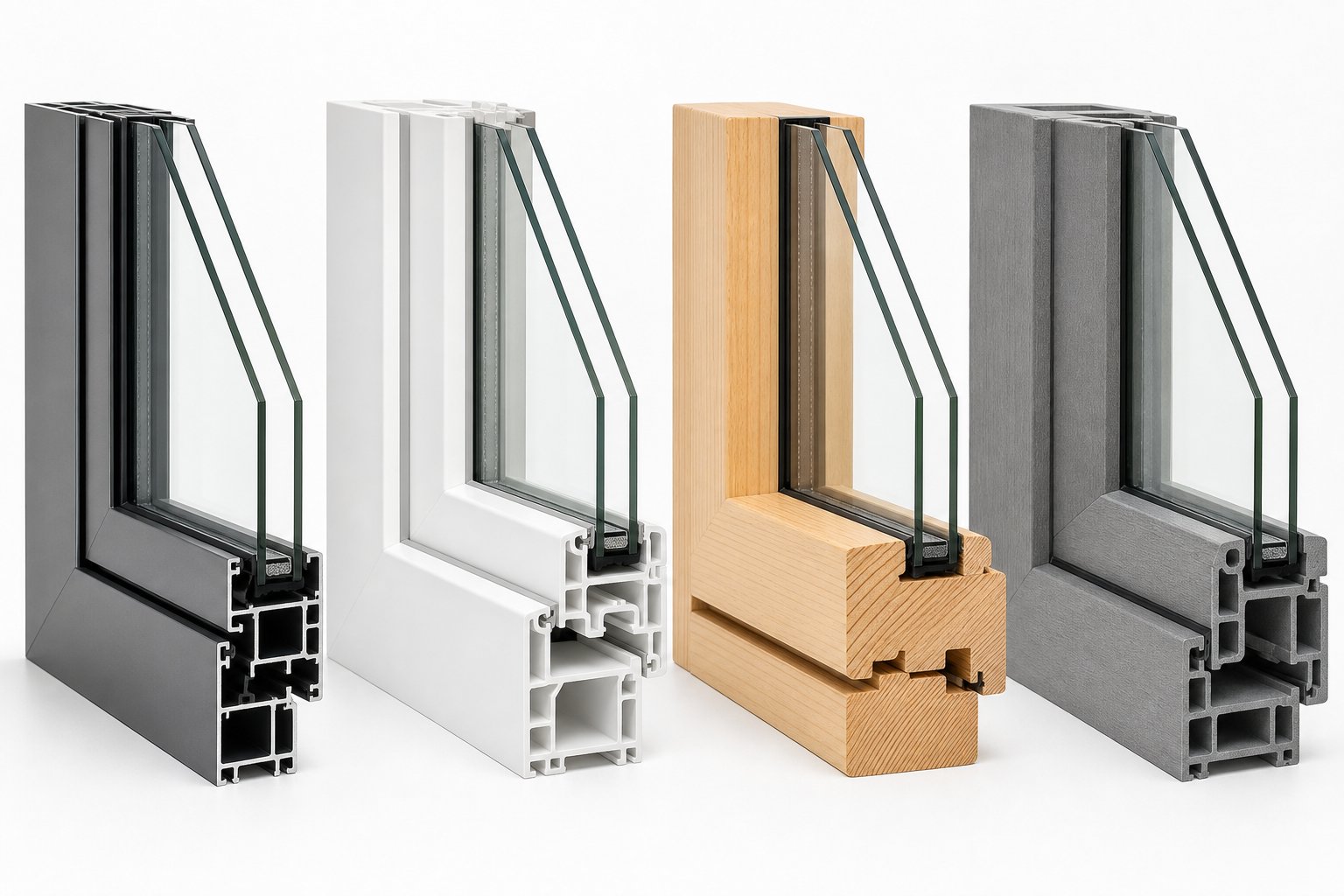
Four framing materials dominate the residential window market in Australia: aluminium, vinyl (uPVC), timber, and fiberglass. Each brings genuine strengths and real trade-offs. Choosing between them is less about finding a single “best” material and more about matching the frame to your climate, home style, maintenance tolerance, and budget.
Aluminium vs Vinyl Frames
Vinyl (uPVC) frames are the budget-friendly workhorse of the window industry. They resist moisture, never need painting, and offer solid thermal performance thanks to multi-chamber hollow profiles. For homeowners watching costs closely, vinyl delivers respectable insulation at the lowest price point of any common frame material.
Aluminium, by contrast, wins on structural strength and aesthetics. Because the material is far stronger per millimetre of profile, aluminum frame windows can hold larger glass panes with noticeably slimmer sightlines. That means more natural light and less visual obstruction. Aluminium also holds its shape permanently. Vinyl can warp or distort under sustained heat and intense UV exposure, a genuine concern across much of Australia’s climate. Once vinyl deforms, it stays that way, potentially compromising seals and allowing draughts.
The thermal trade-off is real, though. Without a thermal break, aluminium conducts heat far more readily than uPVC. With a quality thermal break installed, the gap narrows considerably, but vinyl still edges ahead on raw insulation value in most configurations. On longevity, aluminium typically outlasts vinyl by a decade or more, with quality frames reaching 40 years and beyond compared to vinyl’s 20 to 30 year realistic lifespan in Australian conditions.
Aluminium vs Wood and Fiberglass Frames
Timber frames remain the sentimental favourite for heritage homes and period renovations. Wood insulates naturally, looks warm from the inside, and can be painted or stained to match any interior scheme. The catch is maintenance. Australian conditions, particularly humidity, UV intensity, and termite pressure, demand regular sealing, painting, and inspection to prevent rot and swelling. Neglected timber windows can fail in as little as 15 years.
A popular middle ground is wood clad aluminum windows, which pair a timber interior for warmth and aesthetics with an aluminium exterior shell for weather protection. These aluminum clad windows reduce maintenance significantly compared to fully exposed timber, though they carry a higher price tag and more complex construction. Metal clad windows of this type suit homeowners who want the character of wood without its vulnerability to the elements.
Fiberglass frames offer excellent dimensional stability, expanding and contracting at nearly the same rate as glass itself. They are strong, low-maintenance, and thermally efficient. However, fiberglass remains less widely available in Australia than aluminium or uPVC, and typically costs more than either. For homeowners who can source them, fiberglass is a strong all-rounder, but aluminium’s broader supplier network, custom sizing options, and architectural versatility keep it as the dominant choice for contemporary Australian builds.
Metal windows, broadly speaking, offer unmatched design flexibility for modern architecture. Aluminium specifically delivers that advantage without the corrosion vulnerability of steel, making it the practical choice for slim-profile residential glazing across most Australian climate zones.
| Category | Aluminium (Thermally Broken) | Vinyl (uPVC) | Timber | Fiberglass |
|---|---|---|---|---|
| Thermal Performance | Good (with thermal break) | Good to very good | Very good (natural insulator) | Excellent |
| Durability | Very high — resists warping, rot, and termites | Moderate — can warp in extreme heat | Moderate — vulnerable to rot, termites, moisture | Very high — dimensionally stable |
| Maintenance | Low — occasional wash and hardware lubrication | Very low — wash only | High — regular painting, sealing, inspection | Very low — wash only |
| Aesthetics | Slim profiles, extensive colour range, suits modern and contemporary styles | Bulkier profiles, limited colours, suits traditional styles | Warm, natural appearance, suits heritage and classic styles | Moderate profiles, paintable, versatile |
| Cost Range (Installed, Standard Size) | $800 – $1,500+ AUD per window | $700 – $1,200 AUD per window | $1,500 – $3,500+ AUD per window | $1,200 – $2,500+ AUD per window |
| Typical Lifespan | 30 – 45+ years | 20 – 30 years | 15 – 40 years (maintenance dependent) | 30 – 50+ years |
| Recyclability | 100% recyclable without quality loss | Recyclable but with quality degradation | Biodegradable, sustainably sourced options available | Difficult to recycle |
No single material dominates every category. Aluminium’s combination of longevity, slim aesthetics, low maintenance, and full recyclability makes it a compelling choice for modern Australian homes, particularly where large openings and coastal exposure are factors. Its main limitation, thermal conductivity, hinges entirely on whether the frame includes a proper thermal break. That single engineering detail transforms aluminium from a poor insulator into a genuinely competitive performer, and it deserves a closer look.
Thermal Breaks and Energy Performance Ratings Explained
A thermal break is the single engineering detail that separates a high-performing aluminium window frame from the cold, sweating frames of decades past. Yet most homeowners have never heard the term, and few window suppliers explain it clearly. Here is what it actually is, how it works, and how to read the energy ratings that tell you whether a manufacturer’s claims hold up.
Thermal Break Technology Explained
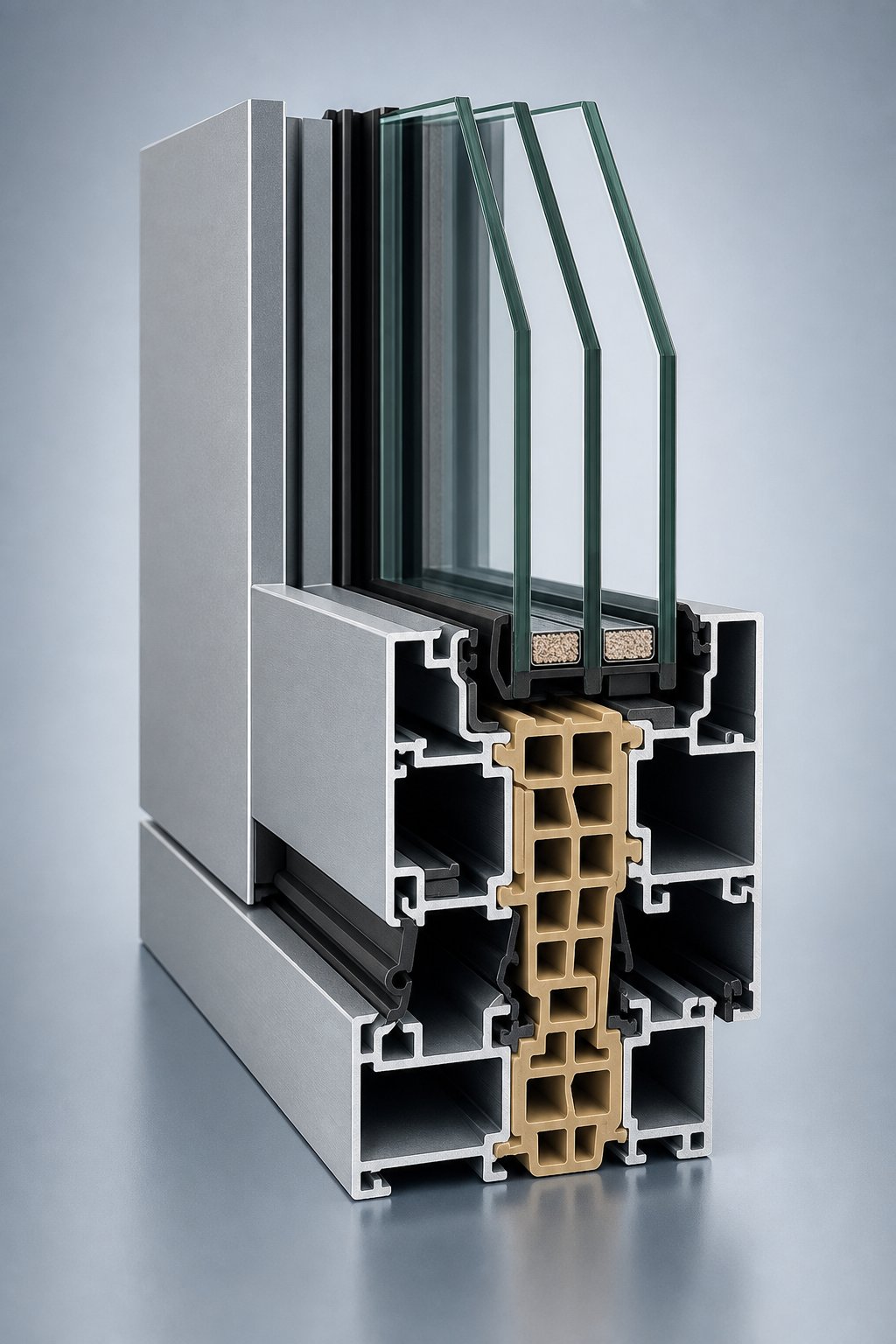
Think of an aluminium window frame as two separate halves: one facing outdoors, one facing your living room. Without intervention, those halves form a continuous metal bridge that conducts heat straight through the wall. A thermal break is an insulating strip, typically made from reinforced polyamide (glass-fibre nylon), mechanically locked between the inner and outer aluminium profiles. It physically separates the two halves so heat and cold cannot travel freely across the frame.
The concept is simple, but the impact is dramatic. Polyamide conducts heat roughly 500 to 1,000 times less efficiently than aluminium. By inserting a strip of this material, typically 14 to 35 mm wide depending on the system, the frame’s thermal conductivity drops to a level competitive with timber and uPVC. Premium multi-chamber thermal breaks go further, incorporating multiple insulating cavities and even foam inserts to extend the thermal pathway and push performance higher still.
Thermal break technology transformed aluminium window frames from one of the poorest residential insulating materials into a genuinely competitive performer. Without it, aluminium conducts heat at roughly 5.8 to 7.0 W/m²K. With a quality thermal break, that figure drops to between 1.5 and 2.5 W/m²K, placing aluminium in the same performance bracket as other mainstream framing materials.
When paired with aluminium double glazing, the complete window unit (frame plus glass) achieves thermal performance that comfortably meets and often exceeds NCC minimum requirements across all Australian climate zones. The aluminum glass frame and insulated glass unit work as a system: the thermal break handles the frame, while Low-E coatings, argon gas fills, and warm-edge spacers handle the glazed area. Together, they deliver comprehensive thermal control that older aluminum double pane windows simply could not achieve.
Understanding Energy Performance Ratings
Knowing thermal breaks exist is one thing. Knowing whether a specific window actually performs well is another. In Australia, the Window Energy Rating Scheme (WERS) provides standardised performance data so you can compare products on a level playing field. WERS rates windows and window frames using several key metrics:
- U-value (thermal transmittance) — measures how much heat passes through the entire window unit, expressed in W/m²K. Lower numbers mean better insulation. For thermally broken aluminium, look for whole-window U-values below 3.0 W/m²K; premium systems with quality aluminum frame glass combinations achieve 1.5 to 2.5 W/m²K.
- Solar Heat Gain Coefficient (SHGC) — measures how much solar radiation passes through the window as heat, on a scale from 0 to 1. A lower SHGC blocks more solar heat, which is desirable in hot climates. In cooler regions, a higher SHGC lets beneficial winter warmth in. For most Australian homes, values between 0.25 and 0.40 balance light and heat well.
- Visible Transmittance (VT) — measures how much natural light the window lets through, also on a 0 to 1 scale. Higher is brighter. Most quality residential glazing sits between 0.4 and 0.7. Aluminium’s slim profiles maximise the glass-to-frame ratio, which naturally boosts VT compared to bulkier frame materials.
- Air Infiltration — measures how much air leaks through the closed window, expressed in litres per second per metre of operable joint. Lower is better. Well-sealed aluminium windows with multi-point locking hardware and compression seals achieve very low infiltration rates, contributing to both comfort and energy savings.
WERS also provides star ratings from one to ten for both heating and cooling performance, making it easy to compare products at a glance without diving into raw numbers. A higher star rating for heating means the window retains more warmth in winter. A higher cooling rating means it blocks more unwanted heat in summer. For most Australian climate zones, look for windows rated at least four stars in both categories as a baseline for good performance.
These ratings apply to the complete window unit, not just the frame or the glass in isolation. That matters because a thermally broken aluminium frame paired with budget single glazing will still underperform. The best results come from matching a quality thermal break system with appropriate glazing for your climate zone, whether that is standard double glazing, Low-E coated units, or high-performance tinted glass for sun-drenched north and west elevations.
Performance ratings give you the numbers. But numbers only tell part of the story. How those numbers translate into real-world comfort depends heavily on where your home sits on the map and what climate challenges your windows actually face day to day.
Which Climates Suit Aluminium Windows Best
Australia spans everything from tropical monsoon zones in the Top End to alpine conditions in the Snowy Mountains, with vast stretches of temperate, arid, and coastal climate in between. No single window material performs identically across all of them. Aluminium, however, covers more of that range comfortably than most homeowners realise, particularly when the frame is specified correctly for local conditions.
Best Climates for Aluminium Windows
The material’s natural strengths, corrosion resistance, dimensional stability in heat, and structural rigidity, align well with the conditions most Australian homes actually face. Here is how metal frame windows in aluminium perform across the country’s main climate zones:
- Coastal (Sydney, Gold Coast, Perth coastline, tropical QLD) — Aluminium excels here. Salt spray corrodes steel rapidly and accelerates rot in timber, but aluminium forms a natural oxide layer that resists salt-air degradation. A simple freshwater rinse every few months is enough to maintain the frame in exposed beachside locations. Powder-coated finishes add a further barrier against UV and salt.
- Hot-humid and tropical (Darwin, Cairns, Townsville) — High humidity causes timber to swell and vinyl to soften under sustained heat. Aluminium stays dimensionally stable regardless of moisture levels or temperature extremes. Louvre and awning configurations in aluminium allow ventilation during wet seasons without compromising weather resistance.
- Temperate and mixed (Melbourne, Adelaide, Canberra, Hobart) — These regions experience both hot summers and cold winters. Thermally broken aluminium with double glazing handles the swing comfortably, blocking summer heat gain while retaining warmth in winter. Specify a thermal break width of at least 20 mm for these zones.
- Hot-dry and arid (inland NSW, SA, WA) — Extreme UV and wide daily temperature swings are the main challenges. Aluminium does not degrade under ultraviolet exposure the way vinyl can, and powder-coat finishes resist fading and chalking even in harsh inland sun.
- Cold climates (alpine regions, Tasmanian highlands) — This is where specification matters most. A metal window frame without a thermal break will conduct cold directly indoors, creating discomfort and condensation. In these areas, insist on thermally broken profiles with a minimum 24 mm polyamide barrier, paired with double or triple glazing and Low-E coatings. Properly specified, aluminium performs well even here, but cutting corners on the thermal break is not an option.
Addressing Condensation and Cold Weather Concerns
Condensation is the issue that makes homeowners most nervous about choosing metal windows residential applications. It is worth understanding exactly why it happens and what prevents it.
Condensation forms when the interior surface of the window frame drops below the dew point of the indoor air. On a cold night, warm moist air inside the home contacts the chilled frame surface and releases water droplets. With older, non-thermally-broken aluminium, this was almost guaranteed in any climate where overnight temperatures dipped below about 10°C. The interior face of the frame would plummet to near-outdoor temperatures because nothing interrupted the heat path through the metal.
Thermal break technology solves this directly. By inserting a polyamide insulating strip between the inner and outer aluminium profiles, the interior surface stays warm enough to remain above the dew point. Engineering data shows that a 24 mm thermal break keeps the interior frame surface above 15°C even when exterior temperatures drop to -10°C, well above the condensation threshold for typical indoor humidity levels.
Glazing selection reinforces this protection. Double-glazed units with argon gas fills and warm-edge spacers keep the glass surface temperature higher too, eliminating the cold spots where moisture would otherwise collect. For homes in cooler parts of Victoria, Tasmania, or the ACT, combining a quality thermal break with appropriate glazing is the complete answer to the condensation question.
In coastal and tropical zones, condensation is rarely a concern because exterior temperatures seldom drop low enough to trigger it. Instead, the priority shifts to managing solar heat gain and maximising ventilation, areas where aluminium’s strength allows for larger operable panels and slimmer window frame metal profiles that let in more light and air without sacrificing structural integrity.
Climate dictates what your windows need to do. But within any given climate, the style of window you choose, its opening mechanism, profile design, and finish, determines how well it actually delivers on those needs day to day.
Residential Styles and Design Options in Aluminium
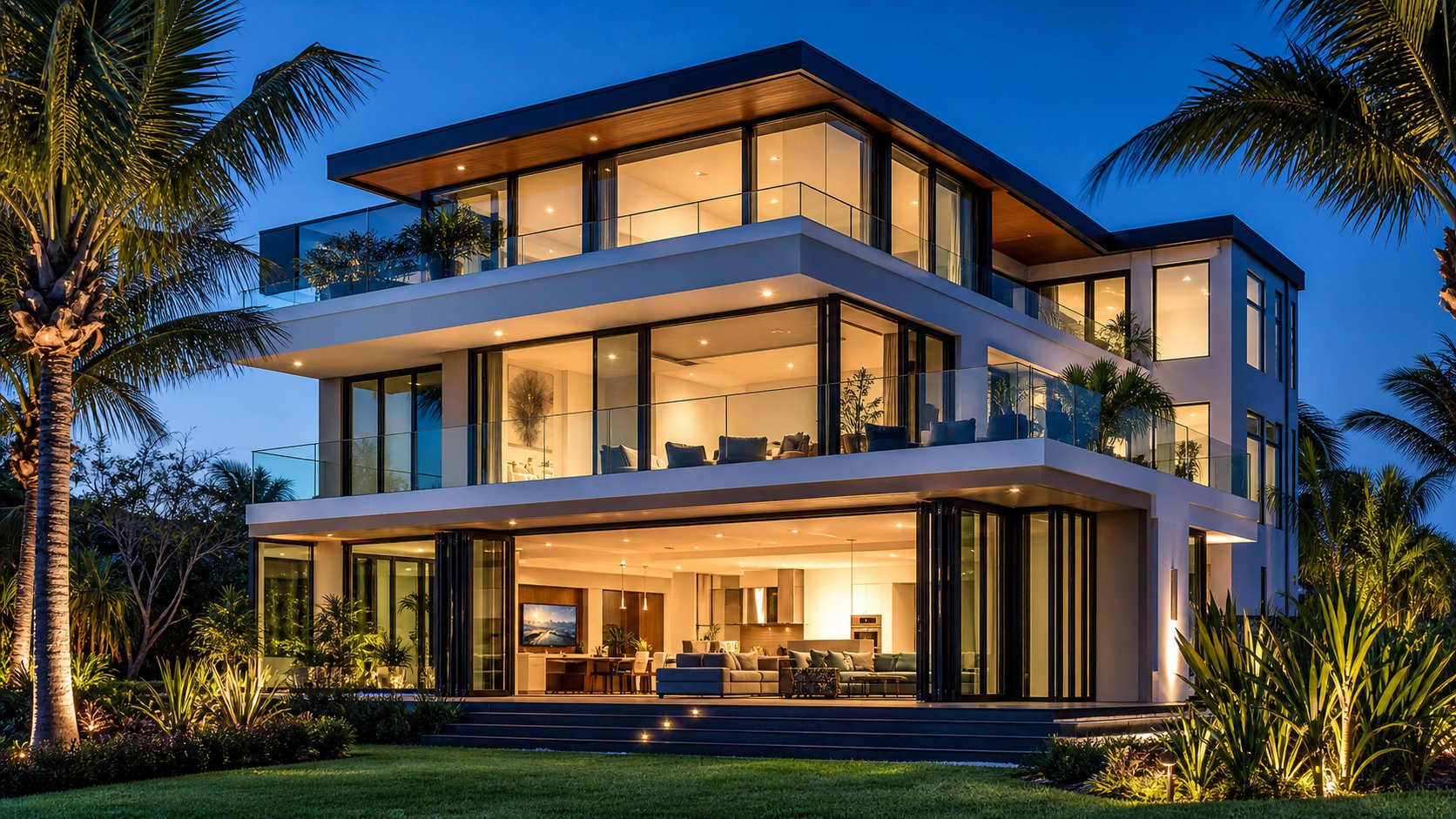
Aluminium’s structural strength opens up a range of window configurations that bulkier frame materials simply cannot replicate at the same scale. Because the profiles can remain slim while supporting large glass panels, homeowners gain more design freedom, more natural light, and more architectural flexibility than any other mainstream framing material offers.
Popular Aluminium Window Styles for Homes
Each window style serves a different purpose depending on the room, the orientation, and how you want to use the space. Here are the most common configurations available in residential aluminium framing:
- Sliding windows — Aluminium sliding windows are the go-to for bedrooms, hallways, and rooms where exterior clearance is limited. One or more sashes glide horizontally along a track, requiring no swing space. Aluminium’s rigidity supports wider spans than vinyl, meaning more glass and less frame for a brighter interior.
- Casement windows — Hinged on one side and opening outward, the aluminum casement window captures breezes effectively because the entire sash swings open. A crank mechanism (sometimes called aluminum crank windows) makes operation effortless, even in hard-to-reach spots above kitchen benches or bathroom vanities. The sash presses tightly against the frame when closed, forming a reliable weather seal.
- Awning windows — Top-hinged and opening outward from the bottom, awning windows let you ventilate during rain without water entering the room. They pair well with fixed panels in living areas and work beautifully stacked in bathrooms for privacy and airflow.
- Double-hung windows — Aluminum double hung windows feature two vertically sliding sashes, allowing ventilation from the top, bottom, or both simultaneously. They suit heritage-style homes and Queenslanders where a traditional look is important but modern performance is expected.
- Single-hung windows — A simpler variant where only the bottom sash moves. The aluminum single hung window costs less than its double-hung counterpart and works well in bedrooms and secondary living spaces.
- Fixed windows — No moving parts, maximum glass area. Fixed panels are ideal for feature walls, stairwells, and any location where the view matters more than ventilation. Aluminium’s slim profiles let the glass dominate.
- Louvre windows — Multiple horizontal glass blades pivot simultaneously, offering precise airflow control. Popular in tropical Queensland and Northern Territory homes where cross-ventilation is essential year-round.
- Bi-fold windows — Multiple panels fold back like an accordion to create a wide, unobstructed opening between kitchen and outdoor entertaining areas. Aluminium’s strength-to-weight ratio makes it the preferred material for bi-fold systems spanning large openings without sagging over time.
Many homeowners combine several styles across a single project. Custom aluminum windows allow you to mix fixed panels with operable sashes in a single frame assembly, tailoring each opening to its specific purpose. Suppliers like MEICHEN offer extensive custom configuration options, colour choices, and glazing selections that let you match every window to the room it serves, whether that is a large bi-fold servery window in the kitchen or a slim casement in the ensuite.
Colour and Finish Options That Last
One of aluminium’s underrated advantages is finish versatility. Two main options dominate the residential market: powder coating and anodising. Each has distinct strengths.
Powder coating is the most popular choice for Australian homes. A dry powder is electrostatically applied to the aluminium profile and then cured under heat, forming a tough, uniform skin. The result is a finish available in virtually any colour, from classic Monument and Surfmist to bold custom shades. Quality powder coatings resist UV fading, chalking, and salt-air corrosion for 25 years or more, and they can be touched up or recoated if damaged. For homeowners who want their windows to match specific facade colours or interior schemes, powder coating delivers unmatched flexibility.
Anodising takes a different approach. The aluminium is submerged in an acidic solution and treated with an electrical current, forming a hard oxide layer that becomes part of the metal itself rather than sitting on top of it. Anodised finishes are exceptionally scratch-resistant and durable, with a distinctive metallic matte appearance that suits contemporary architectural styles. The trade-off is a limited colour palette, typically natural silver, bronze, and black tones, and the inability to touch up localised damage without re-treating the entire profile.
For most residential projects, powder coating wins on practicality: broader colour range, easier repairs, and lower cost. Anodising suits homeowners chasing a premium metallic aesthetic and willing to accept fewer colour options in exchange for superior hardness and a finish that will not peel or flake.
Whichever finish you choose, the underlying aluminium frame requires almost no maintenance to stay looking sharp for decades. That low-effort longevity is a genuine selling point, but it does not mean zero effort. Understanding what routine care actually involves, and what problems can develop if you ignore it, helps set realistic expectations from day one.
Maintenance Requirements and Realistic Longevity Expectations
Aluminium frames earn their reputation as low-maintenance, but low does not mean none. A small amount of consistent care is the difference between windows that perform flawlessly for 40 years and ones that develop avoidable problems at the 15-year mark. Here is what realistic upkeep looks like, what can go wrong, and when it makes sense to consider aluminum frame window replacement rather than ongoing repairs.
Routine Maintenance for Aluminium Frames
The good news is that nothing on this list requires specialist tools or professional skills. Quality aluminium windows need attention roughly two to four times a year, depending on your location. Coastal homes and properties in high-pollution areas benefit from more frequent cleaning, while sheltered inland homes can stretch intervals longer.
- Wash frames every three to six months — Use warm water with a mild pH-neutral soap and a soft cloth or sponge. Work from top to bottom to avoid streaking. Avoid ammonia-based cleaners, bleach, or abrasive pads, as these can strip the powder-coat finish and expose the metal beneath.
- Clear tracks and weep holes every three months — Sliding and double-hung tracks collect dirt, insects, and pet hair. Vacuum with a crevice attachment, then wipe clean. Check the small drainage slots (weep holes) along the bottom exterior of the frame and clear any blockages so rainwater can escape rather than pooling inside the profile.
- Lubricate hardware annually — Apply a dry silicone spray to hinges, rollers, locking mechanisms, and friction stays once a year. Avoid oil-based lubricants like WD-40 for long-term use; they attract dust and eventually gum up moving parts.
- Inspect weatherseals every 12 months — Run your fingers along the rubber gaskets around the sash perimeter. Look for cracking, compression set, or sections pulling away from the frame. Seals are the first component to degrade and the cheapest to replace.
- Rinse coastal frames monthly — If your home sits within a few kilometres of the ocean, a quick freshwater rinse removes salt deposits before they cause filiform corrosion. This five-minute task can add decades to the frame’s life.
That is genuinely the full routine. No sanding, no repainting, no termite inspections, no re-staining after every summer. Compared to timber, the time investment is negligible.
Common Problems and How to Prevent Them
Transparency builds better decisions. Here are the issues that can develop with aluminium windows over time, along with practical steps to prevent or address each one:
- Condensation on non-thermally-broken frames — Old aluminium windows without thermal breaks will sweat in cold weather. There is no maintenance fix for this; the frame design itself is the problem. If you are living with old aluminium windows that drip every winter, the most effective solution is aluminum windows replacement with modern thermally broken units rather than endlessly wiping sills.
- Hardware wear and stiffness — Hinges, rollers, and locking points experience mechanical fatigue over 15 to 25 years of daily use. Forcing a stiff window accelerates damage. Prevention is simple: keep tracks clean and hardware lubricated. When parts do wear out, most can be replaced individually without removing the entire frame.
- Seal degradation — Rubber gaskets harden and lose elasticity after 10 to 20 years, allowing draughts and minor water ingress. Replacement seals are inexpensive and straightforward to fit. Catching degradation early during annual inspections prevents water damage to surrounding plasterwork.
- Powder-coat fading or chalking — In extreme UV environments (think north-facing elevations in inland Queensland or Western Australia), even quality powder coatings can chalk slightly after 20-plus years. The frame remains structurally sound; only the cosmetic layer is affected. Professional re-coating restores the original appearance without requiring a full replacement aluminum window.
- Glazing unit failure — Double-glazed sealed units can lose their gas fill or develop internal fogging after 15 to 25 years as perimeter seals age. This is a glazing issue, not a frame issue. The glass unit can be replaced within the existing aluminium frame, extending the window’s service life without the cost of aluminum retrofit windows or full frame replacement.
The pattern here is clear: the aluminium frame itself is almost always the last component to fail. Quality aluminium frames realistically last 30 to 45 years, and often longer. Seals, hardware, and glazing units may need attention once or twice during that span, but these are relatively minor interventions compared to the cost of replacement aluminum windows or a full reframe.
When aluminum window replacement does become necessary, it is usually because the original frames lacked thermal breaks, the home’s design requirements have changed, or the windows have reached the end of a genuinely long service life. In those cases, the decision shifts from maintenance to selection: working out whether aluminium remains the right material for your next set of windows, and what to look for in a supplier who can deliver the performance you need for another three or four decades.
How to Decide If Aluminium Windows Are Right for Your Home
Choosing a window material is not a one-size-fits-all decision. Your priorities, whether that is maximising natural light, minimising upkeep, meeting a tight budget, or achieving a specific architectural look, will steer you toward different materials. Aluminium is a strong contender across many scenarios, but it is not always the ideal fit. A structured approach helps cut through the noise and land on the right answer for your specific project.
When Aluminium Is the Right Choice for Your Home
Rather than asking “which material is best?” the more useful question is “which material best matches my priorities?” The table below maps common homeowner priorities to the frame material that typically delivers the strongest result in each category.
| Your Top Priority | Best-Suited Material | Why |
|---|---|---|
| Slim profiles and maximum glass area | Aluminium | Strongest frame per millimetre of profile; supports large panes with minimal visual obstruction |
| Low maintenance over 30+ years | Aluminium | No painting, no sealing, no rot risk; occasional wash and hardware lubrication only |
| Contemporary or modern architectural style | Aluminium | Clean lines, extensive colour range, suits minimalist and industrial aesthetics |
| Coastal or high-humidity location | Aluminium | Natural corrosion resistance; outperforms timber and steel in salt-air environments |
| Lowest upfront cost | Vinyl (uPVC) | Budget-friendly with decent thermal performance, though shorter lifespan and bulkier profiles |
| Heritage or period home restoration | Timber or wood-clad aluminium | Timber delivers authentic character; wood-clad options reduce maintenance burden |
| Maximum thermal insulation (cold climate) | Timber or fiberglass | Natural insulators without requiring thermal breaks, though aluminium with premium breaks competes closely |
| Environmental sustainability | Aluminium | 100% recyclable without quality loss; long lifespan reduces replacement cycles |
If your priorities cluster around design flexibility, durability, and low ongoing effort, aluminium lands at the top of the list. If raw insulation value on the tightest possible budget is the sole concern, vinyl may edge ahead on cost-per-unit. And if heritage authenticity matters above all else, timber remains hard to replicate. Most homeowners, though, find that aluminium covers the broadest combination of needs without forcing major compromises in any single area.
Retrofit and aluminium window replacement projects add another layer of consideration. If you are replacing old aluminium frames from the 1970s or 1980s, modern thermally broken systems typically fit the same rough openings with minimal structural modification. The existing reveals and flashings often accommodate the new profiles directly, making aluminium-to-aluminium upgrades one of the most straightforward replacement scenarios available.
Switching from timber to aluminium is also common, particularly when homeowners are tired of repainting every few years. The key compatibility factor here is frame depth. Timber frames tend to be deeper than aluminium profiles, so the replacement may require new reveals, architraves, or packing to fill the gap. A competent installer will assess the existing opening and recommend whether a direct swap or minor building work is needed. Switching from vinyl to aluminium is similarly manageable, though the reverse (aluminium to vinyl) can be trickier because vinyl’s bulkier profiles may not fit within the same reveal space.
For aluminum replacement windows in general, the critical question is whether you need an insert installation (new window within the existing frame) or a full-frame replacement (removing everything back to the rough opening). Insert installations are faster and less disruptive, but they only work when the existing frame is structurally sound and correctly aligned. If the old frame shows warping, corrosion, or seal failure, a full-frame approach delivers better long-term performance even though it involves more initial work.
What to Look for in an Aluminium Window Supplier
The best aluminium windows in the world will underperform if they come from a supplier who cuts corners on specification, fabrication, or support. Searching for aluminium windows near me returns dozens of results in any Australian capital city, so knowing how to separate quality suppliers from average ones saves time and money. Here is what matters most:
- Thermal break certification — Ask whether the system uses certified polyamide thermal breaks and request the WERS rating for the specific window configuration you are considering. Reputable residential aluminum window manufacturers will provide this data without hesitation. If a supplier cannot show you independently verified thermal performance figures, treat that as a red flag.
- Compliance with AS 2047 — Every window sold for residential use in Australia must comply with AS 2047 (Windows and External Glazed Doors in Buildings). This standard covers structural adequacy, weather resistance, and operation. Confirm that the supplier tests to this standard and can provide compliance documentation for council approval if required.
- Glazing options — A quality supplier offers multiple glazing configurations: standard double glazing, Low-E coated units, tinted glass for heat control, laminated glass for noise reduction or bushfire zones, and clear options for maximum light. The ability to tailor glazing to each elevation of your home (rather than one-size-fits-all across the project) is a hallmark of a capable aluminium window supplier.
- Custom sizing and configurations — Standard sizes suit some projects, but Australian homes frequently need non-standard dimensions, especially in renovations. Look for suppliers who fabricate to custom measurements without excessive lead times or surcharges. The ability to combine fixed, operable, and highlight panels within a single frame assembly is another indicator of manufacturing capability.
- Warranty terms — Quality aluminum window manufacturers typically offer 7 to 10 year warranties on frames and powder-coat finishes, with separate coverage for hardware and glazing seals. Read the fine print: some warranties exclude coastal installations or require specific maintenance schedules to remain valid. A supplier confident in their product will offer clear, comprehensive warranty terms without excessive exclusions.
- Project supply capability — Whether you are a homeowner managing a single renovation or a builder running multiple sites, the supplier should be able to handle your project scale. This includes accurate lead time estimates, staged delivery for multi-phase builds, and technical support for installation queries.
For Australian homeowners and builders looking at these criteria in practice, MEICHEN’s aluminium window range demonstrates the kind of supplier capability worth seeking out. They offer custom configurations across multiple window styles, a broad palette of powder-coat colours, various glazing selections tailored to climate and orientation, and project-based supply for both new builds and replacement projects. Their approach, connecting homeowners, builders, developers, and architects with systems engineered for Australian conditions, reflects the qualities outlined above.
Ultimately, the right supplier relationship matters almost as much as the right material choice. A supplier who understands your climate zone, can advise on appropriate specifications, and backs their product with genuine warranty support turns a good material decision into a great long-term outcome. Take the time to compare at least two or three aluminium window suppliers before committing, request WERS data and AS 2047 compliance documentation, and prioritise suppliers who ask questions about your project rather than simply quoting a price per unit.
Frequently Asked Questions About Residential Aluminium Windows
1. Are aluminium windows good for residential homes in Australia?
Aluminium windows are an excellent choice for Australian residential homes, particularly in coastal, tropical, and temperate climates. Modern thermally broken aluminium frames offer strong thermal performance (U-values between 1.5 and 2.5 W/m²K), resist corrosion from salt air, maintain dimensional stability in extreme heat, and last 30 to 45 years with minimal maintenance. Their slim profiles also maximise natural light by allowing larger glass areas than bulkier frame materials like vinyl or timber.
2. Do aluminium windows cause condensation problems?
Older aluminium windows without thermal breaks commonly caused condensation because the metal frame conducted cold directly indoors, dropping the interior surface below the dew point. Modern thermally broken aluminium windows solve this by inserting a polyamide insulating strip between the inner and outer profiles, keeping the interior frame surface warm enough to prevent moisture forming. When paired with double glazing and warm-edge spacers, condensation is effectively eliminated in all but the most extreme cold-climate scenarios.
3. How long do residential aluminium windows last?
Quality residential aluminium frames typically last 30 to 45 years or longer. The aluminium frame itself is almost always the last component to fail. Weatherseals may need replacing after 10 to 20 years, hardware can wear after 15 to 25 years of daily use, and double-glazed units may fog after 15 to 25 years, but these are minor, cost-effective repairs that extend the window’s total service life well beyond the frame’s baseline longevity.
4. What is the difference between thermally broken and non-thermally broken aluminium windows?
A thermally broken aluminium window contains a reinforced polyamide insulating strip (typically 14 to 35 mm wide) mechanically locked between the inner and outer aluminium profiles. This strip prevents heat from conducting through the frame, reducing thermal transmittance from around 5.8-7.0 W/m²K down to 1.5-2.5 W/m²K. Non-thermally broken frames lack this barrier, meaning the entire frame acts as a heat bridge, leading to energy loss, cold interior surfaces, and condensation in cooler weather. For Australian homes, thermally broken systems are essential for NCC compliance in most climate zones.
5. How much do aluminium windows cost in Australia?
Installed residential aluminium windows in Australia typically range from $800 to $1,500 or more per standard-sized window, depending on the style, glazing specification, thermal break quality, and powder-coat finish selected. Custom sizes, bi-fold configurations, and premium glazing options sit at the higher end. While aluminium costs more than vinyl (uPVC) upfront, its longer lifespan of 30 to 45 years compared to vinyl’s 20 to 30 years, lower maintenance requirements, and superior durability often deliver better value over the life of the home.
More Window & Door Guides