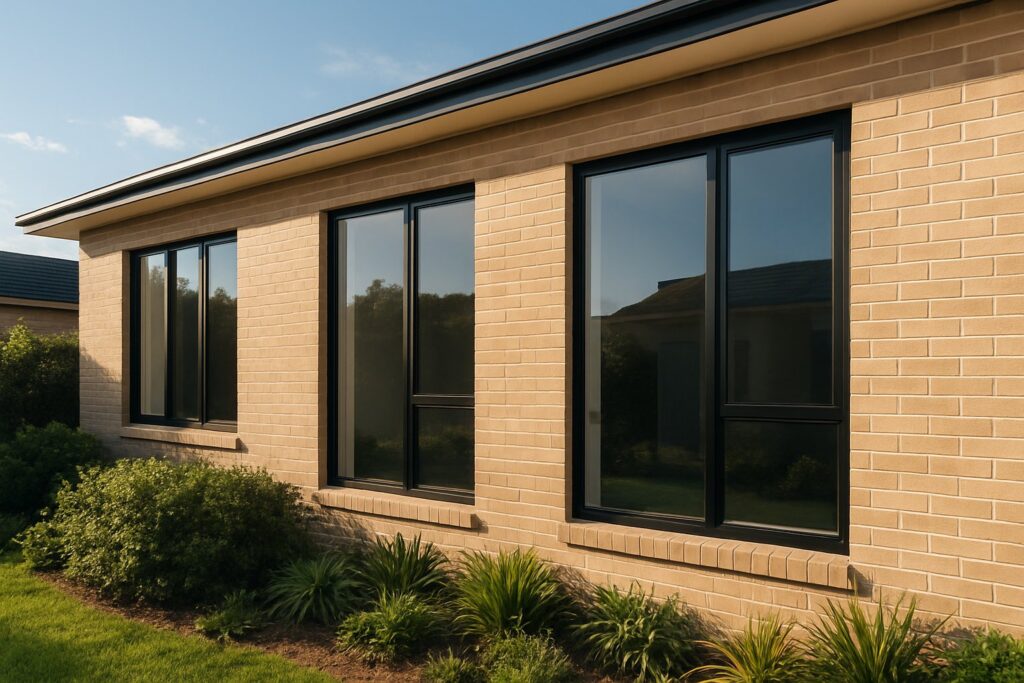
What Are Aluminium Louvre Windows and How Do They Differ
Picture a window that opens almost entirely — not by sliding sideways or cranking outward, but by tilting a series of horizontal blades in unison. That’s the core idea behind aluminium louvre windows, and it’s a concept that has shaped tropical and coastal architecture across Australia for decades.
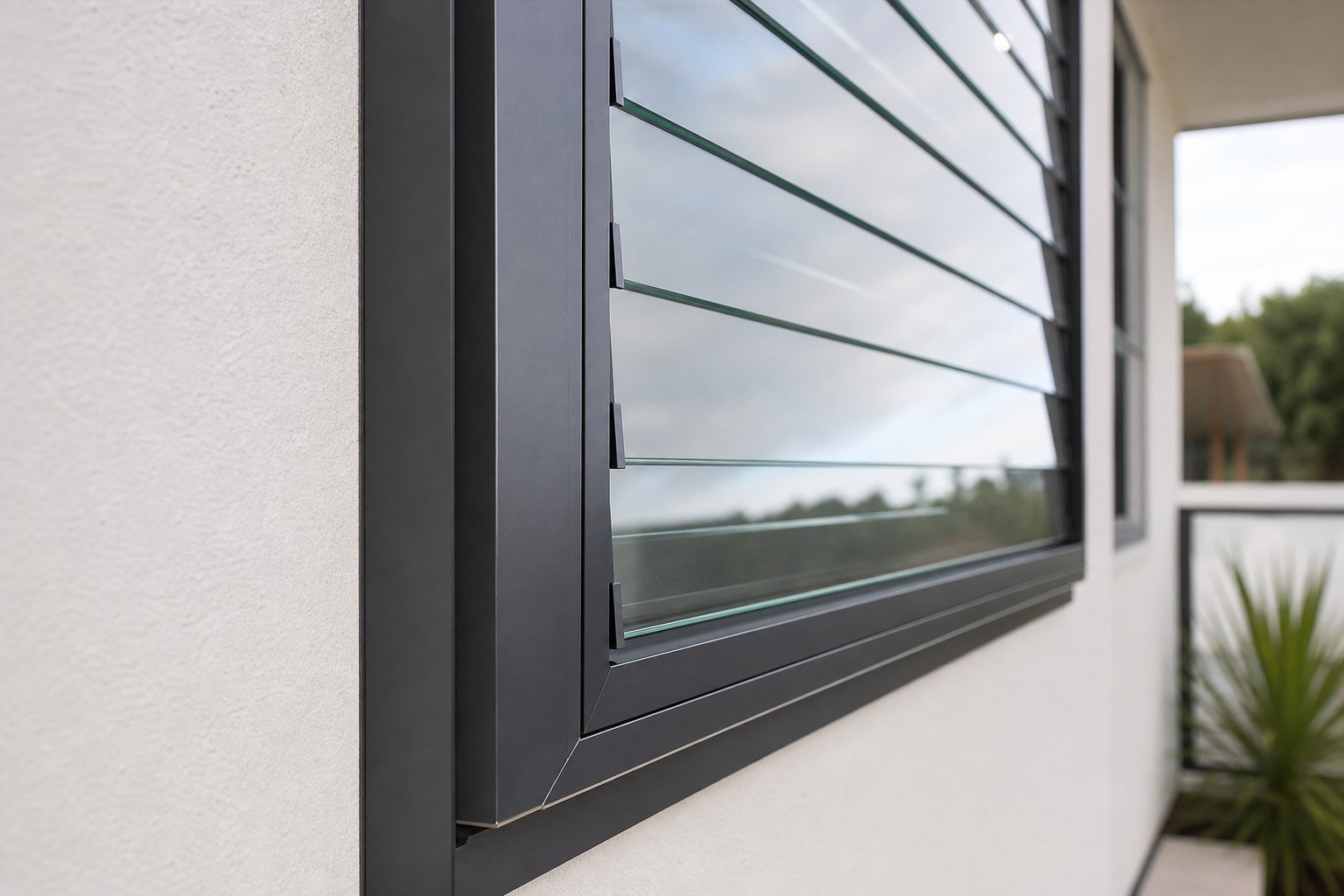
Aluminium louvre windows consist of multiple horizontal glass or metal blades (slats) held within a lightweight aluminium frame. Each blade pivots on a central axis, allowing occupants to control ventilation and light by adjusting the angle of the slats from fully closed to nearly horizontal.
Unlike a fixed glass panel that simply lets light in, a louvre window transforms the entire opening into an adjustable ventilation system. You decide how much breeze enters, which direction it flows, and how much privacy you retain — all without opening or closing the window in the traditional sense.
Louvre, Jalousie, or Breezeway — Clearing Up the Terminology
Search for this style of window and you’ll run into a tangle of names. Louvre windows, jalousie louver windows, breezeway windows, and slatted windows all describe the same family of designs. The differences are mostly regional. “Jalousie” comes from the French word for jealousy (a nod to being able to see out without being seen), and it’s the term you’ll encounter most in American and older Australian literature. “Breezeway” is common in Queensland and the Pacific Islands, while “louvred windows” tends to appear in British and Australian building specifications. Regardless of the label, the operating principle stays the same: pivoting blades within a frame.
Why Aluminium Frames Dominate Modern Louvre Design
Timber louvres were once standard, but aluminium has taken over for good reason. The material resists corrosion — critical in coastal suburbs from Perth to Cairns where salt spray attacks exposed surfaces daily. Its strength-to-weight ratio allows for slimmer frame profiles, which means more glass area and less visual bulk. And powder-coat finishing gives architects and homeowners access to virtually any colour without the ongoing repainting that timber demands. For a louvre window that needs to house multiple moving blades, clips, and pivot hardware, aluminium’s dimensional stability and low maintenance make it the practical choice over vinyl or timber alternatives.
The real magic, though, isn’t in the frame material alone — it’s in how all those blades move together as a single, synchronised system.
How the Louvre Window Mechanism Works
That synchronised movement isn’t accidental — it’s the result of a simple but precise mechanical linkage that connects every blade in the window to a single control point. Understanding the louver window parts helps you appreciate why quality hardware matters and what to look for when specifying a system.
The Pivot Mechanism Explained
Each blade sits in a pair of small metal clips mounted on either side of the louver frame. These clips grip the edges of the blade and allow it to rotate freely around a central pivot point. On one side of the window, the clips connect to a vertical operating bar — a slender metal rod that runs the full height of the frame. When this bar moves up or down, every clip rotates simultaneously, tilting all blades to the same angle in one smooth motion.
The geometry is deliberate. Blades are spaced so that when closed, each one overlaps the blade below it by several millimetres. This overlap creates a shingle-like seal that sheds rain and blocks wind. Rotate the handle to open, and the blades pivot toward horizontal, progressively revealing the full aperture until the window is almost entirely open to airflow.
Manual vs Motorised Operation
A traditional adjustable louvre window uses a hand-crank handle or a simple lever connected to the operating bar. Turn the crank and the bar translates that rotational force into linear movement, pivoting every blade at once. It’s mechanical, reliable, and requires no power source.
Motorised systems replace the hand crank with an electric actuator. A small motor drives the operating bar, and the window can be controlled via wall switch, remote, or smart home platform. This is where things get interesting for Australian homeowners investing in automation. Paired with rain and wind sensors, a motorised adjustable louver window can close itself automatically when a storm rolls in — even if you’re not home. For bathrooms, stairwells, or high-mounted installations where reaching a handle is impractical, motorised operation shifts from luxury to necessity.
Blade Types and Materials
The blades themselves come in several materials, each suited to different applications:
- Glass blades — maximise natural light and visibility; available in clear, obscure, tinted, or low-E options; ideal for living areas and bathrooms where light matters as much as airflow.
- Aluminium blades — fully opaque, lightweight, and extremely durable; best for privacy screens, plant rooms, car parks, and facades where ventilation is needed without transparency.
- Timber blades — offer a warm, natural aesthetic for interior applications or sheltered outdoor areas; require more maintenance than aluminium or glass and are less common in exposed positions.
Your choice of blade material shapes not just the look of the window, but its thermal behaviour, privacy level, and long-term maintenance profile — factors that become especially relevant when comparing louvres against other window types.
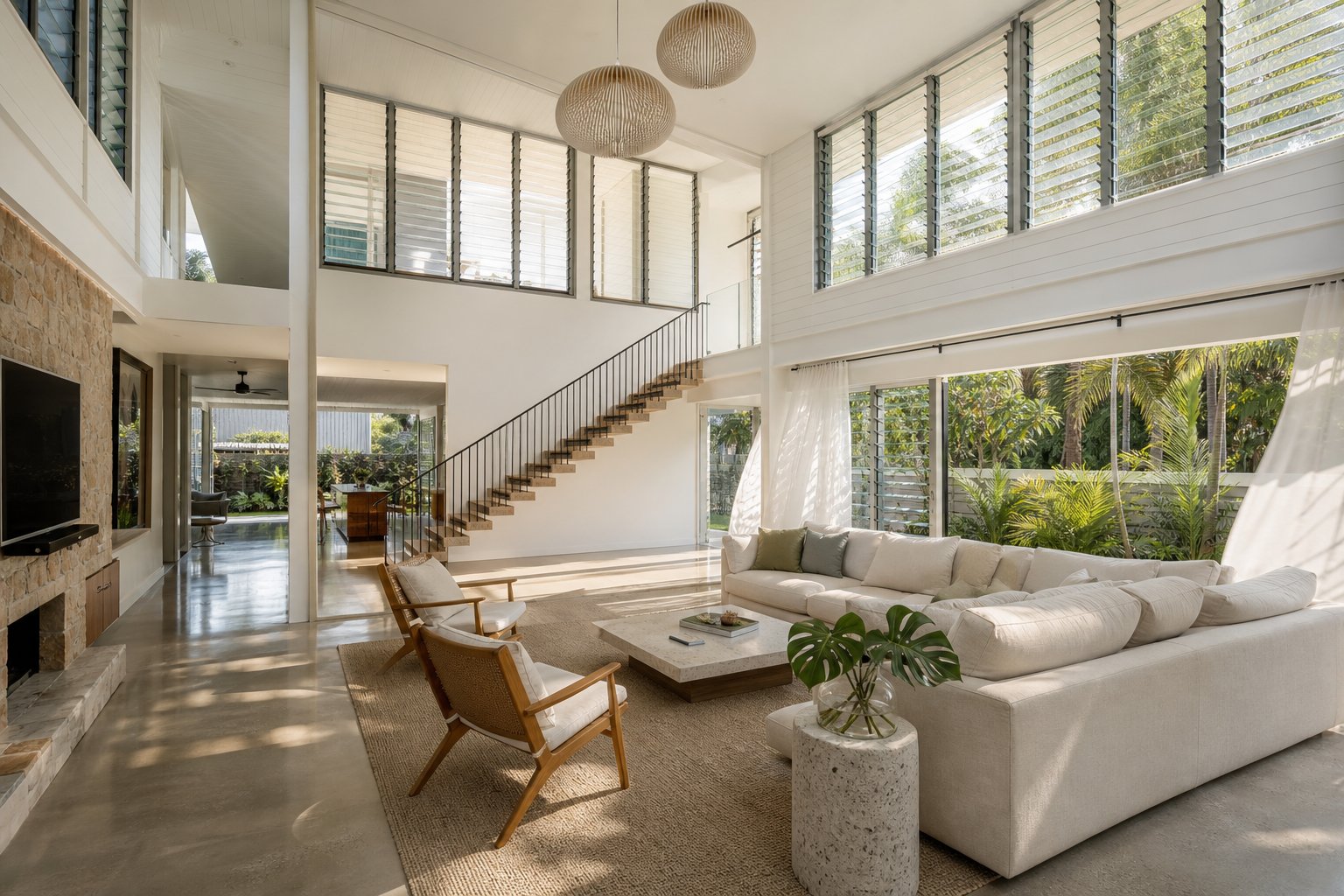
Why Louvre Windows Deliver Superior Natural Ventilation
Ventilation performance comes down to one simple question: how much of the window opening actually lets air through? This is where louvered windows leave every other style behind — and the physics explains why.
Open Aperture Advantage Over Other Window Styles
Open aperture refers to the percentage of a window’s total area that becomes a genuine opening when the window is fully operated. A sliding window can only ever expose 50% of its frame area because one pane must sit behind the other. Casement windows swing outward and technically open fully, but the sash projects into space rather than creating a clear, unobstructed plane of airflow. Awning windows fare worse — their hinged design limits the opening to a narrow gap at the bottom.
A louver window, by contrast, achieves close to 100% open aperture. When every blade pivots to near-horizontal, the entire framed area becomes a passage for air. No pane blocks another. No sash obstructs the opening. The result is maximum airflow through minimum wall space — a critical advantage in compact Australian homes where window openings are limited by structural framing or boundary setbacks.
Directional Airflow Control Through Blade Angle
An open hole in a wall lets air pass through, but it offers no control over where that air goes once inside the room. Window louvers work differently. Each angled blade acts like a small scoop, redirecting incoming breeze upward toward the ceiling or downward toward floor level depending on how far you rotate the handle.
Partially opened blades create a deflection effect that pushes airflow in a specific direction — useful for directing a breeze over a bed without papers flying off a desk, or channelling cool air low across a tiled floor in summer. This level of directional control is something no casement, sliding, or awning window can replicate.
Cross-Ventilation and Stack Effect Strategies
The real performance gains come from pairing louver windows strategically across a building. Cross ventilation relies on pressure differentials: wind hitting one side of a home creates positive pressure, while the opposite side experiences negative pressure. Placing louvres on both the windward and leeward walls creates a natural pathway that draws air through the interior without any mechanical assistance.
When louvre windows are positioned on opposing walls or at different heights within a space, they harness natural pressure differentials and the stack effect — warm air rising and exiting through high openings while cooler air is drawn in through lower ones — to deliver continuous passive cooling without energy consumption.
Stack ventilation adds a vertical dimension. Warm air naturally rises, so a window louver placed high on a wall or in a clerestory position allows heated air to escape, pulling cooler replacement air in through lower openings. Combining both strategies — cross-ventilation horizontally and stack effect vertically — can reduce reliance on air conditioning significantly in tropical and subtropical Australian climates. It’s a passive cooling approach that costs nothing to run once the windows are in place.
Ventilation capacity is only one piece of the decision, though. How do louvres stack up when you weigh security, weather sealing, cost, and aesthetics against the alternatives side by side?
Aluminium Louvre Windows vs Other Window Types Compared
Choosing a window style involves trade-offs. No single type excels at everything, and anyone who tells you otherwise is selling something. The honest approach is to lay each option across the criteria that actually matter — ventilation, weather protection, security, cost, maintenance, and how well it fits your home’s architectural language — and let the comparison speak for itself.
The table below evaluates aluminium louvre windows alongside the four most common alternatives found in Australian residential construction: casement, sliding, awning, and fixed pane windows.
| Window Type | Ventilation Capacity | Weather Sealing | Security | Relative Cost | Maintenance | Aesthetic Flexibility |
|---|---|---|---|---|---|---|
| Aluminium Louvre | Excellent — near 100% open aperture | Moderate — improved with compression seals; vulnerable to heavy wind-driven rain | Lower — historically weak; modern keyed clips improve resistance | Medium-High — mechanical complexity adds cost | Low-Moderate — periodic blade cleaning and pivot lubrication | Strong in tropical, mid-century modern, and contemporary styles |
| Casement | Very Good — full sash opens but projects outward | Excellent — compression seal around full perimeter when closed | High — multi-point locking systems standard | Medium — widely available, competitive pricing | Low — occasional hinge lubrication and seal checks | Versatile across heritage, traditional, and modern designs |
| Sliding | Moderate — maximum 50% open aperture | Good — brush or compression seals; track drainage handles rain well | High — keyed locks and anti-lift devices common | Low-Medium — simple mechanism keeps costs down | Low — track cleaning and roller replacement over time | Suits modern and minimalist facades; less suited to heritage |
| Awning | Limited — narrow opening angle restricts airflow | Very Good — top-hinged design sheds rain naturally when partially open | High — locks tightly into frame when closed | Medium — standard in Australian new builds | Low — minimal moving parts | Works well in most styles; often combined with fixed panes |
| Fixed Pane | None — does not open | Excellent — fully sealed unit with no gaps | Very High — no operable components to exploit | Low — no hardware or mechanism required | Very Low — glass cleaning only | Highly versatile; used as feature windows in any architectural style |
A few patterns emerge immediately. Glass louvre windows dominate the ventilation column but sit at the lower end for security and weather sealing. Fixed panes are the opposite — perfect seals and zero airflow. The other three types occupy the middle ground, each balancing trade-offs differently.
Ventilation and Weather Sealing Compared
The ventilation gap between louvres and sliding windows is substantial. A sliding window physically cannot open more than half its area because one sash always overlaps the other. Awning windows restrict airflow further — their top-hinged design creates a narrow slot at the bottom, useful for light ventilation during rain but inadequate for serious air movement on a still, humid evening.
Casement windows come closest to matching louvres for airflow. The entire sash swings open, but it projects outward rather than creating a flush plane of unobstructed aperture. In practice, a casement delivers strong ventilation but cannot direct airflow the way angled louvre blades can.
Weather sealing is where louvred glass windows have historically struggled. Older jalousie designs were notorious for leaking in storms. Modern systems have closed that gap considerably — compression seals along blade edges, wider blade overlap geometry, and tighter manufacturing tolerances mean a properly closed louvre window now resists normal rainfall effectively. Heavy wind-driven rain at extreme angles can still cause minor ingress, particularly with narrower blade widths. For comparison, a closed casement window with its full-perimeter compression seal remains the benchmark for weather tightness among operable window types.
Security and Insulation Considerations
This is the section where honesty matters most. Traditional glass louver windows earned a poor reputation for security because individual blades could be lifted out of their clips from the outside — a vulnerability that made them unsuitable for ground-floor bedrooms or accessible openings in high-risk areas.
Modern systems address this with keyed blade clips that lock each slat into position, preventing removal without a tool or key. Some manufacturers also offer security screens integrated into the louvre frame, adding a physical barrier without sacrificing ventilation. These improvements bring louvres closer to acceptable security levels, but they still cannot match the multi-point locking systems standard on casement and sliding windows. For ground-floor applications in urban settings, pairing louvres with security screens or restricting them to upper storeys remains sensible practice.
Thermal insulation follows a similar pattern. A single-glazed louvre window, even when fully closed, allows more air leakage than a sealed casement or fixed pane. The solution for climate zones where winter heating matters is double glazed louvre windows — blades constructed with two layers of glass and an insulating air gap between them. Double-glazed louvered glass windows significantly improve thermal performance and acoustic insulation, narrowing the gap with solid-pane alternatives. They add cost and weight, but in temperate regions like Melbourne or Canberra where winter nights drop below 5°C, the upgrade is worth specifying.
Aesthetic Flexibility Across Architectural Styles
Louvre windows carry strong visual associations. They look completely at home in tropical Queensland architecture, mid-century modern renovations, and contemporary coastal builds where clean horizontal lines and indoor-outdoor flow define the design language. A wall of glass louvre windows in a Noosa beach house or a Darwin wet-season retreat feels natural and intentional.
They can feel less appropriate in Federation-style homes, Victorian terraces, or heritage cottages where the architectural vocabulary calls for double-hung sashes or traditional casements. A fixed louvre window — one with non-operable blades set at a permanent angle — sometimes appears in these contexts as a decorative screen element rather than a functional ventilation opening, but operable louvre systems generally suit modern and tropical aesthetics best.
Casement and awning windows offer broader stylistic range. They adapt to heritage restorations, contemporary builds, and everything between. Sliding windows lean modern and minimalist. Fixed panes are chameleons — they work anywhere because their simplicity doesn’t impose a particular style.
The takeaway isn’t that one type is universally better. It’s that each window style has a context where it performs at its peak. Aluminium louvre windows earn their place in climates and designs that prioritise airflow and light control above all else — and understanding which climates those are makes the difference between a window that transforms a home and one that frustrates its owner six months after installation.
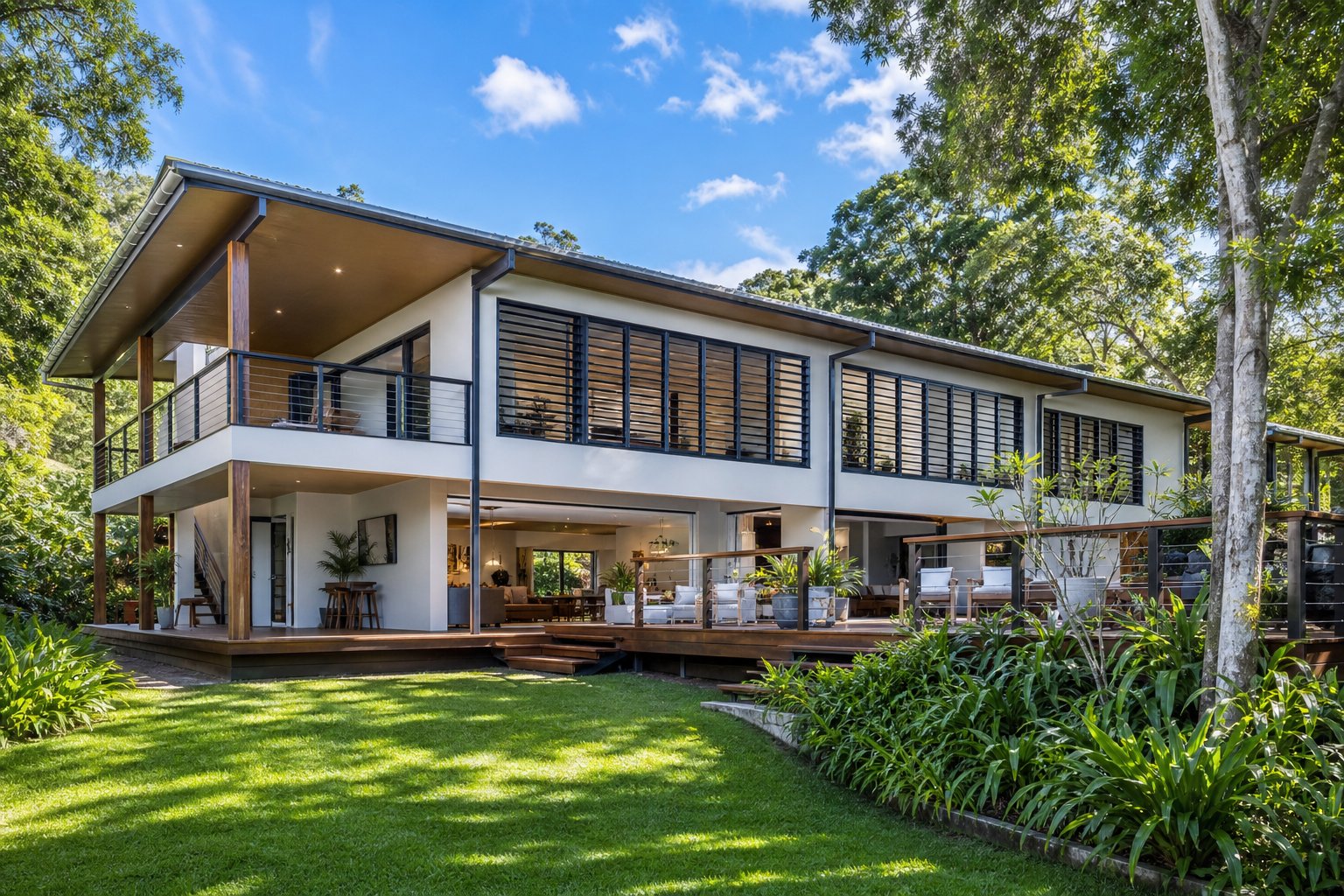
Which Climates Suit Aluminium Louvre Windows Best
Climate determines whether louvre windows become your home’s greatest asset or its weakest link. The same design that keeps a Cairns house comfortable year-round can leave a Hobart living room freezing in July. Getting this match right matters more than any other specification decision.
Tropical and Subtropical Climates — The Ideal Match
Aluminium louvre windows exist because of the tropics. Their entire design philosophy — maximum airflow, rain protection while open, directional breeze control — solves the exact problems that hot, humid climates present. In northern Queensland, the Northern Territory, and coastal regions above the Tropic of Capricorn, window louvers on a house aren’t a style choice. They’re a cooling strategy.
The logic is straightforward. When outdoor temperatures sit between 25°C and 35°C with high humidity for months at a time, moving air across skin is the most effective way to feel comfortable without running air conditioning constantly. Modern louvre windows placed on opposing walls create cross-ventilation pathways that can reduce indoor perceived temperature by several degrees — enough to delay switching on the split system until the hottest part of the afternoon.
This is why louvres remain a staple across tropical architecture from Townsville to Darwin, and throughout Southeast Asia and Hawaii. The climate demands continuous airflow, and no other window type delivers it as effectively. House louvers in these regions often run floor-to-ceiling in living areas, turning entire walls into adjustable ventilation panels.
Temperate and Coastal Regions — Seasonal Considerations
Move south into temperate zones — Brisbane, Sydney, Perth, Adelaide — and the calculation becomes more nuanced. Summers still benefit enormously from passive ventilation, but winters introduce a competing priority: keeping warm air inside.
Modern louvred windows work well in these climates when specified thoughtfully. The approach most architects take is strategic placement rather than whole-house use. Louvres go into bathrooms, laundries, kitchens, and living areas where summer ventilation is the primary concern, while bedrooms and south-facing rooms get casement or awning windows with better thermal seals for winter comfort. In mixed climates like Sydney, where summer heat and cool winters coexist, pairing louvres with double-glazed blades helps bridge the seasonal gap — allowing full ventilation in warmer months while providing reasonable insulation when closed during winter.
Coastal locations add another consideration. Salt air accelerates corrosion on lesser materials, but aluminium frames with quality powder-coat finishes handle marine environments well. It’s one reason modern louvre windows dominate beachside builds from Byron Bay to the Mornington Peninsula.
Where Louvre Windows May Not Be the Right Choice
Honesty here saves expensive regret. There are situations where louvres are the wrong specification, regardless of how appealing they look in a magazine spread.
Cold climates present the clearest mismatch. In regions like Canberra, Ballarat, or the Tasmanian highlands where winter temperatures regularly drop below 5°C, even modern louvered windows with compression seals cannot match the air-tightness of a casement or awning window. Heat loss through blade edges accumulates, driving up heating costs. If you want louvres in these areas, restrict them to rooms where ventilation outweighs insulation — a bathroom or laundry — and rely on higher-performing window types elsewhere.
Cyclone-prone regions demand special attention. Standard louvre systems are not rated for the extreme wind loads experienced in wind Regions C and D under AS/NZS 1170.2. In these areas — much of coastal Queensland north of Mackay, the NT coastline, and parts of Western Australia — only cyclone-rated louvre systems with proven pressure cycling and debris impact test results should be specified. Standard units risk blade failure, frame deformation, or complete detachment during a severe event.
High-security ground-floor applications also warrant caution. Despite improvements in keyed clips and locking mechanisms, louvres remain more vulnerable to forced entry than multi-point locked casement or sliding windows.
Here’s a quick suitability guide by climate zone:
- Tropical (Darwin, Cairns, Townsville) — Highly suitable. Ideal primary window type for most rooms. Specify cyclone-rated systems where required by NCC.
- Subtropical (Brisbane, Gold Coast, Sunshine Coast) — Highly suitable. Excellent for living areas and wet rooms; consider double-glazed blades for bedrooms.
- Temperate coastal (Sydney, Perth, Adelaide) — Suitable with strategic placement. Best paired with other window types for winter-facing rooms.
- Temperate inland (Melbourne, Geelong, Canberra) — Limited suitability. Restrict to bathrooms, laundries, and summer-focused spaces. Double glazing essential.
- Cold highland (Ballarat, Orange, Hobart) — Generally unsuitable as a primary window type. Use sparingly in wet areas only.
- Arid inland (Alice Springs, Broken Hill) — Moderate suitability. Excellent for summer evening cooling; dust infiltration through blade gaps can be an issue during wind events.
Climate suitability tells you where louvres belong in a building. The next question is what they actually do once installed — because the applications differ significantly between a family bathroom and a commercial car park ventilation system.
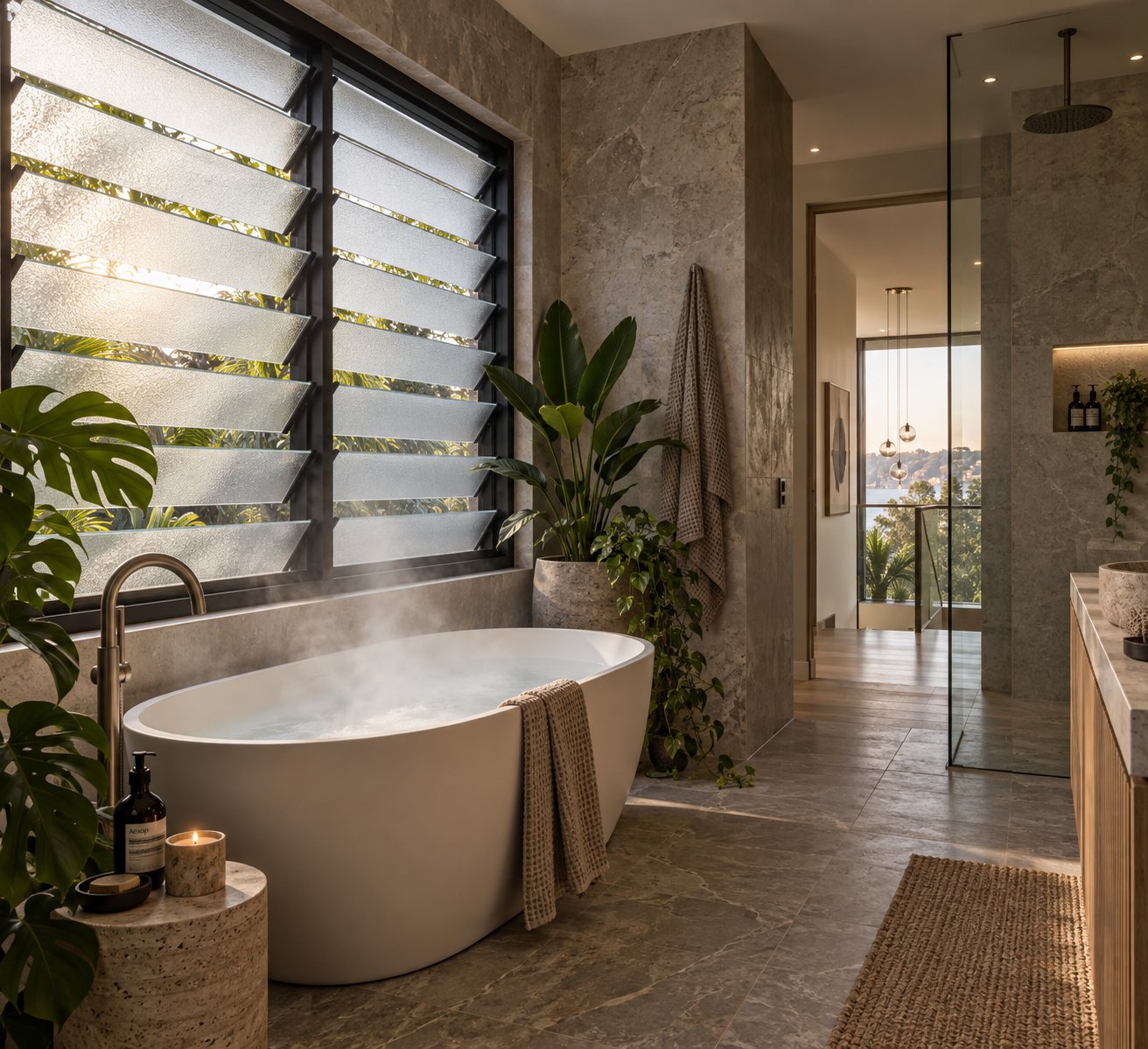
Residential and Commercial Applications for Aluminium Louver Windows
A louvre window in a family bathroom serves a fundamentally different purpose than one ventilating a basement car park — yet both rely on the same mechanical principle. The distinction lies in what each context demands: moisture control and comfort in a home versus code compliance and energy reduction in a commercial building. Understanding where these windows perform best in each setting helps you specify them with confidence rather than guesswork.
Residential Applications — Wet Areas, Living Spaces and Outdoor Rooms
Bathrooms and kitchens top the list of residential louvre installations, and the reason is moisture. Every shower, every pot of boiling pasta, every load of washing generates humid air that needs somewhere to go. Louvres for windows in these rooms provide continuous ventilation even during light rain — blades angled partially open shed water while still allowing steam to escape. That’s something a closed awning window simply cannot do.
Beyond wet areas, aluminum louver windows appear frequently in:
- Laundries — where dryer heat and damp clothing create persistent humidity that promotes mould if trapped indoors.
- Stairwells and hallways — where stack-effect ventilation draws warm air upward and out through high-mounted louvres.
- Pool houses and covered outdoor rooms — where full airflow is the priority and weather sealing matters less than in conditioned spaces.
- Living areas in tropical homes — where floor-to-ceiling louvre banks replace conventional walls to maximise cross-ventilation.
In each case, the common thread is a space where moving air matters more than achieving a hermetic seal. Bedrooms in cold climates? Probably not. A north-facing Queensland rumpus room? Absolutely.
Commercial and Multi-Residential Uses
Commercial buildings use aluminium louvre windows differently. Here, the driver is often regulatory rather than personal comfort. Australia’s National Construction Code requires minimum fresh-air provisions for occupied spaces, and natural ventilation through operable openings is one way to satisfy those requirements without oversizing mechanical HVAC systems.
Car parks are a prime example. Underground and semi-enclosed parking structures need continuous air exchange to manage vehicle exhaust fumes. Aluminium louvre panels set into facade walls or stairwell openings provide that airflow passively — no fans, no ductwork, no running costs. Plant rooms housing electrical switchboards or mechanical equipment benefit similarly, where aluminum window louvers allow heat to dissipate without compromising weather protection for sensitive equipment inside.
In multi-residential developments — apartment corridors, common stairwells, and bin rooms — louvres satisfy ventilation codes while keeping maintenance near zero. There are no motors to service, no filters to replace, and the aluminium frames handle decades of exposure without deterioration. For developers managing long-term body corporate costs, that operational simplicity carries real financial weight.
Custom Configurations for Unique Projects
Standard window sizes rarely align with architectural ambition. A raked ceiling line, an unusually tall opening above a kitchen splashback, or a curved facade on a commercial building — these situations demand custom louvre windows built to specific dimensions and configurations.
Aluminium louvre systems accommodate this flexibility well. Blade widths can be specified from narrow 50 mm slats up to wide 150 mm panels depending on the visual effect and airflow requirement. Frame heights extend to several metres when divided into stacked bays. Blade materials — glass, aluminium, or timber — can be mixed within a single installation. A custom louver configuration might combine obscure glass blades at eye level for privacy with clear glass above for light, all within one continuous frame.
For homeowners, builders, and architects planning projects that require tailored solutions, suppliers like MEICHEN offer aluminium window systems with custom configuration capabilities, multiple glazing choices, and a broad colour palette suited to Australian residential and commercial projects. Their project-based supply approach means specifications can be matched to architectural intent rather than forced into off-the-shelf sizes — particularly valuable for aluminium louver window installations where blade count, frame dimensions, and hardware selection all need to align precisely.
Whether the brief calls for a single bathroom louvre or a full commercial facade system, the ability to configure every element independently is what separates a window that fits from one that compromises. That flexibility does come at a cost, though — and understanding what drives louvre window pricing helps set realistic budgets before the quoting process begins.
Common Concerns About Louvre Windows Addressed Honestly
Every window type has weaknesses, and pretending otherwise helps no one. Aluminium louvre windows carry a reputation — some of it earned decades ago, some of it outdated — for being drafty, leaky, and poor at blocking noise. If you’re spending money on new windows, you deserve straight answers about what these systems can and cannot do in their current form.
The concerns are real. They stem from genuine problems with older jalousie designs that plagued Australian homes from the 1950s through the 1980s. What’s changed is the engineering. What hasn’t changed is the underlying physics — and that’s where realistic expectations need to be set.
Air Leakage and Thermal Performance — Past vs Present
Older glass louver window designs were notoriously drafty. Blades sat loosely in their clips with minimal overlap, and when winter winds hit, cold air streamed through the gaps between each slat. Anyone who grew up in a 1960s Queensland home remembers the curtains moving on a still night — that was air leaking through closed louvres.
Modern systems have improved this substantially. Compression seals along blade edges create contact pressure when the window is closed, reducing air infiltration by a significant margin compared to unsealed vintage designs. Tighter manufacturing tolerances mean blades fit more precisely within their clips, and wider blade overlap geometry — where each slat covers more of the one below it — leaves fewer pathways for air to travel through.
Here’s the honest part: even with these improvements, a closed louvre window still allows more air exchange than a fully sealed casement or awning window. The nature of the design — multiple moving parts with multiple seal points — means it cannot achieve the same air-tightness as a single sash compressing against a continuous perimeter gasket. For rooms where winter insulation is the top priority, that gap matters. In temperate climates like Melbourne or Canberra, specifying double-glazed blades and ensuring quality compression seals narrows the thermal performance difference, but it doesn’t eliminate it entirely.
The practical takeaway? Modern glass louvered windows perform well enough for bathrooms, kitchens, and living spaces in mild-to-warm climates. They’re not the right choice for a south-facing bedroom in Ballarat where you need every watt of heating to stay inside.
Rain Ingress and Weather Resistance
This is the concern that generates the most anxiety — and the most outdated advice. Older windows with glass slats sitting loosely in basic clips offered almost no resistance to driving rain. Water ran down the blade faces, found the gaps between slats, and dripped onto windowsills and floors. That experience left a lasting impression on an entire generation of homeowners.
Current louvre systems handle rain differently. When properly closed, modern blades overlap like shingles on a roof. Each slat’s lower edge extends past the upper edge of the blade below, creating a stepped barrier that sheds water outward rather than allowing it to track inward. Compression seals along the blade edges add a secondary defence, pressing glass-to-rubber contact points that resist water penetration under normal rainfall conditions.
The limitation is wind-driven rain. When rain arrives at steep angles — pushed horizontally by strong gusts — water can be forced upward between blade overlaps against gravity. Wider blades with greater overlap dimensions resist this better than narrow slats, which is why blade width selection matters in exposed locations. Research into wind-driven rain performance in louvre systems shows that blade spacing, angle, and integrated drainage all influence how much moisture penetrates during severe weather events.
Realistic expectation: a properly specified and correctly closed louvered glass window resists normal rain and moderate wind-rain combinations without issue. During intense storms with sustained high winds driving rain at extreme angles, minor ingress at the blade edges remains possible — particularly with narrower blade configurations. For homes in exposed coastal or high-wind positions, specifying wider blades (102 mm or 152 mm rather than 76 mm) and ensuring adequate overlap reduces this risk considerably.
Noise Reduction Limitations
This is where honesty matters most, because no amount of marketing can change the physics. Glass louvers — even modern ones with improved seals — provide less acoustic insulation than solid-pane alternatives. A fixed window or a tightly sealed casement blocks more external noise, full stop.
The reason is structural. A glass louver window contains multiple individual blades rather than a single continuous pane. Each blade edge represents a potential sound transmission path, and the seal points between blades are inherently less acoustically rigid than a solid sheet of glass bonded into a frame. Even when closed with compression seals engaged, the cumulative effect of multiple small gaps allows more sound energy to pass through than a single sealed unit.
Modern acoustic improvements do help. Laminated glass blades dampen vibration better than standard float glass. Double-glazed louvre blades introduce an insulating air gap that attenuates sound transmission. Quality aluminium frames with compression seals can achieve noise reduction of 25 to 35 decibels depending on configuration — a meaningful improvement over older unsealed designs that might manage only 10 to 15 dB of reduction.
For context, a well-sealed casement window with double glazing typically achieves 30 to 40 dB reduction, and a fixed window can reach 45 dB. Louvres sit below both, and the gap widens further if blades are left partially open for ventilation — which, after all, is their primary purpose.
The practical implication: if your home faces a busy arterial road, sits under an airport flight path, or neighbours a construction site, louvre windows in bedrooms and living areas will let more noise through than sealed alternatives. They’re better suited to quieter suburban streets, rear-facing walls away from traffic, or upper storeys where distance from noise sources provides natural attenuation. In rooms where you want both ventilation and quiet, the trade-off is real — you gain airflow at the cost of acoustic isolation.
None of these limitations make aluminium louvre windows a poor product. They make them a specific product — one that excels in particular conditions and underperforms in others. The key is matching the specification to the situation rather than expecting a ventilation-focused window to behave like a sealed thermal envelope. Understanding what drives the cost of these systems helps you budget for the right specification level — whether that means basic single-glazed blades for a sheltered bathroom or premium double-glazed acoustic blades for a living room that needs both breeze and relative quiet.
What Influences Aluminium Louvre Window Pricing
Pricing for aluminium louvre windows rarely appears in a vacuum. You’ll see figures quoted online — sometimes wildly different from one supplier to the next — without any explanation of why one window costs twice as much as another that looks almost identical. The gap usually comes down to specification choices that aren’t visible in a photograph but have a direct impact on performance, longevity, and how well the window suits your particular application.
Unlike a basic sliding window with two panes and a track, a louvre system contains multiple individual blades, each held by precision clips, connected to an operating bar, and sealed along every edge. That mechanical complexity is the baseline reason louvres cost more per square metre than simpler window types. But within the louvre category itself, the price range is broad — and understanding what pushes the number up or down puts you in a stronger position when reviewing quotes.
Key Variables That Drive Louvre Window Pricing
Several factors compound to determine the final cost of a louvre window. Listed here in rough order of impact on the total price:
- Frame size and configuration — Larger openings require heavier aluminium sections, more blades, and stronger hardware. A tall, narrow louvre bank costs differently than a wide, short one because blade span affects structural requirements. Multi-bay configurations with mullions add further complexity.
- Number of blades — More blades mean more clips, more pivot points, more seal material, and a longer operating bar. A window with twelve 102 mm blades contains significantly more componentry than one with six blades of the same width.
- Blade material — Glass blades (clear, tinted, obscure, or low-E) sit at a different price point than aluminium blades. Timber blades carry a premium due to material and finishing costs. If you’re comparing louver windows for sale, blade material is often the single biggest variable between quotes for the same frame size.
- Blade width — Wider blades (152 mm) cover more area per blade, meaning fewer are needed for a given opening height. Narrower blades (76 mm) require more units and more hardware, but offer finer airflow control and a different aesthetic proportion.
- Glazing specification — Single-glazed blades are standard and most affordable. Double-glazed louvre blades add an insulating air gap and a second sheet of glass to every slat, roughly doubling the blade cost while significantly improving thermal and acoustic performance.
- Operation type — A manual crank handle is the most economical option. Motorised actuators with wall switches add moderate cost. Full smart-home integration with rain sensors and automated closure pushes the price higher again, though the convenience and weather protection often justify the investment.
- Hardware quality — Budget systems use basic stainless clips and simple operating bars. Premium hardware features keyed locking clips, marine-grade stainless steel components, and precision-machined pivot points that maintain smooth operation over decades. The difference shows up in longevity rather than day-one appearance.
- Frame finish — Standard powder-coat colours (white, black, monument, surfmist) are typically included in base pricing. Custom colours, textured finishes, or anodised options attract surcharges. Anodising offers superior durability in harsh coastal environments but costs more than standard powder coating.
Each of these variables interacts with the others. A large motorised window with double-glazed blades and a custom anodised finish sits at the top of the spectrum. A compact manual unit with single-glazed standard blades and a stock powder-coat colour sits near the bottom. Most residential installations land somewhere between — and that’s where understanding the trade-offs helps you allocate budget where it matters most for your climate and application.
Louvre Windows vs Other Types — Relative Cost Position
Without fabricating specific dollar figures that vary by supplier, region, and project scope, it’s useful to understand where louvres sit relative to other window types in the Australian market.
Basic sliding windows occupy the lower end of the cost spectrum. Their mechanism is simple — two panes on a track — and they’ve been mass-produced for decades, driving manufacturing efficiency and competitive pricing. Standard awning windows sit slightly above, with their hinged sash and winding mechanism adding modest complexity.
Aluminium louvre windows generally cost more than both. The mechanical linkage system, multiple individual blades, precision clips, and seal requirements all add manufacturing steps that simpler window types don’t require. Think of it as paying for the ventilation performance advantage — that near-100% open aperture doesn’t come free.
At the upper end of the market, louvres still sit below premium bi-fold door systems, large-format corner windows, and structurally glazed curtain wall panels. Those products involve heavier aluminium sections, more complex engineering, and larger glass panels that push costs significantly higher. If you’re weighing louvers for sale against a bi-fold system for the same opening, the louvre option will typically come in lower — while delivering superior ventilation, though obviously serving a different architectural purpose.
One nuance worth noting: louver window shutters and louvre window blinds — external or internal screening systems that sit over or alongside louvre windows — add a secondary cost layer. Some homeowners install these for additional weather protection, privacy, or bushfire compliance (BAL-rated shutters), and their cost should be factored into the total opening budget rather than treated as a surprise addition later.
Long-Term Value and Energy Savings
The upfront cost tells only half the story. In climates where aluminium louvre windows perform at their best — tropical and subtropical regions across northern and coastal Australia — the passive ventilation they provide directly reduces air conditioning runtime. Every hour your split system stays off because cross-ventilation is keeping the house comfortable is money not spent on electricity.
Quantifying exact savings depends on too many variables (house orientation, insulation levels, occupant behaviour, local electricity rates) to offer a universal figure. But the principle is well established in passive design literature: homes designed around natural ventilation in warm climates consistently show lower cooling energy consumption than sealed homes relying entirely on mechanical systems. Louvre windows are the most effective operable window type for enabling that strategy, given their unmatched open aperture.
There’s also a maintenance cost advantage over time. Aluminium frames don’t need repainting, re-staining, or sealing — unlike timber louvre window blinds or timber-framed alternatives that demand periodic refinishing to prevent rot and weathering. The operational cost of an aluminium louvre system over a 20-year lifespan is largely limited to occasional blade cleaning, pivot lubrication, and seal replacement — all minor expenses compared to the ongoing upkeep timber demands.
For homeowners in the right climate, the higher purchase price relative to a basic sliding or awning window pays back through reduced energy bills and lower maintenance costs across the window’s lifetime. In cooler climates where the ventilation advantage sees less use, that payback period stretches — which circles back to the climate suitability question. Specify louvres where they’ll work hardest, and the economics take care of themselves.
Cost clarity helps set a realistic budget, but it doesn’t tell you how to get the windows into your walls correctly — or how to keep them performing well for decades after installation day.
Installing and Maintaining Aluminium Louvre Windows
Getting the specification right is one thing. Getting the window into the wall correctly — level, sealed, and operating smoothly — is what separates a louvre system that performs for decades from one that rattles, leaks, and frustrates within its first winter.
Louvre windows demand more installation precision than most other window types. A sliding window can tolerate a millimetre or two of frame deviation because the sash simply rides along a track. A louvre window with eight or twelve blades that must all close flush against compression seals simultaneously? That tolerance shrinks considerably. If the louvre frames sit even slightly out of plumb or the head isn’t perfectly level, blades won’t seal evenly — some will compress too tightly while others leave gaps that admit air and water.
Why Professional Installation Matters
Three factors make DIY installation risky for louvre windows specifically.
First, blade alignment. Every blade in the system connects to the same operating bar. If the frame racks during installation — even subtly — the bar’s travel becomes uneven, causing blades at one end to close fully while blades at the other remain slightly ajar. Correcting this after the frame is fixed and sealed into the wall means removing trim, refastening, and potentially re-flashing the entire opening.
Second, weather sealing. Louvre frames require continuous flashing at the head and sill, with particular attention to how water drains away from the blade overlap zone. Incorrect flashing detail allows water to pool behind the frame rather than shedding outward — a problem that may not reveal itself until the first heavy rain months after installation. Professional installers understand the drainage geometry that louvre dimensions demand, especially the relationship between frame depth and reveal size.
Third, the operating mechanism itself. Galleries — the vertical channels that house the clips and operating bar — need to be fixed securely and squarely. Breezway’s installation specifications allow for screw holes placed between clips to avoid internal mechanisms, with countersinking to prevent screws catching on blade clips during operation. This level of detail is easy to overlook without experience handling these systems.
Accurate louvre measurements before ordering are equally critical. Unlike a standard window where a few millimetres of clearance can be packed with shims and sealed, a louvre frame that’s too tight won’t slide into the opening, and one that’s too loose compromises the seal integrity around the perimeter. Most manufacturers work to a 2 mm tolerance, so measuring the opening at multiple points — top, middle, bottom for width; left, centre, right for height — catches any irregularity in the rough opening before it becomes a costly reorder.
Structural Considerations for Different Wall Types
Australian homes use several construction methods, and louvre windows integrate differently with each.
Brick veneer — The most straightforward installation. Standard reveal sizes of 116 mm or 138 mm work well with common louvre frame depths. The brick outer leaf provides a solid fixing point for the frame fin, and the reveal bridges the gap between frame and internal plasterboard. Most residential louvre installations in suburban Australia follow this method without complication.
Weatherboard and lightweight cladding — More complex. Frame depth becomes the critical variable. A deeper louvre frame (such as the 131 mm Easyscreen profile) may exceed the available wall depth on a 70 mm stud wall, meaning the reveal won’t be visible on the interior face. In these situations, installers often fix directly through the frame fin into the stud rather than relying on reveals, or they use screw holes in the galleries to anchor the frame securely. For 90 mm stud walls, the maths works better — but only just, with as little as 8 mm of reveal showing internally.
Steel framing — Requires pre-drilled fixing points or self-tapping screws rated for the steel gauge. The principle is the same as timber framing, but the fastener selection changes. Steel studs also conduct temperature differently, so thermal breaks between the louvre frame and steel members help prevent condensation in cooler climates.
Renovation into existing openings — When replacing old louvres or other window types, the existing timber sub-frame often remains in place. The new louvre window can be ordered without fins (de-finned) and slotted directly into the opening, fixed through the jambs and head, then sealed with appropriate sealant. Clearance is essential here — the same-size window won’t fit back into the same opening without allowance for squareness variation and manufacturing tolerance. Trim angle in a colour-matched finish covers any gaps neatly if clearances end up slightly generous.
Cleaning, Maintenance and Blade Replacement
One of the genuine advantages of aluminium louvre frames over timber alternatives is how little ongoing attention they demand. No repainting every few years. No sanding back peeling finish. No sealing end grain against moisture. The powder-coat surface on a quality aluminium frame resists UV degradation and salt air corrosion for decades with nothing more than periodic washing.
The blades and hardware, however, do benefit from a simple maintenance routine:
- Quarterly — Open blades fully and wipe each one with a damp cloth and mild soapy water. Dust, pollen, and salt film accumulate on blade surfaces and, if left, can etch glass or stain aluminium over time. Cleaning with blades in the fully open position gives access to both faces without removing anything from the frame.
- Every six months — Apply a silicone-based lubricant to the pivot points where blades meet their clips, and to the operating bar where it passes through guide channels. This keeps the crank action smooth and prevents the stiff, grinding feel that develops when salt or grit builds up in the mechanism.
- Annually — Inspect compression seals along blade edges for cracking, hardening, or compression set. Seals that no longer spring back when blades open have lost their ability to create an airtight closure. Replacement seal strips are available from most louvre system manufacturers and can be fitted without removing the frame.
- As needed — Replace damaged individual blades. This is one of the louvre system’s underrated practical advantages. If a single glass blade cracks — from impact, thermal stress, or storm debris — you don’t need to replace the entire window. The damaged blade lifts out of its clips once the retaining mechanism is released, and a new blade of the same louvre dimensions slides into place. Louver window glass replacement is a straightforward task that an experienced glazier completes in minutes, and louvre window glass replacement parts are readily available for common blade widths (76 mm, 102 mm, and 152 mm).
For builders and developers specifying louvre systems across multiple openings in a project, long-term durability starts with the initial product selection. Suppliers like MEICHEN offer aluminium window systems with quality hardware and finish options engineered to support decades of reliable operation. Their project-based supply capabilities assist with specification and sourcing for new installations — particularly useful when coordinating louvre dimensions, blade counts, and hardware selections across an entire build rather than ordering piecemeal.
The maintenance reality is simple: aluminium louvre windows ask very little of their owners. A quarterly wipe-down, occasional lubrication, and an annual seal check keep the system operating as intended. Compare that to timber louvre frames requiring sanding and recoating every three to five years, and the lifetime maintenance cost difference becomes substantial — especially across a whole house or multi-residential development where dozens of windows multiply every maintenance task.
Frequently Asked Questions About Aluminium Louvre Windows
1. Are aluminium louvre windows secure enough for ground-floor use?
Traditional louvre windows had a well-known security weakness — blades could be lifted from clips externally. Modern systems address this with keyed blade clips that lock each slat in place, preventing removal without a specific tool or key. Some manufacturers also integrate security screens directly into the louvre frame. While these improvements bring louvres closer to acceptable security levels, they still fall short of the multi-point locking systems found on casement and sliding windows. For ground-floor openings in urban or high-risk areas, pairing louvres with security screens or specifying them only on upper storeys remains the recommended approach.
2. Do louvre windows leak when it rains?
Modern aluminium louvre windows with compression seals and adequate blade overlap resist normal rainfall effectively when fully closed. Each blade overlaps the one below it like roof shingles, shedding water outward. The limitation is heavy wind-driven rain at extreme angles, which can force moisture upward between blade overlaps. Specifying wider blades (102 mm or 152 mm rather than 76 mm) with greater overlap dimensions significantly reduces this risk. Older jalousie designs from the 1950s-1980s were genuinely leaky, but current systems perform well under typical Australian weather conditions.
3. What climates are aluminium louvre windows best suited for in Australia?
Aluminium louvre windows perform best in tropical and subtropical climates — Darwin, Cairns, Townsville, Brisbane, and the Gold Coast — where maximising airflow reduces air conditioning reliance. They also work well in temperate coastal regions like Sydney and Perth when placed strategically in bathrooms, kitchens, and living areas. They are generally unsuitable as a primary window type in cold highland areas such as Ballarat, Orange, or Hobart, where thermal insulation takes priority over ventilation. For temperate inland cities like Melbourne or Canberra, double-glazed blades and selective room placement make them viable in wet areas and summer-focused spaces.
4. How much do aluminium louvre windows cost compared to other window types?
Aluminium louvre windows generally cost more per square metre than basic sliding or awning windows due to their mechanical complexity — multiple blades, precision clips, operating bars, and compression seals all add manufacturing steps. Key pricing variables include frame size, blade count, blade material (glass vs aluminium vs timber), glazing specification (single vs double), and operation type (manual crank vs motorised). They typically sit below premium bi-fold or corner window systems in the cost spectrum. In suitable climates, the higher upfront cost can be offset over time through reduced air conditioning usage and minimal maintenance requirements compared to timber alternatives. Suppliers like MEICHEN offer project-based supply with custom configurations to match specific budget and performance requirements.
5. Can individual louvre window blades be replaced if damaged?
Yes, and this is one of the louvre system’s underrated practical advantages. If a single glass blade cracks from impact, thermal stress, or storm debris, you do not need to replace the entire window unit. The damaged blade lifts out of its clips once the retaining mechanism is released, and a new blade of the same dimensions slides into place. An experienced glazier can complete this in minutes. Replacement blades are readily available for common widths (76 mm, 102 mm, and 152 mm). This modular repairability means long-term ownership costs stay low, as damage to one component does not require a full window replacement.
More Window & Door Guides