
What Aluminium Windows Are and How They’re Made
Most window suppliers jump straight into product listings without explaining what you’re actually buying. That leaves homeowners comparing specs they don’t fully understand. Here’s the foundation you need before evaluating any quote or product range.
What Are Aluminium Windows
Aluminium windows are window systems built around frames extruded from aluminium alloy, designed to hold single or multi-pane glass units. They combine high structural strength with slim profiles, corrosion resistance, and design versatility, making them suitable for both residential homes and commercial buildings across a wide range of climates and architectural styles.
The alloy used isn’t pure aluminium. Manufacturers add elements like magnesium and copper to improve strength, formability, and resistance to the elements. This composition gives each aluminium window frame its rigidity without excessive weight, which is why these frames can be thinner than timber or uPVC while still supporting large glass panels.
Windows in aluminium have become a go-to choice in modern Australian construction for good reason. They handle coastal salt air, intense UV exposure, and high wind loads without warping, rotting, or degrading. From single-storey renovations in Melbourne to multi-level commercial builds in Brisbane, alu windows appear across virtually every project type because they balance longevity, aesthetics, and performance in a way few other materials can match.
How Aluminium Frames Are Manufactured
The production process starts with raw aluminium alloy cast into cylindrical logs. These logs are heated to around 480°C until the metal becomes malleable, then cut into shorter billets. Each billet is forced through a precision-engineered steel die using a hydraulic ram — a process called extrusion — which shapes the aluminium into the exact profile needed for a window frame component.
After extrusion, the profiles cool on racks before being cut to length and punched for hardware mounting points. Frames are then assembled using mechanical fasteners or crimped corner joints, ensuring tight connections that resist air and water infiltration. A surface finish follows — typically powder coating or anodising — to protect against corrosion and deliver the desired colour. Finally, glazing units are seated into the frame channels and secured with rubber gaskets or glazing beads, completing the aluminium window as a sealed, weather-ready unit.
Understanding this process matters because it directly affects quality. Precise extrusion determines how well profiles fit together, and the finishing stage dictates how long your frames will look good in harsh Australian conditions. The engineering choices made during manufacturing — profile geometry, alloy grade, thermal design — shape everything from energy performance to how much glass area you actually get.
Inside the Engineering of Aluminium Window Frames
The profile geometry hidden inside your aluminium window frames determines how well they insulate, how long they last, and how much glass you can actually see through. Most product brochures skip this entirely, listing terms like “thermally improved” without explaining what that means in practice. Here’s what’s actually going on inside a modern frame.
Anatomy of an Aluminium Window Frame
A quality aluminium window frame isn’t a single chunk of metal. It’s a carefully engineered assembly of interlocking components, each serving a specific function. The aluminium window profile used in residential and commercial applications typically features a multi-chamber cross-section — hollow internal cavities that add structural rigidity without increasing weight.
The alloy of choice for most architectural window framing is 6063-T5 or 6063-T6, selected for its excellent surface finish quality, corrosion resistance, and extrudability. This alloy delivers around 205 MPa tensile strength in T6 temper — more than enough for window applications while remaining easy to form into complex shapes during extrusion.
Here are the key components you’ll find in a modern aluminium window frame profile:
- Outer shell — the external-facing aluminium section exposed to weather, UV, and temperature extremes
- Thermal break — an insulating barrier (polyamide or polyurethane) separating the outer and inner shells
- Inner shell — the interior-facing aluminium section that stays closer to room temperature
- Glazing bead — a clip-in aluminium strip that secures the glass unit within the frame channel
- Drainage channels — small slots machined into the sill profile to direct condensation and water infiltration safely outside
- Weather seals — EPDM rubber or silicone gaskets compressed between the sash and frame to block air and water penetration
Each of these elements works together as a system. Remove or downgrade any one — cheap seals, missing drainage, no thermal break — and the whole frame underperforms. When comparing quotes, ask what’s inside the profile, not just what’s on the surface.
Surface protection comes in two main forms. Powder coating applies a thermosetting polymer electrostatically, cured at around 180°C, producing a durable film typically 60 to 80 microns thick. Anodising thickens the natural oxide layer through an electrochemical process, creating a hard, scratch-resistant finish of 15 to 25 microns. Both protect against Australian UV and coastal salt exposure, though powder coating offers a broader colour range while anodising delivers a more metallic, architectural look.
Thermally Improved vs Standard Frames
This is where aluminium window framing gets interesting — and where many buyers get confused. A standard metal window frame is a continuous piece of aluminium from inside to outside. Aluminium conducts heat roughly 1,000 times more readily than timber, so without intervention, a standard frame acts like a bridge carrying heat straight through your wall.
That’s exactly the problem thermally broken frames solve. A thermally broken window splits the frame into two separate aluminium sections — one facing outdoors, one facing indoors — joined by reinforced polyamide strips. These strips, typically 14 to 35 mm wide depending on the system, have extremely low thermal conductivity. They interrupt the heat path so effectively that the inner frame surface stays close to room temperature even when the outer surface is baking in direct sun or freezing overnight.
Why does this matter for Australian homes? In summer, standard aluminium frames can radiate heat inward, forcing your air conditioning to work harder. In winter — particularly in southern states like Victoria and Tasmania — they can drop below dew point on the interior side, causing condensation that leads to mould around window reveals. Thermally broken frames largely eliminate both issues by keeping the inner shell temperature stable.
The practical difference shows up in energy ratings. Windows and window frames with thermal breaks achieve significantly lower U-values (the measure of heat transfer through a building element), which directly improves your home’s NatHERS star rating. For new builds required to meet NCC Section J energy provisions, specifying an extruded aluminum window frame with a proper thermal break can be the difference between passing and failing compliance without resorting to expensive compensatory measures elsewhere in the building envelope.
Not every project demands a thermally broken system. In tropical climates like Darwin or Cairns, where heating loads are negligible and the temperature differential between indoors and outdoors is smaller, standard frames may perform adequately. But for most of southern and coastal Australia, thermally improved frames represent a worthwhile investment in comfort and running costs — one that pays back over the decades-long lifespan of the window itself.
Types of Aluminium Windows and Where They Work Best
Frame engineering determines performance, but the operating style you choose determines how your home actually lives day to day. Each window type handles ventilation, weather protection, and sightlines differently — and the right match depends on the room, the climate, and how you use the space.
Sliding and Double Hung Aluminium Windows
Aluminium sliding windows glide horizontally along a track, keeping the sash flush with the wall plane. Nothing protrudes inward or outward, which makes them ideal for rooms facing walkways, verandas, or tight outdoor areas where a swinging sash would get in the way. Their wide glass panels deliver strong natural light and clean sightlines, and the simple mechanism means fewer moving parts to maintain over time.
Double hung aluminium windows operate vertically — two sashes slide up and down within the frame, allowing you to open from the top, the bottom, or both simultaneously. That dual opening creates effective stack ventilation: warm air exits through the top while cooler air enters below. They suit bedrooms and living areas where controlled airflow matters, and their traditional proportions work well on heritage-style facades and Queenslander renovations alike.
Casement and Awning Configurations
Aluminium casement windows hinge on one side and swing outward like a door. When fully open, the entire aperture is clear — no sash blocking the opening — which delivers maximum ventilation of any standard window type. The outward swing also catches side breezes and directs them into the room, making casement configurations particularly effective in areas where prevailing winds run parallel to the wall face. They seal tightly when closed thanks to compression weatherstripping, which improves both acoustic and thermal performance.
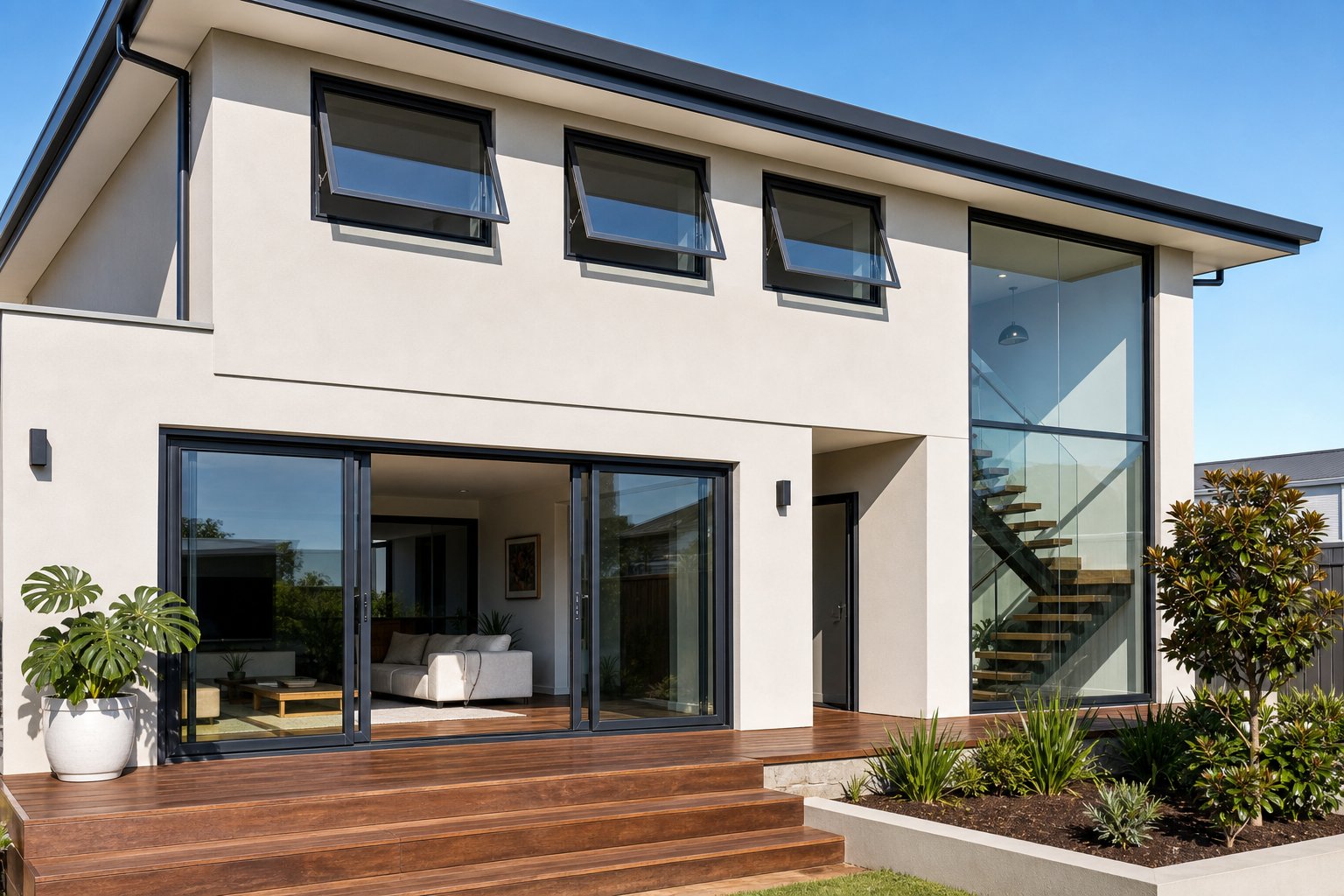
Aluminium awning windows hinge at the top and push outward from the bottom. This design lets you ventilate even during light rain without water entering the interior — a practical advantage in cities like Sydney or Brisbane where afternoon storms roll in quickly. They’re commonly placed higher on walls for privacy in bathrooms and ensuites, or stacked beneath fixed panes to combine views with airflow. The weather-resistant design makes them a reliable choice for wet areas throughout the home.
Fixed and Louvre Options
Fixed windows don’t open at all. Their purpose is purely visual — maximising light, framing views, and achieving the slimmest possible sightlines since no operating hardware is needed. They’re often used as feature panels in living rooms, stairwells, or alongside operable windows to extend the glass area without adding unnecessary opening points. Paired with high-performance glazing, fixed panes deliver excellent thermal and acoustic insulation because there are no gaps in the seal.
Louvre windows consist of horizontal glass blades that tilt open on a pivot mechanism, giving you precise control over how much air passes through. They excel in warmer climates — coastal Queensland, the Northern Territory, and tropical regions — where cross-ventilation is a priority year-round. Modern louvre systems incorporate strong locking hardware and can be fitted with obscure glass for privacy in bathrooms or laundries.
Comparing Window Types at a Glance
| Type | Ventilation Level | Weather Resistance | Best Room Application | Sightline Width |
|---|---|---|---|---|
| Sliding | Moderate | Good | Living areas, patios, verandas | Slim to moderate |
| Double Hung | Moderate to high | Good | Bedrooms, living rooms, heritage homes | Moderate |
| Casement | High (full opening) | Very good (compression seal) | Kitchens, living areas, offices | Moderate |
| Awning | Moderate | Excellent (rain protection) | Bathrooms, laundries, high-wall placement | Moderate |
| Fixed | None | Excellent (fully sealed) | Feature walls, stairwells, alongside operable windows | Slimmest |
| Louvre | Very high (adjustable) | Moderate (partial rain protection) | Tropical zones, wet areas, enclosed verandas | Narrow blades |
Mixing styles throughout a home is common practice — and often the smartest approach. You might specify sliding windows for the open-plan living zone, awning windows in the bathroom, casement windows in the kitchen for maximum airflow over the cooktop, and fixed panes flanking a feature wall. The key is matching each type’s strengths to the specific demands of the room, the local climate, and how you want the space to feel when you’re in it.
Of course, choosing the right type is only half the equation. How each option stacks up against alternative frame materials — and where aluminium genuinely outperforms or falls short — shapes whether these windows are the right investment for your project.
Pros and Cons of Aluminium Windows vs Other Materials
Every frame material involves trade-offs. Timber looks beautiful but demands ongoing maintenance. uPVC costs less upfront but limits your design options with bulkier profiles. Aluminium sits in a different position entirely — and understanding exactly where it excels and where it falls short helps you spend your budget wisely.
Advantages of Aluminium Over Other Materials
Pros
- Superior strength-to-weight ratio — aluminium frames can be significantly slimmer than timber or uPVC while supporting larger glass areas, maximising natural light and views
- Corrosion resistance — the natural oxide layer protects against moisture, and powder coating adds further defence against coastal salt air and UV degradation
- Colour stability — quality powder-coated finishes resist fading, chalking, and peeling for decades, unlike painted timber that needs recoating every few years
- Low maintenance — no repainting, no sealing, no sanding. Periodic cleaning with mild detergent and a soft cloth is all that’s required
- Long lifespan — properly installed aluminium frames routinely last the life of the building, far outlasting uPVC in harsh Australian conditions
- Full recyclability — aluminium is 100% recyclable without loss of quality, and recycled aluminium requires only 5% of the energy needed to produce new material
- Dimensional stability — unlike uPVC, aluminium doesn’t expand, contract, or warp noticeably with temperature swings, keeping seals intact year-round
For metal framed windows in general, aluminium delivers the cleanest aesthetic. Its rigidity allows manufacturers to engineer profiles as narrow as 45 mm face width in some systems — something uPVC simply cannot achieve without compromising structural integrity.
Honest Drawbacks and How to Mitigate Them
Cons
- Thermal conductivity — aluminium conducts heat roughly 1,000 times faster than timber. Without a thermal break, the frame becomes a direct path for heat transfer. The fix: specify thermally broken frames with polyamide barriers, which largely neutralise this disadvantage
- Condensation risk — in cooler climates, a standard metal window frame can drop below dew point on the interior side, causing moisture to form on the frame surface. Thermally broken systems and adequate indoor ventilation address this effectively
- Higher cost than uPVC — aluminium typically sits above uPVC in upfront pricing. However, the gap narrows considerably when you factor in longevity, lower maintenance costs, and the ability to achieve slimmer frames with more glass
- Limited natural warmth — some homeowners prefer the tactile warmth of timber on interior surfaces, which aluminium cannot replicate on its own
That last point is worth expanding on. For those who want timber aesthetics inside but aluminium durability outside, aluminum clad wood windows offer a genuine hybrid solution. An aluminum clad window pairs a hardwood or engineered timber interior with a protective aluminium exterior shell — giving you the best visual qualities of both materials. Metal clad windows like these are popular in high-end residential projects where interior design demands natural textures but the external environment requires weather-tough performance.
Compared to aluminum vinyl windows — where a vinyl frame is paired with aluminium exterior cladding — the aluminum clad timber approach delivers better thermal performance and a more premium interior finish, though at a higher price point.
The honest summary: aluminium wins on longevity, design flexibility, and slim profiles. It loses on raw thermal performance unless you specify a thermal break, and it costs more than basic uPVC. For most Australian projects — particularly coastal builds, modern architecture, and any application demanding large glass spans — the advantages comfortably outweigh the drawbacks, especially when thermally broken systems are specified from the start.
Knowing the strengths and limitations is one thing. Knowing how to care for your frames over time — and recognising when older installations have reached the end of their useful life — is what protects your investment across the decades ahead.
Maintenance Requirements and Expected Lifespan
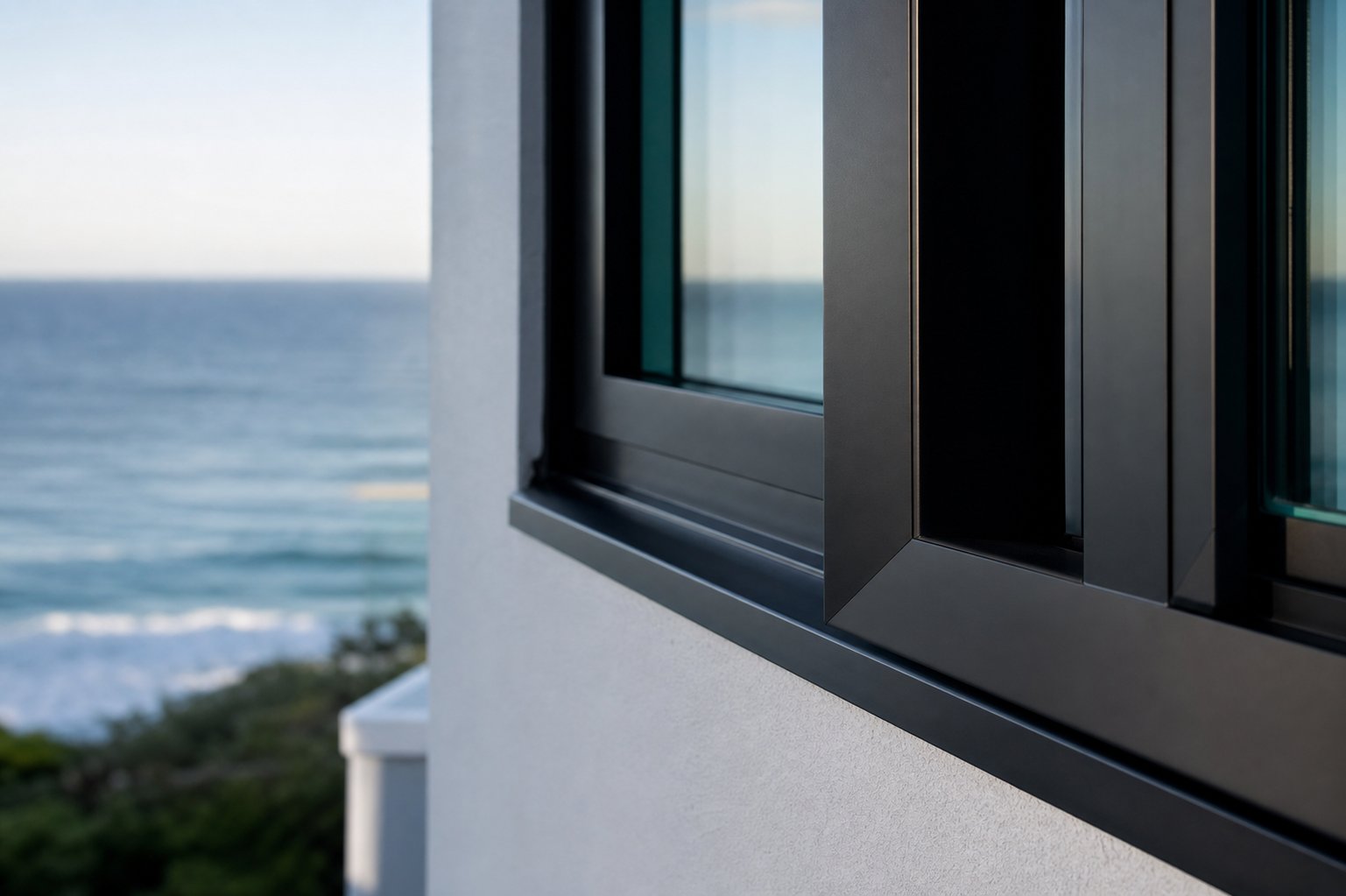
One of the strongest selling points of aluminium frames is how little they ask of you once installed. Unlike timber — which needs sanding, repainting, and regular sealing — powder-coated aluminium won’t rot, warp, or flake. It holds its colour and structural integrity for decades with only basic attention. In Australian conditions, aluminium windows typically last between 25 and 40 years, comfortably outlasting uPVC in high-UV and coastal environments.
That lifespan isn’t automatic, though. A simple routine keeps everything performing as it should — and catches small issues before they become expensive problems.
Routine Care for Aluminium Window Frames
You don’t need specialist products or professional help for regular upkeep. A seasonal checklist covers it:
- Clean frames and tracks — wipe aluminium surfaces with a soft cloth and mild soapy water. Avoid abrasive pads or acidic cleaners that can damage powder coating. Vacuum or brush out sliding tracks to remove grit and debris.
- Inspect weather seals and gaskets — check that rubber seals remain flexible and intact. Cracked or brittle gaskets reduce insulation and allow water ingress. Replace degraded seals promptly.
- Lubricate hardware — apply a light silicone-based lubricant to hinges, locks, and rollers once or twice a year. This prevents stiffness and reduces wear on moving parts.
- Check drainage channels — ensure weep holes in the sill profile are clear so condensation and rainwater can escape rather than pooling inside the frame.
- Examine glass seals — look for fogging or moisture between panes, which signals a failed insulated glass unit (IGU) seal.
For homes in coastal areas — think the NSW Central Coast, Queensland’s Gold Coast, or Perth’s western suburbs — salt exposure accelerates surface wear. Marine-grade aluminium alloys and high-quality powder coating rated to at least 60 microns provide the best defence. Rinsing frames with fresh water after storms or heavy salt spray adds an extra layer of protection that takes only minutes.
When Replacement Makes More Sense Than Repair
Old aluminium windows from the 1970s through 1990s were often single-glazed with no thermal break — a far cry from today’s engineered systems. If your home still has single pane aluminium windows, they’re likely costing you in energy bills, comfort, and acoustic performance. Replacing old aluminium window frames with modern thermally broken, double-glazed units delivers a step-change improvement that patching and resealing simply cannot match.
Beyond glazing inefficiency, here are clear signs that aluminium window replacement is the better path:
- Condensation forming between glass panes (indicating failed IGU seals)
- Visible pitting or white powdery corrosion on frame surfaces, particularly in salt-air zones
- Hardware that no longer locks securely or operates smoothly despite lubrication
- Noticeable draughts even when windows are fully closed
- Water staining or damage around the frame reveal after rain
Aluminium retrofit windows — designed to fit into existing openings without major structural work — make replacement aluminium windows a practical option for renovators who want modern performance without rebuilding surrounding walls. The installation process is typically faster and less disruptive than full frame-and-opening replacement, which keeps costs manageable on older homes.
Maintenance is minimal, but it isn’t zero. The payoff for those few minutes of seasonal care is a window system that looks sharp and performs reliably for the life of your home. And when older installations finally reach their limit, today’s replacement options deliver dramatically better thermal, acoustic, and security performance than what they’re replacing — a genuine upgrade rather than a like-for-like swap.
Design Flexibility and Colour Options in Aluminium
Performance and longevity matter, but let’s be honest — how your windows look from the street and from inside the room carries serious weight in any design decision. This is where aluminium genuinely separates itself from the competition. No other frame material offers the same combination of slim profiles, expansive glass, and virtually unlimited colour choice.
Slim Profiles and Maximum Glass Area
Aluminium’s structural strength means frames can be engineered far thinner than timber or uPVC equivalents while still meeting wind load and structural requirements under AS 2047. Where a uPVC frame might need 70 to 80 mm of face width to achieve adequate rigidity, slimline aluminium windows can deliver the same structural performance with profiles as narrow as 45 mm. That difference translates directly into more visible glass — and more natural light flooding your interior.
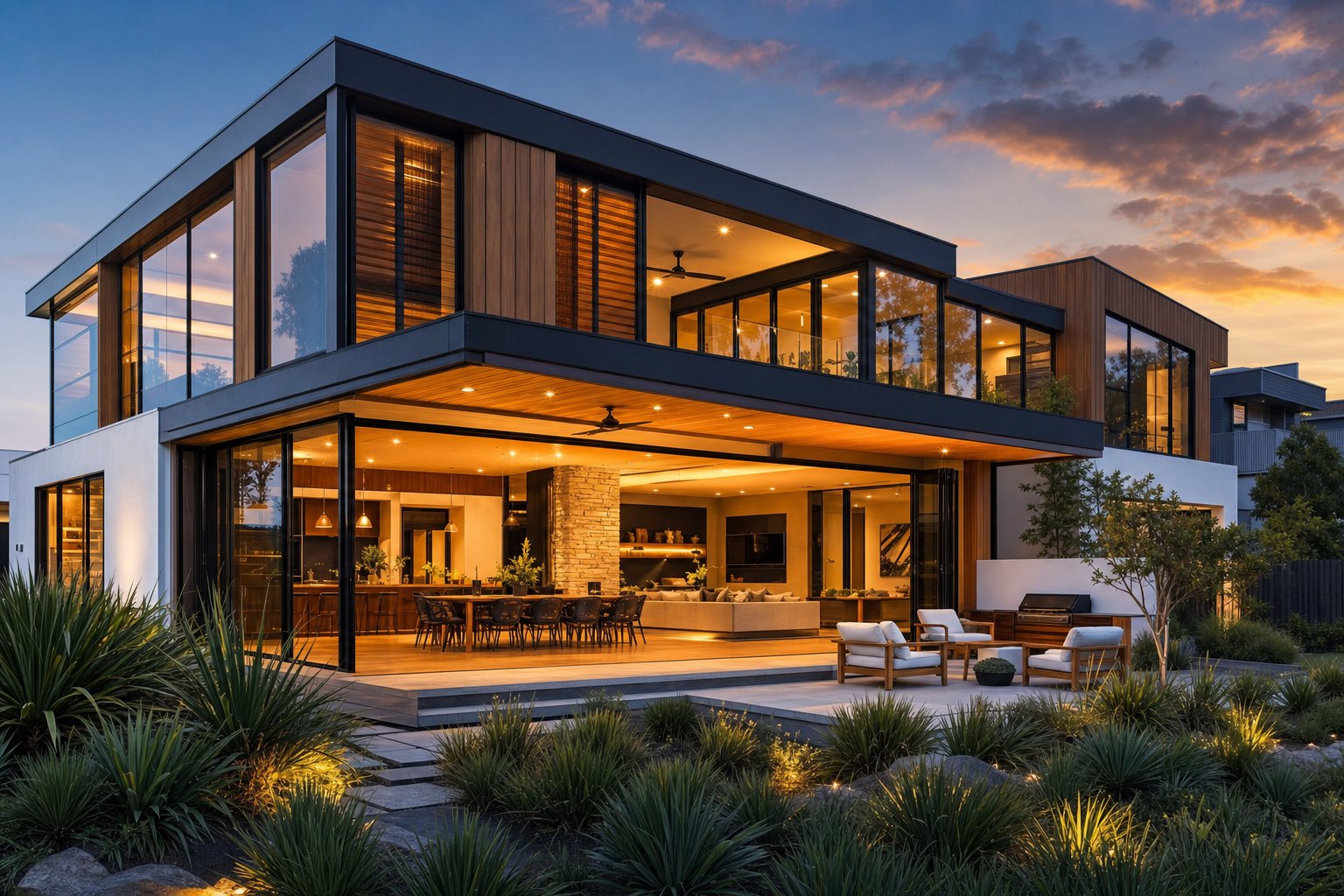
Thin frame windows aren’t just an aesthetic preference. They fundamentally change how a room feels. Narrower sightlines mean less visual interruption between you and the view outside, creating a stronger connection between indoor living spaces and gardens, courtyards, or landscape beyond. For open-plan living areas with large openings, the effect is dramatic — walls of glass with barely-there framing that let architecture breathe.
Slimline aluminium windows also suit heritage applications where original steel-framed windows need replacing. The narrow profiles replicate the proportions of traditional steel casements while delivering modern thermal and acoustic performance — a solution that satisfies both council heritage requirements and contemporary comfort expectations.
Colour Options and Custom Finishes
Powder coating technology gives aluminium frames access to over 450 RAL colours, from subtle neutrals to bold architectural statements. Unlike uPVC — which is largely limited to white, cream, and a handful of woodgrain laminates — aluminium lets you match or contrast your frames with virtually any facade material.
Here are the most popular aluminium window frame colours and where they work best:
- Matte black and charcoal — the dominant choice for contemporary builds, pairing cleanly with rendered walls, dark brick, and natural timber cladding. Black aluminum windows remain the most specified colour in modern Australian residential architecture
- White and off-white — classic and versatile, white aluminum windows suit coastal homes, Hamptons-style builds, and lighter facade palettes where frames should recede rather than contrast
- Bronze and dark bronze — increasingly popular for mid-century modern renovations and earthy contemporary designs. Bronze aluminum windows add warmth without the heaviness of black
- Woodland grey and basalt — neutral tones from the Colorbond palette that coordinate with roofing and cladding choices common across Australian homes
- Custom RAL and dual-colour options — for projects requiring a specific colour match or different finishes inside and out, custom metal windows can be powder coated to any RAL reference
Colour choice affects more than kerb appeal. Darker finishes absorb more solar radiation, which can increase frame surface temperatures in direct sun — a consideration in northern Australia. Lighter shades reflect heat but may show dirt more readily in dusty or industrial areas. The finish itself matters too: textured matte coatings hide fingerprints and minor scuffs better than gloss, while metallic finishes offer a premium architectural look for commercial and high-end residential facades.
For Australian homeowners, builders, and architects exploring the full range of design possibilities, suppliers like MEICHEN offer extensive colour options alongside custom aluminium windows configured to project-specific requirements — including glazing choices, frame profiles, and supply for both residential and commercial builds. That kind of flexibility means your window design isn’t constrained by a limited product catalogue; it’s shaped by your architectural vision.
Design flexibility is a compelling reason to choose aluminium, but it’s only part of the buying equation. Understanding what drives pricing — and how to evaluate whether you’re getting genuine value — ensures the aesthetic choices you make also make financial sense over the long term.
Cost Factors and What Influences Aluminium Window Pricing
Pricing is the question everyone asks first but few suppliers explain clearly. Most quotes arrive as a single line item — a dollar figure with little breakdown of what’s actually driving the number. That makes it nearly impossible to compare quotes intelligently or understand where your money is going. Here’s how aluminium window pricing actually works, so you can evaluate what’s fair and what’s inflated.
What Drives Aluminium Window Pricing
There’s no single “price” for aluminium windows. The final cost is a function of several variables stacking on top of each other, and changing any one of them shifts the total noticeably. When you see cheap aluminium windows advertised, it usually means one or more of these factors has been minimised — sometimes appropriately, sometimes at the expense of performance.
The biggest cost driver is size. A small 600 x 900 mm bathroom awning window uses fundamentally less material than a 2400 x 1800 mm living room slider. Larger openings also require thicker glass and heavier-duty hardware to handle the increased weight and wind load, compounding the price difference beyond just the extra aluminium.
Glazing specification typically accounts for 25 to 40% of the finished window’s cost. Stepping from single glazing to a double-glazed insulated glass unit (IGU) adds significant value but also significant expense. Adding low-E coatings, argon gas fill, or laminated acoustic glass pushes the price further — each upgrade delivering measurable performance gains in thermal efficiency, noise reduction, or safety.
Thermal break inclusion adds a premium because the frame becomes a more complex assembly — two separate aluminium sections joined by engineered polyamide strips rather than a single continuous profile. That complexity is worth paying for in most Australian climate zones, but it does increase the base frame cost.
The table below shows how each factor influences your final quote:
| Cost Factor | Impact on Price | Notes |
|---|---|---|
| Frame size and configuration | High | Larger openings and multi-sash designs use more material and heavier hardware |
| Glazing type (single, double, low-E, laminated) | High | Glass represents 25–40% of total cost; each performance tier adds 40–80% |
| Thermal break system | Medium to high | Adds roughly 20–35% over standard non-broken frames |
| Custom colour or finish | Low to medium | Standard colours (black, white, grey) carry no premium; custom RAL adds 10–15% |
| Hardware grade | Medium | Premium multi-point locks and heavy-duty hinges cost more but last significantly longer |
| Installation type (new build vs retrofit) | Medium to high | Retrofit into existing openings involves removal, making good, and potential structural work |
Window style also plays a role. Casement and awning windows carry higher hardware costs due to friction stays and multi-point locking mechanisms. Sliding windows use simpler hardware but more aluminium extrusion for the dual-track system. Tilt-and-turn configurations — popular in commercial applications — require the most complex (and expensive) hardware of any standard type.
Long-Term Value Compared to Cheaper Alternatives
Aluminium sits in the middle of the pricing spectrum for Australian window materials. It typically costs more than uPVC but less than premium hardwood timber. That positioning makes sense when you consider what you’re getting: a frame material that lasts decades longer than uPVC in harsh conditions, requires virtually no maintenance, and enables slimmer profiles with more glass area.
The real comparison isn’t upfront cost alone — it’s cost over the life of the window. A uPVC frame might save you money on day one, but if it degrades in coastal UV exposure after 15 to 20 years while your aluminium frames are still performing at 30 or 40, the per-year cost tells a different story. Factor in zero repainting, no seal degradation from UV-induced brittleness, and no frame distortion from thermal cycling, and aluminium’s higher initial price often represents the best aluminium windows value proposition over a building’s lifetime.
When searching for aluminium windows for sale, resist the temptation to compare quotes purely on the bottom-line number. A lower quote might omit thermal breaks, specify thinner glass, use budget hardware, or exclude installation — all of which shift costs into your future rather than eliminating them. The smartest approach is to compare quotes on a like-for-like specification basis: same glazing, same thermal performance, same hardware grade, same installation scope.
For homeowners searching for aluminium windows near me, requesting itemised quotes from at least two or three local suppliers gives you the clearest picture of fair market pricing in your area. Ask each supplier to break down the frame, glazing, hardware, finish, and installation as separate line items. That transparency makes genuine comparison possible — and reveals exactly where any price difference is coming from.
Pricing tells you what you’ll spend. But knowing how to assess whether that spend delivers genuine quality — through certifications, standards compliance, and the right questions — is what separates a good purchase from an expensive mistake.
How to Evaluate Quality When Buying Aluminium Windows
A polished brochure and a competitive price don’t guarantee you’re getting a quality product. The difference between aluminium windows that perform flawlessly for decades and ones that leak, rattle, or corrode within a few years often comes down to details invisible at first glance — certifications, testing standards, and the questions you ask before signing anything.
Standards and Certifications That Matter
In Australia, every aluminium window installed in a building must comply with Australian Standard AS 2047. This is the national benchmark covering structural performance, water penetration resistance, air infiltration limits, and operating force. It’s referenced directly in the National Construction Code (NCC), which means non-compliance isn’t just a quality issue — it’s a legal one that can trigger penalties, void insurance, and reduce property value.
Here’s what AS 2047 actually tests for:
- Structural wind load — the frame and glazing must withstand wind pressures specific to the installation’s geographic location and height above ground, measured in Pascals (Pa)
- Water penetration resistance — the window must prevent leaks under simulated driving rain conditions at rated pressure levels
- Air infiltration — sets maximum allowable air leakage through the closed window, directly affecting energy efficiency and comfort
- Operating force — ensures sashes open and close smoothly without excessive effort, particularly important for accessibility
A compliant window carries a performance label — typically found on the inside of the frame head — displaying its wind and water ratings. Beyond that label, reputable aluminium window manufacturers provide a Certificate of Compliance, ideally issued through the Australian Glass and Window Association (AGWA), whose members have products tested by NATA-accredited laboratories.
For energy performance specifically, look for a WERS (Window Energy Rating Scheme) rating. This voluntary scheme rates windows on heating and cooling star ratings, giving you a clear comparison tool that accounts for frame material, glazing type, and thermal break performance together. A high WERS rating directly supports your home’s NatHERS score — useful for new builds chasing compliance and for renovators wanting measurable efficiency gains.
If you’re sourcing windows for a commercial project, the stakes are higher. Commercial aluminum window manufacturers supplying multi-storey buildings must demonstrate compliance at elevated wind pressures and may need to meet additional requirements for bushfire zones (AS 3959) or cyclone regions (specific wind classifications under AS/NZS 1170.2). Always confirm that the aluminum window manufacturer you’re dealing with can provide test reports specific to your project’s exposure conditions — not just generic product data.
Questions to Ask Your Window Supplier
The right questions separate trustworthy aluminium window suppliers from those cutting corners. Before committing to any purchase, work through this list:
- Can you provide a Certificate of Compliance to AS 2047 for this specific product? — Not a generic statement, but documentation tied to the exact window system and configuration you’re ordering.
- What are the tested wind and water ratings, and do they suit my site’s exposure? — A coastal property in Wollongong faces different pressures than an inland home in Wagga Wagga. The ratings must match your conditions.
- Is the frame thermally broken, and what U-value does the complete window achieve? — Ask for the whole-of-window U-value (frame plus glass), not just the glazing figure in isolation.
- What powder coating thickness and standard is applied? — Quality aluminium window supplies use coatings meeting AS 3715 at a minimum of 60 microns. Anything thinner may not withstand prolonged UV and salt exposure.
- What warranty covers the frame, hardware, and finish separately? — A single blanket warranty often hides limitations. Reputable suppliers break it down: frame profile, powder coat finish, hardware mechanisms, and sealed glass units each have distinct coverage periods.
- Who installs the windows, and are they qualified? — Installation quality affects performance as much as the product itself. Ask whether installers are trained by the aluminum window supplier or subcontracted without oversight.
- What after-sales support is available if something fails? — Seals degrade, hardware wears, and glass units occasionally fail. Know the process for warranty claims and whether replacement parts will be available in ten or fifteen years.
Red flags to watch for: suppliers who can’t produce test documentation, quotes that don’t specify glazing type or thermal performance, unusually low pricing without explanation, and reluctance to discuss installation methodology. A quality aluminium window supplier welcomes these questions because their products and processes can withstand scrutiny.
Physical inspection matters too. Run your hand along the frame — the powder coat should feel smooth and consistent with no rough patches, bubbling, or thin spots. Check corner joints for tight, flush connections. Operate the sash and feel for smooth, even resistance. Look at drainage slots in the sill to confirm they’re cleanly machined and unobstructed. These tactile details reveal manufacturing precision that no specification sheet can fully communicate.
Armed with the right standards knowledge and a clear set of questions, you can walk into any showroom or supplier meeting and quickly distinguish genuine quality from marketing polish. That confidence is what turns a complex purchase into a sound long-term decision — one that sets up the final question: is aluminium actually the right material for your specific project?
Making the Right Decision for Your Project
You’ve seen the engineering, the types, the costs, and the quality markers. The remaining question is personal: does aluminium suit your specific build? The answer depends on where you’re building, what you’re building, and what matters most to you in the decades ahead.
When Aluminium Is the Right Choice
Aluminium windows and doors dominate certain project types for good reason. Their combination of structural strength, slim profiles, corrosion resistance, and design flexibility makes them the natural fit in scenarios where other materials struggle or compromise.
Run through this checklist against your own project. The more boxes you tick, the stronger the case for aluminium:
- Coastal location — salt air, humidity, and driving rain demand a frame material that resists corrosion without constant maintenance. Marine-grade aluminium with quality powder coating handles these conditions better than timber or standard uPVC over the long term.
- Modern or contemporary architecture — if your design calls for clean lines, large glass spans, and minimal frame visibility, aluminium’s slim sightlines deliver what bulkier materials cannot.
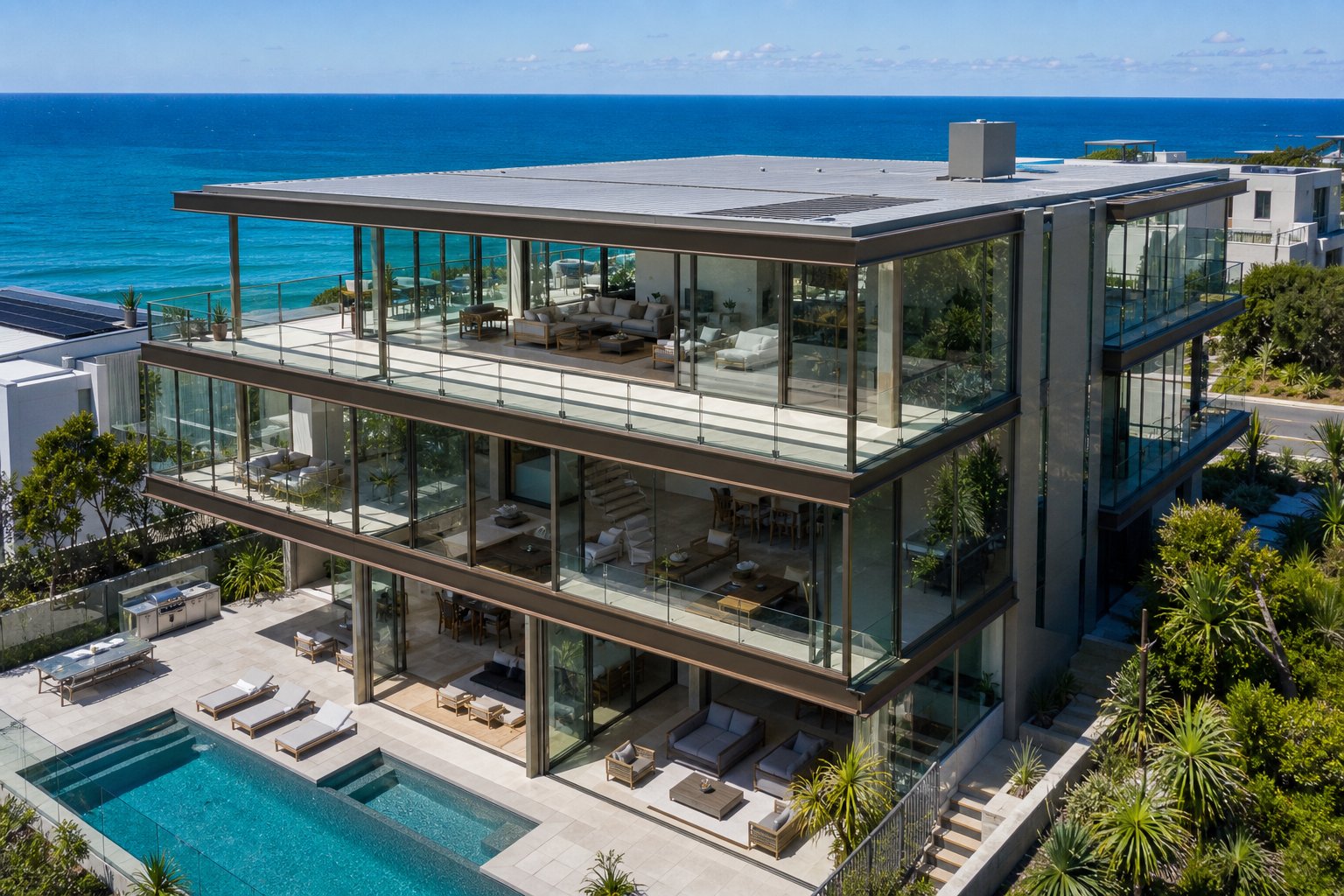
- Large openings — floor-to-ceiling glazing, wide sliding doors, or stacking panels require structural rigidity that aluminium provides without heavy, oversized frames.
- Commercial aluminium windows applications — office buildings, retail fitouts, multi-storey residential, and hospitality projects benefit from aluminium’s strength at height, its compliance with elevated wind ratings, and its low lifecycle maintenance cost.
- Low-maintenance priority — if you want to install your windows and essentially forget about them beyond occasional cleaning, aluminium asks the least of any frame material over its lifespan.
- Design flexibility — projects requiring custom colours, dual-colour finishes, or coordination with specific facade materials benefit from aluminium’s virtually unlimited powder coat palette.
- Bushfire or cyclone zones — aluminium frames are non-combustible and can be engineered to meet BAL ratings and cyclone wind classifications where uPVC may not comply.
Residential aluminum windows work equally well in suburban new builds, apartment complexes, and renovation projects. The material scales from a single bathroom awning window to an entire home’s worth of aluminium doors and windows without changing its fundamental performance characteristics.
That said, aluminium isn’t universally the best answer. Heritage restorations governed by strict council requirements may mandate timber to match original joinery profiles — though slimline aluminium can sometimes satisfy heritage panels where steel-frame replication is acceptable. In extremely cold climates without budget for thermally broken frames, the thermal conductivity disadvantage becomes harder to justify. And for tight-budget projects where appearance and longevity are secondary to pure cost minimisation, uPVC remains a functional alternative.
For most Australian projects, though — particularly anything coastal, contemporary, or commercial — aluminium delivers the strongest balance of performance, aesthetics, and long-term value. The material handles our harsh UV, salt exposure, and temperature swings in ways that other options simply don’t match over a 30-plus year timeframe.
Taking the Next Step on Your Window Project
Deciding on aluminium is the starting point. Turning that decision into the right windows for your specific home or building requires narrowing down the details: frame system, glazing specification, thermal performance level, colour, hardware, and a supplier who can deliver on all of it.
Here’s a practical framework for moving forward:
- Define your performance requirements — identify your climate zone, wind region, and any special compliance needs (BAL rating, cyclone classification, acoustic requirements). These determine the minimum specifications your windows must meet.
- Choose your window types room by room — match operating styles to each space’s ventilation, privacy, and weather exposure needs rather than defaulting to one type throughout.
- Specify glazing to suit your climate — double glazing with low-E coating is the baseline for most of southern Australia. Northern builds may prioritise solar control glass. Acoustic glass suits homes near busy roads or flight paths.
- Select your colour and finish early — colour affects lead times, especially for custom RAL matches. Standard colours ship faster; custom finishes may add several weeks.
- Request itemised, like-for-like quotes — compare suppliers on identical specifications so price differences reflect genuine value rather than hidden downgrades.
- Verify compliance documentation — confirm AS 2047 certification, WERS ratings, and warranty terms before committing.
For Australian homeowners, builders, and architects exploring custom aluminium window configurations, MEICHEN’s aluminium windows range offers a practical starting point — covering glazing choices, extensive colour options, and project-based supply for both residential and commercial builds. Their approach to custom configuration means you’re not limited to off-the-shelf sizes or standard combinations, which matters when your design calls for something specific.
Whether you’re replacing old alum windows and doors across an entire home or specifying aluminium doors windows for a new commercial development, the principles remain the same: match the product to your conditions, verify quality through standards and documentation, and choose a supplier whose capabilities align with your project’s complexity. The information in this guide gives you the foundation to do exactly that — to walk into any conversation with a supplier or installer knowing what to ask, what to look for, and what genuinely matters for long-term performance.
Frequently Asked Questions About Aluminium Windows
1. How long do aluminium windows last in Australia?
Aluminium windows typically last between 25 and 40 years in Australian conditions when properly installed and maintained. Their powder-coated finish resists UV degradation and coastal salt air without rotting, warping, or requiring repainting. Lifespan depends on factors like coating quality, exposure conditions, and whether marine-grade alloy is used in coastal zones. With basic seasonal care such as cleaning frames, lubricating hardware, and checking seals, aluminium frames routinely outlast uPVC alternatives and can serve the full life of a building.
2. Are aluminium windows better than uPVC?
Aluminium outperforms uPVC in several key areas: slimmer frame profiles allowing more glass area, superior dimensional stability in temperature extremes, longer lifespan in harsh Australian UV and coastal conditions, full recyclability, and a much wider colour range. uPVC costs less upfront but degrades faster under intense sun exposure and offers bulkier sightlines. The main advantage uPVC holds is better raw thermal performance without a thermal break. However, thermally broken aluminium frames largely neutralise that gap while delivering a longer service life and more design flexibility.
3. What is a thermally broken aluminium window?
A thermally broken aluminium window splits the frame into two separate aluminium sections, one facing outdoors and one facing indoors, joined by reinforced polyamide strips with very low thermal conductivity. These strips, typically 14 to 35 mm wide, interrupt the heat path through the frame so the interior surface stays close to room temperature regardless of external conditions. This design reduces condensation risk, improves energy efficiency, and helps homes meet NCC energy compliance requirements. Thermally broken frames are recommended for most of southern and coastal Australia where heating and cooling loads are significant.
4. How much do aluminium windows cost in Australia?
Aluminium window pricing varies based on several stacking factors: frame size and configuration, glazing type (single, double, low-E, laminated), thermal break inclusion, colour finish, hardware grade, and installation type. Aluminium generally costs more than uPVC but less than premium hardwood timber. Custom RAL colours add roughly 10 to 15 percent over standard options, while thermal breaks add 20 to 35 percent over non-broken frames. For accurate pricing, request itemised quotes from multiple local suppliers on identical specifications so you can compare frame, glazing, hardware, and installation costs separately.
5. Do aluminium windows need maintenance?
Aluminium windows require minimal maintenance compared to timber, but they are not entirely maintenance-free. A seasonal routine covers it: clean frames and tracks with mild soapy water, inspect weather seals for cracking or brittleness, lubricate hinges and locks with silicone-based lubricant, clear drainage weep holes, and check for fogging between glass panes. Coastal homes should rinse frames with fresh water after heavy salt spray. This basic care takes only minutes per window and prevents small issues from becoming costly repairs, keeping your frames performing well for decades.