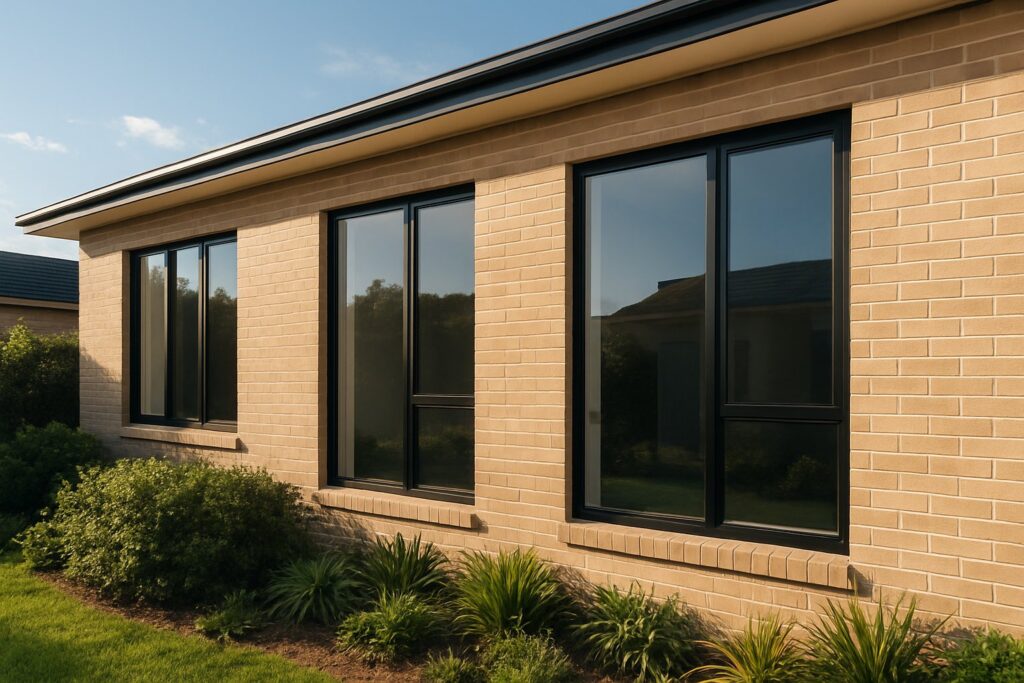
Why Aluminium Window Frames Remain a Top Choice for Modern Projects
Aluminium window frames are structural framing systems made from extruded aluminium alloy, designed to hold glazing panels in place while resisting wind loads, water ingress, and long-term weathering. They dominate both residential and commercial construction across Australia for a straightforward reason: no other framing material delivers the same combination of strength, slimness, and design freedom at a comparable price point. Whether you are replacing a single aluminum window in a weatherboard cottage or specifying hundreds of openings for a multi-storey development, aluminium remains the benchmark material that other options are measured against.
Most of what you will find online when researching aluminium windows is brand-driven catalogue copy. This article takes a different approach. It is a brand-neutral, buyer-focused guide covering material comparisons, thermal technology, glazing choices, pricing factors, and purchasing channels — everything you need to buy aluminium window frames without overpaying or settling for the wrong specification.
What Are Aluminium Window Frames
An aluminium window frame starts as a billet of aluminium alloy that gets heated and pushed through a steel die — a process called extrusion. This creates hollow, precisely shaped profiles that are far stronger and more dimensionally consistent than rolled or cast alternatives. The basic anatomy of a window aluminium windows buyers should understand includes four components: the outer frame (fixed to the building structure), the sash (the operable or fixed panel holding the glass), mullions (vertical dividers between panels), and glazing beads (the trim pieces that secure glass within the sash).
Aluminium is infinitely recyclable without any loss of structural integrity. A recycled aluminium frame performs identically to one made from virgin material, making it one of the most sustainable framing choices available over a building’s full lifecycle.
This combination of precision engineering and material longevity is what gives the aluminum frame its edge in projects demanding tight tolerances and lasting performance.
Why Buyers Choose Aluminium Over Other Materials
Durability sits at the top of most buyers’ lists. Aluminium resists rot, warping, and termite damage — common failure points for timber frames in Australian conditions. Maintenance demands are minimal: a periodic wash and hardware lubrication keeps frames performing for decades. The slim sightlines achievable with an aluminium window allow more glass area per opening, which suits contemporary architectural styles and maximises natural light. Colour flexibility is another draw. Powder-coated finishes are available in virtually any shade, and the material handles large-span openings — bifolds, stacking sliders, corner windows — that heavier or weaker materials struggle to support structurally.
The sections ahead break down how aluminium stacks up against vinyl, wood, fiberglass, and composite alternatives, then move into thermal break technology, glazing selection, finish options, purchasing channels, and realistic cost guidance. Each section is written to help you make a confident, informed decision rather than simply steer you toward a checkout page.
Aluminium vs Vinyl vs Wood vs Fiberglass Frame Comparison
Choosing a framing material is really a conversation about trade-offs. Every option sacrifices something to gain something else. The problem is that most product pages only talk about their own material, leaving you to piece together comparisons from five different websites with five different agendas. Below is a single, honest breakdown covering the windows and frames buyers most commonly weigh against each other.
How Aluminium Compares to Vinyl and Wood Frames
Vinyl (uPVC) frames are the main rival on price. They cost less upfront and offer better inherent insulation because plastic conducts far less heat than metal. For budget-conscious single-storey replacements, that matters. The catch? Vinyl lacks structural rigidity, which limits maximum frame window sizes and rules it out for large-span openings like bifolds or corner stacking systems. It also expands and contracts noticeably with temperature swings, and at end of life, recycling options are limited compared to aluminium.
Wood frames bring a natural warmth that no metal framed windows or synthetic material can replicate. Hardwood timber looks stunning — particularly in heritage restorations and character homes — but it demands regular painting, sealing, and inspection for rot and termite activity. In coastal or tropical parts of Australia, timber maintenance costs can quietly erode what seemed like a reasonable initial investment. Some buyers split the difference with aluminium clad windows, which pair a timber interior with a protective aluminium exterior shell to reduce upkeep while keeping that warm indoor aesthetic.
Aluminium vs Fiberglass and Composite Frames
Fiberglass (fibreglass) frames share several strengths with aluminium: good structural performance, slim profiles, and long service life. They also insulate better without needing a thermal break. The downside is cost. Fibreglass windows and window frames typically carry a premium of 20 to 40 per cent over equivalent aluminium units, and colour options are more restricted. Availability in Australia is also narrower — fewer local fabricators stock fibreglass systems compared to aluminium.
Composite frames blend materials like wood fibre and polymer to aim for a middle ground: better insulation than bare aluminium, lower maintenance than solid timber. They work well for standard residential openings. Where they fall short is precision for large or complex configurations. Metal frame windows built from extruded aluminium still offer tighter tolerances and thinner sightlines for oversized or architecturally demanding designs.
| Factor | Aluminium | Vinyl (uPVC) | Wood | Fibreglass | Composite |
|---|---|---|---|---|---|
| Upfront Cost Range | Mid | Low to Mid | Mid to High | High | Mid to High |
| Estimated Lifespan | 40–70 years | 20–40 years | 30–60+ years (with maintenance) | 40–60 years | 30–50 years |
| Maintenance Frequency | Low | Low | High | Low | Low to Moderate |
| Thermal Performance (no thermal break) | Poor | Good | Good | Good | Good |
| Thermal Performance (with thermal break) | Good to Very Good | N/A | N/A | N/A | N/A |
| Structural Strength | Very High | Low to Moderate | Moderate to High | High | Moderate |
| Weight | Light | Light | Heavy | Light to Moderate | Moderate |
| Recyclability | Infinitely recyclable | Limited | Biodegradable / reusable | Difficult | Difficult |
| Aesthetic Versatility | Very High (any colour, slim profiles) | Moderate (limited colours) | High (natural character) | Moderate | Moderate |
| Suitability for Large Openings | Excellent | Poor | Moderate | Good | Moderate |
One detail the table highlights is the dramatic shift in aluminium’s thermal column once a thermal break enters the picture. That single engineering feature transforms aluminium from one of the worst-insulating metal frame windows into a genuine competitor on energy efficiency — a topic worth understanding in detail before you commit to any specification.
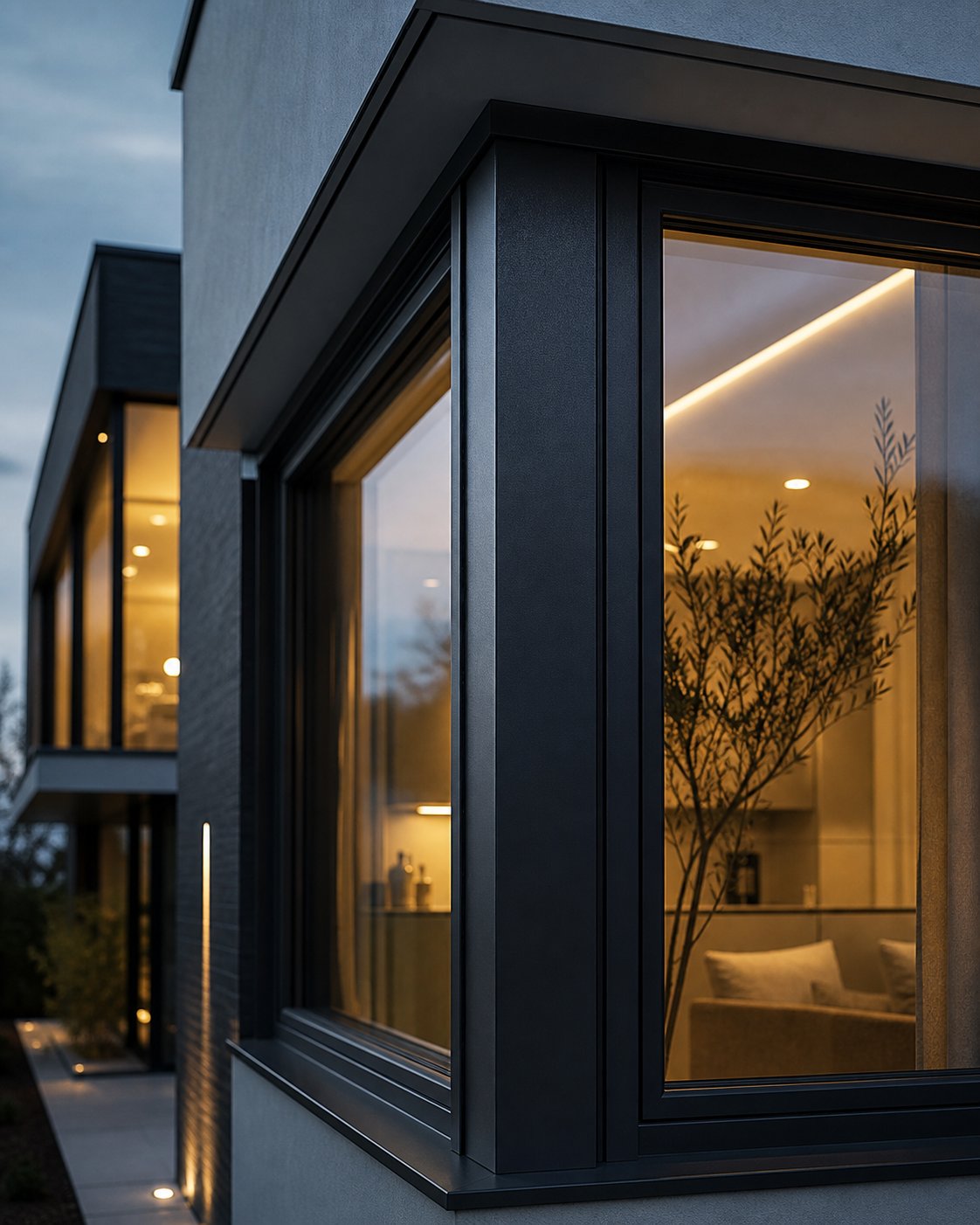
Thermal Break Technology and Why It Changes Everything
Aluminium conducts heat roughly 1,000 times faster than wood. Left unaddressed, that conductivity turns your aluminum window frame into a thermal bridge — funnelling heat out in winter, letting it pour in during summer, and creating condensation on internal surfaces year-round. Thermal break technology exists to solve this exact problem, and it is the single most important specification to understand before you buy aluminium window frames for any habitable space.
What Is a Thermal Break and How Does It Work
Picture an aluminium window profile sliced in half lengthwise. The outer half faces the weather. The inner half faces your living space. In a standard, non-thermally-broken profile, those two halves are a single continuous piece of metal. Heat travels through the aluminium uninterrupted, and whatever temperature exists outside transfers almost directly to the inside surface of the frame.
A thermally broken profile splits those two halves apart and reconnects them with an insulating strip — typically made from reinforced polyamide (nylon) or, less commonly, polyurethane. This strip is strong enough to hold the frame together structurally but conducts almost no heat. The result is two separate aluminium zones with an insulating barrier between them, dramatically slowing thermal transfer across the full width of the aluminum window frames.
The difference in real-world performance is substantial. A standard extruded aluminum window frame might have a frame U-value around 6 to 7 W/m²K, meaning it loses heat rapidly. A thermally broken version of the same profile can drop that figure to somewhere between 2.5 and 4 W/m²K — a reduction that shifts aluminium window framing from the bottom of the insulation chart to a position competitive with timber and fibreglass. Some high-performance systems with wider polyamide strips push even lower.
Why Thermal Breaks Matter for Energy Bills and Comfort
Energy codes across Australia have tightened considerably. The National Construction Code (NCC) and the NatHERS rating system both set minimum performance thresholds that non-thermally-broken aluminium struggles to meet in most climate zones. If your project needs to achieve a 6-star or 7-star energy rating — and most new builds and major renovations do — specifying aluminum frame windows without a thermal break will almost certainly create a compliance problem that cheap glazing upgrades alone cannot fix.
Beyond code compliance, the comfort difference is noticeable in daily life. A window metal frame without a thermal break feels cold to the touch in winter and warm in summer, and that surface temperature mismatch encourages condensation. Persistent condensation leads to mould growth on surrounding plasterwork, peeling paint, and degraded indoor air quality. Thermally broken frames keep the interior surface closer to room temperature, reducing condensation risk and eliminating that uncomfortable cold-radiant feeling near windows on cool mornings.
There is also a direct cost impact on heating and cooling. Windows are typically the weakest thermal link in any building envelope. Upgrading the aluminum window frame material from standard to thermally broken closes one of the largest gaps in that envelope, meaning your HVAC system works less to maintain a comfortable temperature. Over a 20- or 30-year ownership period, the energy savings can more than offset the higher upfront cost of thermally broken profiles.
The catch is that not every supplier makes the distinction clear. Some quotes simply list “aluminium frame” without specifying whether a thermal break is included. Others bury it in technical data sheets. Buyers who do not ask the right question end up comparing quotes that look similar on paper but describe fundamentally different products. Before signing off on any aluminum frame window quote, confirm the thermal break status explicitly.
Here are the signs to look for when determining whether a frame includes a thermal break versus a standard profile:
- The supplier’s specification sheet references a polyamide or polyurethane insulating strip within the profile.
- The profile cross-section drawing shows two distinct aluminium sections connected by a non-metallic barrier, rather than a single continuous metal shape.
- A frame U-value is listed and falls below approximately 4.0 W/m²K — standard aluminium profiles rarely achieve this.
- The product is described as compliant with NCC Section J energy efficiency requirements for habitable rooms.
- The frame feels noticeably different in temperature on its interior and exterior surfaces (relevant when inspecting samples in person).
- Pricing sits meaningfully above budget-tier aluminium — thermally broken profiles cost more to manufacture, and rock-bottom quotes almost always indicate a standard profile.
If a supplier cannot confirm thermal break inclusion or provide a profile cross-section showing the insulating barrier, treat that as a red flag — especially for any opening in a bedroom, living area, or office where energy performance and occupant comfort are non-negotiable.
Worth noting: a thermally broken frame paired with poor-quality glass still underperforms. The frame and glazing operate as a system, and the weakest component dictates overall window performance. Choosing the right glass to complement a thermally broken aluminium frame is the logical next step in building a specification that actually delivers on efficiency promises.
Choosing the Right Glazing for Your Aluminium Frames
Spending time selecting the perfect aluminium frame profile and then defaulting to whatever glass the supplier includes is one of the most common — and most costly — mistakes buyers make. The aluminum glass combination in a window functions as a single thermal and acoustic unit. A high-end thermally broken frame paired with basic glass is like fitting premium tyres to a car with worn-out brakes: one component undermines the other. To get genuine value when you buy aluminium window frames, you need to understand glazing at least well enough to ask the right questions.
Single, Double, and Triple Glazing Options Explained
Single glazing is a single pane of glass held within the frame — nothing between it and the outside world except that one sheet. It offers almost no insulation and minimal acoustic dampening. In Australia, single pane aluminum windows are now largely restricted to non-habitable spaces like sheds, carports, and some heritage restoration projects where council requirements mandate preserving the original window profile. For any room you actually live or work in, single glazing fails to meet current NCC energy performance requirements in virtually every climate zone.
Double glazing is the current standard for residential and commercial construction. Two panes of glass are separated by a sealed air gap — typically between 12 mm and 20 mm — creating an insulating buffer that dramatically reduces heat transfer and outside noise. Aluminium double glazing units have become the default specification across most Australian new builds and quality renovations, and for good reason. The performance jump from single to double glazing is far larger than many buyers expect, often cutting heat loss through the glass by 50 per cent or more depending on the gap width and gas fill.
Triple glazing adds a third pane and a second insulating cavity. It delivers the highest thermal and acoustic performance available, but it comes with trade-offs: greater weight, increased cost, and thicker frame profiles. Here is where aluminium’s structural advantage becomes particularly relevant. A glass aluminium frame system handles the extra weight of triple-glazed units without the reinforcement or oversized profiles that vinyl or composite frames would need. For projects in alpine regions, extreme southern climates, or buildings requiring premium acoustic isolation — think homes near airports or busy arterial roads — triple glazing in an aluminium frame is a practical and increasingly popular choice.
Most Australian residential projects land on double glazing as the sweet spot between performance and budget. Triple glazing makes financial sense when you are already investing in a high-performance building envelope or when specific site conditions demand it.
Low-E Coatings and Gas Fills That Pair With Aluminium
Glass performance does not stop at the number of panes. Two technologies sitting inside that sealed unit make a significant difference to how your aluminum frame glass performs over its lifetime.
Low-emissivity (Low-E) coatings are microscopically thin metallic layers applied to one or more glass surfaces within the sealed unit. They work by reflecting radiant heat back toward its source. In winter, a Low-E coating on the inner pane reflects interior warmth back into the room rather than letting it escape through the glass. In summer, a coating on the outer pane reflects solar heat away before it enters. Some coatings are designed to prioritise one function over the other, so the right choice depends on your climate zone — a detail worth discussing with your supplier. The coating is invisible to the naked eye and does not noticeably affect the view through the window.
Gas fills replace the standard air in the cavity between panes with a denser, less conductive gas. Argon is the most common choice — it is affordable, widely available, and improves thermal performance by roughly 15 to 20 per cent over air alone. Krypton is denser and more effective still, but it costs significantly more and is typically reserved for high-performance or slim-profile units where the cavity width is too narrow for argon to perform optimally. The gas remains sealed inside the unit for the life of the window, though seals can degrade over decades, which is why seal quality and manufacturer warranty terms matter.
The relationship between aluminium frames and glass is sometimes described as aluminum in glass systems, and it is worth thinking of it that way. Neither component exists in isolation. A thermally broken aluminium frame with a Low-E coated, argon-filled double-glazed unit delivers an entirely different result than the same frame with plain clear glass — even though both technically qualify as “double glazed.” When comparing quotes, the glazing specification is where suppliers most frequently cut corners to lower the headline price.
Before committing to any quote, request the following glazing specifications so you can make genuine like-for-like comparisons:
- U-value: Measures how much heat passes through the complete window (frame and glass combined). Lower numbers mean better insulation. For most Australian climate zones, aim for a whole-window U-value below 4.0 W/m²K, and below 3.0 for higher-performance builds.
- Solar Heat Gain Coefficient (SHGC): Indicates how much solar radiation passes through the glass as heat. A lower SHGC suits hot climates where you want to block heat; a higher SHGC suits cooler regions where passive solar gain is beneficial.
- Visible Transmittance (VT): The percentage of visible light the glass lets through. Higher VT means brighter interiors. Balancing VT against SHGC is key — you want daylight without excessive heat.
- Condensation Resistance (CR): Rated on a scale indicating how well the window resists condensation forming on interior surfaces. Higher ratings mean less condensation risk, particularly important in humid coastal areas or homes with poor ventilation.
A glass in aluminum frame assembly where all four of these values are specified and verified gives you genuine confidence in what you are purchasing. If a supplier cannot provide them, or bundles the glazing spec into vague descriptions like “energy-efficient glass,” push for specifics before moving forward. The difference between a well-specified and a poorly specified aluminum glass frame can amount to thousands of dollars in energy costs over the window’s lifespan — money that no amount of frame quality alone can recover.
Glass and frame specifications together define your window’s real-world performance. But there is a third layer that buyers frequently overlook until they are standing in a showroom choosing colours: the surface finish applied to the aluminium itself. That finish affects far more than appearance — it determines corrosion resistance, warranty coverage, and even how much heat the frame absorbs from direct sunlight.
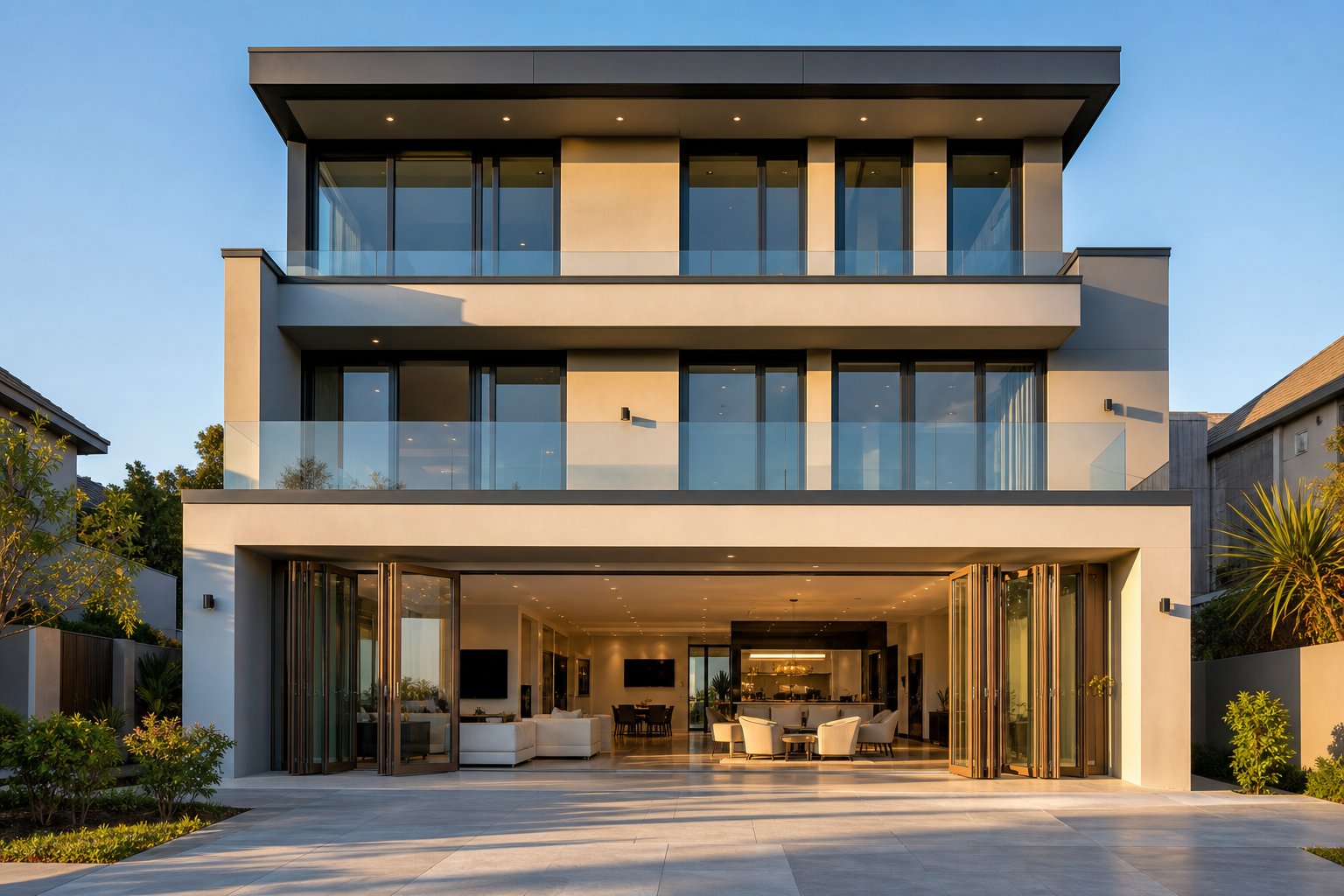
Frame Finishes and Residential vs Commercial Grade Differences
The colour and texture of your aluminium frames are not purely cosmetic choices. The finish system applied to the extruded profiles determines how well the frame resists corrosion, how long it holds its appearance, and — in the case of darker shades — how much solar heat the frame absorbs on a hot afternoon. Two finishing technologies dominate the market, and understanding the difference helps you match the right one to your project conditions and budget.
Powder Coating, Anodising, and Colour Options
Powder coating is the most widely used finish for aluminium window frames in Australia. A dry powder — typically a polyester or polyester-TGIC resin — is electrostatically applied to the aluminium surface and then cured in an oven, forming a tough, uniform film. The result is a finish available in virtually any colour you can imagine. Classic white aluminum windows suit coastal homes and Hamptons-style builds. Black aluminum windows deliver the sharp contrast that defines contemporary facades. Bronze aluminum windows sit somewhere between, offering a warm metallic tone popular in mid-century and earth-toned designs. Premium powder coating systems that meet or exceed Qualicoat certification standards can carry independent warranties of 15 years or longer, even in harsh coastal environments.
Anodising takes a different approach. Rather than adding a coating on top of the aluminium, the process converts the outer layer of the metal itself into a dense aluminium oxide through an electrochemical bath. This oxide layer is exceptionally hard, scratch-resistant, and corrosion-proof. The trade-off is a narrower colour palette — anodised finishes are generally limited to natural silver, bronze, champagne, and black tones. Because the finish is part of the metal rather than a separate layer, it cannot peel or flake, which makes it attractive for high-traffic commercial applications or coastal projects with severe salt exposure.
| Factor | Powder Coating | Anodising |
|---|---|---|
| Colour Range | Virtually unlimited, including custom RAL and Colorbond matches | Limited — silver, bronze, champagne, black |
| Durability | Very good; premium systems rated 15–25 years in coastal zones | Excellent; integral to the metal surface, highly scratch-resistant |
| Relative Cost | Lower for standard colours; custom colours carry upcharges | Higher, particularly for thicker anodised layers |
| Maintenance | Mild soap and water; avoid abrasive cleaners | Mild soap and water; resists chemical cleaners better |
| Best Use Scenarios | Residential projects, colour-matched facades, white aluminum and windows in heritage overlays | Severe coastal exposure, commercial facades, high-traffic buildings |
| Repairability | Touch-up kits available; sections can be recoated | Difficult to repair locally; damaged sections may need replacement |
One detail buyers in warmer parts of Australia should consider: aluminium window frame colours directly affect thermal behaviour. Dark finishes — particularly matte black — absorb significantly more solar radiation than lighter shades. On a north- or west-facing elevation in Brisbane or Perth, dark frames can reach surface temperatures well above ambient, accelerating seal fatigue and increasing localised heat transfer into the building. This does not mean dark colours are off-limits, but it does mean they pair best with thermally broken profiles and quality weatherseals rated for higher operating temperatures. If you are drawn to a bold, dark aesthetic, factor that into both your frame specification and your glazing SHGC selection.
Residential vs Commercial Grade Frames
Beyond finishes, a distinction that catches many buyers off guard is the difference between residential-grade and commercial-grade aluminium profiles. These are not just marketing labels — they represent meaningfully different engineering standards.
Residential aluminium frames are designed for standard openings in low-rise homes, typically single-storey or double-storey construction. The profiles are lighter gauge, the hardware is sized for moderate-frequency use, and the testing benchmarks cover wind loads, water resistance, and air infiltration rates appropriate for suburban conditions. For a straightforward window replacement in an established neighbourhood, residential-grade frames are entirely fit for purpose and considerably more cost-effective. Slimline aluminium windows — popular for their minimalist sightlines and contemporary look — often fall into this category, offering elegant proportions without the heavier engineering of commercial systems.
Commercial aluminium windows are a different class. The profiles use thicker aluminium walls, heavier-duty hardware, and reinforced corner joints. They are tested and certified to higher performance tiers under AS 2047, which classifies windows by resistance to wind pressure, water penetration, and air infiltration. Commercial-grade frames are the standard for multi-storey buildings, shopfronts, office towers, and any project where openings are larger than typical residential sizes.
Where the lines blur is in projects that technically qualify as residential but face conditions beyond what residential-grade frames are designed to handle. A beachfront home in northern Queensland exposed to cyclone-season wind loads, a double-storey home on an exposed ridgeline, or a multi-storey apartment development all demand commercial aluminum windows performance — even though the end use is residential living. Builders and specifiers in high-wind regions, cyclone-rated zones, or areas above certain storey thresholds should check the required wind classification for each opening and select frames tested to meet or exceed it. Assuming residential-grade will suffice based on the building’s use rather than its exposure is a compliance risk that can be expensive to rectify after installation.
A practical rule of thumb: if your project involves openings wider than 2,400 mm, sits above two storeys, faces direct coastal or elevated exposure, or falls within a cyclone-rated region, request commercial aluminium windows specifications from your supplier and confirm the testing evidence. For standard suburban homes with typical opening sizes and sheltered orientations, residential-grade frames remain the sensible and economical choice.
Finish selection and frame grade together define what you are actually buying — two decisions that determine long-term appearance, structural adequacy, and warranty coverage. The next question most buyers face is equally practical: where do you actually purchase these frames, and how do you make sure the supplier you choose delivers what the specification promises?
Where and How to Buy Aluminium Window Frames
Knowing exactly what specification you want is only half the challenge. The other half — figuring out where to actually purchase aluminium window frames and how to navigate the quoting process — is where many buyers lose time, money, or both. Search for aluminium windows near me and you will find a mix of national manufacturers, local fabricators, retail chains, and online marketplaces, each serving a different type of buyer with different strengths and limitations. No single channel suits every project, so understanding what each one offers — and what it does not — saves you from committing to the wrong supplier before the first frame is even ordered.
Direct From Manufacturer vs Retail vs Custom Fabricator
Four main purchasing channels exist for aluminium window supplies in Australia. Each carries trade-offs in pricing, customisation, quality assurance, and convenience.
Direct from manufacturer: Large aluminium window manufacturers produce frames at scale, often running their own extrusion and fabrication lines. Buying direct can mean sharper pricing per unit, but most manufacturers require trade accounts, minimum order quantities, or project-scale volumes. This channel rarely suits a homeowner replacing a single kitchen window — it is built for builders, developers, and commercial contractors placing bulk orders.
Retail and building supply stores: National chains and independent building suppliers stock a range of standard-size aluminium windows. The advantage is convenience: you can walk in, see product samples, and sometimes walk out with stock units the same day. The disadvantage is limited customisation. Retail stock typically covers common opening sizes in a handful of popular colours. If your project involves non-standard dimensions, unusual configurations, or a specific colour match, retail is unlikely to deliver what you need without a special order — which often loops back to a fabricator anyway.
Online aluminium window suppliers: A growing number of suppliers list aluminum windows for sale through dedicated websites or trade platforms. Online purchasing makes price comparison fast and puts aluminium windows for sale from multiple brands on a single screen. The risk is harder quality verification. You cannot feel a profile’s weight, inspect a finish, or check hardware action through a browser. If you go this route, request physical samples and detailed specification sheets before committing to a large order.
Custom fabricators: These are specialist workshops — sometimes called aluminium window suppliers or aluminium joinery shops — that cut, assemble, glaze, and finish frames to your exact measurements and specifications. They are the best option for non-standard sizes, complex configurations like corner windows or raked heads, or projects requiring a particular performance profile. Lead times are longer than off-the-shelf retail, but the result is a product purpose-built for your openings.
Which channel makes sense depends on who you are and what your project demands. Here is a practical ranking by buyer profile:
- Homeowner replacing a single window: Start with local retail or a nearby custom fabricator. Retail works if your opening is a standard size; a fabricator is the better path for anything non-standard. Avoid chasing the cheapest listing online — cheap aluminium windows from unverified sources often arrive with substandard hardware, no thermal break, or finishes that fail within a few years.
- Renovator replacing multiple windows across a home: Contact two or three local aluminum window suppliers and at least one custom fabricator. At this volume, you gain some negotiating leverage and can request consistent specifications across all openings. A fabricator who can measure on-site and supply the full set ensures uniform quality and accountability.
- Builder managing new construction: Direct-from-manufacturer or a project-capable fabricator with trade pricing. At this scale, you need a supplier who can work from architectural drawings, produce a full window schedule, and coordinate staged deliveries aligned with your build programme. Retail is too fragmented for this.
- Architect or specifier for commercial projects: Manufacturer direct or a commercial-grade fabricator with AS 2047 testing documentation for the required performance classifications. Commercial aluminium window supplies demand certified test evidence, shop drawings, and project-specific engineering — capabilities that sit beyond most retail or general online channels.
What to Verify Before Placing an Order
Regardless of which channel you use, a consistent verification process protects you from receiving frames that look right on the invoice but fall short in reality. Hardware quality is the most frequently overlooked differentiator. Locks, hinges, friction stays, and handles endure thousands of cycles over a window’s life. Fitting cheap hardware to a quality aluminium frame is like installing a flimsy lock on a steel door — the weakest component dictates how well the whole assembly performs and how long it lasts. Always ask what hardware brand and tier is included in the quoted price.
Before you sign off on any order, confirm every item on this checklist:
- Thermal break inclusion: Is the profile thermally broken, and can the supplier provide a cross-section drawing showing the polyamide or polyurethane barrier?
- Finish warranty: What warranty period covers the powder coating or anodised finish, and does it extend to coastal or high-UV environments?
- Glazing specification: What glass type, Low-E coating, gas fill, and cavity width are included? Request the whole-window U-value and SHGC, not just the glass-only figures.
- Hardware brand and tier: Are the hinges, locks, handles, and stays from a recognised hardware manufacturer, and what is their rated cycle life?
- Compliance certifications: Does the window system hold current AS 2047 test certification for the relevant performance classification? For bushfire-prone areas, confirm BAL compliance. For cyclone regions, verify the wind-load rating.
- Lead times: What is the realistic production and delivery timeframe? Custom colours, non-standard sizes, and commercial-grade frames typically extend lead times by several weeks.
- Return and defect policy: What happens if a frame arrives damaged, out of specification, or with a manufacturing fault? Understand the process and cost allocation before the order ships.
- Minimum order requirements: Some manufacturers and fabricators impose minimum quantities or dollar values. Confirm this early so you are not surprised at the quoting stage.
One final step that separates confident buyers from hopeful ones: request shop drawings or profile cross-sections before you commit. A shop drawing shows the exact frame dimensions, opening method, glazing detail, and hardware positions for each window in your order. A profile cross-section reveals the internal structure — wall thickness, thermal break location, drainage channels, and glazing pocket depth. Together, these documents let you verify that what you are paying for matches what you expect to receive. Any reputable aluminium window supplier will provide them as standard practice. A supplier who cannot — or will not — produce them deserves healthy scepticism.
Verifying specifications is essential, but it only works when you can read a quote accurately and spot the line items where costs quietly inflate. The pricing structure of aluminium window frames has its own set of variables and potential hidden charges that catch even experienced buyers off guard.
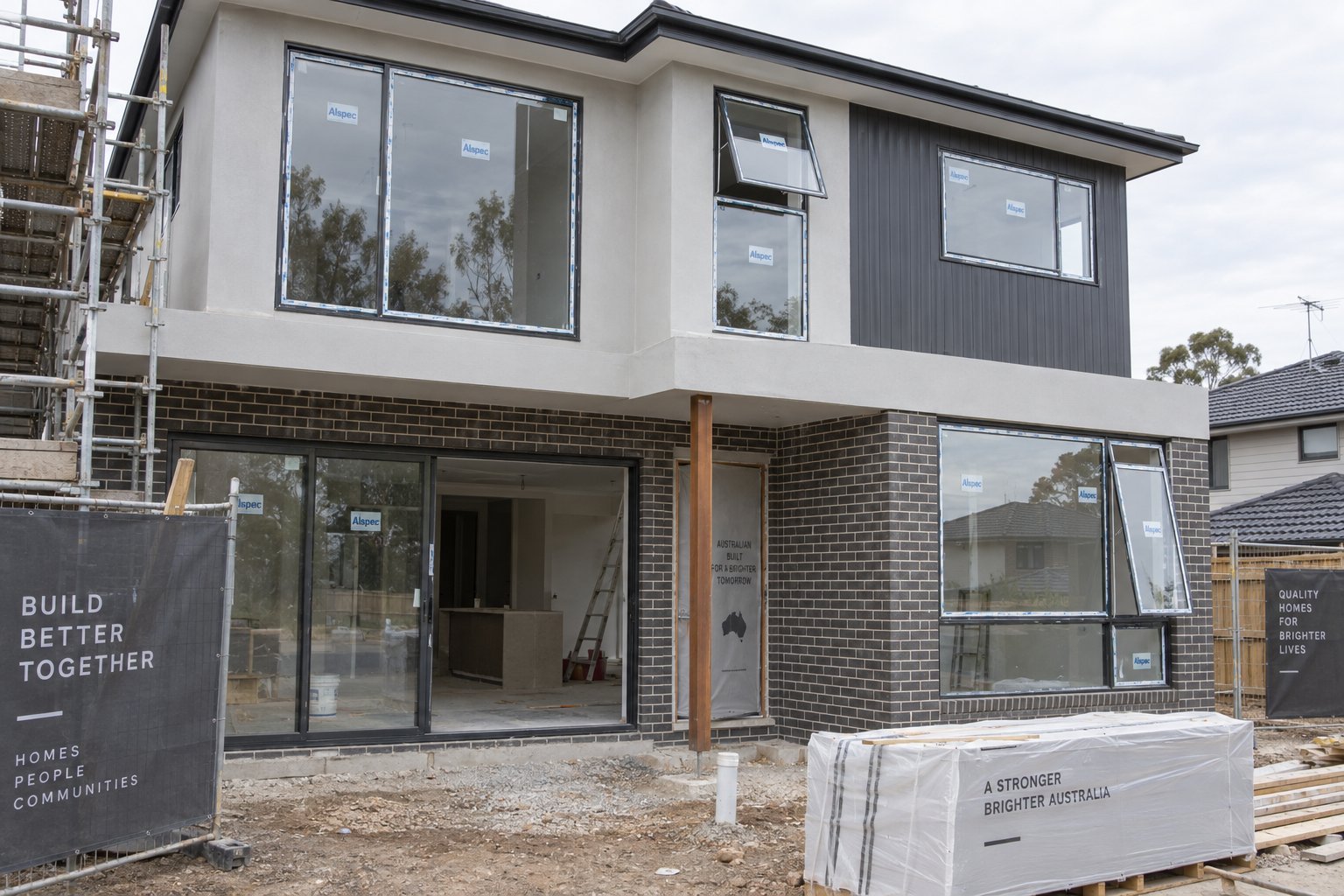
Understanding Aluminium Window Frame Costs and Getting Accurate Quotes
Pricing is the topic most aluminium window content avoids entirely. Product pages list features. Brochures show lifestyle imagery. But almost nobody explains what actually drives the number on a quote — or why two seemingly identical windows can differ by hundreds of dollars. That gap leaves buyers guessing, and guessing is how you overpay. Whether you are scoping an aluminium window replacement for a single opening or pricing a full schedule of custom aluminum windows for a new build, understanding the cost structure puts you in a far stronger negotiating position.
Key Factors That Determine Aluminium Window Frame Pricing
There is no single “standard price” for aluminium window frames. Every quote is shaped by a stack of variables, and shifting any one of them moves the total. Here are the primary cost drivers you should expect to see reflected — directly or indirectly — in any itemised quote:
- Frame profile system and grade: Residential-grade profiles cost less than commercial-grade systems. Within each grade, different profile series carry different wall thicknesses, sightline widths, and engineering capabilities. A slimline residential casement and a heavy-duty commercial sliding frame sit at very different price points, even before glass or hardware enter the equation.
- Thermal break inclusion: Thermally broken profiles require more complex extrusion, additional raw material (the polyamide or polyurethane strip), and tighter manufacturing tolerances. Expect a meaningful price increase over non-thermally-broken equivalents — but also expect meaningful energy savings over the frame’s life.
- Window type: Fixed-lite windows are the simplest and cheapest to fabricate. Operable types — casement, awning, aluminum double hung windows, and aluminum sliding windows — involve more hardware, more machining, and more assembly time. Bifold and stacking slider configurations sit at the top of the complexity and cost scale.
- Overall size and custom dimensions: Standard catalogue sizes are produced in volume runs, keeping unit costs lower. Custom aluminum windows fabricated to non-standard measurements require individual setup and cutting, which adds labour and sometimes material waste. Oversized openings may also require upgraded profiles to meet structural and wind-load requirements.
- Glazing specification: The jump from basic clear double glazing to a Low-E coated, argon-filled unit adds cost per square metre of glass. Triple glazing adds more again. Laminated or toughened safety glass — mandatory in certain locations under AS 1288 — carries its own premium.
- Finish type and colour: Standard powder coat colours (typically white, black, and a handful of popular shades) are included in base pricing. Custom RAL colours, Colorbond matches, two-tone finishes (different colours inside and out), and anodised finishes all attract surcharges. Dark colours with high solar absorptance sometimes require upgraded thermal profiles, compounding the cost.
- Hardware tier: Budget hardware keeps the headline price low but wears faster and operates less smoothly. Specifying a premium hardware suite — better locks, stainless steel friction stays, ergonomic handles — adds to the per-window cost yet significantly extends functional lifespan.
- Quantity and project scale: Larger orders typically attract better per-unit pricing through batch production efficiencies. A single replacement aluminum window ordered in isolation will almost always cost more per unit than the same window ordered as part of a 20-window schedule.
- Geographic location and delivery logistics: Freight costs vary with distance from the fabrication facility, site accessibility, and whether the delivery requires special handling (crane lifts for upper-storey openings, for example). Regional and remote projects in Australia can face notable delivery surcharges compared to metropolitan drops.
The spread between the cheapest possible aluminium window and a fully specified, thermally broken, commercially rated unit with premium glazing and hardware is substantial. A basic fixed-lite aluminum replacement window in a standard size might cost a fraction of what a large, thermally broken casement with Low-E argon-filled double glazing, anodised finish, and commercial-grade hardware runs. Recognising that these are fundamentally different products — despite both being called “aluminium windows” — is what separates informed buyers from those who chase the lowest number on a quote and end up disappointed.
How to Get Accurate Quotes and Avoid Hidden Costs
The single most effective thing you can do is request itemised quotes from at least three suppliers, making sure every quote covers the same specification. A lump-sum figure that reads “supply of aluminium windows — $X” tells you almost nothing. An itemised quote that breaks out frame system, thermal break, glazing spec, finish, hardware, and delivery lets you compare like with like and spot exactly where one supplier is cutting corners or another is padding margins.
Several costs have a habit of appearing late in the process, after you have already committed in principle:
- Delivery surcharges: Some suppliers quote ex-factory or ex-warehouse. The actual cost to get frames to your site — particularly for regional, upper-floor, or difficult-access locations — can add a surprising percentage to the total.
- Minimum order fees: Fabricators geared toward project-scale work sometimes apply minimum charges that inflate the per-unit cost on small orders like a single aluminum window replacement.
- Custom colour upcharges: Standard colours are priced in. Anything outside the standard palette — especially two-tone finishes or Colorbond-matched shades — incurs additional cost, sometimes with extended lead times as well.
- Hardware upgrades: Base quotes frequently include entry-level hardware. If you want upgraded locks, keyed-alike cylinders, or stainless steel components for coastal durability, confirm the cost difference upfront rather than discovering it as a variation later.
- Glazing upgrades listed as optional extras: Some quotes default to clear float glass and list Low-E coatings, lamination, or gas fills as add-ons. If your energy performance targets require those features, factor them in from the start.
The most reliable way to avoid these surprises is to work with a supplier who reviews your project drawings and window schedule before quoting. When a supplier can assess your plans, recommend appropriate profile systems for each opening, calculate accurate material quantities, and map out a delivery programme that aligns with your build timeline, the resulting quote reflects reality rather than guesswork. Fewer assumptions at the quoting stage means fewer costly variations during production and installation.
For builders, developers, and architects managing multi-opening projects, this kind of project-level support is not a luxury — it is a practical necessity. Suppliers like MEICHEN structure their quoting process around exactly this workflow: reviewing drawings and schedules, recommending system specifications, calculating materials, coordinating manufacturing, and planning staged deliveries. That end-to-end approach is a useful benchmark for what a thorough quoting process should look like, regardless of which supplier you ultimately choose. If a potential supplier cannot walk you through a similar process — from drawings to delivery logistics — it is worth asking whether their quote is detailed enough to trust.
Getting the price right upfront is one part of the value equation. The other part stretches across the years and decades after those frames are installed — how much maintenance they need, what warranty protection you actually hold, and what happens to the aluminium at the end of its very long service life.
Maintenance, Warranties, and the Sustainability Advantage
Aluminium window frames have a well-earned reputation for being low maintenance. That reputation is accurate — but it is not the same as zero maintenance. Every moving part eventually needs attention, every seal degrades with UV exposure, and every finish benefits from periodic cleaning. The difference between aluminium and most other framing materials is the scale of effort involved. Where old aluminium windows from the 1970s and 1980s are still functioning in homes across Australia — often with nothing more than basic upkeep over their entire service life — timber frames of the same era have typically been replaced at least once. Understanding what aluminium frames actually need from you, and what warranty protection should back them up, turns a good purchase into a genuinely long-term investment.
Maintaining Aluminium Window Frames for Maximum Lifespan
The day-to-day reality of caring for metal window frames is refreshingly simple. Unlike timber, there is no cyclical repainting. Unlike vinyl, there is no risk of warping or discolouration from UV exposure. Aluminium’s powder-coated or anodised surface resists the elements by design. But “resists” does not mean “ignores.” Salt residue in coastal areas, accumulated grime in urban environments, and general dust and pollen all settle on frame surfaces and, if left unchecked, can gradually compromise the finish and hardware.
Regular cleaning is the single most effective maintenance task. Mild soap — standard dishwashing liquid works fine — mixed with warm water and applied with a soft cloth or sponge removes surface contaminants before they have time to cause lasting damage. Avoid abrasive pads, scouring powders, and solvent-based cleaners. These strip protective coatings and can void finish warranties. For homes near the coast, cleaning frequency matters more than technique. Salt-laden air accelerates corrosion on any exposed metal, and even high-quality powder coatings benefit from a monthly wash-down in severe salt zones.
Beyond cleaning, a handful of tasks keep the mechanical and sealing components of your windows performing properly. Hardware — hinges, friction stays, locks, and handles — should be lubricated annually with a light silicone-based spray or white lithium grease. Weatherseals and gaskets need visual inspection for cracking, compression set, or gaps that allow drafts and water ingress. Drainage slots, those small openings at the bottom of the outer frame designed to channel water away, can block with dirt and debris, causing water to pool inside the frame and potentially enter the building.
Here is a seasonal maintenance checklist to keep your aluminium frames in top condition:
- Every 3 months (quarterly): Wash all frame surfaces with mild soapy water. Rinse thoroughly and dry with a soft cloth. Increase to monthly for coastal properties within 500 metres of the shoreline.
- Every 6 months: Inspect weatherseals and rubber gaskets around the sash perimeter. Look for cracking, hardening, or sections that have pulled away from the frame. Check that windows close firmly against the seal without gaps.
- Annually: Lubricate all hinges, friction stays, sliding tracks, and lock mechanisms with a silicone-based lubricant. Wipe away excess. Open and close each window fully to distribute lubricant across moving parts.
- Annually: Clear drainage slots using a thin, non-metallic tool — a pipe cleaner or plastic skewer works well. Flush with clean water to confirm the channel drains freely.
- Annually: Inspect the junction between the frame and the surrounding wall for cracked or deteriorating sealant. Failing perimeter sealant is a common source of water leaks that gets blamed on the window itself.
- Every 2–3 years: Check fixings and fasteners for tightness, particularly on operable sashes. Friction stays on awning and casement windows can loosen over time, causing the sash to sag or not stay open at the set position.
Most of these tasks are straightforward DIY upkeep that takes minutes per window. Signs that warrant professional attention include persistent water leaks despite clear drainage slots, visible corrosion or pitting on the aluminium surface (uncommon with quality finishes, but possible in extreme environments), hardware that no longer holds the sash securely, and failed sealed glazing units — identifiable by a foggy or milky appearance between the panes. A qualified aluminium joinery specialist or window service technician can diagnose and resolve these issues without full frame replacement in most cases.
Old aluminum window frames that have served decades without a thermal break or modern seals are also worth assessing honestly. If you have inherited old aluminium windows in a home you have purchased, a professional inspection can determine whether refurbishment — replacing seals, hardware, and glazing within the existing frames — is viable, or whether the frames have reached the point where aluminum retrofit windows offer a better long-term return. Retrofit systems are designed to fit within existing openings, minimising structural disruption while delivering modern thermal and acoustic performance.
Warranty Considerations and What Good Coverage Looks Like
Aluminium window warranties are not a single document covering everything. Most suppliers issue separate warranties for different components, each with its own coverage period and conditions. Understanding this structure prevents unpleasant surprises when something needs attention years down the track.
A typical warranty breakdown looks like this:
- Frame and profile: Often the longest warranty — 10 to 25 years is common, with some manufacturers extending to lifetime coverage on the structural aluminium itself. This covers manufacturing defects, not damage from misuse or improper installation.
- Finish (powder coating or anodising): Usually 10 to 15 years for standard environments, sometimes reduced for severe coastal or industrial exposure unless a marine-grade finish was specified. Premium systems meeting Qualicoat Class 2 or higher may carry longer terms.
- Sealed glazing units: Typically 5 to 10 years, covering seal failure that leads to fogging or moisture between panes. Glass breakage from impact is almost never covered.
- Hardware: The shortest coverage, often 2 to 5 years. Locks, hinges, handles, and friction stays are mechanical components subject to wear. Higher-tier hardware from reputable brands sometimes carries independent manufacturer warranties beyond what the window supplier offers.
Several conditions commonly void aluminium window warranties, and they are worth knowing before installation rather than after a claim is rejected. Improper installation is the most frequent — if windows are not installed according to the manufacturer’s written instructions, structural warranty claims can be denied outright. Using chemical or abrasive cleaners that damage the finish typically voids coating warranties. Coastal exposure without specifying a marine-grade or coastal-rated finish and hardware package can also invalidate coverage, even during the stated warranty period. And modifications made to the frame after purchase — drilling additional holes, cutting profiles, or altering drainage — generally void all coverage.
If you are searching for old aluminum storm windows for sale as a budget option for a shed, garage, or non-habitable space, warranty coverage is less critical. But for any living area, office, or commercial tenancy, always request the full warranty documentation before purchase, read the exclusions carefully, and confirm that your installation method and site conditions fall within the warranted scope.
Sustainability and End-of-Life Recyclability
Sustainability has shifted from a niche concern to a genuine buying factor for many Australian homeowners, builders, and developers. Aluminium’s environmental profile is a story of two halves — and understanding both gives you an honest picture of where it stands.
The first half is initial production. Smelting aluminium from raw bauxite ore is energy-intensive. The embodied energy in virgin aluminium is higher than virtually any other common building material on a per-kilogram basis. That is a legitimate environmental cost, and it would be misleading to ignore it.
The second half is where aluminium recovers — dramatically. Aluminium is infinitely recyclable without losing any structural or aesthetic properties. Recycling existing aluminium requires roughly 5 per cent of the energy needed to produce the same amount from virgin ore. That is not a rounding error — it is a 95 per cent energy saving on every recycling pass. And aluminium does not degrade through recycling the way some plastics do. A recycled aluminium extrusion performs identically to one made from freshly smelted material.
When an aluminium window frame reaches the end of its service life — typically 40 to 70 years — the metal retains real scrap value and re-enters the manufacturing stream as high-grade feedstock. Vinyl frames, by contrast, overwhelmingly end up in landfill. This long-game recyclability is why lifecycle assessments frequently rank aluminium favourably despite its higher upfront embodied energy.
For projects targeting Green Star ratings, NatHERS efficiency targets, or simply aiming to minimise long-term environmental impact, aluminium’s recyclability and extraordinary service life combine to make a compelling case. A frame that lasts 50-plus years and then gets fully recycled into new products represents a fundamentally different environmental equation than one that lasts 25 years and ends up as landfill waste.
Maintenance discipline, solid warranty coverage, and genuine end-of-life recyclability together form the long-term value proposition that sets aluminium apart from materials competing on upfront price alone. These are the factors that matter once the purchase decision is made and the frames are on the wall. What remains is pulling every consideration covered in this guide — from material selection and thermal performance through to pricing, finishes, and supplier verification — into a single, practical checklist you can carry into the buying process with confidence.
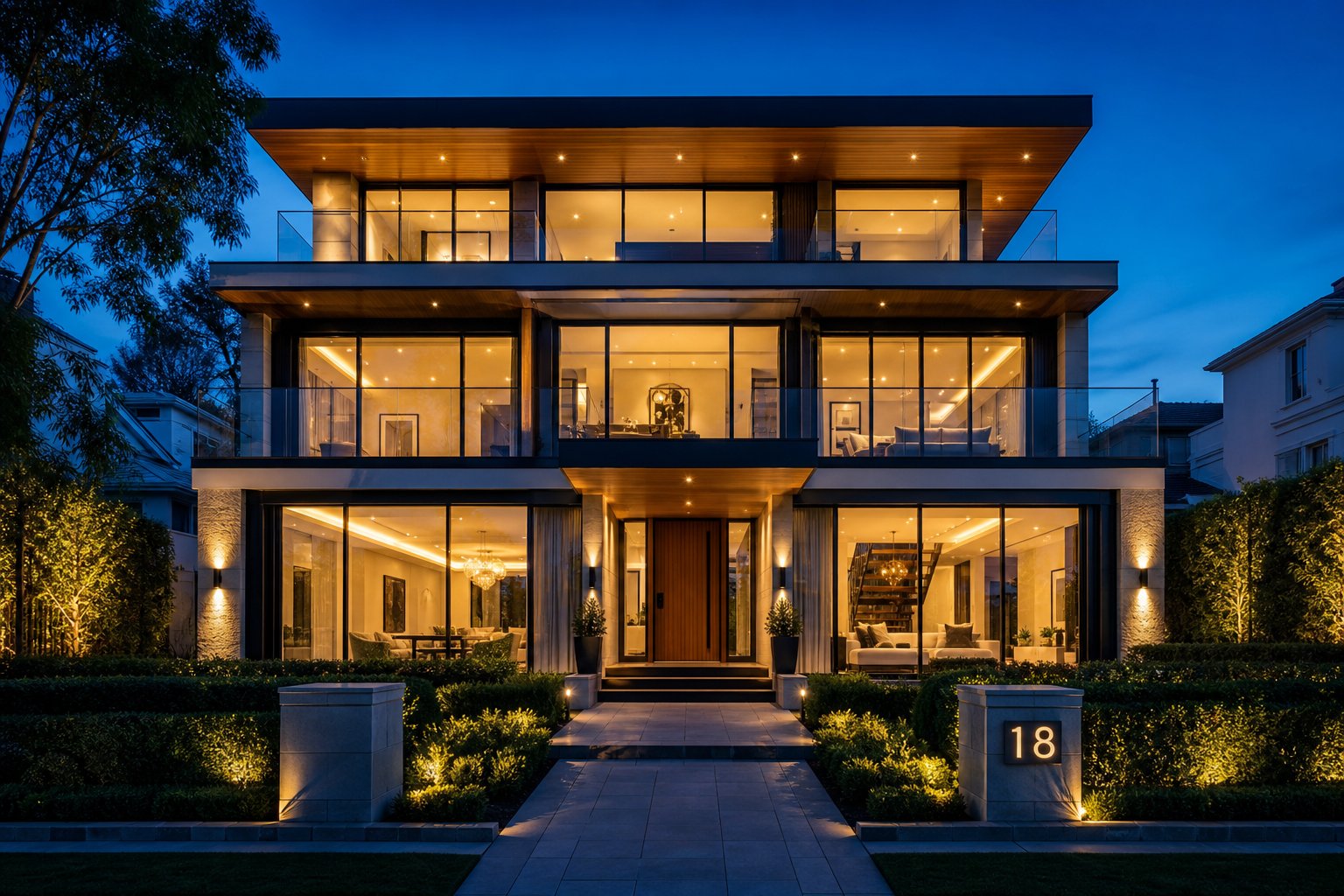
Your Complete Buying Checklist and Choosing the Right Partner
Every section of this guide has added layers to what initially seems like a simple transaction — pick a frame, pay, install. In practice, buying aluminium window frames involves a chain of interdependent decisions. Miss one link and the consequences ripple forward: a wrong grade means failed compliance inspections, a vague glazing spec means underperformance you will feel on every energy bill, and a supplier who cannot produce shop drawings means you are trusting guesswork with your money.
The checklist below distils everything covered in this article into a single sequential framework you can print, save, or hand to your builder. Work through it in order — each step informs the next.
Your Aluminium Window Frame Buying Checklist
- Determine your project type. Are you dealing with new construction, a full renovation, or a single-window replacement? New builds and major renovations allow specification from scratch. Replacement and retrofit projects carry existing opening constraints — accurate measurements of the current frames become critical, and retrofit-compatible systems may be needed to avoid structural modifications.
- Identify the required frame grade. Standard residential aluminium windows suit most single-storey and double-storey suburban homes. Multi-storey developments, exposed coastal sites, cyclone-rated regions, and openings exceeding approximately 2,400 mm wide demand commercial-grade profiles tested to higher AS 2047 classifications. Getting this wrong is expensive to fix after installation.
- Confirm thermal break requirements. Check which NCC climate zone your project falls within and what minimum energy performance the NatHERS rating requires. In most zones and for virtually all habitable rooms, thermally broken profiles are now essential for compliance. Non-thermally-broken frames are only appropriate for non-habitable spaces like garages or storage areas.
- Select your glazing specification. Double glazing with Low-E coating and argon gas fill is the baseline for the best aluminum windows performance in Australian conditions. Specify the whole-window U-value, SHGC, and VT you need — do not accept vague descriptions like “energy-efficient glass.” Triple glazing is justified for extreme climates or high-acoustic-demand sites.
- Choose your finish type and colour. Powder coating covers the widest colour range and suits most residential aluminum windows projects. Anodising delivers superior corrosion resistance for severe coastal or commercial applications. Remember that dark colours absorb more heat — pair them with thermally broken profiles and appropriate weatherseals.
- Specify the hardware tier. Request the brand and model of locks, hinges, friction stays, and handles included in the quote. Confirm rated cycle life and whether stainless steel components are necessary for your exposure conditions. Do not let budget hardware undermine a quality frame.
- Gather project drawings or accurate measurements. For new builds and renovations, architectural drawings or a detailed window schedule allow suppliers to quote precisely. For single replacements, measure the existing opening width, height, and depth at multiple points — openings are rarely perfectly square. Supplying accurate dimensions upfront prevents costly remakes.
- Request itemised quotes from at least three suppliers. Each quote should separately list the frame profile system, thermal break status, glazing specification, finish, hardware, delivery, and any applicable minimum order fees or custom colour surcharges. Lump-sum quotes that bundle everything into a single line are impossible to compare meaningfully.
- Verify warranties and certifications. Confirm AS 2047 compliance for the relevant wind and water classifications. Check BAL compliance for bushfire-prone areas. Review separate warranty terms for the frame, finish, glazing seals, and hardware. Understand what conditions void each warranty before you commit.
- Confirm lead times and delivery logistics. Standard colours and catalogue sizes ship faster than custom orders. Commercial-grade frames, anodised finishes, and non-standard dimensions extend production timelines. Clarify whether the quoted price includes delivery to site or is ex-factory, and coordinate arrival with your build programme to avoid frames sitting on-site unprotected or, worse, arriving after the installation crew has moved on.
Print this list. Bring it to every supplier conversation. Any reputable aluminium window manufacturer or fabricator will welcome a buyer who has done this level of preparation — it makes their quoting faster, their recommendations more targeted, and the entire process smoother for both sides.
Choosing the Right Supply Partner for Your Project
For a straightforward single-window swap, this checklist and a competent local supplier are all you need. Complexity changes the equation. Projects involving multiple window types across different elevations, a mix of fixed and operable configurations, custom sizing throughout, tight construction schedules, or coordination between aluminium windows and doors and other facade elements demand a supply partner rather than a transactional vendor.
The distinction matters. A transactional supplier takes your order, fabricates it, and ships it. A project-capable partner reviews your drawings, identifies potential issues before they become site problems, recommends profile systems matched to each opening’s performance requirements, calculates accurate material quantities, coordinates manufacturing stages, runs quality control checks, and plans deliveries around your build programme. That level of involvement catches errors early, reduces waste, and keeps your project on schedule — outcomes that save far more than any per-unit discount on the frames themselves.
Builders, developers, architects, and contractors working on multi-opening projects should evaluate potential suppliers against these capabilities. Can they read and interpret architectural drawings? Will they produce a detailed window schedule with profile cross-sections for approval? Do they manage manufacturing quality control internally? Can they stage deliveries to match your construction sequence rather than shipping everything in a single drop?
Not every supplier operates at this level, but the ones that do make a measurable difference to project outcomes. MEICHEN’s Services and Solutions team is one example of a partner structured around exactly this workflow — supporting builders and specifiers from initial schedule review and system recommendations through material calculation, manufacturing coordination, quality assurance, and delivery planning for aluminium doors and windows. It is worth exploring as a practical reference point for what project-level support looks like, particularly if you are managing a development or commercial fit-out where coordination failures are costly.
Whatever partner you choose, the principle holds: the more complex your project, the more value a capable supply partner delivers beyond the product itself. Frames are a commodity. The expertise to get the right frames, in the right specification, to the right site, at the right time — that is the differentiator between projects that run smoothly and projects that burn time and budget fixing avoidable mistakes.
Aluminium window frames remain one of the most versatile, durable, and recyclable framing systems available to Australian buyers. Armed with the knowledge in this guide — material comparisons, thermal break fundamentals, glazing science, finish options, purchasing channels, cost drivers, maintenance requirements, and the checklist above — you are equipped to buy aluminium window frames with genuine confidence. Not the cheapest frames. Not the most expensive. The right ones for your project, your climate, and your budget.
Frequently Asked Questions About Buying Aluminium Window Frames
1. What should I check before buying aluminium window frames?
Before placing an order, confirm several critical specifications: whether the frame includes a thermally broken profile with a polyamide or polyurethane insulating barrier, the glazing specification including whole-window U-value and SHGC rating, the finish warranty duration and its applicability to your environment (coastal, urban, or inland), the hardware brand and rated cycle life, AS 2047 compliance certification for the required wind and water classifications, realistic lead times, and the supplier’s return and defect policy. Request shop drawings or profile cross-sections so you can verify the internal frame structure matches what you are paying for. Suppliers like MEICHEN (https://meichenwindows.com.au/services/) can review your project drawings and provide detailed system recommendations, which ensures the quoted specification aligns with your actual performance requirements.
2. Are thermally broken aluminium window frames worth the extra cost?
For any habitable room in Australia, thermally broken aluminium frames are virtually essential. Without a thermal break, aluminium conducts heat roughly 1,000 times faster than wood, creating a thermal bridge that drives up energy bills and causes persistent condensation on interior surfaces. A thermally broken profile inserts an insulating polyamide strip between the interior and exterior aluminium sections, reducing the frame U-value from around 6-7 W/m2K down to between 2.5 and 4 W/m2K. This improvement is often necessary to meet National Construction Code energy efficiency requirements and NatHERS star ratings. Over a 20- to 30-year ownership period, the cumulative energy savings from reduced heating and cooling loads can more than offset the higher upfront investment in thermally broken profiles.
3. How long do aluminium window frames last compared to other materials?
Aluminium window frames have an estimated lifespan of 40 to 70 years with basic maintenance, which significantly outpaces vinyl (uPVC) frames at 20 to 40 years and composite frames at 30 to 50 years. Well-maintained timber frames can last 30 to 60 years or more but require regular painting, sealing, and inspection for rot and termite damage — maintenance demands that aluminium largely eliminates. Fibreglass frames offer a comparable 40 to 60 year lifespan but come at a higher purchase price with fewer local fabrication options in Australia. At end of life, aluminium retains real scrap value and can be infinitely recycled without losing structural integrity, whereas vinyl overwhelmingly ends up in landfill.
4. What is the difference between residential and commercial grade aluminium window frames?
Residential-grade aluminium frames use lighter gauge profiles and hardware rated for moderate-frequency use, suited to standard openings in single-storey and double-storey suburban homes. Commercial-grade frames feature thicker aluminium walls, heavier-duty hardware, reinforced corner joints, and are tested to higher performance tiers under AS 2047 for wind pressure, water penetration, and air infiltration resistance. The distinction matters because projects that are technically residential but face elevated exposure — beachfront homes, buildings in cyclone-rated zones, openings wider than approximately 2,400 mm, or multi-storey apartments — often require commercial-rated frames to meet compliance. Selecting the wrong grade can result in failed inspections and expensive rectification after installation.
5. Where is the best place to buy aluminium window frames in Australia?
The best purchasing channel depends on your project scope. Homeowners replacing a single window should start with a local retail outlet or nearby custom fabricator. Renovators handling multiple windows benefit from contacting two or three aluminium window suppliers and requesting itemised quotes based on identical specifications. Builders managing new construction projects typically work direct with manufacturers or project-capable fabricators who can interpret architectural drawings, produce window schedules, and coordinate staged deliveries. For complex multi-opening projects, a supply partner such as MEICHEN (https://meichenwindows.com.au/services/) offers end-to-end support covering schedule review, system recommendations, material calculation, manufacturing coordination, quality control, and delivery planning — an approach that catches errors early and keeps builds on programme.
More Window & Door Guides