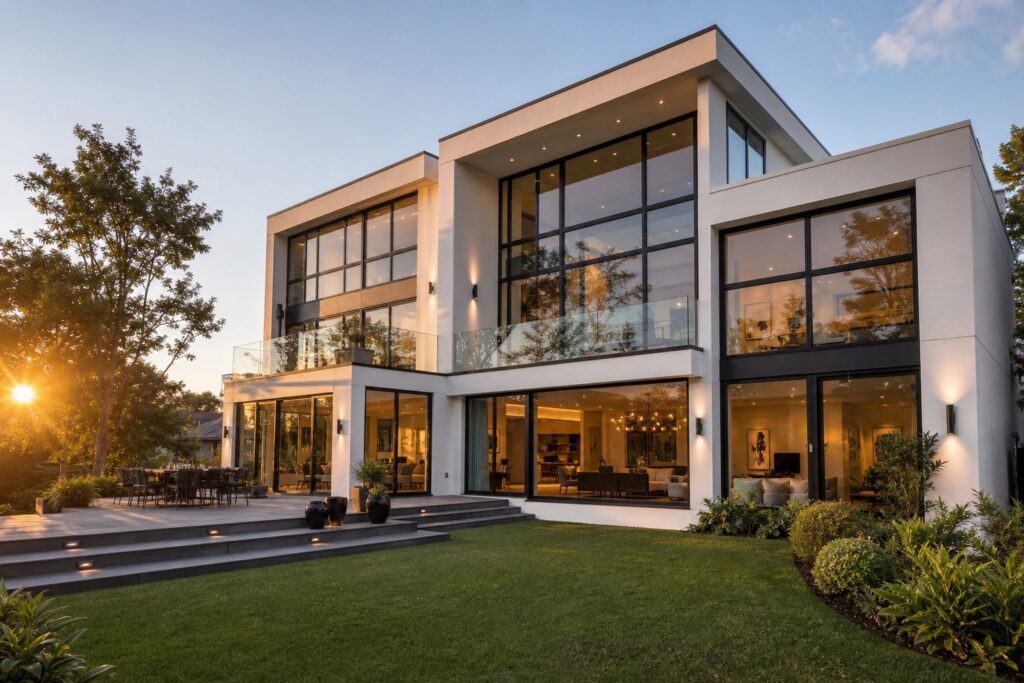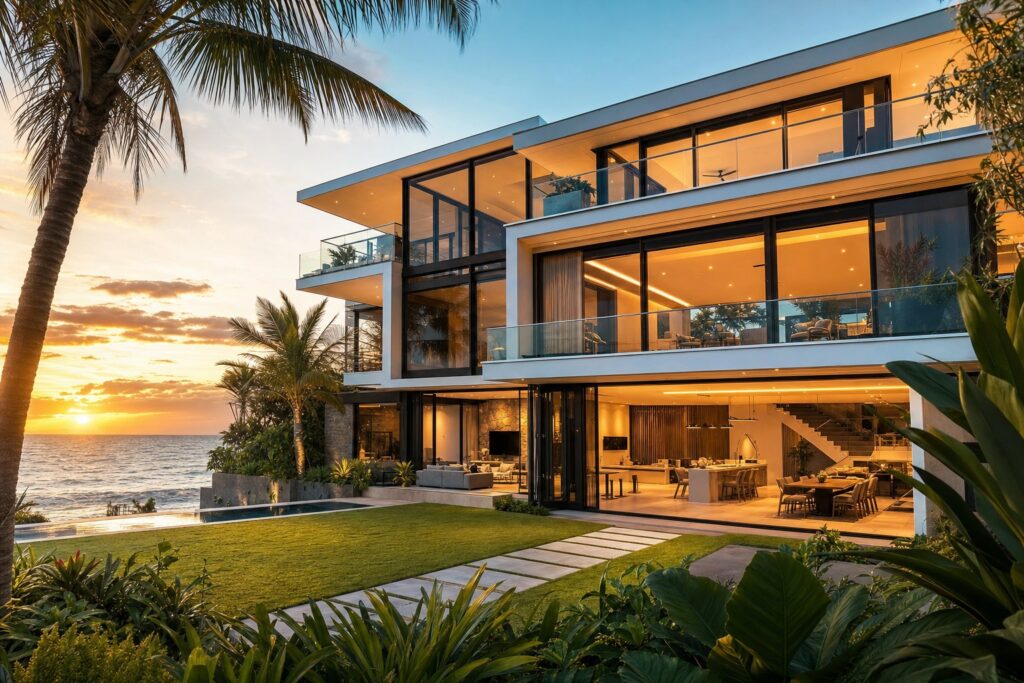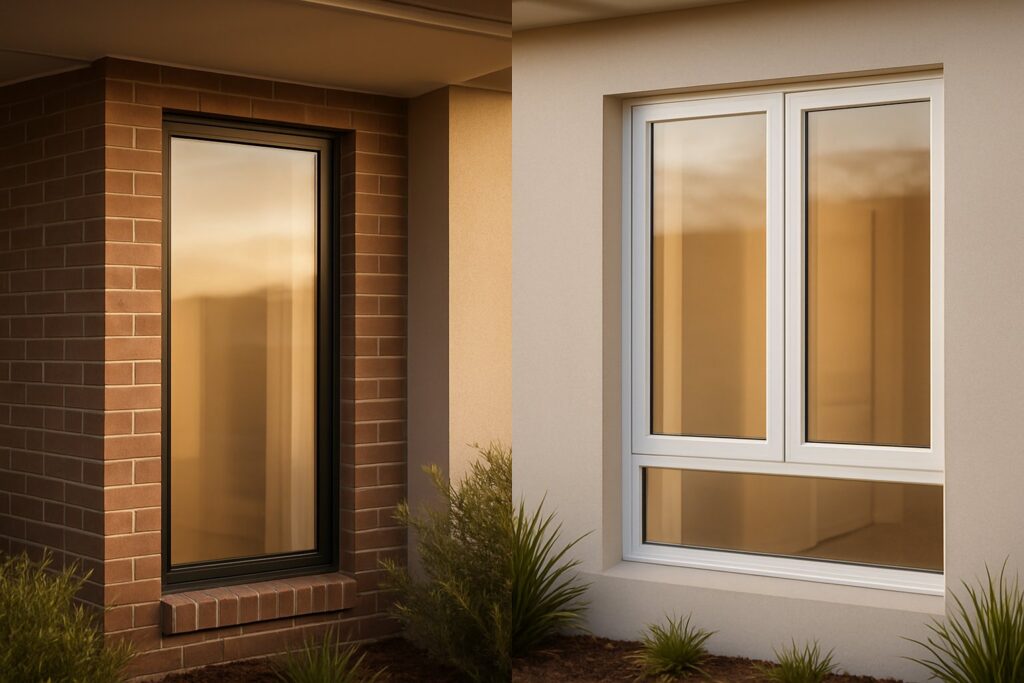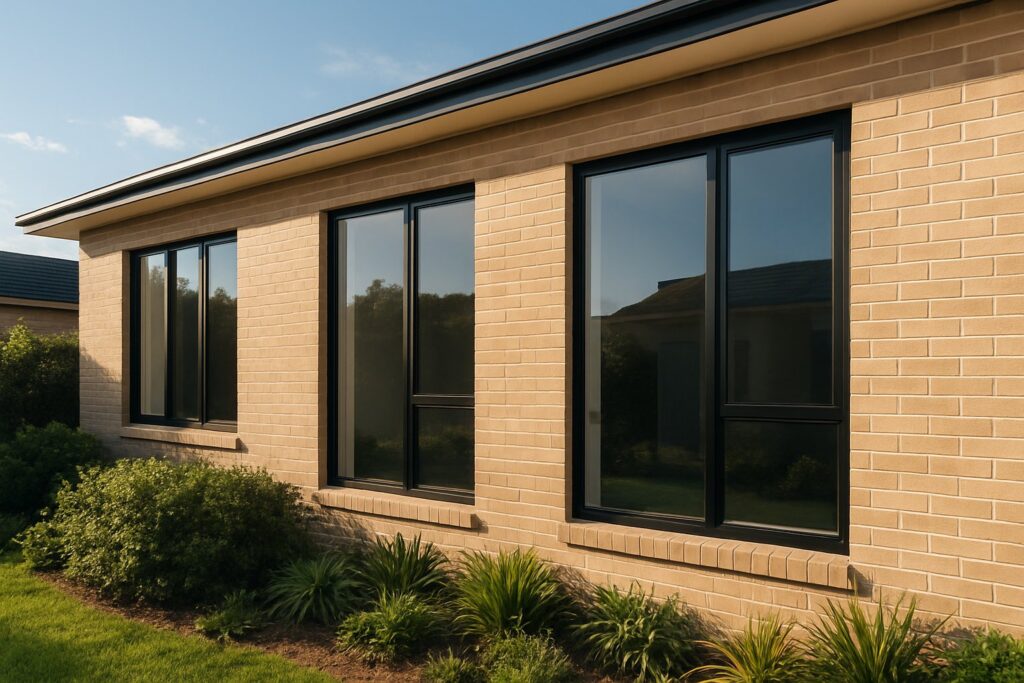
What Actually Makes an Aluminium Window Modern
When most people hear “aluminium windows,” they picture the thin, cold, rattly frames from their grandparents’ house. That mental image is decades out of date. Modern aluminium windows are an entirely different product category, separated from their predecessors by a genuine engineering leap, not just a fresh coat of marketing paint.
Defining the Modern Aluminium Window
A modern aluminium window is built from extruded aluminium alloy profiles, typically 6063 alloy, shaped under immense hydraulic pressure into precise cross-sectional forms. What makes it “modern” comes down to three core elements working together: a polyamide thermal break insert that splits the frame into thermally separated interior and exterior halves, a factory-applied powder-coat or anodised finish engineered to resist UV degradation and corrosion for decades, and compatibility with double or triple insulated glazing units. Remove any one of those three, and you’re looking at a legacy frame. Together, they transform aluminium from a heat-leaking liability into a high-performance window system.
This distinction matters. Older aluminum window frames conducted heat straight through the profile, creating condensation, energy loss, and that infamous cold-to-the-touch feel. The modern version solves every one of those problems at the material level.
Key Features That Set Them Apart
You’ll notice these differences immediately when comparing modern aluminium windows to older aluminum windows or even some current alternatives:
- Slim sightlines (as narrow as 20-30mm) that maximise the glass area in each aluminum frame, letting light and views dominate
- Thermal break technology using reinforced polyamide strips, eliminating the cold-bridge problem that plagued earlier designs
- Durable powder-coat finishes available in virtually any RAL colour, from matte black to anodic bronze
- Inherent corrosion resistance, making alu windows a strong choice for coastal and high-moisture environments
- An exceptional strength-to-weight ratio that supports large-format glazing panels without bulky framing
- Multi-point locking hardware for improved security and consistent seal compression
None of this means aluminium is the only good frame material. Vinyl, timber, fiberglass, and even aluminum clad windows all have their place. But if you’re researching options and still associating aluminium with the drafty frames of the past, the modern reality deserves a fair look. Brands across the market, from niche European systems to widely available lines like Milgard aluminum windows, now offer thermally broken aluminium as a serious contender.
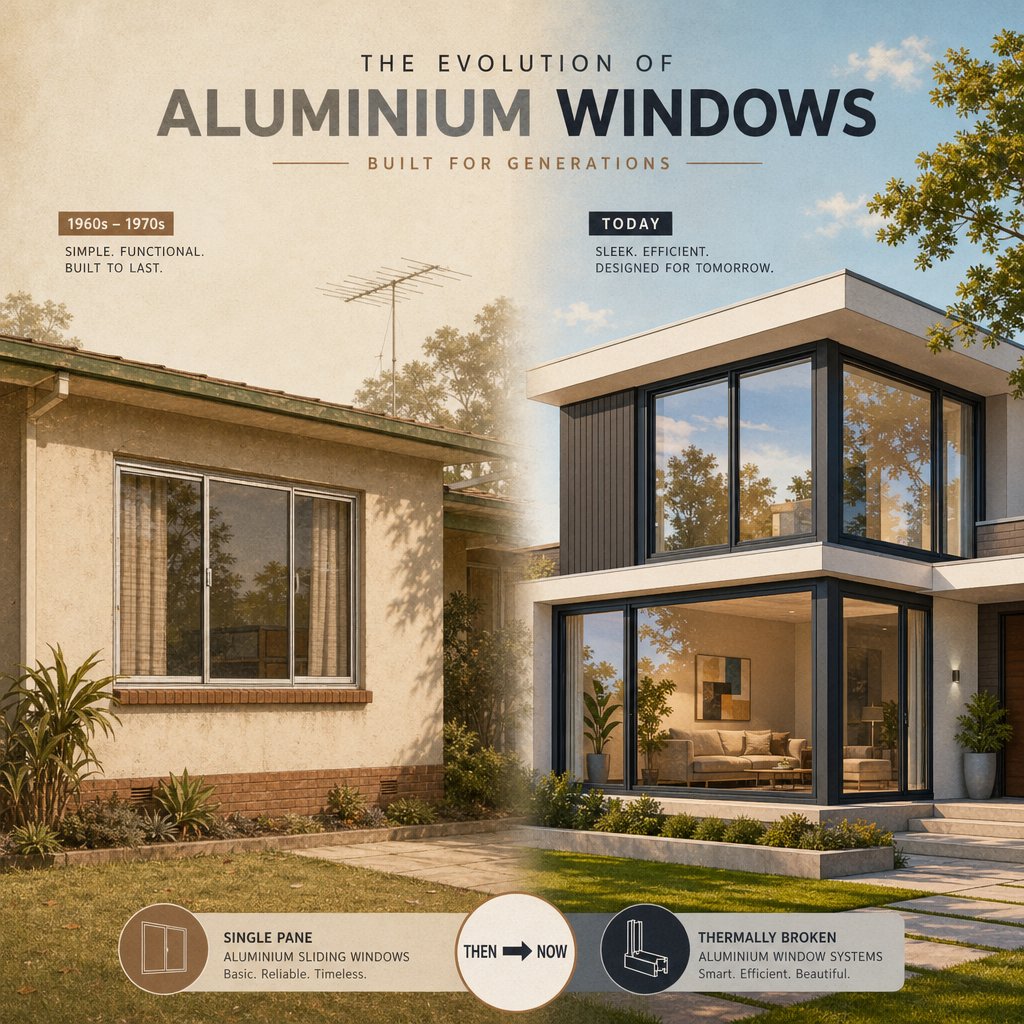
The real question is: how did aluminium go from one of the worst-performing frame materials to one of the most capable? That story starts in the middle of the last century.
From Mid-Century Staple to High-Performance Frame
Aluminium’s journey in the window industry reads like a redemption arc. It rose fast, fell hard, and came back stronger than anyone expected. Understanding that arc helps you evaluate today’s products without the baggage of outdated assumptions.
The Rise and Fall of Early Aluminium Frames
After World War II, aluminium became the darling of mass construction. Factories that had been stamping out aircraft parts pivoted to building materials, and aluminium window frames hit the market as a lightweight, affordable alternative to timber. They didn’t rot, they didn’t need painting, and they could be extruded into slim profiles that gave homes a clean, modern look. The classic alum sliding window became a fixture in suburban developments across the U.S., Australia, and the U.K. through the 1950s, 60s, and 70s.
The problem? Those early frames had zero thermal insulation. Aluminium conducts heat roughly 1,000 times faster than wood, so in winter, the interior profile dropped to near-outdoor temperatures. Condensation pooled along the aluminium window trim. Energy bills climbed. Homeowners in colder climates grew to resent the material, and by the 1980s, vinyl and aluminum clad wood windows were steadily replacing aluminum windows in residential projects. Aluminium’s reputation took a hit it would carry for decades.
If you’ve ever touched an old single-glazed aluminium frame on a cold morning, you already know the experience that fuelled that backlash.
How Engineering Brought Aluminium Back
The turnaround didn’t come from marketing. It came from material science. Engineers introduced polyamide thermal break strips, reinforced nylon barriers mechanically locked between the inner and outer aluminium profiles, effectively splitting the frame into two thermally independent halves. That single innovation neutralised aluminium’s biggest weakness.
Other advances stacked on top: compatibility with double and triple glazing units, improved multi-layer weather seals that blocked air and water infiltration, and modern powder-coating systems that resist UV, salt spray, and chalking for 25 years or more. The result is a frame material that kept all of its original strengths, slim profiles, corrosion resistance, structural rigidity, and recyclability, while shedding the thermal penalty that had sidelined it.
The engineering behind that thermal break deserves a closer look, because it’s the single detail that separates a window that bleeds energy from one that rivals timber and uPVC on insulation performance.
Thermal Break Technology and Why It Changed Everything
Aluminium is one of the strongest, lightest, and most recyclable materials you can put around a pane of glass. It also happens to conduct heat roughly 1,000 times faster than wood and about 200 times faster than PVC. That single property nearly killed it as a window material. The thermal break is the innovation that saved it.
What a Thermal Break Actually Does
Imagine your aluminum window frame as a metal bridge connecting the inside of your home to the outside air. In winter, heat races across that bridge and escapes. In summer, outdoor heat pours in. The frame becomes a thermal highway working against your insulation, your HVAC system, and your comfort.
A thermal break cuts that highway in half. It’s an insulating barrier, typically a strip of glass-fibre-reinforced polyamide (nylon), mechanically locked into channels between the interior and exterior aluminium profiles. The result is two thermally independent halves joined by a material whose thermal conductivity sits around 0.3 W/mK compared to aluminium’s 237 W/mK. That’s a reduction factor of nearly 800. The metal window frame still provides structural strength on both sides, but heat can no longer take a shortcut through it.
This is why you can lean against a thermally broken black aluminum windows frame on a freezing morning and feel something close to room temperature, a sensation that would have been unthinkable with the old single-profile designs.
Polyamide Strips vs Pour-and-Debridge Systems
Not all thermal breaks are built the same way. Two main manufacturing methods dominate the industry, and the differences matter if you’re evaluating quality.
Polyamide strip systems use pre-extruded nylon strips, usually PA 6.6 reinforced with glass fibre, that are mechanically crimped into knurled channels in the aluminium extrusion. Each strip is precision-formed to match the cavity width, creating a consistent mechanical interlock. This method is the dominant approach in residential aluminum window production because of its reliable structural performance and dimensional stability across temperature swings.
Pour-and-debridge systems take a different path. A two-part liquid polyurethane resin is dispensed into a cavity between the aluminium profiles, cured in place to form a solid bond, and then the aluminium bridge at the bottom is machined away to complete the thermal separation. This method offers advantages in high-throughput commercial production and can achieve even lower thermal conductivity, particularly with structural foam variants. However, polyamide strut systems remain the standard you’ll encounter in most residential aluminum sliding windows, casement units, and awning frames.
Both are proven technologies. The key takeaway for buyers: ask your supplier which method their frames use and confirm the thermal break width, because wider breaks generally deliver better insulation.
Real-World Impact on Aluminum Window Performance
Numbers tell the story more clearly than theory. Traditional aluminium frames without a thermal break typically produce U-values in the range of 4.0 to 6.0 W/(m2K). Thermally broken systems routinely achieve 0.8 to 2.0 W/(m2K), a 70 to 85 percent improvement in thermal efficiency. That’s enough to meet or exceed energy code requirements in most climate zones and puts aluminium on par with vinyl and fiberglass frames.
The performance gains show up in three practical ways. First, the frame’s U-factor drops dramatically, meaning less heat escapes in winter and less enters in summer. Second, interior surface temperatures stay closer to room temperature, which slashes condensation risk, the very problem that gave aluminium its bad reputation. Third, the improved frame performance unlocks compatibility with high-performance glazing: triple-pane units, Low-E coatings, and argon gas fills all work more effectively when the frame isn’t undermining them.
Whether you’re searching for aluminium windows near me or specifying frames for a large-scale project, the thermal break spec is the single most important detail to verify. Products like milgard casement windows and European-engineered systems alike rely on this technology to deliver their rated performance.
A thermal break is the dividing line between an aluminium window that loses energy and one that competes head-to-head with timber and uPVC on thermal performance.
Performance ratings, though, only tell part of the story. The frame is just one half of the equation. The other half, the glazing unit sitting inside it, determines how the complete window assembly actually performs in your specific climate.
Aluminium vs Vinyl vs Wood vs Fiberglass Frames
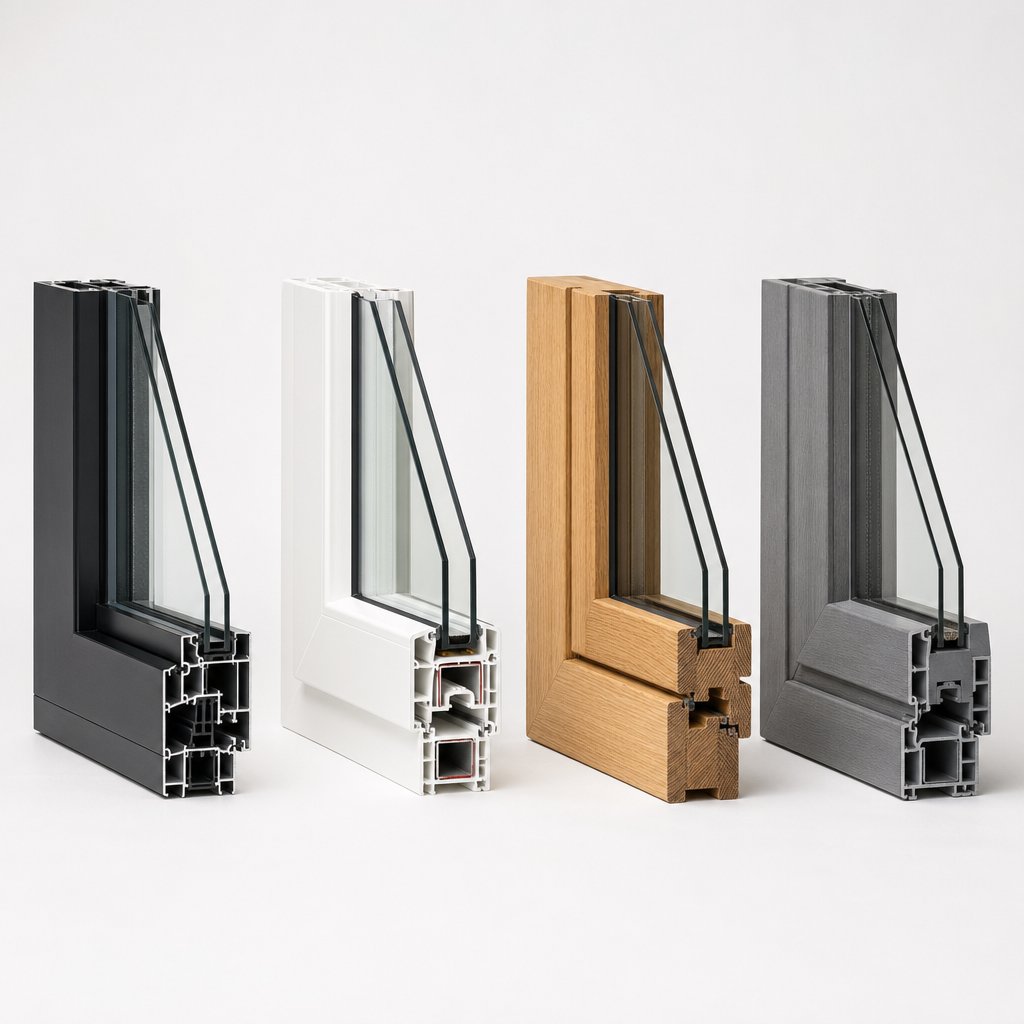
Knowing that thermal break aluminum windows can match vinyl and fiberglass on insulation raises the obvious next question: how do these frame materials actually compare across everything else that matters? Thermal performance is critical, but it’s one factor among many. Strength, lifespan, maintenance, aesthetics, and recyclability all shape the real-world value of a window over its lifetime.
Rather than ranking one material as “the best,” the smarter approach is matching the right frame to your specific project, climate, and priorities. Here’s how the four most common options stack up side by side.
How the Four Main Frame Materials Stack Up
| Decision Factor | Aluminium (Thermally Broken) | Vinyl / uPVC | Wood | Fiberglass |
|---|---|---|---|---|
| Thermal Performance | Good with thermal break (U-factor ~0.40-0.60); poor without | Good to very good (U-factor 0.20-0.40) | Good, natural insulator (U-factor 0.25-0.35) | Excellent (U-factor 0.20-0.35); cavities can be foam-filled |
| Strength-to-Weight Ratio | Excellent — supports large glass panels with minimal framing | Moderate — may need internal reinforcement for large spans | Moderate — heavier profiles required for structural loads | Very high — 8 to 10 times stronger than vinyl |
| Frame Slimness and Glass Area | Slimmest profiles available (20-30mm sightlines); maximum glass area | Wider profiles reduce visible glass area | Moderate to wide profiles depending on species and design | Thinner than vinyl but wider than aluminium |
| Expected Lifespan | 40-60+ years (inland); 20-30 years in uncoated coastal exposure | 20-40 years | 50-100+ years with diligent maintenance; 15-30 without | 30-50+ years |
| Recyclability | Infinitely recyclable; recycling uses ~5% of primary production energy | Limited recyclability; rarely recycled in practice | Biodegradable but not recyclable into new frames | Difficult to recycle due to resin-glass composite |
| Maintenance Needs | Very low — occasional cleaning, hardware lubrication | Very low — wipe-down cleaning, no painting | High — repainting or re-staining every 3-7 years | Very low — similar to vinyl, paintable if desired |
| Colour and Finish Options | Widest range — any RAL colour via powder-coat; anodised finishes available | Limited — colour baked in at manufacture; difficult to repaint | Unlimited — can be painted or stained any colour | Good — paintable, though fewer factory colour options |
| Best Climate Suitability | Coastal, temperate, hot-arid; strong in high-wind zones | Moderate climates; lighter colours in hot regions to avoid warping | Cold-dry and temperate; struggles in humid coastal areas | All climates, especially extreme cold and temperature swings |
Where Aluminium Wins and Where It Doesn’t
No single window metal frame material dominates every category. Aluminium’s genuine strengths cluster around longevity, design flexibility, and sustainability:
- Longest practical lifespan among common alu frames when properly coated — 40 to 60 years with minimal intervention
- Infinite recyclability without any loss in material quality, a clear environmental edge
- Slimmest profiles of any frame type, maximising the glass area in every opening
- Superior corrosion resistance in coastal and marine environments (with quality powder-coat or anodised finish)
- Widest colour palette — hundreds of RAL shades, metallic finishes, and wood-look textures
- Structural capacity to span large openings that vinyl simply can’t handle without bulky reinforcement
Honesty matters here, though. Aluminium isn’t the right answer for every project:
- Vinyl/uPVC remains the most cost-effective choice for budget-constrained window replacements where frame slimness isn’t a priority
- Wood is hard to beat for heritage restoration and period-correct aesthetics — no alumital window or powder-coat finish perfectly replicates the warmth of real timber grain
- Fiberglass delivers the strongest raw thermal performance, making it the go-to for extreme cold climates where insulation is the sole deciding factor
- Without a thermal break, aluminum frames still underperform — always confirm the thermal break spec before comparing
Choosing by Project Type
When you match frame material to the type of project rather than chasing a single “best” option, the decision gets much clearer:
- Contemporary architecture and large-format openings — aluminium. Its slim profiles and structural strength let you create floor-to-ceiling glass walls and wide-span aluminum casement window configurations that other materials can’t support as elegantly.
- Coastal and high-wind homes — aluminium or fiberglass. Both handle salt air and storm loads, though aluminium’s slimmer sightlines give it an aesthetic edge in modern coastal design.
- Budget-sensitive replacement projects — vinyl. It delivers solid thermal performance at the lowest upfront cost and needs almost no maintenance.
- Heritage and traditional homes — wood. Nothing else matches the period-appropriate look and feel that heritage guidelines often require.
- Extreme-climate performance builds — fiberglass. When you need the absolute lowest U-factor and maximum dimensional stability through severe temperature swings, fiberglass leads the field.
- Commercial-to-residential crossover — aluminium. The same aluminum frames used in commercial curtain walls scale down beautifully for residential projects that want that clean, architectural look.
The comparison makes one thing clear: thermally broken aluminium earns its place at the table, but the “right” frame depends on what you’re building, where you’re building it, and what trade-offs you’re willing to accept. What the table can’t show you, though, is how the numbers on the spec sheet — U-factor, SHGC, R-value — actually translate into comfort and energy savings in your specific climate. That’s where glazing choices and energy ratings come into play.
Energy Ratings and Glazing Options for Aluminium Windows
Spec sheets are full of numbers, but most window shoppers have no idea what those numbers actually mean for their comfort or their energy bill. Three metrics matter most, and every one of them measures the complete window assembly — frame aluminium and glass together — not just one component in isolation.
U-Factor, SHGC, and R-Value in Plain English
Think of these three ratings as a window’s vital signs:
U-factor measures how easily heat passes through the entire window unit. Lower is better. A window with a U-factor of 0.25 loses far less heat than one rated at 0.60. When you’re comparing aluminium windows and doors side by side, this is the first number to check because it captures the combined performance of the frame, the glass, the gas fill, and the seals working as a system.
Solar Heat Gain Coefficient (SHGC) tells you how much of the sun’s radiant energy makes it through the glass and into your room. It runs from 0 to 1. A lower SHGC blocks more solar heat — useful in hot climates where you’re fighting cooling loads. A higher SHGC lets warmth in — valuable in cold climates where free solar heating is welcome. As BRANZ research notes, SHGC doesn’t necessarily correlate with visible light transmittance, so you can find glass that stays alu clear and bright while still controlling heat gain.
R-value is simply the inverse of U-factor. It measures insulation resistance — higher is better. You’ll see it used more often in wall and roof insulation specs, but it applies to windows in aluminium frames just the same. A double-glazed IGU with a wider pane gap and Low-E coating will deliver a meaningfully higher R-value than a basic unit with a narrow air space.
How Glazing Options Pair With Aluminium Frames
The thermally broken frame handles one half of the performance equation. The glazing unit handles the other. Here’s the spectrum of options available:
Double glazing is the modern baseline. Two panes separated by a sealed air or gas-filled gap limit heat transfer through conduction, convection, and radiation. A wider gap between panes — 12mm or 16mm rather than 8mm — generally improves the R-value, especially when paired with Low-E coatings. For most climates, a thermally broken aluminium frame with quality double glazing delivers strong, code-compliant performance.
Triple glazing adds a third pane and a second sealed cavity, both of which can be gas-filled and Low-E coated. It’s heavier and more expensive, but for very cold winters it’s increasingly specified — even by heritage-focused manufacturers like Hope Windows Jamestown, whose steel and aluminium systems demonstrate that slim-profile frames and high-performance glazing aren’t mutually exclusive.
Low-E coatings are microscopically thin metallic layers applied to a pane surface. They let visible light through while reflecting infrared radiation. Converting one pane of a clear double-glazed unit to Low-E is roughly equivalent to adding a third clear pane — a significant performance boost without the weight or cost penalty of triple glazing.
Argon and krypton gas fills replace the air between panes with denser, lower-conductivity gases. Argon is the cost-effective standard, improving R-value by 5 to 20 percent. Krypton performs even better but costs more, making it a practical choice where narrow pane gaps are required, such as reglazing heritage frames.
Tinted and laminated glass round out the toolkit — tinted for solar control in sun-drenched orientations, laminated for acoustic performance and safety.
The real power comes from matching the right combination to your climate. Here’s a practical pairing guide:
- Coastal and temperate — double glazing with Low-E coating on surface 3 (retains warmth), argon fill, and a moderate SHGC to balance solar gain with comfort
- Hot-arid — double glazing with Low-E on surface 2 (rejects solar heat), low SHGC, and spectrally selective coatings that keep rooms bright without overheating
- Cold continental — triple glazing with dual Low-E coatings, argon or krypton fill, high SHGC on north-facing glass to capture winter sun, and low SHGC on west-facing glass to limit late-afternoon overheating
- Tropical-humid — double glazing with low SHGC, tinted or reflective outer pane for solar rejection, and laminated inner pane for cyclone resistance and noise reduction
Every one of these combinations works effectively inside a thermally broken aluminium frame. The frame provides the structural strength to hold heavier triple-glazed units, the slim sightlines to maximise glass area, and the thermal separation to avoid undermining the glazing’s performance at the edges.
Strong numbers on a spec sheet are reassuring, but they don’t address the concerns that still make some buyers hesitate — lingering worries about condensation, noise, and corrosion that trace back to aluminium’s older reputation. Those deserve direct, honest answers.
Common Myths About Aluminium Windows Busted
Aluminium windows carry baggage. Decades of cold frames, foggy glass, and dripping sills left a mark on public perception that no amount of engineering data erases overnight. Some of those concerns were completely valid — in the 1970s. Others were always misunderstandings. Either way, if you’re making a buying decision, you deserve straight answers rather than vague reassurances.
Condensation and the Cold Frame Myth
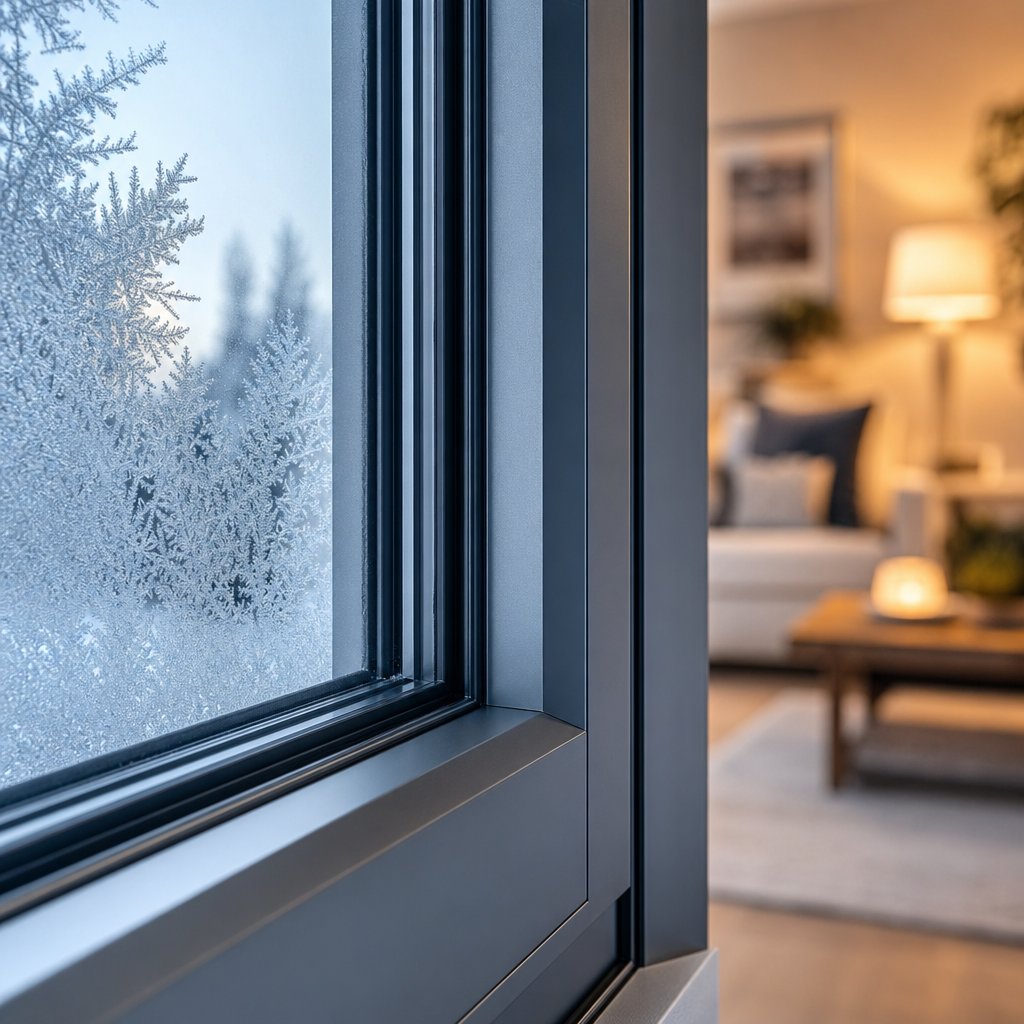
“Aluminium frames sweat.” You’ve probably heard it, and for older aluminum frame windows it was true. Without a thermal break, the interior aluminium profile would drop to near-outdoor temperatures on a cold night. When warm, moisture-laden indoor air hit that cold surface, water vapour turned to liquid droplets — condensation pooling along the frame edges, encouraging mould growth and damaging sills.
The cause was never aluminium itself. It was the absence of thermal separation. Modern thermally broken frames keep the interior profile significantly warmer because the polyamide barrier prevents the outer cold from reaching the inner surface. The result? The frame stays well above the dew point, and condensation risk drops dramatically.
Full honesty, though: in extremely cold, high-humidity environments — think a poorly ventilated bathroom in a sub-zero winter — some condensation may still appear at the glass edge where the spacer bar meets the pane. That’s a glazing-unit detail, not a frame flaw, and it applies equally to vinyl and fiberglass windows. Controlling indoor humidity through ventilation and extractor fans remains important regardless of frame material.
Noise, Corrosion, and Other Concerns Answered
“Metal framed windows are loud.” This one sounds intuitive — metal transmits vibration, right? In practice, the frame is not the weak link in acoustic performance. Glazing thickness, the air gap between panes, and seal quality matter far more. Acoustic-rated laminated glass in an aluminium frame can achieve strong sound reduction because the noise-dampening interlayer within the glass does the heavy lifting. Aluminum double hung windows, casement units, and sliding styles all benefit equally when paired with the right glazing and properly compressed seals.
“Aluminium corrodes.” Partially true — but context matters. Aluminium naturally forms a thin oxide layer that protects it from atmospheric corrosion. The real risk is galvanic corrosion, which occurs when aluminium sits in direct contact with dissimilar metals like copper or steel in the presence of moisture. That electrochemical reaction can eat into the frame over time. Modern window systems prevent this with isolating gaskets that create an electrical barrier between dissimilar metals, paired with stainless steel fasteners that minimise potential difference. Quality powder-coat finishes add another layer of protection, sealing the aluminium surface from moisture contact entirely.
“Aluminium insulates poorly.” This was the most damaging myth — and the most outdated. With a quality thermal break, aluminium windows achieve U-factors competitive with vinyl and fiberglass. The thermal break section of this article covered the numbers in detail: a 70 to 85 percent improvement in thermal efficiency over unbroken frames. The insulation gap that existed 40 years ago has effectively closed.
Most negative perceptions of aluminium windows trace back to pre-thermal-break technology and no longer apply to modern thermally broken systems.
With the myths cleared away, the practical question shifts to long-term value — what these windows actually cost to maintain over their lifespan, and how that total investment compares to the alternatives.
Maintenance, Lifespan, and True Cost of Aluminium Window Frames
Performance specs and myth-busting only get you halfway to a confident decision. The other half is knowing what these windows demand from you after installation — and what they give back over 10, 20, or 50 years. This is where aluminium quietly separates itself from the pack.
Routine Maintenance and Care
Compared to timber, which needs repainting or re-staining every three to seven years, an aluminum window frame asks remarkably little of you. The routine is simple enough that most homeowners handle it without professional help. Here’s a practical schedule based on industry maintenance guidelines:
- Clean frames with warm soapy water and a soft cloth or sponge every three months. Avoid abrasive cleaners or scouring pads — they can scratch powder-coat finishes.
- Inspect weather seals and gaskets once a year for cracking, compression, or brittleness. Replace any sections that have lost their shape, as degraded seals undermine both thermal and acoustic performance.
- Lubricate all moving hardware — hinges, locks, rollers, and opening mechanisms — with a silicone-based spray lubricant annually. Wipe off excess to prevent dust buildup.
- Check drainage slots along the sill each season and clear any debris blocking them. Clogged drainage is one of the most common causes of water pooling inside the frame track.
- Look for signs of powder-coat damage or surface oxidation, especially in coastal areas. Touch up scratches promptly to maintain the protective barrier.
That’s it. No rot treatment, no sanding, no cyclical repainting. Whether you’re maintaining standard aluminium window frames or even older aluminum mobile home windows you’ve upgraded with thermally broken replacements, the care routine stays the same. Vinyl demands a similar level of effort, but timber? Timber demands a relationship.
Lifespan and Total Cost of Ownership
Here’s where the real math gets interesting. Modern aluminium windows typically last 40 to 60 years with proper care. Vinyl windows average 20 to 30 years before seals fail and profiles warp. Fiberglass sits in the 30 to 50 year range. Wood can outlast everything — but only with consistent, costly maintenance that most homeowners realistically won’t sustain.
Aluminium’s upfront cost runs higher than vinyl. That’s a fact, and it’s the number that makes budget-conscious buyers hesitate. But total cost of ownership tells a different story. Spread the purchase price across a 50-year lifespan instead of 25, factor in near-zero maintenance costs, and add the energy savings from a thermally broken frame paired with quality glazing — the per-year cost of aluminium often drops below vinyl’s. Buyers who compare milgard windows prices or other brand quotes purely on sticker price miss this longer arc.
Sustainability adds another dimension. Aluminium is infinitely recyclable without any loss in material quality. Recycling it uses roughly 5 percent of the energy required to produce primary aluminium — a genuine environmental advantage that vinyl and fiberglass can’t match. When your aluminium windows eventually reach end of life decades from now, the material goes right back into the supply chain rather than into landfill.
For buyers who want systems engineered around this long-term value proposition, MEICHEN’s aluminium windows collection offers Australian-standard-compliant, energy-efficient options designed for homeowners, renovators, builders, and developers — a practical example of frames built to deliver on the 40-to-60-year promise.
If you’re sourcing aluminium window frame kits for a renovation or specifying complete systems for a new build, understanding lifespan and total cost reframes the conversation entirely. The cheapest window on day one is rarely the cheapest window over its lifetime.
That long-term perspective naturally leads to the final practical question: how do you actually choose the right aluminium windows for your specific project, and what should you look for — and ask — before committing?
How to Choose the Right Aluminium Window for Your Project
You’ve done the research. You understand thermal breaks, glazing pairings, frame comparisons, and total cost of ownership. The gap between knowing what makes a good aluminium window and actually specifying one for your project comes down to a handful of practical checkpoints and honest conversations with suppliers.
What to Look for When Specifying Aluminium Windows
Whether you’re replacing old aluminum windows in a renovation or specifying new frames for a build, these are the details worth confirming before you sign anything:
- Confirm the frame uses a polyamide thermal break — not a pour-and-debridge system — for residential applications. Polyamide strips deliver more consistent structural and thermal performance across the temperature swings a home experiences.
- Check that the powder-coat finish meets a recognised durability standard such as Qualicoat or AAMA 2604/2605. A quality coating is the difference between a frame that looks sharp at year 20 and one that chalks and fades by year 5.
- Verify the glazing unit specification matches your climate. Double glazing with Low-E and argon covers most temperate zones. Triple glazing makes sense in cold continental climates. Don’t over-spec or under-spec — both cost you money.
- Ensure hardware comes from a reputable system supplier. Hinges, locks, and rollers are the components most likely to need attention over the window’s life. Cheap hardware on a premium metal window frame is a false economy. Ask about milgard window screen replacement compatibility or equivalent spare-part availability if you’re concerned about long-term serviceability.
- Confirm compliance with local building codes and energy standards — whether that’s the NCC in Australia, ENERGY STAR in the U.S., or the relevant regional equivalent. Non-compliant window aluminium windows can create certification headaches at inspection time.
Matching Window Styles to Your Project
Every aluminium window style solves a different problem. Picking the right one is less about aesthetics and more about how the opening needs to function in that specific location:
- Casement windows — hinged at the side, opening outward. They provide maximum ventilation and the tightest seal when closed, making them ideal for living areas and bedrooms where airflow and energy performance both matter.
- Awning windows — hinged at the top, opening outward from the bottom. They let you ventilate during rain without water entering, which suits bathrooms, kitchens, and laundries.
- Sliding windows — panels glide horizontally along a track. They’re practical for wide openings where you don’t want a sash swinging into interior or exterior space. Think balconies, servery windows, and compact rooms.
- Fixed windows — non-operable panels designed purely for light and views. Use them for large picture windows, highlight glazing above doors, or anywhere ventilation isn’t needed.
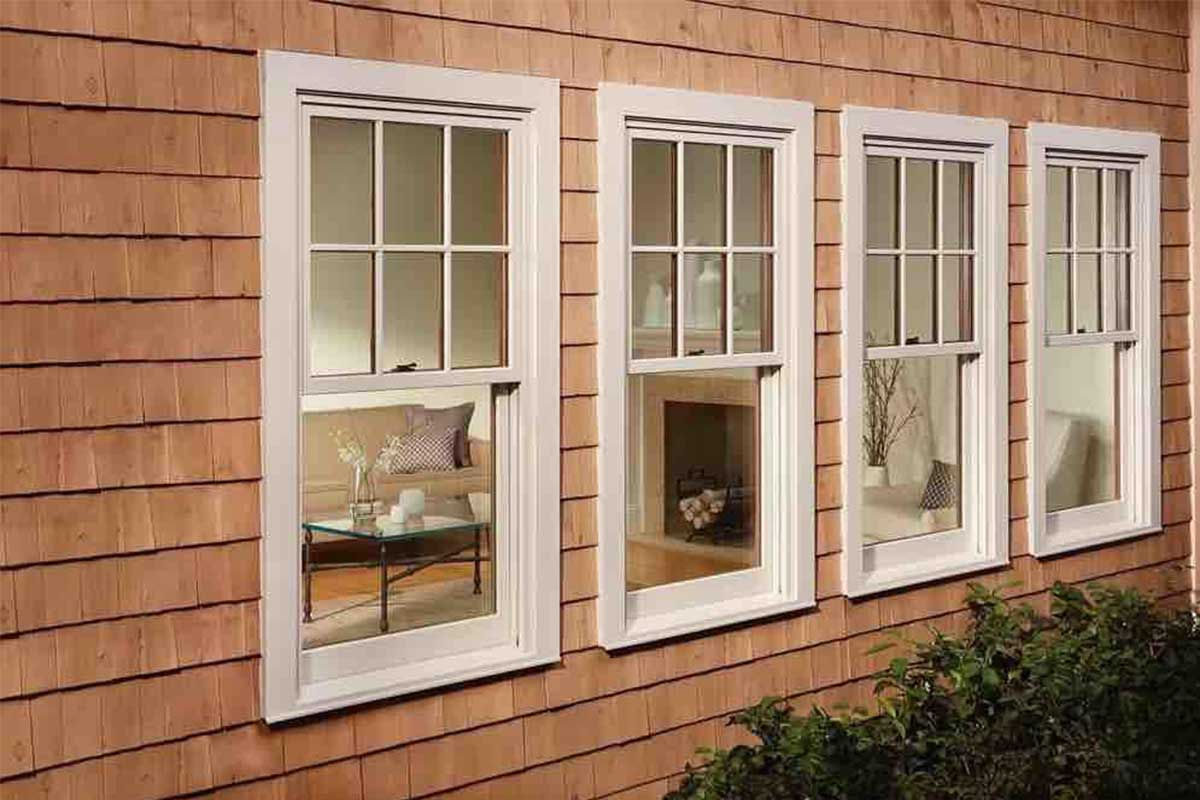
- Double-hung windows — two vertically sliding sashes in a single frame. They suit traditional and colonial architecture where you want modern thermal performance behind a period-appropriate look.
Finding a Supplier You Can Trust
Searching for aluminum windows near me returns dozens of results. The challenge isn’t finding options — it’s filtering for quality. A few signals separate serious suppliers from the rest:
Look for Australian-standard or equivalent compliance certification on every product, not just a general claim on the homepage. Ask for published energy performance data — U-factor, SHGC, and air infiltration rates — specific to the window configuration you’re ordering. Request clear warranty terms that cover the frame, hardware, glazing seal, and powder-coat finish separately, because each component has a different failure timeline.
A trustworthy supplier also offers range. Your project likely needs more than one window style, and sourcing casement, sliding, fixed, and awning units from a single system ensures consistent profiles, finishes, and hardware across the entire home.
For readers ready to move from research to product evaluation, MEICHEN’s aluminium windows collection covers exactly this ground — multiple aluminium window styles for different project types, from single-home renovations to multi-unit developments, with Australian-standard compliance and energy-efficiency focus built into every frame. It’s a practical starting point for comparing configurations, finishes, and specifications against your project’s specific requirements.
The right aluminium window isn’t the most expensive one or the cheapest one. It’s the one whose thermal break, glazing, finish, and hardware are matched to your climate, your building, and the decades of service you expect from it. Ask the right questions, verify the specs, and let the engineering do the rest.
Frequently Asked Questions About Modern Aluminium Windows
1. What is a thermal break in an aluminium window and why does it matter?
A thermal break is a reinforced polyamide (nylon) strip mechanically locked between the interior and exterior aluminium profiles of a window frame. Because aluminium conducts heat roughly 1,000 times faster than wood, this insulating barrier splits the frame into two thermally independent halves, preventing heat from travelling straight through the metal. The result is a 70 to 85 percent improvement in thermal efficiency over unbroken frames, bringing U-values down from 4.0-6.0 W/(m2K) to 0.8-2.0 W/(m2K). This single innovation is what allows modern aluminium windows to meet energy code requirements and compete with vinyl, fiberglass, and timber on insulation performance.
2. Do modern aluminium windows still have condensation problems?
Condensation on aluminium frames was a legitimate issue with older, non-thermally-broken profiles. When the interior metal surface dropped to near-outdoor temperatures, moisture in warm indoor air would condense on the cold frame. Modern thermally broken aluminium windows solve this by keeping the interior profile significantly warmer — well above the dew point in most conditions. In extremely cold, high-humidity environments such as poorly ventilated bathrooms during sub-zero winters, minor condensation may still appear at the glass edge near the spacer bar, but this is a glazing-unit characteristic shared by all frame materials, not an aluminium-specific flaw. Proper indoor ventilation remains important regardless of which frame type you choose.
3. How long do modern aluminium windows last compared to vinyl and wood?
Modern aluminium windows typically last 40 to 60 years with basic maintenance — quarterly cleaning, annual seal inspection, and hardware lubrication. Vinyl windows average 20 to 30 years before seals degrade and profiles warp, while fiberglass falls in the 30 to 50 year range. Wood can potentially outlast all of them but only with consistent, costly upkeep including repainting or re-staining every three to seven years. When you factor in aluminium’s near-zero maintenance demands and infinite recyclability, the total cost of ownership over the frame’s full lifespan often drops below that of vinyl despite a higher upfront price. Suppliers like MEICHEN offer Australian-standard-compliant aluminium systems specifically engineered around this long-term value proposition.
4. Are aluminium windows good for coastal homes?
Aluminium is one of the strongest frame choices for coastal environments. The material naturally forms a protective oxide layer that resists atmospheric corrosion, and modern powder-coat or anodised finishes add a durable barrier against salt spray, UV exposure, and moisture. The main risk in coastal settings is galvanic corrosion, which occurs when aluminium contacts dissimilar metals like copper or steel in the presence of moisture. Quality modern systems prevent this with isolating gaskets and stainless steel fasteners. For glazing, coastal homes in temperate zones typically pair best with double glazing featuring Low-E coating and argon fill, while tropical-humid coastal areas benefit from low-SHGC glass with a laminated inner pane for cyclone resistance.
5. What glazing should I pair with aluminium window frames for the best energy performance?
The ideal glazing depends on your climate. For coastal and temperate regions, double glazing with a Low-E coating on surface 3 and argon gas fill delivers strong performance at a reasonable cost. Hot-arid climates benefit from Low-E on surface 2 with a low Solar Heat Gain Coefficient to reject solar heat while maintaining visible light. Cold continental climates often warrant triple glazing with dual Low-E coatings and argon or krypton fill, using higher SHGC on north-facing glass to capture winter sun. Tropical-humid zones perform best with low-SHGC double glazing, a tinted outer pane, and a laminated inner pane for storm protection and noise reduction. In every case, the thermally broken aluminium frame provides the structural strength needed to support heavier glazing units without requiring bulkier profiles.
More Window & Door Guides