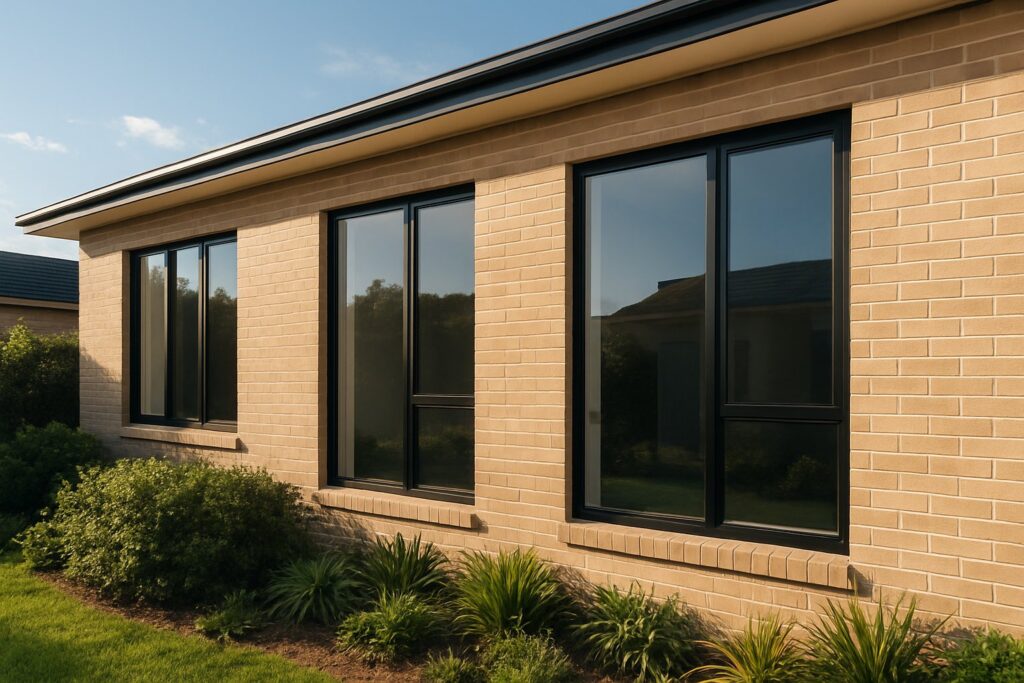
Are Aluminium Windows Good for Your Home
Search for opinions on aluminium windows and you will find a confusing mix of praise and criticism. Some sources call them the gold standard for modern builds. Others warn about condensation, heat loss, and cold frames. The truth sits somewhere in between, and it depends almost entirely on the product you choose and the climate you live in.
The Direct Answer Most Articles Avoid
Yes, modern aluminium windows are a genuinely good option for most Australian homes. The key word there is modern. Older aluminium window systems from the 1980s and 1990s earned a poor reputation for good reason. They lacked thermal breaks, conducted heat rapidly, and often dripped with condensation through winter. Those criticisms were valid at the time. They are far less relevant to current-generation products.
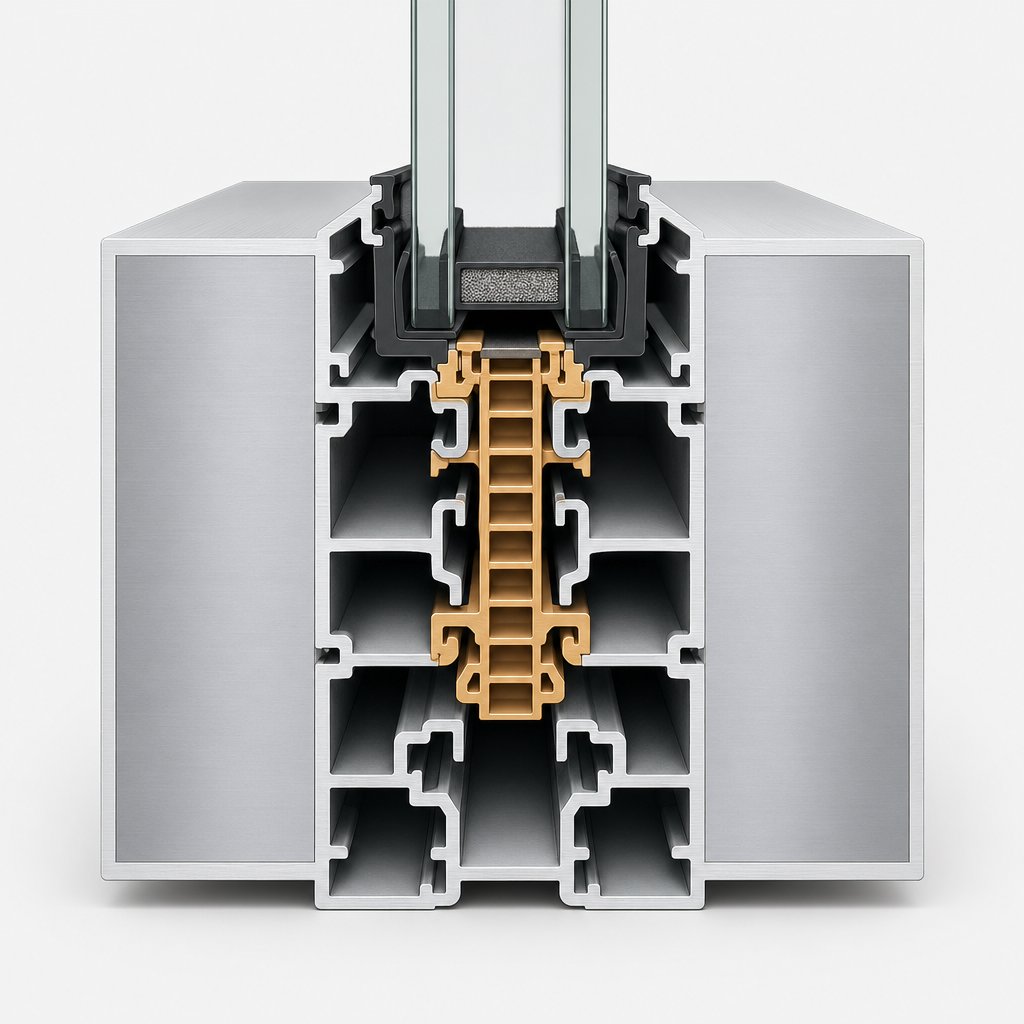
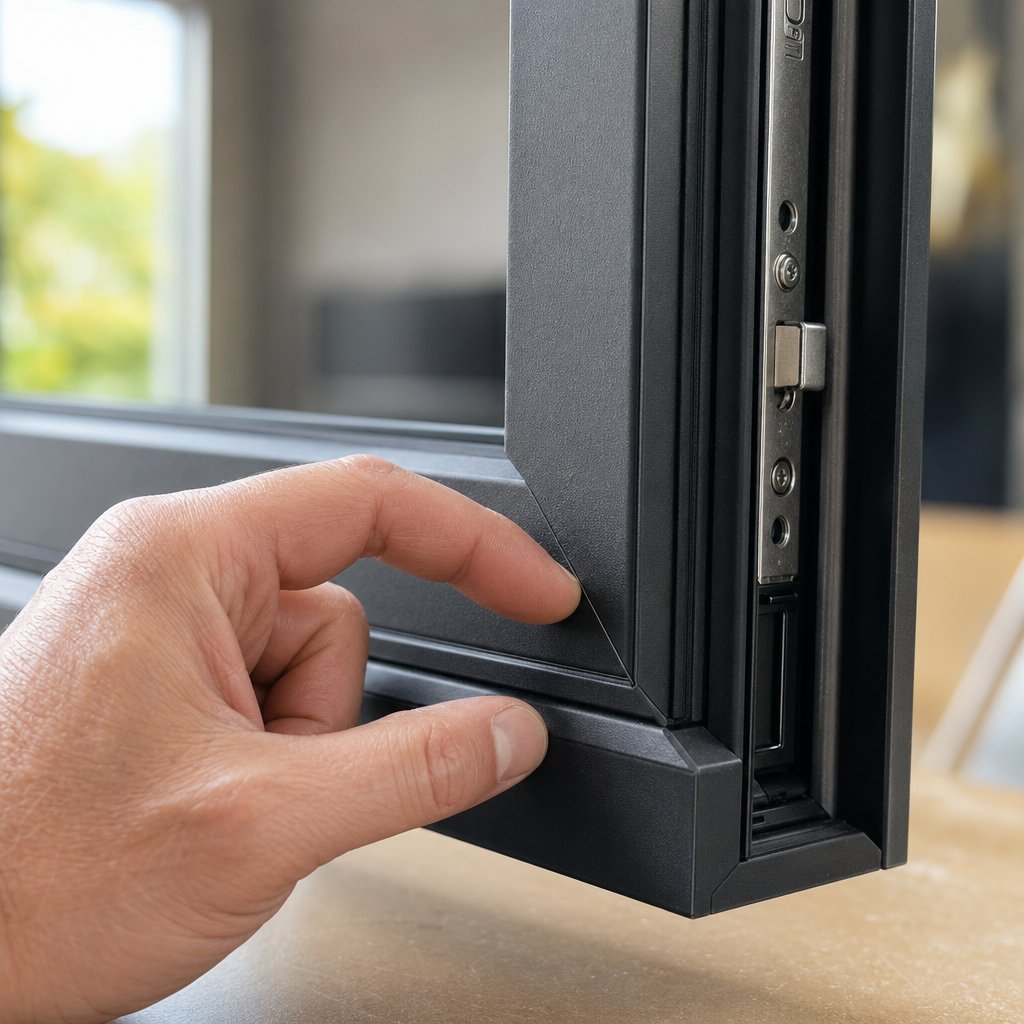
Today’s thermally broken aluminium frames use an insulating barrier, typically polyamide, between the inner and outer faces of the profile. That single engineering change transformed the material’s performance. Paired with quality double glazing, a well-specified aluminium window can deliver strong energy efficiency, resist aluminium window corrosion through powder-coated and anodised finishes, and last for decades with minimal upkeep.
Why the Answer Depends on Your Situation
No single frame material wins every scenario. A homeowner on the NSW coast faces different demands than someone building in alpine Victoria or renovating a Queenslander in Cairns. Budget matters too. Aluminium windows sit at a higher price point than uPVC, so the investment needs to align with your priorities, whether that is slim sightlines, durability in harsh conditions, or long-term value over the lowest upfront cost.
Aluminium windows are a strong choice when paired with modern thermal break technology and quality glazing. But the right decision always comes back to your climate, your budget, and what you need the window to do. The sections ahead break down each factor so you can judge for yourself.
How Modern Aluminium Windows Have Evolved
The mixed reputation aluminium windows carry did not appear out of nowhere. It was earned over decades of real-world performance issues, and understanding that history is the fastest way to separate outdated concerns from the facts that matter when choosing windows in aluminium today.
Why Aluminium Windows Got a Bad Reputation
Aluminium first entered residential construction during the postwar housing boom, when builders needed materials that could keep pace with rapid suburban expansion. By the 1970s, aluminium frames were everywhere. They were lightweight, strong, and easy to manufacture at scale. The problem was thermal performance. Pure aluminium conducts heat roughly 1,000 times faster than timber and 200 times faster than PVC, and early residential frames did nothing to interrupt that heat transfer.
The consequences were hard to ignore. In cooler months, interior frame surfaces dropped well below room temperature, pulling moisture from the air and creating persistent condensation. Mould followed. Energy bills climbed. Homeowners in Melbourne, Hobart, and the Blue Mountains learned quickly that their aluminium frames were working against their heating systems rather than with them.
Finish options compounded the frustration. Early anodised coatings offered limited colours, mostly silver and bronze, and cheaper finishes could chalk or dull within a few years under Australia’s intense UV exposure. For many homeowners through the 1980s and 1990s, aluminium windows meant cold frames, foggy glass, and a dated look that was difficult to refresh.
Manufacturing Advances That Changed Everything
Several engineering breakthroughs, arriving gradually from the late 1990s onward, reshaped what aluminium windows could deliver. The most significant advances include:
- Thermal break technology — an insulating barrier inserted into the frame profile that stops heat flowing through the metal. This single innovation closed the energy efficiency gap between aluminium and other frame materials.
- Modern powder coating — a dry finishing process where electrostatically charged colour and resin particles are oven-cured at around 200°C, bonding chemically to the aluminium surface. The result is a finish far more resistant to fading, chipping, and salt-air corrosion than older liquid paints, with well over 200 colour options available.
- Slim sightline engineering — improved profile design that reduces visible frame width, maximising the glass area and letting more natural light into a room. Modern aluminium frames can achieve sightlines that timber and uPVC simply cannot match at equivalent structural strength.
- Advanced weathersealing — multi-point locking hardware and precision-fitted gaskets that dramatically reduce air infiltration and water penetration compared to older systems.
Together, these developments mean the aluminium window you can specify today bears little resemblance to the product that frustrated homeowners a generation ago. The material’s core strengths, its rigidity, corrosion resistance, and recyclability, remain. The weaknesses have been engineered out.
Thermal Break Technology Explained Simply
Of all the advances listed above, thermal breaks deserve a closer look because they are the reason aluminum thermal break windows can now compete on energy efficiency with any frame material on the market.
Picture an aluminium window profile in cross-section. In an older, non-thermally-broken frame, the aluminium runs continuously from the outside face to the inside face, creating a direct highway for heat. A thermal break replaces part of that highway with a strip of polyamide, a type of reinforced nylon with very low thermal conductivity, roughly 0.3 W/mK compared to aluminium’s 237 W/mK. The polyamide strip is mechanically locked between the exterior and interior aluminium sections, maintaining full structural strength while blocking the thermal bridge.
The performance difference is substantial. Traditional aluminium frames without thermal breaks typically produce U-values around 4.0 to 6.0 W/(m²K). Thermally broken profiles routinely achieve 0.8 to 2.0 W/(m²K), a 70 to 85 per cent improvement in thermal efficiency. Interior frame surfaces stay closer to room temperature, condensation risk drops sharply, and the window works with your insulation rather than against it.
For Australian homes, this matters in both directions. In winter, thermally broken frames reduce heat escaping through the profile. In summer, they help keep conducted heat from radiating into living spaces. How long do aluminum windows last with these modern profiles? Quality thermal break systems are engineered for 30-plus years of service with no maintenance required on the break itself, matching the longevity of the aluminium frame around it.
That performance data raises an obvious next question: if the frame has improved this much, how does the full window system, frame plus glass, actually stack up against the alternatives?
Pros and Cons of Aluminium Windows Explained Honestly
Knowing how far the technology has come is useful context, but it does not tell you whether aluminium windows are the right fit for your project. That comes down to weighing genuine strengths against real limitations, and being honest about when each one actually matters in practice.
Most pros and cons lists online read like marketing brochures on one side and scare pieces on the other. Neither approach helps you make a confident decision. Here is a more grounded breakdown.
Genuine Strengths That Set Aluminium Apart
Aluminium windows earn their place in modern Australian construction for several reasons that other frame materials struggle to match simultaneously:
- Exceptional strength-to-weight ratio — aluminium is a low-density metal with high structural rigidity. This means an aluminum window frame can support large, heavy glass panels without the bulk that timber or uPVC profiles require for equivalent load-bearing capacity. For bifold doors, stacking sliders, and floor-to-ceiling fixed panels, this advantage is difficult to replicate.
- Slim sightlines that maximise natural light — because the material is inherently strong, aluminum frame windows can be engineered with narrower profiles. Less frame means more glass, more daylight, and cleaner architectural lines. In open-plan living areas and rooms facing a garden or coastline, the visual difference is immediately noticeable.
- Near-zero maintenance — a quality powder-coated or anodised aluminium frame will not rot, warp, swell, or require repainting. Routine care amounts to an occasional wipe with soapy water and checking that drainage slots stay clear. Compared to timber, which demands regular staining or painting to stay protected, the long-term upkeep savings are significant.
- Complete resistance to rot, termites, and warping — aluminium does not absorb moisture, so it will not deteriorate in humid or wet conditions. It is also immune to termite damage, a genuine concern for timber frames across much of Australia.
- Full recyclability without quality loss — aluminium can be recycled indefinitely. Recycling aluminium uses roughly 5 per cent of the energy needed for primary production, making it the strongest frame material from a circular economy standpoint.
- Extensive colour and finish options — modern powder coating opens up well over 200 colours, from matte blacks and charcoals popular in contemporary builds to heritage tones suited to older homes. The finish bonds chemically to the surface, resisting UV fade and salt-air degradation far better than painted timber or coloured uPVC.
- Suitability for large-span openings — where a project calls for wide openings, corner windows, or minimal mullion configurations, aluminium windows and doors deliver structural performance that other residential frame materials cannot match without steel reinforcement.
Honest Drawbacks Worth Considering
No material is perfect. Aluminium has real limitations, but the key is understanding which ones are relevant to your specific situation and which are hangovers from an older generation of products.
- Higher upfront cost compared to uPVC — aluminium windows typically cost more to purchase and install than equivalent uPVC units. For a standard residential project on a tight budget, that price gap can be meaningful. The difference narrows over time through lower maintenance costs and a longer service life, but the initial outlay is real and worth factoring into your planning.
- Thermal bridging in non-thermally-broken profiles — this is the drawback that generates the most confusion, because it only applies if you select a frame without a thermal break. Budget aluminium profiles sold without polyamide insulation still conduct heat rapidly, leading to poor energy performance and cold interior surfaces. The fix is straightforward: specify thermally broken profiles. Any reputable Australian supplier offering windows compliant with NCC energy provisions will supply them as standard for habitable rooms.
- Condensation risk in older or budget models — condensation on aluminium frames is largely a legacy issue tied to frames that lack proper thermal breaks. When warm, moist indoor air meets a cold frame surface, water droplets form. Modern thermally broken aluminium windows maintain a warmer interior surface temperature, dramatically reducing this risk. If you are seeing condensation warnings in your research, check whether the source is discussing current-generation products or older systems. The distinction matters.
- Limited DIY repairability — unlike timber, which a handy homeowner can sand, fill, and repaint, aluminium frames are not easily repaired at home if the finish is deeply scratched or the profile is dented. Professional refinishing or section replacement is possible but adds cost. That said, the durability of powder-coated aluminium means damage requiring repair is uncommon under normal residential use.
- Potential for surface scratching — while powder coating is tough, aluminium frames can pick up surface scratches more readily than uPVC during construction or rough handling. Protective film during the build phase and careful installation largely prevent this.
The pattern across these drawbacks is consistent: most of the serious concerns trace back to either outdated products or incorrect specification. Choose a thermally broken aluminium window with a quality powder-coated finish, and the majority of traditional criticisms fall away.
What remains is a material that performs exceptionally well in the right application. The next piece of the puzzle is understanding how the frame works together with the glass, because the glazing you pair with your aluminium profiles has an even bigger influence on overall energy performance than the frame itself.
Thermal Performance and Energy Efficiency of Aluminium Window Frames
Frame material gets most of the attention in the aluminium versus uPVC debate, but it is not where the bulk of your energy performance comes from. The glass unit dominates. It covers the largest surface area of any window, and its properties determine how much heat enters or escapes your home. Getting the frame right matters, but getting the glazing wrong will undermine even the best aluminium profile.
Why the Glass Matters More Than the Frame
Think about a typical window opening. The frame sits around the perimeter, while glass fills the centre. In most residential configurations, the glass accounts for 70 to 80 per cent of the total window area. That means the thermal properties of the glass have a far greater influence on overall performance than the frame surrounding it.
The Australian Government’s Your Home guide puts this in stark terms: up to 87 per cent of a home’s heating energy can be gained through windows, and up to 40 per cent can be lost through them. Those figures are driven overwhelmingly by the glass, not the frame. A thermally broken aluminium frame paired with low-quality single glazing will still bleed energy. Flip that combination around, pair a solid aluminium profile with high-performance double or triple glazing, and the whole system performs well.
This is why focusing exclusively on frame material when comparing window aluminium windows to uPVC or timber misses the bigger picture. The glazing specification is where the real performance gains live.
Understanding U-Values and Window Energy Ratings
Two numbers matter most when comparing energy performance across different window products: the U-value and the solar heat gain coefficient (SHGC).
The U-value (expressed as Uw for whole windows) measures how readily heat flows through the complete window assembly, frame and glass together. It is expressed in watts per square metre per degree Celsius (W/m²K). A lower number means better insulation. A window with a Uw of 2.0 loses roughly half the heat of one rated at 4.0 under the same conditions.
The SHGC (expressed as SHGCw for whole windows) measures how much solar radiation passes through the window and enters your home as heat. It runs from 0 to 1. A lower value means less solar heat gain, which is desirable in hot climates or on west-facing walls. A higher value lets more warmth in, useful for south-facing glass in cooler regions where passive solar heating reduces energy bills.
To see how dramatically glazing and frame choices shift these numbers, consider data from the Window Energy Rating Scheme (WERS):
| Window Type | Uw (W/m²K) | SHGCw | VLTw |
|---|---|---|---|
| Aluminium frame, single glazed (3 mm clear glass) | 6.9 | 0.77 | 0.80 |
| Aluminium frame, double glazed (3 mm clear / 6 mm air gap / 3 mm clear) | 4.2 | 0.69 | 0.72 |
| Timber or uPVC frame, double glazed (3 mm clear / 6 mm air gap / 3 mm clear) | 3.0 | 0.61 | 0.65 |
| Timber-aluminium composite, triple glazed (4 mm glass / 16 mm argon / 4 mm low-e / 16 mm argon / 4 mm low-e) | 1.0 | 0.25 | 0.36 |
A few things stand out. Moving from single glazing to double glazing on an aluminium frame drops the Uw from 6.9 to 4.2, a 39 per cent improvement, without changing the frame at all. Meanwhile, the gap between aluminum window frames with double glazing (4.2) and timber or uPVC frames with the same glass (3.0) is smaller than the gap between single and double glazing on the same aluminium frame. The glass upgrade delivers a bigger performance jump than the frame swap.
A thermally broken aluminium frame with quality double glazing, particularly with low-e coatings and argon gas fill, can match or outperform a uPVC frame fitted with inferior glass. Always compare whole-window Uw ratings, not frame materials in isolation.
Double Glazing vs Triple Glazing With Aluminium Frames
For most Australian climate zones, double glazing with a thermally broken aluminium frame hits the practical sweet spot. A well-specified double-glazed unit using low-e glass and an argon-filled cavity of at least 12 mm can achieve Uw values comfortably below 3.0 W/m²K, satisfying NCC energy provisions for the vast majority of residential projects.
Triple glazing pushes performance further, with Uw values approaching 1.0 W/m²K in premium configurations. That level of insulation makes sense in alpine regions, Passive House builds, or projects targeting very high NatHERS star ratings. The trade-off is weight, cost, and reduced visible light transmittance. Triple-glazed units are heavier, which demands robust hardware, and they cost more per square metre. In temperate climates like Sydney, Perth, or Adelaide, the energy savings from triple glazing over quality double glazing are often modest relative to the additional investment.
Whichever glazing level you choose, verify the performance independently. In Australia, the Window Energy Rating Scheme (WERS) provides tested Uw, SHGCw, and visible light transmittance data for thousands of specific products, rated in accordance with Australian Fenestration Rating Council (AFRC) procedures. A WERS rating is not a marketing claim. It is a verified performance figure you can use to compare products on equal terms. If a supplier cannot provide WERS data or AFRC-compliant ratings for their aluminum window wall or residential systems, treat that as a red flag.
Energy ratings tell you how a window performs in controlled conditions. The next question is how that performance holds up across different real-world environments, from salt-sprayed coastlines to the tropical humidity of northern Queensland.
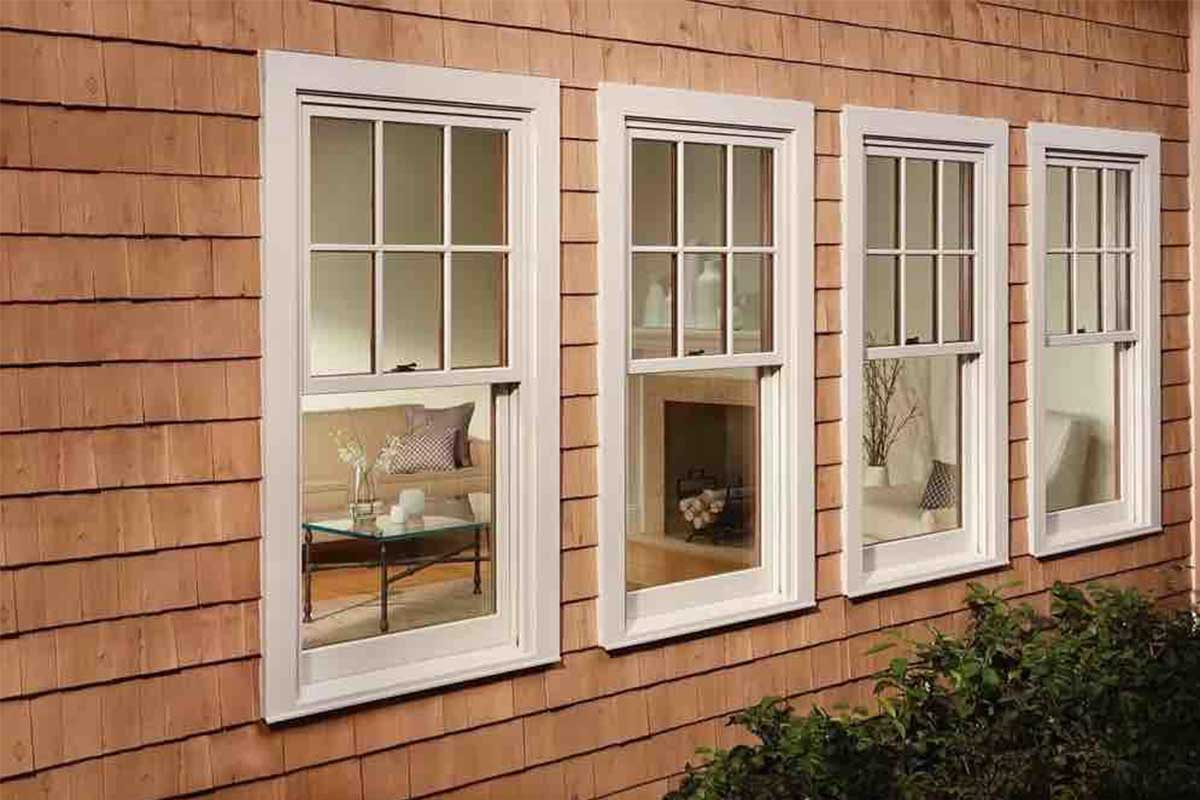
Aluminium vs uPVC, Timber, and Fiberglass Windows Compared
Real-world performance depends on more than energy ratings alone. It also depends on how a frame material handles maintenance, ageing, design flexibility, and end-of-life recycling over the full span of ownership. Each material brings a different balance of trade-offs, and the right choice shifts depending on what you prioritise.
The table below puts the four most common residential frame materials side by side across the criteria that matter most to Australian homeowners, renovators, and builders.
| Criteria | Aluminium | uPVC | Timber | Fiberglass |
|---|---|---|---|---|
| Typical Lifespan | 30 to 45+ years | 20 to 35 years | 30 to 60+ years (with maintenance) | 50 to 80 years |
| Maintenance | Minimal — occasional wipe-down | Low — periodic hinge lubrication | High — regular painting, staining, sealing | Minimal — occasional cleaning |
| Thermal Performance Potential | Strong with thermal breaks; moderate without | Good inherently; multi-chamber profiles help | Naturally insulating | Excellent — inherently low conductivity |
| Strength and Slim Sightlines | Excellent — slimmest profiles at high strength | Limited — bulkier frames needed for rigidity | Good — but wider profiles for structural loads | Very good — slim profiles possible |
| Colour and Finish Options | 200+ powder-coat colours; durable under UV | Limited palette; can yellow over time | Unlimited via paint or stain; needs recoating | Moderate range; some cannot be repainted |
| Recyclability | Infinitely recyclable, no quality loss | Recyclable but degrades with each cycle | Biodegradable; limited recycling as a frame | Difficult to recycle; often goes to landfill |
| Relative Cost Range | Mid-range to premium | Budget to mid-range | Mid-range to premium | Premium |
Those broad strokes are useful for a quick scan, but the real decision-making happens in the detail of each head-to-head comparison.
Aluminium vs uPVC Windows
uPVC is the most common alternative to aluminium in Australian residential projects, and the choice usually comes down to budget versus longevity. uPVC frames cost less upfront and offer solid thermal insulation thanks to their multi-chamber plastic profiles. For a standard window opening in a brick veneer home, they do the job well.
Where aluminium pulls ahead is structural strength, aesthetics, and durability over time. Aluminium windows and doors can span wider openings without reinforcement, deliver slimmer frames that let in more natural light for a bright window effect, and hold their colour for decades under harsh Australian UV. uPVC frames, by contrast, typically last 20 to 35 years and can discolour or warp after prolonged sun exposure. Aluminium frames routinely reach 30 to 45 years with virtually no upkeep beyond cleaning.
If your project involves large sliding doors, corner stacking panels, or expansive fixed-glass walls, aluminium is the stronger candidate. For smaller, standard-sized openings on a tighter budget, uPVC remains a sensible choice.
Aluminium vs Timber Windows
Timber holds a special place in Australian construction, and for good reason. Wood is a natural insulator, it looks warm and textured in ways no metal or plastic can replicate, and it suits heritage homes and character builds where council regulations or personal taste call for a traditional aesthetic. These are legitimate advantages, and they explain why timber is still preferred over aluminium in certain contexts.
The trade-off is maintenance. Timber frames demand regular sanding, repainting, or re-staining to stay protected against moisture, UV, and termites. Skip a cycle and the timber can crack, swell, or rot, particularly in coastal or tropical parts of Australia. Aluminium frames sidestep all of that. They resist termites entirely, shrug off humidity, and never need repainting.
For homeowners who love the look of timber but want the longevity and low maintenance of metal, timber-clad aluminium is a hybrid worth considering. The exterior aluminium shell handles the weather while the interior timber face delivers the warmth and character.
Aluminium vs Fiberglass Windows
Fiberglass is the newest serious contender in the residential frame market. It offers inherently low thermal conductivity, roughly 500 times less conductive than aluminium without any thermal break, and an estimated lifespan of 50 to 80 years. On raw insulation performance and longevity, fiberglass has a genuine edge.
Aluminium fights back on availability, design range, and recyclability. Fiberglass windows are still less common in the Australian market, which can mean longer lead times and fewer local suppliers. Colour options tend to be more limited, and some fiberglass profiles cannot be repainted. At end of life, fiberglass is difficult to recycle and often ends up in landfill, while aluminium can be melted down and reused indefinitely without losing quality.
Cost is another consideration. Fiberglass sits at the premium end of the market, often above aluminium. For projects where thermal performance is the overriding priority, such as Passive House builds or alpine locations, fiberglass deserves serious evaluation. For the broader Australian market, thermally broken aluminium delivers a strong balance of performance, versatility, and long-term sustainability at a more accessible price point.
These comparisons highlight that no single material dominates every category. The best frame for your project depends on where you are building, what conditions the windows need to withstand, and how long you expect to stay in the home. Climate, it turns out, is one of the most decisive factors in that equation.
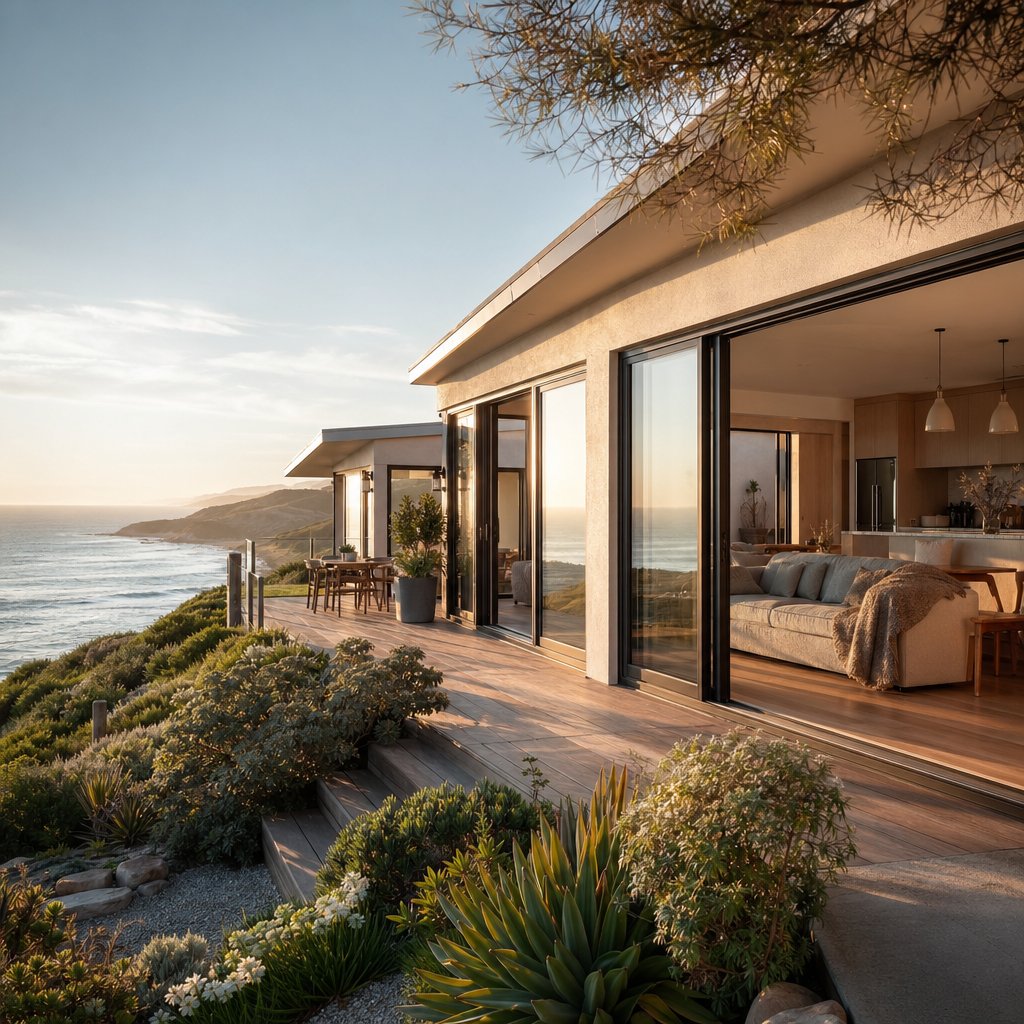
Where Aluminium Framed Windows Perform Best by Climate
Material comparisons are helpful in the abstract, but the real test for any window frame is how it holds up in the specific environment where it is installed. Australia’s climate zones range from tropical monsoon in the Top End to alpine conditions in the Snowy Mountains, with everything from arid desert to salt-laden coastal air in between. That diversity means the same aluminium frame window can be an outstanding choice in one location and a questionable one in another, depending on the profile specification and finish.
Geography is where aluminium’s strengths and limitations become most tangible. Here is how the material performs across the conditions Australian homeowners are most likely to encounter.
Coastal and High-Humidity Environments
Salt air is one of the harshest tests any building material can face. Airborne salt particles accelerate corrosion in steel, degrade timber finishes, and can cause uPVC hardware to seize over time. Aluminium frames for windows handle this environment better than any other mainstream frame material, for a straightforward reason: aluminium naturally forms a thin oxide layer on its surface that resists further corrosion.
Modern finishing processes build on that natural protection. Powder coating adds a durable resin barrier that shields the metal from direct salt contact, while anodising thickens the oxide layer itself for even greater resistance. High-quality powder-coated aluminium framed windows do not rust, peel, or blister under constant exposure to salty sea air, and the finish can last decades before needing attention.
For homes along the NSW coast, the Sunshine Coast, Perth’s beachside suburbs, or anywhere within a few kilometres of the ocean, this corrosion resistance is not a nice-to-have. It is essential. Timber frames in these zones demand frequent recoating to survive, and even uPVC can suffer from hardware degradation and seal brittleness over time. Aluminium sidesteps those issues almost entirely.
High humidity compounds the challenge. In tropical and subtropical regions like Cairns, Darwin, and coastal QLD, moisture sits in the air year-round. Aluminium does not absorb water, so it will not swell, warp, or encourage mould growth the way timber can. Paired with proper drainage channels and weatherseals, aluminum framed windows in these climates maintain smooth operation and structural integrity for the long haul.
Hot Climates and Sun Exposure
Australia’s UV intensity is among the highest in the world, and prolonged sun exposure punishes building materials that cannot handle thermal cycling. Temperatures on a west-facing wall in Perth or Adelaide can swing dramatically between midday and evening, expanding and contracting frame materials with each cycle.
Aluminium has a low thermal expansion rate compared to uPVC. Where plastic frames can soften, distort, or loosen their hardware fittings after years of heat exposure, aluminium holds its shape. This dimensional stability is one reason aluminium dominates commercial construction in hot climates and why it performs reliably on sun-drenched residential facades as well.
Powder-coated finishes also resist UV degradation far better than coloured uPVC, which can yellow or chalk after extended sun exposure. A quality powder coat on an aluminum frame window will hold its colour and gloss for decades, even on north and west-facing elevations that cop the worst of the Australian sun.
For homes in climate zones 1 through 3 under the NCC, covering most of northern and central Australia, aluminium’s heat stability and finish durability make it a natural fit. The key consideration in these zones is solar heat gain through the glass rather than heat loss through the frame, so pairing aluminium profiles with low-e glazing and appropriate SHGC ratings matters more than chasing the lowest possible Uw.
Cold Climates and What to Watch For
This is where aluminium’s reputation still carries some warranted caution. In alpine areas like the Snowy Mountains, parts of the Victorian Highlands, and elevated regions of Tasmania, winter temperatures regularly drop below zero. Without a thermal break, an aluminium frame becomes a direct conduit for heat loss. Interior surfaces chill, condensation forms, and energy bills climb.
The fix is not to avoid aluminium. It is to specify correctly. Thermally broken profiles with quality double or triple glazing perform well in cold conditions, with frame U-values as low as 1.6 to 2.2 W/m²K depending on profile depth and glazing configuration. That level of insulation keeps interior frame surfaces warm enough to prevent condensation and reduces heat loss to a level competitive with uPVC and timber.
Buyers in NCC climate zones 7 and 8, the coldest residential zones in Australia, should pay close attention to whole-window Uw ratings rather than relying on frame material alone. Verify performance through WERS data, and confirm that the thermal break uses reinforced polyamide (PA66 GF25) rather than cheaper alternatives that may not hold up over decades of freeze-thaw cycling. Triple glazing with argon fill is worth considering in these zones for the additional insulation it provides.
The honest summary: aluminium is not automatically the wrong choice for cold climates, but it demands more careful specification than it does in warmer regions. A non-thermally-broken aluminium window in Thredbo is a poor decision. A thermally broken one with appropriate glazing is perfectly sound.
Here is a quick reference for matching aluminium window specification to Australian climate scenarios:
- Coastal (within 1 km of ocean) — aluminium is the top choice. Specify marine-grade powder coating and stainless steel hardware. Corrosion resistance is the primary advantage.
- Tropical and subtropical (QLD, NT, northern WA) — aluminium handles humidity and heat cycling well. Prioritise low SHGC glazing and good ventilation design over frame insulation.
- Hot and arid (inland NSW, SA, WA) — aluminium’s dimensional stability outperforms uPVC under extreme heat. Focus on solar control glass and shading.
- Temperate (Sydney, Melbourne, Perth, Adelaide) — thermally broken aluminium with standard double glazing meets NCC requirements comfortably. A strong all-round performer.
- Cool temperate and alpine (Highlands, Tasmania, Snowy Mountains) — thermally broken aluminium with high-performance double or triple glazing. Verify Uw ratings through WERS and consider argon-filled cavities for additional insulation.
- Cyclone-prone regions (north QLD, NT, northern WA) — aluminium’s structural strength makes it well suited to cyclone-rated window assemblies compliant with AS 2047 wind load requirements.
- Bushfire-prone areas (BAL-rated zones) — aluminium is non-combustible, giving it a clear advantage over timber and uPVC in areas requiring BAL-rated window systems under AS 3959.
Climate determines which strengths matter most and which limitations you need to manage. But even the right material in the right climate only delivers full value if the product lasts long enough to justify the investment. That brings the focus to lifespan, maintenance costs, and what aluminium windows actually return over the full ownership cycle.
Lifespan and Long-Term Value
Choosing the right frame for your climate is half the equation. The other half is whether that frame holds up long enough to justify what you paid for it. This is where the pros and cons aluminium conversation shifts from technical specs to dollars and decades, and where aluminium’s value proposition becomes hardest to ignore.
How Long Do Aluminium Windows Actually Last
A well-manufactured, powder-coated aluminium window can deliver 45 or more years of service with negligible maintenance. Some systems last longer. That figure puts aluminium comfortably ahead of uPVC, which typically reaches end of life at 20 to 30 years as seals fail, frames discolour, and profiles warp beyond repair. Timber can match or exceed aluminium’s lifespan, potentially lasting 60 years or more, but only with consistent upkeep. Skip a few painting or sealing cycles and timber deteriorates fast, especially in Australia’s coastal and high-UV environments.
The practical difference is what happens during those years. Aluminium asks almost nothing of you. An annual wipe-down with soapy water, a quick check of drainage slots and hardware, and you are done. uPVC demands similar low effort but reaches its hard ceiling sooner, at which point the entire unit needs replacing. Timber demands the most: sanding, priming, and recoating every five to seven years, plus vigilance against moisture ingress and termite damage. Over a 40-year span, those maintenance rounds add up in both time and cost.
Manufacturer warranties offer a useful proxy for expected durability. Reputable aluminium window suppliers in Australia commonly back their frames with 20-year guarantees, while uPVC warranties typically sit around 10 years. If a supplier will not put a written warranty behind their product, that tells you something about how long they expect it to last.
Total Cost of Ownership vs Upfront Price
One of the most common disadvantages of aluminium cited online is its higher purchase price compared to uPVC. That criticism is accurate at the point of sale. It is misleading over the life of the window.
Consider a simplified ownership cycle. A uPVC window installed today at a lower upfront cost will likely need full replacement within 25 to 30 years. An aluminium window installed at a higher initial price may still be performing well at that same point, with no replacement on the horizon. Over a 60-year period, a homeowner choosing uPVC could face two or three full replacement cycles, while an aluminium owner may need just one, if any. Factor in inflation on future labour and materials, and the gap widens further in aluminium’s favour.
Timber tells a different story again. Its upfront cost is comparable to or higher than aluminium, and the ongoing maintenance spend, repainting every five to seven years at several hundred dollars per round, accumulates steadily. On a whole-life basis, aluminium is often the most cost-effective option of the three, despite never being the cheapest on day one.
Upfront price is a snapshot. Total cost of ownership is the full picture. When you account for replacement cycles, maintenance costs, and retained property value over decades, aluminium windows frequently cost less than the “budget” alternatives they are compared against.
There is also value at the end of the line. Aluminium is infinitely recyclable without any loss of quality or strength. When an aluminium frame eventually reaches the end of its service life, the metal can be melted down and reformed into new products. Recycling aluminium requires only about 5 per cent of the energy needed to produce it from raw ore, making it the strongest frame material from a circular economy perspective. uPVC can be recycled but degrades with each cycle and often ends up in landfill. Timber is biodegradable but rarely recycled as a window frame. Aluminium is the only option that retains its full material value indefinitely.
For anyone weighing up whether aluminium windows represent genuine long-term value, the numbers point clearly in one direction. The higher entry cost buys a longer service life, lower cumulative maintenance, and a material that holds its worth right through to end of life. Knowing that the investment stacks up over time, the next step is understanding what separates a quality aluminium window from a mediocre one at the point of purchase.
What to Look For When Buying Aluminium Windows and Doors
Spec sheets and brochures can make every aluminium window look impressive. The challenge is knowing which details actually separate a high-performing product from one that will underdeliver. Most buyers focus on price and appearance, which are reasonable starting points but nowhere near sufficient. The specifications below are what determine whether your aluminium windows and doors will perform as promised for decades or start causing problems within a few years.
Key Specifications That Indicate Quality
Not all aluminium windows are built to the same standard. When evaluating products, work through these criteria in order of priority. Each one has a direct impact on long-term performance, comfort, and value.
- Thermal break presence and type — This is the single most important specification. Confirm that the profile uses a thermally broken design with reinforced polyamide (PA66 GF25) strips rather than cheaper PVC or unreinforced alternatives. The polyamide grade matters because it determines structural stability and thermal performance over decades of expansion and contraction. If a supplier cannot tell you the thermal break material, move on.
- Glazing specification — Check the insulated glass unit (IGU) details: double or triple glazing, glass thickness, cavity width (12 mm minimum for meaningful insulation), gas fill (argon is standard; krypton for premium builds), and whether Low-E coatings are included. Low-E glass reflects radiant heat, and its placement on different surfaces within the IGU changes whether the window favours heat retention or solar rejection. Your climate zone determines which configuration works best.
- Powder coating quality and warranty — Look for finishes that comply with Qualicoat or equivalent quality standards, applied at a minimum thickness of 60 microns. A reputable manufacturer will warranty the powder coat finish separately from the frame, typically for 15 to 25 years against peeling, chalking, and colour fade. For coastal properties, ask specifically about marine-grade coating systems.
- Hardware quality — Handles, hinges, rollers, and locking mechanisms do the heavy lifting in daily use. Stainless steel or marine-grade hardware resists corrosion far better than zinc-plated alternatives, particularly in humid or salt-air environments. Multi-point locking systems improve both security and weathersealing by compressing the sash evenly against gaskets at several points rather than relying on a single lock.
- Compliance with Australian building standards — Every window installed in an Australian home must comply with AS 2047, which covers structural performance, water penetration resistance, and air infiltration. Glass must meet AS 1288 for safety glazing. These are not optional extras. They are legal requirements referenced in the National Construction Code (NCC). Ask for the certificate of compliance and performance label before purchasing.
- Independent energy ratings — A WERS (Window Energy Rating Scheme) rating provides verified Uw, SHGC, and visible light transmittance data tested under standardised conditions. Unlike a manufacturer’s marketing claim, a WERS rating is independently assessed and allows direct comparison between products. If a window does not carry a WERS rating or AFRC-compliant data, you have no reliable way to verify its energy performance.
Certifications and Standards Worth Checking
Certification logos on a brochure mean nothing unless you understand what they guarantee. Here is what the key Australian certifications actually tell you as a buyer:
- AS 2047 compliance — confirms the window has been tested for structural adequacy, water resistance, and air infiltration at ratings appropriate for its intended installation location. A window rated for a single-storey suburban home in Brisbane will carry different wind load ratings than one specified for a multi-storey apartment on the Gold Coast. The performance label, usually found on the inside of the frame or head, displays these ratings in Pascals (Pa).
- AS 1288 compliance — confirms the glass type and installation meet safety glazing requirements. This covers everything from toughened glass in wet areas to laminated glass where fall protection is needed.
- AGWA membership — the Australian Glass and Window Association requires members to have products tested by NATA-accredited laboratories. AGWA members typically offer warranties of up to seven years, backed by independent verification rather than self-assessment.
- NatHERS compatibility — for new builds and major renovations, your window selection feeds directly into the home’s NatHERS energy rating. Choosing windows with verified WERS data ensures your energy assessor can model performance accurately, avoiding costly surprises at the compliance stage.
- BAL rating (bushfire zones) — if your property sits within a designated bushfire-prone area, windows must meet the requirements of AS 3959 for the applicable Bushfire Attack Level. Aluminium’s non-combustible nature gives it an inherent advantage here over timber and uPVC frames.
In practical terms, these certifications exist to protect you from products that look good on paper but fail under real conditions. A window that has not been independently tested to AS 2047 may leak in heavy rain, flex under wind load, or fall short of NCC energy requirements, any of which can trigger costly remediation or failed building inspections.
It is also worth noting that aluminium dominates commercial construction for good reason. Office towers, retail facades, and institutional buildings rely on aluminium framing for its ability to span large openings, support heavy glass panels, and maintain structural integrity across wide expanses. Those same engineering advantages now flow directly into residential projects. Homeowners designing open-plan living areas with expansive glass walls, corner windows, or full-height sliding doors benefit from the same strength and slim sightline performance that commercial architects have relied on for decades. The line between commercial-grade and residential aluminium systems has blurred considerably, and that is a good thing for anyone building or renovating a modern Australian home.
For readers ready to evaluate specific products against these criteria, MEICHEN’s aluminium windows collection offers a practical starting point. Their range covers multiple configurations, from casement and awning windows to sliding and fixed-panel systems, all built for Australian-standard compliance and energy efficiency across residential, renovation, and development projects. Browsing a supplier that addresses these specifications upfront can help you benchmark what quality looks like before requesting quotes from local installers.
Specifications and certifications give you the tools to assess product quality. The final step is matching that knowledge to your own situation, because the best aluminium window for a coastal Queensland build is not necessarily the best choice for a heritage renovation in inner Melbourne.
Who Should Choose Aluminium Windows
Specs, comparisons, and climate data all point toward the same conclusion, but it is not a one-size-fits-all answer. Whether aluminium windows are the right call depends on what you are building, where you are building it, and what trade-offs you are willing to accept. Rather than a blanket recommendation, here is a decision framework matched to three common buyer profiles.
When Aluminium Windows Are the Right Choice
- You prioritise durability and low maintenance in a demanding environment — if your home sits on the coast, in a tropical or subtropical zone, or in a bushfire-prone area, aluminium is hard to beat. Its corrosion resistance, non-combustible nature, and dimensional stability under heat and humidity give it a clear edge over timber and uPVC in these conditions. Paired with thermally broken profiles and quality double glazing, it delivers strong energy performance without the ongoing upkeep that other materials demand. Coastal homeowners from the Sunshine Coast to Perth’s beachside suburbs will get the most from aluminium’s strengths.
- Your design calls for large openings, slim frames, or a contemporary aesthetic — bifold doors, floor-to-ceiling fixed panels, corner windows, and expansive sliding systems all favour aluminium’s strength-to-weight ratio. No other residential frame material achieves the same slimline sightlines at equivalent structural capacity. If maximising natural light and clean architectural lines matters to your project, aluminium is the natural fit.
- You are thinking in decades, not just upfront cost — the total cost of ownership argument is aluminium’s quiet advantage. A higher purchase price buys a longer service life, virtually zero maintenance spend, and a material that retains its value right through to end of life. For owner-occupiers planning to stay long term, or developers building for resale value and reduced warranty callbacks, that lifecycle equation favours aluminium over cheaper alternatives that need replacing sooner.
When You Might Consider an Alternative
Aluminium is not the universal answer, and pretending otherwise would undermine everything this article has laid out. There are situations where a different material genuinely makes more sense.
- You are on a tight budget for a standard residential project — if upfront cost is the deciding factor and your windows are standard-sized openings in a temperate climate zone, uPVC offers solid thermal performance at a lower price point. It will not last as long or look as refined, but for a first home or investment property where the budget is stretched, it is a pragmatic choice. The pros and cons of aluminium versus uPVC tilt toward uPVC when the project scope is modest and the environment is not particularly harsh.
- You want a traditional aesthetic for a heritage or character home — aluminium’s clean, modern lines do not suit every building. For a Federation home in inner Sydney, a weatherboard cottage in regional Victoria, or a Queenslander where council heritage overlays apply, timber windows may be the more appropriate material. Timber-clad aluminium offers a middle path, combining a warm interior timber face with an aluminium exterior shell that handles the weather, but pure timber remains the go-to for strict heritage compliance.
- You are building to Passive House standards or in an extreme alpine climate — while thermally broken aluminium with triple glazing performs well in cold conditions, fiberglass frames offer inherently lower thermal conductivity without relying on a thermal break. For projects chasing the tightest possible Uw values in NCC climate zones 7 and 8, fiberglass or timber-aluminium composites may edge ahead on raw insulation performance. The trade-off is higher cost, fewer local suppliers, and limited recyclability.
For the majority of Australian homeowners, renovators, and builders, the verdict is straightforward. Modern aluminium windows with thermal breaks and quality glazing are a genuinely good choice. The outdated criticisms around condensation, poor insulation, and limited finishes no longer apply to current-generation products. What remains is a frame material that is strong, stable, low-maintenance, fully recyclable, and capable of performing well across most of Australia’s climate zones when specified correctly.
The key phrase is specified correctly. An aluminum window with glass that meets your climate needs, a verified thermal break, compliant hardware, and an independently rated energy performance is a different product entirely from a budget frame without those features. The buying criteria covered in the previous section give you the tools to tell the difference.
If you have worked through this guide and aluminium fits your project, the next step is evaluating specific products against those criteria. MEICHEN’s aluminium windows range is one place to start, offering energy-efficient, AS 2047-compliant systems across casement, awning, sliding, and fixed-panel configurations for residential and development applications. Use it as a benchmark, compare it against other suppliers, and make your decision based on verified performance rather than marketing claims.
Frequently Asked Questions About Aluminium Windows
1. Are aluminium windows better than uPVC?
Aluminium windows outperform uPVC in durability, slim sightlines, colour stability, and lifespan. Aluminium frames last 30 to 45+ years with minimal maintenance, while uPVC typically reaches end of life at 20 to 35 years and can discolour under UV exposure. However, uPVC costs less upfront and offers solid thermal insulation for standard-sized openings. The better choice depends on your budget, opening sizes, and how long you plan to stay in the home. For large sliding doors, bifold systems, or coastal environments, aluminium is the stronger option.
2. Do aluminium windows cause condensation?
Condensation on aluminium windows is largely a legacy issue associated with older frames that lack thermal breaks. Non-thermally-broken profiles conduct heat rapidly, causing interior frame surfaces to chill and attract moisture from indoor air. Modern thermally broken aluminium windows use a polyamide insulating barrier that keeps the interior face closer to room temperature, dramatically reducing condensation risk. If you are purchasing new aluminium windows in Australia today, specifying thermally broken profiles effectively eliminates this concern.
3. How long do aluminium windows last in Australia?
Well-manufactured, powder-coated aluminium windows typically last 30 to 45+ years with negligible maintenance, and some systems exceed that. In coastal and high-UV Australian environments, aluminium’s corrosion resistance and finish durability give it a practical advantage over timber, which requires regular recoating, and uPVC, which can warp or yellow under prolonged sun exposure. Manufacturer warranties of 20 years are common for quality aluminium frames, serving as a useful indicator of expected service life.
4. Are aluminium windows energy efficient?
Modern thermally broken aluminium windows are energy efficient when paired with quality glazing. The thermal break, a polyamide strip between the inner and outer aluminium faces, reduces frame U-values from around 4.0-6.0 W/(m2K) down to 0.8-2.0 W/(m2K). Since glass covers 70 to 80 per cent of the window area, the glazing specification has an even greater impact on overall performance. A thermally broken aluminium frame with low-e double glazing and argon fill can meet NCC energy provisions across most Australian climate zones. Verify performance through WERS ratings for independent confirmation.
5. Are aluminium windows good for coastal homes in Australia?
Aluminium is widely considered the best frame material for coastal Australian homes. The metal naturally forms a protective oxide layer that resists salt-air corrosion, and modern powder-coated or anodised finishes add decades of additional protection. Unlike timber, which demands frequent recoating near the ocean, or uPVC, which can suffer hardware degradation from salt exposure, aluminium framed windows maintain their appearance and function with only occasional cleaning. For properties within a few kilometres of the coastline, specifying marine-grade powder coating and stainless steel hardware maximises longevity. Suppliers like MEICHEN offer Australian-standard-compliant aluminium window systems designed for these demanding conditions.
More Window & Door Guides