What Are European Aluminium Windows and Why Do They Matter
Somewhere between a glossy sales brochure and a dry engineering spec sheet, there is a gap. Most online content about European aluminium windows falls squarely into one of those two camps, leaving architects, builders, and homeowners to piece together the real story on their own. This article exists to close that gap — a neutral, educational deep-dive into the engineering, standards, hardware, costs, and honest limitations of these window systems.
What Defines a European Aluminium Window
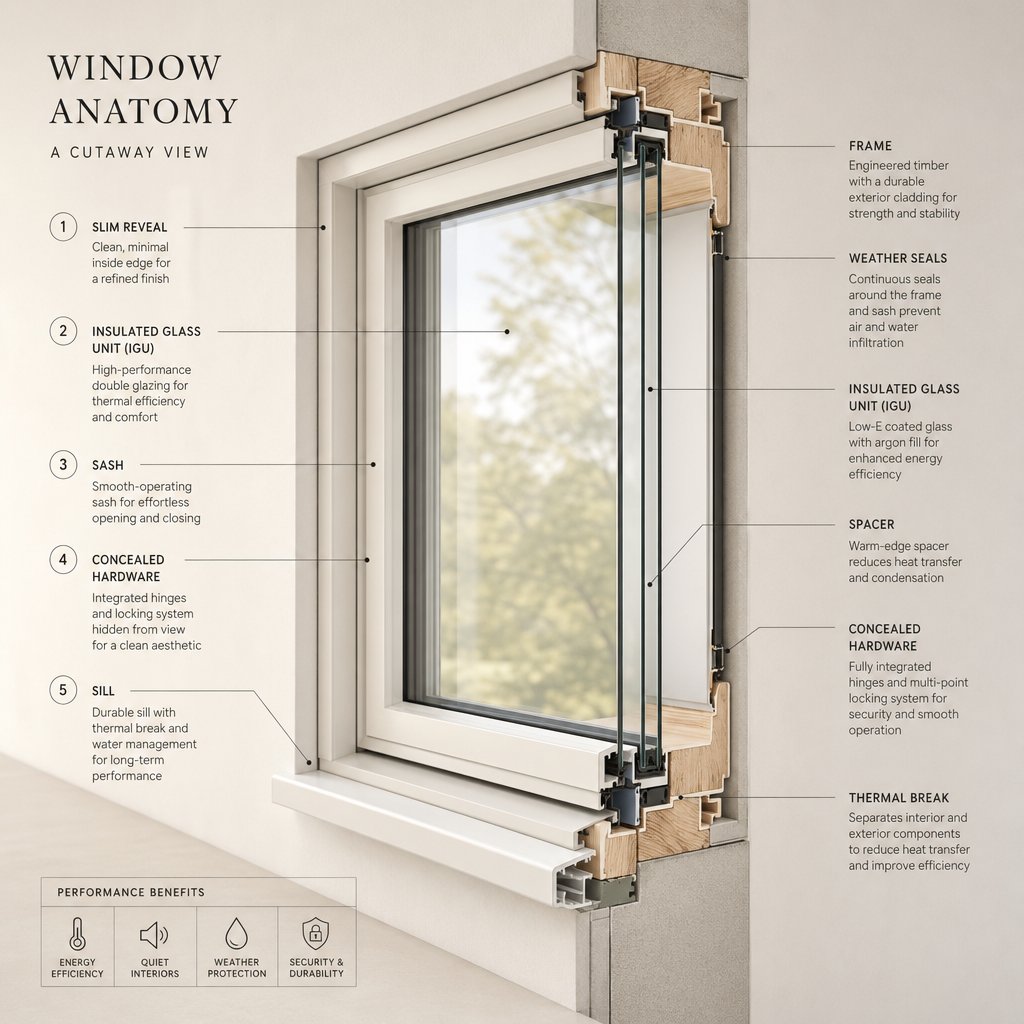
European aluminium windows are thermally broken aluminium-framed window systems engineered under European EN standards. They typically feature multi-chamber profiles, tilt-and-turn operation controlled by a single handle, multi-point locking hardware, and high-performance glazing units with double or triple panes, low-E coatings, and inert gas fills. The thermal break — a reinforced polyamide strip separating the interior and exterior aluminium shells — is what distinguishes these frames from conventional aluminium windows and allows them to achieve thermal performance competitive with timber.
That definition captures the essentials, but the details behind each element matter enormously. Profile depth, chamber count, alloy grade, glazing configuration, and hardware specification all interact to determine real-world performance. A shallow understanding leads to poor specification decisions — and that is exactly the problem with most content available today.
Why Global Interest in European Window Systems Is Growing
European windows have been standard across Germany, Austria, Scandinavia, and Poland for decades. What has changed is the audience. Architects in Australia, the Middle East, and across North America are increasingly referencing European performance benchmarks when specifying fenestration for high-performance builds. The trend toward European style windows in markets like the USA reflects a broader shift: building professionals are chasing slimmer sightlines, lower U-values, and tighter air seals than many domestic product ranges can deliver.
In Australia specifically, rising NCC energy performance requirements and growing demand for thermally broken aluminium in coastal and bushfire-prone areas have pushed designers to look beyond traditional local offerings. European systems offer a proven template — decades of refinement driven by stringent EU energy directives — that resonates with Australian projects pursuing NatHERS ratings well above the minimum.
Yet most English-language content on the topic reads like dealer-driven sales copy. It glosses over code compliance challenges, skips the import logistics, and rarely acknowledges the genuine trade-offs involved. This article takes a different approach. Every claim is examined, every advantage weighed against its practical cost, and every limitation stated plainly.
The place to start is where performance is won or lost: the aluminium profile itself and the engineering principles that make it work.
The Engineering Behind European Aluminium Profiles
Strip away the marketing language and a European aluminium window is, at its core, a precisely engineered assembly of metal, polymer, glass, and gas. Each material is selected not for tradition or aesthetics alone, but because it solves a specific physics problem. Understanding what goes into the aluminium frame for windows at this level is what separates informed specification from guesswork — and it is the layer of detail most content skips entirely.
Aluminium, in its raw state, is one of the most thermally conductive materials used in construction. Its thermal conductivity sits between 200 and 235 W/(m·K), meaning heat passes through it with almost no resistance. That single fact explains why early aluminium windows earned a terrible reputation for condensation, energy loss, and cold interior surfaces. It also explains why every meaningful advance in alu windows over the past three decades has focused on one goal: breaking that conductivity path without sacrificing the metal’s structural advantages.
How Polyamide Thermal Breaks Eliminate Conductivity
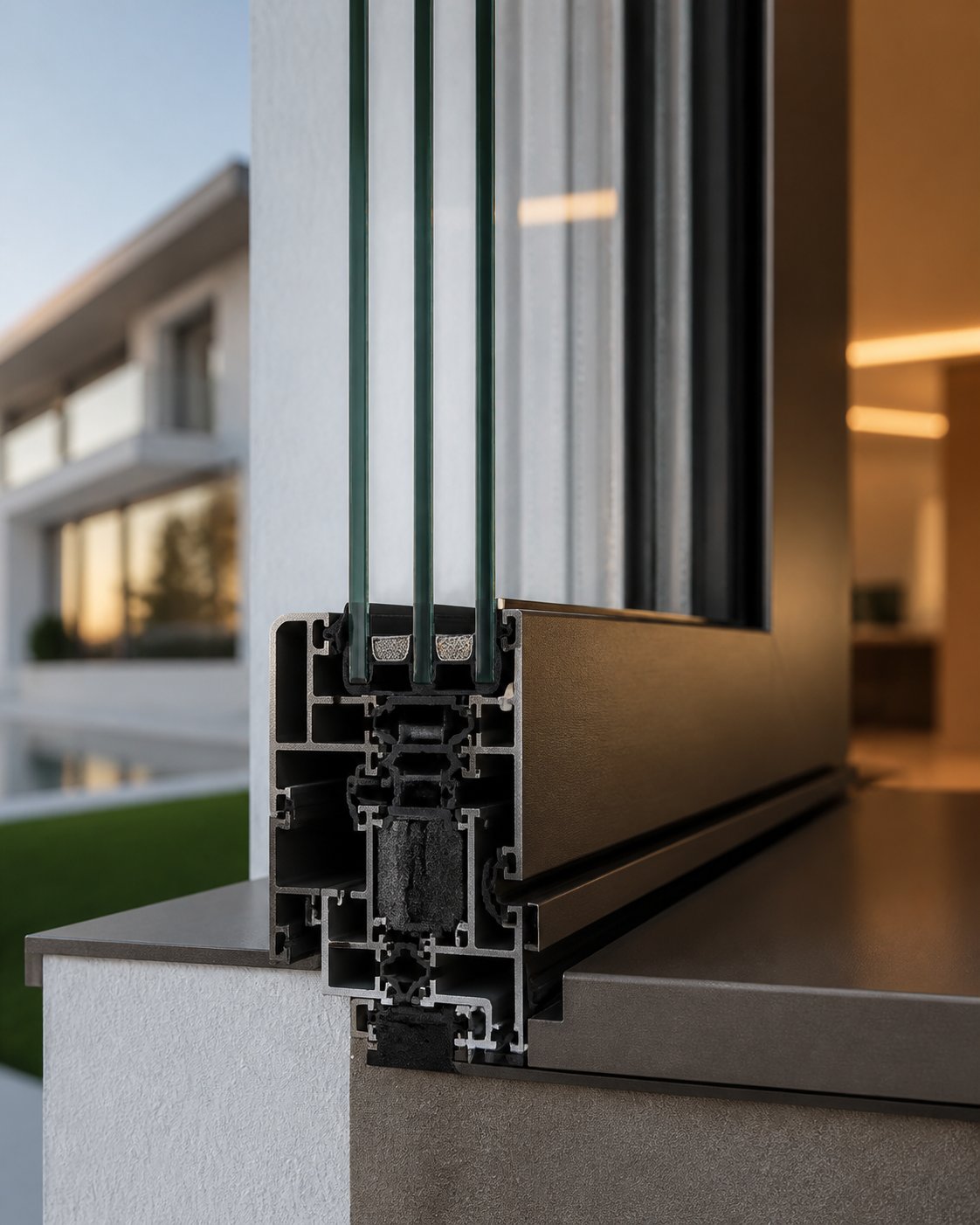
The thermal break is the defining innovation. European profiles use a strip of polyamide — specifically PA66 reinforced with approximately 25% glass fibre — to physically separate the exterior and interior aluminium shells. This is not a cosmetic feature. PA66 has a thermal conductivity of roughly 0.3 W/(m·K), nearly 700 times less conductive than the 6000-series aluminium surrounding it. That single strip transforms the frame from a thermal bridge into an insulating assembly.
The polyamide strips are mechanically crimped or rolled into precision-cut channels in each aluminium shell, creating a rigid structural bond. Glass fibre reinforcement prevents the strip from creeping or deforming under sustained load and temperature cycling — critical for Australian conditions where exterior surface temperatures on a dark-coloured frame can exceed 80°C on a summer afternoon in Western Sydney or Perth.
A typical thermally broken European profile, viewed in cross-section from the outside in, consists of these distinct layers:
- Exterior aluminium shell with powder-coated or anodised finish
- Outer EPDM weather gasket sealing against wind-driven rain
- PA66 glass-fibre-reinforced polyamide thermal break strip (one or more)
- Insulating air or foam-filled chambers within the profile body
- Interior aluminium shell with a separate finish (often a different colour to the exterior)
- Inner EPDM gasket providing the final air and acoustic seal against the glazing unit
This layered construction is what allows a material as conductive as aluminium to achieve whole-window U-values that rival — and in some configurations surpass — timber frames. Without the thermal break, the frame acts as a radiator in winter and a heat conductor in summer. With it, the interior aluminium shell stays close to room temperature regardless of external conditions, virtually eliminating condensation.
Why Multi-Chamber Profile Design Reduces Heat Transfer
The thermal break alone does not tell the full story. European system houses engineer their profiles with multiple enclosed chambers — essentially hollow pockets of trapped air within the frame’s cross-section. Still air is a surprisingly effective insulator (thermal conductivity around 0.025 W/(m·K)), and each additional chamber adds another layer of resistance to heat flow.
Profile depth is a reliable indicator of thermal capability. Across the major European systems, depths range from approximately 60 mm for mid-tier products up to 85 mm and beyond for passive-house-grade profiles. A deeper profile accommodates more chambers, wider thermal break strips, and thicker glazing units — all of which compound to lower the achievable U-value.
To put real numbers to this, consider the Aluprof range as one well-documented example. Their MB-79N SI profile (roughly 70 mm depth) achieves a Uw of 0.83 W/m²·K with triple glazing and a warm-edge spacer, while the deeper MB-104 SI (approximately 104 mm) pushes that figure down to 0.73 W/m²·K. For context, high-quality timber-framed windows have historically achieved Uw values in the range of 0.8 to 1.2 W/m²·K — meaning the best European aluminium profiles now match or beat the material that was long considered thermally superior.
This matters for Australian projects chasing high NatHERS star ratings. In climate zones like Melbourne (Zone 6) or Hobart (Zone 7), where heating loads dominate energy modelling, the difference between a Uw of 1.6 and 0.8 can shift a home’s rating by a full star or more. Multi-chamber aluminium profiles make that kind of performance available without the maintenance demands of timber.
Aluminium Alloy Selection and Coastal Durability
Not all aluminium is equal, and the specific alloy grade determines both structural behaviour and long-term resilience. European window profiles are typically extruded from EN AW-6060 T66 or the closely related 6063 T6 alloy. These belong to the aluminium-magnesium-silicon family, chosen for a specific combination of properties: excellent extrudability (allowing complex multi-chamber shapes to be formed), good corrosion resistance, and a tensile strength in the range of 110 to 150 MPa — more than adequate for residential and mid-rise commercial fenestration.
For coastal Australian locations — think the Gold Coast, Sydney’s Northern Beaches, or anywhere within a few kilometres of salt water — alloy selection interacts directly with the surface finish to determine how long the window lasts without degradation. Two primary finish technologies dominate anodized aluminum frame windows and powder-coated systems:
- Anodising creates an integral aluminium oxide layer that is extremely hard, scratch-resistant, and inherently corrosion-proof. Marine-grade anodising (typically 20–25 microns) is specified for severe coastal exposure. The oxide layer does not peel or flake because it is part of the metal itself.
- Powder coating applies a cured polymer layer (typically 60–80 microns) over the aluminium surface. It offers an almost unlimited colour range and strong UV resistance — important under Australia’s intense solar radiation. Quality powder coatings meeting Qualicoat or equivalent standards are expected to maintain their appearance for 25 to 30 years or more with periodic cleaning.
Some European systems offer dual-finish options: anodised on the exterior for maximum weather resistance, powder-coated on the interior to match the home’s colour palette. This flexibility is one reason architects gravitate toward aluminium over uPVC for projects where both durability and design precision matter.
The interplay between the alloy’s natural corrosion resistance and the applied finish creates a defence system well suited to Australian coastal conditions, provided the correct specification is chosen for the exposure level. Getting that specification right, however, requires understanding not just the frame — but how European systems differ from their American counterparts in every measurable dimension.
European vs American Aluminium Windows Side by Side
Most comparisons between European and American aluminium windows read like a list of bullet points — a few surface-level observations about tilt-and-turn handles and triple glazing, then a pivot to a sales pitch. That approach sells windows, but it does not help anyone actually understand what drives the performance gap or whether it matters for their specific project. Here, we pull apart the two systems component by component.
For Australian readers, this comparison carries practical weight. Many domestically available aluminium windows and doors share engineering DNA with American-style construction — simpler profiles, fewer locking points, and double-glazed units as the standard offering. Understanding exactly where and why European systems diverge helps you evaluate whether the premium is justified for your climate zone, NCC compliance pathway, or architectural ambitions.
Frame Construction and Glazing Unit Assembly Differences
The differences begin inside the frame and extend through every layer of the glazing unit. European aluminium window frames are built around thermally broken multi-chamber profiles — the kind detailed in the previous section — with profile depths commonly ranging from 60 mm to 85 mm or deeper. American aluminium frames, by contrast, tend to use shallower profiles with simpler internal geometry. Their thermal breaks, where present, are often narrower — roughly 10 to 15 mm of polyurethane pour-and-debridge material, compared to the 24 to 40 mm PA66 glass-fibre-reinforced strips typical of European systems. That difference in thermal break width alone accounts for a significant portion of the U-value gap between the two approaches.
Inside the glazing unit, the engineering divergence continues. European double glazed aluminium windows routinely incorporate warm-edge spacer bars — brands like Swisspacer or TGI — made from composite materials with low thermal conductivity. These spacers reduce heat loss at the glass-to-frame junction, the exact zone where condensation tends to form first. American glazing units more commonly use conventional aluminium spacer bars, which create a thermal bridge at the perimeter of every pane.
Layered on top of the spacer technology are the gas fills and coatings. European systems typically offer argon as standard and krypton for premium specifications, paired with soft-coat low-E coatings that can be positioned on multiple glass surfaces within the unit. A triple-pane European unit might carry low-E coatings on surfaces two and five (counting from the exterior), with argon fills in both cavities — a configuration that pushes whole-window Uw values below 1.0 W/m²·K. Standard American double-pane aluminium units, meanwhile, commonly land between 1.8 and 2.8 W/m²·K. That represents a 50 to 70 per cent difference in thermal performance — not a marginal improvement, but a generational leap in insulation capability.
Triple glazing remains a premium upgrade in the American and much of the Australian market. In Europe, it has become the default for new construction in cooler climate zones, which is why European aluminium profile systems are engineered from the outset to accommodate glazing units 44 mm to 56 mm thick. Many American-style profiles simply cannot accept a triple-pane unit without a complete redesign of the frame section.
Opening Mechanisms and Operational Philosophy
Beyond the thermal envelope, the most immediately noticeable difference between European and American windows is how they open — and what that opening style achieves.
American window conventions revolve around outward-opening casements, single-hung and double-hung sliding sashes, and horizontal sliders. These designs are familiar, widely available, and relatively inexpensive to manufacture. They also come with inherent compromises. Sliding sashes rely on brush or compression seals that wear over time, making them more prone to air leakage. Outward-opening casements perform better on air tightness but cannot be left ajar for ventilation during rain without admitting water.
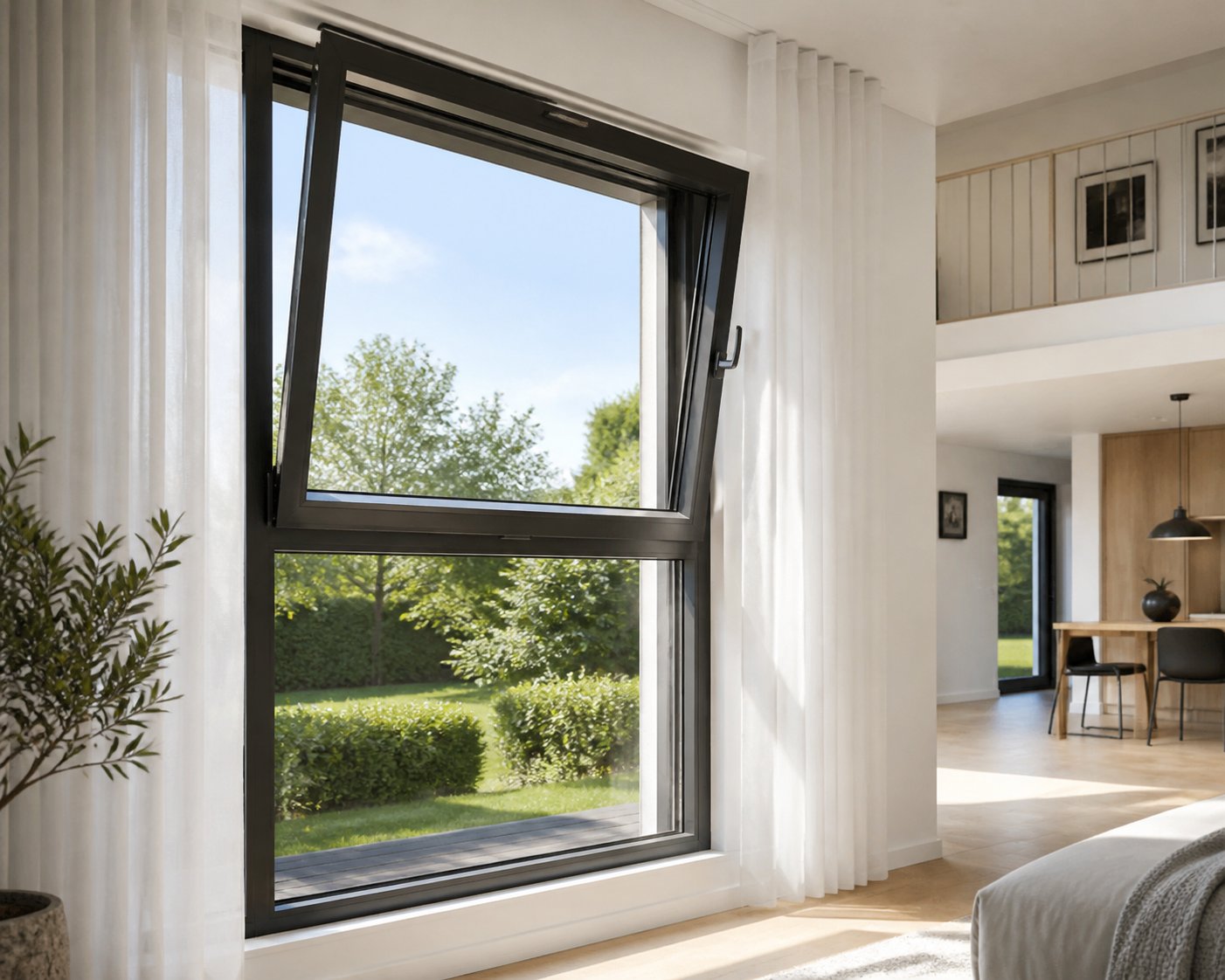
European windows are built around the tilt-and-turn mechanism — a dual-function system controlled by a single handle. Rotate the handle to one position and the sash tilts inward from the top, creating a controlled ventilation gap while the lower portion of the window remains locked shut. Rotate it further and the sash swings fully inward on side-mounted hinges, providing maximum airflow and easy access for cleaning both glass surfaces from inside the room.
This operational philosophy reflects a fundamentally different design priority. European tilt-and-turn windows are engineered for controlled microventilation — the ability to maintain fresh air exchange without creating a security vulnerability or a pathway for wind-driven rain. The tilt position is particularly valuable in Australian conditions: it allows airflow during summer storms without water ingress and enables overnight ventilation on upper storeys without the fall risk associated with fully open casements. Families with young children gain a meaningful safety advantage.
The mechanism also enables multi-point locking at four to eight or more points around the sash perimeter, because the same espagnolette hardware that drives the tilt and turn functions simultaneously engages locking cams into keeps embedded in the frame. Compare that to the one or two locking points typical of American-style windows, and the difference in both security and seal compression becomes obvious.
The following table consolidates the key specification differences across the dimensions that matter most for project decisions:
| Specification | European Aluminium Windows | American Aluminium Windows |
|---|---|---|
| Typical profile depth | 60 mm to 85 mm+ | 40 mm to 65 mm |
| Thermal break technology | PA66 glass-fibre-reinforced polyamide strips, 24–40 mm wide | Polyurethane pour-and-debridge, 10–15 mm wide (where fitted) |
| Typical Uw range | 0.7 to 1.4 W/m²·K (double and triple glazed) | 1.8 to 2.8 W/m²·K (predominantly double glazed) |
| Standard opening types | Tilt-and-turn, tilt-only, fixed, parallel-slide-tilt | Single-hung, double-hung, horizontal slider, outward casement |
| Locking points per sash | 4 to 8+ multi-point mushroom cams | 1 to 2 latch or cam-lock points |
| Glazing options | Double or triple pane, warm-edge spacers, argon or krypton fill, multiple low-E positions | Predominantly double pane, aluminium spacers, argon fill, single low-E position |
| Common finish types | Powder coat (Qualicoat certified), anodised, dual-colour options | Powder coat, painted, limited anodised options |
| Gasket material | EPDM or TPE, typically replaceable, 20–30 year lifespan | Brush seals or compression seals, variable lifespan |
Why Sightline Width Matters for Architects
Among architects specifying aluminium windows and doors for contemporary residential or commercial projects, one metric generates disproportionate attention: the visible sightline — the width of aluminium frame you actually see when the window is closed. A narrower sightline means more glass, more daylight, and cleaner architectural lines. It sounds like a purely aesthetic concern, but it is deeply tied to structural engineering.
European profile systems consistently achieve slimmer visible sightlines than their American counterparts, often getting the frame-to-frame visible width down to 50 mm or less on fixed panels and 100 to 120 mm on operable junctions. They manage this through the multi-chamber design discussed earlier — the structural rigidity comes from the internal geometry of the profile, not from sheer material bulk. Deeper profiles with precisely engineered chamber layouts can carry larger glass units (and the wind loads acting on them) while presenting a thinner face to the room.
This is the dimension most competitor content glosses over. A brochure might mention “slim sightlines” in passing, but it rarely explains how those sightlines are achieved without compromising wind resistance, water tightness, or thermal performance. The answer lies in the interaction between profile depth, chamber count, thermal break placement, and glazing rebate design — every element working together so the window can be structurally robust in the dimension you cannot see while appearing minimal in the dimension you can.
For Australian projects in cyclone-prone regions of northern Queensland or the Northern Territory, this balance takes on added importance. Windows must satisfy stringent wind load requirements under AS 2047, and achieving that with a slim-profile European system requires careful selection of the right profile series and glazing specification. The capability exists — but it demands engineering attention, not just catalogue selection.
Performance specifications and sightline dimensions only tell part of the story, though. The hardware concealed inside the frame — the mechanisms that make tilt-and-turn operation possible and drive those multi-point locks home — is where European engineering arguably makes its most distinctive mark.
Tilt-and-Turn and the European Hardware Advantage
Profiles and glazing units get most of the attention in technical discussions, but it is the hardware — the mechanisms hidden inside the frame — that makes a European aluminium window behave fundamentally differently from a conventional one. Every tilt, every swing, every locked-tight seal depends on a precision-engineered system of drives, cams, and hinges working in concert. This hardware layer is also the topic most English-language resources barely touch, leaving buyers and specifiers to discover the details only after they have committed to a system.
How Tilt-and-Turn Mechanisms Actually Work
From the user’s perspective, the operation looks simple. A single handle has three positions: down for locked and sealed, horizontal for tilt (the top of the sash tips inward a few inches for ventilation), and vertical for turn (the full sash swings inward like a door). One handle, two opening modes, plus the closed position. That apparent simplicity masks a remarkably sophisticated internal mechanism.
Behind the handle sits an espagnolette drive — a flat metal strip that runs along the inside channel of the sash frame. When you rotate the handle, the drive transmits that rotation around the full perimeter of the sash through corner drives — small geared connectors fitted at each corner that redirect the linear motion by 90 degrees. This channel-and-corner-drive arrangement is what allows a single handle action to simultaneously engage or disengage locking cams at four, six, or eight or more points around the sash.
Those locking cams — typically mushroom-headed for anti-jemmy resistance — press into steel strike plates (keeps) mounted in the outer frame. When the handle moves to the locked position, every cam around the sash pulls tight against its corresponding keep, compressing the EPDM gaskets uniformly and creating an exceptionally airtight, watertight seal. Compare this to the one or two latch points on a typical sliding or hung window, and the security and sealing advantage becomes immediately clear.
In the tilt position, the bottom of the sash remains locked while the top tilts inward, held by a tilt stay arm at the upper corner on the hinge side. This gives controlled ventilation without creating a security vulnerability — the gap is too narrow for entry, and the lower locking points remain fully engaged. It is a particularly practical feature for ground-floor rooms, upper-storey bedrooms where overnight airflow is wanted, or any aluminium door with window combinations in living areas where children are present.
European Hardware Brands That Set the Standard
The hardware inside a European aluminium window or door is rarely manufactured by the profile system house itself. Instead, a handful of specialist European companies supply the locking mechanisms, hinges, stays, and handles that fabricators integrate during assembly. Four names dominate the market:
Roto (Germany) — known for their NX modular hardware platform, which uses standardised components across timber, PVC, and aluminium frame materials. Their system supports sash weights up to 150 kg on concealed hinges and offers integrated night-ventilation positions.
Siegenia (Germany) — recognised for advanced tilt-and-turn systems with a strong focus on anti-burglary performance and parallel-slide-tilt door hardware. Their solutions are widely specified for both residential and commercial aluminium window and door projects.
Winkhaus (Germany) — valued for innovative multi-point locking systems and a broad product range covering everything from standard residential fittings to high-security commercial applications.
MACO (Austria) — offers a comprehensive range of espagnolette locking systems, concealed hinges, and restrictors, with particular strength in residential aluminium door window hardware where durability and smooth operation over decades are priorities.
Each of these manufacturers has refined their systems over generations of European production. A fully assembled sash from a quality fabricator will typically contain the following hardware components:
- Multi-point espagnolette lock with mushroom cams
- Corner drives at each sash corner to transmit handle rotation around the full perimeter
- Tilt stay arm controlling the inward tilt angle and supporting the sash weight in ventilation mode
- Concealed or surface-mounted hinges on the swing side
- Handle with integrated key lock or push-button child-safety restrictor
- Micro-ventilation stay (on systems offering a fourth handle position for minimal airflow)
- Sash restrictor limiting the turn-open angle where required for safety
This component list is worth understanding because it directly affects long-term serviceability. Each part is individually replaceable — a worn cam, a stiff corner drive, or a fatigued tilt stay can be swapped without replacing the entire window. That modularity is a hallmark of European hardware engineering, though it does depend on being able to source parts locally, a challenge we address later in this article.
Concealed Hinges and Aesthetic Integration
Walk past a European aluminium window from the outside and you will notice something missing: hinges. Unlike surface-mounted hinges that sit visibly on the frame face, concealed hinge systems — such as Roto’s Designo series — are fully integrated within the frame-to-sash rebate. When the window is closed, no hardware is visible on the exterior. The result is a clean, uninterrupted facade line that appeals strongly to architects pursuing minimalist design language.
Beyond aesthetics, concealed hinges deliver a practical advantage that matters over the life of the window: three-axis adjustability. Most quality European concealed hinges allow the sash to be adjusted laterally (side to side), vertically (up and down), and in compression depth (how tightly the sash presses against the gasket). This three-dimensional adjustment compensates for the inevitable settling, thermal movement, and structural shifts that every building undergoes over time.
In practice, this means a fabricator or experienced installer can correct minor alignment issues — a sash that has dropped slightly, or gasket compression that has become uneven — using nothing more than a hex key. Without this adjustability, the same issues on a fixed-hinge window might require rehinging or even sash replacement. For Australian coastal projects where thermal cycling is constant and humidity can affect surrounding substrates, the ability to fine-tune alignment without replacing components extends the operational lifespan of the window considerably.
Concealed hinges on current European systems support sash weights up to 150 kg, which comfortably handles large-format triple-glazed units. That capacity is important because the architectural trend toward larger glass areas and slimmer frames demands hinges that can carry substantial weight without visible bulk — a requirement that surface-mounted hardware struggles to meet gracefully.
Hardware, of course, does not exist in isolation. The locking cams, concealed hinges, and espagnolette drives inside these windows are engineered to meet specific European performance classifications — standards that do not map neatly onto Australian or American testing frameworks. Understanding how those standards translate into local building code compliance is the next critical piece of the specification puzzle.
Performance Standards and Building Code Compliance
A European aluminium window can deliver outstanding thermal numbers, airtight seals, and multi-point security — but none of that matters to a building certifier if the documentation does not speak the right regulatory language. This is the territory where specification decisions stall, where impressive-sounding Uw values run headlong into local compliance frameworks, and where many projects importing aluminium windows and doors from Europe encounter their first real friction.
The core challenge is deceptively simple: Europe and Australia test and classify window performance using different standards, different methodologies, and different numerical scales. A window that earns top marks under European EN testing cannot automatically be submitted as evidence of compliance with the National Construction Code (NCC). Understanding exactly where the translation breaks down — and what it takes to bridge the gap — is essential for anyone specifying European systems for Australian projects.
Mapping EN Standards to Australian AS 2047 Equivalents
European window performance is assessed across three core EN tests, each addressing a distinct physical property:
- EN 12207 — Air permeability. Measures how much air leaks through the closed window under increasing pressure differentials. Results are classified from Class 1 (minimal) through Class 4 (highest performance).
- EN 12208 — Water tightness. Tests resistance to wind-driven rain by spraying water at the exterior face while applying static pressure. Classification ranges from Class 1A through Class 9A, with higher classes indicating resistance at greater pressure.
- EN 12210 — Wind resistance. Assesses structural deflection and residual deformation under simulated wind loads. Classification runs from Class 1 to Class 5, plus a Class E designation for specific design wind pressures.
In Australia, the corresponding standard is AS 2047 — Windows and external glazed doors in buildings. Rather than splitting performance across three separate classification systems, AS 2047 evaluates air infiltration, water penetration, and structural adequacy under a unified testing regime. Test methods reference AS/NZS 4284, which specifies the laboratory procedures for applying pressure differentials and water spray cycles.
The critical point: European EN classifications do not directly convert to AS 2047 performance ratings. The pressure sequences, specimen conditioning, test durations, and acceptance criteria differ enough that a Class 4 air permeability result under EN 12207 cannot simply be rewritten as an AS 2047 air infiltration pass. A window that passes European tests may well exceed Australian requirements — in many cases it will — but the documentation alone does not demonstrate compliance.
| European Standard | Purpose | Australian Equivalent | Comparability Note |
|---|---|---|---|
| EN 12207 | Air permeability (Class 1–4) | AS 2047 / AS/NZS 4284 — Air infiltration | Different pressure sequences and acceptance thresholds; no direct class-to-class conversion |
| EN 12208 | Water tightness (Class 1A–9A) | AS 2047 / AS/NZS 4284 — Water penetration resistance | Spray rates and pressure increments differ; European classifications do not map to AS 2047 water resistance ratings |
| EN 12210 | Wind resistance (Class 1–5, Class E) | AS 2047 / AS/NZS 4284 — Structural adequacy (ultimate and serviceability) | Deflection limits and safety factors are calculated differently; results require re-evaluation against AS 2047 design wind pressures for the specific building location |
| EN ISO 10077 | Thermal transmittance (Uw calculation) | WERS (Window Energy Rating Scheme) simulation methodology | Different boundary conditions, film coefficients, and reference temperatures; published European Uw values may differ from WERS-equivalent figures by up to 18% |
In practice, this means European aluminium doors and windows imported for an Australian project will typically need to undergo supplementary testing at an accredited Australian laboratory, or the manufacturer must supply test data produced under AS/NZS 4284 procedures. Some European system houses have already undertaken this step for the Australian market, but it is not universal. Always confirm AS 2047 compliance documentation before committing to a purchase — and verify that the test report reflects the specific profile series and glazing configuration you intend to use, not a different variant within the same product family.
WERS Ratings and NCC Energy Compliance
Thermal performance is where the standards translation becomes particularly nuanced. European window manufacturers calculate their published Uw values using EN ISO 10077, a calculation method that specifies particular boundary conditions — including fixed indoor and outdoor reference temperatures, surface film coefficients, and assumptions about wind speed across the glass face. Australia’s Window Energy Rating Scheme (WERS) uses its own simulation methodology, which incorporates different environmental assumptions tailored to Australian climate zones.
The practical gap between the two systems is not trivial. Baumann Consulting’s analysis found that different rating procedures can produce U-values up to 18 per cent apart for the exact same double-pane window assembly. There is no consistent relationship between the two — sometimes the European method yields a lower figure, sometimes a higher one. This inconsistency means you cannot simply take a European Uw value from a product datasheet and present it to your energy assessor or NatHERS modeller as the rated performance of the window.
For NCC Section J compliance in commercial buildings, or for achieving target NatHERS star ratings in residential projects, the window’s thermal properties must be expressed in terms the rating tools recognise. That typically means obtaining a WERS rating for the specific window configuration, or providing verified thermal data in a format compatible with tools like AccuRate, BERS Pro, or FirstRate5. Some energy assessors may accept manufacturer-supplied thermal calculations if they are accompanied by sufficient technical documentation, but this varies by assessor and by certifying authority.
The bottom line: a European aluminium window with a published Uw of 0.8 W/m²·K under EN ISO 10077 is almost certainly an excellent performer. But that specific number cannot be dropped straight into an Australian compliance pathway. Budget time and cost for WERS simulation or equivalent verification when planning your project timeline.
Energy Efficiency Incentives and Rebate Eligibility
Whether high-performance aluminium windows doors qualify for energy efficiency rebates or incentive programs is a question that surfaces in almost every project conversation. The answer in Australia depends on your state and the specific program.
Several state-based schemes support energy-efficient upgrades to existing homes. Victoria’s Victorian Energy Upgrades (VEU) program and the NSW Energy Savings Scheme (ESS) both offer incentives for improvements that reduce household energy consumption, though eligible product categories and activity definitions change periodically. Window upgrades — particularly replacing single-glazed aluminium frames with thermally broken, double- or triple-glazed systems — can sometimes fall within the scope of these programs, but eligibility is tied to specific product specifications and accredited installer requirements, not simply to the country of origin.
European aluminium windows are not automatically excluded from Australian incentive programs, nor are they automatically included. Qualification depends on whether the product carries the necessary Australian-recognised certifications and energy ratings — typically a WERS certificate or equivalent documentation demonstrating the claimed thermal and solar performance. Without that documentation in an Australian-accepted format, even a passive-house-certified European window may not generate rebate eligibility.
Before factoring any rebate into your project budget, verify the current program requirements directly with the relevant state authority or an accredited provider. Schemes are updated regularly, and eligibility criteria that applied twelve months ago may no longer be current. What remains consistent is the underlying principle: the documentation must be in a form Australian regulators and scheme administrators can verify.
Standards and compliance paperwork may feel like an administrative distraction from the more exciting business of selecting profiles and hardware. But getting this layer right determines whether a beautifully engineered European window system can actually be installed lawfully and cost-effectively in your project — which brings us to the equally important question of which European profile manufacturers are worth evaluating in the first place, and how their systems compare against each other.
Leading European Aluminium Profile Manufacturers Compared
Six or seven brand names dominate the aluminium window door and facade market across Europe, yet most English-language resources treat them as interchangeable — or worse, promote whichever brand the author happens to sell. The reality is that each system house occupies a distinct niche defined by profile engineering, ecosystem depth, documentation support, and cost positioning. Sorting through those differences is the first step toward a well-informed specification.
Major European Aluminium Profile Systems at a Glance
A critical distinction upfront: the companies listed below are system houses, not finished window manufacturers. They design and extrude the aluminium profiles, engineer the thermal break geometry, develop gasket systems, and specify compatible hardware interfaces. They do not cut glass, assemble sashes, or deliver completed aluminium doors and windows to your site. That job belongs to fabricators — a separate layer of the supply chain covered in the next section.
Here are the major players worth knowing, drawn from industry comparison data and publicly available product documentation:
Schüco (Germany) — widely regarded as the premium benchmark. Their AWS (windows) and ASE (sliding) series offer exceptionally deep ecosystems including curtain wall integration, and their engineering documentation is among the most comprehensive available. That positioning comes with a corresponding price premium.
Reynaers (Belgium) — sits at the mid-premium tier with one of the broadest product ranges in the industry. The MasterLine 8 and MasterLine 10 series cover tilt-and-turn and fixed applications, while the Hi-Finity platform targets minimal-frame sliding doors. Strong documentation and specification support make Reynaers one of the most architect-friendly systems globally.
Aluprof (Poland) — delivers an excellent performance-to-cost ratio. The MB-86 series suits general residential and commercial applications, while the deeper MB-104 Passive series targets passive-house-grade thermal performance. As noted earlier in this article, the MB-104 SI achieves Uw values as low as 0.73 W/m²·K with triple glazing — a figure that competes directly with premium timber frames.
Aliplast (Italy/Poland) — offers a well-regarded range of thermally broken profiles with competitive pricing, including systems suited to both residential aluminium windows and commercial facades. Their Ultraglide sliding system has gained attention for large-format door applications.
WICONA (Germany, part of Hydro) — primarily specified for commercial and high-rise facade work, with particularly strong credentials in unitised curtain wall systems. Less commonly seen in residential projects, but a serious contender when the building envelope demands advanced structural performance.
Heroal (Germany) — positions itself as a German-engineered alternative to Schüco at a more accessible price point. Their profile systems cover windows, doors, and roller shutter integration — a feature particularly common in the German and Austrian markets.
| System House | Country | Representative Series | Approx. Profile Depth | Thermal Break Material | Achievable Uw Range | Market Positioning |
|---|---|---|---|---|---|---|
| Schüco | Germany | AWS 75, AWS 90 | 75–90 mm | PA66 glass-fibre reinforced | 0.8–1.3 W/m²·K (configuration dependent) | Premium |
| Reynaers | Belgium | MasterLine 8, MasterLine 10 | 66–77 mm | PA66 glass-fibre reinforced | 0.8–1.4 W/m²·K | Mid-Premium |
| Aluprof | Poland | MB-86, MB-104 Passive | 77–104 mm | PA66 glass-fibre reinforced | 0.73–1.1 W/m²·K | Mid-range (strong value) |
| Aliplast | Italy/Poland | Star, Ultraglide | 65–80 mm | PA66 glass-fibre reinforced | 0.9–1.4 W/m²·K | Mid-range |
| WICONA | Germany (Hydro) | WICLINE 75 evo, WICLINE 95 | 75–95 mm | PA66 glass-fibre reinforced / foam-enhanced | 0.8–1.2 W/m²·K | Premium (commercial focus) |
| Heroal | Germany | W 72, W 77 | 72–77 mm | PA66 glass-fibre reinforced | 0.9–1.3 W/m²·K | Mid-range (German engineering) |
Note: Uw values are indicative and vary significantly with glazing specification, warm-edge spacer selection, gas fill, and window size. Always request project-specific thermal calculations from the fabricator.
System Houses vs Fabricators and Why It Matters
The European supply chain model is fundamentally different from what most Australian buyers are accustomed to. Locally, you typically deal with a single company — a manufacturer-dealer-installer that controls the entire process. In Europe, the chain splits into distinct tiers, and understanding who does what prevents costly misunderstandings.
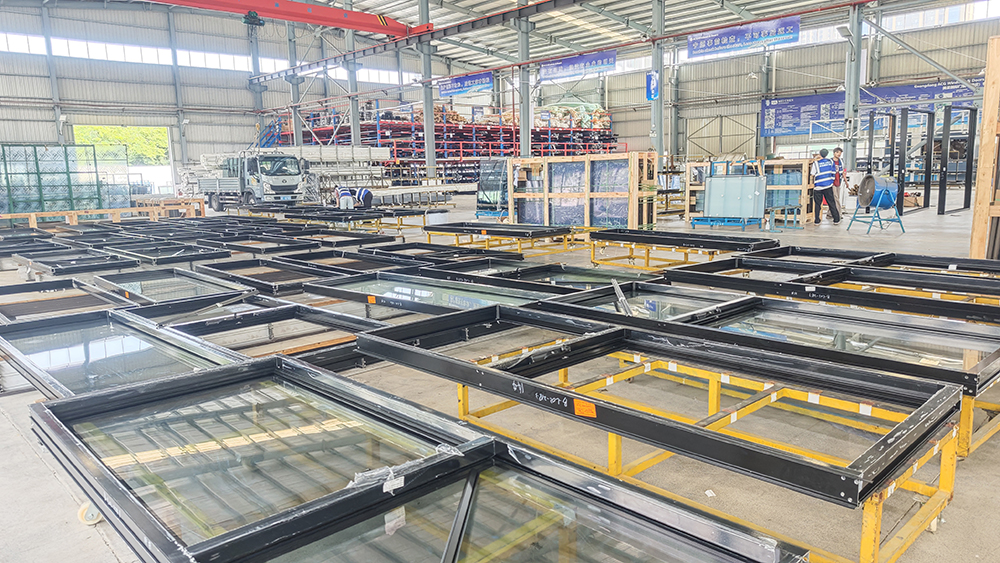
The system house designs the profiles, engineers the thermal break geometry, specifies gasket materials and drainage channels, and publishes the technical documentation. A fabricator — sometimes called a manufacturer or joiner — purchases those profiles and transforms them into finished windows: cutting extrusions to size, mechanically crimping thermal breaks, routing hardware channels, integrating glazing units, mounting handles and locking mechanisms, and conducting final quality checks.
This separation has a direct consequence for buyers: the brand name on the profile is only half the equation. A Schüco profile system fabricated by a meticulous, well-equipped workshop will perform vastly differently from the same profile assembled by a careless operator with poor quality control. Gasket seating, mitred joint sealing, hardware alignment, and glazing bead compression all depend on fabricator skill — none of which the system house controls after the extrusions leave the factory.
When evaluating European aluminium windows for an Australian project, always assess both the system and the fabricator. Ask for sample corner joints, request references from completed projects, and — where possible — inspect the fabrication facility or request photographic evidence of their assembly process and QC procedures. A strong system paired with a weak fabricator equals problems, regardless of the logo stamped on the profile.
How to Evaluate Profile Systems for Your Climate Zone
Not every project needs the deepest, most thermally advanced profile available. A passive-house-grade system with a 104 mm profile depth is overkill for a coastal Queensland home where cooling loads dominate and winter temperatures rarely dip below 10°C. Conversely, a 60 mm mid-tier profile may fall short for a Tasmanian or alpine Victorian project chasing high NatHERS star ratings in a heating-dominated climate.
Matching the right profile system to your climate zone comes down to evaluating a handful of interconnected specifications. When comparing systems, focus on these criteria:
- Profile depth — deeper profiles (77 mm+) accommodate wider thermal breaks and thicker glazing units, directly lowering Uw values. Essential for NCC climate zones 6, 7, and 8 where heating loads are significant.
- Number of internal chambers — more chambers mean more trapped-air insulation layers within the frame. Look for three or more chambers on each side of the thermal break for cold-climate applications.
- Thermal break width — wider PA66 strips (30 mm+) provide greater separation between the interior and exterior aluminium shells. This is the single most impactful variable for frame U-value.
- Maximum glazing thickness accepted — ensure the profile can accommodate the glazing unit you need. Triple-pane units typically require a 44–56 mm glazing rebate, which shallower profiles cannot provide.
- Compatible hardware weight capacity — larger windows with triple glazing produce heavier sashes. Confirm that the profile’s hardware channel dimensions suit the concealed hinge systems rated for that sash weight.
- Finish suitability for exposure level — coastal projects within salt-spray zones benefit from marine-grade anodising or Qualicoat-certified powder coating with enhanced corrosion resistance. Confirm the system house offers finishes rated for your site’s exposure category.
- AS 2047 test availability — perhaps the most overlooked factor. Verify whether the specific profile series has been tested and documented under AS 2047 for the Australian market, or whether supplementary testing will be required at your cost and timeline.
A simple rule of thumb: match your profile investment to your climate severity. Temperate coastal zones (Sydney, Perth, Brisbane) can often achieve excellent NCC compliance with mid-range systems in the 70–80 mm depth range paired with quality double glazing. Colder southern regions and alpine areas benefit from the deeper, more thermally advanced profiles where the additional cost translates into measurable energy savings and comfort improvements.
Selecting the right system house and profile series is a significant milestone in the specification journey. But the profile is just one input into the final cost equation — and for many buyers, the landed price of European aluminium windows, including import logistics, freight, duties, and the practical realities of metric-to-imperial sizing, is where the real decision-making pressure builds.
Real Costs, Import Logistics, and Lead Times
Profile specifications, hardware systems, and compliance pathways are intellectually satisfying topics — but at some point every project comes back to the same blunt question: what does this actually cost, and how does it get to my site? European aluminium windows occupy the premium end of the fenestration market, and the price tag reflects the engineering. Yet the final number on your invoice depends on far more than the profile system alone. Freight, duties, currency movements, and even the physical dimensions of your openings all shape the landed cost in ways that catch first-time importers off guard.
What European Aluminium Windows Actually Cost
Quoting a single dollar figure for European aluminium windows would be misleading — and any source that does so is oversimplifying dramatically. The european windows price for a finished, delivered unit varies by a factor of two or three depending on the specification choices made during the ordering process.
That said, the broad pattern is consistent. European-manufactured thermally broken aluminium windows carry a significant premium over standard domestically produced aluminium frames. Imported European aluminium units for a standard-sized opening can start from roughly $1,300 to $1,700 AUD at the factory gate (based on 2026 European supplier data for a 900 mm x 1500 mm tilt-and-turn unit), before freight, duties, and local handling are added. Comparable domestic aluminium windows — typically without thermally broken profiles or multi-point locking — may sit between $600 and $1,200 AUD for a similar opening size, supply only. The gap narrows or widens depending on how many premium features each option carries.
Rather than anchoring on raw numbers that shift with every currency fluctuation and tariff adjustment, focus on the factors that drive cost variation within the European category itself:
- Profile system tier — a Schüco AWS 90 specification costs materially more than an Aluprof MB-86, even for the same opening size, because the profile engineering, testing documentation, and brand premium differ.
- Glazing specification — double glazing with argon fill is the entry point. Stepping up to triple glazing with krypton fill and multiple low-E coatings can add 25 to 40 per cent to the glazing unit cost alone.
- Hardware package — concealed hinges, micro-ventilation stays, and anti-burglary-rated locking systems from Roto or Siegenia cost more than standard surface-mounted hardware.
- Finish type — standard powder coating in a common RAL colour is the baseline. Special colours, textured finishes, marine-grade anodising, or dual-colour configurations (different inside and outside) all add cost.
- Opening size and shape — larger sashes require heavier hardware, thicker glazing, and reinforced profiles. Non-rectangular shapes — arched, trapezoidal, or circular units — incur custom fabrication surcharges.
- Order volume — a single replacement window ordered from Europe carries disproportionate freight and handling costs. Bulk orders for a full home or multi-unit development spread logistics expenses across more units, significantly reducing the per-window cost.
Some European-system dealers operating in the Australian market — and international suppliers like Zola or Rhea who ship globally — publish indicative pricing on their websites. These figures provide a useful starting reference, but treat them as exactly that: starting points. The zola windows cost listed online, for instance, reflects a specific configuration, glazing package, and delivery zone that may not match your project. Always request a project-specific quotation based on your actual window schedule, including the glazing unit build-up, hardware selection, and finish specification.
One pricing dynamic worth understanding: European aluminium windows manufactured in Poland often carry substantially lower factory-gate prices than equivalent systems fabricated in Germany or Belgium — sometimes 30 to 50 per cent lower — while using identical profile systems and hardware from the same suppliers. Poland is the world’s largest exporter of windows and doors, and its manufacturing base benefits from advanced automation, lower labour costs, and deeply integrated local supply chains for glass, hardware, and finishing. For Australian buyers, this means the country of fabrication matters as much as the system brand when evaluating cost.
Import Logistics From Order to Jobsite
Buying European aluminium windows is not like ordering from a local supplier with stock in a Sydney or Melbourne warehouse. The import process involves multiple stages, each with its own timeline and cost implications. First-time importers routinely underestimate both the duration and the coordination required.
Here is the typical sequence from initial enquiry through to delivery on an Australian jobsite:
- Initial enquiry and specification — Submit your window schedule with opening sizes, operating types, glazing requirements, finish selections, and hardware preferences. Expect one to three weeks of back-and-forth to finalise the technical specification and receive a formal quotation.
- Order confirmation and production — Once the order is placed and a deposit paid, the fabricator schedules production. Manufacturing lead times for European aluminium windows typically range from six to twelve weeks, depending on the fabricator’s backlog, the complexity of the order, and whether any custom elements (unusual shapes, special finishes) are involved. Peak European construction season — roughly April through September — can push lead times toward the longer end.
- Quality inspection and packing — Completed windows are inspected, individually wrapped, and packed into shipping crates or stillages designed for ocean freight. Proper packing is critical: aluminium frames are durable, but glazing units and powder-coated surfaces are vulnerable to transit damage if poorly secured.
- Ocean freight to Australia — Shipment by sea from European ports (typically Gdynia or Hamburg for Polish and German fabricators) to Australian ports (Sydney, Melbourne, Brisbane, or Fremantle) takes approximately four to six weeks by standard container vessel. A full container load (FCL) — either 20-foot or 40-foot — is the most cost-effective option for whole-house or multi-unit orders. Smaller orders may ship as less-than-container-load (LCL) freight, which is cheaper per cubic metre but adds time due to consolidation and deconsolidation at each end.
- Customs clearance and duties — Upon arrival at the Australian port, the shipment must clear Australian Border Force customs procedures. Import duties on aluminium windows and doors into Australia are assessed under the relevant tariff classification. Duty rates, currently 5 per cent for most aluminium fenestration products from countries with which Australia holds free trade agreements, vary depending on the country of origin and the applicable trade agreement. GST at 10 per cent applies on the landed value (product cost plus freight plus insurance plus duty). Engage a licensed customs broker to handle the documentation — attempting to self-clear a commercial shipment is a false economy.
- Port release and last-mile delivery — After customs clearance, the container is released for collection or delivery. Transport from the port to your building site or storage facility adds another few days to a week, depending on distance. Coordinate delivery timing carefully: European windows in their shipping crates are heavy, awkward, and best unloaded with a crane truck or forklift. Having nowhere secure to store them on arrival creates unnecessary risk of damage or theft.
End to end, expect a minimum of twelve to twenty weeks from order confirmation to site delivery — and plan for longer if the project schedule includes any custom elements or coincides with European factory holidays (most fabricators close for two to four weeks in July or August, and again over Christmas). Compare that to four to eight weeks for a typical domestic aluminium window order from an Australian fabricator, and the planning implications become clear. European windows demand early specification decisions. They are not a product you can finalise after the frame is up and the plasterer is booked.
Metric Sizing and the Standard Opening Challenge
Here is a practical concern that rarely appears in marketing brochures: European windows are manufactured to metric dimensions, specified in millimetres. Australian construction also uses metric, so at first glance, this seems like a non-issue compared to the well-documented headaches American buyers face converting imperial rough openings. But standard aluminium window sizes in Australia follow conventions established by decades of local manufacturing — common widths like 600 mm, 900 mm, 1200 mm, 1500 mm, and 1800 mm, with heights to suit standard ceiling and lintel configurations.
European fabricators, meanwhile, manufacture to order. They can produce virtually any dimension you specify, which is a genuine advantage for renovation projects with non-standard openings or architecturally designed homes where window sizes are driven by facade composition rather than catalogue constraints. The catch is that “any dimension” still needs to land within the structural limits of the chosen profile system — maximum sash widths and heights are governed by hardware weight capacity, wind load calculations, and profile deflection limits.
For new construction, the simplest approach is to design your rough openings around the European window dimensions from the outset. Provide the window schedule to your frame carpenter or steel fabricator before wall framing begins, and size the openings to suit the ordered units plus the manufacturer’s specified installation clearances (typically 10 to 15 mm per side). This avoids the expense and complication of adaptor frames or reframing.
Renovation projects present a trickier scenario. Existing openings were almost certainly built to suit locally manufactured windows. Options include:
- Custom-sizing the European windows to fit existing rough openings — the most common and cleanest solution, though it means every window is a bespoke order with no possibility of off-the-shelf replacements.
- Modifying the openings — enlarging or reducing the rough opening to suit a preferred European window size. This works on timber-framed walls with relative ease, but is significantly more involved on brick veneer, double brick, or rendered construction where the lintel and subframe must also change.
- Using adaptor or sub-frame systems — some European suppliers offer aluminium or timber sub-frames that bridge the gap between the existing opening and the new window. These add cost and slightly increase the visible frame width, but they avoid structural modifications to the wall.
Whichever approach you take, precise measurement is non-negotiable. European fabricators work to tight tolerances — typically plus or minus 1 mm on frame dimensions — and they manufacture based on the measurements you provide. An error of 10 mm in the rough opening survey can mean a window that does not fit, and there is no popping down to the local supplier for a quick replacement when the product was made in a Polish or German factory twelve weeks ago.
Engage a qualified surveyor or an installer experienced with European systems to measure every opening individually. Do not assume that openings labelled as the same size on architectural drawings are actually identical — construction tolerances in Australian residential building can easily produce 10 to 20 mm variation between nominally identical openings. Measure twice, order once is not just a cliché here; it is the difference between a smooth installation and an expensive problem.
Cost, logistics, and sizing are the practical hurdles that separate a theoretical specification from a delivered project. They are also the factors that reveal whether European aluminium windows genuinely suit a given project — or whether the engineering advantages are offset by constraints that make a domestically sourced alternative the smarter choice. That honest assessment of limitations is where we turn next.
Honest Limitations and Drawbacks Worth Considering
Every preceding section of this article has detailed what European aluminium windows do exceptionally well. Ignoring where they fall short would undermine the entire point of a neutral resource. No fenestration product suits every project, every budget, or every timeline — and these systems are no exception. The drawbacks are real, they are practical, and pretending they do not exist is the fastest way to end up with a beautiful window and a frustrating ownership experience.
Higher Upfront Investment and Budget Realities
There is no gentle way to frame this: European aluminium windows cost substantially more than domestically manufactured alternatives. The premium reflects genuine engineering — thermally broken multi-chamber profiles, precision hardware from Roto or Siegenia, triple-glazing capability, and finishes tested to Qualicoat or marine-grade anodising standards. But “justified” and “affordable” are different conversations.
For a full house of grey aluminium windows in a thermally broken European system, the supply cost alone can be double or triple the price of standard Australian-made aluminium frames. Add ocean freight, import duties, GST, and installation by a tradesperson experienced with tilt-and-turn systems, and the gap widens further. Over a 30-to-40-year lifespan, energy savings and reduced maintenance can offset much of that premium — particularly in heating-dominated climate zones like Melbourne, Hobart, or the ACT, where superior Uw values translate directly into lower energy bills. But recouping a $30,000 to $50,000 window upgrade through energy savings alone takes a long time, and for many residential projects the payback period is honest-to-goodness decades, not years.
Budget-conscious projects need to weigh that reality. The performance advantage is measurable and genuine — but so is the upfront financial commitment.
Service, Repair, and Local Support Gaps
This is arguably the most significant practical limitation, and the one most sales-oriented content conveniently omits. European tilt-and-turn hardware is sophisticated — espagnolette drives, corner transmissions, concealed hinges, and multi-point locking cams working in concert. When everything functions correctly, it is brilliant. When something wears, stiffens, or breaks, the repair logistics can become genuinely difficult.
Finding an Australian technician who understands tilt-and-turn mechanisms, can diagnose a worn corner drive versus a misaligned mushroom cam, and carries the right replacement parts is not straightforward outside major metropolitan areas. European manufacturer warranties typically cover manufacturing defects in profiles and hardware for ten to fifteen years — sometimes longer — but the claim process runs through international channels. If your fabricator was based in Poland or Germany, a warranty discussion involves time zones, language barriers, and potentially shipping defective components back to Europe for assessment.
Even routine part replacement poses challenges. A worn gasket, a stiff handle mechanism, or a fatigued tilt stay arm on a Winkhaus or MACO system requires the exact component from that manufacturer’s catalogue. Your local hardware store does not stock these parts, and most Australian window suppliers do not carry Europa windows hardware on their shelves.
The specific limitations worth factoring into your decision include:
- Longer lead times for replacement parts — weeks rather than days when components must be sourced from European distributors
- Limited local inventory for urgent repairs, meaning a broken locking mechanism could leave a window inoperable until parts arrive
- Metric sizing mismatches if replacement glazing units are needed and must be sourced locally
- Fewer local installers and service technicians with hands-on European system experience
- Potential for shipping damage on long-haul ocean freight, with claim resolution complicated by distance and multiple parties in the supply chain
- Warranty claim processes that span international borders, multiple vendors (system house, fabricator, hardware supplier), and different consumer protection frameworks
None of these limitations are insurmountable. Proactive buyers mitigate them by ordering spare hardware kits at the time of purchase, establishing a relationship with a local installer who is willing to learn the system, and keeping detailed records of every component specification. But mitigation requires planning — something a domestic purchase simply does not demand to the same degree.
When European Aluminium Windows May Not Be the Right Choice
Acknowledging that a premium product is not universally the best choice is not a failure of the product — it is honest specification practice. There are clear scenarios where domestically sourced aluminium windows serve a project better:
Tight construction timelines. If your builder needs windows on site in four to six weeks and the frame is already up, a twelve-to-twenty-week European import timeline is a non-starter. Domestic fabricators can typically deliver within that shorter window, and the schedule savings outweigh any performance gap.
Limited budgets with competing priorities. On a renovation where the budget must also cover a new kitchen, bathroom, and flooring, allocating a disproportionate share to fenestration may not deliver the best overall outcome. A quality Australian-made thermally broken aluminium window — and several strong local options exist — can deliver solid performance at a fraction of the imported cost.
Standard residential projects in temperate zones. A single-storey brick veneer home in suburban Brisbane or Perth, where cooling loads dominate and winter is mild, simply does not need a passive-house-grade European profile system to achieve NCC compliance. The performance premium offers diminishing returns in climates where the temperature differential across the window is modest for most of the year.
Projects requiring immediate local support. If the build is in a regional area far from major cities, and ongoing maintenance access matters — a holiday rental, for instance, where rapid repairs are essential for guest satisfaction — the practical advantages of a locally supported product outweigh the engineering advantages of an imported one.
The honest takeaway: European aluminium windows deliver measurably superior thermal performance, security, and longevity. They earn their premium in high-performance new builds, architect-designed homes, Passive House projects, and commercial facades where the specification demands justify the investment and timeline. For everything else, a candid assessment of your project’s actual needs — not aspirational ones — should guide the decision.
What tips the long-term value equation back in favour of these systems is how they age. Properly maintained, a quality European aluminium window does not merely survive for decades — it continues to perform at or near its original specification. That longevity story, and the practical maintenance it requires, deserves its own examination.
Maintenance, Longevity, and Choosing the Right Partner
A well-engineered aluminium window does not simply endure — it rewards attention. The profiles themselves are inherently low-maintenance compared to timber, which demands periodic sanding and recoating, or uPVC, which can yellow and become brittle under prolonged UV exposure. But “low maintenance” is not “no maintenance.” The finishes, hardware, and sealing systems inside a European aluminium window all have specific care requirements that, if followed, extend functional performance across decades of Australian weather.
Powder Coating and Anodised Finish Care Over Decades
Most European aluminium windows sold in Australia arrive in either a powder-coated or anodised finish — and a growing number of homeowners are specifying black aluminium windows for their striking contrast against rendered facades and light-coloured interiors. Whether you have chosen a matte charcoal, a satin black aluminium window frame, or a bold black aluminium frame windows configuration paired with expansive glass, the care principles are the same.
Powder-coated surfaces are essentially cured polymer films bonded to the aluminium substrate. They resist UV degradation well — critical under Australia’s intense solar radiation — but they are not impervious to neglect. The FGIA’s AAMA 609 and 610-25 specification provides the industry benchmark for maintaining architecturally finished aluminium, and its core recommendations translate directly to Australian conditions:
- Clean powder-coated frames every three to six months using a mild, non-abrasive soap solution and a soft cloth or sponge. In coastal locations or areas with high airborne pollution, increase the frequency to every six to eight weeks.
- Rinse thoroughly with clean water after washing to prevent residue buildup, and avoid pressure washers set above moderate levels — excessive pressure can damage the coating surface over time.
- Inspect annually for chips, scratches, or areas where the coating has been mechanically damaged. Touch-up paint matched to the original RAL colour can seal minor defects before corrosion initiates underneath.
Anodised finishes require even less intervention. The aluminium oxide layer is integral to the metal surface — it cannot peel or flake because it is not a separate applied layer. Marine-grade anodising (20 to 25 microns) is virtually self-protecting in most Australian environments. Periodic washing with clean water and a non-abrasive cloth is typically sufficient. Avoid alkaline cleaners, which can etch the oxide layer and create a hazy, uneven appearance.
Quality aluminium windows from reputable European systems are routinely expected to deliver 60 years or more of service life when properly maintained. The aluminium itself does not rot, warp, or degrade under UV. The finish is the protective layer that keeps the frame looking as intended — and maintaining it costs almost nothing compared to the repainting cycles timber demands every 8 to 12 years.
Hardware Servicing, Gasket Replacement, and Seasonal Adjustment
The moving parts inside a European tilt-and-turn window are where ongoing attention pays the greatest dividends. Maintenance guidance from leading manufacturers converges on a consistent set of annual tasks that keep the multi-point locking mechanism, hinges, and seals performing as designed.
Start with lubrication. The espagnolette drive, corner transmissions, and locking cams are precision metal components operating under friction and load every time the handle turns. Applying a non-acidic light machine oil or a specialist window hardware lubricant to all moving parts once a year prevents stiffness and reduces wear. Pay particular attention to the locking cams and their corresponding strike plates — these compress the perimeter gaskets and directly affect air and water tightness.
Concealed hinges deserve their own check. European three-axis adjustable hinges allow fine-tuning with a hex key, and seasonal temperature swings — particularly the large diurnal range common in inland Australian locations like Canberra, the Southern Highlands, or parts of regional Victoria — can cause subtle shifts in sash alignment. A sash that closes perfectly in summer may need a quarter-turn of vertical adjustment in winter to maintain even gasket compression. Catching this early avoids uneven seal wear and the drafts that follow.
Gaskets themselves have a finite lifespan. EPDM rubber perimeter seals typically last 15 to 25 years before they harden, lose elasticity, and no longer compress reliably. Replacement is straightforward on European systems because the gaskets are designed to be pulled from their channels and re-seated without dismantling the frame. Keep the original gasket specification reference on file so that replacements can be ordered accurately — even years after installation.
A practical annual maintenance checklist for European aluminium windows looks like this:
- Wash all frame surfaces with mild soap and water; rinse clean
- Inspect powder-coated or anodised finishes for chips, scratches, or discolouration
- Lubricate all locking cams, corner drives, and hinge pivot points with non-acidic oil
- Operate the window through all handle positions (locked, tilt, turn) and check for smooth engagement
- Adjust concealed hinges if the sash has shifted — correct lateral, vertical, and compression alignment
- Inspect perimeter gaskets for cracking, flattening, or loss of flexibility; condition with silicone-based lubricant
- Clean drainage slots in the outer frame to ensure water can escape the glazing rebate
- Check glazing beads for secure seating and inspect glass units for seal failure (fogging between panes)
This entire routine takes 10 to 15 minutes per window, once a year. It is the kind of modest investment that separates a window still performing beautifully at year 30 from one that started leaking air at year 12.
Exploring Aluminium Window Systems Built for Your Region
Everything covered in this article — the engineering principles, thermal break technology, hardware sophistication, and maintenance discipline — applies universally to high-quality aluminium window systems. Yet the most critical factor in a successful window project is not the country of origin. It is whether the system you choose has been specified, tested, and supported for the conditions it will actually face.
Australian conditions are distinct. Cyclone ratings in northern Queensland and the Northern Territory, AS 2047 compliance across every climate zone, BAL ratings in bushfire-prone areas, salt-air corrosion along thousands of kilometres of coastline, and UV intensity that degrades lesser finishes within a few years — these are not abstract engineering challenges. They are the daily reality your windows must handle.
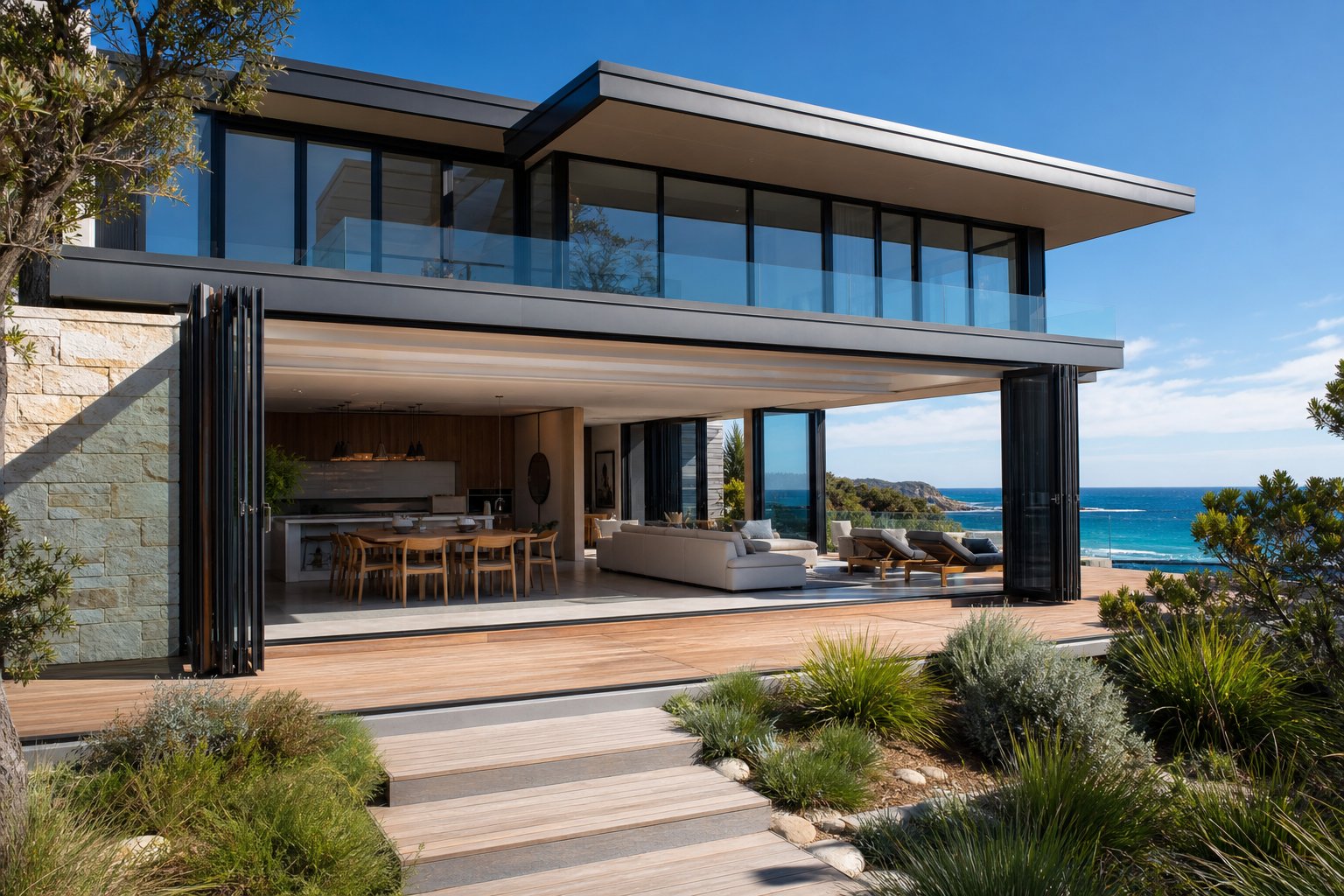
For Australian residential and commercial projects, working with a provider who understands these local demands — and who offers systems purpose-built to meet them — eliminates many of the import risks, compliance translation hurdles, and service gaps discussed throughout this article. MEICHEN’s aluminium window range offers project-ready systems with custom sizing, multiple window types, and performance specifications suited to Australian conditions. From architects designing contemporary double-storey homes with expansive glazing to builders delivering multi-unit developments on fixed timelines, their systems provide a practical starting point for moving from research to specification — with local project support, Australian compliance documentation, and service access that an overseas-only supplier simply cannot match.
The European engineering principles explored in this article — thermally broken multi-chamber profiles, precision hardware, high-performance glazing, and durable architectural finishes — represent the benchmark. Applying those principles through a partner who speaks your regulatory language, understands your climate, and stands behind the product locally is how the benchmark becomes a building.
Frequently Asked Questions About European Aluminium Windows
1. What makes European aluminium windows different from standard Australian aluminium windows?
European aluminium windows use thermally broken multi-chamber profiles with PA66 glass-fibre-reinforced polyamide strips separating the interior and exterior aluminium shells. This thermal break technology, combined with tilt-and-turn hardware offering multi-point locking at four to eight or more points, delivers significantly lower Uw values (often 0.7 to 1.4 W/m²·K) compared to standard non-thermally-broken Australian aluminium frames. European systems also accommodate triple glazing with warm-edge spacers, argon or krypton gas fills, and multiple low-E coating positions — features that are upgrades rather than defaults in many domestic product ranges. For Australian projects seeking similar high-performance aluminium window systems with local compliance documentation and support, providers like MEICHEN offer project-ready aluminium windows (https://meichenwindows.com.au/aluminium-windows/) engineered to suit Australian climate zones and NCC requirements.
2. Can European aluminium windows comply with Australian building codes and AS 2047?
European aluminium windows are tested under EN 12207 (air permeability), EN 12208 (water tightness), and EN 12210 (wind resistance), which do not directly convert to AS 2047 performance ratings used in Australia. The pressure sequences, test durations, and acceptance criteria differ between the two frameworks, so European test documentation alone cannot be submitted as proof of AS 2047 compliance. In practice, imported European windows typically require supplementary testing at an accredited Australian laboratory under AS/NZS 4284 procedures, or the manufacturer must supply test data produced specifically to AS 2047 methodology. Similarly, European Uw values calculated under EN ISO 10077 may differ from WERS-equivalent figures by up to 18 per cent, so published European thermal data cannot be directly entered into NatHERS modelling tools. Always confirm AS 2047 compliance documentation before purchasing.
3. How much do European aluminium windows cost in Australia?
European aluminium windows carry a significant premium over domestically manufactured alternatives. Factory-gate prices for a standard 900 mm x 1500 mm tilt-and-turn unit start from roughly $1,300 to $1,700 AUD before freight, customs duties (typically 5 per cent under applicable free trade agreements), GST at 10 per cent, and local delivery are added. The final landed cost depends on profile system tier (Schüco commands a higher premium than Aluprof, for example), glazing specification (triple glazing with krypton fill adds 25 to 40 per cent over double glazing), hardware package, finish type, opening size, and order volume. Polish-fabricated windows using identical German or Belgian profile systems can cost 30 to 50 per cent less at the factory gate than German-fabricated equivalents. For a full house, supply costs alone can reach double or triple the price of standard Australian-made aluminium frames.
4. What are the main drawbacks of importing European aluminium windows to Australia?
The most significant practical limitations include extended lead times (twelve to twenty weeks from order confirmation to site delivery), higher upfront costs compared to domestic alternatives, and service and repair challenges once installed. Finding Australian technicians experienced with European tilt-and-turn hardware — espagnolette drives, corner transmissions, and concealed hinges from brands like Roto, Siegenia, or MACO — is difficult outside major metropolitan areas. Replacement parts such as gaskets, handles, and locking mechanisms must often be sourced from European distributors, which can take weeks. Warranty claims run through international channels, adding complexity. Metric sizing, while compatible with Australian construction in principle, still requires precise measurement since European fabricators work to tight tolerances and there is no local stock for quick replacements if measurements are incorrect.
5. How do you maintain European aluminium windows for long-term performance?
Annual maintenance extends the functional lifespan of European aluminium windows to 60 years or more. Key tasks include washing powder-coated or anodised frames every three to six months with mild, non-abrasive soap and water (more frequently in coastal locations), lubricating all multi-point locking cams, corner drives, and hinge pivot points with non-acidic light machine oil once a year, and adjusting concealed hinges with a hex key to correct any seasonal sash alignment shifts. EPDM perimeter gaskets typically last 15 to 25 years before requiring replacement — they pull from their channels and re-seat without dismantling the frame. Drainage slots in the outer frame should be cleared annually to prevent water buildup in the glazing rebate. For readers exploring aluminium window systems designed with Australian maintenance and climate conditions in mind, MEICHEN’s aluminium window range (https://meichenwindows.com.au/aluminium-windows/) provides project-ready options with local support for ongoing service needs.
More Window & Door Guides