What Window and Door Manufacturers Actually Do
When you search for window and door manufacturers near me, you probably see a long list of brand names, product catalogs, and dealer pages. What you almost never find is a straightforward explanation of what these companies actually do behind the scenes. That gap matters, because the manufacturing process directly shapes the quality, price, and lead time of every product you consider.
Window and door manufacturers are companies that design, fabricate, assemble, and quality-test fenestration products from raw materials such as aluminum, vinyl, wood, fiberglass, or composite, transforming them into finished, installation-ready windows and doors distributed through dealers, suppliers, or direct sales channels.
Sounds simple enough, right? The reality involves far more precision than most buyers realize.
From Raw Materials to Finished Products
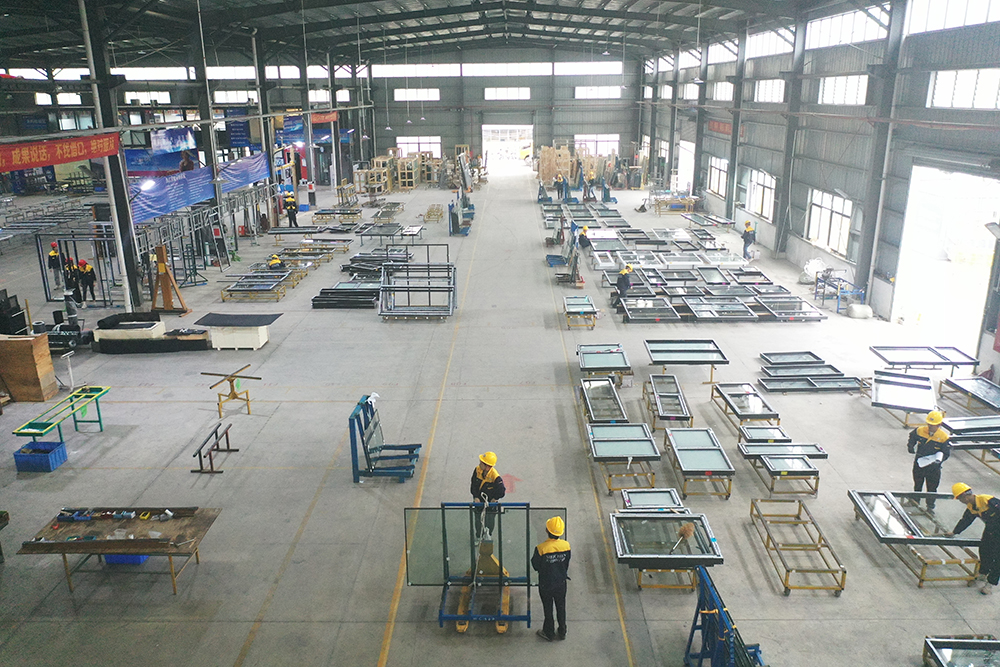
Every window or door starts as a raw material. For aluminum window and door manufacturers, that means heating aluminum billets and forcing them through shaped dies in a process called extrusion, producing the precise profiles that form each frame. Vinyl manufacturers melt PVC granules into extruded profiles, while wood-based operations begin with selecting and seasoning quality timber.
From there, the core stages follow a consistent sequence across the industry:
- Design and specification using CAD software to lock in dimensions, materials, and glazing types
- Profile cutting and machining, where frame components are cut to tolerances of fractions of a millimeter
- Frame assembly through welding, mechanical fastening, or crimping, depending on the material
- Surface treatment like powder coating, anodizing, or staining for durability and aesthetics
- Glazing installation, where glass panes are sealed into frames with gaskets and sealants to block air and water infiltration
- Hardware fitting, including locks, hinges, and handles
- Quality control checks for dimensional accuracy, sealing performance, and visual consistency
Whether you are sourcing standard manufactured home windows and doors or specifying a custom commercial system, every unit passes through these stages. The difference between a reliable product and a problematic one often comes down to how rigorously each step is executed.
Why Understanding Manufacturers Matters for Your Project
Knowing how manufacturing works gives you a practical edge. You can assess quality more accurately when you understand that a properly assembled frame requires precision cutting and verified sealing, not just a nice finish. You can set realistic lead-time expectations when you appreciate that custom orders involve design, extrusion, assembly, and testing before anything ships. And you can have more informed conversations with suppliers when you understand the difference between a company that actually produces products and one that simply resells them.
This is especially relevant when comparing aluminum window and door manufacturers, where thermal break technology and surface treatment quality vary significantly between producers. A company like United Window and Door Manufacturing Inc, for example, operates its own production facilities, giving it direct control over fabrication standards. That level of vertical integration is something worth asking about, regardless of which brand you evaluate.
The real question, though, is not just how these products are made. It is which type of manufacturer is the right fit for your specific project, and that depends on factors most buyers never think to compare.
Types of Window and Door Manufacturers Explained
Not all window and door manufacturers operate the same way. Some run massive production lines across multiple states. Others focus on a single region, building products tuned to local weather and building codes. A few build entirely to specification, one project at a time. Understanding these categories helps you match the right producer to your project instead of defaulting to whichever brand has the biggest ad budget.
National Brands vs. Regional Manufacturers
National brands like Andersen, Marvin, and Milgard operate large-scale production facilities, distribute through wide dealer networks, and offer standardized product lines designed to serve homes across many climate zones. You will find them in big-box retailers, authorized dealer showrooms, and contractor supply chains nationwide. Their strength is consistency and availability. If you want a well-documented product with established warranty infrastructure, these brands deliver.
Regional manufacturers take a different approach. They typically serve a defined geographic area and build products optimized for local conditions, whether that means hurricane-rated glazing along the Gulf Coast or triple-pane systems in northern climates. Because they operate closer to their customers, regional producers often provide faster turnaround, more flexible sizing, and direct relationships with the people actually manufacturing windows and doors for your project. As Energy Swing Windows notes, local companies frequently offer more hands-on service, quicker response times, and stronger familiarity with common local home styles and structural quirks.
Custom Fabricators and OEM Suppliers
Imagine you are designing a home with floor-to-ceiling curved glass walls or restoring a heritage building with non-standard frame dimensions. Standard catalogs will not help. Custom fabricators exist for exactly these situations, building windows and doors to precise architectural specifications that off-the-shelf products cannot meet. Lead times are longer and costs are higher, but the result is a product engineered for your exact requirements.
OEM suppliers occupy a less visible but equally important role. These are factories that manufacture finished products or components, such as frames, hardware, or sealed glass units, for other brands to sell under their own name. Many recognizable labels do not actually produce everything in-house. OEM factories often operate at scale with optimized production lines, and experienced OEM producers now comply with international standards like ASTM, NFRC, and AS2047, offering customization, dedicated project scheduling, and quality protocols that rival branded manufacturers. Advanced window and door manufacturing software further streamlines these operations, improving order accuracy from design through production.
Which Type Fits Your Needs
The right choice depends on your project scope, budget, and how much flexibility you need. Here is a practical comparison:
| Manufacturer Type | Product Range | Customization Level | Price Tier | Typical Lead Time | Geographic Reach |
|---|---|---|---|---|---|
| National Brand | Broad, standardized collections across multiple materials | Moderate, within defined series options | Mid to premium | Moderate, dependent on dealer stock and series | Nationwide or multi-region |
| Regional Manufacturer | Focused, often climate-specific product lines | High, with flexible sizing and local adaptation | Mid-range | Often faster due to proximity | State or multi-state area |
| Custom Fabricator | Built to specification per project | Full custom | Premium to high-end | Longer, driven by design complexity | Varies, often project-based |
| OEM Supplier | Wide, manufactured for other brands or direct buyers | High, especially for volume orders | Lower unit cost at scale | Production-scheduled, plus shipping | Global or regional depending on factory |
Budget-conscious standard projects tend to align well with national brands or regional producers. Climate-specific or code-specific needs often favor regional specialists who understand local requirements intimately. Architecturally unique builds almost always require a custom fabricator. And for developers managing large or repeat orders, OEM sourcing can deliver significant cost and flexibility advantages.
Knowing which category a company falls into is useful, but it only tells part of the story. The path a product takes from factory floor to your job site involves several more players, and confusing their roles is one of the most common mistakes buyers make.
The Supply Chain Behind Every Window and Door
Here is a scenario that plays out constantly: a homeowner searches for door and window manufacturers near me, clicks on a result, and assumes the company they are talking to actually built the product. In reality, they might be speaking with a supplier, a distributor, or a dealer, each of which plays a very different role. Confusing these roles can cost you money, limit your options, and create warranty headaches down the road.
Manufacturer vs. Supplier vs. Distributor
Each player in the supply chain serves a distinct function. Manufacturers of windows and doors design and produce the actual product in their own facilities, controlling materials, fabrication, and quality testing. Suppliers source products from one or more manufacturers and sell them onward, sometimes under their own branding. Distributors handle regional warehousing and logistics, moving inventory from factories to local markets. Dealers are the consumer-facing businesses, operating showrooms, managing consultations, and often coordinating installation.
The typical path a product follows looks like this:
- Manufacturer produces the window or door
- Distributor warehouses and ships to regional markets
- Dealer sells to the end buyer and arranges installation
- Installer completes the on-site fitting
Not every transaction follows all four steps. Some manufacturers sell direct. Some dealers buy straight from the factory. But the full chain is common, and according to Principia Consulting, window distribution is one of the more complex multi-channel networks in building products, with retailers, lumberyards, big-box stores, and factory-owned outlets all serving as paths to market.
Why the Distinction Affects Your Purchase
The entity you buy from shapes your entire experience. Purchasing directly from a manufacturer often means lower pricing since you skip the markups that retailers and middlemen add, which can range from 20% to 50% on the same product. You also gain access to wider customization options, because the factory can build to your specifications rather than limiting you to whatever a dealer has in stock or in catalog.
Warranty coverage is another area where the distinction matters. A manufacturer’s warranty typically covers defects in materials and workmanship, but as Newman Windows points out, that coverage may exclude labor, reduce over time, or become difficult to access if the dealer who sold you the product closes or loses its certification. When you buy through a dealer, your warranty claim often has to travel back through the same chain, and a broken link anywhere along the way creates delays or denials.
Geographic availability adds another layer. If you are searching for window and door manufacturers nyc, for example, you may find that certain brands restrict availability by ZIP code, routing you to specific authorized dealers based on your location. Milgard, for instance, uses regional availability filters that limit which products and dealers you can access depending on where you live. This means the supply chain path is not always your choice. It is sometimes dictated by the brand’s distribution strategy.
So before you commit, ask a simple question: who actually made this product, and how many hands did it pass through to reach me? The answer tells you a lot about the price you are paying, the warranty backing your purchase, and how much flexibility you really have. Knowing your position in the chain is the first step. The next is understanding what the product itself is made of, and how different materials stack up against each other.
Window and Door Materials Compared
Material choice is where theory meets your actual budget, climate, and design goals. Every window and door manufacturer organizes their catalog by material type, but very few help you understand the real trade-offs between them. That leaves buyers clicking through product pages without a clear framework for deciding. Let’s fix that.
Aluminium and Aluminum Frame Systems
Aluminium has been a staple in fenestration since the mid-20th century, and for good reason. It delivers the slimmest sightlines of any frame material, meaning more glass and more natural light per square foot of opening. It is structurally strong enough to support large spans without bulky frames, naturally corrosion-resistant, and one of the most recyclable building materials on the planet. These qualities make it equally at home in residential renovations and large-scale commercial projects.
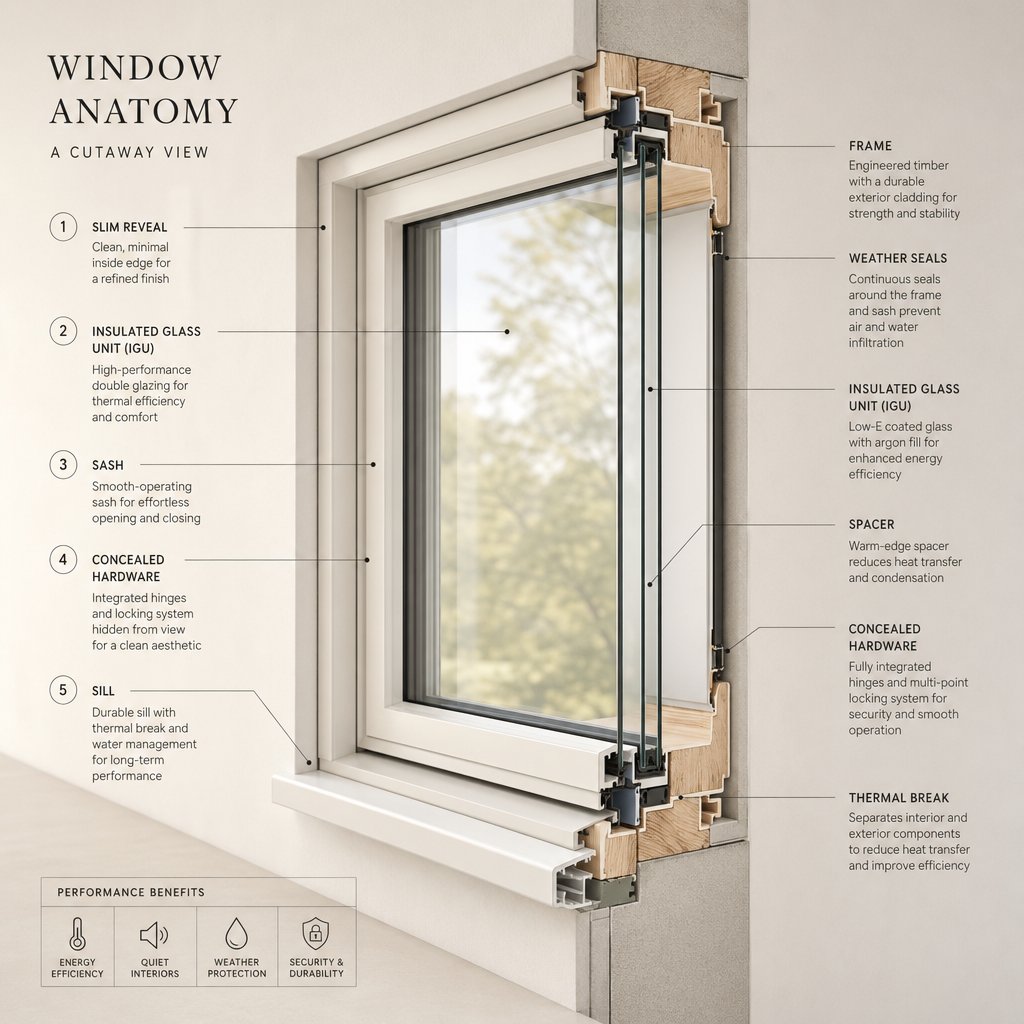
The old knock against aluminium was thermal conductivity. Without insulation, aluminium frames can achieve U-factors exceeding 1.0, which is poor by any standard. But that criticism belongs to a previous generation of products. Aluminium windows and doors manufacturers have invested heavily in thermal break technology, inserting insulating polyamide strips between the inner and outer frame sections to block heat transfer and reduce condensation. Modern thermally broken aluminium systems now achieve U-factors in the 0.40 to 0.60 range, and premium configurations push even lower. The result is a frame that retains aluminium’s structural and aesthetic advantages while closing much of the energy efficiency gap.
For a practical example of how far the material has come, MEICHEN’s aluminium windows collection showcases Australian-standard-compliant systems with energy-efficient thermal performance across multiple configurations. It is a good illustration of how today’s aluminum windows and doors manufacturers are engineering products that directly address legacy thermal concerns while maintaining the slim profiles and durability aluminium is known for.
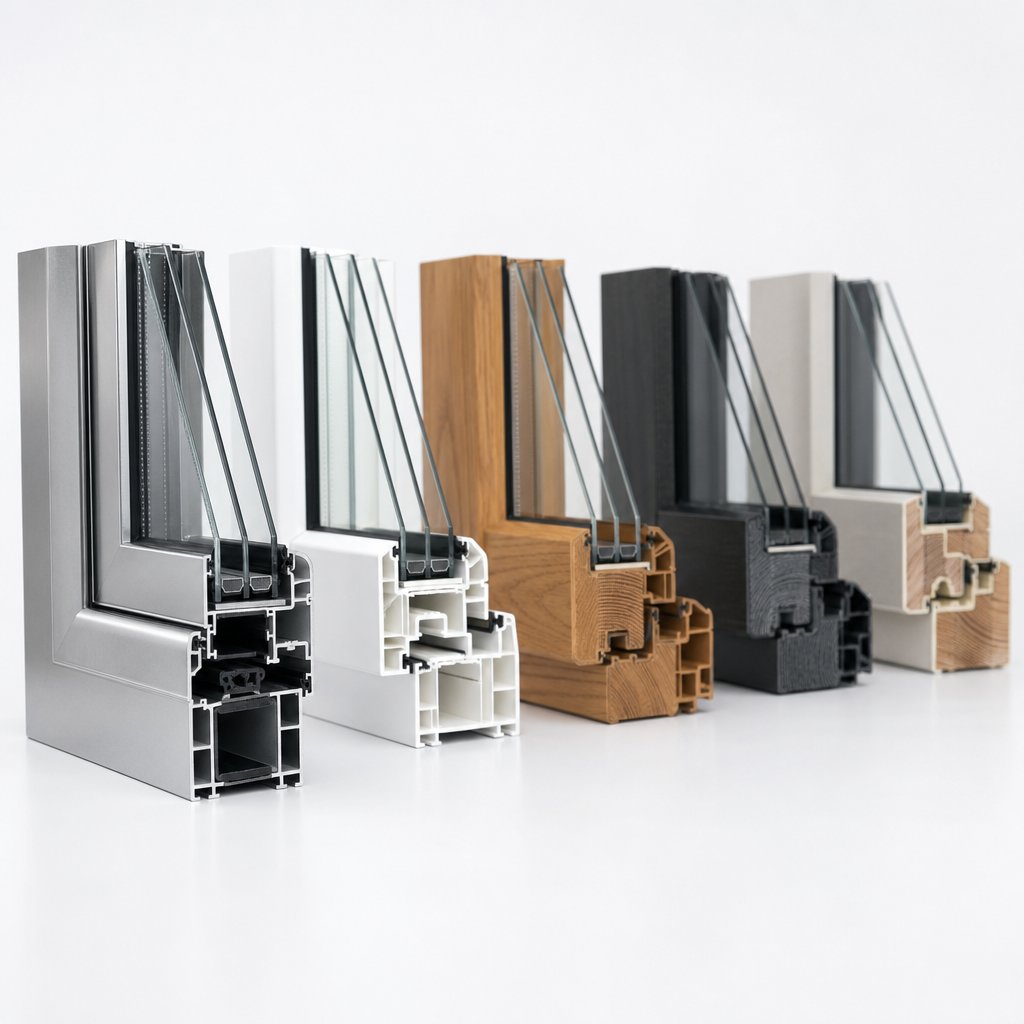
Vinyl, Wood, Fiberglass, and Composite Options
Vinyl is the value leader. Made from extruded PVC, vinyl frames offer solid insulation with U-factors between 0.20 and 0.40, require virtually no maintenance, and resist moisture and rot. The trade-off? Limited color options, a less refined appearance, and potential warping in extreme heat, especially with darker finishes.
Wood remains the go-to for aesthetics and natural insulation. It can be painted or stained to match any design, and well-maintained wood frames last 50 to 100 years. The catch is that “well-maintained” means repainting or re-staining every three to seven years, plus vigilance against rot, moisture damage, and pests. It is a high-reward, high-effort material.
Fiberglass is the performance-first option. Glass fibers embedded in resin create a frame that expands and contracts at nearly the same rate as the glass itself, reducing seal stress over time. U-factors typically range from 0.20 to 0.35, durability claims exceed 40 years, and the material can be painted if you want to change the look. The downside is cost. Fiberglass windows generally run $500 to $1,500 per unit, and fewer windows and doors manufacturers offer them compared to vinyl or aluminium.
Composite frames blend materials like wood fibers with synthetic polymers, aiming to combine the strengths of multiple options. Performance varies significantly by manufacturer and blend, with U-factors landing between 0.25 and 0.40. They offer a middle ground on price and maintenance, but “composite” is not a standardized term, so you need to dig into the specific formulation before assuming quality.
Here is how all five materials stack up side by side:
| Material | Durability | Maintenance | Energy Efficiency (U-Factor) | Cost Tier | Best Use Cases | Recyclability |
|---|---|---|---|---|---|---|
| Aluminium (thermally broken) | Excellent, 30-50 years | Very low, occasional cleaning | 0.40-0.60 | Mid-range | Modern homes, commercial, large openings, slim-profile designs | High, infinitely recyclable |
| Vinyl | Good, 20-40 years | Very low, no painting needed | 0.20-0.40 | Low | Budget-conscious residential, moderate climates | Limited, recycling infrastructure varies |
| Wood | Good to excellent, 50-100+ years with care | High, repaint/re-stain every 3-7 years | 0.25-0.35 | High | Heritage homes, upscale residential, design-driven projects | Moderate, biodegradable but not easily reprocessed |
| Fiberglass | Excellent, 40+ years | Very low, paintable if desired | 0.20-0.35 | Premium | Extreme climates, performance-first buyers | Low, difficult to recycle |
| Composite | Good, 20-40 years | Low to moderate | 0.25-0.40 | Mid to high | Balanced performance needs, varied residential applications | Low to moderate, depends on blend |
A few things stand out. Vinyl wins on upfront cost and low maintenance, but aluminium offers a stronger combination of structural performance, design flexibility, and environmental credentials. Wood delivers unmatched character at the price of ongoing upkeep. Fiberglass leads on raw thermal numbers but commands a premium. Composite sits in the middle, with quality that depends heavily on who made it and what went into the mix.
The right material is not universal. It depends on your climate, your project type, and how much long-term maintenance you are willing to take on. But material specs alone do not tell the full story. The certifications and quality standards behind those specs are what separate a reliable product from a marketing claim, and that is where most buyers stop looking too soon.
Certifications and Quality Standards That Matter
A product spec sheet can list impressive numbers all day long. But how do you know those numbers are real? That is where certifications come in. They are not marketing badges. They are proof that an independent third party tested the product and confirmed it performs as claimed. The problem is that most buyers have no idea what these certifications actually verify, or how to check them. Let’s break it down.
Key Certifications and What They Mean
Three organizations dominate the certification landscape in North America, and each focuses on a different dimension of performance.
WDMA (Window and Door Manufacturers Association) develops industry standards and offers Hallmark Certification, which verifies that a product meets published performance benchmarks for structural integrity, water resistance, and durability. Think of it as a seal confirming the product was built to the standard it claims, not just designed to it.
NFRC (National Fenestration Rating Council) focuses specifically on energy performance. When you see an NFRC label, it means the product’s U-factor, Solar Heat Gain Coefficient, visible transmittance, and air leakage were tested in accredited labs using standardized methods. These are the numbers that determine whether a window qualifies for ENERGY STAR, and they are the most reliable way to compare energy performance across doors and windows manufacturers.
AAMA (American Architectural Manufacturers Association) tests for real-world durability: air infiltration, water penetration, wind load resistance, and forced entry resistance. AAMA certification grades products into performance classes ranging from R (residential) at 15 psf design pressure up to AW (architectural) at 40 psf, so you can match the rating to your building’s exposure and use case. Impact windows and doors manufacturers, for example, must meet especially rigorous structural and forced entry thresholds under AAMA protocols to certify products for hurricane-prone regions.
Outside North America, regional equivalents apply. In Australia, AS2047 is the mandatory certification for all external windows and glazed doors, evaluating wind pressure resistance, water penetration, air infiltration, and operating force as a complete system. AS1288 governs glass safety, specifying minimum thickness, edge support, and glass type based on location and exposure. Without AS2047 compliance, no window system can legally be installed in Australian residential or commercial projects. For aluminum door and window manufacturing destined for the Australian market, meeting these standards is not optional, it is a legal requirement.
How to Verify a Manufacturer’s Quality Claims
Certifications only matter if they are real and current. Here is a practical checklist for verifying what any window and doors manufacturers claim about their products:
- Look for third-party certification marks printed directly on the product label or frame, not just mentioned in brochures
- Verify certification status through official databases such as the NFRC Certified Products Directory or AAMA’s verification program
- Ask for actual test reports, not summaries, showing the specific product configuration you are considering
- Check whether the manufacturer holds current membership in industry associations like WDMA or AAMA, which signals ongoing commitment to standards
- Review warranty terms carefully, as longer coverage periods with fewer exclusions typically reflect a manufacturer’s confidence in their own product
- Confirm that certifications apply to the exact model and configuration you are purchasing, since a certified product line does not mean every variation within it has been tested
A manufacturer that publishes transparent performance data, holds verifiable third-party certifications, and backs products with clear warranty language is telling you something important: they are willing to be held accountable. One that relies on vague claims, internal testing, or fine-print exclusions is telling you something too.
Certifications confirm that a product meets minimum performance and safety thresholds. They are the baseline, not the ceiling. The real differentiator for most projects is energy performance, and that requires understanding a different set of numbers entirely, ones that most product labels display but very few buyers know how to read.
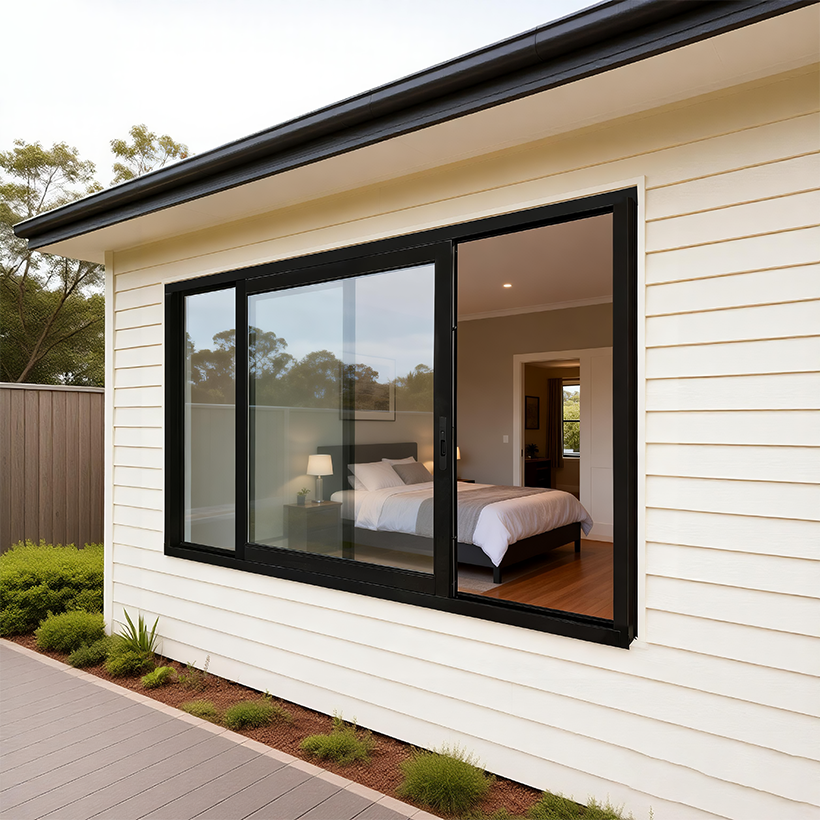
Energy Efficiency Ratings Every Buyer Should Understand
You have seen the stickers on showroom glass. Rows of numbers, acronyms like U-factor and SHGC, maybe an ENERGY STAR logo. Most buyers glance at them and move on, assuming that if the label is there, the product must be fine. That assumption can cost you hundreds of dollars a year in energy bills, because those numbers tell you exactly how a window will perform in your specific climate, if you know how to read them.
Every reputable windows and doors manufacturer publishes these ratings. The challenge is that very few explain what they mean or how they interact. Let’s change that.
Understanding U-Factor and SHGC Ratings
Two metrics do the heavy lifting when it comes to energy performance, and they measure very different things.
U-factor (sometimes called U-value) measures how well a window resists heat transfer. It tells you how much warmth escapes through the glass and frame in winter, and how much heat pushes through in summer. The scale runs from roughly 0.14 to 1.20, and lower is better. A window with a U-factor of 0.25 insulates far more effectively than one rated at 0.50. The U.S. Department of Energy considers a U-factor of 0.30 or lower the benchmark for energy-efficient windows, and that threshold applies regardless of where you live.
SHGC, or Solar Heat Gain Coefficient, measures something entirely different: the fraction of solar radiation that passes through the window and enters your home as heat. Values range from 0 to 1. A window with an SHGC of 0.25 blocks 75% of solar heat. One rated at 0.60 lets more than half of it through.
Here is where it gets interesting. Unlike U-factor, there is no single “good” SHGC number. The ideal value depends on your climate. In hot, sunny regions, you want a low SHGC to keep cooling costs down. In cold climates, a higher SHGC on south-facing windows can actually help by letting free solar heat warm your home during winter months. As Pinnacle Windows notes, pairing a low SHGC with Low-E (low emissivity) glass coatings further reduces heat gain while preserving natural daylight indoors.
These two ratings work as a team. A window with a great U-factor but a poorly matched SHGC for your climate zone will underperform. Imagine installing a high-SHGC window in Phoenix: your insulation might be solid, but your air conditioning will fight solar heat gain all summer. Flip that scenario to Minneapolis, and a very low SHGC window blocks the passive solar warmth that could reduce your heating load. The numbers only make sense when you read them together, in context.
ENERGY STAR and Climate Zone Considerations
ENERGY STAR is a government-backed certification program that identifies products meeting specific energy efficiency thresholds. For windows and doors, those thresholds are defined by U-factor and SHGC requirements, but here is the detail most people miss: the requirements change depending on where you live.
The ENERGY STAR program divides the United States into four climate zones (Northern, North-Central, South-Central, and Southern), each with its own performance criteria. A window certified for the Northern zone prioritizes low U-factor to minimize heat loss through harsh winters. A window certified for the Southern zone emphasizes low SHGC to control solar heat gain in year-round warmth. A product that earns the label in one zone may not qualify in another.
This means a window rated ENERGY STAR in Miami is not necessarily ENERGY STAR in Chicago. The label is climate-specific, and aluminium doors and windows manufacturers, vinyl producers, and fiberglass specialists all have to engineer different configurations to meet different zone requirements.
Here is how the ideal performance ranges shift across climate types:
| Climate Zone | U-Factor Target | SHGC Target | Primary Goal | What to Prioritize |
|---|---|---|---|---|
| Cold (Northern) | 0.27 or lower | Any (higher on south-facing walls can help) | Minimize heat loss | Lowest U-factor you can afford; consider higher SHGC on south-facing windows for passive solar gain |
| Mixed (North-Central / South-Central) | 0.30 or lower | 0.25 – 0.40 | Balance insulation and solar control | Strong U-factor with moderate SHGC; orientation-specific glazing if budget allows |
| Hot (Southern) | 0.30 or lower | 0.25 or lower | Reduce solar heat gain | Low SHGC is critical; U-factor still matters for reducing cooling load |
You will notice that U-factor stays important everywhere. Even in hot climates, a low U-factor reduces the amount of outdoor heat that conducts through the frame and glass, easing the burden on your cooling system. SHGC is where the real variation happens, and it is the metric most buyers overlook.
One more thing worth knowing: not every high-performance window carries the ENERGY STAR label. Some aluminium window and door manufacturers and other producers design products that meet or exceed ENERGY STAR thresholds but skip the certification process to avoid testing and labeling fees that would be passed on to buyers. That does not make the product inferior. It means you should look at the actual NFRC-rated numbers on the label rather than relying on the presence or absence of a logo alone.
Replacing old single-pane windows with ENERGY STAR certified models can lower household energy bills by an average of up to 13 percent on heating and cooling costs nationwide. That is a meaningful return, but only if the product you choose is rated for your specific climate zone and installed correctly.
Energy ratings give you an objective way to compare what any aluminum frame windows and doors manufacturer claims about performance. They cut through marketing language and put every product on the same scale. Treat them as a primary filter, not an afterthought, when narrowing your shortlist. The numbers are already printed on the label. You just need to know which ones matter most for where you live.
Of course, knowing how to read a label is only part of the equation. Turning that knowledge into a confident purchasing decision requires a broader evaluation framework, one that weighs certifications, energy data, warranty terms, and manufacturer credibility together.
How to Evaluate and Choose the Right Manufacturer
You know how to read energy labels, you understand certifications, and you can tell the difference between a manufacturer and a dealer. Great. But when you are staring at a shortlist of three or four companies, how do you actually decide? Most buyers default to price or brand recognition. Neither is a reliable filter on its own. What you need is a structured way to compare, one that weighs the factors that actually predict long-term satisfaction.
Essential Criteria for Comparing Manufacturers
Whether you are evaluating the largest window and door manufacturers or a regional specialist down the road, the same core dimensions apply. Rank them in this order, because each builds on the one before it:
- Certification status: Does the manufacturer hold current third-party certifications (NFRC, AAMA, WDMA, or regional equivalents like AS2047)? This is your baseline. No verifiable certification, no shortlist.
- Published energy ratings: Are U-factor and SHGC values available for the specific product configurations you need? Manufacturers of aluminium doors and windows, vinyl systems, and fiberglass lines should all publish these openly.
- Warranty terms and coverage scope: Look beyond the headline number. A “lifetime warranty” that excludes glass, hardware, and labor after year two is not the same as a 20-year warranty covering all components with transferable coverage.
- Material options available: Can the manufacturer supply the material type your project requires? Some producers specialize in a single material. Others, including manufacturers of aluminium windows and doors alongside vinyl or composite lines, offer broader catalogs that simplify sourcing.
- Customization capabilities: Can they accommodate non-standard sizes, finishes, or configurations? This matters most for renovation and architectural projects where off-the-shelf dimensions rarely fit.
- Product range breadth: A manufacturer offering casement, awning, sliding, bi-fold, and fixed options under one roof reduces the complexity of multi-window projects.
- Geographic availability and shipping constraints: Even the best product is impractical if lead times stretch to months or freight costs erode your budget. Proximity matters, especially for large or fragile orders.
Work through this list for every company on your shortlist. You will find that some look strong on paper but fall apart at step three or five. That is exactly the point.
Red Flags and Green Lights
Beyond the checklist, certain signals tell you a lot about how a company operates before you ever place an order. Here is what to watch for.
Green lights:
- Transparent, publicly accessible performance data for every product line
- Long warranty periods with clearly written terms and minimal exclusions
- Active membership in industry associations like WDMA or AAMA
- Established manufacturing history with traceable production facilities
- Willingness to provide full test reports, not just summary brochures
- Responsive technical support that can answer specification questions directly
Red flags:
- No third-party certifications, or certifications that cannot be verified in official databases
- Vague warranty language with broad exclusion clauses buried in fine print
- No published test data or energy ratings for the specific configurations being sold
- Reluctance to identify the actual manufacturing facility or source of components
- Pricing that seems dramatically lower than comparable products without a clear explanation
- No industry association affiliations or recognizable quality marks
A company checking every green-light box is not automatically perfect for your project. And a single red flag does not necessarily disqualify a producer, especially among manufacturers of steel doors and windows or niche fabricators where certification pathways differ. Context matters. But patterns matter more. Two or three red flags together should give you serious pause.
The best manufacturer for any given project sits at the intersection of your requirements, your budget, and what is realistically available in your area. There is no universal winner. A national brand that works perfectly for a standard new build in suburban Texas might be the wrong choice for a heritage renovation in Sydney or a high-rise in Manhattan. The framework above helps you find your best fit rather than chasing someone else’s.
With a clear method for evaluating who makes the product, the next step is matching that manufacturer to the specific type of project you are planning, because residential renovations, new builds, and commercial developments each demand different things from a producer.
Matching the Right Manufacturer to Your Project
A manufacturer that scores well on every evaluation criterion can still be the wrong choice if their strengths do not align with what your project actually demands. A single-home renovation has fundamentally different requirements than a 200-unit apartment complex. The type of build you are planning should drive your shortlist, not the other way around.
Residential Projects and Renovation Needs
If you are a homeowner replacing aging windows or a renovator updating a property for resale, your priorities look something like this: code-compliant, energy-efficient systems backed by strong warranties, available in enough styles and configurations to match existing architecture without forcing a visual compromise.
For new residential construction, the calculus shifts slightly. You have more flexibility on sizing and style since there is no existing aesthetic to match, but you need a manufacturer that can deliver consistent quality across a full-home order and coordinate with your builder’s timeline. As Andersen notes, new construction projects typically call for flanged full-frame windows designed for installation before siding and trim, while replacement projects may use flangeless or insert options depending on the condition of existing frames. Your manufacturer needs to offer the right installation type for your scenario, not just the right look.
For aluminium-focused residential projects, manufacturers specializing in thermally broken systems deliver the slim profiles and structural performance that suit both modern builds and heritage renovations. The frames stay narrow, the glass area stays large, and the thermal break addresses energy concerns that older aluminium products could not. MEICHEN’s aluminium windows collection is a practical example of this approach: Australian-standard-compliant systems across multiple configurations, serving homeowners, renovators, builders, and developers from a single product hub. That kind of range matters when your project needs casement windows in the kitchen, awning windows in the bathroom, and fixed panels in the living room, all from one source.
Commercial and Multi-Unit Development
Builders and developers working on commercial fitouts or multi-unit residential projects face a different set of pressures. Volume consistency is non-negotiable. When you are ordering hundreds of identical units, even small variations in frame dimension or finish quality create installation headaches that multiply across every floor. You need windows and door manufacturers who run production lines capable of maintaining tight tolerances at scale.
Commercial-grade performance specifications also come into play. Higher wind load ratings, enhanced acoustic insulation, fire-rated glazing options, and compliance with commercial building codes all narrow the field. Aluminium door and window manufacturing dominates this segment because the material’s structural strength supports larger spans and higher pressure ratings without the frame bulk that other materials require.
Lead time predictability matters just as much as product quality in commercial work. A two-week delay on a residential order is an inconvenience. A two-week delay on a multi-story development can cascade into penalties, idle crews, and blown budgets. The best commercial-focused producers offer dedicated project scheduling, staged deliveries, and direct communication with production teams. Globally, this is also why many developers source from aluminum windows and doors manufacturers in India and China, where high-volume production capacity and competitive pricing can serve large-scale international projects, though buyers should verify that imports meet local certification requirements before committing.
Here is how different project types map to manufacturer selection:
| Project Type | Recommended Manufacturer Type | Key Selection Criteria | Typical Material Preference |
|---|---|---|---|
| Single home renovation | Regional specialist or national brand with replacement options | Style range, warranty coverage, replacement-specific product availability | Aluminium (thermally broken), vinyl, or wood depending on existing aesthetic |
| New residential build | National brand or regional manufacturer with new construction lines | Full-home order consistency, builder coordination, energy ratings for climate zone | Aluminium, fiberglass, or composite for modern builds; wood for traditional designs |
| Multi-unit development | Volume-capable manufacturer or OEM supplier with commercial capacity | Production consistency at scale, staged delivery capability, commercial-grade ratings | Aluminium for structural performance and slim profiles across large openings |
| Commercial fitout | Commercial-grade manufacturer or steel doors and windows manufacturers for specialty applications | Wind load and acoustic ratings, fire compliance, project scheduling reliability | Aluminium or steel for maximum structural integrity and code compliance |
You will notice aluminium appears across every row. That versatility is a big part of why it dominates commercial and multi-unit work while remaining a strong contender in residential projects. It is not the only answer, but it is the most consistently viable one across project types.
The right match is not about finding the best manufacturer in the abstract. It is about finding the one whose production capabilities, product range, and service model align with the specific demands of what you are building. A renovation specialist who excels at one-off custom orders may struggle with a 50-unit apartment block. A high-volume producer optimized for commercial runs may not offer the style flexibility a heritage home requires.
Choosing well today also means thinking about where the industry is heading tomorrow. The manufacturers investing in sustainable materials, smarter production technology, and higher performance standards are the ones most likely to support your project long after installation day.
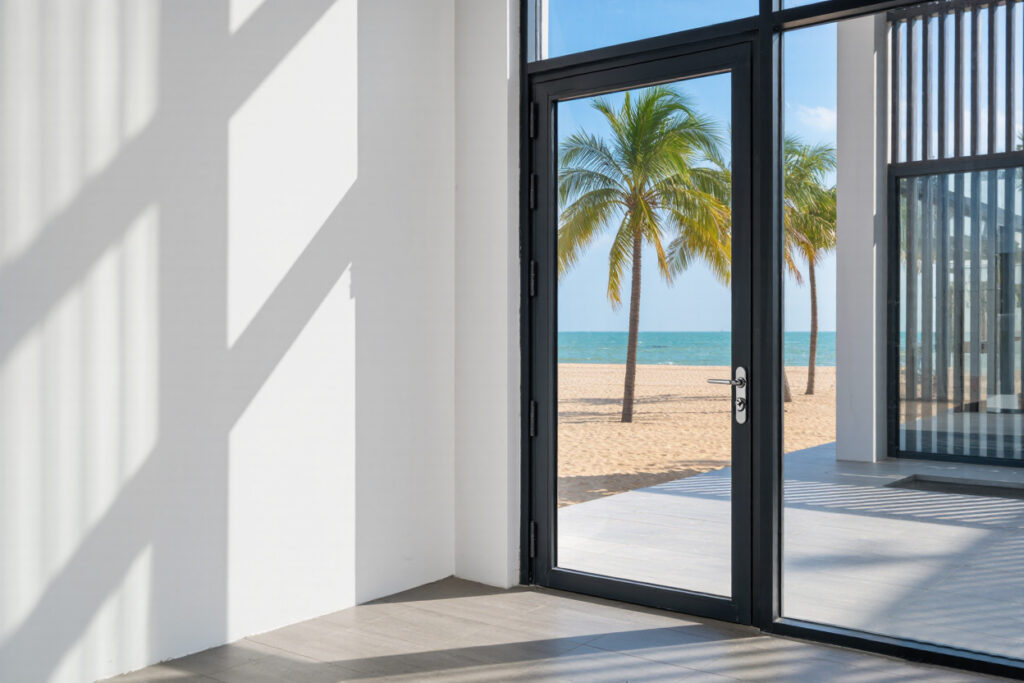
Industry Trends Shaping Modern Window and Door Manufacturing
The manufacturers worth partnering with are not just building good products today. They are investing in the processes, materials, and technologies that will define quality five and ten years from now. Window and door manufacturing is evolving fast, and the direction of that evolution tells you a lot about which producers are built to last and which are coasting on legacy.
Sustainability and Recycled Materials
Sustainability has moved from marketing talking point to operational priority. Recycled aluminium is leading that shift. Because aluminium can be recycled infinitely without losing structural integrity, every aluminium windows and doors manufacturer with a forward-looking supply chain is increasing recycled content in their extrusions. The energy savings are significant too: producing recycled aluminium uses roughly 95% less energy than smelting raw ore.
The push extends beyond raw materials. Low-VOC powder coatings and finishes are replacing solvent-based alternatives. Environmental Product Declarations, or EPDs, are becoming a competitive necessity as architects and government programs embed sustainability scoring into project specifications. As one industry executive put it in Window + Door’s 2026 Industry Pulse report, the goal is “practical sustainability — choices that deliver performance and environmental value without price shocks to the customer.” Companies like Deceuninck are actively expanding their capacity to consume internal scrap and customer end cuts, investing in circularity rather than treating waste as an afterthought.
For buyers, this matters because sustainability-focused producers tend to run tighter, more modern operations overall. A manufacturer investing in lifecycle assessment transparency and recycled material streams is usually the same one investing in better quality control and more consistent output.
Smart Integration and Advanced Manufacturing Technology
The product itself is getting smarter. Electrochromic and thermochromic glass can now automatically adjust tint levels based on sunlight and temperature, integrating with home automation systems for remote control via smartphone. Up to 30% of a home’s heating energy is lost through windows, and adaptive smart glass directly targets that loss by regulating light transmission in real time. Transparent solar cells embedded in glass are also moving closer to commercial viability, potentially turning every pane into a small-scale energy generator.
Behind the scenes, the factories themselves are transforming. Automated production lines are improving consistency while reducing waste, with the biggest automation opportunities emerging in insulated glass unit assembly, frame fabrication, and vision-system quality checks. Aluminium doors and windows manufacturing machines are running at tighter tolerances to support the industry’s demand for slimmer profiles and larger glass areas without sacrificing structural performance.
Software is arguably the most underappreciated shift. Integrated design-to-production platforms are replacing manual workflows, connecting quoting, order entry, scheduling, and fabrication into a single digital thread. According to A+W Software’s John Staiano, dealers and customers now expect instant quotes, faster lead times, and real-time order updates, driving demand for fewer manual steps and integrated document management across the entire organization. For aluminium doors and windows manufacturers in China and other high-volume production hubs, this kind of software integration is becoming essential to maintain accuracy and throughput at scale.
Here are the trends most likely to shape which producers lead the market in the near future:
- Increased use of recycled aluminium and closed-loop material streams in frame production
- Adoption of Environmental Product Declarations as a baseline expectation in commercial specifications
- Smart glass technologies, including electrochromic tinting and integrated sensors, moving into mainstream residential products
- Automated fabrication and AI-assisted quality inspection reducing defect rates and improving consistency
- End-to-end manufacturing software replacing disconnected manual processes from quote through delivery
- Tighter energy performance standards globally, pushing producers toward triple-pane glazing and advanced Low-E coatings
- Growing demand for large-format units with minimal sightlines, requiring engineering innovation in profile geometry and reinforcement
These are not distant possibilities. They are already reshaping how the best producers operate. When you are evaluating any window and door manufacturing partner, ask what they are doing about recycled content, production automation, and software integration. The answers separate companies riding the next wave from those still catching up to the last one. A manufacturer investing in these areas is not just keeping pace. They are building the kind of operation that delivers better products, shorter lead times, and more reliable quality for every project they touch.
Frequently Asked Questions About Window and Door Manufacturers
1. What is the difference between a window manufacturer and a window supplier?
A window manufacturer designs and produces fenestration products in their own facilities, controlling raw materials, fabrication, and quality testing from start to finish. A supplier, on the other hand, sources finished products from one or more manufacturers and resells them, sometimes under a different brand name. This distinction directly affects your pricing, warranty coverage, and customization options. Buying from a manufacturer often means lower costs since you skip middleman markups of 20% to 50%, plus broader access to custom sizes and configurations. Always ask who actually made the product before committing to a purchase.
2. How do I choose the right window and door manufacturer for my project?
Start by verifying third-party certifications such as NFRC, AAMA, or WDMA Hallmark, as these confirm independently tested performance claims. Next, compare published energy ratings (U-factor and SHGC) for the specific product configurations you need. Review warranty terms carefully, looking beyond headline numbers to check what components and labor are actually covered. Consider whether the manufacturer offers the material type, style range, and customization level your project requires. Finally, factor in geographic availability and lead times. For aluminium-focused projects, producers like MEICHEN offer Australian-standard-compliant systems across multiple configurations from a single product hub, simplifying sourcing for homeowners and builders alike.
3. What certifications should I look for when buying windows and doors?
In North America, the three key certifications are NFRC (energy performance ratings for U-factor, SHGC, and air leakage), AAMA (structural durability including wind load, water penetration, and forced entry resistance), and WDMA Hallmark (overall product performance benchmarks). In Australia, AS2047 certification is mandatory for all external windows and glazed doors, covering wind pressure, water penetration, and air infiltration as a complete system. Always verify certifications through official databases rather than relying on brochure claims, and confirm that the certification applies to the exact model and configuration you are purchasing.
4. What does U-factor and SHGC mean on a window label?
U-factor measures how well a window resists heat transfer, with values typically ranging from 0.14 to 1.20. Lower numbers mean better insulation. The U.S. Department of Energy considers 0.30 or lower the benchmark for energy-efficient windows. SHGC, or Solar Heat Gain Coefficient, measures the fraction of solar radiation that enters your home as heat, on a scale from 0 to 1. Unlike U-factor, the ideal SHGC depends on your climate zone. Hot regions benefit from low SHGC values (0.25 or below) to reduce cooling costs, while cold climates can benefit from higher SHGC on south-facing windows to capture free passive solar warmth during winter.
5. Is aluminium a good material for windows and doors?
Modern thermally broken aluminium is one of the most versatile frame materials available. It offers the slimmest sightlines of any option, meaning more glass area and natural light per opening. It is structurally strong enough to support large spans, naturally corrosion-resistant, and infinitely recyclable. Older aluminium frames had poor thermal performance, but today’s thermally broken systems achieve U-factors in the 0.40 to 0.60 range by inserting insulating polyamide strips between inner and outer frame sections. Aluminium works well across residential renovations, new builds, and commercial projects. MEICHEN’s aluminium windows collection is one example of a manufacturer delivering energy-efficient, Australian-standard-compliant aluminium systems across multiple product configurations.
More Window & Door Guides