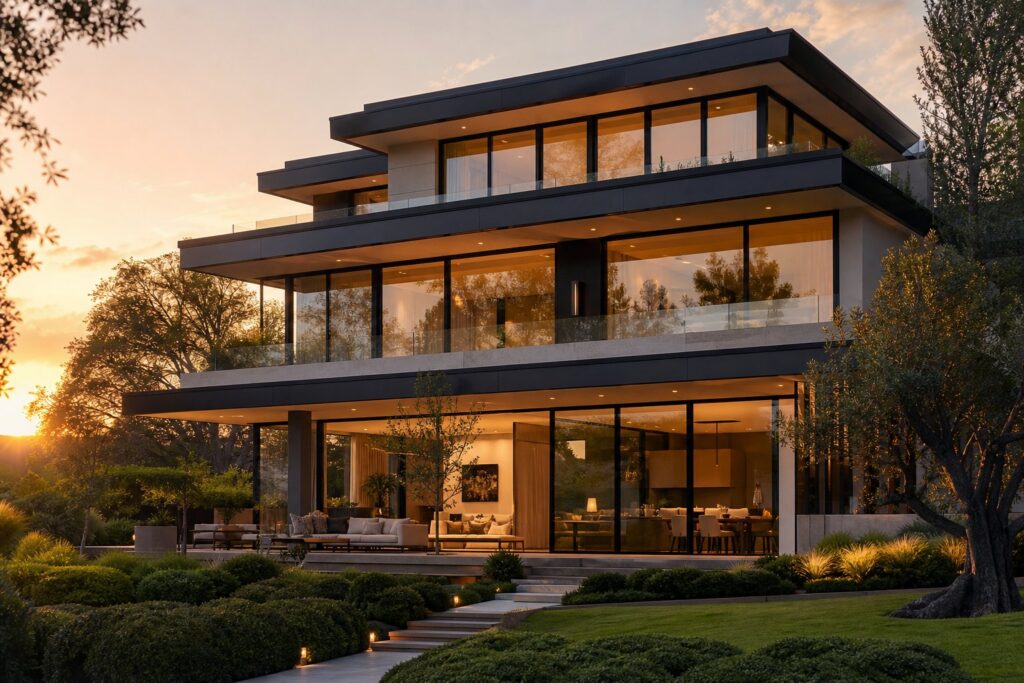
The Truth About Aluminium and Energy Performance
If you renovated a home in the 1980s or 1990s, you probably remember aluminium windows as the frames that dripped with condensation every winter morning. Cold to the touch, prone to thermal bridging, and outperformed by almost everything else on the market. That reputation stuck — and it’s still costing Australian homeowners money today, because it steers them away from a material that modern engineering has fundamentally transformed.
Why Aluminium Windows Have an Energy Efficiency Reputation Problem
The original aluminium windows of the 1970s were simple metal extrusions with no insulation between the interior and exterior faces of the frame. Heat passed straight through them. By the time uPVC arrived with its multi-chamber profiles, aluminium had already earned its “cold frame” label. But that label describes a product that no longer exists. Today’s thermally broken aluminium systems routinely achieve whole-window U-values as low as 1.1 W/m²K — matching or beating uPVC equivalents while offering superior structural rigidity and slimmer sightlines. The benefits of aluminium windows in their current form bear almost no resemblance to those early systems.
What Energy Efficiency Actually Means for Windows
Before diving into materials and technologies, it helps to pin down what “energy efficient” actually means when applied to a window. It’s not a single number — it’s a combination of measurable performance characteristics that determine how much energy your home gains or loses through its glazing.
Whole-window energy efficiency is determined by three core metrics: U-value (the rate of heat transfer through the entire window assembly, measured in W/m²K — lower is better), Solar Heat Gain Coefficient or SHGC (the fraction of solar radiation admitted through the glass — context-dependent by climate), and air infiltration rate (how much conditioned air leaks through the frame and seals).
These three factors work together. A window with an excellent U-value but poor air sealing will still haemorrhage energy. A frame with tight seals but high solar heat gain might overheat a west-facing living room in a Perth summer. Are aluminium windows good performers across all three metrics? With current thermal break technology and appropriate glazing selection — yes. But the answer depends on specification, not just material choice.
This guide takes a material-agnostic approach. The goal isn’t to sell you on aluminium or steer you away from timber or uPVC. It’s to give you the technical understanding to evaluate energy efficient aluminium windows on their actual merits — and to recognise when a supplier’s claims don’t stack up against the physics.
The Science Behind Thermal Break Technology
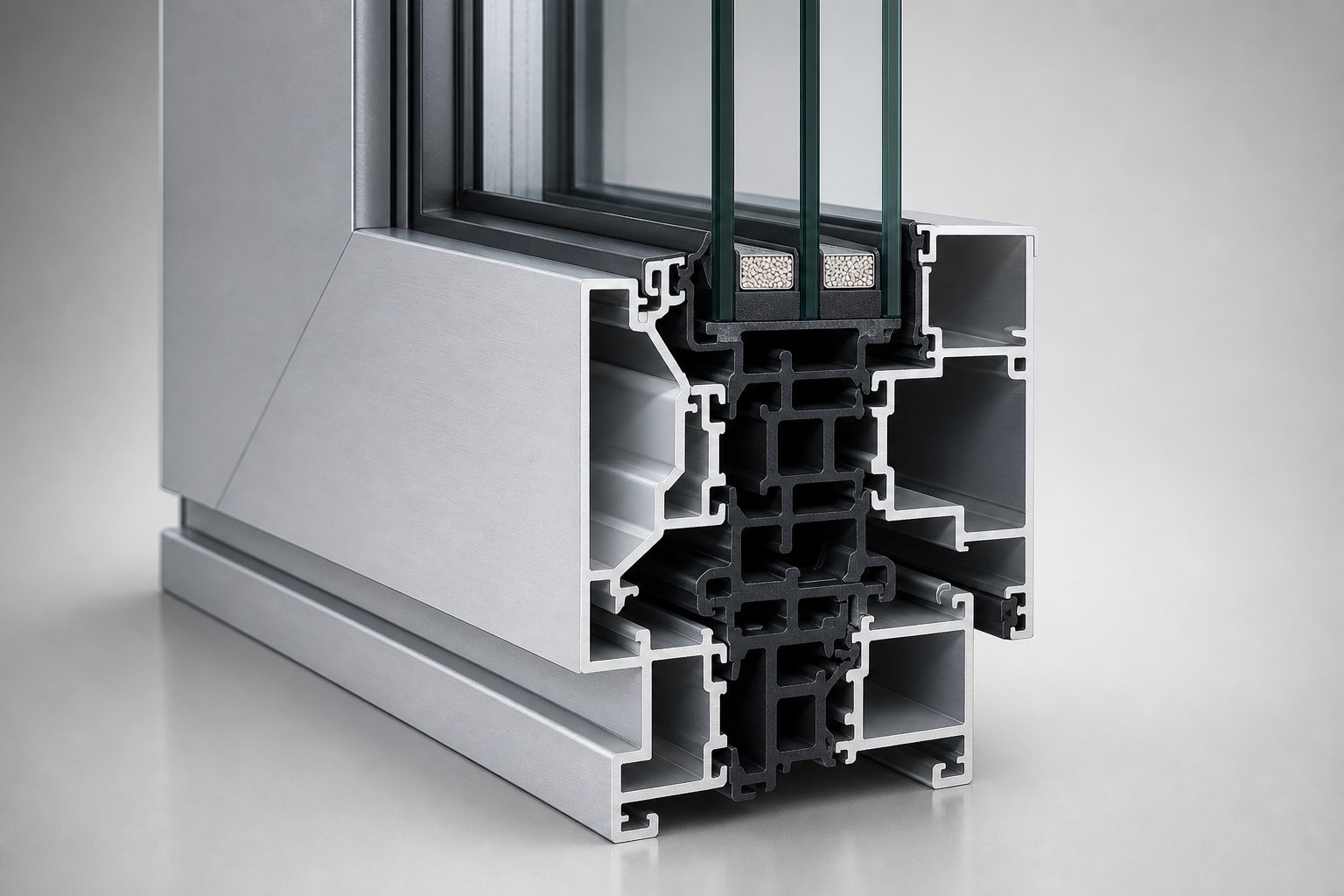
Here’s the raw physics that made aluminium’s reputation so difficult to shake: as a material, it conducts heat roughly 1,000 times faster than timber or uPVC. That’s not a rounding error — it’s a fundamental engineering challenge. To understand why modern aluminium window frame systems perform so differently from their predecessors, you need to understand what thermal conductivity actually means in practice, and how a single strip of reinforced plastic can neutralise aluminium’s biggest weakness.
Understanding Thermal Conductivity in Frame Materials
Thermal conductivity, measured in watts per metre-kelvin (W/mK), describes how readily a material transfers heat from one side to the other. Think of it like a pipe: a wider pipe moves more water. A higher thermal conductivity value means heat flows through the material faster — which is exactly what you don’t want in a window frame separating your air-conditioned interior from a 38-degree Sydney afternoon.
The numbers tell the story clearly. An aluminium frame window made from standard aluminium extrusion has a thermal conductivity somewhere between 160 and 200 W/mK. Timber sits around 0.10 to 0.15 W/mK. uPVC lands in a similar range at roughly 0.15 to 0.25 W/mK. In other words, bare aluminium moves heat more than a thousand times more efficiently than either of its competitors.
| Frame Material | Thermal Conductivity (W/mK) | Relative Heat Transfer |
|---|---|---|
| Aluminium (unbroken) | 160–200 | Baseline (very high) |
| Timber (softwood) | 0.10–0.15 | ~1,300x lower than aluminium |
| uPVC (multi-chamber) | 0.15–0.25 | ~1,000x lower than aluminium |
| Polyamide PA66 (thermal break strip) | ~0.3 | ~600x lower than aluminium |
| Thermally broken aluminium (whole frame system) | Effective Uf: 2.5–4.0 W/m²K | Comparable to uPVC systems |
That last row is the critical one. While the raw aluminium window frame material hasn’t changed — it’s still a highly conductive metal — the system performance of a thermally broken frame drops into the same territory as inherently insulating materials. The question is: how?
How Polyamide Thermal Breaks Transform Performance
The concept is deceptively simple. Take an aluminium profile, split it into two separate pieces — one facing the exterior, one facing the interior — and connect them with a strip of material that barely conducts heat at all. That connecting strip is the thermal break, and in virtually all high-performance aluminium window framing systems, it’s made from polyamide 66 reinforced with 25% glass fibre (PA66-GF25).
During manufacturing, a channel is routed into the aluminium extrusion. The polyamide strip — with a thermal conductivity of approximately 0.3 W/mK — is mechanically locked into that channel, creating a rigid structural connection that simultaneously acts as an insulating barrier. The result: heat trying to travel from the hot exterior face to the cool interior face hits a wall of engineered plastic that conducts energy roughly 600 times slower than the aluminium surrounding it.
Why PA66 specifically? Several properties make it uniquely suited to this job:
- Its coefficient of thermal expansion closely matches aluminium, so the joint stays tight through seasonal temperature swings from -40°C to 120°C
- Glass fibre reinforcement delivers shear strength exceeding 50 MPa — enough to handle wind loads on high-rise facades
- It resists UV degradation, retaining over 92% of tensile strength after 5,000 hours of accelerated weathering
- Independent testing shows it maintains 98% of its insulating capacity after 10,000 thermal cycles, compared to a 72% decline for PVC alternatives
This isn’t a gasket or a foam insert that degrades over time. It’s a structural composite engineered to last the full lifespan of the window — typically 40 to 60 years in Australian conditions.
Thermal Break Thickness and Its Impact on U-Values
Not all thermal breaks are created equal. The width of the polyamide strip directly determines how much insulation the frame provides, and this is where specification details matter enormously when comparing aluminium frame window products.
A narrow 20 mm thermal break in a 60 mm deep profile will deliver a frame U-value (Uf) in the range of 3.5 to 4.0 W/m²K. Step up to a 28 mm strip in a 70 mm profile, and you’re looking at Uf values between 2.5 and 3.0 W/m²K. Push to a 32–35 mm strip in an 80–93 mm profile with multi-chamber design, and frame performance drops below 1.5 W/m²K — approaching Passive House territory.
To put that in practical terms: a non-thermally broken aluminium window typically produces a whole-window U-value (Uw) of 3.0 W/m²K or higher, even with decent double glazing. The same glazing unit in a thermally broken frame with a 24–28 mm polyamide strip brings that figure down to around 1.8–2.2 W/m²K. That’s a 30–40% reduction in heat transfer through the window assembly — achieved entirely by changing what happens inside the frame.
For Australian homes subject to NCC Section J energy efficiency requirements, this distinction is not academic. The difference between a 3.0 and a 2.0 Uw value can determine whether a window passes compliance modelling or forces costly compensatory measures elsewhere in the building envelope. When specifying aluminium, always ask for the thermal break strip width and the tested whole-window U-value — not just the centre-of-glass figure.
The engineering challenge that once made aluminium a poor thermal performer has become, paradoxically, its greatest design advantage. Because the thermal break is a discrete, engineerable component, manufacturers can tune frame performance to precise targets simply by adjusting strip width and chamber geometry — a level of thermal customisation that monolithic materials like timber and uPVC cannot easily replicate.
Choosing the Right Glazing for Aluminium Frames
A thermally broken frame is only half the equation. The glass itself accounts for 70 to 85 percent of a window’s total surface area — and in aluminium framed windows, that proportion is often even higher thanks to slimmer profile depths. This means glazing selection has an outsized influence on whole-window performance, yet most guides treat it as a generic topic divorced from frame material. The reality is that aluminium’s structural properties create specific glazing opportunities and constraints that differ from timber or uPVC systems.
Double vs Triple Glazing for Aluminium Frames
Double glazing uses two panes of glass separated by a gas-filled cavity, typically 12 to 16 mm wide. Triple glazing adds a third pane and a second cavity. The thermal performance difference is significant: a quality double-glazed unit achieves centre-of-glass U-values between 1.2 and 1.6 W/m²K, while triple glazing can push that figure below 0.7 W/m²K.
But the trade-offs matter, especially for aluminium systems. Triple-glazed units are heavier — roughly 50% more mass than an equivalent double-glazed unit — which demands stronger hardware and can limit maximum sash sizes. Aluminium handles this better than uPVC because of its superior strength-to-weight ratio, but there’s still a practical ceiling. Triple glazing also reduces visible light transmittance by 5 to 10 percent due to the additional pane and coatings, and it costs 10 to 30 percent more than double glazing.
For most Australian climate zones, high-performance double glazing with appropriate Low-E coatings delivers the sweet spot between cost, weight, and thermal performance. Triple glazing makes sense in alpine regions (NCC climate zones 7 and 8), passive house projects, or situations where acoustic insulation is a priority — urban sites near major roads or flight paths, for instance. In temperate Melbourne or coastal Sydney, a well-specified double-glazed aluminium window with glass will typically meet NCC Section J requirements without the added expense and weight of a third pane.
Low-E Coatings and Gas Fills Explained
Low-emissivity coatings are microscopically thin metallic layers applied to glass surfaces that reduce radiant heat transfer. They come in two types, and the distinction matters more than most homeowners realise.
Hard coat (pyrolytic) Low-E is applied during the float glass manufacturing process. The coating fuses into the glass surface, creating a durable finish that can be used in single-glazed applications and is easy to handle during fabrication. The trade-off is modest thermal performance and a slight haze visible under certain lighting angles. Products like Viridian’s EnergyTech and ComfortPlus ranges fall into this category.
Soft coat (sputtered) Low-E is applied in a vacuum chamber after the glass is manufactured. Multiple ultra-thin metallic layers are deposited onto the surface, allowing precise control over emissivity, solar heat gain, and colour. Soft coat delivers significantly better U-values than hard coat and eliminates haze for clearer views. The catch: it’s delicate, must be sealed within an insulated glass unit promptly, and has a limited shelf life before assembly. Viridian’s ClimaTech and LightBridge ranges use this technology.
For energy efficient aluminium windows in Australian conditions, soft coat Low-E is almost always the better choice. Different coating formulations serve different climates — high-SHGC versions allow winter solar gain in cooler regions like Hobart or the Blue Mountains, while low-SHGC versions reject unwanted heat in Brisbane or Darwin. Your supplier should be able to match the coating to your orientation and climate zone.
Gas fills work alongside coatings to reduce convective heat transfer within the cavity. Argon is the standard — inexpensive, readily available, and it reduces cavity conductance by about 30% compared to air. Krypton performs roughly 40% better than argon but costs considerably more. Here’s where aluminium’s slim profiles create an advantage: krypton performs optimally in narrower cavities (8 to 12 mm), which suits the compact insulated glass units that fit within slender aluminium sightlines. If you’re specifying a high-performance aluminium glass window with minimal frame depth, krypton fills can deliver superior thermal performance without requiring the wider cavities that argon needs to be effective.
Why Glass-to-Frame Ratio Matters for Energy Ratings
This is the detail that trips up most buyers comparing quotes. The energy rating label on a window reports whole-window performance — a weighted average of the glass centre, glass edge, and frame contributions. As Vitro Architectural Glass explains, the whole-window U-value is typically higher (worse) than the centre-of-glass figure because frame and edge components conduct more heat than the glazed area.
This is where windows with aluminium frame systems gain a quiet advantage. Because aluminium is structurally rigid, profiles can be engineered much thinner than uPVC — often 50 to 65 mm face widths compared to 70 to 80 mm for uPVC. That means more glass area relative to frame area in any given opening. Since the glass (with Low-E coating and gas fill) typically outperforms the frame thermally, a higher glass-to-frame ratio pulls the whole-window U-value closer to the superior centre-of-glass figure.
In practical terms, an aluminium window might achieve 75 to 80 percent glass area in a standard opening, while a uPVC window in the same opening delivers 65 to 70 percent. That 10-percent difference in glazed area translates directly into better whole-window thermal performance and more natural light — a dual benefit that rarely appears on specification sheets but shows up in both energy bills and liveability.
When comparing quotes, always ask for the whole-window U-value (Uw), not just the centre-of-glass figure. And consider how the frame’s sightline width affects the ratio of high-performing glass to lower-performing frame in your specific opening sizes.
- Basic: Double glazing, clear glass, air fill, no Low-E coating — Uw approximately 2.8–3.2 W/m²K
- Standard: Double glazing, hard coat Low-E on surface 3, argon fill — Uw approximately 2.0–2.4 W/m²K
- High-performance: Double glazing, soft coat Low-E on surface 2, argon fill, warm-edge spacer — Uw approximately 1.4–1.8 W/m²K
- Premium: Triple glazing, dual soft coat Low-E (surfaces 2 and 5), krypton fill, warm-edge spacer — Uw approximately 0.8–1.2 W/m²K
Each step up the performance ladder adds cost, but the returns diminish as you approach the premium tier. For most Australian homes, the high-performance double-glazed configuration hits the efficiency target without over-capitalising — particularly when paired with a thermally broken aluminium frame that maximises the glass-to-frame ratio.
Of course, even the best glazing specification means little if the window doesn’t perform as claimed in real-world conditions. Persistent myths about aluminium’s behaviour — condensation, aesthetics, sustainability — still cloud purchasing decisions and deserve a closer look.
Common Myths About Aluminium Window Efficiency Debunked
Outdated assumptions still drive purchasing decisions. When homeowners research the pros and cons of aluminium windows, they encounter claims rooted in 1980s-era products that bear no resemblance to current systems. Three myths in particular cost people money — either by steering them toward inferior alternatives or by causing them to over-specify out of unfounded fear.
- Myth: Aluminium always causes condensation. Reality: condensation forms when a surface temperature drops below the dew point of the surrounding air — not because of the frame material itself.
- Myth: Aluminium cannot match timber aesthetics. Reality: modern powder coating and anodising deliver virtually unlimited colour and texture options, including convincing timber-look finishes.
- Myth: Aluminium is not an environmentally responsible choice. Reality: aluminium is infinitely recyclable at just 5% of original smelting energy, and frames routinely last 40 to 60 years without degradation.
Myth — Aluminium Always Causes Condensation
This is the most persistent of the supposed disadvantages of aluminium, and it confuses cause with correlation. Condensation occurs when warm, moist indoor air meets a surface cold enough to reach its dew point. In older, non-thermally broken frames, the interior aluminium face could drop to near-outdoor temperatures — creating exactly those conditions. The culprit wasn’t aluminium itself but the absence of an insulating barrier.
Thermally broken profiles eliminate this problem. The polyamide strip separating inner and outer frame sections keeps the interior surface well above dew point, even on cold winter mornings. Combined with adequate ventilation and reasonable indoor humidity levels, modern aluminium systems are no more prone to condensation than timber or uPVC. If you’re seeing moisture on a recently installed aluminium frame, the issue is almost certainly indoor humidity management or inadequate ventilation — not the window.
Myth — Aluminium Cannot Match Timber Aesthetics
This one made sense when aluminium came in three colours: silver, white, and brown. It hasn’t been true for decades. Contemporary powder coating technology offers hundreds of RAL colours, matte and textured finishes, and realistic woodgrain effects that are virtually indistinguishable from painted timber at conversational distance. Anodising provides a different aesthetic — a subtle metallic lustre that reveals the natural grain of the metal — and delivers exceptional resistance to UV fading and coastal corrosion.
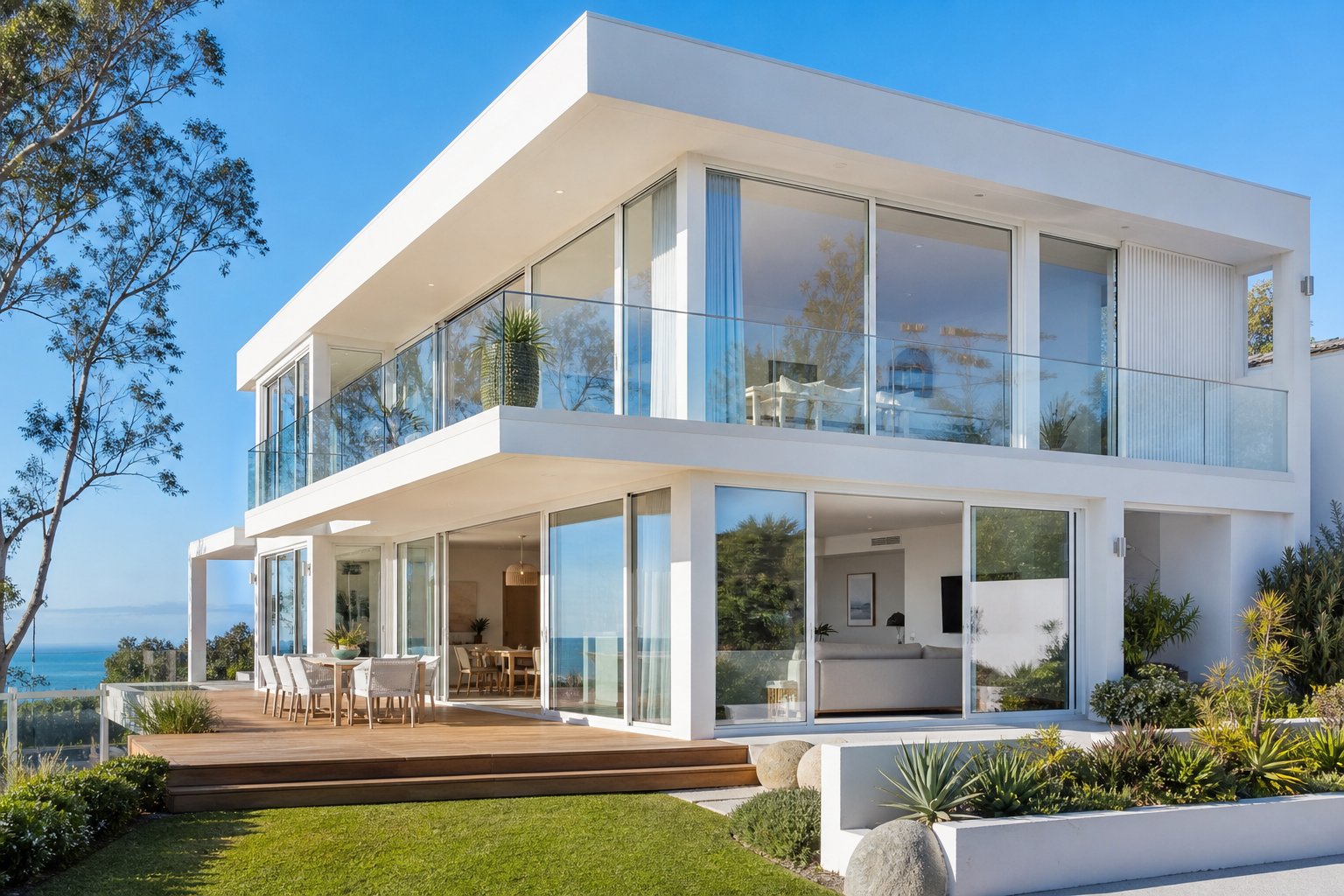
White aluminium windows remain the most popular choice for contemporary Australian homes, pairing cleanly with rendered facades and coastal aesthetics. But the palette extends far beyond neutrals. Charcoal, monument, surfmist, matt black — the same Colorbond-adjacent tones that define Australian residential architecture are all available in durable powder-coated finishes rated to withstand decades of UV exposure without chalking or peeling.
Myth — Aluminium Is Not an Environmentally Responsible Choice
Critics point to aluminium’s high embodied energy during primary smelting — and they’re not wrong about the initial figure. But evaluating the aluminium pros and cons on embodied energy alone ignores the full picture. Roughly 75% of all aluminium ever produced remains in active use today. Recycling requires just 5% of the energy needed for primary production, and the material loses none of its structural or aesthetic properties through repeated recycling cycles.
Compare that to uPVC, which degrades with each recycling pass and typically reaches end-of-life after 7 to 10 cycles before heading to landfill. Aluminium frames that last 50-plus years and then re-enter the material stream at full quality represent a genuinely circular product — one whose lifecycle environmental footprint often undercuts materials with lower initial embodied energy but shorter service lives.
Separating myth from engineering reality is essential, but it’s only useful if you can apply that knowledge to your specific situation. Climate, orientation, and local conditions all shift the balance of what matters most in a window specification.
Selecting Aluminium Windows by Climate Zone
Australia spans eight NCC climate zones — from the tropical humidity of Darwin to the alpine cold of the Snowy Mountains. A window specification that performs brilliantly in Hobart can be entirely wrong for Cairns, and vice versa. The metrics that matter most shift depending on whether your primary battle is keeping heat in, keeping heat out, or managing both across seasons.
Cold Climate Priorities — Minimising Heat Loss
In NCC climate zones 7 and 8 — think Canberra, the Blue Mountains, Ballarat, and Tasmania’s highlands — winter heat loss dominates energy bills. The priority here is a low whole-window U-value, ideally below 2.0 W/m²K. Triple glazing or high-performance double glazing with soft coat Low-E and argon fill becomes the baseline rather than the upgrade.
Orientation plays a critical role in these heating-dominant climates. North-facing windows benefit from a higher SHGC (0.4 to 0.6) to capture free passive solar heat during winter — effectively using the sun as a supplementary heater. South-facing windows receive minimal direct sun regardless of season, so the focus shifts entirely to the lowest U-value you can achieve. East and west elevations need moderate SHGC values with external shading to manage summer afternoon heat without sacrificing winter gains.
Hot Climate Priorities — Managing Solar Heat Gain
In NCC zones 1 and 2 — Darwin, Townsville, Broome, and tropical Queensland — cooling loads dwarf heating needs. SHGC becomes the dominant metric. Research from Cundall’s sustainability team demonstrates that glazing with a low SHGC of around 0.2 to 0.3 significantly reduces cooling demand on east and west facades, where low-angle sun is hardest to shade externally.
A low U-value still matters in hot climates — it reduces heat gain through conduction when outdoor temperatures exceed indoor setpoints — but it’s secondary to solar control. Residential aluminium windows specified for tropical conditions should pair thermally broken frames with solar-control Low-E glass that rejects infrared radiation while maintaining reasonable visible light transmittance. Tinted or reflective coatings can help on western elevations where afternoon sun is most intense.
Coastal and Humid Environments — Durability Meets Efficiency
Australia has over 35,000 kilometres of coastline, and a significant proportion of the population lives within salt-spray zones. Here, energy performance must coexist with corrosion resistance — and this is where durable aluminium windows hold a genuine material advantage over timber and uPVC alternatives.
Salt air accelerates degradation in timber (swelling, rot, paint failure) and can cause brittleness in uPVC over extended UV and salt exposure. Powder coated aluminium windows, finished to a minimum 60-micron thickness in marine-grade polyester powder, resist salt corrosion for decades without recoating. Anodised finishes offer an alternative — the electrochemical process creates a hard oxide layer integral to the metal surface that won’t peel, chip, or blister in coastal conditions.
For homes along the NSW coast, Queensland’s Sunshine Coast, or Perth’s western suburbs, aluminium residential windows combine the thermal performance of modern glazing systems with the structural resilience needed to maintain that performance year after year in aggressive environments. A window that loses its seal integrity after five years of salt exposure delivers zero long-term energy savings, regardless of its day-one U-value.
| Climate Type | NCC Zones | Example Locations | Target U-value (Uw) | Target SHGC | Recommended Glazing |
|---|---|---|---|---|---|
| Hot / Tropical | 1–2 | Darwin, Cairns, Broome | ≤ 3.5 W/m²K | 0.2–0.35 | Double glazed, solar-control Low-E, argon fill |
| Warm / Subtropical | 2–3 | Brisbane, Gold Coast | ≤ 3.0 W/m²K | 0.25–0.40 | Double glazed, soft coat Low-E, argon fill |
| Temperate / Mixed | 4–6 | Sydney, Melbourne, Adelaide, Perth | ≤ 2.5 W/m²K | 0.3–0.5 (orientation-dependent) | High-performance double glazed, soft coat Low-E, argon fill |
| Cold / Alpine | 7–8 | Canberra, Hobart, Blue Mountains | ≤ 2.0 W/m²K | 0.4–0.6 (north), ≤ 0.4 (west) | Triple glazed or premium double, dual Low-E, krypton or argon fill |
| Coastal (any zone) | Varies | Wollongong, Sunshine Coast, Fremantle | Per zone target | Per zone target | Per zone spec + marine-grade powder coat (min 60 µm) or anodised finish |
The table above provides starting points, not absolute rules. Orientation, shading, and building design all modify these targets. A north-facing living room in Melbourne might benefit from a higher SHGC than the zone average suggests, while a west-facing bedroom in the same house needs aggressive solar control. The key principle: specify by elevation, not just by address.
Knowing what to target is one thing. Verifying that a product actually delivers those numbers — and understanding the labels that prove it — requires a different kind of literacy altogether.
Reading Window Energy Ratings and Meeting Standards
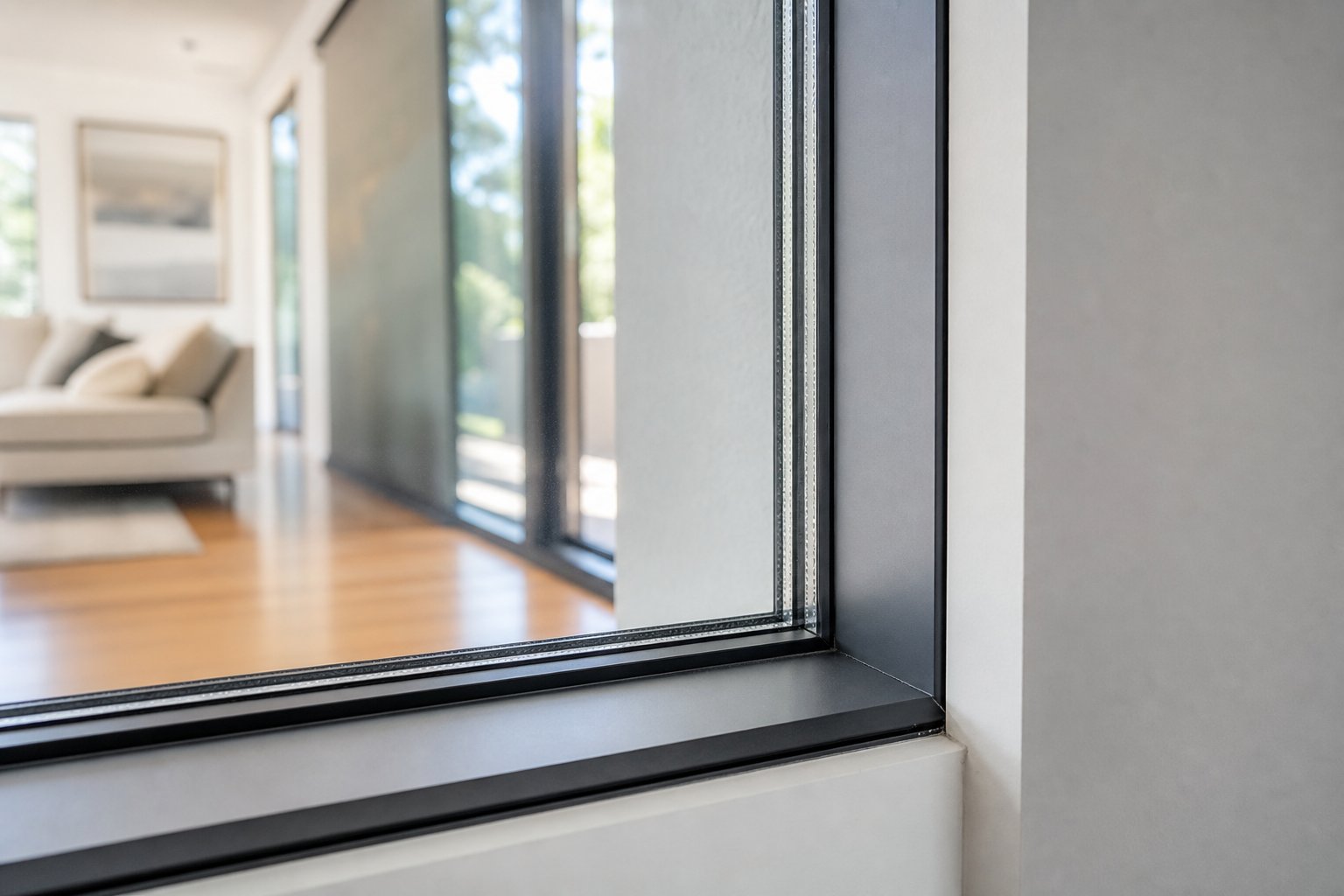
A window can look impressive on a showroom floor and still underperform in your wall. The only way to verify thermal claims is through certified performance data — and in Australia, that means understanding the Window Energy Rating Scheme (WERS), the standards behind it, and what documentation to demand from any aluminium windows company before signing a contract.
How to Read a Window Energy Rating Label
WERS is Australia’s independent rating system for residential windows. It simulates real-world performance across different climate zones and reports results using four key metrics. Each tells you something different about how the window will behave in your home.
U-value (W/m²K) measures total heat transfer through the window assembly — frame, glass, edge spacers, everything. Lower numbers mean less heat escaping in winter and less heat entering in summer. This is the single most important metric for heating-dominant climates like Melbourne, Canberra, and Hobart.
Solar Heat Gain Coefficient (SHGC) expresses the fraction of solar energy that passes through the glass, on a scale from 0 to 1. A value of 0.35 means 35% of the sun’s energy enters your room. Whether you want this high or low depends entirely on climate zone and orientation — there’s no universally “good” number.
Visible Light Transmittance (VLT) indicates how much natural daylight the glass admits. Higher VLT means brighter interiors without switching on lights. Most residential glazing sits between 0.4 and 0.7. Heavily tinted solar-control glass sacrifices VLT for lower SHGC — a trade-off worth understanding before you commit.
Air Infiltration measures how much conditioned air leaks through the window’s seals and joints under pressure. WERS factors this into its overall rating, but it’s also tested independently under AS 2047 — Australia’s mandatory standard for windows and external glazed doors. Any aluminium framed windows installed in new construction or major renovations must comply with AS 2047 for structural adequacy, water resistance, and air infiltration limits.
Minimum Performance Standards by Region
The National Construction Code (NCC) Section J sets energy efficiency requirements for building envelopes, including glazing. For residential buildings, the 7-star NatHERS minimum remains the current benchmark. Windows contribute significantly to whether a design passes or fails energy modelling — and the acceptable performance thresholds vary by climate zone.
As a practical guide for aluminium framed windows in Australian residential projects: target a whole-window U-value at or below 2.0 W/m²K in cold climates (zones 7–8), below 2.5 W/m²K in temperate zones (4–6), and below 3.5 W/m²K in hot climates (zones 1–2). SHGC should be specified per elevation — not as a single value for the entire home.
These aren’t aspirational figures. They’re the performance levels that energy assessors typically need to see from alu windows to achieve compliant NatHERS ratings without compensating elsewhere in the building envelope. Falling short on glazing performance means over-insulating walls, adding bulk to ceilings, or restricting window sizes — all of which cost more than specifying the right window from the start.
Keep in mind that NCC requirements apply to the whole window — not just the glass centre. A supplier quoting only centre-of-glass U-values is giving you an incomplete picture. The frame, edge spacer, and glass-to-frame ratio all affect the number that matters for compliance.
Questions to Ask Your Window Supplier
Performance claims without documentation are just marketing. Before committing to any supplier, these questions separate credible manufacturers from those trading on vague promises:
- Can you provide WERS-rated data for the specific window configuration I’m ordering — not just a generic product range figure?
- What is the whole-window U-value (Uw) and SHGC for my chosen frame profile, glazing type, and size?
- Is this product tested and certified to AS 2047 for structural performance, water penetration resistance, and air infiltration?
- What thermal break width does this profile use, and what is the frame-only U-value (Uf)?
- Can you supply NCC Section J compliance documentation or energy modelling inputs that my assessor can use directly?
- Do you hold current test reports from a NATA-accredited laboratory, and can I review them?
- What warranty covers the insulated glass unit seal, and what is the expected service life of the thermal break and gaskets?
A reputable aluminium windows company will answer every one of these without hesitation. Verified compliance documentation — like that published on MEICHEN’s Compliance & Certifications page — gives architects, builders, and specifiers direct access to AS 2047 test reports, WERS data, and NCC Section J evidence. This kind of transparency matters because it shifts the conversation from sales claims to engineering proof. If a supplier can’t produce equivalent documentation, that tells you something about the rigour behind their product.
Ratings and certifications confirm performance at the point of manufacture. But a window’s energy efficiency isn’t frozen in time — it either holds steady or degrades over decades depending on material durability, seal longevity, and maintenance. That long-term trajectory is where the lifecycle argument for aluminium gets genuinely compelling.
Lifecycle Energy and Long-Term Sustainability
Critics of aluminium often lead with a single number: embodied energy. And taken in isolation, it’s a valid concern — primary aluminium smelting is energy-intensive. But evaluating a window material on manufacturing energy alone is like judging a car’s fuel economy by how much petrol it took to build the engine. The real question is what happens over the next 40 to 60 years of daily use, and what happens at end-of-life. That full picture is where the advantages of aluminium windows become difficult to argue against.
Embodied Energy vs Operational Savings Over Decades
Primary aluminium production requires approximately 157 MJ per kilogram of ingot within Europe — a figure that reflects the electrolysis process needed to extract metal from bauxite ore. Compared to timber framing or uPVC extrusion, that initial energy investment is substantially higher. No honest assessment of the pros of aluminium can ignore this starting point.
But embodied energy is a snapshot, not a story. A thermally broken aluminium window installed today will deliver operational energy savings every single day for decades. Reduced heating and cooling loads compound over time — and because aluminium frames maintain their structural integrity and seal compression without warping, swelling, or shrinking, those savings remain consistent year after year. Timber frames that twist over 15 to 20 years gradually lose air-tightness. uPVC profiles that soften under sustained UV exposure can deform around locking points. Aluminium holds its manufactured tolerances indefinitely.
Research into building lifecycle assessment increasingly shows that for high-performance buildings, building materials represent 9 to 46 percent of lifetime energy consumption — with the operational phase still dominating. A window that maintains peak thermal performance for 50 years without replacement offsets its higher embodied energy many times over compared to a lower-embodied-energy alternative that degrades and requires replacement at year 25.
Infinite Recyclability and the Circular Economy
Here’s the figure that changes the equation entirely. Recycling aluminium requires just 5% of the energy needed to produce primary metal — dropping from 157 MJ/kg down to roughly 8 MJ/kg. And unlike plastics, which degrade with each recycling pass, aluminium retains 100% of its material properties through infinite recycling cycles. The atoms don’t care how many times they’ve been melted and reformed.
This isn’t theoretical. Around 75% of all aluminium ever produced remains in active use today. In the building and construction sector specifically, recycling rates exceed 90% — meaning your aluminium window frames, when eventually removed after decades of service, re-enter the material stream at full quality. They become new window profiles, facade systems, or structural components without any loss of performance capability.
So how long do aluminium windows last before reaching that recycling stage? Well-manufactured aluminium frames deliver 40 to 50 years of reliable service — significantly outlasting timber (15 to 25 years) and uPVC (20 to 30 years). With proper maintenance, that figure extends beyond 50 years. When the frame finally does reach end-of-life, it carries genuine residual value as scrap metal rather than heading to landfill.
Maintaining Energy Performance Over the Window Lifespan
Longevity alone doesn’t guarantee sustained efficiency. A 40-year-old window with failed seals and degraded gaskets performs no better than a cheap replacement. The key distinction is that aluminium frames themselves don’t degrade — they don’t rot like timber, warp like uPVC under heat, or lose structural rigidity over time. Maintenance focuses entirely on the replaceable components: seals, gaskets, hardware, and glazing units.
One often-cited disadvantage of aluminium is that it requires periodic attention to these components. That’s true — but the same applies to every frame material, and aluminium’s stability means those components last longer because the frame geometry supporting them doesn’t shift. Here’s what a maintenance programme looks like to preserve energy performance across the window’s full lifespan:
- Monthly: Clean frames, tracks, and weep holes to prevent debris blocking drainage channels — blocked weeps cause water pooling that accelerates gasket and seal degradation.
- Quarterly: Operate every window fully and check for air leaks, stiffness, or incomplete locking engagement that indicates seal compression loss.
- Bi-annually (spring and autumn): Lubricate all hardware with silicone-based dry lubricant and condition EPDM gaskets with a rubber-compatible treatment to maintain elasticity.
- Annually: Inspect perimeter sealant for adhesion failure, check insulated glass units for fogging between panes (indicating gas loss), and re-align any sashes that have drifted from specification.
- Every 7 to 10 years: Replace EPDM gaskets — these are the primary air and water seals, and they harden over time regardless of conditioning.
- Every 3 to 5 years: Reapply perimeter sealant using neutral-cure silicone, particularly in coastal or high-UV environments where sealant degrades faster.
None of these tasks require specialist tools or professional intervention for residential windows — though an annual professional inspection is worthwhile for multi-storey or hard-to-access installations. The total annual cost of maintaining aluminium windows is a fraction of the replacement cost, and it preserves the thermal performance that justified the initial investment.
This maintenance reality also highlights an underappreciated truth: the “set and forget” window doesn’t exist in any material. Timber demands repainting every 5 to 7 years and vigilant moisture management. uPVC requires hardware replacement on similar schedules but offers no warning when profiles begin to deform internally. Aluminium’s advantage is transparency — because the frame itself is dimensionally stable, any performance decline is traceable to specific, replaceable components rather than systemic material failure.
Lifecycle performance and recyclability make a strong case for aluminium in isolation. But most homeowners aren’t choosing in isolation — they’re weighing aluminium against timber, uPVC, and fiberglass side by side, trying to determine which material delivers the best return over time for their specific situation.
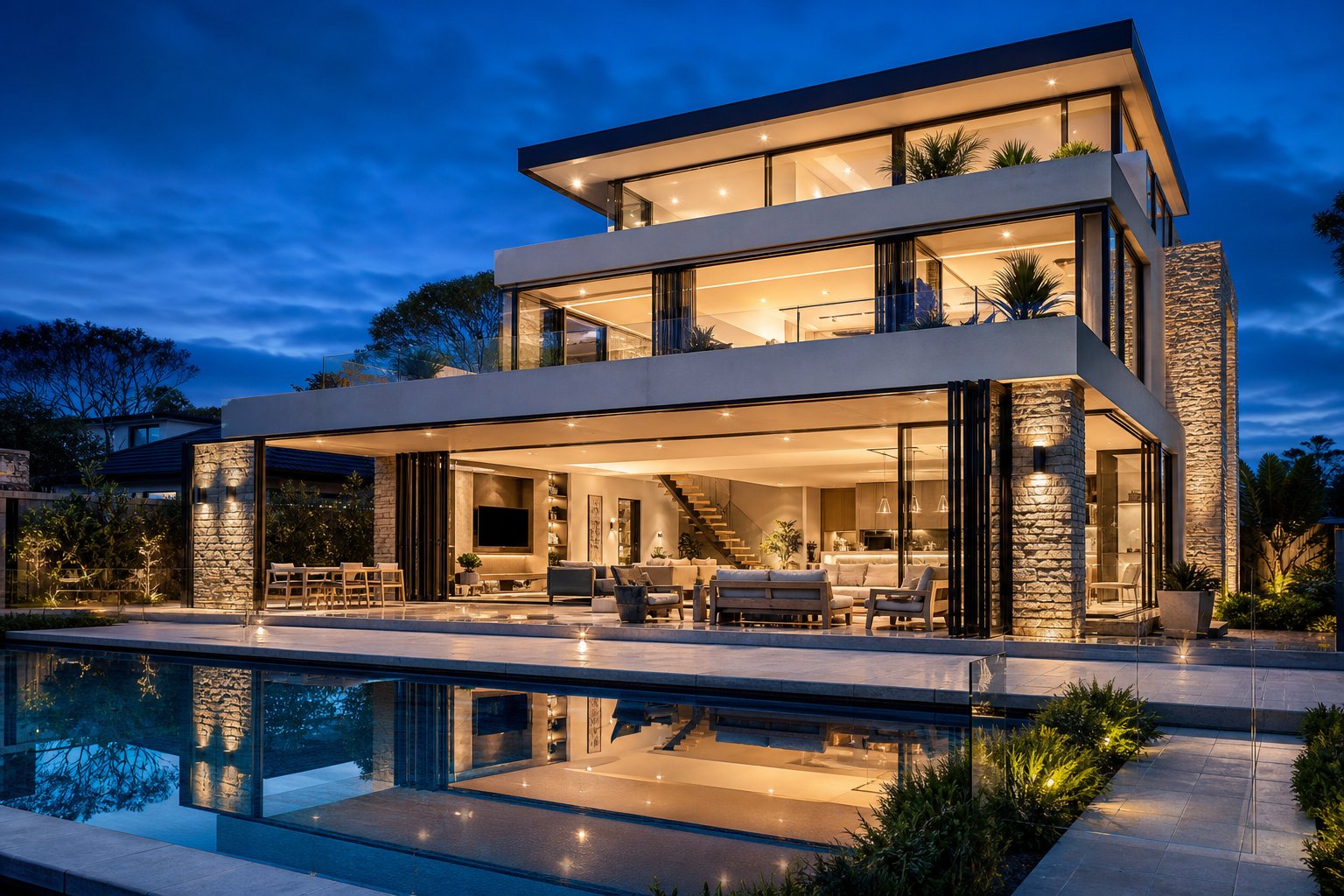
How Aluminium Compares to Other Frame Materials
Side-by-side comparisons only work when they’re honest. Every frame material has a context where it excels and a context where it falls short. The goal here isn’t to crown a winner — it’s to map each material’s strengths against the criteria that actually matter for Australian homes: thermal performance, service life, maintenance burden, environmental footprint, and total cost over decades.
Aluminium vs Timber vs uPVC — Performance Comparison
The windows pros and cons debate usually starts with thermal numbers, but it shouldn’t end there. A frame that delivers excellent U-values but demands repainting every five years, or one that insulates well but can’t span a 2.4-metre opening without bulky reinforcement, isn’t necessarily the right choice for your project.
So why is wood preferred over aluminium in window construction by some builders? Timber’s cellular structure provides natural insulation without any engineering intervention — it’s inherently a poor conductor of heat. That gives it a head start on raw thermal performance. But timber’s Achilles heel is dimensional instability. Moisture cycling causes swelling and shrinkage that gradually compromises air seals, and Australian UV exposure accelerates paint and stain breakdown. Maintenance costs compound over time in ways that rarely appear in initial quotes.
uPVC’s multi-chamber profiles deliver strong insulation at a competitive price point. For standard-sized openings in sheltered locations, it’s hard to beat on value. The limitations emerge with scale — uPVC lacks the structural rigidity for large openings without steel reinforcement, profiles are necessarily bulkier (reducing glass area), and dark colours can warp under direct sun in Australian conditions. Lifespan typically caps at 25 to 40 years before profiles degrade beyond repair.
Fibreglass sits between aluminium and uPVC in most metrics — good thermal performance, reasonable strength, moderate maintenance. It’s less common in the Australian market than in North America, which limits supplier options and can inflate costs. When comparing aluminium vs fibreglass windows, aluminium typically wins on sightline slimness, colour stability, and recyclability, while fibreglass holds a slight edge on raw frame insulation without thermal breaks.
| Frame Material | Whole-Window U-value Range (Uw) | Expected Lifespan | Recyclability | Maintenance Level | Indicative Cost (AUD, supply and install per window) |
|---|---|---|---|---|---|
| Thermally broken aluminium | 1.4–2.2 W/m²K | 40–60 years | Infinite (5% of original energy) | Low — gasket and hardware service | $1,200–$2,500 |
| Timber (hardwood) | 1.4–2.0 W/m²K | 30–50 years (with maintenance) | Biodegradable / limited reuse | High — repaint every 5–7 years, moisture inspection | $1,500–$3,000 |
| uPVC (multi-chamber) | 1.2–1.8 W/m²K | 25–40 years | Limited (degrades each cycle) | Low — hardware replacement only | $800–$1,600 |
| Fibreglass (pultruded) | 1.3–1.9 W/m²K | 30–50 years | Difficult (thermoset resin) | Low to moderate | $1,400–$2,800 |
A few things stand out. Thermally broken aluminium matches or approaches timber and uPVC on thermal performance while offering the longest maintenance-free service life. uPVC wins on upfront cost but concedes ground on longevity and glass-to-frame ratio. Timber delivers warmth and natural beauty but demands ongoing investment to maintain its performance envelope. Fibreglass windows vs aluminium is a closer contest on paper, though aluminium’s market availability, colour range, and end-of-life value give it practical advantages in Australia.
The Case for Aluminium-Clad Timber Hybrids
For homeowners who want timber’s interior warmth without its exterior maintenance burden, aluminium-clad timber offers a compelling middle ground. The concept is straightforward: an engineered timber core provides natural insulation and aesthetic richness on the inside, while a powder-coated aluminium shell protects the exterior from weather, UV, and salt exposure.
The aluminium clad wood windows pros and cons break down predictably. On the positive side, you get whole-window U-values as low as 0.7 to 1.1 W/m²K with triple glazing — performance that exceeds most standalone aluminium or timber systems. The exterior aluminium eliminates repainting entirely, and the ventilated cladding design prevents moisture trapping between materials. Interior timber can be stained or oiled to match joinery and flooring, creating visual continuity that pure aluminium can’t replicate.
The trade-offs are cost and complexity. Aluminium-clad systems typically sit 30 to 50 percent above equivalent all-aluminium pricing, and fewer Australian suppliers stock them compared to standard thermally broken profiles. They also require careful detailing at the timber-aluminium interface to prevent condensation within the assembly — a risk in humid coastal climates if the system isn’t properly ventilated. For high-performance new builds where budget allows and interior material warmth is non-negotiable, they’re an excellent solution. For renovations or cost-sensitive projects, thermally broken aluminium with a quality powder-coat finish delivers 90 percent of the performance at a lower price point.
Cost-Benefit Analysis and Payback Periods
Initial purchase price is the number everyone fixates on — and it’s the least useful figure for a long-term decision. A more honest comparison accounts for replacement cycles, maintenance costs, and sustained energy savings over the building’s life.
Consider a typical Australian home with 15 to 20 window openings. Upgrading from single-glazed aluminium (no thermal break) to thermally broken aluminium with high-performance double glazing represents an investment of roughly $25,000 to $40,000 AUD depending on sizes and configurations. The same home fitted with uPVC saves perhaps $8,000 to $12,000 upfront — but that saving evaporates when the uPVC frames reach end-of-life at year 25 to 30 and require full replacement.
Lifecycle cost analysis from manufacturing data consistently shows that aluminium’s higher upfront cost breaks even against uPVC between year 15 and 20, after which it delivers pure savings through avoided replacement and lower maintenance. Over a 50-year ownership period, the total cost of aluminium ownership — including periodic gasket replacement and hardware servicing — runs significantly below uPVC’s total when you factor in at least one full replacement cycle.
Energy savings accelerate the payback further. A home in NCC climate zone 6 (Melbourne, Adelaide) upgrading from non-thermally broken aluminium to a modern system with a Uw of 1.8 W/m²K can expect heating and cooling reductions of 20 to 35 percent attributable to glazing improvements alone. At current energy prices, that translates to $400 to $800 per year in reduced bills — shaving several years off the payback period and compounding over the remaining decades of the window’s service life.
The ROI calculation shifts further in aluminium’s favour for coastal properties, where salt exposure shortens uPVC and timber lifespans more aggressively. In these environments, aluminium isn’t just the performance choice — it’s the financial one.
Material comparisons clarify what’s possible. But translating that knowledge into a confident purchasing decision requires a structured evaluation process — one that moves from general understanding to specific, verifiable criteria for the windows going into your walls.
A Practical Framework for Choosing the Right Windows
Understanding thermal breaks, glazing options, lifecycle costs, and material trade-offs gives you the knowledge to make a sound decision. But knowledge without a structured process leads to overwhelm — especially when suppliers present conflicting claims and varying levels of documentation. This final section distils everything into a repeatable evaluation framework you can apply whether you’re specifying aluminium house windows for a single renovation or selecting systems across a multi-dwelling development.
Your Evaluation Checklist for Energy Efficient Aluminium Windows
Work through these steps in order. Each builds on the previous one, and skipping early steps often leads to costly corrections later in the project.
- Confirm thermal break presence and width. Ask the supplier to identify the polyamide strip width in millimetres. Anything below 20 mm delivers marginal insulation. For NCC zones 4 to 8, target profiles with 24 mm or wider thermal breaks to achieve competitive frame U-values.
- Request the whole-window U-value (Uw), not just centre-of-glass. The Uw figure accounts for frame, edge spacer, and glass performance together — it’s the number your energy assessor uses for NatHERS modelling and NCC Section J compliance.
- Check SHGC against your climate zone and orientation. A single SHGC value for the entire home is a red flag. North-facing openings in cold climates benefit from higher solar gain; west-facing glass in hot climates needs aggressive rejection. Specify per elevation.
- Verify compliance with AS 2047. Every window installed in Australia must meet this standard for structural adequacy, water penetration resistance, and air infiltration. Ask for test reports from a NATA-accredited laboratory — not just a self-declaration.
- Confirm NCC Section J evidence. Your energy assessor needs documented performance data to model the building envelope. If the supplier can’t provide inputs compatible with NatHERS or Section J verification methods, the specification process stalls.
- Evaluate WERS ratings for your specific configuration. Generic range ratings don’t apply to your exact frame size, glazing type, and opening style. Request configuration-specific WERS data.
- Assess supplier credentials and warranty terms. Look for membership in the Australian Glass and Window Association (AGWA), current accreditation, and clear warranty coverage for insulated glass unit seals, thermal break integrity, and powder coat finish.
Why Verified Compliance Documentation Matters
For architects, builders, and specifiers, the stakes extend beyond personal comfort. Installing windows that lack proper certification exposes projects to compliance failures, costly rectification, and potential liability. Industry guidance confirms that falsified or non-existent test reports represent a real risk — and that clients should always request verified documentation before purchase.
This is where transparent suppliers differentiate themselves. Manufacturers who publish their compliance evidence openly — such as MEICHEN’s Compliance & Certifications page — give professionals direct access to AS 2047 test reports, WERS performance data, and NCC Section J documentation without requiring a sales conversation first. That level of accessibility signals confidence in the product and respects the specifier’s time. When comparing suppliers, treat documentation transparency as a quality indicator: companies that make performance evidence easy to find typically stand behind it.
Never accept a verbal performance claim or a brochure figure as specification evidence. Request certified, third-party test data for the exact window configuration you intend to install. If a supplier cannot or will not provide it, move on — regardless of price.
Making a Confident Specification Decision
Price matters, but it belongs at the end of the evaluation — not the beginning. Searching for affordable aluminium windows without first establishing performance criteria leads to compromises that cost more over time through higher energy bills, premature replacement, or failed compliance inspections. The cheapest quote is rarely the cheapest outcome across a 40-year ownership horizon.
Whether you’re selecting a standard white aluminium window for a coastal apartment or specifying a full suite of thermally broken systems for a passive-design home, the process is identical: define performance targets by climate and orientation, verify claims through certified data, and assess total lifecycle value rather than day-one price alone. A well-specified aluminium window system — backed by documented compliance and installed correctly — delivers decades of consistent thermal performance, minimal maintenance, and genuine energy savings that compound every year it remains in your wall.
The myth that aluminium can’t be energy efficient died with the thermal break. What remains is an engineering decision — and with the right framework, it’s one you can make with confidence.
Frequently Asked Questions About Energy Efficient Aluminium Windows
1. Are aluminium windows energy efficient compared to uPVC and timber?
Yes. Modern thermally broken aluminium windows achieve whole-window U-values between 1.4 and 2.2 W/m²K, placing them in the same performance range as uPVC (1.2–1.8 W/m²K) and timber (1.4–2.0 W/m²K). The polyamide thermal break strip inserted between the inner and outer frame profiles reduces heat transfer by up to 600 times compared to unbroken aluminium. When paired with soft coat Low-E glazing and argon or krypton gas fills, thermally broken aluminium systems routinely meet NCC Section J requirements across all Australian climate zones without compensatory measures elsewhere in the building envelope.
2. What is a thermal break in aluminium windows and why does it matter?
A thermal break is a strip of polyamide 66 reinforced with 25% glass fibre (PA66-GF25) that is mechanically locked between the interior and exterior aluminium profiles. This strip has a thermal conductivity of approximately 0.3 W/mK — roughly 600 times lower than the surrounding aluminium. The width of the thermal break directly affects performance: a 20 mm strip delivers frame U-values of 3.5–4.0 W/m²K, while a 32–35 mm strip in a multi-chamber profile can push frame performance below 1.5 W/m²K, approaching Passive House standards. Always ask suppliers for the specific thermal break width when comparing products.
3. Do aluminium windows cause condensation?
Thermally broken aluminium windows do not cause condensation under normal conditions. Condensation forms when a surface temperature drops below the dew point of surrounding air. In older non-thermally broken frames, the interior aluminium face could reach near-outdoor temperatures, triggering moisture formation. Modern polyamide thermal breaks keep the interior frame surface well above dew point even on cold mornings. If condensation appears on recently installed thermally broken aluminium windows, the cause is almost always excessive indoor humidity or inadequate ventilation rather than the frame material itself.
4. How long do aluminium windows last and are they recyclable?
Well-manufactured thermally broken aluminium windows deliver 40 to 60 years of reliable service — significantly outlasting uPVC (25–40 years) and timber (30–50 years with intensive maintenance). At end-of-life, aluminium is infinitely recyclable at just 5% of the energy required for primary production, retaining 100% of its material properties through every recycling cycle. Approximately 75% of all aluminium ever produced remains in active use today, and construction-sector recycling rates exceed 90%. This combination of longevity and full recyclability makes aluminium one of the most circular building materials available.
5. What WERS rating and U-value should I look for in Australian aluminium windows?
Target values depend on your NCC climate zone. For cold climates (zones 7–8, such as Canberra and Hobart), aim for a whole-window U-value at or below 2.0 W/m²K. Temperate zones (4–6, including Sydney, Melbourne, and Perth) should target below 2.5 W/m²K. Hot climates (zones 1–2, like Darwin and Cairns) can work with U-values below 3.5 W/m²K but must prioritise low SHGC values of 0.2–0.35 to manage solar heat gain. Always request configuration-specific WERS data rather than generic product range figures, and ensure the supplier provides whole-window U-values tested to AS 2047 by a NATA-accredited laboratory.
More Window & Door Guides