What Makes Aluminium Windows True All Weather Performers
A window might keep rain out. It might resist wind. It might insulate well in winter. But surviving one challenge at a time is not the same as handling all of them at once, season after season, year after year. That distinction is exactly what separates standard aluminium windows from genuine all weather aluminium windows.
Defining All Weather Performance in Aluminium Windows
All weather aluminium windows are fenestration systems engineered to maintain structural integrity, thermal performance, and water and air tightness simultaneously across every seasonal extreme — from cyclone-force wind loads and driving rain to prolonged UV exposure and sub-zero thermal cycling. Rather than excelling in a single metric, these systems are tested and rated against wind pressure, water penetration, air infiltration, and thermal movement as a combined performance envelope.
The key word there is “simultaneously.” An aluminium window frame that passes a wind load test in isolation may still fail when water penetration pressure and thermal expansion act on it at the same time. True all-weather performance means the entire system — frame, seals, glazing, and hardware — holds up under compounding stresses, not just individual ones.
Why All Weather Capability Matters for Modern Buildings
Australia’s climate does not pick one challenge and stick with it. A coastal home in northern Queensland faces cyclone winds, salt spray, intense UV, and tropical humidity within the same wet season. A property in the alpine regions of Victoria deals with frost, snow load, and summer heat within a single year. Climate volatility is increasing, and buildings need windows in aluminium that respond to the full spectrum rather than a narrow slice of it.
This is where much of the market falls short. Many aluminium windows and doors are marketed on a single headline figure — a U-value for thermal performance, or a wind rating for structural strength. That approach leaves gaps. A window sold purely on its insulation credentials may have inadequate water penetration resistance for exposed sites. One marketed on wind load alone may bleed conditioned air through poorly sealed joints.
The Fenestration and Glazing Industry Alliance (FGIA) classifies window performance into progressive tiers — from residential through to architectural grade — with each level demanding higher minimum thresholds across air leakage, water resistance, and structural test pressure simultaneously. Commercial aluminium windows rated at the highest architectural class, for instance, must withstand water test pressures more than double those required of residential-class products, while also meeting far stricter air infiltration limits. That layered, multi-metric approach is what genuine all-weather capability looks like in practice: no single weak link allowed.
For homeowners, builders, and architects selecting an aluminium window system, the takeaway is straightforward. A product that performs brilliantly in one test but scrapes through another is not built for Australian conditions. The frame material itself has to earn that all-weather label — and aluminium’s inherent properties give it a head start that few other materials can match.
The Material Science Behind Aluminium’s Weather Durability
Aluminium does not resist weather by accident. Its dominance in fenestration comes down to three measurable material properties that work together: a self-repairing protective skin, exceptional structural efficiency, and predictable behaviour under temperature swings. Each one contributes directly to how aluminium window frames perform across decades of Australian conditions.
How the Aluminium Oxide Layer Protects Against Corrosion
The moment bare aluminium contacts oxygen, a thin layer of aluminium oxide forms on its surface. This film is only 2 to 3 nanometres thick, yet it acts as a near-impenetrable barrier against further oxidation. Unlike iron, which rusts progressively until the base metal is consumed, aluminium essentially heals itself.
Research from MIT demonstrated that this oxide layer behaves almost like a liquid at nanoscale thickness — deforming and flowing to fill cracks and gaps rather than fracturing like a brittle ceramic. The team observed aluminium coated with its oxide being stretched to more than double its original length without a single crack opening in the protective film. It reforms continuously, even when scratched or abraded.
For aluminium window corrosion resistance, this is significant. A frame installed on a salt-exposed coastal site in Queensland or a pollution-heavy urban environment in Sydney faces constant chemical attack. The passive oxide layer reforms every time it is disturbed, providing ongoing protection without additional coatings. Powder coating and anodising add further durability, but the base material already resists corrosion at a molecular level — something timber and steel simply cannot replicate.
Strength-to-Weight Ratio and Structural Wind Resistance
Aluminium delivers roughly one-third the density of steel while maintaining impressive tensile strength. In practical terms, aluminium frames for windows can be engineered with slimmer profiles that still resist high wind pressures — a combination no other common framing material achieves as efficiently.
Consider a large picture window on an exposed hillside site. Timber framing would need bulky sections to resist the same design wind pressure, eating into glass area and blocking sightlines. uPVC requires internal steel reinforcement to span wider openings, adding weight and complexity. Aluminium window framing achieves the structural capacity with narrower mullions and transoms, maximising the glazed area while handling wind loads that would flex or fail heavier alternatives.
This strength advantage becomes critical for multi-storey buildings and cyclone-rated installations across northern Australia, where design wind pressures climb significantly with height and exposure category. The frame can carry heavier glass assemblies — including laminated impact-rated units — without requiring oversized profiles that compromise the building’s aesthetic.
Dimensional Stability Across Temperature Extremes
Aluminium does expand and contract with temperature. Its thermal expansion coefficient sits at approximately 23 micrometres per metre per degree Celsius — higher than steel, lower than uPVC. A 2-metre aluminium frame experiencing a 50°C temperature range (realistic for a sun-exposed west-facing wall in outback Australia) moves roughly 2.3 mm across its length.
That movement is real, but it is also predictable and linear. Modern aluminium window frames accommodate it through engineered gasket systems and sealant joints designed with specific movement tolerances. Quality perimeter seals rated for at least 25% movement capability absorb this thermal cycling without cracking or debonding from the frame.
Crucially, aluminium does not warp, bow, or permanently deform under prolonged UV exposure. uPVC profiles can soften and distort in sustained heat, while timber swells and shrinks with moisture changes in ways that are far less predictable. Aluminium’s dimensional response is consistent and calculable — engineers can design around it with confidence, ensuring seals and hardware remain functional across thousands of thermal cycles without adjustment or replacement.
These three properties — self-healing corrosion resistance, structural efficiency, and thermal predictability — form the foundation. But raw material advantages only translate into real-world performance when the frame design addresses aluminium’s one well-known limitation: thermal conductivity. That challenge, and the engineering solution that eliminates it, changes the conversation entirely.
Thermal Break Technology and Cold Climate Myths Debunked
If you have ever been told that aluminium windows make a home cold, you are hearing a fact from the 1980s applied to technology from the 2020s. Older aluminium frames — single-piece extrusions with no insulating barrier — genuinely did conduct heat straight through the profile. They earned their cold-weather reputation honestly. But repeating that claim about modern thermal break aluminium windows is like warning someone that cars are dangerous because early models lacked seatbelts. The engineering moved on decades ago.
What Thermal Bridging Actually Means for Window Performance
Thermal bridging is simple: it happens when a material that conducts heat well creates a direct path between the warm side of a building and the cold side. Picture a metal spoon left in a hot cup of tea — the handle heats up because metal transfers energy efficiently along its length. In an older aluminium window, the frame did the same thing. Heat from your living room travelled through the continuous metal profile and radiated outward in winter. Cold from outside moved inward just as easily.
The practical consequences went beyond energy bills. When the interior surface of a frame drops below the dew point of indoor air, moisture condenses on it. That condensation drips onto sills, encourages mould growth, damages paint, and creates the damp, cold feeling people associate with old aluminium frames. At an exterior temperature of -10°C and typical indoor conditions of 21°C with 50% relative humidity, a non-thermally-broken aluminium frame can see its interior surface temperature drop to around 5°C — well below the 10°C dew point. Condensation becomes inevitable.
That was the problem. Here is the solution.
How Polyamide Thermal Breaks Solve the Problem
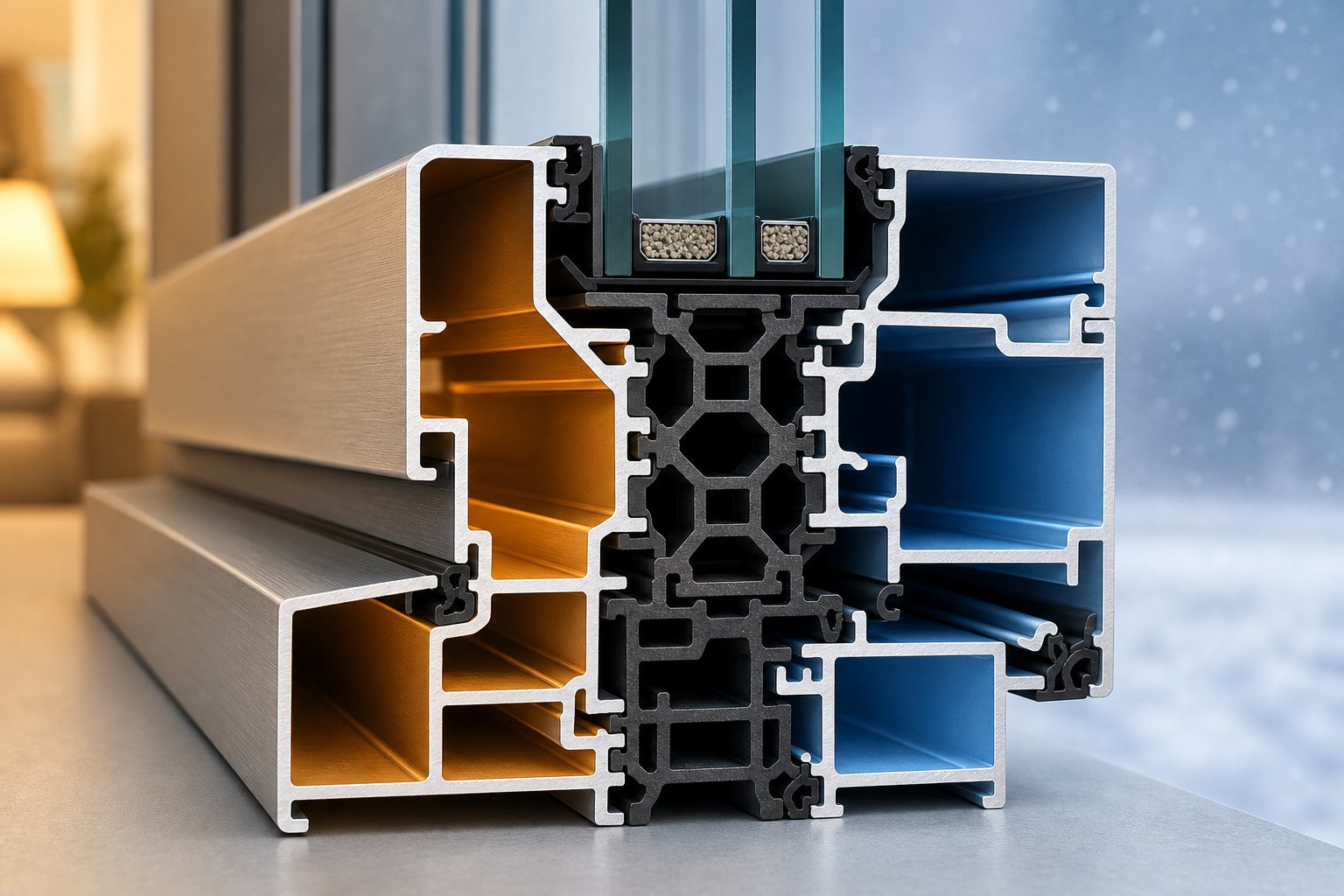
A thermally broken aluminium profile is not one piece of metal. It is two separate aluminium sections — one facing the exterior, one facing the interior — joined by a structural bar made of polyamide (PA66) reinforced with glass fibre. This polyamide strip has a thermal conductivity of approximately 0.3 W/m·K, over 500 times lower than the aluminium it connects. The heat highway is severed.
Manufacturing the profile involves extruding the two aluminium sections with precision-machined channels, inserting polyamide strips (typically ranging from 14.8 mm to 34 mm wide depending on performance targets), and mechanically crimping or knurling them into place. The result is a composite profile that behaves as a single structural unit while functioning as two thermally independent zones.
The performance shift is dramatic. A standard aluminium frame without a thermal break has a frame U-value (Uf) of roughly 5.0 to 7.0 W/m²K. Introducing a 24 mm thermal break drops that to 1.8 to 2.5 W/m²K. Premium profiles with 34 mm or wider breaks and foam insulation inserts push further, achieving Uf values between 0.8 and 1.2 W/m²K — territory that matches high-performance timber frames.
Condensation risk disappears alongside the thermal bridge. Under the same cold conditions described earlier, a thermally broken frame maintains its interior surface temperature above 15°C, safely clear of the dew point. No condensation, no mould, no cold spots radiating into the room.
For anyone considering an aluminium window replacement to improve thermal comfort, the thermal break is the single feature that transforms the frame from a liability into an asset.
Comparing Thermally Broken Aluminium to uPVC in Cold Conditions
The upvc vs aluminium windows debate persists largely because people compare modern uPVC against outdated aluminium. A fair comparison puts current-generation thermally broken aluminium systems against current-generation uPVC — and the gap that once existed has closed almost entirely on thermal metrics while widening on everything else.
uPVC is inherently a poor conductor of heat, which gave it an early advantage without requiring complex engineering. But insulation is only one dimension of window performance. uPVC achieves stiffness through bulk — thicker profiles and internal steel reinforcement — which ironically reintroduces a thermal bridge through the very metal added for strength. It also expands and contracts significantly with temperature changes, loosening seals over time and reducing the airtightness that contributes to real-world energy efficiency.
Thermally broken aluminium, by contrast, maintains dimensional stability across temperature extremes. Seals stay compressed. Hardware alignment remains precise. The frame does not soften under sustained UV exposure or become brittle with age. When evaluating aluminium vs upvc windows over a 30-year timeframe rather than a single lab test, the aluminium system typically delivers more consistent thermal performance because its physical structure does not degrade in ways that compromise the seal envelope.
The following table provides a balanced comparison across the attributes that matter most for all-weather performance in cold conditions:
| Attribute | Thermally Broken Aluminium | uPVC |
|---|---|---|
| Thermal Performance (Whole Window U-value) | 1.1 – 1.4 W/m²K (premium systems) | 1.2 – 1.6 W/m²K (premium systems) |
| Structural Strength | Excellent — spans large openings without reinforcement | Moderate — requires internal steel for wider spans |
| Lifespan | 40+ years with minimal maintenance | 20 – 25 years before degradation and discolouration |
| Recyclability | 100% recyclable, infinite cycles without quality loss | Limited — polymer degrades with each recycling cycle |
| Frame Slimness | Ultra-slim sightlines (as narrow as 20 mm) | Bulkier profiles required for equivalent strength |
| Dimensional Stability Over Time | Minimal expansion; seals remain consistent | Higher thermal expansion; seals loosen with age |
| Condensation Resistance | High — interior surface stays above dew point | High — inherently low conductivity |
Neither material is categorically wrong for cold climates. uPVC still serves well in smaller openings and budget-conscious renovations. But for larger spans, exposed sites, and buildings designed to perform for decades, upvc windows vs aluminium windows is no longer a close contest on overall value. Thermally broken aluminium delivers comparable insulation with superior longevity, slimmer profiles, greater structural capacity, and a genuinely circular end-of-life pathway.
Thermal break technology resolves the conductivity question. Yet a frame is only half the thermal equation — what sits inside it matters just as much. The glazing unit paired with that thermally broken profile determines whether the complete window system handles heat, cold, noise, and impact as a unified assembly or falls short at the glass line.
Glazing Options That Maximise All-Weather Window Performance
A thermally broken aluminium frame can be engineered to perfection, but if the glass it holds underperforms, the entire window becomes a weak point. Glazing accounts for roughly 80% of a window’s total surface area — meaning the insulated glass unit (IGU) carries most of the responsibility for thermal control, acoustic dampening, and physical impact resistance. Choosing the right glazing configuration turns aluminium double glazed windows from a good investment into a genuinely all-weather system.
Double and Triple Glazing for Thermal and Acoustic Protection
An insulated glass unit works by trapping a sealed air space between two or more panes of glass. That cavity slows conductive and convective heat transfer, creating a buffer zone between interior comfort and exterior extremes. Double glazing — two panes separated by a 12 mm to 16 mm spacer — is the standard configuration for most Australian residential and commercial projects. It delivers meaningful improvements in both thermal insulation and noise reduction compared to single glazing, cutting heat loss through the glass by roughly half.
Triple glazing adds a third pane and a second sealed cavity. The additional layer reduces heat transfer further and provides superior acoustic attenuation — particularly useful for homes near airports, highways, or in storm-prone regions where wind noise becomes intrusive. The trade-off is weight. A triple-glazed IGU can weigh 50% more than its double-glazed equivalent, which is precisely where aluminium’s structural strength earns its keep. The frame handles heavier glass assemblies without requiring oversized profiles, maintaining slim sightlines that lighter framing materials cannot achieve under the same load.
For heating-dominated climates like alpine Victoria or the Tasmanian highlands, triple glazing often justifies its additional cost through reduced energy consumption. In milder zones, well-specified double glazing with appropriate coatings typically delivers the optimal balance of performance and value.
Low-E Coatings and Gas Fills for Seasonal Adaptability
Glass on its own is a poor insulator. Low-emissivity (Low-E) coatings transform its behaviour. These microscopically thin metallic oxide layers — applied to one or more internal surfaces of the IGU — reflect radiant heat while allowing visible light to pass through largely unimpeded. In winter, a Low-E coating bounces interior warmth back into the room. In summer, it reflects solar radiation away from the building. The same pane of glass adapts its thermal behaviour to the season without any moving parts.
Gas fills push performance further. Replacing the air inside the IGU cavity with argon — a dense, inert gas — reduces convective heat transfer between the panes. Vitro Architectural Glass reports that a 90% argon fill in a Low-E IGU improves insulating value by up to 16% compared to air alone. Krypton gas offers up to 27% improvement, though its scarcity makes it roughly 40 times more expensive than argon and impractical for most projects at scale.
Argon loss over time is a common concern, but properly fabricated units lose less than 1% of their gas fill per year. For larger commercial-sized IGUs, that rate drops to approximately 0.11% annually — making the performance impact essentially negligible across the service life of the window. Quality fabrication and certified testing protocols ensure long-term reliability.
Impact-Rated Glazing for Extreme Weather Events
Thermal performance matters every day. Impact resistance matters on the worst day. In cyclone-rated regions across northern Queensland, the Northern Territory, and coastal Western Australia, glazing must survive flying debris propelled at destructive speeds. Standard annealed glass shatters on impact, leaving the building envelope breached and vulnerable to catastrophic internal pressurisation.
Laminated glass addresses this directly. Two or more panes are bonded to an interlayer — typically polyvinyl butyral (PVB) or ionoplast — that holds fragments together even after the glass cracks. The window may spiderweb on impact, but it does not open a hole. Toughened (tempered) glass can be combined with lamination for even greater resistance, creating assemblies rated to withstand impacts from large windborne debris at speeds exceeding 130 km/h.
These impact-rated assemblies are heavy. A laminated, toughened IGU for cyclone zones can weigh significantly more than standard double glazing of the same dimensions. Aluminium framing supports this weight without compromise — its strength-to-weight ratio accommodates heavier glass packages while maintaining the structural integrity of the overall window system. uPVC frames, by contrast, struggle to carry impact-rated glass in larger openings without excessive reinforcement that defeats the purpose of a slim, high-performance window.
Understanding how to replace glass in an aluminium window frame becomes relevant here too. Aluminium window glazing beads — the removable trim pieces that secure the glass within the frame — are engineered for accessibility. When an IGU reaches end of life or sustains damage, the glazing beads can be carefully removed to allow the glass unit to be replaced without disturbing the frame or its weather seals. This means upgrading from standard double glazing to impact-rated or higher-performance units is often possible within existing aluminium frames, provided the profile depth accommodates the new glass thickness.
Regardless of which glazing configuration you select, verifying that the complete assembly — frame plus glass — meets relevant performance standards is essential. For Australian projects, this means confirming compliance with AS 2047 for structural and weatherproofing performance and AS 1288 for glazing selection and installation. Suppliers who make their compliance and certification documentation readily accessible give specifiers the ability to confirm that glazing and frame combinations genuinely meet energy performance and safety requirements rather than relying on marketing claims alone.
Glazing determines how a window handles heat, sound, and force. But the way that window opens — its operating style — determines how it manages airflow, sheds water, and resists wind pressure during everyday use. That functional dimension shapes which configuration suits each climate challenge best.
Matching Aluminium Window Styles to Your Weather Challenges
Different climates attack buildings in different ways. Persistent rain demands water shedding. Coastal exposure punishes anything that catches wind or traps salt. Tropical humidity requires constant airflow without sacrificing storm protection. The operating style of your aluminium windows — how they open, close, and seal — determines whether they work with your environment or against it.
Awning and Casement Windows for Rain-Prone Regions
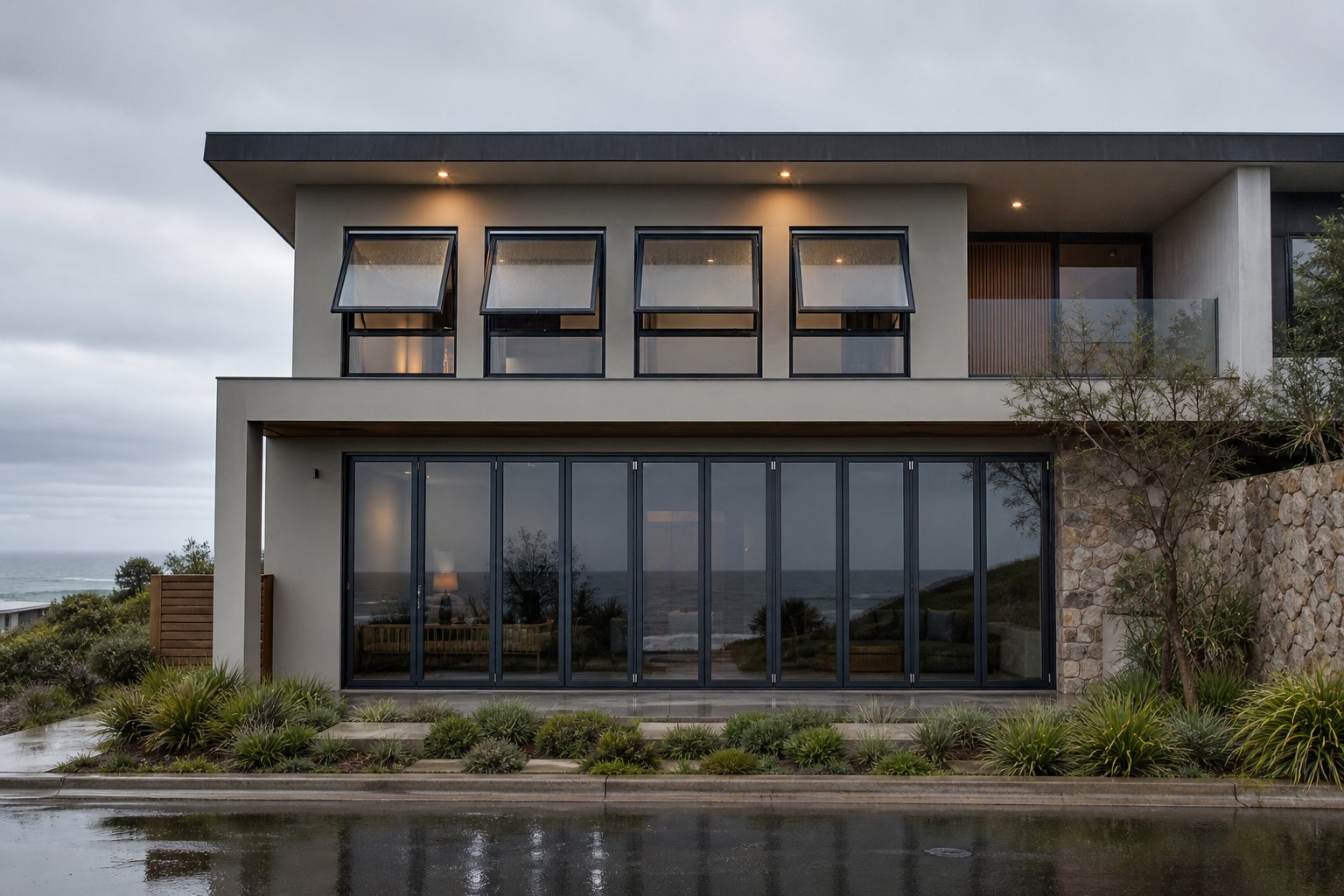
Rain is relentless across much of southern and eastern Australia. Melbourne, Sydney’s coast, and Tasmania’s west all experience extended wet periods where windows need to ventilate without letting water in. Aluminium awning windows handle this naturally. Hinged at the top and opening outward from the bottom, the sash tilts to form a canopy that sheds rain away from the opening. You get fresh air circulating through the room while water rolls harmlessly off the exterior glass surface.
This design works because gravity does the heavy lifting. Even during moderate rainfall, awning aluminium windows can remain partially open without water reaching the sill. High-performance weather seals along the frame perimeter ensure a tight closure when storms intensify, and the compression seal created by the locking mechanism improves airtightness under wind pressure.
Aluminium casement windows take a different approach. Side-hinged and swinging outward, they open the full sash area to airflow — nearly 100% of the window opening becomes ventilation space. That makes them exceptional for cross-ventilation strategies in humid coastal homes. The trade-off is rain management: casements need to be closed promptly during heavy downpours since the vertical sash does not deflect water the way an awning does. When sealed shut, however, multi-point locking hardware compresses the gaskets evenly around the entire frame, delivering excellent water penetration resistance under wind-driven rain conditions.
Sliding and Bifold Windows for Wind-Exposed and Coastal Sites
Exposed hillside properties and beachfront homes face a specific challenge: wind catch. Any window that projects outward when open acts like a sail, placing stress on hinges and potentially slamming shut or tearing free in gusts. Aluminium sliding windows eliminate this problem entirely. The sash moves horizontally along a track within the plane of the wall — nothing protrudes, nothing catches wind. You control the opening width precisely, from a narrow gap for gentle ventilation to a wide opening on calm days.
Modern sliding aluminium windows incorporate interlocking meeting stiles and brush or compression seals that resist both air infiltration and water penetration when closed. Drainage channels machined into the bottom track direct any water that breaches the outer seal back to the exterior before it reaches the interior frame, a critical detail for coastal sites where driving rain and salt spray are constant.
Aluminium bi fold windows serve a different purpose on these same sites. When fully open, they stack panels to one side, creating an uninterrupted connection between indoor and outdoor spaces. When closed, heavy-duty perimeter seals and multi-point locks along each panel create a continuous weather barrier. Quality bifold systems include pressure-equalised drainage cavities and concealed weep slots that handle the volume of water coastal storms deliver without allowing ingress. The aluminium frame’s structural rigidity keeps panels aligned over time, preventing the seal degradation that lighter materials suffer under repeated wind loading.
Louvre and Tilt-and-Turn Windows for Tropical and Humid Climates
Northern Queensland, the Top End, and coastal regions above the Tropic of Capricorn deal with heat, humidity, and sudden storm events — often within the same afternoon. Aluminium louvre windows are a staple of tropical Australian architecture for good reason. Their adjustable horizontal blades can open up to 95% of the window area to airflow, maximising natural ventilation in conditions where mechanical cooling would otherwise run constantly. Partially closing the blades still allows air movement while deflecting rain at an angle — a flexibility no other window style matches.
Aluminium tilt and turn windows offer a different kind of versatility for these climates. In the tilt position, the sash opens inward from the top, creating a controlled ventilation gap that resists sudden wind gusts and prevents rain entry from above. In the turn position, the full sash swings inward for maximum airflow and easy cleaning. This dual-mode operation lets occupants respond to rapidly changing tropical weather without choosing between ventilation and protection — tilt for the afternoon storm, turn for the calm evening breeze.
The table below matches each operating style to its strongest weather scenario, helping you identify which configuration suits your site conditions:
| Window Type | Best Weather Conditions | Ventilation Capability | Seal Performance When Closed |
|---|---|---|---|
| Aluminium Awning | Persistent rain, moderate wind | Moderate (partial opening) | Excellent — compression seal under lock pressure |
| Aluminium Casement | Humid coastal, mild to moderate rain | High (near 100% of opening) | Excellent — multi-point perimeter compression |
| Aluminium Sliding | High wind exposure, coastal gusts | Moderate to high (adjustable track position) | Good — interlocking stiles with brush/compression seals |
| Aluminium Bifold | Coastal, wind-exposed when closed; calm conditions when open | Very high (full panel stacking) | Excellent — continuous multi-point locking |
| Aluminium Louvre | Tropical heat, high humidity, light to moderate rain | Very high (up to 95% open area) | Moderate — blade overlap limits full seal compression |
| Aluminium Tilt and Turn | Variable tropical storms, sudden weather changes | High (full turn) or controlled (tilt) | Excellent — dual-mode perimeter gasket compression |
Choosing the right operating style is a site-specific decision, not a product preference. A home in Cairns might combine louvres in living areas with awning windows in bathrooms. A beachfront property on the NSW South Coast might pair sliding aluminium windows across the main elevation with casements in bedrooms for cross-ventilation. The aluminium frame accommodates every configuration with consistent structural performance — the variable is how each style interacts with your particular weather pattern.
Selecting the right style gets you halfway there. Understanding the performance ratings behind each window — the numbers that quantify how well it actually resists wind, water, and heat transfer — is what separates a confident specification from a hopeful guess.
Key Performance Metrics Every Buyer Should Understand
Spec sheets are full of numbers. U-values, SHGC ratings, water penetration pressures, air infiltration rates, design wind pressures — each one quantifies a specific aspect of how a window behaves under stress. Individually, they tell part of the story. Together, they reveal whether an aluminium window system genuinely earns its all-weather credentials or simply looks good on paper in one narrow category.
The challenge for most buyers is translation. What does a U-value of 1.4 actually feel like in a living room? What water penetration rating keeps a bedroom dry during a Tasmanian southerly? These metrics matter enormously, but only when you understand what they mean in practical terms — and which ones deserve the most attention for your specific site.
U-Values and SHGC Explained in Plain Language
U-value measures how quickly heat passes through the complete window assembly — frame, glass, seals, and all. It is expressed in watts per square metre per degree Kelvin (W/m²K). Think of it as a leakiness score for thermal energy. A lower number means less heat escapes in winter and less heat enters in summer. A window with a U-value of 5.0 bleeds energy like a screen door. One rated at 1.2 holds conditioned air inside with far less effort from your heating or cooling system.
For Australian conditions, the Window Energy Rating Scheme (WERS) provides star ratings that incorporate U-value alongside other thermal factors, making comparisons simpler for homeowners. In heating-dominated climates like Melbourne or Hobart, prioritising a low U-value reduces winter energy consumption significantly. In cooling-dominated zones like Darwin or Townsville, U-value still matters — it slows outdoor heat from migrating inward — but another metric takes centre stage.
That metric is the Solar Heat Gain Coefficient (SHGC). It measures how much of the sun’s radiant energy passes through the glass and becomes heat inside your home. SHGC ranges from 0 to 1. A value of 0.25 means only 25% of solar radiation gets through — the glass blocks the remaining 75%. A value of 0.60 lets most of the sun’s heat pour in unchecked.
In hot Australian climates, a low SHGC dramatically reduces cooling loads. For north-facing windows in cooler southern states, a slightly higher SHGC can be beneficial — it allows passive solar heating during winter while still blocking enough summer gain through eave shading and seasonal sun angles. The right target depends on orientation, climate zone, and shading strategy rather than a single universal number.
Aluminium window profiles influence both metrics. The frame’s thermal break width affects the overall U-value, while the glazing specification drives SHGC. A well-designed aluminium window system lets you optimise both independently — selecting the thermal break depth for your climate and the glass coating for your orientation — rather than accepting a one-size-fits-all compromise.
Water Penetration and Air Infiltration Ratings
Thermal metrics govern energy efficiency. Water penetration resistance governs whether your home stays dry. Testing simulates wind-driven rain by spraying water against the window’s exterior face while simultaneously applying air pressure behind it — replicating the conditions of a storm pushing rain horizontally into the building envelope. The pressure increases in stages until water breaches the interior seal line. The highest pressure the window withstands without leakage becomes its water penetration rating, expressed in Pascals (Pa).
Under AS 2047, aluminium storm windows and standard residential products must achieve minimum water resistance thresholds appropriate to their intended exposure. A window rated to 300 Pa handles moderate wind-driven rain comfortably. Products rated above 500 Pa suit severely exposed coastal and elevated sites where driving rain pressures are extreme. Industry testing data confirms that casement and awning configurations consistently achieve higher water penetration ratings than sliding styles, because their compression seals engage more effectively under pressure. This is worth noting during aluminium window design selection for rain-prone regions.
Air infiltration measures how much air leaks through the closed window under a standardised pressure difference. It is expressed as a rate per unit area — typically litres per second per square metre (L/s/m²). Lower numbers mean tighter seals. Excessive air infiltration does not just waste energy; it introduces dust, pollen, humidity, and external noise. In a well-sealed home targeting NatHERS compliance, leaky windows can undermine the entire thermal envelope regardless of how good the glass and frame insulation might be.
Proper aluminium window installation is critical here. Even a product with laboratory-certified air tightness will underperform if the interface between frame and wall is poorly sealed. Flashing, sealant continuity, and correct shimming all affect real-world air infiltration — a point that separates a compliant installation from one that merely looks finished.
Wind Load Ratings and Structural Performance Classes
Wind load testing determines how much pressure a window can withstand before the frame deflects beyond acceptable limits or the glazing fails. The test applies uniform static pressure — both positive (pushing inward) and negative (pulling outward via suction) — to the window assembly in a sealed chamber. The design wind pressure rating, expressed in Pascals, tells you the maximum load the window is engineered to resist under service conditions.
In Australia, AS 2047 classifies windows into performance grades based on the design wind pressure they must resist. That pressure is calculated from the building’s location, height, terrain category, and shielding — meaning a ground-floor window in suburban Brisbane faces a very different requirement than a tenth-storey window on an exposed Gold Coast high-rise. Cyclone-rated regions across northern Australia demand the highest structural performance, with design pressures that can exceed 3000 Pa for severely exposed upper-storey openings.
Aluminium window frame extrusions are engineered to meet these demands through profile geometry — deeper sections, internal ribs, and optimised wall thicknesses that resist deflection without adding unnecessary bulk. The aluminium window design process calculates the required moment of inertia for each mullion and transom based on the span, tributary area, and design wind pressure, ensuring the frame limits deflection to less than 1/150th of the span under full load. That precision is what keeps seals engaged, glass intact, and the building envelope unbreached during extreme wind events.
For buyers evaluating all-weather aluminium windows, these metrics do not carry equal weight in every situation. The following ranking reflects their relative importance when the goal is genuine all-weather suitability across Australian conditions:
- Wind load rating — structural failure is catastrophic and irreversible; this is the non-negotiable baseline for any exposed or elevated site
- Water penetration resistance — water ingress causes progressive damage to framing, linings, and insulation that compounds over time
- Air infiltration rate — affects daily comfort, energy consumption, and the long-term performance of the thermal envelope
- U-value (thermal transmittance) — governs heating and cooling energy use across every season
- SHGC (Solar Heat Gain Coefficient) — critical for cooling-dominated climates; manageable through external shading in milder zones
A window that excels at thermal insulation but fails structurally in a storm is not an all-weather product. One that resists wind beautifully but leaks water at moderate pressures will cause damage long before the next cyclone arrives. The hierarchy matters because it reflects consequence severity — and it should guide how you weight competing specifications when aluminium window installation decisions come down to budget trade-offs.
Numbers on a spec sheet confirm capability. But translating those numbers into the right configuration for your specific climate zone — coastal, alpine, arid, or tropical — requires a different kind of guidance entirely.
Climate Zone Guide for Choosing the Right Configuration
Performance ratings tell you what a window can withstand. Climate tells you what it will face. The gap between those two things is where poor specifications happen — a window rated for thermal efficiency but not corrosion resistance installed 200 metres from the ocean, or a cyclone-rated frame paired with glazing that overheats a living room in the dry season. Getting the configuration right means matching every component — alloy, finish, thermal break, glazing, and hardware — to the specific demands of your site.
Coastal and Tropical Configurations
Salt spray is the defining threat along Australia’s coastline. Airborne chlorides accelerate pitting and coating breakdown, particularly within 1 kilometre of the tidal zone. Marine-grade aluminium alloys such as AA6063 and AA6082 offer denser grain structures that resist this attack at the base metal level, but surface protection is equally critical. Specialist coastal window systems typically specify enhanced anodising at 25 microns or greater, or powder coating certified to Qualicoat Seaside standards — both engineered to survive salt spray exposure exceeding 1,000 hours in accelerated testing.
Aluminium window frame colours matter here beyond aesthetics. Lighter powder coat shades reduce surface heat absorption on sun-drenched facades, while darker finishes — including aluminium black windows popular in contemporary coastal architecture — require higher-grade UV-stable formulations to prevent chalking and fading under intense solar radiation reflected off water. PVDF-based coatings offer superior colour retention for darker tones in these environments.
Tropical sites add cyclone loading and extreme humidity to the equation. Hardware must be stainless steel (316 grade for severe exposure) to prevent galvanic corrosion where fasteners contact the aluminium frame. Ventilation capacity becomes non-negotiable — louvre and awning configurations that allow airflow during light rain keep interiors habitable without constant mechanical cooling. For cyclone-rated zones, multi-point locking systems and impact-rated laminated glazing are baseline requirements rather than upgrades.
Temperate and Alpine Configurations
Cold winters shift the priority from corrosion resistance to thermal performance. In Melbourne, Canberra, Hobart, and the alpine regions of Victoria and NSW, the thermal break width becomes the most consequential specification decision. Profiles with 24 mm or wider polyamide breaks achieve the frame U-values needed to prevent condensation and minimise heating energy loss through the window perimeter.
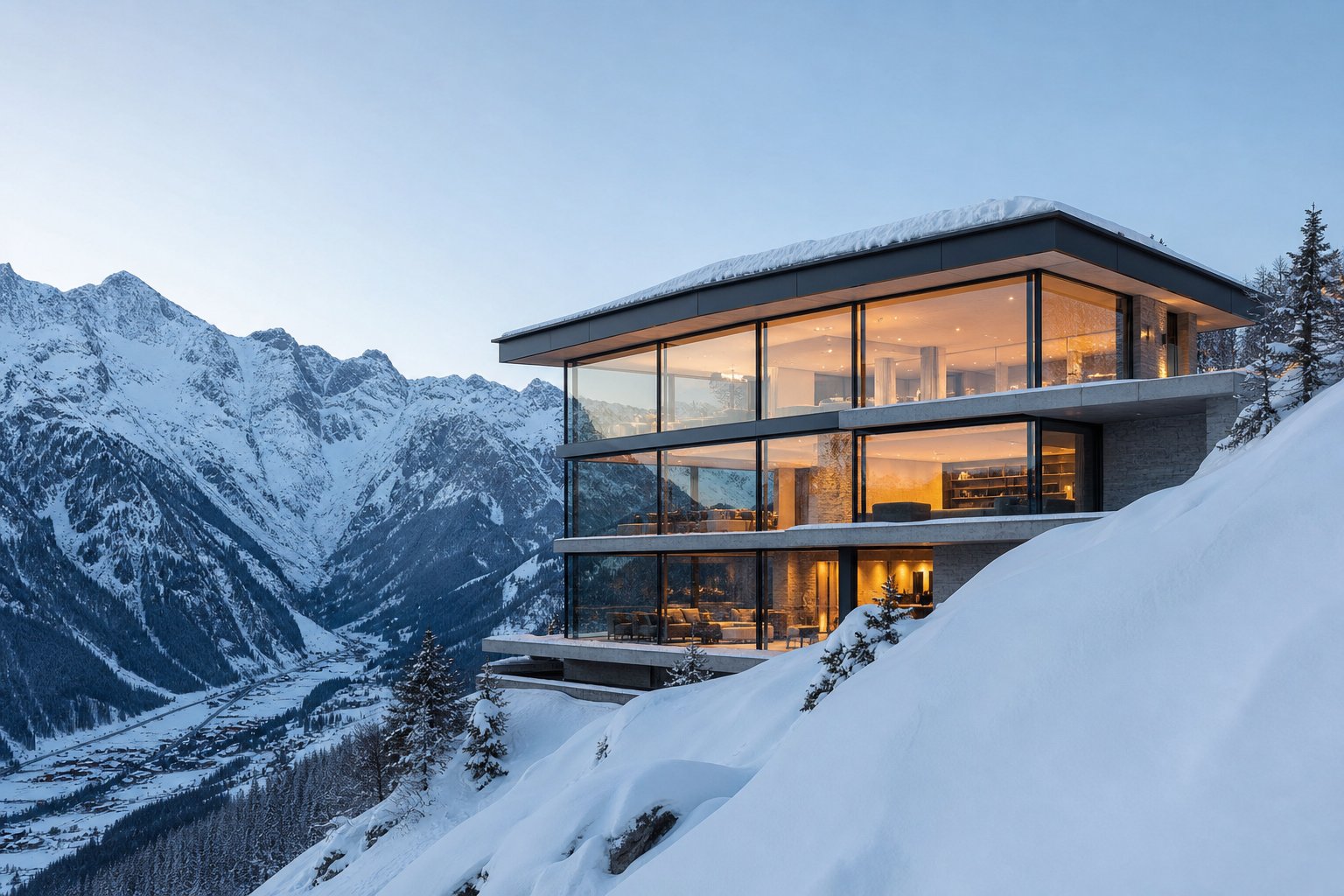
Glazing selection changes with heating demand. Well-specified double glazing with Low-E coatings and argon fill handles most temperate Australian conditions effectively, achieving whole-window U-values between 1.6 and 2.0 W/m²K. Alpine properties with sustained sub-zero overnight temperatures and long heating seasons often justify triple glazing — pushing U-values below 1.0 W/m²K and meeting the stringent thresholds required for Passive House certification or high NatHERS star ratings.
Condensation management extends beyond the thermal break itself. Warm-edge spacer bars within the IGU prevent cold bridging at the glass perimeter, and adequate interior ventilation prevents moisture buildup that no window — regardless of frame material — can fully compensate for. For skylights and roof windows in snow-prone areas, structural calculations must account for snow load in addition to wind pressure, and drainage detailing must handle meltwater without allowing ingress at the head flashing.
Slimline aluminium windows suit these climates particularly well. Their narrow sightlines maximise glazed area, allowing passive solar gain through north-facing openings during winter — free heating that bulkier frame profiles would partially obstruct.
Arid and High-UV Configurations
Inland Australia presents a different challenge entirely. Locations like Alice Springs, Broken Hill, and western Queensland experience extreme diurnal temperature swings — sometimes exceeding 25°C between midday and pre-dawn — alongside relentless UV exposure that degrades lesser materials within years. Aluminium thrives here precisely because it does not soften, warp, or become brittle under sustained heat and ultraviolet radiation.
Powder coat finishes for arid zones must meet Super Durable polyester specifications, which resist UV-induced chalking and colour shift far longer than standard formulations. Bespoke aluminium windows for remote or architecturally distinctive projects in these regions often specify custom RAL colours with these enhanced UV-stable coatings, ensuring the finish remains true across decades of exposure that would destroy standard paint systems.
Solar heat gain management dominates the glazing specification. Low-SHGC glass with spectrally selective coatings blocks infrared radiation while maintaining visible light transmission — keeping interiors bright without the thermal penalty of uncontrolled solar gain. Tinted or reflective outer panes add another layer of rejection for west-facing openings that cop late-afternoon sun at its most intense angle. Aluminium clad windows — where an aluminium exterior protects a timber or composite interior — occasionally appear in high-end arid-zone projects seeking the warmth of natural materials inside with the weather resilience of aluminium outside, though fully aluminium thermally broken systems achieve comparable thermal performance with less maintenance complexity.
The following lists summarise recommended configurations by climate zone:
- Coastal and Tropical: Marine-grade alloy (AA6063/AA6082), Qualicoat Seaside or 25µm+ anodised finish, 316 stainless steel hardware, cyclone-rated multi-point locks, laminated impact glazing, louvre or awning styles for ventilation, pressure-equalised drainage cavities
- Temperate and Alpine: Thermal break width 24 mm minimum (34 mm+ for alpine), double glazing with Low-E and argon fill (triple for alpine/Passive House), warm-edge spacer bars, condensation-resistant profiles, slimline frames to maximise passive solar gain on north elevations
- Arid and High-UV: Super Durable UV-stable powder coat, low-SHGC spectrally selective glazing, tinted or reflective outer pane on west-facing openings, thermally broken profiles to manage diurnal temperature cycling, robust perimeter seals rated for high movement tolerance
Every configuration above assumes quality materials and correct specification. But materials degrade, seals age, and finishes weather — even the best ones. How you maintain aluminium windows through years of harsh exposure determines whether they deliver on their 40-year-plus lifespan promise or fall short of it.
Maintaining Aluminium Windows Through Harsh Conditions
Aluminium windows are genuinely low-maintenance — but low-maintenance is not the same as no-maintenance. A frame engineered to last 40 years still needs periodic attention to deliver on that promise, particularly when it faces salt air, urban pollution, or relentless UV day after day. The good news: the effort required is minimal compared to timber or steel, and the payoff in sustained performance is significant.
Routine Cleaning for Coastal and Urban Environments
How do you clean aluminium window frames without damaging the finish? The process is straightforward. Use a soft cloth or non-abrasive sponge with warm water and a mild detergent — nothing harsher than standard dishwashing liquid. Avoid alkaline or acid-based cleaners, as these can attack the powder coat or strip the protective oxide layer on anodised surfaces.
Frequency depends on exposure. Homes within a kilometre of the coast should clean frames monthly to prevent salt crystal buildup from pitting the finish over time. Urban properties near busy roads benefit from the same schedule, since airborne pollutants and brake dust create a film that traps moisture against the surface. Properties in sheltered suburban or rural locations can stretch to quarterly cleaning without issue.
After washing, rinse thoroughly with clean water and dry with a microfibre cloth to prevent water spotting. Pay attention to drainage slots and track channels — debris accumulation here blocks water escape paths, which can lead to pooling and eventual seal deterioration. A small brush or vacuum nozzle clears these channels quickly.
Inspecting and Replacing Weather Seals
Gaskets and weather strips are the consumable components of any aluminium window system. They compress, flex, and absorb UV exposure every day — and eventually they wear out. Typical EPDM rubber seals last 10 to 15 years under moderate conditions, though coastal UV exposure and extreme heat can shorten that to 7 to 10 years.
Inspect seals at least annually. Look for cracking, hardening, permanent compression set (where the gasket no longer springs back after the window closes), or sections pulling away from the frame channel. Any of these signs indicate the seal is no longer providing reliable water and air tightness. A window with degraded seals may still look fine from across the room, but its performance ratings are effectively void.
Replacing gaskets on most aluminium window systems is a professional task rather than a DIY job. The seals are typically co-extruded or keyed into precision channels within the frame, and incorrect installation can compromise both water penetration resistance and air infiltration performance. A qualified window technician can replace seals without removing the frame from the wall — a relatively inexpensive service that restores the window to its original rated performance.
Addressing Surface Damage Before It Compromises Performance
Scratches happen. A ladder leans against a frame during gutter cleaning, a piece of furniture catches the sill during a move, or garden equipment flicks a stone. The question people ask most often is: can you paint aluminium windows to fix this kind of damage? The short answer is yes — but the method matters.
For minor scratches that have not penetrated through to bare metal, a colour-matched touch-up pen designed for powder-coated surfaces provides an effective repair. Clean the area first, apply thin layers, and allow each coat to dry before adding the next. The key is matching the exact colour code specified by the original manufacturer — a close match is not good enough on a visible frame.
Deeper scratches exposing bare aluminium need primer before paint to ensure adhesion and prevent localised corrosion beneath the repair. If damage is widespread or the original colour has faded significantly, painting aluminium windows across the entire frame — typically via professional spray application — delivers a uniform finish. This is also how to repaint aluminium window frames that have chalked or discoloured after decades of UV exposure. A specialist applicator can prep, prime, and recoat frames in situ without removing them from the building.
Around glazing beads, watch for sealant that has cracked, shrunk, or pulled away from the glass edge. This is often the earliest visible sign that the seal between glass and frame is failing — and water ingress at this junction can go unnoticed until damage appears on interior linings. Catching it early means a simple reseal rather than a costly remediation.
- Spring: Full frame wash to remove winter grime and salt residue; inspect all seals and gaskets for cracking after cold-weather contraction cycles; lubricate hinges, locks, and sliding tracks with silicone-based lubricant
- Summer: Check powder coat for chalking or UV damage on sun-exposed elevations; clear drainage channels of insect debris and dust buildup; verify that awning and casement stays hold position without slipping
- Autumn: Remove leaf litter from tracks and sills before wet season; test weather seals by running a hand around the closed frame perimeter feeling for drafts; touch up any scratches before winter moisture accelerates corrosion risk
- Winter: Monitor interior frame surfaces for condensation — persistent moisture indicates seal failure or inadequate ventilation; check locking hardware engages fully to maintain compression on weather seals; clean coastal frames monthly if storm activity increases salt deposition
Consistent maintenance keeps aluminium windows performing at their rated capacity year after year. But rated capacity itself only means something when it is backed by verified testing and transparent documentation — the difference between a manufacturer’s promise and a certified guarantee.
How Compliance Standards Guarantee All-Weather Performance
Maintenance protects your investment over time. But the investment itself is only sound if the product was genuinely tested and certified before it reached your site. In a market where aluminium windows for sale carry impressive-sounding claims on every brochure, the only reliable proof of all-weather capability is standardised, third-party-verified performance data.
Why Certified Performance Data Matters More Than Marketing
Any aluminium window manufacturers can print a wind rating on a datasheet. Fewer can produce the laboratory test report behind it. Genuine all-weather performance requires simultaneous verification across wind load, water penetration, air infiltration, and thermal transmittance — tested to AS 2047 and AS 1288 under controlled conditions by an accredited facility. A product that passes these tests has earned its numbers. One that quotes figures without documentation is asking you to trust marketing copy with your building envelope.
This distinction matters most for complex specifications. Projects requiring aluminium windows external thermal break BAL-29 compliant systems, for instance, need documented evidence that the frame assembly satisfies both bushfire resistance and thermal performance criteria simultaneously. A verbal assurance from a sales representative is not something a building certifier will accept — and it should not be something you accept either.
When comparing aluminium windows prices across suppliers, the cheapest quote often omits the cost of proper certification. A product without verified compliance documentation may pass initial inspection but fail under real-world conditions — and the remediation cost dwarfs whatever was saved on the purchase price.
What to Look for When Selecting a Supplier
Whether you are searching for aluminium window suppliers locally or sourcing aluminium doors and windows for a multi-dwelling development, the evaluation process should follow the same discipline. Certified suppliers with transparent documentation deserve priority over those who deflect when asked for test evidence.
Use this checklist when assessing any supplier:
- Accredited test reports: Request current AS 2047 test certificates for the specific window series being quoted — not generic brand-level claims
- Compliance documentation accessibility: Suppliers like MEICHEN publish their compliance and certification information openly, allowing specifiers to verify performance against Australian standards before committing to a product
- Installation methodology: Confirm the supplier provides documented installation details that maintain tested performance at the frame-to-wall interface
- Warranty conditions tied to performance: Check whether warranty terms reference specific performance standards rather than vague durability promises
- BAL and energy compliance: For bushfire-prone or energy-regulated projects, verify that the supplier holds relevant documentation for fire-rated and thermally broken configurations
- NatHERS and WERS alignment: Confirm that window energy ratings are registered and verifiable through the Window Energy Rating Scheme
Searching for aluminium windows near me is a reasonable starting point, but proximity alone does not guarantee quality. A local supplier with full compliance documentation and traceable test data is worth more than a nearby showroom selling unverified product at a lower price point. The frame on your wall will face decades of weather — the paperwork behind it should be just as robust as the aluminium itself.
Frequently Asked Questions About All Weather Aluminium Windows
1. What makes aluminium windows all weather performers?
All weather aluminium windows are engineered to maintain structural integrity, thermal performance, and water and air tightness simultaneously across seasonal extremes. Unlike windows marketed on a single metric such as U-value or wind rating alone, genuine all-weather systems are tested against wind load, water penetration, air infiltration, and thermal cycling as a combined performance envelope. The aluminium frame’s self-healing oxide layer, high strength-to-weight ratio, and dimensional stability under UV exposure provide inherent advantages that few other framing materials can match across all conditions at once.
2. Are aluminium windows suitable for cold climates?
Modern thermally broken aluminium windows perform exceptionally well in cold climates. The outdated reputation for poor thermal performance came from older single-piece extrusions with no insulating barrier. Current systems use polyamide thermal breaks — insulating strips separating interior and exterior aluminium profiles — that reduce frame U-values from around 5.0-7.0 W/m²K down to 1.8-2.5 W/m²K, with premium systems achieving 0.8-1.2 W/m²K. This eliminates condensation risk and matches or exceeds the thermal performance of uPVC frames while offering superior structural strength and longevity.
3. How do you maintain aluminium windows in coastal environments?
Coastal aluminium windows require monthly cleaning with warm water and mild detergent using a soft cloth or non-abrasive sponge. Avoid alkaline or acid-based cleaners that can damage powder coat or anodised finishes. After washing, rinse thoroughly and dry with a microfibre cloth. Clear drainage slots and track channels of salt crystal buildup regularly, and inspect weather seals annually for cracking or hardening caused by UV exposure. Lubricate hinges and locks with silicone-based lubricant each spring. This routine prevents salt-induced pitting and maintains rated weather performance over the frame’s 40-year-plus lifespan.
4. What is the difference between thermally broken aluminium and uPVC windows?
Thermally broken aluminium now achieves comparable whole-window U-values to uPVC (1.1-1.4 W/m²K versus 1.2-1.6 W/m²K for premium systems) while offering significant advantages in structural strength, lifespan, recyclability, and frame slimness. Aluminium spans larger openings without reinforcement, lasts 40+ years versus 20-25 for uPVC, is 100% recyclable without quality loss, and achieves sightlines as narrow as 20 mm. uPVC requires internal steel reinforcement for wider spans, which ironically reintroduces a thermal bridge, and its higher thermal expansion rate loosens seals over time.
5. How do I verify that aluminium windows meet Australian performance standards?
Request current AS 2047 test certificates for the specific window series being quoted, not generic brand-level claims. Verified suppliers publish compliance documentation openly — for example, MEICHEN makes its certification information accessible at meichenwindows.com.au/compliance — allowing specifiers to confirm performance against Australian standards before purchase. Check that warranty conditions reference specific performance standards, confirm installation methodology documentation is provided, and verify BAL compliance and NatHERS or WERS alignment for energy-regulated or bushfire-prone projects. Certified test reports from accredited laboratories are the only reliable proof of all-weather capability.
More Window & Door Guides