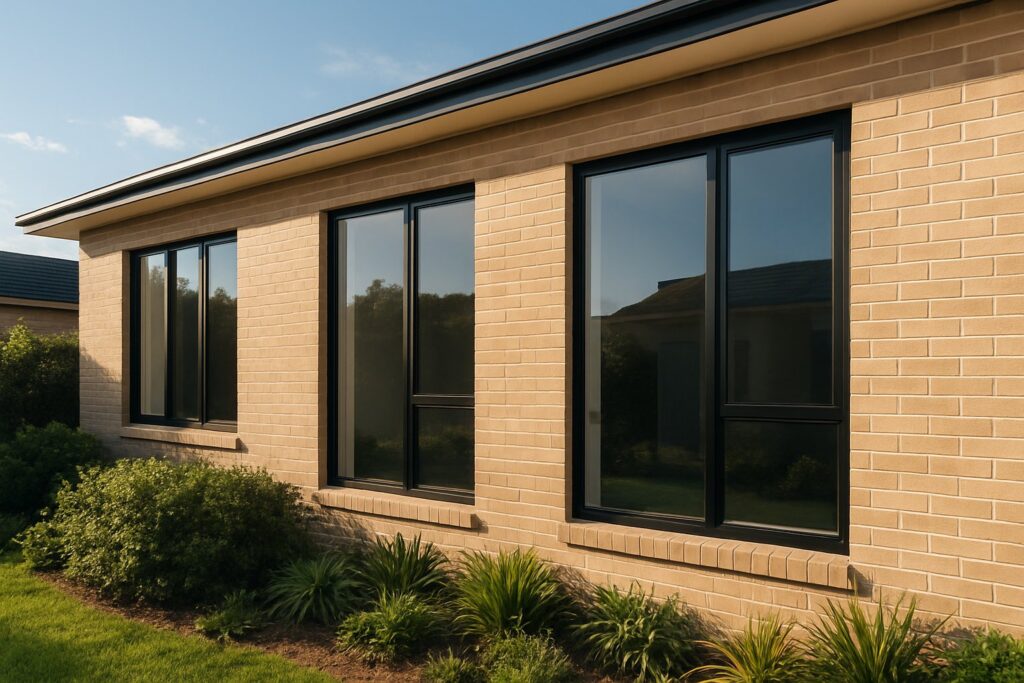
What Thermally Broken Aluminium Windows Are and What They Cost
Every conversation about upgrading to thermally broken aluminium windows eventually lands on the same question: how much will this actually cost me? Before diving into numbers, it helps to understand exactly what you’re paying for and why these systems command a higher price than standard aluminium frames.
What Makes a Window Thermally Broken
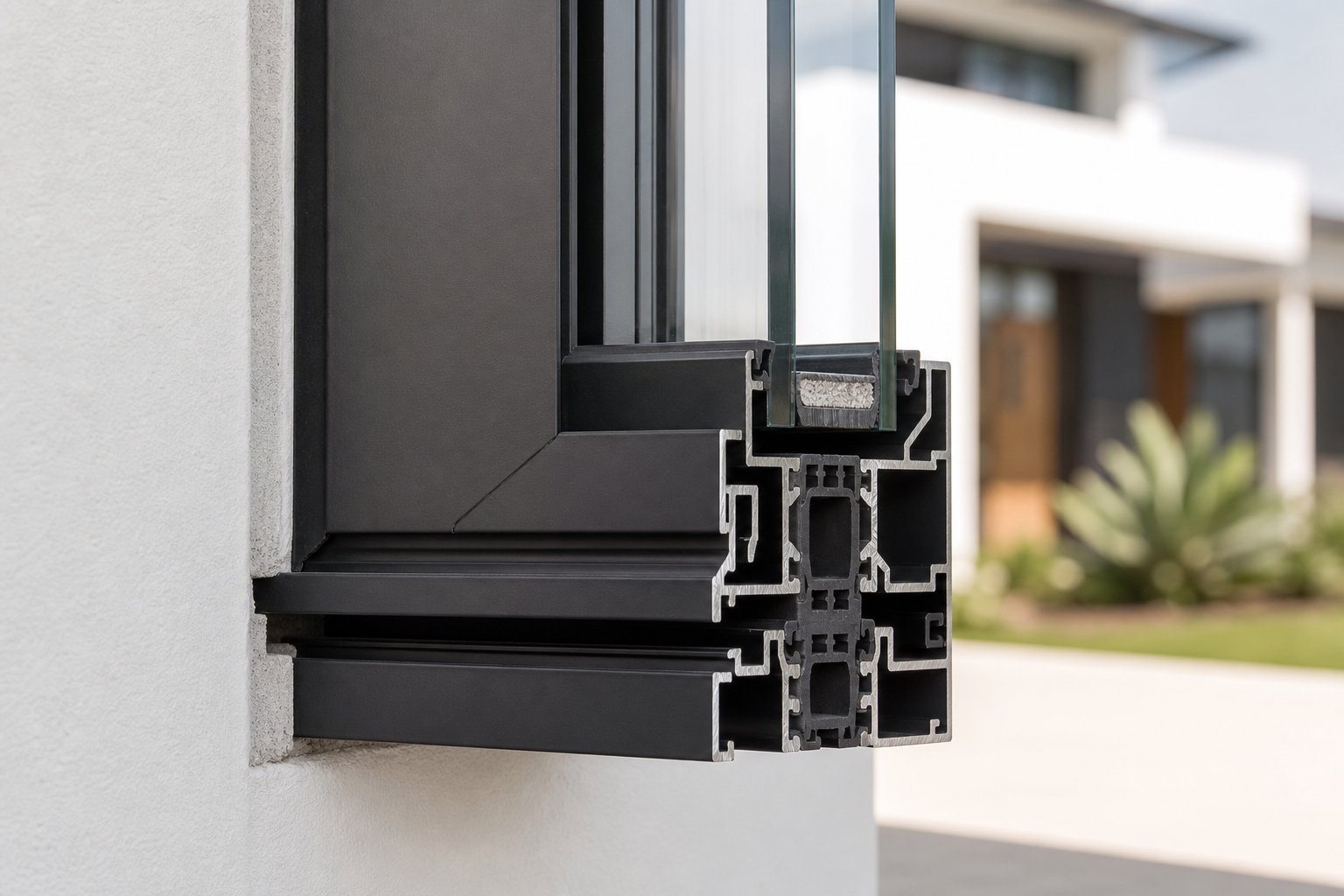
A thermally broken aluminium window splits the frame into two separate aluminium profiles, one facing inside your home and one facing outside, connected by a reinforced polyamide strip (typically PA66 GF25). That strip acts as an insulating barrier with very low thermal conductivity, roughly 0.3 W/m·K compared to aluminium’s 205 W/m·K. The result is a frame that blocks heat transfer rather than conducting it straight through.
Thermally broken aluminium windows are window systems where a non-metallic insulating barrier, usually a polyamide strip, separates the inner and outer aluminium profiles to dramatically reduce heat flow through the frame.
This structure reduces frame U-values by 30 to 60 per cent compared to standard aluminium, controls condensation in humid coastal climates, and supports compliance with NCC energy performance requirements across Australian climate zones.
Why Cost Transparency Matters for Buyers
Pricing for thermal break aluminum windows varies widely, and that variation catches people off guard. Two quotes for the same opening can differ by thousands of dollars depending on glazing spec, profile system, colour finish, and installation scope. Without understanding what drives those differences, it’s nearly impossible to judge whether a quote represents fair value or an inflated margin.
This guide breaks down the cost of thermally broken aluminium windows from every angle that matters to Australian buyers. You’ll find detail on upfront material pricing, hidden costs that rarely appear in initial estimates, lifetime value compared to other frame types, and practical guidance on reading quotes so you can spot overcharging before you commit. No single price figure applies to every project, but by the end, you’ll know exactly which specification choices move your number up or down and whether the investment stacks up over the long term.
Key Factors That Drive Thermally Broken Aluminium Window Pricing
No single element sets the price of a thermal broken aluminum window in isolation. Each specification choice interacts with the others, compounding or moderating their effect on your final quote. A larger frame requires more aluminium and a wider glazing unit, which increases weight, which demands heavier hardware, which nudges the cost up again. Understanding these relationships helps you make trade-offs that align with your budget rather than simply accepting whatever a supplier puts in front of you.
As a baseline, aluminum thermally broken windows typically carry a 15 to 25 per cent premium over standard (non-thermally broken) aluminium frames. On a single standard-sized window, that premium might feel modest. Across a full house with 15 or 20 openings, it becomes a significant budget line that deserves careful specification.
Frame Size and Configuration Impact
Bigger openings cost more, but not in a simple linear way. Doubling the width of a window doesn’t just double the aluminium content. It often triggers a step-up in profile section size to maintain structural integrity, heavier glass to meet wind load requirements under AS 2047, and more complex hardware to support the additional weight. Multi-panel configurations such as corner windows or stacked units add mullions, transoms, and structural brackets that push material costs further.
The opening mechanism amplifies this effect. Fixed-lite panels are the most affordable per square metre because they need no moving parts, no seals, and no operational hardware. Casement and awning windows require crank mechanisms, multi-point locks, and high-performance weather seals, typically adding 10 to 20 per cent over a fixed panel of similar size. Sliding systems sit in between, while large-span bifold or lift-and-slide doors occupy the premium end due to their structural demands and specialised track systems.
Glazing and Thermal Break Width
Glass accounts for roughly 35 to 45 per cent of total window cost, making your glazing choice one of the single biggest price levers. Double glazing with Low-E coating and argon gas fill is now standard for most Australian residential projects. Upgrading to triple glazing adds a third pane, a second gas cavity, and requires a deeper, heavier frame to accommodate the unit. That upgrade pushes material cost up by 20 to 35 per cent and is generally reserved for alpine regions, high-NatHERS-target builds, or extreme acoustic applications.
The thermal break strip itself also varies in width. Entry-level aluminum thermal break windows may use a 14.8 mm polyamide strip. Higher-performance systems specify 24 mm to 34 mm PA66 strips, delivering substantially better U-values but at an increased profile cost. Wider strips improve insulation performance and condensation resistance, which matters in cooler southern climates like Melbourne and Hobart, but may be over-specified for projects in warmer zones where solar heat gain control is the primary concern.
Colour Surcharges and Custom Sizing Premiums
Standard powder coat colours, usually white, black, or monument, are priced into base quotes. Anything outside that palette attracts a surcharge of around 10 to 15 per cent on the frame component. Specialty finishes such as woodgrain sublimation or marine-grade anodising for coastal salt-spray zones carry higher premiums again. Choosing a standard colour across your entire project is one of the simplest ways to keep costs predictable.
Custom sizing follows a similar pattern. Windows manufactured to non-standard dimensions require individual fabrication set-ups, unique glass cutting, and sometimes minimum order surcharges from suppliers. If your project can use modular sizes that align with a manufacturer’s standard range, you avoid those premiums entirely. For renovations in older Australian homes where openings rarely match modern standard dimensions, custom sizing is often unavoidable, but worth flagging early so quotes reflect reality.
| Cost Factor | Typical Impact on Final Price | Notes |
|---|---|---|
| Frame size (larger openings) | Moderate to High | Triggers heavier profiles, glass, and hardware |
| Opening mechanism (fixed vs operable) | Moderate | Casement/awning adds 10–20% over fixed panels |
| Glazing type (double vs triple) | High | Triple glazing adds 20–35% to material cost |
| Thermal break width (14.8 mm vs 24–34 mm) | Moderate | Wider strip improves U-value but increases profile cost |
| Colour and finish (standard vs custom) | Low to Moderate | Custom colours add 10–15%; specialty finishes cost more |
| Custom vs standard sizing | Low to Moderate | Non-standard dimensions attract fabrication surcharges |
Each of these variables stacks on top of the others. A large, triple-glazed, custom-coloured bifold door with a wide thermal break sits at the opposite end of the spectrum from a standard-sized, double-glazed, white fixed panel. Most projects land somewhere in between, and knowing where each specification falls on the cost curve gives you room to prioritise the features that matter most for your climate, energy goals, and budget without paying for overkill where it delivers diminishing returns.
Price Ranges by Window Type and Opening Style
The way a window opens, or whether it opens at all, shapes the aluminium window cost more than most buyers expect. Opening style dictates hardware complexity, the number of seals required for weather performance, and the structural engineering built into each frame. Two identically sized openings can sit hundreds of dollars apart on a quote simply because one is a fixed panel and the other is a casement with multi-point locking.
Casement and Awning Window Costs
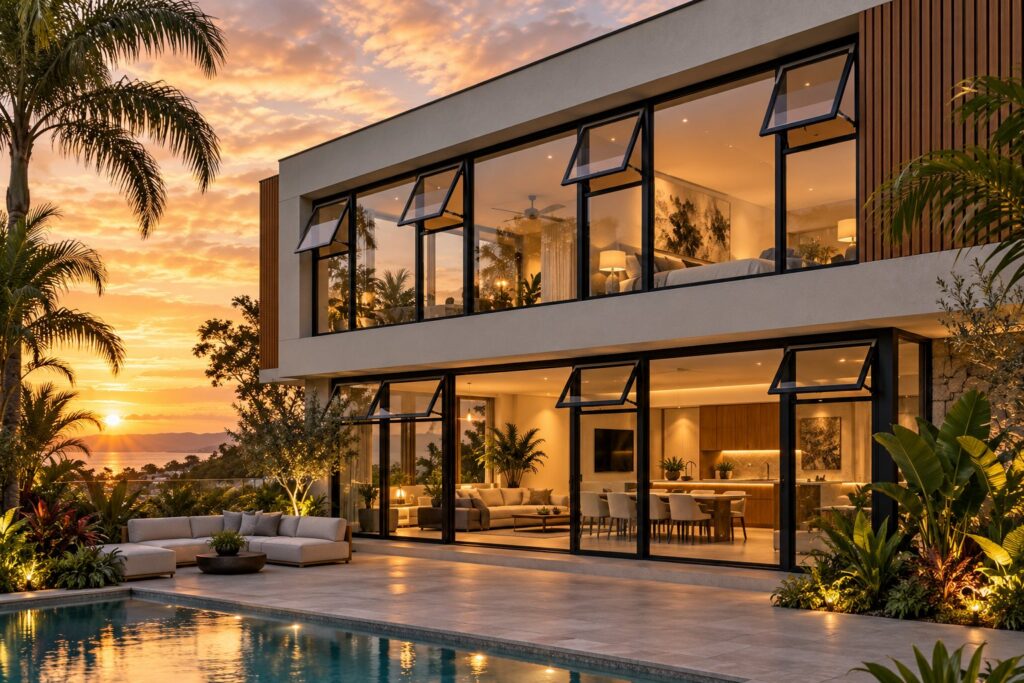
Casement and awning windows are among the most popular operable styles in Australian homes. Both hinge open to provide excellent ventilation and create a tight seal when closed, which makes them well-suited to thermally broken frames where air infiltration control matters. The cost sits in the mid-range tier because they require quality friction stays or chain winders, rubber compression seals, and multi-point locking hardware to achieve their rated performance.
For thermally broken aluminium, expect casement and awning windows to fall in the moderate pricing band. Australian supply-only pricing for standard aluminium awning windows ranges from around $220 to $788 depending on size, with thermally broken equivalents typically adding 15 to 25 per cent on top of those figures due to the more complex profile and polyamide strip integration. Larger awning panels with heavy-duty hardware push closer to the premium end.
Sliding and Fixed Window Costs
Fixed-lite windows deliver the lowest cost per square metre of any thermally broken aluminium option. No tracks, no rollers, no locks, no friction stays. The frame simply holds the glazing unit in place, and all the budget goes toward profile quality and glass performance. For projects chasing large expanses of glass on a controlled budget, fixed panels are the logical starting point.
Sliding windows occupy a middle position. They need aluminium tracks, high-quality rollers to handle the weight of double-glazed units, and interlocking meeting stiles to maintain the thermal and weather seal. Larger sliding panels demand heavier-duty track systems and sometimes require structural reinforcement at the head to prevent deflection. In Australia, standard aluminium sliding windows range from roughly $165 to $680 supply-only for common residential sizes, with the thermally broken premium layered on top.
Bifold and Specialty Window Costs
Bifold windows and doors sit firmly at the premium end of any aluminium windows price list. Multiple hinged panels fold back against each other on a continuous track system, which means every panel needs its own set of hinges, seals, and locking points. The track must support significant weight while maintaining smooth operation over thousands of cycles. Add thermally broken profiles and double glazing across four, five, or six panels and the material cost escalates quickly. Australian manufacturers quote bifold systems from around $1,250 per square metre supply-only at the higher end, with fully thermally broken and performance-rated systems climbing above that.
Large-format lift-and-slide doors, corner opening systems, and structural glazed facades fall into the same premium category, where bespoke engineering drives the cost of aluminium windows well beyond standard residential territory.
| Window Type | Relative Cost Position | Typical Australian Sizing | Complexity Notes |
|---|---|---|---|
| Fixed-lite | Budget to Mid | 600 x 600 mm up to 2100 x 1800 mm | No hardware or seals; lowest cost per m² |
| Sliding | Mid | 900 x 900 mm up to 2400 x 2100 mm | Track system, rollers, interlocking stiles |
| Casement | Mid | 600 x 600 mm up to 1200 x 1500 mm | Multi-point locks, friction stays, compression seals |
| Awning | Mid | 600 x 600 mm up to 1200 x 1800 mm | Chain winders or stays, weather seals at sill |
| Bifold | Premium | 3000 mm+ span, multiple panels | Multiple hinge sets, continuous track, high weight |
| Lift-and-slide | Premium | Large-format openings 3000 mm+ | Precision track, lift mechanism, structural head |
Within each window type, pricing also splits into tiers. A standard tier uses entry-level hardware, narrower thermal break strips, and basic double glazing. A mid-range specification upgrades to branded hardware (such as Roto or Siegenia), wider polyamide strips for improved U-values, and higher-performance glass with Low-E coatings and argon fill. Premium sits at the top with marine-grade hardware, maximum thermal break widths, acoustic or triple glazing, and custom finishes. The gap between standard and premium within the same window type can exceed 40 per cent, so specifying the right tier for your performance needs rather than defaulting to the highest option is one of the most effective ways to manage total project cost.
These per-window costs, however, only tell part of the story. Material pricing is just one component of what you’ll actually pay once installation, structural work, and finishing are factored into the total.
Hidden Costs and Installation Breakdown Beyond the Frame Price
A quote for thermally broken aluminium windows might look straightforward at first glance, but the frame price rarely tells the whole story. Depending on project complexity, material cost may represent only 40 to 60 per cent of the total installed price. The remainder sits in labour, access, structural work, disposal, and finishing, costs that often surface after you’ve already committed to a supplier.
Material Costs vs Labour Costs
Material cost covers the aluminium profiles, polyamide thermal break strips, glazing units, hardware (locks, hinges, handles), seals, and the powder coat finish. It’s the number most buyers fixate on. Labour and installation, however, frequently match or exceed that figure. Installation labour varies based on window size, location on the building, opening type, and whether the work is a retrofit into an existing aperture or a new-construction fit with exposed studs.
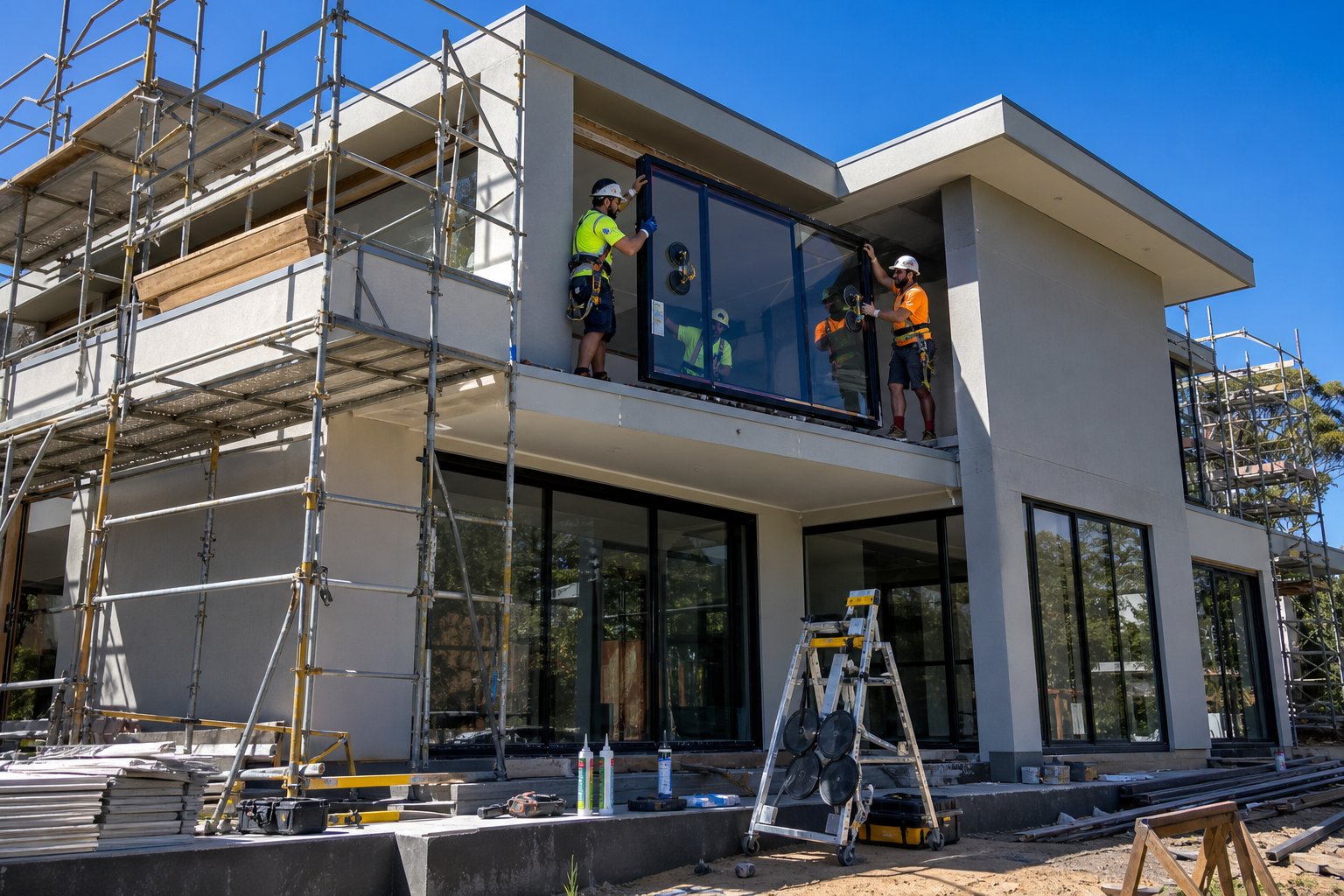
Ground-floor replacements in accessible brick veneer homes sit at the lower end of the labour scale. Second-storey installations, multi-level scaffolding set-ups, or windows positioned above rooflines push costs significantly higher. In Australia, scaffolding hire alone can add several hundred dollars per elevation depending on height and duration. If access requires traffic management, temporary hoarding for commercial frontages, or crane lifts for oversized panels, those charges appear as separate line items that weren’t part of your original window price.
Structural Modifications for Heavier Frames
Thermally broken aluminium profiles are wider and heavier than their non-thermally-broken equivalents. Combined with double or triple glazing, the total weight per opening increases substantially. Older Australian homes, particularly weatherboard, fibro, or lightweight timber-framed construction, may need lintel upgrades, reinforced jamb studs, or packer adjustments to support the additional load safely and meet AS 2047 requirements.
For renovations where an existing aluminium or timber window is being replaced, the rough opening often needs modification. Thermally broken frames have deeper profiles, meaning reveals may need extending and existing flashings become incompatible. These structural modifications add both labour hours and materials to the project, and they’re difficult to quote accurately without a proper site measure. This is also why full-frame replacements cost more than simple retrofit inserts, sometimes substantially so.
Common Cost Traps Buyers Encounter
Beyond the obvious labour and structural costs, several charges regularly surprise homeowners and builders mid-project. These rarely appear in initial ballpark estimates or lump-sum quotes:
- Non-standard size premiums: Custom-cut profiles and glass for openings that don’t match manufacturer modules
- Minimum order surcharges: Small orders of one or two windows may attract fabrication minimums
- Delivery charges: Heavy thermally broken units often require specialised freight, particularly for regional or upper-floor sites
- Hardware upgrades: Base quotes may include entry-level fittings; upgrading to quality European hardware adds cost per opening
- Flashing and weatherproofing: New head flashings, sub-sill drainage, and perimeter sealant to meet NCC weatherproofing requirements
- Making good: Internal plastering, painting, architrave replacement, and external render repair after installation
- Removal and disposal: Stripping out existing frames and responsible disposal, especially if older frames contain lead paint
- Colour premiums on black frame windows: The black window frames cost more than standard white or silver options due to finish surcharges, yet buyers often assume colour is included in the base price
That last point catches many people. The black window cost premium applies regardless of whether the frame is thermally broken, but since thermally broken systems already sit at a higher price point, stacking a colour surcharge on top amplifies the total. If your project specifies a non-standard finish across many openings, request the colour premium as a separate line item so you can see exactly what it adds.
The clearest way to avoid surprises is to request fully itemised quotes rather than accepting a single lump-sum figure. A detailed breakdown should separate material supply, installation labour, access and scaffolding, structural work, disposal, and finishing. When every component is visible, you can compare quotes on equal terms and identify where one supplier may be cutting corners or another may be padding margins. That transparency becomes especially important when you start comparing thermally broken aluminium against other frame types on a lifetime-cost basis.
Long-Term Cost of Ownership Compared to Other Frame Types
Upfront price is only one dimension of what a window actually costs you. A cheaper frame that degrades in 20 years, needs regular repainting, or bleeds conditioned air through poor thermal performance can end up costing far more over the life of a home than a premium product that holds its own for decades. Comparing thermally broken aluminium against the alternatives requires looking at purchase price, maintenance burden, energy performance, and eventual replacement timing together.
Upfront Cost Comparison Across Frame Materials
Thermally broken aluminium sits toward the higher end of the residential window market in Australia. Non-thermally broken aluminium is the most common budget option, uPVC occupies the value-for-money middle ground, and timber or timber-aluminium composite frames compete at or above the thermally broken aluminium price point depending on specification.
Industry data indicates aluminium windows typically cost 20 to 40 per cent more than equivalent uPVC systems. For a full set of windows across a standard three-bedroom home, that premium can translate to several thousand dollars in additional outlay. Timber frames, particularly hardwood species suited to Australian conditions, often match or exceed thermally broken aluminium pricing once you factor in factory finishing and the joinery precision required for weather seals.
Composite frames (timber interior with an aluminium exterior cladding) sit at the top of the cost ladder. They combine timber’s interior warmth with aluminium’s external durability, but the dual-material construction pushes manufacturing complexity and price well above single-material alternatives.
| Frame Material | Relative Upfront Cost | Expected Lifespan | Maintenance Level | Thermal Performance (Uf) |
|---|---|---|---|---|
| Non-thermally broken aluminium | Low | 30–40 years | Very low | Poor (high conductivity) |
| uPVC | Low to Moderate | 25–30 years | Low | Good (1.0–1.4 W/m²K) |
| Thermally broken aluminium | Moderate to High | 40–50 years | Very low | Good (0.9–1.4 W/m²K) |
| Timber | Moderate to High | 30–60 years (if maintained) | High | Good (1.0–1.3 W/m²K) |
| Timber-aluminium composite | High | 40–50+ years | Low to Moderate | Very good (0.9–1.2 W/m²K) |
Energy Savings and Payback Period
The thermal break is where aluminium closes the gap with naturally insulating materials like timber and uPVC. Without it, aluminium conducts heat rapidly, undermining whatever performance your glazing delivers. With a quality polyamide thermal break, frame U-values drop to the 0.9 to 1.4 W/m²K range, putting thermally broken aluminium on par with uPVC and timber for thermal resistance.
In practical terms, every 0.1 W/m²K improvement in whole-window U-value saves roughly $1.50 to $3.00 per square metre of glazing per year in heating and cooling costs under Australian energy prices. For a home with 25 m² of window area upgrading from older non-thermally broken aluminium (Uw around 4.0 to 5.0) to modern thermally broken frames with quality double glazing (Uw around 1.3 to 1.5), that reduction compounds into meaningful annual savings. Over a 40-year lifespan, accumulated energy savings offset a substantial portion of the initial premium, particularly in climate zones with significant heating loads like Victoria, Tasmania, and the ACT.
Homes targeting high NatHERS ratings or aiming for compliance with the NCC 2022 energy efficiency provisions benefit further, since thermally broken aluminium often meets the required window performance thresholds without needing expensive secondary measures like pelmets or additional insulation around reveals.
Lifespan and Maintenance Value
Lifespan is where thermally broken aluminium genuinely separates itself from most alternatives. Aluminium frames carry an expected service life of 40 to 50 years with minimal intervention. The powder-coated finish resists UV degradation, won’t peel or flake, and holds its colour in harsh Australian sun. Coastal homes benefit from aluminium’s resistance to salt-air corrosion when specified with appropriate marine-grade coatings.
uPVC, while low-maintenance, has a shorter trajectory. Frames can yellow, become brittle, or lose rigidity after 25 to 30 years, particularly on north and west-facing elevations with sustained UV exposure. In Australian conditions, where solar radiation is more intense than the UK or European climates these products were originally designed for, that degradation timeline can accelerate.
Timber demands the most ongoing investment. Sanding, repainting, or re-oiling every 5 to 10 years is standard practice, and neglected timber windows in exposed positions can deteriorate rapidly. The cost of maintenance across 40 years, both in materials and the labour to access upper-storey frames, erodes the appeal of timber’s lower initial price point for many homeowners.
Resale value further strengthens the case for durable framing. Quality aluminium windows, particularly in contemporary finishes, are widely recognised by valuers and buyers as a premium feature. They signal low future maintenance and long remaining service life, both attractive qualities in a competitive property market.
So, do black windows cost more than other colour options? Yes, but the premium relates to the finish rather than the frame material or thermal break. Black powder coating typically adds a 10 to 30 per cent surcharge over standard white or silver finishes, regardless of whether the frame is thermally broken. The cost of black windows reflects higher pigment concentration in the coating, additional quality control for finish consistency, and stronger market demand for dark frames in contemporary Australian architecture. How much do black windows cost compared to white? On a per-window basis across a full project, that surcharge accumulates, so it’s worth isolating the colour premium in your quote to understand exactly what you’re paying for aesthetics versus performance.
The bottom line is nuanced rather than one-size-fits-all. Thermally broken aluminium delivers the strongest combination of longevity, low maintenance, and thermal performance, but it isn’t the cheapest path for every scenario. uPVC remains an excellent choice when budget is the primary constraint and you’re comfortable replacing frames again within 25 to 30 years. Timber suits heritage projects where material authenticity matters and the owner commits to ongoing upkeep. The right decision depends on how long you plan to stay in the property, your tolerance for maintenance, and whether your climate zone demands the thermal performance that only a broken frame can deliver.
These material-level comparisons set the framework, but the actual price you pay also shifts depending on how many windows you’re ordering, whether it’s a new build or renovation, and where in Australia you’re located.
How Project Type and Location Affect Your Final Price
Two buyers specifying the same thermally broken aluminium profile can pay vastly different per-unit prices depending on how many windows they’re ordering and where the project sits. Economies of scale, installation logistics, and climate-driven specification choices all reshape the final number in ways that aren’t obvious from a standard price list.
Single Replacement vs Full House Projects
Project scope changes the pricing dynamics at every level. A single window replacement carries the highest cost per unit because fabrication set-up fees, delivery charges, and installer mobilisation costs are absorbed by just one opening. As order volume increases, those fixed overheads spread across more units and per-window pricing drops accordingly.
- Single window replacement (1–2 units): Highest per-unit cost. Fabrication minimums, delivery fees, and installer call-out charges hit hardest. Thermally broken aluminium may be difficult to justify financially for a single opening unless it’s a prominent feature window or required for NCC compliance in a renovation.
- Partial re-glazing (4–8 units): Per-unit cost begins to soften. Suppliers are more willing to negotiate, and installers can schedule a full day efficiently. Colour matching across black aluminium windows or other non-standard finishes becomes more cost-effective at this volume.
- Full-house re-glazing (12–25 units): Meaningful volume discounts apply. Consolidated manufacturing runs, single-delivery logistics, and multi-day installation scheduling all reduce the per-opening cost. This is where thermally broken aluminium becomes genuinely competitive against alternatives on a cost-per-year-of-service basis.
- New build or commercial projects (25+ units): Best available pricing. Standardised sizing across a project reduces waste and fabrication complexity. Builders specifying aluminium black windows across an entire development benefit from batch powder coating, which lowers the per-unit colour premium significantly.
New Build Specification Advantages
New construction offers a structural cost advantage that renovations simply can’t match. Openings are built to suit the window system from the start, eliminating lintel upgrades, reveal modifications, and the removal and disposal costs that burden retrofit projects. Installation labour drops too, since frames fit directly into prepared rough openings without the need for packers, adaptor trims, or making good around disturbed finishes.
For builders and developers, specifying thermally broken aluminium at the design stage also avoids costly re-engineering later. A project designed around standard module sizes from the outset can reduce per-unit cost substantially compared to the same profile system cut to irregular custom dimensions after construction has started. Engaging suppliers early, particularly on larger developments where black aluminium windows feature as a design element, locks in pricing before material cost fluctuations affect the budget.
Regional and Climate-Based Pricing Differences
Where your project sits in Australia influences both the specification you need and what you’ll pay for it. Climate zones under the NCC determine minimum glazing and frame performance requirements, and those requirements drive different cost profiles across the country.
In cooler southern regions like Melbourne, Hobart, and the ACT, low U-values are the priority. Projects here tend toward wider thermal break strips, higher-performance Low-E glass, and sometimes triple glazing, all of which push material costs upward. In warmer northern zones, solar heat gain coefficient (SHGC) control matters more than insulation. That often means tinted or reflective coatings on the glass rather than thicker thermal breaks, which can actually result in a slightly lower frame cost even though the glazing specification differs.
Coastal locations from the Gold Coast to Perth’s western suburbs add another cost layer. Marine-grade powder coating or anodising is essential to prevent salt-air corrosion, and that treatment attracts a finish premium on top of whatever colour surcharge already applies. A home in beachside Newcastle specifying aluminium black windows with marine-grade coating will pay more for that finish than an identical frame going into a project 50 kilometres inland.
Labour rates also shift regionally. Metropolitan Sydney and Melbourne carry higher installation costs than regional centres, while remote or difficult-access locations attract travel premiums and freight surcharges for heavy glazed units.
The practical takeaway: thermally broken aluminium makes the strongest financial case on larger projects in climate zones with significant heating or cooling loads, where economies of scale offset the material premium and energy savings compound over decades. For a single replacement window in a mild coastal climate, standard aluminium or uPVC may deliver adequate performance at a more proportional price point. Matching the specification to both your project scale and your local conditions is where real cost efficiency lives, and that’s something a well-structured quote should make transparent rather than obscure.
How to Read and Compare Window Quotes Effectively
Matching your specification to the right project scale and climate zone only works if you can actually verify what a supplier is offering. Thermally broken aluminium window quotes can vary by 20 to 30 per cent between companies for what appears to be the same product, and in most cases those gaps trace back to differences in specification depth, installation scope, or items quietly excluded from the headline price. Learning to decode a quote protects you from overpaying and, just as importantly, from under-specifying.
What a Complete Window Quote Includes
A reliable quote for thermally broken aluminium windows should read like a technical document, not a vague price list. Every line item should be traceable to a specific product, performance value, or scope of work. When you’re comparing two or three quotes side by side, the level of detail in each one tells you as much about the supplier’s professionalism as the number at the bottom.
Here’s what a complete, comparable quote should contain:
- Profile system and brand: The specific aluminium system name (e.g., a named series from a recognised manufacturer) with installation depth and thermal break width stated in millimetres
- Glazing specification: Double or triple glazing, glass thickness, Low-E coating type, gas fill (argon or krypton), warm-edge spacer brand, and the Ug value of the glazing unit
- Whole-window thermal performance: The Uw value for each window unit, not just the glass centre-pane figure. This is the number that matters for NCC compliance and NatHERS modelling
- Hardware brand and grade: Named hardware manufacturer (e.g., Roto, Siegenia, Winkhaus), locking mechanism type, number of locking points, and handle specification
- Colour and finish: Powder coat colour code, coating standard (e.g., Qualicoat Class 1 or 2), and whether marine-grade treatment is included for coastal sites
- Dimensions and opening type: Individual sizes per opening, clearly labelled by room or elevation, with the operating mechanism noted for each
- Installation scope: Whether fitting is included or supply-only, what preparation work is covered (removal, disposal, structural assessment, flashing, sealing), and who is responsible for making good
- Warranty terms: Separate coverage periods for frames, glazing seals, hardware, powder coat finish, and installation workmanship, with clear conditions and exclusions
- Timeline: Manufacturing lead time, estimated delivery window, and installation schedule with start and completion dates
- Payment structure: Deposit amount, progress payments, and final balance terms, including what triggers each payment stage
If a quote is missing three or more of these elements, you don’t yet have enough information to compare it fairly against a more detailed offer. A lower total price means nothing when you can’t confirm whether the product behind it is genuinely thermally broken, let alone what hardware or glazing it includes.
Red Flags When Comparing Quotes
Some warning signs are subtle. Others should stop you in your tracks. When you’re reviewing quotes for black aluminium frame windows or any thermally broken system, watch for these patterns:
Vague product descriptions. A quote that says “aluminium windows, double glazed” without naming the profile system, thermal break width, or Uw value could be describing a non-thermally-broken product. Industry guidance confirms that missing Uw or Ud values are among the clearest red flags in any window quotation. If the thermal break isn’t explicitly specified, you may be quoted standard aluminium frames at thermally broken prices, or worse, receive non-thermally-broken product without realising until after installation.
No site measure included. Any reputable supplier quoting thermally broken aluminium for a renovation project needs accurate site dimensions before committing to a price. Quotes based solely on builder-supplied measurements or rough plans carry risk for both parties. Thermally broken profiles have deeper frame sections, and without confirming the existing reveal depth and structural condition, the quote can’t reliably account for modification work.
Missing structural assessment. Particularly relevant for older Australian homes, weatherboard and fibro construction, or upper-storey replacements. If a quote makes no mention of lintel capacity, jamb condition, or weight-bearing requirements for heavier thermally broken units, the installer either hasn’t considered it or plans to charge extra when problems emerge on installation day.
Unusually low pricing. When one quote sits 25 per cent or more below the others for apparently similar specifications, the product is usually different. Common substitutions include narrower thermal break strips, lower-grade hardware, standard spacers instead of warm-edge, or thinner glass that won’t meet the Uw values claimed. A cheaper black aluminum window quote might use a basic powder coat that lacks the durability of a Qualicoat-certified finish, saving cost upfront but inviting colour fade and chalking within years.
Lump-sum pricing with no breakdown. A single total figure without line items makes it impossible to identify where cost is being allocated. You can’t tell if the hardware is entry-level, whether disposal is included, or if the installer has allowed for scaffolding. This lack of transparency is a consistent indicator of quotes that generate surprises mid-project.
No warranty detail beyond a number. Stating “10-year warranty” without specifying what’s covered, component by component, is insufficient. Seals, hardware, and powder coat finishes all have different failure modes and expected lifespans. A meaningful warranty separates these clearly and defines the service process if something goes wrong.
Working With a Project-Capable Supplier
Many of the quote issues described above trace back to a fragmented supply chain. When one company provides the aluminium profiles, another fabricates the windows, a third handles delivery, and a fourth installs, responsibility becomes diffuse and pricing becomes unpredictable. Each handoff introduces a margin, a communication gap, and an opportunity for specification drift.
A supplier that manages the full workflow, from initial drawings and window schedules through to system recommendations, material calculation, manufacturing coordination, and delivery planning, eliminates most of those gaps. Cost clarity improves because the same team that designs the specification also controls fabrication and understands the real drivers behind every line item on your quote.
For builders, developers, and architects specifying aluminum black windows or any thermally broken aluminium system across a multi-unit project, this integrated approach delivers three practical advantages. First, pricing is resolved at the drawing stage rather than after commitment, so budget decisions happen when they can still influence design rather than after contracts lock you in. Second, specification consistency is maintained from tender through to delivery because one team owns the entire chain. Third, lead times become predictable because manufacturing and logistics sit under the same operational planning.
MEICHEN’s Services & Solutions model illustrates this approach in the Australian market. Their process covers the full arc from project drawings and schedules through system recommendations, material calculation, quality control, and logistics coordination. For procurement teams managing the cost of thermally broken aluminium windows across developments, engaging a partner with this breadth of capability at the specification stage means the quote you receive reflects actual project conditions rather than generic assumptions that unravel during fabrication or installation.
Whether you’re replacing a single black aluminum window in a heritage renovation or specifying hundreds of openings for a multi-storey development, the quality of your quote depends on the capability of the supplier behind it. A detailed, transparent, fully itemised quotation isn’t just paperwork. It’s the clearest signal that a company understands what your project actually requires and has priced it honestly.
Making a Smart Investment in Thermally Broken Aluminium Windows
A transparent quote is a starting point, not a finish line. Knowing how to read one gives you leverage, but the real value lies in applying everything covered in this guide to make a purchasing decision that suits your project, your climate zone, and your budget without leaving money on the table or settling for under-specified product.
There is no single dollar figure that answers the question “what do thermally broken aluminium windows cost?” The answer always depends on your glazing choices, thermal break width, opening styles, colour finish, project scale, and who you engage to fabricate and deliver. That’s not a cop-out. It’s precisely why buyers who understand the variables outperform those who chase the lowest headline number.
Key Takeaways for Budget Planning
Whether you’re a homeowner replacing windows on a weatherboard cottage in Melbourne, a builder specifying across a 40-unit townhouse development in western Sydney, or an architect detailing a coastal home in Noosa, these principles hold:
- Specification drives price more than material alone. The difference between a narrow 14.8 mm thermal break with basic double glazing and a 24 mm+ strip with high-performance Low-E argon-filled units can exceed 30 per cent on the same frame. Choose the performance level your climate zone actually demands rather than defaulting to the highest or lowest option.
- Volume changes the equation. Single-window replacements carry disproportionate fixed costs. Full-house and multi-unit projects unlock genuine economies of scale on fabrication, delivery, and installation that bring thermally broken aluminium closer to standard aluminium on a per-year-of-service basis.
- Installation scope is half the budget. Material cost often represents only 40 to 60 per cent of the total installed price. Structural modifications, scaffolding, disposal, flashing, and making good account for the rest. Any budget that ignores these items is incomplete.
- Lifetime value favours durability. Thermally broken aluminium’s 40 to 50-year lifespan, near-zero maintenance requirements, and energy performance gains compound over decades. For properties held long-term, the higher upfront outlay frequently returns more value than cheaper alternatives that need replacement sooner or demand ongoing upkeep.
- Colour premiums are real but manageable. Black or custom finishes add 10 to 15 per cent on the frame component. Specifying a standard palette across a full project, or consolidating colour choices within a manufacturer’s stock range, keeps this premium predictable.
The cost of thermally broken aluminium windows is not a fixed number. It’s a function of specification depth, project scale, and supplier capability. Buyers who control all three variables consistently achieve better value than those who shop on price alone.
Your Next Steps Toward Accurate Pricing
Generic price lists can orient your thinking, but they can’t replace project-specific pricing built from real dimensions, confirmed specifications, and honest installation scoping. Moving from research to action means taking a few deliberate steps:
- Get at least three fully itemised quotes. Insist on line-item breakdowns covering profile system, glazing spec with Uw values, hardware brand, installation scope, and all ancillary costs. If a supplier won’t provide this level of detail, they’re not ready to earn your commitment.
- Confirm the thermal break specification matches your performance needs. Cross-reference the quoted Uw values against NCC requirements for your climate zone and any NatHERS targets your project is working toward. Over-specifying wastes money; under-specifying creates compliance risk.
- Verify installation scope in writing. Ensure each quote explicitly states what’s included for removal, structural assessment, flashings, scaffolding, sealing, and making good. Ambiguity here is where mid-project cost blowouts originate.
- Engage suppliers early in the design process. The earlier a capable supplier sees your drawings, the more influence you have over specification choices that affect cost. Decisions made at the design stage are inexpensive to change. Decisions made after fabrication begins are not.
For builders, developers, architects, and procurement teams managing thermally broken aluminum specifications across larger projects, the most effective path to accurate pricing is working with a supplier that covers the full workflow. A partner who can move from drawings and window schedules through system recommendations, material calculation, manufacturing coordination, quality control, logistics, and delivery planning removes the guesswork that inflates budgets and delays programs.
MEICHEN’s Services & Solutions page outlines this kind of end-to-end project support for the Australian market. Rather than relying on generic price lists that may not reflect your actual project conditions, engaging a supplier with this depth of capability at the specification stage means your budget is built on real data from day one.
Thermally broken aluminium windows are a considered investment, not an impulse purchase. The buyers who get the best outcomes are the ones who understand what drives cost, demand transparency from their suppliers, and make specification decisions grounded in performance requirements rather than assumptions. You now have the framework to do exactly that.
Frequently Asked Questions About Thermally Broken Aluminium Window Costs
1. How much more do thermally broken aluminium windows cost compared to standard aluminium?
Thermally broken aluminium windows typically carry a 15 to 25 per cent premium over standard non-thermally broken aluminium frames. The exact difference depends on thermal break width, glazing specification, and project volume. For a full-house project with 15 to 20 openings, that premium becomes a significant budget line, though economies of scale on larger orders can narrow the gap. The added cost pays for a reinforced polyamide strip that reduces frame U-values by 30 to 60 per cent, improving energy efficiency and condensation control.
2. Are black thermally broken aluminium windows more expensive than white ones?
Yes. Black powder coating adds roughly 10 to 15 per cent to the frame component cost compared to standard white or silver finishes. This surcharge applies regardless of whether the frame is thermally broken. The premium reflects higher pigment concentration, stricter quality control for finish consistency, and strong market demand for dark frames in contemporary Australian architecture. Specifying black across a full project amplifies the total, so request the colour premium as a separate line item to see exactly what aesthetics add to your budget.
3. What percentage of total cost is installation versus materials for thermally broken windows?
Material cost, covering aluminium profiles, glazing units, hardware, and powder coat finish, typically represents only 40 to 60 per cent of the total installed price. The remainder covers installation labour, scaffolding and access requirements, removal and disposal of existing frames, structural modifications for heavier thermally broken profiles, flashing, weatherproofing, and making good with plastering and painting. Retrofit projects in older Australian homes tend toward the higher end of installation costs due to lintel upgrades and reveal modifications needed to accommodate deeper frame sections.
4. How long do thermally broken aluminium windows last compared to uPVC and timber?
Thermally broken aluminium frames carry an expected service life of 40 to 50 years with minimal maintenance. uPVC frames typically last 25 to 30 years before yellowing, brittleness, or rigidity loss becomes problematic, particularly on sun-exposed elevations in Australian conditions. Timber frames can last 30 to 60 years but only with consistent maintenance every 5 to 10 years including sanding, repainting, or re-oiling. When factoring in replacement cycles and maintenance labour over a property’s lifetime, thermally broken aluminium often delivers the lowest total cost of ownership despite its higher upfront price.
5. When is it worth paying for thermally broken aluminium windows over standard aluminium?
Thermally broken aluminium makes the strongest financial case on larger projects in climate zones with significant heating or cooling loads, such as Melbourne, Hobart, and the ACT, where energy savings compound over decades. Full-house re-glazing or new builds with 12 or more openings unlock volume discounts that bring per-unit costs closer to standard aluminium on a cost-per-year-of-service basis. For a single replacement window in a mild coastal climate, standard aluminium or uPVC may deliver adequate performance at a more proportional price. Engaging a project-capable supplier like MEICHEN early in the design process helps determine the right specification for your specific climate zone, project scale, and budget.
More Window & Door Guides