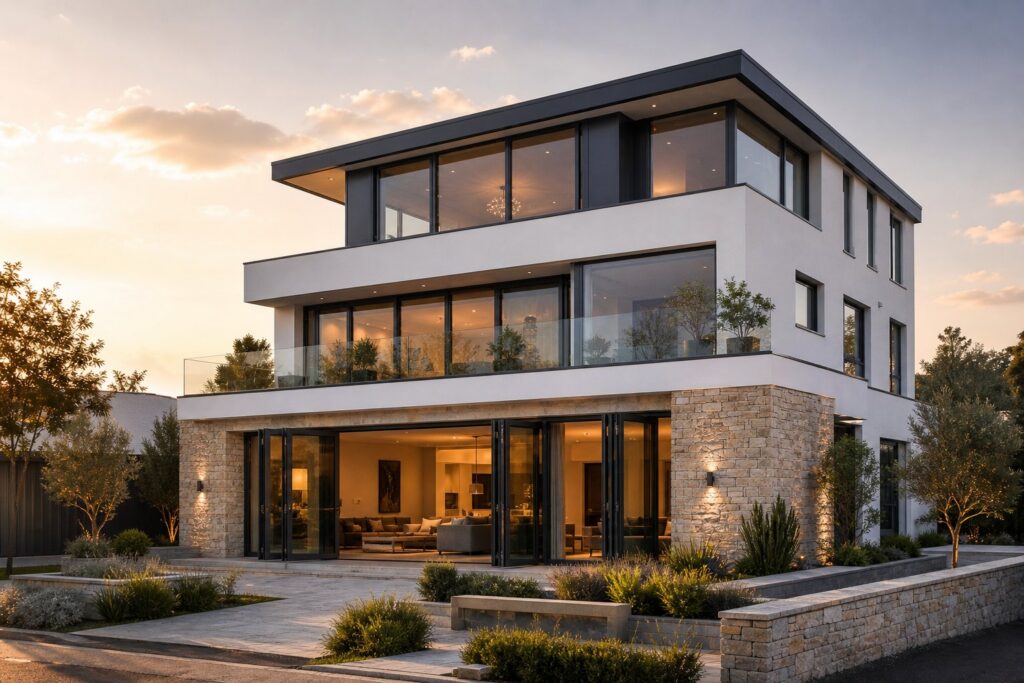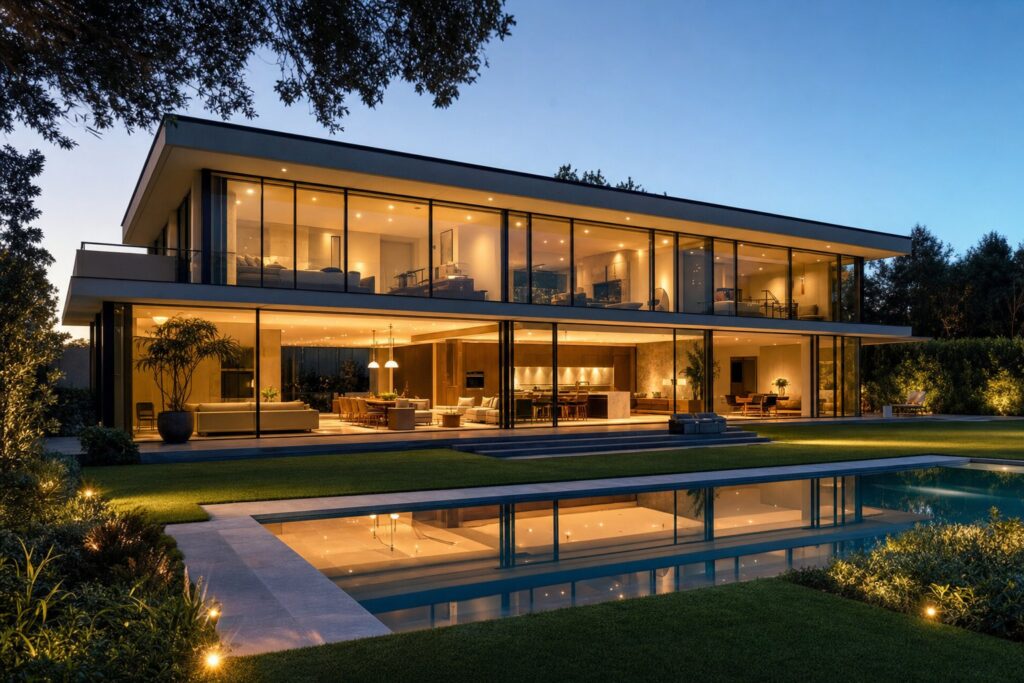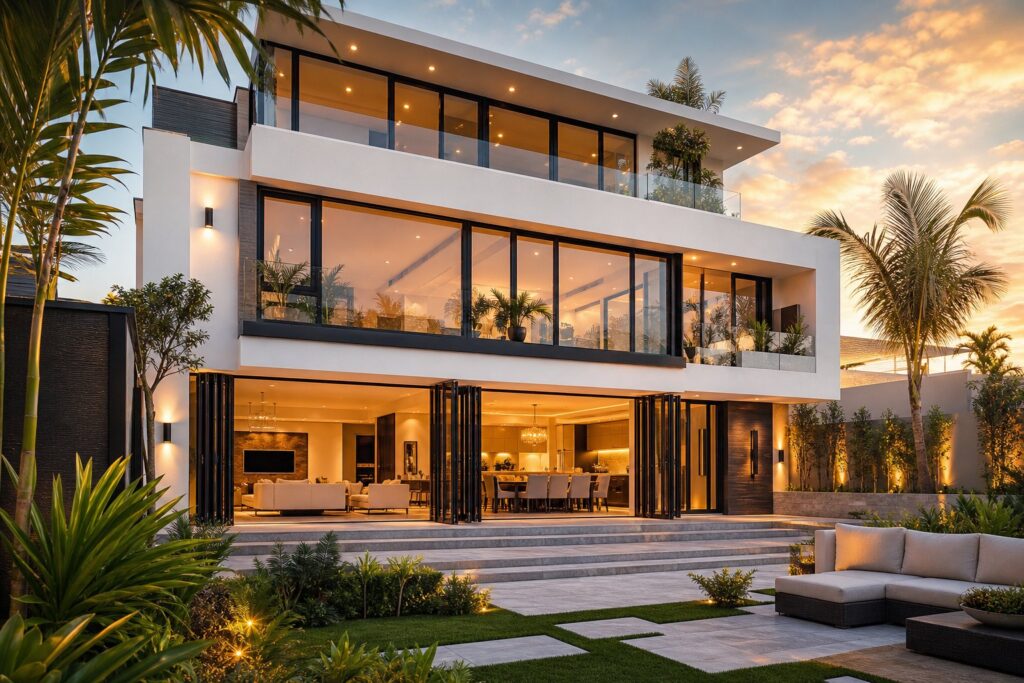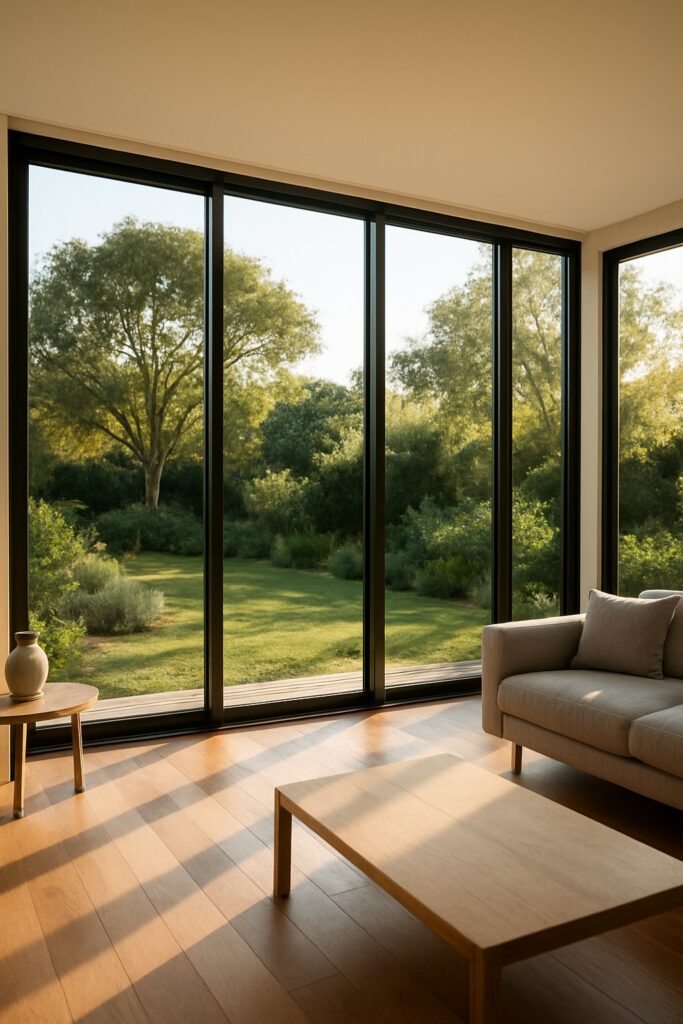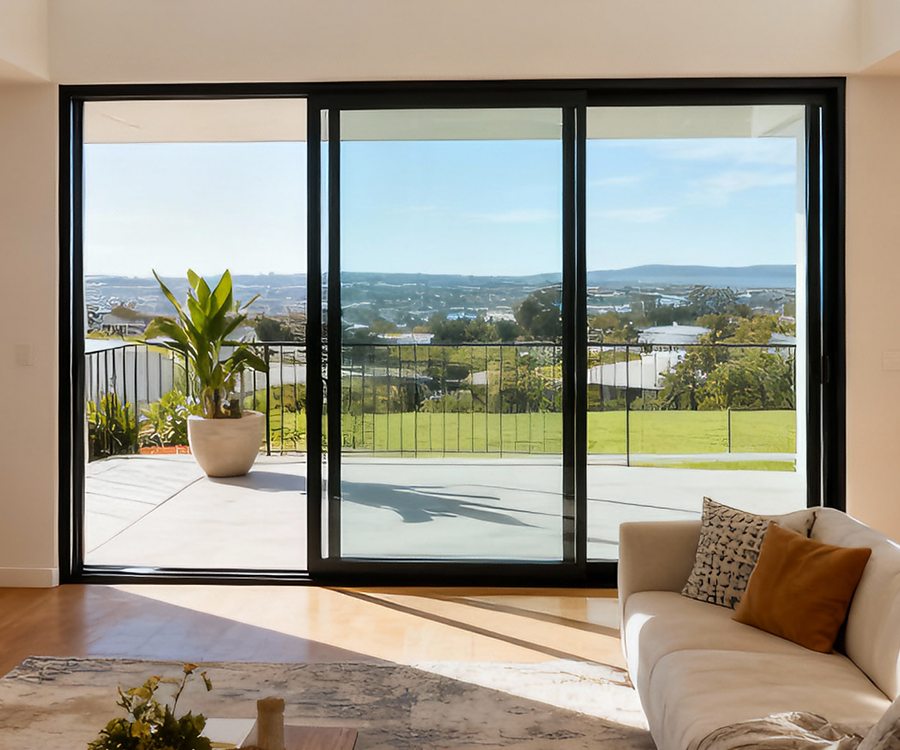
What Makes Aluminium Windows Contemporary
Walk past a 1980s office block and you will spot them immediately: chunky aluminium frames with visible screws, bulky gaskets, and profiles so wide they compete with the glass for attention. Those old frames did their job, but they belonged to an era that treated windows as functional holes in a wall rather than architectural statements. Contemporary aluminium windows are a different species entirely. They represent a deliberate design philosophy where the frame retreats and the view takes over.
So what separates a modern aluminium window system from those dated predecessors? The distinction comes down to engineering precision, thermal performance, and visual restraint working together as a unified concept. This guide breaks the category open for homeowners weighing renovation options, builders specifying for new projects, and architects pushing design boundaries. No supplier pitches here, just a clear-eyed look at what the technology delivers and where it fits.
Defining Contemporary Aluminium Windows
Several measurable design characteristics set today’s systems apart from traditional aluminium frames:
- Thermally broken profiles — polyamide barriers inserted between inner and outer aluminium shells eliminate the cold-bridge problem that plagued earlier generations.
- Square-edge aesthetics — crisp, geometric lines replace the rounded or bevelled profiles typical of older extrusions, giving each aluminium window a precision-machined appearance.
- Concealed hardware — hinges, stays, and locking mechanisms sit hidden within the frame rather than cluttering the visible face.
- Flush detailing — sashes sit level with the outer frame, creating a flat plane that reads as a single clean surface from the exterior.
- Slimline sightlines — face widths as narrow as 35 to 50 mm maximise the glass area and minimise visual interruption.
These are not cosmetic tweaks layered onto an old platform. They reflect a ground-up rethink of how windows in aluminium should be engineered, manufactured, and installed. Advanced extrusion techniques, tighter fabrication tolerances, and multi-chamber profile designs allow today’s aluminium windows to carry heavier glass units on narrower frames without compromising structural integrity or weather resistance.
Why Contemporary Aluminium Dominates Modern Design
Architecture has shifted. Open-plan living, indoor-outdoor flow, and the pursuit of natural light now drive residential design across Australia, from coastal new builds in Queensland to double-storey renovations in Melbourne’s inner suburbs. These trends demand windows that disappear into the building envelope rather than dominate it.
The core principle behind contemporary aluminium is simple: prioritise the view by reducing the frame to its structural minimum. Every millimetre of unnecessary profile width is a millimetre of lost daylight, blocked sightline, and diminished connection to the landscape beyond.
Large-format glazing panels, corner-opening configurations, and minimal-frame sliding systems all become achievable because aluminium offers the strength-to-weight ratio that timber and uPVC cannot match at equivalent profile dimensions. Architects specify modern aluminum windows precisely because the material lets them push glass sizes larger and frame widths thinner without engineering compromises. For those exploring alu windows for the first time, the category can seem broad, but its unifying thread is restraint: less frame, more glass, better light.
That visual lightness, however, only tells half the story. The real revolution sits inside the profile itself, where thermal break technology transformed aluminium from an energy liability into a genuine performance contender.
Thermal Break Technology Explained
Aluminium conducts heat roughly 1,000 times faster than timber and around 200 times faster than PVC. That single physical property defined the reputation of every metal window frame for decades. Old aluminum windows were essentially thermal bridges bolted into the wall, funnelling warmth out in winter and radiating heat inward during summer. Cold interior surfaces attracted condensation, promoted mould growth, and drove up energy bills. The material itself was never the problem — the way it was used was.
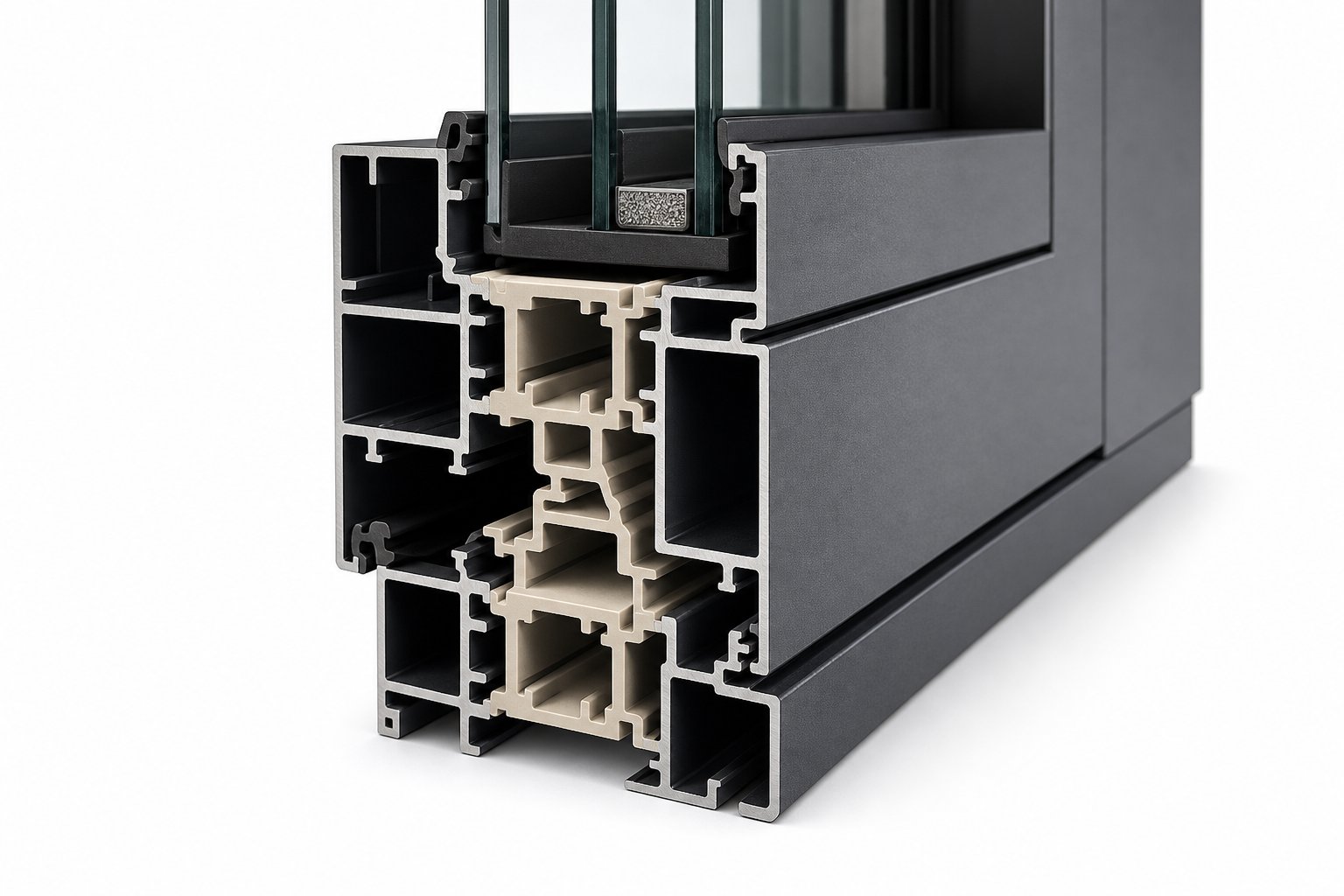
Contemporary aluminium window frames solve this by splitting the profile in two and placing an insulating barrier between the halves. That barrier is the thermal break, and it changed everything.
How Thermal Breaks Solve the Conductivity Problem
Picture an aluminium frame cut through its cross-section. Instead of a single continuous extrusion connecting interior to exterior, you see two separate aluminium shells — one facing the room, one facing outside — joined by a strip of reinforced polyamide (a type of engineered nylon). This polyamide strip has a thermal conductivity of approximately 0.3 W/mK compared to aluminium’s 237 W/mK, meaning it transfers heat nearly 800 times less efficiently than the metal it connects.
The result is a metal window that no longer behaves like a thermal bridge. Heat cannot pass directly from one aluminium shell to the other because the polyamide interrupts the conductive pathway. The interior surface of the frame stays closer to room temperature, condensation risk drops dramatically, and the energy your heating or cooling system puts into the room actually stays there.
For homeowners replacing older aluminium frames for windows, the difference is immediately tangible. Where an old unbroken frame felt ice-cold on a winter morning, a thermally broken profile remains comfortable to touch — a simple but telling indicator that heat is no longer bleeding through the frame.
Performance Impact of Thermal Break Depth
Not all thermal breaks deliver equal results. The depth (or width) of the polyamide barrier directly influences how much heat transfer it can resist. Early thermally broken systems used relatively narrow strips. Contemporary aluminium window frames push that depth further — premium systems now feature thermal breaks ranging from 24 mm to 35 mm or more, delivering substantially better insulation than their predecessors.
The performance difference shows up clearly in U-values, the metric used to measure how quickly heat passes through a building element. Traditional unbroken aluminum window frames typically produce U-values between 4.0 and 6.0 W/(m²K) — poor by any modern standard. Thermally broken systems routinely achieve U-values between 0.8 and 2.0 W/(m²K), representing a 70 to 85 per cent improvement in thermal efficiency. That range puts aluminium frames for windows on par with timber and well ahead of many basic uPVC profiles.
When comparing quotes or specifications, ask about the thermal break depth and the resulting whole-window U-value. A deeper break generally means better performance, though profile geometry and multi-chamber design also play a role. Specification-conscious buyers who treat thermal break depth as a key comparison point will find it much easier to distinguish genuinely high-performance systems from those simply marketed as “thermally improved.”
Thermal performance, though, is only one benefit of slimmer, stronger aluminium engineering. The same material strength that allows these sophisticated multi-part profiles also enables something architects care about just as much: narrower frames that put more glass in the wall.
Slim Profiles and Maximum Glazing Area
A window is only as good as the view it frames. Every millimetre of profile width sitting between you and the outside world is a millimetre of lost daylight, blocked scenery, and reduced solar warmth during cooler months. This is where slimline aluminium windows gain their most tangible advantage — not through marketing claims, but through measurable glass-to-frame ratio improvements that translate directly into brighter rooms and a lighter architectural feel.
Glass-to-Frame Ratio and Natural Light
Glass-to-frame ratio expresses the percentage of a window opening occupied by glass versus frame material. A higher ratio means more light passes through. It also means more passive solar gain in winter, wider unobstructed views, and an interior that feels connected to its surroundings rather than walled off from them.
Contemporary aluminium window framing achieves ratios that competing materials struggle to match. Because aluminium profiles can be engineered as narrow as 35 to 50 mm on the visible face, up to 20 per cent more glass area is possible compared to an equivalent uPVC opening. That difference is substantial — it means brighter living spaces without needing to enlarge the structural opening in the wall or add extra windows elsewhere. For homeowners working within existing wall dimensions during a renovation, aluminum frame windows deliver more light from the same hole in the brickwork.
Passive solar gain benefits follow the same logic. A larger glass area captures more winter sun, reducing reliance on mechanical heating during those crisp mornings in Melbourne or Adelaide. The frame itself contributes nothing to solar collection — it only gets in the way. Minimising it makes the whole system more efficient at harvesting free warmth.
Structural Strength Behind Slim Sightlines
Slimness without structural compromise is the engineering challenge, and aluminium’s inherent strength-to-weight ratio is what makes it solvable. The extrusion process creates complex hollow geometries within each profile — multiple internal chambers that add rigidity without adding visible bulk. Material is placed precisely where structural loads demand it, not spread uniformly across a thick, heavy cross-section.
This precision engineering means slimline windows in aluminium can meet wind load requirements, support heavy double or triple-glazed units, and satisfy security standards — all on a frame face barely wider than an adult’s thumb. Metal frame windows made from steel can achieve similar slimness, but aluminium does so at lower weight, better corrosion resistance, and with superior thermal break integration.
The contrast with uPVC is stark. Because PVC is a flexible polymer rather than a rigid metal, uPVC profiles need considerably more material to achieve equivalent structural performance. That translates into bulkier frames, wider sightlines, and a chunkier visual presence. The table below puts specific numbers to that difference:
| Frame Material | Typical Face Width (Casement) | Notes |
|---|---|---|
| Aluminium | 35–50 mm | Slimmest available; complex hollow extrusions provide strength |
| Steel | 40–55 mm | Comparable slimness but heavier, higher cost, less thermal break flexibility |
| Timber | 55–70 mm | Natural insulator but requires more bulk for structural rigidity |
| uPVC | 70–100 mm | Multi-chamber plastic profiles need width to compensate for material flexibility |
The difference between 35 mm and 70 mm might sound minor in isolation, but multiply it across every frame edge, mullion, and transom in a full elevation and the cumulative impact on visible glass area becomes significant. For architects designing large-format glazed facades or homeowners wanting metal window frames that recede visually, aluminium remains the material that delivers the highest transparency with the least structural compromise.
Slim sightlines and maximum glass area define the look — but the energy story runs deeper than frame width alone. How that glass itself performs, and how frame and glazing interact as a complete thermal system, determines whether all that extra daylight comes with a heating penalty or a genuine efficiency gain.
Energy Performance and Glazing Options
Frame slimness controls how much glass you see. But what that glass actually does with heat, light, and solar radiation determines whether your home stays comfortable year-round or fights against the climate. Contemporary aluminium windows perform as integrated systems — frame and glazing working together — and understanding the key metrics helps you specify intelligently rather than relying on marketing brochures alone.
Understanding U-Values and SHGC
Two numbers matter most when evaluating window energy performance in Australia: U-value and Solar Heat Gain Coefficient (SHGC).
U-value measures how quickly heat transfers through the complete window assembly — frame, glass, seals, and all. It is expressed in watts per square metre per degree Kelvin, or W/(m²K). A lower U-value means less heat escaping in winter and less heat entering in summer. Single pane aluminum windows from older homes might produce U-values above 5.0 W/(m²K). Contemporary thermally broken aluminium paired with quality double glazing typically delivers whole-window U-values between 1.4 and 2.2 W/(m²K), putting them on competitive footing with timber and uPVC alternatives.
Solar Heat Gain Coefficient expresses the fraction of solar radiation that passes through the window into your home, rated on a scale from 0 to 1. A higher SHGC admits more solar warmth — desirable in cooler climates like Tasmania or Victoria’s highlands where passive heating offsets energy costs. A lower SHGC blocks more solar heat — preferable in Queensland or Western Australia where cooling loads dominate. There is no single “correct” SHGC; the right value depends on orientation, climate zone, and shading strategy.
In Australia, the Window Energy Rating Scheme (WERS) uses both metrics alongside visible light transmittance to assign star ratings that feed into NatHERS energy assessments. When specifying aluminum replacement windows or upgrading from older frames, the WERS rating provides an apples-to-apples comparison across products and materials. The critical insight: frame and glazing produce a combined U-value. A high-performance thermally broken frame paired with basic glass will underperform, just as premium glazing in a poorly insulated frame wastes its potential.
Glazing Options for Contemporary Aluminium Frames
Aluminium’s structural strength becomes a practical advantage here. Heavier, thicker glass units — triple glazing, laminated panes, acoustic interlayers — can sit in the same slim profile that would buckle or flex in a less rigid material. This means upgrading glazing performance does not force you into wider, clunkier frames.
The range of glazing configurations available for aluminum double pane windows and beyond includes:
- Standard double glazing (IGU) — Two panes separated by an air or gas-filled cavity, typically 20 mm overall. Delivers solid thermal and acoustic improvement over single glazing. Suits most Australian residential applications where NCC Section J compliance is required.
- Argon-filled double glazing — Replaces the air cavity with inert argon gas, which conducts heat less effectively. Reduces the centre-of-glass U-value by roughly 15 per cent compared to air-filled units, with minimal cost increase.
- Low-emissivity (Low-E) coatings — A microscopically thin metallic oxide layer applied to one or more glass surfaces. Low-E coatings reduce energy loss by 30 to 50 per cent compared to uncoated glazing while remaining virtually invisible. Available in high-solar-gain, moderate, and low-solar-gain variants to suit different orientations and climates.
- Triple glazing — Three glass layers with two insulating cavities deliver U-values below 1.0 W/(m²K) at centre-of-glass. Best suited for extreme climate zones or projects targeting premium NatHERS ratings. The additional weight is handled comfortably by aluminium frames without profile width increases.
- Solar control glass — Spectrally selective coatings that filter 40 to 70 per cent of infrared heat while maintaining daylight transmittance. Ideal for north and west-facing openings in Australian homes where summer heat gain is intense.
- Acoustic laminated glass — A PVB or resin interlayer bonded between glass panes dampens sound transmission. Valuable for homes near busy roads, flight paths, or commercial areas.
- Self-cleaning glass — A photocatalytic coating breaks down organic dirt using UV light, while a hydrophilic surface allows rainwater to sheet off rather than bead. Reduces maintenance on hard-to-reach upper-storey windows.
For homeowners considering replacement windows aluminium systems, the glazing specification often matters more than the frame choice alone. A well-specified aluminum double hung windows unit with argon-filled Low-E glass will outperform a premium frame fitted with basic clear glazing. Similarly, upgrading an aluminum window single hung configuration from clear glass to solar control Low-E can slash cooling costs on west-facing elevations without altering the window’s appearance or operation.
The flexibility to pair any of these glazing options with a structurally slim profile is what makes contemporary aluminium a systems-level solution rather than just a frame material. But energy performance does not exist in isolation. How these systems compare against timber, uPVC, composite, and steel on a broader range of decision factors — cost, lifespan, aesthetics, sustainability — shapes the real-world choice that homeowners and specifiers face.
Contemporary Aluminium vs Other Frame Materials
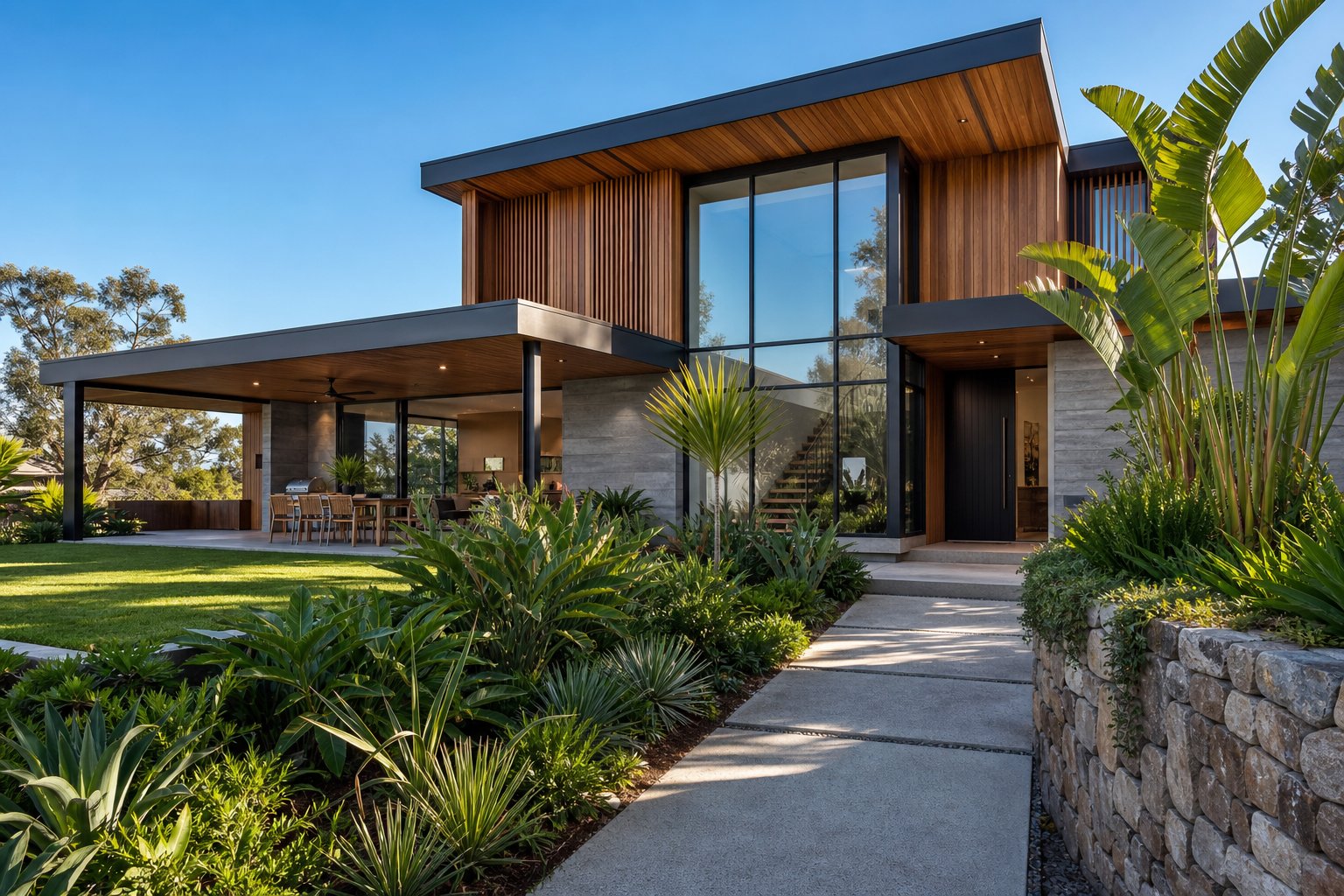
No single frame material wins on every criterion. Budget, project type, climate exposure, aesthetic goals, and maintenance tolerance all shift the equation. Aluminium earns its place in contemporary architecture through slimness, durability, and design flexibility — but timber, uPVC, composite, and steel each bring legitimate strengths to the table. An honest comparison helps you match the right material to the right project without relying on manufacturer spin.
Aluminium vs uPVC for Contemporary Design
uPVC dominates the budget end of the Australian window market. It is affordable, reasonably energy-efficient thanks to multi-chamber profiles, and requires minimal upkeep. For homeowners prioritising cost above all else, it remains a sensible option.
The trade-off shows up in aesthetics and longevity. uPVC needs thick profiles — typically 70 to 100 mm — to achieve adequate structural rigidity. That bulkiness conflicts directly with the clean, minimal sightlines that define contemporary design. Colour options are narrower too: while foil-wrapped uPVC is available, it lacks the precision and durability of powder-coated aluminium finishes and can yellow or peel over time under Australian UV exposure.
Recyclability is another consideration. Aluminium is indefinitely recyclable without quality degradation — a genuine cradle-to-cradle material. uPVC recycling infrastructure exists but remains less mature, and the material degrades slightly with each processing cycle. On lifespan, aluminium typically delivers around 40 to 45 years of service compared to uPVC’s 20 to 25 years before replacement becomes necessary, a factor that narrows the upfront cost gap when viewed across a full lifecycle.
Aluminium vs Timber and Composite Frames
Timber offers what aluminium cannot: natural warmth, tactile character, and heritage authenticity. For period homes in conservation areas, or for owners who simply prefer the grain and texture of real wood, timber windows remain the emotional favourite. They provide excellent natural insulation and, when maintained properly, can last a century or more.
That maintenance commitment is the sticking point. Timber frames in Australian conditions need repainting or restaining every three to seven years, particularly on exposed northern and western elevations. Moisture ingress, termite damage, and UV degradation create ongoing repair obligations that aluminium avoids entirely.
Composite frames blend wood fibres or other materials with synthetic binders to balance appearance, thermal performance, and reduced maintenance. They sit between timber and aluminium in most performance metrics. However, “composite” is not a standardised category — quality varies widely between manufacturers, and long-term track records are shorter than those of established aluminium systems.
Wood clad aluminum windows attempt to bridge the divide, pairing an aluminium exterior shell with a timber interior. This aluminum clad approach delivers low-maintenance weather resistance outside and warm aesthetics inside. Aluminum clad wood windows suit premium residential projects where clients want both visual warmth and durability, though the added complexity increases cost and relies on quality bonding between the two materials. An aluminum clad window of this type typically lands in the upper price tier but reduces the ongoing maintenance burden compared to all-timber alternatives.
Aluminium vs Steel Windows
Steel delivers the slimmest sightlines of any metal windows category. Heritage steel profiles replicate the look of original 1920s and 1930s glazing, and modern versions achieve narrow face widths that rival or beat aluminium in raw slimness.
The downsides, however, are practical. Steel frames cost considerably more than aluminium — often double or more for equivalent openings. Thermal break options are more limited and less advanced in steel systems. Corrosion resistance demands protective coatings that require periodic attention, whereas aluminium’s natural oxide layer and powder-coated finish eliminate rust risk entirely. Steel is also significantly heavier — aluminium frames are roughly 67 per cent lighter than equivalent steel profiles — which complicates hardware operation and structural support.
For Australian coastal environments where salt air accelerates corrosion, aluminium holds a clear advantage. Metal clad windows using steel require more vigilant maintenance regimes to prevent degradation, while aluminium thrives in the same conditions with minimal intervention.
The table below summarises how all five materials compare across the key decision factors most relevant to Australian residential and commercial projects:
| Factor | Aluminium | uPVC | Timber | Composite | Steel |
|---|---|---|---|---|---|
| Frame Slimness | Excellent (35–50 mm) | Poor (70–100 mm) | Moderate (55–70 mm) | Moderate (55–75 mm) | Excellent (40–55 mm) |
| Thermal Performance | Good to excellent (with thermal break) | Good (multi-chamber) | Excellent (natural insulator) | Good | Moderate (limited thermal break options) |
| Durability / Lifespan | 40–45+ years | 20–25 years | 50–100+ years (maintained) | 20–40 years | 50+ years (maintained) |
| Maintenance | Very low (occasional clean) | Low (clean only, no repair path) | High (repaint every 3–7 years) | Low to moderate | Moderate (anti-corrosion upkeep) |
| Colour Options | 150+ RAL colours, dual-colour available | Limited; foil wraps can degrade | Unlimited (paint/stain) | Moderate | Good range, powder coat or paint |
| Sustainability / Recyclability | Highly recyclable, indefinitely | Recyclable but degrades per cycle | Renewable if sustainably sourced | Variable by composition | Highly recyclable |
| Indicative Cost Tier (AUD) | Mid ($$) | Low ($) | High ($$$) | Mid-high ($$–$$$) | Very high ($$$$) |
Every material has a project type where it makes the most sense. uPVC suits tight budgets where aesthetics are secondary. Timber fits heritage renovations and owners happy to invest in upkeep. Steel works for bespoke architectural statements where cost is flexible. Composite fills a middle-ground niche. And for the majority of contemporary Australian builds — where slim sightlines, low maintenance, longevity, and design versatility need to coexist — aluminium occupies the sweet spot.
Material choice sets the parameters, but the real personality of a window project comes through in how that material is configured. Casement, sliding, fixed-light, pivot, corner-opening — each style unlocks different spatial possibilities, and aluminium’s structural properties make it the platform that accommodates the widest range of them.
Styles and Configurations for Modern Architecture
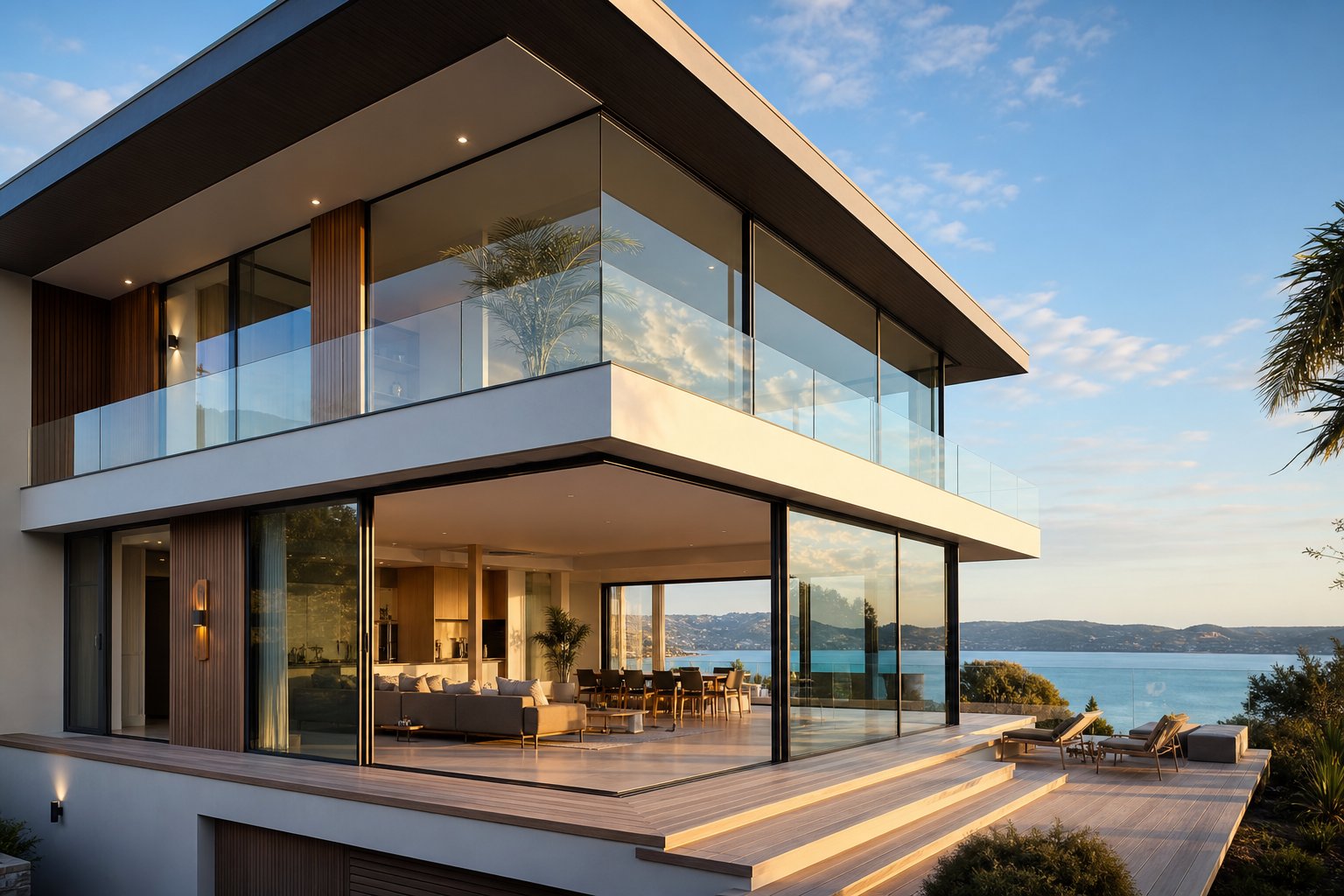
A frame material only matters if it can be shaped into the opening style your project demands. Aluminium’s structural versatility means it supports a broader range of operating configurations than any competing material — from standard casements through to structurally glazed corners that eliminate the mullion entirely. Each style suits different spatial requirements, ventilation strategies, and architectural languages, and understanding what is available helps you specify with confidence rather than settling for whatever a supplier stocks.
Casement, Sliding, and Fixed-Light Configurations
Three operating types dominate residential and commercial specifications in contemporary aluminium systems, and each serves a distinct purpose in the overall fenestration strategy.
Flush casement windows represent the cleanest expression of modern design. The sash sits perfectly level with the outer frame when closed, creating a flat, uninterrupted plane across the facade. Unlike traditional casements where the sash projects forward, flush aluminium casement windows read as a single surface — a detail that complements rendered walls, cladding panels, and minimalist architectural compositions. Hinged at the side and opening outward, they deliver full-area ventilation and an airtight compression seal when locked. Multi-point locking systems engage at multiple positions around the frame perimeter, making the aluminum casement window one of the most secure operating types available. For rooms needing maximum airflow — kitchens, bathrooms, bedrooms facing prevailing breezes — casements remain the go-to choice.
An aluminium sliding window operates on a horizontal track, with one or more sashes gliding past fixed panels. The appeal is practical: no sash swings into the room or projects outside the building envelope. This matters in tight spaces, along walkways, or on upper storeys where an outward-opening window might conflict with external access. Contemporary aluminium sliding windows use precision-engineered rollers and low-friction tracks that make even large, heavy panels feel effortless to operate. Because slim frames and wide glass surfaces integrate indoor areas with outdoor spaces, aluminum sliding windows have become synonymous with open-plan living and seamless indoor-outdoor transitions in Australian homes.
Fixed-light panels contain no moving parts at all. They exist purely to admit light and frame views without the interruption of opening hardware, visible hinges, or meeting rails. Architects use them in stairwells, above doors, in gable ends, and as large picture windows where ventilation is handled elsewhere. Paired with operable casements or sliding sections in a composed elevation, fixed lights maximise the unobstructed glass area while keeping ventilation where it is actually needed.
Specialist Configurations for Architectural Projects
Beyond these core types, aluminium’s rigidity and strength-to-weight ratio enable configurations that simply are not feasible in uPVC or standard timber systems. These specialist options push design boundaries for architects, developers, and homeowners pursuing distinctive builds:
- Corner-opening windows — Two window sections meet at a building corner without a structural post between them. The glass wraps around the corner, dissolving the boundary between wall planes and creating panoramic sightlines. Aluminium’s rigidity carries the load that would otherwise demand a mullion, making this configuration structurally viable even at generous opening sizes.
- Tilt-and-turn windows — A dual-function system that tilts inward at the top for secure background ventilation or swings fully inward like a door for cleaning access and maximum airflow. Popular in multi-storey applications and high-rise apartments where external window cleaning is impractical. The complex hardware mechanism requires a rigid frame to operate reliably over decades — a strength aluminium delivers naturally.
- Pivot windows — Rotate on a central vertical or horizontal axis, allowing the entire pane to spin for cleaning or dramatic ventilation. Suited to large openings where visual impact matters, such as double-height living areas or feature walls in commercial fitouts.
- Minimal-frame systems — Ultra-slim profiles with face widths below 30 mm that push the glass-to-frame ratio toward its structural limit. These systems are engineered for maximum transparency and are typically specified on premium residential projects or commercial showrooms where the architecture demands near-invisible framing.
- Louvred aluminium windows — Horizontal blades that angle to control airflow, privacy, and light penetration. Ideal for wet areas, plant rooms, and tropical Australian climates where constant ventilation is needed without compromising weather protection.
- Bi-fold windows — Multiple sashes fold and stack against one side, opening an entire wall section to the outdoors. Commonly specified above kitchen benchtops or servery openings, connecting cooking areas to outdoor entertaining zones in a configuration that captures the Australian lifestyle perfectly.
Project type shapes which configurations make sense. New builds enjoy the freedom to design openings around the window type from the start. Extensions and whole-house replacements work within existing structural openings, where sliding or casement styles typically slot in with minimal wall modification. Brick veneer, weatherboard, rendered masonry, and lightweight steel-frame construction all accommodate aluminium systems readily — the frame interfaces with a range of reveal conditions and flashing details that experienced installers handle as standard practice.
Style and configuration define how a window operates and how it sits within the architecture. But the final visual expression — the colour, texture, and finish that tie the frames to the broader palette of the building — depends on what happens to the aluminium surface after fabrication.
Colour Customisation and Powder Coating Finishes
Aluminium arrives from the extrusion press as raw silver-grey metal — functional but visually neutral. The finish applied after fabrication is what transforms it into a design element that either blends seamlessly with a facade or creates deliberate contrast against it. Unlike timber, which limits you to paint or stain over a visible grain, and uPVC, which restricts choices to a narrow palette of foil wraps, aluminium accepts a permanent factory-applied colour bond that lasts decades without peeling, flaking, or fading. That finish is powder coating, and it is the reason aluminium window frame colours span from deep charcoal to warm bronze to crisp white — over 200 RAL-matched shades in total.
How Powder Coating Works on Aluminium
The process begins with thorough surface preparation. Raw aluminium profiles are cleaned, degreased, and chemically pre-treated to remove oxides and create a surface profile that promotes adhesion. Without this step, even the best coating would eventually delaminate under thermal cycling or moisture exposure.
A dry powder — finely ground particles of pigment and thermosetting resin — is then sprayed onto the aluminium using an electrostatic gun. The gun imparts a positive electrical charge to the powder particles, which are attracted to the grounded aluminium profile and cling uniformly across every surface, edge, and recess. No liquid solvents are involved, which means virtually zero volatile organic compound (VOC) emissions during application. Overspray powder that misses the profile is collected and reclaimed for reuse, making the process considerably more environmentally responsible than traditional liquid paint systems.
The coated profiles pass into a curing oven at temperatures around 180 to 200 degrees Celsius. Heat melts the powder, causing it to flow into a continuous film before chemically cross-linking into a hard, thermoset layer typically 60 to 80 microns thick. The result bonds permanently to the aluminium substrate — it does not sit on top like paint but becomes part of the surface itself. This cured film resists UV degradation, salt spray, humidity, and mechanical abrasion far better than conventional wet-sprayed alternatives, which is why powder coating dominates the aluminium joinery industry across residential and commercial sectors.
For large projects where dozens of frames must match perfectly — a multi-storey apartment build or a whole-house replacement across multiple elevations — powder coating delivers batch-to-batch colour consistency that liquid paint struggles to replicate. The electrostatic application ensures even coverage regardless of profile complexity, and the controlled oven cure eliminates variability caused by ambient temperature or humidity.
Choosing Colours for Contemporary Projects
Colour choice shapes how a building reads from the street, how its frames interact with surrounding materials, and whether the windows announce themselves boldly or disappear into the composition. The RAL colour matching system provides a standardised reference across the industry, ensuring that the shade you select from a sample chip is the shade applied to every frame on site.
Trends shift, but a handful of finishes have proven their staying power in Australian contemporary design. The most popular choices — and the architectural logic behind each — break down as follows:
- Matt black (RAL 9005 or similar) — Creates bold, graphic framing around glazing that makes windows read as architectural outlines against light-coloured render or cladding. Black aluminum windows deliver maximum contrast and visual drama, particularly on large-format sliding doors and minimal-frame systems where the frame becomes a deliberate design accent.
- Anthracite grey (RAL 7016) — A deep, neutral grey that pairs naturally with concrete, zinc cladding, and painted render. Softer than black yet still firmly contemporary, it avoids the starkness that pure black can bring to smaller facades. It remains the single most specified aluminium window colour for modern Australian residential builds.
- White (RAL 9010 or 9016) — Clean, bright, and versatile. White aluminum and windows suit coastal homes, Hamptons-style architecture, and any project where frames should recede rather than contrast. White reflects heat in harsh sun, keeping frame surface temperatures lower than dark finishes — a practical benefit in northern Australian climates.
- Bronze and warm metallics — Anodised or powder-coated bronze aluminum windows bring warmth and subtle richness that grey and black cannot offer. They bridge the gap between modern minimalism and heritage character, reading beautifully against sandstone, natural timber cladding, and earthy rendered finishes.
- Dual-colour (different inside and out) — A darker external colour for street presence paired with a lighter interior finish that complements internal joinery and wall colours. This option allows homeowners to satisfy two different aesthetics without compromise — anthracite or black facing the street, white or warm grey facing the living room.
Durability is not a concern with quality powder-coated finishes. UV-stable formulations resist fading even under Australia’s intense solar exposure, and the thermoset film does not chalk, crack, or peel the way liquid-painted surfaces can over time. Maintenance amounts to an occasional wipe with a damp cloth — no repainting, no sanding, no cyclical upkeep costs. For homeowners choosing white aluminum windows in coastal locations, marine-grade pre-treatments beneath the powder coat add an extra layer of corrosion resistance against salt-laden air.
Colour locks in the aesthetic identity of a project, but it is the performance beneath that finish — lifespan, hardware quality, warranty depth, and specification detail — that determines whether your investment holds value across decades of daily use.
Lifecycle Value and Evaluating Supplier Quotes
A powder-coated finish holds colour for decades, but what about the system beneath it? The full value proposition of contemporary aluminium windows only becomes clear when you look beyond purchase price and consider how long the product lasts, what it costs to maintain over that period, and what happens to the material at end of life. These lifecycle factors are where aluminium distinguishes itself most sharply from competing materials — and where poorly informed buyers lose money by fixating on the cheapest quote rather than the best long-term investment.
Lifespan, Maintenance, and Lifecycle Value
Well-manufactured aluminium windows typically deliver 40 to 70 years of reliable service in Australian conditions. That range exists because the frame itself is not a single component — it is a system of aluminium profiles, seals, hardware, glazing units, and finishes, each ageing on its own timeline. The aluminium frame remains structurally sound for 60-plus years in most environments. Rubber seals and gaskets generally last 15 to 25 years before needing replacement. Hardware — hinges, locks, friction stays — wears over 10 to 20 years depending on usage. Glazing units hold their seal integrity for 15 to 25 years before fogging between panes signals failure.
The critical advantage: each of these consumable components can be replaced independently without removing the frame. A set of custom aluminum windows specified and installed correctly does not reach end of life because the aluminium gives out. It reaches end of life only if neglected long enough for cascading failures across multiple components to make repair uneconomical.
Maintenance demands are genuinely minimal. Quarterly track cleaning and hardware lubrication, biannual frame washing with mild detergent, and an annual seal inspection add up to a few hours per year for an average home. Coastal properties benefit from monthly wipe-downs to clear salt deposits. Compare that obligation to timber’s three-to-seven-year repainting cycle or uPVC’s eventual brittleness under sustained UV, and the lifecycle cost equation tilts heavily toward aluminium — especially on a per-year-of-service basis.
Recyclability strengthens the case further. Aluminium is infinitely recyclable without any loss of structural or aesthetic quality, and recycling uses only about five per cent of the energy required to produce virgin aluminium from bauxite ore. A window system that serves 50 years and then returns to the material stream at full quality represents a genuine closed-loop lifecycle that few building products can match.
What to Look for When Comparing Quotes
Receiving quotes from multiple aluminium window suppliers is standard practice. The challenge is that a 20 to 30 per cent price difference between seemingly similar offers is common, and it almost always traces back to specification details hidden in the fine print. Two quotes might both say “thermally broken aluminium windows” while describing fundamentally different products — one entry-level, the other high-performance.
The market spans several tiers. Entry-level thermally improved frames use narrow thermal breaks and basic hardware, meeting minimum NCC compliance but offering limited performance headroom. Mid-range systems step up to deeper polyamide barriers (24 mm or more), quality EPDM seals, branded multi-point locking, and a broader colour palette. Premium minimal-frame systems push sightlines below 30 mm with advanced engineering, marine-grade hardware, and thermal break depths exceeding 35 mm — these target architects and homeowners seeking the best aluminum windows available for design-led projects.
Before settling on any aluminum window supplier, work through this specification checklist to ensure you are comparing like for like:
- Profile system and depth — Confirm the specific system name, overall frame depth, and whether the profile is genuinely thermally broken with polyamide (PA66) strips rather than simply “thermally improved” with a resin pour.
- Thermal break width — Ask for the thermal break depth in millimetres. Deeper breaks deliver better U-values. If the supplier cannot state this figure, treat it as a red flag.
- Whole-window U-value — Not just the glass U-value (Ug), but the combined window U-value (Uw) that reflects real installed performance. This is the number that feeds into WERS ratings and NatHERS assessments.
- Glazing specification — Double or triple glazed? Argon-filled? Low-E coated? What is the overall glazing unit thickness? Is toughened or laminated glass included where required by AS 1288?
- Seal material — EPDM rubber is the benchmark for longevity in Australian conditions. Neoprene or generic rubber alternatives degrade faster under UV and ozone exposure.
- Hardware brand and grade — Named brands with documented test cycles signal quality. Ask whether marine-grade stainless options are available for coastal properties.
- Powder coat standard — Look for compliance with AS 3715 or Qualicoat certification. Confirm the pre-treatment process and film thickness (60 to 80 microns is standard).
- Warranty structure — Component-by-component warranty terms matter more than a single headline number. Check coverage for frame, finish, hardware, seals, and glazing units separately. Non-prorated coverage offers better real-world protection than prorated terms that diminish over time.
- Installation responsibility — Who installs, what qualifications do they hold, and does the product warranty require installation by an approved contractor?
- Compliance documentation — AS 2047 test reports, WERS certificates, and BAL ratings (if applicable) should be available on request. A credible aluminum window manufacturer provides these without hesitation.
Walking through these points transforms the quoting process from a price comparison into a value comparison. You will quickly see where cheaper offers cut corners and where premium pricing reflects genuine performance differences rather than margin padding.
For readers ready to move from research to product exploration, MEICHEN’s aluminium windows page provides a practical starting point — covering window types, custom options, and performance specifications tailored to Australian residential and commercial projects. It is the kind of resource that gives you concrete system details to measure incoming quotes against.
Choosing between aluminium window manufacturers ultimately comes down to who provides transparent specifications, documented compliance, and clear warranty terms versus who hides behind vague descriptions and low headline prices. The specification checklist above gives you the framework to tell the difference — but the windows also need to deliver on security, weather resistance, and acoustic comfort once they are in the wall, which is where the next layer of performance evaluation begins.
Security, Weather, and Acoustic Performance
Specifications and supplier quotes tell you what a window should do on paper. But once installed, the system faces real-world demands that no brochure fully conveys — forced entry attempts, driving rain at 100 km/h, salt-laden coastal gusts, and the relentless drone of traffic at three in the morning. Contemporary aluminium windows are engineered to handle all of these simultaneously, and understanding how they perform across security, weather, and acoustic criteria helps you specify correctly for your particular environment rather than accepting generic off-the-shelf solutions.
Security Features in Contemporary Aluminium Systems
Frame rigidity is the foundation of window security. A flexible frame deflects under prying force, allowing latches to disengage and seals to separate. Aluminium resists this deflection far more effectively than uPVC and outperforms timber in resisting localised point loads — the kind applied by a crowbar levered against the frame edge. That inherent stiffness means locking mechanisms remain engaged even under sustained physical attack because the frame holds its shape around them.
Modern residential aluminum windows and commercial aluminium windows alike use multi-point locking systems as standard. Rather than a single latch at the handle position, mushroom-headed cams engage into reinforced steel keep plates at multiple positions around the sash perimeter — typically four to eight points depending on window size. Each engagement point creates an independent resistance node. An intruder cannot simply pop one lock and force the sash open; they must overcome every cam simultaneously, which is practically impossible without destructive force visible enough to alert occupants or neighbours.
Hardware quality matters as much as frame strength. Stainless steel locking pins, hardened steel mushroom cams, and anti-drill escutcheons represent genuine security upgrades over basic zinc die-cast components. For ground-floor windows in higher-risk locations, laminated glazing adds another layer — the interlayer holds the glass in place even after impact, preventing climb-through access.
In Australia, AS 2047 sets mandatory minimum performance requirements for external windows, including the ultimate strength test that applies positive and negative pressures to ensure the window does not fail under design wind loads. While AS 2047 addresses structural performance rather than security per se, the testing regime ensures that frames and hardware can withstand forces well beyond normal operating conditions. For projects requiring formal security ratings, look for windows tested to AS 5039 (security screening) or those with hardware meeting the forced-entry resistance requirements of relevant insurance standards.
Weather Resistance and Acoustic Performance
Australian conditions test windows more aggressively than most markets worldwide. Cyclone-rated regions in northern Queensland and the Northern Territory impose extreme wind pressures. Coastal properties from Torquay to the Sunshine Coast endure constant salt spray. Bushfire-prone areas across Victoria, New South Wales, and South Australia demand compliance with BAL (Bushfire Attack Level) ratings that dictate frame material, glazing type, and seal performance under radiant heat and ember attack.
Contemporary aluminium windows and doors address weather exposure through layered defence. Multi-chambered drainage channels within the frame direct any water that breaches the outer seal back to the exterior before it reaches the interior face. Compression seals — typically EPDM rubber — maintain consistent contact pressure across the full perimeter, preventing air and water infiltration even as materials expand and contract through seasonal temperature cycles. The AS 4420.5 water penetration resistance test verifies that no leaks occur at the specified design pressure, while the AS 4420.4 air infiltration test confirms energy and acoustic tightness.
For coastal installations, marine-grade anodising or enhanced pre-treatment beneath the powder coat prevents the pitting corrosion that salt air can cause on lesser-protected metals. Stainless steel hardware replaces standard zinc or aluminium fittings in these environments. Metal windows residential installations along exposed coastlines benefit from aluminium’s natural corrosion resistance — its self-forming oxide layer provides baseline protection that steel and even some composite materials cannot match without significant additional treatment.
Frame rigidity does more than resist break-ins. A frame that holds its geometry over decades maintains consistent seal compression across every millimetre of the perimeter. That sustained compression is what keeps weather performance and acoustic insulation stable year after year — not just on the day of installation, but through thousands of thermal cycles, wind events, and operational movements that gradually degrade flexible frame materials.
Acoustic performance follows similar principles. Sound enters through the weakest point in the assembly — typically air gaps, poorly compressed seals, or thin single-glazed panels. Contemporary aluminum doors and windows specified for noise reduction combine three strategies: heavier glazing mass (thicker glass or laminated acoustic interlayers that dampen sound vibrations), airtight sealing that eliminates flanking paths, and frame rigidity that prevents resonance and maintains seal contact under pressure differentials caused by wind or traffic turbulence.
Glazing configuration drives the largest acoustic gains. A standard 6 mm single pane provides roughly 25 dB of noise reduction. Stepping up to a double-glazed unit with an asymmetric glass combination — say 6 mm outer and 10 mm inner with a 12 mm air gap — lifts performance to around 32 to 35 dB. Adding a laminated acoustic interlayer to one pane pushes reduction beyond 38 dB, which is enough to make a busy arterial road feel like distant background hum from inside. For commercial aluminium windows in office buildings near airports or rail corridors, triple-glazed configurations with acoustic laminate can exceed 42 dB reduction — transforming a hostile acoustic environment into a productive workspace.
Specifying for your environment means identifying which threat dominates. A beachfront home in Noosa prioritises corrosion resistance and cyclone-rated structural performance. A ground-floor apartment on Parramatta Road needs acoustic laminated glazing and enhanced security hardware. A hillside property in a BAL-29 zone requires specific frame and glazing combinations that resist ember attack and radiant heat. Each scenario demands a different configuration of the same aluminium platform — and credible suppliers provide documented test results for the specific combination you need rather than generic claims.
For Australian projects where coastal exposure, bushfire compliance, or high-wind ratings shape the specification, MEICHEN’s aluminium window systems offer performance-rated solutions engineered for local conditions — a resource worth exploring when your project environment demands more than standard off-the-shelf products can deliver.
Frequently Asked Questions About Contemporary Aluminium Windows
1. Are aluminium windows energy efficient compared to timber or uPVC?
Yes, contemporary aluminium windows with thermally broken profiles achieve whole-window U-values between 1.4 and 2.2 W/(m²K), placing them on par with timber and ahead of many basic uPVC systems. The key is the polyamide thermal break that separates the inner and outer aluminium shells, reducing heat transfer by up to 85 per cent compared to older unbroken frames. When paired with argon-filled Low-E double glazing or triple glazing, thermally broken aluminium delivers genuine year-round comfort in Australian climates without the maintenance burden of timber or the bulky profiles of uPVC.
2. How long do contemporary aluminium windows last in Australian conditions?
Contemporary aluminium windows typically provide 40 to 70 years of reliable service in Australia. The aluminium frame itself remains structurally sound for 60-plus years, while consumable components like seals (15 to 25 years), hardware (10 to 20 years), and glazing units (15 to 25 years) can be replaced independently without removing the frame. Maintenance is minimal — quarterly track cleaning, biannual washing, and annual seal checks. Coastal properties benefit from monthly salt removal. This longevity, combined with aluminium’s infinite recyclability, makes it one of the most cost-effective frame materials over its full lifecycle.
3. What is the difference between thermally broken and non-thermally broken aluminium windows?
Non-thermally broken aluminium windows use a single continuous metal extrusion that conducts heat rapidly between indoors and outdoors, producing U-values of 4.0 to 6.0 W/(m²K). Thermally broken systems split the profile into two separate aluminium shells connected by a reinforced polyamide strip with thermal conductivity nearly 800 times lower than aluminium. This interrupts the heat pathway, keeping interior frame surfaces closer to room temperature, eliminating condensation risk, and delivering U-values between 0.8 and 2.0 W/(m²K). The depth of the thermal break matters too — premium systems use breaks of 24 to 35 mm for superior insulation.
4. Why are aluminium window frames slimmer than uPVC?
Aluminium’s inherent strength-to-weight ratio allows engineers to design structurally sound frames with face widths of just 35 to 50 mm. The extrusion process creates complex hollow internal chambers that add rigidity without visible bulk. uPVC, being a flexible polymer, requires 70 to 100 mm of material width to achieve equivalent structural performance against wind loads and security requirements. This difference means aluminium windows deliver up to 20 per cent more glass area in the same wall opening, resulting in brighter interiors, better views, and greater passive solar gain without enlarging the structural opening.
5. What should I look for when comparing aluminium window quotes in Australia?
Focus on specification details rather than headline price alone. Key comparison points include: thermal break depth in millimetres, whole-window U-value (Uw not just glass Ug), glazing configuration (double or triple, argon-filled, Low-E coated), seal material (EPDM is the benchmark), named hardware brands with documented test cycles, powder coat compliance with AS 3715 or Qualicoat certification, and component-by-component warranty terms. Also confirm AS 2047 test reports and WERS certificates. A 20 to 30 per cent price gap between quotes usually traces to these hidden specification differences rather than arbitrary margin.
More Window & Door Guides