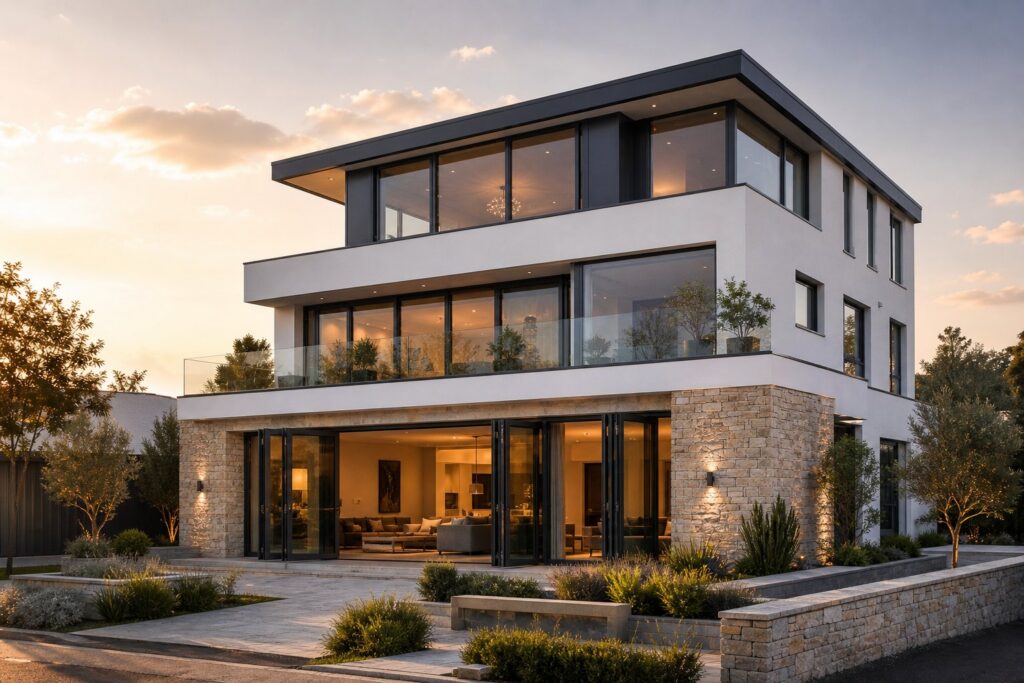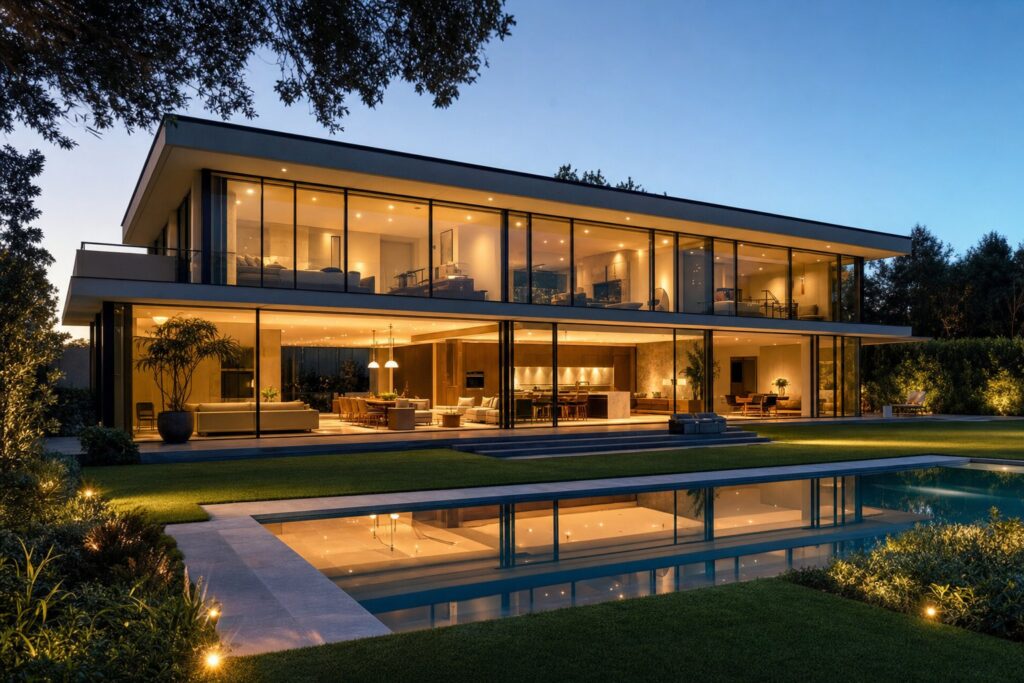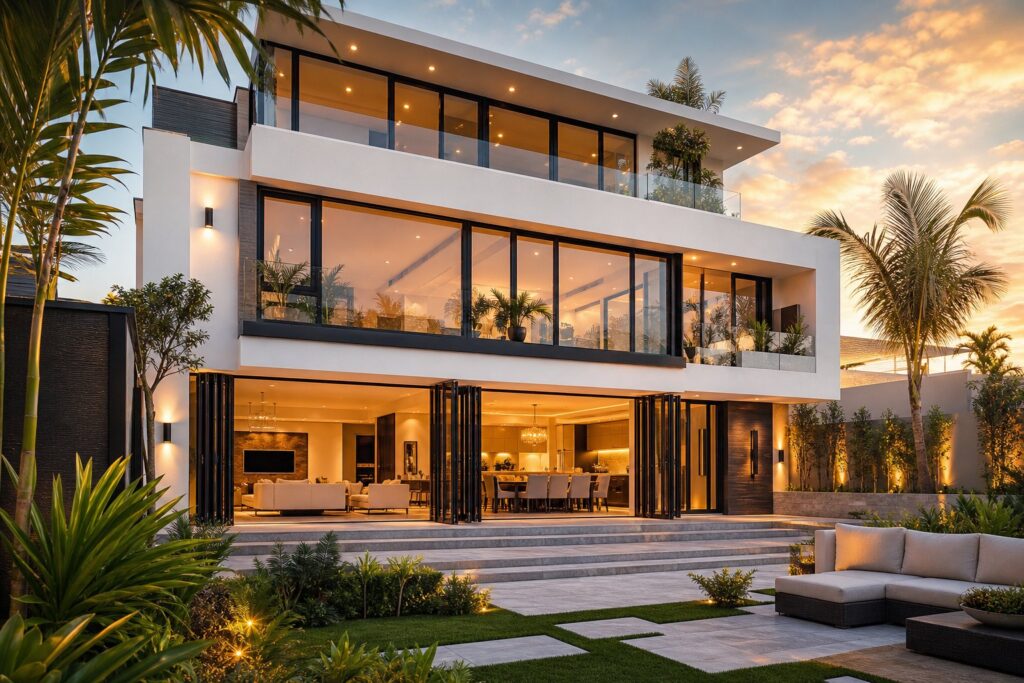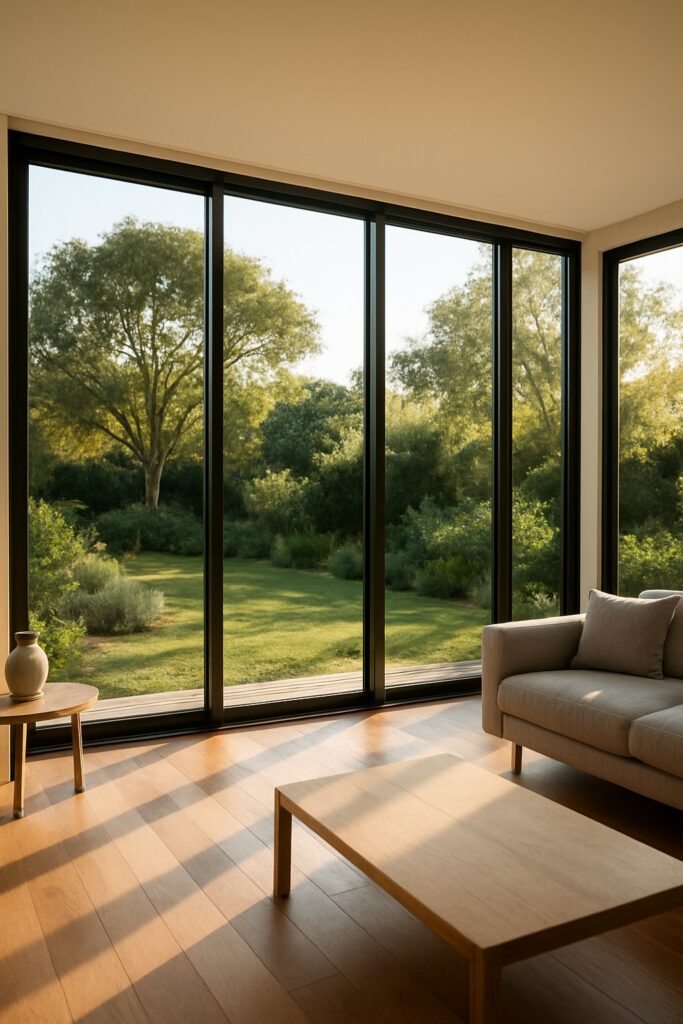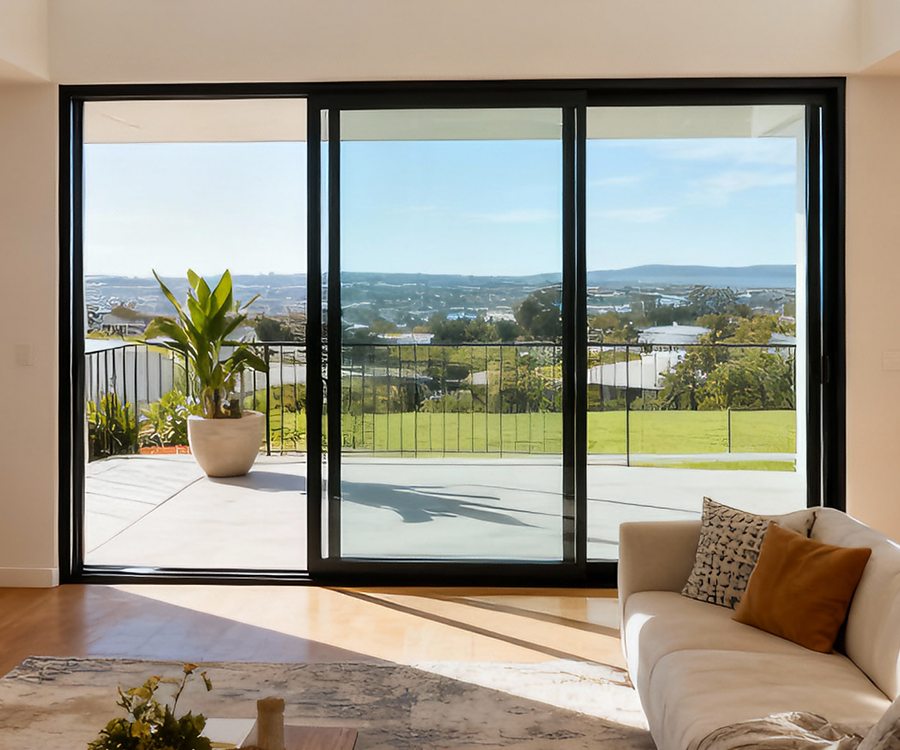
What Grey Powder Coated Aluminium Windows Actually Are
So what colour is aluminium in its natural state? Raw aluminium has a silvery-grey appearance that oxidises quickly when exposed to air. That natural aluminium colour might seem close to grey already, but it lacks the depth, consistency, and protective qualities that modern architecture demands. Grey powder coated aluminium windows solve this by bonding a dry polymer powder to the frame surface through an electrostatic and heat-curing process, producing a finish that is uniform, tough, and far more resilient than conventional wet paint.
Grey powder coated aluminium windows are window frames made from extruded aluminium profiles finished with a dry powder coating that is electrostatically applied and oven-cured to form a hard, corrosion-resistant grey film — delivering consistent colour, minimal maintenance, and a lifespan that far exceeds painted alternatives.
Definition and Core Characteristics
Powder coating differs from liquid paint in one fundamental way: there is no solvent. A fine, dry powder — typically a polyester resin blended with grey pigments — is sprayed onto the aluminium using an electrostatic charge, then cured in an oven to melt and fuse into a seamless protective layer. The result is a finish that resists chipping, fading, and corrosion without releasing volatile organic compounds during application. For homeowners and builders across Australia, this translates into frames that hold their colour under harsh UV exposure, coastal salt air, and temperature swings — with little more than an occasional wipe-down to keep them looking sharp.
Why Grey Has Become the Most Popular Window Colour
Grey dominates the window market for a reason that goes beyond trend. It is genuinely neutral — sitting comfortably against red brick, white render, timber cladding, and stone without competing for visual attention. Anthracite grey in particular has become the most specified shade in both residential and commercial projects, offering a modern yet timeless quality that lighter or bolder colours struggle to match. Grey also conceals dirt and water marks more effectively than white, reducing the visual maintenance burden. As Australian homes lean further into clean lines and expansive glazing, grey powder coated frames deliver exactly the understated sophistication that architects and homeowners keep coming back to.
The shade itself, however, is far from one-dimensional. Choosing the right grey involves understanding pigment composition, RAL codes, and how finish types interact with light — all of which shape the final look on your facade.
How the Powder Coating Process Produces a Durable Grey Finish
A grey aluminium window frame gets its colour and toughness from a multi-stage industrial process — not a brushed-on paint job. Each stage builds on the last, and skipping or rushing any one of them leads to premature peeling, chalking, or colour inconsistency down the track. Understanding how powder coating is applied to aluminium helps explain why these frames hold up so well in Australian conditions, and why the grey you see on day one looks virtually identical a decade later.
The powder coating process for window frames follows a precise sequence. Here it is broken down into its core stages:
- Degreasing and cleaning — removal of oils, cutting fluids, and handling residues from the raw extrusion.
- Etching — controlled acid treatment that strips the natural oxide layer and creates a microscopic texture for grip.
- Conversion coating — application of a zirconium or chrome-free chemical layer that bonds the metal surface to the incoming powder.
- Rinsing and drying — deionised water rinse followed by oven drying to eliminate mineral deposits.
- Electrostatic powder application — dry grey powder is charged and sprayed onto the grounded aluminium profile.
- Curing — the coated profile enters an oven at approximately 180-200°C, where the powder melts, flows, and cross-links into a continuous film.
Pre-Treatment and Surface Preparation
Before any powder touches the aluminium, the extruded profile must be chemically spotless. Freshly extruded 6063 alloy — the standard grade for window frames — carries residual oils and an unstable natural oxide layer that would undermine adhesion if left in place. The pre-treatment line addresses both problems in sequence.
First, the profile passes through an alkaline or mildly acidic degreasing bath that dissolves organic contaminants. A thorough rinse follows to prevent chemical carryover. Next comes etching: an acid-based solution strips the native aluminium oxide and sculpts a fine anchor pattern into the surface at a microscopic level. This texture is invisible to the eye but critical — it gives the cured coating thousands of tiny mechanical grip points per square centimetre.
The final pre-treatment step is the conversion coating. Modern lines use zirconium-based or titanium-based chemistry rather than older chromate processes. This stage deposits a thin, chemically stable inorganic film that acts as a molecular bridge between the aluminium substrate and the organic powder layer above it. Without it, long-term adhesion and corrosion resistance drop significantly — particularly in coastal and high-humidity environments common across much of Australia.
Electrostatic Application and Curing
With a clean, chemically primed surface ready, the profile moves into a spray booth. A corona or tribo-charging gun imparts an electrostatic charge to the dry powder particles, while the aluminium profile is grounded. The resulting electrical attraction pulls the charged particles onto the frame evenly, wrapping around edges and into recessed channels that liquid paint would struggle to reach.
The coated profile then enters a convection oven. At around 180-200°C, the powder particles melt, flow together into a seamless liquid film, and begin cross-linking — a chemical reaction that transforms the melted resin into a hard thermoset polymer. Typical curing schedules call for 10 to 15 minutes at the target part metal temperature. The finished film sits at roughly 60-120 micrometres thick: substantial enough to resist scratches and UV degradation, yet thin enough to preserve the crisp sightlines that make aluminium frames attractive in the first place.
How Grey Pigments Affect the Coating
Grey is not a single pigment — it is a blend. Solid grey powder coatings combine carbon black and titanium dioxide in carefully calibrated ratios to hit a target shade, whether that is a soft dove grey or a deep anthracite. Shift the ratio slightly and the undertone changes from cool blue-grey to warm brown-grey, which is why two RAL codes that both read as “dark grey” on a swatch card can look noticeably different on a building facade.
Metallic grey finishes add another variable. These formulations incorporate fine aluminium flake particles — either bonded to the powder grains or blended in — that reflect light and create a shimmering depth. During curing, the orientation of these flakes as the powder melts and flows determines the final sparkle and tone. Even small changes in oven temperature or film thickness can shift how a metallic grey reads on the finished frame. Reputable coaters manage this by controlling electrostatic voltage, gun-to-part distance, and curing schedules tightly — ensuring batch-to-batch consistency across an entire order of window profiles.
Textured grey finishes behave differently again. A fine-textured powder contains additives that prevent full levelling during cure, leaving a controlled grain in the surface. This texture scatters light rather than reflecting it uniformly, which softens the appearance and hides minor surface imperfections — a practical advantage on large expanses of framing where even slight waviness in a gloss finish would be visible.
The interplay between pigment type, flake orientation, and curing parameters is precisely why powder coating aluminium windows demands specialist equipment and quality control. It also explains why a properly specified grey finish remains stable year after year — the colour is locked into a cross-linked polymer matrix rather than sitting on the surface waiting to wear off.
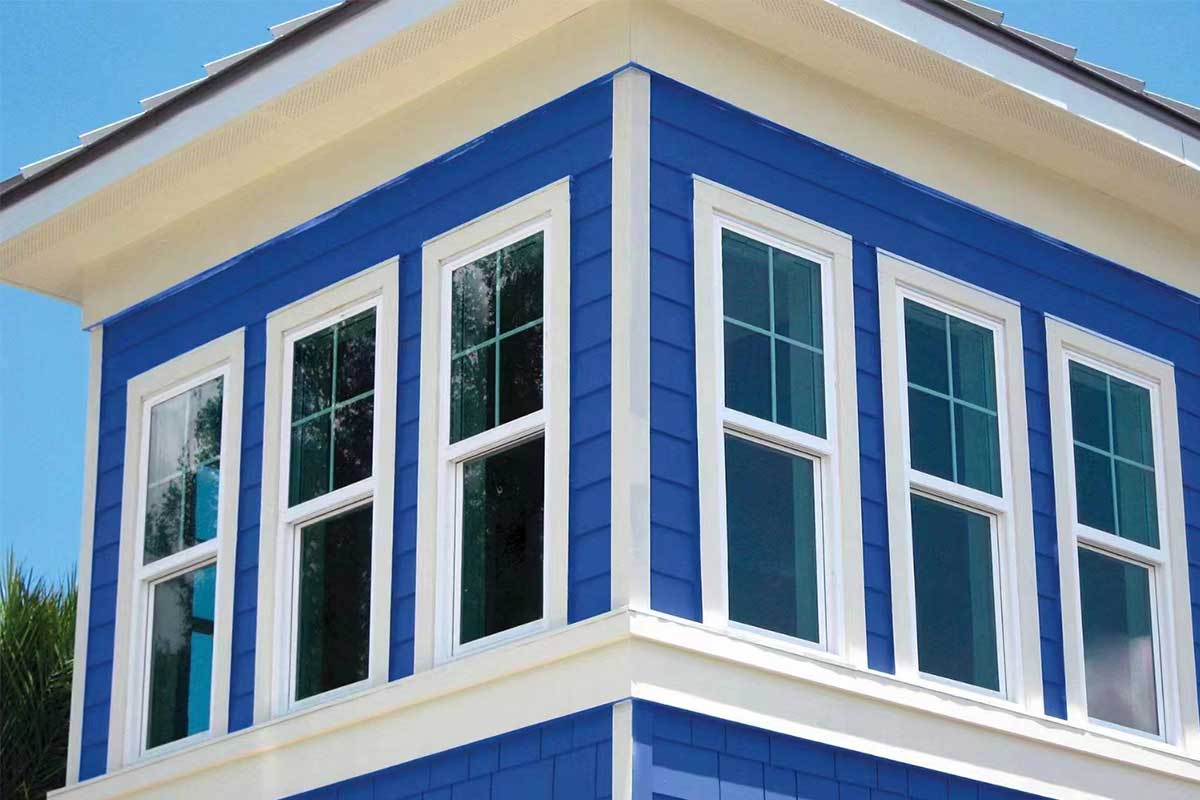
Popular Grey Shades for Aluminium Window Frames
Knowing how pigments and curing interact to produce a grey finish is one thing. Picking the actual shade that will look right on your home for the next 25 years is another challenge entirely. The RAL colour system — a standardised palette used across the window and coatings industry — removes guesswork by assigning each grey a numeric code, an official name, and a defined set of pigment values. That means when you specify a RAL grey for your aluminium window frame colours, the coater delivers a repeatable result regardless of batch size or factory location.
Common RAL Grey Shades for Windows
Not all greys are created equal. Some lean cool and blue-toned, others carry warm brown or green undertones that shift noticeably depending on natural light and surrounding materials. Here are the most commonly specified grey colour options for aluminium windows in the Australian market:
| RAL Number | Common Name | Undertone | Best Suited Exterior Pairings |
|---|---|---|---|
| RAL 7016 | Anthracite Grey | Cool blue-grey, almost charcoal | Red brick, yellow brick, dark roof tiles, timber cladding |
| RAL 7015 | Slate Grey | Blue with subtle red-brown depth | Traditional cottages, sandstone, mixed heritage facades |
| RAL 7005 | Mouse Grey | Neutral with a faint green cast | Light render, weatherboard, coastal colour schemes |
| RAL 7012 | Basalt Grey | Cool neutral, balanced mid-tone | White or cream render, concrete, modern cladding panels |
| RAL 7022 | Umbra Grey | Warm brown-grey, earthy | Natural stone, earthy brick blends, bush-setting homes |
| RAL 7024 | Graphite Grey | Deep blue-grey, saturated | Dark feature walls, zinc cladding, bold modern designs |
Of these, RAL 7016 Anthracite Grey is widely regarded as the most specified shade across residential and commercial projects. Its depth reads almost black in low light yet reveals a distinctly grey character in full sun — a quality that gives facades visual interest without the harshness of jet black frames. It also hides dust, water spots, and minor surface blemishes better than lighter alternatives, which explains its dominance in high-traffic and low-maintenance applications.
How to Choose the Right Grey for Your Project
Selecting from these aluminium colours comes down to context rather than personal taste alone. A few practical factors consistently guide the decision:
- Surrounding brickwork — Warm-toned red or orange brick benefits from a cooler grey like RAL 7016 or RAL 7015 to create contrast. Yellow or cream brick pairs more naturally with mid-tone neutral greys such as RAL 7012.
- Roof colour — A dark Colorbond roof (Monument, Basalt, Ironstone) harmonises with deeper anthracite frames. Lighter roofing materials call for a mid-grey so the windows do not overwhelm the facade.
- Neighbouring properties — Particularly relevant in townhouse and duplex developments where a jarring colour contrast between adjoining walls reads poorly from the street.
- Natural light levels — South-facing facades (in Australia, the cooler side) receive less direct sun, which makes darker greys appear even darker. A shade that looks perfect on the sunlit north elevation may feel oppressively heavy on the south side of the same building.
- Render and paint finish — White or light-rendered facades can handle virtually any grey depth because the wall itself provides brightness. Darker external materials need a lighter or mid-tone grey to avoid the facade looking flat.
A general rule: lighter greys suit rendered and painted homes where the wall does the visual heavy lifting, while darker anthracite tones step forward to create a defined frame-edge contrast against textured materials like brick and stone. When in doubt, request a physical powder-coated sample panel from your fabricator and hold it against the facade at different times of day. Screens and printed swatches rarely capture the full undertone shift that natural light reveals.
Grey selection also interacts with the finish type applied to the powder coat itself — a matt surface absorbs light and mutes the shade, while a gloss surface reflects surroundings and can make the same RAL code appear lighter or more saturated depending on the angle.
Comparing Matt, Satin and Gloss Grey Finishes
Two homes can specify the exact same RAL 7016 anthracite grey and still look remarkably different from the street. The variable? Finish sheen. Whether the powder coat cures to a flat matt, a soft satin, or a reflective gloss changes how the grey interacts with light, dirt, and the architecture around it. Yet most aluminium window guides treat finish type as an afterthought — a box ticked on an order form rather than a deliberate design decision. It deserves more attention than that.
Matt Grey Finishes
Matt finish aluminium windows sit at the low end of the reflectivity scale, typically measuring below 30 gloss units. They absorb light rather than bouncing it back, which gives the frame a soft, contemporary character that recedes into the facade. This subdued quality makes matt the go-to for minimalist and industrial-inspired homes where clean lines matter more than surface shimmer.
From a practical standpoint, matt surfaces hide fingerprints, minor surface imperfections, and light scratching far better than their shinier counterparts. The trade-off? They can be slightly harder to wipe clean because the micro-texture of the low-sheen surface holds onto grime a little more stubbornly than a smooth gloss film. That said, regular cleaning with soapy water keeps them looking sharp without much effort.
Satin Grey Finishes
Satin sits in the middle ground — roughly 40 to 60 gloss units — balancing subtle light reflection with a refined softness. It is the default finish many Australian fabricators supply when no specific sheen is requested, and for good reason. Satin provides enough reflectivity to give the frame visual definition against a wall, without the glare or reflective distortion that a full gloss can produce on large window expanses.
When weighing satin vs gloss powder coating, satin tends to be more forgiving across changing light conditions. It reads consistently whether in direct midday sun or under overcast skies, which reduces the risk of colour perception shifting dramatically between morning and afternoon. For residential projects where the windows span multiple orientations, this consistency is a real asset.
Gloss Grey Finishes
High-gloss finishes push above 80 gloss units, delivering a mirror-like reflectivity that catches attention. On a grey aluminium frame, gloss creates depth — the colour appears richer and more saturated because light bounces cleanly off the smooth surface. Commercial facades, shopfronts, and statement residential builds use gloss grey to project boldness and precision.
The downside is visibility. Every water spot, dust particle, and surface scratch stands out against that polished plane. Gloss also brings out any surface imperfections in the underlying aluminium profile, so the extrusion quality and pre-treatment must be top-notch to pull off a flawless result. Maintenance frequency goes up, particularly in dusty or coastal areas where salt residue and airborne particles settle quickly.
Textured and Metallic Grey Options
Beyond standard sheen levels, textured grey powder coat finishes introduce a fine grain — similar to sandpaper in feel — that scatters light unevenly and gives the frame a rugged, tactile quality. These coatings hide surface imperfections exceptionally well and add a layer of scratch resistance, making them a practical choice for ground-floor windows in high-traffic areas. Textured finishes are limited to lower gloss ranges, generally staying below satin levels.
Metallic greys take a different approach. By incorporating aluminium flake particles into the powder, they produce a shimmering depth that shifts with viewing angle. The effect is more refined than glitter — think automotive paint finishes translated onto architectural framing. Metallic options expand the range of aluminium powder coating colours available and add visual richness without straying from a neutral palette.
| Finish Type | Sheen Level (Gloss Units) | Best Application | Dirt Visibility | Scratch Resistance |
|---|---|---|---|---|
| Matt | 0–30 | Modern minimalist homes, industrial-style builds | Low — hides dust and water marks well | Good — micro-texture masks light scratches |
| Satin | 40–60 | General residential, multi-orientation facades | Moderate — balanced between hiding and showing | Good — slight sheen does not amplify marks |
| Gloss | 80+ | Commercial shopfronts, statement residential facades | High — dust, fingerprints, and water spots visible | Fair — scratches are more conspicuous |
| Textured | Below 30 | Ground-floor windows, high-traffic zones, rural properties | Very low — rough surface conceals most marks | Excellent — grain absorbs minor impacts |
Choosing between these finishes comes down to property style, location, and how much cleaning you are willing to do. A beachside home exposed to salt spray benefits from matt or textured coatings that stay presentable between washes. A city apartment with sheltered windows can embrace the drama of a high-gloss anthracite frame without constant upkeep. Satin remains the safe middle path — and for most Australian residential builds, it is the finish that looks right without demanding attention.
Finish sheen also interacts with frame material in a broader sense. The same grey satin that works beautifully on slim aluminium sightlines may not produce the same effect on a bulkier uPVC profile or a painted timber section — a distinction worth exploring when comparing frame materials side by side.
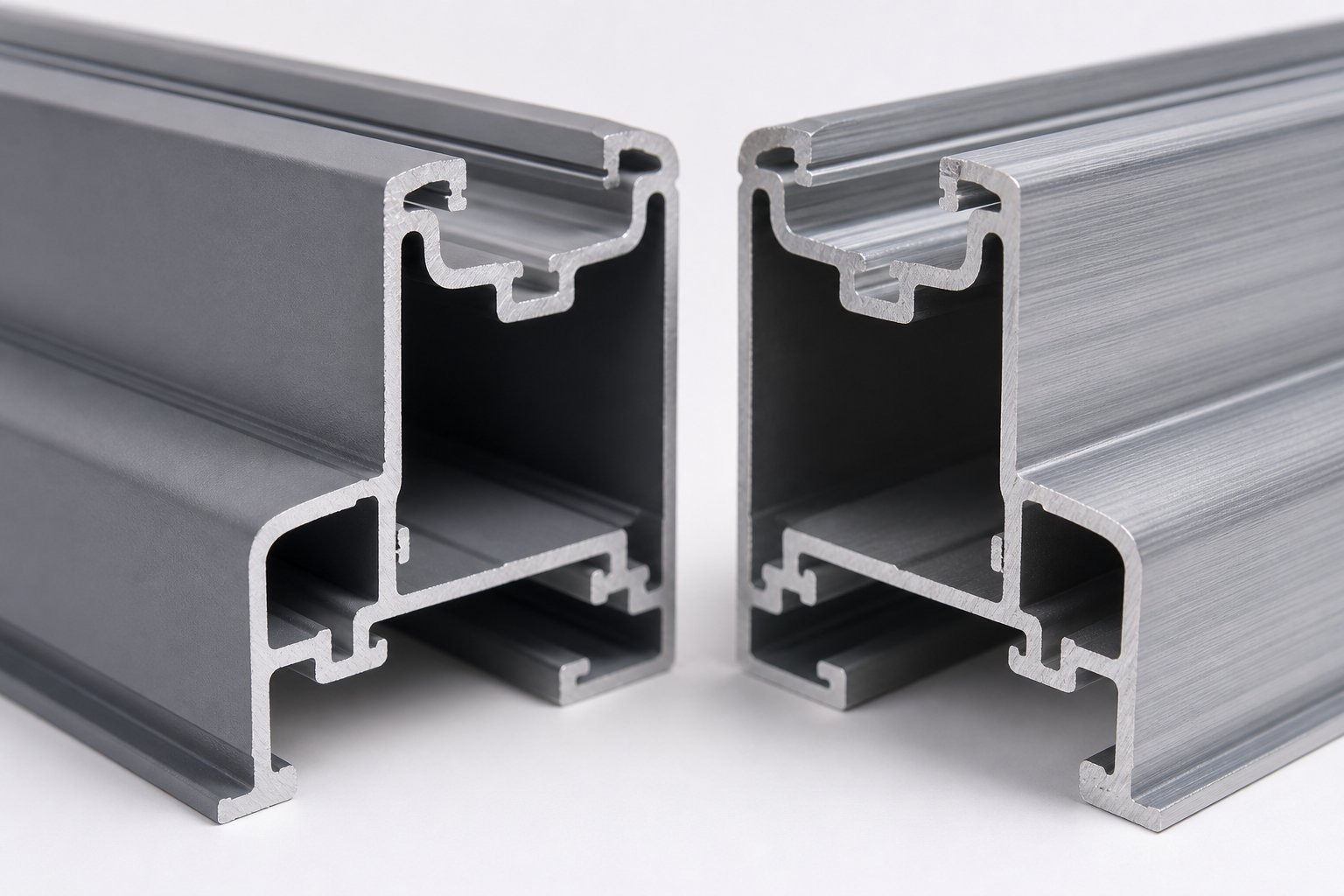
Powder Coating vs Anodising for Grey Aluminium Frames
Sheen level is one decision. The underlying finish technology is another — and it shapes everything from colour depth to long-term repairability. When specifying grey aluminium window frames, two protective finishing methods dominate the conversation: powder coating and anodising. Both produce attractive, durable grey tones, yet they work in fundamentally different ways and suit different project priorities. Understanding the distinction helps you choose the best finish for aluminium window frames based on your climate, budget, and aesthetic goals.
How Anodising Differs From Powder Coating
Powder coating, as covered earlier, applies an external polymer film to the aluminium surface. Anodising takes the opposite approach. It is an electrochemical process that submerges the aluminium profile in an acidic electrolyte bath while passing an electric current through it. This controlled reaction converts the outer layer of the aluminium itself into aluminium oxide — an extremely hard, corrosion-resistant ceramic that becomes part of the metal rather than sitting on top of it.
The visual difference is immediately apparent. Anodised grey has a translucent, metallic quality because the oxide layer is semi-transparent and reveals the aluminium substrate beneath. Powder coated grey, by contrast, is fully opaque — the colour you see comes entirely from the pigment within the polymer film, which is why powder coating offers a far broader spectrum of grey shades, from pale dove through to near-black anthracite. Anodised greys tend to cluster around natural silver, bronze, and dark charcoal tones, with limited ability to hit specific RAL codes.
For homeowners weighing up anodised vs powder coated aluminium, this colour flexibility is often the deciding factor. If you want RAL 7016 Anthracite Grey to match your Colorbond roof and front door precisely, powder coating delivers that consistency. Anodising cannot guarantee the same controlled colour match.
Performance and Cost Comparison
Both technologies protect aluminium from corrosion, UV degradation, and everyday wear — but their strengths sit in different columns. The table below compares them across the criteria that matter most when choosing between powder coating or anodising windows:
| Criteria | Powder Coating | Anodising |
|---|---|---|
| Colour range | Virtually unlimited — any RAL shade, metallics, and textures | Limited to natural metallic tones (silver, bronze, charcoal, black) |
| Scratch hardness | Moderate — flexible film absorbs impact but can chip under sharp force | High — oxide layer is ceramic-hard and resists abrasion |
| UV stability | Excellent with quality polyester resins; may chalk over decades in extreme exposure | Inherently stable — aluminium oxide does not react to UV radiation |
| Repairability | Chips can be touched up with matched paint; full recoating possible on-site | Difficult to repair locally — damaged sections often require full replacement |
| Relative cost | Lower upfront; economical to refinish | Higher initial cost; potentially lower lifetime cost due to longevity |
| Appearance | Opaque, consistent colour with matt, satin, or gloss options | Translucent metallic sheen; matte finish only |
Anodising’s scratch resistance gives it an edge in high-traffic commercial applications and areas prone to physical contact. Powder coated aluminium windows, however, win on versatility. The ability to specify any grey shade, combine it with a chosen sheen level, and touch up minor damage on-site makes powder coating the practical favourite for Australian residential projects — especially where colour matching across windows, doors, and fascias matters.
Where does anodising make more sense? Projects that prioritise raw metallic aesthetics, minimal long-term maintenance, and maximum surface hardness — think commercial curtain walls, high-rise facades, or architecturally exposed framing where the natural aluminium character is part of the design language.
For most homeowners choosing grey frames, powder coating delivers the colour control, finish variety, and repairability that residential life demands. It also pairs naturally with the broader material decision — because once you have settled on a finish technology, the next question is whether aluminium itself outperforms the alternatives.
Grey Aluminium Windows Compared to uPVC and Timber
Settling on powder coating as the right finish technology is only half the material decision. The frame itself — the structural backbone holding your glazing in place — determines how the window performs over its lifetime. Grey powder coated aluminium is one of three mainstream frame materials available in Australia. uPVC and timber are the other two, and each brings a different balance of aesthetics, longevity, thermal performance, and cost. If you are weighing aluminium windows vs uPVC or trying to decide between aluminium vs timber window frames, the differences are more nuanced than a simple good-better-best ranking.
Aesthetics and Sightline Differences
The most visible distinction between these three materials is frame width. Aluminium’s natural strength allows profiles to be engineered with slim sightlines — typically 45 to 65 mm face widths — while still supporting large glass panels, bi-fold configurations, and floor-to-ceiling spans without bowing or flexing. That narrow frame translates directly into more glass area, more natural light, and less visual obstruction.
uPVC needs bulkier profiles to achieve the same structural rigidity because the material relies on multi-chamber plastic construction reinforced with internal steel. Sightlines on uPVC frames commonly range from 70 to 100 mm, which is noticeably chunkier when placed beside a slim aluminium equivalent. The difference is subtle in a single standard window, but across a full wall of glazing or a panoramic corner setup, it becomes pronounced.
Timber sits somewhere in between. Hardwood frames can be milled relatively slim — around 55 to 75 mm — though they sacrifice thermal mass and structural span as they get thinner. Timber’s warmth and grain pattern give it a traditional appeal that grey aluminium approaches from a modern direction. For homeowners who love clean lines but want a contemporary edge rather than a heritage look, aluminium with a satin or matt grey finish achieves that without the organic irregularity of wood.
Durability and Maintenance Compared
This is where grey powder coated aluminium frames pull ahead decisively. Aluminium does not rot, warp, swell, or attract termites. The powder coated surface resists UV degradation, salt spray, and temperature cycling — the exact stresses Australian homes face daily. A quality polyester powder coat maintains its grey tone without chalking or fading for decades, demanding nothing more than periodic washing with soapy water.
Timber frames, while beautiful and long-lived when properly cared for, demand consistent upkeep. Expect to sand, reprime, and repaint exposed timber every three to seven years depending on orientation and climate zone. Miss a maintenance cycle in a humid coastal environment, and moisture infiltrates the grain, leading to swelling, paint peeling, and eventually rot. In northern Queensland or exposed beachside settings, that maintenance schedule tightens further.
uPVC holds up reasonably well in its early years but shows its age differently. Over time — particularly under intense Australian UV — white and light-coloured uPVC profiles can yellow or develop a chalky surface haze. Darker uPVC colours have historically been prone to heat absorption and thermal expansion, which can affect seal integrity and operability during summer. Modern formulations have improved UV stability, yet uPVC windows typically last 20 to 30 years before replacement is warranted, compared with 30 to 45 years for quality aluminium systems.
Cost Considerations Across Frame Types
Budget is always part of the equation. A grey aluminium window cost comparison against the other two materials reveals a predictable middle ground: aluminium sits above uPVC and below premium hardwood timber in most quoting scenarios.
uPVC remains the most affordable entry point for double-glazed window replacements. Its lower material and fabrication costs make it attractive for volume projects or budget-conscious renovations where performance matters more than razor-thin sightlines. Timber, particularly sustainably sourced Australian hardwood, commands a premium — both in material cost and in the ongoing labour required to maintain its finish. Aluminium balances upfront expenditure against near-zero maintenance costs over its service life, which often makes it the most economical choice on a lifecycle basis.
Keep in mind that pricing varies considerably based on window size, opening type (casement, awning, sliding, bi-fold), glazing specification, and whether you are comparing supply-only or supply-and-install quotes. A like-for-like comparison should account for the same glass unit, hardware grade, and installation complexity across all three materials.
| Criteria | Grey Powder Coated Aluminium | uPVC | Timber |
|---|---|---|---|
| Typical sightline width | 45–65 mm | 70–100 mm | 55–75 mm |
| Maintenance frequency | Annual wash only | Annual wash only | Repaint every 3–7 years |
| Expected lifespan | 30–45+ years | 20–30 years | 30–50+ years (with maintenance) |
| Colour stability | Excellent — UV-resistant powder coat holds tone | Moderate — may yellow or chalk over time | Dependent on paint/stain maintenance cycle |
| Relative price bracket | Mid-range | Lower | Higher |
For homeowners planning a cohesive exterior, the material choice extends beyond windows alone. Matching powder coated doors — entrance doors, bi-folds, sliding panels — in the same grey RAL code creates a unified facade language that is difficult to replicate with uPVC or timber. Because aluminium doors and windows come from the same profile systems and pass through the same coating line, colour consistency between products is guaranteed. Timber requires careful colour-matching across different timber species and paint batches, while uPVC colour options remain more limited and cannot always match across different manufacturers’ door and window ranges.
Ultimately, the right frame material depends on your priorities. If budget is the primary driver and sightlines are less critical, uPVC delivers solid performance at the lowest cost. If heritage character and natural warmth outweigh maintenance effort, timber remains compelling. But for Australian homeowners who want slim frames, stable grey colour, minimal upkeep, and a lifespan measured in decades rather than years, powder coated aluminium consistently lands as the strongest all-round performer.
Performance on paper is one thing — but how these frames actually weather real-world Australian conditions over time is the question that matters most once the installation is complete.
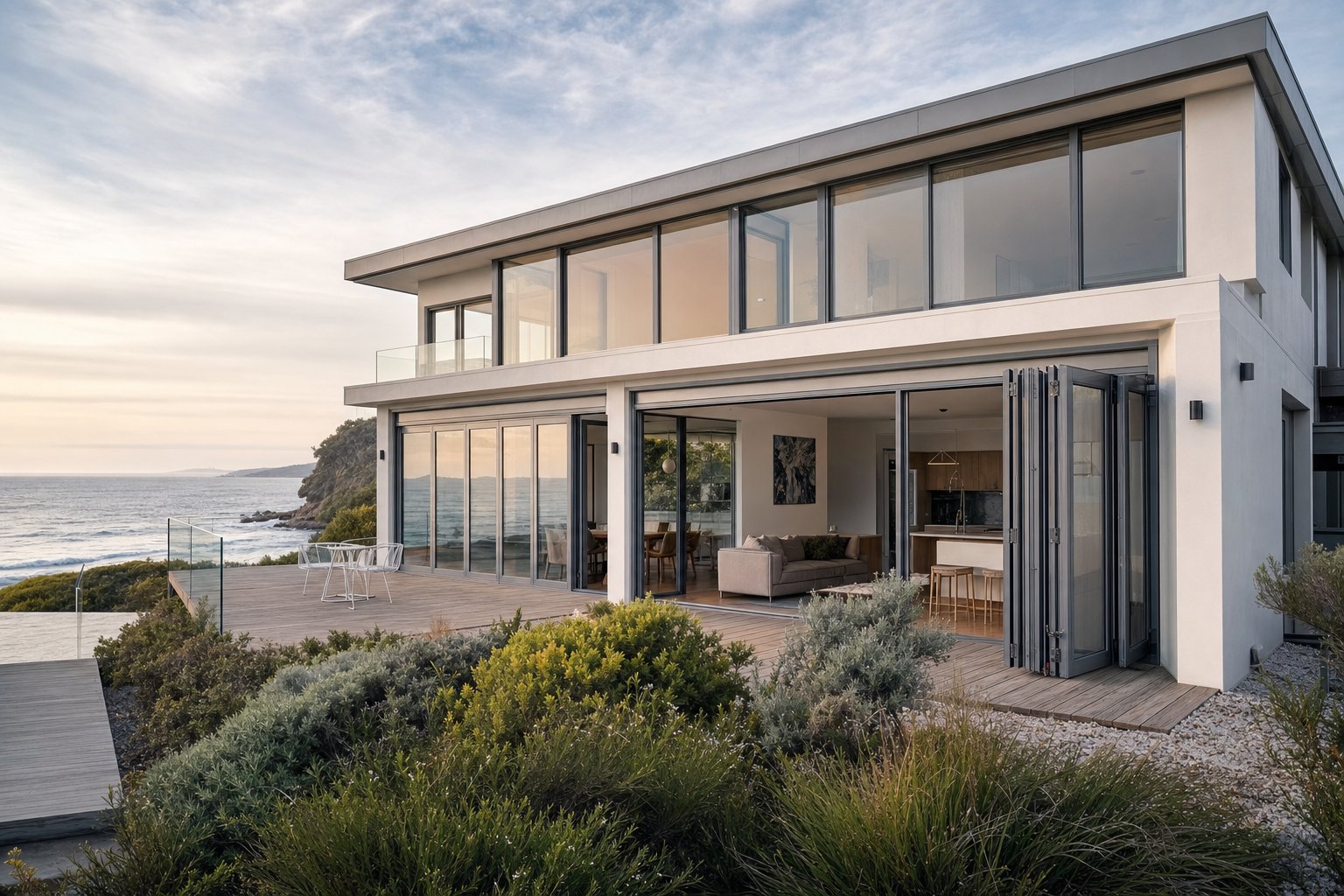
Durability, Weather Resistance and Lifespan Expectations
Choosing grey aluminium over uPVC or timber only delivers value if the finish holds up across decades of real-world exposure. Australia throws everything at a window frame — relentless UV in summer, salt-laden coastal winds, driving rain, and temperature swings that can exceed 30°C in a single day. So how long do powder coated windows last under these conditions, and what separates a coating that chalks at year eight from one that still looks sharp at year thirty?
Expected Lifespan of Powder Coated Grey Frames
High-quality powder coated aluminium windows typically last 25 to 45 years before any serious consideration of recoating or replacement — and in many cases, the aluminium substrate beneath remains structurally sound well beyond that. The frame itself is essentially permanent; it is the coating that determines how long the window continues to look good rather than just function correctly.
Several factors influence where within that range a particular installation lands:
- Coating quality and standard — premium polyester powders formulated to meet international architectural standards far outlast budget coatings applied without rigorous process control.
- Pre-treatment integrity — as discussed in earlier sections, the conversion coating beneath the powder is what prevents corrosion from creeping under the film. Skip it or cut corners, and adhesion failures appear within years rather than decades.
- Shade depth — darker greys like RAL 7016 absorb more heat and UV energy than lighter tones. With a high-performance resin system this is a non-issue, but lower-grade coatings on deep grey frames may show chalking or micro-fading earlier than lighter shades on the same building.
- Orientation and exposure — north and west-facing windows cop the most UV in the Southern Hemisphere, so these elevations age the coating faster than sheltered south-facing frames.
The practical takeaway: specify a reputable coating system, ensure proper pre-treatment, and your grey frames should comfortably reach a 30-year-plus service life with minimal intervention.
Weather and UV Performance
Standard architectural polyester powder coatings already deliver strong UV resistance — the cross-linked polymer matrix locks pigments in place and prevents the oxidation that causes colour drift. For most suburban Australian homes, a quality polyester finish provides all the protection needed.
Coastal properties face a tougher challenge. Salt-laden air accelerates corrosion at any weak point in the coating system, particularly around cut edges, drainage slots, and mechanical fixings. Marine-grade powder coating addresses this through enhanced pre-treatment protocols — deeper etching, more aggressive conversion coatings, and sometimes a dedicated primer layer beneath the topcoat. Qualicoat Seaside certification, for example, verifies that the entire pre-treatment and coating system meets the highest corrosion resistance benchmarks for coastal aluminium window finishes.
For projects in extreme UV zones — think far north Queensland or elevated inland areas with minimal atmospheric haze — hyper-durable fluoropolymer-based powder coatings (sometimes called PVDF or super-durable polyesters) offer an additional level of fade and chalk resistance. These formulations undergo accelerated weathering tests equivalent to ten or more years of South Florida exposure before earning their performance rating. In Australian terms, that translates to reliable colour retention through decades of high-UV summers without visible degradation.
Temperature cycling is the third stress factor. Aluminium expands and contracts with heat, and the coating must flex in step without cracking or delaminating. Quality architectural powders are formulated for this — their film flexibility accommodates thermal movement across the range of temperatures Australian frames experience, from sub-zero mornings in alpine Victoria to 45°C-plus afternoons in western Sydney.
Warranty Benchmarks to Look For
A manufacturer’s warranty is only as useful as its specifics. Vague promises of “long-lasting colour” mean nothing without defined parameters. When evaluating powder coating durability on aluminium frames, look for warranties that reference recognised performance tiers. Internationally, the AAMA 2604 and AAMA 2605 standards set measurable thresholds — AAMA 2604 coatings are tested against five years of accelerated outdoor exposure, while AAMA 2605 coatings must withstand ten years while retaining colour, gloss, and chalk resistance. In the Australian and broader Asia-Pacific market, Qualicoat certification provides the equivalent benchmark for architectural aluminium coatings.
Here are the key warranty terms to check before committing to a supplier:
- Specified warranty period in years (look for a minimum of 10 years on the coating for residential; 15–20+ for premium systems)
- Defined gloss retention and colour retention limits (measured in Delta E units — lower is better)
- Chalk resistance rating at the end of the warranty period
- Whether the warranty covers coastal or marine environments, or excludes them
- Pre-treatment and application requirements that must be met for the warranty to remain valid
- Whether improper cleaning products or abrasive maintenance voids coverage
- Clarity on what the warranty delivers — replacement product only, or full recoating labour and materials
Warranties are voided most commonly by two things: incorrect surface preparation during manufacturing (which the homeowner has no control over, making supplier reputation critical) and use of harsh chemical cleaners or abrasive tools during maintenance. Choosing a fabricator with documented quality control processes and Qualicoat or equivalent accreditation protects you on the manufacturing side.
For Australian projects — particularly coastal builds and properties in cyclone-prone regions — suppliers who engineer their aluminium window systems specifically for local climate conditions offer meaningful peace of mind. MEICHEN’s aluminium window range, for instance, is designed with Australian coastal and harsh-weather environments front of mind, giving homeowners, builders, and architects access to project-ready systems backed by performance specifications that match the conditions they will actually face. That kind of climate-specific engineering, paired with certified coating systems, is what separates a 15-year window from a 35-year window.
Durability ultimately comes down to the quality chain: good alloy, thorough pre-treatment, certified powder, controlled application, and proper curing. Get every link right and a grey powder coated frame becomes one of the lowest-maintenance, longest-lasting elements on your building envelope. The only regular input it asks of you is a simple cleaning routine — which, as it turns out, is even easier when you pick the right grey shade.
How to Clean and Maintain Grey Powder Coated Frames
A grey powder coated frame asks remarkably little of you — but ignoring it entirely is not the same as low maintenance. A basic cleaning routine protects the coating, preserves its appearance, and keeps your warranty intact. The good news: the whole process takes less time than washing a car, and you probably already own everything you need.
Routine Cleaning Methods for Grey Frames
Knowing how to clean powder coated aluminium windows comes down to gentleness and consistency. Harsh products are the enemy — not dirt itself. The recommended approach is straightforward: mild dish soap, warm water, and a soft cloth or microfibre sponge.
The two-bucket method keeps things efficient. Fill one bucket with warm soapy water and a second with clean rinse water. Wash a section of framing with the soapy cloth, then rinse the cloth in the clean bucket before reloading with soap. This prevents grit picked up from the frame surface from being dragged back across the coating — a common cause of fine scratching that dulls the finish over time.
Once washed, rinse the frames thoroughly with clean water and dry with a lint-free cloth to prevent water spotting. For most suburban homes, repeating this every three to six months is sufficient. Coastal properties or homes on dusty rural roads benefit from a wash every two to three months to prevent salt and particulate buildup from attacking the coating at weak points.
What to avoid:
- Steel wool, scouring pads, or abrasive sponges — they scratch through the topcoat layer
- Bleach, ammonia, turpentine, or solvent-based cleaners — these degrade the polymer film and can strip colour
- High-pressure washers aimed directly at seals and joints — water forced past gaskets causes internal damage and can void warranties
How Different Grey Shades Show Dirt
Not all greys behave the same between cleans. This is one of the most practical powder coated window maintenance tips that rarely gets discussed: your shade choice directly affects how often you feel compelled to pick up the cloth.
Mid-toned greys — RAL 7016, RAL 7012, RAL 7015 — sit in the sweet spot. They are dark enough to mask light dust and pale water mineral deposits, yet not so dark that every fingerprint or pollen grain shows as a contrasting mark. RAL 7016 Anthracite Grey in particular earns its popularity partly because it hides the everyday grime that accumulates between washes.
Very light greys (RAL 7035, RAL 7047) show dust, mud splashes, and rain streaking readily — similar to white frames. Very dark greys and near-black tones (RAL 7021, RAL 9005) reveal water spots, dried salt hazes, and fine dust as a pale film against the deep background. Both extremes look pristine right after cleaning but lose that freshness faster between sessions.
If low visual maintenance is a priority — particularly for hard-to-reach upper-storey frames — a mid-tone grey delivers the longest stretch of clean-looking performance between washes. It is a quiet advantage built into the aluminium window colours decision that pays off every week without you thinking about it.
Long-Term Care and Touch-Up Options
Beyond regular washing, an annual check-up keeps your frames performing at their best. Think of it as a grey aluminium frame cleaning guide extended into preventive care:
- Spring: Full wash after winter grime buildup. Clear drainage holes at the base of each frame using a cotton bud or soft brush. Check rubber seals for cracking or shrinkage.
- Summer: Inspect north and west-facing frames for early signs of chalking or colour shift. Lubricate hinges and locks with a silicone-based spray — never oil-based products that attract dust.
- Autumn: Remove leaf debris from tracks and sills. Confirm drainage slots are unobstructed before heavy rain season.
- Winter: Light rinse to remove salt or mineral deposits carried by wet weather. Check sealant around frame-to-wall junctions for gaps.
Minor chips or scratches happen — a ladder bump, a wayward garden tool, kids with cricket bats. Most reputable fabricators supply colour-matched touch-up paint that can be brushed directly onto small areas of exposed aluminium. Clean the damaged spot, apply a thin coat, and let it cure fully before exposing it to weather. The repair will not be invisible up close, but it seals the substrate against corrosion and blends from any normal viewing distance.
For more extensive damage — large scrapes, widespread chalking after many years, or coating failure due to manufacturing defects — professional re-coating is the answer. Specialist services can strip and re-powder individual frames on-site or in-workshop, restoring them to factory condition without replacing the window itself. It is a cost-effective alternative to full replacement and extends the frame’s life by another couple of decades.
Consistent care does not just protect the coating — it also preserves the visual relationship between your frames and the facade materials around them. And that relationship, the interplay of grey against brick, render, and cladding, is where thoughtful colour pairing turns functional windows into architectural features.
Matching Grey Windows to Your Home Exterior
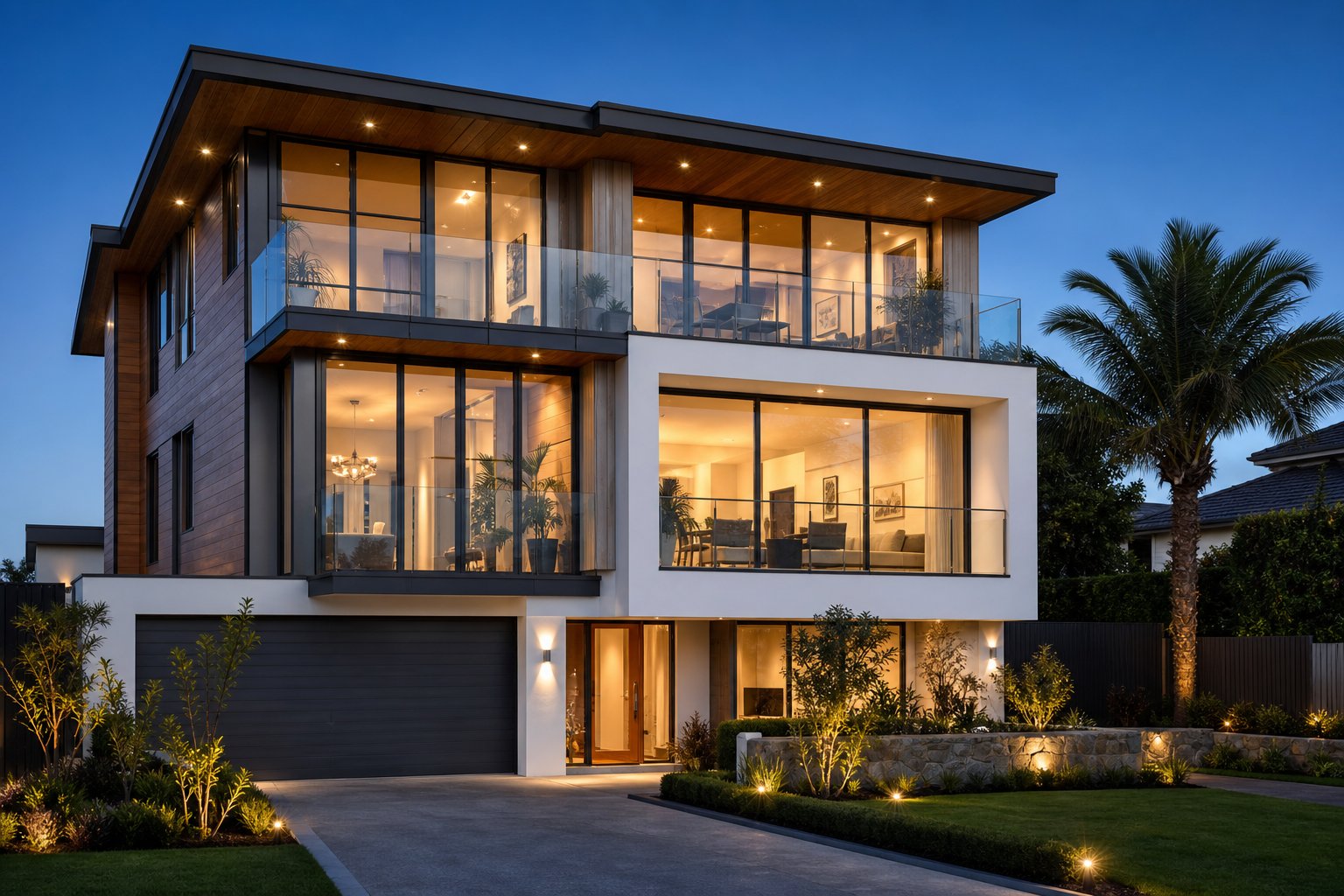
Grey frames that are well maintained still fall flat if they clash with the materials surrounding them. The real magic of grey powder coated aluminium windows is their chameleon-like ability to complement vastly different facades — but only when the shade, finish, and supporting details are chosen with intention. Getting this pairing right is what separates a house that looks “renovated” from one that looks considered.
Pairing Grey Windows With Common Facade Materials
Every facade material carries its own colour temperature, texture, and visual weight. The grey you choose should respond to those qualities rather than fight them. Here is how the most common Australian exterior surfaces interact with different grey tones:
Red brick — The warm, saturated tones of red and orange brick call for a cooler grey to provide deliberate contrast. Anthracite grey (RAL 7016) is the standout pairing here, creating a bold, contemporary frame edge that modernises even 1960s and 1970s brick-veneer homes without competing with the masonry. Grey aluminium windows with red brick work so well because the cool blue undertone of anthracite sits opposite the warm orange on the colour wheel — natural visual tension that reads as intentional rather than accidental.
Yellow and cream brick — Softer facades need a gentler grey. Mid-tone options like RAL 7012 Basalt Grey or RAL 7005 Mouse Grey sit comfortably against buff and sandstone-toned brickwork without overpowering it. Deep anthracite can feel heavy here, while very light greys risk blending into the mortar lines and losing definition.
White or light render — A clean rendered wall acts as a blank canvas that rewards bold framing. Dark anthracite grey windows exterior combinations deliver the sharpest architectural contrast — think slim dark lines cutting across an expanse of white, the same visual language used in high-end modern builds across Sydney’s eastern suburbs and Melbourne’s bayside. Slate Grey (RAL 7015) offers a slightly softer alternative for those who find pure anthracite too stark.
Natural stone and sandstone — Earthy facades with warm, muted tones pair naturally with Umbra Grey (RAL 7022), whose brown undertone echoes the organic quality of the stone rather than jarring against it. Lighter greys also work well, letting the stone remain the visual focus.
Timber cladding and weatherboard — Whether stained dark or painted in muted heritage shades, timber exteriors benefit from a grey frame that bridges modern and traditional. A satin-finish mid-grey adds definition without pulling attention away from the cladding texture.
Dual-Colour Frames for Interior Flexibility
One constraint homeowners rarely anticipate: the grey that looks perfect from the street may feel cold or dark inside the room. Dual colour aluminium window frames solve this neatly. During manufacture, different powder coat colours are applied to the internal and external faces of each profile — grey facing the street, a lighter or warmer tone facing your living space.
This is not a painted-on afterthought. The two-tone configuration is baked into the coating process — each face receives its own electrostatic application and curing pass, resulting in two fully bonded finishes on a single frame with no compromise to durability or adhesion.
Popular exterior/interior aluminium window colour combinations include:
- Anthracite Grey (RAL 7016) exterior with Brilliant White (RAL 9016) interior — the most specified combination, keeping rooms bright while the facade reads modern and defined
- Basalt Grey (RAL 7012) exterior with Cream White (RAL 9001) interior — a softer contrast that suits warmer interior palettes and timber flooring
- Slate Grey (RAL 7015) exterior with woodgrain-effect interior — mimics the look of painted timber from outside with the warmth of natural wood inside, without the maintenance
- Anthracite Grey exterior with matching anthracite interior — for fully cohesive dark-framed interiors in statement living rooms and commercial fitouts
- Monument Grey exterior with Surfmist interior — using Colorbond-equivalent shades for seamless coordination with Australian roofing and fascia colours
Dual-colour framing is especially practical when local council guidelines or body corporate rules dictate a specific external colour while you want creative freedom inside. You meet the compliance requirement on one face and personalise the other.
Matching Hardware, Sills, and Fascias
Grey frames do not exist in isolation on a facade. Handles, cill trims, external sills, fascia boards, and downpipes all sit within the same visual field. Mismatched metallics or clashing trim colours undermine the cohesion that a well-chosen grey creates.
For anthracite grey windows exterior combinations, black or dark brushed hardware — matte black handles, espagnolette bolts, and stay arms — reinforces the contemporary character. Satin chrome or stainless steel hardware reads slightly lighter and adds a metallic accent against the dark frame. Avoid bright polished gold or brass hardware on cool-toned anthracite; the colour temperature clash is jarring.
External window sills and cill trims should either match the frame colour exactly (many fabricators offer powder coated aluminium sills in the same RAL code) or sit in a clearly intentional contrast — a white sill against an anthracite frame works because it mirrors the render beneath. What fails is an unintentional near-match: a slightly-off grey sill against a slightly different grey frame reads as a mistake rather than a design choice.
Fascia boards and guttering offer another coordination opportunity. Colorbond colours like Monument, Basalt, and Woodland Grey are designed to harmonise with popular RAL window shades. Specifying fascias and downpipes in the same tonal family as your frames — even if not an exact match — ties the roofline to the window line and creates a unified envelope.
For homeowners and project teams ready to move from inspiration to specification, MEICHEN’s aluminium window range offers custom colour configurations — including dual-colour frames, a broad palette of grey shades, and multiple window styles — designed for Australian residential and commercial builds. It is a practical next step for anyone who has narrowed down their preferred grey, finish type, and facade pairing and wants to translate those decisions into a real project.
Frequently Asked Questions About Grey Powder Coated Aluminium Windows
1. How long do grey powder coated aluminium windows last?
Quality grey powder coated aluminium windows typically last 25 to 45 years before recoating becomes necessary, with the aluminium substrate remaining structurally sound well beyond that timeframe. Longevity depends on coating quality, pre-treatment integrity, shade depth, and environmental exposure. Darker greys like RAL 7016 absorb more UV energy but perform well when paired with high-grade polyester resin systems. Coastal properties benefit from marine-grade coatings with enhanced pre-treatment protocols, while inland suburban homes can expect decades of colour retention from standard architectural polyester finishes with minimal maintenance beyond periodic washing.
2. What is the most popular grey colour for aluminium window frames?
RAL 7016 Anthracite Grey is widely regarded as the most specified grey shade for aluminium window frames across both residential and commercial projects in Australia. Its cool blue-grey undertone reads almost black in low light yet reveals a distinctly grey character in full sun, creating visual depth without the harshness of jet-black frames. Anthracite grey complements red brick, dark roof tiles, white render, and timber cladding equally well. It also hides dust and water marks more effectively than lighter alternatives, making it a practical low-maintenance choice. Other popular options include RAL 7015 Slate Grey for heritage facades and RAL 7012 Basalt Grey for modern rendered homes.
3. What is the difference between matt, satin, and gloss powder coating on aluminium windows?
Matt finishes (below 30 gloss units) absorb light for a flat, contemporary look that hides fingerprints and minor scratches — ideal for minimalist homes. Satin finishes (40 to 60 gloss units) offer a balanced mid-sheen that reflects just enough light to give frames definition without glare, making them the most common default for residential builds. Gloss finishes (above 80 gloss units) create a mirror-like depth and richer colour saturation but show every water spot, dust particle, and scratch. Textured finishes add a fine grain that scatters light and conceals surface imperfections exceptionally well. Your choice should factor in property style, orientation, and how often you are willing to clean.
4. Can aluminium window frames have different colours on the inside and outside?
Yes, dual-colour or bi-colour aluminium window frames are manufactured by applying separate powder coat colours to the internal and external profile faces during production. Each side receives its own electrostatic application and curing pass, producing two fully bonded finishes with no compromise to durability. The most popular combination is anthracite grey (RAL 7016) on the exterior with brilliant white (RAL 9016) inside, keeping rooms bright while the facade reads modern. Other options include grey exterior with cream interior or woodgrain-effect interior finishes. Suppliers like MEICHEN offer custom dual-colour configurations suited to Australian residential and commercial projects.
5. How do you clean and maintain grey powder coated aluminium windows?
Clean grey powder coated frames every three to six months using warm soapy water and a soft microfibre cloth. The two-bucket method works best — one bucket with soapy water, one with clean rinse water — to prevent grit from being dragged across the coating surface. Rinse thoroughly and dry with a lint-free cloth to prevent water spotting. Coastal homes should clean every two to three months to prevent salt buildup. Avoid steel wool, abrasive sponges, bleach, solvents, and high-pressure washers directed at seals. Annually, inspect drainage slots, check rubber seals for cracking, lubricate hinges with silicone spray, and address minor chips with manufacturer-supplied touch-up paint.
More Window & Door Guides