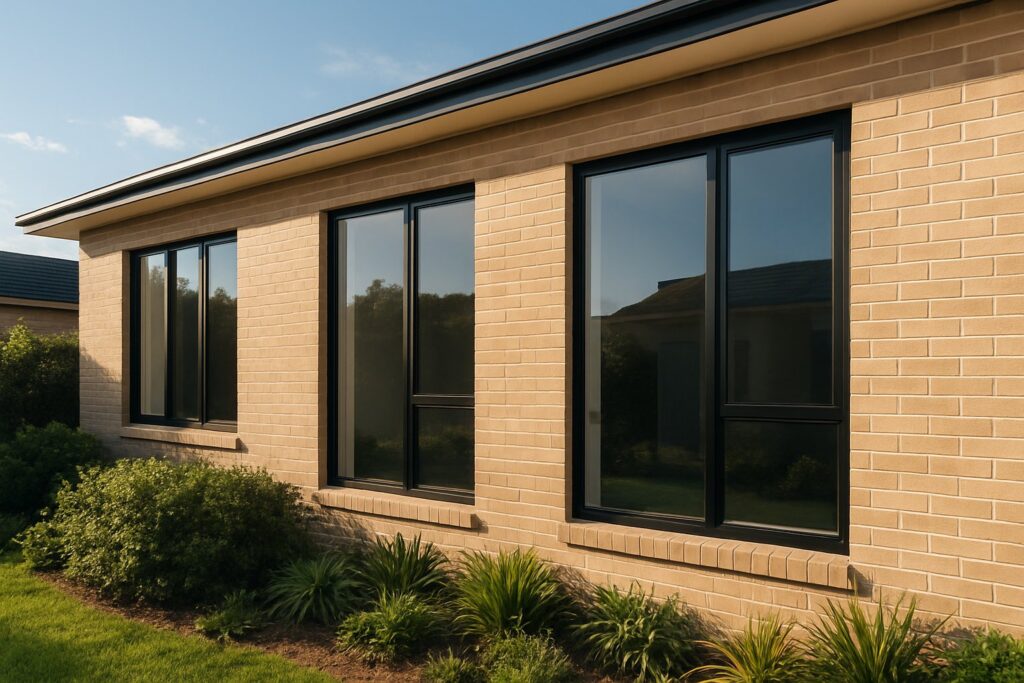
What Are Aluminium Window Finishes and Why They Matter
When you specify aluminium windows for a build or renovation, you are really making two decisions: the frame system itself, and the surface treatment applied to it. That surface treatment — the finish — shapes how your windows look on day one and how they perform a decade later. It controls colour, texture, weather resistance, cleaning frequency, and long-term replacement costs.
This guide is written for homeowners, renovators, and specifiers who want to understand their options before committing. It is not a manufacturer catalogue. Instead, it walks through each finish type, weighs the tradeoffs honestly, and helps you match the right treatment to your climate, budget, and design goals.
What Counts as a Window Finish
An aluminium window finish is any protective or decorative layer applied to the raw aluminium extrusion after it leaves the press. Without a finish, bare aluminium develops a dull oxide film that offers minimal protection against Australia’s harsh UV, salt air, and temperature swings. The five primary finish categories used on modern aluminium windows are:
- Powder coating — electrostatically applied dry pigment, oven-cured into a hard film
- Anodizing — an electrochemical process that grows a protective oxide layer into the metal itself
- PVDF (fluoropolymer) — a resin-based liquid coating with exceptional chemical and UV resistance
- Wood-grain sublimation — a heat-and-vacuum transfer that prints realistic timber patterns onto the profile
- Electrophoretic coating — an immersion process that deposits paint uniformly via electrical charge
Why the Finish Decision Matters More Than You Think
Choosing an aluminium window frame is often treated as a structural or thermal decision, while the finish gets reduced to a colour swatch. That approach misses the point. The coating grade determines whether your frames chalk after five summers or hold their colour for twenty-five years. It dictates whether coastal salt eats into the substrate or bounces off harmlessly.
The finish is the first line of defence between the aluminium substrate and the environment, directly determining how your windows age over decades. Get it wrong, and you pay twice — once upfront and again when premature recoating or replacement becomes unavoidable.
Each finish type brings a distinct combination of durability, aesthetics, and cost. The sections that follow break them down one by one, starting with how they are actually made — because understanding the process is the fastest way to understand why certain finishes outlast others.
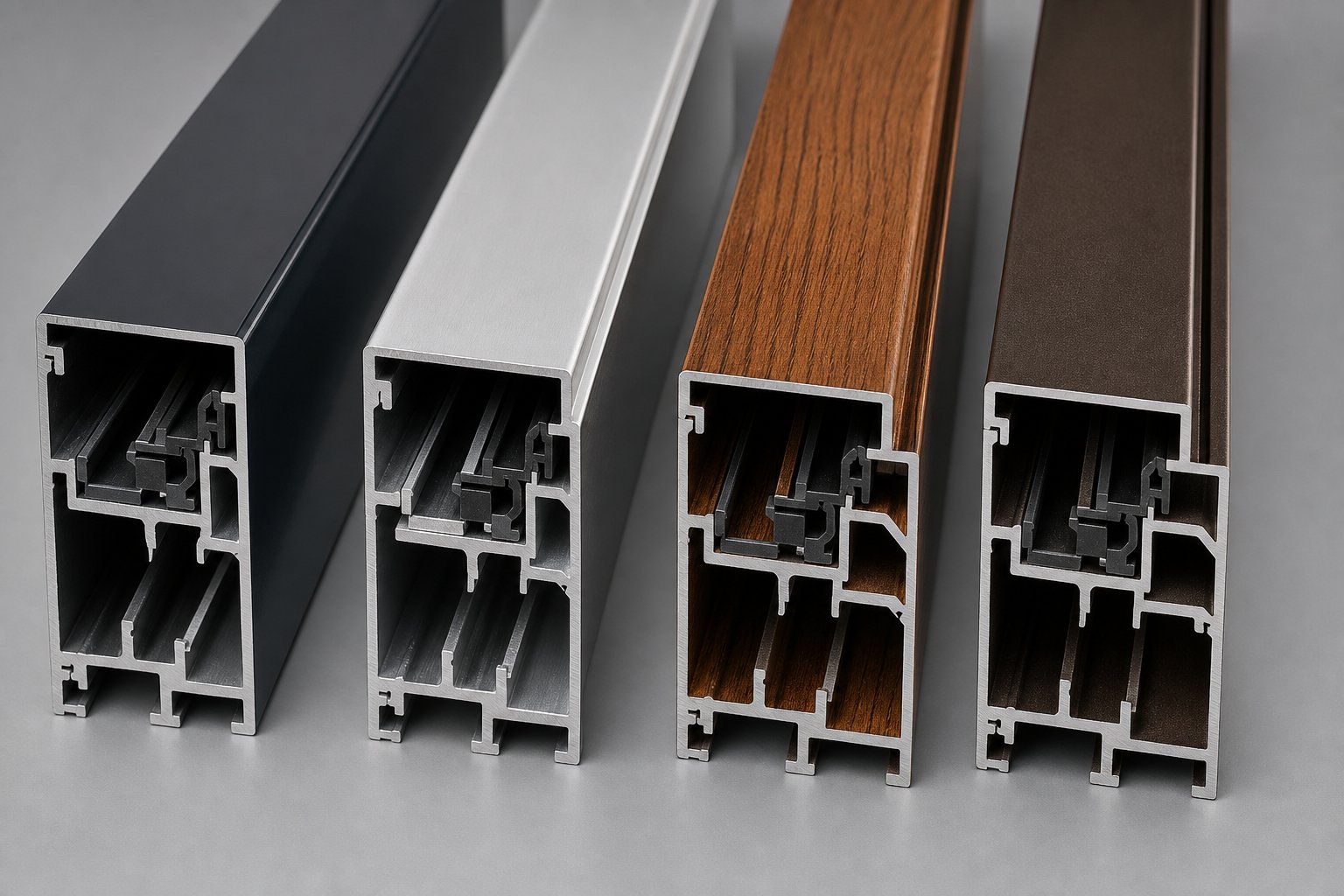
Five Aluminium Window Finish Types Explained
Knowing what each finish actually involves — the equipment, the chemistry, the steps — gives you a practical basis for comparing cost and longevity claims. Here is a plain-language breakdown of all five processes used on aluminium window profiles today.
- Powder coating — dry pigment particles are sprayed onto the aluminium using electrostatic charge, then baked in an oven to form a continuous film.
- Anodizing — the aluminium is submerged in an acid bath and an electrical current grows a hard oxide layer into the metal’s own surface.
- PVDF (fluoropolymer) — a liquid paint based on polyvinylidene fluoride resin is sprayed or roll-coated onto primed aluminium, then cured at high temperature.
- Wood-grain sublimation — a printed transfer film is wrapped around the profile, vacuum-sealed, and heated so the ink sublimates into the coating beneath.
- Electrophoresis — aluminium profiles are submerged in a tank of electrically charged paint, which deposits an even film across every surface and edge.
Powder Coating Process and Characteristics
Powder coating is the most common finish on residential aluminium windows in Australia, and the process itself explains why it strikes a good balance between cost and performance. The aluminium extrusion is first cleaned and pre-treated with a chemical conversion layer — usually a chrome-free process these days — that improves adhesion and corrosion resistance. The profile then enters a spray booth where a gun applies finely ground pigment particles carrying an electrostatic charge. Because the aluminium is earthed, the charged particles cling uniformly to the surface before the frame ever enters the oven.
Curing happens at roughly 180–200 °C for 10–20 minutes. The heat melts the powder, and the resin cross-links into a tough, continuous film typically 60–80 microns thick. The result is a hard-wearing surface available in virtually any colour on the RAL chart, plus textured and matte options.
What makes powder coated aluminium windows popular for Australian homes is the combination of colour freedom, reasonable pricing, and the fact that the process releases no volatile organic compounds (VOCs) during curing. The limitation? Not all powder formulations handle prolonged UV and salt exposure equally. A standard polyester powder coat will perform differently from a super-durable polyester or a fluoropolymer-based powder. Specifying the resin type — not just the colour — is where informed buyers gain an edge.
Anodizing and How It Differs from Paint
Anodizing often confuses people because it looks like a coating, but it is technically part of the metal itself. During the process, aluminium profiles are immersed in a sulphuric acid electrolyte bath while an electrical current passes through them. This forces oxygen ions into the aluminium surface, growing a layer of aluminium oxide that is incredibly hard and integral to the substrate. Because the oxide grows from the metal outward, it cannot peel or flake the way a painted layer can.
The resulting oxide layer is porous, and those pores can accept dyes or metallic salts before being sealed shut with hot water or steam. This sealing step fills the pore structure, locking in colour and blocking contaminants. The thickness of this oxide layer — measured in microns — determines service life. Class I anodizing (approximately 18 microns or 0.7 mil) lasts roughly twice as long as Class II (approximately 10 microns or 0.4 mil) in exterior applications.
Anodized aluminium windows deliver a distinctive metallic depth that paint simply cannot replicate. The finish is translucent, so you see the grain of the base metal beneath, giving each frame a living, reflective quality. Clear anodized aluminium windows present a clean silver tone, while bronze anodized aluminium windows and darker shades achieve their colour through electrolytic dyeing rather than opaque pigment. This means anodized aluminium window frames have a more limited palette — predominantly natural silver, champagne, bronze, and black — but the visual richness within that range is unmatched.
Anodizing also carries a practical advantage: the surface is harder than any organic coating. It resists scratching and abrasive cleaning far better than powder coat or PVDF, making it a strong choice for high-traffic commercial applications.
PVDF, Wood-Grain Sublimation, and Electrophoresis
PVDF (polyvinylidene fluoride) sits at the premium end of the organic coating spectrum. The chemistry is straightforward in concept: carbon-fluorine bonds in the resin are exceptionally stable, giving the coating outstanding resistance to UV degradation, chemical attack, and chalking. A typical architectural PVDF formulation contains 70 per cent PVDF resin blended with acrylic, applied as a liquid spray over a chrome or non-chrome primer, then cured at high temperature. The resulting film — usually 25 to 35 microns for a standard system — can maintain colour integrity for 20 to 30 years in exterior exposure. PVDF coatings dominate curtain wall and commercial aluminium window frames where long-term colour stability justifies the higher material and application cost.
Wood-grain sublimation (sometimes called sublimation transfer) is the process behind those aluminium frames that genuinely look like timber. The aluminium profile is first powder coated in a base colour matched to the lightest tone in the desired wood pattern. A printed transfer film — carrying high-resolution woodgrain imagery — is then wrapped tightly around the profile. The assembly goes into a vacuum chamber and is baked at 160–180 °C for five to eight minutes. Under heat and vacuum pressure, the sublimation inks vaporise and penetrate the powder coat layer, bonding permanently into the surface rather than sitting on top of it. Once the film is peeled away, you are left with a remarkably realistic timber appearance — complete with grain variation and knot detail — backed by the weather resistance of the underlying powder coat.
Electrophoretic coating (e-coating) works differently again. Cleaned aluminium profiles are submerged in a water-based paint bath carrying an electrical charge. The current drives paint solids onto every surface the liquid contacts — including recessed channels, sharp edges, and interior cavities that spray methods struggle to reach. Once deposited, the coating is oven-cured. The key strength here is uniformity: because the process is governed by electrical resistance, areas that have already received adequate film thickness naturally repel further deposition, so thin spots self-correct. Electrophoresis is often used as a primer layer beneath powder coat or PVDF to boost corrosion performance on complex multi-chamber profiles, though it can also serve as a standalone finish in darker tones.
Each of these five processes demands different equipment, energy inputs, and quality controls — which is exactly why they sit at different price points and deliver different performance ceilings. The next step is weighing those tradeoffs side by side.
Pros and Cons of Every Finish Type Compared
Knowing how each finish is manufactured sets the scene, but the real decision comes down to how those processes translate into daily performance. The table below pulls every major criterion into one view so you can compare aluminium window frames across the dimensions that actually affect your project.
| Criterion | Powder Coating | Anodizing | PVDF (Fluoropolymer) | Wood-Grain Sublimation | Electrophoresis |
|---|---|---|---|---|---|
| Colour range | Virtually unlimited (full RAL chart, custom matches, matte/gloss/textured) | Restricted to metallic tones — silver, champagne, bronze, black | Wide range, though fewer textured options than powder | Realistic timber patterns only (oak, walnut, cedar, etc.) | Limited — mostly dark tones (black, bronze, charcoal) |
| Durability | Good to excellent depending on resin grade (standard vs super-durable polyester) | Excellent — oxide layer is integral to the metal, extremely hard (300–400 Vickers) | Excellent — superior chemical and weather resistance | Good — relies on underlying powder coat quality | Good — excellent edge coverage boosts overall corrosion protection |
| UV resistance | Moderate to high (varies by resin type) | High — inorganic oxide does not degrade under UV | Outstanding — carbon-fluorine bonds resist UV breakdown | Moderate — sublimated inks can fade under intense prolonged UV | Moderate — typically used as a primer rather than sole UV barrier |
| Cost tier | Entry to mid-range | Mid to upper | Premium | Mid to upper (adds to powder coat base cost) | Mid (often combined with another topcoat) |
| Repairability | Good — touch-up paints available; full recoat possible on-site or in-shop | Poor — oxide layer cannot be spot-repaired; damaged sections typically need replacement | Fair — specialist touch-up possible but colour-matching is exacting | Poor — pattern cannot be locally reproduced; damaged area needs full panel replacement | Poor — requires full re-immersion; not field-repairable |
| Environmental suitability | Broad — suited to most Australian climates with appropriate resin grade | Excellent for coastal and abrasion-heavy environments | Best for extreme UV, coastal, and industrial zones | Best for sheltered or moderate climates; avoid sustained high-heat exposure | Best for complex profiles needing full corrosion coverage; pairs well with aggressive environments when topcoated |
Colour Range Limitations Per Finish Type
If design freedom is your priority, powder coating wins outright. An aluminum window frame finished in powder coat can be specified in any solid colour — thousands of standard RAL shades, plus custom colour matching for heritage or brand-specific requirements. Matte, satin, gloss, and textured finishes are all achievable within the same process. For metal frame windows where the look needs to complement a bold architectural palette, this flexibility is hard to overstate.
Anodizing occupies the opposite end of the spectrum. Because colour comes from electrolytic dyes absorbed into a translucent oxide layer — rather than opaque pigment sitting on top — the palette is inherently limited to metallic tones. You get natural silver, light bronze, medium bronze, dark bronze, and black, each with a subtle depth and metallic sheen that painted finishes cannot replicate. It is a narrower range, but within that range the aesthetic is distinctly premium.
PVDF opens up a wider colour selection than anodizing, including whites, greys, and deeper custom shades, though textured or heavy-metallic options are less common than in powder coat. Wood-grain sublimation sidesteps colour altogether in favour of patterned realism — the choice is between timber species (spotted gum, Tasmanian oak, American walnut) rather than solid swatches. Electrophoresis tends toward darker tones because the deposition chemistry produces more consistent results at the deeper end of the scale.
Durability and Repairability Tradeoffs
Here is the tension most buyers face: the toughest finishes are also the hardest to fix. Anodizing delivers surface hardness that far exceeds any organic coating — it resists scratching, scuffing, and abrasive cleaning with ease. But because the oxide layer is part of the window frame metal itself, a gouge or deep scratch cannot be touched up with a brush. The damaged section either stays visible or the frame gets replaced. For a high-traffic commercial aluminum frame window exposed to trolleys, ladders, and constant foot traffic, the scratch resistance is a net positive. For a homeowner who wants peace of mind that minor accidents are easily hidden, the inability to spot-repair is a real drawback.
Powder coating sits at the other end of this tradeoff. The film is softer, so it will chip under sharp impact more readily than an anodized surface. Yet when it does chip, a colour-matched touch-up pen or localised respray restores the appearance quickly and cheaply. For residential aluminium window frames across most Australian suburbs, that repairability often matters more than absolute hardness.
PVDF coatings are durable in a different way — they resist environmental degradation (UV, chemicals, salt) superbly but can still be scratched by physical impact. Field repair is possible, though specialist applicators and precise colour matching are typically required, pushing repair costs higher. Metal window frames on commercial towers often justify PVDF because the payoff is decades of fade-free appearance in conditions that would destroy lesser coatings.
Wood-grain sublimation inherits the physical toughness of its underlying powder coat, but the printed pattern introduces a weak link: if the surface is scratched through to the base coat, the pattern is lost, and no brush can recreate it on site. This makes sublimated aluminum window frames best suited to locations where physical contact is minimal — residential facades, upper-storey windows, or sheltered balcony settings.
Electrophoresis rarely acts alone. Its real strength is total coverage of complex profile geometries — internal channels, sharp returns, concealed drainage slots — areas where spray-applied coatings thin out and leave corrosion entry points. Paired with a powder coat or PVDF topcoat, electrophoresis creates a layered defence system. On its own, however, the thin film offers limited UV protection and a narrow colour range.
No single finish dominates every category. The right choice depends on how you weight colour freedom against hardness, repairability against environmental toughness, and upfront cost against decades-long maintenance savings. The next consideration — and the one most often overlooked — is how your local climate interacts with each coating’s specific vulnerabilities.
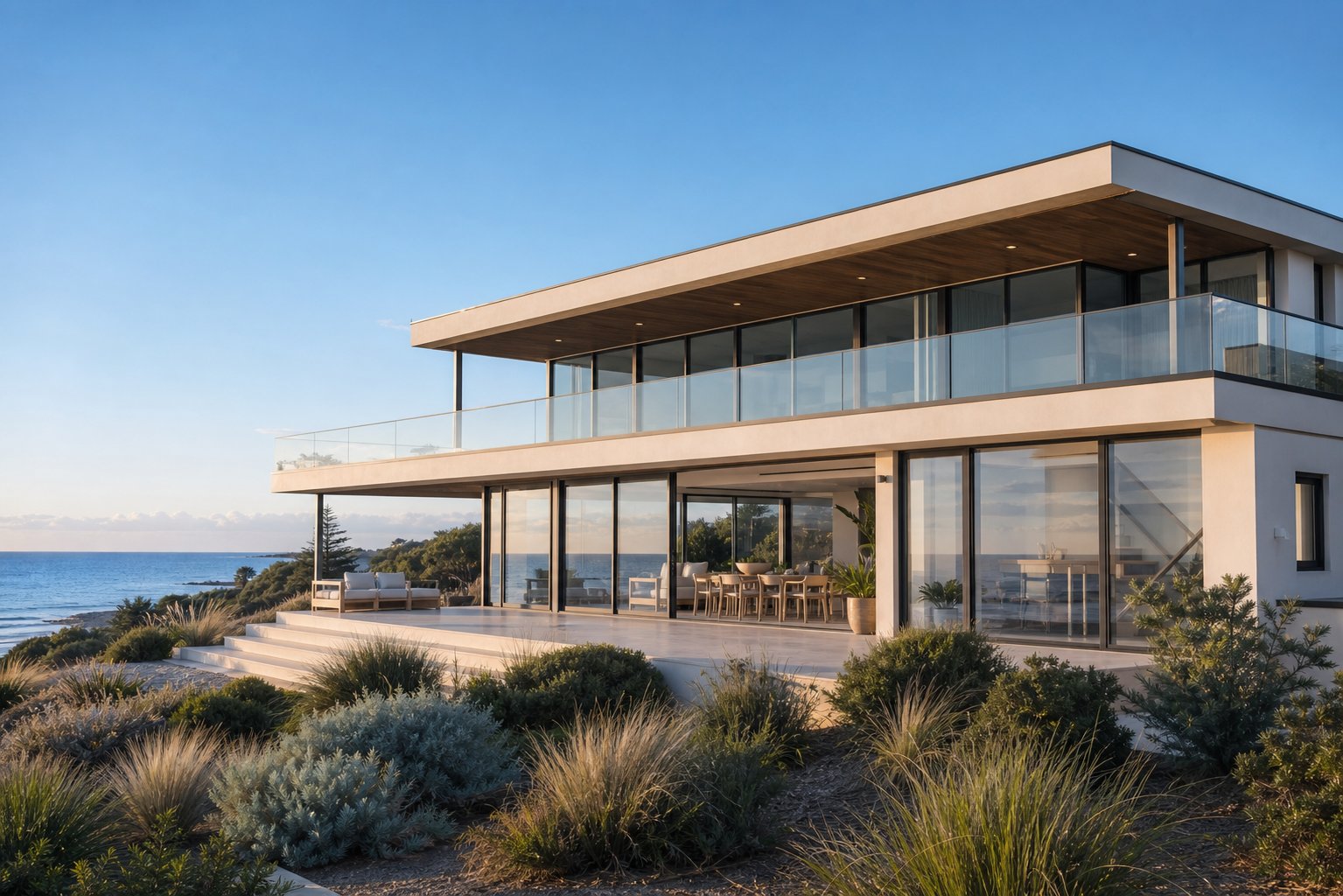
Which Finish Works Best for Your Climate
A finish that performs brilliantly in suburban Melbourne can fail within years on a beachfront in Queensland. Climate is the single biggest variable in how aluminium window finishes age, yet it rarely drives the specification conversation. Most buyers pick a colour, accept whatever coating comes standard, and hope for the best. A smarter approach starts with the environment your frames will face every day — salt load, UV intensity, humidity, airborne pollutants — and works backward to the finish chemistry that handles those stresses.
Coastal and Salt-Air Environments
Salt spray is the most aggressive everyday threat to exterior aluminium. Airborne chloride ions attack the protective oxide layer on bare metal, producing visible pitting within weeks if the substrate is unprotected. Significant chloride deposits have been measured more than 80 km from the shoreline, so the risk extends well beyond beachfront properties. Northern Beaches in Sydney, the Gold Coast, Fremantle, and every coastal strip in between demand finishes engineered for salt endurance.
For these zones, two options stand above the rest. A 70% PVDF resin coating — the type that meets rigorous international salt spray testing exceeding 4,000 hours of accelerated exposure — delivers outstanding long-term protection for both residential and commercial aluminium windows. Class I anodizing is the other proven performer, withstanding more than 3,000 hours of salt spray testing while offering an extremely hard surface that resists abrasion from windblown sand and salt crystals. Standard polyester powder coats can work in milder coastal areas if a super-durable formulation is specified, but they should not be the default within 5 km of tidal water.
Aluminum clad window systems and commercial aluminum window frames on coastal high-rises face compounded risk because weep holes, drainage channels, and concealed joints can trap saline moisture. Electrophoretic primer beneath a PVDF topcoat addresses this by providing uniform corrosion protection across complex multi-chamber profiles — a layered approach increasingly specified for aluminum clad buildings exposed to direct ocean frontage.
High-UV, Tropical, and Industrial Zones
Australia’s UV index routinely reaches extreme levels, particularly across Queensland, the Northern Territory, and inland Western Australia. Prolonged UV exposure breaks down organic resins in lower-grade powder coats, causing chalking — a powdery surface degradation that dulls colour and weakens the film. High-performance PVDF coatings resist this breakdown because their carbon-fluorine molecular bonds are inherently UV-stable. Class I anodizing is equally UV-proof since its inorganic aluminium oxide layer does not degrade under ultraviolet light at all.
Tropical climates add constant high humidity to the UV load. Thermal break aluminum windows in Darwin or Cairns face moisture cycling that tests adhesion at every layer boundary. Specifying a non-chrome pre-treatment with verified adhesion performance — plus a super-durable polyester or PVDF topcoat — prevents delamination in these conditions.
Industrial zones around areas like Kwinana in WA or Port Kembla in NSW introduce chemical pollutants — sulphur compounds, nitrogen oxides, particulates — that accelerate coating breakdown. Commercial aluminium windows in these settings benefit from electrophoretic base coats paired with chemical-resistant topcoats, giving the profile full-coverage defence against both corrosive gases and physical abrasion. Metal clad windows on factory and warehouse projects in polluted corridors should carry the same layered specification.
For arid inland areas — think western NSW, outback Queensland, or inland South Australia — the threat profile drops considerably. Lower humidity, negligible salt, and moderate pollution mean a quality super-durable polyester powder coat handles the conditions comfortably at a lower cost than PVDF. The primary concern here is UV and thermal cycling rather than corrosion, so resin grade matters more than total film thickness.
| Climate Zone | Primary Threats | Recommended Finish | Why |
|---|---|---|---|
| Coastal (within 5 km of tidal water) | Salt spray, humidity, UV | 70% PVDF or Class I anodizing | Proven salt spray endurance (3,000–4,000+ hours); hard surface resists salt abrasion |
| High-UV inland and tropical | Extreme UV, heat cycling, humidity | PVDF or super-durable polyester powder coat | UV-stable resin chemistry prevents chalking and colour shift |
| Industrial or polluted | Chemical pollutants, particulates, moisture | Electrophoresis primer + PVDF or chemical-resistant powder coat | Full edge coverage blocks corrosion at joints; chemical resistance in topcoat |
| Arid inland | UV, thermal cycling, dust | Super-durable polyester powder coat | Cost-effective; adequate UV and abrasion performance for low-corrosion environments |
| Temperate suburban | Moderate UV, occasional rain | Standard or super-durable polyester powder coat | Balanced performance at entry-level cost; broad colour availability |
The table above gives you a starting point, but real-world conditions blend. A property on the fringe of a coastal town with an industrial port nearby faces multiple threat vectors simultaneously — and the specification should account for the harshest of them. When in doubt, step up one finish tier rather than gambling on marginal performance.
Selecting the right finish for your climate is only half the equation. Knowing whether a manufacturer’s performance claims are backed by independent testing — or just marketing language — determines whether that finish actually delivers what the data sheet promises.
Quality Certifications and Standards Worth Knowing
Manufacturer data sheets are full of durability claims, but without third-party certification backing them up, those numbers are just promises on paper. Several independent quality marks exist specifically to verify aluminium coating performance — and understanding what they test gives you a concrete way to compare products from different aluminium window manufacturers on equal terms.
Understanding Qualicoat, Qualanod, and GSB Marks
Each certification body focuses on a different finish type and tests for slightly different performance thresholds. Here is what the major marks guarantee:
- Qualicoat — governs powder-coated and liquid-painted aluminium. Tests include adhesion (cross-cut and bend tests), hardness, resistance to boiling water, accelerated UV weathering, acetic acid salt spray, and humidity exposure. A Qualicoat licence means the applicator’s process, pre-treatment, and curing parameters are audited regularly for repeatable quality.
- Qualanod — the anodizing equivalent. It verifies oxide thickness, sealing quality, colour fastness, and abrasion resistance. Qualanod-certified anodizers must meet strict process controls covering everything from electrolyte concentration to rinse water purity.
- GSB — a German-based certification (GSB International) that applies to both coated and anodized aluminium. It tests adhesion, weathering resistance, and gloss retention under conditions tailored to Central European and moderate maritime climates. GSB Premium and GSB Master tiers denote increasing performance grades.
- AAMA (now FGIA) — the North American architectural standard system. AAMA 2604 requires five-year colour retention (Delta E < 5) and gloss retention above 30%, while AAMA 2605 doubles that to ten years with gloss retention above 50%. These specifications are widely referenced by commercial aluminium window manufacturers and specifiers working on projects that require documented long-term weathering performance.
When evaluating products from any alum windows manufacturers, ask which certifications apply to the specific coating system being quoted — not just whether the company holds a general quality certificate. A factory can be Qualicoat-licensed but still offer non-certified economy lines alongside its certified range.
A finish warranty without an independent certification backing it should be scrutinised carefully. Certifications like Qualicoat, Qualanod, GSB, or AAMA verify that the coating has been tested against defined performance benchmarks — a manufacturer warranty alone tells you only what the company is willing to cover, not what the finish can actually withstand.
Anodizing Grades and What Class I vs Class II Means
Anodizing thickness is classified into two architectural grades, and the difference between them is significant for exterior window applications. Class I anodizing produces an oxide layer of at least 18 microns, nearly double the 10-micron minimum of Class II. That extra thickness translates directly into durability: Class I finishes must pass 3,000 hours of accelerated salt spray testing, while Class II is rated for 1,000 hours.
In practical terms, Class II suits interior trim or light-duty exterior applications with regular maintenance. Class I is the specification you want for any aluminium window exposed to weather — particularly in coastal, tropical, or high-traffic settings where the frame sees constant environmental or physical stress. Reputable aluminium window manufacturers will state the anodizing class in their technical documentation; if they do not, ask before you commit.
Certifications and thickness classes provide the objective framework for assessing finish quality. The next question most buyers have is how these performance tiers translate into real-world cost — and whether paying more upfront genuinely saves money across the window’s lifespan.
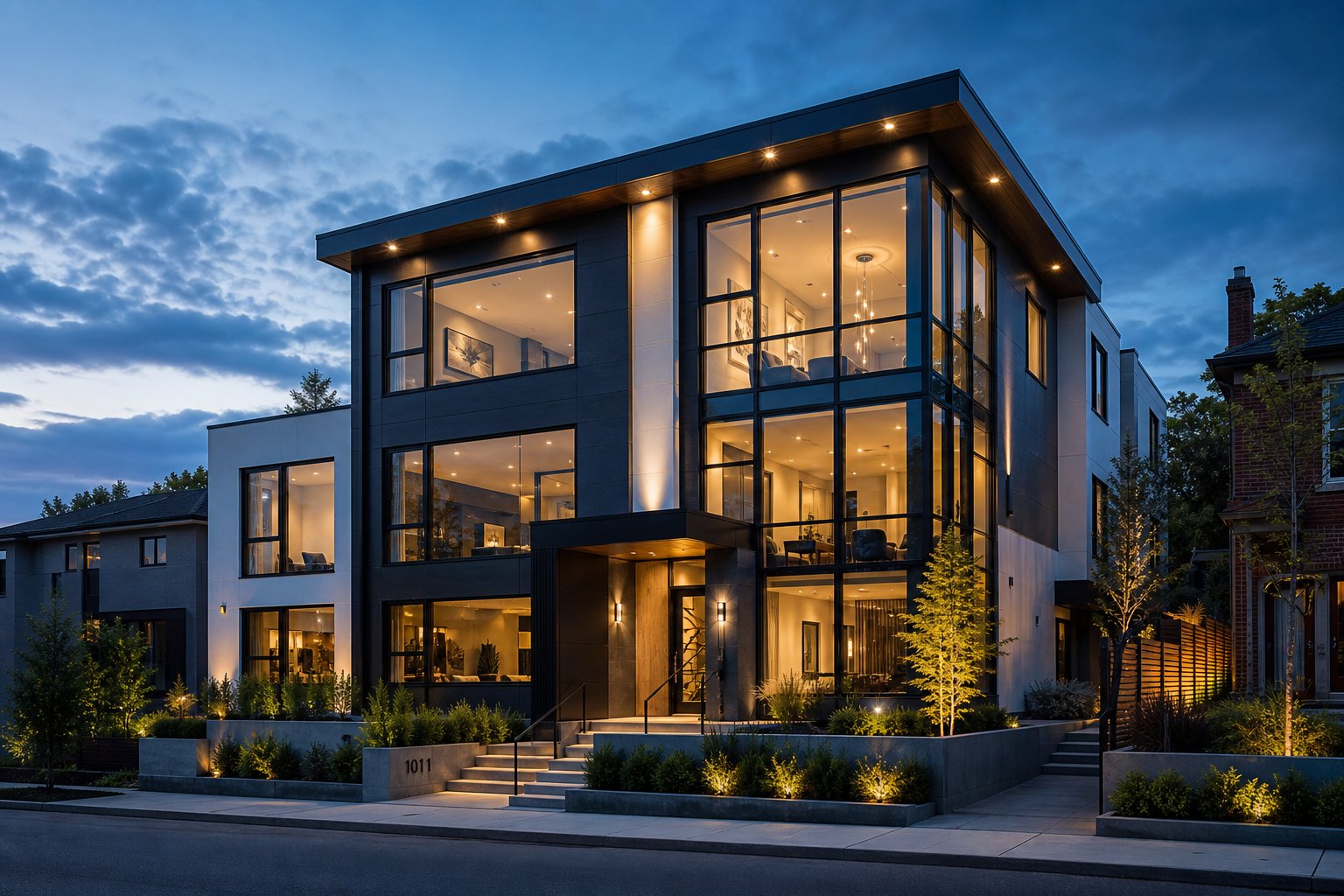
Cost, Lifespan, and Warranty Expectations
Performance certifications tell you what a finish can endure. The natural follow-up is what that endurance actually costs — and whether the premium buys genuine extra years or just a shinier data sheet. Most homeowners searching for aluminium windows for sale encounter pricing that lumps the finish into the overall window cost, making it nearly impossible to isolate what you are paying for the surface treatment alone. A relative framework helps cut through that fog.
Relative Cost Ranking of Finish Types
The price gap between finishes comes down to four factors: process complexity, raw material inputs, energy consumption during curing or bath cycles, and the quality control overhead required to maintain certification. Here is how the five main types stack up from most affordable to premium:
- Standard polyester powder coating — the entry point. Electrostatic spray equipment is widely available, powder is relatively inexpensive, and throughput is fast. This is what you get on most competitively priced aluminium windows, and it delivers solid performance in moderate climates. Suitable for temperate suburban homes where budget matters and conditions are not extreme.
- Super-durable polyester powder coating — a step up in resin quality with minimal additional process cost. The premium over standard powder is modest, yet the UV and chalking resistance improve markedly. Strong value for high-UV inland areas.
- Anodizing — mid-range. The electrochemical bath process demands tighter environmental controls, specialised tanks, and more energy-intensive cycling than powder coating. Per-profile costs run meaningfully higher, particularly at Class I thickness. The payoff is a harder, longer-lasting surface that never peels.
- Wood-grain sublimation and electrophoresis — mid-to-upper. Sublimation adds a secondary process (vacuum heat transfer) on top of an existing powder coat, roughly doubling the finishing cost. Electrophoresis requires full immersion tanks and precise electrical controls, pushing it into similar territory. Both are typically specified where standard options fall short on either aesthetics or corrosion coverage.
- PVDF (fluoropolymer) — the premium tier. The 70% PVDF resin itself is expensive, application often involves multi-coat systems with primer, and curing demands exact temperature profiles. Industry guidance consistently places PVDF at a meaningful cost premium over powder coating, even at scale. Justified for coastal high-rises, commercial facades, and anywhere decades of fade-free performance is non-negotiable.
Buyers chasing cheap aluminium windows should understand what that lower price point typically means for the finish: a thinner film, a standard resin grade, and reduced testing overhead. None of that is necessarily a problem in a sheltered suburban setting — but it becomes one fast if the same product ends up 3 km from the ocean or on a north-facing wall in outback Queensland.
Lifespan Expectations and Warranty Coverage
How long a finish maintains its appearance depends on both the coating grade and the environment it faces. As a general guide, a quality powder coat applied to Australian standards holds its colour and integrity for 20 to 30 years in moderate conditions. Super-durable formulations push toward the upper end of that range. Anodizing and PVDF both extend service life considerably — anodized surfaces resist degradation for 30 years or more in benign environments, while PVDF coatings can maintain aesthetic integrity well beyond that timeline in even aggressive exposures.
When factoring in aluminium window replacement costs over a building’s life, the upfront finish premium often represents genuine savings. A PVDF-coated frame that holds colour for 25-plus years eliminates the recoating or premature replacement cycle that a lower-grade powder coat might demand after 12 to 15 years on a harsh site. Replacement aluminium windows are not a small expense — so extending the first set’s service life by specifying the right finish is one of the most cost-effective decisions a homeowner or builder can make.
Warranty structures reflect these lifespan differences. Most reputable manufacturers split coverage by component: the aluminium frame itself often carries 20 to 30 years of structural protection, while the finish warranty typically runs 10 to 15 years covering specific defects — fading beyond a stated Delta E threshold, chalking, peeling, blistering, or delamination. Hardware and seals carry shorter terms, usually 5 to 10 years.
Exclusions matter just as much as headline numbers. Common carve-outs to watch for include:
- Coastal proximity — many warranties reduce coverage for properties within a defined distance of tidal water
- Improper cleaning — use of abrasive compounds or harsh solvents can void finish coverage entirely
- Failure to maintain — skipping the manufacturer’s recommended cleaning schedule may invalidate claims
- Prorated structures — some warranties reduce the manufacturer’s obligation year by year, leaving you responsible for a growing share of any repair cost as the window ages
- Non-transferability — coverage that dies with the original purchaser reduces resale value if you sell before the warranty expires
A non-prorated warranty with clear terms and no coastal exclusion offers far better real-world protection than a longer headline figure riddled with conditions. Before committing to any aluminium window replacement project, request the full warranty document — not just the summary brochure — and compare component by component. If a supplier near you is reluctant to hand over the detail before purchase, that tells you something about how often they expect to honour it.
Cost and warranty set the financial boundaries. What happens between installation day and the end of that warranty period — the cleaning, the inspections, the small repairs — is what determines whether your finish actually reaches its rated lifespan or falls short.
Maintenance, Renovation, and Finish Longevity
A finish only reaches its rated lifespan if it receives the right care at the right intervals. The good news is that aluminium window maintenance is simple — far simpler than timber — but the specifics differ by finish type. Knowing what to clean with, how often, and when to escalate from DIY wipe-downs to professional intervention keeps your frames looking sharp and your warranty intact.
Maintenance Schedules by Finish Type
Every finish shares one baseline rule: use a mild, pH-neutral soap with warm water and a soft cloth, working from top to bottom. Beyond that, the frequency and specific requirements diverge.
| Finish Type | Cleaning Frequency | Recommended Method | Avoid | Touch-Up Options | Professional Trigger |
|---|---|---|---|---|---|
| Powder coating | Every 3–6 months (monthly in coastal areas) | pH-neutral soap, soft sponge, rinse with clean water | Abrasive pads, ammonia-based cleaners, solvent-based products | Colour-matched touch-up pen for chips; full recoat possible on-site | Visible chalking, widespread peeling, or colour shift across large areas |
| Anodizing | Every 3–6 months (monthly near salt water) | Mild soap and soft cloth; rinse thoroughly to prevent residue build-up | Alkaline cleaners, acidic solutions outside pH 4.5–8.5, abrasive compounds | Clear protective silicone or semi-gloss coating over cleaned surface | Pitting visible to the touch, deep staining unresponsive to cleaning |
| PVDF | Every 6–12 months (quarterly in harsh environments) | Mild detergent solution, soft cloth, rinse well | Strong solvents (MEK, acetone), abrasive pads, high-pressure washing directly on seals | Specialist colour-matched touch-up; requires precise formulation | Delamination at edges or visible film breakdown after extended service |
| Wood-grain sublimation | Every 3–6 months | Damp soft cloth with mild soap; avoid saturating the surface | Abrasive pads, harsh solvents, steam cleaning | None — pattern cannot be reproduced locally | Any scratch through to base coat; panel replacement required |
| Electrophoresis | Every 6 months | Mild soap, soft cloth, thorough rinse | Aggressive chemical cleaners, mechanical scrubbing | None field-repairable — requires full re-immersion | Any visible corrosion or film disruption at edges or joints |
Coastal properties deserve special emphasis. Salt air creates a corrosive film that accelerates finish breakdown if left to accumulate. A five-minute freshwater rinse every month removes chloride deposits before they do damage — a negligible effort that can extend frame life by decades. Beyond the frame surface, keep weep holes clear of debris, vacuum tracks seasonally, and apply a dry silicone spray to hinges and rollers once a year. Oil-based lubricants attract grit and eventually gum up hardware.
Recoating, Repair, and Recognising Finish Failures
Old aluminum windows do not always need replacing. In many cases, the aluminium substrate beneath a tired finish remains perfectly sound — the structure just needs a new skin. Whether recoating is viable depends on the existing finish type and how far the degradation has progressed.
Powder-coated frames are the most renovation-friendly. A qualified applicator can strip the old coating chemically or mechanically, re-apply pre-treatment, and respray in any colour — effectively restoring old aluminum window frames to factory-fresh condition without a full aluminum window replacement. This makes powder coat an appealing long-term proposition for homeowners who anticipate changing their colour scheme or refreshing tired aluminium window trim down the track.
Painting anodized aluminum window frames is a different story. The hard oxide surface does not accept paint readily, so preparation is critical. Professional restoration typically involves cleaning, light abrasion to create a mechanical key, and application of a specialist primer before topcoating. The result can look excellent, but paint over anodizing will never match the original oxide layer’s durability — expect a maintenance cycle of five to ten years before the painted layer needs refreshing. Where the anodized finish is merely stained rather than structurally compromised, restoration (cleaning plus a protective clear coat) is usually preferable to painting, preserving the original coating’s longevity.
PVDF and electrophoretic coatings are not practical to recoat in the field. If these finishes fail — typically only after decades of service — the frames generally need replacement or factory-level refurbishment.
Knowing what failure looks like helps you intervene early before substrate damage forces you to replace aluminium windows entirely. Watch for these common signs:
- Chalking — a powdery residue on the surface when you run a finger across it. Caused by UV breakdown of the resin binder in powder coat or lower-grade paints. Common on north-facing walls in high-UV regions.
- Fading — gradual colour loss, especially noticeable on darker shades. Accelerated by UV and often uneven depending on exposure orientation.
- Peeling or flaking — indicates adhesion failure between the coating and substrate, often caused by inadequate pre-treatment during original application or chemical contamination.
- Corrosion under finish — bubbling or blistering in the coating, with white aluminium oxide visible underneath. Typically starts at cut edges, drainage holes, or areas where the film was thin.
- Micro-cracking — fine hairline cracks in the film surface, allowing moisture ingress. Often a precursor to peeling and under-film corrosion. More common in coatings exposed to severe thermal cycling.
Catching chalking or early fading triggers a simple recoat decision on powder-coated frames. Letting it progress to peeling or under-film corrosion turns an aluminum replacement window conversation into a far more expensive scope — potentially involving structural remediation around the opening as well as the frame itself.
Regular inspection twice a year — once before summer’s UV peak and once after winter’s wet season — gives you the earliest possible warning. Combine that with the cleaning schedule above, and your finish has every chance of reaching its full rated service life without surprises.
Performance and longevity set the practical boundaries of each finish. The other half of the decision — colour, texture, and how your frames relate to the architecture around them — opens up an entirely different set of possibilities.
Colour Range and Design Possibilities
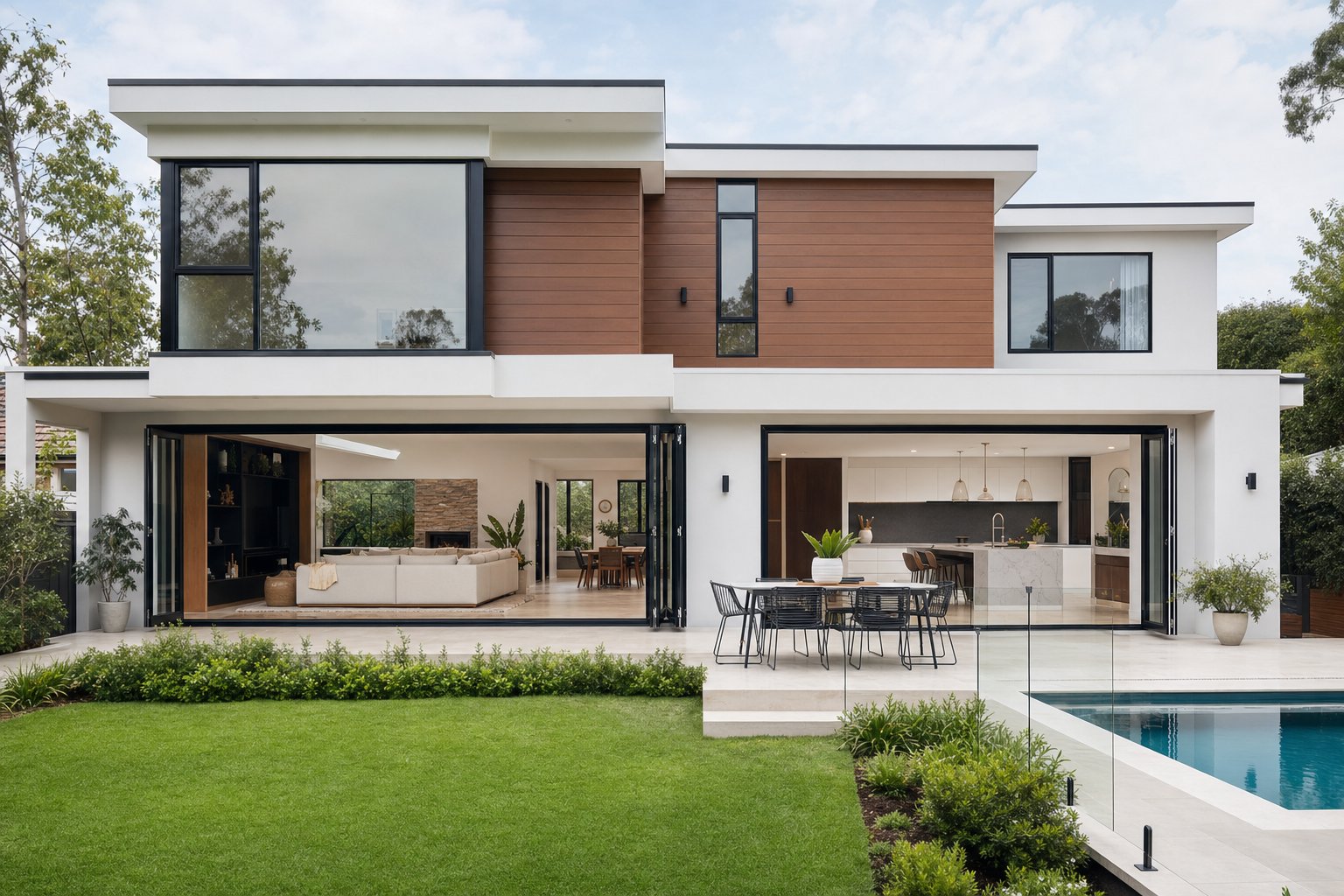
Durability keeps your frames intact. Colour makes them yours. The finish type you select does not just determine how long your windows last — it defines which aluminium window frame colours are even available to you. Some processes open up thousands of options; others narrow the field to a handful of refined tones. Understanding those boundaries before you fall in love with a particular shade saves time and avoids compromises later in the specification process.
Colour Options Available Per Finish Type
Each finishing method produces a distinct palette. Here is what you can realistically achieve with each:
- Powder coating — the full RAL colour chart (over 200 standard shades), plus custom colour matching, matte, satin, gloss, and textured finishes. Popular families include charcoal and black tones (Monument, Black Satin), whites and off-whites (Surfmist, Pearl White), mid-greys (Basalt, Windspray), and bold accents for feature facades.
- Anodizing — limited to metallic tones that reveal the aluminium grain beneath: natural silver, light champagne, bronze aluminum windows tones ranging from pale to dark, and deep black. The restricted palette carries a visual depth that opaque coatings cannot match.
- PVDF (fluoropolymer) — a wide solid-colour range including whites, greys, bronzes, and deep custom shades. Fewer textured options than powder coat, but excellent colour consistency across large production runs.
- Wood-grain sublimation — realistic timber species patterns rather than solid colours. Available looks include spotted gum, Tasmanian oak, American walnut, western red cedar, and lighter beech or ash tones. The sublimation ink penetrates the underlying powder coat rather than sitting on top, producing convincing grain variation and knot detail.
- Electrophoresis — mostly darker tones (black, dark bronze, charcoal). Rarely used as a standalone colour finish on visible faces but occasionally specified for slimline aluminium windows where subtle dark framing complements large glass areas.
For most Australian residential projects, powder coating dominates because it delivers the broadest aluminum window colors without a premium price tag. Black aluminum windows — particularly matte and satin formulations — have become the default for contemporary builds over the past decade, while white aluminum windows remain a staple for coastal homes and Hamptons-style renovations. Suppliers like MEICHEN provide extensive colour customisation across their aluminium window systems, allowing architects and homeowners to specify exact finishes suited to their design vision — including custom aluminium windows matched to specific RAL codes or Colorbond references.
Matching Finishes to Architectural Style and Context
Colour choice is never purely aesthetic — it interacts with climate, building form, and neighbourhood context in ways worth considering early.
Contemporary homes gravitate toward dark frames. Matte black and charcoal create clean contrast against rendered walls and emphasise the glazing itself, which is why slimline windows in darker tones dominate modern two-storey and three-storey designs where expansive glass is the hero. Bronze aluminum windows — both powder-coated and anodized — suit mid-century modern restorations and warm-palette builds where black feels too stark.
Coastal properties often lean lighter. Whites, off-whites, and pale greys show less salt residue between cleans and reflect rather than absorb heat. Lighter aluminium window frame colours also tend to fade less noticeably than saturated darks under relentless UV, reducing visible wear over the frame’s life.
Heritage renovations introduce tighter constraints. Council heritage overlays may mandate specific colour ranges — typically period-appropriate greens, creams, or dark reds — and in some cases require colour approval through a development application. Powder coating handles these niche requirements well because custom colour matching is standard practice.
The new-build versus renovation distinction matters here too. On a new build, every finish is available from the outset — you specify colour, sheen, and process during the window order with no compromise. Renovations can be trickier. Replacing a few windows in an existing facade means matching the new frames to aged profiles that may have shifted tone over years of weathering. Reputable suppliers can colour-match to physical samples rather than relying on catalogue swatches, ensuring new and existing frames read as a single installation.
Bicolour finishing adds another dimension. Profiles can be coated in different colours on the interior and exterior faces, letting you pair a dark street-facing tone with a lighter interior shade that complements your joinery and wall colours. This dual-colour option is standard across quality aluminium window systems and gives you design flexibility without structural compromise.
Colour sets the emotional tone of your home’s facade. The final piece — turning all of this knowledge into a clear decision for your specific project — pulls together climate, budget, aesthetics, and certification into a single actionable framework.
How to Select the Right Finish for Your Project
Every principle covered so far — climate resilience, coating chemistry, cost tiers, maintenance realities, and colour range — converges at a single practical question: which finish is right for your specific project? The answer depends less on any universal “best” option and more on how your circumstances stack up across a few key variables.
Decision Framework by Project Type
Homeowners prioritising aesthetics and low maintenance — residential aluminum windows in moderate Australian climates perform beautifully with a super-durable polyester powder coat. It delivers the widest colour freedom, straightforward touch-up options, and minimal ongoing care. If your home sits in a coastal or high-UV zone, step up to PVDF or Class I anodizing and accept the tighter palette in exchange for decades of worry-free performance.
Builders needing cost-effective durability at scale — volume projects demand a finish that balances budget with warranty confidence. Standard or super-durable powder coat certified to Qualicoat or equivalent standards covers most subdivision and multi-residential work. For developments near the coast, specify a marine-grade formulation and confirm the aluminium window suppliers you are quoting hold current certification for that product line.
Architects specifying premium performance — commercial facades, exposed high-rise glazing, and projects in aggressive environments call for PVDF or layered systems (electrophoresis primer plus PVDF topcoat). Specify AAMA 2605 or equivalent performance criteria in your documentation. For best aluminum windows outcomes on statement projects, dual-colour finishing and custom RAL matching give full design control without compromising longevity.
Renovation projects within existing constraints — matching new windows in aluminium to aged frames requires physical colour sampling rather than catalogue swatches. Powder coating handles this best because custom matching is standard practice. Where heritage overlays apply, confirm colour compliance with council before ordering. A reputable aluminum window supplier will offer sample panels for on-site comparison.
The right finish is the one matching your specific environment, aesthetic goals, and maintenance commitment — not simply the most expensive option. A well-specified super-durable powder coat in a temperate suburb outperforms a poorly maintained PVDF in the same location.
Your Finish Selection Checklist
Before you finalise any specification for aluminium windows and doors, run through these steps in order:
- Identify your climate zone — coastal, high-UV, tropical, industrial, or temperate suburban. Your environment determines the minimum acceptable coating grade.
- Determine your colour requirements — unlimited palette (powder coat), metallic depth (anodizing), timber realism (sublimation), or premium solids (PVDF). Let the aesthetic narrow your finish shortlist.
- Set your maintenance tolerance — monthly coastal rinses, quarterly wipe-downs, or minimal annual intervention. Match the schedule to what you will realistically sustain.
- Establish your budget tier — weigh upfront cost against total lifecycle expense. A finish that lasts 25 years without recoating often costs less over time than a cheaper option requiring intervention at year 12.
- Verify supplier certifications — request evidence of Qualicoat, Qualanod, GSB, or AAMA compliance for the specific product quoted. A warranty without independent certification behind it deserves scrutiny.
Aluminium doors and windows represent a long-term investment in your property’s comfort, appearance, and value. The finish you choose determines whether that investment holds strong or demands reinvestment well before its time. For readers ready to move from research into project planning, MEICHEN’s aluminium window systems offer professionally applied finishes, custom colour selection, and specification support for both residential aluminium windows and commercial applications — a practical next step for aluminium doors windows projects across Australia.
Frequently Asked Questions About Aluminium Window Finishes
1. What is the most durable finish for aluminium windows in coastal areas?
For properties within 5 km of tidal water in Australia, a 70% PVDF (fluoropolymer) coating or Class I anodizing offers the strongest protection against salt spray corrosion. PVDF coatings can exceed 4,000 hours in accelerated salt spray testing, while Class I anodizing withstands over 3,000 hours. Standard polyester powder coats are generally insufficient for direct coastal exposure unless a marine-grade super-durable formulation is specified. Layered systems combining electrophoretic primer with a PVDF topcoat provide additional protection for complex multi-chamber profiles on beachfront high-rises.
2. How long do aluminium window finishes last before needing replacement?
Lifespan varies significantly by finish type and environmental exposure. A quality powder coat maintains its appearance for 20 to 30 years in moderate Australian conditions, with super-durable formulations reaching the upper end. Anodized surfaces resist degradation for 30-plus years in benign environments, and PVDF coatings can maintain colour integrity beyond that in even aggressive coastal or industrial settings. However, harsh climates, incorrect cleaning, or lower-grade formulations can shorten these timelines considerably — a standard powder coat on a north-facing wall in outback Queensland may begin chalking well before its rated service life.
3. Can you paint over anodized aluminium window frames?
Yes, but the process requires careful preparation because anodizing creates an extremely hard oxide surface that does not accept paint readily. Professional restoration involves thorough cleaning, light abrasion to create a mechanical key for adhesion, application of a specialist primer, then topcoating. The painted finish will look good initially but typically requires refreshing every five to ten years — it will never match the original anodized layer’s durability. If the existing anodizing is merely stained rather than structurally damaged, cleaning plus a protective clear coat is usually the better option, preserving the original coating’s longevity.
4. What is the difference between powder coating and anodizing on aluminium windows?
Powder coating applies dry pigment onto the aluminium surface electrostatically and oven-cures it into a protective film sitting on top of the metal. Anodizing grows a hard oxide layer into the aluminium itself through an electrochemical bath — it becomes part of the metal rather than a separate coating. This fundamental difference affects performance: anodizing cannot peel or flake and is significantly harder (300–400 Vickers), but is limited to metallic tones and cannot be spot-repaired. Powder coating offers virtually unlimited colours, easy touch-up, and lower cost, but is softer and can chip under impact. Suppliers like MEICHEN offer both finish options across their aluminium window systems to suit different project requirements.
5. What certifications should I look for when choosing aluminium window finishes?
The key independent certifications are Qualicoat (for powder-coated aluminium, testing adhesion, hardness, UV weathering, and salt spray resistance), Qualanod (for anodizing, verifying oxide thickness and sealing quality), GSB International (German standards for both coated and anodized aluminium), and AAMA/FGIA (North American architectural standards widely referenced in commercial specifications). AAMA 2605 is the highest performance tier, requiring ten-year colour retention. Always request certification evidence for the specific product being quoted — not just a general company certificate. A finish warranty without independent certification backing should be scrutinised carefully before committing.
More Window & Door Guides