How Long Aluminium Windows Actually Last
Aluminium windows typically last between 40 and 70 years. That is a wide range, and it is wide for a reason. The life expectancy of windows made from aluminium depends on a handful of interacting factors: the quality of the aluminium alloy, how well the windows were installed, the climate they face daily, and whether anyone bothers to maintain them.
Well-manufactured aluminium windows installed correctly in a favourable environment can deliver 40 to 70 years of reliable service, making them one of the longest-lasting window systems available to Australian homeowners.
The Short Answer on Aluminium Window Lifespan
Most industry sources place the window lifespan for aluminium at 40 to 50 years as a baseline. In practice, premium systems with thermally broken profiles and quality powder coating regularly push past that mark. A home in temperate inland Australia will see different results from a beachfront property on the NSW coast, even with identical windows. The frame itself often outlasts every other component in the system.
Why a Single Number Does Not Tell the Full Story
Asking how long do aluminium windows last is a bit like asking how long a car lasts. It depends on the make, the driver, and the roads. An aluminium window is not one part. It is a system of frame, seals, hardware, glazing units, and finish, each with its own degradation timeline. Seals may need replacing after 15 to 20 years. Hardware can wear out sooner in high-use areas. The aluminium frame, though, keeps going long after those components have been swapped out. Modern systems also perform dramatically better than the aluminium windows fitted in Australian homes during the 1970s and 1980s, thanks to advances in thermal break technology, seal materials, and coating durability.
What This Guide Covers That Others Miss
This is not a surface-level overview. We break the window system down component by component, examine how alloy grades and profile thickness affect longevity, and explain what coastal salt air or extreme UV actually does to each part. We also dig into what warranties genuinely cover versus what they quietly exclude. If you are building, renovating, or simply trying to figure out whether your existing aluminium windows have years left in them, the detail ahead will give you a much clearer picture than a single number ever could.
Breaking Down Lifespan by Window Component
That 40-to-70-year range starts to make a lot more sense once you stop thinking of an aluminium window as a single product. It is really five distinct components working together, and each one ages on its own schedule. The frame might still be structurally perfect while the seals have quietly given up, or the glazing unit could fog over decades before the aluminium shows any sign of fatigue. Understanding how long each part lasts, and how it fails, is the key to knowing how long do home windows last in real-world conditions.
Aluminium Frames and the Protective Oxide Layer
The aluminium frame is the backbone of the system, and it is comfortably the longest-lasting component. How long does aluminium last as a structural material? In window applications, the frame can remain sound for 60 years or more, and in many cases well beyond that.
The reason comes down to chemistry. When aluminium is exposed to oxygen, it instantly forms a thin oxide layer on its surface. This layer is extremely hard and, critically, self-healing — if scratched or damaged, it restores itself within milliseconds as long as oxygen is present. Unlike steel, which rusts progressively once its protective coating is breached, aluminium essentially repairs its own armour.
In a dry, temperate inland environment, this natural oxide layer alone provides substantial protection without any additional surface treatment. Coastal and tropical locations introduce salt and sustained humidity, which can cause pitting on untreated surfaces over time. Pitting is typically superficial and does not compromise structural strength, but it is one reason quality aluminium windows always receive a powder coat or anodised finish as an additional barrier.
The practical takeaway: the aluminium frame itself almost never causes a window to reach end of life. It is the surrounding components that set the real timeline.
Seals, Gaskets, and Hardware Replacement Cycles
If the frame is the last thing to fail, seals and hardware are the first. Rubber seals and gaskets — the strips that sit between the glass, frame, and opening sash to block air and water — degrade through UV exposure, temperature cycling, and simple compression over time. Modern EPDM rubber seals generally last 15 to 25 years before they harden, crack, or lose their elasticity. In harsh Australian conditions — think direct western sun exposure or coastal salt air — that window can shrink to 10 to 15 years.
Hardware follows a similar pattern. Hinges, locks, handles, and friction stays are mechanical parts subject to wear. In a bedroom window opened once a day, hardware might last 20 years without issue. In a kitchen or bathroom window cycled multiple times daily in a humid environment, you could see problems within 10 to 15 years. Stiff operation, locks that no longer engage properly, and handles with excessive play are the usual early signs.
The good news is that both seals and hardware are independently replaceable. A qualified window technician can swap out gaskets and fit new hardware without touching the frame or glazing, effectively resetting the clock on those components. This is one of the genuine advantages of aluminium window systems — the frame outlasts the consumable parts by decades, so you maintain rather than replace.
When Glazing Units Fail Before the Frame
Sealed glazing units — the double or triple glazed panels filled with argon or air — have their own failure mode that is entirely separate from the frame. The perimeter seal around the insulated glass unit (IGU) holds the panes together and keeps the insulating gas inside. Over time, that seal can break down, allowing moisture and air to seep into the unit. The telltale sign is a persistent haze or condensation trapped between the panes that cannot be wiped away from either side.
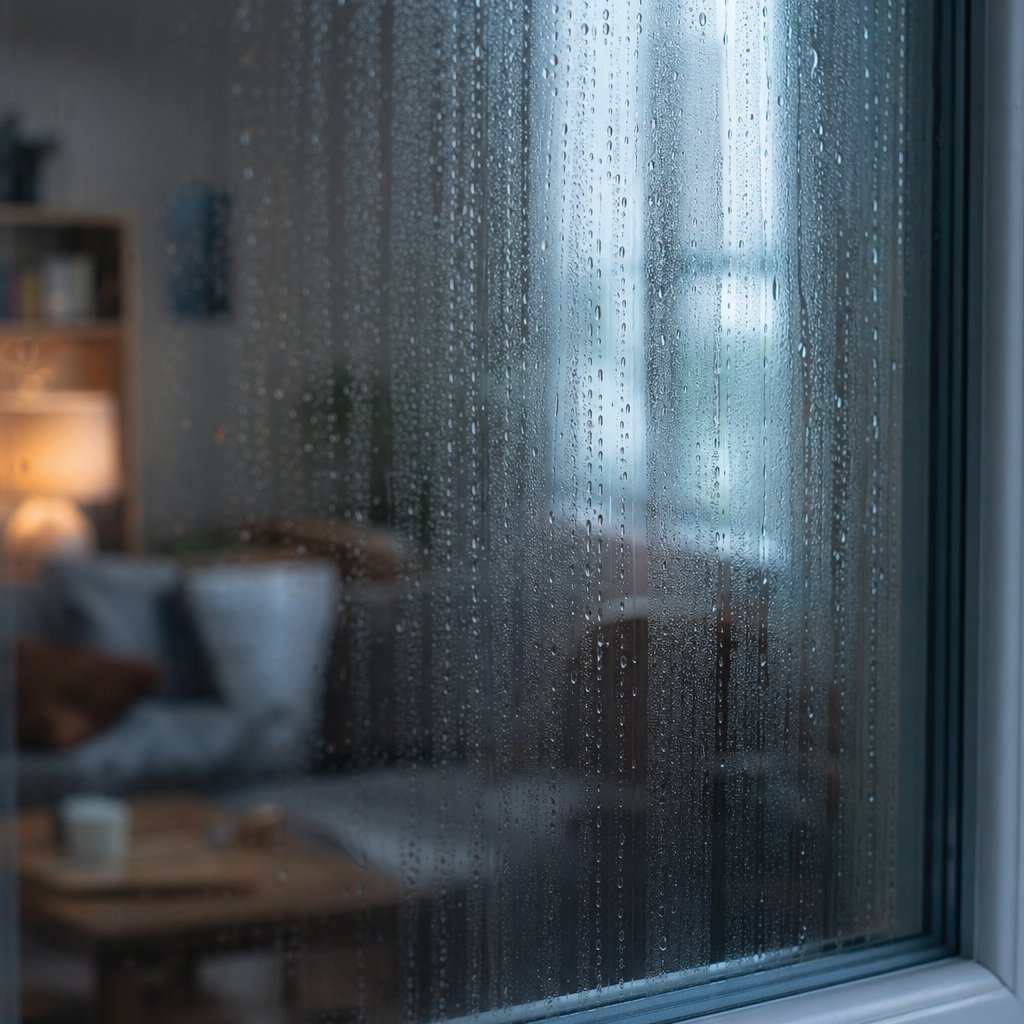
This is not the same as condensation forming on the interior or exterior glass surface, which is a humidity issue rather than a product failure. Fogging between the panes specifically indicates the IGU seal has been compromised and the unit has lost its insulating performance.
Most quality sealed units last 15 to 25 years, though premium units with warm-edge spacer bars can push beyond that. Windows facing intense afternoon sun or subject to large daily temperature swings tend to experience seal failure sooner, because repeated thermal expansion and contraction stresses the perimeter seal. Like seals and hardware, a failed IGU can typically be replaced within the existing aluminium frame — you do not need to rip out the entire window.
The powder coat finish sits somewhere in the middle of the lifespan spectrum. A quality finish applied to Australian standards generally holds its colour and integrity for 20 to 30 years in moderate conditions. Coastal properties and surfaces exposed to intense UV may see chalking or fading sooner, particularly on darker colours that absorb more heat. While a degraded powder coat does not cause immediate structural problems, it does reduce the protection over the oxide layer and affects the window’s appearance.
| Component | Expected Lifespan | Common Failure Indicators | Replaceable Independently? |
|---|---|---|---|
| Aluminium Frame | 60+ years | Visible distortion, structural cracking (rare) | No — frame failure typically means full window replacement |
| Powder Coat Finish | 20–30 years | Chalking, fading, peeling, or bubbling | Possible but costly — recoating in situ is difficult |
| Rubber Seals and Gaskets | 15–25 years | Hardening, cracking, visible gaps, draughts, water ingress | Yes — standard maintenance item |
| Hardware (Hinges, Locks, Handles) | 10–20 years | Stiff operation, loose handles, locks not engaging, visible corrosion | Yes — standard maintenance item |
| Sealed Glazing Unit (IGU) | 15–25 years | Persistent haze or condensation between panes, visible moisture | Yes — IGU can be replaced within the existing frame |
This component-level view reveals something important: the overall lifespan of an aluminium window is really a question of maintenance strategy. The frame can last a lifetime. Everything around it is a consumable on a shorter cycle. The difference between a window that lasts 40 years and one that lasts 70 comes down to whether those consumable parts get attention before small failures cascade into bigger problems — and whether the aluminium itself was built to a standard worth maintaining in the first place.
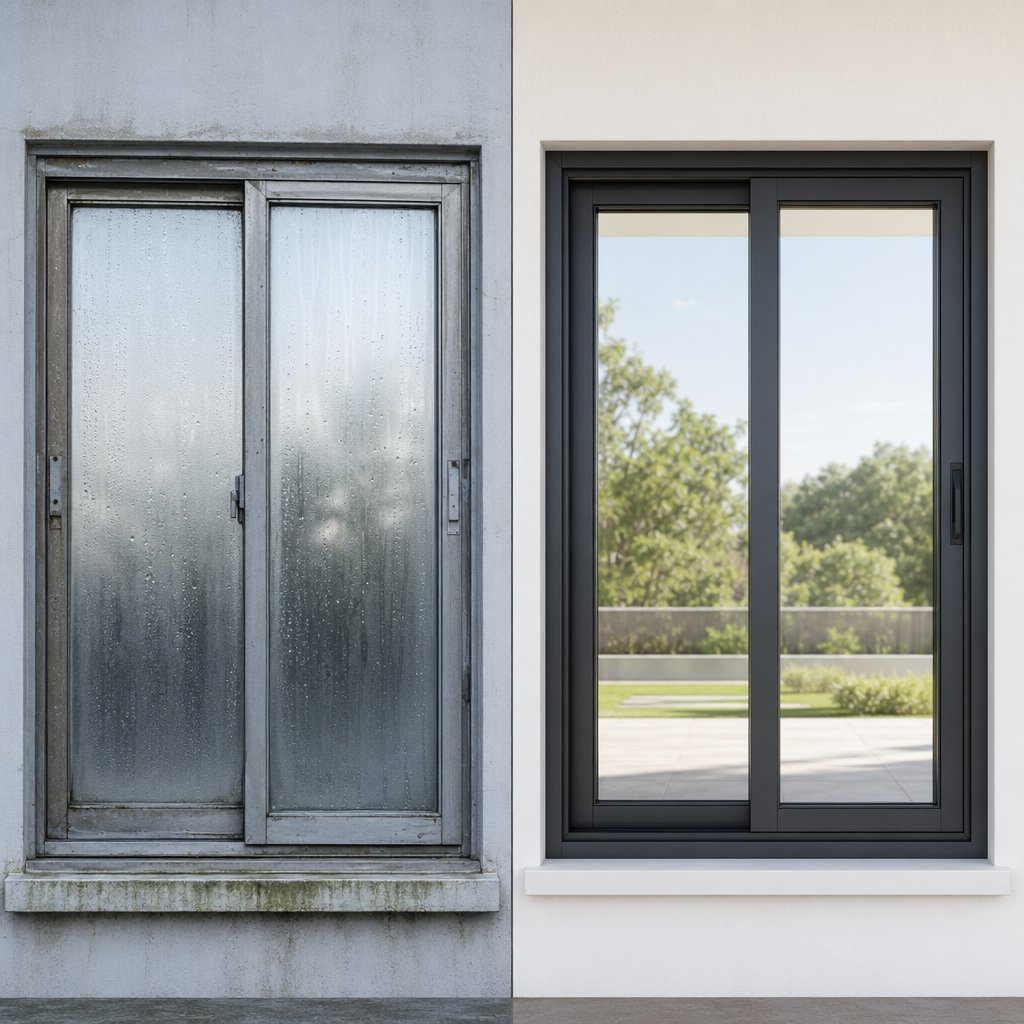
Modern vs Old Aluminium Windows
That last point about build quality deserves a closer look, because the aluminium windows going into Australian homes today are a fundamentally different product from the ones installed in the 1970s, 80s, and 90s. If your impression of aluminium windows involves condensation streaming down frames on winter mornings and paint flaking off within a decade, you are remembering a generation of products that modern systems have left far behind.
Why Older Aluminium Windows Earned a Bad Reputation
Early aluminium windows had a straightforward design problem: the frame was a single, continuous piece of metal with no thermal barrier. Aluminium conducts heat roughly 1,000 times faster than wood and 200 times faster than PVC, so those older frames acted as thermal highways, pulling heat straight out of the house in winter and radiating it inward during summer. The result was heavy condensation on the interior frame surface, which accelerated seal degradation and encouraged mould growth around the window reveal.
Surface finishes compounded the issue. Most aluminium windows of that era relied on anodising, a process that creates a hard, protective layer but offers limited UV resistance and a narrow colour palette. Over years of Australian sun exposure, anodised finishes would dull, pit, and lose their protective quality. Hardware was often basic pressed steel with minimal corrosion treatment, and seals were typically neoprene rubber — a material that hardens and cracks relatively quickly under UV and ozone exposure. It is no surprise that many homeowners from that period associate aluminium windows with draughts, rattling, and a lifespan well short of what the frame itself could deliver.
Powder Coating and Thermal Break Advances
Two technologies changed everything. Powder coating replaced anodising as the dominant finish for architectural aluminium, delivering far superior UV resistance, colour retention, and corrosion protection. A quality powder coat applied to Australian standards resists chalking and fading for decades, even on darker colours that absorb significant solar heat. It also provides a much thicker, more resilient barrier over the aluminium’s natural oxide layer.
The bigger leap, though, was the introduction of thermal break technology. Modern thermally broken aluminium profiles split the frame into two separate sections — an interior and an exterior profile — connected by a polyamide (nylon) strip reinforced with glass fibres. This strip has a thermal conductivity of approximately 0.3 W/mK compared to aluminium’s 237 W/mK, effectively severing the thermal bridge that plagued older systems. The interior frame surface stays much closer to room temperature, which virtually eliminates condensation and dramatically reduces the thermal cycling stress that used to destroy seals prematurely. Where traditional aluminium windows achieved U-values of 4.0 to 6.0 W/(m²K), thermally broken systems routinely reach 0.8 to 2.0 W/(m²K) — a 70 to 85 per cent improvement in thermal efficiency.
For Australian homes chasing NatHERS ratings or NCC Section J compliance, this shift made aluminium a genuinely competitive option for energy-efficient glazing, not just a structural or aesthetic choice.
How Modern Seal and Hardware Materials Changed the Game
Frame and finish upgrades would mean little if the consumable components still failed on the old timeline. That is where material science caught up. Modern aluminium window systems overwhelmingly use EPDM (ethylene propylene diene monomer) rubber for seals and gaskets instead of neoprene. EPDM offers substantially better resistance to UV radiation, ozone, and temperature extremes — all critical factors in the Australian climate. Where neoprene seals might harden and crack within 8 to 12 years, quality EPDM gaskets commonly deliver 15 to 25 years of reliable service before needing replacement.
Hardware has seen a parallel evolution. Stainless steel components, marine-grade coatings, and precision-engineered friction stays have replaced the basic pressed-steel fittings of earlier decades. Multi-point locking systems distribute force more evenly across the sash, reducing localised wear on seals and improving long-term weather tightness.
Taken together, these advances mean that anyone weighing up aluminium windows replacement today is comparing against a product category that barely resembles what it replaced. Here is a summary of the key improvements and what they mean for longevity:
- Thermal break technology — eliminates frame condensation, reduces thermal stress on seals, and improves energy efficiency by 70 to 85 per cent
- Powder coating finishes — superior UV and corrosion resistance compared to anodising, with colour stability lasting decades under Australian conditions
- EPDM rubber seals — outlast older neoprene gaskets by a significant margin, with better flexibility retention in extreme heat and cold
- Stainless steel and marine-grade hardware — resists corrosion far longer than earlier pressed-steel fittings, particularly in coastal environments
- Multi-point locking systems — distribute mechanical stress more evenly, reducing localised seal wear and extending weather tightness
- Multi-chamber profile designs — add structural rigidity and acoustic performance while further reducing thermal bridging
The gap between old and new is not incremental. It is generational. And it raises a practical question that matters just as much as the technology itself: what grade of aluminium sits inside those improved profiles, and how does it hold up over decades of service?
How Aluminium Quality and Alloy Grade Affect Longevity
Not all aluminium is the same. The alloy inside your window profiles has a direct bearing on how that frame performs over 40, 50, or 60-plus years — yet it is one of the least discussed factors in aluminium window frame quality. Most homeowners never think to ask about it, and most marketing material never mentions it. That is a gap worth closing.
Aluminium Alloy Grades and What They Mean for Homeowners
Architectural aluminium windows in Australia are almost always extruded from one of two alloy grades: 6063-T5 or 6060-T6. Both belong to the 6000 series — aluminium alloyed with magnesium and silicon — but they differ in composition, heat treatment, and resulting strength.
6063-T5 is the industry workhorse. It contains 0.45 to 0.9 per cent magnesium and 0.2 to 0.6 per cent silicon, producing a profile with a tensile strength of around 160 MPa and a hardness of approximately 65 HB. It extrudes smoothly through complex die shapes, which is why it delivers the clean lines and thin-wall sections that modern window design demands. For standard residential windows and most single-storey applications, 6063-T5 provides a solid balance of strength, workability, and cost.
6060-T6 steps things up. Its higher silicon content (0.5 to 0.9 per cent) and more intensive heat treatment — solution temperatures between 530°C and 550°C followed by rapid quenching rather than natural cooling — produce a tensile strength of roughly 215 MPa and a hardness of about 75 HB. That is a 34 per cent increase in tensile strength and over 15 per cent more hardness compared to 6063-T5. For larger window spans, French doors, or installations in multi-storey buildings where wind loads are higher, 6060-T6 offers the structural margin that keeps frames rigid over decades without distortion.
Aluminium window profile thickness matters just as much as alloy grade. A thicker wall section resists bending and deflection under sustained wind pressure, which in turn protects the seal compression that keeps water and air out. Thin, underspecified profiles may feel adequate when new but can flex enough over years of thermal and wind cycling to compromise gasket contact — a slow failure that often goes unnoticed until draughts or water stains appear.
The alloy grade stamped into your aluminium window profile is one of the most reliable indicators of long-term quality. If a supplier cannot tell you whether their frames use 6063-T5 or 6060-T6, treat that as a red flag.
Galvanic Corrosion and Dissimilar Metal Contact
Aluminium’s natural oxide layer does an excellent job of resisting atmospheric corrosion on its own. But introduce a different metal in direct contact — steel fixings, copper flashings, even galvanised screws — and you create the conditions for galvanic corrosion. This is an electrochemical reaction that occurs when two dissimilar metals are coupled together in the presence of moisture. The less noble metal (in most pairings, the aluminium) corrodes preferentially, producing chalky white deposits and, over time, pitting that can weaken the profile locally.
Common culprits in Australian residential construction include galvanised steel brackets used to fix aluminium frames to brick veneer walls, copper plumbing or flashing in close proximity, and mild steel screws substituted during installation to save a few dollars. The corrosion often stays hidden behind cladding or inside the wall cavity until an interior water leak prompts investigation.
Prevention is straightforward. Quality installers use stainless steel or aluminium fasteners, and where aluminium must contact a dissimilar metal, they separate the two with inert spacer materials — nylon bushings, rubber gaskets, or specialised barrier coatings. It is a simple design detail, but skipping it can quietly shorten the life of an otherwise excellent window system by decades.
Thermal Expansion and Its Effect on Seals
Aluminium expands and contracts with temperature changes more than most people realise. On a north- or west-facing wall in an Australian summer, frame surface temperatures can swing 40°C or more between early morning and peak afternoon. Over a 2-metre profile length, that kind of thermal cycling produces measurable movement — enough to stress the seals and gaskets that sit between the frame and the glass or sash.
Well-engineered profiles account for this. Multi-chamber extrusion designs distribute thermal stress across the profile cross-section rather than concentrating it at a single point. Thermally broken frames help here too: because the polyamide barrier separates the hot exterior section from the cooler interior section, each half expands at a different rate without transmitting the full movement to the seals on the inside face. Gasket channels are designed with tolerances that allow the seal to compress and recover through thousands of thermal cycles without losing contact.
Cheaper profiles with minimal engineering tend to transfer more movement directly to the seal interface. Over 15 or 20 years of daily cycling, that accelerated wear is often what pushes seals to fail earlier than their material lifespan would suggest. It is another reason why aluminium alloy grade windows and profile design are not just specification details for engineers — they are practical longevity factors that every homeowner benefits from understanding.
Of course, even the best-engineered profile cannot compensate for a poor installation. How the window goes into the wall — and the environment it faces once it is there — introduces a whole separate set of variables that can either protect or undermine everything the manufacturer built in.
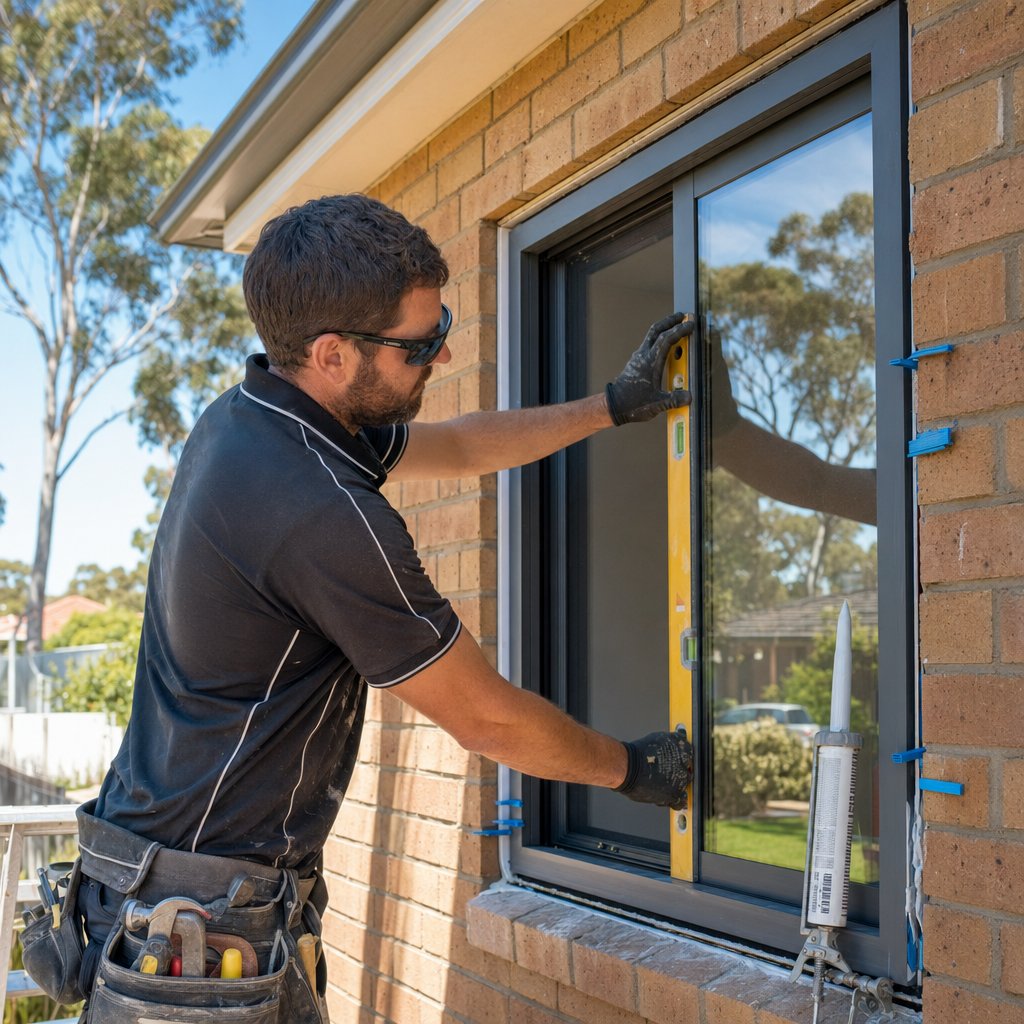
Installation Quality and Environmental Factors
A premium aluminium window system can be let down completely by the person who fits it. Window installation quality is arguably the single biggest variable that separates a 40-year result from a 70-year one, and it is the factor homeowners have the least visibility over once the plaster goes on and the painter finishes up. What sits behind the trim — the shimming, the sealing, the drainage detailing — determines whether that carefully engineered profile actually performs to its potential or starts failing within the first decade.
Installation Mistakes That Shorten Window Life
Most aluminium window installation problems are invisible at handover. They reveal themselves slowly, through draughts that appear a year or two in, water stains on reveals after heavy rain, or windows that gradually become harder to operate. By the time the symptoms show, the damage pathway is well established.
The most common errors and their consequences include:
- Incorrect shimming or packing — causes the frame to sit out of square, leading to uneven seal compression, binding sashes, and premature hardware wear. Even a couple of millimetres of distortion across a large opening can prevent locks from engaging properly.
- Inadequate perimeter sealing — gaps or poorly applied sealant between the frame and the wall allow water ingress into the wall cavity. In brick veneer construction, this moisture can sit undetected for years, corroding fixings and degrading the surrounding structure.
- Blocked or missing weep holes — aluminium windows rely on small drainage slots to channel water that enters the track back to the outside. Construction debris, render, or paint frequently blocks these during the build phase. The result is water pooling inside the frame, accelerating seal degradation and potentially overflowing into the interior.
- Failure to account for structural movement — new builds settle. Timber-framed homes flex with moisture changes. Rigidly fixing windows without allowance for building movement transfers structural stress directly into the frame, distorting profiles and breaking seal contact over time.
- Wrong fastener selection — using mild steel screws instead of stainless steel or aluminium fasteners introduces galvanic corrosion risk at every fixing point, quietly weakening the connection between frame and structure.
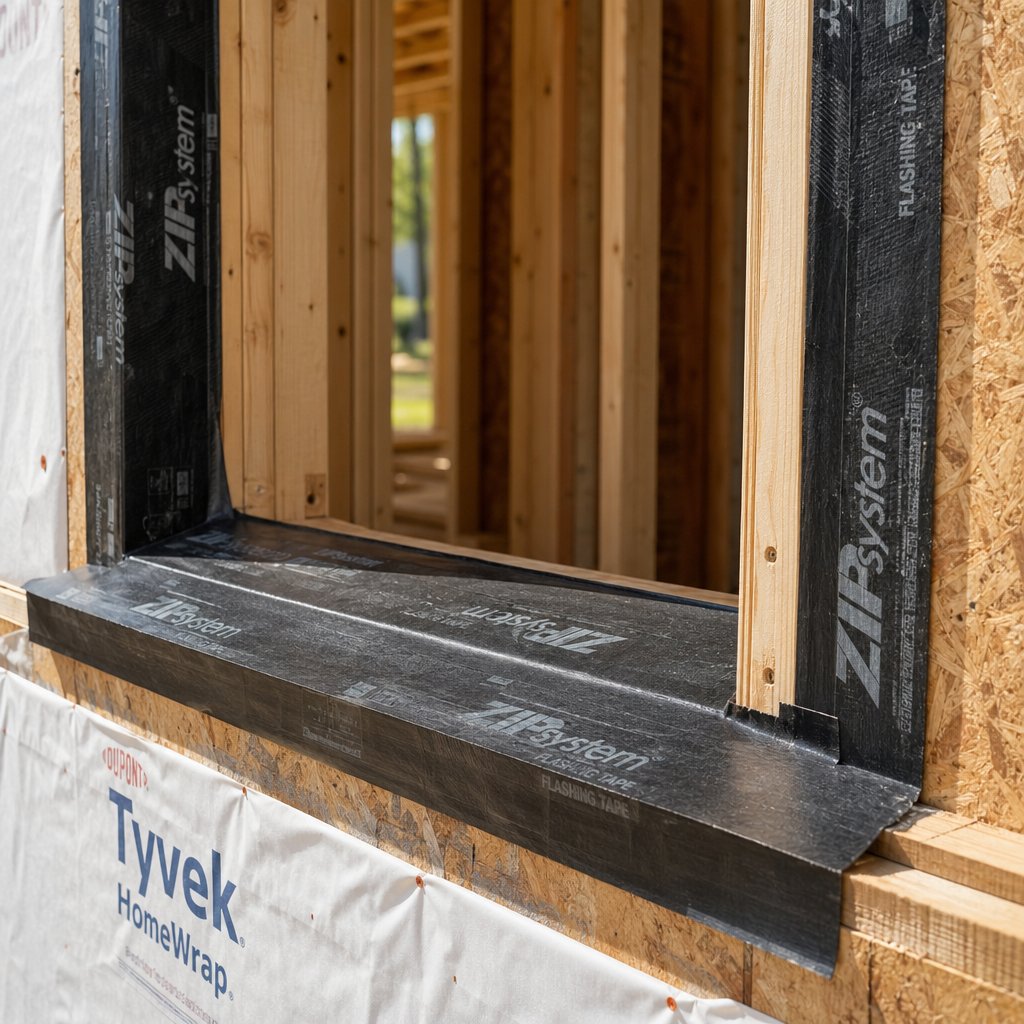
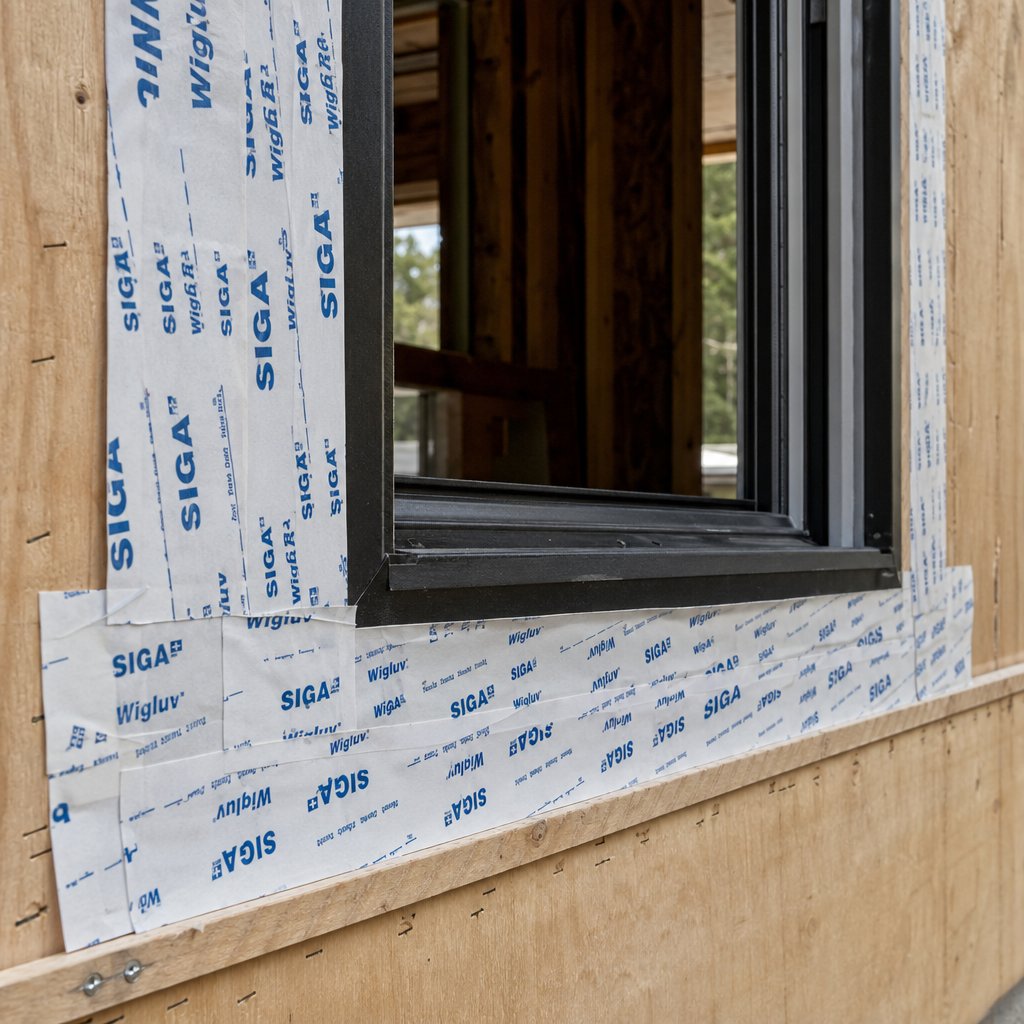
- Poor integration with the building envelope — if the window is not properly tied into the wall’s moisture barrier and flashing system, water finds a path around the frame rather than being directed away from it. This is especially critical in high-rise and multi-storey applications where wind-driven rain pressure is significant.
Every one of these issues shortens the effective lifespan of the window system without the frame itself being at fault. The aluminium could be perfect. The seals could be top-grade EPDM. None of it matters if the installation creates conditions for premature failure.
Residential vs Commercial Lifespan Expectations
There is a common assumption that commercial aluminium windows last longer than residential ones. The reality is more nuanced. Commercial installations typically follow stricter project specifications, involve certified glazing contractors, and are subject to inspection regimes during construction. The windows themselves are often heavier-duty — thicker profiles, commercial-grade hardware, and more robust drainage systems designed for larger openings and greater wind exposure.
Residential installations, by contrast, vary enormously in quality. A project home built to minimum compliance may use lighter profiles installed by a general builder rather than a specialist glazier. A custom home with an architect’s specification and a dedicated window installer can match or exceed commercial standards. The typical lifespan range for commercial windows sits around 20 to 40 years in high-traffic environments where hardware cycles are far more demanding — think operable windows in office buildings opened and closed dozens of times daily. Residential windows in a well-built home face gentler use and, with proper maintenance, often outlast their commercial counterparts despite lighter-duty components.
The takeaway is not that one context is inherently better. It is that installation standards and usage patterns matter more than the residential or commercial label. A well-installed residential window with moderate use can comfortably reach the upper end of the lifespan range.
Coastal, Urban, and Extreme Climate Considerations
How environment affects window lifespan is something too many homeowners underestimate until they are dealing with the consequences. Australia’s climate diversity means a window system that performs flawlessly in suburban Melbourne may struggle on the Sunshine Coast or in outback Queensland — not because the product is inferior, but because the environmental stresses are fundamentally different.
Coastal properties face the harshest conditions. Salt-laden air is relentless. It accelerates corrosion on hardware, degrades seals faster, and attacks any breach in the powder coat finish. Coastal window durability depends heavily on specifying marine-grade stainless steel hardware, maintaining a rigorous cleaning schedule to remove salt deposits, and choosing powder coat systems tested to higher corrosion resistance standards. Properties within a few hundred metres of the waterline — particularly in exposed locations along the Queensland, NSW, or WA coastlines — should expect to replace hardware and seals more frequently than inland equivalents, potentially halving the typical replacement cycle.
Urban environments present a different challenge. Pollution, fine particulate matter, and industrial fallout settle on frames and tracks, creating an abrasive film that accelerates wear on moving parts and can stain powder coat finishes if left uncleaned. Homes near major roads, rail corridors, or industrial zones in Sydney, Melbourne, or Brisbane benefit from more frequent frame washing — not for aesthetics, but to prevent surface degradation that compounds over years.
Regions with extreme temperature swings — inland areas of NSW, Victoria, South Australia, and much of Queensland — subject windows to intense thermal cycling. Daily frame temperature variations of 40°C or more stress seals, expand and contract profiles, and fatigue hardware springs. Thermally broken frames handle this far better than non-thermally-broken systems, which is one reason thermal break technology is not just an energy efficiency feature but a genuine longevity investment in these climates.
Tropical northern Australia adds sustained humidity and, in cyclone-prone regions of Queensland, the Northern Territory, and northern WA, the requirement for windows rated to specific wind classifications under AS 2047. Cyclone-rated windows use heavier profiles, reinforced hardware, and impact-resistant glazing — all of which contribute to a longer service life even outside cyclone events, simply because the components are built to a higher structural baseline.
Environment is not something you can control, but it is something you can plan for. Specifying the right hardware grade, finish standard, and maintenance frequency for your specific location is what separates a window that reaches its full potential from one that falls short — and it is exactly the kind of detail that a good maintenance routine is designed to catch before small issues become expensive ones.
A Practical Maintenance Schedule That Extends Window Life
Catching problems early only works if you are actually looking. A structured maintenance routine is what turns a reactive approach — noticing draughts, water stains, stiff handles — into a proactive one that keeps every component performing within its expected lifespan. The good news is that most aluminium window maintenance tips boil down to simple tasks any homeowner can handle with basic household tools and about 15 minutes per window.
Monthly and Quarterly Maintenance Tasks
Monthly tasks are quick visual checks rather than hands-on work. Walk past each window and look at the seals for obvious cracking or gaps, check that weep holes along the bottom track are clear of debris, and glance at the glass for any early signs of fogging between panes. If you live in a coastal area, wipe down all aluminium surfaces monthly to remove salt deposits before they have a chance to attack the powder coat or hardware. A damp microfibre cloth is all you need.
Every quarter, step things up slightly. Clean out the window tracks and roller assemblies using a vacuum with a narrow nozzle attachment, then wipe the tracks with a damp cloth to remove any remaining grit. Dust and grime that accumulates in tracks creates an abrasive layer that wears on moving parts every time the window operates. While you are there, apply a silicone-based lubricant to hinges, friction stays, and locking mechanisms — a quick spray with a straw applicator keeps everything moving smoothly and prevents corrosion from gaining a foothold. Avoid petroleum-based lubricants, which can attract more dirt and degrade rubber seals on contact.
Biannual and Annual Inspection Checklist
Twice a year — spring and autumn work well in most Australian climates — give the frames a proper wash. Use a soft cloth or sponge with warm water and a mild detergent. This is not just cosmetic. Cleaning aluminium window frames removes pollutants, fine particulate matter, and organic growth that can slowly degrade the powder coat finish if left to build up season after season. Rinse thoroughly and dry the frames, paying particular attention to hinges and sealant lines where trapped moisture can cause issues. Inspect the powder coat for any chalking, bubbling, or chips, especially on sun-exposed faces.
The annual check is the most thorough. Run your fingers along every rubber seal and gasket, feeling for hardening, cracking, or sections that have pulled away from the frame. Test each lock and handle for smooth engagement — if a lock requires force or a handle has developed play, tightening or adjustment is usually straightforward with a screwdriver or Allen key. Check that all drainage paths are functioning by pouring a small amount of water into the bottom track and confirming it exits through the weep holes. For window seal maintenance on coastal properties, an annual professional inspection is a worthwhile investment, as salt-driven degradation can progress quickly in areas that are hard to see without removing trim or sashes.
When to Call a Professional
Most of the tasks above sit comfortably within DIY territory. A few situations, though, warrant a qualified window technician. Persistent condensation between glazing panes means the sealed unit has failed and needs professional replacement. Seals that keep deteriorating shortly after you replace them may indicate a frame alignment issue that requires re-shimming. Structural damage to frames, cracked glass, or windows on upper storeys are all jobs where safety and precision matter more than saving on a service call. If your windows are still under warranty, check the terms before attempting any repair yourself — some manufacturers require that servicing be carried out by an authorised installer to keep coverage valid.
The connection between maintenance and lifespan is direct. A neglected aluminium window does not fail because the aluminium gives out. It fails because hardened seals let water in, clogged drainage channels hold that water against the frame, and corroded hardware stops the window from closing tightly enough to protect the seals. Each small neglect compounds the next. Consistent upkeep is what pushes a window toward the 60- and 70-year end of the range rather than the 40-year mark.
| Frequency | Task | Tools Needed | Estimated Time per Window |
|---|---|---|---|
| Monthly | Visual inspection of seals, weep holes, and glazing; wipe down frames in coastal areas | Microfibre cloth, damp sponge | 2–3 minutes |
| Quarterly | Vacuum and wipe tracks; lubricate hinges, locks, and friction stays | Vacuum with narrow nozzle, silicone spray with straw applicator, soft cloth | 5–8 minutes |
| Biannually | Wash frames with mild detergent; inspect powder coat finish for damage | Soft cloth or sponge, bucket, mild detergent, clean water for rinsing | 10–15 minutes |
| Annually | Full seal and gasket inspection; hardware tightening and adjustment; drainage flow test; professional check for coastal properties | Screwdriver or Allen key set, small jug of water (drainage test), torch for close inspection | 15–20 minutes (DIY); 30–45 minutes (professional) |
A schedule like this is not onerous — it adds up to a few hours across an entire year for a typical home. Compared to the cost of premature window replacement, that is a remarkably good return on a small investment of time. Still, even the best-maintained windows exist within a broader market of competing materials, and understanding how aluminium stacks up against uPVC, timber, and composite over a full lifecycle helps put that maintenance commitment into perspective.
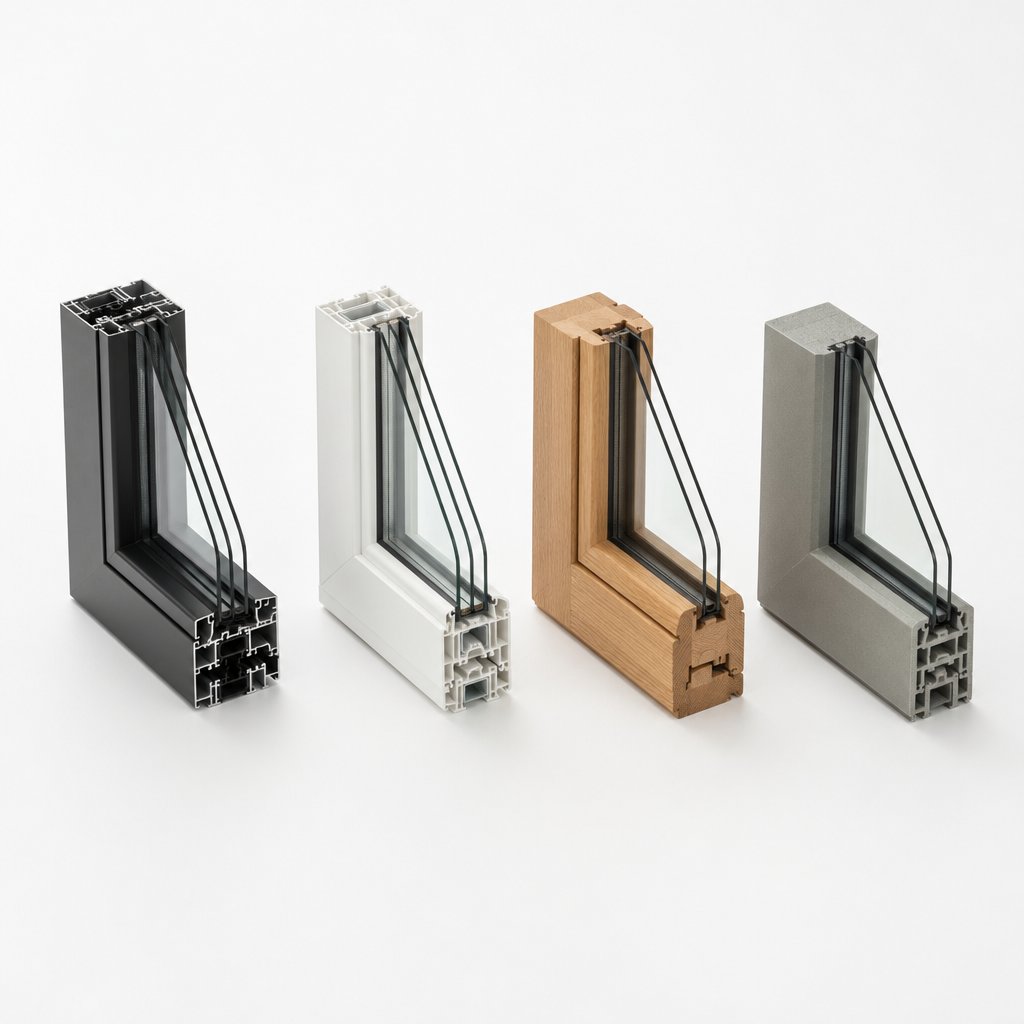
Aluminium vs Other Window Materials
That maintenance commitment looks different depending on the frame material you choose. Aluminium is not the only option on the market, and every material brings its own trade-offs in durability, upkeep, environmental performance, and long-term cost. The trouble is that most comparisons stop at vague generalisations. Here is a structured breakdown across the four materials Australian homeowners are most likely to encounter.
Aluminium vs uPVC vs Timber vs Composite Lifespans
When comparing aluminium vs uPVC windows lifespan, the gap is significant. Quality uPVC systems generally deliver 25 to 40 years of service before the profiles begin to discolour, warp, or lose structural rigidity — particularly in regions with high UV exposure like much of Australia. uPVC frames rely on internal steel reinforcement for strength, and once the plastic degrades, the entire unit typically needs replacing rather than repairing.
Aluminium vs timber windows is a different conversation. Well-maintained hardwood timber frames can last 30 to 50 years, and some heritage installations have survived far longer. The catch is that “well-maintained” means repainting or restaining every three to seven years, regular inspection for termite activity and moisture damage, and prompt repair of any rot. In humid coastal areas or tropical Queensland, timber demands constant vigilance. Composite frames — typically a mix of timber and aluminium or PVC and timber — split the difference, offering 30 to 40 years with moderate maintenance, though they are less common in the Australian residential market.
Aluminium, sitting at 40 to 70 years with minimal upkeep, consistently ranks as the most durable window frame material when you factor in Australia’s harsh UV, coastal salt exposure, and termite pressure. The frame itself does not rot, warp, or attract pests, and consumable components like seals and hardware can be swapped without replacing the whole unit.
| Criteria | Aluminium | uPVC | Timber | Composite |
|---|---|---|---|---|
| Expected Lifespan | 40–70 years | 25–40 years | 30–50 years (with maintenance) | 30–40 years |
| Maintenance Level | Low — periodic cleaning and hardware lubrication | Low — occasional cleaning; no repainting | High — repainting every 3–7 years, termite and rot inspection | Moderate — periodic refinishing of timber elements |
| Recyclability | Infinitely recyclable without quality loss | Recyclable but with quality degradation; limited recycling infrastructure in Australia | Biodegradable; reusable if in good condition | Difficult — mixed materials complicate recycling |
| Best Climate Suitability | All Australian climates, including coastal and cyclone-prone regions | Temperate to moderate; can warp under extreme UV and heat | Temperate inland; vulnerable in humid, coastal, and termite-prone areas | Temperate to moderate; performance varies by composition |
| Relative Cost (Supply and Install) | Mid to high | Low to mid | Mid to high (plus ongoing maintenance costs) | Mid to high |
| Cost-to-Lifespan Value | Strong — high upfront cost offset by longevity and low maintenance | Good for shorter ownership periods; diminishes over time | Weakened by cumulative maintenance spend | Moderate — depends on specific product and climate |
The Sustainability and Recyclability Advantage
One criticism that follows aluminium is its embodied energy. Smelting raw aluminium is energy-intensive — there is no getting around that. But lifecycle analysis tells a more complete story. A study commissioned by AluEco found that aluminium facade elements have a lifetime of at least 75 years and a minimum of 95 per cent can be recovered through recycling. Unlike uPVC, which degrades in quality with each recycling pass, aluminium is infinitely recyclable without any loss of structural or aesthetic properties. Recycling aluminium also uses only about 5 per cent of the energy required to produce it from raw bauxite ore.
Pair that recyclability with a 40-to-70-year service life, and the environmental equation shifts substantially. A set of aluminium windows installed today may not reach a recycling facility for half a century or more — and when they do, the recovered material goes straight back into new profiles at full quality. Recyclable window frames that genuinely close the loop are rare across building materials. Aluminium is one of the few that delivers on that promise at scale.
For Australian projects targeting Green Star ratings or aiming to minimise lifecycle environmental impact, this combination of extreme longevity and full-circle recyclability makes aluminium a strong contender — not despite its manufacturing footprint, but because its in-use and end-of-life performance more than compensates for it.
Which Material Suits Your Project
Budget-conscious renovations on a shorter ownership horizon may lean toward uPVC for its lower upfront cost and solid thermal performance. Heritage restorations or period homes where timber character is non-negotiable will accept the maintenance trade-off. But for new builds, long-term family homes, coastal properties, and projects where durability and sustainability carry real weight, aluminium consistently comes out ahead on a whole-of-life basis.
Modern Australian-standard-compliant aluminium systems — like the range available through MEICHEN’s aluminium windows collection — are built with thermally broken profiles, quality powder coating, and energy-efficient glazing options designed for local conditions. For homeowners, renovators, builders, and developers weighing up their options, they represent the kind of product that makes the aluminium column of that comparison table a practical reality rather than a theoretical one.
Whichever material you lean toward, the purchase decision does not end at the product itself. What the manufacturer promises on paper — and what actually holds up when something goes wrong — is a separate question entirely, and one that most homeowners do not examine closely enough until it is too late.
Understanding Warranties vs Real-World Lifespan
An aluminium window warranty is a promise — but it is a carefully worded one. Most homeowners glance at the headline number (“25-year warranty” or “lifetime guarantee”), file the paperwork, and assume they are covered. The reality is that warranty documents are full of conditions, exclusions, and structural nuances that can leave you paying out of pocket for failures you assumed were protected. Knowing what window warranty coverage actually includes, and where it quietly ends, is essential before you sign anything.
What Aluminium Window Warranties Typically Cover
Most reputable manufacturers break their aluminium window warranty into component-specific coverage rather than offering a single blanket term. A typical structure looks something like this: the aluminium frame receives the longest coverage — often 20 to 30 years or a “lifetime” term tied to the original purchaser — protecting against structural defects like warping, cracking, or corrosion that compromises integrity. The powder coat finish usually carries its own separate warranty of 10 to 15 years, covering peeling, flaking, or premature chalking beyond normal weathering. Hardware warranties tend to be shorter, commonly 5 to 10 years, reflecting the mechanical wear these parts endure. Sealed glazing units typically sit in the 10- to 15-year range, covering seal failure that results in condensation between panes.
Notice the pattern: each component’s warranty roughly mirrors its expected service life, not the frame’s. The frame might last 60-plus years, but the warranty on the gaskets or IGU expires decades earlier. That gap between how long is a window warranty and how long the system actually lasts is where misunderstandings breed.
Common Actions That Void Your Warranty
What voids coverage matters just as much as what is covered. Manufacturers build in conditions that, if breached, release them from obligation entirely. Some are obvious. Others catch homeowners off guard years after installation.
The most frequently overlooked window warranty exclusions include:
- Installation by uncertified or unlicensed contractors — most manufacturers require that windows be fitted by approved installers to maintain coverage, and DIY installation almost universally voids the warranty
- Failure to perform required maintenance — if the warranty terms specify periodic cleaning, lubrication, or seal inspection and you cannot demonstrate compliance, a claim can be denied
- Coastal proximity without specified care — many warranties include a reduced coverage zone (often within 500 metres to 5 kilometres of the waterline) that requires more frequent maintenance or marine-grade hardware upgrades to remain valid
- Unauthorised modifications — drilling into frames, applying aftermarket window tinting, adding security bars, or repainting powder-coated surfaces without manufacturer approval can void coverage immediately
- Delayed reporting of defects — waiting months to notify the manufacturer of condensation between panes or seal failure can give grounds for denial, on the basis that delayed action allowed a minor issue to escalate
- Normal wear and tear — this broad exclusion appears in nearly every warranty and covers gradual degradation of seals, hardware, and finishes that falls within expected ageing rather than a manufacturing defect
The practical lesson: read the maintenance and care obligations in your warranty document as carefully as the coverage sections. Your end of the agreement is just as binding as the manufacturer’s.
Using Warranty Length as a Lifespan Indicator
It is tempting to treat warranty duration as a direct proxy for how long a product will last. A 25-year frame warranty must mean the frame lasts at least 25 years, right? Broadly, yes — manufacturers set warranty terms based on their confidence in the product’s durability, and longer coverage generally signals higher-quality materials and engineering. But the relationship is not one-to-one, and the type of warranty matters as much as the length.
A non-prorated warranty maintains full coverage for its entire duration. If a covered defect appears in year two or year twenty, the manufacturer bears the same level of responsibility. A prorated warranty, by contrast, reduces coverage over time. You might receive 100 per cent replacement value in the first five years, but by year ten you could be responsible for 25 to 50 per cent of the cost — and that percentage keeps climbing. Prorated terms are more common with budget-tier products and can leave homeowners with significant out-of-pocket costs precisely when age-related issues are most likely to surface.
The smarter approach is to look at warranty structure holistically. A 15-year non-prorated warranty with clear terms, full labour inclusion, and no coastal exclusions may offer better real-world protection than a 25-year prorated warranty riddled with fine-print carve-outs. Ask for the full warranty document — not just the summary brochure — and compare component by component. If a supplier is reluctant to hand over the detail before purchase, that tells you something too.
Warranty language sets the floor for what you can expect. But the ceiling — the true upper limit of your windows’ service life — depends on decisions made well before the warranty conversation: the alloy grade, the installation quality, the environment, and the questions you ask before a single frame goes into the wall.
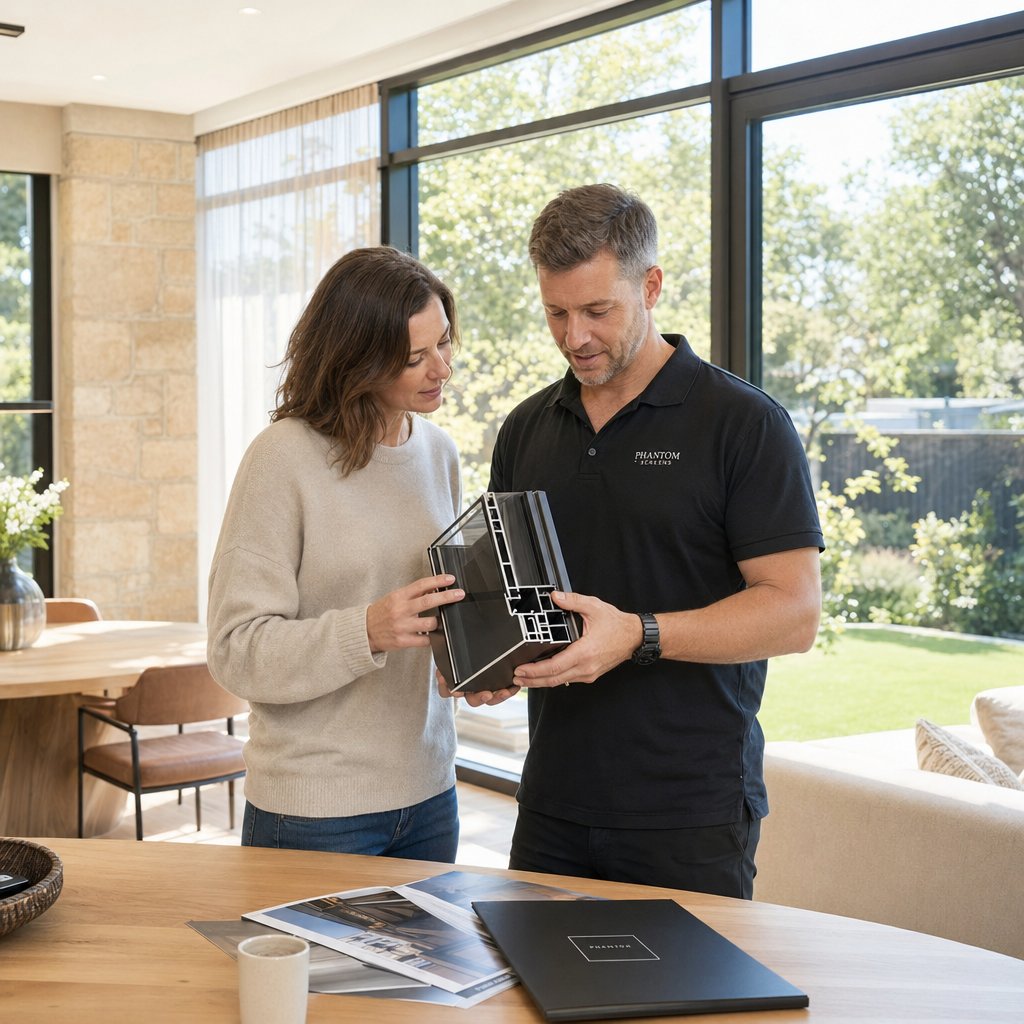
What to Ask Your Window Installer Before You Buy
Those warranty details and alloy specifications are only useful if you know how to act on them at the point of purchase. Most homeowners walk into a window consultation focused on colour, style, and price — all valid considerations, but none of them tell you whether the product will still be performing in 30 or 40 years. The questions below cut straight to the factors that determine long-term durability, ranked roughly by how much impact each one has on lifespan.
Questions to Ask Before Buying Aluminium Windows
- What aluminium alloy grade and minimum wall thickness do the profiles use? You are looking for 6063-T5 or 6060-T6 as a baseline. If the supplier cannot answer this confidently, consider it a warning sign.
- Are the profiles thermally broken, and what material is the thermal break made from? Polyamide (PA66) reinforced with glass fibre is the current industry standard. Non-thermally-broken frames are a significant compromise in both energy performance and seal longevity.
- What powder coating standard is applied, and what is the specific warranty on the finish? In Australia, look for compliance with AS 3715 or Qualicoat certification. Ask whether the finish warranty changes for coastal installations.
- What seal and gasket material is used — EPDM or something else? EPDM is the benchmark for UV and ozone resistance in Australian conditions. Cheaper alternatives degrade faster.
- How is drainage designed, and where are the weep holes located? A clear answer here signals that the system has been engineered to manage water, not just keep it out under ideal conditions.
- What hardware brand and grade is specified, and is marine-grade stainless steel available for coastal properties? Hardware is the first component to fail, so its quality directly sets the maintenance clock.
- Who installs the windows, and what are their qualifications? Ask whether the installer is licensed, whether they carry their own insurance, and whether the manufacturer’s warranty requires installation by an approved contractor.
- What does the installation warranty cover, and for how long? This is separate from the product warranty. A quality installer should stand behind their workmanship for a minimum of several years, covering issues like water ingress caused by poor sealing or frame distortion from incorrect shimming.
Bringing this list to a consultation shifts the conversation from sales pitch to technical substance. A supplier who answers each point clearly and without hesitation is one worth doing business with.
Signs Your Aluminium Windows Need Replacing
Not every problem calls for aluminium window replacement. Seals, hardware, and glazing units can all be swapped independently, as earlier sections of this guide explain. But some signs point to issues that repair cannot resolve — signals that the window system has reached the end of its serviceable life.
- Persistent condensation or moisture trapped between glazing panes that returns after the sealed unit has already been replaced once, suggesting the frame itself is no longer holding the IGU correctly
- Visible frame distortion — bowing, twisting, or gaps between the frame and the wall reveal — that prevents the sash from sitting square and sealing properly
- Hardware that cannot be adjusted or replaced because the frame’s fixing points have corroded or the profile has deformed beyond the adjustment range of available components
- Recurring seal failure within a year or two of replacement, indicating that frame movement or misalignment is destroying new gaskets at an accelerated rate
- Significant corrosion or pitting on the frame itself, particularly at joints and corners where moisture has been trapped over a long period — rare with quality aluminium, but possible in severe coastal exposure or where galvanic corrosion has gone unaddressed
- Draughts and water ingress that persist despite new seals, clear drainage paths, and properly functioning hardware, pointing to structural compromise in the frame or surrounding wall integration
If two or more of these signs appear together, you are generally past the point where component-level repairs offer good value. A full replacement becomes the more practical and cost-effective path forward.
Choosing Windows Built to Last
Everything in this guide — alloy grades, thermal breaks, seal materials, installation standards, maintenance schedules, warranty fine print — comes down to one practical reality: the decisions you make before installation determine how many decades of service you get from your windows. Cheap upfront rarely means cheap over a lifetime. The products that reach the 50-, 60-, and 70-year marks are the ones built with quality materials, installed by skilled tradespeople, and maintained with a small but consistent investment of time.
For Australian homeowners, renovators, builders, and developers ready to put this knowledge into action, MEICHEN’s aluminium windows collection offers energy-efficient, Australian-standard-compliant systems designed for the conditions covered throughout this article — from coastal salt exposure to extreme UV and thermal cycling. It is a practical starting point for anyone who has done the research and wants a product range that reflects it.
Frequently Asked Questions About Aluminium Window Lifespan
1. Do aluminium windows last longer than uPVC or timber windows?
In most Australian conditions, aluminium windows outlast both uPVC and timber. Quality aluminium systems deliver 40 to 70 years of service, while uPVC typically lasts 25 to 40 years and timber frames reach 30 to 50 years only with regular repainting and rot prevention. Aluminium’s natural oxide layer self-heals when scratched, and the frame resists warping, termite damage, and UV degradation — three issues that shorten the life of competing materials in harsh Australian climates. Modern thermally broken aluminium windows from suppliers like MEICHEN combine this durability with strong energy efficiency, making them a practical long-term investment for Australian homes.
2. What is the first part of an aluminium window to fail?
Rubber seals, gaskets, and hardware are the first components to degrade. EPDM rubber seals typically last 15 to 25 years before hardening or cracking, while hinges, locks, and handles may wear out within 10 to 20 years depending on usage frequency and environmental exposure. The aluminium frame itself is the longest-lasting part, often remaining structurally sound for 60 years or more. The key advantage of aluminium systems is that these consumable parts can be replaced independently without removing the frame, effectively resetting the clock on those components at a fraction of the cost of full window replacement.
3. How do I maintain aluminium windows to make them last longer?
A simple routine keeps aluminium windows performing at their best. Monthly, visually check seals and weep holes for blockages. Every quarter, vacuum window tracks and apply silicone-based lubricant to hinges and locks. Twice a year, wash frames with warm water and mild detergent to remove pollutants and organic buildup that degrade the powder coat finish. Annually, inspect every seal by touch for hardening or cracking, test all hardware for smooth operation, and confirm drainage paths are clear. Coastal properties benefit from monthly wipe-downs to remove salt deposits and an annual professional inspection. This schedule adds up to only a few hours per year for a typical home.
4. Are aluminium windows suitable for coastal properties in Australia?
Aluminium windows can perform well in coastal locations, but they require specific specifications and a more rigorous maintenance schedule. Salt-laden air accelerates corrosion on hardware, degrades seals faster, and attacks any breach in the powder coat finish. To maximise lifespan near the coast, specify marine-grade stainless steel hardware, choose a powder coat system tested to higher corrosion resistance standards, and commit to monthly salt removal from all frame surfaces. Expect to replace hardware and seals more frequently than inland equivalents. It is also important to check warranty terms, as many manufacturers reduce coverage for properties within a defined distance of the waterline.
5. What should I ask a window supplier before buying aluminium windows?
The most important questions target the factors that directly determine long-term durability. Ask about the aluminium alloy grade and minimum wall thickness — 6063-T5 or 6060-T6 are the standard architectural grades. Confirm whether profiles are thermally broken with polyamide (PA66) barriers. Check the powder coating standard and whether it complies with AS 3715 or holds Qualicoat certification. Ask what seal material is used (EPDM is the benchmark), what hardware brand and grade is specified, and whether marine-grade options are available. Finally, confirm who installs the windows, their licensing, and whether the product warranty requires installation by an approved contractor.
More Window & Door Guides