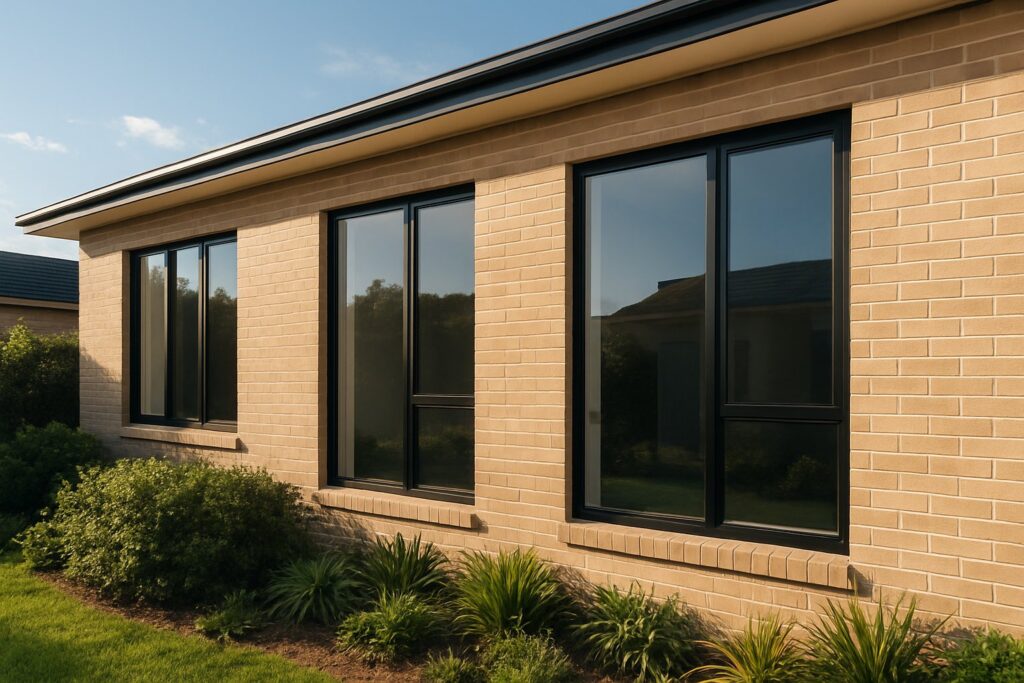
What Makes a Window Truly Contemporary
Search for “modern windows” and you’ll find the term tangled up with “contemporary” on nearly every result. Most sources treat them as the same thing. They’re not, and the confusion costs homeowners real money when they end up with the wrong profiles, proportions, and frame depths for their project.
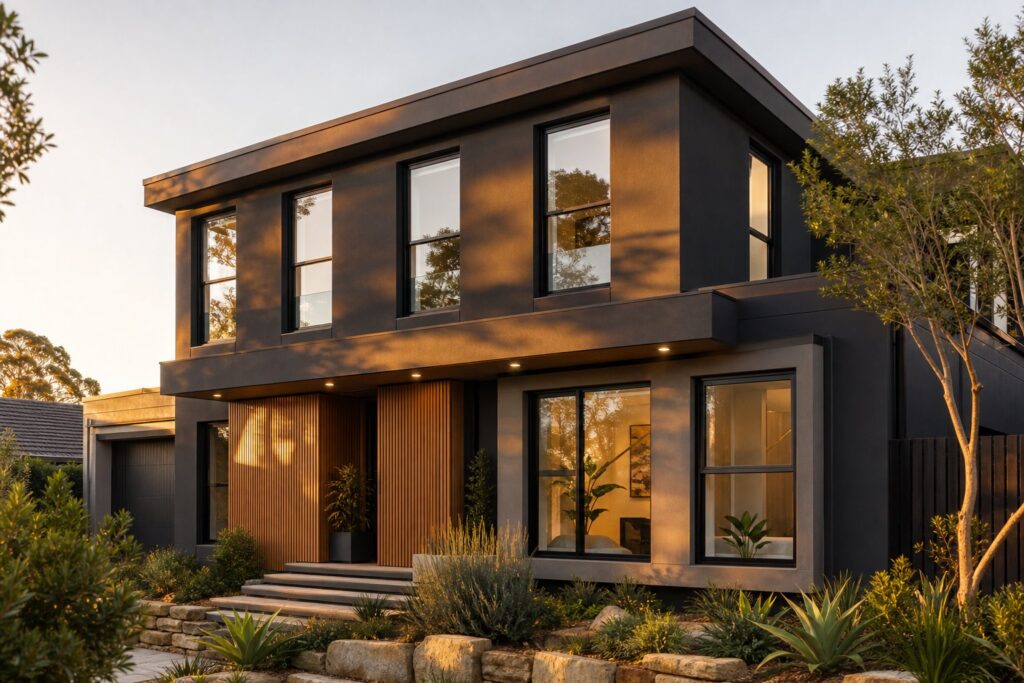
Contemporary windows are defined not by a fixed era but by current design thinking — featuring slim sightlines, expansive glass areas, minimal ornamentation, and seamless indoor-outdoor transitions that evolve as architectural trends shift.
Modern vs Contemporary — Why the Distinction Matters
“Modern” in architecture refers to a specific mid-20th-century movement — think clean geometry, post-and-beam construction, rectangular forms, and low horizontal compositions. Modern windows fit that vocabulary: large glass panels, yes, but locked into a particular aesthetic with whitewashed exteriors and rigid minimalism.
Contemporary, on the other hand, means “of the moment.” It absorbs influences from multiple eras and keeps evolving. A contemporary design window design might borrow the clean lines of modernism, the warmth of natural materials from mid-century architecture, or the dramatic curves enabled by current engineering. When you browse pictures of windows labeled “modern” online, many are actually contemporary — fluid, current, and not tied to any single period.
Confuse the two and you risk selecting window styles for home projects that clash with your architecture. A strict modern profile may feel rigid in a transitional renovation, while a truly contemporary option adapts.
Core Visual Traits of Contemporary Window Design
So what separates these windows from everything else on the market? A few hallmarks stand out:
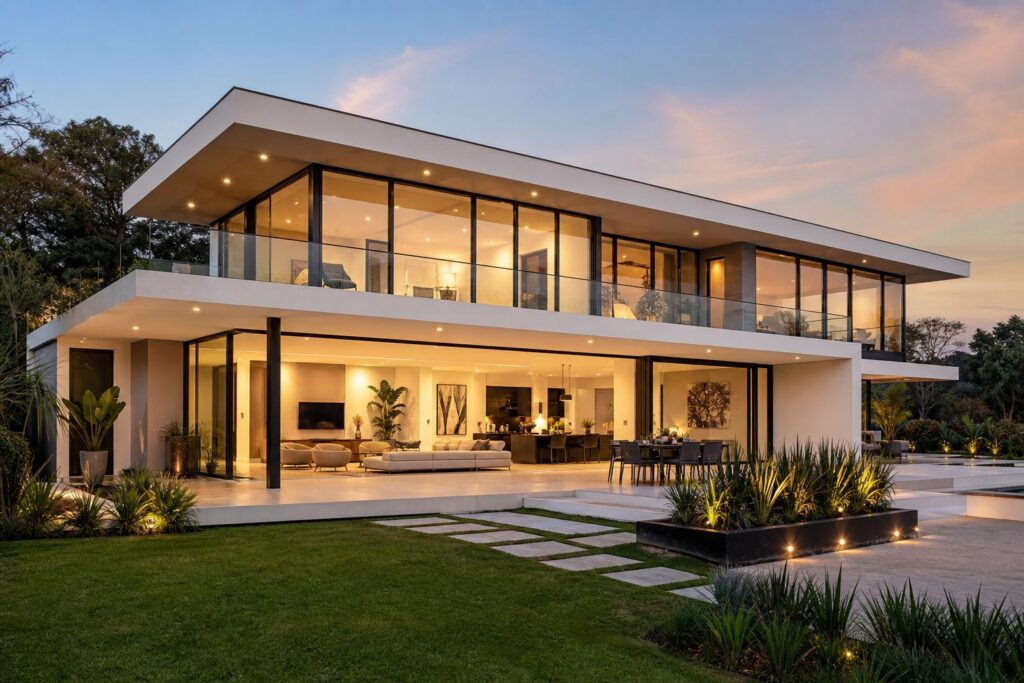
- Floor-to-ceiling glass that prioritizes unobstructed views and natural light
- Ultra-slim frame profiles that maximize the glass-to-frame ratio
- Dark or neutral finishes — matte black, charcoal, and bronze dominate current palettes
- Geometric configurations, including corner glazing and asymmetric layouts
- Hardware-concealed operation, where hinges and locks sit flush or hidden within the frame
Interior windows — glass partitions between rooms — also fall under this umbrella, extending sightlines and daylight deeper into a floor plan without sacrificing openness.
These traits create a visual language that feels clean and intentional, but the real question is practical: which type of contemporary window belongs in which room, and why?
Choosing the Right Contemporary Window Type for Every Room
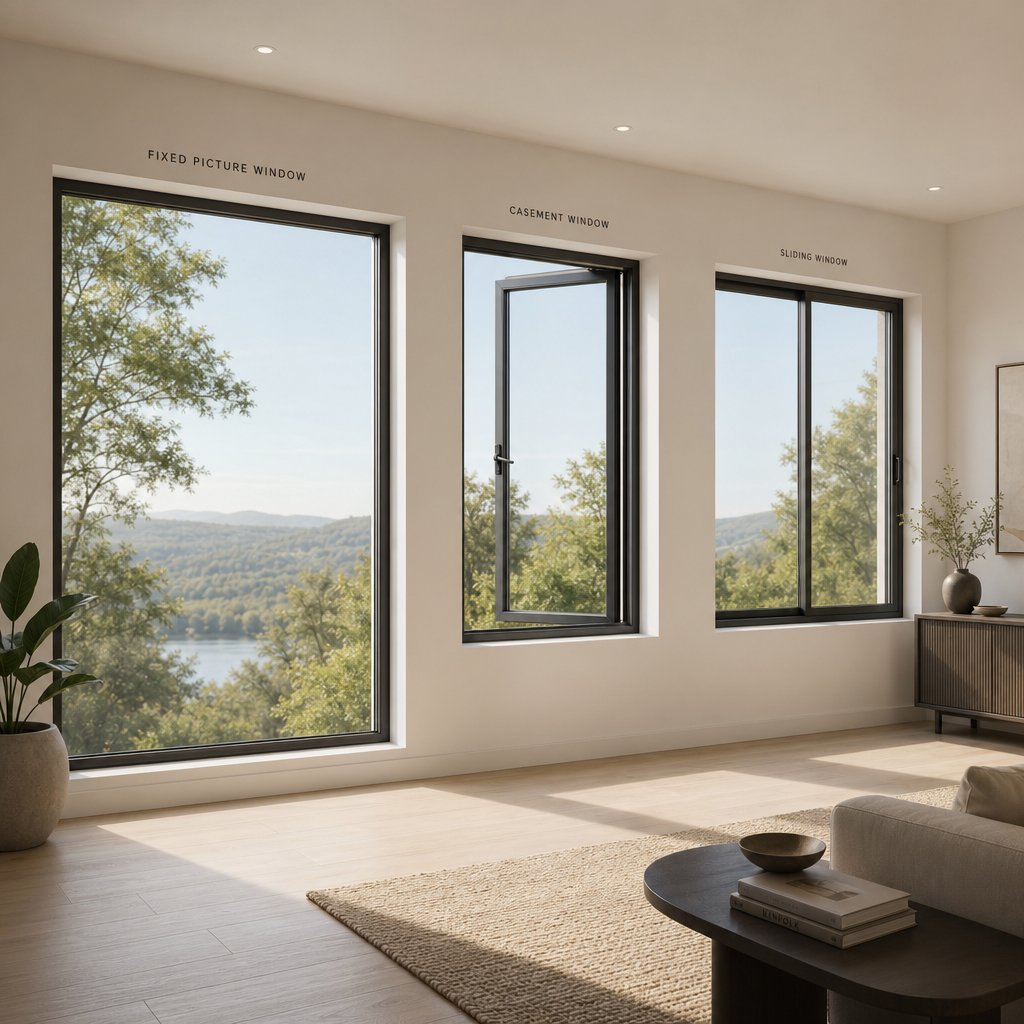
Every room in your home has a different job to do — and the window serving it should match. A living room craving panoramic views has nothing in common with a bathroom that needs airflow without sacrificing privacy. Thinking about window designs in terms of function first, aesthetics second, is the fastest way to avoid expensive regrets.
Fixed and Picture Windows for Uninterrupted Views
Imagine a living room wall that’s almost entirely glass, framing a garden or skyline with zero visual interruption. That’s the picture window’s strength. Because these units don’t open, there are no hinges, handles, or moving parts to break up the glass area. Contemporary versions push this further with ultra-slim frames — sometimes as narrow as 20mm — so the boundary between indoors and outdoors nearly disappears.
Picture windows are the right call wherever ventilation is handled by other openings nearby: stairwells, gable walls, hallways, or living spaces flanked by operable panels. They also deliver superior air-tightness and energy performance compared to operable units, since there’s no seal to compress or degrade over time. If your goal is a clean, modern window statement on a feature wall, this is where you start.
Casement and Awning Windows for Controlled Ventilation
Casement windows swing outward on side hinges, opening the full sash to catch or redirect breezes. That flush exterior profile — no protruding tracks or stacked sashes — suits contemporary facades perfectly. You’ll notice them paired with fixed panels in open-plan spaces, where one section frames the view and the casement beside it handles airflow.
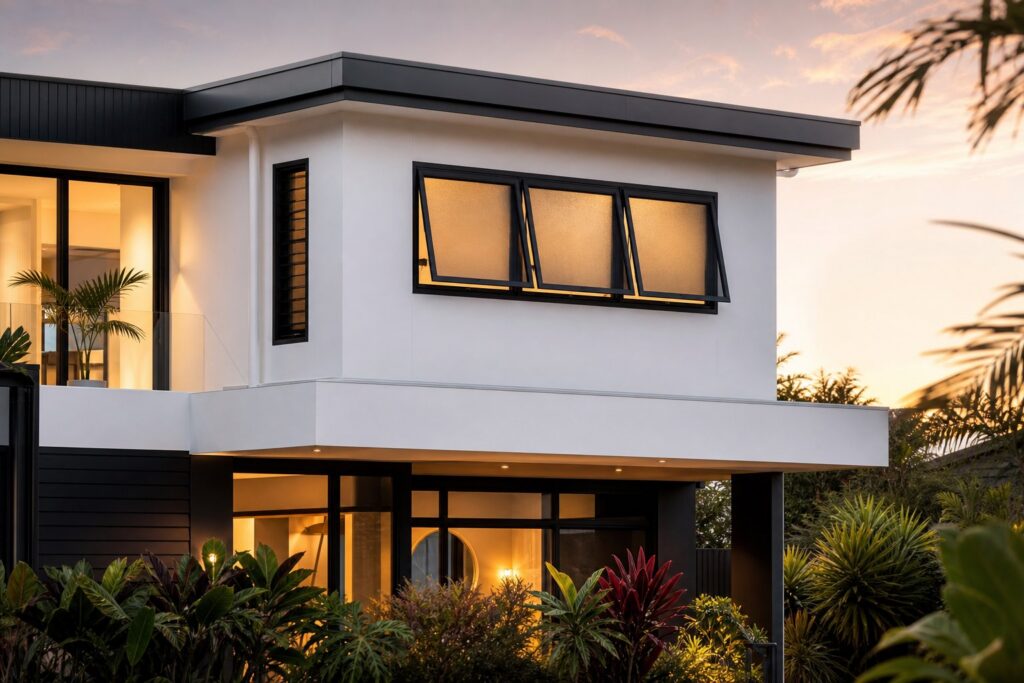
Awning windows work on a similar principle but hinge at the top, tilting outward from the bottom. The angled sash creates a canopy effect that lets air in without letting rain in — making them ideal for bathrooms, kitchens, and laundries where you want ventilation running even during a storm. Both types use concealed hardware that keeps the window frame design minimal and uncluttered.
Sliding and Tilt-and-Turn Options for Flexible Living
When swing clearance is tight — think a kitchen bench beneath a window or furniture close to the wall — sliding windows solve the problem. They glide horizontally along a track, opening wide without intruding into interior or exterior space. For contemporary house windows spanning large openings, sliders maintain that expansive glass look while staying practical in compact rooms.
Tilt-and-turn windows bring a European-influenced twist that’s gaining real traction in Australian and North American projects. A single handle switches between two modes: tilt the top inward for secure, passive airflow, or swing the full sash inward for cleaning and maximum ventilation. They’re especially valuable in multi-storey homes where safe partial airflow for upper floors matters. You may also encounter the term “cantilever window” — this generally refers to a projecting or cantilevered glass box that extends beyond the building envelope, more of a structural glazing feature than a standard window type.
For modern farmhouse windows and other contemporary house windows, the table below maps each type to its strongest use case:
| Type | Best Room Application | Ventilation Level | Contemporary Aesthetic Fit |
|---|---|---|---|
| Picture / Fixed | Living rooms, stairwells, gable walls | None | Excellent — maximum glass, minimal frame |
| Casement | Living areas, bedrooms, open-plan spaces | High (full sash opening) | Excellent — flush profile, hidden hardware |
| Awning | Bathrooms, kitchens, laundries | Moderate (rain-safe airflow) | Strong — clean lines, compact operation |
| Sliding | Bedrooms, kitchens, offices | Moderate (partial opening) | Strong — wide spans, no swing clearance needed |
| Tilt-and-Turn | Upper floors, bedrooms, children’s rooms | Adjustable (tilt or full open) | Excellent — minimalist European profile |
Picking the right type is half the equation. The other half — the one that arguably has an even bigger impact on how “contemporary” your windows actually look — comes down to what the frame is made of.
Frame Materials That Shape the Contemporary Look
You could pick the perfect window type for every room and still end up with a result that looks ordinary. Why? Because the frame material controls the one visual detail that makes or breaks the contemporary aesthetic: sightline width. That’s the visible strip of frame between the glass and the wall — and it varies dramatically depending on what the frame is made of.
A slim 20-30mm sightline reads as sleek and intentional. A chunky 70mm+ profile screams “standard replacement.” When you’re exploring window ideas for a renovation or new build, this single factor deserves more attention than colour, hardware, or glass type combined.
Aluminium Frames and the Slim-Profile Advantage
There’s a reason aluminium dominates contemporary architecture worldwide. Its inherent structural strength allows engineers to design narrower frames that still support oversized glass panels — ultra-slim systems can achieve sightlines as narrow as 20-30mm, letting glass dominate the facade while the frame practically disappears.
Powder-coat finishes open up an extensive colour palette, with matte black and charcoal leading current trends. Unlike vinyl, aluminium handles dark finishes without warping in heat, which is why you’ll see those striking black-framed living room window installations everywhere from coastal homes to urban apartments. The material also resists rot, termite damage, and warping — a real advantage in harsh or humid climates.
The honest trade-off? Aluminium conducts heat. Without intervention, the frame becomes a thermal bridge between inside and outside. The solution is a thermal break — an insulating barrier built into the frame profile that separates the interior and exterior aluminium sections, dramatically reducing heat transfer. Thermally broken aluminium systems now achieve strong energy ratings while keeping those razor-thin sightlines intact. For Australian homeowners, suppliers like MEICHEN offer thermally broken aluminium window systems engineered to meet Australian standards — a useful starting point if you’re comparing aluminium options across different configurations and price points.
Vinyl, Fiberglass, Wood-Clad, and Composite Alternatives
Aluminium isn’t the only game in town, and budget, climate, or personal preference might point you elsewhere. Here’s an honest look at the alternatives:
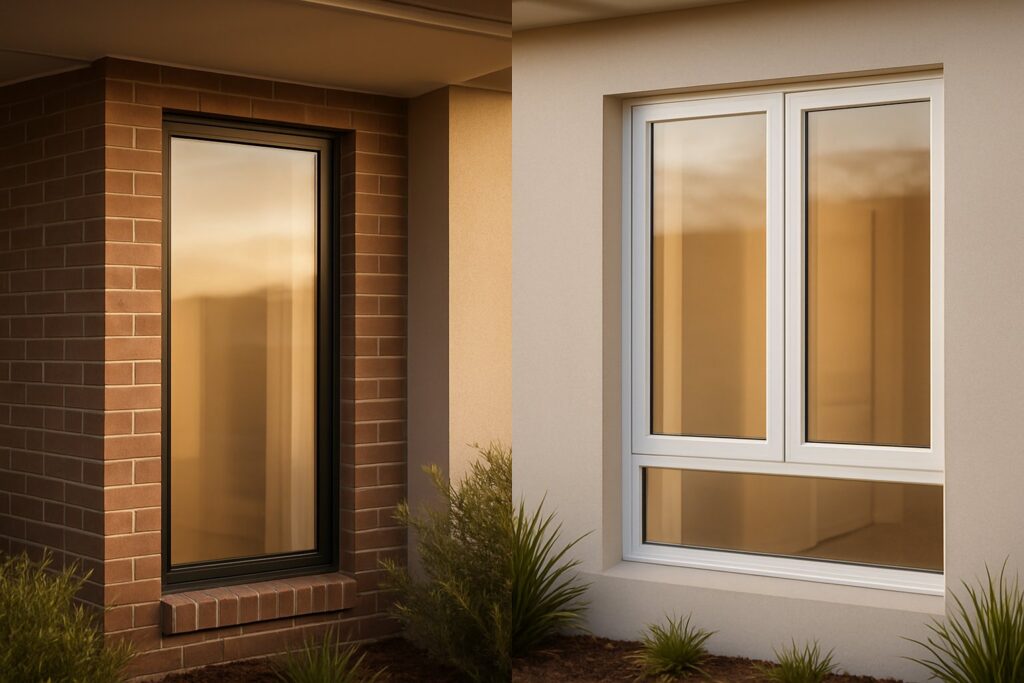
Vinyl is the most affordable option and requires almost no maintenance. But there’s a catch — vinyl frames need more material to achieve structural stability, resulting in wider sightlines that dilute the clean, minimal look contemporary design demands. Darker colours are also problematic, as vinyl can warp under heat exposure. If you’ve seen anderson kitchen windows or similar branded vinyl lines marketed as “contemporary,” compare the frame width side-by-side with aluminium — the difference is immediately visible.
Fiberglass strikes a middle ground. It’s strong, dimensionally stable, and won’t expand or contract much with temperature swings. Sightlines are slimmer than vinyl but still wider than aluminium. It’s a solid performer for anyone wanting a window with design flexibility and good thermal properties without the premium of engineered aluminium.
Wood-clad frames deliver interior warmth that no other material matches — real timber on the inside, a protective exterior shell (usually aluminium or fiberglass) on the outside. The aesthetic is beautiful, but the maintenance cycle of sealing, staining, or repainting is real. For a heritage renovation where interior character matters, wood-clad can work. For a low-maintenance contemporary project, it adds complexity most homeowners don’t want.
Composites are the newest entrant, blending wood fibres with polymers for improved stability and strength. They resist rot and require minimal upkeep, but availability remains limited compared to established materials, and custom contemporary profiles are harder to source.
| Material | Sightline Width | Durability | Maintenance | Climate Suitability | Relative Cost Tier | Contemporary Aesthetic Rating |
|---|---|---|---|---|---|---|
| Aluminium (thermally broken) | Narrowest (20-30mm possible) | Excellent — no rot, warp, or termite risk | Low — occasional wash | All climates with thermal break | Mid-High | ★★★★★ |
| Vinyl | Widest (60-80mm typical) | Good — but brittle in extreme cold, warps in heat | Very Low | Mild to moderate climates | Low | ★★☆☆☆ |
| Fiberglass | Moderate (40-55mm typical) | Very Good — dimensionally stable | Low | All climates | Mid-High | ★★★☆☆ |
| Wood-Clad | Moderate to Wide | Good exterior shell; interior wood needs care | High — regular sealing/painting | Moderate climates preferred | High | ★★★☆☆ |
| Composite | Moderate | Very Good — rot and warp resistant | Low | All climates | Mid | ★★★☆☆ |
The pattern is clear: if the contemporary look is your priority, aluminium with a thermal break delivers the slimmest sightlines, the broadest colour range, and the lowest maintenance profile. The alternatives each have legitimate strengths — especially on budget or in specific climates — but they all compromise on that glass-dominant aesthetic to some degree.
Of course, a slim frame holding a massive glass panel raises an obvious question: how does all that exposed glass perform when the temperature outside is nothing like the temperature you want inside?
Energy Efficiency and Thermal Performance for Expansive Glass
Here’s the uncomfortable truth about contemporary windows: the very thing that makes them beautiful — all that glass — is also their biggest thermal weakness. Glass insulates far worse than a solid wall. A standard insulated wall might resist heat flow ten to fifteen times better than even a high-performance glazed panel. So when you replace a significant chunk of wall with floor-to-ceiling glass, you’re dramatically increasing the surface area through which heat enters or escapes your home.
Does that mean you have to choose between the windows style you want and an energy bill you can live with? Not anymore. Glass technology has evolved to the point where expansive contemporary glazing can perform remarkably well — but only if you understand the two ratings that actually matter.
Understanding U-Factor and SHGC in Large Glass Installations
Two numbers on the NFRC label tell you almost everything you need to know about a window’s energy performance:
U-factor measures the rate of non-solar heat transfer through the window — essentially, how quickly warmth moves from the hot side to the cold side. It ranges from around 0.20 (excellent insulation) to 1.20 (very poor). Lower is always better. Think of it this way: a low U-factor acts like a thick blanket between your interior and the outside air, while a high U-factor is more like a thin sheet. A single-pane window might sit around 1.0, while a quality double-pane unit with Low-E coating can drop to roughly 0.30 or below.
Solar Heat Gain Coefficient (SHGC) measures how much solar radiation passes through the glass and becomes heat inside your home. It ranges from 0 to 1 — an SHGC of 0.25 means only 25% of the sun’s heat energy gets through, while 0.60 lets in more than half. Unlike U-factor, the “ideal” SHGC depends on context. In hot climates, you want it low to reduce cooling loads. In cold climates, a higher SHGC on south-facing glass can actually help with passive solar heating.
Why do these numbers matter more for contemporary designs than for standard windows? Scale. When you’re installing modern home windows that stretch from floor to ceiling or wrap around a corner, you’ve got significantly more glass area exposed to temperature differentials. A mediocre U-factor on a small bathroom window is a minor inefficiency. That same U-factor across a 3-metre-tall living room wall becomes a serious energy drain — and a comfort problem, with cold drafts in winter and radiant heat in summer.
Programs like ENERGY STAR set climate-zone-based performance thresholds to help homeowners navigate this. The requirements vary by region — a window that qualifies in a mild coastal zone may not meet the standard in an extreme-heat or extreme-cold area. When you’re reviewing window images in supplier catalogues, always check whether the listed ratings meet the thresholds for your specific climate zone, not just the national minimum.
Glass Technologies That Preserve Clean Aesthetics
The good news? You don’t have to sacrifice that clean, transparent look to get strong thermal performance. Modern glass technology has closed the gap between aesthetics and efficiency in ways that weren’t possible even a decade ago. Here are the key technologies worth understanding:
- Low-E (low-emissivity) coatings — Microscopically thin metallic layers applied to the glass surface that reflect infrared heat while allowing visible light through. They’re virtually invisible to the naked eye, so your glass stays clear and bright. High-solar-gain Low-E variants maximize winter warmth in cold climates, while low-solar-gain versions block summer heat in warmer regions.
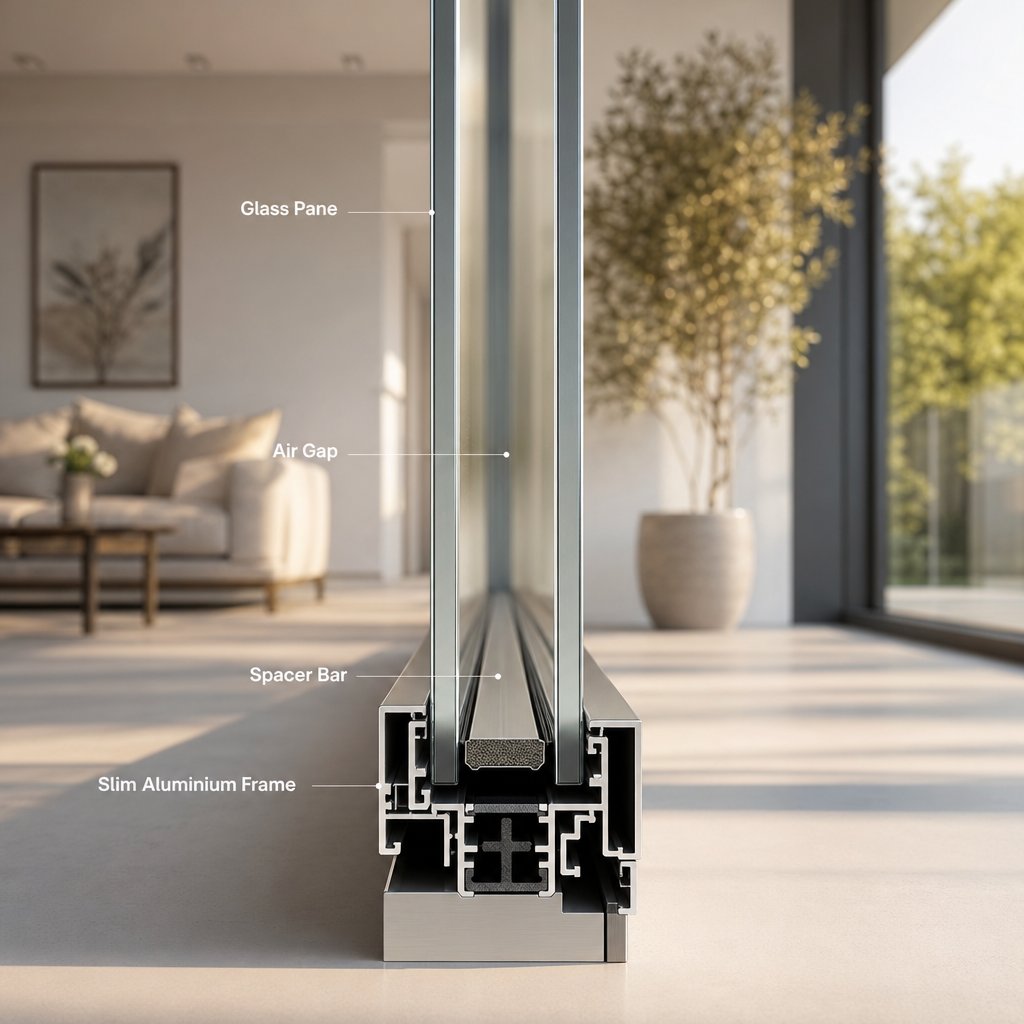
- Double glazing — Two panes of glass separated by an insulating air or gas gap. This is the baseline for any contemporary installation and delivers a significant U-factor improvement over single-pane glass. Most contemporary projects start here as a minimum.
- Triple glazing — Three glass layers with two insulating gaps, achieving very low U-factors suited to extreme climates or highly exposed facades. The trade-off is added weight and cost, plus slightly reduced visible light transmittance — though modern triple-glazed units keep this reduction minimal.
- Argon and krypton gas fills — Replacing the air between panes with inert gases that conduct heat more slowly. Argon is the standard upgrade and cost-effective for double-glazed units. Krypton is denser and more effective in the narrower gaps of triple-glazed assemblies, though it comes at a higher price point.
- Spectrally selective tinted glass — Advanced tints that filter specific wavelengths of solar energy without the heavy grey or bronze appearance of older tinted glass. These options reduce glare and solar heat gain while maintaining a neutral, contemporary look that doesn’t distort views or colour perception.
The practical takeaway? A well-specified contemporary window — say, double-glazed with a low-solar-gain Low-E coating and argon fill in a thermally broken aluminium frame — can deliver strong thermal performance without any visible compromise to the clean aesthetic. You won’t see the coating. You won’t notice the gas. The glass looks exactly as crisp and transparent as you’d expect from a renewal by andersen visualizer render or any architect’s concept image.
Triple glazing pushes performance even further for projects in harsh climates or with extreme exposure, though the added weight means your frame system and structural supports need to be engineered accordingly.
Getting the glass specification right solves the thermal equation — but a window doesn’t exist in isolation. It sits in a room with a specific purpose, orientation, and set of daily demands. That’s where the real decision-making gets interesting.
Room-by-Room Guide to Contemporary Window Selection
A window that looks stunning in a living room might be completely wrong for a bathroom. Each space in your home has its own mix of light needs, ventilation demands, privacy thresholds, and safety codes — and the best house window design accounts for all of them before a single frame gets ordered.
Living Rooms and Open-Plan Spaces
Living areas are where contemporary glazing really gets to show off. Large fixed or picture windows serve as the visual anchor, framing views with minimal interruption, while operable casement or sliding panels flanking them handle the airflow. This pairing gives you the best of both worlds — a dramatic glass wall that actually breathes.
Corner window configurations take this further, eliminating the structural post where two walls meet and creating a seamless panoramic connection to the outdoors. It’s the kind of detail that defines modern window styles in current residential architecture. For open-plan layouts where light struggles to reach interior zones, glass partitions between rooms — sometimes called interior windows — extend daylight deeper into the floor plan without closing off the space. Frosted or clear, framed or frameless, they keep sightlines open while subtly defining zones.
Bedrooms, Bathrooms, and Utility Spaces
Privacy changes everything. In bedrooms, you’re balancing view and natural light against the need for ventilation and — critically — emergency egress. Building codes typically require at least one operable window sized for safe exit, which rules out fixed-only configurations. Casement windows are a strong fit here because their full-sash opening easily meets egress clearance requirements.
Bathrooms and laundries introduce moisture as the primary concern. High-placed awning windows deliver rain-safe airflow without exposing the interior to neighbours, while frosted or textured glass maintains the clean contemporary aesthetic. Louvre windows offer another option — their angled blades provide continuous ventilation even when visually closed, which suits utility spaces where airflow matters more than views. The goal in these rooms is creating a warm, comfortable atmosphere — that hygge-supply of natural light and fresh air — without compromising on practical needs.
Kitchens and Transitional Zones
Kitchens demand windows that work as hard as the room itself. Splashback windows positioned above countertops bring task lighting right where you need it for food prep, while connecting you visually to a garden or courtyard. Servery-style windows — wide openings that fold, slide, or hinge upward — blur the line between kitchen and outdoor entertaining area, a hallmark of thoughtful house window design in current projects.
For the window zone above the sink, moisture resistance and easy cleaning matter just as much as aesthetics. Awning or casement types with aluminium frames handle steam and splashes without degrading, and their flush profiles keep the look minimal even when surrounded by tile or stone.
Here’s a quick reference for matching window types to each space:
- Living rooms and open-plan areas — fixed picture windows paired with operable casement or sliding panels; corner glazing for panoramic effect; interior glass partitions for light distribution
- Bedrooms — casement windows for egress compliance and full ventilation; tilt-and-turn for upper floors where safe partial opening is preferred
- Bathrooms and laundries — high-placed awning windows with frosted glass; louvre windows for continuous airflow
- Kitchens — splashback casement or awning windows for task lighting; servery-style openings for indoor-outdoor flow
- Hallways and stairwells — fixed picture windows or narrow vertical slots for light without ventilation needs
Matching the right type to each room solves the functional puzzle — but what happens when the home itself isn’t contemporary at all? Plenty of homeowners love these clean, expansive glazing styles yet live in a Federation cottage, a mid-century ranch, or a transitional brick home. The question isn’t whether contemporary windows can work in those settings. It’s how to make the transition feel intentional rather than jarring.
Installing Contemporary Windows in Non-Contemporary Homes
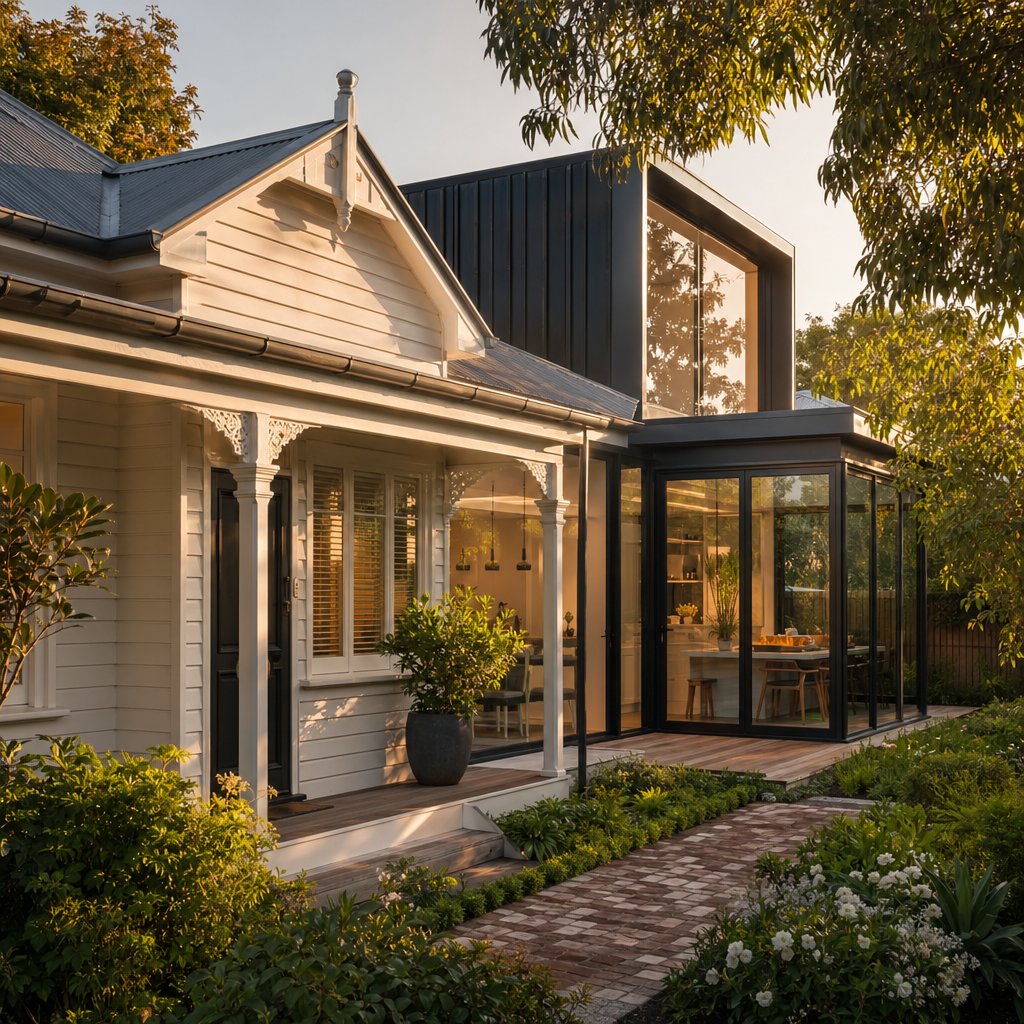
You love the look of slim-framed, expansive glass — but your home is a weatherboard cottage, a brick colonial, or a 1970s split-level. Does that rule out a contemporary window design? Not at all. In fact, some of the most striking renovations happen when clean, current glazing meets an older architectural shell. The trick is knowing where and how to introduce it.
Blending Contemporary Windows into Traditional and Transitional Homes
The biggest mistake homeowners make is trying to replace every window at once with a completely different style of windows. That’s how a charming Edwardian terrace ends up looking like it’s wearing someone else’s clothes. A smarter approach? Use contemporary exterior windows selectively — in rear extensions, new additions, or openings that aren’t visible from the street — while keeping the front facade consistent with the home’s original character.
A few design principles make this blending work every time. First, match your frame colour to existing trim. If the home has dark gutters and fascia, a charcoal or matte black aluminium frame ties the new glazing into the existing palette without competing. Second, choose profiles that bridge old and new — a slim contemporary casement in a traditionally proportioned opening reads as an upgrade, not a contradiction. Third, maintain consistent sill depths and head heights across old and new windows so the facade feels unified rather than patched together.
Modern farmhouse design is a perfect case study. This hugely popular style deliberately pairs traditional cladding — board-and-batten, shiplap, painted brick — with bold black-framed windows that read as unmistakably contemporary. The contrast is the whole point. Dark frames act like picture frames against light siding, adding definition and visual weight that elevates the entire exterior. It works because the proportions are respected and the details — trim, colour, grid pattern (or deliberate lack of one) — stay consistent.
Mid-Century Homes and the Natural Fit
If any architectural style was born to receive contemporary glazing, it’s mid-century. The DNA is shared: clean horizontal lines, generous glass, open floor plans, and a deliberate connection between interior spaces and the surrounding landscape. When you’re replacing ageing single-pane sliders or deteriorating timber frames in a 1950s or 1960s home, modern house windows with slim aluminium profiles and high-performance glass feel like a natural evolution rather than a departure.
The key is honouring original proportions. Mid-century homes were designed with specific window-to-wall ratios and horizontal emphasis. Swapping a wide, low window for a tall, narrow one — even if the new unit is technically superior — disrupts the visual rhythm the architect intended. Measure the existing openings carefully, match the horizontal orientation, and upgrade the glass and frame technology without altering the geometry. The result is a home that looks exactly as it should, just sharper, quieter, and far more energy efficient.
For heritage or historic-district homes, the same proportional respect applies — though local regulations may dictate what’s permissible on street-facing elevations. Always check with your council or preservation board before committing to changes on a protected facade.
Contemporary windows work in any home when the transition is intentional and the proportions respect the existing architecture — it’s never about erasing what’s there, but about letting old and new speak the same visual language.
Getting the aesthetic right is one thing. But cutting larger openings into existing walls, installing heavier glass panels, or wrapping glazing around a corner introduces structural and regulatory questions that can’t be solved with good taste alone.
Building Codes and Structural Realities of Contemporary Glazing
A floor-to-ceiling glass wall or a frameless corner window looks effortless in a finished home. Behind the scenes, though, those installations demand serious structural engineering and strict code compliance — two things that standard window replacements rarely require. Skip this step and you risk cracked masonry, failed inspections, or worse.
Structural Requirements for Large Openings and Corner Windows
Every wall in your home is doing something — holding up the roof, bracing against wind, or transferring loads down to the foundation. When you cut a wider opening for contemporary home windows or remove a corner post to create wraparound glazing, you’re interrupting those load paths. The structure doesn’t just tolerate the change; it needs to be re-engineered to accommodate it.
That typically means installing steel lintels — structural beams placed above the opening to carry the loads that the removed wall section used to support. For larger spans or heavier loads, engineered steel beams with plates or shelf angles may be required, especially in solid masonry walls or openings exceeding 2.4 metres. Corner window installations often need concealed steel posts or cantilevered structural elements to maintain building integrity where two walls no longer meet.
This isn’t DIY territory. A certified structural engineer should assess load conditions, specify the correct lintel type and size, and sign off on the design before any wall gets touched. As structural steel specialists note, successful lintel design must account for load type, building structure, deflection limits, and bearing stresses — factors that only a qualified engineer can properly evaluate for your specific project.
Building Codes and Compliance Essentials
Beyond structure, building codes govern how your front house windows and every other glazed opening must perform. In Australia, two standards carry the most weight. AS 2047 covers windows and external glazed doors, setting mandatory requirements for structural strength, air infiltration, water penetration, and wind load ratings — particularly critical for exposed or coastal facades. AS 1288 addresses glass selection and installation, specifying where safety glass (toughened or laminated) is required — including areas near doors, bathrooms, stairs, and any glazing with its lower edge less than a set height from the floor.
International equivalents follow similar logic. The IBC and regional codes in North America set climate-zone-based performance thresholds for U-factor and SHGC, mandate safety glazing in hazardous locations, and specify minimum egress dimensions for bedroom windows. A modern window design that looks perfect on paper can still fail inspection if the glass type, opening size, or wind rating doesn’t match your specific zone and building classification.
Before you finalise any contemporary glazing project, verify these compliance checkpoints with your builder or window supplier:
- Structural adequacy — has an engineer specified lintels, headers, or posts for any enlarged or new openings?
- Wind load rating — are the windows rated for your site’s wind classification under AS 2047 or local equivalent?
- Safety glass — is toughened or laminated glass specified for all low-level, overhead, and human-impact-zone glazing per AS 1288?
- Energy performance — does the glazing meet minimum U-factor and SHGC thresholds for your climate zone under the NCC or ENERGY STAR?
- Egress compliance — do bedroom windows meet minimum opening dimensions for emergency exit?
- Water and air infiltration — have the window systems been tested and rated for weather resistance appropriate to your exposure level?
- Bushfire Attack Level (BAL) — if applicable, do the glazing type, frame material, and sealing systems meet your site’s BAL rating requirements?
- Installation certification — will the installer provide documentation confirming compliance with all relevant standards?
None of these checkpoints should scare you off — they exist to make sure your home is safe, comfortable, and legally sound. But they do add layers of planning and cost that a simple like-for-like window swap doesn’t involve. Which raises the practical question every homeowner eventually asks: what does all of this actually cost, and what kind of ongoing care should you expect?
Maintenance, Longevity, and Realistic Cost of Contemporary Windows
Structural engineering and code compliance protect your investment upfront. But what about year five, year ten, or year twenty? Contemporary windows demand a different maintenance rhythm than standard-sized units — and they carry a different price tag, too. Knowing both before you commit prevents the kind of budget shock that derails projects mid-stream.
Maintenance Demands by Frame Material and Configuration
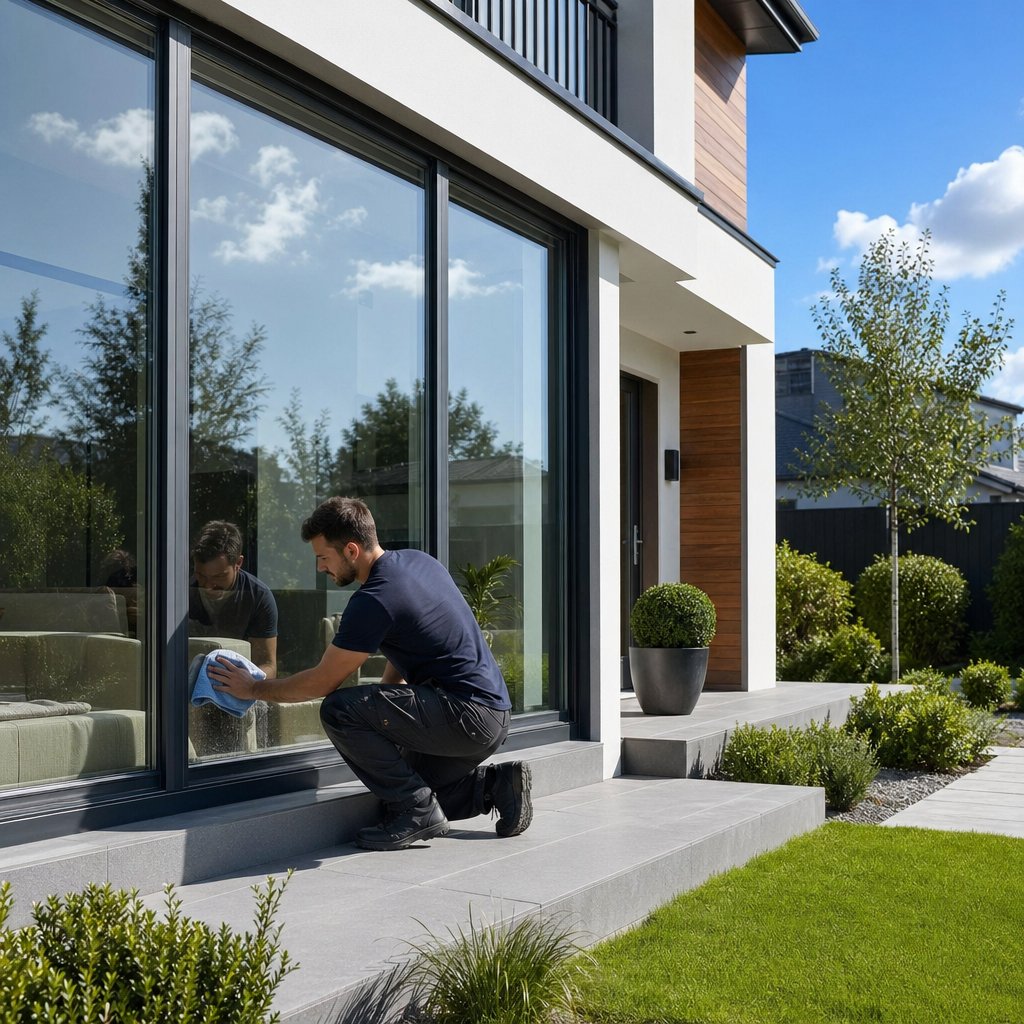
Large glass panels are the defining feature of every contemporary window style — and they’re also the most obvious maintenance commitment. Fixed picture windows at height can’t be reached with a sponge and a step ladder. Floor-to-ceiling installations on upper storeys often require professional window cleaning access, whether that’s a water-fed pole system or scaffolding for periodic deep cleans. If your house modern window layout includes expansive fixed glazing on a second storey, factor that recurring cost into your ownership plan from day one.
Track-based sliding systems need attention too. Debris, dust, and grit accumulate in the bottom rail over time, and if left unchecked, they’ll compromise the smooth operation of the rollers. A quick vacuum and wipe of the tracks every few months — plus periodic lubrication with an oil-free product — keeps sliders running cleanly without damaging the weatherstripping.
Frame maintenance is where material choice really shows its hand. Aluminium powder-coat finishes need nothing more than an occasional wash with mild soapy water to stay sharp. Aluminium frames also boast an average lifespan of around 45 years, far outlasting most alternatives. Vinyl is similarly low-effort but can yellow or become brittle over decades, especially in UV-heavy climates. Wood-clad frames are the high-maintenance outlier — expect to reseal, restain, or repaint the timber interior on a one-to-five-year cycle depending on the species and exposure. Skip that cycle and you’re looking at swelling, cracking, or rot that shortens the window’s life dramatically.
Budget Planning and Cost Factors
Contemporary windows generally carry a premium over standard replacements. The reasons are straightforward: larger glass areas, slimmer engineered frames that require more precise manufacturing, higher-performance glazing specifications, and often custom sizing to suit non-standard openings. A like-for-like swap of a small casement is one thing. A floor-to-ceiling corner installation with thermally broken aluminium and triple glazing is a fundamentally different scope of work.
Rather than chasing a single dollar figure — which varies wildly by region, supplier, and project complexity — it’s more useful to understand which variables move the needle most. Here are the key cost factors ranked from most to least impactful on your total budget:
- Installation complexity — Structural modifications like steel lintels, enlarged openings, corner posts, or multi-storey access drive costs faster than any other factor. A straightforward replacement into an existing opening costs a fraction of a new opening cut into a load-bearing wall.
- Glass specification — The jump from standard double glazing to triple glazing with Low-E coatings and gas fills adds meaningful cost per square metre. Larger panels amplify this because you’re paying for more glass area at the higher specification rate.
- Frame material — Aluminium with thermal breaks sits in the mid-to-high tier. Vinyl is the most budget-friendly. Wood-clad and premium fiberglass push higher, and timber frames carry the steepest upfront cost — though their 50-plus-year lifespan can offset that over time.
- Custom sizing vs standard dimensions — Off-the-shelf sizes are cheaper to manufacture and stock. Custom dimensions — especially oversized panels or unusual shapes — require bespoke production runs that add lead time and cost.
- Operable vs fixed — Fixed windows are simpler and cheaper than operable ones. Every hinge, handle, locking mechanism, and seal adds to the unit price. A wall of fixed glass with one or two operable panels is more cost-effective than making every section openable.
- Finish and hardware — Premium powder-coat colours, specialty finishes, and concealed hardware upgrades are relatively minor line items individually, but they add up across a whole-house project.
The smartest approach? Prioritise the top three factors first. Nail down your structural scope, lock in the glass performance level your climate demands, and choose your frame material based on the aesthetic and maintenance trade-offs covered earlier. Everything below that is refinement — important, but unlikely to blow your budget the way a surprise lintel installation will.
With a clear picture of what these windows cost to buy, install, and maintain, the final step is pulling every decision point together into a plan you can actually act on.
Putting It All Together and Taking the Next Step
You’ve covered a lot of ground — from understanding what makes a window genuinely contemporary, to matching types by room, choosing frame materials, evaluating glass performance, navigating structural realities, and budgeting honestly. That’s a solid foundation. The challenge now is turning all of that knowledge into a sequence of decisions that actually moves your project forward.
Your Contemporary Window Decision Checklist
Whether you’re renovating a mid-century ranch, adding a rear extension to a heritage cottage, or building from scratch, this step-by-step checklist keeps your windows design process on track:
- Define your architectural context — Is your home contemporary, traditional, transitional, or mid-century? This determines whether you’re going all-in on contemporary window frames across the entire facade or introducing them selectively in additions and rear elevations.
- Map window types room by room — Fixed panels for view walls, casements for ventilation-heavy spaces, awnings for wet areas, sliders or tilt-and-turn where swing clearance is limited. Let function lead.
- Select your frame material — Weigh sightline width, durability, maintenance, and climate suitability. Thermally broken aluminium delivers the slimmest profiles and strongest contemporary aesthetic; vinyl and fiberglass offer budget-friendly alternatives with trade-offs.
- Specify glass performance — Choose your glazing tier (double or triple), Low-E coating type, and gas fill based on your climate zone. Larger glass areas demand higher-performing specifications to keep energy costs in check.
- Verify structural and code compliance — Engage a structural engineer for any enlarged openings, corner glazing, or load-bearing wall modifications. Confirm safety glass, wind load, egress, and energy ratings meet AS 2047, AS 1288, or your local equivalent.
- Request quotes from specialist suppliers — Approach suppliers who offer multiple contemporary configurations within a single product range, so you can source fixed, operable, and sliding units from one system with consistent profiles and finishes.
That last step matters more than most homeowners realise. Mixing suppliers often means mismatched sightlines, inconsistent colour tones, and complicated warranty claims. A single-source approach keeps everything aligned — visually and logistically.
Finding the Right Supplier for Your Project
The right supplier isn’t just a product catalogue. Look for companies that offer thermally broken aluminium systems, carry certifications relevant to your region’s building standards, and provide genuine window design ideas tailored to your project rather than a one-size-fits-all pitch.
For Australian homeowners, renovators, builders, and developers, MEICHEN’s aluminium windows collection is a strong starting point — their range covers multiple contemporary aluminium configurations designed to meet Australian standards, from fixed and casement to sliding systems, all within a single product hub. That kind of breadth means you can explore options for every room without juggling multiple suppliers or worrying about profile consistency.
Beyond any single supplier, prioritise partners who can walk you through thermal performance data, provide wind load and compliance documentation, and show completed projects similar to yours. Whether you’re replacing mid century windows in a 1960s home or specifying glazing for a new build, the supplier who asks the right questions about your site, climate, and design intent — before quoting a price — is the one worth working with.
Frequently Asked Questions About Contemporary Windows
1. What is the difference between modern and contemporary windows?
Modern windows refer to a specific mid-20th-century architectural style defined by rigid minimalism, clean geometry, and post-and-beam construction. Contemporary windows, on the other hand, reflect current design thinking and keep evolving. They absorb influences from multiple eras and prioritize slim sightlines, expansive glass, minimal ornamentation, and seamless indoor-outdoor flow. Choosing the wrong term can lead to mismatched profiles and proportions for your project.
2. Can you install contemporary windows in a traditional or older home?
Yes, contemporary windows work beautifully in traditional, mid-century, and transitional homes when introduced intentionally. The key is selective placement — using them in rear extensions or new additions rather than replacing every opening — and matching frame colours to existing trim. Maintaining consistent sill depths, head heights, and proportions ensures the new glazing complements rather than clashes with the original architecture.
3. What is the best frame material for contemporary windows?
Thermally broken aluminium is widely regarded as the strongest performer for contemporary aesthetics. Its structural strength allows ultra-slim sightlines as narrow as 20-30mm, maximizing the glass-to-frame ratio that defines the contemporary look. Powder-coat finishes offer extensive colour options, and the material resists rot, warping, and termite damage. Suppliers like MEICHEN offer thermally broken aluminium systems designed to meet Australian standards across multiple window configurations.
4. Are floor-to-ceiling contemporary windows energy efficient?
They can be, but only with the right glass specification. Large glass areas increase thermal exposure, making U-factor and Solar Heat Gain Coefficient ratings more consequential than in standard-sized windows. Technologies like Low-E coatings, double or triple glazing, and argon or krypton gas fills allow expansive contemporary glazing to achieve strong thermal performance without visible compromise to the clean, transparent aesthetic.
5. How much do contemporary windows cost compared to standard windows?
Contemporary windows generally carry a premium over standard replacements due to larger glass areas, slimmer engineered frames, higher-performance glazing, and often custom sizing. The biggest cost drivers are installation complexity (structural modifications like steel lintels), glass specification (double vs triple glazing with coatings), and frame material choice. Prioritizing these three factors first helps homeowners manage budgets effectively before refining finish and hardware details.
More Window & Door Guides