What Powder Coating Is and Why It Changes How You Clean
Most homeowners never think twice about the finish on their window frames — until they grab the wrong cloth or spray the wrong cleaner and watch a dull streak appear that will not buff out. Cleaning powder coated aluminium window frames is not complicated, but it does follow a specific set of rules. Those rules exist because of how the finish is made. Understanding the process behind that smooth, coloured surface is the fastest way to avoid costly mistakes and keep your frames looking sharp for decades.
How Powder Coating Bonds to Aluminium
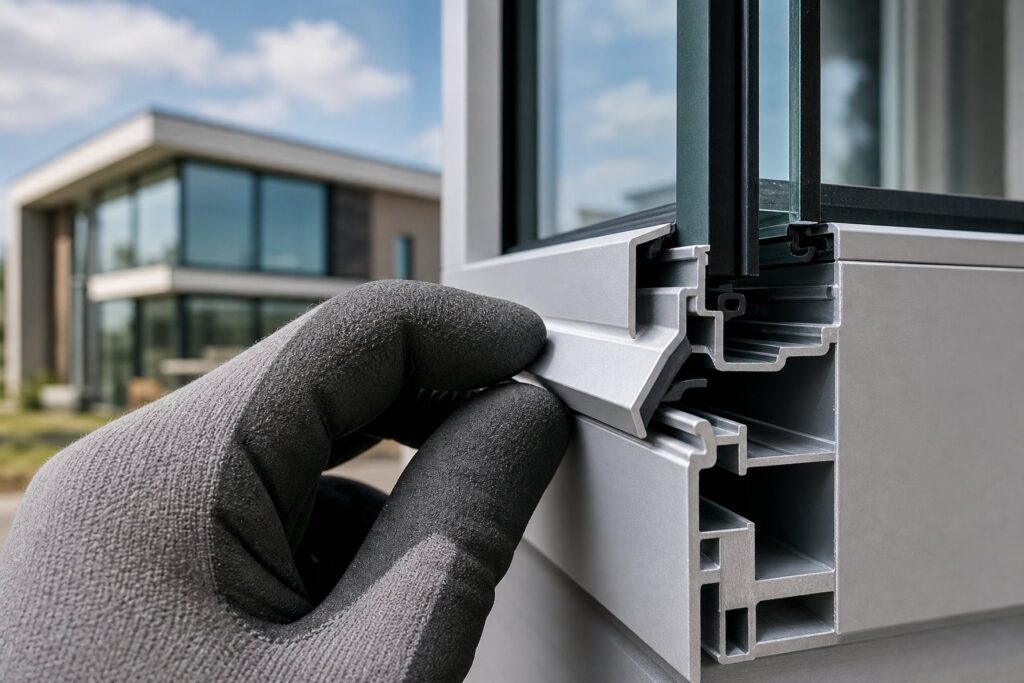
Powder coating is a dry finishing method — no liquid paint is involved. During manufacturing, a fine polymer powder is given an electrostatic charge and sprayed onto the aluminium surface. Because the metal is grounded and the powder particles carry a charge, they cling evenly across the frame like iron filings to a magnet. The coated frame then enters a curing oven, where temperatures typically reach 163 to 204 degrees Celsius. That heat melts the powder resins, fusing them into a continuous, solid film that bonds tightly to the aluminium substrate.
The result is a distinct protective layer sitting on top of the metal — not mixed into it. This is a critical distinction. Unlike a stain that penetrates timber, the powder coat is a surface shell. It can be chipped, scratched, or chemically attacked if you treat it carelessly. Every cleaning decision you make is really about preserving the integrity of that shell.
Why Powder Coated Frames Need Different Care Than Anodised or Raw Aluminium
Here is where many generic guides on cleaning aluminium get it wrong: they lump every finish together. A technique that is perfectly safe for one type of aluminium surface can ruin another. Powder coated, anodised, and raw aluminium each behave differently when exposed to chemicals, abrasion, and moisture.
- Surface structure: Anodising is an electrochemical process that grows a hard oxide layer from within the aluminium itself — the finish becomes part of the metal. Powder coating, by contrast, is an external layer applied on top. Raw aluminium has no protective finish at all, just a thin natural oxide film that forms on contact with air.
- Chemical sensitivity: Anodised surfaces tolerate a broader range of cleaning agents because the oxide layer is chemically stable. Powder coated finishes are vulnerable to harsh solvents, alkaline cleaners, and acidic products that can soften, discolour, or strip the polymer film. Raw aluminium is reactive to both acids and alkalis, but cleaning damage on raw metal can often be polished away — damage to a powder coat cannot.
- Appearance over time: Anodised white aluminum retains a subtle metallic sheen because the finish is translucent. Powder coated frames offer richer, more opaque colour but are susceptible to UV-driven chalking if not properly maintained. Raw aluminium oxidises and dulls relatively quickly without intervention.
- Scratch tolerance: Hard anodising can rival the hardness of some steels. A powder coat is significantly softer, meaning abrasive pads or even gritty cloths will leave micro-scratches that dull the finish permanently.
Recognising which finish your frames actually have is the essential first step before cleaning aluminum window frames of any kind. If you are unsure, check the original window specification documents or contact the installer — the wrong assumption can lead to irreversible surface damage.
What Happens When You Use the Wrong Cleaning Method
The consequences of using inappropriate products or tools are not always dramatic at first glance, but they compound rapidly. Abrasive scouring pads create thousands of fine scratches across the surface. Each scratch breaks the integrity of the powder coat, and over time these micro-scratches trap dirt, accelerate chalking, and make the frame look prematurely aged.
Alkaline cleaners — including many common household degreasers — attack the polymer bond, causing the finish to soften and discolour. Bleach oxidises the coating, leaving blotchy white patches on coloured frames. Ammonia-based glass cleaners strip surface gloss, turning a satin or gloss finish flat and patchy. Strong solvents like acetone can dissolve the coating outright.
Chalking — a powdery, chalk-like residue that rubs off when you touch the frame — is one of the most visible signs that the coating’s resin has begun to break down. While some chalking occurs naturally over many years of UV exposure, aggressive cleaning products and abrasive tools accelerate this degradation significantly. Once chalking is advanced, no amount of gentle cleaning will reverse it; the frame may need professional recoating.
Never use abrasive pads, steel wool, or alkaline and acidic cleaners on powder coated aluminium. These cause permanent damage — micro-scratching, discolouration, and coating breakdown — that cannot be reversed with routine cleaning.
Knowing what goes wrong, and why, makes every practical step in the cleaning process easier to remember and harder to skip. The real question then becomes: what tools and solutions are actually safe to use?
Essential Tools and Cleaning Solutions You Actually Need
Gathering the right gear before you start makes the difference between a five-minute job that preserves the finish and a frustrating session that damages it. Most advice on the topic simply says “use a soft cloth and mild soapy water” — which is technically correct but leaves you guessing about specifics. What counts as soft enough? How mild is mild? The details matter more than you might expect, because every item you choose either protects or threatens that powder coat layer.
Recommended Cleaning Tools and Why Each One Matters
Each tool in your window frame cleaner kit should serve a clear purpose: lift dirt without scratching, rinse without forcing water into seals, and dry without leaving residue. The table below breaks down exactly what to use and why it is safe for powder coated surfaces.
| Tool / Material | Recommended Type | Why It Is Safe for Powder Coating |
|---|---|---|
| Cleaning cloth | Microfibre cloth (high-quality, 300+ GSM) | Microfibre is non-abrasive and lint-free. Its split fibres trap dirt particles within the weave rather than dragging them across the surface — unlike regular cotton rags, which can hold grit and act like fine sandpaper on a soft powder coat finish. |
| Agitation brush | Soft-bristle brush (nylon or natural bristle) | Provides enough friction to dislodge stubborn dust and dried-on grime from corners and profiles without scratching. Stiff brushes or wire bristles will gouge the coating immediately. |
| Rinsing tool | Garden hose with a standard fan nozzle | Delivers a gentle, even flow of water that washes away loosened dirt and soap. Low pressure avoids forcing water behind seals or lifting coating edges — a common risk with high-pressure equipment. |
| Buckets | Two separate buckets (wash and rinse) | The two-bucket method keeps your cleaning solution clean. One bucket holds the soapy mix; the other holds fresh water for rinsing your cloth. This prevents reintroducing grit and contaminated water onto the frame surface. |
| Drying tool | Chamois leather or a second clean, dry microfibre cloth | Absorbs water quickly and evenly, preventing mineral-laden water from sitting on the surface and leaving hard-water spots — particularly important in areas with bore water or high mineral content in the mains supply. |
A quick note on sponges: a plain, non-abrasive cellulose sponge is acceptable in a pinch, but microfibre cloths outperform sponges in every practical way. Sponges can trap sand and small particles in their pores, and once that happens, they become an abrasive tool without you realising it.
Choosing the Right Cleaning Solution for Powder Coated Surfaces
This is where most generic guides fall short. Telling someone to use “mild soapy water” is a bit like telling a first-time baker to use “some flour” — technically true, but not especially helpful. Powder coated aluminium needs a cleaner for aluminum window frames that sits within a specific pH range, and the concentration matters.
Primary recipe (everyday cleaning): Add approximately one teaspoon (5 ml) of pH-neutral dish soap to one litre of warm water. Warm — not hot. Water temperature around 30 to 40 degrees Celsius helps dissolve surface grime without stressing the coating. This ratio produces enough lubrication to lift dirt gently while rinsing cleanly without leaving a soapy film.
Secondary option (tougher jobs): For frames that have not been cleaned in a while, or those exposed to coastal salt spray or urban pollution, a dedicated pH-neutral aluminium-safe cleaner is worth the investment. These commercial products are formulated specifically for coated metal surfaces and often contain surfactants that break down oily residue more effectively than household dish soap alone. Always follow the dilution ratio on the label.
So what does “pH-neutral” actually mean in practice? A solution with a pH between 6 and 8 is considered safe for powder coated finishes. Standard dish soap typically falls in the 7 to 8 range, making it ideal. Solutions below pH 6 are acidic, and those above pH 8 are alkaline — both ends of the spectrum attack the polymer resin that gives the powder coat its strength and colour. Even a mildly alkaline cleaner used repeatedly will gradually soften the finish, dulling gloss and weakening the bond between the coating and the aluminium underneath.
What to Leave in the Cupboard
Knowing what not to reach for is just as important as knowing the right aluminium window frame cleaner to use. Every item on this list carries a specific risk to powder coated surfaces:
- Abrasive scouring pads (Scotch-Brite, steel wool, magic erasers): Create micro-scratches that dull the finish permanently and accelerate dirt accumulation in the damaged surface.
- Alkaline cleaners (pH above 8), including many common kitchen degreasers: Soften and break down the polymer resin layer, leading to discolouration and loss of gloss over repeated use.
- Acidic cleaners (pH below 6), including undiluted vinegar and citrus-based concentrates: Etch the coating surface and can cause irreversible spotting, especially if left to dwell.
- Bleach (sodium hypochlorite): Oxidises the powder coat, creating blotchy white patches on coloured frames that cannot be buffed out.
- Ammonia-based products (many glass and bathroom cleaners): Strip surface gloss, turning satin and gloss finishes flat and uneven — often in a single application.
- Acetone, turpentine, and paint solvents: Can partially dissolve or soften the powder coat film, causing it to lift, bubble, or become sticky.
- Pressure washers on high settings: Excessive water pressure can damage the finish and even penetrate beneath the coating at edges and joints, leading to peeling and delamination over time.
If you are ever unsure whether a product is safe, a practical test from industry guidelines offers a useful rule of thumb: if the cleaner is too harsh to use on your skin without gloves, it is too harsh for a powder coated surface. That single check will steer you away from most damaging products before they ever touch the frame.
With the right tools laid out and the correct solution mixed, the actual cleaning process becomes straightforward — and surprisingly quick when you follow a logical sequence from dry brushing through to the final rinse.

How to Clean Aluminium Window Frames Step by Step
A clean powder coated frame is rarely the result of hard scrubbing — it is the result of doing things in the right order. Rushing straight to the wet wash is one of the most common shortcuts homeowners take, and it is also the one most likely to leave behind faint scratches they will not notice until the afternoon sun hits the frame at just the right angle. The method below takes around ten to fifteen minutes per window opening and protects the finish at every stage.
Pre-Cleaning Preparation
Before any water or cleaning solution touches the frame, grab a soft-bristle brush and remove loose material by hand. Dust, cobwebs, dried insect residue, pollen — all of it needs to go first. Work from the top of the frame downward so debris falls away from areas you have already brushed rather than settling back onto them.
This dry-brushing step is not optional. Every speck of grit sitting on the surface becomes a tiny abrasive agent the moment you add water and start wiping. Drag a wet microfibre cloth over a dusty frame and those particles act like fine sandpaper beneath the fabric, creating micro-scratches in the powder coat finish. One session might not cause visible damage. Repeat it a dozen times over a few years and the finish dulls noticeably — especially on darker-coloured frames where light catches every imperfection.
Pay extra attention to the top rail, where dust collects heavily, and to the corners of the bottom rail, where leaf litter, soil, and insect matter tend to accumulate. If the frame has not been cleaned in several months, a handheld vacuum with a brush attachment can speed this step up significantly, particularly for window tracks and deep sill grooves.
The Wash and Rinse Method Step by Step
With loose debris cleared, you are ready for the wet wash. Prepare your two buckets — one filled with the pH-neutral soapy solution (one teaspoon of dish soap per litre of warm water), the other with plain clean water for rinsing your cloth. Here is how to clean aluminium window frames without risking the coating:
- Rinse the frame with clean water. Use a garden hose on a low-pressure fan setting and sweep water over the entire frame. This second rinse dislodges any remaining fine particles that the dry brush missed. Think of it as a safety net — every loose grain washed away now is one less scratch later.
- Dip a microfibre cloth into the soapy solution. Wring it just enough so it is damp but not dripping. You want the cloth to carry enough solution to lubricate the surface as you wipe.
- Wipe the frame using straight, even strokes. Move in one direction — top to bottom or side to side — rather than circular motions. Circular wiping concentrates pressure on a single spot and creates swirl marks that show up under direct light. Straight passes distribute force evenly and leave a cleaner result.
- Work in manageable sections. Clean one side of the frame at a time rather than soaping the entire window opening and then going back to rinse. In warm weather, soapy water can dry on the surface within minutes, leaving behind concentrated residue and streaks that bond stubbornly to the coating.
- Rinse each section thoroughly with clean water before moving to the next. Direct the hose over the freshly washed section until all soap is gone. Then rinse your microfibre cloth in the plain-water bucket before re-dipping it into the soapy bucket. This is the two-bucket method in action — it keeps your wash solution free of grit so you are always applying clean liquid to the frame.
- Dry with a clean chamois or fresh microfibre cloth. Wipe each rinsed section promptly, using light pressure and straight strokes. Allowing water to air-dry — especially in areas with hard water — leaves mineral spots that can be difficult to remove later.
Timing matters almost as much as technique. Avoid cleaning in direct sunlight or during the hottest part of the day. When the frame surface is warm, the soapy solution evaporates far too quickly, baking chemical residue into the finish before you can rinse it away. Early morning, late afternoon, or an overcast stretch are ideal. A simple test: if the frame feels uncomfortably hot against the back of your hand, wait.
Final Inspection and Touch-Up
Once the full wash and dry is complete, take a moment to inspect the frame from several angles. Step back and look across the surface in natural light — streaks and missed spots that are invisible head-on often reveal themselves when viewed at a shallow angle. Check both the interior and exterior faces if accessible.
Stubborn marks that survived the first pass can usually be lifted with a second gentle wipe using fresh soapy solution on a clean section of cloth. Resist the temptation to press harder or switch to a stronger product. Increased pressure grinds any remaining particles into the coating, and harsher chemicals introduce exactly the risks outlined earlier. Patience and a fresh cloth will almost always resolve what brute force cannot.
Do not overlook the less visible areas. Window tracks, drainage slots, and the crevices around hinges and locking hardware collect compacted dirt that restricts drainage and can hold moisture against the frame. A soft-bristle brush dipped in the same pH-neutral solution works well here — the bristles reach into tight corners that a flat cloth cannot. Debris left in hidden drainage areas can block water flow and eventually lead to pooling that accelerates wear on both the coating and the hardware.
After cleaning the tracks, wipe them dry and confirm that weep holes — the small drainage slots at the base of the frame — are clear. A blocked weep hole traps rainwater inside the frame channel, and standing water is never good news for any finish, no matter how durable.
The whole process is straightforward when you follow the sequence: dry brush, rinse, wash in sections, rinse again, and dry. Most frames come up looking factory-fresh with nothing more than warm soapy water and a little patience. But what happens when a simple wash is not enough — when you are facing chalky residue, black mould creeping along the bottom rail, or white mineral deposits that will not budge? Those situations call for targeted treatment rather than a repeat of the same general clean.
Identifying and Treating Specific Stains on Powder Coated Surfaces
Not every mark on a powder coated frame responds to the same treatment. A chalky white haze demands a completely different approach from black mould creeping along the bottom rail, and white spots on aluminium left by sprinkler overspray need their own solution again. Treating every blemish with generic soapy water is a bit like taking the same tablet for a headache and a sprained ankle — the underlying cause matters. Identifying the stain type first saves time, protects the coating, and delivers a noticeably better result.
Oxidation and Chalking on Powder Coated Frames
Chalking is easy to spot once you know what to look for: run a finger across the frame and if a white, powdery residue transfers to your skin, that is chalk. Many homeowners mistake it for dust or dirt, but it is actually a sign that UV radiation has begun degrading the polymer binders within the powder coat layer itself. The resin breaks down at a molecular level, releasing pigment particles that sit loosely on the surface.
Chalking is not just cosmetic. As the binder deteriorates, the coating loses its chemical and mechanical protection, leaving the aluminium substrate increasingly exposed. Oxidised aluminium window frames often started with unaddressed chalking that was allowed to progress unchecked.
For mild chalking, apply your standard pH-neutral cleaning solution with a microfibre cloth and give it a little extra dwell time — around 30 to 60 seconds — before wiping with gentle, straight strokes. This allows the surfactant to penetrate beneath the loose pigment layer. Rinse thoroughly afterwards. If the chalky residue reappears within a few weeks despite cleaning, the degradation has likely progressed beyond what surface treatment can manage. At that point, a professional powder coat assessment is worthwhile — severe cases typically require recoating rather than further cleaning.
Mould, Mildew, and Organic Growth
Mould on metal window frames tends to establish itself in damp, poorly ventilated spots — the bottom rail, internal corners, and the junction where the frame meets the wall are prime territory. It usually appears as black or dark green patches and thrives where condensation lingers or where sheltered frames rarely dry out fully. Bathrooms, laundries, and south-facing windows in cooler climates are frequent problem areas in Australian homes.
A diluted white vinegar solution handles most surface mould effectively. Mix approximately one part white vinegar to four parts water, apply it to the affected area with a soft cloth, and let it sit for no more than two to three minutes. Then scrub lightly with a soft-bristle brush and rinse the area thoroughly with clean water. This step is critical: vinegar is mildly acidic, sitting well below the pH 6 threshold that is safe for extended contact with powder coated surfaces. Left to dwell or dry on the frame, it can etch and dull the finish.
For stubborn or recurring mould, look beyond the frame itself. Persistent growth almost always points to an underlying moisture issue — blocked weep holes, failed weather seals, or inadequate ventilation in the room. Killing visible mould without addressing the moisture source means it will return within weeks.
Water Spots, Mineral Deposits, and Construction Residue
Those white spots on aluminium frames that will not shift with a regular wash are usually mineral deposits, not oxidation. Hard water from garden hoses, sprinkler systems, or bore water contains dissolved calcium and magnesium. When droplets land on the frame and evaporate — especially in direct sun — the water disappears but the minerals stay behind as solid white rings that accumulate with each wetting and drying cycle.
Light mineral deposits often respond to a soft cloth dampened with a weak vinegar solution (one part vinegar to ten parts water), applied briefly and rinsed immediately. For frames in areas with particularly hard water, a final rinse with demineralised or distilled water prevents new spots from forming as the surface dries. Adjusting sprinkler heads so they no longer hit window frames eliminates the most common source of the problem entirely.
Construction residue — mortar splashes, cement dust, or render overspray from nearby building work — presents a different challenge. The instinct to scrape it off is strong, but scraping will gouge the powder coat underneath. Instead, lay wet cloths over the affected area and let them soak the residue for 15 to 20 minutes. Repeated soaking softens the deposit enough to wipe away gently without damaging the coating. For large or heavily bonded splashes, a professional clean is safer than risking the finish with DIY scraping tools.
| Stain Type | Visual Identification | Recommended Treatment | What to Avoid |
|---|---|---|---|
| Chalking / UV degradation | White, powdery residue that transfers to your finger when touched | pH-neutral cleaner with extended dwell time (30–60 seconds); rinse thoroughly. Seek professional recoating if chalking returns rapidly. | Abrasive pads or heavy scrubbing — these strip more coating material and accelerate the degradation. |
| Mould and mildew | Black, dark green, or grey patches in damp corners and along the bottom rail | One part white vinegar to four parts water, applied for no more than 2–3 minutes; scrub gently with a soft brush and rinse immediately. | Bleach (discolours powder coat), leaving vinegar solution to dry on the surface, or ignoring the underlying moisture cause. |
| Hard water / mineral deposits | White spots or rings, often in patterns matching sprinkler spray or water runoff | Weak vinegar solution (1:10 ratio), brief contact, thorough rinse. Follow with a demineralised water rinse on stubborn areas. | Scrubbing with abrasive pads, using strong acids, or allowing cleaning solution to dry on the surface. |
| Construction residue (mortar, cement, render) | Grey or white hardened splashes, often irregular in shape and raised from the surface | Soak with wet cloths for 15–20 minutes to soften; wipe gently with a soft cloth. Repeat as needed. | Scraping with blades, putty knives, or any rigid tool — these will chip or gouge the powder coat layer beneath the residue. |
Matching the treatment to the stain keeps your cleaning effective and your coating intact. Yet even with perfect technique, some frames reveal marks more easily than others — and the culprit is often the colour of the powder coat itself rather than the severity of the stain.

How Frame Colour Affects Your Cleaning Approach
A white frame and a black frame sitting side by side on the same house, exposed to the same weather, will look like they have had completely different lives after six months without cleaning. One might show grimy streaks running down from the corners. The other might look perfectly fine — until you step outside and notice a chalky haze catching the afternoon light. The colour of your powder coat finish changes what you see, when you see it, and how you need to respond. Ignoring this means you are either cleaning too aggressively where you do not need to, or missing problems that are quietly worsening out of sight.
Why White and Light-Coloured Frames Show Different Problems
White and light-coloured powder coated frames are the most popular choice across Australian homes, and for good reason — they suit a wide range of architectural styles and reflect heat well in harsh sun. But that bright surface acts like a blank canvas for every speck of dirt, mould spore, and rain streak that lands on it. Dark mould patches along the bottom rail stand out sharply against a white aluminium window frame, and even light dust buildup reads as a grey film that dulls the overall appearance.
On the other hand, lighter frames are surprisingly forgiving when it comes to chalking and water spots. Mineral deposits blend into the white surface, and mild chalking — that powdery residue from UV degradation — is far less visible against a pale background. A white frame can be quietly chalking for months before anyone notices, which is both a blessing and a trap. The cosmetic grace period can lull you into skipping inspections, allowing coating degradation to progress further than it would on a frame where the damage announces itself early.
There is also the yellowing question. Over time, some white powder coated frames develop a subtle yellow or cream tint, particularly on sun-drenched north- and west-facing elevations. This is not a dirt issue — scrubbing harder will not fix it. It is a UV-driven chemical change within the powder coat resin itself, where prolonged exposure degrades the polymer binders and shifts the pigment tone. Low-quality coatings are more susceptible, while premium formulations with UV stabilisers resist yellowing significantly longer. If your white frames have yellowed noticeably, cleaning alone will not restore the original colour; professional assessment or recoating is usually the only effective path forward.
Cleaning Dark and Bold-Coloured Powder Coated Frames
Dark-coloured frames — black, charcoal, dark bronze, and deep anthracite — are increasingly popular in contemporary Australian home design. They look striking against rendered walls and pair beautifully with large glazing panels. They also reveal every water spot, streak, and fingerprint with unforgiving clarity.
Where a white frame hides mineral deposits, a dark frame amplifies them. A single drop of hard water drying in the sun leaves a visible white ring. Chalking, which blends into lighter colours, shows up as a milky haze across dark surfaces that makes the frame look faded and neglected. Streaks from an improperly rinsed cloth are obvious from metres away.
The cleaning method itself does not change — the same pH-neutral soapy solution and microfibre cloth apply — but the execution needs to be more disciplined. How do you clean aluminum window frames in dark finishes without creating the very marks you are trying to remove? Timing and drying technique become critical:
- Always use a final demineralised water rinse on dark frames. Tap water — especially bore water or hard mains supply common in parts of regional Australia — leaves mineral traces that are invisible on white frames but glaringly obvious on dark ones. A quick final rinse with demineralised or distilled water eliminates this entirely.
- Dry immediately after rinsing. Do not let water air-dry on dark surfaces. Buff each section with a clean, dry microfibre cloth as soon as you rinse it. This single habit prevents more visible water spotting than any product or technique.
- Clean during cooler parts of the day. Dark frames absorb heat rapidly. On a sunny afternoon, the surface temperature of a black frame can climb well above the ambient air temperature, causing your cleaning solution to flash off before you finish wiping. Early morning and late afternoon are ideal — or any overcast stretch.
- Inspect from the exterior in natural light. Streaks and residue that look fine from inside the house often reveal themselves when viewed from outside under direct or angled sunlight. A quick walk around the exterior after cleaning catches marks you would otherwise miss until your next visitor points them out.
- Buff with a dry microfibre cloth as the final step. A light, even buff across the entire surface after drying brings out the depth of colour and leaves a streak-free result that looks freshly installed.
Dark frames reward diligent maintenance more visibly than any other colour. A well-maintained black frame has a richness and sheen that lighter colours simply cannot replicate — but a neglected one looks worse, faster.
Metallic and Textured Powder Coat Finishes
Not every powder coat is a smooth, solid colour. Metallic finishes — pearl, silver, bronze shimmer — contain fine metallic flake particles suspended in the coating. Matte and satin finishes use different resin formulations or surface textures to reduce gloss. Textured finishes, sometimes called “sandtex” or “ripple” coats, feature a deliberately roughened surface that mimics stone or adds a tactile quality to the frame profile.
These specialty finishes introduce a practical cleaning consideration: texture traps dirt. A smooth gloss frame releases grime easily under a damp cloth, but a textured or matte surface holds fine dust and pollution particles in its microscopic peaks and valleys. A flat microfibre cloth glides over the tops of the texture without reaching into those recesses. For these finishes, a soft-bristle brush used gently during the wash stage dislodges embedded dirt far more effectively than a cloth alone. Dip the brush in your soapy solution, work it lightly across the textured surface in straight strokes, and then follow with a microfibre wipe and thorough rinse as normal.
Metallic finishes deserve extra care during drying. Streaks that are barely noticeable on a flat colour can show up as dull bands across a metallic surface, interrupting the reflective flake pattern. A final buff with a clean, dry microfibre cloth restores the even shimmer.
If your frames came with manufacturer-specific care documentation at installation, it is worth digging it out — particularly for specialty finishes. Some textured and metallic coatings have specific product recommendations or restrictions that go beyond standard powder coat care. When in doubt, a quick call to the original supplier or installer can clarify whether your particular finish has any unique requirements.
Colour and texture tell you what to watch for and how to refine your technique. But there is another variable that most cleaning guides overlook entirely: how often you actually need to do all of this depends far more on where your home sits than on any fixed calendar schedule.
Cleaning Schedules Based on Your Environment and Season
A home on the Sunshine Coast and a home in suburban Adelaide face completely different threats to their powder coated frames — yet most maintenance advice treats them identically. Generic recommendations like “clean your frames twice a year” ignore the reality that salt air, industrial fallout, pollen, and UV intensity vary dramatically across Australian climates and even between neighbouring suburbs. The right cleaning frequency is not a fixed number. It is determined by what your frames are exposed to every day.
Coastal and Salt-Air Environments
Salt is the single most aggressive environmental factor your powder coat will face. Homes along the NSW coastline, Queensland’s beachside suburbs, Perth’s western fringe, and any property within a few hundred metres of tidal water are in the firing line. Salt-laden air does not just coat the surface and wait politely to be cleaned — the crystals are hygroscopic, meaning they actively draw and hold moisture against the frame, accelerating degradation beneath the powder coat layer even when the surface looks dry.
Left untreated over months, salt deposits can cause pitting that starts beneath the coating and works outward. By the time you notice bubbling or flaking, the damage is well established. This is why aluminium cleaning in coastal zones follows a stepped schedule rather than a single calendar reminder:
- Full wash every eight to twelve weeks. Use the standard pH-neutral soapy solution and two-bucket method covered earlier. Pay particular attention to the windward side of the house, where salt accumulation is heaviest.
- Plain freshwater rinse monthly between full cleans. A quick pass with the garden hose — five minutes per window opening — flushes salt crystals before they have time to draw moisture and bond to the coating. This alone prevents the majority of salt-driven finish degradation that leads to early recoating.
- Extra rinse after storms or strong onshore winds. A big southerly or a coastal storm can deposit more salt in a single afternoon than a calm week produces. Do not wait for the next scheduled clean — a ten-minute hose-down the following morning makes a real difference.
Properties sitting directly on the beachfront or an exposed headland should lean toward the shorter end of that eight-to-twelve-week cycle. Homes a few streets back, sheltered by other buildings or vegetation, can stretch toward the longer end — but skipping the monthly rinse is a false economy that nearly always shows up in the coating’s condition within a couple of years.
Urban, Industrial, and High-Pollution Areas
You do not need to live near the ocean for your frames to accumulate harmful residue. Homes alongside busy arterial roads, near train corridors, or in industrial zones around suburbs like Kwinana in Perth, Port Kembla south of Wollongong, or inner-city Melbourne face a different but equally persistent threat: airborne pollutants.
Vehicle exhaust deposits, brake dust, fine particulate matter from diesel engines, and industrial fallout settle on window frames day after day. Individually, these particles seem insignificant. Collectively, they form a thin, greasy film that traps moisture against the coating and becomes mildly corrosive over time. Traffic emissions and construction debris are particularly problematic because they contain compounds that bond more stubbornly to surfaces than ordinary dust, requiring more frequent intervention to remove before they etch into the finish.
For homes in urban and industrial settings, a full clean every three to four months keeps pollutant buildup in check. If your property is adjacent to a major construction site — a common reality in fast-growing Australian cities — increase that to every two to three months for the duration of the project. Fine cement dust and render particles generated by nearby building work are abrasive and alkaline, both qualities that threaten powder coated surfaces if allowed to sit.
Rural, Suburban, and Low-Exposure Environments
Frames on homes in sheltered suburban streets, rural properties, or inland regional towns face the least aggressive conditions. Without salt air, heavy traffic, or industrial output to contend with, powder coated finishes in these environments hold up remarkably well with minimal attention.
A full clean two to three times per year is generally sufficient for how to clean window frames in low-exposure settings. Even so, seasonal inspections remain important. Spring brings heavy pollen loads — particularly from eucalyptus and wattle in many parts of Australia — that coat frames in a fine yellow-green film. Autumn drops leaf litter and organic debris into tracks and sill areas, and tannins from decomposing leaves can stain lighter coatings if left sitting in moisture. Old aluminum window frames in rural areas sometimes go years between proper cleans, and while the coating might forgive this more readily than it would at the coast, the accumulated grime still accelerates wear that shortens the finish’s lifespan.
A simple seasonal walk-around — checking for pollen in spring, debris in autumn, and moisture or condensation issues in winter — catches small problems before they set in. It takes five minutes and costs nothing.
| Environment Type | Recommended Cleaning Frequency | Primary Threat | Key Prevention Tip |
|---|---|---|---|
| Coastal / salt air (beachfront to ~500 m inland) | Full wash every 8–12 weeks, plus monthly freshwater rinse | Salt crystal accumulation causing pitting and coating delamination | Rinse with fresh water after every storm or strong onshore wind event |
| Urban / high-traffic areas | Full wash every 3–4 months | Exhaust residue, brake dust, and airborne pollutants forming corrosive film | Wipe exposed sills and bottom rails monthly to prevent greasy buildup bonding to the finish |
| Industrial / near construction zones | Full wash every 2–3 months during active exposure | Alkaline cement dust, render particles, and industrial fallout | Cover frames with drop sheets during nearby construction; remove and clean promptly when work finishes |
| Suburban / sheltered inland | Full wash 2–3 times per year | Gradual dust and pollen accumulation dulling the finish over time | Seasonal inspection each quarter — spring pollen, autumn leaf tannins, winter condensation |
| Rural / low-exposure | Full wash 2–3 times per year | Organic debris (pollen, leaf tannins, insect residue) and UV exposure | Clear tracks and weep holes of organic matter in autumn to prevent moisture-trapping buildup |
Seasonal considerations worth noting across all environments:
- Spring: Pollen coats frames quickly, especially in areas with heavy native vegetation. A light rinse after peak pollen weeks prevents staining.
- Summer: Intense UV and high surface temperatures accelerate chalking on neglected coatings. Avoid cleaning in the heat of the day — early morning is ideal.
- Autumn: Leaf debris and organic tannins collect in tracks and corners. Clear these promptly, as tannin staining on lighter frames can be difficult to remove once set.
- Winter: Moisture, condensation, and — in southern coastal regions — salt-laden winter storms increase the risk of prolonged dampness sitting against the coating. A pre-winter clean and inspection gives frames the best chance of coming through to spring in good shape.
Matching your schedule to your environment keeps the workload proportional to the actual risk. But even the most diligent routine cannot undo damage caused by the wrong technique — and some of the most common cleaning mistakes are ones that well-meaning homeowners repeat for years before realising what has gone wrong.
Common Mistakes That Damage Powder Coated Frames and How to Fix Them
Knowing the correct cleaning method is half the equation. The other half is understanding exactly what goes wrong when you deviate from it — and what your options are if the damage has already been done. Most advice stops at “don’t do this,” which is about as useful as a speed limit sign without an explanation of what happens in a crash. The three mistakes below account for the vast majority of avoidable powder coat damage on aluminium window frames across Australian homes, and each one plays out differently on the surface.
Pressure Washing Too Close to the Frame
A pressure washer feels like the ultimate shortcut — blast away months of grime in seconds. The problem is that the force required to strip caked dirt from a concrete driveway is wildly excessive for a polymer film bonded to aluminium. High-pressure water does not just clean the surface; it penetrates beneath the coating at vulnerable points. Edges, mitred corners, joints where two frame sections meet, and areas around hardware fixings are especially susceptible because the powder coat is thinnest and most prone to micro-gaps at these transitions.
The visible result is not always immediate. Sometimes you will notice peeling or flaking within days — the coating lifts in small tabs that catch on a cloth when you wipe the frame. In other cases, the damage shows up weeks later as bubbling, where trapped moisture beneath the compromised coating slowly forces the film away from the aluminium substrate. Once delamination has started, it spreads. Water, air, and pollutants work their way under the lifted edge, and what began as a small area of damage expands steadily.
If minor peeling has already occurred, resist the urge to sand it back or apply a DIY touch-up paint from the hardware store. Standard paint does not replicate the chemical and mechanical properties of a heat-cured powder coat, and poorly prepared DIY repairs often trap moisture beneath the patch, accelerating corrosion of the aluminium underneath. A professional powder coat repair service can assess the extent of the damage, prepare the surface correctly, and apply a compatible coating that bonds properly. For isolated spots on an otherwise sound frame, localised repair is far more cost-effective than full recoating.
The safe alternative is simple: stick to a garden hose on a standard fan nozzle setting. If you own a pressure washer and want to use it on surrounding walls or paths, keep the nozzle at least 300 mm away from any powder coated frame surface, and use the lowest pressure setting available. Better yet, just keep the pressure washer pointed elsewhere entirely.
Using Bleach, Ammonia, or Abrasive Cleaners
These three categories of products cause different types of damage, but they share a common thread: each one attacks the powder coat layer in a way that cannot be undone with gentle cleaning afterwards.
Bleach (sodium hypochlorite) is an oxidising agent. When it contacts a powder coated surface, it does not just sit on top — it reacts with the polymer resin and pigment, breaking chemical bonds within the coating. On coloured frames, this shows up as irregular white or faded patches that stand out starkly against the surrounding finish. On white frames, the damage is subtler but still real: the coating becomes chalky and brittle in the treated area, losing its protective integrity even if the colour change is hard to see.
Ammonia-based cleaners — a common ingredient in glass and bathroom spray products — strip surface gloss. One application on a satin or gloss powder coat can leave a flat, dull patch that catches light differently from the rest of the frame. How do you clean aluminium window frames safely when the glass cleaner you have been spraying on the pane drips down onto the frame? By wiping it off immediately with a damp cloth. Even brief contact with ammonia-based products degrades the surface sheen.
Abrasive cleaners and scouring powders work mechanically rather than chemically. They contain fine grit particles suspended in a paste or liquid, and those particles cut into the coating with every wipe. The result is a network of micro-scratches that dull the finish, trap dirt, and expose the underlying coating layers to faster UV degradation. On dark-coloured frames, the scratches show up as a hazy, swirled pattern that is impossible to reverse without recoating.
If discolouration from bleach or ammonia has already happened, a dedicated powder coat restorer product may improve appearance to some degree — these typically work by filling micro-imperfections and adding a thin protective layer that evens out the surface sheen. They are worth trying as a first step. But the original factory finish, with its uniform colour depth and chemical resistance, cannot be fully recovered without stripping and recoating the affected area. For frames where the damage covers large sections or is highly visible, professional recoating is the only path back to a consistent finish.
Cleaning in Direct Sunlight or on Hot Surfaces
This is the mistake that catches the most well-intentioned homeowners off guard. You pick a sunny Saturday morning, mix up the right solution, grab a microfibre cloth — and still end up with streaks and spots that were not there before. The issue is surface temperature, not technique.
When direct sunlight heats a powder coated frame — particularly a dark-coloured one — the surface temperature can climb well above the ambient air temperature. On a 32-degree day in Sydney’s western suburbs, a black aluminium frame in full sun can easily reach 55 to 65 degrees Celsius at the surface. At those temperatures, your pH-neutral cleaning solution evaporates before you can rinse it off. The water flashes away, but the dissolved minerals and soap compounds remain behind in concentrated form. These concentrated residues etch into the coating, leaving marks and streaks that a subsequent rinse cannot remove because they have already bonded to the surface.
The fix is entirely about timing. Clean in the early morning before the sun reaches the frames, in the late afternoon once they have moved into shade, or on an overcast day when surface temperatures stay moderate. If you are wondering how do I clean aluminium window frames during summer without running into this problem, the answer is straightforward: check the frame temperature before you start.
If the frame is too hot to comfortably hold the back of your hand against for five seconds, it is too hot to clean. Wait for shade or cooler conditions — no cleaning solution, no matter how gentle, performs correctly on a superheated surface.
If heat-related etching has already occurred, a careful rewash with fresh solution applied during cooler conditions sometimes lifts the residue. Dampen a microfibre cloth with your standard soapy mix, lay it over the affected area for 30 seconds to rehydrate the dried deposit, and then wipe with gentle straight strokes before rinsing immediately. Stubborn spots may need a second pass. If the marks persist after two attempts, the residue has likely bonded permanently to the coating surface, and a powder coat restorer or professional polish is the next option.
Here is a quick-reference summary of each mistake, its consequence, and the remediation path:
- Pressure washing too close to the frame — Consequence: Coating lifts, peels, bubbles, or flakes at edges and joints, allowing moisture to reach the aluminium substrate. Remediation: Consult a professional powder coat repair service for localised patching or recoating. Do not attempt DIY paint touch-ups over delaminated areas.
- Using bleach on powder coated surfaces — Consequence: Oxidation of the polymer layer causes blotchy white patches on coloured frames and brittle, chalky texture on white frames. Remediation: Try a dedicated powder coat restorer to improve appearance. Full recovery requires professional recoating of affected sections.
- Using ammonia-based cleaners — Consequence: Surface gloss is stripped unevenly, leaving dull patches that catch light differently from surrounding areas. Remediation: A powder coat polish may partially restore sheen. Severe gloss loss requires recoating.
- Using abrasive cleaners or scouring pads — Consequence: Micro-scratches dull the finish permanently, trap dirt, and accelerate UV degradation of the exposed coating. Remediation: No cleaning method can remove scratches from a powder coat. Recoating is the only full fix; a restorer product may mask minor damage temporarily.
- Cleaning in direct sunlight or on hot frames — Consequence: Cleaning solution evaporates rapidly, leaving concentrated chemical and mineral residue that etches into the coating. Remediation: Rewash during cool conditions with a damp cloth dwell method. Persistent marks may require a professional polish or restorer product.
Every one of these mistakes is avoidable, and every one of them compounds over time if repeated. A single bleach splash might leave a faint mark. A year of monthly bleach wipes transforms the entire frame. The pattern holds true for all five errors — the damage is cumulative, and catching it early makes the difference between a simple correction and a costly recoat. That long-term perspective is exactly where smart maintenance planning comes in, tying daily habits into a broader strategy that protects both the finish and the investment it represents.

How to Maintain Aluminium Window Frames for the Long Term
Cleaning is not maintenance. It is one part of it — an important part, certainly — but treating every wash as an isolated event rather than a step within a larger care cycle leaves gaps that shorten your frames’ working life. The techniques covered throughout this guide protect the powder coat finish during each individual clean. A proper annual maintenance routine protects the entire window system across its full lifespan, which for quality powder coated aluminium can stretch well beyond 30 years when every component receives the right attention at the right time.
Think of it this way: cleaning aluminium window frames keeps them looking good. Maintenance keeps them working properly — sealing out weather, operating smoothly, and holding their value as part of your property.
Building a Simple Annual Maintenance Routine
Pulling together everything from the previous sections into a single calendar plan makes the whole process manageable. Powder coated aluminium window maintenance does not demand weekends of effort. It demands consistency — small tasks done at regular intervals that prevent the kind of compounding neglect which turns a five-minute wipe into a professional recoating job.
The annual plan below works for most Australian homes. Adjust the cleaning frequency using the environment-based schedule from the earlier section — coastal properties compress the intervals, sheltered inland homes stretch them.
- Early spring (September–October): Full exterior and interior clean of all powder coated frames using the pH-neutral wash method. Clear pollen buildup from tracks and weep holes. Inspect gaskets and rubber weather seals around each sash — press along the length of the seal and check that it springs back. If it stays flat or shows surface cracking, schedule replacement before winter.
- Early summer (November–December): Inspect the powder coat finish on sun-exposed elevations — particularly north- and west-facing frames — for early signs of chalking or fading. Run a finger across the surface; if white residue transfers, the coating is beginning to degrade. Light chalking can be managed with more frequent cleaning, but note it for monitoring. Lubricate all hinges, friction stays, locks, and sliding rollers with a silicone-based spray. Work each sash open and closed several times to distribute the lubricant evenly, then wipe away excess with a dry cloth.
- Autumn (March–April): Second full clean of all frames. Clear leaf litter, organic debris, and any tannin staining from tracks and bottom rails before winter moisture sets in. Check that all weep holes and drainage slots are completely unobstructed — a thin bamboo skewer or pipe cleaner works well for clearing compacted debris without scratching the frame.
- Late winter (July–August): Conduct a visual inspection of all window frames from both inside and outside. Look for condensation patterns on interior frame surfaces — persistent condensation in the same spot may indicate a failing seal rather than a ventilation issue. Check hardware operation: locks should engage cleanly, hinges should move without grinding, and sliding sashes should track smoothly without excessive force. Tighten any loose screws gently. This is also the ideal time to inspect the sealant line where the frame meets the wall — cracked or shrinking sealant allows moisture behind the frame and should be renewed before the spring rains arrive.
This four-step cycle covers cleaning, finish inspection, hardware care, and seal integrity in a logical seasonal sequence. Each task takes 15 to 20 minutes per window opening, spread across four sessions a year. That modest investment of time pays back substantially in extended component life and avoided repair costs.
When Professional Help Is Needed
Routine care handles the vast majority of what your frames will encounter. But some conditions fall outside the scope of DIY maintenance, and recognising them early prevents a manageable issue from escalating into an expensive one.
Widespread chalking that returns quickly after cleaning signals that the powder coat’s UV resistance has been exhausted. Isolated chalking on one sun-hammered elevation is common after 15 to 20 years and can sometimes be managed with more frequent washing and a dedicated restorer product. When chalking appears across multiple faces of the house, or when it reappears within weeks of a thorough clean, the coating has degraded beyond what surface treatment can address. A professional recoating service strips the old finish, re-prepares the aluminium surface, and applies a new powder coat layer — effectively resetting the clock on the finish without replacing the frame itself.
Peeling, flaking, or bubbling anywhere on the frame indicates adhesion failure between the coating and the aluminium substrate. This is often triggered by moisture that has worked its way beneath the film through a scratch, chip, or edge that was compromised by pressure washing or physical impact. Once delamination begins, it spreads — the lifted coating edge lets in more moisture, which lifts more coating in a widening circle. Professional assessment is essential here. Small areas can often be spot-repaired. Larger areas, or peeling near joints and corners, typically require stripping and recoating the affected section.
Persistent staining that does not respond to gentle cleaning — particularly deep discolouration from chemical exposure, embedded construction residue, or long-term tannin staining — may need specialist treatment. Professional window and facade cleaning companies carry products and equipment calibrated for powder coated surfaces that are not available at retail level. Their experience also helps avoid the trial-and-error approach that sometimes makes amateur stain removal worse than the original mark.
The good news is that professional recoating restores powder coated frames rather than requiring full replacement. A quality aluminium frame extruded from 6063-T5 alloy — the architectural standard — routinely delivers 40 or more years of structural service. The coating protects that frame, and when the coating reaches end of life, renewing it extends the system’s service for another full cycle. You replace the finish, not the window.
Why Quality Aluminium Frames Make Maintenance Easier
Everything in this article — every technique, every schedule, every product recommendation — works better on a well-made frame than on a poor one. That is not a sales pitch. It is a practical reality rooted in how powder coating is manufactured and applied.
The quality of the original powder coating application directly determines how well the finish resists the staining, chalking, and environmental damage you have been learning to manage. Three factors at the manufacturing stage set the ceiling on long-term performance:
- Pre-treatment quality: Before powder is applied, the aluminium surface must be chemically cleaned, etched, and conversion-coated to create a bonding layer. Skipping or rushing this step — common in budget manufacturing — produces a coating that looks identical on day one but begins failing years earlier because the powder never bonded properly to the metal.
- Coating thickness: Industry best practice for exterior aluminium window frames calls for a minimum of 60 microns in coastal environments and 40 to 60 microns for standard conditions. Thinner coatings save material cost during production but offer less UV protection and a smaller margin of error against scratches and chips. Every micron matters over a 20-year exposure cycle.
- Curing precision: The oven temperature and dwell time during curing must hit exact parameters for the polymer to cross-link fully. Under-cured coatings remain slightly soft and are more susceptible to chemical attack and mechanical damage. Over-cured coatings become brittle and prone to cracking. Both extremes shorten the finish’s useful life, and neither is detectable by looking at the finished frame — the deficiency only reveals itself years later when the coating fails prematurely.
Well-engineered aluminium window systems with high-grade powder coat finishes simply require less intensive maintenance and retain their appearance longer. They resist chalking further into their service life, shrug off minor chemical contact that would damage a budget coating, and maintain colour consistency across decades of Australian sun exposure. The difference between a frame that needs recoating at 12 years and one that lasts 25 years before showing signs of wear often traces back entirely to manufacturing quality — not to how diligently the homeowner cleaned.
For homeowners planning new builds or replacing frames that have reached end of life, this is the practical takeaway: starting with quality frames reduces lifetime maintenance effort and cost. Builders, architects, and project teams specifying aluminium windows for Australian residential or commercial projects benefit from selecting systems where the powder coat specification, colour range, and environmental performance are considered as part of the design — not treated as an afterthought. MEICHEN’s aluminium window range offers powder coated systems across a variety of colours and custom configurations, with performance considerations built in for Australian climate conditions — a practical starting point for those who want frames that are easier to maintain from day one.
Proper cleaning preserves the finish, but the longevity of powder coated aluminium windows begins with the quality of the frame and coating system you choose. Maintenance keeps a good frame performing. It cannot turn a poorly made one into something it was never built to be.
The frames on your home are exposed to everything the Australian climate throws at them — salt, UV, dust, rain, heat, and pollution — every single day. A consistent care routine built around the right tools, the right solutions, and the right schedule protects that investment year after year. And when the time comes to start fresh — whether through recoating or replacement — choosing frames engineered for durability from the outset means the next cycle of care will be simpler, less frequent, and far more rewarding.
Frequently Asked Questions About Cleaning Powder Coated Aluminium Window Frames
1. What is the best cleaner for powder coated aluminium window frames?
The safest and most effective cleaner is a pH-neutral solution made from roughly one teaspoon of mild dish soap per litre of warm water (30-40 degrees Celsius). The pH should sit between 6 and 8 to avoid softening or etching the polymer coating. For frames exposed to heavy salt spray or urban pollution, a dedicated pH-neutral aluminium-safe commercial cleaner offers stronger surfactant action while remaining coating-safe. Avoid bleach, ammonia-based sprays, acidic concentrates, and any abrasive scouring products, as these cause permanent discolouration, gloss loss, or micro-scratching that cannot be reversed without professional recoating.
2. How often should you clean powder coated aluminium windows?
Cleaning frequency depends entirely on your environment rather than a fixed calendar. Coastal homes within roughly 500 metres of tidal water need a full wash every 8 to 12 weeks plus a monthly freshwater rinse to flush salt deposits. Urban properties near busy roads or industrial areas benefit from a full clean every 3 to 4 months. Sheltered suburban and rural homes can typically manage with 2 to 3 thorough cleans per year. Seasonal factors also matter — spring pollen, autumn leaf tannins, and post-storm salt deposits may all call for additional rinses between scheduled washes.
3. Can you use a pressure washer on powder coated aluminium frames?
High-pressure washing is one of the most common causes of avoidable damage to powder coated frames and should be avoided. The concentrated water jet can penetrate beneath the coating at edges, mitre joints, and hardware fixings, causing peeling, flaking, or bubbling that worsens over time as moisture spreads under the film. Instead, use a standard garden hose with a fan nozzle on a low-pressure setting. If you must use a pressure washer nearby for walls or paths, keep the nozzle at least 300 mm from any coated frame surface and use the lowest pressure available.
4. How do you remove mould from powder coated aluminium window frames?
Mix one part white vinegar with four parts water, apply the solution to mould-affected areas using a soft cloth, and allow it to sit for no longer than 2 to 3 minutes. Gently scrub with a soft-bristle brush, then rinse thoroughly with clean water. Vinegar is mildly acidic, so leaving it on the surface longer than necessary risks etching the powder coat finish. Importantly, persistent or recurring mould usually signals an underlying moisture problem such as blocked weep holes, failed weather seals, or poor room ventilation — addressing the root cause prevents regrowth.
5. Why do powder coated aluminium frames turn chalky or fade over time?
Chalking occurs when prolonged UV radiation breaks down the polymer binders in the powder coat layer, releasing loose pigment particles that sit on the surface as a white, powdery residue. It is a form of coating degradation rather than surface dirt. Mild chalking can be managed by cleaning with a pH-neutral solution and allowing extra dwell time before wiping. However, if the chalky residue returns within weeks of cleaning, the degradation has progressed beyond surface treatment and the frame likely needs professional assessment or recoating. Starting with high-quality powder coated aluminium frames — where pre-treatment, coating thickness, and curing precision meet industry best practice — significantly delays the onset of chalking.
More Window & Door Guides