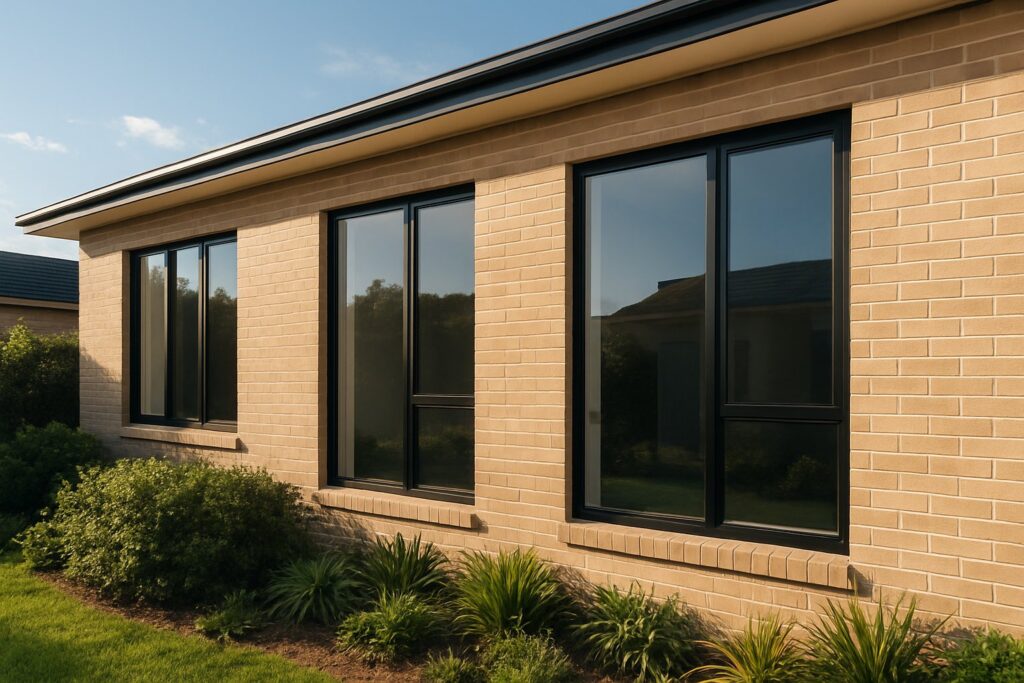
What Actually Qualifies as a Budget Aluminium Window
A budget aluminium window is a fenestration product that sits in the lowest price tier of the aluminium market, typically characterised by standard (non-thermally-broken) profiles, basic powder-coat finishes, entry-level hardware, and double-pane glazing without advanced coatings or gas fills. It delivers the core benefits of aluminium — slim sightlines, corrosion resistance, and recyclability — while accepting specific trade-offs in thermal performance, colour range, and long-term hardware durability.
Defining Budget Aluminium Windows
The word “budget” trips people up. It sounds like a polite way of saying “cheap,” but in the aluminium window market, it simply describes a price tier with deliberate engineering compromises. Manufacturers keep costs down by using thinner wall profiles (typically 1.2 to 1.4 mm), limiting powder-coat options to stock colours like white, black, or silver, and fitting zinc-alloy or basic stainless steel hardware rather than premium European mechanisms. The glass is usually a standard double-pane insulated glass unit filled with air rather than argon, and the frame skips the polyamide thermal break that defines mid-range and premium categories.
None of that makes the product defective. Affordable aluminium windows still meet minimum structural requirements under AS 2047 and can serve perfectly well in mild climates, rental properties, or secondary rooms where peak thermal performance is not critical. The key is understanding exactly where the savings come from so you can decide whether those trade-offs matter for your project.
How Budget Differs from Mid-Range and Premium
Three tiers cover the aluminium window spectrum in Australia. Here is what separates them at a glance:
- Entry-level (budget): Non-thermally-broken 6063-T5 alloy profiles, 1.2-1.4 mm wall thickness, 40-60 micron powder coat in limited stock colours, basic hardware, air-filled double glazing, and shorter warranties (typically 1-5 years on components).
- Mid-budget: Thermally broken profiles with polyamide strips, 1.4-1.6 mm walls, 60-80 micron coating with a wider colour palette, Grade 304 stainless hardware, and optional argon-filled IGUs. Warranties extend to 5-10 years.
- Upper-budget (approaching mid-range): True thermal break as standard, improved Low-E glazing options, better WERS ratings, and hardware from recognised European brands — but still using standard sizing and avoiding bespoke architectural detailing.
Whether you are searching for cheap aluminium windows for a granny flat or evaluating an aluminum window option for a multi-unit development, the tier you land in depends on profile construction, glazing specification, and hardware quality — not just the sticker price. Those three variables interact in ways that shift total value dramatically, and the tiers above only tell part of the story.
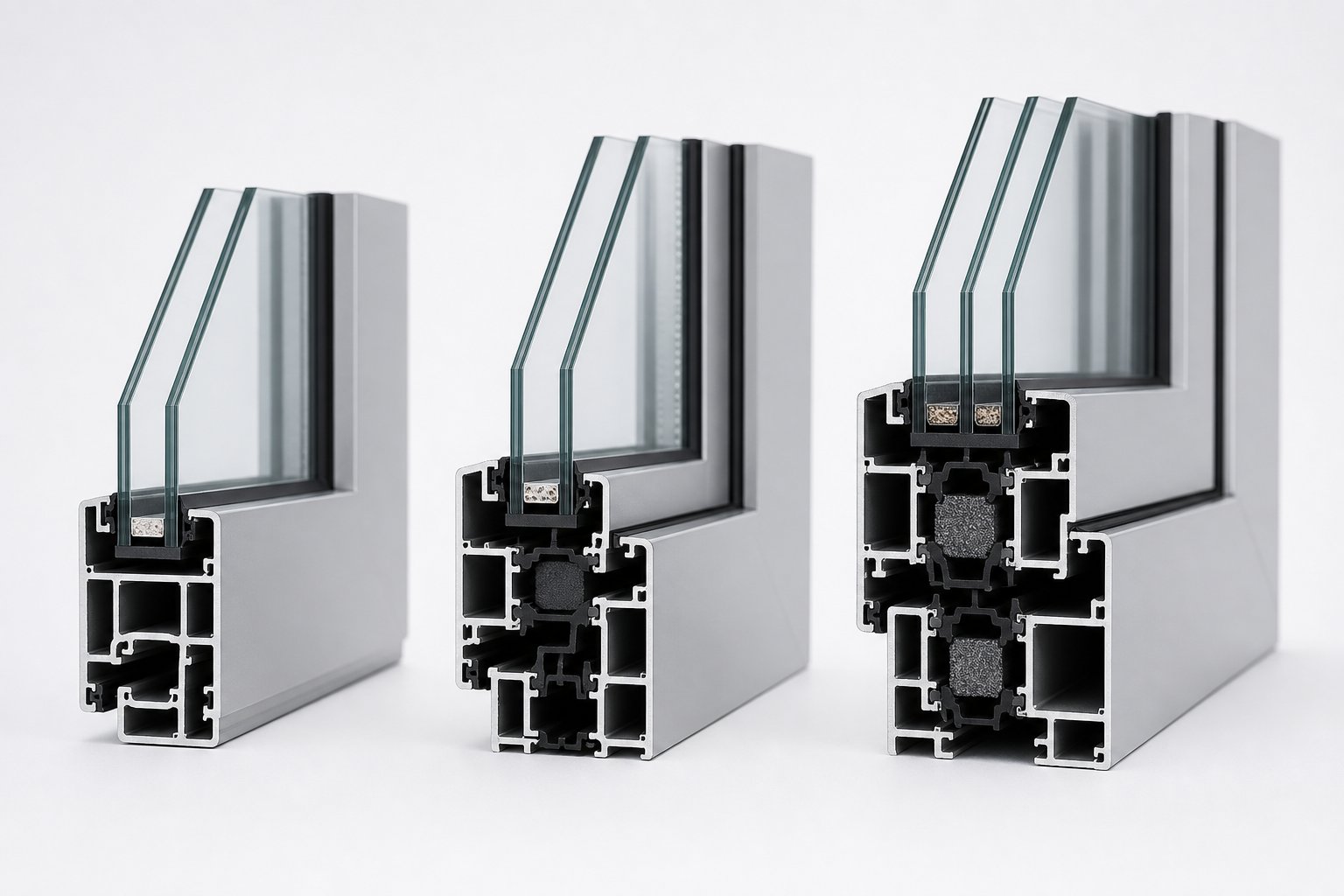
Budget Tiers from Entry-Level to Upper-Budget
Profile construction, glazing, and hardware each pull the price in different directions — but how do those variables cluster in practice? The budget aluminium market breaks into three distinct sub-tiers, each with a recognisable set of characteristics that affect both upfront cost and long-term performance.
Entry-Level Aluminium Windows
Entry-level aluminium window frames use single-chamber profiles extruded from 6063-T5 alloy at 1.2 mm wall thickness. There is no thermal break — just a continuous aluminium section with basic EPDM rubber seals. Colour choices are limited to two or three stock powder-coat options (white, black, or natural silver), applied at around 40-50 microns. Hardware is typically zinc-alloy friction stays and basic cam locks. Glazing is air-filled double-pane with a standard aluminium spacer bar rather than a warm-edge spacer.
These alu windows suit projects where thermal performance is secondary — think storage sheds, garages, laundries, or investment properties in mild climate zones. They get the job done without pretending to be something they are not.
Mid-Budget Options Worth Considering
Step up one tier and the engineering changes noticeably. Mid-budget aluminium frames for windows introduce a polyamide thermal break strip (typically 12-20 mm wide), which dramatically reduces heat conduction through the frame. Wall thickness increases to 1.4 mm, and the powder-coat finish thickens to 60 microns or more with a broader palette — often 8-12 standard colours rather than just two or three.
Hardware improves to Grade 304 stainless steel components, and glazing options expand to include argon-filled IGUs with a warm-edge spacer. The result is a measurably better WERS rating without crossing into premium territory. For owner-occupier renovations or small multi-residential developments, this tier hits a practical sweet spot between cost and comfort.
Upper-Budget — Still Affordable
The upper-budget tier is where aluminium framed windows start to blur into mid-range territory. Thermal breaks widen to 20-24 mm, Low-E coatings become standard rather than optional, and hardware brands carry recognised European pedigree. Profile depth increases to around 70 mm, improving both structural rigidity and insulation. Colour matching expands further, sometimes offering the full RAL spectrum at a modest surcharge rather than a steep custom fee.
The dividing line between upper-budget and true mid-range? Custom architectural detailing, project-specific engineering, and profile depths beyond 80 mm. If the window still uses catalogue sizing and standard configurations, it remains in budget territory — just the top end of it.
| Feature | Entry-Level | Mid-Budget | Upper-Budget |
|---|---|---|---|
| Profile depth | 45-52 mm | 52-65 mm | 65-75 mm |
| Glazing type | Air-filled double pane, aluminium spacer | Argon-filled double pane, warm-edge spacer | Argon-filled double pane with Low-E coating |
| Colour options | 2-3 stock colours | 8-12 standard colours | Full RAL range (surcharge for non-stock) |
| Hardware quality | Zinc-alloy, basic cam locks | 304 stainless steel, multi-point locks | European-brand multi-point systems |
| Thermal break | None | 12-20 mm polyamide strip | 20-24 mm polyamide strip |
| Typical use case | Rentals, sheds, garages, mild-climate secondary rooms | Owner-occupier renovations, small multi-res developments | Quality-conscious builds on a controlled budget |
Relative cost differences between tiers are significant. Moving from entry-level to mid-budget typically adds 30-50% to the per-window cost, driven largely by the thermal break and improved glazing. The jump from mid-budget to upper-budget is smaller — roughly 15-25% — because the core profile technology is similar; you are paying for better hardware, wider thermal strips, and enhanced glass coatings rather than a fundamentally different aluminium window frame construction.
Knowing which tier matches your project is only half the equation. The other half is understanding whether aluminium itself is the right material at your price point — or whether uPVC, vinyl, or fibreglass delivers better value for the same spend.
Budget Aluminium vs uPVC, Vinyl, and Fibreglass
Aluminium is not the only material competing for your budget dollar. At the same price point, uPVC, vinyl, and fibreglass each bring a different balance of thermal performance, durability, and aesthetics. The right choice depends less on which material is “best” in the abstract and more on which trade-offs align with your project.
Aluminium vs uPVC on a Tight Budget
At the budget level, this is the most common head-to-head comparison — and for good reason. A metal window frame in aluminium can achieve sightlines as narrow as 45-55 mm, letting more glass into the opening and giving the facade a cleaner, more contemporary look. Budget uPVC frames, by contrast, typically run 70-80 mm wide because the multi-chamber plastic profile needs more bulk to achieve structural rigidity.
Thermal performance flips the advantage. Budget uPVC windows and window frames use their multi-chamber construction to deliver U-values around 1.0-1.5 W/(m²K) without any additional thermal break technology. A budget aluminium frame without a thermal break sits closer to 4.0-6.0 W/(m²K) — a significant gap that matters in cooler climates like Melbourne, Hobart, or the ACT. Thermally broken budget aluminium narrows the difference considerably, but it also narrows the price gap.
Durability favours aluminium. Industry data puts aluminium lifespan at 40-50 years versus 25-30 years for uPVC. Aluminium is also fully recyclable at end of life, while uPVC recycling remains more limited in Australia. For investors calculating lifecycle cost, that extra 15-20 years of service can offset the higher upfront spend.
When Vinyl or Fibreglass Wins on Value
Vinyl (essentially the same polymer family as uPVC, marketed under different branding in some regions) offers the lowest entry price of any framed windows category. If your project is a rental property in a mild climate zone and you need maximum coverage on a fixed budget, vinyl gets more openings filled for less money. The trade-off is a bulkier frame, fewer colour options, and a shorter service life.
Fibreglass sits at the opposite end. It matches aluminium’s thin frame windows aesthetic with profiles around 50-60 mm, handles temperature swings without expanding or contracting, and delivers strong thermal performance without a separate thermal break. The catch? Budget fibreglass options are scarce in Australia. Most fibreglass products land in the mid-range or premium bracket, making them harder to justify when cost control is the primary driver.
| Attribute | Budget Aluminium | Budget uPVC | Budget Vinyl | Budget Fibreglass |
|---|---|---|---|---|
| Frame thickness | 45-55 mm | 70-80 mm | 70-85 mm | 50-60 mm |
| Lifespan | 40-50 years | 25-30 years | 20-30 years | 30-50 years |
| Thermal rating (U-value, frame only) | 4.0-6.0 W/(m²K) without break; 1.5-2.0 with break | 1.0-1.5 W/(m²K) | 1.2-1.8 W/(m²K) | 1.0-1.5 W/(m²K) |
| Maintenance needs | Minimal — occasional wipe-down | Minimal — no painting required | Minimal — no painting required | Minimal — no painting required |
| Aesthetic flexibility | High — slim profiles, wide colour range via powder coat | Moderate — bulkier profiles, limited colours at budget level | Low — limited colours, utilitarian appearance | Moderate — slim profiles, paintable but fewer stock options |
No single material wins across every column. Metal frame windows in aluminium dominate on sightlines, longevity, and recyclability. uPVC and vinyl dominate on raw thermal performance per dollar spent. Fibreglass offers a compelling middle ground but rarely exists at a true budget price in the Australian market. The honest answer: pick the material whose strengths match your project’s non-negotiable requirements, then optimise within that choice.
Whichever material you land on, the final price tag depends heavily on a handful of specification decisions — glazing type, colour finish, hardware, and whether you go standard or custom. Those cost drivers deserve a closer look.
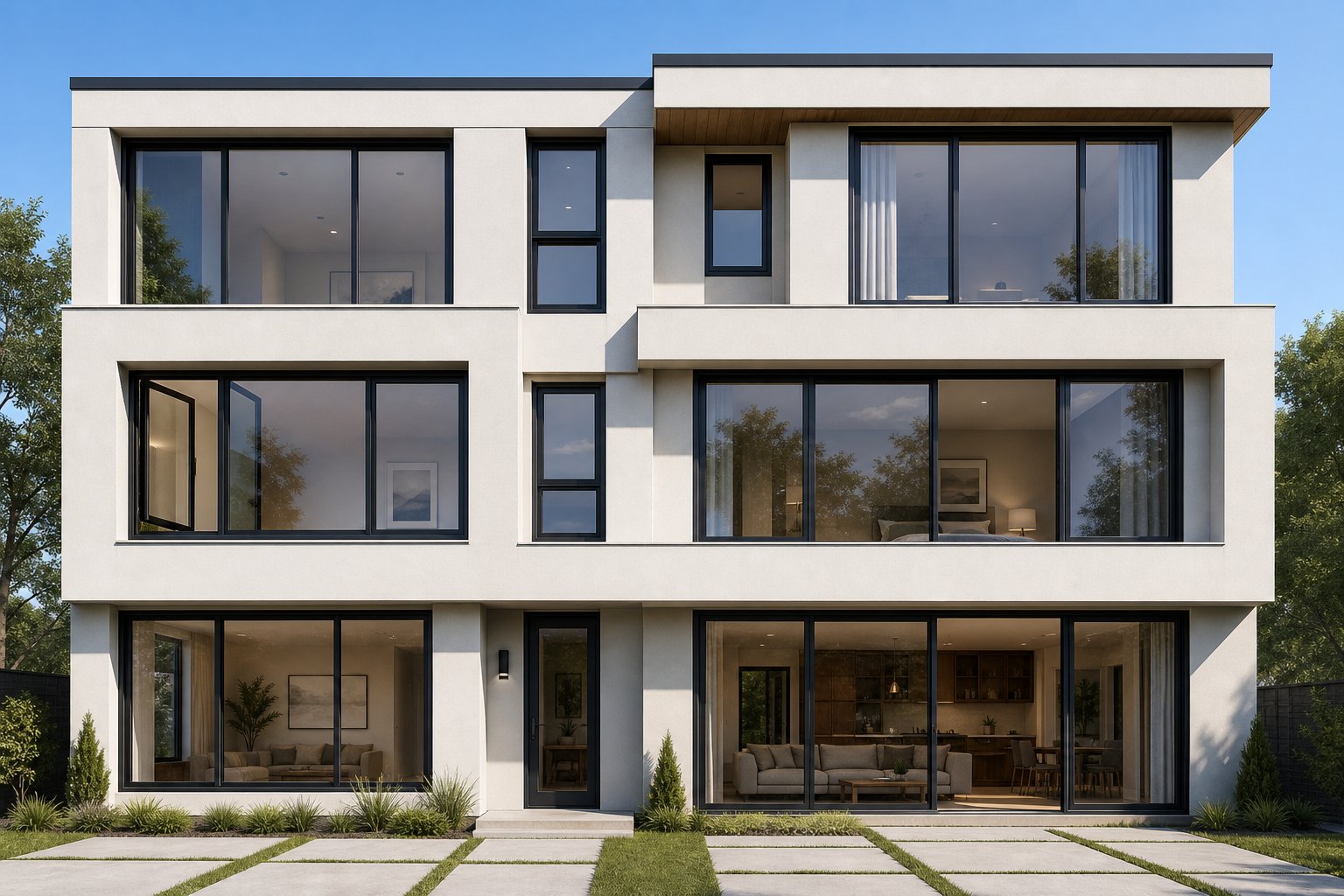
What Drives the Price of Aluminium Windows
Every aluminium window quote is a stack of individual specification decisions, each pulling the final number in a different direction. The trouble is, most manufacturers explain that these factors exist without ever telling you how much each one actually moves the needle. Here is a clearer picture.
Ranked from largest to smallest impact, these are the cost levers that shape your aluminium windows price:
- Standard vs custom sizing — Choosing catalogue dimensions over bespoke measurements is the single biggest cost lever. Industry data suggests custom windows can cost 25-75% more than their standard equivalents, driven by additional extrusion setup, manual handling, and wasted material. If a standard size fits your opening, the savings are immediate and substantial.
- Glazing specification — Glass accounts for a large portion of the total unit cost and offers the widest range of upgrades.
- Colour finish and profile complexity — Surface treatment and profile design influence both material use and production time.
- Hardware and operational style — The way a window opens (or does not) determines the hardware package and fabrication complexity.
Glazing Type and Its Impact on Cost
Moving from a basic air-filled double-pane unit to argon-filled double glazing with a Low-E coating typically adds 10-30% to the glass component cost, according to industry pricing guides. Triple glazing pushes that further — expect a roughly 40-60% premium over standard double glazing — though triple-pane configurations remain uncommon in Australian budget ranges and are more relevant to alpine or extreme-cold applications.
Warm-edge spacer bars, which replace the aluminium spacer with a thermally improved alternative, sit at the lower end of the upgrade scale. They improve condensation resistance and edge-of-glass U-values for a modest additional outlay. For budget-conscious buyers chasing better WERS ratings, this is often the highest-value glazing upgrade available.
Colour Finish and Profile Complexity
A stock powder-coat colour — white, black, or natural silver — is baked into the base price. Move to a non-stock RAL colour and you introduce a custom coating batch, adding roughly 10-20% to the frame cost. Dual-colour finishes, where the interior and exterior faces carry different colours, attract a similar surcharge because the frame passes through the coating line twice.
Profile design matters too. Deeper or more complex extrusion cross-sections use more raw aluminium per lineal metre and require costlier dies. A 70 mm thermally broken profile simply contains more material than a 50 mm non-broken one, and that material difference flows directly into the per-unit price.
Hardware and Operational Style
Fixed windows are the cheapest configuration because they need no moving parts — just a sealed glass unit in a frame. Every operable style adds cost through hardware, fabrication, and weather-sealing complexity.
Aluminium sliding windows sit at the lower end of the operable range, using simple roller mechanisms and interlocking meeting stiles. Casement and awning windows cost more because they require friction stays, multi-point locking systems, and tighter compression seals. Aluminium double hung windows — with two independently operating sashes, balances, and jamb liners — tend to sit higher again, while a single hung window (only the bottom sash moves) offers a slightly cheaper alternative within the same aesthetic family.
As a rough guide, supply-only pricing for standard-size aluminium windows in Australia ranges from approximately $310-$930 AUD for casement units and $390-$1,085 AUD for sliding units, scaling upward with glazing upgrades, custom colours, and non-standard dimensions. These figures reflect supply only and exclude installation, which adds its own variable depending on site access, storey height, and whether the project is new construction or a retrofit into existing openings.
Understanding what drives price is one thing. Actively reducing it — without gutting quality — is another, and several practical strategies can shave meaningful dollars off your total window spend.
Practical Strategies to Lower Your Aluminium Window Costs
Knowing what drives price gives you leverage — but only if you act on it. The good news is that several straightforward decisions can trim 15-40% off a window order without downgrading the core product. Some of these strategies are well known; others, like timing your purchase, rarely get discussed.
Standard Sizes and Why They Save Money
This is the single most effective cost lever available to any buyer. Industry comparisons show custom windows can cost 50-150% more than standard equivalents — a gap driven by three manufacturing realities. First, standard profiles run through extrusion and fabrication lines in bulk batches, spreading setup costs across hundreds of units rather than one. Second, glass cutting for catalogue dimensions generates far less waste because suppliers stock those sheet sizes. Third, production timelines shrink from 4-8 weeks down to days, which reduces warehousing and handling overhead.
For builders and renovators, the practical takeaway is simple: design your rough openings around available standard sizes wherever possible. Building professionals note that adjusting an opening by as little as 25 mm can shift a window from custom pricing into a stock bracket, avoiding a 10-30% premium for what amounts to a minor framing adjustment. If you are working with an architect, flag this early — window sizes are easy to change on paper but expensive to change once frames are up.
Seasonal Timing and Bulk Ordering
Window manufacturers and suppliers experience predictable demand cycles. In Australia, spring and early summer drive peak ordering as renovation season ramps up and new builds push toward lock-up before Christmas. That surge means longer lead times, less room for negotiation, and occasionally premium pricing on expedited orders.
The quieter months — typically late autumn through winter — offer a different dynamic. Fabrication lines have spare capacity, sales teams are more flexible on pricing, and delivery windows tighten because the queue is shorter. Seasonal pricing data confirms that off-peak purchasing can yield meaningful savings, with some suppliers offering discounts to maintain throughput during slower periods.
Bulk ordering amplifies the effect. Ordering all windows for a project in a single batch — rather than splitting across stages — reduces per-unit costs through consolidated cutting, shared delivery logistics, and a single powder-coat run. For multi-unit developments or builders managing several projects simultaneously, consolidating orders across sites can push volumes into wholesale pricing territory. When browsing aluminium windows for sale during quieter months, you are effectively stacking two discounts: seasonal flexibility and volume efficiency.
Reducing Costs on Finish and Hardware
Beyond sizing and timing, smaller specification choices add up quickly across a full window schedule. Aluminium window frame kits in stock colours (black, white, or silver) avoid the custom batch surcharge that non-standard RAL finishes attract. If you want a darker aesthetic — say a charcoal or bronze tone — check whether the supplier stocks it as a standard option before assuming it requires a custom run.
Fixed panels deserve more attention than they typically get. Any opening that does not require ventilation — above kitchen splashbacks, beside stairwells, flanking a front door — can use a fixed-lite configuration. Removing the operable hardware, seals, and fabrication complexity from even a few windows in your schedule saves both money and future maintenance.
Here are the cost-reduction strategies ranked from highest to lowest impact:
- Choose standard catalogue sizes over custom dimensions — the largest single saving available.
- Order in bulk across the full project rather than in stages, consolidating fabrication and delivery.
- Time your purchase for off-peak months (late autumn through winter) when suppliers have spare capacity.
- Stick to stock powder-coat colours to avoid custom batch surcharges.
- Use fixed panels wherever ventilation is not required, eliminating hardware and seal costs.
- Select standard hardware rather than premium European mechanisms — adequate for most residential applications.
- Avoid dual-colour finishes unless the design genuinely demands it; a single exterior/interior colour halves the coating process.
Each strategy works independently, but combining several across a full window schedule compounds the savings. A project that specifies standard sizes, orders in one batch during winter, and uses stock black powder coat with fixed lites where possible can land comfortably in the mid-budget tier for what would otherwise be upper-budget money.
Of course, savings only matter if the product actually arrives as specified — and that depends entirely on who you are buying from. Evaluating suppliers, reading quotes properly, and understanding the true cost of imported options requires its own set of skills.
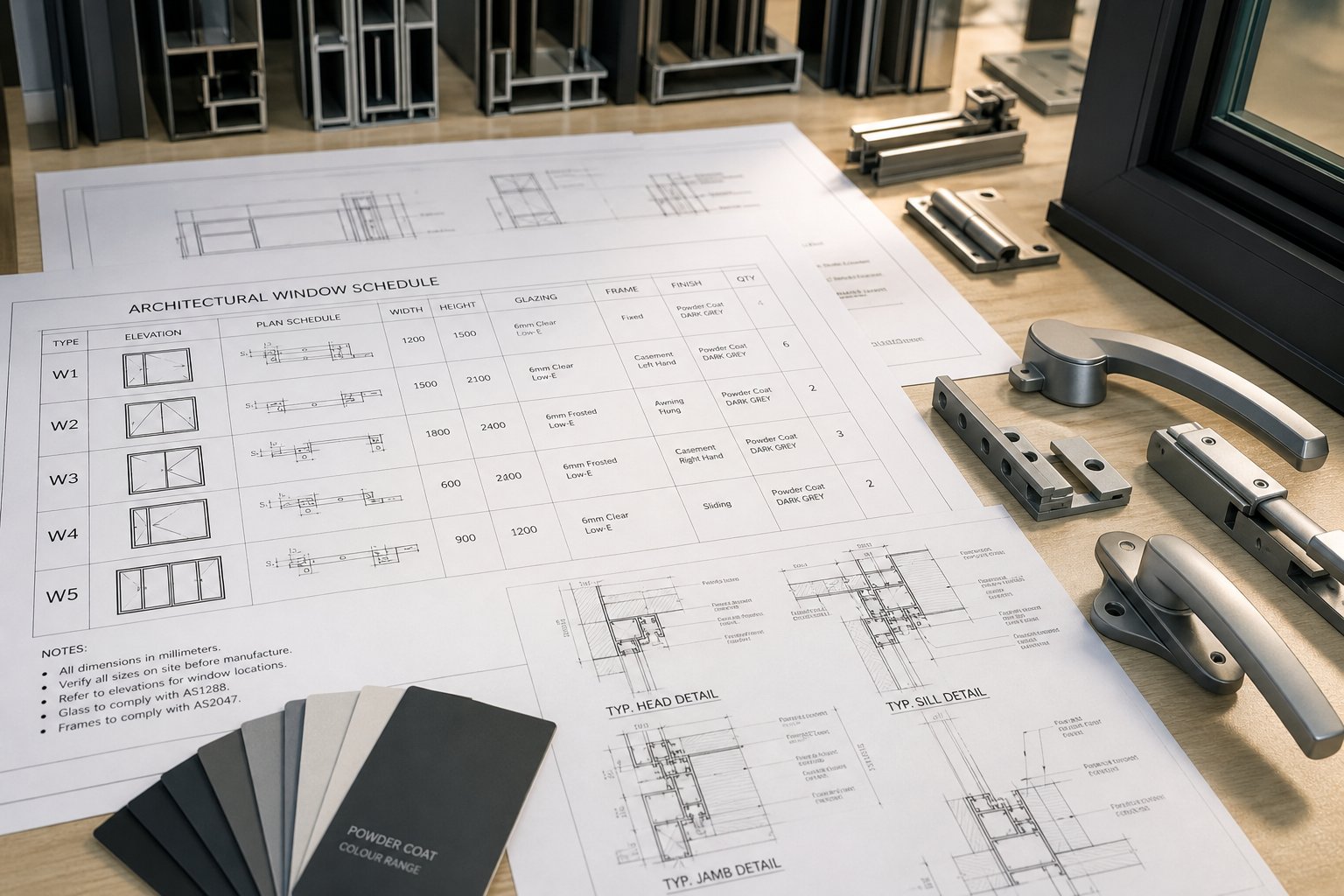
How to Vet Aluminium Window Suppliers and Read Quotes Properly
Saving money on specification means nothing if the product never arrives, arrives wrong, or comes from a supplier who vanishes when something goes sideways. The budget end of the market attracts both legitimate manufacturers operating on tight margins and opportunistic sellers cutting corners you cannot see until installation day. Telling them apart requires knowing what to look for — in the quote, in the supplier’s credentials, and in the total cost picture when imports are involved.
Red Flags When Shopping for Budget Windows Online
Unrealistically low pricing is the most obvious warning sign, but it is rarely the only one. When evaluating aluminium window suppliers — whether local fabricators or overseas aluminum windows manufacturers — watch for these patterns:
- No physical address or ABN listed. A legitimate Australian supplier or importer will display a verifiable business address. If the only contact method is a web form or WhatsApp number, proceed with extreme caution.
- Missing certifications. Any window sold in Australia must comply with AS 2047 (windows and external glazed doors) and AS 1288 (glass selection and installation). If a supplier cannot produce test reports or compliance documentation, the product may not meet code — and your certifier can reject it on site.
- Vague or absent lead times. Reputable aluminium window manufacturers state production and delivery timelines upfront. A supplier who cannot commit to a schedule often lacks manufacturing control or is brokering from an unconfirmed source.
- No specification detail in the listing. Ads that describe windows as simply “double glazed aluminium” without stating profile system, wall thickness, glazing Ug value, or hardware brand are impossible to compare against other quotes.
- Pressure tactics or time-limited “free” offers. Consumer protection research consistently identifies urgency-based promotions as a hallmark of bait-and-switch operations. Legitimate aluminium window supplies do not evaporate overnight.
Understanding What a Proper Quote Includes
A quote that lists only a total dollar figure and a window count is not a quote — it is a guess dressed up as a price. Industry guidance on comparing window quotes confirms that prices for seemingly similar products can differ by 20-30% or more, and those differences almost always trace back to specification gaps hidden behind vague line items.
A transparent quote from any aluminum window manufacturer or local fabricator should itemise, at minimum:
- Profile system name and installation depth (e.g., 52 mm non-thermally-broken or 65 mm thermally broken)
- Wall thickness of the aluminium extrusion
- Glazing specification — number of panes, gas fill, spacer type, Low-E coating, and Ug value
- Hardware brand and type (friction stays, multi-point locks, rollers)
- Colour finish — stock or custom RAL — and coating thickness in microns
- Compliance documentation referenced (AS 2047, AS 1288, WERS rating if applicable)
- Delivery scope — ex-factory, to site, or installed — and any associated freight costs
- Warranty terms covering frame, hardware, glazing seals, and powder-coat finish separately
Without these details, you cannot compare quotes on a like-for-like basis. Two offers at $450 and $600 per window might represent identical value — or a $150 gap in quality that will cost far more to rectify later. Suppliers who offer project-support services — walking you through drawings, system recommendations, and material calculations — make this comparison process far more transparent because every cost driver is visible before you commit.
Imported Windows and the Full Cost Picture
Overseas alum windows manufacturers, particularly from China and Southeast Asia, quote FOB (Free on Board) prices that look dramatically cheaper than local supply. And they often are — at the factory gate. The gap narrows considerably once you account for the full landed cost in Australia.
Shipping and logistics data puts sea freight to Australia at roughly $6-14 per square metre for a 20-foot container, depending on port and current rates. On top of that, factor in:
- Import duty: 0-5% on aluminium windows and doors, applied to the combined value of product plus freight plus insurance.
- GST: 10% on the total landed cost (product + shipping + insurance + duty).
- Port handling and customs brokerage: $500-$1,500 per container depending on complexity.
- Inland transport: $300-$1,500 from port to site, depending on distance.
- Compliance testing: If the product lacks Australian certification, you may need independent testing against AS 2047 — an additional cost that can run into thousands.
Even after all these additions, imported budget aluminium windows can still undercut local pricing by 20-40% on large orders. But the savings come with real risks: warranty enforcement across international borders is difficult, lead times stretch to 8-14 weeks, and any measurement error means waiting months for a replacement rather than days. Compatibility with local installation standards — flashing details, structural fixing methods, and weather-sealing expectations for Australian conditions — is another variable that does not appear on any invoice until something leaks.
For buyers weighing these trade-offs, the safest path is working with a supplier who can manage the full process transparently — from initial drawings and schedules through to quality control, logistics coordination, and delivery planning — so that the “landed cost” is a known figure before production begins, not a surprise after the container clears customs.
Getting the supplier and quote right protects your budget on the way in. But even a well-priced, well-specified window can be the wrong choice if the project itself demands performance that budget products simply cannot deliver.
When Budget Aluminium Windows Are the Wrong Choice
Not every project should default to the cheapest compliant option. There are situations where entry-level aluminium windows create problems that cost more to fix than the initial savings were worth — and recognising those scenarios upfront is the most budget-conscious decision you can make.
Extreme Climate Considerations
Entry-level aluminium profiles without a thermal break conduct heat roughly 1,000 times faster than timber. In cold-climate regions — think alpine Victoria, the Tasmanian highlands, or Canberra winters — that conductivity creates two expensive problems. First, heat escapes rapidly through the frame, forcing your heating system to work harder and inflating energy bills year after year. Second, the cold inner frame surface triggers persistent condensation, which can damage surrounding plasterwork, encourage mould growth, and degrade window seals prematurely.
Old aluminium windows from the 1970s and 1980s — single pane aluminium windows with no thermal break — illustrate this perfectly. Homeowners replacing those old aluminium window frames often assume any new budget product will be an upgrade. It will be, marginally. But in NatHERS climate zones 6-8, a non-thermally-broken budget frame still underperforms relative to what the NCC energy provisions expect, potentially requiring compensating measures elsewhere in the building envelope that negate the window savings entirely.
Heritage and Architectural Restrictions
Heritage overlays and conservation zones impose strict controls on window appearance — profile proportions, glazing bar patterns, and material finishes all fall under scrutiny. Budget aluminium profiles lack the slim, detailed mouldings needed to replicate traditional aluminium sash windows or period timber joinery. Specialist heritage projects require custom slim-line profiles, historically accurate proportions, and finishes that mimic aged materials — none of which exist in the budget tier.
If your property sits within a heritage overlay or requires council approval under a conservation management plan, budget aluminium will almost certainly fail the development application. The cost of rejection, redesign, and resubmission dwarfs the price difference between budget and a purpose-designed aluminium clad window system or high quality aluminium windows engineered for heritage compliance.
High-Acoustic or High-Security Needs
Budget glazing — standard 4 mm float glass in an air-filled double-pane unit — delivers acoustic reduction of roughly 25-28 dB. Properties near flight paths, major roads, or rail corridors typically need 35-45 dB reduction, which demands thicker laminated glass, asymmetric pane configurations, and heavier frames that budget hardware cannot support.
Security is a similar story. Basic cam locks and zinc-alloy stays will not meet AS 5039 (security screening) or insurance requirements for ground-floor openings in high-risk areas. Aluminium retrofit windows designed for security applications use multi-point locking, reinforced meeting rails, and laminated or toughened glass — features that push the product firmly out of budget territory and into the realm of luxury aluminium windows engineered for performance rather than price.
The cheapest window is not always the most economical one. A product that fails to meet your climate, heritage, acoustic, or security requirements will cost you twice — once when you buy it, and again when you replace it before its time.
These scenarios are not edge cases. They represent real project conditions where spending more upfront delivers a lower total cost over the window’s lifespan. For everything else — mild climates, contemporary builds, standard security zones — budget aluminium remains a strong contender. The final step is matching the right tier to your specific project type and knowing exactly how to move forward.
Making the Right Budget Aluminium Window Decision for Your Project
Every project has a different tolerance for trade-offs — and the budget tier that works brilliantly for one build can be entirely wrong for another. Rather than defaulting to the cheapest option or over-specifying out of caution, the goal is to match your tier to your actual requirements and then execute the purchase with confidence.
Matching Your Budget Tier to Your Project
Here is how the three budget tiers map to common Australian project types:
- Entry-level suits rental properties in mild climate zones (NatHERS zones 2-5), garages, sheds, and secondary rooms where thermal performance is not a priority. If you are a landlord managing multiple investment properties and need aluminium replacement windows that meet code without over-capitalising, this tier delivers.
- Mid-budget fits owner-occupier renovations, small multi-residential developments, and commercial fit-outs where both residential aluminium windows and commercial aluminium windows need to balance comfort with cost control. The thermal break and improved hardware justify the step up for spaces people occupy daily.
- Upper-budget works for quality-conscious builds where you want the best aluminium windows available without crossing into bespoke architectural territory — think spec homes, boutique developments, or aluminium window replacement projects on owner-occupied properties in cooler climate zones.
The pattern is straightforward: the more time people spend in the space, and the more demanding the climate, the higher up the budget tier you should aim. A warehouse in coastal Queensland has different needs from a family home in the Adelaide Hills, and the tier system reflects that reality.
Your Next Steps Toward the Right Windows
Knowing your tier is the starting point. Turning that knowledge into a successful purchase requires a deliberate sequence — one that protects you from the traps covered earlier in this guide.
- Define your requirements clearly. List every opening with its dimensions, orientation, operational style (fixed, casement, sliding), and any performance requirements (acoustic rating, bushfire BAL level, cyclone compliance). This becomes your window schedule — the document every supplier quotes against.
- Request itemised quotes from at least three suppliers. Insist on line-item detail: profile system, wall thickness, glazing specification, hardware brand, colour, compliance certifications, and delivery scope. Reject any quote that bundles everything into a single lump sum.
- Compare on total value, not unit price alone. Factor in warranty length, lead time, delivery logistics, and whether the supplier provides project support — from drawings and material calculations through to quality control and delivery coordination. A slightly higher per-window cost from a supplier who manages the full process often delivers lower total project cost than a bare-bones quote that leaves coordination to you.
- Verify certifications independently. Confirm AS 2047 and AS 1288 compliance. Check WERS ratings where energy performance matters. For imported products, request test reports from NATA-accredited laboratories.
- Confirm installation compatibility. Whether you are using your own installer or the supplier’s team, ensure the product suits Australian flashing details, structural fixing methods, and weather-sealing expectations for your climate zone.
For builders, developers, and procurement teams managing larger schedules, working with a supplier who supports the entire workflow — from interpreting architectural drawings through to system recommendations, manufacturing coordination, and logistics planning — removes the guesswork that inflates both cost and risk. MEICHEN’s project services, for example, cover this full sequence for teams who want transparent, itemised support rather than a take-it-or-leave-it price list.
Budget aluminium windows are not a compromise — they are a category. The right product, specified correctly and sourced from a transparent supplier, delivers decades of reliable performance without overspending. Start with your requirements, match them to the appropriate tier, and let the specification drive the price rather than the other way around.
Frequently Asked Questions About Budget Aluminium Windows
1. What is the difference between budget and mid-range aluminium windows?
Budget aluminium windows use non-thermally-broken or minimally broken profiles (1.2-1.4 mm wall thickness), limited stock powder-coat colours, basic zinc-alloy hardware, and air-filled double glazing. Mid-range products step up to wider polyamide thermal breaks (20+ mm), European-brand hardware, argon-filled IGUs with Low-E coatings, and deeper profiles (70-80+ mm) with custom architectural detailing. The jump from budget to mid-range typically reflects differences in thermal performance, hardware longevity, and colour flexibility rather than structural integrity alone.
2. How much do budget aluminium windows cost in Australia?
Supply-only pricing for standard-size budget aluminium windows in Australia generally ranges from approximately $310-$930 AUD for casement units and $390-$1,085 AUD for sliding configurations. Final cost depends on glazing specification, colour finish, hardware type, and whether you choose standard catalogue sizes or custom dimensions. Custom sizing can add 25-75% to the base price, while upgrades like argon-filled glazing or non-stock RAL colours each add 10-30% to their respective components. Installation is additional and varies by site access and project complexity.
3. Are budget aluminium windows energy efficient enough for Australian homes?
It depends on your climate zone. In mild regions (NatHERS zones 2-5), budget aluminium windows with standard double glazing can meet NCC energy requirements without issue. In cooler zones like alpine Victoria, Canberra, or Tasmania, entry-level frames without thermal breaks conduct heat too rapidly, causing condensation and higher energy bills. For these climates, stepping up to at least a mid-budget tier with a polyamide thermal break (12-20 mm) significantly improves frame U-values and helps meet energy rating targets without compensating measures elsewhere in the building envelope.
4. How can I save money when buying aluminium windows without sacrificing quality?
The highest-impact strategy is specifying standard catalogue sizes rather than custom dimensions, which alone can reduce costs by 25-75% per unit. Beyond that, ordering all windows in a single bulk batch, timing your purchase for off-peak months (late autumn through winter when fabricators have spare capacity), choosing stock powder-coat colours, and using fixed panels wherever ventilation is unnecessary all compound savings. Combining these approaches across a full window schedule can land you in a higher-performing tier for the same money you would have spent on entry-level custom units.
5. Should I buy imported budget aluminium windows or source locally in Australia?
Imported windows can undercut local pricing by 20-40% on large orders even after accounting for sea freight, import duty (0-5%), GST, port handling, and inland transport. However, the savings carry real risks: lead times stretch to 8-14 weeks, warranty enforcement across international borders is difficult, measurement errors mean months-long waits for replacements, and products may lack AS 2047 certification. Working with a supplier who manages the full process transparently — from drawings through quality control and delivery coordination — reduces these risks whether you source locally or import, because the total landed cost is confirmed before production begins.
More Window & Door Guides