Finding the Right Cleaner for Your Aluminium Window Frames
That chalky white haze creeping across your window frames is not just dirt. It is oxidation eating through the protective finish, and a splash of generic kitchen spray will not fix it. Worse, the wrong cleaner for aluminium can strip anodized layers or dissolve powder coatings, turning a cosmetic issue into permanent damage.
Australian homes cop relentless UV, coastal salt spray, urban exhaust film, and seasonal pollen. All of it bonds to aluminium surfaces over time. Standard household cleaners sit at the wrong pH, contain abrasive particles, or leave caustic residues that accelerate the very deterioration you are trying to reverse. Research into aluminium window maintenance in similar climates confirms that properly maintained frames can last over 40 years, but only when cleaned with appropriate products at regular intervals.
Why Generic Cleaners Fall Short on Aluminium
A bathroom cleaner loaded with ammonia or a cream cleanser packed with grit does not distinguish between grime and your frame’s protective coating. Ammonia-based products attack anodized finishes. Abrasive formulas score through powder coating. Even vinegar, left too long, eats into bare aluminium. The finish type on your frames, whether anodized, powder-coated, mill, or painted, dictates exactly which window frame cleaner is safe and which causes harm.
Not all aluminium finishes respond to the same cleaner. Matching the right product to your specific finish type is the single most important step in protecting your frames from accelerated wear.
What This Guide Covers
This guide breaks down five categories of cleaner for aluminum window frames, each tested against real-world conditions: routine household grime, oxidation staining, coastal salt residue, and sticky urban pollution. Every recommendation is assessed on pH safety, coating compatibility, ease of use, and value for money. No brand sponsorships, no affiliate rankings. Just practical guidance so you can pick the right product for your frames, your climate, and your budget.
How We Evaluated and Ranked These Cleaners
Knowing you need a specialist product is one thing. Knowing what separates a safe, effective formula from one that quietly damages your frames is another. Before diving into specific recommendations, here is the framework we used to assess every cleaner category in this guide, so you can apply the same logic when cleaning aluminum window frames at home.
Key Factors That Separate Good Cleaners from Bad Ones
Aluminium oxide is amphoteric, meaning it reacts with both acids and bases. That single property makes pH the most critical spec on any bottle you pick up. Products sitting between pH 6 and 8 leave protective coatings intact. Anything outside that range risks chemical attack on anodized layers or powder-coated surfaces.
Beyond pH, we scored each category against these criteria:
- pH level — Must fall within the neutral range (6-8) for general use, or be clearly labelled for specialist bare-metal applications only.
- Abrasiveness — No grit, no micro-scratch risk. Cleaners should lift contamination without scoring the finish underneath.
- Coating compatibility — Safe across anodized, powder-coated, and painted surfaces, or explicitly restricted to one finish type.
- Ease of application and rinsing — Spray-and-wipe convenience rates higher than multi-step processes requiring extended dwell times or pressure rinsing.
- Protective aftercare properties — Bonus value for formulas that deposit a water-repellent or UV-resistant layer after cleaning.
- Environmental and personal safety — Low fumes, no harsh solvents requiring forced ventilation, minimal skin irritation risk.
- Value for money — Cost per application relative to coverage area and cleaning frequency.
Matching Cleaner Type to Your Frame Finish
How to clean aluminium window frames properly depends entirely on what finish sits between the grime and the raw metal. Each type has a different tolerance threshold:
- Anodized frames — The electrochemical oxide layer is durable but chemically sensitive. Stick to pH-neutral, fluoride-free, chloride-free products. Stubborn marks respond to a non-scratch pad and water worked in the direction of the grain.
- Powder-coated frames — The cured polymer skin resists scratches well but degrades under strong solvents or alkaline cleaners. Gentle surfactants and soft cloths are all you need for routine maintenance.
- Mill finish (bare aluminium) — No protective coating means the native oxide layer is your only defence. Acidic or alkaline cleaners strip it fast, inviting pitting in humid or coastal conditions.
- Painted frames — Paint films are the thinnest and most vulnerable layer. Only mild detergent-based products are safe here; anything abrasive or solvent-heavy lifts the paint.
If you are unsure how to clean window frames without causing harm, the safest default is always a pH-neutral, non-abrasive formula. You can escalate to stronger specialist products later if gentle cleaning does not resolve the issue, but you cannot undo damage from starting too aggressively.
With this scoring framework in mind, each cleaner category reviewed next is matched to the finish types and conditions where it performs best, and flagged clearly where it should never be used.
Best pH-Neutral Spray Cleaner for Routine Maintenance
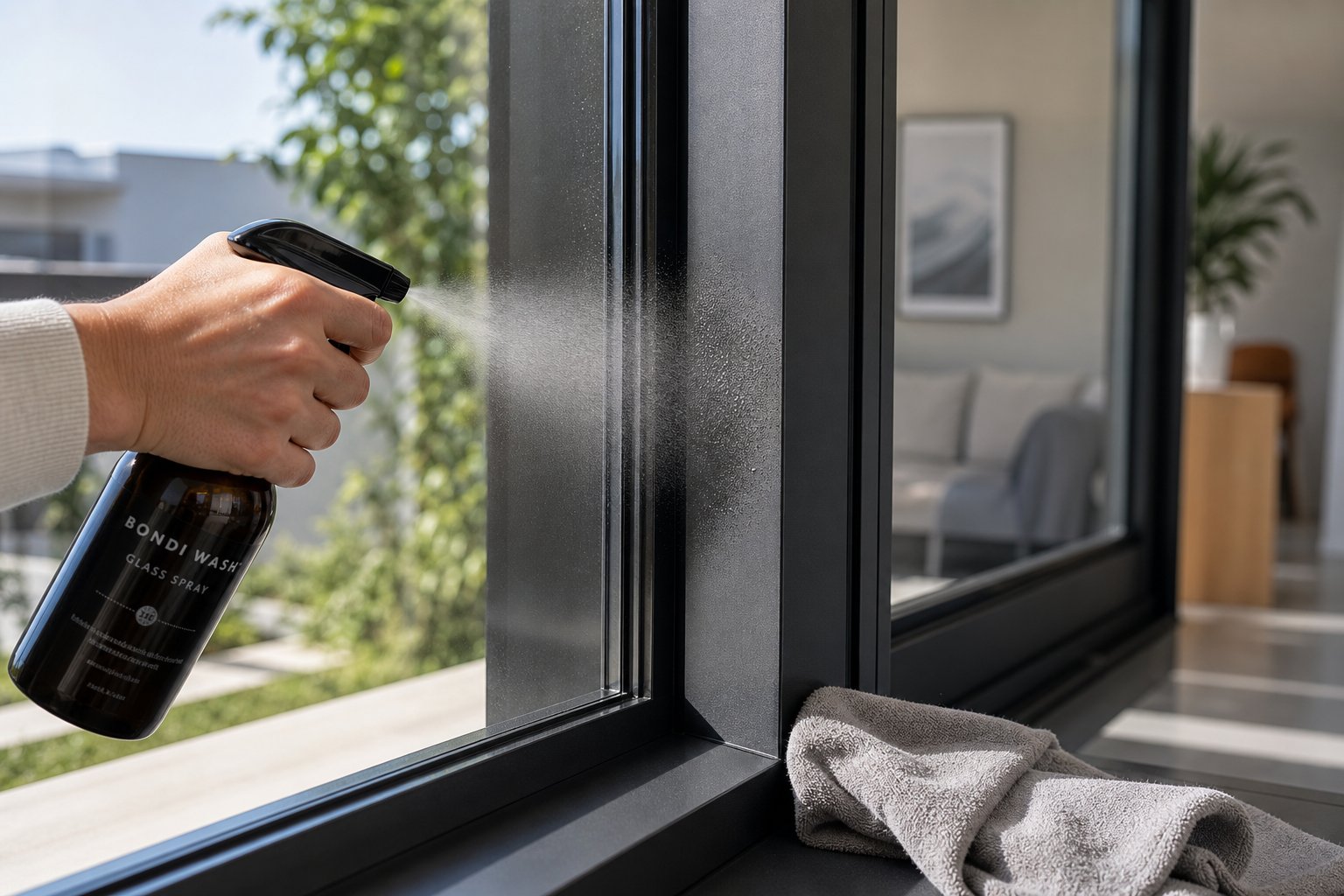
For the vast majority of Australian homes, a pH-neutral spray cleaner is the best cleaner for aluminium frames in day-to-day use. It handles the regular accumulation of dust, pollen, light salt deposits, and road film without any risk to the finish underneath. Think of it as the maintenance workhorse: not dramatic, not expensive, but consistently effective at keeping frames in good shape between seasons.
Why pH-Neutral Formulas Are the Safest Daily Choice
A pH-neutral cleaner sits between 6 and 8 on the pH scale, the narrow zone where neither acids nor alkalis can attack aluminium’s protective layers. This matters because aluminium oxide is amphoteric. Step below pH 6 and you risk dissolving anodized coatings. Step above pH 8 and alkaline compounds start eating into powder-coated finishes. A properly formulated pH neutral cleaner for aluminium windows avoids both dangers entirely.
The ideal use case is preventative. When you clean aluminium window frames every fortnight or at least monthly, grime never gets a chance to bond with the surface or trap moisture against the coating. In coastal areas like Sydney’s Northern Beaches or Queensland’s Sunshine Coast, salt spray deposits within days. A quick pH-neutral wipe removes that corrosive film before it can begin degrading the finish. Inland suburbs can stretch to monthly cleans without issue.
Application Method and Best Results
The technique is straightforward and takes only a few minutes per window:
- Spray the pH-neutral solution directly onto the aluminium frame, working from top to bottom.
- Agitate gently with a damp microfibre cloth, using light circular motions to lift surface contamination. Microfibre grabs dirt particles without scratching.
- Rinse with clean water from a garden hose set to a gentle spray. Never use a pressure washer, as the force can strip protective coatings and push water behind seals.
- Dry with a fresh microfibre cloth to prevent water spots, especially in hard-water areas.
Pick an overcast day if possible. Direct sun causes the cleaning solution to evaporate too fast, leaving streaky residue that is frustrating to remove after the fact. This category works equally well on anodized, powder-coated, mill-finish, and painted aluminium frames, making it a genuine all-rounder regardless of your window type or age.
Pros and Cons of pH-Neutral Spray Cleaners
Pros
- Safe on all aluminium finish types, including sensitive anodized and painted surfaces
- Streak-free results when paired with microfibre and proper drying
- No harsh chemical fumes, safe to use indoors or in enclosed areas
- Readily available at hardware stores and automotive suppliers across Australia
- Low cost per application with high coverage area
Cons
- Struggles with heavy oxidation or long-term embedded staining
- May require multiple passes on stubborn buildup that has been left for months
- Does not leave a protective residue, so frames remain exposed to fresh contamination immediately after cleaning
For frames that have been reasonably maintained, a pH-neutral spray is all you will ever need. It keeps powder coating vibrant, prevents that chalky haze from forming, and costs next to nothing in time or effort. The limitation surfaces only when oxidation has already taken hold, at which point a specialist product designed to dissolve aluminium oxide becomes necessary.
Best Aluminium Oxidation Remover for Chalky Frames
White, powdery residue that will not budge under a gentle wipe is not ordinary grime. It is aluminium oxide bonded to the metal surface, and no amount of pH-neutral spray will dissolve it. When your frames have reached this stage, you need a dedicated aluminum oxidation remover formulated to break down that chalky layer chemically without damaging the base metal underneath.
Understanding Aluminium Oxidation and Why It Happens
Aluminium naturally reacts with oxygen to form a thin oxide layer (Al₂O₃) that, under normal conditions, acts as a protective shield. On anodized frames, an electrochemical process thickens this layer to several microns, creating a durable barrier against the elements. The problem starts when UV radiation, persistent moisture, and environmental pollutants degrade that barrier over time. As aluminium restoration specialists note, once harsh elements break through the passive layer, pitting begins and the telltale white chalky dust appears, signalling true corrosion.
In practical terms, oxidized aluminum window frames look faded and feel rough to the touch. Run your finger across the surface and a powdery white residue transfers to your skin. This is not cosmetic dirt sitting on top of a coating. It is the coating itself breaking down, and the aluminium beneath reacting with air and moisture to form a thickening oxide crust.
How Oxidation Removers Work on Frame Surfaces
Specialist aluminium frame oxidation treatment products contain mild acids, typically oxalic or phosphoric acid, or chelating agents that selectively dissolve the oxide compound without etching the aluminium substrate. According to industrial oxide removal research, acidic solutions react with the oxide layer, causing it to break its bond with the surface and dissolve. The key difference between these products and household acids like vinegar is concentration control and formulation stability. They are engineered to work within a precise dwell window, dissolving oxide at a predictable rate.
Here is how to remove oxidation from aluminium window frames using a dedicated remover:
- Pre-wash the frame with mild soapy water and rinse. The surface must be free of loose dirt and completely dry before applying the oxidation remover.
- Apply the product to dry aluminium only. Most removers are brushed or sponged onto the affected area. Avoid spraying near glass seals or surrounding paintwork.
- Allow the recommended dwell time, typically 5 to 15 minutes. The product will visibly react with the oxide, often turning the chalky patches darker as it loosens the bond.
- Agitate with a non-scratch nylon pad, working in the direction of any visible grain. Do not use steel wool, as iron particles embed in the aluminium and trigger galvanic corrosion.
- Rinse thoroughly with fresh water, ensuring no chemical residue remains. Residual acid left on the surface continues reacting and will cause uneven etching.
- Dry completely, then apply a protective sealant or clear coat immediately. Freshly stripped aluminium begins re-oxidising within hours if left unprotected.
Critical note: These products are formulated for bare or anodized aluminium only. Never use an acidic oxidation remover on powder-coated frames. The acid attacks the polymer coating, causing blistering and peeling that is irreversible without professional refinishing.
Environmental Factors and Treatment Frequency
Where you live in Australia directly determines how often your frames need oxidation treatment. Coastal homes from Fremantle to the Gold Coast face relentless salt-laden air that accelerates oxide formation significantly. Homes in tropical Queensland deal with high humidity year-round, trapping moisture against frame surfaces. In these environments, inspecting for early oxidation every three to four months and treating promptly prevents the problem from progressing to deep pitting.
Suburban homes further inland and away from industrial zones may only need aluminium frame oxidation treatment once or twice a year, typically at the start and end of the warmer months when UV intensity peaks.
Pros and Cons of Oxidation Removers
Pros
- Restores the original metallic appearance of bare and anodized aluminium frames
- Tackles heavy white staining and chalking that pH-neutral cleaners cannot touch
- Works relatively quickly with visible results after a single application
- Can delay or eliminate the need for full frame replacement on moderately oxidised frames
Cons
- Not suitable for powder-coated or painted frames — acid damages polymer finishes
- Requires careful handling with gloves and eye protection; work in ventilated areas
- Frames absolutely need a protective sealant applied immediately after treatment, or rapid re-oxidation occurs
- Higher cost per application compared to pH-neutral maintenance cleaners
- Potential to etch the surface if left beyond the recommended dwell time
Oxidation removers fill a specific gap: they rescue frames that have moved past the point of routine maintenance but have not yet deteriorated to the point of needing full restoration. For homes on a tighter budget, or for light grime on frames that are still in reasonable condition, there is another path worth considering — simple household ingredients mixed in the right proportions.
Best Budget DIY Solution Using Household Ingredients
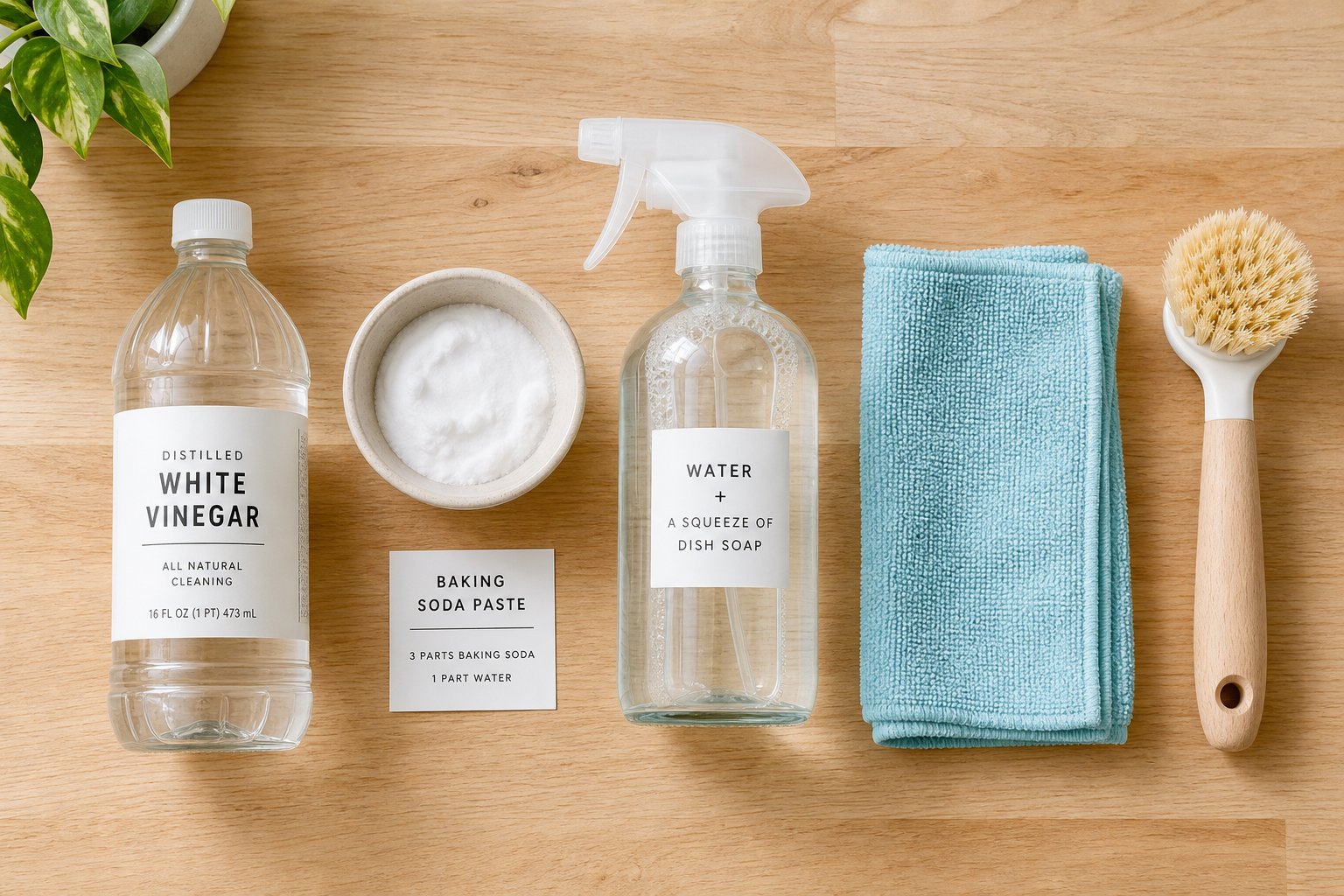
Not every cleaning job demands a specialist product from the hardware store. If you are wondering how do I clean aluminium window frames without spending much, the answer is probably already sitting in your kitchen cupboard. A homemade aluminium window cleaner made from basic pantry staples handles routine grime surprisingly well, provided you understand the boundaries and stick to safe concentrations.
DIY solutions work best on powder-coated and painted aluminium finishes in mild, inland climates where salt exposure and heavy oxidation are not factors. They are a genuine money-saver for homeowners who clean regularly and want to avoid stockpiling chemical products under the sink.
Three DIY Recipes That Actually Work
Arranged from gentlest to most aggressive, these three formulas cover the full spectrum of everyday frame grime. Always start with the mildest option and escalate only if the stain persists.
- Dish soap dilution (routine wipe-downs) — Add half a teaspoon of mild liquid dish soap to two cups of warm water in a spray bottle. This is your weekly go-to. It lifts dust, pollen, and light road film without any risk to the coating. Window maintenance professionals recommend mild pH-neutral dish soap as the safest default cleaner for aluminium frames, and for good reason: it contains gentle surfactants that cut through grease without altering the surface chemistry.
- White vinegar solution (deeper monthly clean) — Mix one part white vinegar to four parts water. Spray onto the frame, wipe immediately with a damp microfibre cloth, and rinse within two to three minutes. Using vinegar to clean aluminium window frames works well for light mineral deposits and sticky grime, but the acidity (around pH 2.5 undiluted) means you cannot let it dwell. Extended contact attacks anodized layers and can dull powder-coated finishes.
- Baking soda paste (targeted stubborn marks) — Mix two tablespoons of baking soda with just enough water to form a thick paste. Apply to the stain with a soft cloth, rub gently in small circles, and rinse off within 60 seconds. This is a last-resort spot treatment only. Research into baking soda on aluminium confirms it can scratch the metal and cause discolouration if used aggressively or left too long. Always test on a hidden section first.
Limitations and When DIY Is Not Enough
Honesty matters here. These household recipes handle surface-level contamination, not structural degradation. Vinegar will not dissolve bonded aluminium oxide. Baking soda will not restore a frame that has been chalking for years. And none of these solutions leave a protective residue behind, so the frame is immediately exposed to fresh pollutants the moment you finish wiping.
A sensible seasonal maintenance schedule looks like this: dish soap weekly for a quick wipe-down, vinegar monthly for a slightly deeper clean when mineral spots or sticky residue appear, and baking soda only when a specific stain refuses to shift. Beyond that rhythm, if you notice white chalking, rough texture, or pitting that does not respond to these methods, it is time to step up to a purpose-built product.
Climate plays a role too. Homes along the NSW or Queensland coastline, or in humid tropical regions, will find DIY mixtures inadequate against salt corrosion. These recipes suit temperate, sheltered suburbs where frames stay relatively dry between cleans.
Pros and Cons of Homemade Aluminium Cleaners
Pros
- Extremely cheap — ingredients cost cents per application
- No chemical storage or disposal concerns
- Readily available in any Australian household
- Non-toxic and safe to use around children, pets, and garden plants
- Effective for light, routine maintenance on powder-coated and painted frames
Cons
- Ineffective against established oxidation or deep staining
- Risk of surface damage if vinegar dwells too long or baking soda is applied too aggressively
- No protective residue left behind — frames are vulnerable to re-soiling immediately
- Proportions must be correct; too-strong vinegar solutions attack coatings, and thick baking soda paste micro-scratches surfaces
- Not suitable for coastal or high-humidity environments where corrosion progresses quickly
For budget-conscious homeowners in sheltered suburbs with frames in reasonable condition, DIY cleaning is a perfectly valid strategy. It keeps powder coating vibrant and prevents grime from bonding. The trade-off is the absence of any lasting protective barrier once you rinse. If that gap concerns you, or if you simply want to cut maintenance sessions in half, there are products that combine cleaning and surface protection into a single step.

Best Clean-and-Protect Formula for Long-Term Frame Care
Cleaning removes what is already there. Protection stops it from coming back. A two-in-one clean-and-protect formula does both in a single pass, depositing a thin invisible film over the aluminium surface as it lifts away grime. For homeowners who want to clean and protect aluminium windows without juggling multiple products and extra steps, this category delivers the highest return on effort.
Why Cleaning and Protecting in One Step Matters
Every aluminium surface, whether anodized, powder-coated, or brushed, contains micro-pores invisible to the naked eye. These tiny imperfections trap moisture, airborne pollutants, and salt crystals. Over time, contaminants lodged in those pores accelerate oxidation and coating degradation from within. A standard cleaner flushes out what it can reach, but leaves the pores open and vulnerable the moment you put the cloth down.
Two-in-one formulas address this gap. Their cleaning component, typically a blend of gentle non-ionic surfactants, lifts surface contamination. Simultaneously, a silicone-based or polymer sealant fills those micro-pores, bonds to the surface, and cures into a hydrophobic barrier. The result is a frame that actively repels water, resists UV degradation, and sheds dust and pollutants rather than absorbing them. Frames treated this way stay cleaner for longer between maintenance sessions, effectively doubling or even tripling the interval before the next wipe-down is needed.
The protective film also serves as a sacrificial layer. Environmental contaminants attack the sealant film first rather than the coating or raw aluminium beneath. When it eventually wears thin, you simply reapply. The frame itself remains untouched.
Best Use Cases for Clean-and-Protect Products
This category shines in a few specific scenarios:
- Cleaning brushed aluminium frames — Brushed finishes have a directional grain texture that traps contaminants more readily than smooth powder coating. The polymer sealant fills the grain valleys, creating a smoother micro-surface that releases dirt rather than holding it. Results are particularly striking on modern brushed or satin-finish window and door frames.
- Powder-coated frames in good condition — Two-in-one products bond exceptionally well to cured polymer coatings, adding UV resistance that helps prevent colour fading and chalking. Powder coating care research confirms that applying a non-abrasive wax or polymer layer extends the functional lifespan of the coating itself by shielding it from rain, UV, and airborne chemicals.
- Coastal environments — Properties within five kilometres of the ocean face persistent salt-laden air. That salt film is hygroscopic, meaning it draws moisture from the atmosphere and holds it against the frame surface, creating ideal conditions for corrosion. A hydrophobic protective layer causes salt spray to bead and run off rather than settling into surface pores. Coastal corrosion specialists note that marine-grade wax applied every six months creates a barrier that repels salt water and significantly slows corrosion progression, even on frames within 500 metres of the shoreline.
- Low-maintenance households — If you would rather clean quarterly than fortnightly, the protective residue buys you time. Frames shed contaminants passively between applications, staying presentable with far less intervention.
Application could not be simpler: apply the product to a clean microfibre cloth, wipe it evenly across the frame surface, then buff off any haze with a dry cloth. No rinsing required. The entire job takes five to ten minutes per window opening, and the protective layer begins curing immediately.
One practical tip: keep the cloth away from glass panes. Silicone or polymer residue on glass causes streaking that is difficult to remove with standard glass cleaner. Mask glazing edges with painter’s tape if you want to be thorough, or simply wipe carefully along the frame profile.
Pros and Cons of Two-in-One Formulas
Pros
- Combines cleaning and surface protection into a single application, saving time and effort
- Adds UV resistance that slows powder coating degradation and colour fading
- Hydrophobic layer repels water, salt spray, and airborne pollutants between cleans
- Reduces cleaning frequency — frames stay presentable two to three times longer than unprotected surfaces
- No rinsing step required, making it practical for upper-storey windows and hard-to-reach frames
- Works as an effective aluminium window frame protector in coastal and high-UV environments
Cons
- Higher cost per application compared to pH-neutral sprays or DIY solutions
- Silicone or polymer residue can streak glass if product migrates past the frame edge
- Less effective on existing heavy oxidation — designed to prevent degradation, not reverse it
- Requires re-application every two to four months depending on exposure conditions
- Not a substitute for deep restoration on severely neglected or pitted frames
For frames in fair to good condition, a clean-and-protect formula is arguably the smartest long-term investment in this guide. It turns maintenance from a reactive chore into a preventative habit, keeping surfaces sealed against the elements with minimal hands-on time. The limitation is clear though: it maintains the status quo rather than correcting existing damage. Frames that have already crossed into severe discolouration, deep chalking, or visible pitting need something with considerably more bite before any protective layer can take hold.
Best Heavy-Duty Restoration Cleaner for Neglected Frames
Some frames are past the point where gentle products make any visible difference. Years of zero maintenance, relentless coastal salt, or decade-old grime layered over unchecked oxidation creates a surface that pH-neutral sprays and even dedicated oxide removers struggle to penetrate. This is restoration territory — and it calls for a heavy duty aluminium cleaner for windows that combines chemical muscle with controlled abrasion to strip back damage and expose sound metal underneath.
When Your Frames Need Restoration-Level Cleaning
Restoration-grade cleaners exist for a specific scenario: frames showing deep discolouration, widespread pitting, flaking surface material, or thick grime crusts that have bonded chemically with the aluminium over multiple seasons. If you run a cloth across the frame and nothing transfers — no chalky powder, no surface grime — that means contamination has fused into the substrate itself. At that stage, surface-level cleaning is cosmetic at best.
Aluminium restoration protocols categorise this as severe degradation: deep erosion with visible material loss that demands mechanical sanding (starting at 600-grit, progressing to 800 or 1000), paired with chemical stripping agents containing oxalic or phosphoric acid compounds. Restoration cleaners bundle these two actions into a single product — mild abrasive particles suspended in an acidic or alkaline carrier fluid that dissolves oxide while the physical grit levels out pitted surfaces.
The goal is not simply to clean. It is to restore oxidized aluminium window frames to a state where a protective sealant can bond uniformly, preventing rapid re-deterioration. Without achieving that smooth, residue-free base, any topcoat you apply will fail within weeks.
Safety Precautions for Heavy-Duty Products
These are not spray-and-wipe products. Restoration cleaners demand respect and preparation before the lid comes off:
- Mask all adjacent surfaces. Use painter’s tape and plastic sheeting to protect glass, rubber seals, surrounding brickwork, and any painted render. The chemical agents in these products attack polymer coatings, paint, and rubber gaskets on contact.
- Wear chemical-resistant gloves and eye protection. Phosphoric and oxalic acid compounds cause skin burns and serious eye damage. Nitrile gloves rated for chemical handling are the minimum.
- Work in well-ventilated areas only. Strong fumes are a given. If you are cleaning ground-floor frames, open surrounding windows and doors. Upper-storey frames benefit from natural airflow, but never work in enclosed or windless conditions.
- Never mix with other chemicals. Combining acid-based restoration cleaners with bleach, ammonia-based products, or alkaline degreasers can produce toxic gases. Use one product at a time and rinse thoroughly before introducing anything else.
- Protect drainage and garden beds. Acidic runoff damages plants and should not enter stormwater systems. Lay absorbent drop cloths or plastic beneath the work area and collect rinse water where possible.
Application follows a deliberate sequence: apply the product to a small section using a brush or applicator pad, allow the prescribed dwell time (usually five to fifteen minutes), work the surface with a non-metallic scouring pad in the direction of any visible grain, and rinse immediately with generous fresh water. Practical oxidation removal guides stress that mechanical polishing on severely pitted surfaces carries real risk — too much pressure or too coarse an abrasive removes sound metal along with the damage, thinning the profile permanently.
Once restoration is complete and the frame is bone-dry, apply a protective sealant or clear coat without delay. Freshly exposed aluminium begins forming new oxide within hours. Skipping this step means the entire effort was wasted — the chalking returns faster than before because the protective passive layer has been stripped away entirely.
Pros and Cons of Restoration Cleaners
Pros
- Delivers dramatic visual results on severely neglected frames that no other product category can match
- Can avoid the cost of full frame replacement by returning structurally sound aluminium to a sealable condition
- Addresses both chemical oxide bonding and physical surface irregularities in a single treatment
- Effective aluminum window frame cleaner option for landlords, property managers, or renovators dealing with years of deferred maintenance
Cons
- Higher skill level required — incorrect application damages frames beyond recovery
- Most expensive cleaner category, both in product cost and time investment
- Strong chemical fumes demand adequate ventilation and full PPE
- Can destroy powder-coated or painted finishes if accidentally applied to the wrong surface
- Frames must be sealed immediately after treatment, adding a mandatory follow-up step and additional cost
- Not suitable for DIY beginners — professional application is worth considering for multi-storey or large-scale projects
Restoration cleaning sits at the extreme end of the maintenance spectrum. It is a last resort before replacement, not a routine task. For most homeowners, it is a one-time intervention that resets the clock, after which regular pH-neutral maintenance and periodic protective treatments keep frames from ever reaching that state again. With all five cleaner categories covered, the real question becomes practical: which one matches your specific frames, your environment, and your budget?
Side-by-Side Comparison of Top Aluminium Frame Cleaners
Five cleaner categories, five different strengths. The best aluminium window frame cleaner comparison comes down to matching your frame’s current condition and your environment to the product that solves the right problem without creating new ones. This table lays it out plainly — scan the columns, find your situation, and you have your answer.
Comparison by Frame Condition and Environment
| Cleaner Type | Best For | Finish Compatibility | Effort Level | Cost Range (AUD) | Protection Included |
|---|---|---|---|---|---|
| Clean-and-Protect Formula | All-round maintenance with built-in surface defence; coastal and high-UV areas | Powder-coated, brushed, anodized | Low — wipe on, buff off | $15–$35 per bottle | Yes — polymer/silicone sealant layer |
| pH-Neutral Spray Cleaner | Routine fortnightly or monthly cleaning of frames in good condition | All finishes (anodized, powder-coated, mill, painted) | Low — spray, wipe, rinse | $8–$20 per bottle | No |
| Oxidation Remover | Chalky white residue on bare or anodized aluminium | Bare aluminium and anodized only — not for powder-coated | Medium — dwell time, scrub, rinse, seal | $20–$45 per bottle | No — sealant must be applied separately |
| DIY Household Solution | Budget-friendly light maintenance in mild, sheltered climates | Powder-coated and painted (with caution) | Low to medium — mix, apply, rinse quickly | Under $5 per batch | No |
| Heavy-Duty Restoration Cleaner | Severely neglected frames with deep pitting, layered grime, and years of oxidation | Bare aluminium only — damages all coated finishes | High — masking, PPE, controlled application, mandatory sealing | $30–$60+ per product | No — immediate protective sealant required |
A pattern emerges: the cleaner your frames are to begin with, the less aggressive (and less expensive) your product needs to be. Frame quality plays directly into this equation. High-performance powder-coated aluminium frames — such as MEICHEN’s aluminium window systems engineered for Australian conditions — feature multi-layer corrosion-resistant coatings that resist oxidation and grime bonding from the outset. That built-in durability means a simple pH-neutral spray or clean-and-protect formula is all they ever require, keeping you permanently in the lowest-effort, lowest-cost column of the table above.
Cleaning Frequency Recommendations by Location
How often to clean aluminium window frames depends less on the calendar and more on what the air around your home carries. Maintenance data from coastal environments confirms that salt-laden air demands significantly shorter intervals between cleans compared to sheltered inland properties. The same logic applies to aluminium door thresholds, which cop foot traffic grime on top of airborne contaminants — treat them on the same schedule as your window frames.
| Environment | Recommended Cleaning Frequency | Key Contaminant | Suggested Cleaner Type |
|---|---|---|---|
| Coastal (within 5 km of ocean) | Every 4–6 weeks | Salt spray, sand particles, high humidity | Clean-and-protect formula or pH-neutral spray with separate sealant |
| Urban / Industrial (busy roads, construction zones) | Every 6–8 weeks | Exhaust film, brake dust, airborne particulates | pH-neutral spray; oxidation remover if chalking appears |
| Suburban Sheltered (inland, low traffic) | Every 3–4 months | Pollen, light dust, occasional rain spots | pH-neutral spray or DIY dish soap solution |
These intervals assume frames in fair to good condition. If you spot chalking or rough texture developing between scheduled cleans, shorten the cycle rather than waiting. Catching oxidation early keeps you in the gentle-cleaner column and off the restoration path entirely. For homes with aluminium thresholds at entry doors, a quick wipe during your regular floor mopping routine prevents grit from grinding into the finish underfoot.
The comparison makes one thing clear: prevention always costs less than correction. The right cleaner applied at the right frequency, matched to your specific finish and climate, keeps aluminium frames looking factory-fresh for decades. What remains is the practical question of which single option suits your household best — and that depends on where your frames sit today.
Which Aluminium Frame Cleaner Should You Choose
Five categories, one decision. How do you clean aluminium window frames in a way that actually protects your investment rather than just shifting dirt around? The answer depends on three variables: what condition your frames are in right now, what finish they carry, and what your local environment throws at them daily.
Quick-Pick Recommendations by Situation
Rather than a single universal answer, here is how do I clean aluminium window frames matched to the five most common scenarios Australian homeowners face:
- Modern powder-coated frames in good condition — Use a pH-neutral spray cleaner every four to eight weeks. It is safe across all finishes, cheap per application, and prevents buildup before it bonds. This is the default for anyone whose frames still look and feel smooth.
- Maximum convenience with lasting protection — Choose a clean-and-protect formula. One wipe cleans and seals the surface simultaneously, extending intervals between maintenance sessions and adding UV and salt resistance. Ideal for busy households and coastal properties.
- Bare or anodized aluminium showing white chalking — Apply a dedicated oxidation remover, following with a protective sealant immediately after rinsing. Do not use this on powder-coated frames. Repeat every three to six months in high-exposure environments.
- Budget-conscious homeowners in mild, sheltered suburbs — Diluted dish soap weekly, a vinegar-water mix monthly for deeper grime. Keep proportions correct and never let vinegar dwell longer than a few minutes. Effective and nearly free, though it offers no residual protection.
- Severely neglected frames with deep pitting or layered grime — Use a heavy-duty restoration cleaner with full safety precautions, or engage a professional restoration service. This is a one-time reset, not ongoing maintenance. Seal immediately afterward and transition to gentler products for routine care.
The Connection Between Frame Quality and Maintenance Effort
A recurring theme across every category: the higher the quality of your aluminium frames, the less time and money you spend maintaining them. Premium powder-coated profiles with properly cured, multi-layer finishes resist oxidation, UV fading, and salt corrosion at the surface level. That built-in resilience means gentle pH-neutral cleaning is genuinely all that is required — no specialist acids, no restoration compounds, no protective sealants applied as damage control.
This is where frame selection and cleaning effort connect directly. High-performance aluminium window systems like MEICHEN’s, designed specifically for Australian conditions, feature advanced powder coating and corrosion-resistant profiles that stay cleaner longer and respond to the simplest maintenance routine. For homeowners considering new windows or replacements, that durability translates into lower lifetime maintenance costs and dramatically less hands-on effort over decades of ownership.
How do you clean aluminum window frames without hassle? Start with frames that were built to resist the problem in the first place. Then keep a bottle of pH-neutral spray and a microfibre cloth nearby. That combination, applied consistently, is the best cleaner for aluminium window frames in every practical sense.
Frequently Asked Questions About Cleaning Aluminium Window Frames
1. What is the safest cleaner for powder-coated aluminium window frames?
A pH-neutral spray cleaner with a pH between 6 and 8 is the safest option for powder-coated aluminium frames. These formulas contain gentle surfactants that lift grime without attacking the cured polymer coating underneath. Avoid ammonia-based bathroom cleaners, abrasive cream cleansers, and strong alkaline degreasers, as these can cause blistering, dulling, or permanent discolouration on powder-coated surfaces. For ongoing protection, a two-in-one clean-and-protect formula adds a polymer sealant layer that shields the coating from UV and salt exposure between cleans. Quality powder-coated frames, such as those from MEICHEN’s aluminium window systems, are engineered with multi-layer corrosion-resistant finishes that respond well to simple pH-neutral maintenance alone.
2. How do I remove white chalky oxidation from aluminium window frames?
White chalky residue on aluminium frames is aluminium oxide, formed when the protective anodized layer breaks down under UV and moisture exposure. To remove it, pre-wash the frame with soapy water, allow it to dry completely, then apply a dedicated aluminium oxidation remover containing mild acids like oxalic or phosphoric acid. Let the product dwell for 5 to 15 minutes, scrub with a non-scratch nylon pad in the direction of the grain, and rinse thoroughly with fresh water. Crucially, apply a protective sealant immediately after treatment, as freshly stripped aluminium begins re-oxidising within hours. Never use acidic oxidation removers on powder-coated frames, as the acid damages the polymer finish irreversibly.
3. Can I use vinegar to clean aluminium window frames?
Yes, but with strict limitations. A diluted white vinegar solution mixed at a 1:4 ratio with water works well for light mineral deposits and sticky grime on powder-coated or painted frames. However, vinegar is mildly acidic at around pH 2.5 undiluted, so it must never sit on the frame for longer than two to three minutes. Extended contact attacks anodized layers and can dull powder-coated finishes. Always spray, wipe immediately with a damp microfibre cloth, and rinse promptly. Vinegar is ineffective against bonded aluminium oxide or deep staining, and it leaves no protective residue behind, so frames remain exposed to fresh contaminants immediately after cleaning.
4. How often should I clean my aluminium window frames in Australia?
Cleaning frequency depends primarily on your environment rather than the calendar. Coastal properties within 5 kilometres of the ocean should clean frames every 4 to 6 weeks due to persistent salt spray that accelerates corrosion. Urban homes near busy roads or industrial areas benefit from cleaning every 6 to 8 weeks to remove exhaust film and brake dust. Sheltered suburban properties inland can extend to every 3 to 4 months. Aluminium door thresholds should follow the same schedule as window frames. If you notice chalking or rough texture developing between scheduled cleans, shorten the cycle immediately rather than waiting for the next planned session.
5. Do I need to seal aluminium window frames after cleaning?
It depends on your cleaner type and frame condition. After using an oxidation remover or heavy-duty restoration cleaner, sealing is mandatory — freshly exposed aluminium forms new oxide within hours if left unprotected. For routine maintenance with pH-neutral sprays or DIY solutions, a separate sealant is not strictly required but adds significant value by repelling water, pollutants, and UV radiation between cleans. A clean-and-protect formula eliminates this extra step by depositing a polymer or silicone sealant layer during cleaning itself. Coastal homes benefit most from regular sealing, as the hydrophobic barrier causes salt spray to bead and run off rather than settling into surface micro-pores.
More Window & Door Guides