What Are Brushed Aluminium Windows
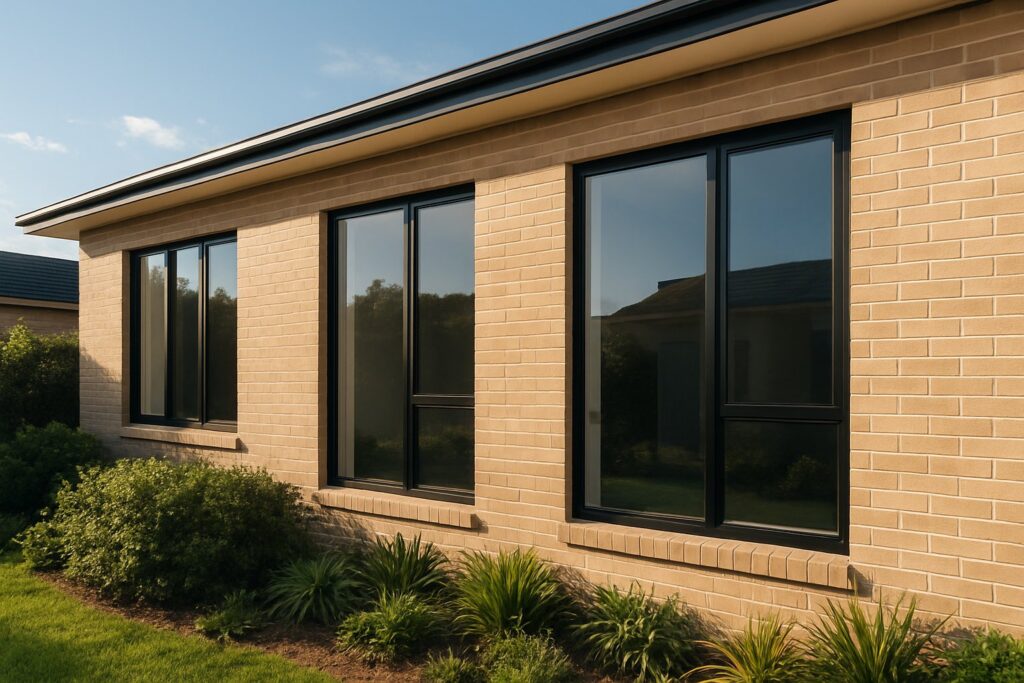
Brushed aluminium windows are window systems with frames finished using a mechanical abrasion technique that creates uniform, directional grain lines across the metal surface. Unlike painted, powder-coated, or anodized finishes, the brushed finish produces a matte metallic sheen with visible linear texture, giving the frames a refined industrial character.
Defining the Brushed Aluminium Finish
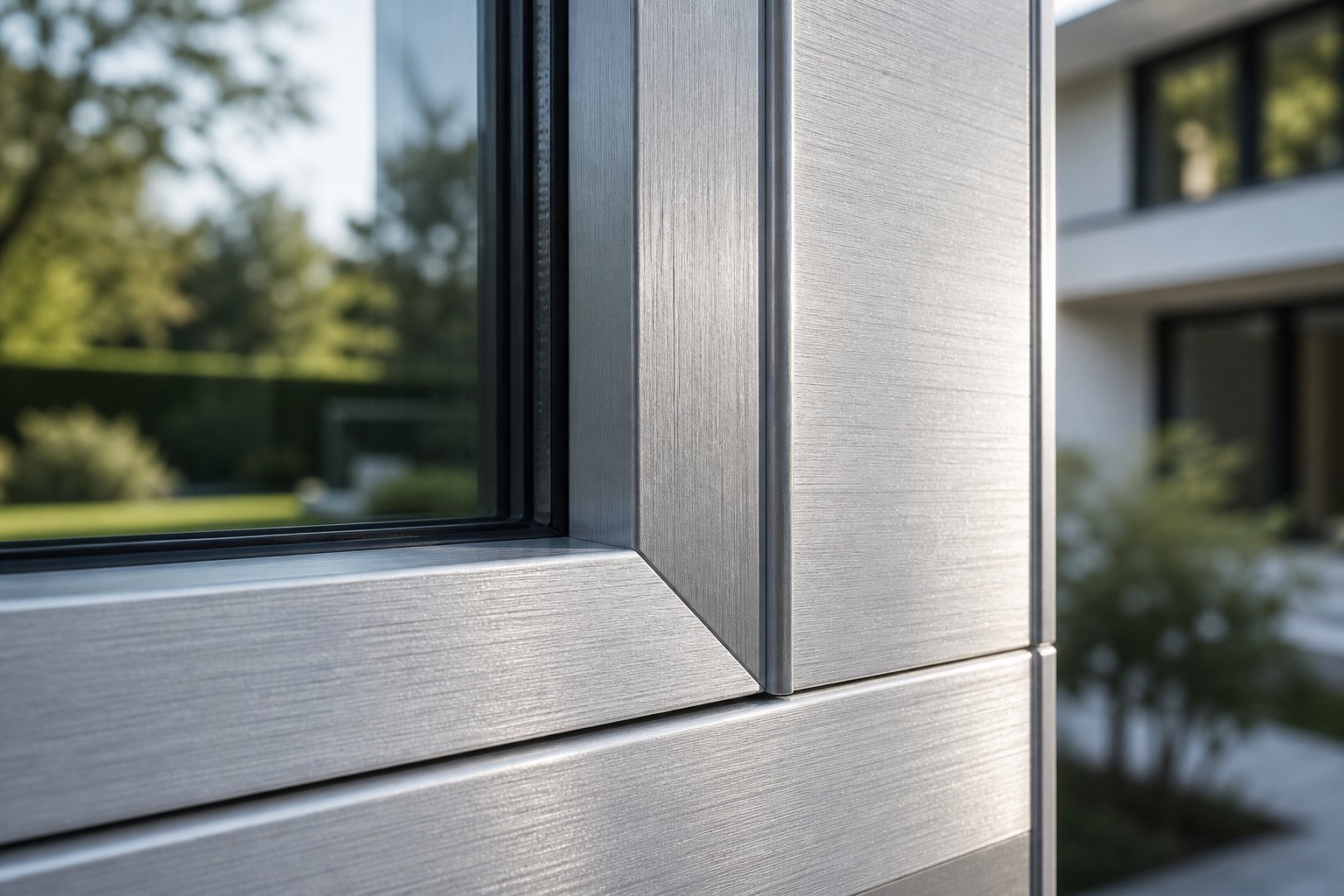
The term “brushed” describes a physical process, not a colour or coating. Abrasive belts or wire brushes are drawn across the aluminium window frames in a single, consistent direction. The result is a surface covered in fine parallel lines that catch light softly rather than reflecting it sharply. You can feel the texture under your fingernails, a subtle grain that sets these frames apart from the smooth, uniform look of powder-coated or anodized alternatives.
Visually, brushed aluminium sits between a mirror-polished surface and a flat matte panel. It reads as honest and material-forward, letting the metal speak for itself. That tactile quality also serves a practical purpose: the directional grain helps conceal fingerprints and minor surface scratches, keeping aluminium windows looking clean with minimal effort.
Why Brushed Aluminium Is Gaining Popularity
Contemporary Australian architecture increasingly favours raw, authentic material expression. Concrete, timber, and exposed steel are standard in new builds and renovations alike. Brushed aluminium window frames fit naturally into this palette because they reveal the metal rather than hiding it beneath layers of paint.
For architects specifying aluminium joinery across a project, the brushed finish offers visual consistency without the colour-matching challenges that come with painted systems. It pairs effortlessly with neutral facades, dark brickwork, and natural cladding. Homeowners drawn to low-fuss exteriors appreciate that the finish ages gracefully, developing character rather than peeling or chalking over time.
This guide breaks down everything you need to evaluate: how the finish is made, how it performs against other options, and whether it suits your climate and design goals.
How the Brushed Aluminium Finish Is Created
A brushed finish is not something that happens by accident during manufacturing. It is a deliberate, controlled step that transforms a plain aluminium extrusion into a textured surface with real visual depth. Understanding how the process works helps explain why some aluminium frames for windows hold up beautifully for decades while others deteriorate within a few years — the finishing method and what follows it make all the difference.
The Mechanical Brushing Process
Every brushed aluminium frame window starts as a raw extrusion — a length of aluminium alloy pushed through a die to form the frame profile shape. At this stage, the surface is relatively smooth but carries minor imperfections from the extrusion process. The brushing step replaces those random marks with intentional, uniform grain lines.
Here is how manufacturers typically produce the finish on window profiles aluminium:
- Surface preparation — The raw extrusion is cleaned and degreased to remove oils, dust, and residue. Any contamination left on the surface will embed into the grain during abrasion.
- Coarse abrasion — Abrasive belts or non-woven pads (typically 120–180 grit) are drawn across the aluminium in a single, consistent direction. This establishes the primary grain pattern and removes existing surface irregularities.
- Progressive refinement — Finer grits (240, then 320–400) follow in sequence, each pass smoothing the scratches left by the previous one. Skipping grit levels creates an uneven texture, so manufacturers work through the progression methodically.
- Inspection and cleaning — The finished surface is wiped clean and inspected under angled light to confirm consistent grain direction and depth across the entire profile length.
- Protective treatment — A clear lacquer, anodised layer, or other sealant is applied to lock in the finish and prevent oxidation over time.
That final step is optional but strongly recommended. Without protection, a brushed surface will begin oxidising within one to three years depending on environmental exposure. With anodising or a clear coat, the same finish can last 15 to 25 years or more.
Brushed Versus Anodized and Powder-Coated Finishes
Brushing is a mechanical texture. Anodising and powder coating are protective treatments. They serve different purposes, and in practice, they are often combined rather than treated as competing options.
Anodising is an electrochemical process that grows a hard oxide layer directly from the aluminium surface. It does not sit on top of the metal — it becomes part of it. When applied over a brushed surface, the grain pattern remains fully visible beneath the transparent oxide layer. This combination gives aluminium window framing both the aesthetic texture and strong corrosion resistance, making it a popular choice for exposed architectural applications.
Powder coating works differently. A dry powder is electrostatically sprayed onto the aluminum frame for windows and then cured under heat, forming a thick, opaque paint layer. It offers excellent durability and comes in virtually any colour, but it completely conceals the metal beneath. You lose the brushed grain, the metallic sheen, and the tactile quality. For homeowners who want the aluminium to look and feel like aluminium, powder coating defeats the purpose.
A third path — applying a clear lacquer over the brushed surface — offers lighter protection than anodising but preserves the raw metallic appearance with minimal visual change. It suits temperate, low-exposure environments where heavy-duty corrosion resistance is not critical.
The takeaway is straightforward: the brushing process creates the look, but what you apply afterward determines how long that look lasts. Choosing the right protective layer for your climate is where long-term performance is won or lost.
Durability of Brushed Aluminium Compared to Other Finishes
Protective layers determine longevity, but the underlying finish also plays a role in how well a frame handles daily life. Brushed aluminium has a structural advantage that is easy to overlook: the directional grain pattern itself contributes to perceived durability by disguising the kind of minor wear that would be immediately obvious on a smooth, glossy surface.
That said, perceived durability and actual durability are different things. Here is how brushed aluminium stacks up against the alternatives across the factors that matter most for window frames exposed to Australian conditions.
Scratch and Impact Resistance
Every aluminium window frame picks up surface contact over its lifetime — from cleaning, from hardware operation, from branches brushing against the glass line during storms. On a powder-coated frame, even a light scratch breaks through the paint layer and exposes bare metal beneath. The damage is visible and, in coastal areas, becomes a corrosion entry point.
Brushed aluminium handles this differently. Minor scratches that run parallel to the grain blend into the existing texture and become virtually invisible. Only perpendicular scratches — those cutting across the grain direction — stand out clearly. This self-concealing quality is one reason premium aluminium windows often specify a brushed finish for high-traffic residential and commercial applications.
Anodised surfaces offer harder scratch resistance overall because the oxide layer rates around 7 on the Mohs hardness scale, compared to raw aluminium at roughly 2.5–3. Anodized aluminium window frames combine that hardness with the brushed aesthetic when the anodising is applied over the textured surface, giving you the best of both worlds.
Corrosion Protection and UV Stability
Aluminium does not rust, but it can pit and corrode when exposed to salt air, acidic rain, or prolonged moisture contact. The level of protection depends entirely on what sits over the brushed surface:
- Raw brushed (no coating) — Develops a thin natural oxide layer that offers basic protection in mild environments. In coastal or industrial zones, pitting can begin within one to three years.
- Clear-coated brushed — A lacquer layer blocks moisture and pollutants from reaching the metal. Effective in temperate urban settings but may degrade under intense UV within five to eight years without reapplication.
- Clear anodized brushed — The electrochemical oxide layer is far more robust than a natural oxide. Clear anodized aluminum windows maintain their appearance for 20 years or more, even in demanding environments, because the protection is integral to the metal rather than sitting on top of it.
- Bronze anodized brushed — The same anodising process with a colour pigment introduced during treatment. Bronze anodized aluminum windows offer identical corrosion resistance to clear anodized versions while adding a warm, darker tone that suits heritage-adjacent and earth-toned facades.
UV stability follows a similar pattern. Raw brushed aluminium gradually dulls and develops a chalky appearance under prolonged sun exposure. Anodised and powder-coated surfaces resist UV degradation far more effectively, with quality powder coatings retaining colour for 15 to 20 years and anodised finishes holding indefinitely since there is no pigmented layer to fade.
Lifespan Expectations by Finish Type
Honest comparison requires acknowledging trade-offs. A raw brushed finish without protective treatment is more vulnerable than a well-applied powder coat in harsh conditions. But brushed aluminium paired with a clear anodised overlay delivers durability that matches or exceeds powder coating — while preserving the metallic grain that makes the finish distinctive in the first place.
Bronze aluminium windows finished with anodised protection are particularly well-suited to Australian conditions where UV intensity is high and coastal exposure is common. The anodised layer does not peel, chip, or require touch-ups the way paint-based systems eventually do.
For buyers weighing anodized aluminum frame windows against powder-coated alternatives, the decision often comes down to repairability versus longevity. Powder coating can be touched up locally if damaged. Anodising cannot be spot-repaired — but it rarely needs repair in the first place.
| Durability Factor | Brushed Aluminium (Raw or Clear-Coated) | Powder-Coated Aluminium | Clear Anodized Aluminium | Bronze Anodized Aluminium |
|---|---|---|---|---|
| Scratch Resistance | Moderate — grain conceals parallel scratches but surface is relatively soft | Good — paint layer resists light abrasion but chips on impact | Excellent — hard oxide layer (Mohs 7) resists most surface contact | Excellent — same hardness as clear anodized |
| Corrosion Resistance | Low to moderate — depends on coating; vulnerable in coastal zones without protection | Good — sealed paint layer blocks moisture effectively | Excellent — integral oxide layer provides long-term barrier | Excellent — identical protection to clear anodized |
| UV Stability | Low — raw finish dulls over time; clear coat may yellow after 5–8 years | Good — quality coatings retain colour 15–20 years | Excellent — no pigment to fade; appearance holds indefinitely | Excellent — pigment is locked within the oxide layer, not on the surface |
| Maintenance Frequency | Quarterly cleaning; clear coat reapplication every 5–8 years | Quarterly cleaning; touch-ups as needed for chips | Quarterly cleaning only; no recoating required | Quarterly cleaning only; no recoating required |
| Expected Lifespan | 5–15 years (depending on coating and climate) | 15–20 years before recoating needed | 25+ years with minimal intervention | 25+ years with minimal intervention |
The table makes one thing clear: the brushed aesthetic does not require a durability compromise. When paired with anodising, it delivers the longest service life of any common aluminium window finish — a combination that ages better than the building it is installed in.
Performance numbers only tell part of the story, though. How a finish holds up also depends heavily on where the building sits — coastal salt spray, tropical humidity, and inland UV each stress aluminium frames in different ways.
How Brushed Aluminium Performs in Different Climates
Australia spans everything from tropical coastlines to arid inland plains to cool temperate cities. A finish that thrives in Melbourne may struggle on the Sunshine Coast without the right protective treatment. The good news: aluminium alloy windows do not rust — ever. Unlike steel, aluminium forms no iron oxide. But that does not make it invincible. Pitting corrosion, surface dulling, and mould accumulation are all real concerns in specific climates, and each demands a different defensive strategy.
Here is how brushed aluminium frames respond to Australia’s major climate zones, and what protection each environment requires.
Coastal and Marine Environments
Salt is the primary threat. Airborne chloride from breaking waves does not just settle on beachfront properties — significant salt deposits have been measured more than 80 kilometres inland from the shore. When chloride ions contact an unprotected brushed surface, they overwhelm the thin natural oxide layer and trigger visible pitting within weeks. Prolonged exposure can compromise the frame’s structural integrity entirely.
For homes along the NSW coast, Queensland’s Gold Coast, or anywhere in WA’s coastal belt, an uncoated brushed finish is simply not viable. The brushed texture itself can trap salt deposits in its grain lines, accelerating the problem if frames are not cleaned regularly. Concave sections of the frame profile that hold moisture — or blocked weepholes in sliding systems — create prolonged contact with salinised water, compounding the risk.
High quality aluminium windows destined for marine environments need a Class I anodised layer over the brushed surface at minimum. This combination preserves the grain aesthetic while providing a hard barrier tested to withstand thousands of hours of salt spray exposure. Powder coating to AAMA 2605 equivalent standards is another proven option, though it conceals the brushed texture beneath an opaque layer.
High UV and Extreme Heat Regions
Inland Australia — think western NSW, central Queensland, or the Northern Territory — delivers punishing UV radiation year-round. Aluminium handles heat exceptionally well; it will not warp, soften, or deform the way uPVC can under sustained high temperatures. That thermal stability makes metal frame windows a reliable choice for aluminium house windows in regions where summer surface temperatures regularly exceed 60°C.
The vulnerability is cosmetic rather than structural. Intense UV gradually breaks down clear lacquer coatings, causing yellowing or hazing within five to eight years. A raw brushed surface without any coating will dull and develop a chalky oxidised appearance over time. In tropical zones like Darwin or Cairns, high humidity compounds the issue by encouraging mould growth in the grain texture and condensation on frame surfaces during wet season temperature swings.
Anodising is the strongest defence here because the oxide layer cannot be degraded by UV — there is no organic component to break down. For tropical builds, ensuring adequate drainage in frame profiles and specifying thermally broken systems to reduce condensation are equally important considerations.
Temperate and Urban Settings
Sydney, Melbourne, Adelaide, Hobart — these cities offer the most forgiving conditions for brushed aluminium. Moderate humidity, limited salt exposure (unless directly coastal), and lower UV intensity compared to the tropics mean that even a clear-coated brushed finish can perform well for years with basic maintenance.
Urban environments introduce their own mild stressors: pollution deposits, acid rain in industrial areas, and dust accumulation. None of these pose serious corrosion risks to a properly sealed surface, but they do require periodic cleaning to prevent the grain from looking dull or grimy.
For temperate zone projects, a clear anodised or lacquered brushed finish strikes the right balance between aesthetics and protection without over-engineering the solution.
- Coastal and marine (within 1 km of shoreline) — Class I anodised overlay mandatory; monthly cleaning to remove salt deposits; inspect weepholes and drainage channels quarterly.
- Near-coastal (1–10 km from shore) — Clear anodised finish recommended; bi-monthly cleaning; annual seal inspection.
- Tropical and high-humidity zones — Anodised finish preferred for UV and mould resistance; ensure frame profiles allow condensation drainage; clean quarterly with mould-inhibiting solution.
- High UV inland and arid regions — Anodised finish for UV immunity; clear lacquer acceptable if reapplied every five to seven years; quarterly cleaning to remove dust buildup.
- Temperate urban settings — Clear lacquer or light anodised finish sufficient; quarterly cleaning with mild soapy water; clear coat reapplication every seven to ten years if not anodised.
Climate determines the minimum level of protection your brushed frames need — but it does not limit whether you can use the finish at all. With the right treatment matched to your location, brushed aluminium performs reliably across every Australian climate zone. The real question for most homeowners is not whether the finish can handle their environment, but whether it affects the thermal performance of the window system itself.
Thermal Performance and Glazing Compatibility
Surface finish determines how a frame looks and how it weathers. It does not, however, determine how well that frame insulates your home. This is a distinction worth making clearly because it trips up a surprising number of buyers comparing aluminium frame windows to alternatives like timber or uPVC.
The brushed texture on an aluminium window frame is measured in microns of surface depth. Thermal performance, by contrast, is governed by the internal architecture of the profile — specifically the thermal break system, the frame depth, and the glazing package seated within it. A brushed frame with identical profile geometry to a powder-coated frame will return the same U-value. The finish is cosmetic; the engineering beneath it is structural.
Does Surface Finish Affect U-Values
In short: no. U-value measures the rate of heat transfer through a complete window assembly, expressed in W/m²K. Lower numbers mean better insulation. The factors that shift this number are frame profile depth, thermal break width, glazing type, gas fills between panes, and edge spacer materials. Surface treatments like brushing, anodising, or powder coating sit on the outermost layer of the aluminium and have no measurable impact on conductive heat flow through the frame body.
This matters for Australian homeowners evaluating options against NatHERS star ratings or WERS energy labels. Whether you choose a brushed, painted, or raw mill finish, the energy rating of your aluminium window systems remains identical — assuming the same profile and glazing configuration. Buyers sometimes compare aluminium to vinyl windows and assume the frame material alone dictates performance. In reality, a thermally broken aluminium system can match or outperform aluminum vinyl windows on U-value when the thermal break is properly engineered.
Thermal Break Technology Explained
Raw aluminium conducts heat at roughly 205 W/m·K — excellent for a frying pan, problematic for a window frame. Without intervention, an aluminium profile acts as a thermal bridge, channelling heat straight through from inside to outside (or the reverse in summer).
Thermal break technology solves this by splitting the frame into two separate aluminium sections — one facing indoors, one facing outdoors — connected by a strip of reinforced polyamide (PA66 GF25). This polyamide barrier has a thermal conductivity of just 0.3 W/m·K, creating an insulation zone that reduces frame U-values by 30–60% compared to non-thermally broken systems.
The width of that polyamide strip matters significantly. Standard residential systems use breaks between 14.8 mm and 24 mm wide. Premium aluminium framed windows designed for high-performance envelopes push that to 30–35 mm, achieving frame U-values as low as 1.6–2.2 W/m²K. For context, non-thermally broken aluminium frames typically sit around 5.8–7.0 W/m²K — a dramatic difference that has nothing to do with whether the surface is brushed, painted, or left raw.
Profile depth also plays a role. Deeper frames accommodate wider thermal breaks and larger glazing units, both of which improve overall window performance. When specifying windows with aluminum frame construction for energy-conscious projects, ask about thermal break width and profile depth before asking about finish options.
Glazing Compatibility With Brushed Frames
Glazing selection is entirely independent of surface finish. A brushed aluminium frame accepts the same glass configurations as any other aluminium frame — the rebate dimensions and bead systems are determined by the profile design, not the surface treatment applied to it.
This means you can pair your brushed frames with whatever glazing package your climate and budget demand:
| Glazing Type | Typical Configuration | Thermal Benefit | Best Suited For |
|---|---|---|---|
| Single glazed | 4–6 mm clear or toned glass | Minimal insulation; relies on frame and air sealing | Non-habitable spaces, internal partitions, mild climates with no energy code requirement |
| Double glazed (standard) | 4/12/4 mm with air fill | Moderate improvement; reduces heat transfer by approximately 50% over single glazing | General residential use in temperate zones; meets minimum NCC requirements in most climate zones |
| Double glazed (high performance) | 4/16/4 mm with argon fill and Low-E coating | Strong insulation; Low-E reflects radiant heat while argon slows conductive transfer | Energy-efficient homes across all Australian climate zones; recommended for WERS 4+ star targets |
| Triple glazed | 4/12/4/12/4 mm with argon fill and dual Low-E coatings | Maximum insulation; significantly reduces both heat loss and solar heat gain | Passive house projects, extreme climates, or noise-sensitive applications near airports or highways |
Low-E coatings deserve particular attention in Australia’s high-UV environment. These microscopically thin metallic layers reflect infrared energy while admitting visible light, reducing solar heat gain without darkening the room. Combined with argon gas fills between panes, they transform aluminium frame windows into genuinely high-performance assemblies — regardless of whether the frame exterior carries a brushed, anodised, or painted finish.
The practical takeaway is simple: choose your brushed finish for the look and feel you want, then specify your thermal break and glazing package independently based on your climate zone, energy targets, and budget. The two decisions do not conflict. A brushed aluminium frame fitted with thermally broken profiles and high-performance double glazing delivers the same energy rating as an identical system in any other colour or texture — the aesthetic is yours to enjoy without thermal compromise.
Architectural Styles That Suit Brushed Aluminium Windows
Thermal performance is universal across finishes, but visual impact is not. Where a brushed frame lands — the building style, the surrounding materials, the colour palette — determines whether it reads as intentional design or an afterthought. Some architectural languages practically demand the visible metal grain; others need more careful pairing to pull it off.
Contemporary and Minimalist Homes
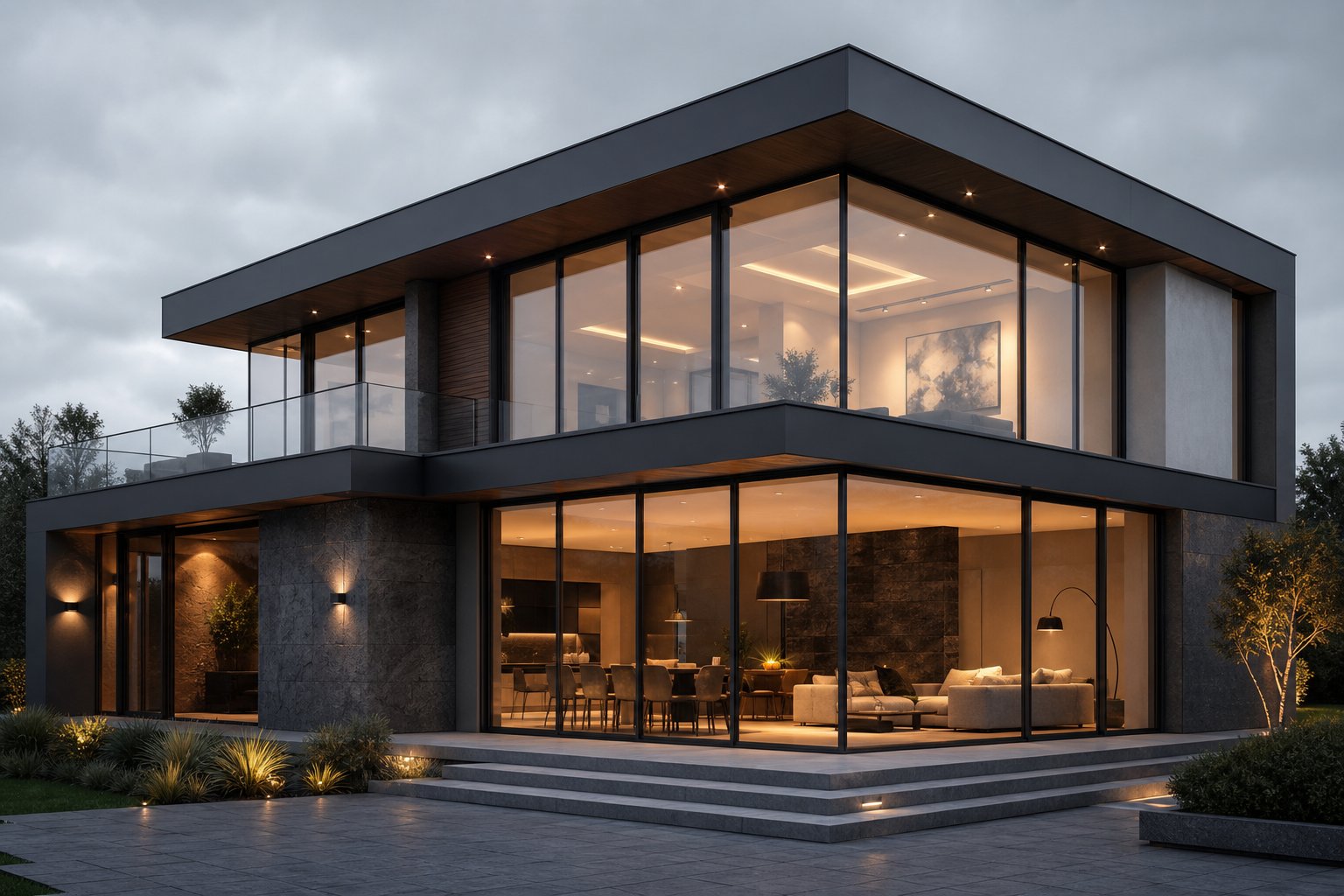
Flat roofs, rendered walls, open floor plans — the contemporary Australian home strips away ornament and lets materials do the talking. Brushed aluminium slots into this vocabulary without friction. The matte metallic sheen adds visual interest to otherwise plain facades without competing with the architecture’s clean geometry.
Modern aluminium windows in a brushed finish work particularly well as large-format fixed panes and floor-to-ceiling glazing, where slim frame profiles maximise glass area and the directional grain catches raking afternoon light. An aluminium fixed window spanning a living room wall becomes a design element in its own right — not just a hole in the envelope but a deliberate material statement. Pair these with sliding or bi-fold door systems in the same finish, and the entire glass line reads as a unified composition rather than a collection of separate openings.
For minimalist projects where aluminium window design needs to feel restrained yet textured, the brushed finish occupies a sweet spot between the starkness of raw mill aluminium and the flatness of a painted frame.
Industrial Conversions and Mid-Century Renovations
Warehouse-to-residential conversions thrive on exposed structure — steel beams, concrete soffits, brick walls left unrendered. Brushed aluminium frames echo that material honesty. The visible grain reads as deliberately unfinished in the best sense, sitting comfortably alongside polished concrete floors and blackened steel balustrades. Commercial aluminium windows specified for adaptive reuse projects often carry a brushed or natural anodised finish precisely because it matches the building’s industrial heritage without mimicking it.
Mid-century modern homes share a similar philosophy. Architects like Albert Frey championed aluminium as an honest, cost-effective material throughout the mid-twentieth century — using it for everything from structural columns to corrugated ceilings. Renovating a mid-century property with brushed aluminium frames honours that legacy. The finish references the era’s material directness without resorting to period pastiche, and it pairs naturally with the timber panelling, terrazzo, and exposed aggregate that define mid-century Australian homes.
Complementary Building Materials and Colour Palettes
Brushed aluminium is not a single tone. Depending on the alloy and whether a tinted clear coat or light anodising is applied, it can lean warm (slightly golden) or cool (blue-grey). This flexibility makes colour coordination more forgiving than most people expect.
Materials that pair well:
- Dark brick and charcoal render — The metallic grain provides contrast and lightness against heavy, dark surfaces.
- Natural timber cladding — Warm-toned brushed aluminium bridges the gap between organic and industrial, softening the metal’s edge.
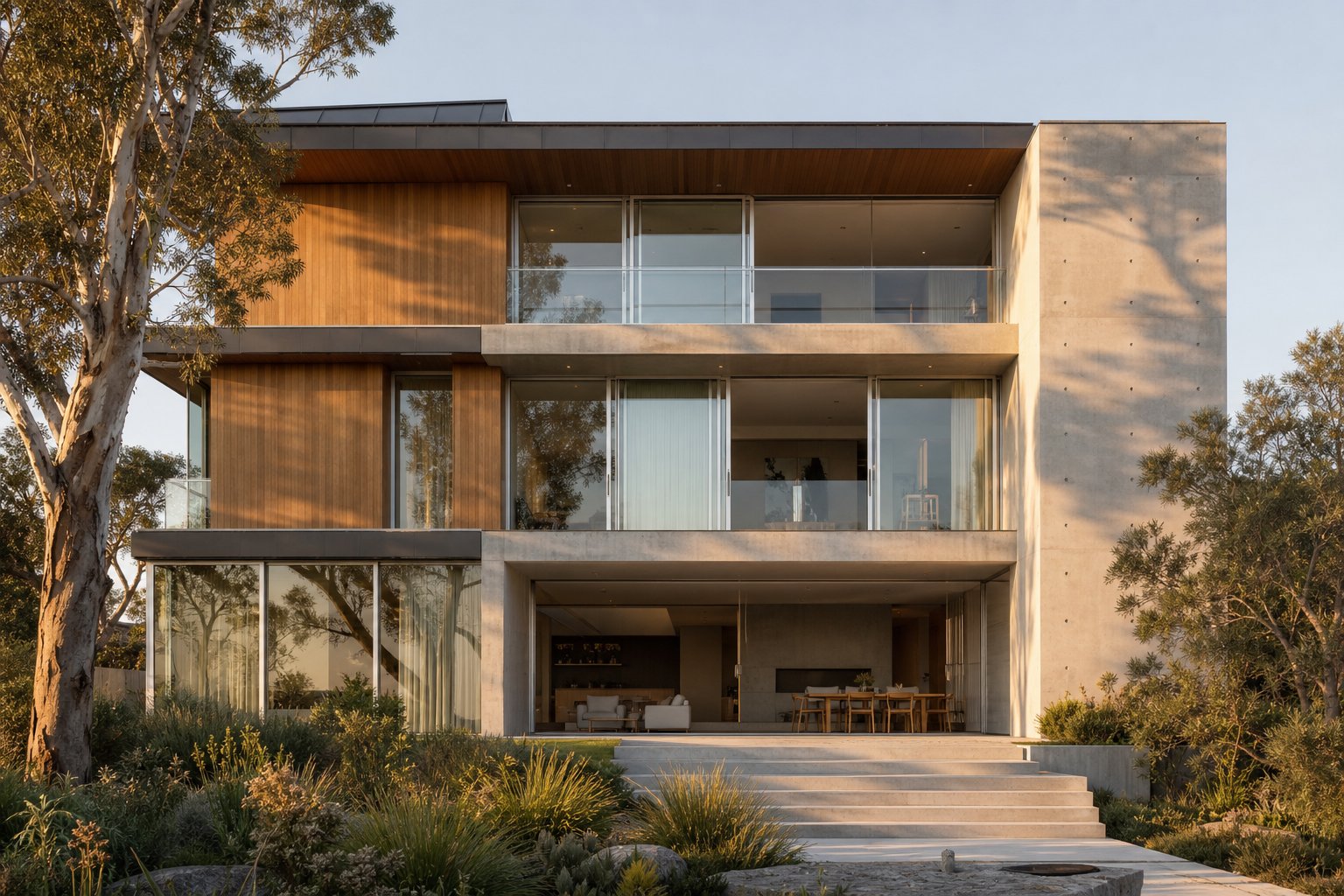
- Off-form concrete — Both materials share a raw, process-driven aesthetic. Together they create a restrained palette that feels cohesive without being monotone.
- Natural stone (sandstone, basalt, granite) — The fine linear grain of brushed aluminium contrasts with the irregular texture of stone, giving each material room to breathe.
For projects requiring bespoke aluminium windows — non-standard sizes, unusual configurations, or a consistent brushed finish across mixed window types — working with a manufacturer that offers custom window frames is essential. Aluminium picture windows, awning units, casement styles, and sliding systems all need to carry identical grain direction and tone for the facade to read as unified.
Australian suppliers like MEICHEN offer custom aluminium window solutions across multiple frame styles, allowing architects and homeowners to specify brushed finishes project-wide with consistent quality from fixed glazing through to operable units. That kind of range matters when the design intent depends on material continuity across an entire elevation.
Getting the style right is one thing. Keeping it looking right over time — and separating fact from fiction about how brushed aluminium actually behaves — is another conversation entirely.
Common Misconceptions About Brushed Aluminium Windows
Reputation can lag behind reality by decades. Many of the objections homeowners raise about brushed aluminium trace back to outdated experiences with bare metal frames from the 1970s and 80s — systems that bore little resemblance to what manufacturers produce today. Separating inherited assumptions from current performance is worth doing before ruling out a finish that may actually suit your project better than the alternatives.
Here are the four most persistent myths, paired with what the evidence actually shows:
- Myth: Brushed aluminium always looks cold and industrial.
The assumption is that exposed metal grain automatically reads as a factory aesthetic. In practice, the visual warmth of a brushed frame depends on alloy composition, surrounding materials, and whether a tinted clear coat is applied. Paired with timber cladding, warm-toned render, or natural stone, brushed aluminium takes on a softer character entirely. The directional grain catches light in ways that shift throughout the day — far more dynamic than a flat painted surface. Context determines temperature, not the metal itself. - Myth: It requires constant polishing or specialist maintenance.
This one likely stems from confusion with polished or mirror-finished metals, which do show every fingerprint and water spot. A brushed surface is the opposite — its textured grain conceals minor marks and dust. Routine care involves nothing more than a wipe-down with a soft cloth and mild soapy water. Compared to powder-coated frames that may need touch-up paint after chipping, or timber frames demanding sanding and resealing every few years, brushed aluminium is genuinely lower maintenance. No specialist products or professional polishing required. - Myth: Brushed aluminium only comes in one silver tone.
Silver is the default, but it is far from the only option. The brushing process can be applied to different aluminium alloys that carry subtly different base tones. Beyond that, tinted clear coats and coloured anodising open up a range of finishes — from dark grey aluminium with visible grain to warm bronze tones that suit heritage-adjacent designs. Black aluminium windows have surged in popularity for contemporary builds, and while most achieve that look through powder coating, a deep charcoal brushed finish with dark anodising offers a similar visual weight while retaining the tactile metal texture. Aluminium black windows do not have to sacrifice grain for colour. - Myth: Aluminium frames are poor insulators that make rooms cold.
This is the most damaging misconception and the most outdated. It was true of single-glazed, non-thermally broken frames installed decades ago. Modern aluminium window systems use polyamide thermal breaks that reduce frame U-values dramatically, achieving whole-window performance as low as 1.1 W/m²K in premium configurations. That puts thermally broken aluminium on par with — and in some cases ahead of — uPVC systems. The frame material is no longer the weak link; the thermal break engineering is what determines insulation performance.
None of these myths hold up under scrutiny. Black aluminium windows, warm-toned brushed finishes, and thermally efficient frames all exist today as standard offerings from quality manufacturers. The real question is not whether brushed aluminium can work for your project — it is how to maintain it properly so the finish delivers on its full lifespan potential.
Maintaining Brushed Aluminium Windows for Longevity
Knowing that brushed aluminium can last decades is one thing. Getting those decades out of it requires a small amount of regular attention — less than timber, less than painted steel, but not zero. The good news is that the maintenance routine is simple, inexpensive, and takes about fifteen minutes per window.
Cleaning Methods and Recommended Products
The single most important rule when cleaning a brushed aluminium window frame: always wipe in the direction of the grain. Moving your cloth perpendicular to the brush lines creates cross-scratches that catch light differently from the surrounding texture, leaving visible marks on an otherwise uniform surface.
Beyond that, the process is straightforward. A soft cloth with mild dish soap or a pH-neutral detergent in warm water handles most buildup. Rinse with clean water afterward and dry with a separate soft cloth to prevent water spotting — particularly important in hard-water areas where mineral deposits can dull the finish over time.
For stubborn marks that resist soapy water, a non-abrasive cream cleanser applied gently along the grain direction will lift most stains without damaging the surface. Test any new product on an inconspicuous section of the frame first.
While you are cleaning the window frames aluminium, take the opportunity to inspect the surrounding components:
- Check rubber seals and gaskets for cracking, compression, or gaps that could allow water ingress.
- Clear weepholes and drainage channels of debris — blocked drainage traps moisture against the frame.
- Apply a silicone-based lubricant to hinges, rollers, and locking mechanisms to keep hardware operating smoothly.
- Look for early signs of pitting or discolouration, which may indicate the protective coating is wearing thin.
What to Avoid on Brushed Surfaces
The textured grain that makes brushed aluminium forgiving of minor wear also makes it vulnerable to the wrong cleaning products. Aggressive chemicals can etch the surface or strip protective coatings in a single application.
Keep these away from your aluminium window frame:
- Steel wool or abrasive scouring pads — These cut through the grain pattern and leave deep, irreversible scratches.
- Alkaline cleaners containing ammonia — They can damage anodised layers and cause discolouration on uncoated surfaces.
- Acidic solutions (vinegar, citrus-based cleaners) — These attack the aluminium oxide layer that provides natural corrosion resistance.
- Chlorine-based or bleach products — Chlorides accelerate pitting corrosion, especially on frames already exposed to coastal salt air.
- Solvent-based cleaners or acetone — These strip clear-coat lacquers and can leave the brushed surface unprotected.
If you are unsure about a product, check its pH. Anything below 4 or above 9 is too aggressive for aluminium surfaces.
How Brushed Aluminium Ages Over Time
Unlike painted finishes that peel or chalk as they deteriorate, brushed aluminium ages through gradual tonal shift. Over years of exposure, the surface develops a slightly deeper, more muted patina — the metal equivalent of timber greying naturally. Many homeowners find this evolution attractive. The frame settles into its surroundings rather than fighting against them.
For those who prefer the original bright metallic appearance, periodic reapplication of a clear protective lacquer — roughly every five to eight years in temperate climates — resets the surface closer to its as-installed state. Anodised frames skip this step entirely since the integral oxide layer does not degrade the same way organic coatings do.
Either approach is valid. The patina path means less intervention and a frame that tells its own story. The maintained path keeps things looking factory-fresh. Both deliver a windows aluminium frame that outlasts most other building components with minimal fuss.
Here is a quick-reference maintenance schedule based on environment:
- Temperate urban areas — Full clean every three to four months; seal and hardware inspection annually; clear-coat reapplication every seven to ten years if not anodised.
- Coastal zones (within 10 km of shoreline) — Monthly wipe-down to remove salt deposits; full clean with soap and rinse every four to six weeks; seal inspection every six months.
- High-pollution or industrial areas — Monthly cleaning to prevent acidic residue buildup; quarterly hardware lubrication; annual protective coating assessment.
- Tropical and high-humidity regions — Quarterly clean with a mould-inhibiting solution; check drainage channels monthly during wet season; inspect seals bi-annually for mould growth behind gaskets.
Consistent, gentle care is the entire strategy. No specialist equipment, no professional services, no expensive proprietary products. A bucket of soapy water, a soft cloth, and fifteen minutes of attention each quarter will keep a brushed aluminium window frame performing and looking its best for the life of the building — and likely well beyond it.
Choosing Brushed Aluminium Windows for Your Project
Maintenance keeps your frames looking sharp over time, but the real leverage point is earlier — at the specification and ordering stage. Getting the right product installed from day one eliminates most of the problems that lead to premature replacement. The challenge is that brushed aluminium is not a single, standardised product. Protective treatments vary, thermal break widths differ between manufacturers, and some suppliers market a basic mill finish as “brushed” when the two are not the same thing.
A mill finish is the raw, unprocessed surface straight from the extrusion die — dull, marked with tooling lines, and inconsistent in appearance. A genuine brushed finish involves deliberate mechanical abrasion to create uniform directional grain. If your supplier cannot explain the difference or show you a physical sample with visible, consistent grain lines, you may not be getting what you are paying for.
Here is how to navigate the selection process with confidence, whether you are a homeowner renovating a single property or an architect specifying custom aluminium windows across an entire development.
Key Specifications to Confirm With Your Supplier
Not every aluminium window maker offers a true brushed finish, and among those that do, the protective treatment applied over the grain varies significantly. Before committing to a supplier, confirm these details in writing:
- Finish authenticity — Request a physical sample of the brushed finish. Confirm it shows uniform directional grain, not random mill marks. Ask what grit sequence is used during abrasion.
- Protective treatment type — Verify whether the brushed surface is clear-coated, anodised, or left raw. For coastal or high-UV locations, insist on anodising to AS 1231 standards.
- Thermal break specification — Confirm the polyamide break width (minimum 20 mm for general residential; 30 mm+ for high-performance envelopes) and check that the system meets NCC Section J energy requirements for your climate zone.
- Glazing compatibility — Ensure the frame profile accommodates your required glazing thickness — particularly important if specifying argon-filled double glazing or triple-glazed units.
- Finish consistency across window types — If your project includes a mix of fixed, awning, sliding, and casement windows, confirm the supplier can deliver identical grain direction and tone across all frame styles. Inconsistency between units is immediately visible on a finished facade.
- Compliance documentation — Ask for test reports demonstrating compliance with AS 2047 (windows and external glazed doors) and AS 1288 (glass selection and installation). A reputable supplier provides these without hesitation.
Price matters, but chasing cheap aluminium windows without verifying these specifications is how homeowners end up with frames that pit within two years or thermal performance that fails to meet code. The cost difference between a properly specified brushed system and a budget alternative is modest compared to the cost of replacement.
Questions to Ask Before Ordering
Beyond technical specs, the supplier relationship itself matters — especially for custom aluminium windows where lead times, finish matching, and after-sales support can make or break a project experience. Use these questions to separate serious manufacturers from resellers with limited control over quality:
- Do you manufacture the frames in-house, or are they sourced from a third-party extruder? (In-house production gives better quality control over the brushing process.)
- Can you provide a written warranty covering both the frame structure and the surface finish? What does it exclude?
- How do you handle finish matching if additional windows are ordered later — for a future extension, for example?
- What is your lead time for custom aluminium doors and windows in a brushed finish versus standard powder-coated options?
- Can I visit your workshop or view completed installations using the same finish I am specifying?
- What protective treatment do you recommend for my specific location, and why?
- Do you supply aluminium windows for sale as supply-only, or do you offer supply and install packages with site measurement?
A confident aluminium window maker answers these questions directly and backs claims with documentation. Evasiveness — particularly around profile thickness, finish process, or warranty terms — is a reliable red flag.
For Australian projects, MEICHEN’s aluminium window range covers multiple window types with custom frame options and performance specifications suited to both residential and commercial applications. Their offering spans fixed, awning, sliding, and casement configurations — making them a strong option for projects requiring consistent brushed finishes across an entire elevation, with the technical documentation to support compliance with Australian standards.
Ultimately, the right supplier is one that treats aluminium doors and windows as engineered building components rather than commodity products. They should be willing to discuss your climate, your energy targets, and your aesthetic goals — then recommend a system that satisfies all three without compromise. That conversation, had early and thoroughly, is what separates a window installation that ages gracefully from one that ages out.
Frequently Asked Questions About Brushed Aluminium Windows
1. What is the difference between brushed aluminium and powder-coated aluminium windows?
Brushed aluminium is a mechanical texture created by drawing abrasive belts across the metal in one direction, producing visible grain lines and a matte metallic sheen. Powder coating is an opaque paint layer cured under heat that completely conceals the metal beneath. Brushed finishes reveal the natural aluminium character and hide minor scratches within the grain, while powder coating offers a wider colour range but can chip on impact. The two serve different aesthetic goals — brushed suits material-forward contemporary designs, while powder coating works when a specific colour match is needed.
2. How long do brushed aluminium window frames last in coastal areas?
In coastal environments, longevity depends entirely on the protective treatment applied over the brushed surface. A raw brushed finish without coating can begin pitting within weeks of salt exposure. However, brushed aluminium with a Class I anodised overlay — tested to withstand thousands of hours of salt spray — can last 25 years or more in marine conditions. Monthly cleaning to remove salt deposits and quarterly inspection of drainage channels are essential maintenance steps for coastal installations. Australian suppliers like MEICHEN can advise on the correct specification for your proximity to the shoreline.
3. Does a brushed finish on aluminium windows affect energy efficiency?
No. Surface finish has no measurable impact on a window’s thermal performance or U-value. Energy efficiency in aluminium window systems is determined by the thermal break width (polyamide strips that interrupt heat transfer), frame profile depth, and glazing type. A brushed aluminium frame with identical internal geometry to a powder-coated frame delivers the same energy rating. Modern thermally broken aluminium systems achieve whole-window U-values as low as 1.1 W/m²K, making them comparable to uPVC regardless of the exterior finish selected.
4. How do you clean and maintain brushed aluminium windows?
Clean brushed aluminium frames by wiping in the direction of the grain with a soft cloth and mild soapy water, then rinse and dry. Avoid abrasive pads, steel wool, ammonia-based cleaners, acidic solutions, and chlorine products — all of which can damage the surface or strip protective coatings. In temperate areas, a full clean every three to four months is sufficient. Coastal properties need monthly attention to remove salt deposits. During each clean, inspect rubber seals for cracking, clear weepholes of debris, and lubricate hardware with silicone-based products.
5. Can brushed aluminium windows come in colours other than silver?
Yes. While natural silver is the default, brushed finishes can be applied to different aluminium alloys with subtly different base tones. Tinted clear coats and coloured anodising expand the palette further — options include dark grey with visible grain, warm bronze tones for heritage-adjacent designs, and deep charcoal finishes that offer a similar visual weight to black aluminium windows while retaining the tactile metal texture. The key is working with a manufacturer who offers these variations and can maintain finish consistency across all window types in your project.
More Window & Door Guides