What Is a Spiral Balance in an Aluminium Window?
That double-hung window refusing to stay open isn’t just annoying — it’s a spiral balance problem. Most generic repair guides assume timber or vinyl frames, but aluminium windows have their own channel dimensions, tolerances, and material interactions that demand a targeted approach.
A spiral balance is a compact counterbalance mechanism consisting of a twisted metal rod housed inside a narrow tube, connected to an internal torsion spring. It supports the weight of a window sash, allowing it to stay open at any height without external props.
How Spiral Balances Work in Aluminium Frames
The principle is straightforward. Inside a metal tube sits a tightly wound torsion spring. A spiral rod — essentially a helically twisted steel shaft — connects the spring to the sash via a hook or pivot shoe at the bottom. When you raise the sash, the spring stores energy through rotation. When the window is released, that stored tension holds the sash in place against gravity.
This differs from a block-and-tackle system, which relies on a cord-and-pulley arrangement inside a channel, or a constant-force coil balance that uses a flat metal ribbon under consistent tension. Compared to a spiral balance vs block and tackle setup, the spiral mechanism is more compact and fits within narrower jamb channels — a trait that suits aluminium profiles well.
Why Aluminium Windows Use Spiral Balance Systems
Aluminium frames are extruded to precise profiles, often with slimmer jamb cavities than timber or vinyl equivalents. Spiral balances slot neatly into these tighter spaces. Their tube diameter typically ranges from 9.5 mm to 16 mm, matching the narrow channels common in Australian aluminium double-hung windows.
Aluminium’s rigidity also plays a role. Unlike timber frames that can bow or swell with moisture, aluminium holds its shape over decades. That dimensional stability means the balance tube seats consistently — but it also means any failure in the balance itself becomes immediately obvious, since the frame won’t mask poor performance by flexing around the problem.
Understanding how spiral window balances work inside aluminium-specific geometry is the first step toward a lasting repair. The challenge, though, starts with confirming your window actually uses this system rather than one of its cousins.
Diagnosing Your Aluminium Window Balance Type
Jumping straight into a repair without confirming the balance type is a common and costly mistake. Not every aluminium double-hung window uses a spiral system. Depending on the manufacturer, era of construction, and frame profile, your window could house a block-and-tackle channel balance, a constant-force coil, or even a proprietary hybrid mechanism. Accurate aluminium window balance type identification saves time, money, and frustration.
Visual Identification of Spiral Balance Hardware
The fastest way to determine what type of balance does my window have is to tilt or remove the sash and look at the hardware seated in the jamb channels. Spiral balances have distinctive visual characteristics that separate them from every other system. Here’s what to look for:
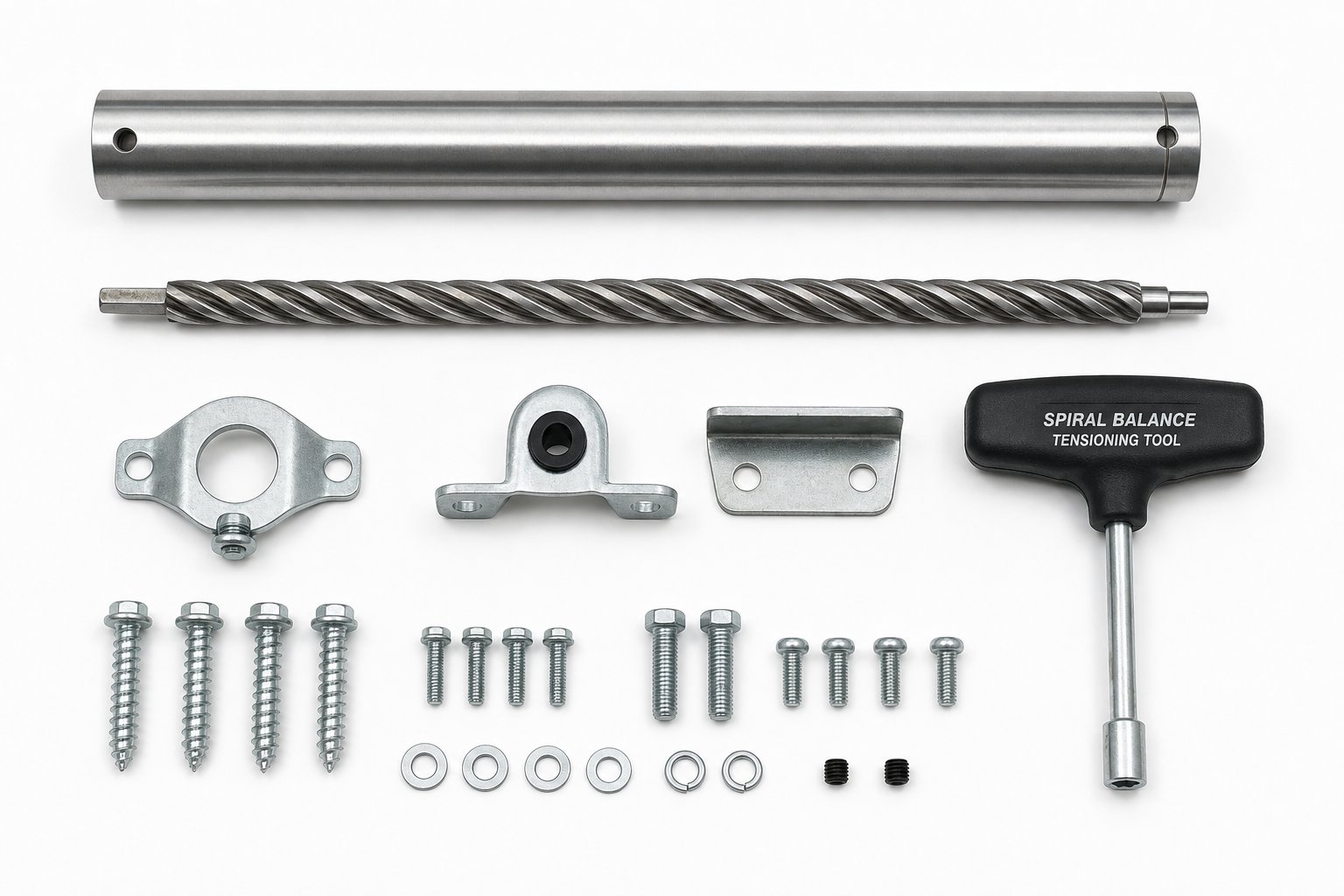
- Visible spiral rod: A twisted, helically coiled steel rod extending from a cylindrical tube. This is the clearest spiral balance visual indicator — no other balance type features this component.
- Round metal tube: The balance body is a smooth, circular tube (typically 9.5 mm to 16 mm in diameter) mounted vertically within the jamb channel. Block-and-tackle systems use a flat, U-shaped metal channel instead.
- Top-mounted bracket with screw attachment: Spiral balances secure to the top of the jamb via a small bracket held by one or two screws. Constant-force coils clip into a housing rather than screw in.
- Bottom hook or pivot shoe connection: The spiral rod terminates in a hook or engages a pivot shoe attached to the sash. If you see a nylon shoe riding in a channel track, that points to a block-and-tackle system instead.
Distinguishing Spiral From Block-and-Tackle Systems
Confusion between these two types is especially common in aluminium frames because both fit inside narrow jamb cavities. The critical difference: a block-and-tackle balance is a flat metal rail with nylon fittings at each end and an internal cord-and-pulley mechanism. It slides within a track. A spiral balance, by contrast, is a round tube with no visible cord — only the distinctive twisted rod.
If you tilt the sash inward and spot a U-shaped channel with a plastic shoe riding along it, you’re dealing with a block-and-tackle unit. If you see a cylindrical tube with a coiled rod poking out from one end, that confirms a spiral system.
One more consideration before ordering parts: some aluminium window brands use proprietary mounting configurations. Channel widths vary between manufacturers, and a balance that fits one brand’s extrusion may not seat properly in another’s. Always measure the internal channel width of your jamb and note the mounting bracket style before purchasing a replacement. Getting these details right at the identification stage prevents the far more frustrating discovery that a new part simply won’t fit your frame.
Common Spiral Balance Failures in Aluminium Frames
Confirming the balance type is only half the diagnostic puzzle. The next question is what, specifically, has gone wrong — because different failure modes call for different repair strategies, and some are far simpler to tackle than others.
Sash Drop and Loss of Tension
If your aluminium window sash keeps falling down the moment you release it, the most likely culprit is spring fatigue inside the balance tube. Over years of use, the internal torsion spring loses its ability to hold stored energy, and the rod can no longer counterbalance the sash weight. You might also notice the sash creeping downward slowly rather than dropping instantly — that’s partial tension loss, an early warning sign that complete failure is close behind.
A related symptom: the sash feels extremely heavy to lift, as though you’re fighting against resistance rather than being helped by the spring. This often means the balance has seized internally — corrosion or debris has locked the spiral rod, preventing it from rotating freely within the tube.
Broken Spiral Rod or Disconnected Hook
When you’re wondering why does my aluminium window not stay open and the sash simply free-falls, check whether the spiral rod has physically separated from the sash connection point. A spiral rod disconnected from sash hardware is a common failure in older installations where the bottom hook or cross-tab has corroded through or bent out of its retaining shoe.
Audible clues matter here too. Grinding or clicking sounds during operation suggest the spiral rod is damaged — bent, kinked, or partially unwound from its tube. As noted by The Craftsman Blog, spiral balances will not function properly with kinks or bends in the tube or the spiral itself.
Assessing DIY Feasibility for Each Failure Mode
Not every spiral balance broken symptom demands a professional callout. Some repairs take under an hour with basic tools, while others involve risks that warrant expert hands. The table below rates each common failure by difficulty and expected time investment:
| Symptom | Likely Cause | Difficulty Level | Estimated Repair Time |
|---|---|---|---|
| Sash drops slowly or won’t hold position | Spring tension loss | DIY-friendly (re-tension with spiral balance tool) | 20–30 minutes per balance |
| Sash free-falls when released | Broken spring or disconnected hook | DIY-friendly (full balance replacement) | 45–60 minutes per side |
| Sash extremely heavy to raise | Seized spiral rod or oxidation buildup | Moderate DIY (cleaning and lubrication) | 30–45 minutes |
| Grinding or clicking during operation | Bent or kinked spiral rod | Moderate to professional (straightening or replacement) | 1–2 hours |
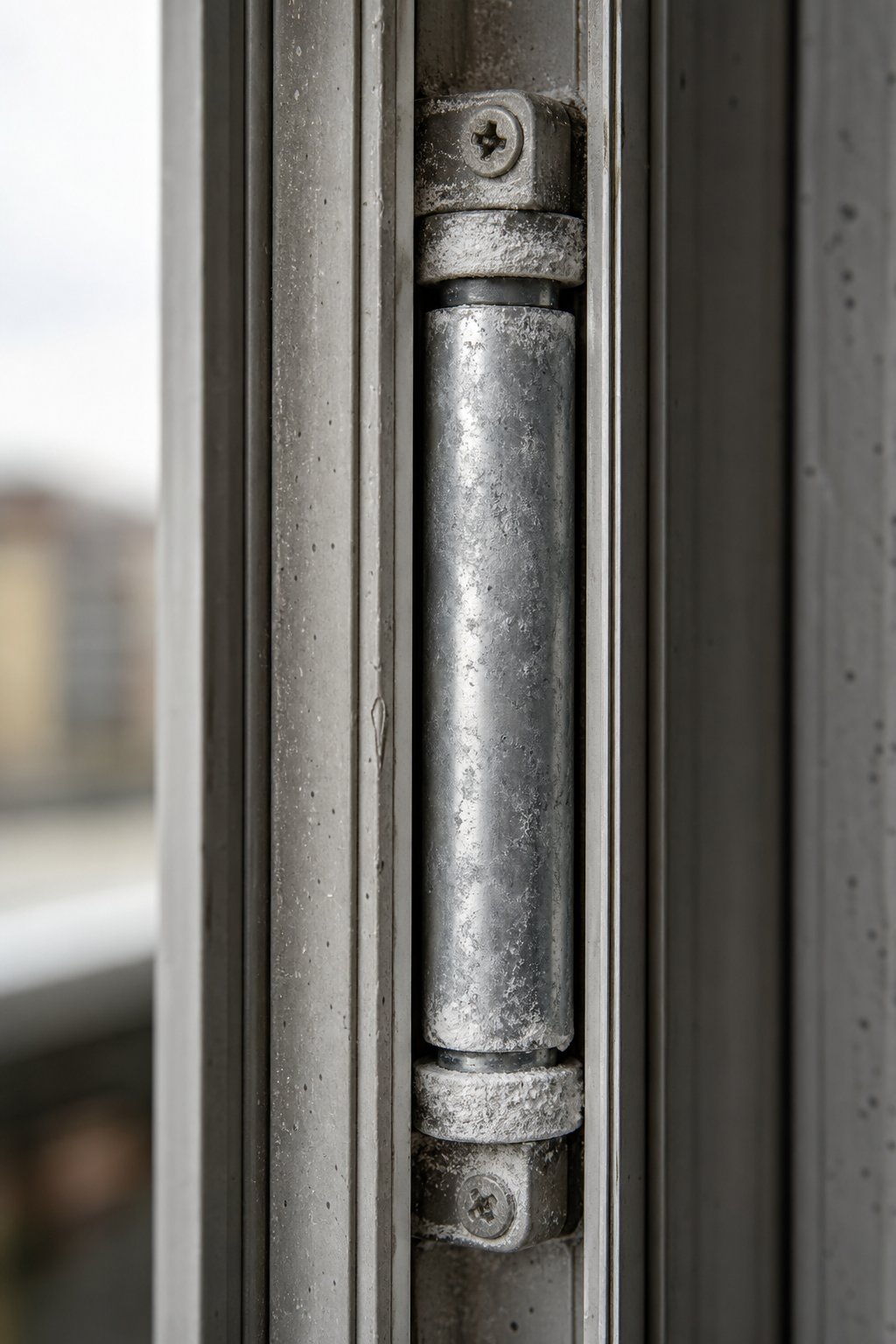
| White powdery residue around balance tube | Galvanic corrosion between steel and aluminium | Professional recommended | Varies — may require channel repair |
That last row highlights a problem unique to aluminium frames. Aluminium window balance corrosion problems typically stem from galvanic reaction — when a steel spiral rod or mounting screw sits directly against the aluminium jamb channel without an isolating barrier, an electrochemical reaction slowly eats into both metals. You’ll spot it as white or grey powdery oxidation around contact points. Unlike timber frames where warping and swelling cause the majority of balance issues, aluminium’s rigidity means the frame itself almost never contributes to the failure. The problem is nearly always internal to the balance hardware or at the metal-to-metal interface.
Oxidation buildup inside the balance tube housing creates another aluminium-specific headache. Aluminium oxide particles accumulate in the confined space, increasing friction on the spiral rod and accelerating wear. Seasonal temperature swings compound this — a topic that deserves closer attention, because the way aluminium expands and contracts directly influences how quickly these failures develop.
How Aluminium Frame Properties Affect Balance Performance
Aluminium isn’t just a neutral housing for your spiral balance hardware — its physical properties actively shape how that hardware ages, performs, and eventually fails. Three characteristics matter most: thermal movement, structural rigidity, and electrochemical reactivity. Understanding each one explains why aluminium window thermal expansion balance problems and corrosion issues develop differently than they would in timber or vinyl frames.
Thermal Expansion and Seasonal Performance Changes
All metals expand when heated and contract when cooled, but aluminium does so at roughly twice the rate of steel. A one-metre length of aluminium exposed to a 40°C temperature swing — entirely normal across an Australian summer day — will grow and shrink by nearly a millimetre. That might sound trivial, yet it accumulates at every mounting point inside your window jamb.
The top bracket securing a spiral balance tube sits in a pre-drilled hole in the aluminium channel. As the frame thermally cycles through seasons, that repeated micro-movement can gradually loosen screws and widen pilot holes. DC Iron’s fabrication guide notes that aluminium expands considerably more than steel, requiring additional tolerance in design. In window applications, this mismatch means the steel balance tube and its aluminium housing are never quite in sync — the frame moves more than the hardware seated within it.
Over several years of Australian temperature extremes, especially in climates like western Sydney, inland Queensland, or the arid interior, this constant push-and-pull fatigue can leave mounting screws rattling in their holes. A balance that was perfectly tensioned on installation day slowly loses its secure anchor.
Galvanic Corrosion Between Steel Components and Aluminium
Thermal movement loosens things. Galvanic corrosion destroys them. When a steel spiral rod or zinc-plated mounting screw contacts the aluminium jamb channel in the presence of moisture, an electrochemical reaction kicks off. The aluminium — being less noble on the galvanic scale — becomes the sacrificial anode. It pits, oxidises, and deteriorates around the contact point, producing that telltale white powdery residue.
Coastal Australian homes cop this worst. Salt-laden air acts as a supercharged electrolyte, dramatically accelerating the reaction between steel and aluminium. Builders Stainless classifies aluminium’s corrosion risk when in contact with stainless steel as “high in wet or salty environments” — and standard carbon steel spiral rods carry even greater risk than stainless.
Aluminium frame rigidity and balance wear interact here too. Because aluminium doesn’t flex or bow like timber, it won’t absorb or redistribute the stress caused by corroding hardware. A timber frame might mask a corroded balance bracket by swelling around it. An aluminium frame holds its shape exactly — meaning the corroded contact point remains under the same concentrated mechanical load until something gives way entirely.
The good news: these problems are preventable. A few targeted interventions during installation or repair create the barriers needed to break the corrosion circuit and accommodate thermal movement:
- Nylon bushings and plastic isolators: Insert between any steel component and the aluminium channel. These physically separate the dissimilar metals, eliminating the galvanic pathway.
- Silicone-based lubricant barriers: A thin film of silicone spray along the balance tube’s contact surfaces blocks moisture penetration while allowing smooth operation. Avoid petroleum-based products, which can degrade nylon components.
- Compatible hardware selection: Choose stainless steel (316 grade for coastal areas) or zinc-aluminium coated screws and brackets specifically rated for aluminium contact. Standard zinc-plated steel fasteners are the worst offenders.
- Thread-locking compound on mounting screws: Counteracts the loosening effect of thermal cycling by holding fasteners firm despite repeated micro-movement in the aluminium channel.
These material interactions aren’t academic — they dictate whether a spiral balance lasts five years or fifteen in an aluminium frame. Knowing the science helps, but translating it into a correct replacement part matters just as much. That means getting the measurements and specifications right before you order.
Selecting the Right Replacement Spiral Balance
Ordering the wrong spiral balance is frustratingly easy. Part numbers look cryptic, weight ratings use imperial conventions regardless of where you live, and tube diameters vary by fractions that seem insignificant until the new unit won’t seat in your aluminium channel. Getting this right the first time comes down to understanding three specifications: length, weight capacity, and tube diameter.
Decoding Spiral Balance Part Numbers
Most spiral balances carry a coded part number that tells you everything about the unit in a compressed format. The spiral balance part number meaning typically breaks down like this:
- Length: Measured tip to tip along the metal tube only — exclude any plastic end fittings. This is usually expressed in inches on the part stamp (e.g., “20” means a 508 mm tube). Australian suppliers like Mr Windows AU reference spring cut length in millimetres, with the black tube running approximately 63 mm longer than the spring itself.
- Weight rating: A number indicating how many pounds of sash weight that single balance can support. You’ll see this as a stamped figure or a colour-coded tip (red, blue, green, yellow, or black depending on manufacturer). Each colour corresponds to a specific weight range.
- Tube diameter: Commonly 9.5 mm (3/8″), 12.7 mm (1/2″), or 15.9 mm (5/8″). This must match your jamb channel’s internal width precisely.
Some manufacturers combine length and weight into a single alphanumeric code. If the stamping has worn off your old balance, measure the tube length and weigh the sash — those two figures are enough to identify the correct replacement.
Measuring Sash Weight for Correct Balance Selection
Figuring out what size spiral balance do I need starts with an accurate sash weight. The process is simple:
- Tilt or lift the sash out of the frame completely (disconnect both balances first).
- Place the sash on a bathroom scale. Note the total weight in kilograms.
- Divide by two — each balance supports half the sash weight.
- Convert the per-side figure to pounds (multiply kg by 2.2) to match standard balance ratings.
Aluminium window sash weight for balance selection depends heavily on glazing type. A single-glazed aluminium sash might weigh 8–12 kg, while a double-glazed equivalent of the same dimensions can reach 15–22 kg. The table below maps common sash weight ranges to the appropriate balance specification:
| Total Sash Weight | Per-Side Load | Balance Weight Rating (lbs) | Typical Tip Colour |
|---|---|---|---|
| 6–10 kg | 3–5 kg | 7–11 lbs | Blue or Green |
| 10–14 kg | 5–7 kg | 11–15 lbs | Yellow |
| 14–18 kg | 7–9 kg | 15–20 lbs | Red |
| 18–24 kg | 9–12 kg | 20–26 lbs | Black or Brown |
| 24–30 kg | 12–15 kg | 26–33 lbs | Heavy-duty (varies) |
Selecting a balance rated too low means the sash will still drift downward. Rated too high, and the window becomes difficult to close — the over-tensioned spring pushes the sash upward. Aim for a rating that matches or sits just slightly above the per-side weight.
Aluminium Channel Dimensions and Compatibility
Here’s where aluminium frames introduce a constraint that timber and vinyl windows rarely present. Aluminium extrusion profiles create narrow, precisely dimensioned jamb channels — often only 10–13 mm wide internally. The spiral balance tube diameter for aluminium channel applications is typically 9.5 mm or 12.7 mm. The larger 15.9 mm tubes common in timber double-hung windows simply won’t fit most aluminium profiles.
Before ordering, slide a ruler or caliper into the jamb channel where the old balance sat. Measure the internal width at both the top and bottom of the channel — aluminium channels maintain consistent dimensions, but paint buildup or oxidation deposits can narrow the effective space. If your measurement sits between standard sizes, always clean the channel first and re-measure before downsizing your tube diameter.
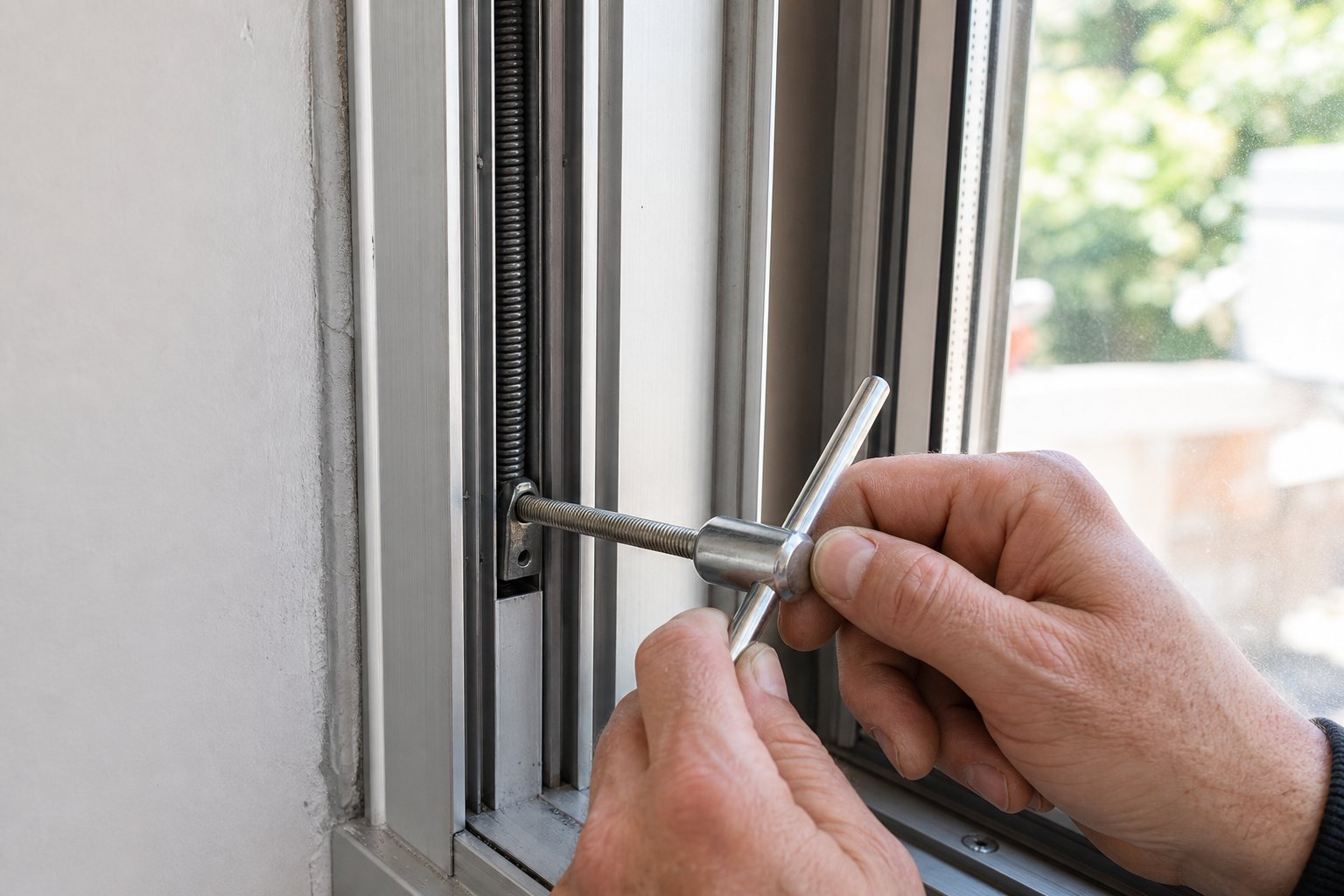
One final tool note: how to measure spiral balance for aluminium window applications also means planning for installation. A dedicated spiral balance tensioning tool — a simple T-handled rod that engages the spiral rod’s slot — is essential. Without it, you cannot wind the spring to the correct tension after fitting. These tools cost around $15–$25 AUD from window hardware suppliers and are reusable across every spiral balance repair you’ll ever tackle. Pliers or screwdrivers are poor substitutes that risk damaging the rod or losing grip under spring tension.
With specifications confirmed and the right replacement in hand, the actual swap becomes a methodical process — one that follows a specific sequence to avoid damaging your aluminium frame or the new hardware.
Step-by-Step Spiral Balance Repair for Aluminium Windows
Specifications confirmed, replacement balance in hand — time to get the old one out and the new one working. This DIY spiral balance replacement guide walks through the complete procedure with aluminium-specific cautions at each stage. Grab your tensioning tool, a Phillips-head screwdriver, and a prop stick cut to the height of your sash opening.
Removing the Sash From an Aluminium Frame
Aluminium window sash removal for balance repair follows a slightly different sequence than timber or vinyl frames because aluminium channels offer less flex for manoeuvring the sash out. Here’s the process:
- Raise the sash to its uppermost position and prop it securely with a cut stick or have a second person hold it. The sash must stay elevated throughout the disconnection steps.
- Disconnect the spiral rod from the sash shoe or cam. On most systems, the rod terminates in a cross-pin that seats between two prongs on a bracket at the sash base. Lift the rod slightly to unseat the pin. If the rod has already detached and is hanging loose in the jamb, skip ahead.
- Release the spring tension before removing anything else. Hook your tensioning tool into the small hole at the bottom of the spiral rod. Pull down approximately 25 mm, then slowly let the rod unwind by rotating the tool counter-clockwise until all resistance disappears. Prime-Line’s installation guide stresses never removing the top mounting screw while the balance still carries tension — the rod can whip free and cause injury.
- Remove the old balance tube. Unscrew the top mounting bracket from the aluminium jamb. With tension released, the tube lifts straight out of the channel. Repeat on the opposite side if replacing both balances (recommended — if one has failed, the other is likely close behind).
With both balances removed, lower the prop stick while supporting the sash, then tilt or lift the sash out of the frame. Set it aside on a padded surface to avoid scratching the aluminium.
Installing and Tensioning the New Spiral Balance
Fitting the replacement is essentially the removal process in reverse, but the fastening step is where aluminium demands extra care. Here’s how to replace spiral balance in aluminium window frames without damaging the extrusion:
- Insert the new balance tube into the jamb channel and secure the top bracket. Aluminium requires either self-tapping screws designed for the material or pre-drilled pilot holes. As Marsh Fasteners notes, forcing a screw into aluminium without a pilot hole risks cracking or stripping the thread channel. If reusing existing holes, check they haven’t widened from thermal cycling. Apply a small drop of thread-locking compound to the screw threads — this counteracts the loosening effect of aluminium’s thermal expansion over future seasons. Critically, avoid overtightening. Aluminium strips far more easily than timber; stop as soon as the bracket sits flush and firm.
- Reinstall the sash into the frame and prop it in the fully raised position. Feed the spiral rod down beside the sash until the cross-pin aligns with the sash bracket prongs.
- Tension the balance using the spiral balance tool. Hook the tool into the hole at the rod’s end. Rotate clockwise — this is where people ask how many turns to tension spiral balance units correctly. The standard starting point is six full clockwise rotations with the sash propped at its highest point, though lighter sashes may need only three to four turns while heavier double-glazed sashes can require up to eight. Allow the rod to retract so the cross-pin seats firmly into the bracket prongs. Repeat on the opposite side with the same number of turns.
These spiral balance tensioning instructions apply universally, but always tension both sides equally. Uneven tensioning causes the sash to rack sideways in the frame, creating binding and accelerated wear on the aluminium channel edges.
Post-Repair Testing and Adjustment
- Remove the prop stick and test the sash at multiple positions. Raise it halfway and release — it should hold steady without creeping up or drifting down. Test at one-quarter and three-quarter heights as well. A properly balanced sash stays exactly where you leave it.
If the sash drifts downward, prop it back up, unhook the rod, and add one or two additional clockwise turns to each side. If it pushes itself upward when you try to close the window, you’ve over-tensioned — reduce by one turn per side and retest.
A few final aluminium-specific cautions worth noting:
- Wear safety glasses during tensioning. A spiral rod under tension can flick free if the tool slips.
- Check that mounting screws haven’t cracked the aluminium around the pilot hole. Hairline cracks compromise long-term holding strength.
- Wipe down the aluminium channel with a silicone spray before reinstalling the sash — this removes oxidation particles and reduces friction on the balance tube.
The whole job typically takes 45 to 90 minutes per window depending on accessibility and whether the frame needs any cleaning. But there’s a practical question lurking behind every repair: at what point does fixing individual balances stop making financial sense, and full window replacement become the smarter investment?
When Repair Is Not Enough and Replacement Makes Sense
A single spiral balance replacement is almost always worth doing. Two replacements in the same window still make economic sense. But what about three windows failing in the same year? Or a balance that keeps losing tension every couple of seasons despite correct installation? At some point, the maths shifts — and repeated spiral balance repair vs window replacement cost comparisons start favouring a clean swap.
Deciding when to replace aluminium double hung window units rather than patching individual components involves more than just comparing the price of a $30 balance against a $600+ window. Several factors compound the true cost of ongoing repair.
Cost Comparison of Repair Versus Replacement
The direct material cost of a spiral balance replacement is low — typically $25 to $50 AUD per unit from Australian hardware suppliers, plus $15–$25 for the tensioning tool if you don’t already own one. Labour adds $80 to $150 per window if you hire a glazier. On paper, that’s a fraction of full window replacement. But consider the broader picture:
| Criteria | Spiral Balance Repair | Full Window Replacement |
|---|---|---|
| Upfront cost per window | $50–$200 AUD (parts + labour) | $500–$1,200 AUD (supply and install, standard size) |
| Energy efficiency improvement | None — existing glazing unchanged | Significant — double glazing reduces heat transfer by up to 50% |
| Addresses weatherstrip deterioration | No | Yes — new seals included |
| Resolves channel wear or corrosion | No — only replaces balance hardware | Yes — fresh extrusion profiles |
| Lifespan of fix | 5–10 years (depends on corrosion management) | 25–40 years |
| Recurrence risk | High if underlying causes persist | Minimal with modern systems |
| Impact on property value | Negligible | Measurable uplift at resale |
The real question isn’t is it worth repairing old aluminium window balances on a single unit — it usually is. The real question is whether the frame, glazing, and seals surrounding that balance still justify investment. A $150 repair on a window leaking $200 worth of heating and cooling energy per year doesn’t add up.
Signs Your Aluminium Double Hung Window Needs Full Replacement
Certain conditions push a window past the point where balance repair alone delivers meaningful value. Watch for these indicators:
- Multiple balance failures across the home: If three or more windows have lost balance function within a short timeframe, systemic age-related wear is at play. Replacing balances individually becomes a rolling maintenance burden rather than a one-off fix.
- Visible channel damage or pitting: Galvanic corrosion that has eaten into the aluminium jamb channel compromises the mounting surface for any new balance. Fresh hardware bolted into corroded aluminium won’t hold long-term.
- Failed weatherstripping and persistent draughts: Industry guidance from T&K Home Improvements identifies draughts around closed windows as a clear signal that the window system — not just one component — has degraded beyond effective repair.
- Single-glazed panels in climate zones requiring thermal performance: Australian homes now face increasingly stringent NatHERS energy ratings, and older single-glazed aluminium windows struggle to meet even modest targets. A balance repair restores mechanical function but does nothing for thermal or acoustic performance.
- Frame age exceeding 25–30 years: Aluminium frames from the 1980s and 1990s often lack thermal breaks, use outdated seal designs, and have accumulated decades of oxidation. The balance failure is a symptom, not the disease.
As Action Glass & Aluminium in Perth notes, aluminium window balance repair cost australia homeowners face often escalates when repeated fixes address symptoms while the underlying window system continues to underperform. Their assessment aligns with the general industry view: once a window has deteriorated past a functional threshold, replacement provides the only lasting resolution.
For homeowners, builders, or architects reaching this conclusion — particularly where multiple double-hung windows need attention across a project — purpose-engineered replacements eliminate the cycle of recurring balance maintenance entirely. Modern aluminium double-hung systems like MEICHEN’s MA150 Double Hung Window integrate balance hardware into the frame design from the outset, pair it with double-glazed insulating glass units, and use thermally improved profiles suited to Australian residential applications. That kind of system-level engineering means the balance mechanism, weatherseals, and glazing all work as a coordinated unit rather than aging independently.
None of this means every older aluminium window deserves scrapping. A structurally sound frame with intact channels, good weatherstripping, and only one or two tired balances is a perfect repair candidate. The key distinction: repair makes sense when the balance is the only thing failing. Replacement makes sense when the balance failure is just the most obvious symptom of a window that’s reached the end of its effective service life.
For those windows that do stay — the ones worth repairing and keeping for another decade — a proactive maintenance routine is what separates a five-year balance lifespan from a fifteen-year one.
Maintaining Spiral Balances to Prevent Future Failures
A freshly repaired spiral balance can last a decade or more in an aluminium frame — but only if you give it occasional attention. Neglect is what turns a fifteen-year balance into a five-year one. The good news: the aluminium window balance maintenance schedule that actually works requires less than an hour per year spread across a few short sessions.
Lubrication and Cleaning Best Practices
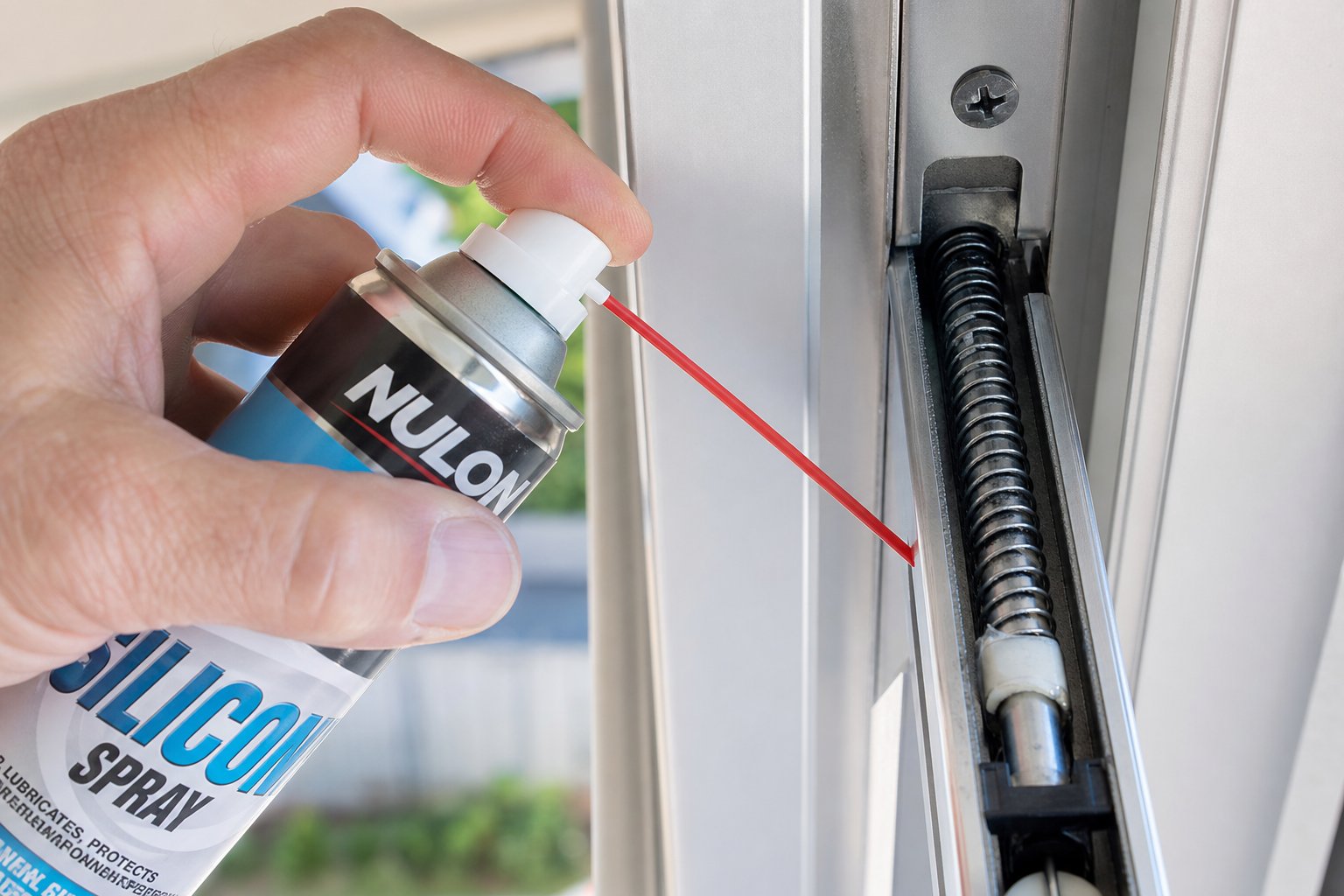
Choosing the best lubricant for spiral balance in aluminium frame applications comes down to one rule: silicone-based, never petroleum-based. Products like WD-40 or machine oil attract dust and grit that build into a paste inside the balance tube, accelerating wear on the spiral rod. Worse, petroleum derivatives can degrade nylon sash shoes and guide bushings over time. Vetrina Windows reinforces this point — oil-based lubricants attract dirt and eventually gum up the works, making them counterproductive for long-term maintenance.
To lubricate spiral window balance hardware effectively, tilt or remove the sash and apply a light mist of dry silicone spray directly onto the exposed spiral rod. Rotate the rod a few turns with your tensioning tool to distribute the lubricant along the full length inside the tube. Wipe any excess from the aluminium channel with a clean cloth — pooled lubricant collects debris rather than preventing it.
Cleaning the aluminium channel itself is equally important. Oxidation particles, fine dust, and salt deposits (particularly in coastal areas from Sydney’s northern beaches to Perth’s western suburbs) accumulate in the narrow jamb cavity and create friction against the balance tube. Use a vacuum with a crevice attachment to clear loose debris, then wipe the channel surfaces with a soft cloth dampened in a mild pH-neutral soap solution. Avoid abrasive cleaners or scouring pads — these strip protective coatings from the aluminium extrusion and accelerate future oxidation.
Seasonal Inspection Checklist for Aluminium Frames
Preventing spiral balance failure in aluminium windows is largely about catching small problems before they compound. Thermal cycling loosens screws. Humidity drives corrosion. UV degrades nylon components. A structured inspection routine catches each issue at the stage where a five-minute fix prevents a full replacement. Here’s the schedule that keeps everything in check:
- Monthly (30 seconds per window):
- Operate each double-hung sash through its full range — raise, hold at midpoint, lower. Listen for grinding or clicking that signals rod damage.
- Confirm the sash holds position when released at any height without creeping up or drifting down.
- Biannual — spring and autumn (15 minutes per window):
- Apply dry silicone spray to the spiral rod and sash shoe contact points.
- Vacuum and wipe jamb channels to remove accumulated dust and oxidation particles.
- Inspect nylon guide bushings and sash shoes for cracking, discolouration, or visible wear. Replace any component showing hairline fractures — a cracked shoe fails without warning.
- Check all mounting screws for looseness by hand. Re-seat any that have backed out from thermal cycling, applying thread-locking compound if they’ve loosened more than once.
- Annual — after the hottest summer months (20 minutes per window):
- Verify balance tension at all positions. After a full summer of aluminium expansion and contraction, tension can shift. If the sash drifts at mid-height, add one clockwise turn per side and retest.
- Examine the aluminium channel for white powdery residue around balance tube contact points — early-stage galvanic corrosion. Clean with a nylon brush and apply a fresh silicone barrier.
- For coastal properties, rinse exterior frame surfaces with fresh water to remove salt deposits that drive corrosion between dissimilar metals.
- Inspect the seal between the balance top bracket and the aluminium jamb. Look for any hairline cracking around screw holes that suggests the aluminium is fatiguing.
This entire routine adds up to roughly 45 minutes per window across a full year — a small investment against the cost and inconvenience of a complete balance failure. Consistent maintenance also makes future repairs simpler, because components stay clean, accessible, and properly documented.
For homeowners who find this recurring upkeep impractical — particularly across a home with six, eight, or ten double-hung windows — it’s worth knowing that modern purpose-built aluminium systems are designed to minimise exactly this kind of ongoing attention. Products like MEICHEN’s MA150 Double Hung Window engineer the balance mechanism, weatherseals, and frame tolerances as an integrated system with long-term serviceability built in from day one, offering a genuine upgrade path when maintenance fatigue sets in.
Frequently Asked Questions About Aluminium Window Spiral Balance Repair
1. How do I know if my aluminium window has a spiral balance?
Tilt or remove the sash and inspect the jamb channel. Spiral balances have a distinctive twisted steel rod extending from a round cylindrical tube (typically 9.5 mm to 16 mm in diameter) mounted vertically in the jamb. The rod terminates in a hook or cross-pin that connects to the sash. If you see a flat U-shaped channel with a nylon shoe instead, your window uses a block-and-tackle system. Always confirm the balance type before ordering replacement parts, as aluminium windows from different manufacturers and eras may use different systems.
2. Why does my aluminium window sash keep falling down?
A sash that drops or won’t hold position typically indicates spring fatigue inside the spiral balance tube — the internal torsion spring has lost its ability to counterbalance the sash weight. Other causes include a disconnected hook where the spiral rod has separated from the sash bracket, or a seized rod caused by oxidation buildup inside the tube. In aluminium frames specifically, galvanic corrosion between the steel spiral rod and the aluminium channel can accelerate these failures, particularly in coastal Australian environments where salt air acts as an electrolyte.
3. How many turns do I need to tension a spiral balance?
The standard starting point is six full clockwise rotations with the sash propped at its highest position. However, the correct number varies by sash weight — lighter single-glazed sashes may only need three to four turns, while heavier double-glazed aluminium sashes can require up to eight. After tensioning, test the sash at multiple heights. If it drifts down, add one turn per side. If it pushes itself upward, reduce by one turn. Always tension both sides equally to prevent the sash from racking sideways in the frame.
4. What size spiral balance do I need for my aluminium window?
You need three measurements: tube length (tip to tip, excluding plastic fittings), weight rating (per-side sash load in pounds), and tube diameter. Remove the sash, weigh it on a scale, divide by two, then multiply by 2.2 to convert kilograms to pounds. Match this figure to the balance weight rating. For aluminium frames, tube diameter is critical — most aluminium channels only accept 9.5 mm or 12.7 mm tubes, as the larger 15.9 mm units common in timber windows won’t fit the narrower aluminium extrusion profiles.
5. Is it worth repairing spiral balances on old aluminium windows in Australia?
A single balance replacement at $50 to $200 AUD per window is almost always worthwhile if the frame, glazing, and weatherstripping remain in good condition. However, if multiple windows are failing simultaneously, the aluminium channels show corrosion pitting, or the windows are single-glazed and struggling to meet current NatHERS energy ratings, full replacement becomes the smarter long-term investment. Modern aluminium double-hung systems like MEICHEN’s MA150 integrate balance hardware with double-glazed IGUs and thermally improved profiles, eliminating recurring maintenance cycles entirely.
More Window & Door Guides