Why Aluminium Windows Lead the Australian Market
Walk through any new housing estate from Perth to the Gold Coast and you will notice a pattern. The vast majority of windows sitting in those freshly rendered walls are framed in aluminium. This is not a coincidence or a passing trend — it reflects decades of proven performance in conditions that punish lesser materials.
Why Aluminium Dominates Australian Window Construction
Aluminium earns its place through a combination of material properties that align almost perfectly with Australian demands. Its strength-to-weight ratio allows for slimmer frame profiles and larger glass spans without structural compromise. That means more natural light and cleaner sightlines, even in expansive openings. Corrosion resistance matters enormously here — salt air along thousands of kilometres of coastline, intense UV exposure, and dramatic temperature swings all take their toll on window frames over time. Aluminium handles these stresses far better than most alternatives.
Aluminium accounts for the overwhelming majority of window frames specified in Australian new residential and commercial construction, a dominance driven by its durability, design flexibility, and suitability for the country’s harsh and varied climate conditions.
There is also the sustainability angle. Aluminium is infinitely recyclable without loss of quality, and the Australian window industry increasingly sources recycled content. For a country that takes environmental performance seriously in its building codes, that matters.
What This Guide Covers for Homeowners and Builders
This guide is not a product catalogue. It is a brand-neutral resource designed to help you navigate the real decisions involved in choosing windows in aluminium for an Australian home or commercial project. You will learn how to interpret specifications, understand what your specific climate zone demands, compare frame technologies, and evaluate suppliers on objective criteria. Whether you are building new, renovating, or simply replacing aged windows across Australia, the goal is straightforward: give you the knowledge to make a confident, informed purchasing decision rather than relying solely on a salesperson’s recommendation. Every Australian window project has unique constraints — your climate, orientation, budget, and building type all shape the right answer.
Aluminium vs Alternative Frame Materials for Australian Homes
Choosing a frame material is one of the earliest and most consequential decisions in any window project. Each option brings trade-offs, and what works brilliantly in a mild European climate can fall apart — sometimes literally — under Australian conditions. Here is how aluminium stacks up against the alternatives when judged by the criteria that actually matter on this continent.
Aluminium vs Timber Frames in Australian Conditions
Timber frames carry undeniable charm. They suit heritage restorations and period homes where council requirements or personal taste demand a traditional look. But charm comes at a cost in Australia. Timber requires regular painting or oiling — typically every three to five years — to prevent moisture ingress, warping, and termite damage. In coastal zones, salt air accelerates deterioration. In tropical regions, humidity invites rot. Over a 25-year lifespan, maintenance costs on timber frames can exceed the original purchase price.
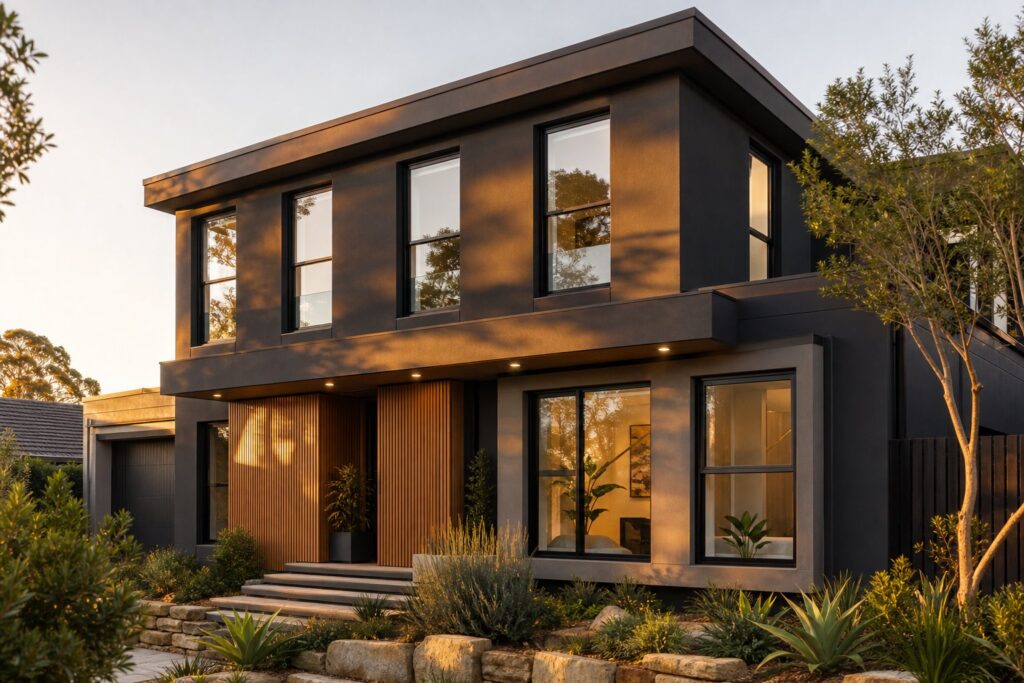
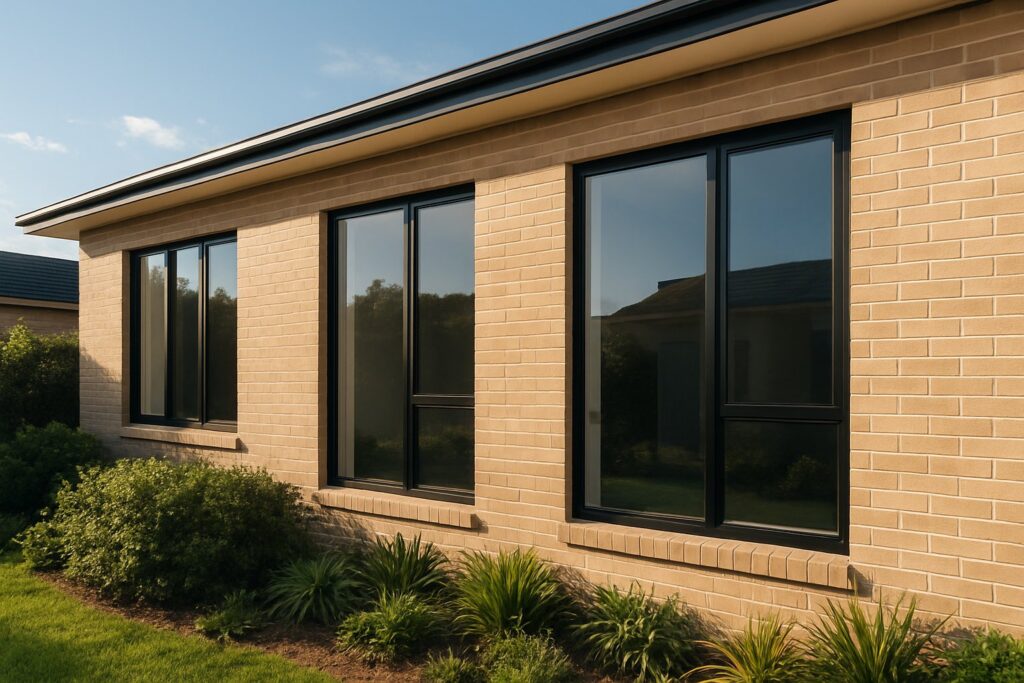
Aluminium sidesteps these issues entirely. A quality powder-coated finish resists UV degradation and salt corrosion with nothing more than an occasional wipe-down. Where timber frames limit colour options to whatever paint you apply (and reapply), aluminium offers factory-applied finishes in virtually any shade. Black aluminium windows have become a defining feature of contemporary Australian architecture, delivering bold contrast against light-coloured renders and cladding. Grey aluminium windows suit more understated palettes, blending with concrete, stone, and natural timber cladding without visual competition.
Aluminium vs uPVC and Composite Alternatives
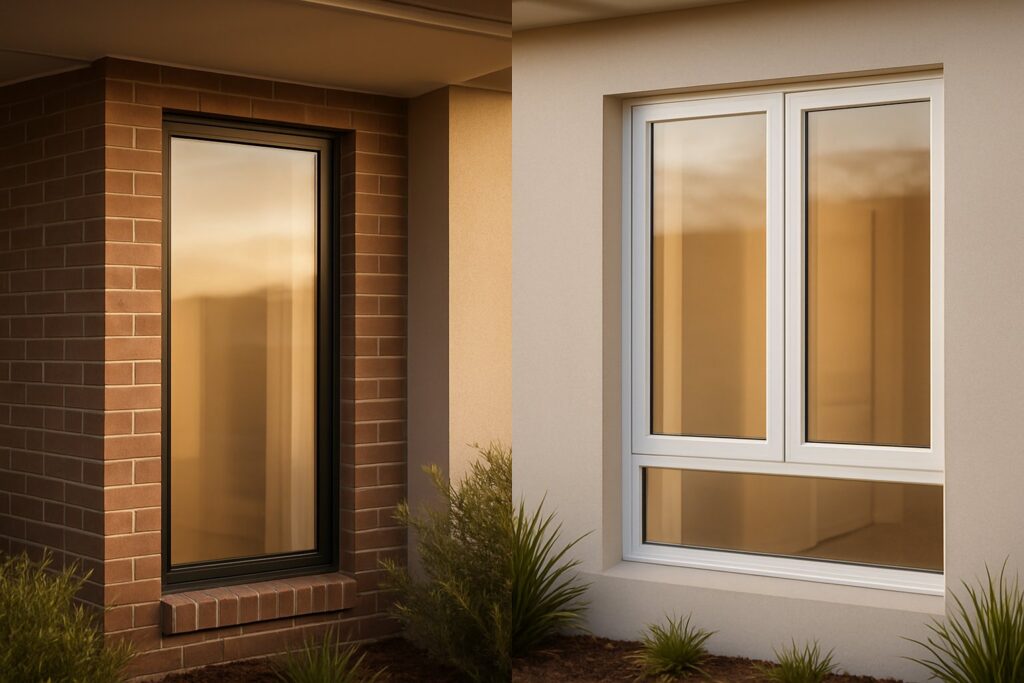
uPVC (unplasticised polyvinyl chloride) frames have gained ground in southern states, primarily marketed on thermal performance. And it is true — uPVC is a poor conductor of heat, giving it a natural insulation advantage over standard aluminium. However, uPVC has notable weaknesses in Australian conditions. It expands and contracts significantly with temperature fluctuations, can yellow or become brittle under prolonged UV exposure, and offers limited colour choices. Most uPVC frames come in white or a narrow range of laminated finishes. Aluminium black windows or custom colours simply are not achievable with the same precision.
Composite frames — combining timber interiors with aluminium exteriors — attempt to offer the best of both worlds. They perform well thermally and handle weather exposure on the outside face. The trade-off is cost: composites typically sit at the premium end of the market, and availability from Australian manufacturers remains limited compared to pure aluminium systems.
The thermal performance gap between aluminium and these alternatives narrows dramatically with one technology: the thermal break. A thermally broken aluminium frame uses a polyamide strip to separate the interior and exterior sections of the profile, slashing heat transfer. This innovation puts aluminium on competitive thermal footing while retaining all its structural and aesthetic advantages.
When Each Frame Material Makes Sense
No single material wins in every scenario. The right choice depends on your location, budget, maintenance tolerance, and design goals. The table below maps each material against the criteria most relevant to Australian projects.
| Criteria | Aluminium (Standard) | Aluminium (Thermally Broken) | Timber | uPVC | Composite |
|---|---|---|---|---|---|
| Durability (coastal/high-UV) | Excellent | Excellent | Poor to moderate | Moderate | Good |
| Maintenance over 25 years | Minimal | Minimal | High (regular repainting) | Low | Low to moderate |
| Thermal performance | Moderate | High | High | High | High |
| Cost range | Low to mid | Mid to high | Mid to high | Mid | High to premium |
| Aesthetic options | Extensive (any powder-coat colour) | Extensive (any powder-coat colour) | Limited to paint/stain | Narrow (white, limited laminates) | Good (timber inside, aluminium outside) |
| Coastal suitability | High | High | Low | Moderate | Good |
For the majority of Australian homes — particularly those in coastal, subtropical, or high-UV areas — aluminium delivers the strongest combination of longevity, low maintenance, and design freedom. Where thermal performance is a priority (cooler climates or energy-rating compliance), thermally broken aluminium closes the gap without sacrificing durability. Timber and composites earn their place in heritage or architecturally specific projects where budget and maintenance commitment are not constraints. uPVC suits temperate southern locations with limited UV exposure, though its aesthetic limitations remain a sticking point for many homeowners and architects.
Material choice sets the foundation, but the type of window you select — awning, sliding, casement, or otherwise — determines how that frame actually performs day to day in your home.
Aluminium Window Types and Where Each Performs Best
A frame material only tells half the story. The operating style of your window — how it opens, how it seals, how it directs airflow — shapes everyday comfort just as much as the aluminium profile itself. Each type brings distinct strengths, and the smartest approach matches window style to room function and wall orientation rather than defaulting to one type throughout the house.
Awning and Casement Windows for Ventilation and Weather Protection
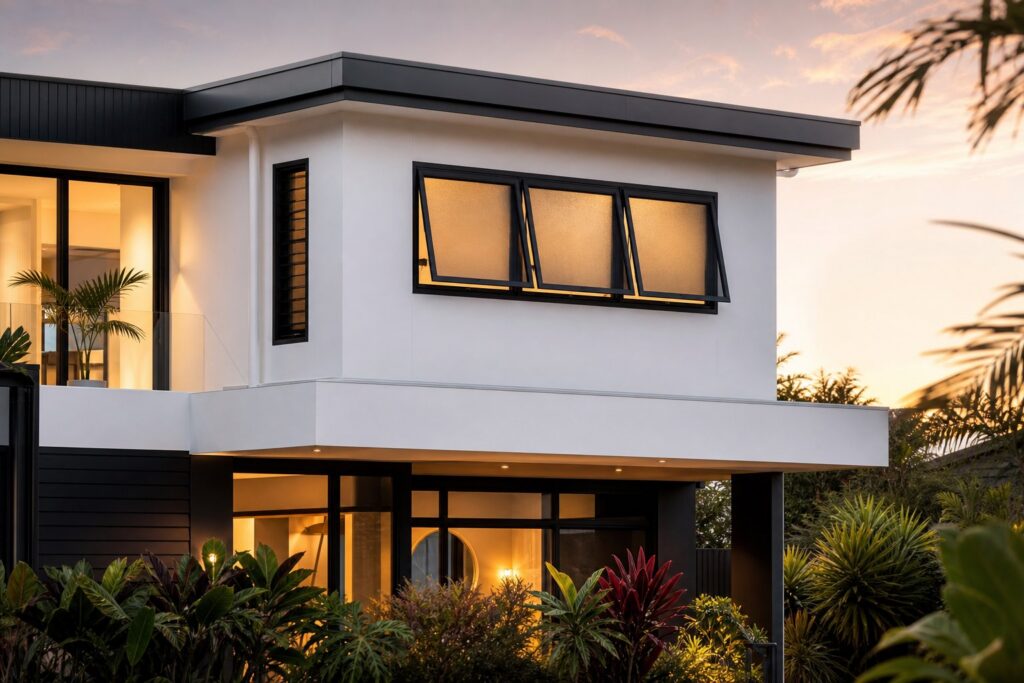
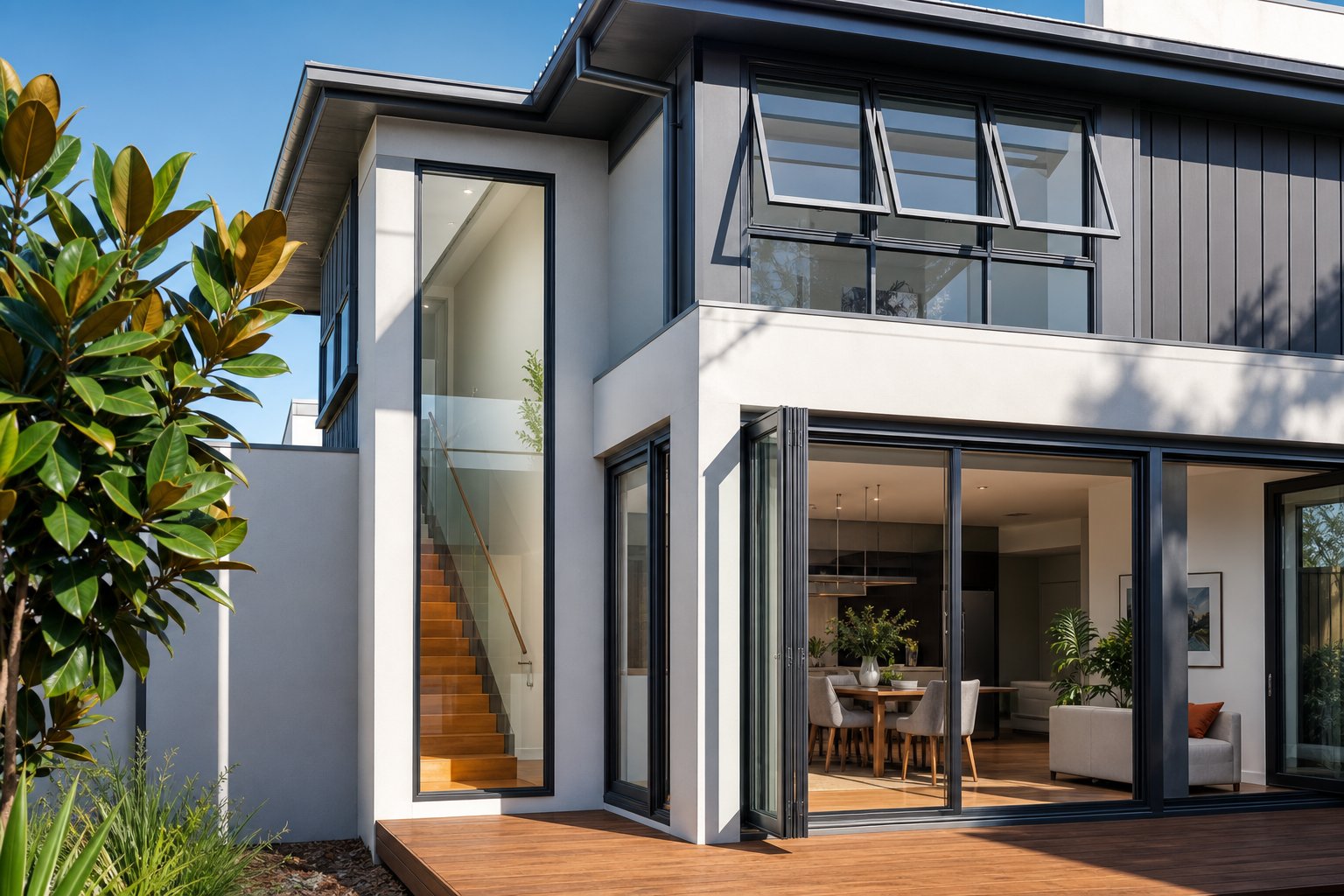
Awning windows hinge at the top and push outward from the bottom. This simple mechanism creates a natural rain shield — you can leave them open during a passing shower without water entering the room. That makes them a go-to choice for bathrooms, laundries, and kitchens where moisture management and continuous airflow matter most. Aluminium awning windows are particularly popular across Sydney and other coastal cities where afternoon storms roll in without much warning.
Casement windows hinge at the side and swing outward like a door. They catch lateral breezes more effectively than any other type, funnelling wind into the room at angles that a sliding window simply cannot match. Paired with aluminium’s slim sightlines, casements deliver generous glass area alongside superior ventilation.
- Awning windows — ideal for wet areas, splashback zones above kitchen benches, and any opening exposed to rain
- Casement windows — best for bedrooms and living areas where cross-ventilation and maximum airflow are priorities
- Both types offer excellent weather sealing when closed due to compression-style hardware that pulls the sash tight against rubber gaskets
- Security advantage: multi-point locking systems are standard on quality awning and casement units, making forced entry difficult
For west-facing walls that cop harsh afternoon sun, awning windows positioned high on the wall let hot air escape while limiting direct solar gain into the room. East-facing bedrooms benefit from casements that open wide to capture cool morning breezes, then seal tightly against midday heat.
Sliding and Bi-Fold Windows for Open-Plan Living
Sliding windows operate on a horizontal track, with one or more panels gliding behind another. They require zero clearance space outside or inside the wall, making them practical for areas adjacent to walkways, decks, or tight side passages. Standard aluminium sliding windows suit living rooms, bedrooms, and anywhere you want easy, one-handed operation.
Bi-fold windows take the concept further. Multiple panels fold and stack against one side, creating an almost fully open aperture. They are a natural fit for servery-style kitchen openings, outdoor entertaining connections, and pool-facing walls where the boundary between inside and outside dissolves entirely.
- Sliding windows — suited to living areas, bedrooms, and spaces where external clearance is limited
- Bi-fold windows — perfect for kitchen serveries, alfresco connections, and open-plan entertaining zones
- Ventilation is limited to 50% of the opening on a standard two-panel slider; bi-folds can open 90% or more
- Security consideration: sliding windows require quality keyed locks and anti-lift devices; bi-folds use multi-point locking across all panels
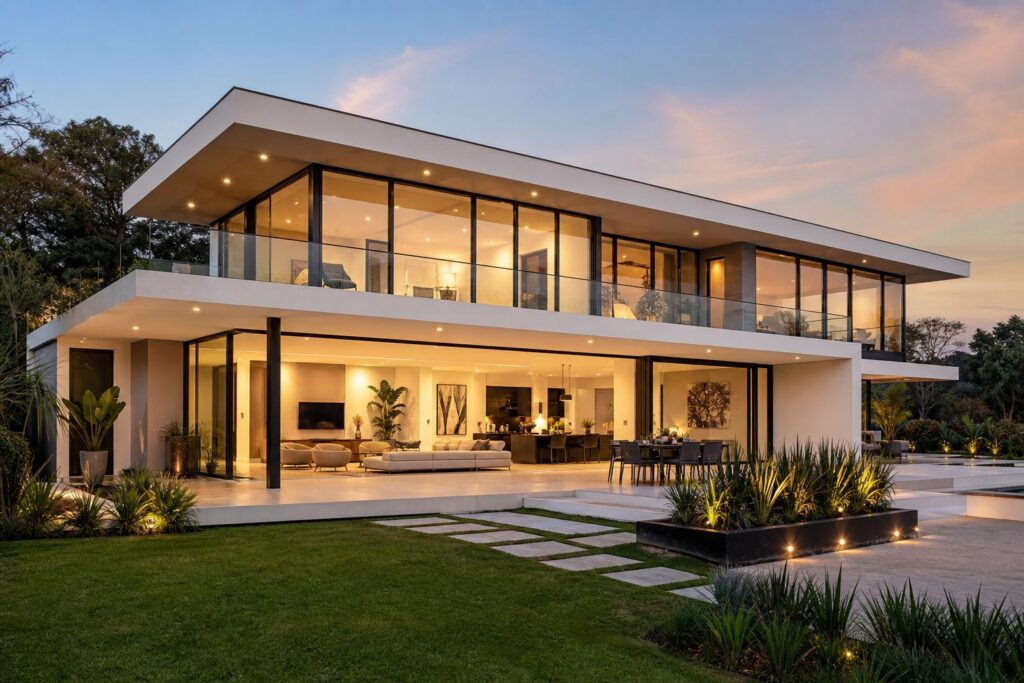
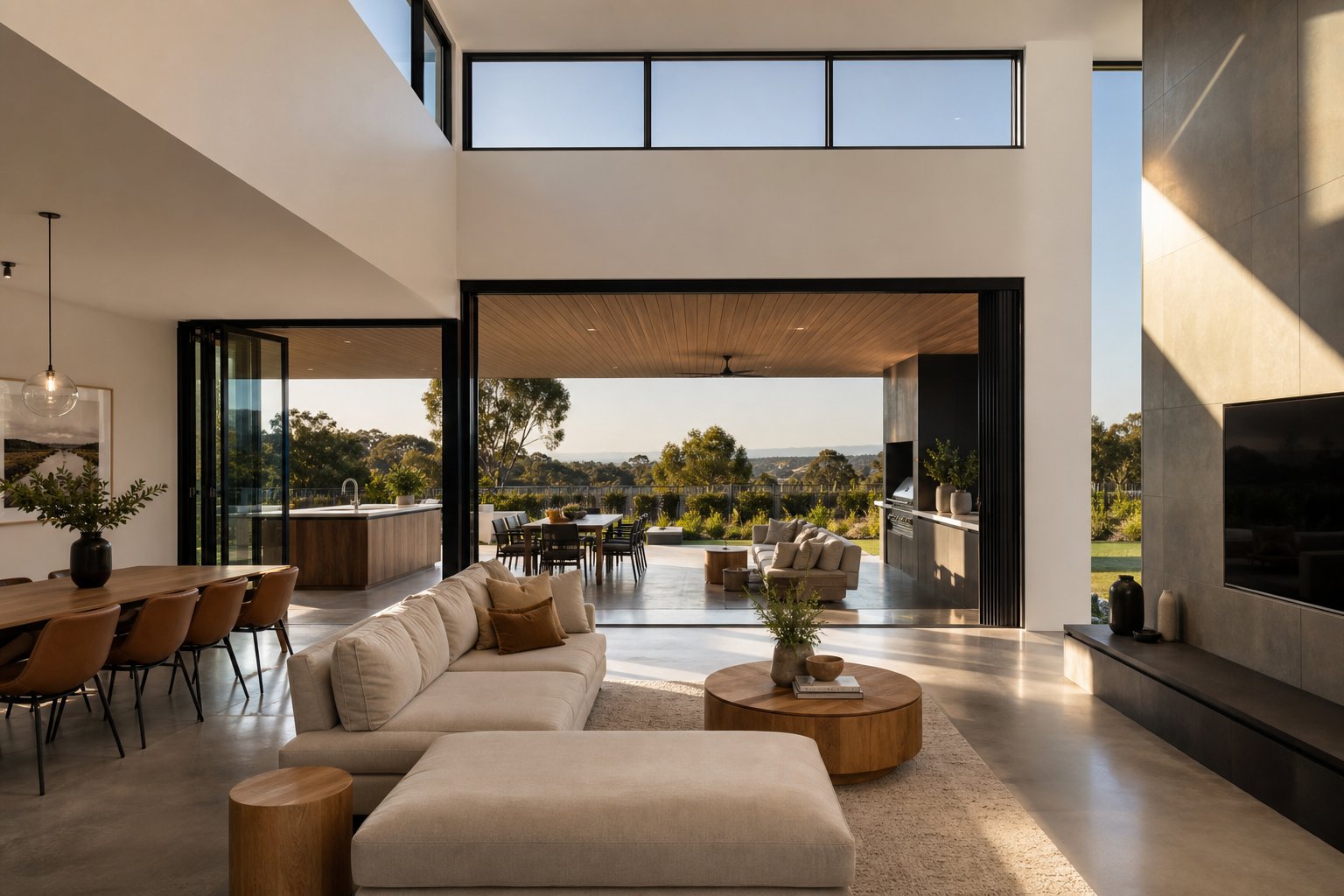
North-facing living areas in temperate climates benefit enormously from large sliding or bi-fold aluminium windows. They maximise winter solar gain when open to the sun, and when fitted with appropriate glazing, they manage summer heat without sacrificing the connection to outdoor spaces. Aluminium windows in Sydney homes frequently use this combination — expansive north-facing glass with sliders or bi-folds that blur the indoor-outdoor line.
Fixed and Louvre Windows for Specific Applications
Fixed windows do not open at all. That sounds limiting, but they serve critical roles: maximising light in stairwells, highlighting views in living rooms, and creating feature glazing where ventilation is handled by adjacent operable windows. Because there are no moving parts, fixed panels achieve the best weather sealing and the lowest long-term maintenance of any window type. They also allow the largest uninterrupted glass spans in aluminium frames.
Louvre windows use multiple horizontal glass blades that tilt open simultaneously, controlled by a single handle. They deliver exceptional ventilation — nearly 100% of the opening area can pass air — and their adjustable angle lets you direct airflow precisely. In tropical and subtropical regions, louvres are a staple for bathrooms, breezeways, and elevated Queenslander-style homes where constant airflow is non-negotiable.
- Fixed windows — stairwells, highlight panels above doors, feature walls, and any location where light matters more than ventilation
- Louvre windows — bathrooms, laundries, and tropical homes requiring maximum airflow with privacy control
- Louvres can be fitted with security screens or obscure glass blades for wet areas
- Fixed panels paired with operable windows on either side create a balanced composition of light, view, and ventilation
South-facing walls, which receive minimal direct sun in Australia, are well suited to fixed glazing that captures diffused natural light without overheating risk. Louvres work on any orientation in tropical zones but are especially effective on east and west walls where you want airflow without the full force of low-angle sun entering the room.
Selecting the right window type for each opening is only part of the equation. How that aluminium frame handles heat transfer — particularly the difference between standard and thermally broken profiles — determines whether your windows work with your home’s energy performance or against it.
Thermally Broken Frames and Glazing Performance Explained
Aluminium conducts heat roughly 1,000 times more readily than timber. That single fact has fuelled the most persistent criticism of aluminium windows for decades — and it is the reason thermal break technology exists. Understanding this distinction is essential because it determines whether your aluminium frames contribute to energy efficiency or undermine it, and the answer changes depending on where in Australia you are building.
How Thermal Breaks Transform Aluminium Frame Performance
A thermal break is a strip of reinforced polyamide (a type of engineered nylon) inserted between the interior and exterior sections of an aluminium frame profile. This strip physically separates the two aluminium faces so that heat cannot conduct directly from one side to the other. Think of it as a barrier that forces thermal energy to take the slow route rather than racing through solid metal.
In a standard (non-thermally broken) aluminium frame, the profile is a single continuous piece of metal. Heat flows freely from the hot exterior face to the cooler interior face in summer, and reverses direction in winter — pulling warmth out of your home. The result is condensation on interior frame surfaces during cold mornings, uncomfortable radiant heat near windows on hot afternoons, and higher energy bills year-round as your heating and cooling systems work harder to compensate.
Thermally broken profiles eliminate this direct conduction path. The polyamide strip — typically 20 mm to 35 mm wide depending on the system — reduces frame U-values (the measure of heat transfer) by 30% to 60% compared to standard aluminium. That improvement brings aluminium into the same thermal performance bracket as timber and uPVC, without sacrificing the slim profiles, colour range, or structural strength that make aluminium the preferred choice across Australia.
In NatHERS climate zones 1 through 4 (tropical and subtropical regions), standard aluminium frames often meet compliance requirements without thermal breaks. From zone 5 southward — covering Sydney, Melbourne, Adelaide, Hobart, and Canberra — thermally broken frames become increasingly important for meeting energy efficiency targets under the National Construction Code, and are effectively essential in zones 7 and 8.
For renovators in milder climates, standard aluminium frames paired with quality glazing may still deliver acceptable performance. But for new builds chasing 7-star NatHERS ratings or above, thermally broken aluminium is the baseline expectation in most temperate and cool regions.
Glazing and Frame Interaction for Energy Efficiency
A window is a system, not just a frame. The glass accounts for 80% or more of the total window area, so glazing selection has an outsized influence on overall thermal performance. But frame and glass must work together — pairing premium double glazed aluminium windows with a standard non-broken frame creates a weak link that undermines the glazing investment.
Here is how the main glazing options interact with aluminium frames:
- Single glazing — one pane of glass with no insulating air gap. Suitable only for non-habitable spaces, sheds, or tropical locations where heat retention is irrelevant. Pairs with standard aluminium frames in budget-driven applications.
- Double glazing — two panes separated by an air or argon-filled gap (typically 12 mm to 16 mm). Aluminium double glazed windows dramatically reduce heat transfer and external noise. Best paired with thermally broken frames to avoid the frame becoming the thermal weak point.
- Triple glazing — three panes with two insulating gaps. Rarely specified in Australia outside alpine regions or passive house projects. Always paired with thermally broken frames given the investment involved.
Two numbers define a window’s energy performance. The U-value measures how much heat passes through the entire window assembly (frame plus glass) — lower is better. The Solar Heat Gain Coefficient (SHGC) measures how much solar radiation passes through the glass as heat — and whether you want this high or low depends on your climate and the window’s orientation. A north-facing window in Melbourne benefits from a higher SHGC to capture free winter warmth, while a west-facing window in Brisbane needs a low SHGC to reject brutal afternoon sun.
Double-glazed aluminium windows with thermally broken frames typically achieve whole-window U-values between 2.5 and 3.5 W/m²K, compared to 5.5 to 6.5 W/m²K for single-glazed standard aluminium. That difference translates directly into energy savings and occupant comfort.
Reading and Interpreting Window Energy Rating Labels
The Window Energy Rating Scheme (WERS) provides a standardised way to compare window performance across brands and configurations. Every rated window receives a label showing star ratings for heating and cooling performance, along with the raw U-value and SHGC figures.
Reading the label is straightforward once you know what to look for:
- Heating stars — more stars mean the window retains interior heat better (important in cool climates). A higher SHGC and lower U-value both contribute to a better heating rating.
- Cooling stars — more stars mean the window rejects unwanted solar heat more effectively (critical in hot climates). A lower SHGC drives this rating.
- U-value — the total thermal transmittance of the complete window unit. Compare this number directly between products to assess insulation performance.
- SHGC — expressed as a decimal between 0 and 1. A value of 0.4 means 40% of solar energy hitting the glass enters as heat.
The catch is that heating and cooling performance often work against each other. A window that excels at blocking summer heat (low SHGC) also blocks beneficial winter sun. This is why orientation-specific glazing selection matters — you might specify different SHGC values for north-facing versus west-facing windows in the same home. Your energy assessor uses these WERS figures directly in NatHERS modelling, so the numbers on the label have a measurable impact on your home’s overall energy rating.
Frame technology and glazing specification set the performance envelope, but the real question is what combination your specific location demands. Australian climate zones vary enormously — from Darwin’s relentless humidity to Hobart’s cold winters — and each zone pushes window specifications in a different direction.
Australian Climate Zones and How They Affect Window Selection
Australia spans eight NatHERS climate zones, and the performance demands placed on aluminium windows shift dramatically between them. A specification that delivers comfort and compliance in Hobart could fail miserably in Darwin — and vice versa. Getting this right is not optional. Your window choices feed directly into NatHERS energy modelling, influencing whether your home achieves its required star rating or falls short at assessment time.
Tropical and Subtropical Window Specifications
In tropical zones (NatHERS zones 1 and 2 — Darwin, Cairns, Townsville), the priority is rejecting solar heat and maximising ventilation. Temperatures rarely drop low enough for heat retention to matter, so thermal breaks are not essential for compliance. Standard aluminium frames paired with single or toned glazing can meet energy targets, provided the SHGC is kept low on east and west orientations. Louvre and awning combinations dominate here because airflow is the primary cooling strategy.
Subtropical regions (zone 2 and parts of zone 3 — Brisbane, the Sunshine Coast) sit in a middle ground. Summers demand heat rejection, but winter mornings can be cool enough that some insulation value helps. Double glazing with a low-E coating on west-facing openings makes a measurable difference to cooling loads, while north-facing glass can retain a moderate SHGC to capture gentle winter sun. Standard aluminium frames still perform adequately in most subtropical applications, though thermally broken options improve comfort in air-conditioned homes where you want to minimise the load on your system.
Temperate and Cool Climate Requirements
Temperate zones (zones 5 and 6 — Sydney, the Central Coast, parts of coastal NSW) introduce a genuine heating season. Aluminium windows in Sydney increasingly specify thermally broken frames with double glazing as the baseline for new builds targeting 7-star NatHERS ratings. The combination of cool winters and warm-to-hot summers means windows must perform in both directions — retaining heat in June and rejecting it in January. Orientation-specific glazing becomes critical: higher SHGC on north-facing glass, lower SHGC on west.
Mild temperate and cool zones (zones 6 and 7 — Melbourne, Adelaide, Canberra, Hobart) push specifications further. Aluminium windows in Melbourne and aluminium windows in Adelaide almost universally require thermally broken frames to meet current NCC energy provisions. Double glazing with argon-filled gaps and low-E coatings is standard practice. In Hobart and Canberra (zone 7), some projects specify triple glazing or enhanced low-E stacks to manage heating-dominated energy budgets. Without thermal breaks, aluminium frames in these climates produce visible condensation on cold mornings — a clear sign of thermal bridging pulling warmth out of the living space.
NatHERS assessors model each window individually based on its orientation, size, frame type, U-value, and SHGC. Upgrading from standard to thermally broken aluminium frames can improve a home’s overall star rating by 0.3 to 0.8 stars depending on the glazing area and climate zone — often the difference between passing and failing compliance.
Coastal and High-UV Durability Considerations
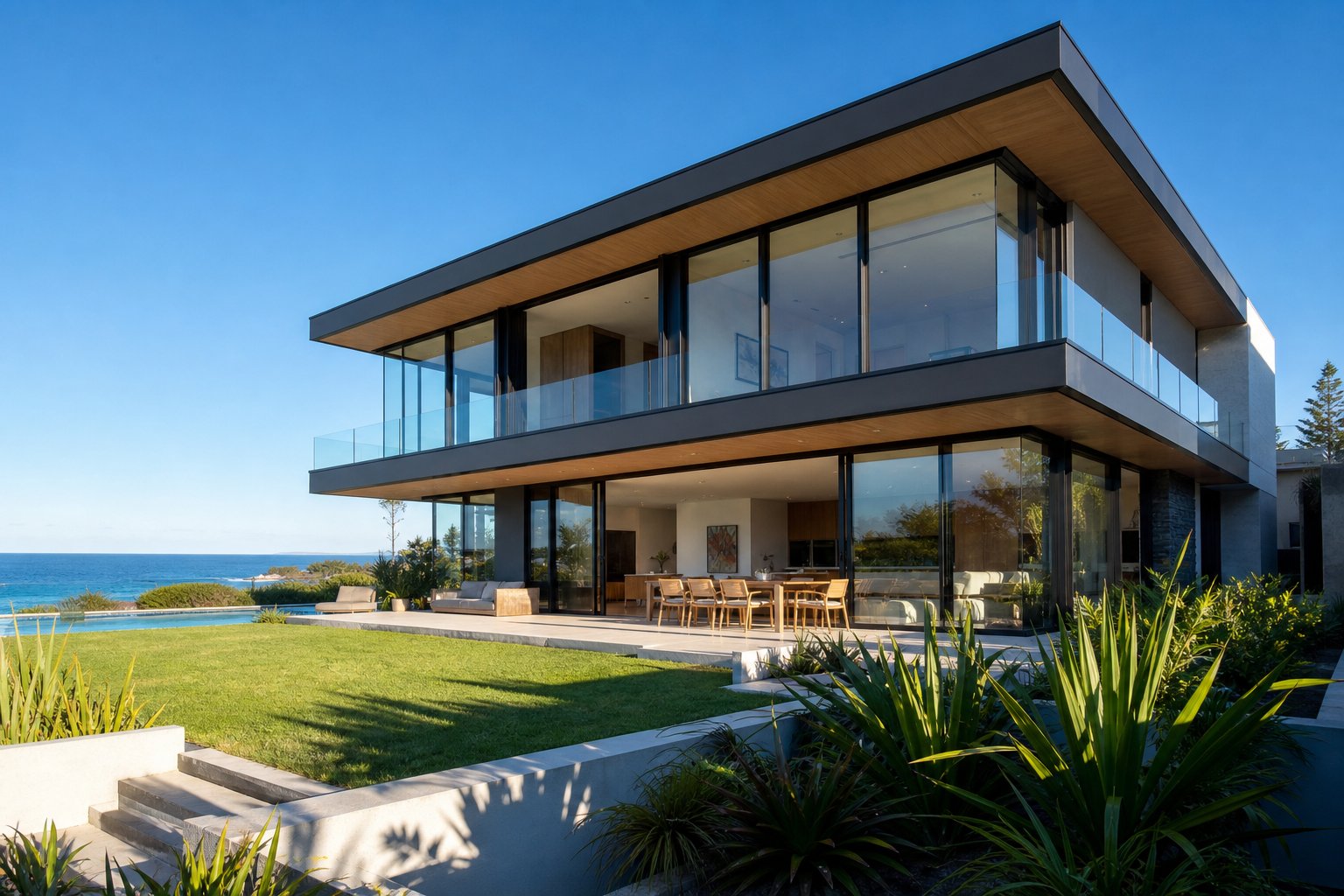
Climate zone is not the only geographic factor. Proximity to the coast introduces salt-laden air that attacks hardware, fasteners, and even frame surfaces if protective coatings are inadequate. Australian Standard AS 2047 classifies exposure levels, and windows within 1 km of breaking surf (or closer in some wind-driven zones) require marine-grade hardware — typically 316 stainless steel rather than standard zinc-plated fittings. Powder coating thickness matters too: a minimum 60-micron coating is standard, but coastal installations benefit from premium polyester or fluoropolymer finishes rated to withstand salt spray testing beyond 1,000 hours.
UV degradation is a separate concern that affects every Australian climate zone. Intense solar radiation breaks down inferior powder coatings over time, causing chalking, fading, and micro-cracking that exposes the raw aluminium beneath. Quality coatings compliant with Qualicoat or equivalent standards resist this degradation for 15 to 25 years, but cheaper finishes can show visible deterioration within five to seven years — particularly on dark colours like black and charcoal that absorb more radiant heat.
In extreme heat zones (inland areas where surface temperatures on dark frames can exceed 80°C), thermal expansion of the aluminium profile itself becomes a design consideration. Quality window systems accommodate this movement through engineered drainage slots and flexible gasket designs that maintain weather sealing as the frame expands and contracts through daily thermal cycles.
| Climate Zone | Example Locations | Recommended Frame | Glazing Specification | Coating Requirement | Hardware Grade |
|---|---|---|---|---|---|
| Tropical (Zones 1-2) | Darwin, Cairns, Townsville | Standard aluminium | Single or toned; low SHGC on west | Marine-grade if coastal; standard inland | 316 stainless (coastal); standard (inland) |
| Subtropical (Zone 3) | Brisbane, Gold Coast, Sunshine Coast | Standard or thermally broken | Double glazed with low-E on west/east | Marine-grade if coastal; standard inland | 316 stainless (coastal); standard (inland) |
| Temperate (Zone 5) | Sydney, Wollongong, Central Coast | Thermally broken | Double glazed, argon-filled, low-E | Marine-grade coastal; premium polyester | 316 stainless (coastal); zinc-alloy (inland) |
| Mild Temperate (Zone 6) | Melbourne, Adelaide, Perth hills | Thermally broken | Double glazed, argon-filled, low-E | Premium polyester minimum | 316 stainless (coastal); zinc-alloy (inland) |
| Cool (Zone 7) | Hobart, Canberra, alpine regions | Thermally broken (enhanced) | Double or triple glazed, argon, low-E | Premium polyester or fluoropolymer | Zinc-alloy or stainless |
Specifications are only meaningful if the products carrying them actually meet verified Australian standards. The next critical layer of due diligence involves understanding what AS 2047 compliance genuinely requires, what “Australian made” means in practice, and how warranty structures protect — or fail to protect — your investment over time.
Australian Standards and Warranty Essentials for Buyers
Performance specifications printed on a brochure mean nothing if the product behind them has not been independently tested and certified. In the window industry across Australia, two standards form the backbone of quality assurance — and understanding them separates informed buyers from those relying on trust alone.
Understanding AS2047 and AS1288 Compliance
AS 2047 is the Australian Standard governing the design, construction, and performance of windows and external glazed doors. It sets minimum requirements for structural adequacy (wind load resistance), water penetration resistance, and air infiltration. Every window installed in a residential or commercial building in Australia must comply with AS 2047 — this is not optional or aspirational. It is a mandatory requirement under the National Construction Code.
AS 1288 covers glazing selection and installation. It dictates where safety glass must be used (any panel within 800 mm of floor level, for instance), minimum glass thicknesses for given wind loads, and requirements for human impact safety. Together, these two standards ensure that a window Australia homeowners install will withstand local wind pressures, resist water ingress during driving rain, and protect occupants from glass-related injury.
Compliance is not self-declared. Manufacturers must have their window systems tested by a NATA-accredited laboratory, and the test results must cover the specific configurations being sold — not just a single sample from the range. A supplier claiming AS 2047 compliance should be able to produce test certificates matching the window type, size, and glazing configuration you are ordering.
What Australian Made Really Means for Windows
The phrase “Australian made” carries weight with buyers, but its meaning in the window industry is more nuanced than most people realise. Some manufacturers extrude their own aluminium profiles, fabricate frames, glaze, and assemble entirely within Australian facilities. Others import pre-extruded profiles or complete frame sections from overseas — typically China or Southeast Asia — and perform final assembly, glazing, and quality checks locally. Both can legitimately carry Australian made claims under current labelling guidelines, provided substantial transformation occurs domestically.
Neither approach is inherently inferior. Imported extrusions can meet identical material specifications to locally produced ones. What matters for buyers is traceability and accountability. A fully local manufacturer typically offers tighter quality control over the entire production chain, faster turnaround on custom or replacement orders, and more responsive warranty support because every component originates from their own facility. An assembler working with imported components may offer sharper pricing but could face longer lead times for non-standard sizes or warranty claims that require parts sourced from offshore.
Ask directly: where are the profiles extruded, where is fabrication done, and where does final assembly and glazing occur? The answers reveal the true supply chain behind any windows au suppliers offer.
Warranty Terms and What Buyers Should Verify
Warranty structures vary significantly across the Australian aluminium window market, and the headline number — “25-year warranty” or “lifetime guarantee” — rarely tells the full story. Most warranties are split into components: the frame itself might carry 10 to 25 years of coverage, powder coating 7 to 15 years, hardware 5 to 10 years, and seals or gaskets as little as 2 to 5 years.
Exclusions matter more than inclusions. Coastal installations are frequently excluded from standard warranty terms unless marine-grade hardware was specified at purchase. Colour fading beyond a certain Delta E value may not be covered. Some warranties become void if windows are cleaned with abrasive products or if drainage slots are not maintained clear of debris. Read the fine print before signing, not after a problem emerges.
Manufacturing location directly affects warranty reliability. A local manufacturer with an established factory can honour claims by remaking components on-site. A supplier reliant on offshore production may need weeks or months to source replacement parts — assuming the original overseas factory still produces that profile system.
Before committing to any supplier, confirm the following compliance and warranty items:
- Request NATA-accredited AS 2047 test certificates for the specific window type and size you are ordering
- Confirm AS 1288 compliance for all glazing, including safety glass where required by code
- Verify the window carries a valid WERS rating if energy performance claims are made
- Ask whether the product is suitable for your exposure category — particularly if you are within 1 km of the coast
- Obtain the full written warranty document (not a summary) and check coverage periods for frame, coating, hardware, and seals separately
- Confirm what voids the warranty — cleaning methods, installation by non-approved contractors, coastal exposure, or failure to maintain drainage
- Ask where the aluminium profiles are extruded and where final fabrication occurs — this affects replacement part availability
- Check whether the warranty is transferable to a new owner if you sell the property
Standards compliance and warranty strength are baseline filters — they tell you whether a product is safe to consider. The next step is evaluating the suppliers themselves: their capabilities, their process from quote to installation, and how well they support different project types from simple replacements through to full architectural builds.
How to Evaluate and Compare Aluminium Window Suppliers
A window that meets every technical specification on paper still depends on the company behind it. Manufacturing quality, project support, lead times, and after-sale service vary enormously between aluminium window suppliers in Sydney, Melbourne, and across the country. Knowing what to look for — and what questions to ask — prevents costly mistakes that no amount of product research can fix after the contract is signed.
Objective Criteria for Comparing Window Suppliers
Price is the easiest number to compare, but it is also the least reliable indicator of value. Two quotes for seemingly identical windows can differ by 30% or more, and the gap usually reflects differences in manufacturing standards, customisation capability, and service depth rather than simple margin. A structured evaluation framework keeps the comparison honest.
Rank potential suppliers against these criteria, listed in priority order:
- Certifications and testing — Does the supplier hold current NATA-accredited AS 2047 test certificates for the specific configurations you need? Can they provide WERS ratings for their systems? Certifications are non-negotiable baseline filters.
- Manufacturing control — Where does fabrication occur? Suppliers who manufacture in their own Australian facility offer tighter quality oversight and faster turnaround on custom work than those assembling imported components.
- Customisation range — Can they produce non-standard sizes, custom colour matching, specific hardware selections, and varied glazing configurations without excessive lead time penalties? Cookie-cutter operations struggle with anything outside their standard catalogue.
- Project integration support — Do they work directly with architects, builders, and energy assessors? Suppliers offering technical drawings, NatHERS-compatible specifications, and coordination with other trades add genuine value beyond the product itself.
- Warranty depth — Review the full warranty document, not the headline claim. Separate coverage for frame, coating, hardware, and seals tells you how confident the manufacturer is in each component.
- Lead times and reliability — What is the quoted turnaround for standard and custom orders? More importantly, do they consistently deliver on time? Ask for builder references if possible.
- After-sale service — How are warranty claims handled? Is there a local service team, or does the supplier rely on third-party contractors for remediation?
Suppliers who tick these boxes tend to share common traits: they control their own manufacturing, invest in testing across their full product range, and structure their business around project delivery rather than just product sales. MEICHEN, for example, operates as a custom aluminium window manufacturer offering project-ready integration for residential and commercial builds — the kind of supplier where architects and builders can specify non-standard configurations with confidence that the production capability matches the design intent. That combination of custom manufacturing, technical support, and direct project coordination is exactly what this evaluation framework is designed to identify.
Renovation vs New-Build Window Requirements
The supplier you need depends heavily on your project type, and the differences run deeper than most buyers expect.
New builds offer a clean slate. Window openings are sized to suit the chosen window system, structural supports are engineered around the specified units, and installation happens at a controlled stage of construction before internal linings go in. Builders typically work with suppliers who provide full project packages — every window and door scheduled, specified, manufactured, and delivered in a coordinated sequence. Lead times are planned months in advance, and the supplier’s ability to coordinate with the builder’s programme matters as much as the product itself.
Renovations introduce complexity at every stage. Existing openings rarely match standard sizes precisely. Removing old frames can reveal deteriorated lintels, damaged flashings, or structural issues hidden behind plaster for decades. The supplier needs to accommodate custom sizing as standard practice rather than treating it as a special order surcharge. Site measurement becomes critical — a 5 mm error in an existing opening means a window that does not fit, and the cost of rectification falls somewhere between supplier and installer depending on who measured.
For renovation projects, prioritise suppliers who:
- Offer site measure services with experienced staff rather than relying solely on builder-supplied dimensions
- Manufacture custom sizes without excessive cost premiums or extended lead times
- Provide guidance on structural adequacy of existing openings and recommend remediation where needed
- Can match or complement existing windows and doors in the home if only partial replacement is planned
Windows and doors in Sydney renovation projects, for instance, frequently involve replacing timber frames in older brick veneer or weatherboard homes. The new aluminium units must fit openings that have settled and shifted over 40 or 50 years — a challenge that demands manufacturing precision and installation expertise working together. Suppliers serving the aluminium windows and doors Melbourne market face similar challenges with the city’s large stock of period homes and 1970s brick veneer dwellings.
From Quote to Installation — What to Expect
The quoting process reveals a lot about a supplier’s professionalism before you spend a dollar. A thorough quote should include:
- Itemised pricing for each window — type, size, frame specification (standard or thermally broken), glazing makeup, hardware, and colour
- Clear distinction between supply-only and supply-and-install pricing
- Stated lead time from order confirmation to delivery or installation
- Any exclusions — scaffolding, removal of existing windows, making good internal or external finishes, flashing installation
- Payment terms and deposit requirements
Be cautious of quotes that lump everything into a single line item without breaking down specifications. You cannot compare two quotes meaningfully if one specifies thermally broken frames with argon-filled double glazing and the other simply says “aluminium double glazed windows” without detail. Insist on specification transparency.
Installation quality matters as much as manufacturing quality. A perfectly made window installed poorly will leak, rattle, and underperform. For supply-and-install arrangements, ask who performs the installation — the supplier’s own team or subcontracted installers. In-house installation teams are generally more accountable because the manufacturer’s reputation rides on the finished result. Subcontracted crews may be competent, but the accountability chain is longer and disputes harder to resolve.
For supply-only orders where your builder handles installation, confirm that the supplier provides detailed installation instructions specific to each window type and that their warranty remains valid when installed by a licensed third party. Some manufacturers void warranty coverage if installation is not performed by their approved network — a condition worth clarifying before you commit.
Expect the full timeline from initial enquiry to completed installation to run between 6 and 14 weeks for standard residential projects, depending on customisation level and current manufacturing demand. Complex architectural projects or large commercial orders may extend beyond this. Factor these lead times into your build programme early — windows sit on the critical path of most construction schedules, and delays cascade into every trade that follows.
With a clear framework for choosing the right supplier, the remaining variable is budget. Understanding what drives aluminium window pricing — and where you can save without compromising performance — helps you align specifications with realistic cost expectations before quotes arrive.
Cost Expectations and Budget Planning for Aluminium Windows
Budget conversations around aluminium windows tend to stall early because pricing depends on so many variables. No single dollar figure applies universally — a standard sliding window for a laundry costs a fraction of a thermally broken, aluminium double glazed window specified for a living room in a cool climate zone. Rather than chasing exact numbers that shift with market conditions, understanding which factors carry the most weight helps you allocate budget where it genuinely improves performance and longevity.
Key Factors That Drive Aluminium Window Pricing
Some specification choices add modest cost. Others double the price of a single unit. Knowing the difference prevents budget blowouts and helps you prioritise upgrades that deliver real returns in comfort, energy savings, or durability.
| Pricing Factor | Impact on Total Cost | Notes |
|---|---|---|
| Window type (awning, sliding, bi-fold, fixed) | High | Bi-fold and large-format sliding units cost significantly more than standard awning or fixed panels due to hardware complexity and engineering requirements |
| Size and custom dimensions | High | Oversized or non-standard openings require custom fabrication; standard catalogue sizes offer the best value |
| Glazing specification (single, double, triple) | High | Stepping from single to double glazing adds substantial cost; argon fills and low-E coatings add further but deliver measurable energy returns |
| Thermal break inclusion | Medium to High | Thermally broken frames typically add 20% to 40% over standard profiles — essential in cooler zones, optional in tropical regions |
| Hardware grade | Medium | Marine-grade 316 stainless steel hardware for coastal zones costs more than standard zinc-alloy fittings |
| Colour and finish | Low to Medium | Standard colours (black, white, grey) are typically included; custom colour matching or premium finishes like anodising attract surcharges |
| Installation complexity | Medium to High | Upper-storey access, scaffolding, structural modifications, and removal of existing frames all add labour cost |
Budget Expectations by Project Type
New builds generally achieve better per-window pricing than renovations. Builders order full project packages — every al window scheduled and manufactured in a single production run — which creates efficiencies in fabrication, delivery, and installation. Openings are purpose-built to standard dimensions, eliminating custom sizing premiums.
Renovations cost more per opening for several reasons. Custom sizing is almost always required. Removal and disposal of existing frames adds labour. Remediation of reveals, lintels, or flashings discovered during removal is common. And partial replacements (doing a few rooms rather than the whole house) lose the volume efficiencies that full-home projects enjoy.
A practical budgeting approach for a whole-home project: start by specifying your highest-performance aluminium glazed window units for the largest openings and those on the most exposed orientations (west and east faces in hot climates, all faces in cool climates). Then step down specifications for secondary spaces — laundries, garages, and small bathroom openings — where standard frames and simpler glazing still meet compliance without straining the budget.
Getting Value Without Compromising Quality
Cutting cost on windows is tempting, but the wrong savings create problems that outlast any short-term budget relief. Downgrading from thermally broken to standard frames in a zone 6 or 7 climate, for instance, saves money upfront but increases heating and cooling costs every year for the life of the home — and may prevent NatHERS compliance entirely.
Smarter value strategies include:
- Using fixed panels where ventilation is unnecessary — they cost less than operable windows and offer superior sealing
- Standardising opening sizes across the home to reduce custom fabrication charges
- Selecting standard powder-coat colours rather than custom matches
- Investing in glazing performance (low-E coatings, argon fill) over frame upgrades in mild climates where standard aluminium still meets compliance
- Ordering the full project as a single package rather than staging purchases across multiple orders
The goal is not the cheapest aluminium window you can find — it is the best-performing window your budget allows for each specific opening. That distinction keeps long-term costs low while ensuring every unit meets the demands of your climate zone, orientation, and building type. With specifications and budget aligned, the final step is pulling these decisions together into a clear action plan that moves you from research into confident purchasing.
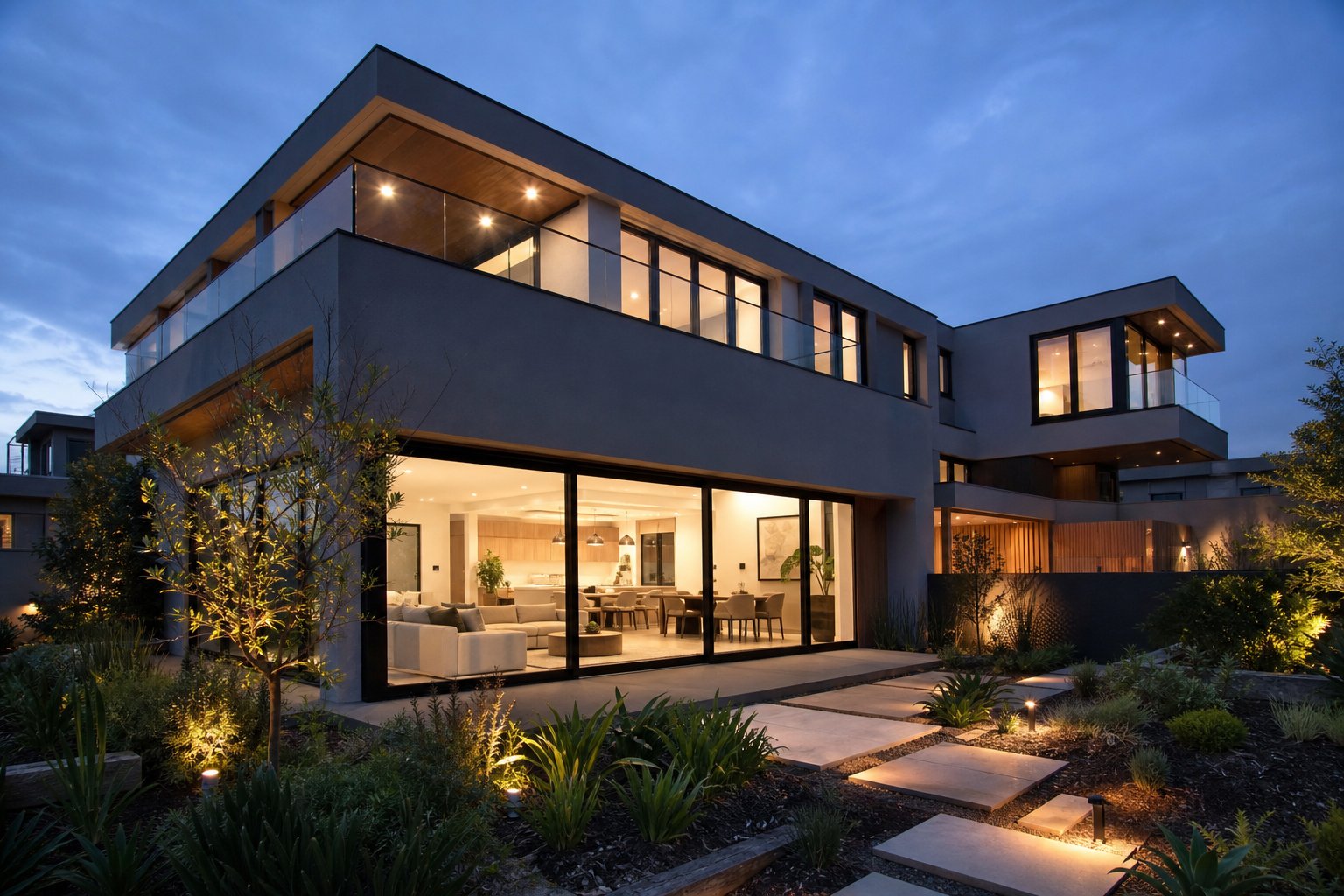
Your Decision Framework and Smart Next Steps
Research without action is just reading. Everything covered in this aluminium windows buying guide Australia homeowners can use comes down to a sequence of decisions — each one narrowing the field until you arrive at a specification and supplier that genuinely fits your project. The checklist below puts those decisions in the order they need to happen.
Your Aluminium Window Decision Checklist
- Identify your NatHERS climate zone — this single factor determines whether you need thermally broken frames, what glazing specification makes sense, and which hardware grade is appropriate for your exposure category.
- Select frame type — standard aluminium for tropical and subtropical zones where compliance allows it; thermally broken profiles for temperate, mild temperate, and cool zones where energy targets demand it.
- Specify glazing for each orientation — aluminium double glazed units with low-E coatings and argon fill are the baseline for most southern builds. Adjust SHGC by orientation: higher on north-facing glass for passive solar gain, lower on west and east to reject unwanted heat.
- Choose window types room by room — match awning, casement, sliding, bi-fold, fixed, or louvre styles to each opening based on ventilation needs, weather exposure, security, and spatial constraints.
- Verify standards compliance — confirm NATA-accredited AS 2047 test certificates, AS 1288 glazing compliance, and valid WERS ratings before shortlisting any supplier.
- Evaluate suppliers on capability, not just price — manufacturing control, customisation range, project integration support, warranty depth, and lead time reliability all outweigh a marginally cheaper quote.
- Align specifications with budget — invest in performance where it counts (large openings, exposed orientations) and step down specifications for secondary spaces where compliance allows flexibility.
- Confirm warranty coverage in full — separate frame, coating, hardware, and seal warranties; check coastal exclusions; verify transferability if you plan to sell.
Next Steps Based on Your Project Stage
Where you sit in the buying journey determines what to do next.
Still researching: Use this guide as your reference framework. Revisit the climate zone table and frame comparison to lock in the specifications your location demands before approaching any supplier. Gather your home’s orientation details, opening sizes, and NatHERS requirements from your energy assessor or building designer.
Comparing options: Request detailed, itemised quotes from at least three suppliers. Insist on specification transparency — frame type, glazing makeup, hardware grade, and colour should all be stated explicitly. Compare like for like using the evaluation criteria outlined earlier, and do not let headline price override manufacturing quality or warranty strength.
Ready to move forward: For those at the point of active supplier evaluation, exploring specific product systems and custom configurations is the logical next step. MEICHEN’s aluminium windows range offers a practical starting point — their page covers window types, custom options, performance specifications, and project integration for Australian residential and commercial builds. It bridges the gap between the general knowledge in this guide and the specific product decisions your project requires.
Whatever stage you are at, the principle stays the same: let your climate zone, building type, and performance requirements drive the specification — then find the supplier capable of delivering it. That approach consistently produces better outcomes than starting with a brand or a budget and working backwards to justify the choice.
Frequently Asked Questions About Aluminium Windows in Australia
1. Are thermally broken aluminium windows worth the extra cost in Australia?
In temperate and cool climate zones covering Sydney, Melbourne, Adelaide, Hobart, and Canberra, thermally broken aluminium frames are effectively essential for meeting current NCC energy provisions and achieving 7-star NatHERS ratings. They reduce frame heat transfer by 30% to 60% compared to standard profiles, which translates into lower heating and cooling bills over the life of the home. In tropical and subtropical zones like Darwin and Brisbane, standard aluminium frames often meet compliance without thermal breaks, making the upgrade optional rather than necessary. The decision comes down to your NatHERS climate zone and energy rating targets.
2. How do aluminium windows perform in coastal areas of Australia?
Aluminium is one of the best-performing frame materials for coastal Australian environments due to its natural corrosion resistance. However, installations within 1 km of breaking surf require marine-grade 316 stainless steel hardware rather than standard zinc-plated fittings, as classified under AS 2047 exposure categories. Powder coating thickness should meet a minimum of 60 microns, with premium polyester or fluoropolymer finishes recommended for severe coastal exposure. These coatings are rated to withstand salt spray testing beyond 1,000 hours. With the correct hardware grade and coating specification, aluminium windows in coastal zones can deliver 20 to 25 years of reliable performance with minimal maintenance beyond occasional cleaning.
3. What is the difference between single, double, and triple glazed aluminium windows?
Single glazing uses one pane with no insulating gap and suits only non-habitable spaces or tropical locations. Double glazed aluminium windows feature two panes separated by a 12 mm to 16 mm air or argon-filled gap, dramatically reducing heat transfer and external noise. They achieve whole-window U-values between 2.5 and 3.5 W/m2K when paired with thermally broken frames, compared to 5.5 to 6.5 W/m2K for single-glazed standard aluminium. Triple glazing adds a third pane with two insulating gaps but is rarely specified in Australia outside alpine regions or passive house projects. For most Australian homes in zones 5 through 7, double glazing with low-E coatings and argon fill paired with thermally broken frames represents the optimal balance of performance and cost.
4. What Australian standards should aluminium windows comply with?
Two mandatory standards govern aluminium windows in Australia. AS 2047 covers design, construction, and performance requirements including structural wind load resistance, water penetration resistance, and air infiltration limits. AS 1288 governs glazing selection and installation, dictating where safety glass is required and minimum glass thicknesses for given wind loads. Compliance must be verified through NATA-accredited laboratory testing, not self-declared by the manufacturer. Buyers should request test certificates matching their specific window type, size, and glazing configuration. Additionally, windows making energy performance claims should carry a valid WERS (Window Energy Rating Scheme) rating that assessors use directly in NatHERS modelling.
5. How do I choose the right aluminium window type for each room?
Match window style to room function and wall orientation. Awning windows suit bathrooms, laundries, and kitchens because they provide ventilation while shielding against rain entry. Casement windows deliver maximum cross-ventilation for bedrooms and living areas by catching lateral breezes. Sliding windows work well where external clearance is limited, such as beside walkways or decks. Bi-fold windows create open servery connections between kitchens and outdoor entertaining areas. Fixed panels maximise light in stairwells and feature walls where ventilation is handled by adjacent operable windows. Louvre windows provide near-100% airflow in tropical homes. Orientation also matters: west-facing walls benefit from high-placed awning windows that release hot air, while north-facing living areas in temperate climates suit large sliders or bi-folds to capture winter sun.
More Window & Door Guides