What Aluminium Window and Door Suppliers Do and Why It Matters
Most builders treat their aluminium window and door suppliers like a catalogue. Pick a product, get a price, move on. That approach works until it doesn’t — and it usually stops working mid-project, when lead times blow out, specifications don’t match structural drawings, or a critical aluminium window arrives on site with the wrong configuration.
The gap between a smooth fenestration install and a costly delay often traces back to one decision: who you chose to supply your aluminium windows and doors, and what kind of relationship you built with them before production started.
What Aluminium Window and Door Suppliers Actually Provide
At the most basic level, aluminium window suppliers source, fabricate, or distribute aluminium-framed fenestration products — windows in aluminium and aluminium door systems designed for residential and commercial applications. But the scope of what a supplier actually delivers varies enormously depending on their position in the supply chain.
Some operate as pure product distributors, holding stock lines and shipping standard sizes. Others function as integrated fabricators who manufacture finished aluminium doors and windows from raw profile systems, offering engineering support, custom sizing, glazing specification, hardware selection, and project coordination from drawings through to delivery. The distinction between these supplier types directly shapes what level of technical support, customisation, and quality control a buyer can expect.
Why Your Supplier Choice Shapes Project Outcomes
A supplier that simply sells product leaves the builder to manage specification accuracy, compliance verification, and delivery logistics independently. A supplier that partners on project delivery absorbs much of that complexity — reviewing drawings, confirming that frame systems meet structural and energy requirements, coordinating production schedules around construction timelines, and flagging potential issues before they become site problems.
The right supplier doesn’t just deliver aluminium windows on time — they prevent the specification errors, compliance gaps, and coordination failures that cause projects to run over budget in the first place.
This article is built as a material-agnostic resource for anyone navigating the aluminium fenestration market in Australia: builders, architects, developers, and homeowners alike. Whether you’re specifying for a multi-storey apartment complex in Melbourne or a coastal home in Queensland, the principles of supplier evaluation remain consistent. The goal isn’t to sell you on aluminium over other materials — it’s to ensure that if aluminium is your choice, you select a supply partner capable of delivering on that decision.
That starts with understanding what types of aluminium windows and aluminium door configurations exist, and how project scope determines which supplier model fits best.
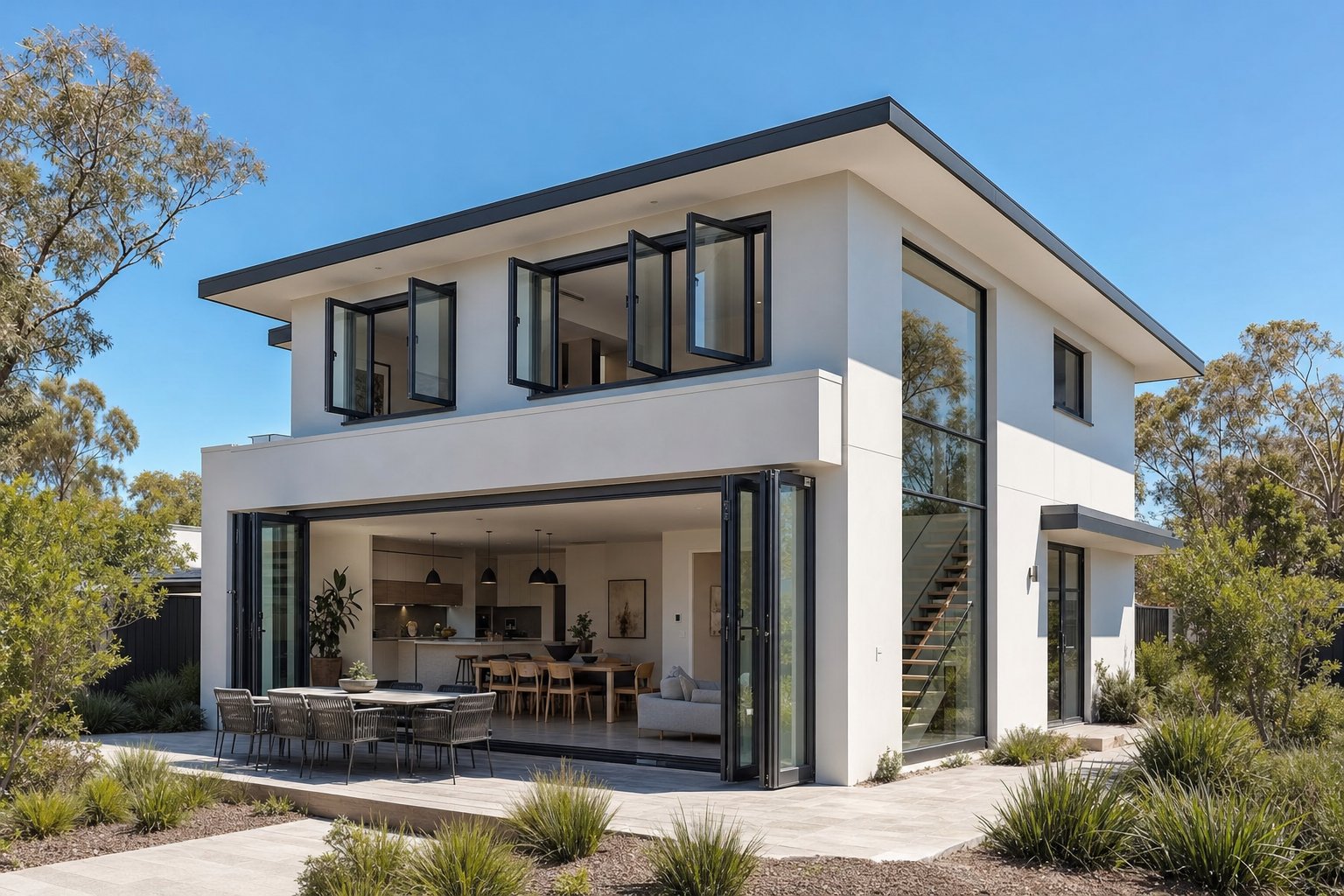
Aluminium Window and Door Types Mapped to Real Projects
Supplier capability only matters once you know what you actually need. And in aluminium fenestration, the range of window and door configurations is broad enough that no single supplier necessarily covers every option. Understanding which styles suit your project — and which require specialist fabrication — helps you shortlist suppliers who can genuinely deliver.
Aluminium Window Styles and Where They Work Best
Casement windows remain the workhorse of Australian residential construction. Hinged on one side and opening outward, they offer excellent ventilation and a tight weather seal when closed — ideal for temperate climates across Sydney, Melbourne, and Adelaide. Awning windows operate similarly but hinge at the top, allowing ventilation even during light rain, which makes them a strong choice for bathrooms, laundries, and Queensland’s wet season.
Sliding windows suit wide openings where outward projection isn’t practical — think ground-floor rooms facing walkways or balconies. Large sliding windows are common in apartment developments and coastal homes where unobstructed views matter more than maximum airflow. For heritage-style projects or period renovations, aluminium sash windows replicate the look of traditional double-hung timber windows while delivering modern thermal and acoustic performance.
An aluminium fixed window is purely about light and views. With no operable hardware, fixed panels achieve the slimmest sightlines and highest structural ratings, making them popular in commercial facades and feature walls. Pivot windows — rotating on a central axis — appear less frequently but suit high-level openings in double-storey homes and commercial atriums where cleaning access is limited.
Aluminium Door Configurations for Every Application
Aluminium sliding doors dominate the Australian market for good reason. They handle wide spans without eating into floor space, and modern lift-and-slide systems allow panels exceeding 3 metres in height to glide with minimal effort. For projects demanding maximum aperture, bi-fold doors fold back concertina-style to open roughly 90% of the opening — a favourite for indoor-outdoor living in warmer climates.
French doors suit narrower openings and more traditional aesthetics, while pivot entry doors create a dramatic statement at the front of a home with leaf widths up to 1.3 metres. Large glass doors in any of these configurations bring natural light deep into floor plans, but they also demand suppliers with engineering capability to handle structural glass, wind load calculations, and compliance with AS 2047.
An aluminum glass door in a sliding or bi-fold configuration is often the centrepiece of a renovation — and it’s precisely the product category where supplier expertise matters most, because tolerances are tight and installation coordination is complex.
Matching Window and Door Types to Your Project Scope
Project type shapes supplier selection more than most buyers realise. A straightforward replacement job on a brick veneer home in suburban Perth might only require standard casement and sliding doors and windows in common sizes — something most suppliers stock or fabricate quickly. A new-build architect-designed home with floor-to-ceiling glazing, corner openings, and an aluminum sliding glass door spanning 6 metres needs a supplier with custom engineering capacity and access to high-performance profile systems.
Climate adds another layer. Cyclone-rated regions in northern Queensland and the NT require products tested to specific wind pressure classifications. Coastal properties from the Gold Coast to the Mornington Peninsula need enhanced corrosion resistance. Bushfire-prone areas demand BAL-rated assemblies. Not every supplier fabricates across all these compliance categories, so matching your project’s requirements to a supplier’s actual product range is a critical early step.
| Style | Best Application | Climate Suitability | Typical Lead Time |
|---|---|---|---|
| Casement Window | Residential new builds, replacements | All Australian climates; excellent weather seal | 3–5 weeks (standard sizes) |
| Awning Window | Wet areas, high-rainfall regions | Tropical and subtropical; ventilation during rain | 3–5 weeks |
| Sliding Window | Apartments, rooms facing walkways | All climates; limited projection suits tight spaces | 3–5 weeks |
| Double-Hung / Sash Window | Heritage renovations, period homes | Temperate zones; moderate wind resistance | 5–7 weeks (custom profiles) |
| Fixed Window | Feature walls, commercial facades | All climates; highest structural ratings available | 3–4 weeks |
| Pivot Window | High-level openings, atriums | Sheltered positions; limited weather resistance | 6–8 weeks (specialist hardware) |
| Sliding Door | Living areas, indoor-outdoor connection | All climates; lift-and-slide for exposed sites | 5–8 weeks |
| Bi-Fold Door | Entertaining areas, wide openings | Temperate to subtropical; sheltered preferred | 5–8 weeks |
| French Door | Narrow openings, traditional aesthetics | All climates; good weather seal | 4–6 weeks |
| Pivot Entry Door | Front entries, architectural statements | Sheltered entries; limited weather resistance | 6–10 weeks |
| Entrance Door (side-hung) | Front and rear entries, security focus | All climates; high weather performance | 4–6 weeks |
Lead times in this table reflect typical Australian fabrication schedules for custom-made aluminium products. Standard stock sizes ship faster, while non-standard configurations, special finishes, or compliance testing for cyclone or bushfire zones can extend timelines significantly. Confirming realistic lead times early — and verifying that your supplier actually manufactures the configuration you need rather than subcontracting it — prevents the scheduling surprises that derail construction programmes.
With the right style identified and a supplier confirmed to carry it, the next question becomes performance: how well does that aluminium frame actually insulate, and what metrics should you use to compare products?
Thermal Performance and Energy Efficiency in Modern Aluminium Frames
Aluminium conducts heat roughly 1,000 times faster than timber. That single fact drove the perception for decades that aluminium window frames were an energy liability — fine for commercial buildings where aesthetics and strength mattered, but a poor choice for climate-controlled homes. The perception stuck long after the technology moved on.
How Thermal Break Technology Changed Aluminium Performance
Modern aluminium window systems overcome conductivity through a structural innovation called a thermal break. The concept is straightforward: instead of a single continuous aluminium profile connecting inside to outside, the frame is split into two separate sections joined by a low-conductivity polyamide strip — typically PA66 reinforced with 25% glass fibre (PA66 GF25). This strip has a thermal conductivity of approximately 0.3 W/m·K, compared to aluminium’s 205 W/m·K. The result is a frame that retains aluminium’s structural strength and slim sightlines while dramatically reducing heat transfer.
Thermally broken aluminium framed windows can achieve frame U-values between 1.6 and 2.2 W/m²K depending on profile depth and glazing configuration. That puts them in a performance bracket competitive with high-quality timber and uPVC systems — a reality that surprises builders still working from outdated assumptions. For residential aluminium windows in Australian climate zones, this level of performance comfortably supports compliance with NCC Section J energy requirements when paired with appropriate glazing.
Understanding U-Factor and SHGC Ratings
Two metrics matter most when comparing aluminium frame window performance across suppliers and products:
U-value (or U-factor) measures how much heat passes through the entire window assembly — frame and glass combined — expressed in W/m²K. Lower numbers mean better insulation. In Australia, the Window Energy Rating Scheme (WERS) reports whole-window U-values, giving buyers a single comparable figure rather than separate frame and glass ratings.
Solar Heat Gain Coefficient (SHGC) measures how much solar radiation passes through the window as heat, expressed as a number between 0 and 1. In cooling-dominated climates like Brisbane or Darwin, a lower SHGC reduces air conditioning load. In heating-dominated climates like Hobart or the ACT, a higher SHGC captures free solar warmth. The right target depends entirely on orientation and climate zone — there’s no universal “good” number.
These aren’t abstract lab figures. They directly determine whether a home meets its NatHERS energy rating target, which in turn affects development approval timelines and construction costs.
Energy Certifications That Matter for Aluminium Frames
In Australia, WERS is the primary certification system for window energy performance. It rates products on a star scale (up to 10 stars) for both heating and cooling performance, giving consumers and specifiers a quick comparison tool. Products rated through WERS have been tested to Australian conditions and standards, making it the most relevant benchmark for local projects.
For imported aluminum window frames or products from international profile systems, you may encounter NFRC (National Fenestration Rating Council) labels — a US-based testing and certification programme that reports U-factor, SHGC, visible transmittance, and air leakage using standardised methods. While NFRC ratings aren’t a regulatory requirement in Australia, they provide useful comparative data when evaluating high quality aluminium windows from global manufacturers. The underlying metrics — U-value and SHGC — translate directly across systems.
When requesting quotes from any supplier, ask for documented performance data on the complete window assembly, not just the glass or the frame in isolation. Here are the key metrics worth requesting:
- Whole-window U-value — confirms thermal insulation of the complete assembly (frame + glazing)
- SHGC — determines solar heat gain; critical for orientation-specific glazing decisions
- WERS star rating — provides an at-a-glance comparison validated for Australian conditions
- Air infiltration rate — measures how much conditioned air leaks through the frame under pressure
- Condensation resistance — particularly important for cooler climates and coastal humidity
- Thermal break depth — wider polyamide strips generally deliver better thermal separation
- Compliance documentation for NCC Section J — confirms the product supports your energy rating pathway
A supplier who can’t provide these figures — or who quotes glass performance alone without addressing the aluminium frame window as a complete system — is a supplier who may not understand the thermal performance their product actually delivers on site.
Thermal performance is one axis of comparison. But aluminium doesn’t exist in a vacuum — it competes with vinyl, fiberglass, and timber for every project. Understanding where it genuinely outperforms and where trade-offs exist requires an honest material-to-material comparison.
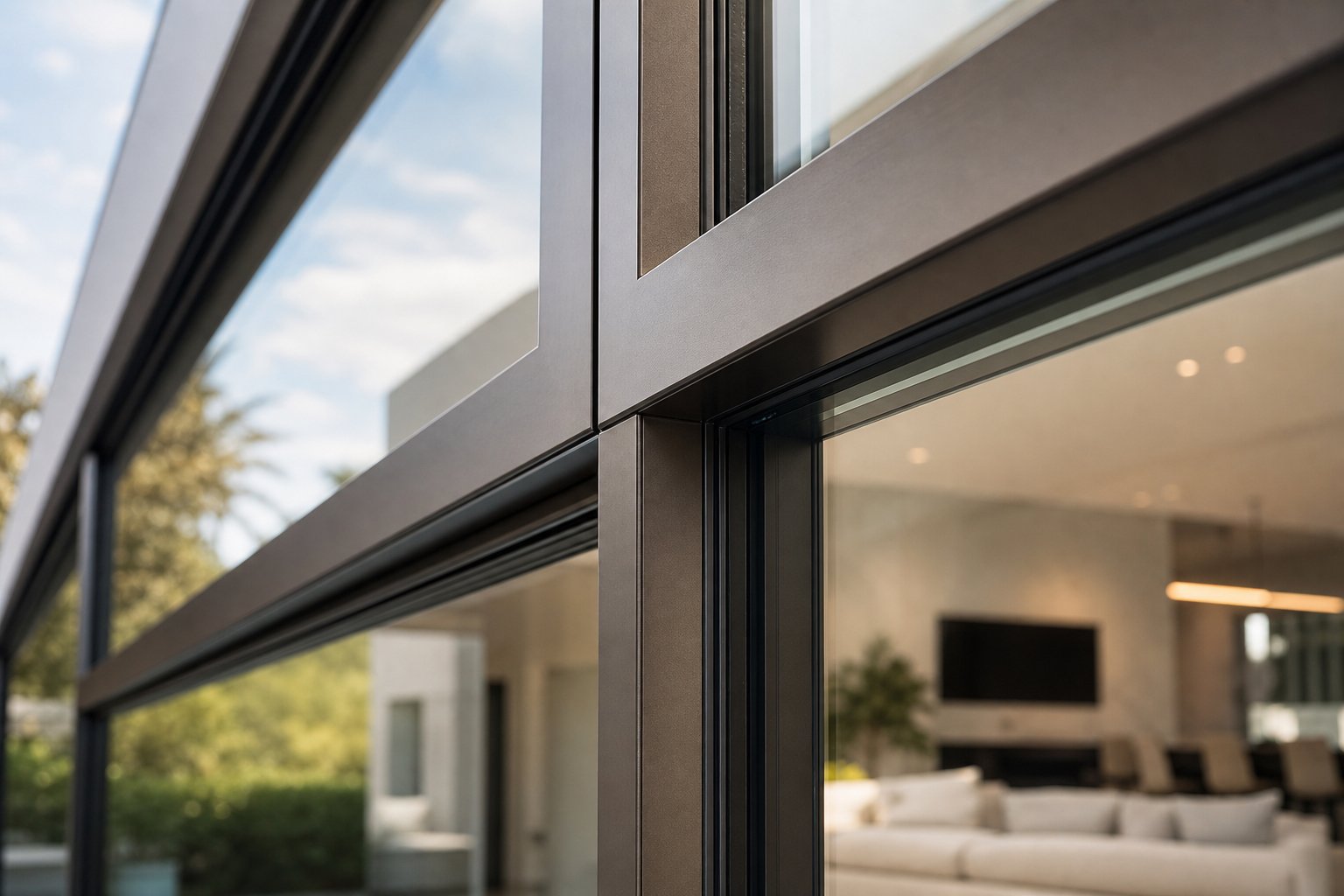
How Aluminium Compares to Other Window and Door Materials
Thermal break technology levelled the playing field, but it didn’t eliminate the question every builder and homeowner still asks: why aluminium over vinyl, timber, or fibreglass? The honest answer depends on what your project demands. Each material carries genuine strengths and real trade-offs — and understanding them prevents you from choosing a supplier who stocks the wrong product for your situation.
Aluminium vs. Vinyl vs. Wood vs. Fibreglass
No single frame material wins across every attribute. Vinyl costs less upfront and insulates well, but its thicker profiles limit design flexibility and it can warp in Australia’s intense UV and heat. Timber delivers natural insulation and heritage aesthetics, yet demands ongoing maintenance that many owners underestimate. Fibreglass offers excellent thermal stability and durability, but availability in Australia remains limited compared to other markets, and pricing sits at the premium end.
Aluminium alloy windows bring a combination no other material matches: exceptional strength-to-weight ratio enabling slim sightlines, virtually unlimited colour options through powder coating, dimensional stability across temperature extremes, and infinite recyclability without quality loss. The trade-off? Without a thermal break, aluminium conducts heat aggressively. And even with thermally broken frames, it typically costs more than vinyl — though less than premium timber or fibreglass.
For projects involving vinyl windows alongside aluminum doors — a common approach in budget-conscious multi-residential developments — the aesthetic mismatch between chunky vinyl profiles and slim aluminium frames can create visual inconsistency that affects the finished product.
| Attribute | Aluminium | Vinyl (uPVC) | Timber | Fibreglass |
|---|---|---|---|---|
| Durability | Excellent — 30 to 50+ years; no rot, no warping | Good — 20 to 40 years; may warp in extreme heat | Variable — 50 to 100+ years if maintained; vulnerable to rot and pests | Excellent — 40+ years; resists rot and corrosion |
| Maintenance | Very low — periodic cleaning and hardware lubrication | Very low — soap and water; no painting | High — repainting or re-staining every 3 to 7 years | Low — occasional cleaning; paintable if desired |
| Thermal Performance (with standard glazing) | Good with thermal break (U-value 1.6–2.2 W/m²K); poor without | Good inherently (U-value 1.5–2.0 W/m²K) | Excellent natural insulator (U-value 1.4–1.8 W/m²K) | Excellent (U-value 1.4–1.8 W/m²K); minimal expansion |
| Cost Range (supply only, per window, AUD) | $600–$1,800 | $350–$900 | $800–$2,500+ | $1,200–$3,000+ |
| Aesthetic Flexibility | Excellent — slim profiles, unlimited powder coat colours, dual-colour options | Limited — thicker frames, restricted colour range, cannot be repainted | Excellent — natural grain, any paint or stain colour | Good — paintable, moderate profile width |
| Recyclability | Infinite — recycled without quality loss; recycling uses only 5% of original production energy | Difficult — requires specialist facilities; not widely recycled in Australia | Biodegradable — renewable if sustainably sourced (FSC certified) | Limited — difficult to separate composite materials for recycling |
| Lifespan | 30–50+ years | 20–40 years | 50–100+ years (with maintenance) | 40+ years (limited long-term data) |
| Sightline Width (typical frame face) | 45–65 mm | 70–100 mm | 60–90 mm | 55–75 mm |
Lifecycle Cost and Sustainability Considerations
Upfront price tells only part of the story. An aluminium window replacement on a 30-year-old home might cost more initially than vinyl, but the frame’s longevity, zero repainting costs, and retained structural integrity over decades shift the lifecycle equation. Windows with aluminum frame construction typically outlast vinyl by 10 to 20 years in Australian conditions — particularly in coastal zones where salt air degrades uPVC seals faster than powder-coated aluminium.
Sustainability increasingly drives specification decisions. Aluminium’s recyclability is its standout environmental credential: the material can be recycled indefinitely without losing structural properties, and the recycling process consumes roughly 5% of the energy needed for primary production. For builders targeting Green Star ratings or environmentally conscious clients, this lifecycle advantage matters. Timber is renewable and biodegradable when responsibly sourced, but its maintenance cycle generates waste (paint, sealants, replacement components). Vinyl’s petroleum-based production and limited recyclability make it the weakest performer on sustainability metrics despite its low purchase price.
For aluminum frame replacement windows in renovation projects, the old frames themselves often re-enter the recycling stream — a genuine circular economy outcome that vinyl and fibreglass cannot replicate at scale.
Aluminium is the clear winner when a project demands slim sightlines for maximum glass area, long-term durability without ongoing maintenance, design flexibility across colours and configurations, and a genuinely recyclable end-of-life outcome. If your priorities are maximum thermal performance at minimum cost and aesthetics are secondary, vinyl remains hard to beat on value alone.
An aluminum clad window — combining a timber interior with an aluminium exterior skin — attempts to bridge both worlds, offering timber’s warmth inside with aluminium’s weather resistance outside. It’s a valid hybrid, though it adds cost and complexity that not all suppliers can fabricate or service locally.
Replacement aluminum windows in any material require a supplier who understands the specific product’s strengths and limitations. That understanding depends on where the supplier sits in the broader aluminium supply chain — a distinction most buyers never think to investigate.
Understanding the Aluminium Supply Chain From Profile to Project
Most buyers assume the company selling them windows is the same company that made them. In reality, the aluminium fenestration industry operates through a layered supply chain where different businesses handle different stages — and the layer you engage with determines the level of support, customisation, and accountability you receive. Misunderstanding this structure is one of the most common reasons builders end up with the wrong supplier for their project’s complexity.
System Suppliers vs. Fabricators vs. Dealers
The supply chain starts with system suppliers (also called system houses). These are the companies that design and extrude the aluminium profile systems — the raw sections, thermal break assemblies, gasket designs, and hardware interfaces that form the DNA of a finished window or door. In Australia, Capral is the dominant local system supplier. Internationally, names like Schuco (Germany), Reynaers (Belgium), and Aluprof (Poland) supply profile systems used by fabricators worldwide. System suppliers don’t sell finished windows to end users. They sell engineering and extrusions to the next layer down.
Fabricators are the actual aluminum window manufacturers — the businesses that buy profile systems, cut and assemble frames, integrate hardware and glazing, run quality control, and produce the finished product that arrives on your site. A fabricator’s skill determines whether a premium profile system delivers premium results. As industry specialists note, a strong system plus a weak fabricator equals problems. The logo on the profile is only half the story.
This distinction matters because two fabricators using identical Capral or Reynaers profiles can produce vastly different quality outcomes depending on their machinery, workforce training, and quality systems. When evaluating aluminium window suppliers, you’re really evaluating the fabricator’s capability — not just the system brand they carry.
Below the fabricator level sit authorised dealers and distributors. Dealers typically represent one or more fabricators in a geographic area, handling sales and sometimes installation coordination but not manufacturing. Distributors operate at higher volume with less technical involvement — useful for commodity products but limited when projects require engineering input or custom configurations. Finally, some manufacturers of aluminum windows sell direct to builders and developers, cutting out intermediaries but requiring the buyer to manage more of the coordination themselves.
Regional Standards and Global Supplier Landscape
Where a profile system originates shapes its engineering philosophy, testing standards, and documentation. European systems (Schuco, Reynaers, Cortizo) tend toward deeper thermal breaks, slimmer sightlines, and extensive BIM libraries — reflecting stringent EU energy regulations. They’re increasingly specified on high-end Australian residential projects where architects want minimal frame profiles and maximum glass area.
Australian-manufactured systems from Capral and AWS comply natively with AS 2047 and AS 1288, simplifying compliance documentation for local fabricators. For standard residential and commercial work, locally sourced profiles reduce lead times and eliminate import logistics. Residential aluminum window manufacturers operating within Australia typically fabricate from these local systems, offering faster turnaround and straightforward warranty support.
North American aluminum clad window manufacturers — companies producing timber-core windows with aluminium exterior cladding — serve a different market segment. Their products occasionally appear in Australian luxury projects, though import costs, different testing standards, and limited local service support make them a niche choice rather than a mainstream option.
Patio door manufacturers, whether local or international, often specialise in large-format sliding and bi-fold systems that demand specific engineering for wind load, water penetration, and operational weight. Not every general aluminium window maker fabricates these larger assemblies, so projects featuring expansive openings may need a specialist fabricator regardless of who supplies the standard windows.
Which Supply Model Fits Your Project
The right supply model depends on your project’s complexity, your team’s technical capability, and how much coordination you want the supplier to absorb. Here’s how the models rank from most hands-on support to least:
- Full-service fabricator (project-based supply) — handles system recommendation, engineering, shop drawings, manufacturing, quality control, and delivery coordination. Best for complex residential builds, multi-storey developments, and projects with custom configurations or strict compliance requirements.
- Specialist fabricator (product-focused) — manufactures to your specifications but expects you to provide finalised drawings and handle site coordination. Suits experienced builders who know exactly what they need and can manage the interface between trades.
- Authorised dealer with installation — represents a fabricator’s product range and coordinates installation. Good for straightforward residential replacements and renovations where the homeowner wants a single point of contact.
- Distributor or wholesale supplier — supplies standard product lines at volume pricing with minimal technical support. Appropriate for large-scale projects using repetitive standard configurations where the builder’s team handles all engineering and coordination.
- Direct import (system supplier or overseas fabricator) — lowest cost potential but highest coordination burden. Requires the buyer to manage compliance documentation, shipping logistics, customs, and local installation without manufacturer support on the ground.
Most residential projects in Australia sit comfortably with options one or two. Alum windows manufacturers operating as full-service fabricators absorb the complexity that would otherwise fall on the builder — and for projects involving mixed configurations, compliance testing, or tight construction programmes, that absorption is worth paying for.
Knowing where your supplier sits in this chain is the first step. The next is evaluating whether they actually have the certifications, service depth, and production capacity to deliver on your specific project requirements.
A Supplier Evaluation Framework for Builders and Specifiers
Knowing where a supplier sits in the supply chain tells you their role. It doesn’t tell you whether they’re any good at it. Two fabricators occupying the same position can deliver wildly different outcomes depending on their certifications, service depth, and willingness to engage with your project’s specific complexity. A structured evaluation framework removes guesswork from that assessment — and protects your project from the kind of supplier shortcomings that only surface once production is underway.
Certifications and Standards Worth Verifying
Certifications aren’t just marketing badges. They represent third-party verification that a supplier’s products have been tested against defined performance criteria. In Australia, the non-negotiable standard for any aluminium window supplier is AS 2047 — the Australian Standard for windows and external glazed doors. It covers structural adequacy, water penetration resistance, air infiltration, and operating force. Any product installed in an Australian building must comply, and any supplier who can’t produce AS 2047 test reports for their specific configurations is a supplier you should walk away from.
AS 1288 governs glass selection and installation — critical for safety glazing requirements in doors, low-level panels, and overhead applications. BAL (Bushfire Attack Level) compliance matters for projects in designated bushfire-prone areas, requiring specific frame, seal, and glazing combinations tested to AS 3959.
For energy performance, the Window Energy Rating Scheme (WERS) provides independently verified U-values and SHGC ratings under Australian conditions. Suppliers offering custom aluminium windows for energy-conscious projects should provide WERS data or equivalent modelled performance figures for their assemblies. NatHERS assessors rely on this data to confirm a home meets its energy rating target — without it, your energy compliance pathway stalls.
International certifications like NFRC and AAMA appear on imported products and provide useful comparative data, but they don’t replace Australian compliance requirements. A supplier quoting NFRC ratings without corresponding AS 2047 documentation is offering performance data that may not translate directly to local regulatory acceptance.
Service Capabilities That Separate Good Suppliers From Great Ones
Product quality gets you to the starting line. Service capability determines whether the project actually runs smoothly. The difference between aluminum window suppliers who simply take orders and those who actively support project delivery shows up in several measurable ways:
- System recommendation — can the supplier advise which profile system suits your project’s structural, thermal, and aesthetic requirements, or do they only sell what they stock?
- Engineering coordination — do they review architectural drawings, flag buildability issues, and produce shop drawings that your installer can work from?
- Material calculation and waste minimisation — do they optimise cutting schedules and glass sizes to reduce cost and lead time?
- Manufacturing transparency — can they document their quality control process, including inspection points and testing records?
- Logistics planning — do they coordinate delivery sequencing to match your construction programme, or ship everything at once regardless of site readiness?
- Customisation depth — can they design windows and doors to non-standard specifications, or are you limited to catalogue sizes and configurations?
- Post-delivery support — do they provide installation guidance, warranty service, and replacement parts when needed?
A full-service aluminium window supplier like MEICHEN demonstrates what this looks like in practice — their published service scope covers system recommendation through to delivery, including engineering coordination, material calculation, manufacturing, quality control, and project-based supply. That level of transparency lets builders assess capability before committing, rather than discovering gaps mid-project. It’s the model worth benchmarking other suppliers against, particularly for custom aluminum windows requiring non-standard engineering.
For patio door suppliers and specialists handling large-format openings, service capability matters even more. Bi-fold and multi-panel sliding systems involve tighter tolerances, heavier components, and more complex site coordination than standard window supply. If a supplier can’t articulate their process for managing these complexities, they probably haven’t refined one.
Questions to Ask Before Committing to a Supplier
Before signing a supply agreement, run through these evaluation criteria. They apply equally whether you’re assessing aluminum window suppliers for a single home or an aluminium windows supplier for a 200-unit apartment development:
- Can you provide AS 2047 test reports for the specific configurations I need — not just generic system data?
- What profile systems do you fabricate from, and do you carry multiple options to suit different performance tiers?
- What is your current production lead time for custom aluminium windows in my required configurations?
- Do you produce shop drawings, or do I need to supply them?
- What does your warranty cover — frame, hardware, glazing seals, finish — and for how long?
- Can you provide references from projects of similar scope and complexity?
- How do you handle specification changes after production has started?
- What quality control checkpoints exist between order confirmation and dispatch?
- Do you offer staged delivery to match construction sequencing?
- What happens if product arrives damaged or doesn’t meet specification — what’s your resolution process and timeline?
A confident aluminum window supplier answers these questions without hesitation and backs their answers with documentation. Vague responses, deflection, or an inability to provide written confirmation of any point above should register as a warning sign — one that the next section explores in detail.
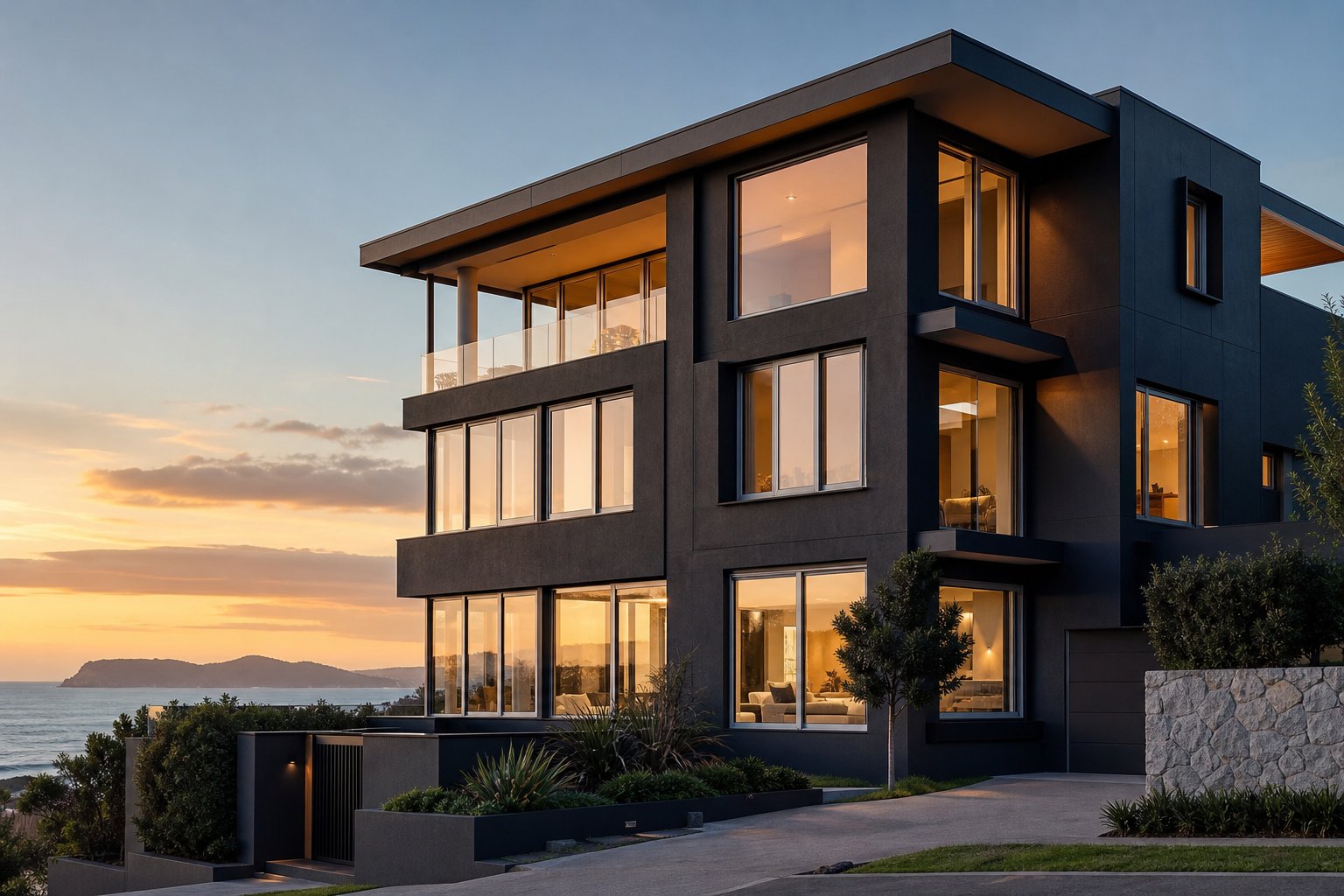
Aluminium Finish Options and What They Mean for Your Project
Supplier capability extends beyond engineering and logistics. The surface finish applied to your aluminium frames determines how they look on day one, how they hold up over decades, and how much maintenance they demand in between. It’s also a revealing indicator of manufacturing sophistication — a supplier offering only basic powder coat in limited colours operates at a different level than one providing anodised, PVDF, wood-grain, and dual-colour options across their full product range.
Anodised vs. Powder-Coated vs. Wood-Grain Finishes
Anodised finishes form a hard oxide layer directly on the aluminium surface through an electrolytic process. Clear anodized aluminum windows retain a natural metallic sheen — silver, champagne, or bronze tones that suit contemporary aluminium windows and minimalist architectural styles. The resulting layer is integral to the metal rather than sitting on top of it, which gives anodized aluminium window frames exceptional scratch resistance (300–400 Vickers hardness) and strong corrosion protection in marine environments. The trade-off is a limited colour palette. Anodized aluminum frame windows work best when you want that raw, industrial-modern aesthetic without the maintenance burden of exposed metal.
Powder coating dominates the Australian residential market for good reason. Dry powder is electrostatically applied and oven-cured to form a 60–80 micron protective film available in virtually any RAL colour. This is the finish that gives modern aluminum windows their design flexibility — matching render tones, contrasting with brickwork, or achieving bold feature colours that define a facade. Durability is high, UV resistance is strong, and maintenance amounts to periodic cleaning with soapy water. For most projects, powder coating certified to AAMA 2604 or the Australian equivalent provides the right balance of longevity and cost.
Wood-grain transfer (sublimation) printing layers a timber-look pattern over a powder-coated base. It delivers the warmth of natural wood without the repainting cycle — appealing for Queenslander renovations, heritage-adjacent builds, or any aluminium glazed window where timber aesthetics matter but timber maintenance doesn’t. Durability sits slightly below standard powder coat in high-UV environments, so orientation matters.
Dual-colour finishes apply different colours to the interior and exterior faces of the same frame. A dark charcoal exterior might pair with a white interior to match internal trim — a detail that elevates the finished result on any project using contemporary aluminium windows as a design feature.
How Climate and Orientation Affect Finish Longevity
Australia’s UV intensity accelerates finish degradation faster than European or North American conditions. North and west-facing frames cop the worst solar exposure, making finish selection on these elevations more consequential than on sheltered southern faces. For north-facing anodized aluminum windows in coastal Queensland, the combination of UV, salt air, and humidity demands a minimum 20-micron oxide layer to maintain appearance over time. Powder-coated frames on the same elevation should meet AAMA 2604 performance levels at minimum — or AAMA 2605 equivalent for premium longevity.
Coastal salt exposure within 1 km of the shoreline adds another variable. Anodising performs well here due to its integral corrosion barrier, while powder coat requires proper pre-treatment (chromate or non-chromate conversion coating) to prevent undercutting at scratches or edges. Wood-grain finishes in direct coastal exposure may show visual wear sooner than plain powder coat, making them better suited to sheltered or interior-facing applications in salt zones.
When requesting quotes, specify the finish type, colour code, and performance standard you expect — don’t leave it to the supplier’s default. State which elevations face which direction, note proximity to the coast, and ask what pre-treatment process they use before coating. These details separate a quote that holds up on site from one that delivers surprises at handover.
| Finish Type | Durability Rating | Colour Options | Maintenance Level | Best Application |
|---|---|---|---|---|
| Clear Anodised | Very high — integral oxide layer; 300–400 Vickers hardness | Limited — silver, bronze, champagne, black metallic tones | Very low — periodic wash only | Coastal projects, modern facades, commercial buildings |
| Coloured Anodised | High — slightly less consistent than clear in deep colours | Moderate — earth tones and metallics; no bright colours | Very low | Architectural feature windows, high-end residential |
| Powder Coat (AAMA 2604 equivalent) | High — 60–80 micron film; strong UV and abrasion resistance | Virtually unlimited — full RAL range, custom matching | Very low — soap and water | Residential and commercial; most Australian projects |
| Powder Coat (AAMA 2605 equivalent) | Very high — premium formulation for extreme exposure | Full RAL range; fluoropolymer-enhanced options | Very low | High-rise, industrial, severe coastal or tropical zones |
| Wood-Grain Transfer (Sublimation) | Medium to high — dependent on UV exposure and orientation | Wide range of timber-look patterns (oak, walnut, cedar, etc.) | Low to medium — may show wear in high-UV positions | Heritage renovations, villas, sheltered residential facades |
| Dual-Colour (different interior/exterior) | Matches base finish type (powder coat or anodised) | Any combination of available colours | Matches base finish type | Design-led projects; matching interior trim to exterior facade |
Finish selection might seem like a cosmetic decision, but it carries warranty implications, affects long-term maintenance budgets, and signals whether a supplier genuinely understands Australian conditions. A supplier who asks about your site’s orientation, proximity to the coast, and local climate zone before recommending a finish is one who understands durability — not just aesthetics. One who doesn’t ask those questions may be selling you a finish that won’t perform where it matters most.
Red Flags to Watch for When Vetting Suppliers
A supplier who doesn’t ask about your site orientation before recommending a finish is a minor concern. A supplier who can’t produce compliance documentation, avoids direct questions, or pressures you to commit before specifications are finalised is a serious one. Most guides on choosing aluminium window and door suppliers skip this topic entirely — because they’re written by suppliers. This section isn’t. It’s written for the builder or specifier who needs to know when to walk away.
Documentation Red Flags That Signal Risk
Missing or vague documentation is the single most reliable predictor of downstream problems. If a supplier can’t substantiate their claims on paper, those claims are worth nothing once product arrives on site and fails to meet specification. Watch for these patterns:
- No AS 2047 test reports for your specific configuration — generic system data or overseas test certificates don’t confirm that the actual product you’re ordering meets Australian structural and weatherproofing requirements. A supplier offering cheap aluminium windows without configuration-specific test evidence is selling you unverified performance.
- Unwillingness to provide engineering calculations — for projects involving wind load requirements, large spans, or cyclone ratings, engineering documentation isn’t optional. A supplier who deflects these requests likely lacks the technical depth to support complex projects. As industry evaluation guides note, suppliers making broad compliance claims without current supporting documents represent a measurable project risk.
- No written warranty terms — verbal promises about coverage mean nothing when a seal fails three years in. Legitimate suppliers provide written warranties specifying exactly what’s covered (frame, hardware, glazing seals, finish), for how long, and under what conditions. If warranty details only exist as a conversation, they effectively don’t exist.
- No quality control documentation — a supplier with no documented QC process — no inspection checkpoints, no testing records, no final verification protocol — is a supplier whose consistency you cannot verify. You might get a good batch. You might not. There’s no system ensuring either outcome.
- Inability to provide project references — every capable supplier has completed projects similar to yours. If they can’t name one, or won’t connect you with a previous client, ask yourself why. A showcase window and door company with genuine capability welcomes scrutiny because their track record supports it.
Communication Patterns That Predict Problems
How a supplier communicates before you commit tells you exactly how they’ll communicate once they have your deposit. These behaviours should raise immediate concern:
- Vague lead time commitments — responses like “around 6 to 8 weeks” without reference to your specific order complexity, current production load, or finish requirements suggest the supplier hasn’t actually assessed your job. Realistic lead times require calculation, not guesswork.
- Pressure to commit without finalised specifications — any supplier pushing you to sign before drawings are confirmed, configurations are locked, or performance requirements are documented is prioritising their sales pipeline over your project outcome. A big name in windows and doors doesn’t need to rush you — their order book is full regardless.
- Accepting incomplete information without questions — counterintuitively, a supplier who quotes instantly from minimal detail is more concerning than one who asks clarifying questions. Capable suppliers query opening types, glazing build-ups, hardware preferences, and site conditions before confirming price. A supplier who doesn’t ask is a supplier who hasn’t thought through what your project actually requires.
- Quoting dramatically below market rate — if aluminium windows for sale from one supplier come in 30% below every other quote, something is being compromised. It might be material grade, finish quality, hardware specification, or the absence of compliance testing. Extremely low pricing on wholesale aluminium window supply almost always indicates corners being cut somewhere the buyer won’t notice until installation or failure.
Protecting Your Project From Supplier Failures
Red flags aren’t reasons to panic — they’re reasons to investigate further or move on. Protecting your project comes down to a few practical habits:
Get everything in writing. Verbal assurances about lead times, specifications, and warranty coverage should be confirmed in a written supply agreement before any deposit changes hands. If a supplier resists putting commitments on paper, that resistance is your answer.
Request sample product or visit completed installations. Any the window and door store or fabrication facility worth dealing with will let you see finished work — either on a current project or in a showroom. Physical product tells you more about manufacturing quality than any brochure.
Don’t conflate marketing presence with delivery capability. A one stop windows and doors operation with polished advertising may or may not have the production depth, engineering support, and quality systems to handle your project. Evaluate capability through documentation and references, not brand presentation.
The suppliers who survive this scrutiny — who produce documentation readily, communicate clearly, and welcome detailed questions — are the ones worth progressing to the next stage: managing the actual supply process from quote through to site delivery.
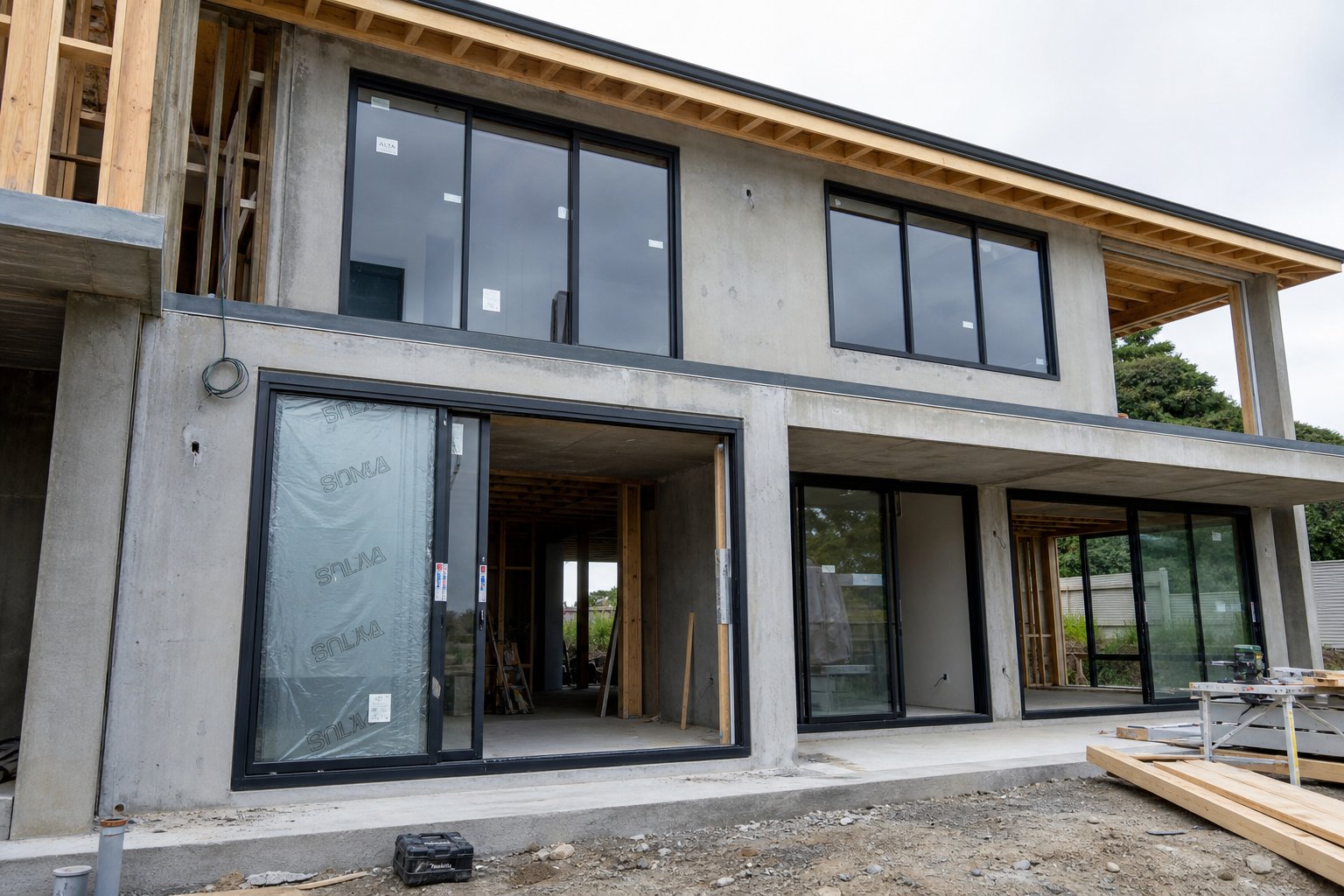
Working With Your Supplier From Quote to Completion
Selecting the right supplier is half the job. The other half is managing the engagement so that good intentions translate into product arriving on site — correct, on time, and matching specification. The gap between a signed supply agreement and successful delivery is where most aluminium windows & doors projects either run smoothly or unravel. A structured process protects both parties and keeps your construction programme intact.
From First Inquiry to Final Delivery
The buyer journey for aluminum windows and doors follows a predictable sequence when managed well. Each step builds on the previous one, and skipping stages — particularly drawing confirmation and sample approval — creates compounding risks that surface during installation rather than during planning.
- Prepare project documentation — before contacting any supplier, compile architectural drawings, window and door schedules, structural engineer’s wind load requirements, energy rating targets, and any compliance constraints (BAL rating, cyclone classification, acoustic requirements). The more complete your brief, the more accurate the response.
- Submit inquiry with full specifications — provide opening sizes, configuration types, glazing requirements, hardware preferences, finish colours, and delivery address. Include your construction programme timeline so the supplier can assess whether their production capacity aligns with your schedule.
- Receive and compare quotes — evaluate responses on a like-for-like basis. Confirm that each quote covers the same profile system, glazing build-up, hardware grade, and finish standard. A lower price on aluminium windows doors often reflects a different specification rather than better value.
- Confirm engineering and shop drawings — once you’ve selected a supplier, request detailed shop drawings showing frame sections, glazing details, hardware positions, flashing interfaces, and opening directions. Review these against your architectural drawings and structural requirements before approving production. As manufacturing process guides emphasise, locking the final approved version before production prevents the mismatch between expectation and delivery that generates most disputes.
- Approve samples where applicable — for custom finishes, non-standard configurations, or large orders, request a physical sample or mock-up. This confirms colour accuracy, hardware operation, gasket fit, and overall build quality before committing to full production.
- Monitor production milestones — agree on checkpoint updates during manufacturing. A capable supplier will confirm when profiles are cut, when assembly is complete, when glazing is installed, and when final inspection passes. These updates let you coordinate downstream trades with confidence.
- Quality inspection before dispatch — request inspection records covering dimensional accuracy, finish quality, hardware function, glazing seal integrity, and packaging completeness. For project-scale orders of alu windows and doors, a pre-dispatch inspection report should be standard practice, not a special request.
- Coordinate delivery logistics — confirm delivery date, unloading requirements, site access constraints, and protection needs. Staged delivery matching your installation sequence prevents product sitting exposed on site for weeks — a common cause of pre-installation damage.
- Post-installation support — confirm warranty activation, obtain maintenance guidelines, and establish a contact point for any defects or hardware adjustments that emerge during the defects liability period.
This sequence applies whether you’re ordering three windows for a renovation or 300 units for a multi-storey development. The scale changes; the discipline doesn’t.
Getting Accurate Quotes and Managing Timelines
Pricing structures for aluminum window and door supply typically fall into two models. Per-unit pricing quotes each window or door individually based on size, configuration, glazing, and finish — straightforward for small residential jobs. Project-based pricing bundles the entire scope into a single supply package, often with volume efficiencies, coordinated delivery scheduling, and engineering support included. For anything beyond a handful of openings, project-based pricing usually delivers better value and clearer accountability.
When comparing quotes for alum windows and doors, ensure every supplier is pricing against identical specifications. Differences in thermal break depth, glass thickness, hardware brand, or finish standard can account for 20–40% price variation on what appears to be the same product. Ask each supplier to itemise their quote by component — frame system, glazing, hardware, finish, and delivery — so you can identify exactly where cost differences originate.
Lead times for custom aluminium fenestration in Australia typically range from 4 to 12 weeks depending on complexity. Standard configurations in common finishes sit at the shorter end. Custom sizes, non-standard colours, specialist glazing, or compliance testing for cyclone or bushfire zones push toward the longer end — and industry data confirms that bespoke designs can extend beyond 16 weeks when manufacturer schedules are at capacity. Seasonal demand peaks through spring and summer compress availability further, making early ordering essential for projects targeting warm-weather installation windows.
A supplier whose documented workflow covers the full cycle — from drawings through material calculation, manufacturing, quality control, and logistics — gives you visibility into where your order sits at any point. MEICHEN’s project-based supply process illustrates this approach in practice, with each stage from system recommendation to delivery coordination mapped transparently so builders can track progress against their construction programme rather than chasing updates.
The difference between aluminum doors & windows arriving on schedule and a project stalling for weeks often comes down to how well the first four steps of this process were executed. Rush the documentation, skip the drawing approval, or accept vague lead time commitments, and you inherit risk that compounds with every subsequent trade waiting on your fenestration install. Get the process right from first inquiry, and the supplier relationship becomes what it should be — a predictable, coordinated partnership that delivers aluminium windows doors to site exactly when your programme needs them there.
Frequently Asked Questions About Aluminium Window and Door Suppliers
1. What is the difference between an aluminium system supplier and a fabricator?
System suppliers design and extrude raw aluminium profile systems — the sections, thermal breaks, and hardware interfaces that form the basis of a finished window. Companies like Capral, Schuco, and Reynaers operate at this level. Fabricators purchase those profile systems and manufacture the finished windows and doors that arrive on your building site. They cut, assemble, glaze, and quality-check the final product. When evaluating suppliers, you are primarily assessing the fabricator’s capability, because two fabricators using identical profiles can produce vastly different quality outcomes depending on their machinery, training, and quality systems.
2. How do I know if an aluminium window supplier meets Australian standards?
Request AS 2047 test reports for the specific configurations you are ordering — not generic system data or overseas certificates. AS 2047 covers structural adequacy, water penetration resistance, air infiltration, and operating force for windows and external glazed doors in Australia. Additionally, check for AS 1288 compliance for glass selection, WERS ratings for energy performance, and BAL compliance if your site is in a bushfire-prone area. A full-service supplier like MEICHEN publishes their service scope transparently at meichenwindows.com.au/services, covering everything from system recommendation through quality control, which makes verification straightforward.
3. What is a thermal break in aluminium windows and why does it matter?
A thermal break is a low-conductivity polyamide strip (typically PA66 reinforced with glass fibre) inserted between the interior and exterior sections of an aluminium frame. Since aluminium conducts heat roughly 1,000 times faster than timber, this strip dramatically reduces heat transfer through the frame. Thermally broken aluminium windows achieve frame U-values between 1.6 and 2.2 W/m²K, making them competitive with timber and uPVC systems. For Australian homes, this level of performance supports NCC Section J energy compliance and helps meet NatHERS rating targets when paired with appropriate glazing.
4. How long do aluminium windows and doors take to manufacture in Australia?
Typical lead times for custom aluminium fenestration in Australia range from 4 to 12 weeks. Standard casement and sliding configurations in common finishes sit at the shorter end (3 to 5 weeks), while custom sizes, non-standard colours, specialist glazing, or compliance testing for cyclone or bushfire zones push toward 8 to 12 weeks. Bespoke designs can extend beyond 16 weeks during peak demand periods in spring and summer. Confirming realistic lead times early — and verifying your supplier actually manufactures your required configuration rather than subcontracting it — prevents scheduling surprises on site.
5. What finish options are available for aluminium window frames in Australia?
The main finish options include clear and coloured anodising, powder coating (standard and premium grades), wood-grain sublimation transfer, and dual-colour finishes. Powder coating dominates the Australian residential market, offering virtually unlimited RAL colours with strong UV and abrasion resistance. Anodising provides exceptional scratch resistance and performs well in coastal environments but has a limited colour palette. Wood-grain transfer delivers a timber aesthetic without the repainting cycle. Dual-colour options allow different colours on interior and exterior faces. Climate, orientation, and coastal proximity should all influence your finish selection — north and west-facing frames in high-UV zones need premium-grade coatings for long-term durability.
More Window & Door Guides