What Are Residential Aluminum Windows and How Are They Built
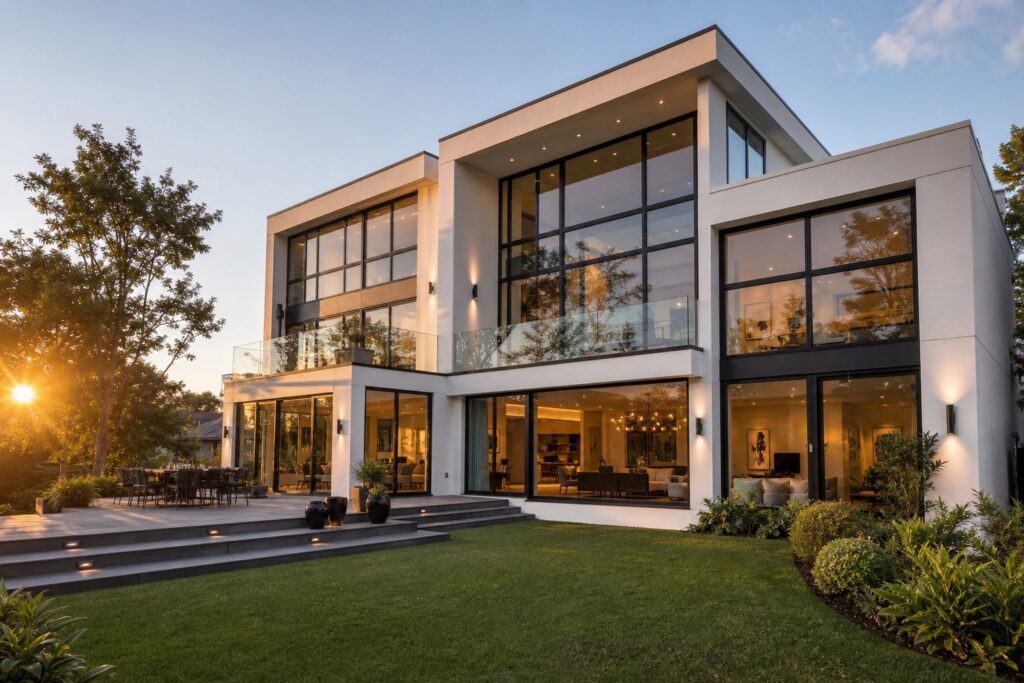
When you hear “aluminum windows,” you might picture the sleek curtain walls on a downtown office tower. But residential aluminum windows are a different product entirely, purpose-built for houses, townhomes, and low-rise apartment buildings where comfort, appearance, and cost efficiency matter just as much as structural performance.
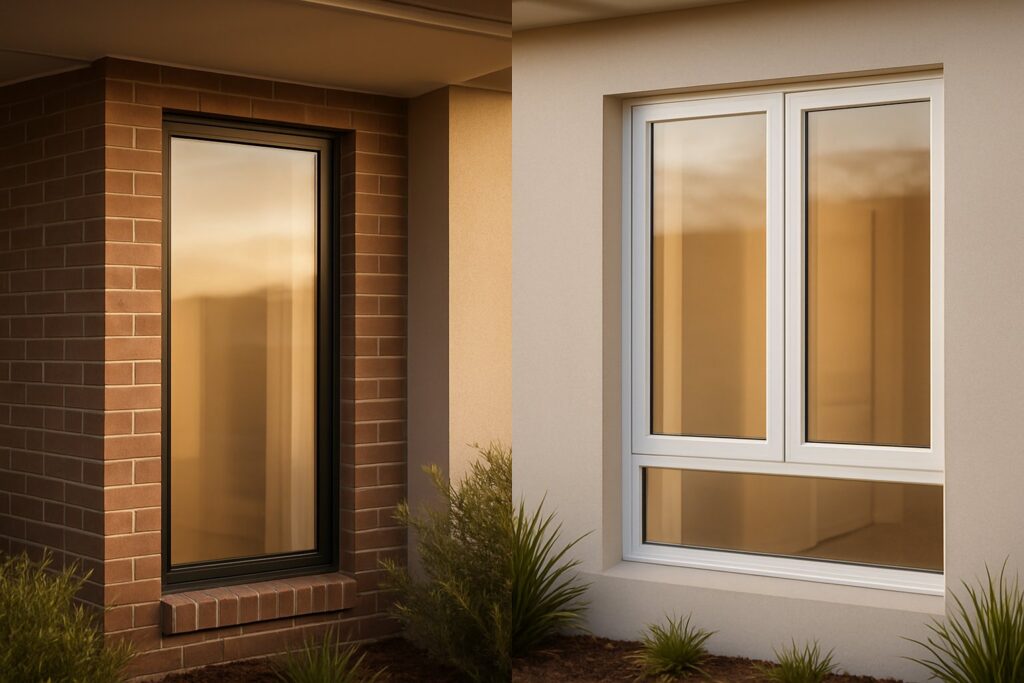
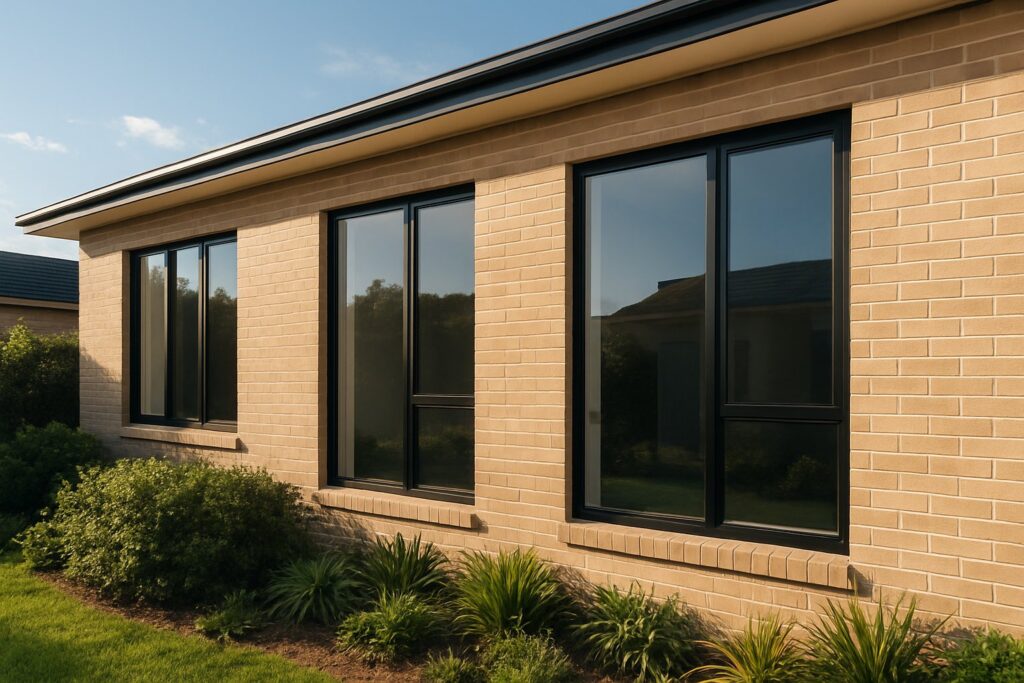
Residential aluminum windows are window systems constructed from extruded aluminum alloy profiles, designed specifically for homes and low-rise buildings. They prioritize aesthetic appeal, energy efficiency, and ease of operation while meeting standard residential building codes.
What Makes a Window Frame Residential Grade
So what actually separates a residential system from a commercial one? It comes down to a few key differences. Residential aluminum window frames use thinner, lighter profiles because they don’t need to span massive openings or resist the wind loads that a 30-story facade does. The frame depth is shallower, the hardware is built for everyday household use rather than high-traffic public spaces, and the glass options are tailored toward home comfort, think double-pane insulated units rather than heavy-duty structural glazing.
Commercial systems, by contrast, are engineered for larger buildings with stricter safety testing, reinforced profiles, and hardware rated for thousands of additional open-close cycles. They’re also significantly more expensive. For a typical single-family home or renovation project, residential-grade window frames deliver the right balance of strength, looks, and budget.
How Aluminum Window Construction Works
Imagine a raw aluminum billet heated until it’s soft enough to push through a shaped die, almost like squeezing toothpaste through a nozzle. That extrusion process creates the precise profiles that form the frame, sash, and mullions of every aluminum window. Once cooled and cut to size, these pieces are assembled using mechanical fasteners.
From there, the glass in aluminum frame assemblies gets sealed into place with gaskets or silicone, creating a weathertight unit. Aluminium sliding windows and casement styles alike then receive their weatherstripping along every operable edge to block air and water infiltration. Finally, handles, locks, and hinges are installed, giving the window its full functionality.
The surface itself gets a protective treatment, typically powder coating or anodizing, to guard against corrosion and give homeowners a wide palette of color choices. It’s a streamlined process, but the result is a set of alu windows that are dimensionally stable, resistant to warping, and built to hold up for decades.
Of course, a well-built frame only tells half the story. The real question most homeowners have isn’t how aluminum windows are made, it’s whether they actually perform well enough to live with every day. That reputation has a complicated history.
Why Aluminum Windows Are Making a Comeback in Homes
Complicated is an understatement. Aluminum went from being the default choice in American homes to a material many homeowners actively avoided. Understanding that arc, and what reversed it, helps explain why replacing aluminum windows today looks nothing like it did a generation ago.
The Rise and Fall of Aluminum in Home Construction
During the postwar housing boom of the mid-20th century, suburban neighborhoods expanded rapidly and builders needed materials that could keep pace. Aluminum fit the bill. It was lightweight, affordable to produce at scale, and strong enough to support popular styles like the aluminum single hung window and sliding designs that defined ranch homes and split-levels across the country.
By the 1970s, aluminum windows were everywhere. Homeowners appreciated the slim profiles and low upfront cost, while builders loved how quickly they could be installed. But there was a problem hiding in plain sight: those early frames were solid metal with no insulating barrier. In winter, they conducted cold straight through to the interior. Condensation pooled on aluminium window trim and sills. In summer, heat radiated inward, driving up cooling costs.
The energy crisis of the 1970s made those shortcomings impossible to ignore. Through the 1980s and 1990s, vinyl and wood frames surged in popularity because they naturally insulated better than bare aluminum. Homeowners associated aluminum with drafty rooms, foggy glass, and high utility bills. The material didn’t disappear, but it retreated largely into commercial construction, where thermal comfort mattered less than structural performance.
What Sparked the Residential Comeback
So what changed? Several things converged at once. The biggest was thermal break technology, an insulating barrier engineered directly into the frame that dramatically reduced heat transfer. This single innovation addressed the core complaint that had pushed homeowners away for decades. Suddenly, aluminum could compete on energy efficiency without sacrificing its signature advantage: incredibly slim sightlines that maximize glass area and natural light.
Architectural trends played a role too. Modern and contemporary home designs favor clean lines, large windows, and minimalist frames, exactly what aluminum delivers. Where vinyl needs bulkier profiles for stability, aluminum achieves strength with far thinner sections. Brands like Milgard aluminum windows helped bring thermally improved residential options into the mainstream, giving homeowners access to the sleek aesthetic previously reserved for high-end custom builds.
Sustainability added another layer of appeal. Aluminum is 100% recyclable without losing quality, and modern manufacturing increasingly uses recycled content. Durable powder-coat finishes eliminated the old concerns about fading and corrosion, meaning an alum sliding window installed today can hold its color and performance for decades with minimal upkeep.
The misconception that aluminum equals poor insulation still lingers, but the technology behind these frames has fundamentally changed. The real question is how that thermal break actually works, and whether it makes enough of a difference to matter in your climate.
How Thermal Break Technology Transformed Aluminum Frames
It makes a massive difference, and the concept is simpler than most product descriptions make it sound. Thermal break technology is the single innovation that turned aluminum from a residential liability into a genuinely competitive option. Yet most window manufacturers reference “thermally improved” or “thermally broken” in their product names without ever explaining what’s happening inside the frame.
What a Thermal Break Actually Is
Every aluminum window frame has two sides: one facing the outdoors and one facing your living space. In older designs, those two sides were a single, continuous piece of metal. Aluminum conducts heat roughly 1,000 times more efficiently than wood, so in winter, the cold outside traveled straight through the metal window frame and into your home. In summer, the process reversed, pulling heat indoors.
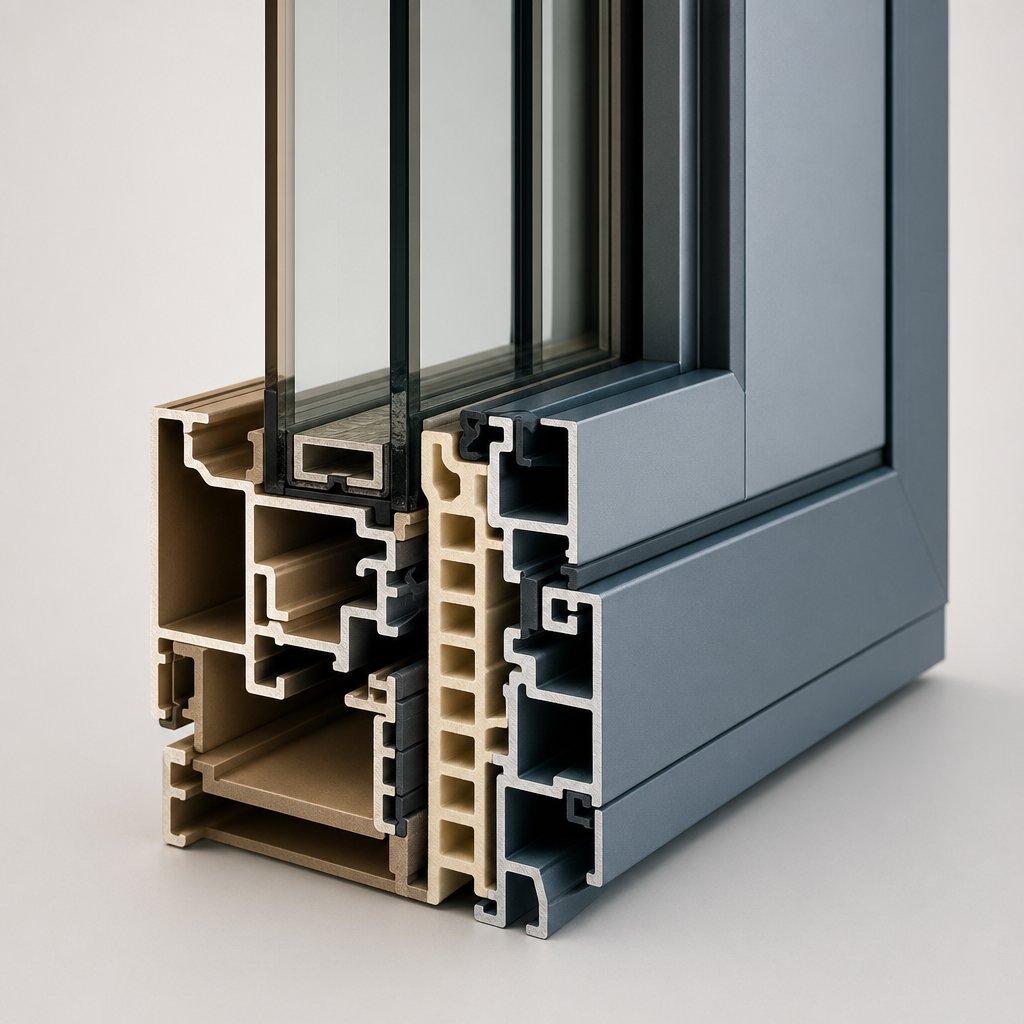
A thermal break interrupts that path. Imagine a bridge with a gap in the middle, connected only by a strip of rubber. Heat trying to cross from one side to the other hits that rubber strip and slows dramatically. That’s essentially what happens inside a thermally broken aluminum window. Manufacturers insert a rigid insulating barrier, typically made from polyamide or polyurethane, between the interior and exterior aluminum profiles during the extrusion process. This barrier physically separates the two halves of the frame so heat can no longer conduct freely through the metal.
The result is an aluminum window that retains the material’s structural strength and slim profile while behaving much more like wood or vinyl when it comes to insulation. Whether you’re looking at black aluminum windows for a modern facade, aluminum sliding windows for a patio, or milgard casement windows for a kitchen remodel, the thermal break is what makes any of those options viable in a home setting.
Thermally Improved vs. Non-Thermally-Broken Frames
The real-world gap between these two frame types is significant, and you’ll notice it in three places: your windows, your comfort, and your energy bills.
With a non-thermally-broken frame, the interior surface of the metal stays close to the outdoor temperature. On a cold morning, that means the frame gets cold enough to pull moisture out of your indoor air, creating condensation that drips onto sills and can eventually lead to mold or water damage. In hot climates, the frame radiates warmth into the room, forcing your air conditioning to work harder.
A thermally broken frame keeps the interior surface much closer to room temperature. Condensation risk drops substantially, interior comfort improves, and your HVAC system doesn’t have to compensate for heat bleeding through the frames. For an aluminum window single hung style or any operable configuration, this also means the weatherstripping and hardware last longer because they aren’t fighting constant temperature-driven expansion and contraction.
Here’s how the two frame types compare across the characteristics that matter most to homeowners:
| Characteristic | Non-Thermally-Broken Aluminum | Thermally Broken Aluminum |
|---|---|---|
| Heat Transfer Through Frame | High – metal conducts freely | Significantly reduced by insulating barrier |
| Condensation Risk | High, especially in cold climates | Low to minimal under normal conditions |
| Energy Rating Eligibility | Rarely qualifies for efficiency certifications | Can meet or approach ENERGY STAR thresholds |
| Interior Comfort | Cold spots near windows in winter, radiant heat in summer | Frame surface stays close to room temperature |
| Typical Use Case | Mild climates, sheds, garages, budget projects | Primary residences in all climate zones |
The cost difference between the two is real but proportional. Thermally broken frames carry a premium over standard aluminum, though the gap has narrowed as the technology has become more widespread. For most homeowners, the energy savings and comfort gains pay back that premium over time, especially in regions with hot summers or cold winters.
Understanding that a thermal break exists inside your frame is one thing. Knowing whether it actually delivers enough insulation for your specific climate requires a different kind of knowledge: how to read the energy performance numbers that come with every window.
Energy Performance Ratings Every Homeowner Should Understand
Those numbers printed on every window’s NFRC label aren’t just regulatory fine print. They’re the most reliable way to predict how a window will actually perform in your home. The problem? Most people have no idea what they mean. Whether you’re comparing thermal break aluminum windows at a showroom or browsing aluminium windows near me online, four metrics tell you almost everything you need to know.
Understanding U-Factor and Solar Heat Gain Coefficient
Think of U-factor as a measure of how easily heat escapes through a window. The U.S. Department of Energy defines it as the rate at which non-solar heat transfers through the entire window assembly, including the frame, glass, and spacers. The scale typically runs from 0.10 to 2.00, and lower is better. A window with a U-factor of 0.25 holds heat inside your home far more effectively than one rated at 0.65. In cold climates, this is the number that matters most.
Solar Heat Gain Coefficient, or SHGC, measures something different: how much of the sun’s heat passes through the glass and into your living space. It’s expressed as a fraction between 0 and 1. A window with an SHGC of 0.25 blocks most solar heat, which is ideal if you live somewhere with brutal summers. A higher SHGC, say 0.50 or above, lets more warmth in, which can actually help reduce heating costs in colder regions through passive solar gain.
Here’s the key takeaway: these two ratings often pull in opposite directions depending on where you live. That’s why there’s no single “best” number for every home.
What Energy Ratings Mean for Your Climate Zone
ENERGY STAR doesn’t apply a one-size-fits-all standard. The program divides the U.S. into four climate zones, each with different performance thresholds. In the Northern zone, windows need a U-factor around 0.22 or lower to qualify, because keeping heat inside is the priority. In the Southern zone, SHGC drops to roughly 0.23 or lower, because blocking solar heat gain matters more than insulation alone.
Beyond those two headline numbers, two additional metrics round out the picture:
- U-Factor — how much heat the window lets escape. Lower means better insulation.
- SHGC — how much solar heat passes through the glass. Lower means less heat gain from sunlight.
- Visible Transmittance (VT) — how much natural light comes through, rated 0 to 1. Higher means a brighter room.
- Air Leakage (AL) — how much air seeps through the assembly, measured in cubic feet per minute per square foot. ENERGY STAR requires 0.3 cfm/ft² or less.
So where do modern aluminum frames land? With a quality thermal break and double- or triple-pane glazing, today’s aluminum windows can meet or closely approach ENERGY STAR thresholds across most climate zones. They won’t always match the raw insulation numbers of a thick vinyl or fiberglass frame, but the gap has narrowed considerably. For homeowners searching for an alumital window option that balances slim sightlines with genuine energy performance, thermally broken alu frames are now a realistic contender.
Windows account for 25 to 30 percent of a home’s heating and cooling energy use. Knowing how to read these ratings puts you in a much stronger position to evaluate whether any window, aluminum or otherwise, is actually worth the investment. But ratings only capture part of the decision. The practical trade-offs between aluminum and other frame materials deserve an equally honest look.
Honest Pros and Cons of Aluminum Windows for Your Home
Every manufacturer page you’ll find online leans heavily in one direction, either championing aluminum or steering you toward whatever material they happen to sell. That’s not particularly helpful when you’re trying to make a decision with your own money. Here’s a straightforward look at where aluminium windows genuinely shine, where they fall short, and when you might be better off choosing something else entirely.
Where Aluminum Windows Excel
Aluminum’s strengths aren’t subtle. They’re the reason architects and builders keep specifying metal windows even when other materials cost less upfront. The advantages are real and well-documented:
- Exceptional strength-to-weight ratio — Aluminum frames can be significantly thinner than vinyl while supporting the same or larger glass areas. That means more natural light and less visual obstruction, a priority for anyone drawn to modern design.
- Dimensional stability — Unlike vinyl, which can expand, contract, and warp under extreme heat, aluminum holds its shape across wide temperature swings. Your windows will open and close smoothly years from now.
- Rot and pest resistance — Wood frames need constant vigilance against moisture, mold, and termites. A glass aluminium frame assembly sidesteps all of that. Aluminum simply doesn’t rot.
- Recyclability — Aluminum is 100% recyclable without any loss in quality. Recycling aluminum saves roughly 95% of the energy required for primary production, making it one of the most sustainable framing materials available.
- Color and finish versatility — Powder coating opens up nearly unlimited color options, from matte black to bronze to custom metallics. Heritage manufacturers like Hope’s Windows in Jamestown have long demonstrated how metal windows can be crafted to suit everything from industrial lofts to historic restorations.
- Long lifespan — Quality aluminium windows and doors can last 30 years or more with minimal maintenance, outlasting many vinyl alternatives that may need replacement after 15 to 20 years in harsh climates.
It’s no coincidence that the global demand for aluminum fenestration keeps growing. Whether you search for “ventana de aluminio” in Latin America or browse windows in aluminium options across Europe and Australia, the appeal is consistent: slim profiles, durability, and design flexibility that other materials struggle to match.
Trade-Offs Homeowners Should Weigh
Honesty cuts both ways. Aluminum has real limitations, and ignoring them leads to buyer’s remorse. Here’s what you should factor in:
- Higher cost than vinyl — Aluminum windows typically run 15 to 25% more than comparable vinyl units. If budget is tight, that premium adds up across a whole-house project.
- Thermal conductivity without a thermal break — Standard, non-thermally-broken aluminum still conducts heat aggressively. In extreme climates, choosing a budget aluminum frame without a thermal break can mean condensation, cold spots, and higher energy bills.
- Condensation potential — Even with thermal breaks, aluminum frames in very cold, humid environments may show more condensation than vinyl or wood. The risk is manageable but worth understanding before you commit.
- Susceptibility to scratching — Powder-coated finishes are durable, but they can scratch during installation or from careless cleaning. Repairs are possible but not as seamless as touching up painted wood.
- Fewer DIY-friendly options — Metal windows are heavier and less forgiving during installation than vinyl. Most projects require professional fitting to ensure proper sealing and warranty compliance.
When Aluminum Windows Are Not the Right Choice
There are situations where aluminum simply isn’t the smartest pick, and no amount of marketing should convince you otherwise. If you live in an extremely cold climate and your budget doesn’t stretch to thermally broken frames, you’ll end up fighting condensation and heat loss that a basic vinyl window would handle better out of the box. Similarly, if the lowest possible upfront cost is your primary driver, vinyl delivers solid performance at a meaningfully lower price point.
Projects involving older homes with non-standard openings can also present challenges, since custom aluminum fabrication costs more than vinyl’s flexible sizing options. And for homeowners who plan to handle installation themselves, the weight and precision requirements of aluminum make it a less practical choice than lighter, more forgiving materials.
None of this makes aluminum a bad product. It makes it a specific product, one that excels in the right context and underperforms when forced into the wrong one. The clearest way to figure out which context is yours? Compare it directly against the alternatives.
Aluminum vs. Vinyl vs. Wood vs. Fiberglass Windows Compared
That comparison is surprisingly hard to find. Most window manufacturers sell one material, so their content naturally favors their own product. What you rarely get is a side-by-side look at all four major frame types evaluated on the same criteria. Whether you’re replacing 1970s aluminum windows in a ranch home or specifying aluminum frame windows for a new build, understanding how each material stacks up helps you spend smarter.
Aluminum vs. Vinyl Window Frames
This is the matchup most homeowners wrestle with, and it comes down to a trade-off between cost and aesthetics. Vinyl wins on price, period. It’s the most affordable frame material on the market, and its multi-chamber PVC construction provides solid thermal insulation without needing a thermal break. For budget-driven projects, including aluminum mobile home windows replacements where cost per unit matters, vinyl is tough to beat on a dollar-for-dollar basis.
Where aluminum pulls ahead is structural performance and visual refinement. Aluminum frames can be significantly thinner while still supporting large glass panels, giving you wider views and more natural light. That slim profile is why architects consistently specify aluminum for contemporary designs. Vinyl needs bulkier frames to achieve the same structural integrity, which eats into the visible glass area, especially on single hung aluminum windows and large fixed-pane configurations where sightline width really matters.
Color flexibility is another dividing line. Aluminum accepts powder coating in virtually any shade, while vinyl’s color is molded into the material during manufacturing and generally can’t be changed later. If you want black, charcoal, or bronze frames to match a modern exterior, aluminum gives you options that vinyl simply doesn’t.
On the energy side, foam-filled vinyl frames still outperform most thermally broken aluminum in raw insulation numbers. But the gap has narrowed enough that in mild to moderate climates, the difference on your energy bill is modest rather than dramatic.
Aluminum vs. Wood and Fiberglass Frames
Wood brings something no other material can replicate: warmth. The natural grain, the ability to stain or paint to any shade, the way it complements traditional and craftsman-style architecture, these qualities keep wood relevant despite its drawbacks. And the drawbacks are real. Wood frames demand repainting or resealing every two to five years, and untreated wood is vulnerable to rot, moisture damage, and insect infestation. The upfront cost is also the highest of the four materials. If you’re willing to invest the time and money, wood rewards you with a premium look and strong natural insulation. If low maintenance matters more, aluminum delivers comparable longevity with a fraction of the upkeep.
Fiberglass is the quiet overachiever. It’s roughly eight to ten times stronger than vinyl, expands and contracts at nearly the same rate as glass itself, and can achieve some of the lowest U-factors of any frame material. For homeowners searching for aluminum windows near me but open to alternatives, fiberglass deserves serious consideration, especially in extreme climates. The catch? Fiberglass costs more upfront than both vinyl and standard aluminum, and fewer manufacturers offer it, which can limit availability. You also won’t find the same range of aluminium window frame kits and pre-configured options that aluminum and vinyl provide.
Here’s how all four materials compare across the factors that matter most:
| Factor | Aluminum (Thermally Broken) | Vinyl (PVC) | Wood | Fiberglass |
|---|---|---|---|---|
| Frame Strength | Very High | Moderate | Moderate | Very High |
| Sightline Width | Slimmest profiles | Wider / bulkier | Medium | Slim to medium |
| Thermal Performance | Moderate to Good | Good to Very Good | Good | Excellent |
| Maintenance Needs | Low | Very Low | High | Very Low |
| Color / Finish Options | Extensive (powder coat) | Limited (molded-in) | Unlimited (paint/stain) | Good (paintable) |
| Typical Lifespan | 30+ years | 20 – 40 years | 15 – 30 years | 30 – 50+ years |
| Relative Cost Range | $$ | $ | $$$ | $$ – $$$ |
No single material wins every category. Aluminum’s combination of strength, slim aesthetics, and low maintenance makes it the strongest choice for modern, design-forward homes. Vinyl is the pragmatic pick when budget leads the conversation. Wood is unmatched for traditional beauty if you’re prepared for the upkeep. And fiberglass offers the best overall thermal performance with exceptional durability, at a price that reflects it.
The material you choose sets the foundation. But within any material, the finish and coating applied to the frame surface play a surprisingly large role in how your windows look and hold up over the years.
Finish and Coating Options That Actually Last
That role is bigger than most people realize. Two identical aluminum frames with different finishes can age in completely different ways over 10 or 20 years. One stays crisp and vibrant; the other chalks, fades, or corrodes. The difference isn’t luck, it’s chemistry. Whether you’re installing aluminum double hung windows, an aluminum casement unit, or a full wall of fixed panes, the finish you choose determines how your windows and window frames will look and perform long after installation day.
Powder Coating vs. Anodizing vs. Paint
Three finish types dominate the residential aluminum market, and each works in a fundamentally different way.
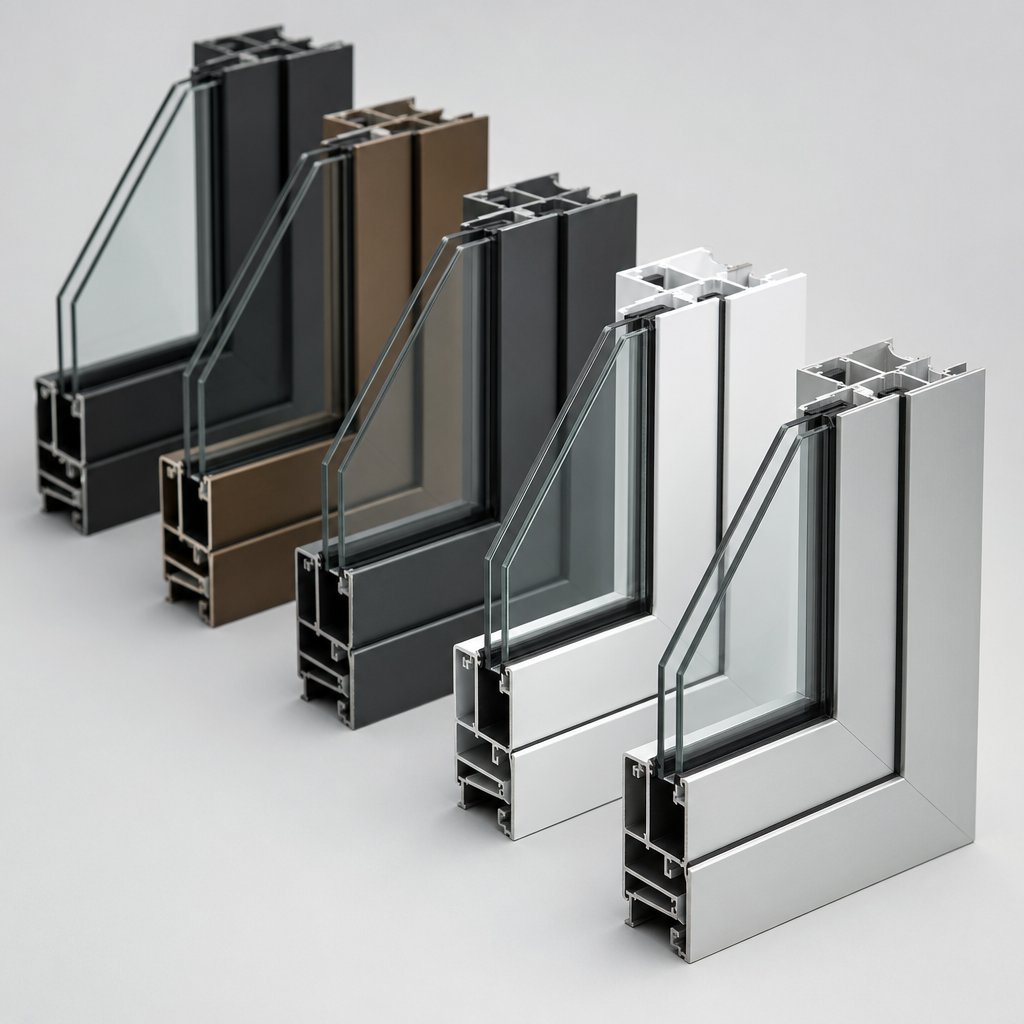
Powder coating is the most common choice for metal window frames in homes. A dry powder is electrostatically sprayed onto the aluminum surface, then baked at high temperature to form a tough, uniform film typically 50 to 125 microns thick. The result is a durable shell with excellent resistance to weather, UV fading, and corrosion. It also offers the widest color range of any finish type, from matte black to custom metallics, making it the go-to for homeowners who want a specific look. The trade-off? Powder coat is a surface film, not part of the metal itself. It can chip under impact, and localized repairs usually require professional re-coating rather than a simple touch-up.
Anodizing takes a completely different approach. Instead of adding a layer on top, the process uses an electrolytic acid bath to convert the aluminum’s own surface into a hard oxide layer that’s chemically bonded to the base metal. That bond makes anodized finishes exceptionally resistant to abrasion and corrosion, with a hardness that rivals a 9 on the Mohs scale. Anodized coatings also weather better over decades than most organic finishes, which is why they’ve been trusted on architectural aluminum since the 1930s. The limitation is color: you’re mostly working with natural silver, bronze, champagne, and dark metallic tones. If you need bright white or a bold custom hue, anodizing won’t get you there.
Wet-spray paint, sometimes called liquid paint, offers the most flexibility for unusual colors and small-batch custom work. Conventional liquid systems using polyester or acrylic enamels are affordable and widely available, but they deliver only moderate weathering resistance and may need touch-ups sooner than the other two options. For metal framed windows in demanding environments, high-performance 70% PVDF fluoropolymer coatings (often sold under the Kynar brand name) represent the top tier of liquid paint technology, offering UV and corrosion resistance that can exceed even standard powder coats. They come at a premium, though, and are more common on commercial and high-end residential projects.
Choosing Colors and Finishes for Your Home Style
Picking a finish isn’t just a durability decision, it’s a design one. The right pairing between color and architectural style can make your windows feel intentional rather than generic. Here’s a quick guide to the most popular options:
- Powder coating (standard polyester) — Broad color palette, good UV resistance, ideal for most residential climates. Expect solid performance for 10 to 15 years before any noticeable fading.
- Powder coating (super durable polyester or fluoropolymer) — Enhanced UV and chalk resistance engineered for harsh sun exposure or coastal conditions. Meets higher AAMA 2604 or 2605 standards for long-term outdoor durability.
- Anodized (Class I architectural) — Best abrasion and corrosion resistance, natural metallic tones, minimal maintenance. A strong choice for coastal homes or high-traffic areas.
- PVDF liquid paint — Premium UV and chemical resistance, excellent color retention over decades. Best suited for high-end projects or extreme environments.
- Conventional liquid paint — Budget-friendly, easy to apply, moderate durability. Works well for sheltered installations or interiors.
When it comes to matching your home’s aesthetic, black and charcoal powder coats pair naturally with modern and contemporary architecture. Bronze anodized tones complement mid-century designs beautifully. White and off-white powder coats remain the safe, versatile pick for traditional and coastal styles. And if you’re drawn to the industrial warmth of raw metal, a clear anodized finish lets the aluminum’s natural character show through.
One thing worth noting: quality matters more than type. A well-applied powder coat from a reputable manufacturer can maintain its appearance for decades with nothing more than occasional cleaning. A bargain-grade finish on the same frame might chalk or fade within a few years. When evaluating any window, ask about the specific coating standard it meets, AAMA 2603 is the baseline for residential use, while 2604 and 2605 indicate progressively higher durability.
A great finish protects the frame. But how much ongoing care does the frame itself actually need, and how long can you realistically expect it to last? That depends as much on where you live as on what you buy.
Maintenance, Lifespan, and Durability Across Climates
It depends less than you’d think on the frame itself, and more on the environment around it. One of the biggest selling points of aluminum is that it asks very little of you compared to other materials. But “low maintenance” doesn’t mean “no maintenance.” A few simple habits can be the difference between an aluminum window frame that looks sharp at year 25 and one that starts showing its age at year 10.
What Maintenance Aluminum Windows Actually Need
If you’ve ever owned wood windows, you know the drill: scraping, priming, repainting every few years, checking for rot, sealing gaps before moisture creeps in. It’s practically a part-time job. Vinyl is easier on that front, but if a vinyl frame cracks or warps from heat exposure, your repair options are limited. You’re usually looking at full replacement rather than a fix.
Aluminium window frames sit in a comfortable middle ground. They won’t rot, warp, or attract termites, and a quality powder-coated or anodized finish holds up for years without repainting. Your actual to-do list is refreshingly short:
- Clean frames and tracks — Wipe down with warm water and mild soap every 3 to 6 months. Avoid abrasive cleaners or scrubbing pads that can scratch the finish.
- Lubricate moving parts — Apply a light spray lubricant to hinges, locks, and rollers once or twice a year. Wipe off any excess afterward.
- Inspect weatherstripping and seals — Check for cracking, brittleness, or gaps annually. Replace damaged sections to maintain energy efficiency and water resistance.
- Clear drainage holes — Make sure weep holes along the sill are free of debris so water drains properly instead of pooling inside the frame.
- Check caulking around the perimeter — Look for shrinking or cracking in the exterior caulk every 1 to 2 years. Recaulk with a quality exterior-grade sealant if gaps appear.
- Inspect for finish damage — Touch up any scratches or chips promptly to prevent localized corrosion, especially in coastal areas.
That’s genuinely it. Compared to the repainting cycles wood demands or the replacement headaches vinyl can create, aluminum replacement windows reward you with a fraction of the ongoing effort.
Lifespan Expectations and Climate Considerations
Quality aluminum windows generally last 30 to 45 years, and many exceed that range with proper care. That puts them well ahead of vinyl’s typical 20 to 30 year lifespan and competitive with fiberglass. The aluminum itself doesn’t degrade the way organic materials do. It won’t swell in humidity, crack in freezing temperatures, or become brittle under UV exposure.
Where climate enters the equation is through its effect on finishes and hardware rather than the metal itself. In hot, sun-drenched regions, UV exposure tests the limits of your coating. A standard polyester powder coat holds up well, but homes in the desert Southwest or tropical zones benefit from super durable or fluoropolymer finishes that resist chalking longer. Aluminium double glazing paired with thermally broken frames handles extreme heat effectively by keeping solar gain in check while the frame stays dimensionally stable.
Coastal environments present a different challenge. Salt-laden air accelerates corrosion on any exposed metal, and aluminum is no exception. Modern alloys and quality finishes provide strong resistance, aluminum naturally forms a protective oxide layer that prevents rust and corrosion, but seaside installations benefit from more frequent cleaning. Rinsing frames with fresh water every month or two removes salt deposits before they can compromise the finish. Anodized coatings tend to outperform standard powder coats in these conditions.
Cold climates test the thermal break and weatherstripping more than the frame material. An aluminum clad system with a robust thermal break and properly maintained seals will perform reliably through harsh winters. Without that thermal break, though, condensation and heat loss become persistent problems regardless of how well you maintain the frame.
High-humidity environments, think the Gulf Coast or Pacific Northwest, put pressure on seals and hardware. Lubricating moving parts twice a year instead of once, and keeping tracks clean of organic debris that traps moisture, goes a long way toward preventing premature wear.
Manufacturers who engineer their products for varied climate conditions make this easier. MEICHEN’s aluminium windows, for example, are designed to meet Australian standards for durability and energy efficiency, a practical benchmark given Australia’s range of coastal, tropical, and arid climates. Exploring options from manufacturers with that kind of climate-tested compliance gives you a stronger starting point than choosing based on price alone.
Durability and maintenance are things you live with after the purchase. The decision that shapes everything, from performance to aesthetics to long-term satisfaction, happens before you buy. And that decision has more moving parts than most homeowners expect.
How to Choose the Right Aluminum Windows for Your Home
More moving parts than expected, but not unmanageable once you break them down. The difference between a window purchase you’re happy with five years later and one you regret usually comes down to asking the right questions in the right order. Here’s a decision framework that puts the highest-impact factors first.
Key Factors to Evaluate Before You Buy
You’ve seen how frame construction, thermal breaks, energy ratings, finishes, and material trade-offs all interact. Pulling those threads together into a buying checklist keeps the process from feeling overwhelming. Work through these steps roughly in this order:
- Determine your thermal break requirement. If you live anywhere with cold winters or hot summers, thermally broken frames aren’t optional, they’re essential. Mild coastal climates offer more flexibility, but even there, the comfort and condensation benefits usually justify the upgrade.
- Set energy performance targets for your climate zone. Check the ENERGY STAR thresholds for your region and use U-factor and SHGC as your baseline filters. Any aluminium window you’re considering should come with an NFRC label so you can compare apples to apples.
- Match the window style to your home’s architecture. Sliding, casement, double hung, awning: each style suits different openings and design languages. A casement window delivers the tightest seal and best ventilation, while sliding styles work well for wide openings with limited exterior clearance.
- Choose a finish grade that fits your environment. Coastal homes need AAMA 2604 or higher coatings. Sheltered inland locations can get by with standard 2603 powder coats. Ask the supplier which coating standard their framed windows meet before you compare prices.
- Establish your budget range, then compare value, not just cost. The cheapest framed window isn’t always the best deal. Factor in expected lifespan, maintenance costs, and energy savings over 15 to 20 years. A slightly higher upfront investment in quality window aluminium windows often costs less in the long run.
- Confirm installation requirements. Aluminum frames are heavier and less forgiving than vinyl, so professional installation is strongly recommended. Get that cost into your budget early rather than treating it as an afterthought.
Finding a Reputable Supplier for Your Project
The frame material and specs only matter if the company behind them delivers on its promises. Whether you’re sourcing from a local dealer or exploring manufacturers directly, a few indicators separate reliable suppliers from the rest.
Start with product range. A supplier offering multiple styles, sliding, casement, awning, fixed, signals manufacturing depth rather than a one-product operation. Look for compliance with relevant building standards for your region, whether that’s AAMA certification in the U.S. or AS 2047 in Australia. Energy efficiency credentials backed by third-party testing, not just marketing claims, add another layer of confidence.
Warranty coverage matters more than most buyers realize. A strong warranty should cover the frame, glass, hardware, and ideally labor, with clear terms rather than vague “lifetime” language. Short warranties or exclusions on labor costs are red flags worth walking away from. Heritage brands like Hope Windows have built reputations over decades precisely because they stand behind their products. Apply that same standard to any supplier you evaluate.
For homeowners, renovators, and builders exploring their options, MEICHEN’s aluminium windows collection is a solid starting point. Their range covers sliding, casement, and awning styles, all designed to meet Australian standards for energy efficiency and durability. It’s the kind of product hub that lets you compare configurations side by side rather than piecing together specs from scattered sources.
Residential aluminum windows have come a long way from the condensation-prone, energy-leaking frames of decades past. The technology is proven, the options are broader than ever, and the information you need to choose well is no longer locked behind manufacturer sales pitches. Take your time with the evaluation, prioritize performance over price alone, and you’ll end up with windows that earn their place in your home for decades.
Frequently Asked Questions About Residential Aluminum Windows
1. Are aluminum windows good for residential homes?
Yes, modern residential aluminum windows are a strong option for homes, especially when equipped with thermal break technology. The insulating barrier built into today’s frames addresses the old heat-transfer and condensation problems that gave aluminum a bad reputation decades ago. They offer exceptional strength-to-weight ratios, allowing for slimmer frames and larger glass areas that maximize natural light. They also resist warping, rot, and pest damage, and quality powder-coated finishes can maintain their appearance for decades with minimal upkeep. However, they work best when you match the right specification to your climate. In extreme cold, thermally broken frames are essential, and in coastal areas, higher-grade finishes help resist salt corrosion.
2. How long do residential aluminum windows last?
Quality residential aluminum windows typically last 30 to 45 years, with many exceeding that range when properly maintained. This puts them ahead of vinyl windows, which generally last 20 to 30 years, and competitive with fiberglass. The aluminum itself does not degrade like organic materials. It will not swell from humidity, crack in freezing temperatures, or become brittle under UV exposure. Longevity depends heavily on the finish quality and your local environment. Coastal installations benefit from more frequent rinsing to remove salt deposits, while homes in intense sun exposure perform best with super durable or fluoropolymer coatings. Manufacturers like MEICHEN engineer their aluminium windows to meet Australian standards for durability across varied climate conditions, offering a practical benchmark for long-term performance.
3. What is a thermal break in aluminum windows and why does it matter?
A thermal break is a rigid insulating barrier, usually made from polyamide or polyurethane, inserted between the interior and exterior aluminum profiles of a window frame. It physically separates the two halves of the frame so heat cannot conduct freely through the metal. Without this barrier, aluminum transfers heat roughly 1,000 times more efficiently than wood, meaning cold or heat passes straight through the frame into your living space. With a thermal break, the interior frame surface stays much closer to room temperature, which dramatically reduces condensation risk, improves indoor comfort, and lowers energy bills. This single innovation is what transformed aluminum from a material homeowners avoided into a genuinely competitive residential option.
4. How do aluminum windows compare to vinyl windows for homes?
The aluminum versus vinyl decision comes down to a trade-off between aesthetics and cost. Vinyl is the most affordable frame material and provides solid thermal insulation without needing a thermal break. Aluminum, however, achieves significantly thinner profiles while supporting the same or larger glass panels, delivering wider views and more natural light. Aluminum also accepts powder coating in virtually any color, while vinyl is limited to colors molded in during manufacturing. On energy performance, foam-filled vinyl still edges out most thermally broken aluminum in raw insulation numbers, but the gap has narrowed enough that the difference on your energy bill is modest in mild to moderate climates. Aluminum also lasts longer on average, with a typical lifespan of 30-plus years compared to vinyl’s 20 to 30 years.
5. What maintenance do aluminum windows require?
Aluminum windows are genuinely low-maintenance compared to wood or vinyl. The core routine involves cleaning frames and tracks with warm water and mild soap every three to six months, lubricating hinges, locks, and rollers once or twice a year, and inspecting weatherstripping and seals annually for cracking or gaps. You should also keep weep holes clear of debris so water drains properly, check exterior caulking every one to two years, and promptly touch up any scratches or chips in the finish to prevent localized corrosion. Coastal homeowners should rinse frames with fresh water monthly to remove salt buildup. Unlike wood, aluminum never needs repainting or sealing, and unlike vinyl, a damaged aluminum frame can often be repaired rather than fully replaced.
More Window & Door Guides