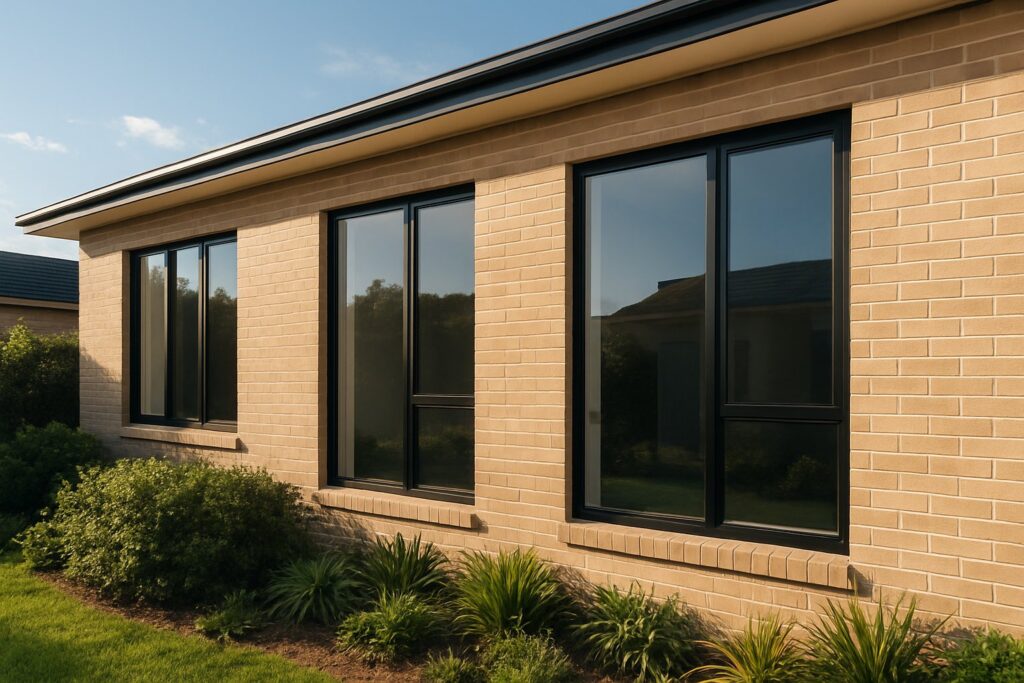
What an Aluminium Windows Quote Actually Covers
An aluminium windows quote is a detailed document that specifies the full scope of your window project — materials, labour, glazing, hardware, finishes, and compliance items — along with the associated costs for each. It is not simply a price tag. It is the document that defines what you will receive, what the supplier or installer commits to delivering, and what falls outside that agreement.
Most homeowners treat a quote as a single number to compare against other single numbers. That approach leads to mismatched expectations, surprise invoices, and projects that run over budget. This guide walks you through every element of the quoting process for aluminium windows so you can read, question, and compare offers with genuine confidence.
What a Quote Actually Contains
A properly prepared quote for aluminium window supply or installation typically covers several distinct components:
- Frame profiles — the specific aluminium system, profile depth, and whether it includes a thermal break
- Glazing units — double or triple glazed, Low-E coatings, gas fills, and safety glass specifications
- Hardware — handles, hinges, locking mechanisms, and trickle vents
- Colour and finish — standard powder coat options versus custom RAL colours
- Installation scope — what labour is included, from removal of existing windows and frames through to making good
- Warranty terms — coverage periods for both the aluminium window frames and the installation workmanship
Each of these line items carries its own cost driver. When one quote appears cheaper than another, the difference almost always sits within these details rather than in genuine savings.
Why Understanding Your Quote Prevents Costly Mistakes
Misreading or glossing over line items creates real problems. You might accept a quote that excludes scaffolding, only to face an additional charge on installation day. You might compare a supply-only price against a fully installed price and draw the wrong conclusion. Or you might choose a supplier based on headline cost, not realising their glazing specification underperforms for your climate zone.
A quote is a commitment document that defines scope, not just price. If something is not written in the quote, it is not included in the agreement — regardless of what was discussed verbally.
Understanding what your aluminium window quote contains, and what it deliberately leaves out, is the single most effective way to protect your budget and get the windows and window frames that actually match your project requirements.
How to Request Quotes from Aluminium Window Suppliers and Installers
Getting a useful aluminium windows quote starts well before you pick up the phone or fill in a contact form. The quality of information you provide directly shapes the accuracy of the pricing you receive back. Vague enquiries produce vague numbers — and vague numbers lead to budget surprises later.
Whether you are a homeowner replacing windows in a brick veneer renovation or a builder pricing a multi-storey development, the request process follows the same logical sequence. Here it is broken into clear steps:
- Research and shortlist potential companies. Search for aluminium window suppliers near you, check reviews, confirm they service your area, and verify relevant accreditations (look for compliance with AS 2047 and membership in industry bodies).
- Gather your project information. Before reaching out, compile measurements, drawings, specifications, and any council or planning restrictions that apply to your property.
- Make initial contact with at least three companies. Three quotes is the minimum needed to establish a fair market range. Send the same project brief to each supplier so you can compare responses on equal terms.
- Schedule site surveys where required. For replacement projects or non-standard openings, a physical inspection gives the supplier the structural detail they need to quote accurately.
- Review, clarify, and compare. Once quotes arrive, check scope alignment before comparing price. Ask questions about anything that seems vague or missing.
Aiming for at least three quotes is not just about finding the cheapest option. It reveals how different aluminium window suppliers interpret the same brief, which tells you a lot about their attention to detail and communication style.
Preparing Your Project Information Before Reaching Out
The single biggest factor that slows down quoting — and reduces accuracy — is incomplete project information. As AUMEGI’s pre-quotation guide notes, many delays happen not because the buyer is unqualified, but because information arrives in fragments across multiple emails and phone calls.
Before contacting any supplier, pull together these details:
- Opening sizes — measure width and height from jamb to jamb in millimetres. Take three measurements (top, middle, bottom for width; left, centre, right for height) and record the largest figure for each.
- Number of windows — a simple count by location helps suppliers batch pricing and identify any volume efficiencies.
- Preferred style — casement, awning, sliding, fixed, or a combination. If you are unsure, note the function you need (ventilation, views, access) and let the supplier recommend.
- Colour and finish preferences — standard powder coat colours are cheaper than custom RAL matches. Knowing your preference upfront avoids requoting later.
- Glazing requirements — double or triple glazed, any acoustic needs, safety glass for windows below 800 mm from floor level (required under AS 1288), and whether you need a specific WERS rating.
- Planning or heritage restrictions — heritage overlays, bushfire attack level (BAL) ratings, cyclone regions, or council DA conditions that dictate window style or performance.
Photos of existing openings are also valuable. They help suppliers assess frame condition, identify potential structural issues, and recommend the right installation method — all without needing a site visit just to produce an initial estimate.
Online Configurators vs In-Person Survey Quotes
Many aluminium window supplies companies offer online configurators or instant quote tools on their websites. These are useful for early-stage budgeting — you enter standard sizes, pick a style, and receive a ballpark figure within minutes. For homeowners still deciding whether aluminium fits their budget, this kind of tool provides a quick reality check without any commitment.
The limitation is accuracy. Online tools typically assume standard conditions: straightforward access, no structural modifications, standard reveals, and no site-specific complications. They cannot account for out-of-square openings, load-bearing considerations above wide spans, difficult access requiring scaffolding, or the condition of existing lintels and sub-sills.
A full site-survey quote addresses all of that. An estimator visits your property, takes precise measurements from outside (brick-to-brick or frame-to-frame), inspects the structural condition of each opening, notes access constraints, and identifies any making-good work that will be needed. The result is a quote that reflects the actual scope of your project rather than a theoretical one.
Use online estimates when you are comparing frame materials, exploring window styles, or setting a preliminary budget. Move to in-person survey quotes once you are serious about proceeding — this is the stage where accuracy matters and where the real differences between aluminium window suppliers become visible in their attention to detail, specification quality, and transparency around what is and is not included.
The distinction between these two quoting approaches also highlights a broader point: the type of quote you hold determines how confidently you can commit. A ballpark figure is a planning tool. A surveyed quote is a contractual foundation — and knowing which one you are looking at prevents the kind of scope confusion that inflates final costs.
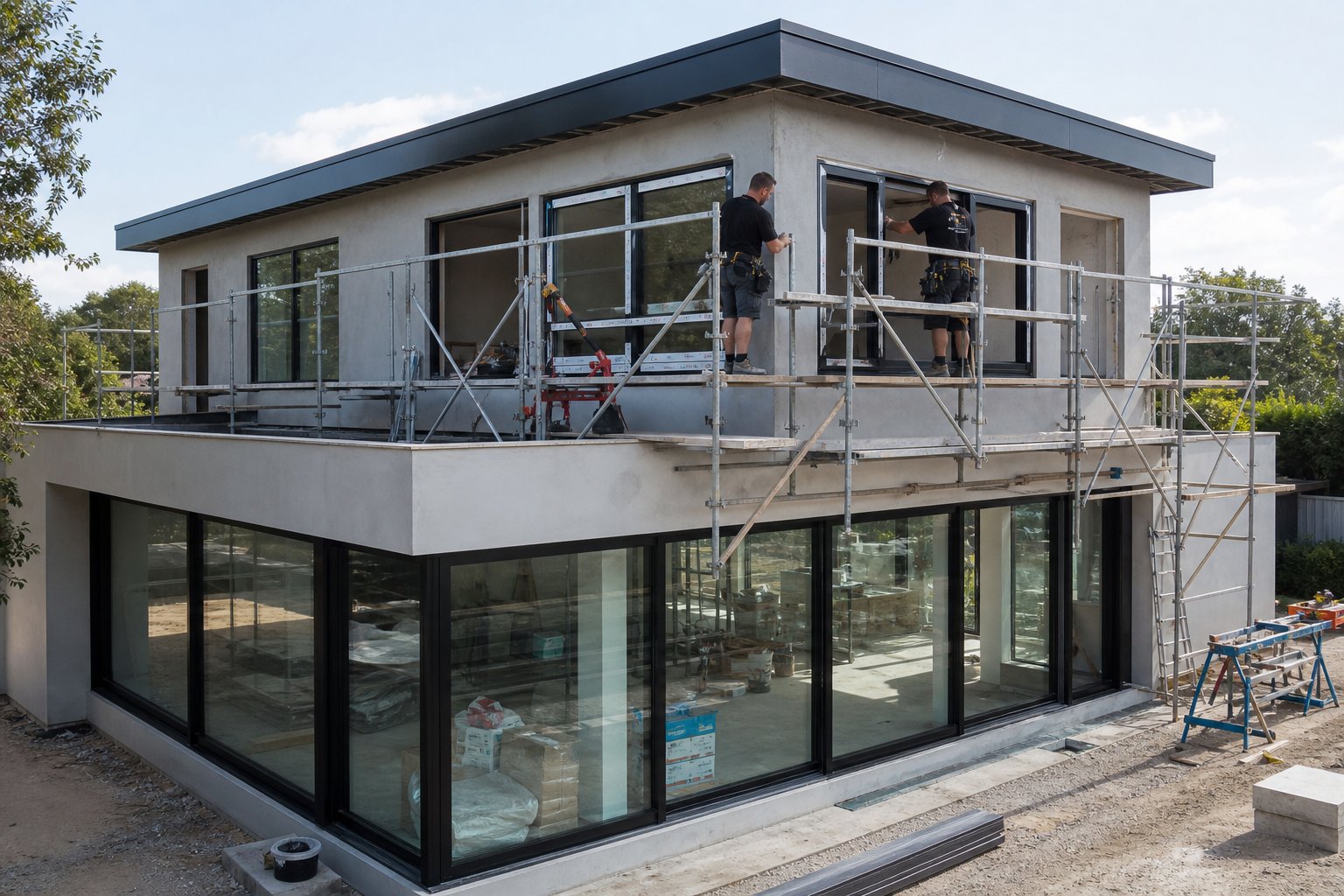
Supply-Only vs Supply-and-Fit Quotes for Aluminium Windows and Doors
Not all quotes describe the same job. Two quotes can arrive for identical aluminium windows and doors, yet differ by thousands of dollars — not because one supplier is overcharging, but because they are quoting entirely different scopes of work. The split comes down to whether you are receiving a supply-only quote or a supply-and-fit quote, and confusing the two is one of the most common mistakes buyers make when comparing pricing.
When a Supply-Only Quote Makes Sense
A supply-only quote covers the product and its delivery to your site. That typically means the aluminium frames, glazing units, hardware, and standard ancillaries like cills or sub-sills — nothing more. You will not find labour, scaffolding, waste removal, or any finishing work in this document.
This route suits builders, contractors, and experienced tradespeople who have their own installation crews and prefer to source aluminium doors and windows directly from a manufacturer. It also works for developers running multiple projects where a dedicated trades team handles all glazing installs across sites. The cost saving is real — you are only paying for product and freight — but so is the responsibility. You take ownership of correct measurements, frame selection, compliance with AS 2047, and building regulation sign-off through your local council.
As industry specialists note, the biggest risk with supply-only is accountability. If something goes wrong post-installation, the supplier may point to the installer, and the installer may point back at the product. Without a single party responsible for the full outcome, resolving issues becomes harder.
What a Supply-and-Fit Quote Should Include
A supply-and-fit quote (sometimes called supply-and-install) bundles product and labour into one agreement. Beyond the aluminium door and window units themselves, this quote should explicitly cover:
- Removal and disposal of existing windows
- Installation labour by qualified fitters
- Internal finishing — plastering, architraves, or trims around the new frames
- External finishing — caulking, render patching, or flashing installation
- Scaffolding hire if upper-storey access is required
- Building regulation compliance and any necessary council notifications
- Skip hire or waste removal for old frames and packaging
With this approach, one company owns the entire outcome. If the window leaks, the seal fails, or the plaster cracks, there is a single point of contact accountable for the fix. Warranty coverage is also typically stronger — many manufacturers offer extended guarantees only when their products are installed by approved or trained fitters.
The table below breaks down how these two quote types compare across the factors that matter most:
| Factor | Supply-Only Quote | Supply-and-Fit Quote |
|---|---|---|
| What is included | Frames, glazing, hardware, delivery | All product plus removal, installation, finishing, waste disposal |
| What is excluded | Labour, scaffolding, making good, compliance, waste removal | Typically nothing — full scope is covered |
| Best suited to | Builders, contractors, experienced trades with their own crews | Homeowners, renovators, and anyone wanting a turnkey result |
| Typical cost difference | 30–50% less than supply-and-fit | Higher upfront, but includes all associated costs |
| Warranty coverage | Product only (often 2–5 years on components) | Product and workmanship (commonly 10+ years) |
| Accountability | Split between supplier and installer | Single point of responsibility |
The critical takeaway here is straightforward: never compare a supply-only quote against a supply-and-fit quote at face value. The cheaper number is not cheaper — it simply excludes work that still needs to happen and still needs to be paid for. If you are holding a supply-only price in one hand and a fully installed price in the other, you are not comparing like with like until you add your own labour, scaffolding, finishing, and compliance costs to the supply-only figure.
For complex projects involving large-span aluminium doors, windows with structural glazing, or multi-storey installations, the supply-and-fit route also reduces risk significantly. These products demand precision handling, specialist equipment, and installers who understand the specific system being fitted. A misaligned bifold or poorly sealed sliding door is an expensive problem to fix after the fact.
Knowing which type of quote you are looking at — and which type your project actually needs — is the foundation for reading the individual line items that make up the rest of your pricing.
Reading the Line Items on Your Aluminium Window Quote
A well-structured quote does not present a single lump sum and leave you guessing. It breaks the total into distinct line items — each representing a material, process, or service that contributes to the final cost. Knowing what these items mean, and how they interact, gives you the ability to spot where one quote is genuinely competitive and where another has simply cut corners to look cheaper on paper.
Frame Profile and Material Costs
The aluminium frame itself is typically the largest single cost component, representing roughly 30 to 40 per cent of the overall window unit price. This line item is priced either per linear metre of profile or per complete window unit, depending on the supplier’s quoting method.
Three variables drive this cost more than anything else:
- Profile system type — a standard non-thermally-broken aluminium window frame is the entry point. Thermally broken profiles with polyamide insulation strips cost more but deliver significantly better U-values. Slim-line systems designed for minimal sight-lines sit at the premium end.
- Frame depth — deeper profiles accommodate wider thermal breaks and larger glazing units, which adds material and engineering cost.
- Brand and origin — first-tier profile systems carry a price premium over second-tier alternatives, though the performance gap is not always proportional to the cost difference.
If your quote simply lists “aluminium window frames” without specifying the system name, profile depth, or thermal break type, you cannot meaningfully compare it against another offer. The profile specification is where value hides — or where it gets quietly stripped out.
Glazing Unit Specifications and Pricing
Glass accounts for approximately 15 to 20 per cent of the unit cost, but the specification range is wide. A standard double-glazed unit with a clear float inner and outer pane is the baseline. From there, each upgrade adds cost:
- Low-E coatings — a microscopically thin metallic layer applied to one pane surface that reflects radiant heat. This improves thermal performance and is increasingly standard in Australian climate zones requiring higher NatHERS ratings.
- Argon gas fill — replacing the air cavity between panes with argon reduces conductive heat transfer. It is a relatively low-cost upgrade that meaningfully improves the unit’s U-value.
- Triple glazing — adds a third pane and second gas-filled cavity. The thermal and acoustic benefits are substantial, but so is the weight and cost. Not every aluminium frame window system supports triple-glazed units without reinforcement.
- Safety and acoustic glass — toughened or laminated panes required under AS 1288 for certain locations (near floor level, in wet areas, or adjacent to doors), plus acoustic interlayers for noise-sensitive sites.
Some quotes bundle glazing into the frame price as a single line. Others itemise it separately. Neither approach is wrong, but you need to confirm the exact specification — a quote that says “double glazed” without noting the glass thickness, coating, or gas fill leaves too much ambiguity for a fair comparison.
Hardware, Finishes, and Ancillaries
Hardware typically represents 8 to 10 per cent of the window cost, yet it directly affects daily usability and long-term durability. Your quote should specify:
- Handles and locking mechanisms — multi-point locks are more secure than single-point alternatives
- Hinges and friction stays — stainless steel hardware resists coastal corrosion far better than zinc alloy
- Trickle vents — required in some NCC compliance pathways for ventilation
- Powder coat colour — standard colours (black, white, monument, surfmist) are included in base pricing; custom RAL colours add a surcharge, sometimes 15 to 25 per cent on the finish cost
- Ancillary items — aluminium cills, reveal liners, head flashings, and external trims that complete the installation
Buyers sourcing aluminium window frame kits for their builder to install should pay particular attention to ancillaries. These small components are easy to overlook on a quote, but missing flashings or cills create problems on installation day that delay the project and add unplanned cost.
Across all three categories, the pattern is consistent: the more specific a quote is about what sits behind each line item, the more confidently you can judge its true value. Aluminium framed windows from two different suppliers might carry similar headline prices, yet deliver very different outcomes once you examine the profile system, glazing spec, and hardware grade sitting beneath those numbers.
Of course, even a perfectly detailed quote can still surprise you if certain costs were never listed in the first place — which raises the question of what else might be missing from the document you are holding.
Hidden Costs That Can Inflate Your Final Price
A detailed aluminium windows quote might list every frame profile, glazing unit, and handle — yet still leave out costs that appear on the final invoice weeks later. These are not minor rounding errors. They are legitimate project expenses that some companies absorb into their headline pricing while others treat as extras, charged separately once work begins. The gap between your quoted price and your actual spend often lives in these unlisted items.
The frustration is not that these costs exist — scaffolding, waste removal, and structural work are real expenses on any aluminium window replacement project. The frustration is that they were never mentioned upfront, making it impossible to compare quotes fairly or budget accurately.
Common Add-Ons That Inflate the Final Price
Across hundreds of residential and commercial window projects, certain extras appear on final invoices far more often than they appear on initial quotes. Here are the ones that catch buyers most frequently:
- Scaffolding hire — any window above ground-floor level typically requires scaffolding for safe access. Costs vary depending on the height, duration of hire, and site complexity, but a standard two-storey residential scaffold can add $1,500 to $4,000 AUD to a project. Some installers include this in their per-window rate; others list it as a separate charge or omit it entirely until installation day.
- Skip hire and waste removal — removing old aluminum windows and their frames generates a surprising volume of waste: timber sub-frames, broken glass, plaster debris, old flashings, and packaging from the new units. If your quote does not specify who handles disposal, you may face a separate skip bin fee or be left with a pile of debris in your driveway.
- Making good to internal plaster and external render — pulling out old aluminum window frames almost always disturbs the surrounding wall finish. Internal plaster cracks, external render chips, and paint lines no longer align with the new frame. Patching, re-rendering, and repainting these areas is labour-intensive work that some quotes include and others explicitly exclude.
- Building regulation and council fees — depending on your state and local council, aluminium window replacement may require a building permit or compliance certificate, particularly if you are changing opening sizes, altering structural lintels, or working on a heritage-listed property. Application fees and inspection costs are rarely absorbed by the installer.
- Structural lintel upgrades — older Australian homes, especially weatherboard and fibro construction from the 1950s through 1970s, often have timber lintels above window openings that have deteriorated over decades. If the existing lintel cannot support the new window or a wider opening, a steel lintel replacement becomes necessary. This is structural work that sits outside most standard installation quotes.
- Delivery surcharges for regional locations — aluminium windows are manufactured to order, typically at facilities in capital city industrial areas. If your project is in a regional or remote location, freight costs increase significantly. A delivery that costs $200 within metro Sydney might cost $800 or more to a regional NSW address.
- Non-standard colour surcharges — standard powder coat colours (black, white, monument, surfmist) are included in base pricing. Custom RAL colours or dual-colour finishes (different colour inside versus outside) attract a premium that ranges from 15 to 30 per cent on the finishing cost alone.
The issue is not that any single company is being dishonest. Different businesses structure their pricing differently. One installer bundles scaffolding, waste removal, and making good into a single per-window installed rate. Another itemises each component separately. A third excludes several of these items altogether, producing a headline figure that looks competitive but does not represent the true project cost.
As industry professionals have documented, the most common pattern is a quote that covers product and basic installation but leaves finishing work, disposal, and site-specific requirements as unstated assumptions. The result: a $15,000 quote quietly becomes an $18,000 or $20,000 invoice once all the “extras” land.
Questions to Ask Before Accepting a Quote
The simplest way to prevent hidden cost surprises is to ask direct questions before you sign anything. If a supplier or installer cannot answer these clearly and in writing, that tells you something about how the rest of the project will be managed.
Use this checklist when reviewing any aluminium window replacement quote:
- Is scaffolding included, and if so, for how many days? What happens if the hire period extends due to weather or delays?
- Who handles waste removal — old frames, glass, packaging, and plaster debris? Is a skip bin included or charged separately?
- Does the quote cover making good to internal plaster and external render, or does that require a separate trades booking?
- Are building regulation application fees and inspection costs included?
- Is there a surcharge for non-standard RAL colours or dual-colour finishes?
- What happens if structural issues — such as a deteriorated lintel or concealed water damage — are discovered during removal of old aluminum window frames? Is there a formal variation process, and will you be notified before additional costs are incurred?
- Does the delivery charge cover your specific site location, or is there a regional surcharge?
- Are there any access requirements (clear driveway, parking permits, strata approvals) that could generate additional fees if not arranged in advance?
A reputable company will welcome these questions. They indicate a buyer who understands scope — and that buyer is far less likely to dispute an invoice later. If a company becomes evasive or dismissive when you ask for written clarification on inclusions, treat that as a red flag about how they will handle communication throughout the project.
The cheapest aluminium windows quote often becomes the most expensive project once hidden extras are added. A quote that is $2,000 higher but genuinely all-inclusive will almost always cost less at completion than a stripped-back price that accumulates variations along the way.
Getting clarity on these items does more than protect your budget. It also creates a level playing field for comparing quotes — because until every offer accounts for the same scope of work, you are not comparing price at all. You are comparing how much each company chose to disclose upfront.
That transparency gap extends beyond hidden costs into the technical specifications themselves. Two quotes can list the same window style at very different prices, and the reason often sits in the profile system and glazing specification each supplier has chosen to specify — details that directly determine how your windows will perform for the next three decades.
How Profile Systems and Glazing Specifications Affect Pricing
Two quotes for what appears to be the same aluminium window — same size, same style, same colour — can differ by 30 per cent or more. The gap rarely comes down to profit margin alone. It almost always traces back to the profile system and glazing specification each supplier has selected, two technical choices that fundamentally shape both the price you pay and the performance you receive over the next 30 years.
This is the part of an aluminium windows quote where informed buyers gain a genuine advantage. Once you understand how these specifications interact, you stop comparing on price alone and start comparing on value.
How Profile Brand and Thermal Performance Affect Cost
The aluminium profile system is the structural backbone of every window. Different systems offer different thermal break depths, sight-line widths, and load-bearing capacities — and each of these variables moves the price in a different direction.
At the entry level, a non-thermally-broken profile uses a single piece of aluminium across the full frame depth. It is the cheapest option, but it conducts heat readily, producing poor U-values that struggle to meet current NCC energy requirements in most Australian climate zones. These profiles still appear in some budget quotes, particularly for garages, sheds, or non-habitable spaces where energy compliance is less stringent.
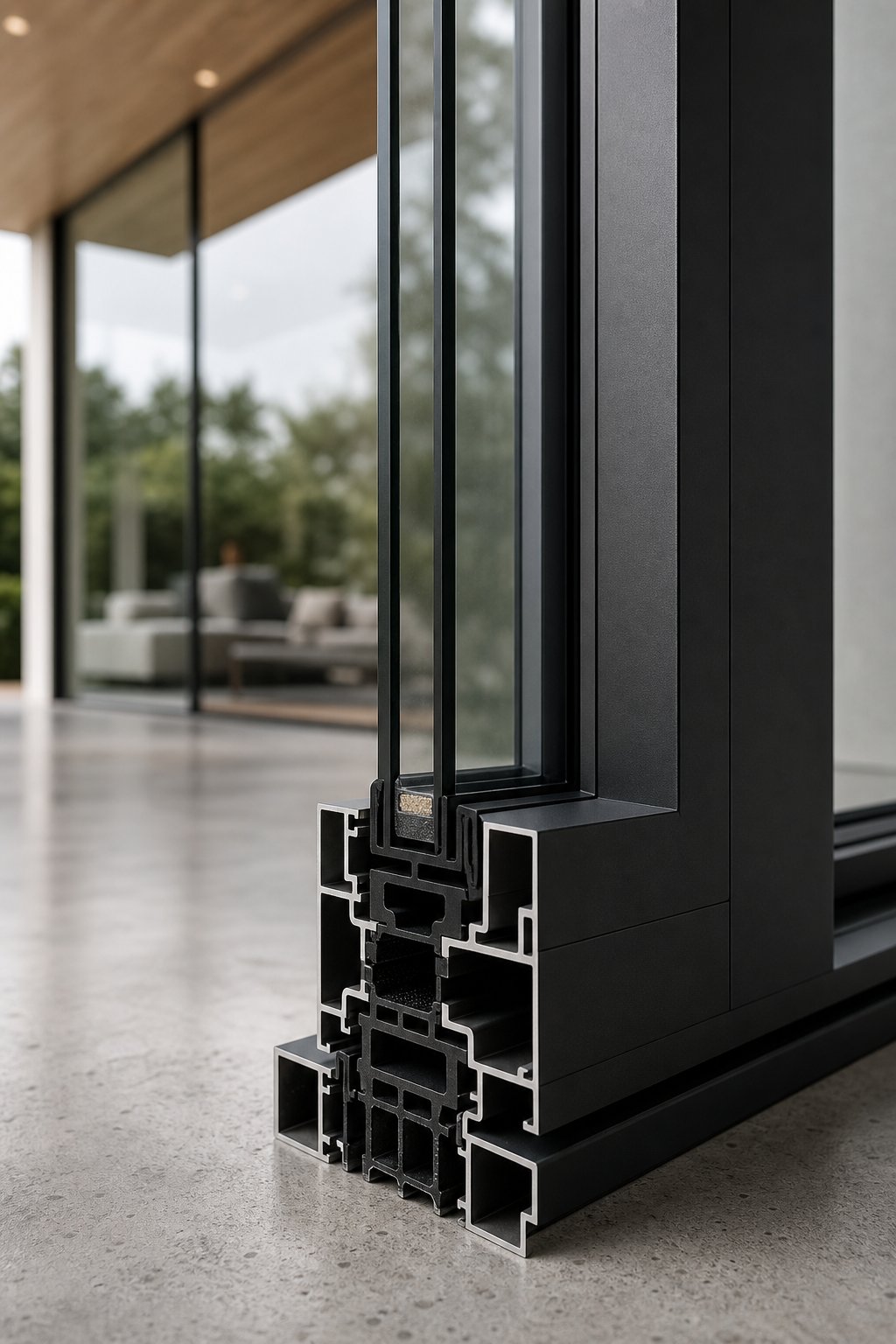
Step up to a thermally broken profile, and the frame includes a polyamide insulation strip — sometimes called a thermal barrier — bonded between the interior and exterior aluminium sections. This strip dramatically reduces heat transfer through the frame. As building science research confirms, aluminium frames fitted with thermal breaks can match or exceed the insulating performance of uPVC profiles, countering the outdated assumption that metal window frames are inherently thermally poor.
Within the thermally broken category, further cost variation comes from:
- Thermal break depth — a 20 mm polyamide strip costs less than a 34 mm or 40 mm strip, but the deeper break delivers measurably better U-values. For homes in cooler climates (think Canberra, Hobart, or alpine regions of Victoria), deeper thermal breaks make a material difference to NatHERS star ratings.
- Sight-line width — slim-line profiles that minimise visible frame and maximise glass area use precision-engineered sections with tighter tolerances. They look stunning in contemporary facades, but the engineering adds a price premium over standard-width profiles.
- Structural capacity — commercial-grade systems engineered for larger spans, heavier glazing units, or higher wind loads (such as those required in cyclone-rated regions of Queensland and the Northern Territory) cost more than standard residential profiles. If your project includes floor-to-ceiling aluminium sliding windows or wide bi-fold configurations, the profile system needs to handle both the glass weight and the wind pressure, which pushes you into heavier-duty — and more expensive — territory.
- Profile brand and origin — established profile systems from reputable manufacturers carry documentation for AS 2047 compliance, published thermal test data, and proven supply chain reliability. Lesser-known alternatives may quote lower, but without verified performance data, you cannot confirm the product will meet Australian standards.
A quote that simply states “thermally broken aluminium frame” without naming the profile system, its thermal break depth, or the applicable U-value is withholding the information you need to judge whether the price reflects genuine quality or a budget substitution dressed up in the right language.
Glazing Choices and Their Impact on Your Quote
If the profile system is the skeleton, glazing is the skin — and it accounts for a significant share of both cost and performance. Industry analysis consistently identifies glass selection as one of the most important cost drivers in aluminium window pricing, and for good reason. The specification range from basic to premium is enormous.
Standard double glazing — two panes of clear glass separated by an air-filled cavity — is the baseline in most Australian residential quotes. It does the job for mild climate zones, but it leaves performance on the table in regions with extreme summer heat or cold winters.
Each upgrade from that baseline adds cost, but also adds measurable benefit:
- Low-E coatings — a microscopically thin metallic layer on one pane surface that reflects radiant heat. In summer, it helps keep solar heat out; in winter, it reflects interior warmth back into the room. Most mid-range and premium quotes now include Low-E as standard rather than as an add-on.
- Argon gas fill — replacing air in the cavity with argon gas reduces conductive and convective heat transfer. The cost uplift is modest (typically a few dollars per unit), but the U-value improvement is meaningful. According to glazing performance data, a standard double-glazed unit achieves a U-value of around 1.2 W/m²K, while triple glazing with gas fill can reach approximately 0.8 W/m²K — a substantial reduction in heat transfer.
- Triple glazing — adds a third pane and a second gas-filled cavity. The thermal and acoustic benefits are significant, though the unit is heavier and thicker, requiring a profile system with sufficient frame depth to accommodate it. Triple glazing typically costs 10 to 20 per cent more than equivalent double glazing — a worthwhile investment for south-facing rooms in cold climates or properties exposed to significant traffic noise, but potentially unnecessary for well-insulated homes in temperate zones.
- Acoustic interlayers — laminated glass with a PVB (polyvinyl butyral) interlayer dampens sound transmission and is commonly specified for homes near busy roads, flight paths, or commercial precincts. It also provides a safety benefit: the interlayer holds glass fragments together on impact.
- Toughened and laminated safety glass — required under AS 1288 in specific locations (windows below 800 mm from floor level, panels adjacent to doors, wet areas, and any glazing at risk of human impact). This is a compliance requirement, not an optional upgrade, so it should appear on every compliant quote for the relevant openings.
The interaction between profile system and glazing specification matters just as much as each element individually. A premium triple-glazed unit fitted into a budget non-thermally-broken frame wastes much of its insulating potential, because heat simply bypasses the glass through the conductive frame. Conversely, a high-performance thermally broken profile paired with basic single-pane glass — still seen occasionally in quotes for single hung aluminium windows or louvre panels — delivers frame performance the glazing cannot match.
The best quotes align both elements to achieve a consistent thermal performance across the entire window assembly.
The table below illustrates how different specification tiers affect a typical quote. These are relative cost indicators rather than fixed prices, as actual figures vary by supplier, project size, and location — but the proportional differences hold true across the Australian market.
| Specification Tier | Profile Type | Glazing Spec | Approximate U-Value (Whole Window) | Relative Cost |
|---|---|---|---|---|
| Basic | Standard aluminium, no thermal break | Double glazed, clear glass, air-filled cavity | 4.0–5.0 W/m²K | $ (Lowest) |
| Mid-Range | Thermally broken (20–24 mm polyamide strip) | Double glazed, Low-E coating, argon gas fill | 1.8–2.4 W/m²K | $$ (30–50% more than basic) |
| Premium | Thermally broken (34–40 mm strip), slim-line sight-lines | Triple glazed or high-performance double, Low-E, argon fill, laminated options | 0.8–1.4 W/m²K | $$$ (60–100% more than basic) |
A basic-tier quote for sliding aluminium windows in a standard residential project will look dramatically different from a premium-tier quote for the same openings — even though both documents might describe “aluminium sliding windows, powder coated, double glazed.” The devil is entirely in the specification detail.
In Australia, the Window Energy Rating Scheme (WERS) provides a standardised way to compare these specifications. A WERS rating on your quote indicates the window’s overall energy performance — accounting for U-value, solar heat gain, and air infiltration — expressed as a star rating. Higher-rated windows cost more upfront but reduce heating and cooling bills over their lifespan. If your project needs to achieve a specific NatHERS star rating for compliance, the WERS data on each quote becomes a critical comparison point, not just a marketing badge.
Whether you are pricing aluminium double hung windows for a period renovation, black aluminium windows for a contemporary new build, or large-format aluminium sliding windows for an open-plan living area, the profile and glazing specification is where the real cost story lives. Two quotes that look similar on the surface can deliver vastly different comfort, energy efficiency, and durability outcomes once you dig into these details.
Specification drives cost — but it also drives whether aluminium is the right frame material for your project in the first place. That decision depends on how aluminium stacks up against the alternatives across the metrics that matter most: upfront price, lifespan, maintenance, and long-term value.
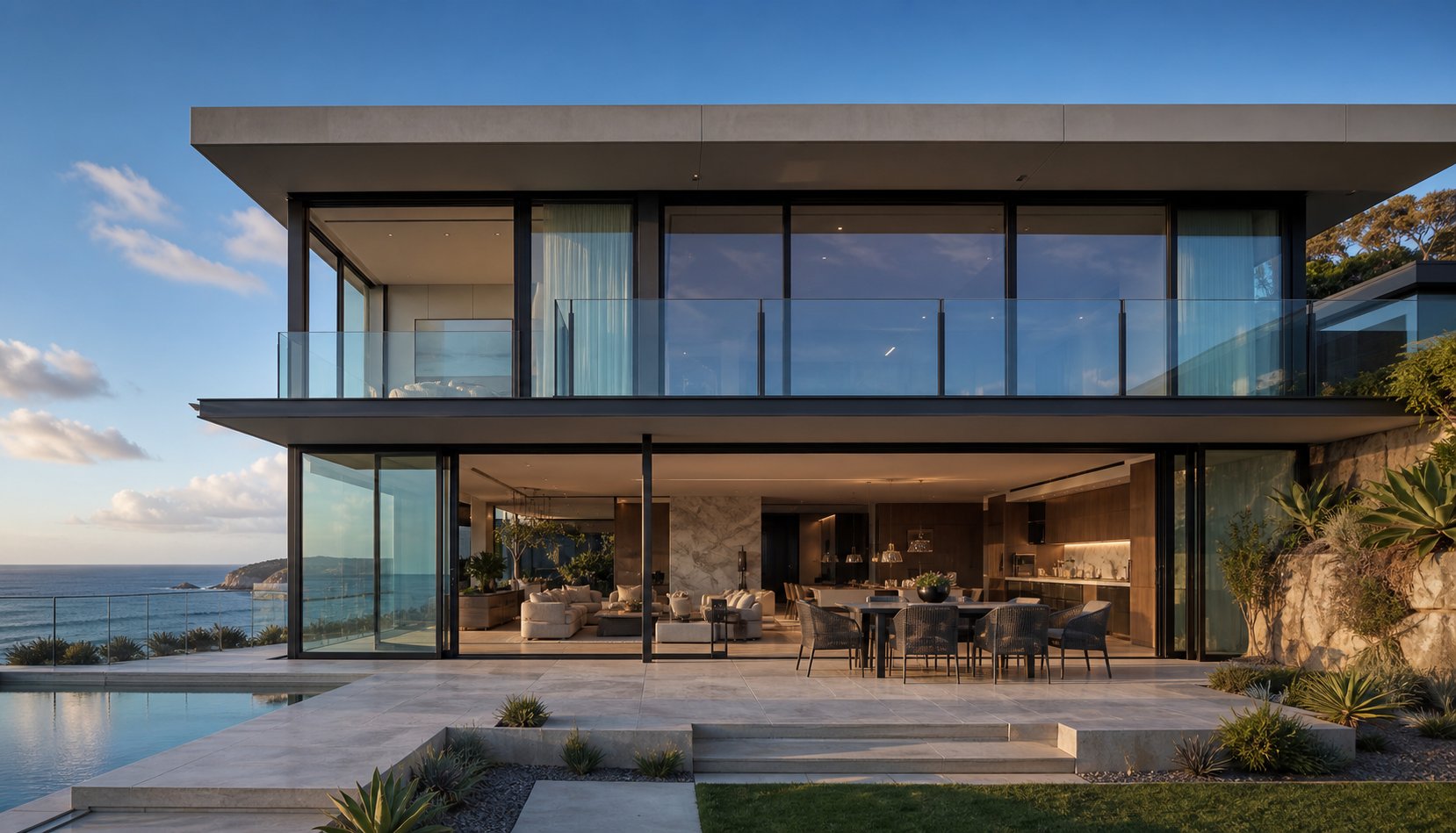
Aluminium vs uPVC vs Timber Frame Costs Compared
Before investing hours gathering measurements, contacting suppliers, and comparing line items, it is worth confirming that aluminium is actually the right frame material for your project. The previous sections assumed aluminium was your direction — but if uPVC, timber, or composite frames better suit your budget, climate, or aesthetic goals, the entire quoting exercise changes.
Each material occupies a different position on the cost-performance spectrum, and the “cheapest” option depends entirely on whether you measure cost at the point of purchase or across the full life of the window.
Cost Comparison Across Frame Materials
In the Australian market, uPVC sits at the lowest price point for supply and installation of a standard casement window. Aluminium occupies the mid-to-upper range, while timber — particularly hardwood species like cedar or meranti — commands the highest upfront cost. Composite frames (typically a blend of timber fibres and polymer resins) land in a similar bracket to aluminium, though availability in Australia remains more limited than the other three options.
The upfront gap between uPVC and aluminium is real. For a standard 1200 x 1000 mm casement window, you might see $600 to $900 AUD for uPVC versus $1,000 to $1,800 AUD for thermally broken aluminium, supply and install. Timber pushes higher again — $1,500 to $3,000 AUD depending on species and joinery quality.
Those numbers tell one story. The lifecycle tells another. Whole-of-life cost analysis consistently shows that aluminium is often the cheapest option over a 60-year horizon. uPVC frames typically last 20 to 30 years before seals fail and frames warp beyond repair, meaning you face at least one full replacement cycle within that timeframe. Timber can last 60 years or more, but only with regular maintenance — repainting or re-staining every five to seven years adds cumulative labour and material costs that erode the initial saving.
Aluminium, by contrast, requires neither replacement at the 25-year mark nor cyclical refinishing. A quality powder-coated metal window frame holds its colour and structural integrity for 45 years or longer with nothing more than occasional cleaning. That combination of longevity and near-zero maintenance makes aluminium genuinely cost-effective for homeowners planning to stay in their property long-term — or for investors focused on minimising ongoing expenditure.
Performance and Aesthetic Trade-Offs
Cost is only one axis. The reason many Australian homeowners and architects choose aluminium over uPVC has less to do with price and more to do with what the material can physically achieve.
Aluminium’s strength-to-weight ratio allows for slimmer sight-lines — the visible frame area between glass panes. Where a uPVC profile might need 70 to 80 mm of frame width to achieve structural adequacy, an aluminium profile can deliver the same (or greater) strength at 50 to 55 mm. The result is more glass, more light, and cleaner architectural lines. For contemporary Australian homes with open-plan living and indoor-outdoor flow, that difference is visually significant.
Timber offers similarly slim profiles, but it trades weather resistance for aesthetics. In coastal environments with salt-air exposure, or in tropical regions with high humidity, timber demands vigilant maintenance to prevent rot and swelling. Metal framed windows handle these conditions without degradation — a practical advantage in much of Australia’s coastal and subtropical building stock.
On thermal performance, the old assumption that metal window frames conduct too much heat no longer holds. Modern thermally broken aluminium systems achieve U-values of 1.8 to 2.4 W/m²K in standard configurations — comparable to or exceeding many uPVC profiles on the market. Premium aluminium systems with deeper thermal breaks push below 1.5 W/m²K, placing them firmly in high-performance territory for Australian NCC compliance.
Colour stability is another factor that rarely appears in quotes but matters over time. uPVC frames can yellow or discolour after 15 to 20 years of UV exposure — a particular concern in Australia’s harsh sunlight. Aluminium powder coating is UV-stable and retains its finish for decades without fading, chalking, or peeling.
The table below summarises how each frame material compares across the factors most relevant to an Australian project:
| Factor | uPVC | Aluminium (Thermally Broken) | Timber | Composite |
|---|---|---|---|---|
| Typical cost per window (supply and install) | $600–$900 AUD | $1,000–$1,800 AUD | $1,500–$3,000 AUD | $1,100–$2,000 AUD |
| Expected lifespan | 20–30 years | 45–60+ years | 30–60+ years (with maintenance) | 30–40 years |
| Maintenance level | Very low | Very low | High (repaint every 5–7 years) | Low to moderate |
| Thermal performance (frame U-value) | 1.3–2.0 W/m²K | 1.5–2.4 W/m²K | 1.5–2.0 W/m²K | 1.4–2.2 W/m²K |
| Slim-line capability | Limited (wider profiles needed) | Excellent (narrow sight-lines) | Good | Moderate |
| Colour stability under UV | Moderate (may yellow over time) | Excellent (powder coat is UV-stable) | Requires repainting | Good |
| Coastal suitability | Good | Excellent | Poor without intensive maintenance | Good |
| Maximum panel size | Limited by structural flex | Large spans achievable | Moderate | Moderate |
For most contemporary Australian projects — new builds, major renovations, and multi-storey developments — aluminium delivers the strongest combination of aesthetics, durability, and low ongoing cost. uPVC remains a sensible choice for budget-conscious projects where slim sight-lines and large spans are not priorities. Timber suits heritage restorations and homeowners who value natural materials enough to commit to the maintenance schedule.
If this comparison confirms aluminium is the right direction for your project, the next step is practical: how do you take multiple quotes from different suppliers and evaluate them on equal terms, identifying which offer represents genuine value rather than just the lowest number on a page?
How to Evaluate and Compare Multiple Aluminium Window Quotes
Three quotes is the minimum. Five is better if your project is complex or high-value. But the number of quotes you collect matters far less than how you read them — because stacking five documents side by side and picking the lowest total is not evaluation. It is guesswork dressed up as due diligence.
Prices for seemingly similar residential aluminium windows can differ by 20 to 30 per cent or more between suppliers. As industry analysis confirms, these gaps almost always result from variations in product specification, installation scope, finishing works, and warranty conditions — not from one company being dramatically more profitable than another. The challenge is stripping away presentation differences to see what each offer actually delivers for the money.
Normalising Quotes for Fair Comparison
Before you compare a single dollar figure, confirm that every quote describes the same job. A lower price does not mean better value if the scope is narrower, and a higher price does not guarantee superior quality if the extras are padding rather than performance.
Build a simple comparison matrix — a spreadsheet works perfectly — with these columns aligned across every quote you hold:
- Window sizes and quantities — confirm identical dimensions and unit counts across all offers
- Profile system — same brand, same thermal break depth, same structural rating
- Glazing specification — same glass type, same coatings, same gas fill, same U-value
- Colour and finish — standard powder coat versus custom RAL, single colour versus dual
- Hardware grade — same locking mechanism, same hinge type, same handle specification
- Installation scope — removal, fitting, making good, scaffolding, waste disposal all accounted for
- Warranty terms — product warranty period, workmanship warranty period, and what each covers
If at least three of these details are not specified in a quote, you cannot fairly compare its bottom-line price against another offer. Ask the supplier for clarification first. This is particularly important when evaluating aluminium retrofit windows for replacement projects, where installation scope varies enormously depending on the condition of existing openings and surrounding structure.
The goal is not to find the cheapest aluminium windows for sale. It is to identify which quote delivers the best value at a scope that matches your actual project requirements. A quote that is $3,000 higher but includes scaffolding, full making good, and a 10-year workmanship warranty may cost less at project completion than a stripped-back offer that accumulates variations along the way.
Red Flags and Quality Indicators in a Quote
Once your quotes are normalised for scope, patterns emerge. Some offers demonstrate professionalism and transparency. Others reveal gaps that predict problems down the track.
Watch for these warning signs:
- Vague line items — “aluminium windows supplied and installed” with no specification detail
- Missing thermal performance data — no U-values, no WERS ratings, no profile system named
- No mention of warranty terms or conditions
- Unusually low pricing with no explanation of how the saving is achieved
- Pressure to accept quickly — “this price is only valid for 48 hours” without genuine reason
- No reference to compliance with AS 2047 or relevant Australian Standards
- Unclear payment terms — large deposits demanded upfront with no staged payment structure
As installation specialists note, these red flags typically appear before the contract is signed — not after. A company that is vague during the quoting phase rarely becomes precise during execution.
Contrast those signals with indicators of a quality offer:
- Named profile system with published thermal data and AS 2047 compliance documentation
- Detailed glazing specification including glass thickness, coatings, gas fill, and U-value
- Clear payment terms — staged payments tied to milestones (deposit, manufacture complete, installation complete)
- Explicit warranty coverage — separate product and workmanship guarantees with defined claim processes
- Evidence of relevant certifications, trade memberships, and insurance-backed guarantees
- Demonstrated end-to-end project capability — from system recommendation through engineering coordination to manufacturing and delivery
That last point deserves emphasis. The best aluminium windows come from suppliers who do more than quote a price — they support the entire project lifecycle. A manufacturer that offers system recommendation based on your specific requirements, coordinates engineering for structural considerations, calculates materials precisely, controls quality through manufacturing, and manages logistics to your site is far more likely to deliver what their quote promises. MEICHEN’s full-service approach is a good example of this model in practice — their process maps transparently from initial drawings through to delivery, giving builders and developers confidence that the quoted scope will translate into reliable execution on site.
Certifications and insurance-backed guarantees also provide tangible protection. If a company ceases trading or refuses to honour a warranty claim, an insurance-backed guarantee means an independent insurer covers the cost of rectification. For residential aluminium windows representing a significant household investment, this layer of protection is worth confirming before you sign.
The cheapest quote is not always the most expensive — but it is the one most likely to leave scope undefined. A quality quote makes its inclusions, exclusions, and limitations explicit so there are no surprises at completion.
Ultimately, comparing aluminium window quotes is not about finding the lowest number. It is about identifying the supplier whose document demonstrates the clearest thinking, the most complete scope, and the strongest capability to deliver what they have committed to on paper. That supplier — whether they are the cheapest, the mid-range, or the premium option — is the one most likely to produce a project that finishes on budget, on time, and to the standard you expected when you first requested a price.
With a clear framework for judging competing offers, the remaining variable is timing — how long the process takes from quote acceptance to finished installation, and how your choice of manufacturing partner influences that timeline.
Lead Times and Choosing the Right Aluminium Window Manufacturer
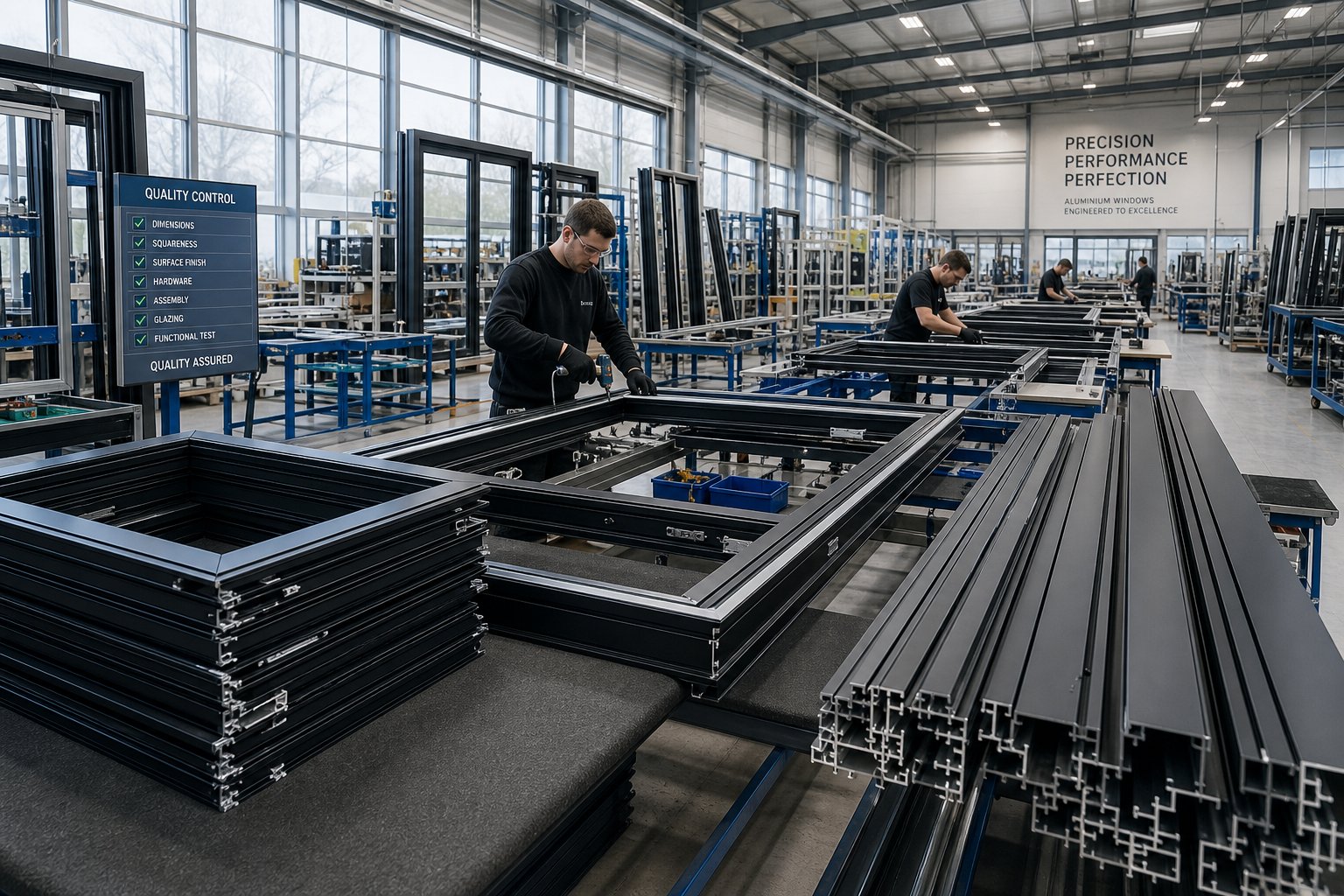
A signed quote is not a finished project. Between acceptance and installation sits a manufacturing and logistics timeline that catches many buyers off guard — particularly those who assume aluminium windows can be pulled from stock like off-the-shelf products. They cannot. Most commercial and residential aluminium windows are manufactured to order, and the lead time between placing that order and having finished units on site varies significantly depending on specification complexity, seasonal demand, and your chosen manufacturer’s capacity.
Typical Lead Times from Quote to Installation
For standard residential specifications — thermally broken profiles in common colours with double-glazed units — expect a manufacturing lead time of four to eight weeks from order confirmation. That timeline covers material procurement, fabrication, powder coating, glazing, quality checks, and dispatch.
Complex or large-scale projects push longer. Commercial aluminium windows with structural glazing, oversized panels, custom colour matching, or multi-storey quantities typically require 10 to 12 weeks or more. Industry data from 2025 confirms that bespoke glazing systems can extend to 16 weeks and beyond when precision engineering and specialist hardware are involved.
Add installation scheduling on top of manufacturing. Even when products arrive on site, fitting crews may be booked weeks in advance — particularly during busy periods. A realistic total timeline from quote acceptance to completed installation looks like this:
- Order confirmation and deposit — week 1
- Manufacturing and quality control — weeks 2 to 8 (standard) or weeks 2 to 12+ (complex)
- Delivery and site coordination — 1 to 2 weeks after manufacture
- Installation — 1 to 5 days for a typical residential project; longer for multi-storey or commercial work
The total window from signed quote to finished installation is commonly 8 to 14 weeks for residential projects and 12 to 16+ weeks for larger commercial aluminium windows. Planning around these timeframes prevents the costly scenario where structural openings sit exposed, trades are rescheduled, and temporary weatherproofing eats into your contingency budget.
Seasonal demand plays a direct role in these numbers. Spring and summer are peak renovation periods across Australia — aluminium window manufacturers run at full capacity, installation crews are booked months ahead, and lead times stretch accordingly. Timing research confirms that ordering during autumn or winter typically yields faster turnaround, greater scheduling flexibility, and in some cases better pricing as manufacturers seek to maintain production volume through quieter months. If your project timeline allows it, requesting quotes in March through June (Australia’s cooler months) and placing orders before the spring rush begins gives you a meaningful advantage on both delivery speed and installer availability.
Selecting a Supplier That Supports Your Entire Project
Lead time is not purely a function of calendar weeks — it is shaped by how capable your chosen aluminium window manufacturer is at managing the full production and delivery chain. A supplier who stumbles on material calculation delays your order. One who lacks engineering coordination capacity may produce frames that do not fit structural openings correctly. And one without robust logistics planning may deliver to site before the building is ready, or weeks after it needed to be.
The strongest quoting experience comes from manufacturers who treat the quote as the starting point of a managed process, not just a transaction. When evaluating potential partners — whether for a single residential renovation or a multi-dwelling development — look for these capabilities:
- System recommendation expertise — the ability to assess your project requirements (climate zone, wind loads, aesthetic goals, compliance targets) and recommend the right profile system rather than defaulting to a single product range
- Engineering coordination — support for structural considerations including lintel sizing, deflection limits, and integration with the building’s structural engineer where needed
- Precision material calculation — accurate take-offs from drawings that minimise waste, prevent shortages, and ensure every component arrives together
- Quality-controlled manufacturing — documented processes that catch defects before dispatch rather than on installation day
- Project-based supply coordination — staged deliveries aligned to your build programme, not a single bulk drop that sits exposed on site for weeks
For builders, developers, and contractors managing multiple projects or tight programmes, these capabilities are not optional extras — they are the difference between a supplier who delivers reliably and one who creates site delays that ripple through every subsequent trade.
MEICHEN’s full-service aluminium window supply model is built around exactly this approach. Their process covers the complete project journey — from initial drawings and system recommendation through engineering coordination, manufacturing, quality control, and delivery — giving builders and procurement teams a single capable partner rather than a fragmented chain of suppliers, fabricators, and freight companies. For projects where timing, accuracy, and accountability matter, that end-to-end structure translates directly into fewer site delays and more predictable outcomes.
Whether you are pricing a single-storey extension or a commercial development with dozens of openings, the manufacturer behind your quote shapes far more than the product quality. They determine whether your timeline holds, whether your specifications translate accurately from paper to fabrication, and whether the windows that arrive on site are ready to install without rework or returns. Choose a quoting partner with the depth to support your project from first enquiry through to final delivery — and your aluminium windows quote becomes not just a price, but a reliable commitment you can build a programme around.
Frequently Asked Questions About Aluminium Windows Quotes
1. How many quotes should I get for aluminium windows?
Aim for a minimum of three quotes to establish a fair market range, though five is preferable for complex or high-value projects. Collecting multiple quotes reveals how different suppliers interpret the same brief, exposing variations in specification quality, installation scope, and communication style. The goal is not simply finding the lowest price but identifying which supplier delivers the best value at a scope matching your actual requirements. Send identical project information to each company so responses can be compared on equal terms.
2. What is the difference between a supply-only and supply-and-fit aluminium window quote?
A supply-only quote covers the aluminium frames, glazing units, hardware, and delivery to your site — but excludes all labour, scaffolding, waste removal, and finishing work. A supply-and-fit quote bundles product and installation into one agreement, typically covering removal of existing windows, fitting, internal and external finishing, compliance, and waste disposal. Supply-only suits builders and contractors with their own installation crews, while supply-and-fit provides homeowners with a single point of accountability. Never compare these two quote types at face value without adding estimated labour and ancillary costs to the supply-only figure.
3. What hidden costs should I watch for in an aluminium window quote?
Common hidden costs include scaffolding hire for upper-storey access, skip hire and waste removal fees, making good to internal plaster and external render, building regulation application fees, structural lintel upgrades for older homes, delivery surcharges for regional locations, and premiums for non-standard RAL powder coat colours. These items are legitimate project expenses that some companies bundle into headline pricing while others list separately or omit entirely. Always ask whether scaffolding, waste disposal, making good, and compliance fees are included before accepting any quote.
4. How long does it take from accepting a quote to having aluminium windows installed?
For standard residential specifications, expect a total timeline of 8 to 14 weeks from signed quote to completed installation. This includes 4 to 8 weeks for manufacturing, 1 to 2 weeks for delivery coordination, and 1 to 5 days for installation. Complex or commercial projects with bespoke specifications can extend to 12 to 16 weeks or longer. Ordering during autumn or winter typically yields faster turnaround and greater scheduling flexibility, as spring and summer are peak renovation periods when manufacturers run at full capacity.
5. Why do two aluminium window quotes for the same size window differ so much in price?
Price differences of 30 per cent or more between quotes for seemingly identical windows almost always trace back to the profile system and glazing specification. A non-thermally-broken frame with basic double glazing costs significantly less than a thermally broken profile with Low-E coated, argon-filled glazing. Thermal break depth, sight-line width, hardware grade, and powder coat colour choice all contribute to variation. Additionally, differences in installation scope — whether scaffolding, making good, and waste removal are included — account for much of the remaining gap. Comparing quotes requires checking specifications line by line, not just totals.
More Window & Door Guides