What Is an Aluminium Windows Online Price Calculator
Before you commit to a supplier or lock in a budget, you want a number to work with. That is exactly the gap an aluminium windows online price calculator fills. It is a digital tool that takes your project details and returns a cost estimate, giving you a financial starting point without requiring a site visit or a sales call.
This article is not here to point you toward a specific tool. Instead, it is designed to make you a sharper, more informed user of these calculators so you can interpret their outputs correctly and avoid the budget surprises that catch so many Australian homeowners and builders off guard.
What an Online Price Calculator Actually Does
The logic is straightforward. You enter specifications — window dimensions, opening style, glazing type, colour preference — and the tool runs those inputs through a pricing model. Out comes an estimate, typically displayed as a per-window figure or a project total. Some tools ask as few as three questions; others walk you through detailed configuration screens covering hardware, thermal performance, and finish options.
The underlying formula generally combines frame cost, glass cost, hardware cost, and sometimes labour, though the depth of calculation varies enormously between tools. A basic window price calculator might simply multiply area by a rate per square metre, while more sophisticated versions factor in profile system, opening mechanism complexity, and regional pricing data.
Who Benefits from Using These Tools
Anyone asking how much does window cost for a renovation, new build, or commercial fit-out stands to benefit. Homeowners use a window price calculator to sense-check quotes from installers. Renovators compare options across different glazing specs. Builders and architects rely on a window prices calculator to prepare preliminary budgets before tendering, especially when a project involves dozens of openings across multiple storeys.
Procurement teams managing multi-dwelling developments find these tools useful for early-stage feasibility work, where ballpark figures inform decisions about specification levels and project viability.
Online calculators provide indicative pricing, not binding quotes. Understanding this distinction is essential for effective budget planning. Treat every output as a conversation starter with your supplier, not a final commitment figure.
That gap between an indicative estimate and a project-specific quote is where most misunderstandings happen. The estimate gets you oriented; the real accuracy comes from understanding what sits behind the number — and that starts with knowing how these tools actually generate their figures.
How Online Window Price Calculators Generate Estimates
Every calculator spits out a number. Few explain where that number actually comes from. That lack of transparency is one of the biggest gaps in the online pricing landscape, and it leaves users comparing figures without understanding the logic that produced them. Pulling back the curtain on methodology makes you a far better judge of which estimates deserve your trust.
At their core, these tools rely on one of three pricing engines — or sometimes a blend of all three. Some draw directly from fabricator price lists, mapping your selected specifications to real product costs maintained by a manufacturer or supplier. Others aggregate historical project data, pulling averages from completed jobs to estimate what a similar scope typically costs in a given market. A third category uses algorithmic models that calculate material quantities based on your inputs, then apply current commodity rates for aluminium, glass, hardware, and coatings to build a price from the ground up.
The approach a tool uses shapes everything about the figure it returns. A fabricator-linked calculator tends to reflect actual production costs more accurately, while a historical-average model smooths out price spikes and supplier-specific margins into a generalised range. Algorithmic tools sit somewhere in between — they can be precise about raw material costs but may miss fabrication complexity or regional labour premiums entirely.
Data Sources Behind Calculator Estimates
Where does the pricing data actually live? For tools connected to a specific manufacturer, estimates typically pull from an internal pricing database that the fabricator updates as material costs shift. These tend to be the most reliable for supply-only figures because they reflect what the factory would actually charge. The catch is that they only represent one supplier’s pricing structure, not the broader market.
Regional cost averages work differently. These databases compile pricing from multiple suppliers, installers, or completed projects within a geographic area, then present a midpoint or range. In Australia, this matters because a window replacement cost calculator drawing on Sydney metro data will return a very different figure from one calibrated to regional Queensland or Tasmania, even for identical specifications. Labour rates, transport distances, and local demand all shape those averages.
Some calculators connect via supplier APIs — live data feeds that update pricing in near real time as material costs fluctuate. This is the gold standard for accuracy, but it is rare among free consumer-facing tools. Most rely on periodic manual updates, which means the data powering your estimate could be anywhere from a week to a year old.
The credibility of any replacement windows cost calculator depends heavily on how current and localised its data is. A tool last updated eighteen months ago, built on UK pricing, and presented to an Australian user without adjustment is going to mislead — even if its interface looks polished and professional.
Why Different Calculators Show Different Prices
Plug the same window specification into three different online tools and you will almost certainly get three different numbers. That inconsistency unsettles people, but it is entirely predictable once you understand the variables at play.
Regional pricing variation is the most obvious factor. Aluminium profile costs differ depending on the manufacturing origin — Australian-extruded profiles carry different pricing to imported sections from China or Southeast Asia. Shipping logistics, port handling, and import duties layer additional costs onto imported products, and not every cost of window replacement calculator accounts for these in the same way. A tool designed for the domestic market may assume locally sourced profiles, while another built for a global audience might default to international supply chain assumptions.
Currency exposure adds another dimension. Tools hosted overseas sometimes display prices converted from USD or GBP into AUD at a static exchange rate, which drifts from reality as currencies move. Even a five per cent currency shift can meaningfully alter the estimate for a multi-window project.
Then there is inclusion scope. One calculator might quote the manufactured unit only. Another folds in delivery within a certain radius. A third bundles indicative installation labour. Without a clear statement of what is and is not included, users end up comparing a supply-only figure against a fully installed estimate and drawing the wrong conclusions about which option is cheaper.
Labour market assumptions amplify this further. Regional labour rates, permit requirements, and local demand all influence installed pricing. A replacement window costs calculator calibrated for a market with lower trade wages will understate costs for Australian capital cities, where skilled glaziers command significantly higher rates.
Before treating any calculator output as a planning figure, look for these credibility indicators:
- Data recency — Does the tool state when its pricing was last updated? Estimates based on data more than six months old may not reflect current aluminium or glass costs.
- Geographic specificity — Is the calculator built for the Australian market, or is it a generic international tool? Look for references to Australian standards, AUD pricing, and local terminology.
- Transparency about inclusions and exclusions — Does the tool clearly state whether its estimate covers supply only, supply and delivery, or supply and install? Are GST, hardware, and glazing upgrades explicitly mentioned?
- Disclosed pricing methodology — Does the calculator explain how it arrives at its figure — fabricator database, regional averages, or algorithmic model? Tools that disclose their approach give you a basis for judging reliability.
- Specification depth — A tool that asks detailed questions about profile system, glazing composition, and finish type is far more likely to return a meaningful estimate than one that only requests dimensions and window style.
These indicators will not guarantee accuracy, but they separate the tools worth taking seriously from those better treated as rough curiosity figures. And once you trust the methodology, the next question becomes understanding what each component of that estimate actually represents — because the price of an aluminium window is really the sum of several distinct cost layers, each with its own variables.
Individual Cost Components Inside Every Price Calculation
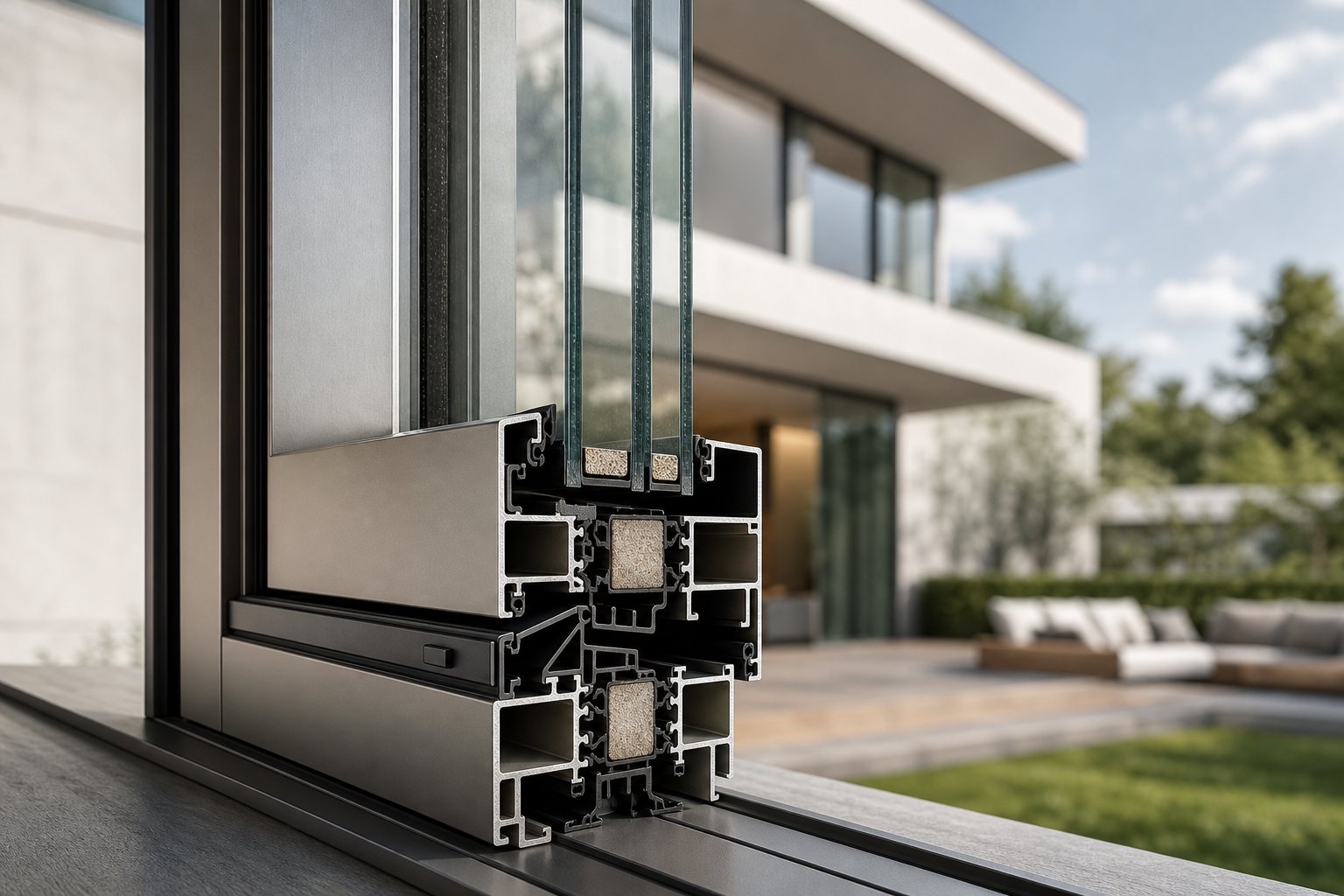
That single dollar figure a calculator returns is actually a composite of several distinct material and fabrication layers, each carrying its own cost logic. Understanding what proportion of the total each component represents gives you real leverage — both for interpreting estimates and for making specification trade-offs that align with your budget.
Most users never see this breakdown. The calculator just outputs a number. But behind it, the pricing engine is weighing aluminium extrusion, glass, hardware, surface finish, and seals against each other in proportions that shift depending on your selections.
| Component Category | Typical Cost Weight | Primary Cost Drivers |
|---|---|---|
| Frame and profile | 30–45% | Profile system, thermal break, section depth |
| Glazing | 25–40% | Pane count, coatings, gas fill, glass thickness |
| Hardware | 10–18% | Locking mechanism, hinges, opening style |
| Surface finish | 5–12% | Powder coat colour, anodising grade, special effects |
| Seals and gaskets | 3–5% | Weatherproofing grade, compression type |
The frame and glazing together typically account for 60–80% of the total window cost. That is where specification decisions have the greatest financial impact.
Frame and Profile Costs
Aluminium profile systems are not interchangeable. A standard non-thermally-broken section uses a single aluminium extrusion — lightweight, affordable, and adequate for mild climates or internal applications. Step up to a thermally broken profile, where a polyamide strip separates the interior and exterior aluminium faces, and you gain significantly better insulation but at a 20–35% premium on the frame component alone.
Section depth matters too. Deeper profiles accommodate thicker glazing units and provide greater structural rigidity for larger openings, but they use more raw aluminium per linear metre. Each incremental increase in wall thickness — from 1.4 mm to 1.6 mm to 2.0 mm — adds roughly 8–12% to the frame cost. For Australian projects requiring compliance with AS 2047 for wind load resistance, particularly in cyclone-prone regions of northern Queensland or coastal WA, heavier profiles are often mandatory rather than optional.
The profile system you select cascades through the entire estimate. A higher-performance frame demands compatible hardware, wider glazing rebates, and sometimes different seal profiles — all of which nudge the total upward.
Glazing Options and Their Price Impact
Glass is where energy performance and cost intersect most directly. A double pane window cost calculator will show you the baseline: two panes of glass separated by an air or gas-filled cavity, sealed as an insulating glass unit (IGU). This configuration suits most Australian climate zones and satisfies NCC Section J energy requirements for the majority of residential applications.
Upgrading from standard double glazing to a Low-E coated unit — where a microscopically thin metallic oxide layer is applied to one glass surface — typically adds 10–15% to the glazing cost while reducing energy loss by 30–50%. For homes in western-facing orientations or regions with extreme summer heat gain, Low-E coatings deliver measurable returns on cooling costs.
The cost of triple glazed windows pushes further again. Triple-pane IGUs add a third glass layer and a second gas cavity, improving U-values substantially but at a 100–130% premium over single glazing. In Australia, triple glazing is less common than in northern European markets, but it appears increasingly in high-performance builds targeting NatHERS ratings above 7 stars or in acoustically sensitive locations near airports and major roads.
Argon gas fill — replacing the standard air cavity — adds around 5–8% to the IGU cost. It is a modest investment for a meaningful thermal improvement, and most quality fabricators include it as standard in their double-glazed units. Krypton fill, used in ultra-slim high-performance units, costs considerably more and is rarely specified in the Australian residential market.
If you are using a window glass replacement cost calculator to price reglazing an existing frame, keep in mind that the glass specification alone does not capture the full picture. Compatibility with the existing rebate depth, seal condition, and drainage capacity all influence whether a straight glass swap is feasible or whether the entire unit needs replacing.
Hardware, Finishes, and Accessories
Hardware sits lower in the cost hierarchy by percentage, but its impact on the final figure compounds quickly across a multi-window project. Handles, locking mechanisms, friction stays, and restrictors all carry individual price points that vary by brand, finish, and security rating. A basic single-point lock costs a fraction of a multi-point espagnolette system, yet the latter is standard for any window requiring compliance with Australian security standards.
Surface finish is where many users encounter unexpected cost variation. Standard powder coat colours — typically black, white, and a handful of popular shades like Monument or Surfmist in the Colorbond palette — carry no premium because fabricators batch them in volume. Request a custom RAL colour match, and you introduce a dedicated coating run that adds 10–15% to the finish cost. The premium exists because the powder coater must purge their equipment, set up for a non-standard colour, and often meet minimum batch requirements regardless of your order size.
Special finishes push costs higher still. Anodising at a standard 10-micron thickness adds roughly 15–20% over powder coat, while a heavier 20-micron marine-grade anodised finish — essential for coastal environments where corrosion resistance is measured in decades — can add 30–35%. Wood-grain effect finishes, achieved through sublimation transfer onto the powder-coated surface, sit in a similar premium bracket. These finishes replicate timber aesthetics on an aluminium substrate, popular in heritage overlay zones where council requirements restrict visible aluminium framing.
Seals and gaskets round out the cost structure. They represent the smallest percentage, but skimping here compromises weather performance and acoustic insulation. High-compression EPDM gaskets rated for Australian UV exposure cost more than generic alternatives, and any calculator built on quality-tier assumptions will factor this in.
The cost of double glazing windows, then, is never just about the glass. It is the sum of profile, glazing, hardware, finish, and seals — each responding to different specification choices. Knowing which components carry the most weight helps you direct your budget where it delivers the greatest performance return, rather than spreading upgrades evenly across categories where the payoff varies dramatically.
Supply-Only Versus Fully-Installed Calculator Prices
Here is where most budget blowouts begin. A calculator returns a figure, the user treats it as the project cost, and weeks later the actual invoices arrive carrying line items that were never part of the original estimate. The root cause is almost always the same: the user did not realise whether the tool was quoting supply only or supply and install — and the calculator did not make the distinction obvious.
These are fundamentally different pricing scopes. Confusing them is like comparing the cost of building materials to the cost of a finished house. Both are valid numbers, but they answer very different questions.
What Supply-Only Pricing Covers
A supply-only estimate from an aluminium windows online price calculator covers the manufactured window unit as it leaves the factory. That means the aluminium frame (cut, fabricated, and assembled), the glazing sealed into the unit, the hardware fitted or supplied loose for site installation, and the specified surface finish. It is the product itself — nothing more.
Everything that happens after the unit leaves the production line sits outside this figure. Delivery to site, unloading, installation labour, removal of existing windows, disposal of old frames, scaffolding for upper-storey access, internal plastering around the new frame, external flashing and sealing, and any structural modifications to the opening — none of these appear in a supply-only price.
For builders and procurement teams ordering in bulk, supply-only pricing makes sense because they already have trade accounts for installation labour and ancillary services. For homeowners, though, a supply-only figure can be dangerously misleading if mistaken for the total project cost. Installation and associated works typically add 40–60% on top of the supply figure for a standard residential window, and considerably more where access is difficult or structural work is required.
What Fully-Installed Pricing Should Include
A genuine fully-installed price — sometimes called supply and install — should bundle the manufactured unit with every service needed to get it from factory to functioning in your wall. At minimum, that means:
Delivery to site. Removal and disposal of the existing window. Installation labour including fixing, shimming, sealing, and flashing. Internal finishing such as architrave reinstatement or plaster patching. External finishing including silicone sealing and any cladding interface work. Compliance with relevant building regulations, particularly NCC requirements for weatherproofing and energy performance.
If the project involves upper-storey windows, scaffolding or elevated work platform hire should appear as a line item. For multi-storey homes — common across Australian suburbs — this alone can add $1,500 to $4,000 depending on the footprint and duration of hire.
A window installation cost calculator that bundles everything into a single figure without showing the breakdown is less useful than one that itemises materials, labour, removal, disposal, and delivery separately. Line-item transparency reveals where costs concentrate. On a typical residential replacement, labour and associated installation services often represent 35–50% of the fully-installed total, while the window unit itself accounts for the remainder. Knowing this split helps you identify whether a quote is front-loading product margin or labour margin — and where negotiation leverage actually sits.
Yet even calculators that claim to provide fully-installed pricing routinely exclude items that real projects require. Watch for these common exclusions:
- Structural alterations — enlarging or reducing an opening, adding lintels, or reinforcing framing to support heavier glazed units
- Council approvals and development applications — required in many Australian jurisdictions when changing window sizes, adding openings, or working on heritage-listed properties
- Building control and certification fees — inspection costs for compliance with NCC and relevant Australian Standards
- Internal decoration — repainting, plastering, or tiling around the new frame beyond basic making good
- External cladding repairs — particularly relevant for brick veneer, rendered, or weatherboard homes where the existing cladding interface needs reworking
- Lead paint management — for older Australian homes built before the mid-1970s, safe removal of lead-based paint around window openings adds cost
- Asbestos-related work — fibro homes common across NSW, QLD, and VIC may have asbestos-containing materials in window surrounds that require licensed removal
A window installation labor cost calculator that does not flag these potential extras is giving you an incomplete picture. Budget a contingency of 10–20% above any fully-installed estimate to cover items that only become apparent once the old window comes out and the structural opening is exposed.
One final nuance that trips people up: the relationship between window size and price is not linear. Doubling the dimensions of a window does not double the cost. Fixed costs — hardware, locking mechanisms, handles, seals, and fabrication setup — remain largely constant regardless of whether the unit is 600 mm wide or 1,200 mm wide. What scales with size is the aluminium extrusion length and the glass area. So a larger window costs more in absolute terms, but the cost per square metre actually decreases as the unit grows, because those fixed components get spread across a bigger area. Conversely, very small windows can appear disproportionately expensive on a per-square-metre basis precisely because hardware and fabrication minimums represent a larger share of the total. Keep this in mind when using any window installation calculator to compare options across different sizes — the cheapest per-unit price is not always the cheapest per square metre, and vice versa.
How Window Style Choices Affect Calculator Results
Size and glazing spec are not the only levers that move a calculator’s output. The opening style you select — casement, sliding, bi-fold, tilt-and-turn, or fixed — reshapes the estimate in ways that often surprise users who assume all windows of the same dimensions should cost roughly the same. They do not. The mechanical complexity behind each style drives hardware requirements, profile design, and fabrication time in very different directions.
Why Casement and Fixed Windows Cost Less
A fixed-light window is the simplest aluminium window you can specify. It has no opening mechanism at all — just a frame holding a sealed glazing unit. No hinges, no handles, no locking hardware, no friction stays. The profile sections are straightforward to cut and assemble because there is no operable sash to accommodate. This makes fixed windows the baseline against which every other style carries a premium.
Casement windows sit one step above. They open outward on side-mounted hinges, requiring friction stays to control the opening arc, a handle, and a single or multi-point lock. The fabrication is still relatively simple — standard profile sections with conventional mitre joints handle the structural loads without needing reinforced tracks or heavy-duty rollers. A casement window cost estimator will typically return a figure 10–20% above an equivalent fixed light, with that premium driven almost entirely by the hardware additions rather than frame complexity.
For rooms needing maximum ventilation — kitchens, bathrooms, laundries — casement windows deliver full opening capacity with minimal cost uplift. Their tight seal when closed also makes them strong performers against wind-driven rain, which matters in exposed coastal locations across Australia.
How Sliding, Bi-Fold, and Tilt-and-Turn Styles Add Cost
Sliding windows introduce a track system that the sash rides along, plus rollers engineered to carry the weight of the glazed panel smoothly over thousands of cycles. The profiles themselves need to be wider to accommodate the interlocking rail design, and weatherproofing becomes more complex because the sliding interface creates potential air gaps that require brush seals or compression gaskets to manage. A sliding window of the same dimensions as a casement typically costs 15–30% more, depending on the number of sliding panels and the track configuration.
Tilt-and-turn windows push further. They combine two opening modes — tilting inward from the top for ventilation and swinging inward like a door for cleaning access. This dual function demands specialised hardware that switches between modes via a single handle rotation, plus reinforced hinges capable of supporting the full sash weight in both orientations. The profile sections need deeper rebates to accommodate the complex sealing geometry. Expect a 25–40% premium over a fixed light of equivalent size.
Bi-fold configurations represent the highest hardware investment per panel of any standard window or door style. Each folding leaf requires top and bottom pivot hardware, carrier rollers, guide channels, and multi-point locking across every panel junction. A four-panel bi-fold does not simply cost four times a single casement — it costs substantially more because of the interconnecting hardware, the precision alignment required across the full span, and the heavier-duty aluminium sections needed to prevent deflection under the accumulated panel weight. For anyone using a bay window cost calculator or bay window price calculator, similar compounding applies: bay configurations combine multiple frames at fixed angles, requiring specialised coupling mullions and structural posts that add fabrication complexity beyond a simple flat-wall installation.
Specialty Shapes and Custom Configurations
Arched, circular, trapezoidal, and raked windows sit in a different pricing category entirely. Standard aluminium profiles are extruded as straight lengths and cut at precise angles for rectangular assemblies. The moment a design calls for a curve, the profile must be rolled or bent on specialised machinery — a process that introduces tooling costs, higher material waste, and slower production speeds. A custom window price calculator that even offers these shapes is rare; most generic tools restrict inputs to rectangular configurations and cannot account for bespoke fabrication.
Triangular and trapezoidal windows require non-standard angle cuts that waste more material per joint than a 90-degree mitre. Circular or porthole windows demand profile bending with tight radii, often requiring thinner wall sections that are then reinforced internally. Each of these adds labour time that a standard production line is not optimised for, which is why custom shapes carry premiums of 50–150% over a rectangular fixed light of comparable glass area.
Heritage overlay zones in suburbs across Melbourne, Sydney, and Brisbane frequently require arched or shaped windows to match existing streetscape character. If your project falls in one of these areas, factor the custom fabrication premium into your budget from the outset rather than discovering it after the calculator gives you a figure based on standard rectangular assumptions.
| Window Style | Hardware Complexity | Profile Complexity | Typical Price Premium vs Fixed Light |
|---|---|---|---|
| Fixed light | None | Low | Baseline |
| Casement (side-hung) | Low | Low | 10–20% |
| Awning / top-hung | Low–Medium | Low | 15–25% |
| Sliding (2-panel) | Medium | Medium | 15–30% |
| Tilt-and-turn | High | Medium–High | 25–40% |
| Bi-fold (per panel) | High | High | 40–70% |
| Bay / bow configuration | Medium–High | High | 35–60% |
| Arched / circular / shaped | Varies | Very High | 50–150% |
These premiums are relative, not absolute — they shift with supplier, profile system, and order volume. But the ranking holds consistently: mechanical complexity and fabrication difficulty drive cost upward in a predictable hierarchy. When a calculator asks you to select a window style, it is not a cosmetic choice. It is one of the single largest cost multipliers in the entire estimate, often outweighing glazing upgrades or finish selections in its impact on the final figure.
Knowing which styles carry which premiums puts you in a stronger position to make deliberate trade-offs — perhaps fixed lights where ventilation is not needed, casements where it is, and reserving the budget-intensive bi-fold or shaped configurations for the openings where they deliver genuine functional or architectural value. That kind of strategic specification starts well before you open a calculator, which raises a practical question: what exactly should you have prepared before entering your first input?
Preparing Your Specifications Before Using a Calculator
Garbage in, garbage out. That old computing maxim applies perfectly to every window estimate calculator on the market. The quality of your result depends entirely on the quality of your inputs — and most users sit down at a calculator without the information they actually need to generate a meaningful estimate. A few minutes of preparation before you touch a single dropdown menu will save hours of confusion later.
Measurements You Need Before Starting
The single most common mistake is entering the wrong measurement type. There are two distinct dimensions at play in every window project, and confusing them throws the entire estimate off.
The structural opening — sometimes called the rough opening — is the hole in your wall where the window sits. It is measured from stud to stud horizontally and from sill plate to header vertically. The finished frame size is the external dimension of the manufactured aluminium window unit itself. The frame is always smaller than the structural opening because it needs clearance on all sides for shimming, sealing, and flashing during installation.
This gap typically runs 10–15 mm per side in Australian residential construction, though it varies by manufacturer and profile system. A window that is sized to match the rough opening exactly will not fit — there is no room for adjustment, weatherproofing, or the natural imperfections present in virtually every framed wall.
Most calculators ask for the finished window size, not the structural opening. If you feed in your rough opening dimensions without subtracting the clearance allowance, you will get a price for a larger window than you actually need. For a single unit, the cost difference might be modest. Across a whole-house project with fifteen or twenty openings, those extra millimetres compound into a noticeably inflated estimate.
Measure in three places for both width and height — top, middle, and bottom for width; left, centre, and right for height. Walls settle, timber studs bow, and older Australian homes (especially weatherboard and fibro construction) are rarely perfectly square. Use the smallest measurement in each direction as your working dimension. This ensures the manufactured unit will fit the tightest point of the opening.
Depth is the overlooked third dimension. Measure from the interior wall surface to the exterior face of the frame reveal. This figure determines whether the aluminium profile section you select will sit flush within the wall, protrude, or require packing. For brick veneer homes — the most common construction type across much of suburban Australia — reveal depths typically range from 90 mm to 140 mm. Rendered walls, double brick, and Queenslander-style timber construction each have different typical depths. A new window cost calculator cannot account for your specific wall build-up unless you provide this measurement, and getting it wrong can mean ordering a frame that does not suit your reveal.
Specifications to Decide in Advance
Dimensions get you started, but a meaningful estimate requires more than just size. Walking into a calculator without pre-decided specifications means you will either guess at dropdowns — introducing errors — or spend twenty minutes toggling options without context for what each selection actually means.
Sort these decisions before you begin:
Glazing type. Single, double, or triple glazed? Low-E coating? Argon fill? Laminated inner pane for security or acoustic performance? Your choice here has a direct and significant impact on the output of any cost of new windows calculator. If you are replacing windows in a home built before current NCC energy provisions, check whether your state or territory mandates minimum glazing performance for replacement work — in many cases, you cannot simply replicate the old single-glazed specification.
Opening style. Fixed, casement, awning, sliding, tilt-and-turn, or bi-fold? As the previous section detailed, this choice is one of the largest cost multipliers in the estimate. Match the style to each room’s functional requirements: kitchens and bathrooms benefit from awning or casement windows that maximise ventilation, living areas suit larger sliding or bi-fold configurations, and windows in high or hard-to-reach positions may work best as fixed lights.
Colour and finish. Standard powder coat colours are typically included in base pricing. Custom RAL matches, metallic finishes, anodising, and wood-grain sublimation carry premiums that shift the estimate meaningfully. Decide on your colour palette before starting so the calculator reflects your actual specification rather than a default.
Hardware preference. Handle style, locking mechanism grade, and any child-safety restrictors all influence the price. If you have not chosen specific hardware, most calculators will default to a standard inclusion — just be aware that upgrading later changes the figure.
Performance requirements. This is the category Australian homeowners most often overlook. Does your site fall within a designated bushfire-prone area requiring a specific BAL rating? Are you in a cyclone region where windows must meet higher wind load classifications under AS 2047? Is there a noise source — highway, rail corridor, flight path — that demands acoustic-rated glazing? Each of these requirements constrains your specification options and typically pushes costs upward. Building regulations may dictate minimum glazing performance through NCC compliance and WERS ratings, so check your local council requirements before selecting options in a calculator that may not meet the standard.
- Measure your structural openings accurately — width, height, and depth, each taken at three points, using a steel tape measure in millimetres. Record the smallest dimension for width and height.
- Determine required glazing performance — check NCC energy requirements for your climate zone, confirm any BAL or cyclone ratings for your site, and note acoustic needs based on your location.
- Select the opening style for each room — match the mechanism to the room’s ventilation, access, and aesthetic requirements rather than defaulting to one style throughout.
- Choose your colour and finish — confirm whether you need standard powder coat, a custom colour, or a specialty finish so the replacement window size calculator reflects realistic coating costs.
- Note any access or installation constraints — upper-storey windows requiring scaffolding, restricted site access for delivery vehicles, heritage overlays limiting visible frame profiles, or strata rules affecting external appearance all shape the real project cost beyond what any calculator captures.
One practical trap deserves its own warning: measurement units. Australian construction works exclusively in metric — millimetres for window dimensions, full stop. Yet several popular online calculators default to imperial inputs (inches and feet) because they were built for the US or UK market. Entering 1200 into a field expecting inches rather than millimetres produces an absurd result. Conversely, entering a measurement in centimetres when the tool expects millimetres shrinks your window by a factor of ten. Always confirm the unit of measurement before typing your first number. If the calculator does not clearly label its input fields with mm, cm, or inches, treat that as a credibility red flag.
With accurate measurements and pre-decided specifications in hand, you are in a position to generate estimates that actually reflect your project. The sharper question then becomes what to do with those numbers once you have them — particularly when different tools return different figures for what appears to be the same window.
Comparing and Validating Multiple Calculator Outputs
Three calculators, three different numbers. That is the reality most users face — and the instinct is to either average them, pick the lowest, or throw your hands up entirely. None of those responses is particularly useful. What works is a structured comparison method that strips away the noise and reveals whether the figures you are looking at are genuinely comparable or just superficially similar.
Prices for seemingly similar window specifications can differ by 20–30% or more depending on what each tool includes in its scope. That variation is not random — it reflects real differences in methodology, data sources, and inclusion assumptions. Your job is to identify those differences before drawing conclusions about which option represents better value.
Normalising Results for Fair Comparison
The cardinal rule: you cannot compare outputs unless the inputs are identical. That sounds obvious, but it trips people up constantly. One calculator might default to standard double glazing while another assumes Low-E coated argon-filled units. One might include a powder coat finish in its base price while another treats colour as an add-on. A replacement window cost calculator that bundles delivery within 50 km looks cheaper than a windows cost estimator quoting ex-factory — until you add freight separately.
Before placing any two figures side by side, confirm these variables match across every tool you are comparing:
- Dimensions — identical width, height, and unit configuration
- Glazing specification — same pane count, coatings, gas fill, and glass thickness
- Opening style — same mechanism (casement, sliding, awning, fixed)
- Finish — same colour and coating type (standard powder coat vs custom RAL vs anodised)
- Inclusion scope — supply only, supply and delivery, or supply and install
- Tax treatment — whether GST is included or excluded from the displayed figure
A price that looks 25% cheaper may simply exclude items another calculator bundles in. That is not a saving — it is an omission. Strip each estimate back to its component assumptions and rebuild the comparison on level ground. If a tool does not disclose enough detail for you to identify what is included, it is not giving you a window costs calculator result you can meaningfully use.
For multi-window projects, normalise on a per-unit basis for windows of comparable size and specification. A whole-project total obscures whether the price difference sits in one expensive bi-fold configuration or is spread evenly across every opening. Per-unit comparison reveals exactly where the estimates diverge.
Red Flags That Suggest Unreliable Estimates
Not every online tool deserves your trust. Some are lead-generation forms dressed up as calculators — they collect your contact details and return a vague range designed to get you on the phone rather than inform your budget. Others run on outdated data or pricing logic built for a different geographic market entirely.
Watch for these warning signs:
The tool asks too few questions. A calculator that only requests dimensions and window count cannot produce a meaningful estimate. Without knowing your glazing spec, opening style, finish, and hardware requirements, it is guessing — and guesses are not useful for budget planning. As one industry guide notes, if fewer than three key specification details are captured, the comparison may simply not be fair.
The price sits dramatically below every competitor. If three tools return figures between $1,800 and $2,200 for a given specification and a fourth quotes $900, something is missing from that estimate. It might exclude hardware, use a non-thermally-broken profile, assume single glazing, or simply be pulling from a market where labour and materials cost half what they do in Australia. Outliers deserve scrutiny, not celebration.
No disclosure of inclusions or exclusions. A credible replacement window cost estimate always states what the figure covers. If the tool returns a number without specifying whether it includes GST, delivery, installation, or even the glazing type assumed, you have no basis for interpreting it. Treat undisclosed scope as a disqualifying factor.
No geographic relevance. A calculator built for the UK or US market and presented without Australian localisation will understate costs in most categories. Australian labour rates, compliance requirements, and freight distances produce a different cost structure. If the tool does not reference AUD, Australian standards, or local terminology, its output requires heavy adjustment before it means anything for your project.
Use this verification process each time you gather estimates from a new tool:
- Cross-reference at least three calculators using identical specifications to establish a credible range
- Confirm whether GST is included — a 10% variance can sit entirely in tax treatment rather than actual pricing differences
- Check the delivery scope — some tools assume collection from factory, others include delivery within a radius, and the difference matters for regional projects
- Verify the glazing specification matches your actual requirements, not a default the tool selected for you
- Confirm the calculator accounts for your geographic market — Australian-specific tools calibrated to local material and labour costs produce more relevant figures than international alternatives
- Look for a date stamp or update notice indicating when pricing data was last refreshed
Calculator prices are starting points for budgeting, not substitutes for project-specific quotes from suppliers who understand the full scope. Use them to establish a realistic range and identify specification trade-offs — then take that informed position into a conversation with a supplier who can account for your site conditions, access constraints, compliance requirements, and installation complexity.
The difference between a well-used calculator and a misleading one often comes down to the user, not the tool. Approach each estimate with the right questions — what is included, what is assumed, and what is missing — and you turn a rough digital figure into genuine budget intelligence. The users who get burned are not the ones who use calculators; they are the ones who stop there without questioning what the number actually represents.
Common Mistakes That Lead to Inaccurate Estimates
Knowing how to compare calculator outputs is one thing. Avoiding the errors that corrupt those outputs in the first place is another. Even the most sophisticated window replacement estimator produces nonsense if the person behind the keyboard feeds it flawed data or misinterprets what comes back. These mistakes are predictable, repeated constantly, and almost always avoidable with a little awareness.
Measurement and Input Errors
The fastest way to derail an estimate is entering measurements in the wrong unit. An Australian homeowner measures a window opening at 1200 mm wide, types “1200” into a calculator expecting centimetres, and suddenly receives a quote for a window twelve metres across. It sounds absurd, but tools built for international audiences often default to imperial inputs or fail to label their fields clearly. A cost to replace windows calculator that does not explicitly state whether it expects millimetres, centimetres, or inches is already setting you up for trouble.
Beyond unit confusion, the structural opening versus finished frame size mix-up remains the most widespread measurement error. As covered earlier, the rough opening is always larger than the window unit that sits within it. Entering your structural opening dimensions directly — without subtracting the 10-15 mm clearance per side — means the calculator prices a window that is physically too large for your wall. Across a whole-house project, this inflates the estimate by hundreds or even thousands of dollars for no reason.
Glazing specification errors compound the problem further. Selecting “double glazed” when your project actually requires laminated acoustic glass, or choosing “standard” when your BAL rating demands bushfire-rated glazing, produces an estimate disconnected from what you will actually need to purchase. The calculator cannot know your site-specific requirements unless you tell it — and guessing at dropdowns because you have not checked your NCC obligations beforehand is a recipe for budget shock when the real quote arrives.
Overlooking Hidden Costs and Assumptions
The second category of mistakes happens after the calculator returns its figure. Users treat that number as a complete budget — then discover the gap between estimate and reality when invoices start arriving for items the tool never mentioned.
Hidden costs in window replacement include old window disposal, framing repairs, delivery fees, permit applications, and lead paint or asbestos management for older homes. A windows replacement cost calculator rarely accounts for any of these because they depend on site-specific conditions the tool cannot assess remotely. Disposal fees alone can add $40-$80 per window. Framing repairs for rotted or uneven timber — common in older weatherboard and fibro homes across NSW and Queensland — can increase costs by 50% on a single opening if the damage is extensive.
Quality tier selections present a subtler trap. Many calculators offer “entry,” “mid-range,” and “premium” options without defining what specifications each tier actually includes. Does “mid-range” mean a thermally broken profile with Low-E double glazing? Or a standard non-thermally-broken frame with clear float glass? The price difference between those two interpretations is substantial, yet the label gives you no way to tell. If you select a tier without understanding the underlying specification, you are budgeting against an assumption you cannot verify — and the real quote may land in a completely different bracket.
Here are the pitfalls that catch users most frequently:
- Trusting a single calculator without cross-referencing — one tool’s methodology, data age, or inclusion scope may produce an outlier that looks reasonable in isolation but falls apart under comparison
- Ignoring geographic relevance — a tool calibrated for UK or US markets will understate Australian labour costs, freight distances, and compliance requirements, sometimes by 30% or more
- Not accounting for access difficulties — upper-storey installations requiring scaffolding, narrow side access preventing standard delivery, or heritage restrictions on external work methods all increase installation cost beyond what any generic calculator captures
- Forgetting regulatory compliance costs — council development applications, building certifier inspections, BAL-rated glazing upgrades, and NCC energy compliance documentation are real line items that never appear in a standard online estimate
- Assuming the cheapest estimate represents the best value — a low figure often reflects excluded scope, inferior specifications, or outdated data rather than genuine savings. The lowest number from a cost to replace windows calculator deserves the most scrutiny, not the least
Each of these mistakes shares a common thread: they stem from treating a calculator as a quoting tool rather than what it actually is — a rough scoping instrument. The estimate gives you a starting range. Your job is to stress-test that range against your project’s real conditions before committing budget to it. Users who skip that step are not victims of bad calculators; they are victims of misplaced confidence in a tool designed for approximation, not precision.
For straightforward residential replacements — standard sizes, accessible ground-floor locations, no structural changes — a well-built calculator can land within 10-15% of the final installed cost. But the moment a project involves non-standard sizing, complex access, regulatory hurdles, or specifications that exceed what a generic tool can model, the gap between estimate and reality widens fast. Recognising where that threshold sits for your project is what separates informed budgeting from wishful thinking.
When to Move Beyond Calculators to Project-Based Quotes
That threshold between useful approximation and misleading oversimplification is not abstract — it shows up the moment your project involves variables a generic tool was never designed to handle. A standard replacement window price estimator works well enough for a single casement swap in a ground-floor bedroom. It falls apart when the scope grows, the specifications tighten, or the logistics get complicated.
Limitations of Generic Calculators for Complex Projects
Generic calculators are built for the average case. They assume standard residential dimensions, common opening styles, readily available finishes, and straightforward site access. The moment your project departs from that template, the estimate drifts from reality.
Multi-window projects expose this gap most clearly. A builder pricing forty openings across a duplex development needs volume-based pricing that reflects batch manufacturing efficiencies — something no consumer-facing calculator models. Bulk orders attract different margins, different lead times, and different logistics planning than a single-unit replacement. Trying to extrapolate a project budget by multiplying a per-window online estimate by forty produces a figure disconnected from how fabricators actually price production runs.
Non-standard sizing creates similar problems. Oversized openings exceeding 2400 mm in any direction, unusually narrow sidelights, or configurations requiring structural mullions all push beyond the parameter limits most calculators accept. The tool either rejects the input entirely or forces you into a standard size bracket that does not reflect your actual specification.
Performance-driven projects — those requiring specific acoustic ratings for flight-path locations, BAL-40 or BAL-FZ compliance for bushfire zones, or cyclone-rated assemblies for northern Queensland — demand system-level engineering that a generic window replacement estimate online simply cannot replicate. These specifications constrain which profile systems, glazing build-ups, and hardware combinations are even permissible, and the pricing implications cascade through every component.
Commercial fit-outs and multi-dwelling developments add coordination complexity on top of specification complexity. Window schedules must align with construction sequencing, deliveries need staging across multiple site visits, and consistency of finish and dimension across hundreds of units requires manufacturing control that sits well outside what any replacement window price estimator can assess.
Working with a Project-Capable Supplier
For builders, developers, architects, and contractors, the path forward is engaging a supplier equipped to support the full project lifecycle — not just return a number. This means a partner who can review architectural drawings, interpret window schedules, recommend appropriate profile systems for the structural and performance requirements, calculate material quantities accurately, coordinate manufacturing timelines against your construction programme, and plan delivery logistics to match site readiness.
This is where real quote drivers get properly accounted for. Profile system selection based on engineering requirements rather than calculator defaults. Volume pricing that reflects actual batch sizes. Logistics planning that considers site access, crane requirements, and staged delivery windows. Project timelines that align manufacturing capacity with your build schedule rather than generic lead time estimates.
MEICHEN’s Services and Solutions page illustrates what this looks like in practice — a project-capable aluminium window and door partner supporting the process from drawings and schedules through system recommendations, material calculation, manufacturing coordination, quality control, logistics, and delivery planning. For projects that exceed what a generic online window quote can capture, this kind of end-to-end support is the difference between a budget built on assumptions and one built on verified project specifics.
An online window replacement quote gives you a starting figure. A project consultation gives you a costed scope. The gap between those two outputs widens in direct proportion to your project’s complexity — and for anything beyond straightforward like-for-like residential replacements, that gap is where budget blowouts live.
Understanding real quote drivers — profile system engineering, volume pricing structures, logistics complexity, and project timeline coordination — through a direct supplier consultation produces more accurate budgets than any calculator alone. The calculator tells you what a window might cost. A project-capable supplier tells you what your windows will cost.
If you are still at the early scoping stage, calculators remain a valid first step for establishing ballpark expectations and testing specification trade-offs. But the moment your project involves a double glazing quote across multiple openings, non-standard performance requirements, or coordination with other trades, treat the calculator output as a conversation starter — then take that conversation to a supplier who can turn approximation into precision.
Frequently Asked Questions About Aluminium Windows Online Price Calculators
1. How accurate are aluminium windows online price calculators?
For standard residential replacements with common sizes and ground-floor access, a well-built calculator can land within 10-15% of the final installed cost. Accuracy drops significantly for non-standard sizing, complex access requirements, bushfire or cyclone-rated specifications, and multi-window projects where volume pricing applies. Always cross-reference at least three calculators and treat outputs as indicative budget ranges rather than binding quotes. Factors like data recency, geographic calibration, and inclusion scope all affect reliability.
2. What is the difference between supply-only and fully-installed window pricing?
Supply-only pricing covers the manufactured aluminium window unit as it leaves the factory — frame, glazing, hardware, and finish included. Fully-installed pricing should bundle delivery, removal of existing windows, installation labour, scaffolding if needed, internal and external finishing, and building regulation compliance. Installation and associated works typically add 40-60% on top of the supply-only figure for standard residential windows. Always confirm which scope a calculator uses before comparing figures, as mistaking supply-only for installed pricing is the most common cause of budget blowouts.
3. Why do different window price calculators show different prices for the same specification?
Price variation across calculators stems from differences in data sources, geographic calibration, currency assumptions, and inclusion scope. One tool may pull from fabricator price lists while another uses regional averages. Some include GST and delivery; others quote ex-factory. Manufacturing origin matters too — Australian-extruded profiles carry different pricing to imported sections. Labour market assumptions vary significantly between tools built for different countries. To compare fairly, confirm identical specifications, inclusion scope, and tax treatment across every tool you evaluate.
4. What measurements do I need before using a window price calculator?
You need the finished frame size (not the structural opening) in millimetres for width, height, and reveal depth. Measure each dimension at three points and use the smallest figure. The structural opening is always larger than the window unit by 10-15 mm per side for clearance. Beyond dimensions, prepare your glazing type, opening style, colour preference, hardware requirements, and any performance specifications like BAL ratings or acoustic needs. Entering incorrect units or confusing structural opening with frame size are the most common errors that produce misleading estimates.
5. When should I get a project-specific quote instead of using an online calculator?
Move beyond calculators when your project involves bulk orders across multiple openings, non-standard sizes exceeding 2400 mm, specific performance requirements like BAL-40 or cyclone ratings, commercial specifications, or coordination with other trades. Project-capable suppliers like MEICHEN (meichenwindows.com.au/services) can review drawings, recommend profile systems, calculate material quantities, coordinate manufacturing timelines, and plan delivery logistics — producing costed scopes far more accurate than generic online estimates for complex residential and commercial projects.
More Window & Door Guides