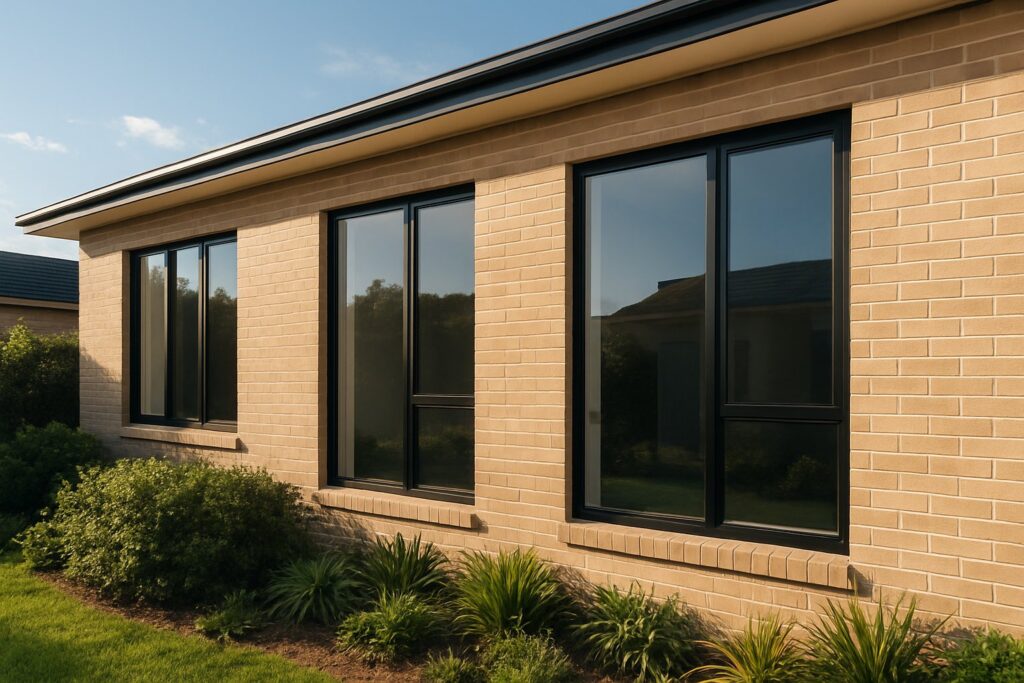
What Aluminium Windows and Doors Actually Cost
A single aluminium window can cost anywhere from $400 to $2,000 or more in Australia, while aluminium doors range from $1,200 to well over $8,000 depending on type and configuration. That spread is enormous — and it’s exactly why a single price figure is never useful without context.
Whether you’re pricing aluminium windows and doors for a bathroom renovation or a full new build, the final number on your quote depends on a handful of variables working together: product type, overall dimensions, glazing specification, powder coat finish, hardware grade, and whether you’re buying supply-only or paying for full installation. Change any one of those inputs and the price shifts considerably.
Why Aluminium Window and Door Pricing Varies So Widely
Think of it this way. A basic sliding window with single glazing and a standard white finish sits at one end of the spectrum. At the other end, a thermally broken bi-fold door system with low-E double glazing, a custom colour, and architectural-grade hardware occupies an entirely different price bracket. Both are aluminium products — yet they share almost nothing in terms of engineering complexity or material cost. The same logic applies across aluminum windows and doors in every market globally, though Australian pricing carries its own local factors like AS 2047 compliance, BAL ratings, and higher labour costs.
What This Pricing Guide Covers
Most pricing resources cover windows or doors — rarely both in meaningful detail. This guide breaks down aluminium doors and windows together, type by type, tier by tier. You’ll find indicative costs for sliding windows, casement windows, bi-fold doors, entry doors, and everything in between. We also address the difference between supply-only and installed pricing, commercial versus residential specifications, and how geography shapes what you’ll pay.
Aluminium products span from budget-friendly sliding windows starting around $400 to premium architectural bi-fold doors exceeding $10,000. Understanding where your project sits on this spectrum is the single most important step toward an accurate budget.
Every section ahead ties specific features to specific costs — so by the end, you’ll know precisely what drives an aluminium windows and door quote from affordable to premium territory, and which factors matter most for your build.
Aluminium Window Prices by Type and Size
Window type is the single biggest lever on price — more so than size alone. A straightforward sliding aluminium window with minimal hardware will always cost less than a casement or awning style that requires hinges, stays, multi-point locks, and tighter sealing systems. Dimensions matter too, of course. Larger openings demand heavier frame sections, more glass, and often structural reinforcement, all of which push costs upward. But the starting point for any budget conversation is the style of window you need.
Sliding and Single Hung Window Price Ranges
Aluminium sliding windows represent the most accessible entry point for most Australian projects. Their simple track-and-roller mechanism keeps manufacturing costs low and installation straightforward. A standard two-panel sliding window in a common size (around 1200 mm x 1000 mm) typically falls between $400 and $900 supply-only, or $650 to $1,400 fully installed. Larger openings — say 1800 mm x 1200 mm — push supply-only pricing toward $800–$1,400 depending on glazing and frame thickness.
An aluminium single hung window occupies a similar price bracket to sliders, generally ranging from $500 to $1,500 supply-only for standard residential sizes. The vertical sliding mechanism adds slightly more hardware complexity than a horizontal slider, which accounts for the modest premium. Double hung windows, where both sashes operate, step up again — expect $700 to $2,000 supply-only for standard dimensions, reflecting the additional balance hardware and weathersealing required.
Casement and Awning Window Costs
Casement and awning styles sit in the mid-to-upper price range for aluminium windows. Both use friction stays, multi-point locking systems, and compression seals that create a tighter weather barrier — ideal for Australian conditions where wind-driven rain is a concern. A standard casement window (around 600 mm x 1000 mm) runs $600 to $1,600 supply-only, while larger units or multi-panel configurations can reach $2,500 or more.
An aluminium awning window carries similar pricing to casement styles. Expect $600 to $1,800 supply-only for typical residential sizes, with installed costs adding $250 to $500 per opening depending on access and complexity. The premium over sliding windows reflects the additional hardware, more precise fabrication tolerances, and superior sealing performance these styles deliver.
Fixed and Custom Window Pricing
Fixed (or picture) windows are the simplest aluminium product to manufacture — no moving parts, no hardware, no seals to engineer. That simplicity translates to lower costs: $300 to $1,000 supply-only for standard sizes, making them an economical choice for feature glazing or highlight windows. Oversized fixed panels (beyond 1500 mm in any dimension) require thicker frames and potentially toughened or laminated glass to meet AS 1288, which lifts pricing toward $1,200–$2,200.
Custom-shaped windows — arched, circular, or trapezoidal — attract a 25–50% premium over rectangular equivalents due to specialised fabrication. If your project calls for non-standard geometry, factor this into your budget early.
| Window Type | Common Sizes (mm) | Supply-Only (AUD) | Installed (AUD) | Cost Position |
|---|---|---|---|---|
| Sliding (2-panel) | 1200×1000 to 1800×1200 | $400–$1,400 | $650–$1,900 | Budget |
| Single Hung | 600×1000 to 900×1500 | $500–$1,500 | $750–$2,000 | Budget–Mid |
| Double Hung | 600×1200 to 900×1800 | $700–$2,000 | $1,000–$2,600 | Mid-range |
| Casement | 600×1000 to 1200×1500 | $600–$2,500 | $900–$3,200 | Mid–Premium |
| Awning | 600×600 to 1200×1200 | $600–$1,800 | $850–$2,400 | Mid–Premium |
| Fixed/Picture | 600×600 to 1500×1500 | $300–$2,200 | $500–$2,800 | Budget–Mid |
These ranges assume standard powder coat finishes and single or double glazing. Upgrading to thermally broken frames, low-E glass, or custom colours will shift any window type toward the upper end of its band — a dynamic explored in detail when we look at the specific features that drive quotes from one tier to the next.
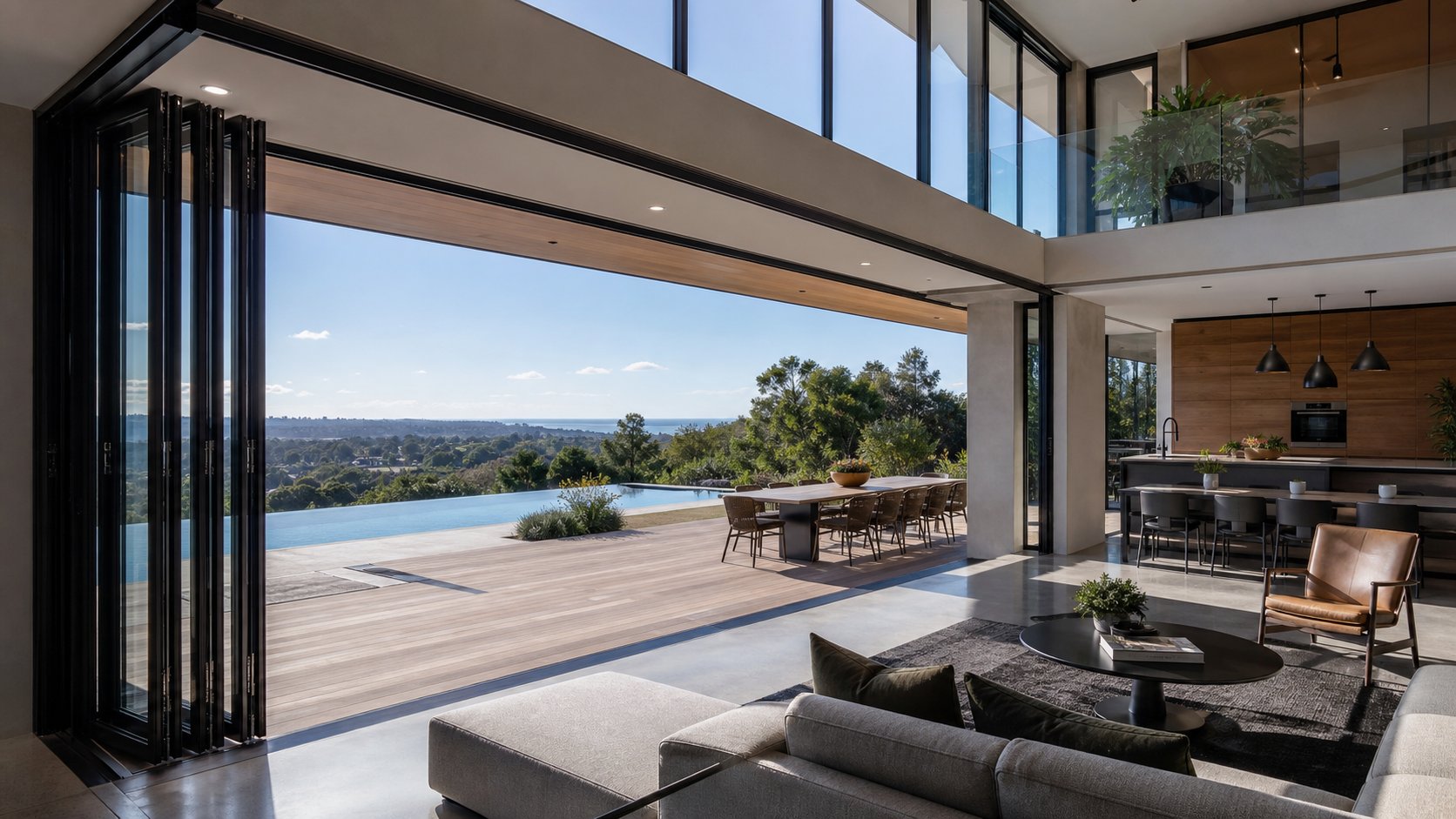
Aluminium Door Prices from Sliding to Bi-Fold
Doors carry a fundamentally different cost structure to windows. They’re larger, heavier, require more robust hardware, and must meet stricter security and weatherproofing standards. An aluminium door also faces greater engineering demands — tracks need to support panels weighing 50 kg or more, locking systems must resist forced entry, and thresholds have to manage water drainage while remaining accessible. All of this means aluminum doors occupy a higher price tier than their window counterparts, with the gap widening dramatically as you move from simple sliders to complex multi-panel systems.
Sliding and Stacking Door Costs
Standard aluminium sliding doors are the most budget-friendly option for large openings. A two-panel sliding door in a typical size (around 2100 mm x 2100 mm) generally costs $1,500 to $4,000 supply-only in Australia, or $2,500 to $6,000 fully installed. The mechanism is straightforward — panels glide on bottom rollers within a track — which keeps manufacturing and fitting costs manageable.
Aluminium stacking doors step things up. These multi-panel systems slide and stack behind one another to open wider spans, typically 3 to 5 metres. Expect $3,500 to $8,000 supply-only for a three-panel stacking configuration, with installed costs reaching $5,000 to $11,000 depending on opening width and whether structural modifications are needed. The additional panels, heavier track systems, and more complex interlocking mechanisms account for the premium over a basic two-panel slider.
Bi-Fold Door Pricing by Panel Count
Bi-fold doors sit at the top of the aluminium door price spectrum. Their engineering complexity — multiple hinged panels folding in sequence, heavy-duty top or bottom tracks, and precision alignment requirements — makes them significantly more expensive per square metre than any other door type. Each additional panel adds not just material cost but also extra hinges, rollers, seals, and fabrication time.
In the Australian market, a 3-panel bi-fold door (spanning roughly 2.4 m to 2.7 m) typically starts at $4,500 to $7,500 supply-only. Move to a 4-panel system covering 3.0 m to 3.6 m and you’re looking at $6,000 to $10,000 supply-only. Large-format 5- or 6-panel configurations for openings beyond 4.5 m can reach $9,000 to $15,000 before installation. Installed costs add $1,500 to $3,500 depending on whether the opening is pre-prepared or requires structural work like new lintels or header beams.
Industry data from comparative analyses confirms that bi-fold systems cost roughly 40–60% more than sliding doors for the same opening width, with the gap driven primarily by hardware complexity, heavier panel weights (often 55–70 kg per leaf), and the precision engineering required for smooth folding operation over thousands of cycles.
Front Doors and French Door Price Ranges
An aluminium front door brings a different set of cost drivers. Security is paramount — multi-point locking, reinforced profiles, and often laminated or toughened glass panels push pricing above what you’d pay for a simple interior or patio door. A standard hinged aluminium entry door with basic glazing starts around $2,500 supply-only, while premium designs featuring full-height glass panels, digital locks, or pivot mechanisms range from $4,500 to $8,000 or more. Aluminium and glass doors with architectural-grade finishes and oversized proportions can exceed $10,000 for statement entries on high-end residential projects.
French doors — the classic double-leaf hinged configuration — fall in the mid-range for exterior aluminum doors. A standard pair (approximately 1500 mm x 2100 mm combined) costs $2,500 to $5,500 supply-only, or $3,500 to $7,500 installed. They’re less mechanically complex than bi-folds but require quality hinges, flush bolts, and effective weathersealing across the meeting stile where the two leaves join.
Pivot doors deserve a mention as the emerging premium choice for contemporary homes. The concealed pivot mechanism, oversized panel dimensions (often 1200 mm wide or more), and architectural presence push these aluminum glass doors into the $5,000 to $12,000 supply-only range — firmly in premium territory alongside large bi-fold systems.
| Door Type | Typical Configuration | Standard Sizes (mm) | Supply-Only (AUD) | Installed (AUD) |
|---|---|---|---|---|
| Sliding (2-panel) | 1 fixed + 1 sliding | 2100 x 2100 | $1,500–$4,000 | $2,500–$6,000 |
| Stacking (3-panel) | 3 panels stacking to one side | 3000–5000 x 2100 | $3,500–$8,000 | $5,000–$11,000 |
| Bi-Fold (3-panel) | Folding, top or bottom hung | 2400–2700 x 2100 | $4,500–$7,500 | $6,000–$10,500 |
| Bi-Fold (4-panel) | Folding, top or bottom hung | 3000–3600 x 2100 | $6,000–$10,000 | $7,500–$13,500 |
| Bi-Fold (5–6 panel) | Folding, wide span | 4500–6000 x 2100 | $9,000–$15,000 | $11,000–$19,000 |
| French Doors (pair) | 2 hinged leaves | 1500 x 2100 | $2,500–$5,500 | $3,500–$7,500 |
| Front/Entry Door | Single hinged or pivot | 900–1200 x 2100 | $2,500–$8,000 | $3,500–$10,000 |
| Pivot Door | Concealed pivot mechanism | 1000–1400 x 2400 | $5,000–$12,000 | $7,000–$15,000 |
These figures assume standard powder coat finishes and double glazing compliant with AS 2047. Upgrades like thermally broken profiles, low-E coatings, bushfire-rated glass (BAL 29 or BAL 40), or custom colours will push any aluminium door toward the upper boundary of its range — and in some cases beyond it. The next section unpacks exactly which features carry the heaviest price impact and why two seemingly similar quotes can differ by thousands of dollars.
Key Factors That Push Prices Up or Down
Two quotes for what looks like the same aluminium window can differ by 40% or more. That gap isn’t random — it reflects specific engineering and material choices embedded in each product. Understanding these cost drivers lets you compare quotes on a like-for-like basis instead of wondering why one supplier is $800 cheaper than another for an apparently identical opening.
Here are the primary factors ranked by their typical impact on final price, from largest to smallest:
- Glazing specification — accounts for 30–40% of a finished window’s cost
- Frame profile and thermal break — adds 15–25% over non-thermally broken equivalents
- Size and custom dimensions — oversized units can cost 2.5–4x a standard opening
- Powder coat finish and colour — custom colours add 10–15% over standard options
- Hardware grade and locking systems — premium hardware adds 12–18% to frame cost
How Frame Profiles and Thermal Breaks Affect Price
The aluminium window frames themselves vary significantly in complexity. A basic extruded aluminum window frame uses a single-chamber profile — lightweight, affordable, and adequate for mild climates or internal applications. Step up to a thermally broken frame and you’re paying for a polyamide strip (or multiple strips) sandwiched between the interior and exterior aluminium sections. This non-conductive barrier prevents heat transfer through the window frame metal, dramatically improving energy performance.
That engineering carries a 15–25% price premium over non-thermally broken models. For Australian homes chasing NatHERS compliance or higher WERS ratings, thermally broken aluminium window frames are increasingly standard rather than optional — particularly in climate zones 6 and 7 where heating loads dominate. The frame depth also matters: heavier commercial-grade sections (typically 65–100 mm deep) cost more than slimline residential profiles (45–55 mm) due to additional aluminium extrusion weight.
Glazing Specifications and Their Cost Impact
Glass is where the real money lives. Single glazing sits at baseline cost but fails to meet current NCC energy requirements for most Australian climate zones. Double glazing with a standard air-filled cavity adds 40–60% to the glass component cost. Upgrade to low-E coated double glazing with argon gas fill and you’re looking at 60–80% above single-glazed pricing — though this specification is now effectively standard for metal frame windows in new builds and major renovations.
Triple glazing pushes costs further still, adding roughly 100–130% over single glazing. It delivers U-values around 1.2 W/m²K compared to approximately 2.8 for standard double glazing, but the added weight also demands beefier aluminum window frames to support the third pane. Laminated or toughened glass for bushfire compliance (BAL 29 and above) or acoustic performance adds another layer of cost — typically 30–60% above standard float glass depending on the rating required.
Finish, Hardware, and Customisation Premiums
Aluminium window frame colours influence pricing more than most buyers expect. Standard powder coat options — matt black, white, surfmist, monument — carry no premium because manufacturers batch these finishes in volume. Request a custom RAL colour match or a woodgrain foil finish and you’ll add 10–15% to the frame cost due to smaller batch runs and additional preparation.
Marine-grade powder coating (60–80 microns versus the standard 40–60 microns) is worth considering for coastal properties. The thicker coating adds 35–45% to the finish cost but extends corrosion resistance from around 20 years to 30 or more — a sensible trade-off within a few kilometres of salt air exposure.
Hardware is the final variable. Budget aluminium products use basic single-point locks and standard rollers. Mid-range options step up to multi-point espagnolette locks, quality friction stays rated to 25,000+ cycles, and stainless steel components. Premium hardware — concealed hinges, soft-close mechanisms, and architectural-grade handles — can account for 12–18% of the total frame cost on casement and awning styles. The difference between a $600 window and a $1,200 window of the same size often comes down to what’s inside the frame rather than the frame itself.
Grasping these variables transforms how you read a quote. Rather than fixating on the bottom-line figure, you can identify exactly where each supplier has specified up or down — and decide which features genuinely matter for your project versus which represent unnecessary spend. That clarity becomes especially important when the pricing context shifts between commercial and residential applications, where specification requirements diverge sharply.
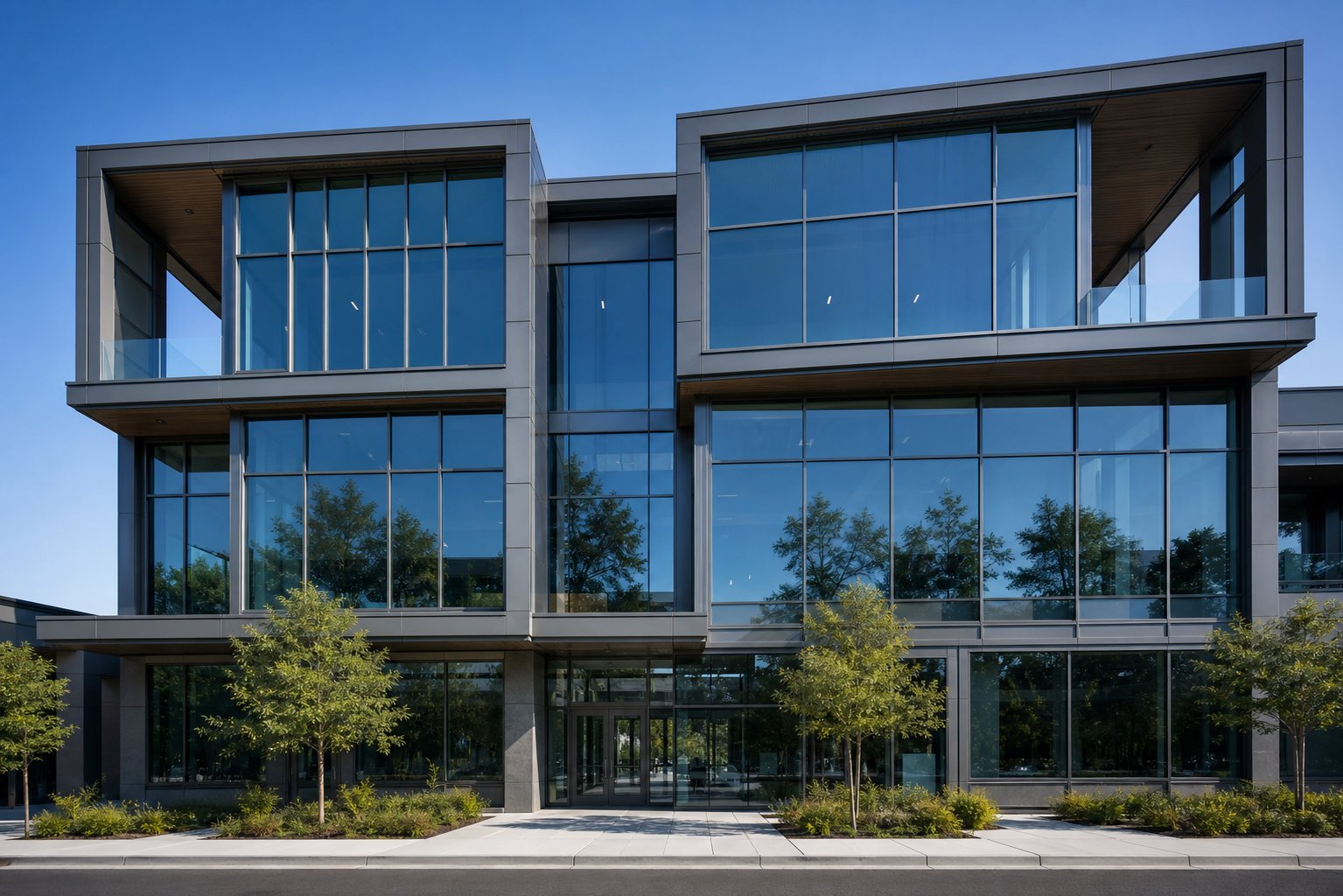
Commercial vs Residential Pricing Differences
Specification requirements for a five-storey office tower and a single-storey family home share almost nothing in common — yet both use aluminium framing. The divergence in engineering, compliance, and scale creates a pricing gap that catches many buyers off guard, particularly developers working across both sectors for the first time.
Why Commercial Aluminium Costs More Per Unit
Commercial aluminium windows are built to handle conditions that residential products never face. Frame profiles run deeper — typically 65 mm to 100 mm compared to 45–55 mm for residential — because they must span larger openings and resist higher wind loads at elevation. A comparison of residential and commercial systems highlights that commercial frames use thicker wall sections (1.6–2.0 mm versus 1.2–1.4 mm for residential), adding both material weight and extrusion cost per linear metre.
Compliance drives costs further. Commercial projects in Australia must satisfy stricter NCC requirements for fire rating, acoustic separation, and structural performance under wind loading. Glazing panels are larger and heavier, often requiring toughened or laminated configurations to meet AS 1288 safety standards for overhead or high-level installations. Hardware must endure high-cycle use — think thousands of daily operations in a hotel corridor versus a few openings per day in a bedroom. Commercial aluminum exterior doors face similar demands, with heavier tracks, reinforced thresholds, and access-compliant hardware adding to the bill.
Project-specific engineering is another cost layer rarely seen in residential work. Commercial aluminium windows often require bespoke structural calculations, shop drawings, and certification documentation before fabrication even begins. That engineering overhead gets absorbed into the per-unit price.
Residential Pricing Advantages and Limitations
Residential aluminum windows benefit from standardisation. Manufacturers produce common sizes in volume, keeping tooling costs low and lead times short. Lighter profiles use less raw material, simpler hardware suffices for low-cycle domestic use, and compliance documentation is less onerous for Class 1 buildings. These efficiencies make metal windows residential projects significantly more affordable on a per-opening basis.
The trade-off is capability. Residential systems typically max out at around 2.5–3 m spans before requiring mullions or structural support. They’re not engineered for the acoustic separation, fire compartmentation, or deflection limits that commercial buildings demand. Attempting to use residential-grade products in commercial applications risks non-compliance with AS 2047 performance classifications — and potential failure under real-world loading.
Volume pricing partially offsets the higher per-unit cost of commercial systems. Orders of 50–100 units can attract 15–25% discounts over single-unit retail, while container-scale orders (200+ units) may reduce costs by 35–45%. Residential projects rarely reach these volumes, so the per-unit savings available to commercial buyers help narrow the gap in practice.
| Dimension | Residential | Commercial |
|---|---|---|
| Typical frame depth | 45–55 mm | 65–100 mm |
| Wall thickness | 1.2–1.4 mm | 1.6–2.0 mm |
| Glazing requirement | Standard double glazing (AS 1288 for safety areas) | Toughened/laminated, acoustic-rated, fire-rated where required |
| Compliance documentation | Standard AS 2047 test reports | Project-specific engineering, shop drawings, certification |
| Hardware cycle rating | 10,000–25,000 cycles | 50,000–100,000+ cycles |
| Typical volume discounts | Minimal (small orders) | 15–45% depending on scale |
| Indicative price premium | Baseline | 30–60% above residential equivalent |
For mixed-use developments — apartments above retail, or a hotel with residential wings — a hybrid approach often makes sense. Commercial aluminium systems handle the podium, lobby, and public-facing facades where performance demands are highest, while residential-grade products serve the private units above. This strategy balances cost control with compliance, though it requires careful coordination between the window supplier and the building certifier to ensure each system meets its respective performance classification.
Supply-Only vs Fully Installed Costs Explained
Every price range quoted earlier in this guide carries an implicit question: does that figure include someone fitting the product into your wall, or just delivering it to site? The distinction between supply-only and supply-and-install pricing fundamentally changes what a quote means — and mixing the two up is the fastest way to blow a renovation budget.
Comparing a supply-only quote against a fully installed quote is the single most common mistake buyers make when evaluating aluminium window and door pricing. The two figures can differ by 30–50%, and they’re not interchangeable.
What Supply-Only Pricing Includes
A supply-only price from aluminium window suppliers covers the finished product ready for installation: the fabricated frame, glazing (cut and sealed into the sash or panel), hardware (locks, handles, rollers or stays), weatherseals, and any insect screens specified. It arrives on site as a complete unit — you just need someone qualified to fit it.
This pricing model is standard when you’re working with a builder or contractor who manages their own installation crew. Aluminium window manufacturers and aluminium door suppliers quote supply-only because they’re selling to the trade, not to the end homeowner. If you’re browsing aluminium windows for sale through trade outlets or direct-from-factory channels, you’re almost certainly looking at supply-only figures. The same applies to most aluminium window supplies purchased through wholesale distributors — the product cost is separated from the labour cost by design.
Supply-only makes sense when your builder already has a glazier or window installer on their team. It gives you flexibility to shop around for the best product price independently of who does the fitting. But it also means you need to budget separately for everything that happens after the product arrives on site.
Installation Cost Variables by Product Type
Installation is not a flat fee. What it costs to fit a 600 x 600 mm fixed window into an existing timber frame bears no resemblance to what’s involved in creating a new 4-metre structural opening for a bi-fold door. The labour component scales with complexity, access difficulty, and the amount of ancillary work required.
Typical installation cost components include:
- Removal of existing frames — $150 to $400 per opening depending on material and size
- Structural work — new lintels, header beams, or opening enlargement ($800 to $3,000+)
- Fitting and fixing — securing the new frame, shimming, and anchoring ($200 to $600 per standard window; $500 to $1,500 per door)
- Flashing and waterproofing — critical for weather integrity ($100 to $300 per opening)
- Making good — plastering, rendering, or cladding around the new frame ($150 to $500 per opening)
- Scaffolding or elevated access — required for upper-storey work ($500 to $2,000 per elevation)
- Waste removal — disposing of old frames and packaging ($100 to $300 per project)
For a straightforward like-for-like replacement — same opening size, no structural changes — installation typically adds $250 to $500 per window and $400 to $800 per standard door. A bi-fold door installation into a new opening, however, can add $1,500 to $3,500 on top of the supply-only price once you factor in structural steel, building certification, and the precision alignment these systems demand.
When you’re getting quotes from aluminium door suppliers who offer both supply-only and supply-and-install options, always ask for the breakdown. A reputable aluminum window supplier will itemise materials, labour, and any additional works separately — as industry guidance from hipages recommends. That transparency lets you compare the product cost across multiple suppliers while understanding exactly what the installation component covers. Without that separation, you’re comparing apples to oranges — and potentially choosing a cheaper-looking quote that excludes work you’ll need to pay for regardless.
Geography plays into installation costs too. Labour rates in Sydney and Melbourne run 15–25% higher than regional centres, while access constraints in inner-city terraces or multi-storey apartments add complexity that suburban single-storey homes simply don’t face. These regional variables shape the fully installed price just as much as the product itself — a dynamic worth exploring across different Australian and international markets.
How Prices Vary Between Australia, UK, and US
Labour rates, regulatory frameworks, and local manufacturing ecosystems differ so sharply between countries that an aluminium window costing $700 in one market might sit at $1,200 in another — even when the product specification is nearly identical. Geography doesn’t just influence price; it reshapes what you’re actually buying.
Australian Market Pricing and Compliance Costs
Australian aluminium window and door prices reflect a combination of local manufacturing, strict compliance requirements, and relatively high labour costs. Every product must meet AS 2047 for structural performance and weatherproofing, while glazing must satisfy AS 1288 safety standards. In bushfire-prone areas — which cover significant portions of NSW, Victoria, South Australia, and Western Australia — BAL ratings (from BAL 12.5 through to BAL FZ) mandate specific glazing types and frame modifications that add $300 to $1,500 per opening depending on the rating level.
Urban versus regional pricing creates another layer. Searching for aluminium windows near me in Sydney or Melbourne typically returns quotes 15–25% higher than equivalent products in regional centres like Ballarat, Toowoomba, or Bunbury. Higher commercial rents, longer lead times due to demand, and elevated installation labour rates in capital cities all contribute. Coastal locations add corrosion-resistance requirements — marine-grade powder coating and stainless steel hardware — that inland properties can skip entirely.
How UK and US Markets Compare
The UK market operates under different competitive dynamics. Aluminium competes directly with uPVC, which dominates the residential replacement sector on price. This competition keeps aluminium pricing sharper than it might otherwise be, though windows in aluminium still command a 30–50% premium over equivalent uPVC products due to slimmer sightlines and superior longevity. UK Building Regulations (Approved Document L) impose strict thermal performance requirements, making thermally broken frames and double glazing the minimum specification rather than an upgrade. A standard aluminum window in the UK market starts around £400–£800 supply-only for common sizes.
In the US, pricing varies dramatically by region. Hurricane-zone requirements along the Gulf Coast and Florida mandate impact-rated glazing and reinforced frames, adding 40–60% over standard specifications. Energy code compliance (IECC requirements vary by climate zone) pushes specifications higher in northern states. Homeowners searching for aluminum replacement windows or aluminum windows near me in markets like Phoenix will find significantly different pricing than those in Chicago or Miami — climate demands and local labour rates create wide regional spreads. A standard aluminum window in the US ranges from USD $300 to $800 depending on specification and location.
| Product | Australia (AUD) | United Kingdom (GBP) | United States (USD) |
|---|---|---|---|
| Standard sliding window (1200 x 1000 mm, supply-only) | $400–$900 | £400–£800 | $300–$700 |
| 4-panel bi-fold door (3.0–3.6 m, supply-only) | $6,000–$10,000 | £3,500–£7,000 | $4,000–$8,500 |
| Typical installation labour (per window) | $250–$500 | £150–£350 | $200–$450 |
| Key compliance cost driver | AS 2047 + BAL ratings | Document L thermal reqs | Hurricane/impact rating (coastal) |
Direct currency conversion between these figures is misleading. A £600 aluminium window doesn’t simply equal $1,150 AUD in real market terms — Australian manufacturing costs, local compliance testing, and higher installation labour mean the domestic product carries costs that no exchange rate calculation captures. The same logic applies when comparing US pricing: lower per-unit costs often reflect thinner profiles, less stringent thermal requirements in mild climate zones, and lower trade labour rates rather than a genuinely cheaper product.
For Australian buyers, the practical takeaway is straightforward: local pricing reflects local conditions, and offshore quotes rarely translate into genuine savings once you factor in freight, compliance certification, warranty limitations, and the risk of products that don’t meet NCC requirements. What matters more than international benchmarks is understanding which tier of product — budget, mid-range, or premium — delivers the right balance of performance and value for your specific project.
Budget to Premium Tiers and What You Get
Pricing tiers aren’t just about spending more — they represent distinct levels of engineering, material quality, and long-term performance. A set of cheap aluminium windows might look similar to a premium product in a photograph, but the differences become obvious within a few years of daily use. Knowing exactly what each tier delivers helps you match your spend to your project’s actual demands rather than over-capitalising or cutting corners that cost more later.
- Budget tier ($400–$900 per window; $1,500–$3,500 per door) — Thinner frame profiles (1.2–1.4 mm wall thickness), standard powder coat in limited colours (white, silver, surfmist), basic single-point locks, standard rollers or friction stays, and single glazing or entry-level double glazing. No thermal break. Suitable for garages, investment properties, or mild-climate projects where energy performance isn’t critical. These products meet minimum AS 2047 requirements but offer little beyond compliance.
- Mid-range tier ($900–$1,800 per window; $3,500–$8,000 per door) — Improved profiles (1.4–1.6 mm) with optional or standard thermal breaks, quality powder coating in popular colours like black aluminum windows or monument, multi-point locking, EPDM weatherseals, and double glazing with low-E coating. This tier suits most owner-occupied homes and delivers solid WERS ratings without the premium price tag. Aluminium joinery at this level balances durability with reasonable cost — the sweet spot for renovations and mid-range new builds.
- Premium and architectural-grade tier ($1,800–$3,500+ per window; $8,000–$15,000+ per door) — Slimline aluminium windows with narrow sightlines, true thermally broken profiles (polyamide strip), high-performance double or triple glazing with argon fill, marine-grade powder coating (80+ microns), and European-brand hardware rated to 50,000+ cycles. Custom aluminum windows and custom aluminum doors in this bracket offer bespoke sizing, specialty finishes like bronze aluminum windows or woodgrain textures, and aluminum clad windows for heritage applications. This is where architectural intent meets engineering precision.
Budget Aluminium Products and Their Trade-Offs
Budget products serve a purpose, but the trade-offs are real. Thinner profiles flex more under wind load, basic seals degrade faster in UV-heavy Australian conditions, and single-point locks offer minimal security. Hardware typically lasts 5–8 years before handles stiffen or rollers wear. For a rental property or secondary dwelling, that lifespan might be perfectly acceptable. For your family home where comfort and energy efficiency matter daily, budget products create ongoing costs through higher heating and cooling bills and earlier replacement cycles.
Mid-Range Value and What It Delivers
The mid-range tier represents the strongest value proposition for most Australian residential projects. Thermal breaks reduce heat transfer through the frame by up to 40%, multi-point locks provide genuine security, and quality powder coating resists chalking and fading for 15–20 years. You get meaningful performance improvements over budget without the premium pricing that architectural-grade systems command. Most homeowners find this tier delivers everything they need — good energy ratings, reliable operation, and a finish that holds up to Australian conditions.
Premium and Architectural-Grade Options
Premium systems exist for projects where performance, aesthetics, or both must be exceptional. Slimline aluminium windows maximise glass area with profiles as narrow as 35–45 mm, creating the seamless indoor-outdoor connection that defines contemporary Australian architecture. Thermally broken frames paired with high-performance glazing achieve U-values below 2.0 W/m²K — critical for NatHERS compliance in cooler climate zones. Marine-grade finishes handle coastal salt exposure without degradation for decades.
For builders and architects exploring premium and architectural-grade aluminium systems for Australian projects, suppliers like MEICHEN offer complete product ecosystems covering windows, doors, facade systems, and louvres. Sourcing cohesive solutions from a single provider simplifies specification, ensures consistent finish quality across every opening, and streamlines project coordination — particularly valuable on larger builds where dozens of different product types need to work together visually and technically.
Choosing your tier isn’t purely a budget decision. A coastal home in Noosa demands marine-grade finishes regardless of budget preference. A passive house design requires premium thermal performance by definition. Match the tier to your project’s non-negotiable requirements first, then optimise within that bracket — rather than starting with a dollar figure and hoping the specification follows.
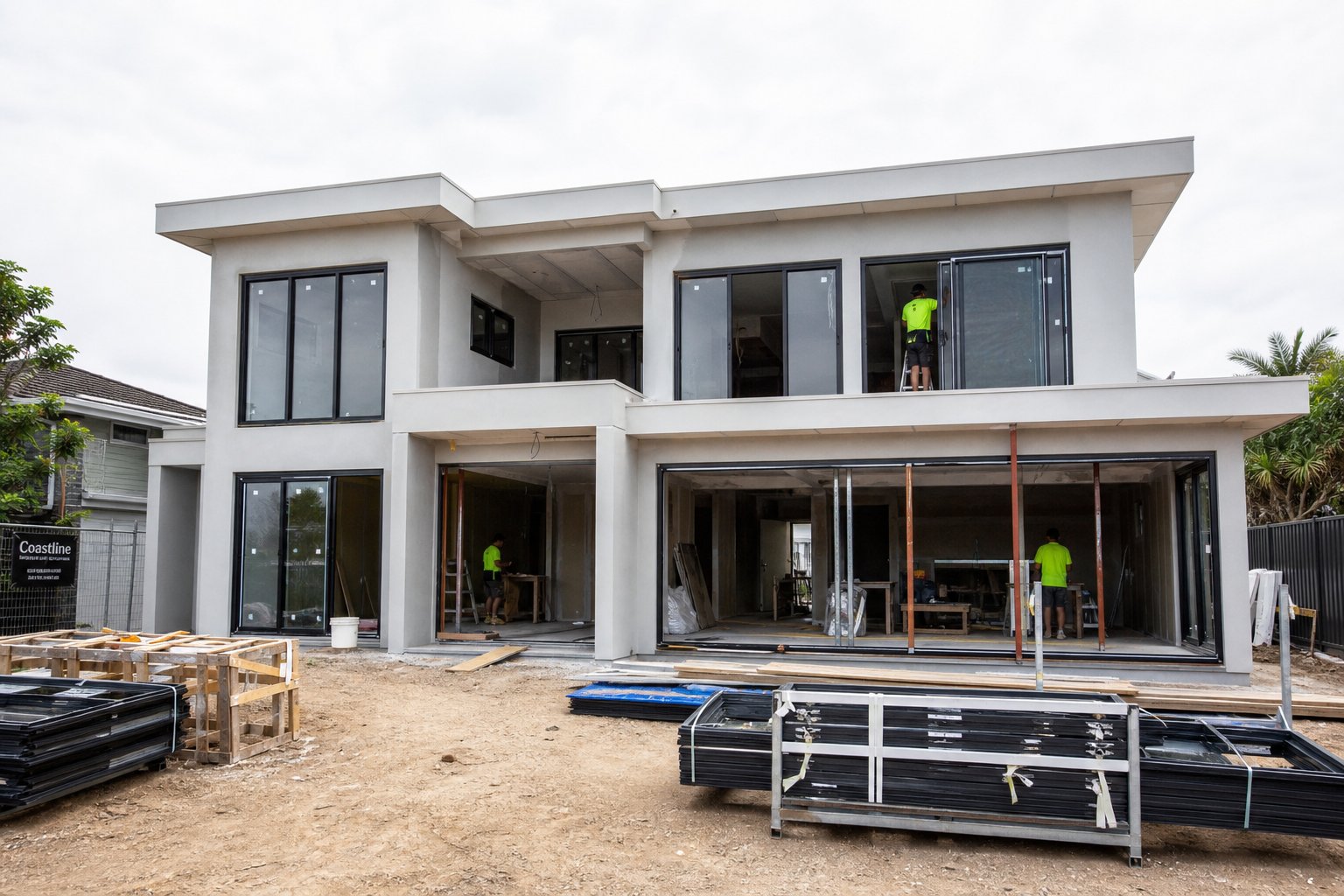
Estimating Your Total Project Cost for Aluminium Doors and Windows
Individual unit prices only tell part of the story. What most people actually need is a realistic total figure for their entire scope — whether that’s three windows in a bathroom renovation or a full set of aluminium windows doors across a new build. Scaling from single-unit pricing to whole-project budgeting introduces dynamics that work in your favour: volume efficiencies, reduced mobilisation costs, and package pricing that rewards consolidation.
Small Project Estimates for Renovations
A small renovation — replacing one to three windows or adding a single door — carries the highest per-unit cost. Installers still need to mobilise equipment, travel to site, and set up for what might be half a day’s work. That fixed overhead gets spread across fewer units, inflating the per-opening installed price by 10–20% compared to larger jobs. Expect to pay full retail on product pricing too, since orders of one or two units don’t trigger manufacturer discounts.
For a typical small project (say, two sliding windows and one awning window in mid-range specification), budget $3,500 to $7,500 fully installed. If you’re swapping a single sliding door, add $2,500 to $6,000 depending on size and whether structural work is needed. These figures assume like-for-like replacement into existing openings — new openings push costs higher due to lintel installation and making good.
Medium and Whole-House Project Budgeting
Once a project reaches five to eight windows plus a door or two, economies of scale start working. Manufacturers offer 5–15% discounts on orders of six or more units, and installers can schedule a full week on site rather than multiple short visits. The mobilisation cost — scaffolding, skip bins, travel — gets divided across more openings, dropping the per-unit installed premium noticeably.
Whole-house projects (10–20 windows plus multiple doors) amplify these savings further. A complete new-build package of aluminium doors windows in mid-range specification typically runs $25,000 to $55,000 fully installed, while premium specifications push toward $60,000 to $120,000 or more for larger homes with bi-fold doors and expansive glazing. The per-unit cost at this scale can sit 15–25% below what you’d pay ordering the same products individually.
Combining aluminum doors & windows from a single supplier unlocks additional savings beyond volume discounts. Unified logistics means one delivery, one site coordination effort, and consistent lead times. Colour matching is guaranteed across every opening. And warranty claims — should they arise — go through a single point of contact rather than multiple manufacturers pointing fingers at each other.
Some buyers consider mixing vinyl windows aluminum doors to reduce costs on less visible openings while keeping aluminium where aesthetics matter most. It’s a valid strategy for budget-conscious projects, though it introduces complexity in coordinating two different suppliers, two different installation methods, and potentially mismatched colour profiles.
| Project Size | Typical Product Mix | Supply-Only (AUD) | Fully Installed (AUD) | Per-Unit Savings vs Single Purchase |
|---|---|---|---|---|
| Small (1–3 openings) | 2–3 windows or 1 window + 1 door | $1,500–$5,000 | $3,000–$8,500 | Nil — full retail pricing |
| Medium (5–8 openings) | 5–7 windows + 1 sliding door | $5,500–$15,000 | $10,000–$25,000 | 5–15% discount typical |
| Large (10–20+ openings) | 12–18 windows + 2–3 doors (incl. bi-fold) | $18,000–$55,000 | $30,000–$90,000 | 15–25% discount achievable |
| Whole-house premium | 15–25 windows + multiple doors + louvres | $40,000–$80,000 | $60,000–$120,000+ | 20–30% through package pricing |
For builders, developers, and procurement teams planning medium to large projects in Australia, working with integrated suppliers who offer aluminium windows, doors, facade systems, balustrades, and louvres under one roof can streamline procurement significantly. Suppliers like MEICHEN cover the full product spectrum — from standard residential alum windows and doors through to commercial facade systems — allowing project teams to consolidate ordering, reduce coordination overhead, and potentially negotiate stronger package pricing compared to sourcing each product category from separate manufacturers.
Whatever your project scale, the budgeting principle stays the same: define your product mix first, confirm the tier that meets your performance requirements, then use the volume of your order as leverage. Even a medium-sized renovation has enough scope to negotiate — and the savings compound when metal frame windows and doors all come from a single, coordinated source.
Frequently Asked Questions About Aluminium Windows and Doors Prices
1. How much do aluminium windows cost in Australia?
Aluminium window prices in Australia range from $300 to $2,500 or more supply-only, depending on the type and specification. Sliding windows start around $400 to $900 for standard sizes, casement and awning styles run $600 to $2,500, and fixed windows sit between $300 and $2,200. Fully installed costs add $250 to $500 per opening for straightforward replacements. Thermally broken frames, low-E double glazing, and custom powder coat colours push pricing toward the upper end of each range.
2. Are aluminium windows more expensive than uPVC?
In Australia, aluminium windows typically cost 20-40% more than uPVC equivalents for comparable sizes. However, aluminium offers slimmer sightlines, superior structural strength for larger openings, better longevity in harsh UV conditions, and a longer lifespan of 30-40 years versus 20-25 years for uPVC. When factored over the product’s lifetime, aluminium often delivers stronger value — particularly in Australian conditions where UV degradation affects plastic frames more aggressively than in cooler climates like the UK.
3. How much does a bi-fold door cost in aluminium?
Aluminium bi-fold doors are among the most expensive window and door products due to their engineering complexity. In Australia, a 3-panel bi-fold starts at $4,500 to $7,500 supply-only, a 4-panel system runs $6,000 to $10,000, and large 5-6 panel configurations reach $9,000 to $15,000 before installation. Installation adds $1,500 to $3,500 depending on whether the opening is pre-prepared or requires structural work such as new lintels. Each additional panel increases cost through extra hinges, rollers, seals, and fabrication time.
4. What is the difference between supply-only and installed pricing for aluminium windows?
Supply-only pricing covers the finished product — fabricated frame, glazing, hardware, weatherseals, and screens — delivered to site ready for fitting. Installed pricing adds labour for removal of old frames, fitting and fixing, flashing, waterproofing, making good surrounding finishes, and potentially scaffolding. The difference typically ranges from 30-50% of the supply-only cost. For a standard window replacement, installation adds $250 to $500 per opening, while a bi-fold door installation into a new structural opening can add $1,500 to $3,500 on top of the product price.
5. How can I reduce the cost of aluminium windows and doors for a whole-house project?
Whole-house projects benefit from volume pricing that single-unit purchases cannot access. Orders of six or more units typically attract 5-15% manufacturer discounts, while large projects of 10-20 openings can achieve 15-25% savings. Sourcing all aluminium windows, doors, and louvres from a single integrated supplier — such as MEICHEN in Australia — reduces coordination overhead, guarantees colour matching, and strengthens your negotiating position for package pricing. Choosing standard sizes over custom dimensions, selecting popular powder coat colours, and combining your order into a single delivery also help keep costs down.
More Window & Door Guides