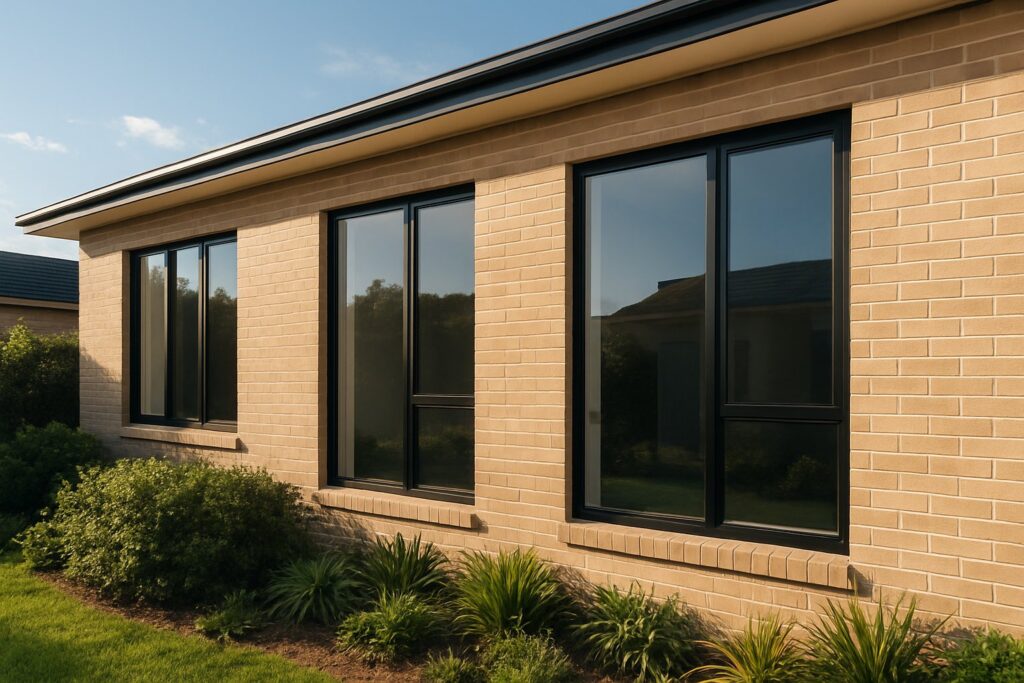
Why Aluminium Windows Are an Ideal Fit for Bedrooms
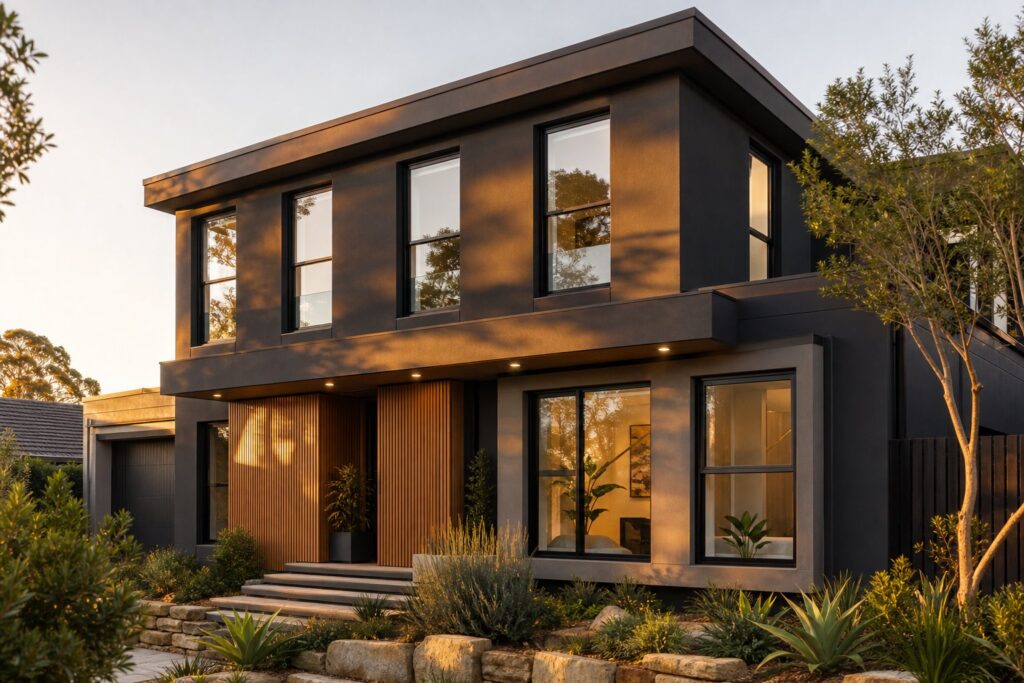
Aluminium windows for bedroom spaces are framed systems built from extruded aluminium alloy profiles, fitted with single, double, or triple-glazed glass units and sealed with weather-resistant gaskets. They come in casement, sliding, awning, and fixed configurations — each offering a different balance of ventilation, light, and security. But what makes the bedroom context so different from, say, a kitchen splashback window or an oversized living room picture frame?
The answer sits in how you actually use the room. A bedroom demands quiet. It demands darkness at midnight and soft morning light at dawn. It needs steady temperatures through winter and summer, reliable privacy from neighbours, and — in most Australian jurisdictions — a compliant emergency egress opening. No other room in the house stacks that many performance requirements onto a single opening.
What Makes Aluminium a Strong Contender for Bedroom Windows
Aluminium’s structural density is the trait that sets it apart. Because the metal is inherently strong, manufacturers can produce remarkably slim frame profiles — often as narrow as 45 mm — that hold heavy glazing securely without the bulk of timber or uPVC. Less frame means more glass, and more glass means greater natural light flooding into your sleeping space. That slim sightline is a hallmark of modern aluminium window design.
Beyond aesthetics, an aluminium window resists corrosion, shrugs off UV degradation, and maintains dimensional stability regardless of humidity swings. Powder-coated finishes bake colour directly onto the metal, so frames won’t peel, flake, or require repainting for decades. For coastal Australian homes exposed to salt air, windows in aluminium are a particularly practical choice — sometimes referred to simply as alu windows in industry shorthand.
Why Bedroom Windows Deserve a Different Approach
Kitchen windows prioritise ventilation near cooktops and resistance to steam. Living room glazing chases panoramic views and entertaining flow. Bedrooms, though, revolve around comfort, rest, and personal safety — priorities that shift the entire selection criteria toward acoustic performance, thermal consistency, light management, and egress compliance.
Bedrooms are the one room where window performance directly affects health and rest. Poor insulation disrupts sleep, inadequate noise reduction raises stress, and the wrong glass choice turns sunrise into an unwanted alarm clock.
That distinction shapes every recommendation in this guide. Rather than treating aluminium windows as a general-purpose product, each section ahead evaluates them through a bedroom-first lens — starting with how aluminium stacks up against timber, vinyl, and composite alternatives on the criteria that matter most where you sleep.
Aluminium vs. Other Frame Materials for Bedroom Windows
Choosing a frame material for a bedroom window is not the same exercise as choosing one for a garage or laundry. The criteria shift toward sleep-affecting factors — thermal stability through the night, noise filtering, condensation risk near bedding, maintenance convenience, and long-term durability that avoids disruptive mid-life replacements. Aluminium, timber, uPVC, and aluminium-clad wood each bring genuine strengths to this conversation, but they also carry trade-offs that only become obvious when you evaluate them through a bedroom lens.
Aluminium vs. Timber and Vinyl for Bedroom Use
A side-by-side comparison helps cut through marketing claims. The table below measures each material against the performance criteria that matter most in a sleeping environment — not a shopfront, not an office tower, but the room where comfort and quiet are non-negotiable.
| Criteria | Aluminium (Thermally Broken) | Timber | uPVC / Vinyl | Aluminium-Clad Wood |
|---|---|---|---|---|
| Thermal Conductivity (Frame R-value) | ~R-0.50 (thermally broken); ~R-0.15 without thermal break | ~R-0.77 — highest natural insulation | ~R-0.69 — strong inherent insulation | Similar to timber interior; aluminium exterior adds weather resistance |
| Frame Slimness & Glass Area | Slimmest profiles (as narrow as 45 mm); maximises glass and light | Bulkier profiles reduce visible glass area | Wider frames (50–75 mm) needed for structural strength | Moderate — thicker than pure aluminium, slimmer than solid timber |
| Maintenance Frequency | Minimal — periodic cleaning and hardware lubrication | High — refinishing every 3–7 years; rot and pest inspections | Low — wipe-clean surfaces; no repainting | Moderate — timber interior needs attention; exterior is low-maintenance |
| Lifespan | 40–60 years | 30–50 years (with diligent maintenance) | 25–40 years | 30–50 years (depends on timber species and climate) |
| Condensation Risk | Low with thermal break; moderate to high without | Low — timber’s natural insulation keeps frame warm | Low — multi-chamber profiles resist cold transfer | Low on interior timber surface; exterior aluminium managed by thermal separation |
| Colour & Finish Options | Extensive — 200+ powder-coat colours; consistent for decades | Unlimited paint/stain options but requires recoating | Limited factory colours; can yellow or discolour with UV exposure over time | Timber stain/paint inside; powder-coated aluminium outside |
| Cost Range (Indicative, AUD) | Mid to premium — varies with glazing and thermal break specification | Mid to high — species and craftsmanship drive price | Budget to mid — most affordable for standard sizes | Premium — combines material and labour costs of both components |
A few things jump out. Timber leads on raw thermal resistance, and uPVC follows closely — both outperform a standard aluminium frame on insulation alone. That is a fact worth acknowledging rather than glossing over. Data from Comfort Glaze’s thermal efficiency guide shows standard aluminium sitting at roughly R-0.15 with single glazing, climbing to about R-0.50 once a thermal break and high-performance double-glazed unit are added. Timber, by contrast, reaches around R-0.77 under the same glazing conditions. The gap is real — but it is also far narrower than it was a decade ago.
For homeowners considering aluminum clad windows or wood clad aluminum windows, the hybrid approach can be appealing. These aluminum clad wood windows pair a timber interior — warm to the touch and naturally insulating — with an aluminium exterior shell that handles rain, UV, and salt air. The trade-off is higher upfront cost and added complexity during installation and long-term maintenance of the interior timber element.
Understanding Aluminium’s Strengths and Trade-Offs
Durability is where aluminium pulls ahead decisively. Timber rots. Vinyl warps in sustained heat and can become brittle after prolonged UV exposure. Aluminium window frames, on the other hand, maintain their shape and structural integrity across a remarkably wide temperature range — a trait that matters in Australia, where a single bedroom wall might absorb blazing summer sun and near-freezing winter mornings across the same year.
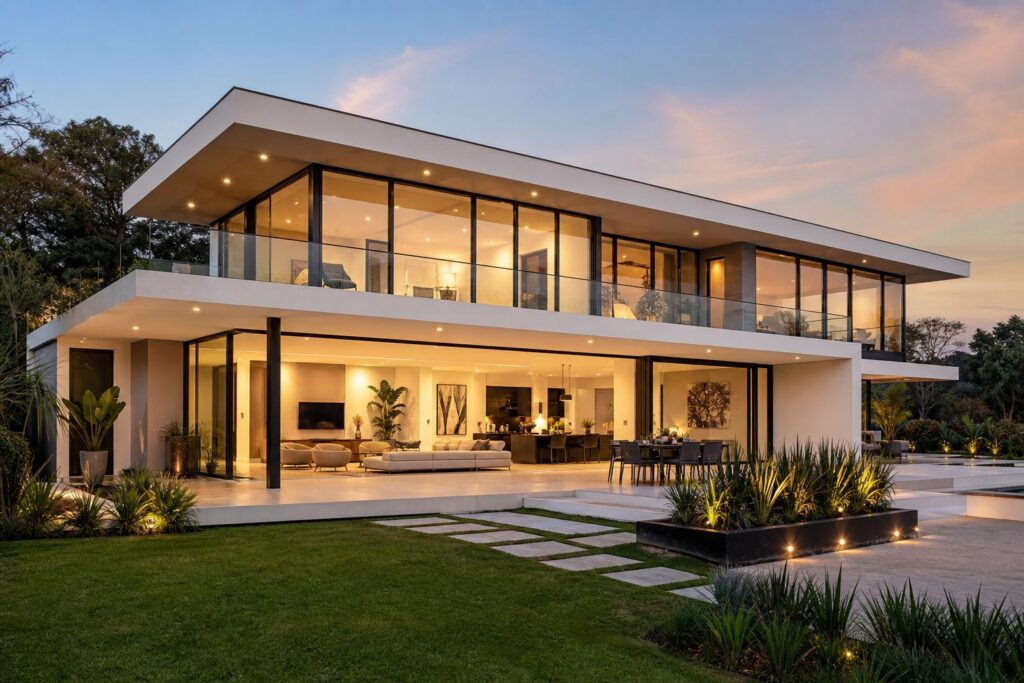
That structural rigidity also enables larger spans without mid-frame reinforcement. A metal window built from aluminium can support floor-to-ceiling glazing on slender profiles that timber and uPVC simply cannot match at the same dimensions. For a bedroom, this translates to more daylight pouring in during waking hours and slimmer frame lines that feel less obstructive against a relaxed interior aesthetic.
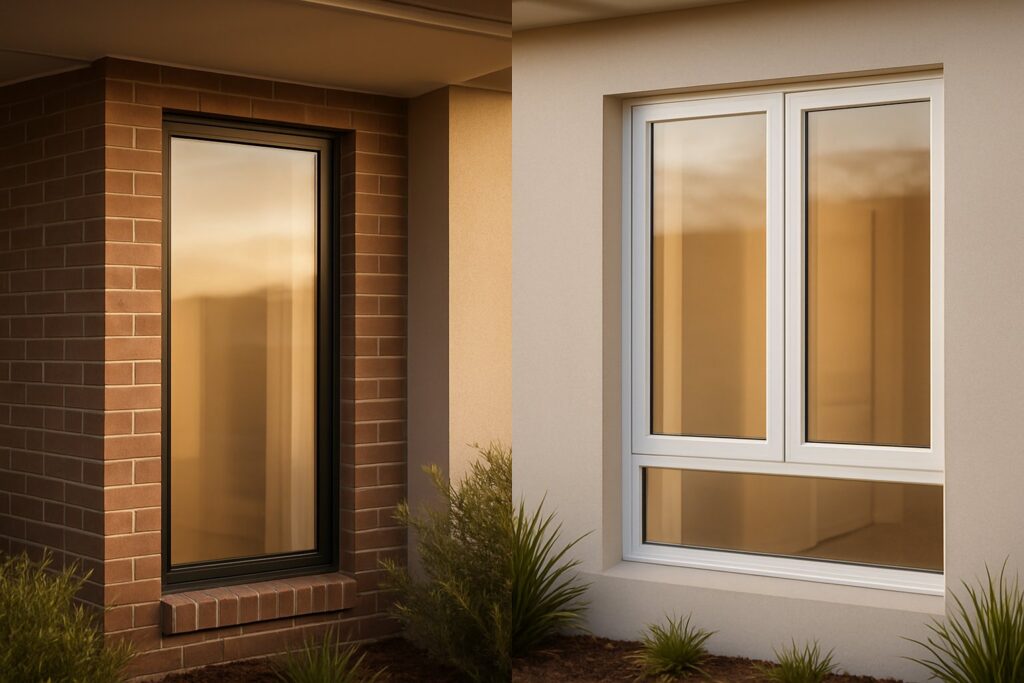
Powder-coated finishes add another practical advantage. Unlike painted timber, which chips and weathers, or vinyl that offers limited factory colours, aluminium accepts a vast palette of baked-on finishes — matte black, warm bronze, Surfmist, Monument — that hold their colour without fading or flaking. In a bedroom, where the window frame sits at eye level from the bed, that visual consistency matters more than in a utility space tucked behind cabinetry.
Coastal and humid environments amplify these benefits further. Aluminium resists corrosion naturally, and quality powder coating extends that protection to 25 years or more even in aggressive salt-air zones. Aluminum vinyl windows and uPVC alternatives handle humidity reasonably well, but they lack aluminium’s rigidity in large openings and can expand or contract noticeably with temperature swings — a particular concern in north-facing Australian bedrooms that absorb significant solar heat.
The Trade-Offs, Honestly
Aluminium’s biggest weakness is thermal conductivity. Metal conducts heat roughly 200 times faster than vinyl, which means that without intervention, aluminum frames transfer warmth out of your bedroom in winter and invite radiant heat in during summer. In cold climates — think Canberra winters or Tasmanian highlands — untreated aluminium can chill enough for condensation to form on interior frame surfaces. Near a bed, that moisture risks mould growth, musty air, and disrupted sleep.
Thermally broken aluminium addresses this problem directly. A strip of insulating polyamide is inserted between the interior and exterior aluminium sections, severing the thermal bridge and dramatically reducing heat conduction. Reference data from Rhea Windows’ material comparison shows thermally broken aluminium achieving U-values between 0.8 and 2.0 W/(m²K) — a range that overlaps comfortably with timber and uPVC performance. The technology has matured to the point where specifying “thermally broken” is no longer a premium add-on; it is the baseline for any bedroom-grade aluminium installation in Australia.
Cost is the other consideration. Aluminium windows typically sit above uPVC on a per-opening basis, and metal clad windows that combine aluminium with timber push pricing higher still. The counterargument — and it is a strong one — is lifecycle value. An aluminium frame that lasts 40 to 60 years with virtually no maintenance avoids the cumulative cost of timber refinishing, vinyl replacements, and the disruption of pulling a bedroom apart mid-life to swap out deteriorating frames. For a room where renovation interruption is uniquely inconvenient, that long-term calculus deserves serious weight.
Aluminium’s material story, then, is not one of universal superiority — it is one of strategic fit. Where slim profiles, longevity, colour stability, and coastal resilience align with a homeowner’s bedroom priorities, thermally broken aluminium earns its place. Where budget is tight and thermal performance is the sole priority, uPVC remains a credible contender. The right choice depends on which trade-offs your bedroom can absorb — and which it cannot.
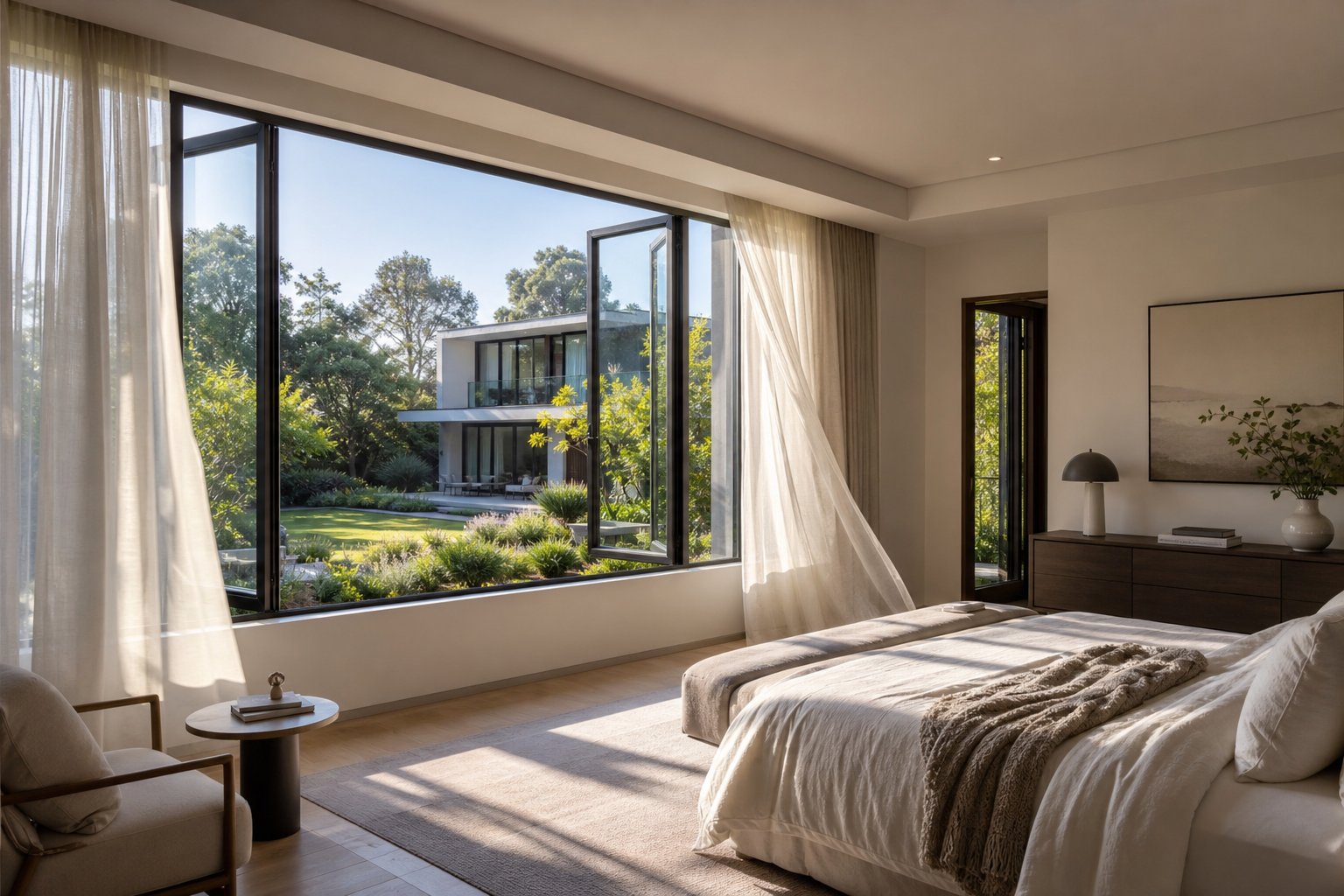
Best Aluminium Window Styles for Every Bedroom Layout
Material performance only tells half the story. How a window opens — or whether it opens at all — shapes ventilation, emergency escape capability, furniture placement, and the overall feel of your bedroom. Aluminium’s structural strength gives it an edge here because slim, rigid profiles support a wider variety of operating styles than bulkier frame materials. The question is which configuration matches your room.
Bedroom layouts differ wildly. A compact apartment bedroom facing a shared walkway has constraints that a master suite overlooking a private garden simply does not. Orientation matters too — an east-facing window cops direct sunrise, while a south-facing opening in Australia collects winter warmth. Each window style addresses these variables differently, so understanding the options prevents costly mismatches.
Casement and Awning Windows for Maximum Ventilation
If natural airflow is a priority for comfortable sleep, aluminium casement windows deserve first consideration. A casement sash is hinged on one side and swings outward, catching passing breezes and directing them into the room. Because the entire sash opens — not just half, as with a slider — you get full-aperture ventilation from a relatively compact frame. That outward swing also presses the sash firmly against weatherseals when closed, creating a tight barrier against draughts and external noise. For bedrooms on upper storeys or facing a garden, an aluminium casement window delivers the best ratio of airflow to frame size.
Aluminum casement windows pair especially well with bedrooms that need cross-ventilation. Position one on each side of the room, and you create a natural breeze path that can reduce reliance on air conditioning during mild Australian evenings. The operating hardware — typically a friction stay or chain winder — mounts flush against the aluminium profile, keeping sightlines clean and avoiding the visual clutter of bulky cranks.
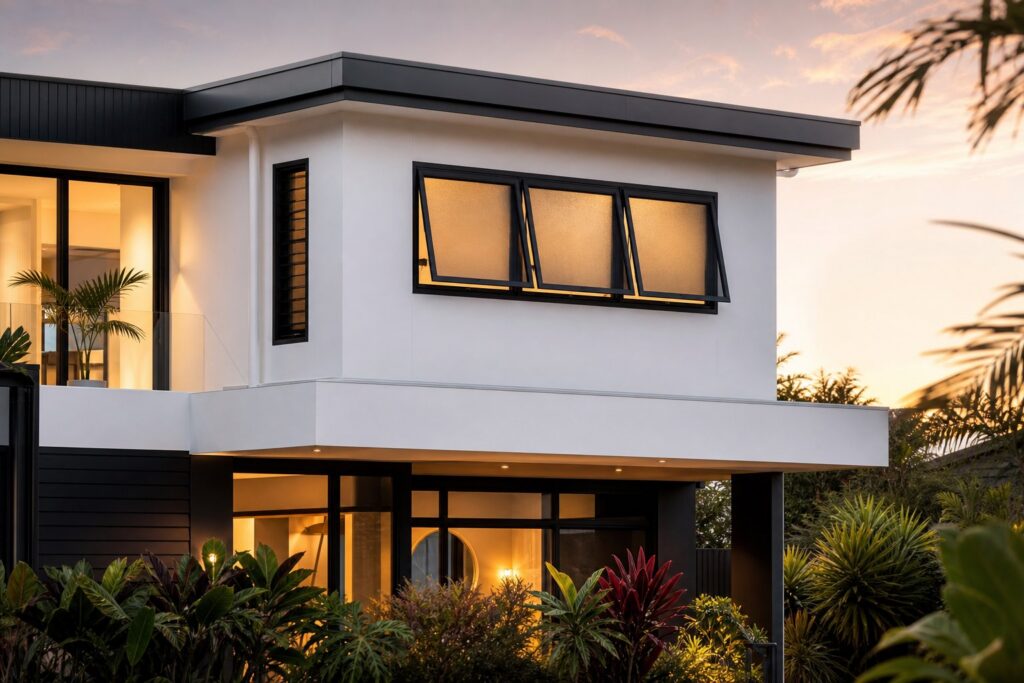
Awning windows work on a related principle but hinge at the top, swinging the sash outward from the bottom. This geometry creates a canopy effect: rain rolls off the angled glass rather than entering the room, so you can leave an awning window cracked open during a summer shower without worrying about water on the carpet or bedside table. That rain-protected ventilation makes awning configurations a strong choice for bedrooms in subtropical Queensland or coastal NSW where afternoon storms roll in quickly.
Placement flexibility is the other advantage. Because awning sashes project outward at the bottom rather than sweeping a wide arc like a casement, they sit comfortably above bed headboards, dressers, or desks — spots where a casement swing would collide with furniture. Many designers combine a fixed aluminium pane at eye level with a smaller awning unit above or below, blending unobstructed views with practical ventilation exactly where you need it.
Sliding and Single Hung Windows for Space-Saving Bedrooms
Not every bedroom has the luxury of exterior clearance. Rooms facing narrow side passages, shared balconies, or pedestrian walkways cannot accommodate sashes that project outward. Sliding aluminium windows solve this neatly. The operable panel glides horizontally along a track, tucking behind the fixed panel without protruding into exterior or interior space. For compact bedrooms — think apartment living in Sydney or Melbourne — this space-saving operation is often the deciding factor.
Aluminium’s rigidity is particularly beneficial in sliders. The material supports wider spans without sagging, which means larger glass panels and better views even in a horizontally operated frame. A well-engineered alum sliding window rolls smoothly on precision bearings, requiring minimal effort to open and close — an underrated comfort detail for a room you use half-asleep.
Single hung windows offer a vertical alternative. The bottom sash slides upward while the top sash remains fixed, delivering ventilation through the lower opening. This style suits bedrooms with traditional or heritage aesthetics — Queenslander renovations, Federation-era brick homes, or weatherboard cottages where horizontal sliders would look out of place. Aluminium sash windows in a single hung configuration can replicate the proportions of original timber sashes while delivering the durability and low-maintenance benefits of a modern metal frame. Families with small children sometimes prefer single hung windows because only the lower sash moves, making it easier to fit safety restrictors that limit the opening height.
One trade-off applies to both sliding and single hung styles: only half the window area opens at any time. That halved ventilation capacity is rarely an issue in air-conditioned bedrooms, but for homeowners who rely on natural cooling, casement or awning types will outperform sliders on sheer airflow.
Fixed and Picture Windows for Light and Views
Sometimes a bedroom window exists purely to frame a view or flood the room with daylight. Fixed aluminium windows — glass panels permanently sealed into the frame — serve this purpose better than any operable type. With no moving parts, hinges, or tracks, the profile can be reduced to its absolute minimum. Slimline aluminium fixed windows achieve sightlines as narrow as 30 mm, delivering near-frameless expanses of glass that blur the boundary between bedroom and landscape.
Energy efficiency benefits follow from that sealed construction. A fixed pane has no gaps where air can leak, so it consistently outperforms operable windows on both draught resistance and acoustic insulation. In a bedroom, that translates to quieter nights and more stable temperatures — two things directly tied to sleep quality.
The obvious limitation is zero ventilation. Fixed windows cannot serve as an emergency egress point either, so Australian building codes require at least one operable window in every bedroom designated for sleeping. The practical solution is pairing a large fixed panel with a smaller operable aluminium casement or awning unit. You get the expansive light and views from the fixed glass, plus compliant ventilation and egress from the operable companion — each doing what it does best.
Here is a quick-reference summary of each style’s bedroom suitability:
- Casement — Best for bedrooms needing maximum ventilation and tight weather sealing. Full-sash opening. Typically compliant with egress requirements when sized appropriately. Requires exterior clearance for the swing arc.
- Awning — Ideal for rain-prone climates or placement above furniture lines. Good ventilation with weather protection. Limited opening angle may not satisfy egress codes in all jurisdictions — verify with your local council.
- Sliding — Suits compact bedrooms, apartment settings, or rooms facing walkways. Space-saving horizontal operation. Can meet egress requirements when the opening panel is sized to minimum clear-opening dimensions.
- Single Hung — Works well for heritage-style homes and children’s bedrooms. Vertical operation with easy restrictor installation. Requires a larger overall frame to achieve egress-compliant opening area.
- Fixed / Picture — Maximises light, views, and acoustic insulation. Zero ventilation and no egress capability. Must be paired with at least one operable window per bedroom to satisfy NCC requirements.
Mixing styles within a single bedroom wall is not only acceptable — it is often the smartest approach. A large fixed centre panel flanked by operable aluminium casement windows, for example, gives you an unbroken view from bed while providing cross-ventilation and a compliant escape route on each side. For homeowners exploring these combinations, MEICHEN’s aluminium window range covers casement, sliding, fixed, and custom configurations designed for Australian residential projects — a useful starting point for matching window style to bedroom layout before requesting quotes.
Style selection sets the physical boundaries of how your bedroom interacts with the outdoors. But even the best-configured opening underperforms if the glass and frame lack adequate thermal and acoustic ratings — metrics that determine whether your new windows actually deliver the comfort gains your bedroom demands.
Energy Efficiency Ratings Every Bedroom Owner Should Understand
Energy ratings printed on window specification sheets can feel like alphabet soup — U-factor, SHGC, R-value, Uw, Uf — but each number describes something tangible about how your bedroom will feel at two in the morning or during a blazing January afternoon. Ignoring them means guessing. Understanding them means choosing aluminium windows for bedroom comfort with genuine confidence.
U-Factor, SHGC, and R-Value in Plain Language
Three metrics do most of the heavy lifting when you compare window performance. Here is what each one actually measures, stripped of jargon.
U-factor quantifies how readily heat passes through an entire window assembly — frame, glass, spacer, and seals combined. It is expressed in watts per square metre per degree Kelvin (W/m²·K). A lower number means the window resists heat transfer more effectively. Think of it as a measure of how “leaky” the window is to warmth. A single-pane aluminium window might sit around a U-factor of 5.0 or higher, while a thermally broken aluminium frame with quality aluminium double glazing can drop to 1.5–2.0 W/m²·K. For bedrooms, that difference is the gap between waking up shivering beside a cold frame and sleeping undisturbed through a Canberra winter night.
Solar Heat Gain Coefficient (SHGC) tells you how much of the sun’s radiant energy passes through the glass and enters your room as heat. It runs on a scale from 0 to 1 — an SHGC of 0.25 means only 25 per cent of solar radiation gets through, while 0.60 lets in more than half. This metric matters enormously for east- and west-facing bedrooms. An east-facing room with high-SHGC glass becomes an oven by seven o’clock on a summer morning; the same room fitted with low-SHGC glazing stays noticeably cooler without sacrificing visible light. West-facing bedrooms cop intense afternoon sun, making low SHGC equally critical on that orientation.
R-value is the inverse of thermal conductance — essentially the flip side of U-factor, measuring resistance to heat flow rather than its passage. Higher R-values mean better insulation. In Australia, R-values are more commonly referenced for wall and roof insulation, but they surface in window frame discussions when comparing the aluminum window frame material itself. Timber frames naturally achieve higher frame R-values than untreated aluminium, though thermally broken aluminium narrows that gap considerably.
Rather than chasing a single “magic number,” check your local energy code requirements — the National Construction Code (NCC) and the Window Energy Rating Scheme (WERS) both provide climate-zone-specific benchmarks. Manufacturer datasheets should list whole-window U-factors and SHGC values tested to AS 2047, giving you an apples-to-apples comparison across products and suppliers.
How Thermal Breaks Transform Aluminium Performance
Raw aluminium conducts heat at roughly 160 W/m·K — approximately 1,000 times faster than PVC and 5,000 times faster than wood. Left unaddressed, that conductivity turns the window frame into a thermal highway, shuttling heat out of your bedroom in winter and pumping it in during summer. It also chills the interior frame surface enough for condensation to form — exactly the kind of moisture you do not want near pillows and mattresses.
Thermal break technology solves this by splitting the extruded aluminum window frame into two separate aluminium sections — one facing outside, one facing inside — linked by a structural bar of polyamide (PA66) reinforced with glass fibre. That polyamide strip has a thermal conductivity of just 0.3 W/m·K, creating a dramatic insulating barrier right through the heart of the profile. The aluminium window profiles still deliver full structural rigidity, but heat can no longer race unimpeded from one side of the frame to the other.
The performance shift is substantial. A standard aluminium frame typically records a frame U-value (Uf) of around 5.0–7.0 W/m²·K. Introducing a 24 mm thermal break drops that to roughly 1.8–2.5 W/m²·K. Premium aluminum window frame extrusions with wider polyamide strips — 34 mm and beyond — plus foam insulation inserts can push Uf down to 0.8–1.2 W/m²·K, a range comparable to high-performance timber frames. For Australian bedrooms, thermally broken aluminum windows are no longer a luxury specification. They represent the minimum sensible standard for any climate zone where overnight temperatures regularly dip below 10°C or summer days push above 35°C.
Condensation prevention is the hidden reward. In a bedroom, interior condensation on window frame metal surfaces does more than leave water marks on sills — it feeds mould growth in a room where you spend eight hours breathing. Thermal break technology keeps the interior frame surface warm enough to stay above the dew point, eliminating that moisture risk entirely under normal indoor humidity conditions.
Double Glazing and Its Impact on Bedroom Sleep Quality
Glazing works hand-in-hand with the frame. Aluminum double pane windows pair two sheets of glass separated by a sealed cavity — typically 12 to 16 mm wide — filled with air or an inert gas like argon. That cavity acts as an insulating buffer, slowing heat conduction between panes and dampening sound vibrations before they reach your bedroom interior.
The thermal benefit is straightforward: double glazing roughly halves the heat transfer compared to a single pane, reducing energy lost through the glass in winter and solar heat gained in summer. For a bedroom, this means more stable overnight temperatures — fewer cold spots near the window, less reliance on heating or cooling systems cycling on and off through the night, and a steadier environment for uninterrupted rest.
The acoustic benefit, though, is what many bedroom owners notice first. External noise — traffic, neighbourhood activity, early-morning bird calls — passes through single glazing with minimal resistance. Double-glazed units disrupt those sound waves across the air gap and two separate glass surfaces, noticeably reducing the volume that reaches your pillow. Asymmetric configurations, where the two glass panes are different thicknesses, can further improve acoustic performance by addressing a broader range of sound frequencies. For bedrooms facing busy roads or flight paths, specifying laminated acoustic glass within the double-glazed unit adds another layer of sound dampening.
Thermal performance in bedroom windows directly affects sleep quality, not just energy bills. A window that bleeds heat, sweats with condensation, or transmits every passing car engine is a window working against the very purpose of the room it sits in.
Pairing thermally broken aluminium frames with quality double glazing creates a system where the frame and glass reinforce each other’s strengths. The thermal break prevents the frame from short-circuiting the glazing’s insulation, and the sealed double-glazed unit eliminates the air leakage that would undermine even the best frame. Together, they deliver the thermal consistency and acoustic calm that transform a bedroom from a room with windows into a room that actually supports sleep.
Performance ratings and glazing specifications establish what a window can do — but two of the most personal bedroom concerns, privacy and light control, depend on the specific glass treatments and frame finishes you select within those specifications.
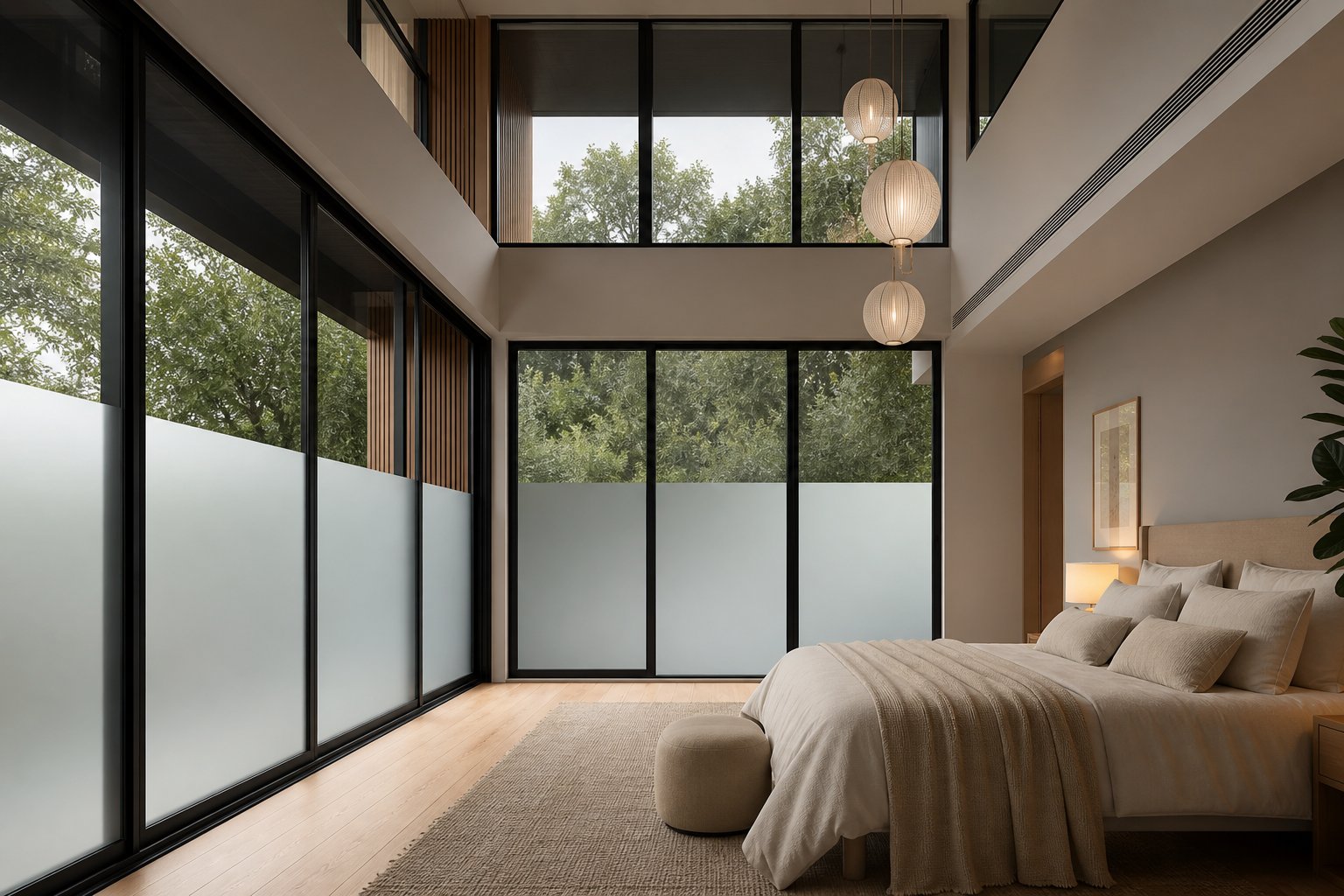
Privacy, Light Control, and Glass Options for Bedroom Comfort
A bedroom window can tick every box on thermal performance and still fail at its job. If neighbours can see straight in from the footpath, or if unfiltered sunrise floods your pillow at five-thirty in December, the technical specs are irrelevant — the room does not feel like a refuge. Privacy and light management are deeply personal bedroom priorities, and both hinge on the glass you place inside your aluminium glass frame and the finish you choose for the frame itself.
Glass Options for Bedroom Privacy
Aluminium frames accept virtually any glass type produced to standard thicknesses, which gives you a broader menu of privacy solutions than most homeowners realise. The right pick depends on how much concealment you need, how much natural light you are willing to sacrifice, and whether you want permanent or adjustable privacy.
Frosted glass is the most common starting point. The surface is treated through sandblasting or acid etching to create a translucent finish that diffuses light while blurring views at roughly 10–20 per cent opacity. It is an excellent match for ground-floor bedrooms facing a neighbour’s property or a street — enough daylight enters to keep the room feeling open, but silhouettes and details become unreadable from outside. Maintenance is simple: a soft cloth and mild glass cleaner, avoiding abrasive pads that could wear down the etched surface over time.
Tinted glass takes a different approach. A thin film or integral tint — grey, bronze, or green — darkens the glass to reduce visibility from the exterior during daylight hours while preserving your outward view from inside. Bronze aluminum windows paired with bronze-tinted glazing create a cohesive, warm aesthetic that also cuts glare. One caveat worth noting: tinted glass provides daytime privacy only. At night, when interior lights are on and the outside is dark, the effect reverses and people can see in. Pairing tinted glass in aluminum frame assemblies with blockout blinds or curtains solves this neatly.
Obscure and textured glass adds a decorative dimension. Reeded, fluted, hammered, and geometric patterns distort light passing through the pane, creating visual obstruction while adding architectural character. These patterns suit bedrooms that share a wall aesthetic with an adjacent ensuite bathroom — using the same obscure profile across both rooms in aluminium frames creates design continuity without sacrificing privacy in either space. Keep in mind that textured surfaces collect dust more readily than smooth glass, so regular cleaning with a soft-bristle brush helps prevent buildup, particularly in bedrooms where allergen management matters.
Switchable smart glass represents the premium end of the spectrum. Electrochromic or PDLC (polymer dispersed liquid crystal) technology lets the glass change from clear to opaque at the touch of a button or via automated home controls. For bedrooms where you want full transparency during the day and complete privacy at night — without touching a blind — smart glass delivers. The trade-off is cost: pricing sits well above standard glazing options, and the electronic components require periodic inspection. Still, for homeowners investing in a high-end aluminium glass system, switchable glass eliminates the need for any window covering entirely.
Controlling Morning and Evening Light for Better Sleep
Privacy keeps eyes out. Light control keeps unwanted solar energy from disrupting rest. In a bedroom, both matter — but light management adds a health dimension that privacy alone does not address. Circadian rhythms depend on gradual light transitions, and a wall of unfiltered eastern sun at dawn can fragment sleep cycles just as effectively as a blaring alarm.
Window orientation drives the strategy. East-facing bedrooms absorb direct sunrise, which means heat and glare build rapidly in summer months. Specifying glass with a lower SHGC — around 0.25 to 0.35 — on that elevation filters solar radiation without dimming visible light dramatically. You still see the morning sky; you just do not bake in it.
South-facing bedrooms in Australia receive the most consistent direct sunlight throughout the day. In cooler climates like Melbourne, Hobart, or the ACT, a moderately higher SHGC can be advantageous here — it captures passive warmth during winter, reducing heating loads overnight. In warmer zones, the opposite applies: lower SHGC and external shading prevent overheating.
Low-E coatings play a central role across every orientation. These microscopically thin metallic-oxide layers reflect infrared heat and block well over 70 per cent of UV radiation while allowing visible daylight to pass through largely unchanged. For a bedroom, that selective filtering means curtains and blinds become optional comfort enhancers rather than essential barriers — you can leave your aluminium windows uncovered during the day without worrying about furniture fading or excessive heat gain. Paired with double glazing, a quality Low-E coating also keeps interior glass surfaces warmer in winter, eliminating the cold-radiant sensation you feel when sitting or sleeping near untreated glass.
West-facing bedrooms deserve particular attention. Late-afternoon sun arrives at a low angle and carries intense heat, often making the room uncomfortably warm right when you want it cooling down for sleep. Low-SHGC glazing combined with external louvres or deep eaves is the most effective combination on this orientation — the glass handles the radiation filtering while the shading device reduces the total solar load before it even reaches the aluminum in glass pane.
Colour and Finish Choices That Complement Bedroom Design
Glass selection determines what you see through the window. Frame colour determines what you see around it — and in a bedroom, where the window often occupies the primary sightline from the bed, that colour choice carries real design weight.
Aluminium’s powder-coating process bakes pigment directly onto the metal surface at roughly 200°C, creating a finish that resists chipping, peeling, fading, and chalking for decades. Unlike painted timber, which needs refinishing every few years, or vinyl that offers a limited palette and can yellow with UV exposure, aluminium window frame colours remain stable and true across the life of the window. That permanence means the colour you choose at installation is the colour you live with — so it is worth getting right.
Here are the most popular aluminium window frame colour options and the bedroom design contexts they suit best:
- Matte Black (Monument or similar) — The go-to for contemporary and industrial bedroom schemes. Black aluminum windows create bold contrast against white walls and light timber floors. Best for bedrooms where the window is treated as a design feature rather than a background element.
- Warm Bronze or Dark Bronze — Adds warmth without the starkness of black. Bronze aluminum windows complement earthy palettes, exposed brick, leather furnishings, and mid-century modern interiors. Works particularly well in north- and west-facing bedrooms where warm-toned light reinforces the frame colour at golden hour.
- Classic White (Surfmist or similar) — Clean, bright, and unobtrusive. Ideal for coastal bedrooms, Hamptons-style interiors, or any space where the frame should recede and let the view dominate. White frames also reflect more heat than dark colours, offering a marginal thermal advantage on sun-exposed elevations.
- Charcoal or Ironstone — A softer alternative to black that suits both modern and transitional bedroom styles. Pairs well with grey linen, concrete-look feature walls, and cool-toned timber flooring.
- Paperbark or Dune — Warm neutral tones that integrate seamlessly with natural and Scandinavian-inspired bedroom palettes. Less common than black or white but increasingly popular in regional Australian homes that favour understated finishes.
- Custom or two-tone finishes — Some manufacturers offer different colours on the interior and exterior faces of the frame. This lets you match the exterior to your facade cladding while running a complementary interior tone that suits your bedroom decor — a practical solution when the ideal outside colour clashes with your indoor palette.
Selecting privacy glass, light-management coatings, and frame colour as a coordinated package — rather than treating each decision in isolation — ensures your aluminium bedroom windows perform as a unified system. A bronze-tinted glass aluminium frame with Low-E coating on the west elevation, for instance, addresses glare, privacy, heat gain, and aesthetics in a single specification. That kind of integrated thinking prevents the common mistake of solving one problem while accidentally creating another.
Comfort and aesthetics, though, only hold up if the window itself is safe and code-compliant. Bedrooms carry building-code obligations that other rooms do not — and the wrong window style or hardware choice can leave a beautiful installation that fails its most basic safety duty.
Safety, Security, and Building Code Requirements for Bedroom Windows
A bedroom window might look stunning, insulate brilliantly, and block every decibel of traffic noise — but if it traps you during a house fire or invites a break-in at three in the morning, none of that matters. Safety is the dimension most homeowners consider last, yet it is the one that building codes prioritise first. In Australia, bedrooms carry specific regulatory obligations that kitchens, laundries, and living areas simply do not, and those obligations directly dictate which aluminium window styles you can legally install.
Bedroom Egress Code Requirements and Window Style Selection
The National Construction Code (NCC) requires that bedrooms in residential dwellings provide a viable path for emergency escape. Under NCC Volume Two — which governs Class 1a (houses) and Class 1b (boarding houses, guest houses) buildings — bedroom windows must be capable of serving as an emergency exit when a door-based escape route is blocked by fire or smoke. The code specifies minimum clear-opening dimensions that the window must achieve through normal operation, without tools, keys, or excessive force.
Specific dimensional thresholds vary depending on your state or territory’s adopted version of the NCC and any local council amendments, so verifying the exact requirements with your building certifier before ordering windows is essential. As a general principle, the opening must be large enough for an adult to climb through — and that single constraint eliminates several window styles from bedroom consideration.
Here is where window type selection and code compliance intersect. Casement windows typically satisfy egress requirements with ease because the entire sash swings open, creating a generous clear opening relative to the overall frame size. Certain sliding configurations also comply, provided the operable panel is wide and tall enough to meet the minimum clear-opening area — but because only half the window opens, the overall unit often needs to be larger than a casement to achieve the same escape clearance. Fixed windows, by definition, offer zero egress capability and cannot serve as the sole window in any bedroom. Awning windows present a grey area: their outward-tilting sash limits the effective vertical opening height, and many awning configurations fall short of the required clear-opening dimensions. Some larger awning units may comply, but this must be confirmed on a case-by-case basis with your certifier.
The practical takeaway is straightforward. Every bedroom needs at least one operable window — or an external door — that meets NCC egress standards. Choosing the right residential aluminum windows means verifying compliance before finalising your order, not discovering a problem at the inspection stage when the frames are already installed.
Security Features for Ground-Floor and Accessible Bedrooms
Egress keeps you safe from the inside out. Security keeps threats from getting in. Ground-floor bedrooms and any bedroom accessible from a flat roof, balcony, or low-set deck face a heightened intrusion risk, and the aluminum window frame is your first physical line of defence.
Aluminium’s inherent rigidity gives it a structural advantage here. A metal window frame built from extruded aluminium alloy resists bending, prying, and levering far more effectively than vinyl, which can flex under sustained force, or timber, which can be chiselled or split along the grain. That baseline strength means the frame itself is unlikely to be the point of failure — but a frame is only as secure as the hardware and glazing it holds. Security in aluminium window systems comes from the entire assembly working together: locks, glass, frame joints, and ancillary hardware each play a role.
The following list ranks security features from essential baseline provisions through to advanced upgrades, helping you prioritise your investment for bedroom metal frame windows:
- Multi-point locking mechanisms — The single most impactful security upgrade. Unlike a basic snib lock that secures the sash at one point, multi-point systems engage bolts or hooks at two, three, or more positions along the sash edge. This distributes resistance across the entire frame, making it vastly harder to force the window open. Every bedroom aluminium window should have multi-point locking as a minimum.
- Keyed locks — Adding a key-operated lock to the primary latch prevents the window from being opened by someone who reaches through a broken pane or a partially open sash. Essential for ground-floor bedrooms and any window accessible from outside without a ladder.
- Laminated safety glass — Standard float glass shatters into sharp shards and offers almost no intrusion resistance. Laminated glass bonds two or more glass layers around a tough polyvinyl butyral (PVB) interlayer that holds the pane together even when cracked. An intruder cannot simply punch through and reach in — the interlayer resists penetration, buying time and deterring opportunistic break-ins.
- Window restrictors — These devices limit how far the sash can open — typically to 100 mm — allowing ventilation while preventing the opening from being wide enough for entry. Restrictors with a key-release override let you fully open the window when needed for cleaning or emergency escape. Particularly valuable for bedrooms where you want airflow overnight without compromising security.
- Reinforced frame joints and heavy-duty corner brackets — Internal steel reinforcements at frame corners and meeting rails prevent the frame from being twisted or separated under force. Quality aluminium window manufacturers integrate these reinforcements into the profile design rather than relying on external add-ons.
- Security screens — High-tensile stainless-steel mesh screens mounted externally over the window create a physical barrier that resists cutting and impact while still allowing airflow and visibility. In Australia, products compliant with AS 5039 (Security Screen Doors and Security Window Grilles) are independently tested for knife-shear, impact, and dynamic load resistance — a meaningful standard that separates genuine security screens from decorative insect mesh.
- Smart sensors and alarm integration — Contact sensors detect when a window is opened unexpectedly, while glass-break sensors identify the sound frequency of shattering glass. Integrated into a home alarm system, these provide real-time alerts and serve as a visible deterrent. An advanced layer best suited to high-risk locations or homeowners who want remote monitoring of metal windows residential properties.
Layering these features creates cumulative protection. A ground-floor bedroom with multi-point locks, keyed hardware, laminated glass, and an AS 5039-rated security screen presents a formidable barrier — one that most opportunistic intruders will bypass in favour of an easier target.
Child Safety Considerations
Upper-storey children’s bedrooms introduce a different safety equation: the window must prevent a child from falling out while still functioning as an emergency escape route. Australian Standard AS 5203 addresses this by requiring window openings above a certain height from ground level to incorporate safety devices that restrict the opening to no more than 125 mm when engaged — a gap too narrow for a small child to pass through.
Aluminium frames accommodate child-safety restrictors reliably because the rigid metal profile provides solid anchorage for screws and mounting hardware. Unlike vinyl, which can strip or deform around fastener points over time, an aluminum window frame holds restrictor hardware securely for the life of the window. Key-release restrictors are the preferred solution: they limit the opening under normal use but allow a parent or older child to unlock the full opening in an emergency, maintaining egress compliance alongside fall prevention.
Cord-free blinds and integrated privacy solutions — such as the frosted or switchable glass options discussed earlier — also reduce cord-strangulation hazards in children’s bedrooms, further reinforcing the safety case for treating the window as a complete system rather than isolated components.
Safety and security are non-negotiable foundations, but their real-world performance shifts depending on where your home sits on the map. A coastal Queensland bedroom faces corrosion and cyclone pressures that a Melburnian terrace never will — and those climate-driven variables shape which aluminium specifications actually protect your investment over decades.
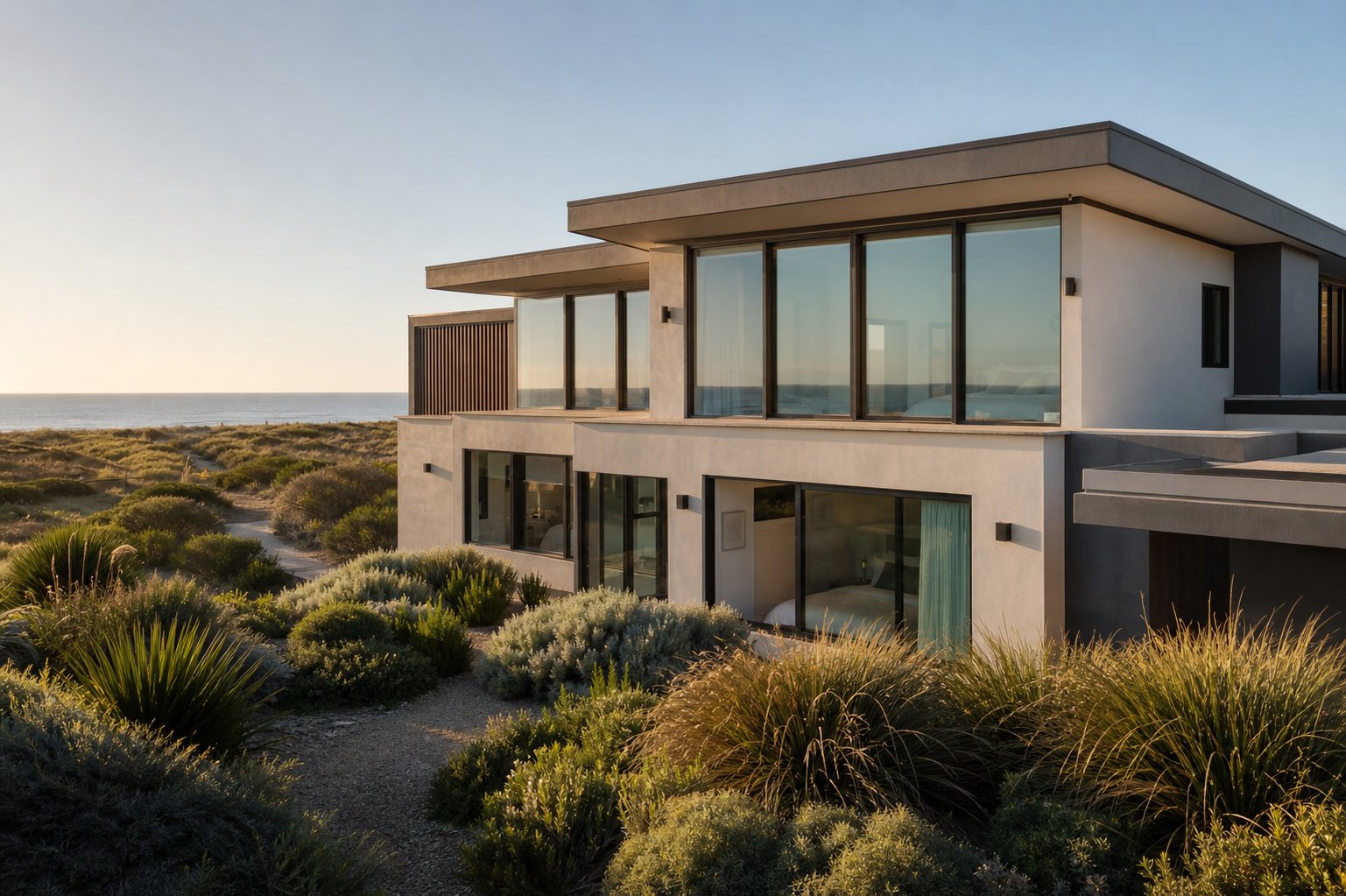
How Climate Affects Aluminium Bedroom Window Performance
Australia stretches across multiple climate zones — from the tropical humidity of Darwin to the alpine cold of the Snowy Mountains, with vast arid interiors and salt-lashed coastlines in between. A bedroom window specification that performs beautifully in Perth can fall short in Hobart, and one that thrives on the Gold Coast may struggle inland near Broken Hill. Climate is the variable that turns a good aluminium window into the right aluminium window, and ignoring it leads to condensation on sills, overheating at midnight, or premature hardware failure that no amount of elegant design can excuse.
Hot and Arid Climates
Bedrooms in inland Australia — think Alice Springs, parts of western New South Wales, or the wheatbelt region of Western Australia — face a distinctive thermal challenge. Daytime temperatures routinely push past 40°C in summer, yet winter nights can plummet close to freezing. That extreme swing demands a window system that blocks solar heat gain during the day without losing warmth after dark.
Aluminium excels in these conditions for a straightforward reason: dry heat and low humidity pose virtually zero corrosion risk to metal framed windows, so even standard powder-coated finishes hold up for decades without degradation. The slim profiles typical of aluminum frame windows also maximise glass area, which sounds counterintuitive in a hot climate — until you pair that glass with low-SHGC glazing and a quality Low-E coating. The result is generous natural light entering the bedroom while the bulk of solar radiation is reflected back outside, keeping the room cooler without resorting to small, fortress-like openings that feel oppressive.
External shading integration matters here too. Aluminium’s structural rigidity supports the attachment of external louvres, pergola brackets, or retractable awning hardware directly to the window head or surrounding frame without flex or sag. For an east- or west-facing bedroom in a hot arid zone, combining low-SHGC double glazing with a well-designed external shade device is the single most effective strategy for sleeping comfortably without running air conditioning all night.
Thermally broken frames are still recommended in these regions — not primarily for winter insulation, but because the thermal break prevents the interior aluminium surface from absorbing radiant exterior heat and re-emitting it into the bedroom. Without that barrier, a sun-baked aluminum window frame can feel warm to the touch well into the evening, subtly raising room temperature right when you want it dropping.
Coastal and Humid Environments
Salt air corrodes steel in months and rots untreated timber within years. For the millions of Australians living within a few kilometres of the coast — from Cairns down to the Mornington Peninsula, across to Fremantle, and everywhere in between — corrosion resistance is not a nice-to-have. It is the deciding factor in window material selection.
Aluminium’s natural oxide layer gives it inherent protection against salt-spray corrosion, and a quality powder-coat finish extends that shield dramatically. Coastal specifications typically call for a minimum 60-micron powder-coat thickness, applied after chromate or chrome-free pre-treatment, to meet the demands of Zone C and Zone D corrosion environments defined under AS 2312. Some homeowners in especially aggressive locations — beachfront properties where waves break within 100 metres — opt for anodized aluminum windows, which build a thicker, harder oxide layer through an electrochemical process. Anodising provides excellent abrasion resistance alongside corrosion protection, though the colour palette is more limited than powder coating.
Humidity introduces a secondary concern: condensation. Coastal bedrooms in subtropical zones like the Sunshine Coast or northern NSW experience warm, moisture-laden air year-round. When that humid air contacts a cooler window surface — particularly overnight as temperatures drop — condensation can form on frames and glass. Thermally broken aluminium keeps the interior frame surface warmer than the dew point, minimising this risk. Paired with double glazing, the system provides a dry, comfortable bedroom environment even during the most humid months.
Maintenance in coastal environments is refreshingly minimal with aluminium. A quarterly wash with fresh water and mild detergent removes salt deposits before they accumulate. Hardware — hinges, rollers, locking mechanisms — benefits from periodic lubrication with a marine-grade silicone spray. Compare that to the annual sanding, resealing, and repainting regime that timber demands in the same conditions, and the practical advantage of aluminum framed windows on the coast becomes obvious. For an aluminum house near the water, aluminium bedroom windows are less a stylistic preference and more a pragmatic necessity.
Cold and Temperate Climates
Melbourne, Canberra, Hobart, the Blue Mountains, and much of regional Victoria and Tasmania experience winters cold enough to test any window system. Overnight lows regularly sit between 0°C and 5°C for months, and in alpine areas, sub-zero temperatures are routine. In these environments, the bedroom window is the weakest thermal link in the building envelope — the point where heat escapes fastest and condensation forms first.
Untreated aluminium in cold climates is a genuine problem. Without a thermal break, the interior frame surface chills rapidly overnight, dropping below the dew point of typical indoor air (around 10–12°C at 50 per cent relative humidity). Water beads on the frame, runs onto the sill, and — in bedrooms where airflow is limited and soft furnishings sit close to the window — creates the ideal conditions for mould growth. Sleeping near a mouldy window frame is a health risk, not just a maintenance inconvenience.
Thermally broken aluminum window frames are essential in these zones, full stop. As outlined in earlier sections, thermally broken systems reduce frame U-values by 30 to 60 per cent compared to standard aluminium, keeping the interior surface warm enough to prevent condensation under normal indoor humidity conditions. Double glazing is the minimum glass specification; triple glazing with argon-filled cavities delivers even better insulation for bedrooms in alpine or frost-prone areas where overnight heat retention is critical for comfortable sleep.
Airtightness also matters more in cold climates. Compression-sealed casement windows outperform sliders in this regard because the closing action presses the sash firmly against rubber gaskets on all four sides, creating a near-airtight seal. For a Hobart bedroom where southerly winds carry Antarctic chill, that seal is the difference between a warm, quiet night and waking up to a cold draught across the bed.
Homeowners building or renovating in cold regions who want the aesthetic versatility of aluminium without compromise should look specifically for custom metal windows engineered with wide thermal breaks — 34 mm or broader — and multi-chamber polyamide strips. These premium aluminium window profiles match or exceed the thermal performance of uPVC systems while retaining the slim sightlines and colour flexibility that make aluminium architecturally appealing.
The following table maps each Australian climate zone against the aluminium window specifications that deliver reliable bedroom performance:
| Climate Zone | Thermal Break | Recommended Glazing | Coating / Finish | Maintenance Frequency |
|---|---|---|---|---|
| Hot and Arid (inland WA, SA, western NSW, NT interior) | Recommended — prevents radiant heat transfer through frame | Double glazed with low-SHGC and Low-E coating | Standard powder coat (minimum 60 microns) | Annual clean; hardware lubrication every 12 months |
| Coastal and Humid (QLD coast, NSW coast, WA coast, VIC coast) | Strongly recommended — reduces condensation risk in humid conditions | Double glazed with Low-E coating; consider laminated glass for cyclone zones | Heavy-duty powder coat (60+ microns) or anodised finish; marine-grade hardware | Quarterly fresh-water wash to remove salt; hardware lubrication every 6 months |
| Cold and Temperate (VIC, TAS, ACT, Blue Mountains, alpine regions) | Essential — mandatory for condensation prevention and thermal comfort | Double glazed minimum; triple glazed with argon fill for alpine areas | Standard powder coat (minimum 60 microns) | Annual clean; check weather seals each autumn before cold season |
| Tropical (Far North QLD, Top End NT) | Recommended — manages humidity-driven condensation | Double glazed with low-SHGC; impact-rated laminated glass in cyclone regions | Heavy-duty powder coat with enhanced corrosion pre-treatment | Quarterly wash; inspect seals and drainage weep holes before wet season |
One final consideration deserves mention for homeowners weighing the long-term implications of their bedroom window investment. Aluminium is one of the most recyclable building materials on earth — it can be remelted and reformed indefinitely without losing structural properties, and recycling requires only about five per cent of the energy needed to produce primary aluminium. A set of metal windows that serves a bedroom faithfully for 40 or 50 years does not end up in landfill at end of life; it re-enters the material stream. Combined with the minimal maintenance aluminium demands across all climate zones, that recyclability makes aluminum framed windows a strong choice for environmentally conscious homeowners who view their bedroom renovation as a decades-long commitment rather than a short-term fix.
Climate dictates the technical specification. But even with the right thermal break, glazing, and coating locked in, two very practical questions remain: what will these windows actually cost, and what ongoing care do they need to keep performing at the level your bedroom demands?
Cost Factors and Maintenance for Aluminium Bedroom Windows
Budgeting for aluminium windows for bedroom projects is tricky without a clear sense of what actually drives the price tag. Unlike commodity products with fixed retail pricing, aluminium windows are configured to order — and the variables stacking up between a basic quote and a premium specification can shift the total by hundreds of dollars per opening. Understanding those variables before you request quotes prevents sticker shock and helps you direct spending where it genuinely improves bedroom comfort.
What Affects the Cost of Aluminium Bedroom Windows
No two bedroom window orders cost the same, but the factors that influence pricing are consistent. Some carry far more weight than others. Here they are, ranked roughly by their impact on the final figure:
- Glazing specification — This is typically the single biggest cost lever. Stepping from standard double glazing to triple glazing, adding Low-E coatings, specifying laminated acoustic interlayers, or requesting tinted privacy glass each adds to the per-unit price. For bedrooms, where thermal and acoustic performance directly affect sleep, glazing is also where your money delivers the most noticeable comfort return.
- Window style and operability — A fixed window costs less than a casement because it has no hinges, stays, locking hardware, or weather-seal compression systems. Awning and casement configurations sit in the mid-range, while bi-fold or large-format sliding units command higher pricing due to additional track hardware and engineering. Bedroom layouts that combine a large fixed panel with smaller operable flanking units can balance cost and functionality well.
- Thermal break inclusion — Thermally broken aluminium profiles cost more than standard aluminium because the manufacturing process involves extruding the polyamide barrier and mechanically crimping the two frame halves together. That added cost is non-negotiable in cold or temperate Australian climate zones — and strongly recommended everywhere else, as covered in earlier sections.
- Custom sizing vs. standard dimensions — Standard sizes benefit from production efficiencies that keep prices lower. Custom-sized openings — taller, wider, or non-rectangular — require individual fabrication setups that increase both material and labour costs. Bedrooms in older homes or architect-designed builds often need custom sizing, so factor this in early.
- Frame finish and colour — Standard powder-coat colours from the manufacturer’s core palette (typically whites, blacks, and greys) are included in base pricing. Specialty colours, two-tone finishes with different interior and exterior colours, or anodised finishes attract a surcharge. Anodising, for instance, requires specialised electrochemical processing and generally costs more per square metre than powder coating, though it delivers superior abrasion resistance for high-exposure locations.
- Hardware quality — Friction stays, multi-point locks, keyed restrictors, and heavy-duty rollers vary in grade. Budget hardware functions adequately on day one but may wear, loosen, or corrode sooner — an outcome you especially want to avoid in a bedroom where a rattling window or stiff lock disrupts sleep. Mid-range to premium hardware is a relatively modest cost addition that pays dividends in durability and quiet operation.
- Installation complexity — Straightforward replacement into an existing opening costs less than a new penetration through brick veneer or a structural modification that changes the opening size. Upper-storey bedrooms may require scaffolding, and heritage-overlay properties sometimes involve council approval processes that add time and cost to the project.
As a general guide, aluminium window replacement projects in Australia can range widely depending on these variables — from modest per-unit costs for standard fixed or sliding windows through to significantly higher figures for large, thermally broken, triple-glazed casement units with premium hardware. Always request itemised quotes that separate supply from installation, so you can see exactly where your budget is going and where trade-offs might be possible.
Long-Term Value Compared to Other Materials
Aluminium’s upfront cost typically sits above uPVC and in a similar bracket to mid-range timber — a reality that gives some homeowners pause. But bedroom windows are a uniquely poor candidate for false economy, because replacing a failing window in a furnished, occupied bedroom is one of the most disruptive renovation tasks in any home.
Consider the lifecycle maths. A timber bedroom window demands sanding and repainting every three to seven years. Over a 30-year span, that is anywhere from four to ten refinishing cycles — each involving masking off curtains, furniture, and bedding; dealing with fumes and dust in a sleeping space; and covering the opening temporarily while coats dry. Vinyl frames dodge the repainting burden but can warp under sustained UV and heat exposure, with lifespans that typically cap out around 25 to 40 years before discolouration or seal failure forces an aluminum window replacement or full swap to a different material.
Aluminium, by contrast, routinely lasts 40 to 60 years with only basic care. No repainting. No rot treatment. No warping. The powder-coated finish retains its colour and integrity without intervention, and the metal itself does not degrade in ways that compromise structural performance. When you amortise the slightly higher purchase price across four or five decades of zero refinishing and no mid-life replacement aluminum windows, the total cost of ownership often falls below timber and sits comparable to vinyl — with the added benefit of superior frame strength and aesthetic versatility throughout.
For bedrooms specifically, that longevity carries a convenience premium that raw dollar figures understate. You will not need to vacate a bedroom, disassemble window treatments, move furniture, and live with construction noise in a sleeping space mid-way through the window’s life. One installation, decades of reliable performance — that is the practical value proposition of a quality aluminium bedroom window, and it is worth weighing against any short-term savings a cheaper material might offer.
Maintenance Essentials for Bedroom Aluminium Windows
Part of what makes aluminium so cost-effective over time is how little ongoing attention it needs. A replacement aluminum window in timber or vinyl might demand weekend-consuming maintenance sessions; an aluminium frame asks for a quarterly clean and the occasional squirt of lubricant. For bedrooms — where dust and allergen management directly support healthier sleep — that low-maintenance nature carries health as well as financial benefits.
Here is a simple seasonal maintenance checklist that keeps your aluminium bedroom windows performing at their best:
- Clean frames and glass — Wipe down aluminium frames with a soft cloth, warm water, and a mild detergent every three months. Avoid abrasive cleaners or scouring pads, which can scratch the powder-coat finish. Regular cleaning prevents dust and grime from building up in corners and joints, keeping frames looking fresh and reducing allergens near your sleeping area.
- Clear tracks and drainage weep holes — Sliding and awning windows have tracks that collect dust, insect debris, and leaf matter. Vacuum or brush tracks clean every two to three months, and check that weep holes along the sill are unobstructed. Blocked weep holes prevent water from draining out of the frame, potentially causing pooling that accelerates seal deterioration.
- Inspect weather seals and gaskets — Rubber and silicone seals compress over years of use. Check the perimeter seals on operable sashes each autumn before the cold season begins. Look for cracking, flattening, or gaps that let draughts through. Replacing worn seals is inexpensive and straightforward — far cheaper than the energy lost through a poorly sealed window over an entire winter.
- Lubricate hardware — Hinges, friction stays, locking mechanisms, and rollers benefit from a light application of silicone-based lubricant every six to twelve months. Avoid petroleum-based products, which can attract dust and gum up moving parts. Smooth, quiet hardware operation is especially important in a bedroom where a stiff or squeaky window disturbs sleep.
- Check for visible damage — Look over frames for chips in the powder coat, loose screws, or signs of corrosion on hardware — particularly in coastal locations. Catching small issues early prevents them from escalating into costly repairs or the need for an aluminum frame window replacement.
That is the full extent of what aluminium bedroom windows ask of you. Fifteen minutes each quarter, a brief seal check before winter, and the occasional hardware lubrication. For homeowners who value their weekends — and their uninterrupted sleep — it is a maintenance commitment that barely registers.
With budget expectations set and a care routine in hand, the final piece of the puzzle is pulling every consideration from earlier sections into a clear, step-by-step decision framework — one that moves you from research to a confident supplier conversation with all the right questions ready.
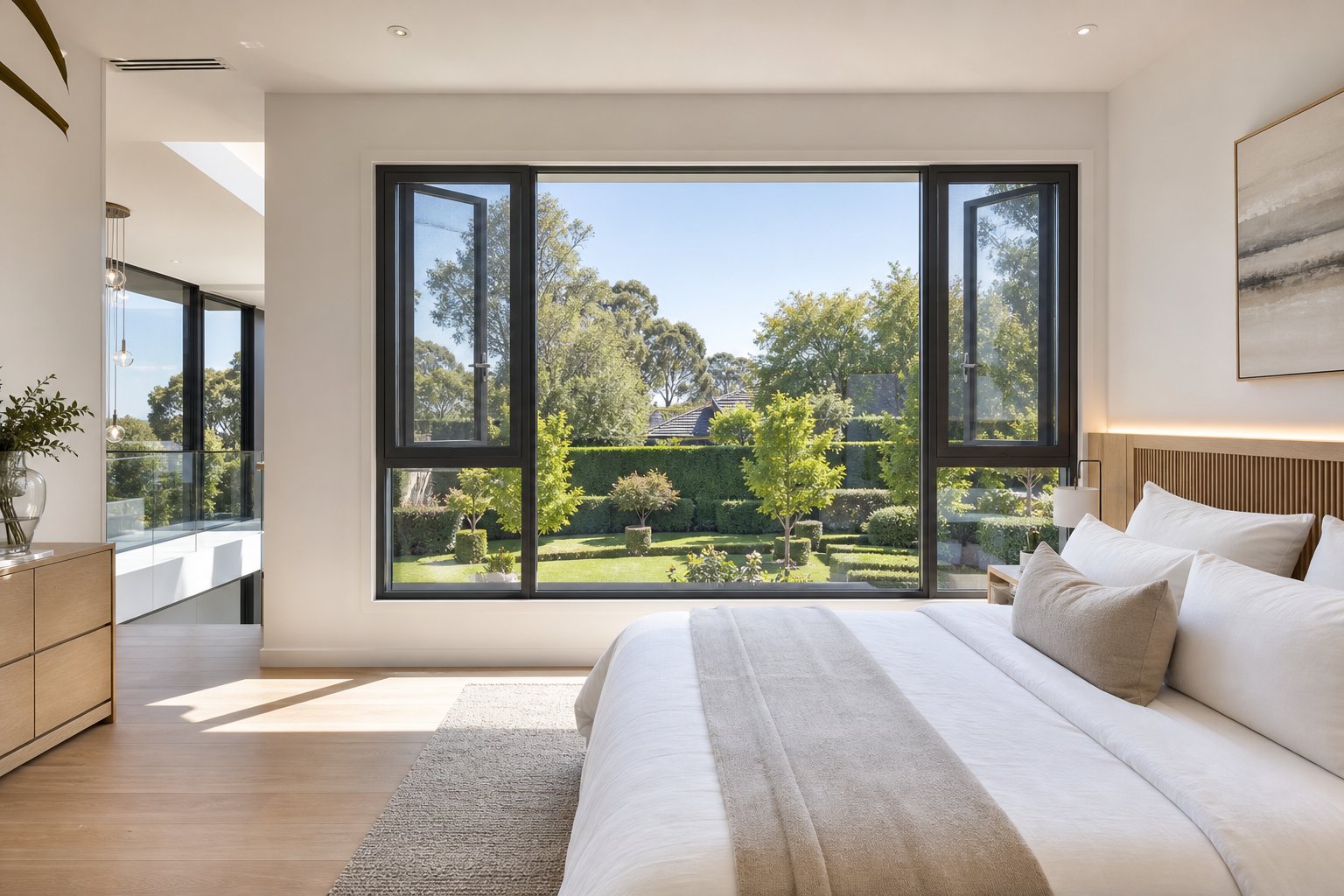
How to Choose the Right Aluminium Windows for Your Bedroom
Every section of this guide has tackled a different piece of the puzzle — frame materials, window styles, energy ratings, privacy glass, safety codes, climate specifications, and cost structures. Individually, each topic answers a specific question. Together, they form a decision sequence that, when followed in the right order, prevents the most common mistakes homeowners make when investing in aluminium windows for bedroom applications. This final chapter pulls those threads into a single actionable framework and addresses the question that sits behind every other: how do you find a supplier you can actually trust?
A Step-by-Step Approach to Selecting Your Bedroom Windows
Jumping straight to colour swatches or browsing aluminium windows for sale online feels productive, but it skips the groundwork that determines whether your final choice genuinely performs. The sequence below keeps decisions in the right order — each step building on the one before it — so nothing critical gets missed or decided prematurely.
- Assess your bedroom’s orientation and climate exposure. Identify which direction the window wall faces (north, east, south, or west) and determine your NCC climate zone. This single step dictates your glazing SHGC, thermal break requirements, and whether you need enhanced corrosion protection. An east-facing bedroom in Brisbane and a south-facing bedroom in Hobart need fundamentally different glass specifications, even if the frames look identical.
- Determine egress compliance requirements. Contact your local building certifier or council to confirm the minimum clear-opening dimensions required for bedroom windows in your jurisdiction. This eliminates non-compliant window styles — fixed panes, undersized awning configurations — before you fall in love with something you cannot legally install.
- Select the window style that suits your layout and ventilation needs. Match the operating mechanism to your room. Casement for maximum airflow and tight sealing. Sliding for compact bedrooms or rooms facing walkways. Awning for rain-protected ventilation above furniture lines. Fixed paired with operable units for light-maximising feature walls. Let the room’s physical constraints guide this choice, not trend alone.
- Choose glazing for privacy, thermal performance, and acoustics. Layer your glass specification based on the priorities identified in steps one and two. Low-SHGC with Low-E coating for sun-exposed orientations. Frosted or obscure glass for ground-floor privacy. Laminated acoustic interlayers for bedrooms facing busy roads. Double glazing as the minimum; triple glazing for alpine or frost-prone locations.
- Select frame colour and finish. With the functional decisions locked in, choose a powder-coat colour that complements your bedroom interior and exterior facade. Consider two-tone options if the ideal outside colour clashes with your indoor palette. Remember that darker colours absorb more solar radiation — a relevant detail for west-facing bedrooms in hot climates.
- Request itemised quotes from at least three reputable aluminium window suppliers. Provide each supplier with an identical brief covering opening sizes, preferred styles, glazing expectations, and colour choices. Insist on itemised pricing that separates supply from installation, and confirm what is included versus excluded — removal of old frames, making good to reveals, scaffolding, and disposal all need to be explicitly addressed.
- Compare quotes on specification, not just price. The cheapest number on the page means nothing if it specifies inferior hardware, thinner thermal breaks, or basic glazing that will not meet your comfort or compliance needs. Use the evaluation criteria below to assess each supplier on substance rather than salesmanship.
Following this sequence keeps your decisions anchored in performance rather than aesthetics alone. A bedroom window that looks beautiful but leaks heat, fails an egress inspection, or fogs with condensation within two winters is an expensive lesson in skipping steps.
What to Look for in a Quality Aluminium Window Supplier
The best aluminium windows in the world underperform if they come from a supplier who cuts corners on fabrication, glosses over compliance, or disappears after installation. Searching for aluminium windows near me or aluminum windows near me returns dozens of results in most Australian metro areas — but not all suppliers operate at the same level of transparency, technical capability, or after-sales accountability.
When evaluating aluminium window suppliers, measure each one against these criteria:
- Range of window types and custom sizing. A supplier worth your time should offer casement, awning, sliding, fixed, and double-hung configurations at minimum — plus the ability to fabricate custom aluminum windows for non-standard openings. Bedrooms in older homes or architect-designed builds rarely fit neatly into standard dimensions, and a supplier limited to off-the-shelf sizes will force compromises on your design.
- Thermal break availability. Any supplier positioning themselves in the residential market should offer thermally broken aluminium systems as a standard option, not a special-order add-on. If a supplier quotes non-thermally-broken frames for a bedroom without discussing the implications, that is a red flag about their technical understanding of the application.
- Powder-coat colour range and finish quality. Look for suppliers who offer a broad palette — ideally the full RAL spectrum or at minimum the most popular Colorbond-matched tones — with consistent batch quality. Ask whether two-tone finishes are available and what lead-time premium they carry. Reputable aluminium windows manufacturers use certified powder brands and control curing temperature precisely, as noted in quality control guidance from QT Aluminium, which highlights coating thickness measurement, adhesion testing, and colour consistency across batches as critical factory checkpoints.
- Compliance with Australian Standards. Your supplier should demonstrate compliance with AS 2047 (windows and external glazed doors), AS 1288 (glass in buildings), and relevant NCC energy performance requirements for your climate zone. Ask for documented test reports — air tightness, water penetration, wind load resistance — rather than accepting verbal assurances. Aluminium windows manufacturers with genuine quality systems provide this documentation as a matter of course.
- Project support from specification through installation. The gap between a product brochure and a correctly installed bedroom window is where many projects go wrong. Evaluate whether the supplier offers site surveys, technical specification assistance, professional installation by licensed tradespeople, and a clear warranty structure that covers frames, hardware, glazing seals, and workmanship separately.
For Australian homeowners, builders, and renovators evaluating their options, MEICHEN’s aluminium windows range is a practical starting point that ticks these boxes. Their product page covers casement, sliding, awning, and fixed configurations with custom sizing options, multiple colour and finish choices, and performance-grade specifications suited to bedroom applications across Australian climate zones. Whether you are fitting out a new master suite or replacing ageing frames in a childhood bedroom, exploring a supplier that presents its full system range, customisation capability, and technical credentials in one place saves considerable research time compared to piecing together information from fragmented sources.
Ultimately, the homeowners who get the best results from their bedroom window investment are not necessarily the ones who spend the most. They are the ones who define their priorities before picking up the phone, ask precise questions grounded in the criteria above, and choose aluminium window suppliers based on demonstrated capability rather than the lowest line item on a quote. Every section of this guide exists to put you in exactly that position — informed, specific, and confident that the aluminium windows you select will deliver quiet nights, comfortable temperatures, and lasting performance in the one room where those things matter most.
Frequently Asked Questions About Aluminium Windows for Bedrooms
1. Are aluminium windows good for bedrooms in cold climates?
Yes, provided they feature thermally broken frames and double or triple glazing. A thermal break — a polyamide strip inserted between the interior and exterior aluminium sections — reduces heat conduction through the frame by up to 60 per cent and keeps the interior surface warm enough to prevent condensation. Without a thermal break, aluminium conducts heat roughly 1,000 times faster than PVC, which can chill bedroom frames overnight, cause moisture buildup near bedding, and promote mould growth. For Australian regions like Victoria, Tasmania, and the ACT, thermally broken aluminium with argon-filled double glazing is the minimum recommended specification for comfortable, healthy sleep.
2. Which aluminium window style is best for bedroom ventilation and egress?
Casement windows are generally the strongest choice for bedrooms requiring both maximum ventilation and emergency egress compliance. Because the entire sash swings outward, casement configurations deliver full-aperture airflow and create a generous clear opening that typically satisfies NCC egress requirements when sized appropriately. Sliding windows can also comply, though only half the window area opens at any time, meaning the overall unit often needs to be larger. Fixed and most awning windows do not meet egress standards on their own. Australian building codes require at least one operable, egress-compliant window in every bedroom, so verifying dimensions with your local certifier before ordering is essential. Suppliers like MEICHEN offer casement, sliding, and custom aluminium configurations designed to meet Australian residential standards — their aluminium windows page at meichenwindows.com.au is a useful starting point for matching style to compliance needs.
3. How much do aluminium bedroom windows cost in Australia?
Pricing varies significantly based on glazing specification, window style, thermal break inclusion, custom sizing, frame finish, and hardware quality. Glazing is typically the single biggest cost driver — stepping from standard double glazing to triple glazing with Low-E coatings and laminated acoustic interlayers adds noticeably to per-unit costs. Fixed windows cost less than operable types like casement or awning due to fewer hardware components. While aluminium sits above uPVC on an upfront per-opening basis, its 40- to 60-year lifespan with virtually no repainting, rot treatment, or warping replacement means total lifecycle costs often fall below timber and sit comparable to vinyl. Always request itemised quotes from at least three suppliers to compare specifications rather than price alone.
4. What privacy glass options work with aluminium bedroom windows?
Aluminium frames accept virtually any glass type, giving homeowners a broad menu of privacy solutions. Frosted glass is the most common — it diffuses light while blurring external views, making it ideal for ground-floor bedrooms facing neighbours. Tinted glass in grey, bronze, or green reduces daytime visibility from outside while preserving outward views, though it loses effectiveness at night when interior lights are on. Obscure and textured patterns like reeded or fluted glass add decorative privacy, and switchable smart glass using electrochromic or PDLC technology can change from clear to opaque at the touch of a button. Each option involves different trade-offs between light transmission, cost, and permanence, so the right choice depends on your bedroom’s orientation, proximity to neighbours, and budget.
5. How often do aluminium bedroom windows need maintenance?
Aluminium bedroom windows require remarkably little upkeep — typically a quarterly clean and occasional hardware lubrication. Every three months, wipe frames with warm water and mild detergent, clear tracks and drainage weep holes of debris, and check that seals remain intact. Lubricate hinges, friction stays, and locking mechanisms with silicone-based spray every six to twelve months. Before winter, inspect perimeter weather seals for cracking or flattening that could allow draughts. Coastal properties should receive a fresh-water wash quarterly to remove salt deposits. Unlike timber, which demands sanding and repainting every three to seven years, aluminium’s powder-coated finish retains its colour and integrity for decades without intervention — a significant advantage in bedrooms where dust and allergen management support healthier sleep.
More Window & Door Guides