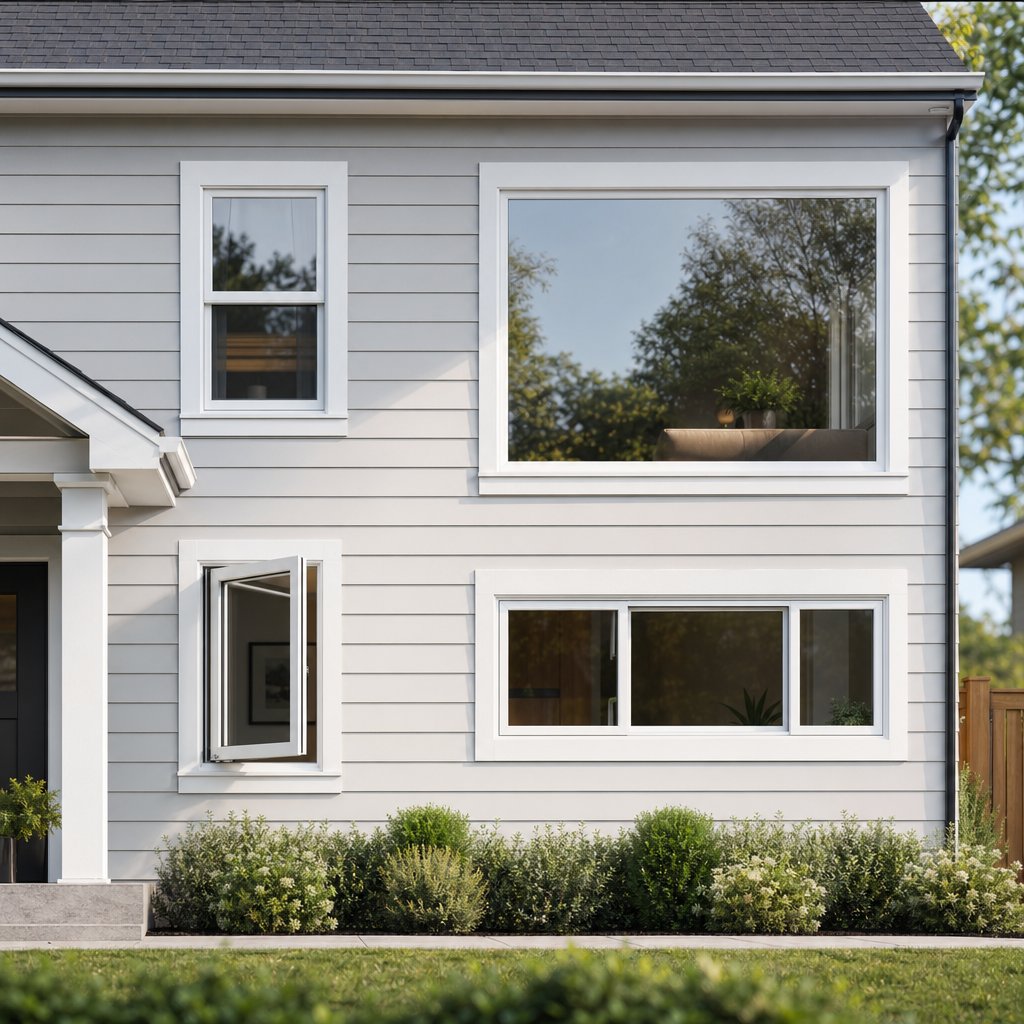
Why Comparing Aluminium and UPVC Window Costs Is More Complex Than You Think
Ask a builder or homeowner which window material is cheaper and you will almost always get a one-word answer: uPVC. That response is not wrong, but it is incomplete. The upfront frame price is only one line item in a much longer cost story, and treating it as the whole picture leads to budget surprises down the track.
Why a Simple Price Tag Comparison Fails
When weighing upvc vs aluminium windows, most people compare a single quoted figure per opening and call it done. The problem is that windows are not off-the-shelf commodities. Your final spend depends on the configuration you choose, the glazing spec required for your climate zone, installation complexity, ongoing maintenance, energy running costs, and how long the frames actually last before replacement. A material that looks cheaper on day one can end up costing more over a 30-year ownership period, and vice versa. The real question is not which material has the lowest sticker price. It is which material delivers the best value for your specific project type, location, and time horizon.
What This Ranked List Covers
This article ranks the six most impactful cost factors that shift the aluminium vs upvc windows equation. Each factor is evaluated for its effect on both short-term budget and long-term financial outcome, whether you are planning a single window swap, a whole-house replacement, or a new build. Here is what we cover:
- Upfront material and frame cost differences across product tiers
- Configuration choices and how window style changes the price gap
- Installation and labour cost variables
- Hidden maintenance and replacement expenses
- Energy efficiency and total cost of ownership over decades
- Property resale value impact and the hybrid strategy
By the end, you will have a clear framework for comparing upvc windows vs aluminium windows on the factors that actually matter to your budget, not just the ones that show up in a quick online search. The ranking starts with the most visible cost driver and moves toward the factors buyers most often overlook.
Our Methodology for Ranking Window Cost Factors
Ranking cost factors requires more than gut feel. Each of the six factors in this article was assessed against a consistent set of criteria so the order reflects real financial weight rather than opinion. Here is how we approached it.
How We Ranked These Cost Factors
Every factor was scored across four dimensions that determine how much it actually shifts your total project spend. These criteria apply whether you are pricing a single bathroom awning window or a full set of openings for a new build.
- Upfront cost weight — How large is the immediate dollar impact on your quote? Factors that create the biggest line-item difference between aluminium and uPVC rank higher.
- Long-term savings potential — Does the factor influence running costs, maintenance bills, or replacement timing over 10, 20, or 30 years? A small upfront gap that compounds over decades carries serious weight.
- Project-type relevance — Is the factor equally important for renovations, new builds, single-window replacements, and whole-house projects, or does it only matter in specific scenarios?
- Frequency of buyer oversight — How often do homeowners and builders overlook this factor when comparing quotes? Costs that regularly catch people off guard deserve a higher ranking because awareness alone can save money.
The result is a list ordered from the most immediately visible cost driver down to the factors that only reveal themselves over time. Both ends of the list matter, but the sequence helps you prioritise where to focus your research first.
Regional Pricing and Market Variability
The price of upvc windows and the equivalent aluminium window price vary considerably depending on where you are. Labour rates in Sydney differ from those in Perth or regional Queensland. Material supply chains, shipping distances, and local demand all play a role. Australian market data shows cost ranges per square metre can shift by 20 to 30 percent between capital cities alone.
For that reason, this article uses price tier positioning and directional ranges rather than fixed dollar figures. Specific numbers date quickly and rarely reflect what you will actually pay once custom sizing, glazing specs, hardware, and installation are factored in. The only reliable way to get a project-specific aluminium or upvc windows price is through detailed quotes from fabricators and suppliers who can assess your drawings, opening sizes, and site conditions. Treat the ranges here as a framework for understanding relative cost, not as a substitute for a proper quotation.
With the scoring method clear, the logical starting point is the factor that dominates every initial quote comparison: the base cost of the frame material itself.
Upfront Material and Frame Cost Differences
The first number most people see on a window quote is the frame cost, and this is where aluminium and uPVC diverge most obviously. For a standard opening in a typical Australian home, uPVC frames sit at a lower price point than their aluminium equivalents. The gap is real, but it is not as wide or as simple as many online comparisons suggest.
Base Frame Cost Per Linear Metre
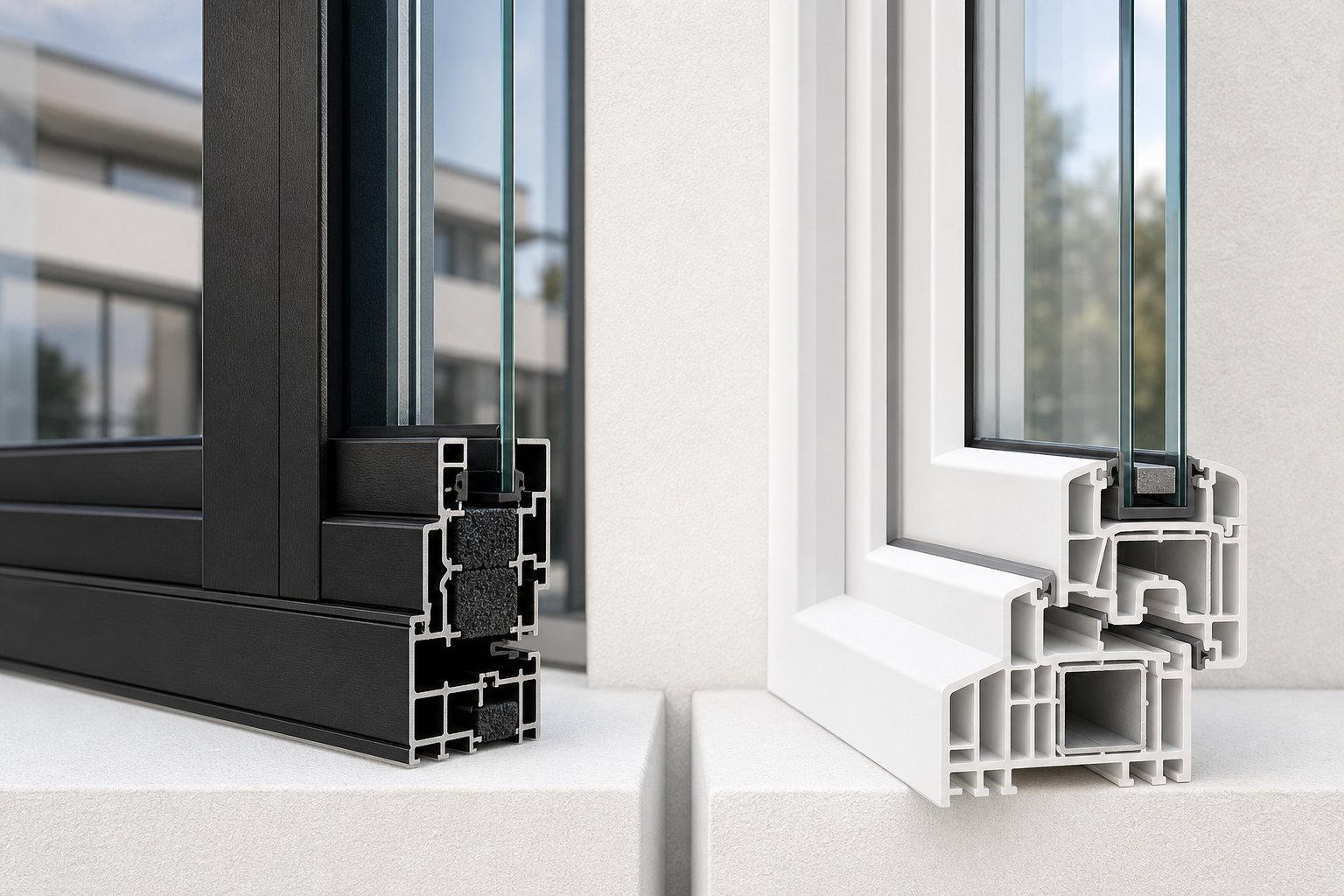
The aluminium window cost per linear metre runs higher than uPVC primarily because of two things: raw material value and manufacturing complexity. Aluminium billets are extruded under high pressure into precise profile shapes, a process that demands significant energy and specialist tooling. Extruded aluminium windows require tighter tolerances and more sophisticated finishing (powder coating, anodising) compared to the relatively straightforward PVC extrusion process.
uPVC, by contrast, benefits from cheaper polymer feedstock and simpler multi-chamber extrusion that can run at higher volumes with lower energy input. The result is a meaningfully lower base cost per metre of frame material. For budget-conscious projects where standard white frames in common sizes are acceptable, this difference alone can make uPVC the obvious pick on a per-opening basis.
Standard Aluminium vs Thermally Broken Aluminium Pricing
Here is a distinction most cost comparisons gloss over entirely: standard aluminium and thermally broken aluminium are not the same price tier. Thermally broken profiles incorporate a polyamide or polyurethane barrier between the inner and outer frame sections, which adds material cost and manufacturing steps. Industry data suggests thermally broken aluminium frames carry a 15 to 40 percent premium over standard aluminium profiles. In the Australian market, where NCC energy compliance increasingly demands thermal performance, thermally broken frames are becoming the default specification for residential projects rather than an optional upgrade. That means the real cost of aluminium windows for most new builds and renovations is the thermally broken price, not the base aluminium figure.
When Premium UPVC Approaches Aluminium Pricing
The price gap between materials is widest when comparing entry-level white uPVC against thermally broken aluminium with a custom powder-coat colour. But that gap narrows fast once you move into premium uPVC territory. Woodgrain foil wraps, coloured foils, reinforced profiles for larger openings, and upgraded hardware all push uPVC pricing upward. A fully specified premium uPVC window in a non-standard colour can land surprisingly close to a standard aluminium frame in cost, particularly for smaller openings where aluminium’s structural advantages are less relevant.
The table below positions each material tier relative to the others. These are not fixed dollar figures; they represent where each option typically sits in the Australian market when comparing like-for-like opening sizes.
| Material Tier | Relative Price Position | Typical Application |
|---|---|---|
| Standard uPVC (white) | Budget | Cost-driven renovations, rental properties, standard openings |
| Premium uPVC (coloured foil, reinforced) | Mid-range | Colour-matched projects, larger openings requiring internal steel reinforcement |
| Standard aluminium (non-thermally broken) | Mid-range to premium | Commercial glazing, mild climates, non-habitable spaces |
| Thermally broken aluminium | Premium to high-end | NCC-compliant residential, contemporary architecture, large-span glazing |
Notice that premium uPVC and standard aluminium occupy overlapping territory. The cost of aluminium windows only pulls decisively ahead when you step into thermally broken profiles with custom finishes. For projects where colour choice, slim sightlines, or structural performance matter, that premium buys tangible capability. For projects where none of those factors are critical, uPVC delivers adequate performance at a lower entry point.
Upfront frame cost sets the baseline, but it tells you nothing about how much each material costs once you factor in the type of window you actually need. A casement behaves differently from a sliding door, and the next cost factor reveals why configuration choice can flip the price equation entirely.
How Window Configuration Choices Change the Cost Equation
Two homeowners can choose the same frame material and end up with wildly different quotes. The reason is configuration. A casement window, a sliding window, and a fixed pane each place different structural demands on the frame profile, and those demands favour one material over the other depending on the opening size and operating style. This is where the upvc windows vs aluminium debate gets genuinely interesting, because the “cheaper” material on paper can become the more expensive option once you specify how the window actually needs to function.
Casement and Awning Configuration Costs
Casement and awning windows are hinged units that swing outward, and they represent the most common configuration in Australian homes. For standard openings up to around 600 mm wide, both materials perform the job without drama. uPVC holds a cost advantage here because the structural loads on a small hinged sash are modest, and the thicker uPVC profile handles them without internal reinforcement.
Push beyond standard aluminium window sizes into wider or taller casement sashes, though, and the equation shifts. uPVC profiles need galvanised steel reinforcement inserts to prevent sag and ensure the sash does not warp under its own weight over time. That steel adds material cost, fabrication time, and frame weight. Aluminium casements, by contrast, maintain structural integrity at larger dimensions without supplementary reinforcement, keeping the cost increase more linear as size grows.
Awning windows follow a similar pattern. Small awning units for bathrooms and laundries tend to be cheaper in uPVC. Larger awning configurations, particularly stacked or ganged units common in commercial and multi-residential projects, often favour aluminium because fewer mullions are needed to achieve the same span.
Sliding Window Cost Implications by Material
Sliding windows and sliding doors are where aluminium’s structural properties deliver the clearest cost advantage at scale. The aluminium sliding windows material strength allows fabricators to produce slimmer frame profiles that still support heavy double-glazed panels across wide openings. A three-panel aluminium slider can span an opening that would require four panels in uPVC simply because the uPVC frame needs more bulk to carry the glass weight without deflecting on the track.
Fewer panels means fewer frames, fewer rollers, fewer interlocks, and less hardware overall. For a large living area opening of 3,000 mm or wider, this hardware and panel reduction can partially or fully offset aluminium’s higher per-metre frame cost. The result is that total installed cost for large sliding configurations often converges between the two materials, and in some cases aluminium comes in lower once you account for the reduced panel count.
For smaller sliding windows in bedrooms or kitchens at standard sizes, uPVC typically remains the more affordable option because the structural advantage of aluminium is not yet relevant at those dimensions.
Fixed and Large-Span Glazing Considerations
Fixed windows and picture windows carry no operating hardware, so the cost comparison comes down almost entirely to frame material, profile width, and maximum achievable span. Aluminium excels here. Its rigidity allows fixed glazing panels to reach floor-to-ceiling heights and wide spans with minimal frame intrusion, which is why architects favour it for contemporary facades where maximising glass area is the design intent.
uPVC fixed windows work perfectly well at moderate sizes, but large-span fixed units require heavily reinforced profiles that add cost and visual bulk. The thicker sightlines also reduce the glass-to-frame ratio, which can matter for both aesthetics and solar heat gain calculations under NatHERS modelling.
Tilt-and-turn configurations add another layer. The hardware systems for tilt-and-turn windows are more complex than standard casement or awning fittings, and they tend to cost more in uPVC frames because the heavier sash weight demands beefier hinges and locking mechanisms. Aluminium tilt-and-turn units use lighter sashes relative to their size, which allows standard-duty European hardware to handle the load without upgrades.
The table below summarises which material tends to be more cost-effective for each common configuration type, assuming typical Australian residential opening sizes.
| Configuration Type | More Cost-Effective at Standard Sizes | More Cost-Effective at Large Sizes | Key Cost Driver |
|---|---|---|---|
| Casement | uPVC | Aluminium | Steel reinforcement needed in large uPVC sashes |
| Awning | uPVC | Aluminium | Mullion count reduction with aluminium spans |
| Sliding | uPVC | Aluminium | Fewer panels required in aluminium for wide openings |
| Fixed / Picture | Similar | Aluminium | Profile reinforcement and sightline bulk in uPVC |
| Tilt-and-Turn | Similar | Aluminium | Hardware upgrades needed for heavier uPVC sashes |
A clear pattern emerges: uPVC wins on cost for smaller, standard-sized openings across most configurations, but aluminium becomes competitive or cheaper as openings grow larger. The crossover point varies by configuration type, but it generally sits somewhere between 1,800 mm and 2,400 mm in width for sliding and fixed units.
Custom Sizing as a Hidden Cost Multiplier
Non-standard dimensions increase costs for both materials, but the impact is not symmetrical. Custom-sized windows can cost 25 to 75 percent more than standard off-the-shelf equivalents, and that premium hits differently depending on fabrication method. uPVC fabricators often work from a fixed set of profile dies, meaning unusual heights or widths may require special ordering or waste more material in cutting. Aluminium fabrication is generally more flexible for non-standard dimensions because extrusion profiles can be cut to length without the same waste constraints, though custom powder-coat colours on short runs still attract a setup premium.
Where custom sizing really drives cost blowouts is in poor project coordination: incorrect measurements, late design changes, and mismatched specifications between architect drawings and what arrives on site. Working with a project-capable fabrication partner who manages drawings, schedules, and material calculations from the outset reduces waste and prevents the kind of rework that turns a modest custom-size premium into a serious budget overrun. This matters most on projects with multiple non-standard openings, where even small measurement errors compound across dozens of frames.
Configuration choice is the cost factor that most online comparisons ignore entirely, yet it can swing the price gap between materials by hundreds of dollars per opening. The next factor that reshapes your budget sits on the other side of the quote: what it actually costs to get those configured windows into the wall.
Installation and Labour Cost Differences You Should Know
A window quote that only lists supply cost tells half the story. Installation labour can represent 30 to 50 percent of the total spend on a window project, and the two materials do not behave the same way once they reach the job site. Weight, handling requirements, substrate compatibility, and whether you are fitting into an existing opening or a new frame all influence how many hours your installer bills and whether specialist trades are needed.
Labour Rates and Installation Time by Material
uPVC frames are lighter than aluminium equivalents of the same size, and that weight difference translates directly into handling speed. A standard uPVC casement window can typically be lifted and positioned by a single installer, whereas a large thermally broken aluminium unit with double glazing may need two people to manoeuvre safely. For a whole-house project with 10 to 15 openings, those extra labour hours add up.
Installation time per opening also differs. uPVC’s lighter weight and simpler fixing methods (usually direct-screwed through the frame into timber or steel) mean a competent installer can fit a standard unit faster than an equivalent aluminium frame that requires precise shimming and heavier-duty anchoring. Industry experience suggests uPVC windows vs aluminum windows differ by roughly 15 to 30 minutes per opening on straightforward installations, a gap that compounds across a full project.
That said, the speed advantage of uPVC diminishes as window size increases. Large uPVC units with internal steel reinforcement become heavy and awkward to handle, partially eroding the weight benefit. At the upper end of residential sizing, the handling difference between materials narrows considerably.
Retrofit vs New Build Installation Costs
The type of installation matters as much as the material choice. Retrofit installation, where new windows slot into existing openings without disturbing the surrounding wall, is generally cheaper than new construction installation regardless of frame material. The existing opening provides a ready-made structure, and the installer works within defined dimensions.
In retrofit scenarios, aluminium windows vs upvc windows present different challenges. uPVC retrofit frames are forgiving of minor opening irregularities because the softer material can be shimmed and packed without risk of cracking. Aluminium retrofit frames demand more precise opening preparation because the rigid metal will not flex to accommodate an out-of-square reveal. If the existing opening has settled or shifted over time, as is common in older Australian brick veneer and weatherboard homes, additional preparation work may be needed before an aluminium frame can be installed correctly.
New build installation is a different equation. Both materials are fitted into purpose-built openings with correct tolerances, so the precision issue largely disappears. In new construction, the cost difference between materials comes down primarily to weight and fixing method. Aluminium frames in new builds are often installed with reveal-fix brackets or direct-fixed to timber or steel studs, a process that is straightforward but slightly more time-intensive than screwing a uPVC frame into position.
Where costs escalate for both materials is when the specified window does not match the actual opening. Poorly coordinated measurements, late design changes, or incorrect substrate assumptions lead to on-site modifications that burn labour hours regardless of whether the frame is aluminium or PVC. A window that arrives 10 mm too wide for the reveal costs the same rework time in either material.
Specialist Fitting Requirements for Large Aluminium Units
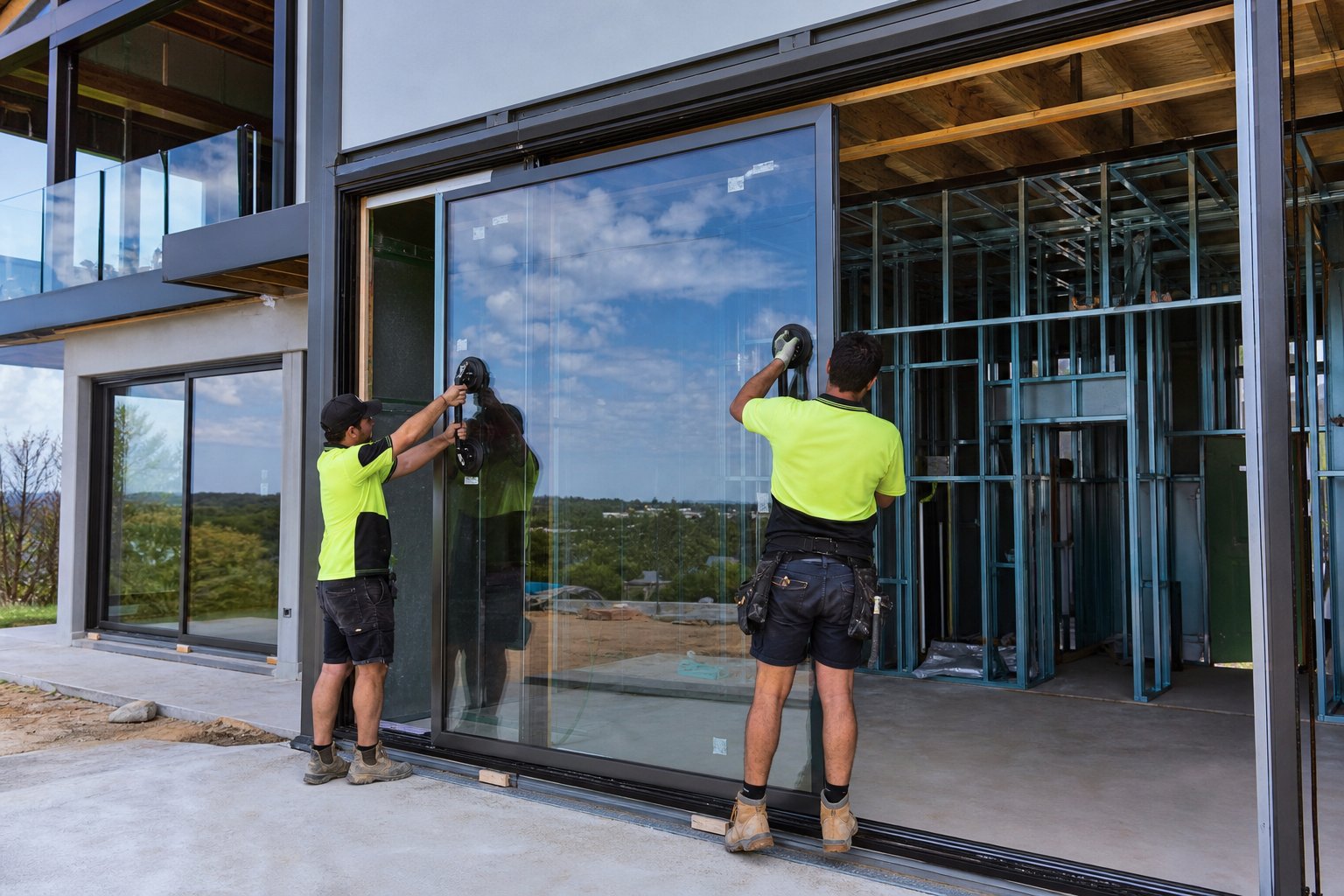
Large-format aluminium windows and sliding doors, particularly units exceeding 2,400 mm in any dimension, can require specialist installation that goes beyond standard window fitting. These units may need mechanical lifting equipment (glass suckers, small cranes, or scaffold-mounted hoists) to position safely, especially on upper storeys. The cost of that equipment hire and the specialist labour to operate it adds a line item that rarely appears on smaller uPVC projects.
Aluminum vs PVC windows also differ in how they interact with the building substrate. Aluminium frames fixed into concrete or masonry require different anchoring hardware (chemical anchors or expansion bolts) compared to timber-frame fixing. In Australian construction, where brick veneer over timber framing is the dominant residential method, installers often need to bridge between the masonry outer leaf and the timber inner frame, a detail that adds time and requires correct specification to avoid thermal bridging at the fixing points.
For standard residential openings, though, the specialist fitting premium is rarely triggered. It becomes a factor primarily on architecturally ambitious projects with floor-to-ceiling glazing, corner windows, or multi-panel stacking sliders where individual panel weights exceed what two installers can safely manage by hand.
Installation Cost Pros and Cons by Material
Pros of uPVC from an installation cost perspective
- Lighter frames reduce handling time and typically require fewer installers per unit
- Simpler fixing methods suit most common Australian wall types without specialist hardware
- Forgiving of minor opening irregularities in retrofit situations
- Lower risk of surface damage during handling (no powder coat to scratch)
Pros of aluminium from an installation cost perspective
- Slimmer profiles are easier to manoeuvre through tight access paths despite higher weight
- No risk of frame distortion from over-tightening fixings, reducing call-back rates
- Better dimensional stability means fewer adjustments needed after installation
- Single-material frame (no internal steel reinforcement) simplifies anchoring in new builds
The bottom line: for a typical Australian home with standard-sized openings, uPVC installation runs slightly cheaper due to faster handling and simpler fixing. The gap closes on larger openings and disappears entirely on projects where specialist equipment is needed regardless of material. And for both materials, the single biggest installation cost risk is not the frame weight or fixing method. It is poor specification. A window that does not fit its opening costs far more to fix than the labour difference between materials ever would.
Installation gets the windows into the wall, but what happens over the following years and decades introduces costs that never appear on the original quote. The next factor covers the maintenance and replacement expenses that quietly accumulate long after the installer leaves site.
Hidden Costs and Maintenance Expenses Most Buyers Miss
No one budgets for problems they cannot see coming. Yet when comparing upvc versus aluminium windows over a realistic ownership period, the costs that accumulate between installation day and eventual replacement often rival the upfront price difference. These are the line items that never appear on the original quote but show up reliably in the years that follow.
UPVC Degradation and Replacement Triggers
uPVC frames are genuinely low maintenance in the short term. A wipe-down with soapy water keeps them presentable, and there is no painting schedule to worry about. The hidden cost problem emerges over time, and it is binary rather than gradual: once a uPVC frame degrades past a certain point, it cannot be repaired. It must be replaced entirely.
The most common degradation triggers include discolouration and yellowing from prolonged UV exposure (a serious consideration in the Australian climate, where UV intensity is significantly higher than in the UK or Europe), warping or bowing of profiles on sun-facing elevations, and brittleness that leads to cracking around fixing points and corners. Industry data places the typical uPVC lifespan at 25 to 30 years before these issues become functionally problematic, though cosmetic deterioration on north-facing elevations in Australia can appear well before that.
The critical point is that uPVC cannot be refinished. A warped frame cannot be straightened. A yellowed profile cannot be recoated. When degradation reaches the threshold, the only option is full frame replacement, including removal, making good the reveal, and reinstallation. That replacement cost effectively resets the clock and should be factored into any long-term comparison of aluminium versus upvc windows.
Aluminium Maintenance and Recoating Costs
Aluminium frames avoid the warping and brittleness issues entirely. The material does not degrade structurally under UV exposure, and well-manufactured aluminium frames can last 40 to 50 years with minimal intervention. Powder-coated finishes hold their colour for 25 years or more without significant fading, even on sun-drenched elevations.
That said, aluminium is not maintenance-free forever. The powder coat finish can eventually show micro-chalking or localised damage from impact or abrasion. In coastal areas where salt air is a constant, even corrosion-resistant aluminium benefits from periodic washing to prevent salt buildup around drainage slots and hardware. The key difference is that aluminium degradation is repairable. A damaged powder coat section can be touched up or, in extreme cases, the frame can be professionally recoated on site without removal. Recoating is not cheap, but it extends the frame’s life by decades rather than triggering full replacement.
Non-thermally-broken aluminium introduces another hidden cost: condensation damage. Without a thermal break, the inner face of the frame can reach dew point in cooler months, causing moisture to collect on the frame and run onto the sill or into the wall cavity. Over years, this leads to mould growth, timber reveal damage, and potential plasterboard deterioration. The repair costs are not a window expense per se, but they are a direct consequence of specifying the wrong aluminium tier for a habitable space.
Hardware longevity also differs between materials. Aluminium frames tend to use higher-grade hardware as standard (stainless steel friction stays, multi-point locking systems), while budget uPVC windows sometimes ship with lighter-duty fittings that wear faster. Replacing worn hinges, handles, and locking mechanisms every 10 to 15 years on cheaper uPVC units is a recurring cost that rarely gets mentioned at point of sale. Seal and gasket replacement intervals are broadly similar for both materials, typically every 10 to 15 years, though uPVC seals can compress and lose elasticity faster if the frame itself has shifted due to thermal expansion.
Colour and Finish Premiums for Each Material
Colour choice is both an aesthetic decision and a cost factor that plays out differently for each material over time. Powder-coated aluminium offers hundreds of RAL colours at a modest premium over standard black, white, or grey options. The finish is baked on during manufacturing, bonds molecularly to the metal, and resists peeling or flaking. Dual-colour options (different colours inside and out) are available and add a further premium, but the finish remains stable for decades.
uPVC achieves non-white colours through foil wrapping, a laminate film applied to the extruded profile. Foil-wrapped uPVC costs more than standard white, and darker colours carry a higher premium because they absorb more heat and require UV-stabilised films to resist degradation. Over time, foil wraps on sun-exposed elevations can peel at edges, bubble, or fade unevenly. Unlike powder coat on aluminium, a failed foil wrap cannot be reapplied in situ. The frame must be replaced. This makes the initial colour premium on uPVC a recurring risk rather than a one-time cost.
The distinction matters most for homeowners choosing darker or bolder frame colours. If you want anthracite grey, black, or a woodgrain finish and expect it to look consistent for 30-plus years, aluminium’s powder coat delivers that with far less long-term risk than uPVC foil. For standard white frames, the difference is negligible because white uPVC holds up reasonably well and does not carry the foil-peeling risk.
Hidden Cost Summary by Material
The following lists consolidate the maintenance and hidden cost exposures for each material so you can see them side by side.
Hidden costs associated with uPVC
- Full frame replacement required when warping, yellowing, or brittleness occurs (not repairable)
- Foil wrap peeling or fading on coloured frames, particularly dark colours on sun-facing elevations
- Steel reinforcement inserts can corrode internally if moisture enters the profile, weakening the frame from within
- Lighter-duty hardware on budget units wears faster, requiring earlier replacement of hinges and locks
- Thermal expansion and contraction can compress seals prematurely, leading to draughts and water ingress
Hidden costs associated with aluminium
- Powder coat micro-chalking or localised damage after 25-plus years (repairable with on-site touch-up or recoating)
- Condensation damage to surrounding building fabric if non-thermally-broken frames are used in habitable rooms
- Coastal salt buildup requires periodic washing to maintain drainage and hardware function
- Higher initial hardware quality means less frequent replacement, but individual components cost more when they do fail
- Recoating costs if a full refinish is eventually needed (significantly less than full frame replacement)
The pattern is clear: uPVC’s hidden costs tend to be catastrophic but infrequent (full replacement when the frame fails), while aluminium’s hidden costs are incremental and manageable (maintenance, touch-ups, occasional component swaps). Which profile suits your budget depends on your time horizon and tolerance for large one-off expenses versus smaller ongoing ones. That time horizon question leads directly into the next factor: how energy performance and total cost of ownership reshape the comparison when you extend the calculation across decades rather than years.
Energy Savings and Total Cost of Ownership Over Decades
Extending the cost comparison beyond the first five or ten years changes the arithmetic dramatically. Energy running costs, maintenance intervals, and replacement timing all compound over a window’s service life, and the material that looks cheaper at installation can end up costing more by the time it needs replacing. This is where total cost of ownership either validates or undermines the upfront price decision.
Thermal Performance and U-Value Comparison
U-value measures how quickly heat transfers through a window assembly, expressed in watts per square metre per degree Kelvin (W/m²K). Lower numbers mean better insulation. For the aluminium windows cost vs uPVC debate, U-value performance depends heavily on which tier of aluminium you are comparing against.
Standard aluminium without a thermal break is a poor insulator. Metal conducts heat rapidly, and an unbroken aluminium profile creates a direct thermal bridge between inside and outside air. These frames are still common in older Australian homes and commercial buildings, but they perform significantly worse than either uPVC or thermally broken aluminium in energy terms.
PVC windows have a natural advantage here. The multi-chambered plastic profile traps pockets of air within the frame, providing inherent insulation without any additional engineering. A quality uPVC frame paired with double glazing typically achieves U-values in the range of 1.2 to 1.4 W/m²K, which comfortably meets current NCC energy requirements for most Australian climate zones.
Thermally broken aluminium closes the gap. The polyamide barrier inserted between the inner and outer frame sections interrupts the conductive path, bringing performance in line with uPVC. Modern thermally broken profiles with double glazing achieve comparable U-values of around 1.2 to 1.4 W/m²K, and with triple glazing both materials can push below 1.0 W/m²K. At this specification level, the thermal performance difference between the best aluminium windows and quality uPVC windows and doors is negligible. The glazing unit itself, not the frame material, becomes the dominant factor in overall window energy performance.
Climate-Specific Energy Cost Savings
Australia spans multiple climate zones, from tropical north Queensland to the cold winters of Tasmania and the alpine regions. Which material delivers better energy cost savings depends on where you live and what your heating and cooling loads look like.
In cooler southern climates (Melbourne, Hobart, Canberra, highland areas), minimising heat loss through windows is the priority. U-value matters most here because the temperature differential between indoors and outdoors during winter is large and the heating season is long. Research into climate-zone performance confirms that lower U-values have a more pronounced impact on heating energy consumption in cold regions due to greater temperature differentials and extended heating seasons. Both uPVC and thermally broken aluminium perform well in these conditions, so the energy cost difference between them is minimal when both are properly specified.
In hot climates (Darwin, Cairns, coastal Queensland), the Solar Heat Gain Coefficient (SHGC) matters more than U-value. Here, the goal is to limit solar radiation entering the building to reduce cooling loads. Frame material has less influence on SHGC than glazing type and shading, but aluminium’s slimmer profiles allow slightly more glass area, which can increase solar gain if not managed with appropriate low-E coatings or external shading. In mixed climates like Sydney, Brisbane, and Perth, a balance between U-value and SHGC is needed to optimise performance across both heating and cooling seasons.
The practical takeaway: in any Australian climate zone, thermally broken aluminium and quality uPVC deliver similar energy performance when specified correctly. Standard aluminium without a thermal break is the outlier, performing measurably worse and generating higher energy costs year after year. If you are comparing materials purely on energy running costs, the real divide is not aluminium versus uPVC. It is thermally broken versus non-thermally broken.
Total Cost of Ownership Over 10, 20, and 30 Years
Total cost of ownership (TCO) captures what you actually spend across the full life of a window: upfront purchase and installation, energy costs attributable to window performance, maintenance and repairs, and eventual replacement. Calculating TCO over different timeframes reveals how the cost relationship between materials shifts as the years accumulate.
Over a 10-year period, uPVC almost always wins on TCO. The lower upfront cost dominates the calculation, maintenance is minimal for both materials at this stage, and energy performance differences between uPVC and thermally broken aluminium are too small to generate meaningful savings either way. At the decade mark, both materials are well within their functional lifespan and neither requires significant intervention.
At 20 years, the picture starts to shift. uPVC frames may begin showing early signs of degradation on sun-exposed elevations, seals may need replacing, and hardware on budget units may have already been swapped once. Aluminium frames at 20 years are typically still performing as installed, with no structural or cosmetic intervention needed beyond routine cleaning. The cumulative maintenance spend on uPVC starts to erode its initial cost advantage, though it has not yet closed the gap entirely.
At 30 years and beyond, the equation can flip entirely. uPVC frames are approaching or reaching end of life. Industry consensus places uPVC lifespan at 20 to 30 years, meaning a full replacement cycle may be needed around this point. That replacement cost, including removal, disposal, new frames, and reinstallation, effectively doubles the lifetime investment in uPVC. Aluminium frames with a 40 to 50 year expected lifespan are still mid-life at 30 years, with decades of service remaining. One set of the best aluminium windows can outlast two complete sets of uPVC, and that single-purchase longevity is where aluminium’s higher upfront cost pays itself back.
| Timeframe | Standard uPVC | Premium uPVC | Standard Aluminium (non-thermally broken) | Thermally Broken Aluminium |
|---|---|---|---|---|
| 0-10 years (short-term TCO) | Lowest overall cost | Low to moderate cost | Moderate cost, higher energy bills | Highest upfront cost, low running costs |
| 10-20 years (mid-term TCO) | Still competitive; minor maintenance begins | Competitive; colour degradation may start | Moderate; energy cost penalty accumulates | Gap narrows as maintenance stays near zero |
| 20-30 years (long-term TCO) | Replacement likely; TCO doubles | Replacement approaching; foil degradation | Frame sound but energy costs remain high | No replacement needed; TCO advantage emerges |
| 30-40+ years (full lifecycle) | Second set of frames required | Second set of frames required | Still functional but thermally inefficient | Still mid-life; single purchase covers full period |
The table makes the pattern visible: uPVC’s cost advantage is front-loaded and strongest in the first decade. Thermally broken aluminium’s advantage is back-loaded and strongest beyond 20 years. For homeowners planning to stay in a property long-term, or for investors calculating lifecycle costs on a building they will hold for decades, the higher upfront spend on aluminium often represents the lower total cost. For short-term holds, renovations before sale, or budget-constrained projects where the 10-year horizon is the relevant planning window, uPVC remains the more economical choice.
Energy performance and lifespan determine what you spend over time. But there is one more financial dimension that most cost comparisons ignore entirely: what your window choice does to the value of the property itself when it comes time to sell.
Property Value Impact and the Smart Hybrid Strategy
Most cost comparisons between aluminium and uPVC stop at what you spend. They never ask what you get back. Yet window material choice influences how buyers perceive your property at resale, and that perception translates into real dollars when offers land on the table.
How Window Material Affects Property Resale Value
Replacement windows can add meaningful value to a home. UK property research found that new windows added around 10 percent to a home’s value, and US market data suggests homeowners recoup roughly 70 to 75 percent of their window replacement investment at sale. While Australian figures vary by market and property type, the principle holds: new windows improve both kerb appeal and energy performance certificates, both of which buyers notice.
The material question is where it gets interesting. Are aluminium windows better than uPVC when it comes to resale perception? In most contemporary and modern architectural contexts, yes. Aluminium reads as a premium upgrade. Slim sightlines, clean profiles, and the association with architect-designed homes give aluminium a visual authority that buyers in the mid-to-upper market segment respond to. Properties with aluminium framing tend to photograph better for listings, present a sharper street presence, and signal that the home has been finished to a higher specification.
uPVC windows and doors, by contrast, are perceived as functional. They do the job, they look tidy, and buyers rarely object to them. But they also rarely excite. In the entry-level and mid-market segments, uPVC is expected rather than aspirational. It does not detract from value, but it seldom adds perceived premium either. For heritage-style homes, Queenslanders, or federation properties, neither material automatically wins on resale appeal because buyer expectations in those segments lean toward timber or timber-look profiles.
The takeaway: if your property targets buyers who value modern aesthetics, open-plan living, and indoor-outdoor flow, aluminium delivers a resale signal that uPVC cannot match. If your property sits in a price bracket where buyers prioritise function over finish, the resale difference between materials is marginal and the upfront savings of uPVC make more financial sense.
The Hybrid Strategy for Budget-Conscious Upgrades
Not every elevation of your home carries equal weight at resale. The street-facing facade is what buyers see first, what appears in listing photos, and what forms their initial value impression. Rear elevations, side windows, laundries, and bathrooms contribute almost nothing to kerb appeal. This asymmetry creates an opportunity.
The smartest value play for renovation projects is a hybrid approach: specify aluminium on street-facing and living-area elevations where visual impact and slim profiles matter most, then use affordable aluminium alternatives like quality uPVC on rear, side, and utility-room openings where no one is looking. You capture the resale premium of aluminium where it counts without paying the full-house aluminium price tag.
This room-by-room cost optimisation works particularly well on single-storey and double-storey homes where the front elevation dominates the streetscape. You might run thermally broken aluminium across the front living room slider and kitchen windows, then fit uPVC casements on the bedrooms and wet areas at the back. The cost saving on rear openings can be redirected toward larger glass panels or better glazing specs on the front, amplifying the visual impact where it generates the most return.
The hybrid strategy also sidesteps the binary thinking that traps most buyers into an all-or-nothing material decision. It acknowledges that the answer to which material is better depends on which wall you are standing in front of, not just which line item is cheaper on a spreadsheet.
Resale value rounds out the six cost factors that reshape the aluminium versus uPVC comparison. Taken individually, each factor nudges the equation in one direction. Taken together, they paint a picture that no single price tag can capture. The next step is consolidating all six factors into a side-by-side view so you can match the right material to your specific project type.
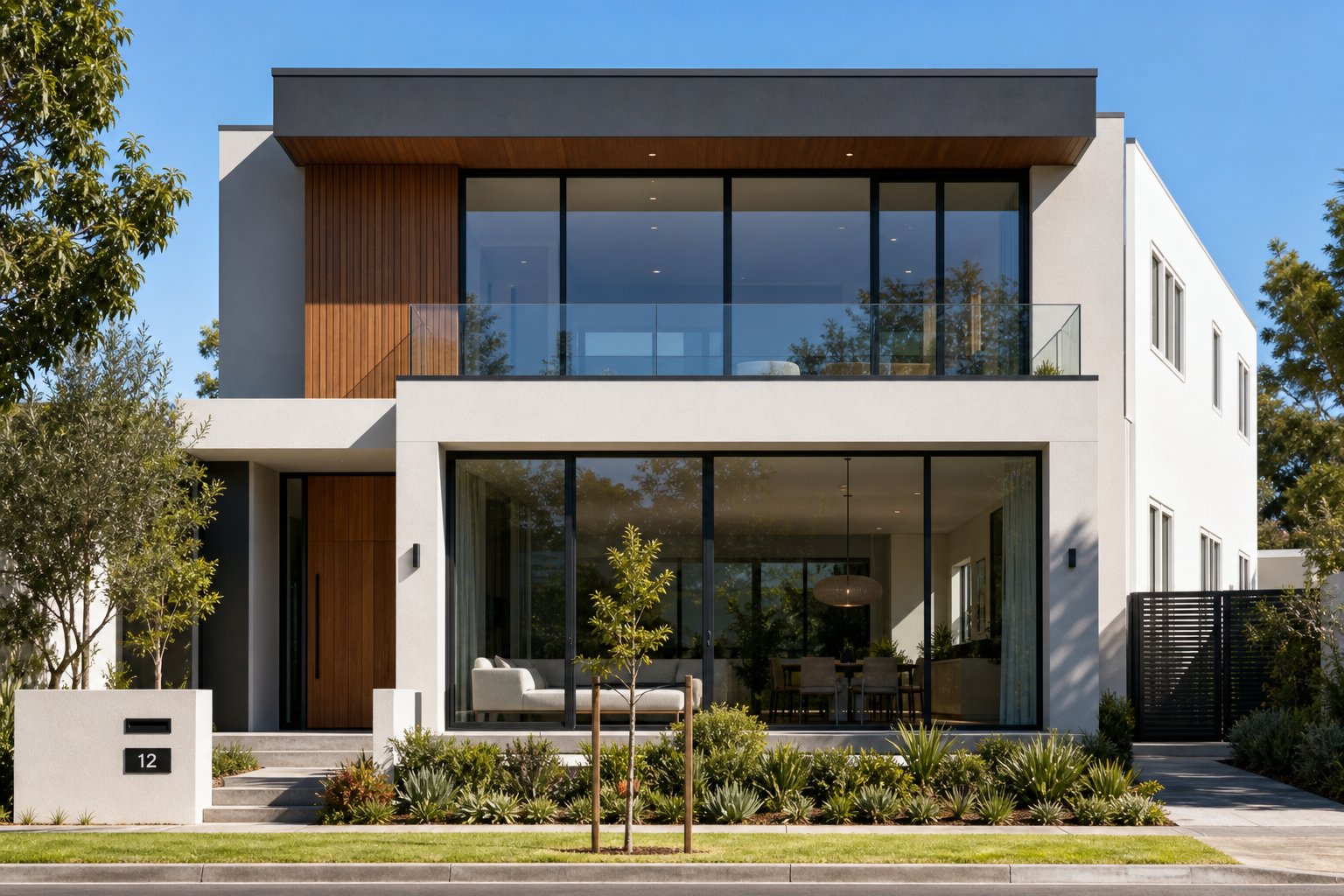
Side-by-Side Comparison Summary Across All Cost Factors
Six factors, four material tiers, and dozens of variables. Rather than flipping back through each section, the table below consolidates every cost dimension into a single scannable view. If you have been wondering whether PVC is comparable to aluminium across the board or only in specific scenarios, this is where the full picture comes together.
Complete Cost Factor Comparison Table
| Cost Factor | Standard uPVC | Premium uPVC | Standard Aluminium | Thermally Broken Aluminium |
|---|---|---|---|---|
| Upfront frame cost | Lowest | Low to moderate | Moderate to high | Highest |
| Configuration flexibility | Good at standard sizes; limited at large spans | Better with reinforcement; still size-constrained | Excellent for large openings | Excellent for large openings |
| Installation cost | Lower (lighter, faster to fit) | Moderate (heavier with steel inserts) | Moderate to high | Higher (heavier units, precision fixing) |
| Maintenance burden | Low short-term; full replacement when degraded | Low short-term; foil peeling risk on colours | Low; condensation risk without thermal break | Very low; repairable powder coat |
| Energy performance (U-value) | Strong (inherent insulation) | Strong | Poor without thermal break | Comparable to uPVC |
| Lifespan | 20-30 years | 20-30 years | 40-50 years | 40-50 years |
| Resale value impact | Neutral (expected, not aspirational) | Neutral to slight positive | Positive in modern contexts | Strong positive (perceived premium) |
| Colour options and longevity | White stable; colours via foil (peeling risk) | Wider foil range; higher degradation risk on dark tones | Hundreds of powder-coat colours; durable finish | Hundreds of powder-coat colours; durable finish |
| Overall verdict | Best short-term value | Mid-range compromise | Commercial/mild climate only | Best long-term value |
The verdict row highlights the core trade-off: uPVC wins on immediate affordability, while thermally broken aluminium wins on lifecycle return. Standard aluminium without a thermal break occupies a narrow niche where energy compliance is not required, making it unsuitable for most residential projects under current NCC standards.
Which Material Wins by Buyer Type
No single material suits every project. The right choice depends on your budget horizon, property type, and local conditions. Here is how each common buyer scenario maps to a material recommendation:
- Budget-conscious renovator (short hold or pre-sale refresh) — Standard or premium uPVC. The lower upfront cost delivers the best return when the ownership window is under 10 years and kerb appeal is not the primary driver.
- Premium new build (architect-designed, long-term hold) — Thermally broken aluminium throughout. The slim profiles, colour durability, and 40-plus year lifespan align with the investment mindset of a quality new home.
- Commercial project (offices, retail, multi-residential) — Thermally broken aluminium for street-facing and common areas; standard aluminium may suit non-habitable service areas where thermal compliance is less stringent.
- Coastal property (salt air, high UV exposure) — Thermally broken aluminium with marine-grade powder coating. Aluminium’s corrosion resistance and recoatable finish outperform uPVC in aggressive coastal environments where UV and salt accelerate plastic degradation.
- Cold climate home (Melbourne, Hobart, alpine regions) — Either thermally broken aluminium or quality uPVC with double glazing. Both achieve comparable U-values in these conditions; the decision comes down to budget, aesthetic preference, and intended hold period.
For buyers still torn between options, the hybrid strategy covered in the previous section offers a practical middle path: aluminium where it matters visually and structurally, uPVC where it does not. That approach lets you optimise spend room by room rather than committing to a single material across every opening.
Final Verdict and How to Get Accurate Window Quotes
Six factors, one conclusion: neither aluminium nor uPVC is universally cheaper. The material that costs less for your project depends on the configuration you need, the climate you live in, how long you plan to hold the property, and whether resale perception matters for your market segment. Anyone who tells you one material always wins is either oversimplifying or selling something.
Our Final Verdict by Project Type
If you have read through the full comparison, the pattern is already clear. uPVC delivers the lowest total spend when the planning horizon is short, openings are standard-sized, and the property sits in a price bracket where buyers expect functional rather than aspirational finishes. Thermally broken aluminium delivers the lowest total spend when the planning horizon extends beyond 20 years, openings are large or architecturally ambitious, and the property targets buyers who respond to premium visual cues.
For the majority of Australian homeowners and builders sitting somewhere between those poles, the answer is not one material across the board. It is the right material for each opening based on its size, orientation, visibility, and structural demand. The hybrid approach, aluminium on street-facing and living-area elevations with uPVC on rear and utility openings, remains the most cost-effective strategy for projects that need to balance budget against long-term value.
Deciding upvc or aluminium windows which is better for your specific situation requires moving past generic online pricing and into the detail of your actual project. That means getting quotes that reflect your openings, your site, and your specifications rather than industry averages that may bear little resemblance to what lands on your invoice.
How to Get an Accurate Quote for Your Project
The single biggest reason homeowners get surprised by window costs is that they compare incomplete quotes. A number that bundles everything into a single per-window figure tells you almost nothing about where your money is going or where savings might exist. To compare aluminium and uPVC quotes meaningfully, you need line-item transparency.
Here is a practical sequence for getting quotes that actually allow apples-to-apples comparison:
- Finalise your window schedule before requesting quotes. List every opening with its dimensions, configuration type (casement, sliding, fixed, awning), and any non-standard requirements. Quotes based on vague descriptions like “10 windows, mixed sizes” will never be comparable across suppliers.
- Request itemised breakdowns. Ask each supplier to separate material cost, fabrication, hardware, glazing specification, finish or colour, and installation as distinct line items. This lets you see exactly where the price difference between materials sits and whether a higher quote reflects better specification or simply higher margins.
- Specify the same glazing and hardware across both material quotes. A uPVC quote with single glazing and basic hardware will always look cheaper than an aluminium quote with double glazing and multi-point locks. The comparison is meaningless unless the performance specification is held constant.
- Clarify what installation includes. Does the quote cover removal of existing frames, making good reveals, disposal, scaffolding if needed, and final adjustment? Or does it assume supply-only with installation quoted separately? Mismatched scope is the most common reason two quotes for the same project differ by thousands of dollars.
- Ask about lead times and coordination. A cheaper quote that arrives eight weeks late or requires multiple site visits to resolve measurement errors costs more in practice than a slightly higher quote delivered on schedule with correct specifications first time.
- Factor in your hold period. If you plan to own the property for 25-plus years, ask the supplier about expected lifespan, warranty coverage, and what maintenance or replacement looks like at the 20-year mark. This context helps you weigh how much do aluminium windows cost over their full service life versus the apparent saving of uPVC at purchase.
For builders, developers, and architects working on projects with multiple non-standard openings, the quoting process becomes more complex. Drawings need to be interpreted accurately, material calculations need to account for waste on custom sizes, and delivery scheduling needs to align with construction programmes. Working with a fabrication partner who supports the full process, from interpreting architectural drawings and generating window schedules through to manufacturing coordination and delivery planning, removes the coordination risk that turns competitive quotes into costly site delays. MEICHEN’s services are structured around this end-to-end project support model for Australian professionals seeking an aluminium window quote with full cost transparency and programme reliability.
The aluminium windows cost vs uPVC question does not have a universal answer. It has your answer, specific to your openings, your climate zone, your budget horizon, and your expectations for how the finished product looks and performs over decades. The six factors in this article give you the framework. A detailed, itemised quote from a capable supplier gives you the numbers. Put both together and the right material choice stops being a guess and becomes a decision grounded in evidence.
Frequently Asked Questions About Aluminium vs uPVC Window Costs
1. Are aluminium windows more expensive than uPVC?
Aluminium frames carry a higher upfront cost per linear metre than standard uPVC due to raw material value and extrusion complexity. However, the gap narrows significantly when comparing premium coloured uPVC against standard aluminium. Thermally broken aluminium sits at the highest price tier but offers a 40 to 50 year lifespan, meaning one set can outlast two rounds of uPVC replacement. Over a 30-year ownership period, the total cost of ownership for thermally broken aluminium often works out lower than uPVC once you factor in replacement, maintenance, and energy performance.
2. How long do aluminium windows last compared to uPVC?
Well-manufactured aluminium windows typically last 40 to 50 years with minimal maintenance, while uPVC frames have an expected lifespan of 20 to 30 years before degradation issues like warping, yellowing, or brittleness require full replacement. In the Australian climate, where UV intensity is higher than in the UK or Europe, uPVC degradation on north-facing elevations can appear earlier. Aluminium’s powder-coated finish can be touched up or recoated on site, extending its service life further without the need for full frame removal.
3. Is it worth getting aluminium windows for a renovation?
It depends on your hold period and which elevations you are upgrading. For short-term holds under 10 years or pre-sale refreshes, uPVC delivers better immediate value. For long-term ownership, aluminium pays back through longevity and lower lifecycle costs. Many renovators use a hybrid strategy, specifying aluminium on street-facing elevations for kerb appeal and resale value, then fitting uPVC on rear and utility openings to manage budget. This approach captures the premium perception of aluminium where buyers notice it without paying the full-house aluminium price.
4. Do aluminium windows improve home resale value?
Research indicates new windows can add around 10 percent to a home’s value, with homeowners recouping roughly 70 to 75 percent of their window replacement investment at sale. Aluminium specifically signals a premium upgrade in modern and contemporary architectural contexts due to its slim sightlines and clean profiles. Properties with aluminium framing tend to photograph better for listings and present a sharper street presence. uPVC is perceived as functional but rarely adds aspirational value. The resale benefit of aluminium is strongest in mid-to-upper market segments where buyers value modern aesthetics.
5. How do I get an accurate quote to compare aluminium and uPVC window costs?
Request itemised quotes that separate material, fabrication, hardware, glazing, finish, and installation as distinct line items. Specify the same glazing and hardware across both material quotes so the comparison is meaningful. Finalise your window schedule with exact dimensions and configuration types before approaching suppliers. Clarify what installation includes, whether that covers removal of existing frames, making good reveals, and disposal. For projects with multiple non-standard openings, working with a fabrication partner like MEICHEN who supports the full process from drawings through to delivery planning ensures accurate material calculations and prevents costly site delays.
More Window & Door Guides