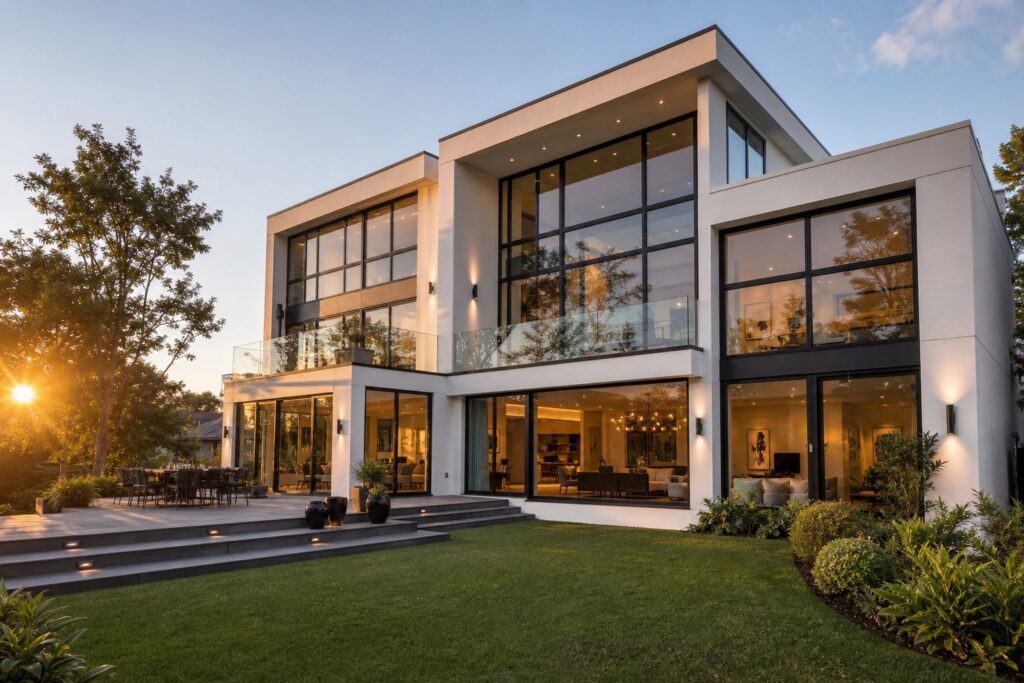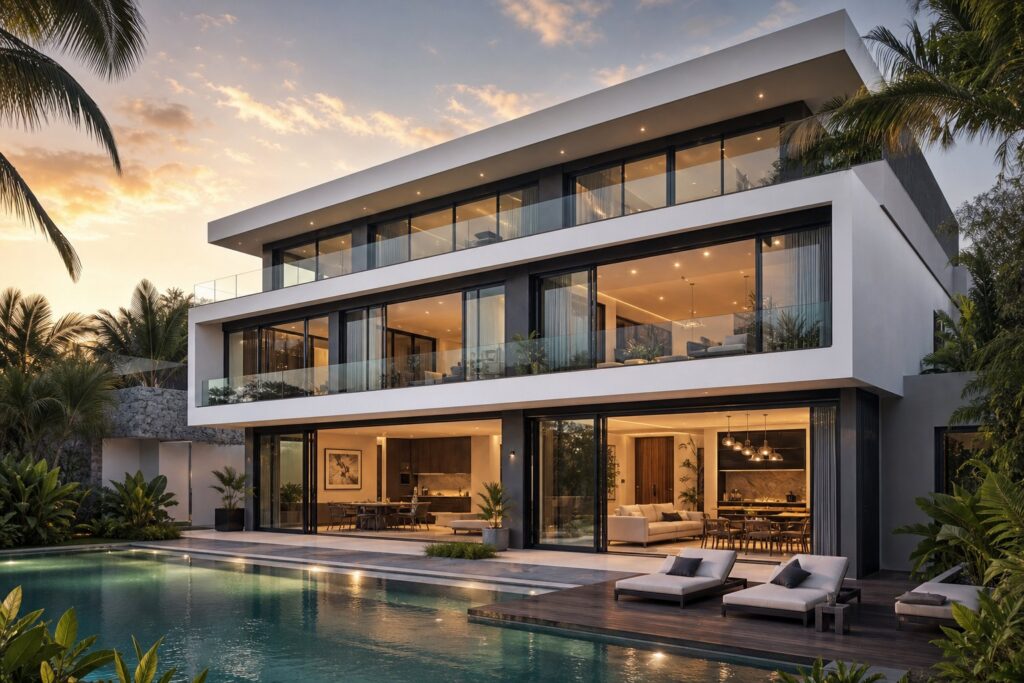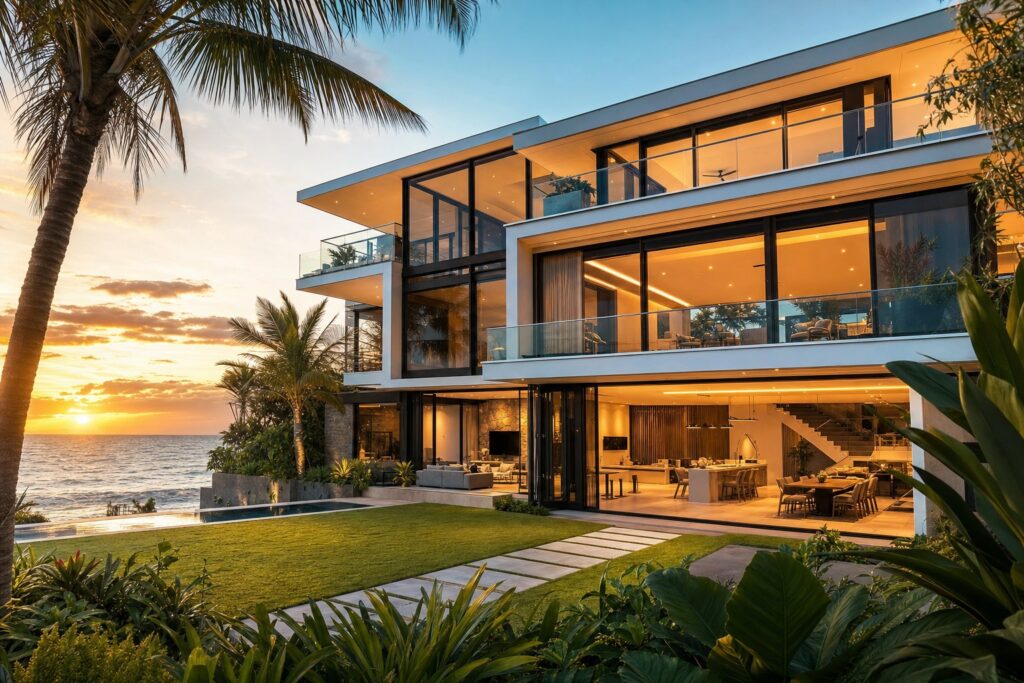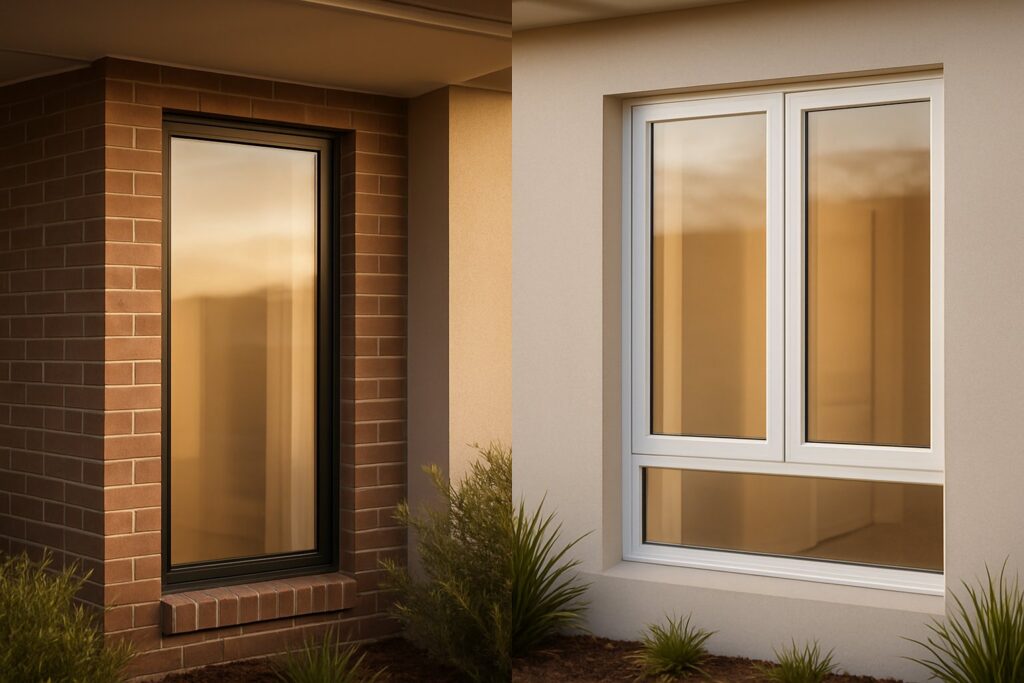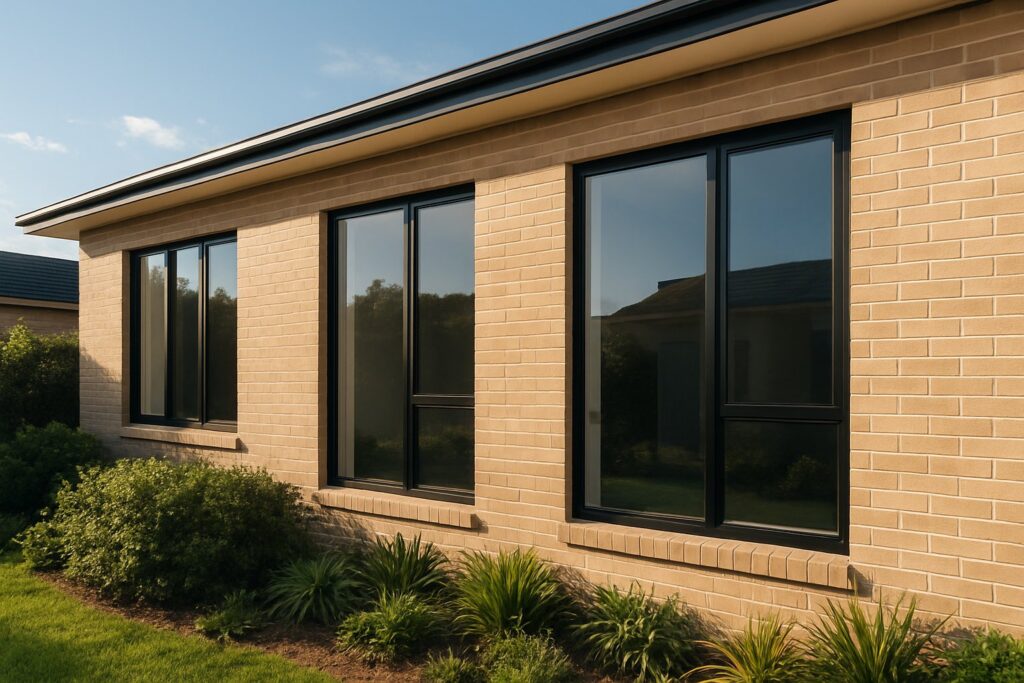
What Makes Aluminium House Windows Different From Other Frames
If you have ever renovated a home or priced up a new build, aluminium windows have almost certainly appeared on your shortlist. They dominate Australian residential construction for good reason, yet they also carry baggage from decades past. This guide cuts through the noise so you can decide whether they belong in your home.
What Are Aluminium House Windows
Aluminium house windows are window units featuring frames made from extruded aluminium alloy, designed to provide natural light, ventilation, and weather protection while offering high strength, corrosion resistance, and slim sightlines that maximise glass area.
In practical terms, an aluminium window frame is formed by pushing heated alloy through precision dies, creating profiles that are lightweight yet rigid enough to support large panes of glass. That strength-to-weight ratio is what allows windows in aluminium to achieve the narrow frame profiles you see on contemporary Australian homes, brick veneer builds, and coastal properties alike.
If your only experience with aluminium frames is the rattly, single-glazed variety found in older fibro houses, you are thinking of a product that has evolved dramatically. Those old aluminum windows earned their poor reputation honestly. Without any insulating barrier, the frame conducted heat straight through the wall, fogged up in winter, and did little to keep energy bills in check. Many homeowners still associate alu windows with that era.
Why Aluminium Remains a Leading Frame Material
The global aluminium door and window market was valued at USD $55.8 billion in 2021 and is projected to reach $82.1 billion by 2031, growing at 3.8% CAGR. That trajectory reflects a material that has not stood still. Modern thermally broken aluminium frames insert an insulating polyamide strip between the inner and outer sections of the profile, effectively severing the heat-transfer path that plagued earlier designs.
For Australian conditions, where UV exposure is intense and coastal salt air corrodes lesser materials, aluminium’s natural resistance to rust and weathering gives it a practical edge. Powder-coated finishes add UV stability, and the frames themselves can last 40 to 60 years with minimal upkeep. Aluminium windows remain a leading choice not because they are cheap, but because modern engineering has resolved their historic weakness while preserving every structural advantage.
The real question is not whether aluminium is a good material. It is whether it suits your climate zone, your home style, and your priorities. That is exactly what the following sections unpack, starting with how these frames are actually built.
Anatomy of a Modern Aluminium Window Frame
Knowing what aluminium window frames are made of is one thing. Understanding how they are engineered, layer by layer, gives you a much sharper eye when comparing quotes and assessing quality. The construction process determines everything from how long the frame lasts to how well it insulates your home on a 40-degree January afternoon.
How Aluminium Window Frames Are Built
Every aluminium window frame starts life as a cylindrical billet of aluminium alloy, most commonly 6063-series alloy containing magnesium and silicon for an ideal balance of strength, formability, and corrosion resistance. The billet is heated to between 400 and 550 degrees Celsius, then forced through a precision-machined steel die under enormous pressure. This extrusion process is what gives an extruded aluminum window frame its complex cross-sectional shape, complete with internal chambers, drainage channels, and slots for hardware and glazing seals.
Profile thickness matters more than most homeowners realise. Thicker walls in the extrusion mean greater structural rigidity, which allows the frame to support larger glass panels without flexing. For residential aluminium window framing in Australia, profiles typically range from 1.4 mm to 2.0 mm wall thickness, with heavier profiles specified for cyclone-rated zones in northern Queensland and the NT. After extrusion, profiles are cut to length, straightened if needed, and sent for surface treatment, either anodising or powder coating, before assembly.
The result is a window frame metal that is remarkably precise. Because the die controls every millimetre of the profile geometry, manufacturers can produce consistent, repeatable shapes that interlock cleanly during assembly. This is also why aluminium window frame kits can be configured for such a wide variety of styles and sizes without sacrificing structural integrity.
Understanding Thermal Breaks and Why They Matter
Here is the critical detail that separates modern metal window frames from their older counterparts. Aluminium conducts heat roughly 1,000 times more efficiently than the polyamide plastics used as insulators. Left uninterrupted, a solid aluminium frame acts like a highway for temperature, pulling heat out of your home in winter and channelling it inside during summer. That thermal bridge is exactly why older, non-broken aluminum window frames earned their reputation for condensation and energy loss.
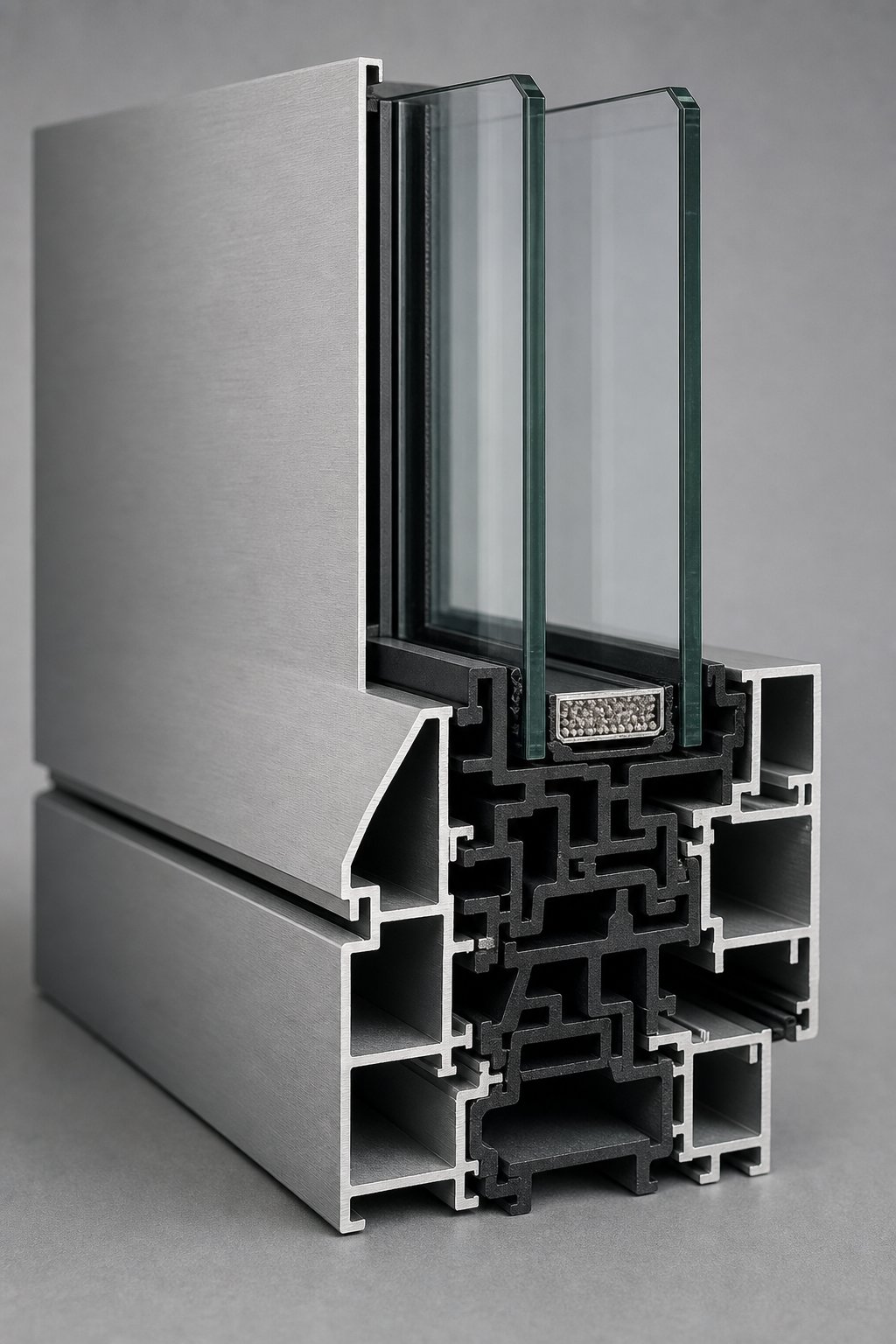
A thermal break solves this by physically separating the interior and exterior halves of the frame with a strip of low-conductivity material. The frame is no longer one continuous piece of metal. Instead, it becomes two distinct aluminium profiles joined by an insulating barrier that severs the heat-transfer path.
A thermally broken aluminium frame consists of four key components working together:
- Outer aluminium shell — the weather-facing profile that handles rain, UV, and wind loads.
- Polyamide insulating strip — a rigid, reinforced nylon bar (typically 14 to 34 mm wide) that structurally connects the two shells while blocking heat conduction.
- Inner aluminium shell — the interior-facing profile that remains closer to room temperature, reducing condensation risk.
- Glazing seals and gaskets — rubber or EPDM seals that lock the glass unit into the frame and prevent air or water infiltration around the pane edges.
The wider the polyamide strip and the more chambers it contains, the better the frame resists heat transfer. Advanced multi-chambered designs trap pockets of still air within the break itself, adding another layer of insulation on top of the material’s inherent resistance. This engineering is what allows modern aluminium frames to achieve thermal performance competitive with timber and uPVC, a reality that would have seemed unlikely a generation ago.
For Australian homes, thermally broken profiles are particularly relevant in climate zones 6 and 7 (alpine and cold temperate regions) where NatHERS modelling penalises conductive frames heavily. But even in milder coastal zones, the reduction in condensation and improved comfort near the glass makes the upgrade worthwhile. The frame is only one part of the thermal equation, though. How it pairs with glazing choices determines the window’s overall energy rating, and that interaction deserves its own closer look.
Pros and Cons Every Homeowner Should Weigh
Engineering details are useful, but at some point you need a straight answer: is aluminium actually the right frame material for your house? The honest response depends on what you prioritise. Aluminium framed windows excel in areas where other materials compromise, yet they carry trade-offs that matter in certain climates and budgets. Here is the unfiltered breakdown.
Key Advantages of Aluminium for Residential Windows
- Exceptional strength-to-weight ratio — Aluminium is roughly three times stronger than uPVC at a fraction of the weight of steel. This allows manufacturers to produce ultra-slim frame profiles (as narrow as 45 mm) while still supporting heavy double or triple-glazed units. The practical result is more glass, more light, and less visual obstruction.
- Durability that outlasts the mortgage — Quality metal framed windows resist warping, swelling, cracking, and rotting. Unlike timber, aluminium does not respond to moisture by expanding or degrading. A well-maintained frame can remain structurally sound for 40 to 60 years, far exceeding the typical 25-to-35-year lifespan of vinyl alternatives.
- Design flexibility across architectural styles — Whether your home is a Queenslander renovation, a contemporary two-storey build, or a mid-century brick veneer, aluminium profiles can be configured into virtually any window style and finished in hundreds of colours. Few materials offer this range without structural compromise.
- Low maintenance requirements — No repainting, no sanding, no sealing. A periodic wipe-down with soapy water and a check of hardware and seals is all most aluminium frames need, even in harsh Australian conditions. Powder-coated finishes resist chalking and peeling for decades.
- Corrosion resistance in coastal environments — Aluminium naturally forms a protective oxide layer when exposed to air. Combined with modern powder coating or anodising, metal windows perform reliably in salt-air zones along the Australian coastline where timber rots and steel rusts.
- Infinite recyclability — Aluminium can be recycled repeatedly without losing its structural properties, and recycling uses only about 5% of the energy required to produce new aluminium. For homeowners weighing environmental impact, this is a genuine advantage over vinyl, which degrades with each recycling cycle.
- Superior security — The inherent rigidity of aluminium makes frames significantly harder to pry or bend compared to uPVC. Paired with multi-point locking hardware, framed windows in aluminium offer a level of forced-entry resistance that softer materials struggle to match.
Honest Drawbacks and How to Mitigate Them
- Thermal conductivity (without a thermal break) — This is the big one. Aluminium conducts heat roughly 1,000 times more efficiently than polyamide insulators. In non-thermally-broken profiles, the frame becomes a direct path for heat loss in winter and heat gain in summer. The fix is straightforward: specify thermally broken frames. Old aluminum window frames without this technology are a relic. Any modern residential installation should include a polyamide thermal break as standard, and reputable Australian suppliers will not quote without one for habitable rooms.
- Condensation risk in extreme cold — In alpine regions or during prolonged cold snaps, even thermally broken aluminium can develop minor condensation on the interior frame surface if indoor humidity is high. This is less of a concern in most Australian climate zones, but homeowners in NatHERS zones 6 and 7 should ensure adequate ventilation and specify wider thermal break profiles (24 mm or greater) to minimise the risk.
- Higher upfront cost than vinyl — Aluminium typically costs more than uPVC for an equivalent window size and style. The price gap narrows when you factor in longevity and near-zero maintenance, but the initial outlay is real. For tight renovation budgets, this can be a deciding factor.
- Noise insulation requires glazing upgrades — On its own, a metal window frame does not dampen sound as effectively as the thicker, softer profile of uPVC. However, the majority of acoustic performance comes from the glass, not the frame. Upgrading to laminated acoustic glass or thicker double-glazed units addresses noise far more effectively than switching frame materials.
- Colour fading concerns — Cheap or poorly applied finishes can chalk or fade after years of intense UV exposure. Quality powder coating (minimum 60-micron thickness applied to properly pre-treated aluminium) resists fading for 20 to 30 years. The issue is not inherent to aluminium; it is a quality-control question. Ask about finish warranties before signing.
A generation ago, single pane aluminum windows with no thermal break and basic mill-finish frames deserved their poor reputation. They were cold, noisy, and inefficient. The material itself was never the problem; the engineering was simply incomplete. Modern metal frame windows address every historical weakness through thermal breaks, advanced glazing, and durable finishes, while retaining the structural and aesthetic advantages that made aluminium popular in the first place.
Whether those advantages outweigh the cost premium depends largely on your climate, your home’s architectural style, and how long you plan to stay. For a clearer picture, it helps to see how aluminium stacks up directly against the alternatives: vinyl, timber, fiberglass, and composite frames.
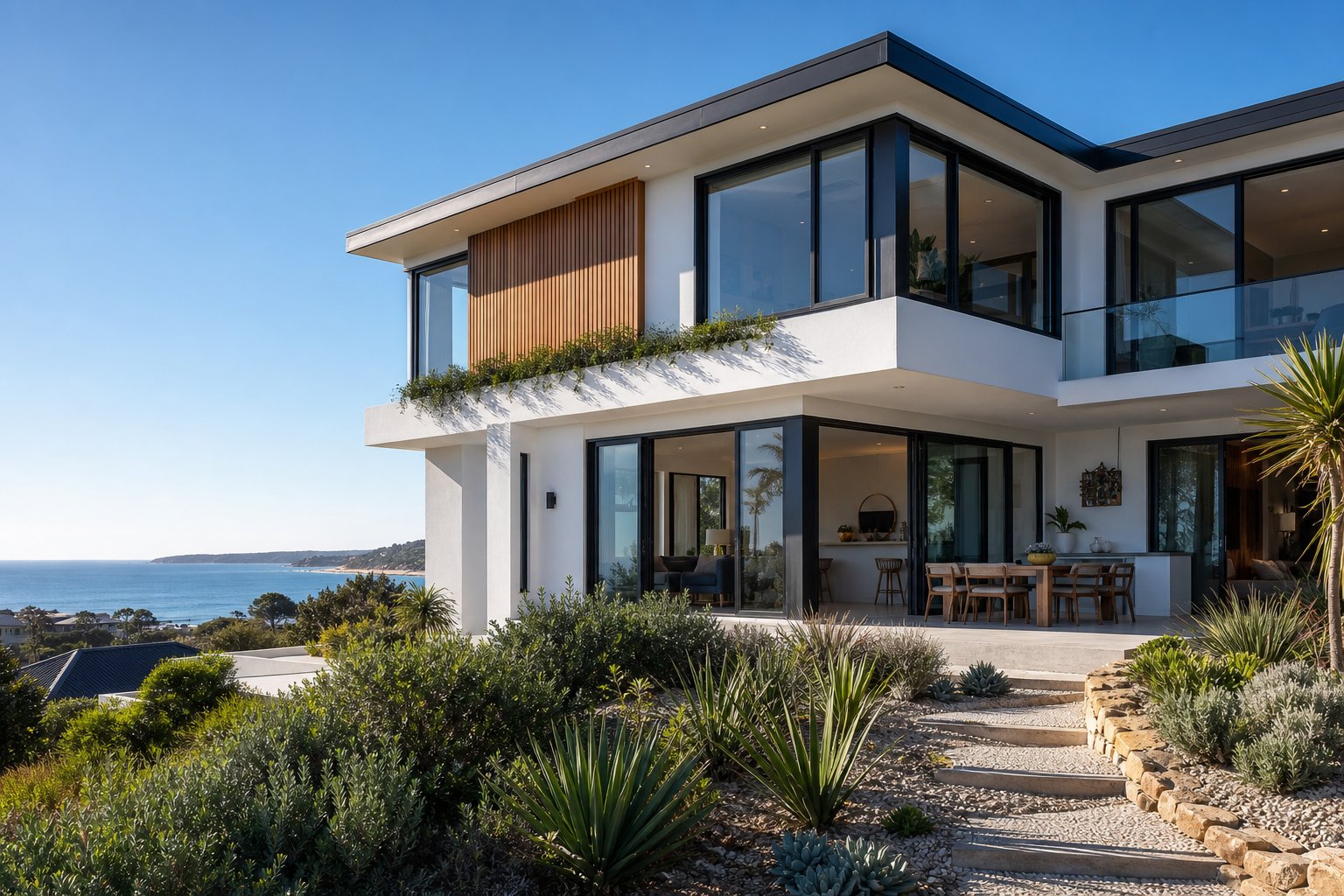
How Aluminium Compares to Vinyl, Wood and Fiberglass
Choosing between windows and window frames is rarely a simple decision. Each material brings a distinct set of strengths, and the right pick depends on your climate zone, architectural style, maintenance tolerance, and budget horizon. Rather than declaring a winner, this comparison lays out what each option does well and where it falls short so you can match the material to your situation.
Aluminium vs Vinyl and Wood Frames
Vinyl (uPVC) is the budget-friendly workhorse of the Australian window market. It insulates well, resists moisture, and costs less upfront than aluminium. The trade-off is structural. Vinyl profiles need to be bulkier to achieve the same rigidity, which means thicker frames and less glass area. Over time, vinyl can warp or discolour under intense UV, and once it deforms, it stays that way. Lifespan typically sits around 20 to 25 years in demanding climates, compared to 30 to 45 years for quality aluminium.
Timber delivers natural beauty and excellent insulation, with U-values that can outperform aluminium even with thermal breaks. It suits heritage homes, conservation areas, and homeowners who value a warm, organic aesthetic. The catch is maintenance. Timber windows and frames demand regular painting, sealing, and inspection for rot, especially in humid coastal or tropical regions of Australia. Neglect shortens their lifespan dramatically. For those who love the look of wood but want aluminium’s durability, aluminum clad wood windows offer a hybrid solution. These products feature a timber interior for warmth and an aluminum clad exterior shell that handles the weather. Wood clad aluminum windows flip that arrangement, placing timber cladding over an aluminium structural core. Both approaches try to capture the best of each material, though they come at a premium price point.
Aluminium vs Fiberglass and Composite Options
Fiberglass frames are the quiet achiever. They expand and contract at a rate similar to glass itself, which helps maintain seal integrity over decades. Maintenance is minimal, lifespan can exceed 50 years, and thermal performance is strong without needing a thermal break. The downside? Fiberglass is typically the most expensive frame material, and availability in Australia is more limited than aluminium or uPVC. Design flexibility is also narrower, with fewer colour and profile options.
Composite frames, usually a blend of timber fibres and polymer resins, sit between vinyl and wood in both cost and performance. They resist rot and warping better than solid timber while offering more rigidity than pure vinyl. Lifespan runs 30 to 40 years. However, composite windows lack the slim sightlines aluminium achieves, and customisation options remain more restricted.
Metal clad windows, whether an aluminum clad window with a timber core or a full aluminium frame, tend to dominate in projects where slim profiles, large openings, and coastal durability are priorities. For Australian homes facing salt air along the NSW coast, cyclone loads in Far North Queensland, or simply the relentless UV of a Perth summer, aluminium’s resilience gives it a practical edge that softer materials struggle to match.
| Criteria | Aluminium | Vinyl (uPVC) | Timber | Fiberglass | Composite |
|---|---|---|---|---|---|
| Durability | 30–45 years; resists warping, rot, and corrosion | 20–25 years; can warp or discolour under UV | 30–60 years with maintenance; vulnerable to rot and termites | 50+ years; minimal degradation | 30–40 years; resists rot better than timber |
| Maintenance | Very low — periodic wipe-down | Low — occasional cleaning | High — regular painting, sealing, inspection | Very low — virtually maintenance-free | Low to moderate |
| Design Flexibility | Excellent — slim profiles, any colour, large spans | Moderate — bulkier profiles, limited colours | High — natural beauty, paintable, suits heritage | Moderate — fewer profile and colour options | Moderate — limited customisation |
| Thermal Performance | Good with thermal break; competitive with other materials | Good inherent insulation | Excellent natural insulation | Excellent without needing thermal break | Good — better than vinyl, similar to timber |
| Cost Range (AUD, supply and install) | Mid to high | Low to mid | High | Highest | Mid to high |
| Best Climate Fit | Coastal, mild-to-moderate, cyclone zones | Temperature swings, humid areas | Dry, moderate climates | All climates; excels in extreme cold | Cold to moderate; handles moisture well |
No single material wins across every category. Aluminium leads on durability, slim aesthetics, and coastal performance. Vinyl wins on upfront cost. Timber offers unmatched warmth and insulation. Fiberglass delivers the longest lifespan with the least fuss. Your climate zone and design priorities should drive the decision, not marketing claims from any one camp.
What the table cannot capture, though, is how much of a window’s real-world performance comes down to the glass rather than the frame. That balance between frame material and glazing specification is where energy efficiency gets interesting.
Energy Efficiency and Thermal Performance Explained
The frame material grabs most of the attention during window selection, yet it accounts for a surprisingly small portion of the total window area. In a standard residential opening, the glass in aluminum frame assemblies makes up roughly 70 to 80 percent of the surface. That ratio flips the energy conversation on its head. A thermally broken aluminium frame paired with budget single glazing will underperform a basic frame fitted with high-specification glass. Understanding how frame and glazing work together is what separates an informed purchase from an expensive mistake.
Thermal Performance of Modern Aluminium Frames
Two metrics define how well any window resists heat transfer. The first is the U-factor (sometimes called U-value in Australia), which measures how much heat passes through the entire window assembly. Lower numbers mean better insulation. The second is the Solar Heat Gain Coefficient (SHGC), which indicates how much solar radiation the window admits. A lower SHGC blocks more heat from the sun, which matters in Australian summers, while a higher SHGC lets in useful warmth during cooler months.
Standard aluminium frames without a thermal break achieve an R-value of around R-0.37, making them the least thermally efficient option on the market. Introduce a polyamide thermal break and that figure improves to approximately R-0.50. For context, uPVC reaches about R-0.69 and timber sits at roughly R-0.77. Those frame-only numbers tell a real but incomplete story. The frame is just the border. What fills the opening, the aluminum glass unit itself, drives the majority of the window’s overall thermal rating.
In Australia, the Window Energy Rating Scheme (WERS) provides a standardised way to compare whole-window performance rather than isolated frame or glass metrics. NatHERS modelling uses these ratings to calculate a home’s energy efficiency, and it assesses the complete assembly: frame, glazing, seals, and spacers working as a system. A thermally broken aluminium frame with quality double glazing can achieve WERS ratings that satisfy even the stricter requirements of NCC climate zones 6 and 7.
The glass accounts for 70 to 80 percent of a window’s total area. No matter how advanced the frame, the glazing specification determines the lion’s share of thermal performance. Investing in premium glass aluminium frame combinations delivers far greater returns than upgrading the frame alone.
How Glazing Options Improve Energy Efficiency
This is where homeowners gain the most control over their window’s performance. Several glazing technologies work together to transform an aluminum frame glass assembly from a basic weather barrier into a genuine insulation system:
- Double glazing — Two panes of glass separated by a sealed air gap (typically 12 to 16 mm) form the baseline for any energy-efficient window. The trapped air acts as an insulator, dramatically reducing heat transfer compared to single glazing.
- Low-E coatings — A microscopically thin metallic oxide layer applied to one or more glass surfaces reflects radiant heat while still allowing visible light through. Low-E coatings can reduce energy loss by 30 to 50 percent compared to uncoated glass, and they can be tuned for high, moderate, or low solar gain depending on your climate zone and window orientation.
- Argon or krypton gas fill — Replacing the air between panes with inert argon gas (or krypton in thinner cavities) further reduces conductive and convective heat transfer within the sealed unit. Argon is the standard choice for the typical 12 mm gap in Australian double-glazed units.
- Triple glazing — A third pane adds another insulating cavity, pushing thermal performance even higher. While common in European alpine climates, triple glazing is gaining traction in southern Australian states where heating loads are significant and NatHERS targets are tightening.
- Warm-edge spacers — The spacer bar that separates glass panes at their edges can itself become a thermal weak point. Warm-edge spacers made from composite or foam materials reduce heat loss at the glass perimeter and minimise condensation risk along the bottom edge of the unit.
When these technologies are combined within a glass aluminium frame system, the overall window performance shifts into territory that rivals timber and fiberglass assemblies. A thermally broken aluminium window fitted with Low-E double glazing, argon fill, and warm-edge spacers can comfortably meet the energy requirements for most Australian residential applications, including new builds targeting 7-star NatHERS ratings.
The practical takeaway is straightforward. Do not judge aluminum in glass assemblies by the frame alone. Specify the glazing to match your orientation and climate zone, and the frame material becomes one variable among several rather than the defining limitation. North-facing windows in a Melbourne home might benefit from a higher SHGC to capture winter warmth, while west-facing openings in Brisbane need aggressive solar control. That level of customisation is where aluminium’s design flexibility, its ability to accommodate virtually any glazing configuration in slim, structurally sound profiles, becomes a genuine performance advantage rather than just an aesthetic one.
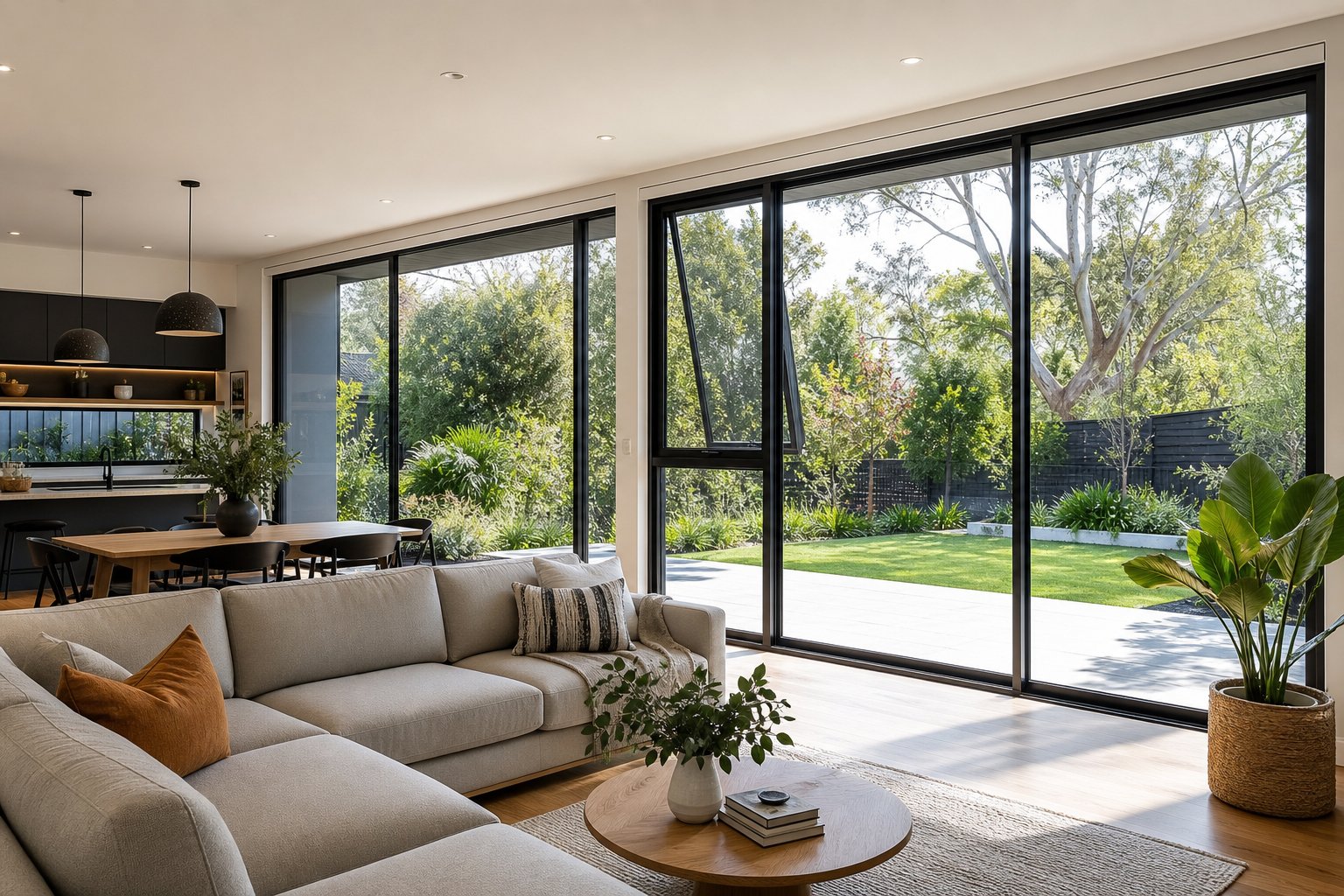
Aluminium Window Styles and Types for Every Room
Glazing specifications and frame engineering determine how well a window performs thermally, but the style you choose determines how it performs in daily life. How does it open? How much airflow does it allow? Does it suit the wall space available? Aluminium’s structural strength gives it a distinct advantage here. Because the material is inherently rigid, profiles can be made slimmer than vinyl or timber equivalents while still supporting large glass panels. That means more light, cleaner sightlines, and greater flexibility in matching window styles to the specific demands of each room.
Popular Aluminium Window Styles for Homes
Australian homes rarely use a single window type throughout. Bedrooms have different ventilation needs than kitchens, and living areas prioritise views over weather protection. Here are the main styles available in aluminium, each suited to a particular residential purpose:
- Sliding windows — Aluminium sliding windows are the go-to choice for bedrooms, hallways, and rooms where exterior clearance is limited. One or more sashes glide horizontally along a track, requiring no swing space inside or out. The simple mechanism means fewer moving parts and lower long-term maintenance. Aluminium’s strength supports wider spans than vinyl sliders, so you get more glass and less frame across the opening.
- Casement windows — Hinged on one side and opening outward via a crank or friction stay, an aluminium casement window delivers maximum ventilation because the entire sash swings open. The compression seal formed when closed also makes casement styles among the most airtight options available. They work particularly well in living rooms, kitchens, and any space where you want to catch a cross-breeze. Aluminium casement windows suit both modern and traditional facades thanks to their clean, minimal frame lines.
- Awning windows — Hinged at the top and opening outward from the bottom, an aluminum awning window lets you ventilate even during rain. The outward tilt acts as a small canopy, directing water away from the opening. Bathrooms, laundries, and above kitchen splashbacks are natural fits. They are also commonly stacked above or below fixed panes to add airflow without sacrificing wall space.
- Double hung windows — Aluminum double hung windows feature two vertically sliding sashes, allowing you to open the top, the bottom, or both simultaneously. This creates excellent natural convection: warm air exits through the top while cooler air enters below. The style suits heritage-style homes, Queenslanders, and federation renovations where a traditional proportion is important. Many modern versions tilt inward for easy cleaning from inside.
- Single hung windows — An aluminum single hung window operates like a double hung, except only the bottom sash moves. The fixed upper sash reduces cost and mechanical complexity while still providing adequate ventilation. Single hung aluminium windows are a practical choice for bedrooms and secondary living areas where full dual-sash operation is not essential.
- Louvre (or jalousie) windows — Multiple horizontal glass blades pivot simultaneously, offering precise control over airflow direction and volume. Aluminium louvre frames are a staple in tropical Queensland and Northern Territory homes, where maximising ventilation while maintaining security and weather protection is a daily priority. They pair well with security screens and can be adjusted to deflect rain while still admitting a breeze.
- Fixed picture windows — These do not open at all. Their sole purpose is to frame a view and flood a room with natural light. Without any operable hardware, fixed windows are the most airtight and energy-efficient style available. Aluminium’s slim profiles are ideal here because the frame virtually disappears, letting the glass dominate. Stairwells, feature walls, and living rooms overlooking gardens or coastline are prime locations.
Matching Window Styles to Room Function
Selecting the right style for each room comes down to three questions: how much ventilation do you need, what weather exposure does the window face, and how much wall space can you dedicate to the opening?
Living areas and open-plan spaces benefit most from aluminium sliding windows or large casement configurations that maximise both views and airflow. Where wall space is generous, aluminium sliding windows span wide openings without the swing clearance that casements demand, making them practical alongside walkways, decks, or narrow side passages.
Kitchens and bathrooms deal with moisture and cooking heat daily. Awning windows handle this well because they ventilate without letting rain in, even during a summer storm. Positioned above a splashback or shower recess, they keep humidity moving out while maintaining privacy.
Bedrooms need ventilation that meets Australian egress requirements for emergency exit. Casement and double hung styles typically satisfy these codes because they provide sufficient clear opening area. Aluminium casement windows, in particular, offer full unobstructed openings that exceed minimum egress dimensions in most residential configurations.
For feature walls, stairwells, and any space where the view matters more than airflow, fixed picture windows paired with operable units on either side deliver the best of both worlds. The fixed pane provides an uninterrupted glass expanse, while flanking casement or awning windows handle ventilation duties.
The common thread across all these styles is aluminium’s ability to keep frame profiles narrow. Where a vinyl casement might need a 70 mm sash width for structural integrity, aluminium achieves the same strength at 45 to 55 mm. That difference adds up across an entire elevation, translating into noticeably more daylight and a cleaner, more contemporary appearance. It is one reason aluminium dominates modern Australian residential design, from compact townhouses to sprawling coastal builds.
Style determines how a window functions day to day, but finish and colour determine how it looks for the next two or three decades. The surface treatment applied to these profiles is what protects them from UV, salt air, and the slow fade of time.
Finishes and Colour Options That Last
Surface treatment is what stands between your aluminium frames and decades of Australian sun, salt, and rain. Two finishing methods dominate the residential window market, and each delivers a different balance of durability, appearance, and colour range. Choosing the right one affects how your thin frame windows look on day one and how they hold up on year twenty.
Powder Coating vs Anodising Explained
Powder coating applies a dry pigment-and-resin powder to the aluminium surface using an electrostatic charge, then cures it in an oven to form a tough, uniform film. The result is a smooth, opaque finish available in virtually any colour. Because the process emits no volatile organic compounds, it is also the more environmentally friendly option. Quality powder-coated aluminium window frame colours resist fading, chalking, and chipping for 15 to 30 years depending on coating type and exposure. Fluorocarbon-based coatings sit at the top of the durability scale, retaining colour integrity even in harsh coastal and high-UV environments.
Anodising takes a different approach. It electrochemically converts the aluminium surface into a hard oxide layer rather than adding material on top. The finish is thinner, more metallic in appearance, and extremely scratch-resistant. Anodised frames suit homeowners who prefer a natural, lustrous metal look. The trade-off is a narrower colour palette, mostly limited to silver, bronze, champagne, and dark tones. Anodised finishes also excel in corrosion resistance, making them a strong choice for beachside properties where salt exposure is constant.
For most residential projects, powder coating wins on versatility. It offers hundreds of standard colours plus custom matching, and it conceals minor surface imperfections that anodising would leave visible. Anodising earns its place on architectural projects where a raw, industrial-metal aesthetic is the goal or where maximum surface hardness matters.
Choosing Colours That Complement Your Home
Aluminium’s ability to accept virtually any finish colour is one reason it suits such a broad range of architectural styles. Thin frame windows in matte black or charcoal have become synonymous with contemporary Australian design, but the options extend far beyond that single trend.
- Matte black or charcoal — The default for modern, minimalist, and industrial-style homes. Creates bold contrast against light render or timber cladding. Black aluminum windows pair naturally with flat rooflines, open-plan living, and floor-to-ceiling glazing.
- White or off-white — A timeless choice for traditional, coastal, and Hamptons-style homes. White aluminum windows keep the facade light and airy, blending with weatherboard, light brick, and rendered finishes without drawing attention to the frame itself.
- Bronze or dark bronze — Suits heritage renovations, federation homes, and earthy contemporary palettes. Bronze aluminum windows add warmth without the maintenance burden of timber, complementing sandstone, face brick, and natural stone facades.
- Monument (dark grey) — A popular middle ground between black and charcoal. Works across modern and transitional styles, particularly with Colorbond roofing in matching tones.
- Wood-grain effect — Realistic timber-look finishes applied via sublimation printing give the appearance of natural wood with none of the upkeep. Ideal for Queenslander restorations or heritage zones where council guidelines favour a traditional aesthetic.
Colour fading is the concern homeowners raise most often, and it is a fair question given Australia’s extreme UV levels. The answer comes down to coating quality. A properly pre-treated aluminium frame finished with a minimum 60-micron powder coat from a reputable applicator will resist noticeable fading for 20 years or more. Lighter colours naturally show less change over time, while darker shades benefit from fluorocarbon coatings if the window faces prolonged western sun exposure.
For Australian homeowners exploring custom aluminum windows with specific colour requirements, suppliers like MEICHEN offer extensive colour ranges and custom configuration options across their residential aluminium window systems. Being able to match frames precisely to your facade, roofline, or interior palette turns the window from a functional element into a deliberate design statement.
Finish and colour lock in the visual identity of your windows for decades. The next consideration is equally long-term but less visible: what these windows actually cost, and what drives the price differences between one quote and the next.
What Aluminium House Windows Cost and Why
Pricing is where most homeowners hit a wall. Two quotes for seemingly identical aluminium windows can differ by hundreds of dollars per opening, and without understanding what drives those numbers, it is impossible to tell whether you are paying for quality or padding. The cost of aluminium house windows is not a single figure. It is a stack of variables, each adding or subtracting from the final number on your invoice.
Factors That Influence Aluminium Window Pricing
Every quote you receive reflects decisions made across six key areas. Some have a modest effect on price; others can double the cost of a single unit. The table below maps each factor against its relative impact so you can see where your budget flexibility actually sits.
| Cost Factor | What It Covers | Price Impact | Notes |
|---|---|---|---|
| Window size | Overall dimensions and glass area | High | Larger openings require heavier profiles, more glass, and often structural engineering. Oversized units may need custom extrusion dies. |
| Window style | Casement, sliding, awning, double hung, fixed | Medium to High | Operable styles cost more than fixed. Casement and awning windows require friction stays, hinges, and compression seals. Sliding windows use simpler track hardware and typically sit at the lower end. |
| Glazing type | Double glazed, triple glazed, Low-E coatings, argon fill, laminated | Medium to High | Standard double glazing is the baseline. Adding Low-E coatings increases cost by roughly 10 to 20 percent. Triple glazing or acoustic laminated glass pushes the premium higher again. |
| Frame finish | Standard powder coat, premium colours, anodising, dual-colour | Low to Medium | Standard colours (white, black, monument) cost less. Custom colour matching, wood-grain sublimation, or dual-colour finishes (different inside and out) add 10 to 20 percent. |
| Hardware quality | Handles, locks, friction stays, hinges | Low to Medium | Basic hardware is functional but may feel flimsy. Multi-point locking systems, stainless steel components for coastal areas, and premium European hardware all increase cost. |
| Installation type | New construction vs aluminium window replacement | Medium to High | New builds with prepared openings are straightforward. Aluminum replacement windows in existing homes involve removing old frames, repairing reveals, and potentially adjusting openings, all of which add labour time. |
Replacement projects deserve extra attention. Whether you are swapping out tired timber sashes or upgrading non-thermally-broken frames from the 1980s, the scope of work varies enormously. A straightforward like-for-like aluminium window replacement in a standard brick veneer opening costs less than retrofitting a larger unit into a weatherboard wall that needs structural modification. Aluminum retrofit windows designed to fit existing openings without major building work can reduce installation complexity, but they still require careful measurement and professional fitting to maintain weather seals and compliance with AS 2047.
Total Cost of Ownership vs Upfront Price
Sticker price tells you what leaves your account this month. Total cost of ownership tells you what the windows actually cost over their working life. That distinction matters because aluminium’s upfront premium over vinyl narrows, and eventually reverses, when you account for longevity and maintenance.
Vinyl frames typically last 20 to 25 years before seals fail, profiles discolour, or UV degradation compromises structural integrity. Aluminium frames, properly finished and thermally broken, routinely deliver 35 to 45 years of service with minimal intervention. Over a 50-year period, a vinyl installation may require a full replacement cycle, effectively doubling the lifetime expenditure. Aluminium avoids that second outlay entirely.
Maintenance costs reinforce the pattern. Aluminium needs little beyond periodic cleaning and occasional hardware lubrication. No repainting, no sealing, no frame restoration. Vinyl avoids repainting too, but once it warps or chalks, the only fix is replacement. Timber, while beautiful, demands regular sanding, priming, and painting that adds up over decades.
In general cost positioning, aluminium sits above vinyl but below or comparable to timber for supply and install. Fiberglass typically commands the highest price point of all frame materials. For homeowners planning to stay in their property long-term, or for investment properties where minimising lifecycle maintenance matters, aluminium’s higher initial cost functions as a prepayment against future expenses rather than a pure premium.
When browsing aluminium windows for sale or comparing quotes from multiple suppliers, resist the temptation to evaluate on unit price alone. A cheaper quote may reflect thinner profiles, narrower thermal breaks, inferior hardware, or a basic finish that will not hold up under Australian UV. The factors in the table above give you a framework for understanding exactly what each dollar buys, and where cutting corners will cost more later.
Price tells you what you will spend. Quality indicators tell you what you will get for it. Knowing how to distinguish a well-engineered aluminium window from a budget lookalike is the final piece of the selection puzzle.
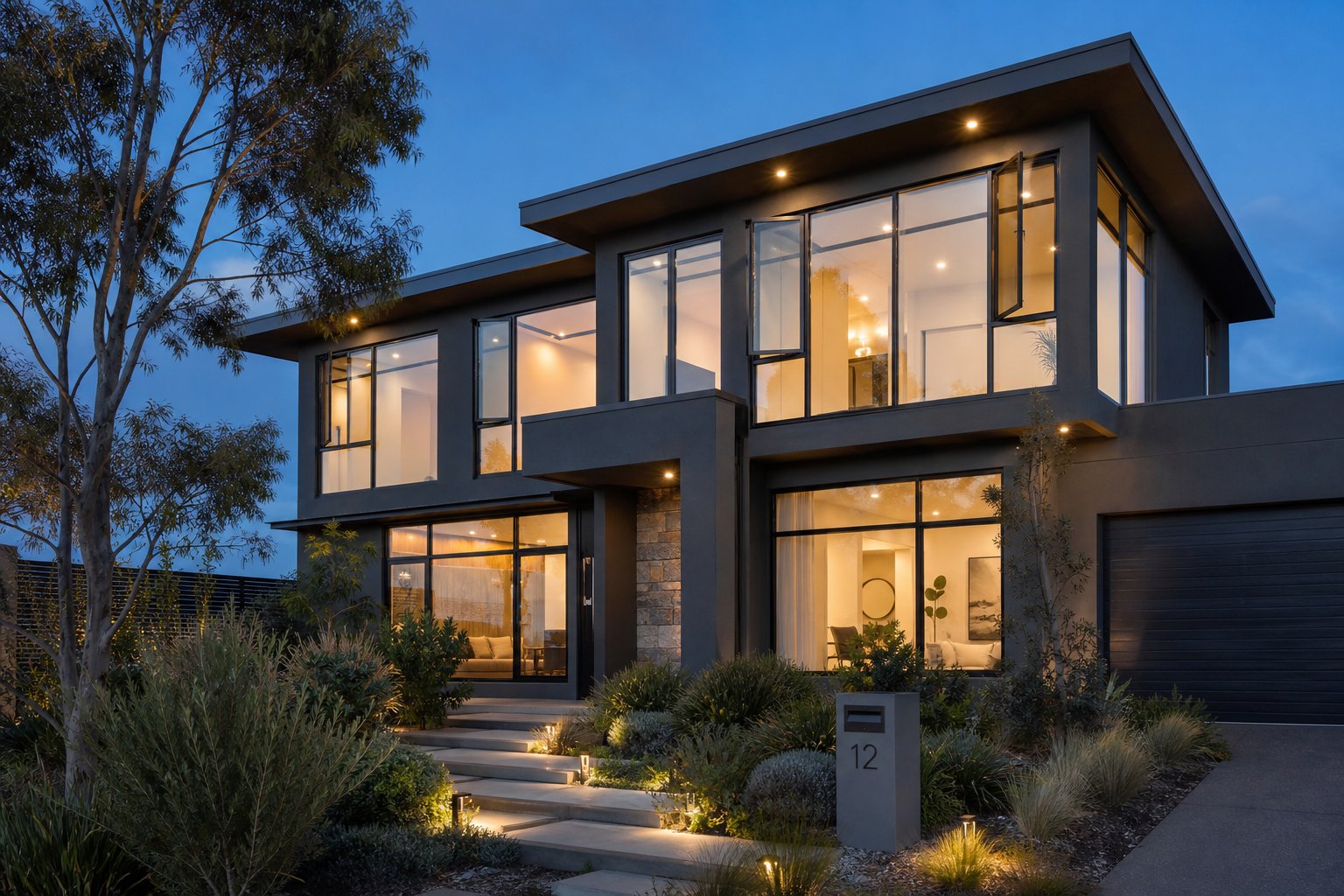
How to Choose Quality Aluminium Windows for Your Home
A lower quote does not always mean a worse product, and a higher quote does not guarantee excellence. The difference between the best aluminum windows and a regrettable purchase comes down to a handful of measurable details that any homeowner can verify before signing. Treat the following checklist as your filter. If a product or supplier cannot satisfy these points, keep looking.
Quality Indicators to Look For
Budget aluminium windows and premium ones can look nearly identical in a showroom photo. The gap reveals itself in the specifications, the hardware, and the warranty document. When evaluating residential aluminum windows for your project, check each of these indicators before committing:
- Frame profile thickness — For standard residential openings, look for a minimum wall thickness of 1.6 mm. Larger spans, coastal locations, and cyclone-rated zones in northern Queensland or the NT demand 1.8 mm or above. Thinner profiles flex under wind load and cannot adequately support heavy double-glazed units over time.
- Thermal break presence and width — Any aluminium window installed in a habitable room should include a polyamide thermal break. Ask for the break width: 20 mm is a reasonable baseline, while 24 to 34 mm delivers noticeably better insulation and condensation resistance. If a supplier quotes non-thermally-broken frames for living spaces, that is a red flag.
- Glazing specification — Double glazing is the minimum for energy-efficient residential performance in Australia. Confirm the glass thickness (5 mm per pane is standard), the cavity width (12 to 16 mm), and whether Low-E coatings or argon gas fill are included. Single glazing belongs in sheds and garages, not bedrooms.
- Hardware quality — Handles, locks, hinges, and friction stays take daily abuse. Multi-point locking systems distribute force across the frame, improving both security and seal compression. Stainless steel components are essential for coastal properties. Cheap zinc-alloy hardware corrodes and seizes within a few years.
- Seal and gasket material — EPDM rubber gaskets outperform cheaper PVC alternatives in UV resistance and longevity. Quality seals maintain compression over decades, preventing air and water infiltration. Ask what material the weatherseals are made from.
- Finish warranty — A reputable powder coat finish should carry a warranty of at least 10 to 15 years against peeling, cracking, and excessive fading. Marine-grade or fluorocarbon coatings for coastal areas often come with longer coverage. No warranty, or a vague verbal promise, suggests the finish will not last.
- Compliance with Australian Standards — Windows must meet AS 2047 for performance (air, water, and structural resistance) and AS 1288 for glazing safety. Ask for test reports or compliance certificates. Products that cannot demonstrate compliance may not satisfy NCC requirements or pass council inspection.
- Drainage design — Properly engineered frames include weep slots or drainage channels in the bottom rail to direct water outside. Without them, water pools in the track and eventually leaks into the wall cavity. Check that drainage openings are clear and covered to prevent insect entry.
Run through this list with every quote you receive. A supplier who can answer each point with documented evidence rather than vague assurances is one worth taking seriously.
Finding the Right Supplier for Your Project
Specifications only matter if the company behind them delivers consistently. When searching for aluminium windows near me or comparing aluminum window suppliers across your region, look beyond the product brochure and assess the business itself.
Start with scope. Does the supplier handle residential projects of your scale, or are they primarily commercial? Aluminum window manufacturers who also fabricate for residential work understand the tighter tolerances and aesthetic expectations homeowners bring. Ask whether they offer custom sizing, multiple glazing options, and a full range of operable styles rather than a limited catalogue of standard units.
Reputation matters more than proximity. Check independent reviews, ask for references from recent residential projects, and if possible, inspect completed installations in person. A quality aluminum window supplier will welcome that scrutiny rather than deflect it. Look for evidence of consistent delivery timelines, responsive communication, and willingness to handle warranty claims without friction.
For Australian homeowners, builders, and architects planning new builds or replacement projects, suppliers like MEICHEN offer project-based supply with custom configuration across their full aluminium window range, including multiple glazing choices, extensive colour options, and styles from casement to sliding to fixed. Having a single supplier coordinate the entire window package simplifies procurement and ensures consistency across every opening in the home.
Finally, consider when aluminium is genuinely the right call versus when alternatives deserve preference. Coastal homes, modern architectural styles, large-span openings, and projects prioritising longevity with minimal maintenance all favour aluminium. If your home sits in an alpine climate zone and heating efficiency is the overriding concern, timber or fiberglass may edge ahead on raw thermal performance. If budget is the hard constraint and aesthetics are secondary, vinyl delivers adequate performance at lower cost. But for the majority of Australian residential projects, particularly in temperate, subtropical, and coastal zones, thermally broken aluminium remains the most balanced choice across durability, design, and long-term value.
Frequently Asked Questions About Aluminium House Windows
1. Are aluminium windows energy efficient in Australia?
Modern thermally broken aluminium windows are energy efficient when paired with appropriate glazing. The polyamide thermal break severs the heat-transfer path between the interior and exterior frame halves, while double glazing with Low-E coatings and argon gas fill handles the majority of insulation across the glass area, which makes up 70 to 80 percent of the window. Thermally broken aluminium frames can achieve WERS ratings that satisfy NCC requirements across most Australian climate zones, including zones 6 and 7 when specified with high-performance glazing packages.
2. How long do aluminium window frames last compared to vinyl or timber?
Quality aluminium window frames typically last 35 to 45 years with minimal maintenance, significantly outlasting vinyl (uPVC) frames which average 20 to 25 years before UV degradation and seal failure become issues. Timber frames can match or exceed aluminium’s lifespan at 30 to 60 years, but only with consistent maintenance including regular painting, sealing, and rot inspection. Aluminium’s advantage lies in combining longevity with near-zero upkeep, making it the lowest total-cost-of-ownership option for most Australian homeowners over a 50-year period.
3. What is a thermal break in aluminium windows and why does it matter?
A thermal break is a rigid polyamide (reinforced nylon) strip inserted between the interior and exterior halves of an aluminium window frame. It matters because aluminium conducts heat roughly 1,000 times more efficiently than the polyamide insulator. Without a thermal break, the frame acts as a direct highway for temperature transfer, causing heat loss in winter, heat gain in summer, and condensation on interior surfaces. Thermal breaks typically range from 14 to 34 mm in width, with wider strips providing better insulation. Any aluminium window installed in a habitable room in Australia should include a thermal break as standard.
4. How much do aluminium house windows cost in Australia?
Aluminium house window costs in Australia vary based on six primary factors: window size, style (casement costs more than sliding), glazing type (double vs triple, Low-E coatings), frame finish (standard vs custom colours), hardware quality, and whether it is a new installation or replacement project. Aluminium generally sits above vinyl but below or comparable to timber in overall supply-and-install pricing. While the upfront cost is higher than uPVC, the total cost of ownership is often lower because aluminium frames require no repainting, resist warping, and avoid the full replacement cycle that vinyl typically needs after 20 to 25 years.
5. Which aluminium window style is best for Australian homes?
The best aluminium window style depends on room function and climate. Sliding windows suit bedrooms and hallways where exterior swing clearance is limited. Casement windows deliver maximum ventilation for living areas and kitchens. Awning windows allow airflow during rain, making them ideal for bathrooms and laundries. Double hung windows provide natural convection and suit heritage-style homes. Louvre windows maximise airflow in tropical Queensland and NT properties. Fixed picture windows flood feature walls with light. Most Australian homes use a combination of styles, with suppliers like MEICHEN offering custom configurations across the full range to match each opening’s specific requirements.
More Window & Door Guides