Why Aluminium Windows Dominate in Canberra
What Are Aluminium Windows and Why Canberra Relies on Them
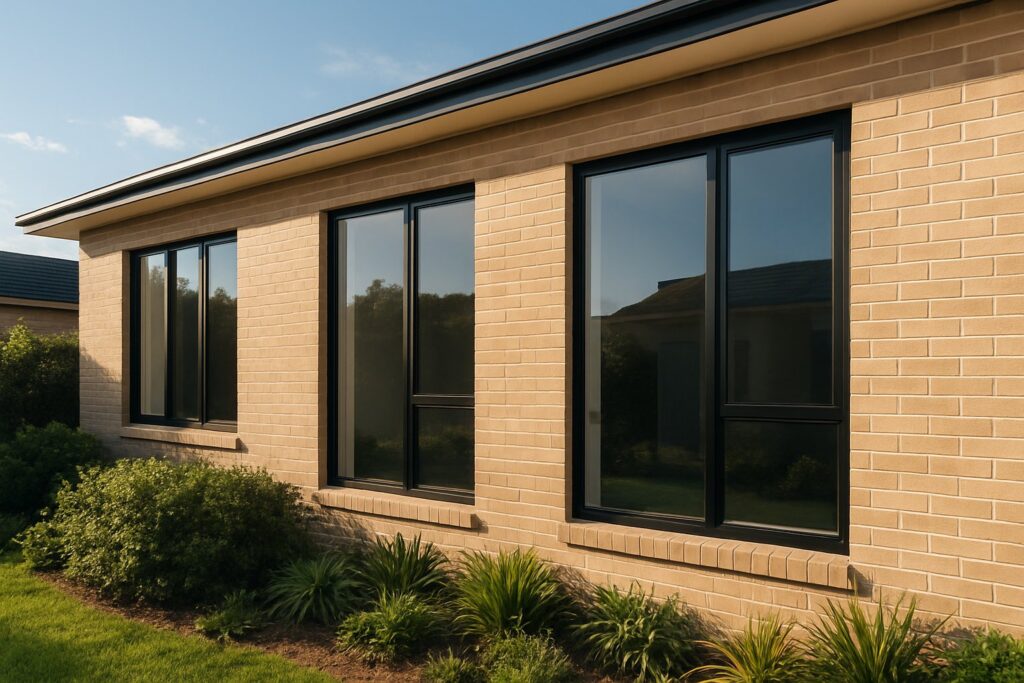
Aluminium windows use extruded aluminium alloy frames to hold single or double glazed glass panels. They are lightweight, structurally strong, corrosion-resistant, and can be shaped into slim profiles that maximise glass area without sacrificing rigidity. These qualities make them the go-to framing material for residential and commercial buildings across the ACT.
But the real reason aluminium windows dominate in Canberra comes down to climate. This city sits inland at roughly 600 metres elevation, exposed to a continental climate that swings between extremes few other Australian capitals experience. The ACT recorded its hottest day on record at 44°C in January 2020, while winter mornings still regularly dip below 0°C — with some years logging more than 50 nights below freezing. That kind of range punishes weak building envelopes.
Unlike coastal cities that primarily battle heat gain or heat loss, Canberra demands windows that perform in both directions — blocking scorching summer radiation while resisting frost-driven condensation and heat escape through winter. It is this dual requirement that makes window selection here fundamentally different from Sydney, Brisbane, or Perth.
Aluminium frames paired with modern thermal breaks and appropriate glazing meet that dual challenge. They resist warping in heat, hold seals tight against cold drafts, and stand up to the ACT’s high UV exposure and bushland dust without degrading the way timber or uPVC can over decades.
What This Guide Covers
This guide walks through everything you need to make a confident window decision for a Canberra project. You will find detailed breakdowns of window types suited to different rooms, an honest explanation of thermally broken frames and glazing performance, customisation options including powder coat colours and heritage considerations, practical maintenance routines for local conditions, and clear criteria for evaluating suppliers. No sales pitch — just the technical and practical knowledge that helps you choose aluminium windows in the Canberra ACT market with your eyes open.
Each section builds on the last, starting with the specific window styles available and where each one earns its place in a Canberra home.
Aluminium Window Types Explained for Canberra Homes
Every room in a home has different demands — airflow, privacy, security, views, weather exposure. The window type you choose determines how well each space handles Canberra’s temperature swings and seasonal conditions. Here is a practical breakdown of the six aluminium window styles commonly specified across ACT residential and commercial projects.
Sliding and Bi-Fold Windows for Open-Plan Living
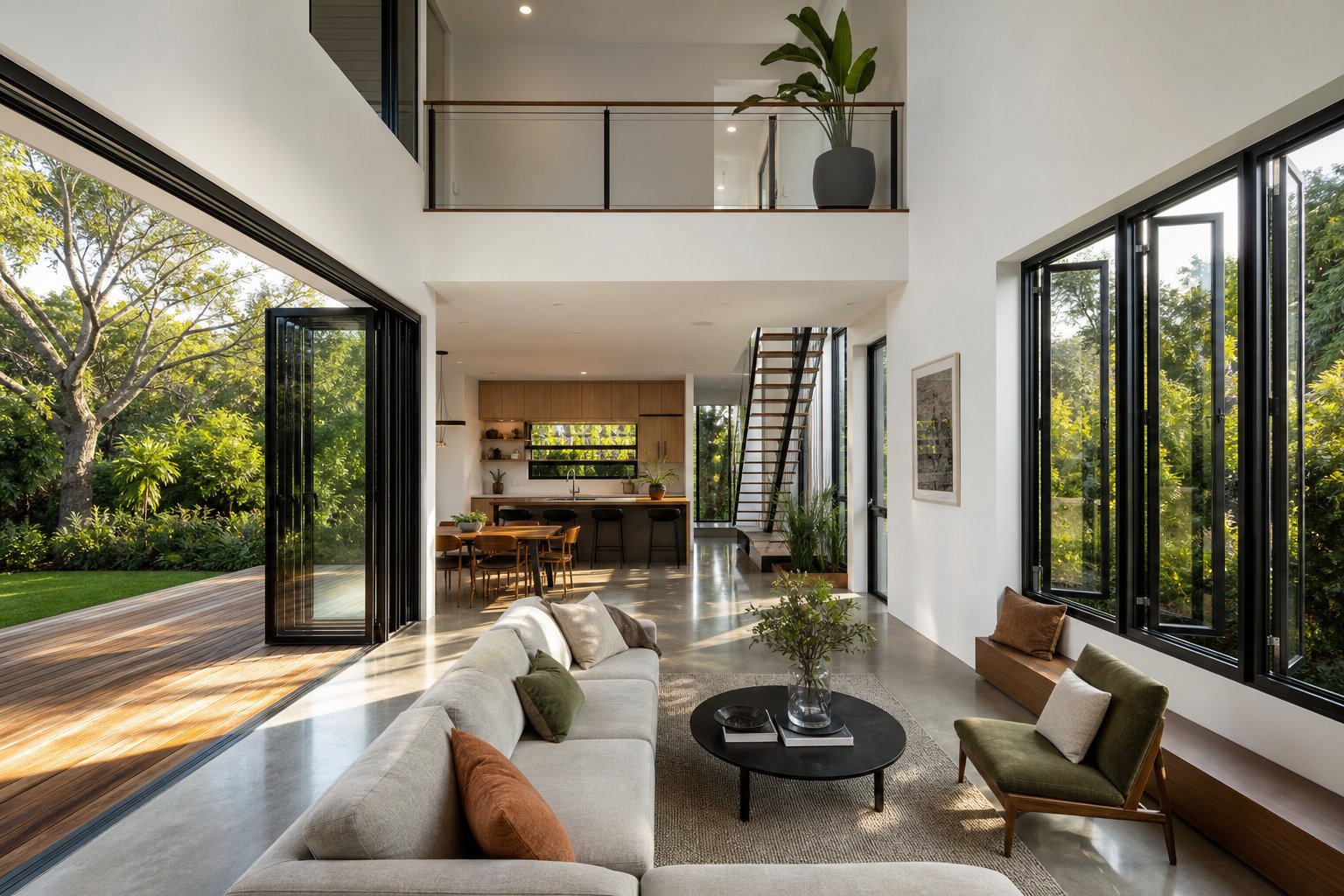
Sliding windows operate on horizontal tracks, with one or more panels gliding past each other. They require no exterior clearance, which makes them practical alongside walkways, decks, and narrow side passages. For Canberra homes designed around indoor-outdoor entertaining, aluminium sliding windows deliver wide glass spans with minimal frame interruption — more light, broader views of established gardens or bushland backdrops.
Because sliding panels can be manufactured in large dimensions without compromising structural integrity, they suit open-plan living areas and master bedrooms where generous openings are the priority. Security-wise, most modern aluminium sliders include multi-point locking and can accept keyed locks on both panels.
Bi-fold windows take the concept further. Multiple panels fold back in an accordion configuration, creating an almost fully open wall section between kitchen serveries, alfresco areas, or pool zones. Aluminium’s strength-to-weight ratio is critical here — it supports wide spans without the heavy frames that timber bi-folds require. When closed, quality bi-fold systems with proper seals and double glazing still perform well thermally, though they have more seal junctions than a single sliding panel.
Awning and Casement Windows for Ventilation Control
Awning windows hinge at the top and swing outward from the bottom. This simple mechanism creates a natural rain shield — you can leave them open during Canberra’s spring and autumn showers without water entering the room. That makes aluminium window awnings particularly well-suited to bathrooms, laundries, and kitchens where continuous airflow prevents moisture buildup and mould.
Their narrow opening angle also adds a security advantage, making them difficult to force from outside — a practical consideration for ground-floor rooms or windows facing laneways. Paired with restrictor stays, they offer controlled ventilation even when you are away from home.
Casement windows hinge on the side and crank or push outward. The entire sash opens, delivering maximum airflow — useful in living areas and bedrooms where you want to catch a cross-breeze on summer evenings. They seal tightly when closed, pressing the sash against weatherstrips to reduce air leakage during Canberra’s coldest months. Both awning and casement styles work well in commercial applications like office buildings and schools where ventilation codes must be met without compromising security.
Fixed and Louvre Windows for Specific Applications
Fixed aluminium windows do not open at all. Their purpose is purely visual — maximising natural light and framing views without the thermal weak points that operable hardware introduces. With no moving parts, they offer the best long-term seal integrity and lowest maintenance. Stairwells, highlight panels above doors, and feature walls in living rooms are common placements. In Canberra’s commercial sector, fixed glazing dominates curtain wall systems on multi-storey buildings.
Louvre windows use multiple horizontal glass blades set in an aluminium frame, each blade tilting open simultaneously via a single control. They provide fine-tuned ventilation — you can angle blades to direct airflow upward or downward depending on conditions. Louvres suit enclosed verandahs, sunrooms, and utility areas. Their limitation is security; standard louvre blades can be removed from outside unless fitted with security clips or screens. They also offer less thermal resistance than solid-sash alternatives, so placement matters in Canberra’s climate.
Most Canberra projects combine several of these types across different elevations. A north-facing living room might use large fixed panels flanked by casement sashes, while the southern bathroom gets an awning window for rain-safe ventilation, and the entertaining area opens up with aluminium sliding windows or bi-folds connecting to the deck.
| Type | Best Room Placement | Ventilation Rating | Security Level | Canberra Suitability |
|---|---|---|---|---|
| Sliding | Living areas, bedrooms, entertaining zones | Moderate | High (multi-point locks) | Excellent — large openings, no exterior clearance needed |
| Bi-Fold | Kitchen serveries, alfresco transitions | High (fully open) | Moderate (more seal points) | Very good — ideal for summer entertaining |
| Awning | Bathrooms, kitchens, laundries | Moderate–High | High (narrow opening angle) | Excellent — ventilate during rain, resist condensation |
| Casement | Living rooms, bedrooms | High (full sash opens) | Moderate–High | Excellent — tight seal for winter, full airflow in summer |
| Fixed | Stairwells, feature walls, highlight panels | None | Very High (no operable parts) | Excellent — maximum thermal seal, low maintenance |
| Louvre | Sunrooms, verandahs, utility areas | Very High (adjustable blades) | Low (without security clips) | Moderate — limited thermal performance in cold months |
Choosing the right combination of aluminium windows and doors for a Canberra project is only half the equation. The other half is understanding how the ACT’s specific climate conditions — frost, heat, UV, dust — interact with your chosen window system to determine real-world performance.
How Canberra’s Climate Shapes Your Window Decision
Canberra’s continental climate does not pick one extreme and stick with it. The city bakes through summers that regularly push past 35°C, then freezes through winter mornings that drop well below zero. Add relentless UV radiation, low humidity, seasonal dust from surrounding bushland, and you have a set of conditions that stress every component of a window system — frame, glass, seals, hardware — in different ways across the year.
That dual-direction pressure is what separates the ACT from coastal capitals. A window that merely blocks summer heat gain is not enough. It also needs to resist winter heat loss, prevent condensation on cold mornings, and hold up physically against UV degradation and fine particulate abrasion. Here is how each climate factor translates into specific performance demands.
Summer Heat and UV Exposure Challenges
Between November and March, north and west-facing windows cop intense solar radiation. Canberra’s clear inland skies mean UV levels are consistently higher than in humid coastal cities where cloud cover and atmospheric moisture filter some energy. That radiation does two things simultaneously: it drives solar heat gain through the glass into living spaces, and it degrades rubber seals, gaskets, and lower-quality powder coat finishes over time.
Solar Heat Gain Coefficient (SHGC) becomes a critical specification here. A lower SHGC means less radiant heat passes through the glazing — reducing cooling loads and keeping interiors comfortable without over-relying on air conditioning. Aluminium double glazed windows with Low-E coatings are particularly effective at reflecting infrared energy while still admitting visible light.
UV degradation is subtler but cumulative. Seals that perform well in year one can harden and crack by year eight if the window system was not specified for high-UV environments. Thermally broken aluminium windows designed for the Australian market typically use EPDM or silicone-based seals rated for prolonged UV exposure — a detail worth confirming with any supplier.
Winter Cold, Frost, and Condensation Risks
Canberra sits within NCC Climate Zone 7, classified as cool temperate. Winter nights regularly reach -5°C to -7°C, and the Bureau of Meteorology records an average of 50 to 60 frost mornings per year. When outdoor temperatures plunge that low while indoor heating maintains 20°C or above, the temperature differential across a window frame becomes extreme.
Standard aluminium — without a thermal break — conducts that cold straight through to the interior surface. The frame temperature drops below the dew point of the indoor air, and condensation forms. Left unchecked, that moisture pools on sills, damages paint, encourages mould growth, and can even degrade plasterboard beneath the window. The Australian Government’s YourHome guide identifies aluminium frames as particularly prone to this thermal bridging effect, noting that thermally broken aluminium, uPVC, or timber frames reduce condensation risk on window surfaces.
This is precisely why energy efficient aluminium windows in the Canberra ACT market almost always specify thermally broken frames paired with insulated glazing units. The polyamide thermal break prevents the inner aluminium section from reaching dew point, while double glazing keeps the interior glass surface warmer than single-pane alternatives.
- Thermal bridging: Standard aluminium frames conduct cold inward, dropping interior surface temperatures below dew point and triggering condensation.
- Condensation risk: Zone 7 carries a certain winter condensation risk — insulated glazing and thermally broken frames are the primary countermeasures.
- UV seal degradation: High summer UV hardens rubber gaskets over time, eventually compromising the airtight seal needed for winter performance.
- Dust accumulation: Fine particles from surrounding grasslands and bushland settle in tracks and drainage slots, impeding drainage and accelerating wear on moving parts.
- Dual heating and cooling loads: Windows must limit solar heat gain in summer while minimising heat loss in winter — requiring careful balance of U-value and SHGC specifications.
ACT Building Codes and Energy Compliance
The National Construction Code (NCC) Section J governs energy efficiency for buildings across Australia, and its glazing requirements have tightened considerably. Under the current NCC provisions, Climate Zone 7 demands improved U-values and SHGC figures compared to earlier code versions. Analysis from Energy Compliance shows that migrating from NCC 2019 to NCC 2022 standards requires roughly a 20% improvement in window U-value and a 30% improvement in SHGC across climate zones 2 to 7. For Canberra builders and renovators, this means single-glazed standard aluminium frames no longer meet code for most applications.
The ABCB Glazing Calculator determines compliant U-value and SHGC based on your building’s glazing-to-floor area ratio, orientation, and frame colour. Darker frames absorb more solar energy, which the calculator now factors into its compliance assessment. Practically, this pushes most new Canberra projects toward thermally broken aluminium windows with double glazing as the minimum viable specification — not a premium upgrade, but a baseline requirement.
Beyond thermal performance, properties on Canberra’s urban fringe face bushfire compliance obligations. Over 20,000 Canberra homes sit in bushfire-prone areas, concentrated around Tuggeranong, the Belconnen fringe, and rural ACT. These properties require windows rated to specific Bushfire Attack Levels (BAL) under AS 3959. BAL-rated aluminium window systems — tested and certified up to BAL-40 — use specialised glazing, seals, and frame configurations designed to withstand ember attack and radiant heat. If your block carries a BAL rating, this compliance layer sits on top of the thermal performance requirements, further narrowing your product options.
Together, these regulatory and environmental pressures explain why the conversation around aluminium windows in Canberra always circles back to frame technology. The climate demands thermal separation between inside and out, and the code now enforces it. Understanding exactly how thermally broken frames and modern glazing systems achieve that separation is the logical next step.
Thermally Broken Frames and Glazing Performance Explained
Aluminium conducts heat roughly 1,000 times more readily than uPVC. That single fact fuelled decades of criticism — the argument that aluminium frames are inherently poor insulators and have no place in cold climates. In a city like Canberra, where winter mornings hit -7°C while the heating runs inside at 20°C, that conductivity gap sounds like a dealbreaker. It would be, if the technology had not evolved. Thermally broken window frames in the Canberra ACT market solve the conductivity problem at its source, and when paired with the right glazing, they deliver thermal performance that rivals timber and uPVC systems.
How Thermal Breaks Eliminate Conductivity Problems
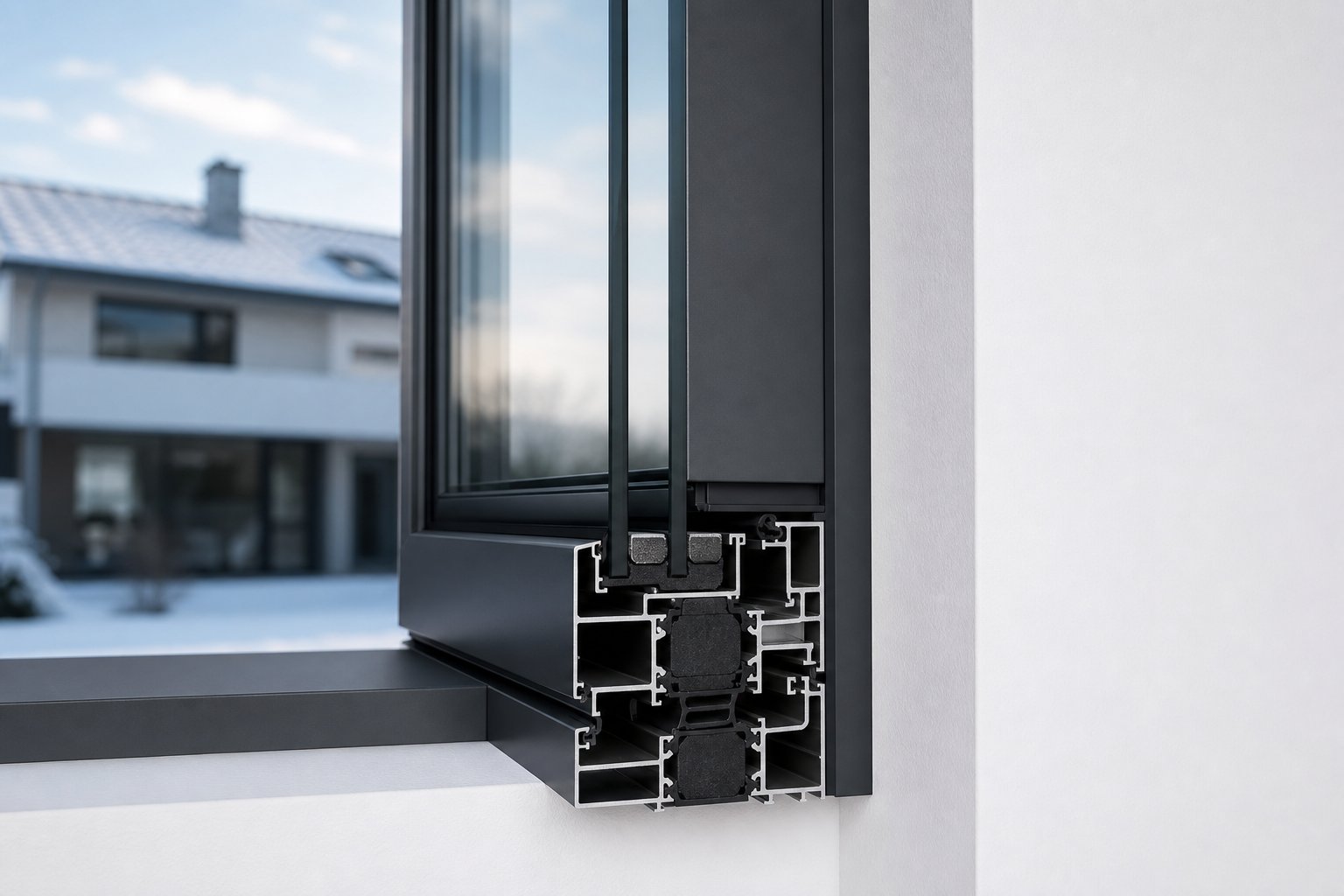
A thermal break is a continuous strip of insulating material — typically polyamide reinforced with glass fibre — mechanically crimped between the exterior and interior aluminium sections of a window frame. Instead of one solid aluminium profile conducting cold straight through to your living room, you get two separate aluminium sections joined by a material that conducts heat 500 to 1,000 times less efficiently than the metal around it.
The result is a physical separation that stops the thermal bridge dead. The outer aluminium section can sit at ambient outdoor temperature — freezing on a July morning, scorching on a January afternoon — while the inner section stays close to room temperature. That temperature difference is what prevents condensation from forming on the interior frame surface during Canberra’s frost season.
Structural integrity does not suffer. Modern crimping techniques bond the polyamide strips firmly to both aluminium sections while accommodating different thermal expansion rates between the materials. The frame remains rigid enough for commercial aluminium windows in Canberra’s multi-storey buildings, where wind loads and span requirements are far more demanding than residential applications.
Thermal break widths vary by system. Standard residential profiles typically use breaks between 14.8 mm and 24 mm, while premium and commercial-grade systems extend to 35 mm or more. Wider breaks create a longer thermal pathway, further reducing heat transfer and improving the frame’s overall U-value.
Glazing Options from Single to High-Performance Double
A thermally broken frame addresses heat transfer through the frame itself — but glass accounts for the majority of a window’s total area. Without appropriate glazing, even the best frame technology leaves a massive thermal weak point in the building envelope. This is where double glazed aluminium windows earn their place in Canberra projects.
A double glazed unit (also called an insulated glass unit or IGU) consists of two panes of glass separated by a sealed cavity. That cavity — typically 12 mm to 16 mm wide — traps a layer of still gas that dramatically slows conductive and convective heat transfer compared to a single pane. Three key technologies enhance IGU performance beyond the basic air-filled unit:
- Low-E coatings: Microscopically thin metallic layers (usually silver-based) applied to one glass surface inside the sealed cavity. They reflect infrared radiation — keeping heat inside during winter and blocking solar heat gain in summer — while still allowing visible light through. Softcoat Low-E using silver delivers superior performance and is the standard specification for high-performance residential glazing.
- Argon gas fill: Replacing the air inside the cavity with argon — a colourless, non-toxic noble gas — reduces thermal conductivity by approximately 30% compared to air alone. Argon is the practical choice for residential double glazing, improving centre-of-glass U-value by 0.2 to 0.3 W/m²K without significant cost premium.
- Warm-edge spacers: The spacer bar around the perimeter of the IGU holds the two panes apart. Traditional aluminium spacers create a thermal bridge at the glass edge, causing the cold “halo” effect and edge condensation. Modern warm-edge spacers use stainless steel, composite materials, or thermally broken aluminium to reduce edge heat loss by 5 to 10% and virtually eliminate perimeter condensation.
Together, these components form a complete thermal envelope. The thermally broken frame prevents bypass heat loss around the glass perimeter. The Low-E coating manages radiative transfer. The gas fill limits conduction and convection within the cavity. And the warm-edge spacer closes the last remaining thermal weak point at the glass edge. Each element addresses a different heat transfer mechanism — remove any one, and the system underperforms.
Matching Frame and Glass Performance to Canberra’s Climate Zone
Canberra falls within NCC Climate Zone 7, which carries some of the strictest glazing performance requirements in Australia. The ABCB Glazing Calculator determines compliant U-values and SHGC figures based on glazing area, orientation, and frame colour. For most Zone 7 projects, the practical minimum specification is a thermally broken aluminium frame with double glazing featuring Low-E coating and argon fill.
The table below compares frame types across the metrics that matter most for Canberra conditions. These figures represent frame U-values (Uf) — the thermal transmittance of the frame section alone, measured in W/m²K. Lower numbers indicate better insulation.
| Frame Type | U-Value Range (W/m²K) | Condensation Resistance | Structural Strength | Typical Lifespan |
|---|---|---|---|---|
| Standard aluminium (no thermal break) | 5.5 – 7.0 | Poor — high condensation risk in Zone 7 winters | Excellent — suits large spans and commercial loads | 30+ years (frame); seals degrade faster |
| Thermally broken aluminium | 2.5 – 4.0 | Good — interior surface stays above dew point | Excellent — retains full structural capacity | 30+ years with maintained seals |
| Timber | 1.8 – 2.5 | Good — natural insulator | Moderate — limited span without bulky profiles | 20 – 40 years (maintenance dependent) |
| uPVC (multi-chamber) | 1.5 – 2.5 | Excellent — lowest conductivity | Moderate — wider profiles needed for rigidity | 30+ years (no maintenance) |
The numbers tell a clear story. Standard aluminium without a thermal break is no longer viable for Canberra’s climate or code requirements — its U-value is three to four times worse than the alternatives. Thermally broken aluminium closes much of that gap, landing within a competitive range while retaining the structural advantages that timber and uPVC cannot match: slimmer sightlines, longer unsupported spans, and suitability for large-format openings and commercial applications.
For double glazed aluminium windows in Canberra, specifying a thermally broken frame with a quality IGU (Low-E softcoat, argon fill, warm-edge spacer) delivers whole-window U-values in the range of 1.8 to 2.8 W/m²K depending on frame width and glazing configuration. That puts the complete system on par with timber-framed double glazing and within reach of uPVC — while offering superior strength, slimmer profiles, and design flexibility that suits both residential renovations and commercial builds across the ACT.
Performance specifications only tell part of the story, though. How a window looks, feels, and integrates with your home’s architecture matters just as much to most homeowners — and that is where customisation options like powder coating colours, frame profiles, and hardware selection come into play.
Colours, Finishes and Customisation for Canberra Projects
Thermal performance gets a window into the building. Colour, profile, and hardware are what make it belong there. Customisation choices affect more than aesthetics — in Canberra’s climate, they influence heat absorption, code compliance, and long-term durability. Getting these details right means your canberra aluminium windows and doors work with the architecture rather than against it.
Powder Coating Colours and UV Durability
Powder coating is the industry-standard finish for aluminium window frames in Australia. Unlike liquid paint, powder is electrostatically applied to the aluminium surface and then oven-cured at around 200°C, creating a molecular bond that resists chipping, peeling, and UV degradation far better than conventional paint. For Canberra’s intense UV environment — where clear inland skies deliver higher cumulative radiation than humid coastal cities — that durability difference is not trivial. A quality powder coat finish rated to resist UV, scratches, and chemical exposure will hold its colour and integrity for decades without the recoating cycles that painted aluminium windows in Canberra would demand.
The full Dulux and Interpon powder coat ranges offer hundreds of colours, but most residential and commercial projects draw from a core palette. Here are the popular categories and their practical implications for ACT conditions:
- Neutrals (whites, greys, blacks): The dominant choice across Canberra. Monument (dark charcoal) and Woodland Grey lead modern builds, while Surfmist suits lighter colour schemes. Lighter neutrals reflect more solar energy, keeping frames cooler in summer.
- Earth tones (browns, beiges, tans): Colours like Dune and Paperbark complement brick veneer homes and blend with Canberra’s dry landscape tones. Mid-range heat absorption.
- Bold colours (greens, blues, reds): Less common but available for feature windows or commercial branding. Require higher-grade UV-stable pigments to prevent fading.
- Metallic finishes (pearl, bronze, metallic grey): Add depth and visual interest. Slightly more expensive due to the multi-layer application process.
- Woodgrain (timber-look sublimation): A sublimation process transfers realistic timber patterns onto the aluminium surface. Delivers the warmth of timber aesthetics with aluminium’s structural performance and zero maintenance — a practical option for heritage-sensitive contexts.
Colour choice carries a thermal consequence. Darker frames absorb significantly more solar radiation than lighter ones — a black frame can reach surface temperatures 20°C to 30°C higher than a white frame under direct summer sun. In Canberra, where January afternoons push past 40°C, that additional heat load stresses seals and increases localised heat transfer into the building. The NCC’s ABCB Glazing Calculator already factors frame colour into its compliance assessment, meaning a dark-framed window may need higher-performing glazing to achieve the same energy rating as an identical window in a lighter colour. If you prefer Monument or Satin Black, budget for the glazing specification that compensates.
For anyone considering painting aluminium windows in Canberra as a refresh rather than full replacement, understand the limitations. Brush or spray-applied paint does not achieve the same molecular bond as factory powder coating. It can work as a short-term cosmetic fix — typically lasting three to five years before UV breaks down the film — but it is not a substitute for proper powder coating on new or replacement frames.
Frame Profiles and Hardware Selection
Aluminium window systems come in multiple profile sizes, each balancing sightline slimness against structural capacity:
- Slim residential profiles: Minimise frame visibility to maximise glass area. Ideal for fixed windows, highlight panels, and smaller openings where wind load is modest.
- Standard residential profiles: The workhorse specification for most Canberra homes. Accommodate double glazing, thermal breaks, and standard hardware while maintaining clean proportions.
- Commercial-grade profiles: Wider and deeper sections engineered for multi-storey buildings, large spans, and high wind-load zones. These handle heavier glazing units and meet the structural demands of office towers, schools, and apartment complexes across the ACT.
Hardware is where daily usability lives. Handles, locks, friction stays, and window restrictors all come in multiple finishes — matching or contrasting with the frame colour. Key considerations include multi-point locking for security, child-safe restrictors on upper-storey windows (required under NCC for fall prevention), corrosion-resistant stainless steel components for longevity, and low-profile handles that do not interfere with blinds or curtains. Flyscreens and security mesh options round out the package — stainless steel mesh provides both insect protection and a physical security barrier without obstructing views or airflow.
Heritage and Architectural Considerations
Inner Canberra suburbs — including parts of Reid, Braddon, Forrest, and Griffith — contain properties subject to heritage overlays. Under the Heritage Act 2004, the ACT Heritage Council ensures that alterations to registered places do not diminish their heritage significance. Window replacements on these properties must respect the original architectural character: proportions, frame profiles, glazing bar patterns, and colour palette all come under scrutiny.
Aluminium windows can meet heritage requirements when specified thoughtfully. Woodgrain sublimation finishes replicate the appearance of original timber joinery. Colonial bar inserts or glazing bars recreate multi-pane patterns without the maintenance burden of actual divided-light timber sashes. Colour matching to heritage palettes — often muted creams, greens, or period-appropriate tones — is straightforward with custom powder coating.
If your property sits on the ACT Heritage Register, check the heritage guidelines and consider specialist advice before specifying windows. The approval process requires demonstrating that proposed changes are consistent with the place’s heritage values — a well-chosen aluminium window system with appropriate detailing can satisfy those requirements while delivering the thermal and acoustic performance that original single-glazed timber never could.
Customisation locks in the look and performance of your windows at installation. Keeping them performing at that level over Canberra’s demanding seasonal cycle — the dust, the frost, the UV — depends on what happens in the years that follow.
Maintaining Aluminium Windows in Canberra’s Conditions
A well-manufactured aluminium window system can deliver 40 to 50 years of reliable service — but that lifespan is not automatic. Canberra’s combination of bushland dust, high UV, frost cycles, and low humidity creates a specific set of maintenance demands. Ignore them, and a 50-year asset becomes a 15-year replacement headache. Stay on top of them, and your aluminium window maintenance in the Canberra ACT region stays minimal in effort and cost.
Seasonal Cleaning and Lubrication Routines
Dust is the quiet enemy. Fine particles from surrounding grasslands, eucalyptus pollen in spring, and construction sediment settle into window tracks, drainage channels, and seal grooves. Left in contact with aluminium, this grit accelerates surface oxidation and grinds against moving parts every time you open or close a sash. Canberra’s dry climate means this buildup happens faster than in humid coastal cities where rain washes surfaces more frequently.
A structured seasonal routine keeps everything functioning smoothly without consuming your weekends. Here is the practical schedule adapted for ACT conditions:
- Monthly (or after dust storms): Wipe down frames and glass with a soft cloth and mild pH-neutral detergent diluted in water. Vacuum tracks and sill channels using a brush nozzle to remove particulate before it compacts. Dry all surfaces — standing moisture on hardware accelerates corrosion.
- Quarterly: Operate every window fully — open, close, lock. Note any stiffness or incomplete locking engagement. Clear weep holes (the small drainage slots at the base of the frame) with a fine probe or compressed air. Blocked weep holes cause water to pool inside the frame during rain, leading to internal corrosion.
- Before winter (April–May): Apply a silicone-based dry lubricant to all hinges, friction stays, locking mechanisms, and sliding tracks. Clean hardware first with a dry cloth — lubricant applied over grit creates an abrasive paste that wears components faster. Silicone spray does not attract dust the way grease-based products do, making it the right choice for Canberra’s dry, dusty environment.
- Before summer (September–October): Inspect rubber seals and gaskets for cracking, hardening, or separation from their grooves. Canberra’s winter UV (yes, even winter sun at this latitude degrades rubber over time) combined with frost cycling stresses seal materials. Apply a silicone-based rubber conditioner to maintain flexibility. Check that all drainage paths are clear before storm season.
- Annually: Conduct a full visual inspection of powder coat finish, perimeter sealant, and glazing units. Look for chalking, discolouration, or any fogging between double glazed panes. Re-align any sashes that have drifted — most modern aluminium hardware includes adjustment screws for height and lateral positioning.
Avoid harsh chemicals, solvent-based cleaners, abrasive pads, and steel wool on any aluminium surface. These damage powder coat finishes and strip protective anodising. A soft-bristled brush and mild detergent handle everything Canberra’s environment throws at your frames.
When to Repaint, Restore, or Replace
Surface oxidation on aluminium frames shows up as a white chalky film or dull patches where the finish has broken down. In Canberra’s high-UV environment, this typically appears first on north and west-facing frames that cop the most direct sun. The critical distinction is between cosmetic oxidation and structural degradation — and knowing which you are dealing with determines the right response.
Surface oxidation is cosmetic. The aluminium underneath remains structurally sound. Professional aluminium window restoration in Canberra — cleaning, treating the oxidation, and applying a new protective coating or re-powder-coating — can restore the frame to near-original condition at 30 to 50% of the cost of full replacement. Restoration also avoids the disruption of removing frames from openings, preserving surrounding brickwork and architraves.
Structural degradation is different. Deep pitting that penetrates beyond the surface coating, frame distortion from years of thermal cycling, or corrosion at corner joints that compromises the frame’s rigidity — these indicate the frame has reached end-of-life. No amount of cosmetic treatment restores structural integrity once the aluminium itself is compromised.
Painting aluminium windows as a DIY refresh sits between these options. Brush or spray-applied paint can buy three to five years of improved appearance, but it lacks the molecular bond of factory powder coating and breaks down faster under Canberra’s UV. It makes sense as a stopgap on frames you plan to replace within a few years. For frames with decades of life remaining, professional re-powder-coating (which requires removing the sash and sending it to a coating facility) delivers a factory-quality finish that lasts another 15 to 20 years.
Common Repairs and When to Call a Professional
Most aluminium window repairs in Canberra fall into a handful of recurring categories. Some are straightforward DIY tasks. Others require specialist tools, replacement parts, or expertise that makes professional engagement the smarter choice.
DIY-appropriate tasks:
- Replacing worn weatherstrips and compression seals (available from hardware suppliers; press-fit into existing grooves)
- Lubricating stiff sliding tracks and adjusting roller height via the adjustment screws on the sash base
- Clearing blocked weep holes and drainage channels
- Tightening loose handles and replacing worn handle mechanisms
- Applying rubber conditioner to gaskets showing early signs of hardening
Signs that indicate professional aluminium window repairs are needed:
- Condensation or fogging visible between double glazed panes — this confirms the IGU edge seal has failed and the unit needs replacement (the gas fill is gone and thermal performance is compromised)
- Frame pitting or corrosion that penetrates beyond the surface finish into the aluminium substrate
- Multi-point locking mechanisms that no longer engage fully — these are complex systems where adjustment errors can compromise security ratings
- Cracked or broken glass requiring re-glazing — improper handling risks injury and incorrect installation can void warranties
- Sash misalignment that cannot be corrected with standard adjustment screws, suggesting frame distortion or hinge fatigue
- Perimeter sealant failure across large sections — improper re-sealing creates worse water pathways than the original failure
Sliding track rollers deserve specific mention for Canberra homes. Fine dust and grit work their way into roller mechanisms, flattening the roller surface and increasing sliding resistance over time. Cleaning tracks monthly extends roller life, but once a sliding window requires genuine force to operate, the rollers themselves — which typically last five to eight years in dusty environments — likely need replacement. A glazing professional can source OEM-compatible rollers and adjust the sash height for smooth operation.
The underlying principle is straightforward: routine cleaning and lubrication are homeowner territory. Anything involving sealed glass units, structural frame integrity, security hardware calibration, or large-scale sealant work belongs with a licensed glazier or window specialist. Spending a small amount on regular aluminium window maintenance in the Canberra ACT climate protects a much larger investment in the windows themselves — and keeps them performing at the thermal and security levels they were specified to deliver.
Maintenance keeps existing windows at their best. But whether you are maintaining current frames or planning new ones, the supplier and installer you choose determines the quality ceiling from day one.
Choosing the Right Aluminium Window Supplier in Canberra
The best-specified window system in the world delivers nothing if the supplier cannot fabricate it accurately, deliver it on schedule, and back it with genuine accountability. Aluminium window suppliers in Canberra range from national manufacturers with local distribution to smaller fabricators operating out of industrial estates in Fyshwick or Mitchell. The gap between them is not always obvious from a website or a quote — but it shows up in frame tolerances, seal quality, warranty follow-through, and whether your project runs to schedule or stalls waiting on replacements for incorrectly sized units.
Key Criteria for Evaluating Window Suppliers
Rather than defaulting to whoever quotes first, evaluate potential suppliers against criteria that predict long-term satisfaction — not just upfront cost. A supplier worth engaging should demonstrate capability across these areas:
- Product range: Do they offer the full spectrum of window types — sliding, awning, casement, fixed, bi-fold, louvre — or only a limited selection? A narrow range forces design compromises.
- Glazing options: Can they supply single, double, and high-performance glazing (Low-E, argon fill, laminated, tinted)? Do they offer thermally broken frames as standard or only on request?
- Customisation depth: Full powder coat colour range including custom colours? Multiple frame profiles? Hardware choices beyond a single standard option?
- Compliance documentation: Can they provide AS 2047 test reports, WERS ratings, and a Window Compliance Certificate for the specific products you are ordering? These are not optional extras — they are regulatory requirements under the NCC.
- Residential and commercial capability: Suppliers who handle both sectors typically maintain higher fabrication standards and broader engineering capacity than residential-only operators.
- Warranty terms: Look beyond the headline number. Does the warranty cover frame, glass, hardware, and seals separately? What voids it? Is installation covered, or only the product itself?
- Showroom or sample access: Operating a window sample in person reveals things no brochure communicates — how smoothly hardware engages, how substantial the frame feels, how the colour reads in natural light. Local showroom access matters.
- Installation services: Do they supply only, or supply and install? A company that manufactures and installs its own products eliminates the finger-pointing that occurs when a separate installer blames the product and the manufacturer blames the installation.
For Canberra projects requiring custom configurations, multiple glazing choices, colour flexibility, and supply for both residential and commercial applications, MEICHEN’s aluminium window range illustrates what a well-rounded supplier offering looks like — project-based supply with the configuration depth to match varied ACT requirements rather than forcing you into a one-size-fits-all product.
Understanding What Drives Aluminium Window Pricing
Aluminium windows Canberra prices vary widely, and the variation is not random. Every specification decision shifts cost. Understanding the drivers helps you read quotes intelligently rather than simply comparing bottom-line numbers.
The primary cost factors break down roughly as follows: frame material and profile type account for 30 to 45% of the window cost, with thermally broken frames adding 20 to 35% over standard aluminium. Glass specification represents 25 to 40% — jumping significantly when you move from single glazing to a high-performance IGU with Low-E coating and argon fill. Hardware systems contribute 10 to 15%, and fabrication complexity (custom sizes, non-standard configurations, arched heads) adds further.
Installation cost sits on top of the product price and varies with access difficulty, storey height, whether existing frames need removal, and the condition of surrounding structure. A straightforward ground-floor replacement in a brick veneer home costs less to install than a second-storey window requiring scaffolding and structural modification to the opening.
Size matters more than people expect. Standard openings that align with common extrusion lengths minimise waste and fabrication time. Non-standard dimensions — particularly oversized panels — require custom cutting, heavier hardware, and sometimes engineering certification, all of which add cost.
Comparing Quotes and Avoiding Common Pitfalls
The most common mistake homeowners make when comparing aluminium windows Canberra prices is treating quotes as apples-to-apples when the specifications differ. A quote for standard aluminium frames with single glazing will always undercut a quote for thermally broken frames with double glazing — but the two products deliver fundamentally different performance in Canberra’s climate. Comparing them on price alone is like comparing a bicycle to a car because both have wheels.
When you receive multiple quotes, line them up against these specifics: frame type (standard vs thermally broken), glazing specification (single, double, Low-E, gas fill), hardware brand and locking type, powder coat finish quality, and what is included in the installation scope. If a quote does not itemise these details, ask for clarification before comparing.
Searching for cheap aluminium windows in Canberra is understandable on a tight budget — but the cheapest product often costs more over its lifetime. A window that fails to meet NCC thermal requirements may not pass final inspection on a new build. One that uses low-grade seals will leak air within five years, driving up heating costs every winter. And a supplier who cannot provide AS 2047 compliance documentation leaves your builder exposed to legal liability.
The smarter approach is value-based comparison: identify the minimum specification that meets your climate zone requirements and performance goals, then compare suppliers who can deliver that specification. Price differences between equally-specified products reflect genuine differences in fabrication quality, warranty backing, and service reliability — and those differences are worth paying attention to.
Supplier selection sets the quality ceiling. The next consideration is how your specific project type — new build or renovation — shapes the way you engage with that supplier and plan the window scope from the outset.
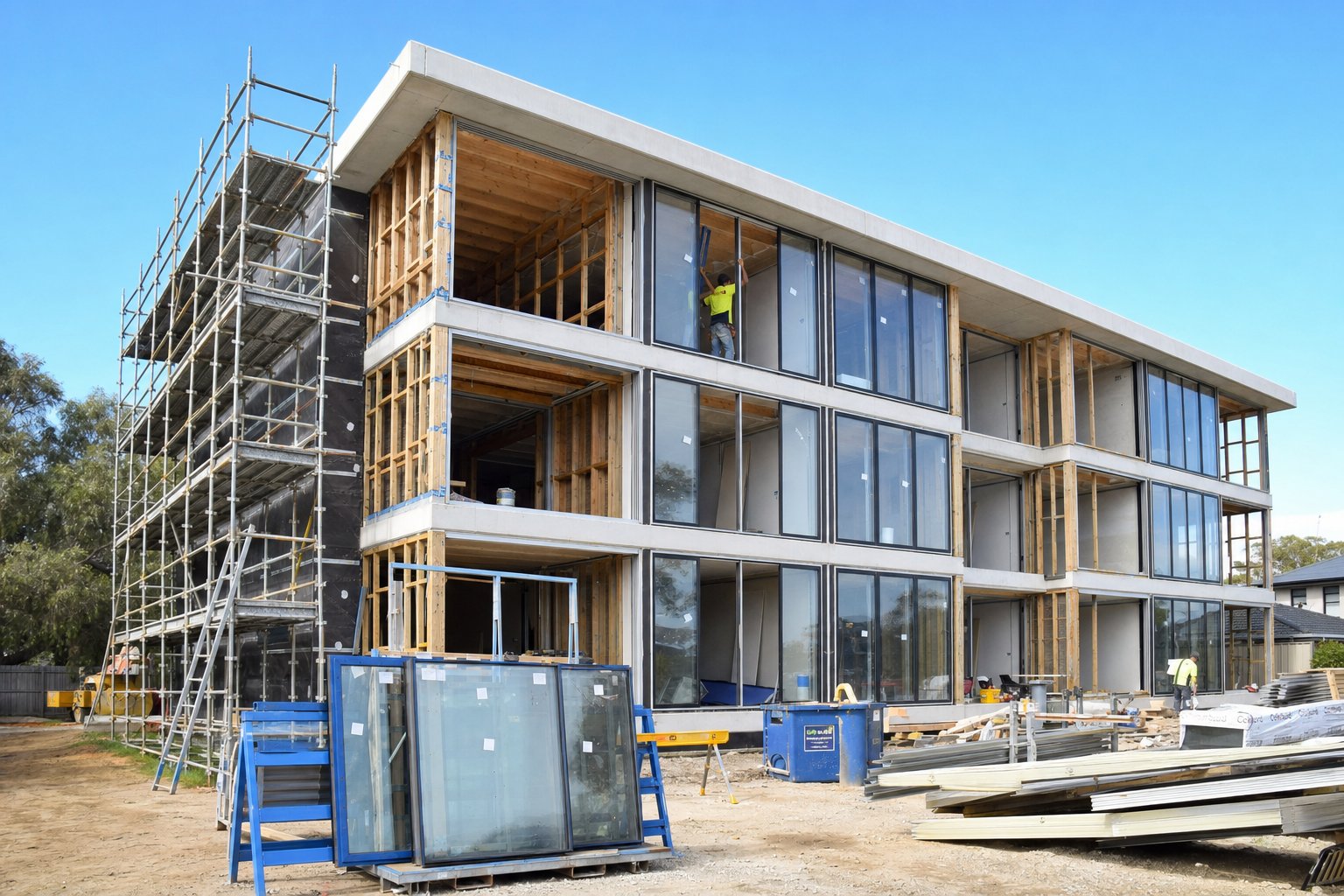
Planning Your Aluminium Window Project from Start to Finish
How you approach an aluminium window project depends entirely on whether you are building from scratch or working within the constraints of an existing structure. Each path carries different timelines, compliance obligations, and coordination demands — and getting the sequence wrong creates costly rework that no amount of product quality can fix.
New Build Window Planning and Specification
In a new build, windows should be specified early — ideally during the design development phase, not after framing is complete. The reason is simple: window performance directly affects your NatHERS star rating and NCC Section J compliance. Your energy assessor models the building envelope as a system, and glazing specifications (U-value, SHGC, frame type, orientation) feed into that model. Change the windows late in the process and the entire energy assessment may need recalculating.
Work with your architect or designer to define window locations, sizes, and types before structural drawings are finalised. Large openings — bi-fold door-window combinations, corner glazing, floor-to-ceiling panels — require engineered lintels and specific framing details that your builder needs to price and plan for. Specifying canberra aluminium windows and doors as an integrated package rather than piecemeal selections ensures consistent frame profiles, hardware finishes, and thermal performance across the entire home.
For builders and architects exploring custom configurations, glazing choices, and project-based supply suited to Canberra’s climate zone, MEICHEN’s aluminium window systems offer the kind of flexible specification depth that new build projects demand — from residential through to multi-storey commercial applications.
Coordinate your window supplier with the energy assessor from the outset. As Green Life Windows notes, providing window specifications to the assessor during the design phase avoids costly post-construction modifications. Under the current NCC 2022 requirements, new homes generally need to achieve a minimum 7-star thermal performance rating — and windows are one of the most influential variables in reaching that target.
Renovation and Replacement Considerations
Aluminium window replacement in the Canberra ACT market introduces challenges that new builds avoid entirely. Older Canberra homes — particularly those built in the 1960s through 1980s across suburbs like Woden, Belconnen, and early Tuggeranong — often feature non-standard opening sizes that do not align with modern extrusion dimensions. Custom fabrication handles this, but accurate measurement is critical. A 5 mm error in an opening measurement can mean a window that either does not fit or requires packing that compromises the seal.
Structural assessment comes first. Removing an existing window and enlarging the opening — common when homeowners want more glass area — requires engineering sign-off and potentially a building approval from the ACT Planning Authority. Even like-for-like replacements in heritage-listed properties may trigger approval requirements under the Heritage Act 2004.
What about second hand aluminium windows in Canberra? They appear on marketplace platforms regularly, often salvaged from demolitions. The honest assessment: they carry real risks. Seal integrity is unknown, thermal break condition cannot be verified visually, and sizing rarely matches your openings without modification. Glazing units may have failed seals (indicated by internal fogging), and powder coat finishes from decades of Canberra UV exposure are typically degraded beyond restoration. For a non-critical application — a garden shed, a garage — salvaged windows can work. For habitable rooms where thermal performance, security, and code compliance matter, purpose-manufactured windows specified to your exact openings and climate zone requirements are the only reliable path.
Long-Term Value and Lifecycle Thinking
A quality thermally broken aluminium window system with appropriate double glazing typically delivers 30 to 40 years of service before major component replacement is needed. Over that lifespan, the energy savings from reduced heating and cooling loads — particularly significant in Canberra’s Zone 7 climate — compound to offset the higher upfront cost compared to budget alternatives that degrade within 10 to 15 years.
Lifecycle cost analysis shifts the conversation from “what is the cheapest window I can install” to “what delivers the lowest total cost of ownership over 25 to 30 years.” That calculation includes purchase price, installation, energy cost impact (heating in winter, cooling in summer), maintenance frequency, and eventual replacement timing. A window that costs 30% more upfront but lasts twice as long and reduces annual energy bills by $200 to $400 is not an expense — it is an investment with measurable returns.
Aluminium’s inherent durability reinforces this logic. Unlike timber, it does not rot, warp, or require cyclical repainting. Unlike uPVC, it does not become brittle or discolour under sustained UV. The frame material itself outlasts the seals and hardware around it — and those components are replaceable without discarding the entire window. That repairability extends the functional life well beyond what disposable alternatives offer, making aluminium the material that rewards long-term thinking in Canberra’s demanding climate.
Frequently Asked Questions About Aluminium Windows in Canberra
1. Are thermally broken aluminium windows necessary in Canberra?
In Canberra’s Climate Zone 7, thermally broken aluminium windows are effectively mandatory for new builds and strongly recommended for renovations. Standard aluminium frames have U-values of 5.5 to 7.0 W/m²K, which means they conduct cold directly through to interior surfaces during winter mornings that regularly drop below -5°C. This causes condensation, mould growth, and significant heat loss. Thermally broken frames use a polyamide strip to separate the inner and outer aluminium sections, reducing frame U-values to 2.5 to 4.0 W/m²K. Under current NCC 2022 requirements, single-glazed standard aluminium no longer meets code for most Canberra applications, making thermally broken frames with double glazing the practical baseline specification rather than a premium upgrade.
2. How much do aluminium windows cost in Canberra?
Aluminium window pricing in Canberra varies based on several factors. Frame material and profile type account for 30 to 45% of the cost, with thermally broken frames adding 20 to 35% over standard aluminium. Glass specification represents 25 to 40%, increasing significantly for high-performance IGUs with Low-E coating and argon fill. Hardware contributes 10 to 15%, and custom sizes or non-standard configurations add further. Installation costs depend on access difficulty, storey height, and whether existing frames need removal. When comparing quotes, ensure you are comparing identical specifications — frame type, glazing, hardware brand, and installation scope — rather than just bottom-line figures. A supplier like MEICHEN offers project-based supply with transparent configuration options for both residential and commercial Canberra projects.
3. What is the best type of aluminium window for Canberra’s climate?
The best window type depends on room placement and function. Awning windows suit Canberra particularly well because they allow ventilation during rain while providing strong security through their narrow opening angle — ideal for bathrooms, kitchens, and laundries. Casement windows deliver maximum airflow for living areas and bedrooms, with tight seals that reduce air leakage during cold months. Sliding windows work well for large openings and entertaining zones where no exterior clearance is available. Most Canberra homes benefit from combining multiple types: fixed panels for light and views on north-facing walls, awning windows on southern wet areas, and sliding or bi-fold systems connecting indoor and outdoor living spaces.
4. How do I maintain aluminium windows in Canberra’s dusty conditions?
Canberra’s bushland dust, high UV, and frost cycles require a structured seasonal maintenance routine. Monthly, wipe frames with mild pH-neutral detergent and vacuum tracks to remove grit before it compacts. Before winter, apply silicone-based dry lubricant to all hinges, stays, and locking mechanisms — silicone does not attract dust like grease-based products. Before summer, inspect rubber seals for UV-induced cracking and apply silicone rubber conditioner. Annually, check powder coat finish for chalking and inspect double glazed units for internal fogging. Clear weep holes quarterly with compressed air to prevent water pooling inside frames. Avoid abrasive cleaners, steel wool, or solvent-based products that damage powder coat finishes. This routine keeps aluminium windows performing for 40 to 50 years in ACT conditions.
5. Can I use second hand aluminium windows for my Canberra renovation?
Second hand aluminium windows carry significant risks for habitable rooms in Canberra. Seal integrity cannot be verified visually, thermal break condition is unknown, and sizing rarely matches your openings without modification. Glazing units may have failed seals indicated by internal fogging, meaning thermal performance is compromised. Powder coat finishes from decades of Canberra UV exposure are typically degraded beyond restoration. For non-critical applications like garden sheds or garages, salvaged windows can work as a budget option. For living spaces where thermal performance, security, and NCC compliance matter, purpose-manufactured windows specified to your exact openings and Climate Zone 7 requirements are the only reliable path — ensuring proper energy ratings and warranty coverage.
More Window & Door Guides