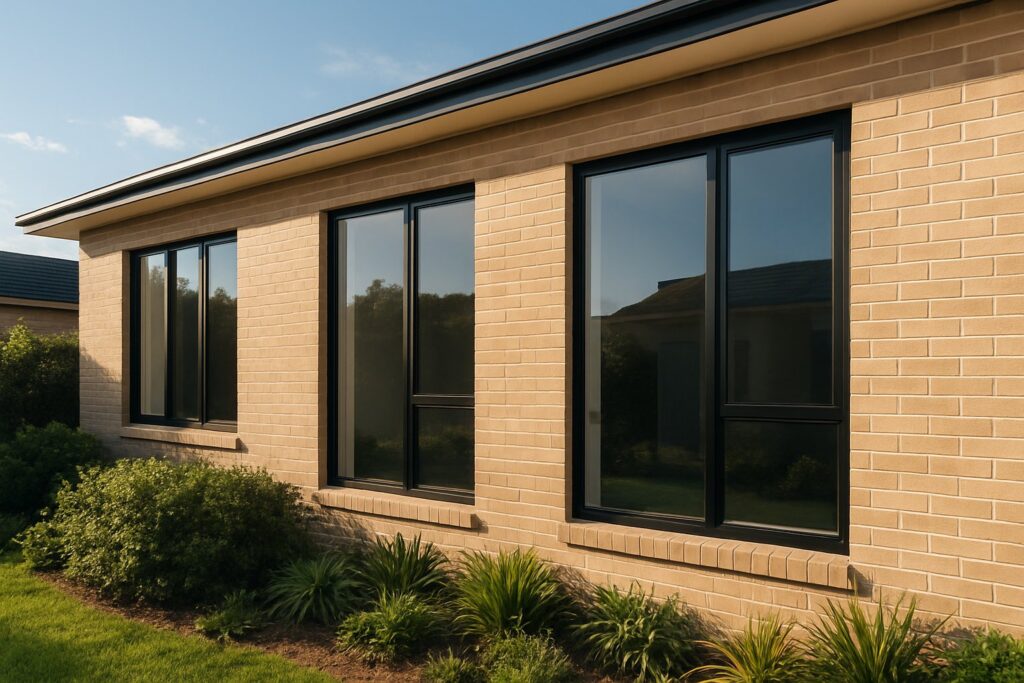
Finding the Right Aluminium Window Among Dozens of Options
Search for aluminium windows and you will find over fifteen distinct styles, each marketed as the ideal choice. Casement, sliding, awning, bifold, louvre, double hung, fixed, pivot, tilt-and-turn — the list keeps growing. For homeowners planning a renovation or builders specifying windows across an entire project, this volume of choice creates more confusion than clarity.
Most guides simply catalogue every type and leave you to figure out which ones actually suit your home. That approach wastes your time. You do not need a dictionary of alu windows — you need a shortlist ranked by the criteria that matter: airflow, energy performance, weather resistance, maintenance, and versatility across different rooms.
That is exactly what this guide delivers. We evaluated the full range of aluminium window options and distilled them into the top five performers for Australian residential and commercial builds, scored against real-world conditions rather than spec-sheet ideals.
Why Choosing the Right Aluminium Window Matters
An aluminium window is a long-term investment. It shapes your home’s thermal comfort, security, natural light, and kerb appeal for decades. The wrong type in the wrong room — say, a fixed panel where you need ventilation, or a casement that swings into a walkway — creates daily frustration that no amount of quality framing can fix. Getting the type right from the start saves money, avoids retrofitting, and ensures each opening performs as intended.
Who This Guide Is For
This ranked comparison is built for anyone making decisions about windows in aluminium framing systems:
- Homeowners renovating or building new and overwhelmed by competing product claims
- Builders specifying aluminium windows across multi-dwelling or custom home projects
- Architects balancing design intent with performance and compliance requirements
- Developers needing a versatile shortlist that works across unit types and price points
Each of the five ranked options that follow includes a clear breakdown of strengths, limitations, best room applications, and climate suitability — giving you a decision-making framework rather than just another list of alu windows to browse.
How We Evaluated and Ranked Each Aluminium Window Type
Ranking aluminium window options without a transparent scoring method produces arbitrary results. Every window type has a context where it shines, so we needed criteria broad enough to cover diverse Australian conditions yet specific enough to separate genuinely versatile performers from niche products. Here is the framework we used, and how local climate zones and building regulations shaped the final order.
Our Five Evaluation Criteria Explained
Each aluminium window type received a score across five categories. These reflect the practical concerns homeowners, builders, and architects raise most often when specifying aluminum window frames for Australian projects.
- Ventilation performance — How much of the window opening delivers usable airflow? A type that opens fully scores higher than one limited to 50 per cent. Cross-ventilation potential and the ability to direct airflow also factor in.
- Energy efficiency and thermal break quality — We assessed how well each type supports thermally broken aluminum frame windows and high-performance glazing. Seal compression, frame-to-glass ratios, and compatibility with double or triple glazing all contributed to this score.
- Weather resistance and durability — Metal frame windows must handle coastal salt air, cyclone-rated wind loads, intense UV, and driving rain. We weighted this criterion for the harsh end of the Australian spectrum because a window that fails in Darwin or Townsville cannot claim true versatility.
- Maintenance requirements and lifespan — Lower ongoing effort earns a higher score. We looked at hardware complexity, track or hinge wear patterns, seal replacement intervals, and the quality of powder-coat finishes on the metal window frame over a 25-year horizon.
- Suitability across residential and commercial applications — A window type that works in a family bathroom, a high-rise apartment, and a retail frontage demonstrates broader utility than one limited to a single building category. Versatility across project types pushed a product up the ranking.
No single criterion carried majority weight. The final ranking reflects balanced performance — a window type that dominates one category but falls short in others loses ground to a more consistent all-rounder.
How Climate and Building Codes Influenced Rankings
Australia spans eight NCC climate zones, from tropical Darwin to alpine Tasmania. A framed windows system that excels in mild Sydney conditions might underperform in humid North Queensland or the cold winters of Canberra. We tested each type’s suitability against the three broad climate bands used by the Window Energy Rating Scheme (WERS): cooling climates (zones 1-3), mixed climates (zones 4-5), and heating climates (zones 6-8).
Compliance also shaped our evaluation. In Australia, aluminium windows must meet AS 2047 for structural and weatherproofing performance and AS 1288 for glazing safety. WERS ratings provide verified U-values and Solar Heat Gain Coefficients (SHGC) as whole-window values, not glass alone. Internationally, frameworks like those developed by AAMA and NFRC offer useful reference points for understanding how window frame metal conducts heat and how air leakage is measured — concepts that translate directly into the performance metrics Australian certifiers assess under NatHERS modelling.
A window type that naturally achieves tight air sealing, supports thermally broken profiles, and accommodates the glazing configurations needed for NCC Section J compliance earned a higher energy-efficiency score. Types requiring additional modifications or limiting glass size to meet code thresholds were marked down accordingly.
The guiding principle behind every ranking decision: match window type to room function, climate zone, and budget constraints. A technically superior window installed in the wrong context delivers inferior real-world results.
With this framework established, the next step is applying it to specific window types — starting with the option that scored highest for modern Australian homes.
Aluminium Sliding Windows for Space-Saving Modern Design
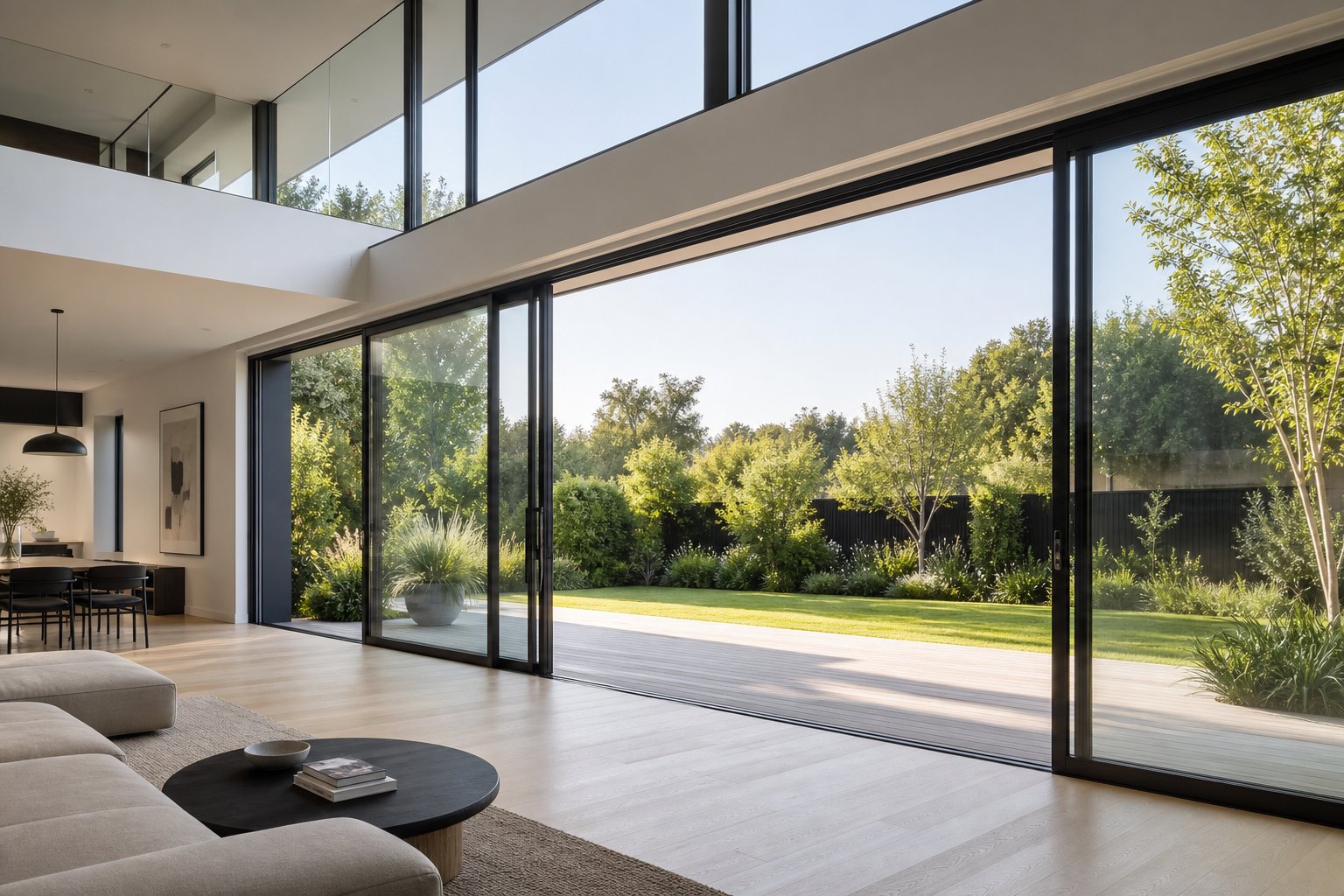
Sliding windows earned the top spot in our ranking for a straightforward reason: they deliver wide, unobstructed openings without consuming a single centimetre of interior or exterior space. In compact Australian homes, apartments, and open-plan living areas, that space efficiency translates directly into more usable floor area and cleaner sightlines to the outdoors.
Why Sliding Windows Rank First for Modern Builds
Aluminium sliding windows operate on a horizontal track system, with one or more panels gliding behind a fixed pane. Nothing swings inward or outward. You can position furniture, blinds, or cabinetry right up to the frame without worrying about clearance. For multi-panel configurations — three-panel, four-panel, or even corner sliding setups — the opening width scales dramatically, letting you connect indoor living areas to patios and balconies in a way few other types can match.
Modern track systems use precision rollers and recessed guides that keep operation smooth for decades. Aluminum framed windows with slim sightlines maximise the glass-to-frame ratio, flooding rooms with natural light. Whether you choose a dark black aluminum window finish for a bold contemporary look or bronze aluminum windows for warmer architectural tones, the slender profile keeps the focus on the view rather than the frame.
Best Rooms and Applications for Aluminium Sliders
Sliders perform best where wide openings and uninterrupted views matter most:
- Living rooms and open-plan areas — maximise connection to outdoor decks and gardens
- Balconies and patios — no swing clearance needed on narrow balconies
- Bedrooms facing courtyards — quiet operation and simple locking hardware
- Commercial shopfronts and serveries — wide spans with minimal visual bulk
For coastal and high-wind regions, aluminium sliding windows engineered to AS 2047 can achieve strong wind-load resistance and water-tightness ratings. Metal framed windows with quality weatherstripping and interlocking meeting stiles handle salt air exposure far better than timber or uPVC alternatives — a critical consideration for homes along the Queensland, NSW, or Western Australian coastline. Powder-coated finishes rated for marine environments add a further corrosion barrier without increasing maintenance demands.
Pros and Cons of Aluminium Sliding Windows
Pros
- No interior or exterior space consumed when opening
- Wide span capability with multi-panel and corner configurations
- Smooth, low-effort operation via precision roller systems
- Low-profile frames that maximise natural light
- Strong corrosion resistance in coastal climates when properly finished
Cons
- Ventilation limited to approximately 50 per cent of the total opening (one panel stays fixed)
- Track channels require periodic cleaning to prevent debris build-up and roller wear
- Potential for air infiltration at meeting stiles if seals degrade over time
- Slightly lower compression seal performance compared to casement designs
The 50 per cent ventilation ceiling is the primary trade-off. In rooms where maximum airflow is the priority — kitchens generating steam, bathrooms needing rapid moisture extraction — that limitation matters. It is precisely this gap in ventilation performance that elevates another aluminium window type into a strong second-place position.
Aluminium Casement Windows for Maximum Airflow
Where sliding windows sacrifice ventilation for space efficiency, aluminium casement windows flip that equation entirely. A casement sash hinges on one side and swings outward, exposing 100 per cent of the window opening to incoming air. That single design difference doubles the usable airflow compared to a slider of identical size — making casement configurations the strongest performer in our ventilation scoring by a clear margin.
Full Ventilation Performance of Casement Designs
An aluminum casement window operates like a door for air. When fully open, there is no fixed panel blocking half the frame. Fresh air enters across the entire opening width and height simultaneously, creating rapid room ventilation that clears cooking steam, bathroom moisture, and stale bedroom air in minutes rather than hours.
The outward swing also acts as a scoop. When oriented to catch prevailing breezes, the open sash deflects wind into the room at an angle, boosting cross-ventilation even in light conditions. This is particularly effective in Australian homes designed around passive cooling strategies, where capturing afternoon sea breezes through aluminium casement windows can reduce reliance on mechanical air conditioning during transitional seasons.
Sealing performance is equally impressive in the closed position. Because the sash presses against the frame under compression when locked, casement designs achieve tighter air sealing than any sliding mechanism. Multi-point locking hardware distributes pressure evenly along the full perimeter of the sash, minimising air infiltration and improving energy efficiency. Industry data indicates that quality multi-point locking systems can maintain consistent compression through 15 to 25 years of regular operation when manufactured from corrosion-resistant materials.
Where Casement Windows Work Best in Your Home
The combination of full-opening ventilation and superior sealing when closed makes aluminum casement windows a natural fit for rooms where moisture control, air quality, and thermal performance all matter:
- Kitchens — positioned above benchtops or sinks, they swing outward without interfering with splashbacks or overhead cabinetry, clearing cooking vapours quickly
- Bathrooms — rapid moisture extraction prevents mould growth; frosted or obscured glazing maintains privacy while the full opening does the work
- Bedrooms — catch overnight breezes for passive cooling; tight sealing blocks noise and drafts when closed for sleeping comfort
- Hard-to-reach locations — aluminum crank windows with geared operators allow smooth opening of high-mounted sashes above cupboards, stairwells, or splashbacks where you cannot easily reach the frame directly
Single-sash configurations suit standard openings up to roughly 600 mm wide, while multi-panel casement setups — two, three, or four sashes within a single frame — cover wider spans. French casement configurations, where paired sashes open from the centre without a fixed mullion between them, create completely unobstructed views when both panels are open. This makes them a strong choice for living areas where you want the framing to disappear.
Pros and Cons of Aluminium Casement Windows
Pros
- 100 per cent of the opening available for airflow — maximum ventilation of any operable window type
- Excellent compression sealing when closed, reducing air leakage and improving thermal performance
- Easy interior cleaning — the sash swings outward, giving full access to the exterior glass face from inside
- Ideal for hard-to-reach spots with crank-operated hardware
- Naturally strong security profile due to multi-point engagement with the frame
Cons
- Requires exterior clearance for the outward swing — not suitable for openings facing narrow walkways, balconies with limited depth, or areas with external obstructions
- Hardware experiences more mechanical stress over time than sliding systems, particularly hinges and crank operators on larger sashes
- Open sashes catch wind gusts, which can strain hinges or slam the window if friction stays are not properly adjusted
- Slightly higher hardware maintenance than sliders — periodic hinge lubrication and operator inspection recommended every 12 to 18 months
Hardware quality is the long-term differentiator for aluminium casement windows. Stainless steel hinges and reinforced crank mechanisms rated for thousands of cycles maintain smooth operation in Australian conditions, while lower-grade zinc-alloy components can stiffen or corrode prematurely — especially in coastal or humid subtropical environments. When specifying aluminum casement windows, prioritise corrosion-resistant hardware and adjustable friction stays that let you limit the opening angle in high-wind zones.
Casement and sliding designs together cover most residential ventilation and spatial requirements. But some projects demand a level of precision that neither off-the-shelf type delivers alone — non-standard opening sizes, specific colour profiles, or performance targets dictated by NCC compliance modelling. That gap is where purpose-built aluminium window systems step in.
Custom Aluminium Window Systems for Tailored Performance
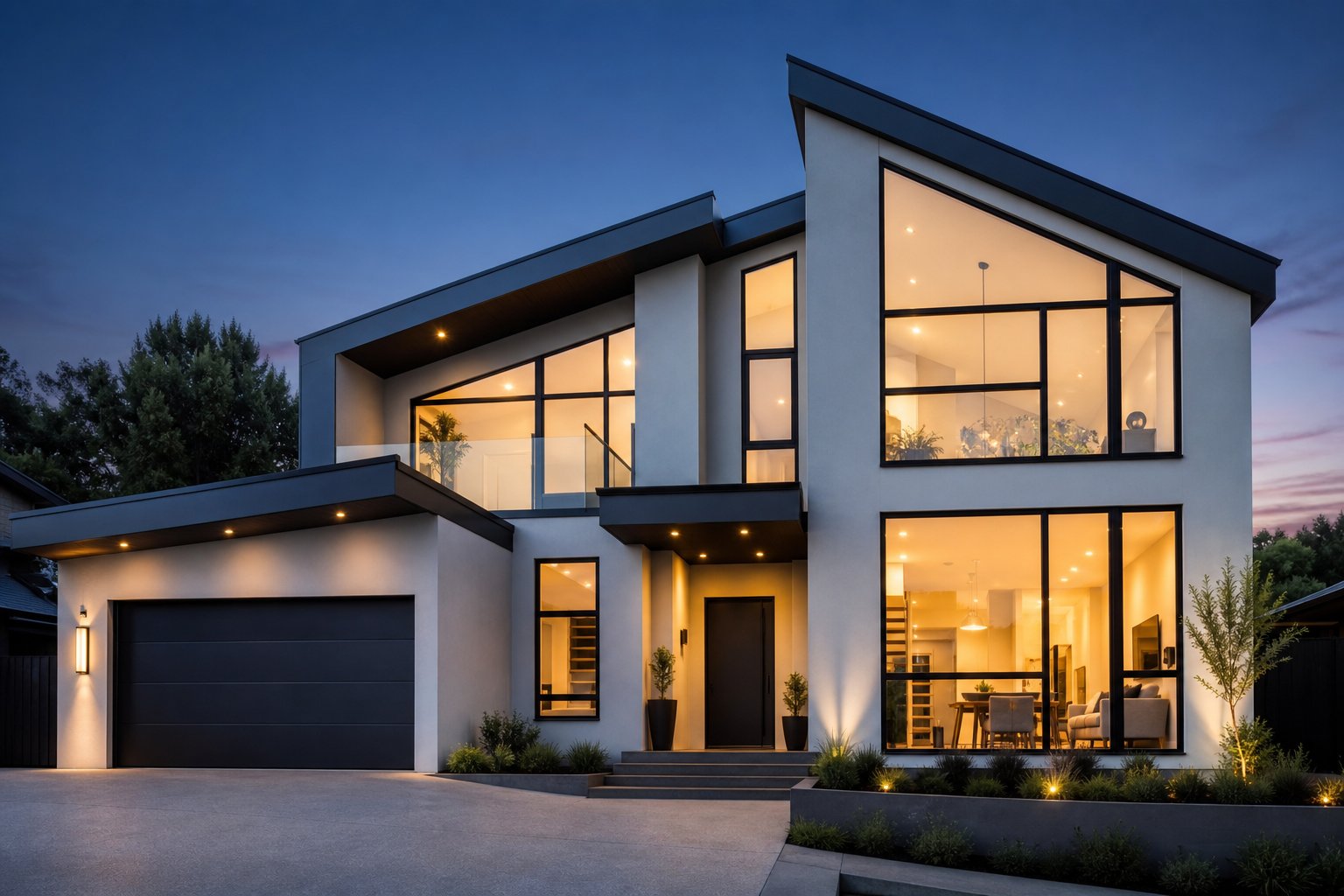
Standard sliding and casement windows handle the majority of residential openings. But not every opening is standard. Heritage renovations with irregular masonry reveals, architect-designed homes with oversized glazing spans, multi-storey facades requiring specific acoustic or thermal targets — these projects expose the limits of off-the-shelf sizing. Custom aluminium window systems exist to close that gap, delivering frames engineered around your project rather than forcing your project to adapt around fixed catalogue dimensions.
When Custom Aluminium Windows Outperform Standard Options
A standard window assumes typical opening widths, conventional glass weights, and common hardware configurations. That works for straightforward builds. Custom aluminum windows become the better path when any of the following conditions apply:
- Non-standard dimensions — openings that fall outside regular size increments, whether unusually tall, extra wide, or shaped to follow raked ceilings and angled rooflines
- Specific thermal performance targets — NCC Section J compliance modelling may require particular U-values or SHGC figures that demand precise thermal break widths, specialised glazing build-ups, and frame profiles engineered as an integrated system
- Architectural colour and finish requirements — matching a specific facade palette, using dual-colour frames (different interior and exterior finishes), or coordinating with cladding and joinery across an entire build
- Complex configurations — combining fixed panels with operable casement or awning sections within a single frame assembly, corner windows wrapping around building edges, or stacking units vertically across multiple storeys
- Environmental exposure — coastal properties requiring marine-grade powder coating, cyclone-rated hardware, or bushfire-compliant assemblies tested to specific BAL levels
In each of these scenarios, custom aluminium windows deliver better long-term value than trying to modify a standard product after the fact. Gaps, shimming, and aftermarket adaptations introduce weak points in weatherproofing and thermal performance that a purpose-built frame avoids entirely.
What to Look for in a Custom Window Manufacturer
Not every aluminium window supplier operates at the same level. The difference between a true aluminum window manufacturer and a basic assembler determines whether your custom order arrives project-ready or becomes a site headache. When evaluating aluminium window manufacturers for custom work, focus on these capabilities:
- Drawing and specification review — a quality aluminium windows manufacturer will assess your architectural drawings, confirm structural requirements, and recommend suitable profile systems before production begins
- Profile and thermal break selection — manufacturers controlling their own profile systems can match frame depth, thermal break width, and glazing capacity to your climate zone and energy modelling requirements
- Powder coating and finish control — look for in-house or closely managed coating facilities that guarantee colour consistency, adhesion quality, and marine-grade durability where needed
- Hardware coordination — handles, locks, hinges, and friction stays should be specified as part of the window system, not sourced separately after manufacturing
- Quality inspection and testing — reputable residential aluminum window manufacturers maintain documented QC processes covering dimensional accuracy, seal compression, hardware function, and finish integrity across the full batch
For Australian homeowners and builders, MEICHEN represents the kind of specialist aluminium windows manufacturer that brings this full capability set together. Their range spans sliding, casement, awning, and fixed configurations — all available in custom sizes, colours, and performance specifications tailored to Australian residential and commercial builds. Rather than sourcing components piecemeal from multiple aluminium window suppliers, working with an integrated manufacturer like MEICHEN means your window system arrives as a coordinated, project-ready assembly with matched profiles, hardware, glazing, and finishes.
Pros and Cons of Custom Aluminium Window Systems
Pros
- Exact fit for non-standard openings — no shimming, no gaps, no compromised weatherproofing
- Matched to architectural vision with full control over colour, profile, and sightline proportions
- Optimised thermal performance through integrated thermal break systems sized for your climate zone
- Full specification control over glazing, hardware grade, seal type, and security features
- Mixed configurations within single frames (fixed + operable sections) for maximum design flexibility
Cons
- Longer lead times compared to standard aluminium window supplies — typically four to eight weeks depending on complexity
- Higher upfront cost due to bespoke engineering, tooling, and finishing processes
- Requires detailed project planning — accurate measurements, confirmed drawings, and specification sign-off before production can begin
- Replacement parts may need to be sourced from the original manufacturer rather than off-the-shelf hardware stores
The cost premium for custom aluminium windows generally ranges between 20 and 40 per cent above equivalent standard products, though the exact figure depends on complexity. For projects where precision, compliance, and design cohesion are non-negotiable, that premium buys performance and longevity that standard options simply cannot deliver.
Custom systems represent the pinnacle of specification control. Yet many Australian homes do not need that level of bespoke engineering — they need a window type that blends traditional aesthetics with practical modern performance. That requirement points toward a design with roots stretching back over a century, now re-engineered in aluminium.
Aluminium Double Hung Windows for Timeless Versatility
Heritage facades, Federation-era homes, Queenslanders with traditional proportions — these buildings demand a window style that respects their architectural DNA. Aluminium double hung windows deliver that classic vertical-sash aesthetic while replacing the rot-prone timber and rattling hardware of the originals with lightweight, corrosion-resistant aluminium engineering. They earned fourth place in our ranking for their unique ability to bridge historical character and modern performance.
Classic Design Meets Modern Aluminium Engineering
The double hung principle is simple: two sashes stacked vertically, both able to slide up or down independently within the frame. Open the top sash to release warm air collecting near the ceiling. Open the bottom to draw cool air in at floor level. Run both simultaneously and you create a natural convective loop — warm air exits high while fresh air enters low — without any sash protruding beyond the wall face.
That zero-protrusion characteristic is the key differentiator from casement designs. In homes facing footpaths, narrow side passages, or heritage streetscapes where council regulations prohibit window elements extending past the building line, aluminium sash windows provide controllable ventilation that stays entirely within the envelope. Nothing swings outward to obstruct pedestrians or violate setback requirements.
Modern aluminium double hung windows use precision balance systems — typically block-and-tackle or constant-force coil mechanisms — to hold each sash at any height without creeping. Unlike the weight-and-pulley setups hidden in old timber frames, contemporary block-and-tackle balances are compact, durable, and deliver smooth operation for years with minimal maintenance. Paired with aluminum double pane windows featuring thermally broken profiles, this traditional form factor now achieves energy ratings that older timber versions never could.
Worth noting: if your project only requires ventilation from the bottom sash, an aluminum window single hung configuration offers a simpler, more cost-effective alternative. The fixed upper sash provides marginally better air sealing and reduced hardware complexity. But for rooms where you want full airflow control from both positions — and the easy-clean benefits that come with it — double hung remains the stronger choice.
Ideal Applications for Double Hung Aluminium Windows
Matching window type to architectural style is one of the most overlooked aspects of specifying aluminium window options. Double hung designs suit specific contexts better than any other type on this list:
- Heritage and character renovations — councils frequently require window replacements on heritage-listed homes to maintain the original proportional style; aluminium sash windows replicate traditional divided-light patterns while eliminating timber maintenance
- Bedrooms on upper storeys — open only the top sash for overnight ventilation while keeping the lower sash locked for child safety, a configuration that aluminum single hung windows cannot offer
- Bathrooms and laundries — top-sash ventilation exhausts steam and humidity efficiently without exposing the room to street-level view lines
- Streetfront facades — no outward projection means compliance with boundary setbacks and pedestrian clearance requirements on narrow urban lots
The tilt-in sash feature available on quality aluminium double hung windows deserves particular mention. Both sashes pivot inward for cleaning, giving you full access to the exterior glass face from inside the room. On a double-storey home, this eliminates the need for ladders or external scaffolding entirely — a practical and safety advantage that justifies the modest cost premium over aluminum single hung windows lacking tilt functionality.
Pros and Cons of Aluminium Double Hung Windows
Pros
- No exterior protrusion — both sashes remain within the wall plane, ideal for tight boundaries and heritage streetscapes
- Top-and-bottom ventilation control creates natural convective airflow without mechanical assistance
- Heritage-compatible proportions suit Federation, Victorian, Edwardian, and Queenslander architectural styles
- Tilt-in sash mechanism enables safe, easy cleaning from inside on any storey
- Child-safe configuration available by locking the lower sash while ventilating from the top
Cons
- Maximum ventilation opening limited to 50 per cent of the frame area — only one sash width provides airflow at any height position
- Balance mechanisms require periodic inspection; springs or coils can weaken after 10 to 15 years of heavy use, causing sashes to creep
- Slightly lower air sealing than casement windows due to sliding seals rather than compression seals
- More hardware components than sliding windows, marginally increasing long-term maintenance touchpoints
Balance system quality is the durability linchpin for any double hung window. Specify stainless steel constant-force balances or high-quality block-and-tackle systems with corrosion-resistant housings, particularly in coastal zones where salt air degrades lesser components faster. A well-specified balance mechanism should deliver smooth, consistent operation for the full lifespan of the aluminium frame — typically 30 years or more with routine care.
Double hung windows solve the heritage aesthetic problem elegantly. Still, some rooms need ventilation that works regardless of weather — staying open during rain without letting water in. That requirement calls for a fundamentally different hinge geometry and a complementary partner in fixed glazing.
Aluminium Awning and Fixed Windows for Light and Weather Protection
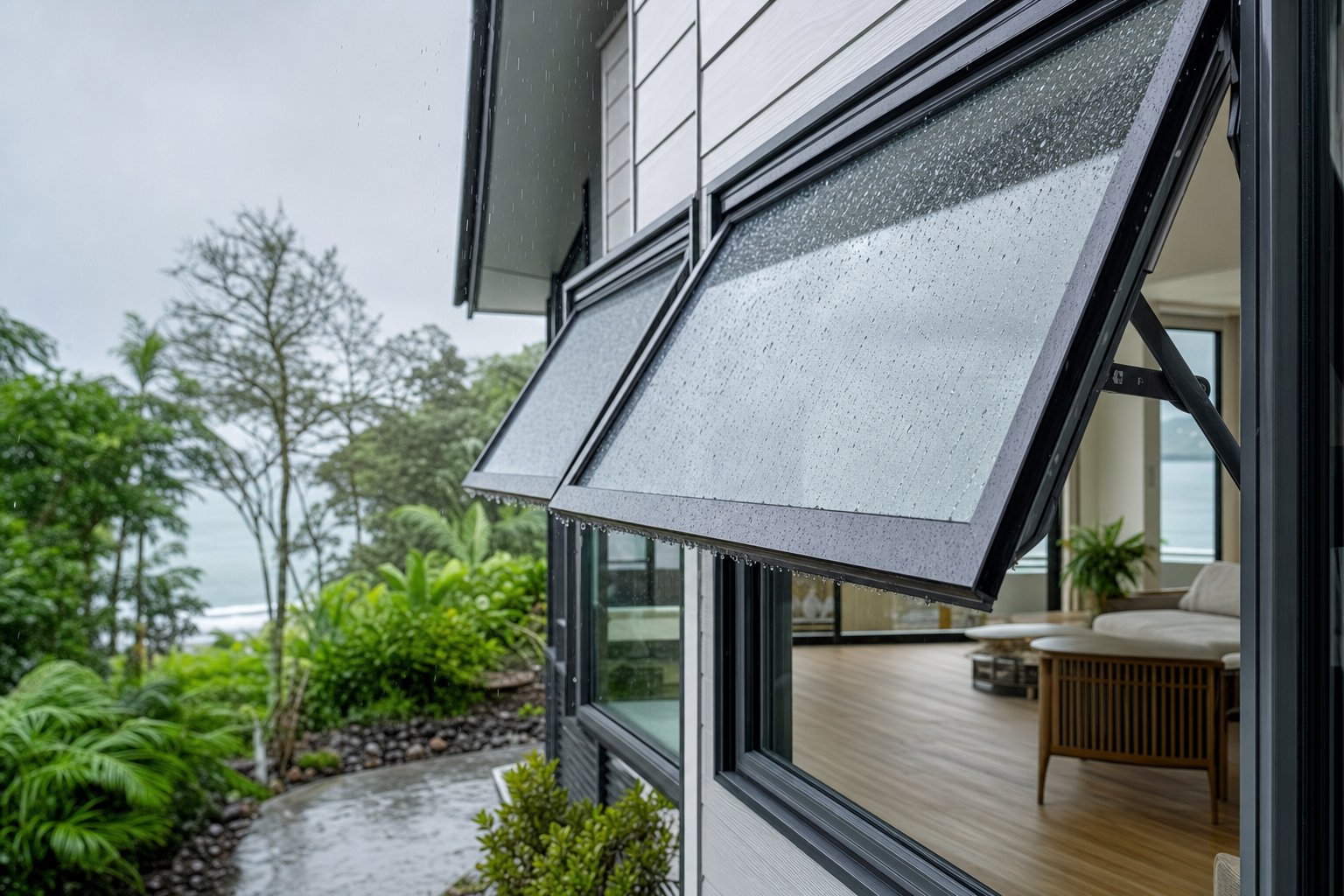
A top-hinged sash that pushes outward from the bottom — that geometry gives awning windows their defining advantage. The open sash acts as a canopy, deflecting rain away from the opening while still allowing fresh air to enter underneath. Paired with fixed panels that let in maximum daylight without any air leakage at all, these two complementary types form a powerful combination that earns fifth place in our ranking for their specialised strengths in weather-prone and light-hungry applications.
Awning Windows for Weather-Proof Ventilation
In tropical and subtropical Australia — think North Queensland, the Top End, and coastal NSW — afternoon storms roll in fast. With most other window types, rain means closing up and losing airflow exactly when humidity peaks. Aluminium awning windows break that cycle. Because the sash tilts outward from the bottom while remaining hinged at the top, falling rain hits the glass and runs off the outer face rather than entering the room. You keep ventilating through the downpour.
The U.S. Department of Energy notes that awning windows generally achieve lower air leakage rates than sliding types because the sash closes by pressing against the frame under compression — the same sealing principle that makes casement windows so effective. That compression seal, combined with quality EPDM weatherstripping and thermally broken profiles, means thermal break aluminum windows in awning configuration deliver strong energy performance in both cooling-dominated and mixed Australian climates.
Awning sashes typically open to a maximum of around 30 to 45 degrees, controlled by friction stays or limit arms. This restricted arc is a deliberate design choice: it prevents wind gusts from catching the sash like a sail, reduces hardware stress, and maintains the rain-deflecting canopy angle. For rooms needing moderate but consistent ventilation — bathrooms, laundries, stairwells, and above kitchen splashbacks — that controlled opening is more than sufficient.
Fixed Windows for Light and Energy Performance
Fixed aluminium windows contain no moving parts, no hardware, and no operable seals. That simplicity translates into the best possible energy ratings of any window type. With zero air infiltration and uninterrupted glazing spans, fixed panels score highest in our thermal efficiency criteria. They accommodate large glass areas — including double and triple glazing build-ups — without the weight limitations imposed by hinges or sliding tracks.
Where homeowners upgrading from older single pane aluminum windows notice the biggest difference is solar heat gain management. Modern fixed panels with low-e coated double glazing and argon-filled cavities reject unwanted heat while flooding interiors with natural light. The absence of frame divisions across the glazing area means higher visible light transmittance per square metre of wall opening compared to any operable type.
Fixed windows also suit combination installations beautifully. A common Australian residential layout pairs a large fixed centre panel with smaller operable awning sections above or to the sides. This gives you an expansive view and daylight through the fixed glass, plus targeted ventilation from the awning portions — without compromising the structural or thermal integrity of the overall assembly. In commercial applications, aluminum clad windows in fixed configurations span entire curtain wall sections, with awning panels inserted at intervals for occupant-controlled fresh air.
For projects balancing heritage aesthetics with performance, aluminum clad wood windows offer another variant — timber interiors for warmth and character with an external aluminium skin handling weather exposure. This clad aluminum approach delivers the insulating properties of wood framing with the durability and low maintenance of aluminium on the weather face. Similarly, wood clad aluminum windows and metal clad windows suit homes where interior finish matters as much as external longevity, though they carry a cost premium over standard all-aluminium profiles.
Pros and Cons of Awning and Fixed Aluminium Windows
Pros
- Rain-proof ventilation — awning sashes deflect water while maintaining airflow, ideal for tropical and coastal regions
- Maximum natural light — fixed panels offer uninterrupted glass with no frame divisions reducing daylight
- Excellent energy ratings — compression sealing on awning types and zero leakage on fixed panels deliver superior thermal performance
- Minimal maintenance — fewer moving parts (especially fixed) mean less hardware wear and longer service intervals
- Versatile combination layouts — fixed centres paired with operable awning sections balance light, views, and ventilation in a single frame assembly
Cons
- Limited opening size on awning windows — the controlled arc restricts ventilation volume compared to casement or double hung types
- No ventilation from fixed panels — rooms with only fixed glazing rely entirely on mechanical systems or other windows for air exchange
- Exterior cleaning access needed for fixed windows — on upper storeys, reaching the outer glass face requires scaffolding or specialist services
- Awning sashes can collect debris on the top edge of the glass when open, requiring occasional wipe-down
- Not suitable as sole ventilation source for rooms requiring high airflow volume
Climate suitability tilts strongly toward regions with high rainfall, humidity, or storm frequency. In Darwin, Cairns, Brisbane, and the NSW North Coast, awning windows solve the daily tension between ventilation and weather protection that other types simply cannot address. Fixed panels suit any climate zone but add most value in heating-dominated regions (NCC zones 6-8) where minimising air leakage directly reduces energy costs. Together, they round out a versatile toolkit — but choosing between all five ranked types still requires a clear side-by-side view of how each performs against the others in your specific rooms and conditions.
Side-by-Side Comparison of Every Aluminium Window Option
Five types, five different strengths. Reading through each ranked option individually builds understanding, but the real decision happens when you place them next to each other and measure them against your specific project. The tables below compress everything into a format that lets you scan, compare, and shortlist the right two or three aluminium windows and doors for your situation in minutes rather than hours.
Feature Comparison Table Across All Five Options
This table scores each window type across the six criteria homeowners and builders raise most frequently when specifying residential aluminum windows or commercial aluminium windows for Australian projects. Cost ranges reflect supply-only pricing in AUD for standard-sized units.
| Window Type | Ventilation Capacity | Weather Sealing | Space Required | Maintenance Level | Best Room Fit | Relative Cost (AUD) |
|---|---|---|---|---|---|---|
| Custom Aluminium Systems | Configurable (up to 100%) | Excellent — engineered to project specs | Varies by configuration | Low to moderate | Any room or application | $1,200–$2,500+ |
| Sliding Windows | Up to 50% | Good — interlocking stiles with brush/rubber seals | None (panels glide within frame) | Low — periodic track cleaning | Living rooms, balconies, shopfronts | $400–$1,100 |
| Casement Windows | 100% of opening | Excellent — compression seal on close | Exterior swing clearance needed | Moderate — hinge and crank service | Kitchens, bathrooms, bedrooms | $350–$950 |
| Double Hung Windows | Up to 50% | Good — sliding seals on both sashes | None (sashes slide vertically within frame) | Moderate — balance system checks | Heritage homes, streetfronts, upper storeys | $450–$1,000 |
| Awning & Fixed Windows | Limited (awning) / None (fixed) | Excellent — compression seal + rain deflection | Minimal outward projection (awning only) | Very low — fewest moving parts | Wet rooms, stairwells, light-focused areas | $300–$900 |
Custom systems sit at the top because they can replicate the performance of any other type while also exceeding it through tailored engineering. The trade-off is lead time and cost. For straightforward openings, the four standard types below deliver strong value without the bespoke premium.
Room-by-Room Window Type Recommendations
Different rooms place different demands on aluminum doors and windows. The matrix below maps each type to common residential and commercial spaces based on the ventilation, privacy, weather exposure, and spatial constraints each room typically presents. A check mark indicates strong suitability; a dash means the type works but is not the optimal first choice.
| Window Type | Kitchen | Bathroom | Bedroom | Living Room | Commercial |
|---|---|---|---|---|---|
| Custom Aluminium Systems | ✓ | ✓ | ✓ | ✓ | ✓ |
| Sliding Windows | — | — | ✓ | ✓ | ✓ |
| Casement Windows | ✓ | ✓ | ✓ | — | — |
| Double Hung Windows | — | ✓ | ✓ | — | — |
| Awning & Fixed Windows | ✓ | ✓ | — | ✓ (fixed for light) | ✓ |
A few patterns emerge. Kitchens and bathrooms favour types with rapid ventilation or weather-proof opening — casement and awning excel here. Living rooms and commercial aluminum windows prioritise wide spans and unobstructed glass — sliding and fixed configurations dominate. Bedrooms benefit from controllable airflow without exterior protrusion, making double hung and casement the natural picks depending on whether heritage styling or maximum ventilation matters more. Metal windows residential applications increasingly combine two or three types within a single home to match each room’s unique demands rather than forcing one style everywhere.
Why aluminium over uPVC or timber? Aluminium frames offer a 40-year-plus lifespan with minimal maintenance, support slimmer sightlines for larger glass areas, and resist warping, rotting, and UV degradation that shortens the service life of alternatives. In Australian conditions — coastal salt air, intense sun, cyclone zones, and bushfire-prone areas — aluminium doors and windows outperform both uPVC and timber on durability, recyclability, and long-term cost of ownership.
Tables clarify relative strengths. But narrowing your shortlist still requires knowing which specific details separate a quality product from a mediocre one — the profile thickness, hardware grade, and warranty terms that determine whether your chosen type actually delivers its rated performance over decades of daily use.
Our Final Recommendation and Buyer Checklist
Profile thickness, seal compression, hardware cycles — these are the details that separate aluminium window frames lasting 40 years from those failing at 15. Knowing which type suits your room is only half the decision. The other half is verifying that the product you order actually delivers its rated performance across decades of Australian weather. Here is our final ranked recommendation by project type, followed by the quality checklist you should run through before committing to any supplier.
Our Top Pick by Project Type
Each of the five aluminium window options reviewed in this guide earns top position for a specific use case. If you are choosing replacement aluminum windows for a renovation or specifying for a new build, this summary gives you a clear starting point:
- Best overall flexibility — Custom aluminium systems. When your project involves non-standard openings, mixed configurations, or strict NCC compliance targets, purpose-built windows deliver precision that no catalogue product can match. The higher cost pays for exact fit, coordinated engineering, and optimised thermal performance.
- Best for modern aesthetics and space efficiency — Sliding windows. Wide spans, slender sightlines, and zero interior protrusion make sliders the natural choice for contemporary living areas, apartments, and any room where maximising views matters most.
- Best for ventilation — Casement windows. Full-opening airflow, superior compression sealing, and effective cross-ventilation make casement the strongest performer for kitchens, bathrooms, and bedrooms where air quality is the priority.
- Best for heritage and streetfront projects — Double hung windows. No exterior protrusion, traditional vertical proportions, and top-and-bottom ventilation control suit period renovations and council-regulated facades perfectly.
- Best for weather-prone climates — Awning and fixed windows. Rain-proof ventilation through awning sashes combined with zero-leakage fixed panels delivers the strongest weather and energy performance for tropical and high-rainfall regions.
For aluminium window replacement projects on existing homes, your starting type often mirrors what is already installed — but consider whether a different configuration might solve long-standing comfort issues. A bathroom that has always felt damp with a sliding window might perform dramatically better with an awning or casement swap. The best aluminum windows for your home are not always the same type you are replacing.
Quality Checklist Before You Buy
Searching for aluminium windows near me returns dozens of suppliers. Not all of them fabricate to the same standard. Before placing an order — whether for a single aluminum replacement window or a full house lot — verify these specifications in writing:
- Profile wall thickness — minimum 1.6 mm for residential applications; 2.0 mm or greater for large spans, high wind zones, or commercial aluminium window frames
- Thermal break width — wider polyamide strips (24 mm+) deliver measurably better thermal separation; ask for the specific PA66 GF25 strip width used in your quoted profile
- Hardware quality — stainless steel hinges, corrosion-resistant rollers, and multi-point locking rated for a minimum of 10,000 operating cycles; coastal sites demand marine-grade components
- Seal types — EPDM compression seals outperform brush or fin seals for air and water tightness; confirm the gasket material and replacement availability
- Glazing specification — confirm double glazing thickness (minimum 20 mm overall unit), low-e coating position, and gas fill type; request whole-window U-value and SHGC figures, not glass-only data
- Warranty terms — look for separate coverage periods for frame (minimum 10 years), hardware (5+ years), powder coat finish (10+ years), and sealed glazing units (10+ years); get it in writing
- Installer certifications — confirm your installer holds current licensing for your state, carries appropriate insurance, and has documented experience with the specific window type you are ordering
- Compliance documentation — AS 2047 test reports for your exact configuration, WERS ratings or modelled energy data, and BAL compliance certification if your site requires it
A supplier who provides these details readily — with documentation rather than verbal assurances — demonstrates the manufacturing depth and quality systems that produce reliable long-term results. One who deflects, provides generic data, or cannot confirm specifics for your configuration is a supplier worth passing on regardless of price.
For Australian homeowners and builders ready to move from research into project planning, MEICHEN’s aluminium windows range offers a practical next step. Their page consolidates the full spectrum of window types, custom configurations, colour options, and performance specifications into a single resource — letting you explore what is available, compare system capabilities, and begin scoping your project with a manufacturer that covers residential and commercial applications across Australian climate zones. Whether you are searching for aluminum windows near me or sourcing for a multi-dwelling development, starting with a supplier whose product range and service depth match your project complexity saves time and prevents the specification gaps that cause costly delays on site.
Frequently Asked Questions About Aluminium Window Options
1. What is the best aluminium window type for maximum ventilation?
Casement aluminium windows deliver the strongest ventilation performance because the side-hinged sash swings fully outward, exposing 100 per cent of the opening to airflow. This doubles the usable ventilation compared to sliding or double hung types, which are limited to roughly 50 per cent. Casement windows also act as wind scoops when oriented toward prevailing breezes, making them particularly effective for passive cooling in Australian kitchens, bathrooms, and bedrooms where rapid air exchange is needed.
2. How do I choose between sliding and casement aluminium windows?
The decision comes down to two priorities: space versus airflow. Sliding windows consume zero interior or exterior space when open, making them ideal for rooms facing balconies, narrow walkways, or areas where furniture sits near the window. Casement windows require exterior clearance for the outward swing but provide double the ventilation capacity. For living rooms and apartments, sliders typically win. For kitchens, bathrooms, and bedrooms where moisture or stale air needs clearing quickly, casement is the stronger performer.
3. Are custom aluminium windows worth the extra cost over standard sizes?
Custom aluminium windows generally cost 20 to 40 per cent more than standard equivalents, but they deliver measurable value in specific situations. Projects with non-standard openings, strict NCC Section J energy compliance targets, heritage renovations with irregular reveals, or architectural designs requiring exact colour matching and oversized glazing spans all benefit from purpose-built frames. The custom approach eliminates shimming, gaps, and aftermarket modifications that compromise weatherproofing and thermal performance over time. For straightforward rectangular openings in standard sizes, quality off-the-shelf options provide strong value without the bespoke premium.
4. Which aluminium window type works best in coastal and cyclone-prone areas?
Awning windows and fixed panels rate highest for weather-exposed coastal sites. Awning sashes deflect rain while maintaining ventilation, and their compression seal mechanism achieves lower air leakage rates than sliding types. Fixed panels offer zero air infiltration and accommodate heavy-duty glazing build-ups needed for cyclone ratings. For corrosion resistance, look for marine-grade powder coating, stainless steel hardware, and EPDM seals rather than standard brush or fin seals. All aluminium windows installed in cyclone regions must meet AS 2047 structural requirements for the relevant wind classification.
5. What should I check before buying aluminium windows in Australia?
Run through these key specifications in writing before committing: profile wall thickness (minimum 1.6 mm residential, 2.0 mm for large spans), thermal break width (24 mm or wider polyamide strips for meaningful thermal separation), hardware rated for 10,000-plus cycles in corrosion-resistant materials, EPDM compression seals rather than brush seals, whole-window U-value and SHGC data (not glass-only figures), and warranty coverage split across frame, hardware, powder coat, and sealed glazing units. Confirm your installer holds current state licensing and that the supplier provides AS 2047 test reports for your exact configuration.
More Window & Door Guides