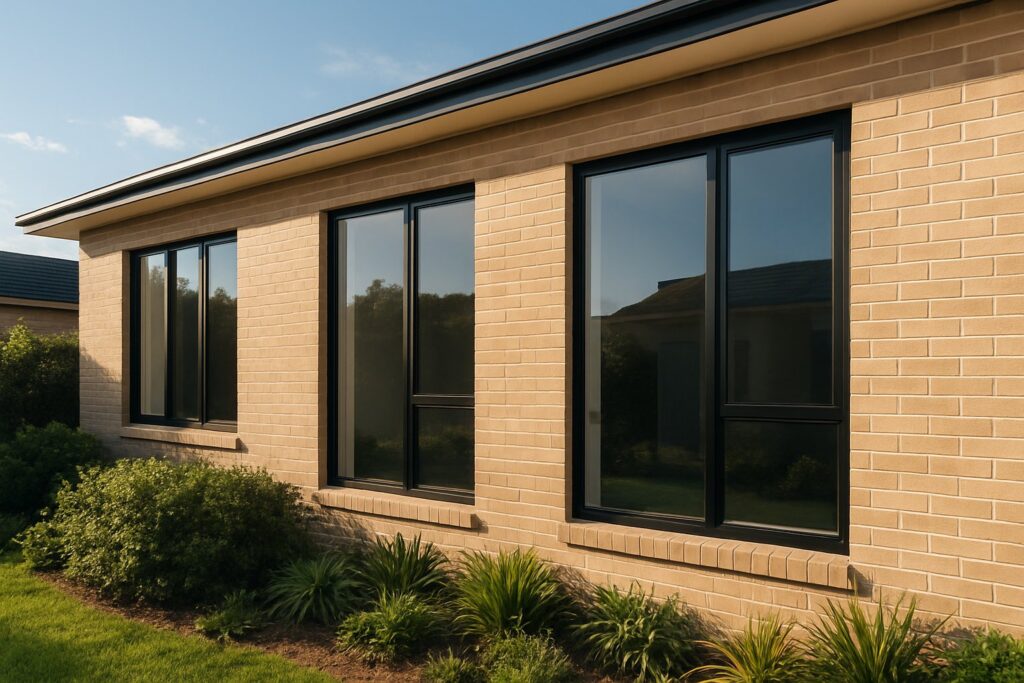
Understanding What You Pay for the Aluminium Frame Itself
Search for aluminium window frames cost online and you will find dozens of figures thrown at you, most of them blending the frame, the glass, the hardware, and the labour into a single number. That single number is not wrong, but it answers a different question. If you are trying to understand what the aluminium frame component alone costs, or how frame choice influences the total price of your windows and window frames, most search results leave you guessing.
What Does Aluminium Window Frames Cost Actually Mean
The aluminium window frame is the structural skeleton of the window unit. It is the extruded aluminium profile that holds the glass in place, supports the hardware, and anchors the entire assembly into your wall opening. When we talk about aluminium window frames cost specifically, we mean the price of that frame material and its fabrication, separate from the glazing panel, the handles and locks, the seals and gaskets, and the installation labour that gets it into your home.
In the Australian market, an aluminium frame window typically represents just one portion of the total supply-and-install price you receive on a quote. Industry sourcing data confirms that a complete window quotation often bundles glass configuration, hardware systems, surface treatment, sealing materials, and fabrication complexity into a single line item. Two suppliers can quote very different totals for what appears to be the same window simply because one includes premium hardware and thermally broken aluminium frames for windows while the other prices a basic configuration.
Why Frame Cost Gets Confused with Total Window Cost
The confusion exists because most suppliers do not itemise the frame separately. You rarely see a quote that says “frame: $X, glass: $Y, hardware: $Z.” Instead, you get a per-window price that rolls everything together. Online cost guides reinforce this by quoting ranges like $600 to $1,800 per window installed (in AUD terms) without clarifying how much of that figure is the frame versus the glazing or the tradesperson’s time.
The aluminium frame itself typically accounts for a fraction of the total installed window price. Glazing, hardware, finish, and labour make up the rest. Understanding this distinction is the first step toward comparing quotes accurately and knowing where your money actually goes.
This matters because the frame is where many of the cost variables live: profile thickness, thermal break technology, powder coat colour, and extrusion complexity. If you are comparing windows and frames across different suppliers or materials, knowing which portion of the price belongs to the frame helps you make sharper decisions rather than comparing apples with oranges.
Throughout this guide, we break down exactly where your money goes when you buy aluminium windows, how style and finish shift the price, and what separates a vague online estimate from a project-ready quote you can actually rely on.
Full Cost Breakdown of an Aluminium Window Unit
Knowing that the frame is only one piece of the puzzle raises an obvious question: what exactly are you paying for when you buy an aluminium window? Every quote you receive bundles several distinct components into a single figure. Pulling those components apart reveals where the real cost sits and, more importantly, where you have leverage to adjust it.
Frame Material and Extrusion Costs
The aluminium frame is the single largest material cost driver in a typical window unit. It covers the extruded profile itself, the thermal break insulation (if specified), and the surface finish applied at the factory. Industry breakdowns consistently place the frame’s share at roughly 30 to 45 per cent of the total supply cost, depending on profile complexity and whether a thermally broken system is used. A standard aluminium frame with a basic powder coat finish sits at the lower end. Specify a thermally broken profile with a custom colour, and the frame alone can push toward the upper end of that range.
The glass in an aluminium frame is the second-heaviest cost contributor. A standard double-glazed insulated glass unit (IGU) with Low-E coating and argon gas fill typically accounts for 25 to 40 per cent of the total unit cost. Upgrading to triple glazing, laminated layers, or high-performance solar control coatings pushes that share higher. For any aluminium window destined for a climate zone demanding strong thermal performance, glazing choices can rival or even exceed the cost of the frame itself.
Glazing, Hardware, and Installation as Separate Line Items
Beyond the frame and glass, hardware systems, seals, fabrication quality, and delivery logistics each claim their own slice. Handles, hinges, locking mechanisms, and weatherseals might seem minor, but they typically represent 10 to 15 per cent of the unit price. Cheap hardware is one of the fastest ways manufacturers shave cost, and it is one of the first things to fail. Fabrication and assembly precision, including corner jointing, gasket fitting, and quality checks, adds another 10 to 20 per cent. Packaging and freight round out the picture at roughly 5 to 15 per cent, particularly relevant in Australia where long transport distances from manufacturer to site are common.
Installation labour sits outside the supply cost but can represent 30 to 50 per cent of the total project spend. In the Australian market, labour rates vary significantly between capital cities and regional areas, and complexity factors like multi-storey access, scaffolding, or working within existing masonry openings push that figure higher.
| Component | Approximate Share of Total Cost | What Drives the Price |
|---|---|---|
| Aluminium frame (profile and finish) | 30 – 45% | Profile thickness, thermal break inclusion, powder coat colour, extrusion complexity |
| Glazing (IGU) | 25 – 40% | Number of panes, Low-E coatings, gas fill type, lamination, glass thickness |
| Hardware (handles, hinges, locks, seals) | 10 – 15% | Operating style, lock type (single-point vs multi-point), brand and durability grade |
| Fabrication and assembly | 10 – 20% | Corner joining precision, gasket quality, quality assurance processes |
| Packaging and logistics | 5 – 15% | Transport distance, protective packaging requirements, project site accessibility |
| Installation labour* | 30 – 50% of total project cost | Local labour rates, opening preparation, storey height, structural modifications |
*Installation labour is calculated as a share of the total installed project cost, not the supply-only unit cost.
The practical takeaway here is straightforward. When you compare two quotes for an aluminium window, a price gap does not necessarily mean one supplier is overcharging. It often means one quote includes a better aluminium glass frame system with superior hardware and thermal performance, while the other has stripped those elements back. Asking suppliers to itemise frame, glazing, and hardware separately is one of the most effective ways to compare like with like.
With the cost anatomy of a single unit clear, the next factor that shifts your budget dramatically is the style of window you choose. A fixed pane and a casement window may share the same metal window frame material, yet their fabrication, hardware, and sealing requirements create noticeably different price points.
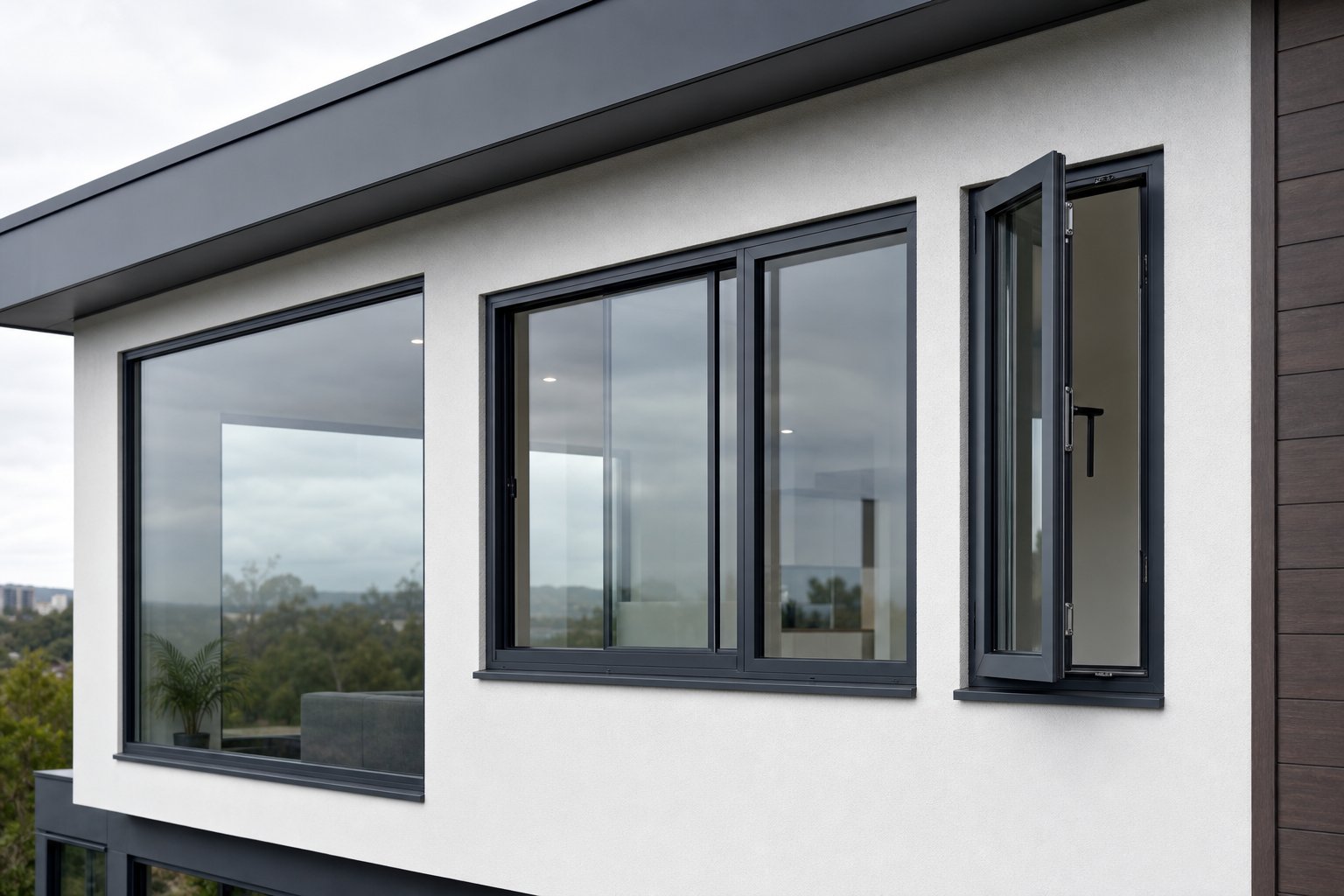
How Window Style Changes Your Aluminium Frame Price
Two aluminium windows can use the same profile system, the same powder coat finish, and the same glass specification, yet arrive at different price points purely because of how they open. The operating style dictates how much aluminium is extruded, how many moving parts are machined into the frame, and how complex the fabrication and sealing process becomes. For Australian homeowners and builders comparing quotes, understanding this relationship between style and cost prevents surprises when numbers come back higher than expected on certain window types.
Sliding and Single Hung Aluminium Frame Pricing
Sliding aluminium windows sit at the more affordable end of the spectrum. The reason is mechanical simplicity. A sliding sash rides horizontally on a track-and-roller system with minimal hardware: rollers, a guide track, and a basic latch lock. There is no crank mechanism, no hinge assembly, and no multi-point compression seal to engineer into the frame. That translates to less machining during fabrication, fewer components to source, and faster assembly times. For a standard-sized alum sliding window, the frame cost saving over more complex styles can sit in the range of 15 to 25 per cent.
Single hung aluminium windows follow a similar cost logic. Only the bottom sash moves (sliding vertically within the frame), while the top sash remains fixed. The hardware is straightforward: a balance system, a simple lock, and weatherstripping along the meeting rail. An aluminum single hung window avoids the expense of dual-operating sashes, keeping fabrication lean. The result is a frame price that typically lands close to sliders, though slightly higher due to the vertical balance mechanism and tighter sealing requirements against gravity.
Aluminum double hung windows step up modestly in cost. Both sashes operate independently, which means two balance systems, two sets of weatherseals, and a more complex locking arrangement at the meeting rail. The frame itself requires additional machining to accommodate the tilt-in feature common on modern double hung units. Expect a 10 to 20 per cent premium over a comparable single hung aluminium windows configuration.
Casement, Awning, and Specialty Style Premiums
Casement and awning styles introduce mechanical complexity that drives frame cost noticeably higher. A casement window is hinged at the side and cranks outward, requiring a multi-point locking system, hinge tracks machined into the frame, support arms, and a crank operator. Every one of those components demands precision machining of the aluminium profile and adds material and labour to the fabrication process. An aluminum awning window operates on the same principle but hinges at the top, swinging outward from the bottom. The hardware requirements are virtually identical to casement, with the added engineering challenge of supporting the sash weight against gravity while maintaining a compression seal on all four sides.
Industry data consistently shows awning and casement windows carrying a 15 to 25 per cent cost premium over sliding windows of equivalent size and frame material. In the Australian market, where thermally broken casement and awning systems are increasingly specified for NCC compliance, that premium can stretch further depending on the profile system selected.
Fixed windows represent the lowest frame cost of all. No operating hardware exists, no moving sash, no sealing mechanism beyond static gaskets. The frame is simply an aluminium border holding glass in place. Fixed panels are common as highlight windows, picture windows, or paired alongside operable units in combination configurations.
| Window Style | Relative Frame Cost (Low to High) | Key Cost Driver |
|---|---|---|
| Fixed | Lowest | No operating hardware or moving sash; simplest fabrication |
| Sliding | Low | Basic track-and-roller system; minimal machining required |
| Single hung | Low–moderate | One operating sash with balance system; straightforward sealing |
| Double hung | Moderate | Two operating sashes; dual balance systems and tilt-in hardware |
| Awning | Moderate–high | Crank operator, hinges, support arms, multi-point compression seal |
| Casement | High | Side-hinged crank operation; full multi-point lock system; precise shimming needed |
| Bi-fold / stacking | Highest | Multiple hinged panels, complex track systems, heavy-duty hardware |
The pattern is clear: the more moving parts engineered into the aluminium frame, the higher the fabrication cost climbs. A project specifying all sliding aluminium windows across a home will carry a materially different frame budget than one specifying casement or awning units throughout, even when the openings are identical in size. Matching the right style to each opening based on ventilation needs, aesthetic goals, and budget constraints is where smart specification saves real money without compromising performance.
Style sets the baseline, but the variables layered on top of it, particularly frame finish, thermal break technology, and raw aluminium pricing, can shift costs just as dramatically.
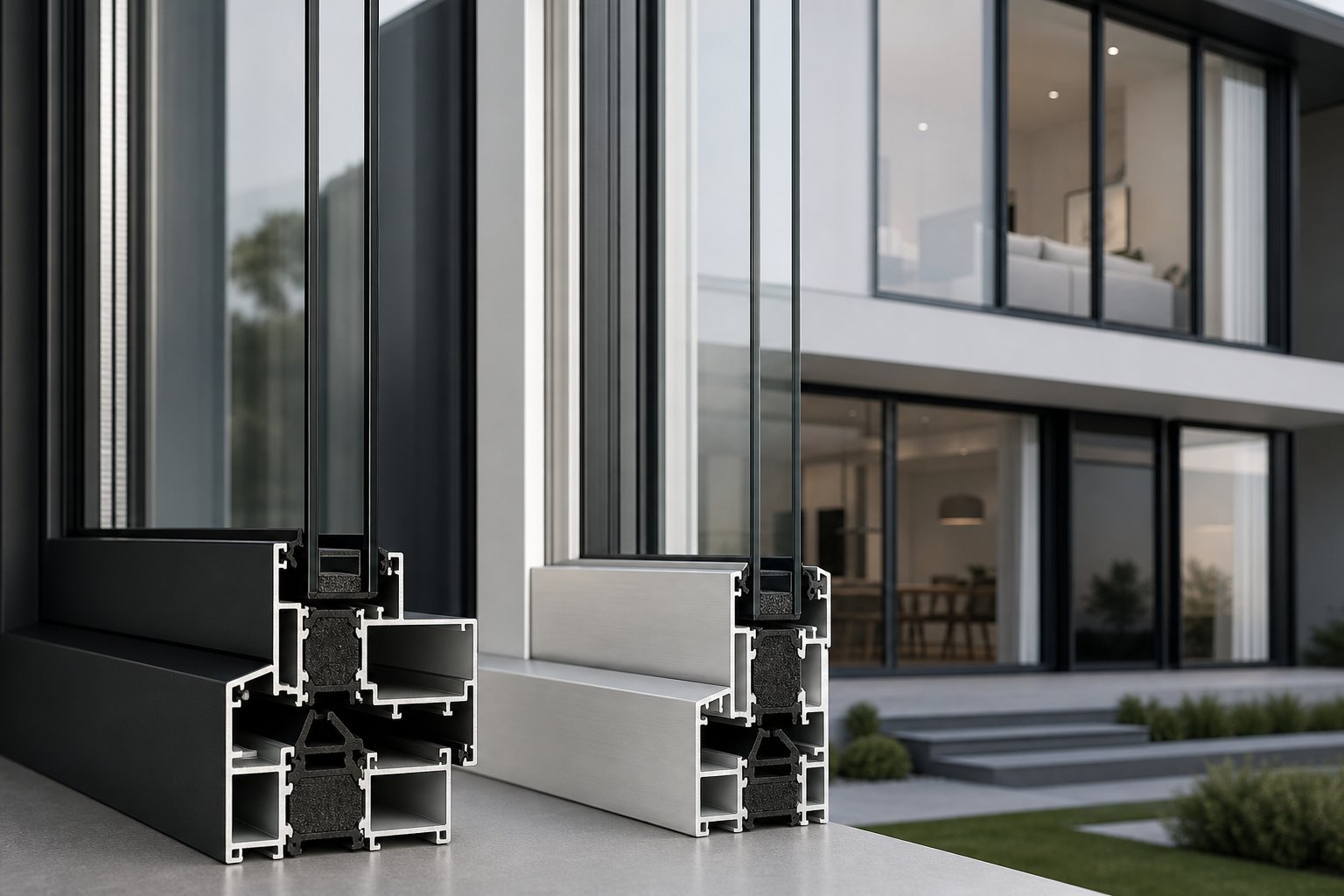
Key Factors That Drive Aluminium Frame Prices Up or Down
Window style determines your starting point. The variables layered on top of it, particularly how the aluminium frame is finished, insulated, and sourced, determine where the final price actually lands. Two identically sized casement windows built from the same profile system can differ by 25 per cent or more once finish selection, thermal performance, and market timing are factored in. These are the levers that shift aluminium window frames cost independently of size or style.
How Frame Finish Impacts Your Bottom Line
The surface treatment applied to an extruded aluminum window frame is more than cosmetic. It protects against corrosion, UV degradation, and coastal salt exposure, all critical in Australian conditions. Each finish type carries a different cost, driven by process complexity and durability.
- Raw mill finish (lowest cost): Untreated aluminium straight from extrusion. Rarely used on residential windows because it offers no corrosion protection and develops an uneven patina over time. Occasionally specified for concealed structural framing only.
- Anodised finish (moderate cost): An electrochemical process that converts the aluminium surface into a hard oxide layer. Anodized aluminum windows offer excellent UV stability and scratch resistance with a distinctive metallic appearance. Colour options are more limited, typically silver, bronze, champagne, or black.
- Standard powder coat (moderate–high cost): A dry powder applied electrostatically and cured with heat, forming a durable 60 to 120 micron layer over the profile. Offers uniform coverage and a wide range of aluminium window frame colours including whites, greys, blacks, and textured finishes.
- Custom or specialty powder coat (highest cost): Non-standard colours, metallic effects, or marine-grade coatings specified to match architectural colour schemes. Industry data places the premium for custom colour powder coating at roughly 10 to 15 per cent above standard colour options.
For most Australian residential projects, standard powder coat in popular colours like Monument, Surfmist, or Woodland Grey represents the sweet spot between protection, aesthetics, and cost. Choosing from a manufacturer’s standard palette avoids the surcharge that custom-matched aluminium window frame colors attract.
Thermal Break Technology and Its Cost Premium
Aluminium conducts heat roughly 1,000 times more efficiently than timber or vinyl. Without insulation within the frame, heat transfers rapidly between interior and exterior surfaces, undermining energy performance and causing condensation in cooler climates. Thermal break technology solves this by inserting a non-conductive barrier, typically polyamide strips, between the inner and outer aluminium frame sections.
The engineering adds cost. Thermally broken aluminum frames carry a 15 to 25 per cent premium over non-thermally broken equivalents. That increase covers the additional extrusion complexity, the polyamide inserts, and the more precise fabrication required to maintain structural integrity across the split profile. For projects targeting NCC Section J compliance or strong NatHERS ratings, thermally broken systems are often non-negotiable rather than optional. The upfront cost is offset over time through reduced heating and cooling loads, though the exact payback period depends on climate zone and energy tariffs.
Profile thickness also plays a role. Heavier-gauge aluminium frames offer greater structural capacity for larger openings and wind-load requirements, but use more raw material per lineal metre. Thin frame windows with slimline profiles minimise visible sightlines and suit modern architectural aesthetics, yet their engineering precision can actually increase fabrication cost despite using less aluminium by weight. The aluminum window frame material cost is not simply a function of volume; it reflects manufacturing complexity.
Aluminium Commodity Pricing and Market Fluctuations
Unlike timber or vinyl, aluminium is a globally traded commodity. Its price is set on the London Metal Exchange (LME), and window frame costs are not immune to those swings. In 2026, LME aluminium reached approximately US $3,544 to $3,665 per tonne, the highest level in four years, driven by geopolitical disruptions in the Persian Gulf, halted smelter production, and elevated energy costs. That represents a rise of over 46 per cent across twelve months.
For Australian buyers, these global shifts flow through to local aluminium frame pricing within two to six weeks as importers and local extruders adjust. The practical impact shows up in shorter quote validity periods. Where suppliers once held pricing for 30 to 60 days, volatile periods compress that window to 14 days or less. Large projects specifying custom alu frames or non-standard profiles feel the squeeze most acutely because made-to-order material cannot be sourced from existing stock at older pricing.
The takeaway is simple: aluminium window frames cost is not a fixed number you can look up once and rely on indefinitely. It shifts with global commodity markets, manufacturing demand cycles, and even shipping logistics. Locking in specifications and requesting quotes promptly during volatile periods protects your budget more effectively than waiting for prices to “settle.”
These cost drivers, finish, thermal performance, and raw material pricing, apply universally across aluminium frames. But they interact differently depending on whether you are installing into a new build or retrofitting existing openings, a distinction that introduces its own set of cost variables.
New Construction vs Replacement Aluminium Frame Costs
A thermally broken casement window with a custom powder coat costs the same to manufacture regardless of where it ends up. The real cost divergence happens at the installation stage, and the gap between fitting aluminium frames into a freshly framed wall versus threading them into an existing opening can be surprisingly wide. Whether you are building new or planning an aluminium window replacement on an established home, the project context reshapes your total spend in ways the supply-only price never reveals.
New Construction Aluminium Frame Installation Costs
In a new build, aluminium windows arrive on site while the wall framing is still exposed. The rough openings are purpose-built to match the window schedule, so each frame slots into a precisely sized cavity with mounting fins or brackets fixed directly to the structure. Flashing and sealing follow a straightforward sequence before cladding goes on over the top.
This clean workflow keeps labour costs contained. There is no demolition, no disposal of old units, and no patching of interior or exterior finishes. A competent installer can typically fit a standard aluminium window into a prepared opening in under two hours. The frame cost itself remains unchanged from the supply quote, and the ancillary materials are limited to flashing tape, sealant, and fixings, items that add relatively little to the bottom line.
For builders and developers running multi-dwelling projects, new construction also offers volume efficiencies. Standardised opening sizes across a floor plan mean repetitive fabrication runs, fewer one-off custom measurements, and bulk pricing on replacement aluminum windows ordered in quantity. These economies of scale rarely exist in retrofit scenarios.
Retrofit and Replacement Pricing Differences
Replacing aluminium frames in an existing home introduces a cascade of additional costs that new builds simply avoid. The old window must be carefully removed without damaging surrounding brickwork, render, or plasterboard. Disposal of the old unit and any associated asbestos-containing materials (common in pre-1990 Australian homes) adds both cost and compliance complexity. The existing opening may not be perfectly square after decades of settling, requiring shimming, packing, or even structural correction before the new frame can be installed.
An aluminum frame window replacement in a retrofit scenario can follow one of two paths. An insert replacement fits the new aluminium frame inside the existing outer frame, which stays embedded in the wall. This approach is faster and less disruptive, but it reduces the visible glass area slightly because you are effectively nesting one frame inside another. A full-frame replacement strips the opening back to the rough structure and installs a completely new window, delivering maximum glass area and thermal performance but requiring finishing trades, including rendering, plastering, and painting, to make good the surrounding surfaces.
Industry experience consistently places retrofit installation costs at 1.5 to 2.5 times the labour expense of equivalent new construction work. The additional materials, finishing trades, and project coordination explain the premium.
| Cost Dimension | New Construction | Retrofit / Replacement |
|---|---|---|
| Frame supply cost | Standard pricing; no adaptor components needed | Similar supply cost, though adaptor frames or custom sizing may add 5–15% |
| Labour complexity | Low — frame fits directly into prepared rough opening | Moderate to high — removal, opening preparation, and finishing required |
| Additional materials | Flashing tape, sealant, standard fixings | Packing, shimming, render or plaster repair, paint, and possibly skip bin for disposal |
| Finishing trades | None — cladding covers the frame perimeter during construction | Often required — plasterer, renderer, painter to restore internal and external surfaces |
| Typical installed cost per window (AUD estimate) | $600 – $1,400 | $900 – $2,200+ (insert); $1,200 – $3,000+ (full-frame) |
| Timeline per window | 1 – 2 hours | 2 – 4 hours (insert); 4 – 8 hours plus drying time (full-frame) |
Note: AUD estimates are indicative and vary by location, window size, storey height, access conditions, and current material pricing. Always obtain project-specific quotes.
One option that most cost guides overlook entirely is repairing an existing aluminium frame rather than replacing it. If the aluminium profile itself is structurally sound, with no significant corrosion, warping, or seal failure, it may be far more cost-effective to replace only the glazing, hardware, or weatherseals while retaining the original frame. Re-glazing with a modern double-glazed unit, swapping worn rollers or hinges, and refreshing perimeter seals can restore performance at a fraction of the cost to replace aluminium windows completely. This approach suits situations where the frame remains in good condition but the glass is single-pane, the locks are outdated, or minor draughts have developed around ageing gaskets.
Knowing whether your project is a new build, an insert retrofit, a full-frame replacement, or a targeted repair shapes the budget conversation before a single quote is requested. That same project context also determines whether aluminium is the right frame material at all, particularly when weighed against the lifetime cost profile of vinyl alternatives.
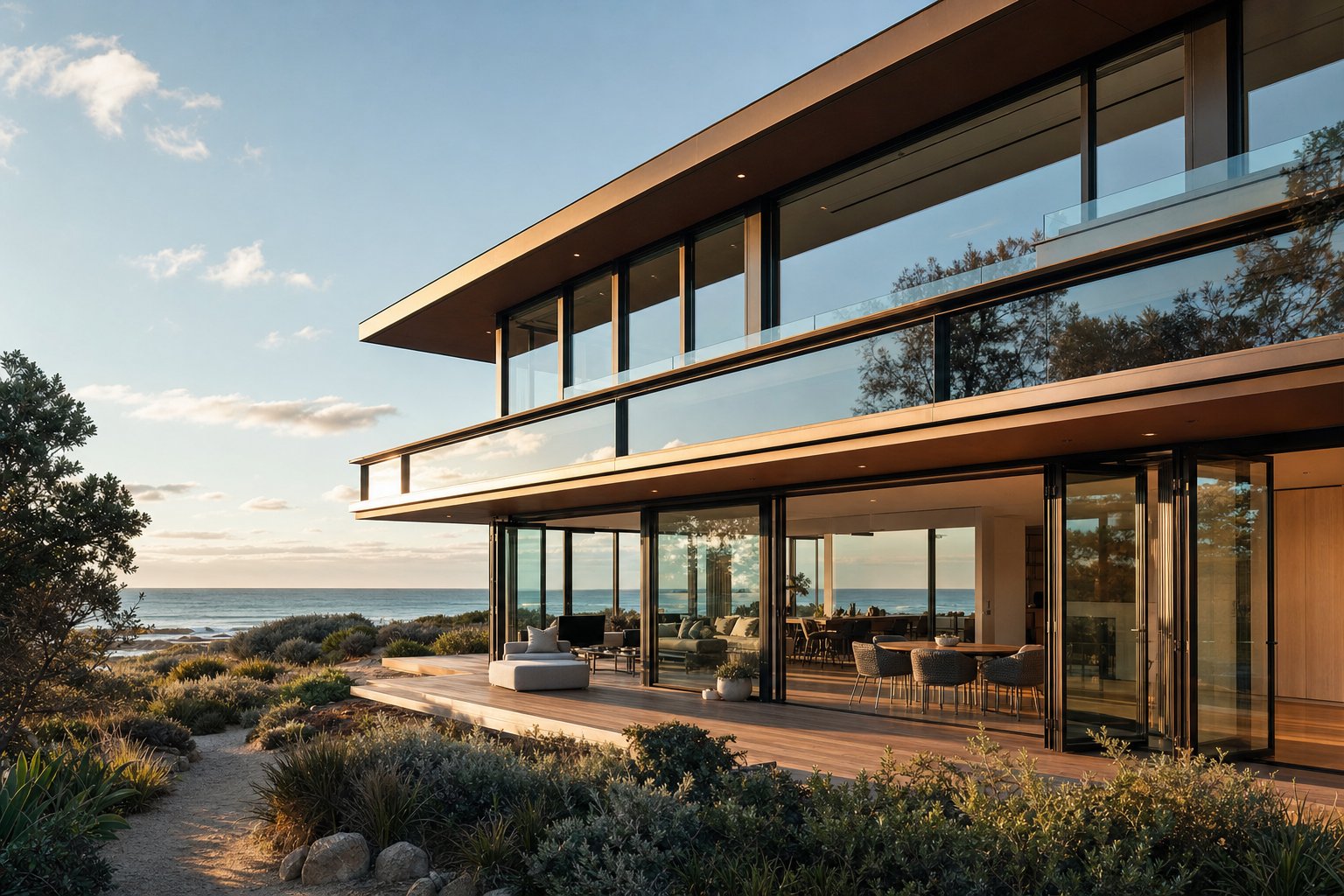
Aluminium vs Vinyl Frames Total Cost of Ownership
Comparing aluminium windows against vinyl on sticker price alone paints an incomplete picture. The upfront gap between these two materials is real, but it tells you roughly 30 per cent of the financial story. The remaining 70 per cent plays out over decades through maintenance cycles, replacement timelines, and energy performance in your specific climate zone. For Australian projects where buildings are expected to perform for 40 years or more, that longer view changes the arithmetic considerably.
Upfront Price Difference Between Aluminium and Vinyl
At point of purchase, vinyl frames cost less. A standard vinyl window supplied and installed in Australia typically sits 25 to 40 per cent below a comparable thermally broken aluminium unit. In practical terms, a mid-range vinyl window might land around $700 to $1,200 AUD installed, while aluminum frame windows of equivalent size and configuration tend to fall between $950 and $1,800 AUD, depending on thermal performance, finish, and project scale.
That gap narrows at volume. Factory-level cost data shows the raw material difference between vinyl and aluminium frames is surprisingly modest, around $60 to $90 per unit. The installed price diverges more sharply because aluminium commands higher perceived value and requires slightly more precision during installation. For larger projects ordering 20 or more windows, contractor pricing compresses the percentage difference further.
Lifetime Value When Maintenance and Longevity Are Factored In
Aluminium windows consistently outlast vinyl. Quality thermally broken aluminium frames deliver 35 to 50 years of service life in Australian conditions, while vinyl windows typically reach 20 to 30 years before degradation forces replacement. That lifespan gap matters enormously when you calculate total cost across the life of a building. A vinyl window purchased today may need full replacement within 25 years, a capital expense that aluminium avoids entirely.
Maintenance costs favour metal frame windows as well. Aluminium requires little beyond periodic cleaning and occasional hardware lubrication. Vinyl frames need similar routine care but are vulnerable to issues that cannot be repaired: UV-induced chalking, colour fading, and heat warping in northern Australian climates where sustained temperatures exceed 40°C. Once a vinyl frame warps or discolours, replacement is the only remedy. Aluminium, by contrast, can be recoated or touched up if surface damage occurs.
Coastal performance widens the gap dramatically. Along Australia’s extensive coastline, salt air exposure accelerates vinyl degradation, with industry data indicating vinyl lifespans drop to 10 to 15 years within five kilometres of saltwater. Powder-coated or anodised aluminium windows remain structurally sound for 30 to 40 years in the same conditions. For coastal properties, metal framed windows are not a premium choice but a practical necessity.
Energy efficiency is the one area where vinyl holds a measurable edge. The multi-chamber PVC construction provides inherent thermal insulation without additional engineering. Standard vinyl achieves U-values around 0.25 to 0.35, while thermally broken aluminium sits at 0.30 to 0.38. In practice, that difference translates to marginal annual energy cost savings, typically under $50 per year for a standard home, which is quickly eclipsed by the replacement cost vinyl incurs over a shorter lifespan.
| Comparison Factor | Aluminium (Thermally Broken) | Vinyl (Multi-Chamber) |
|---|---|---|
| Upfront frame cost (relative) | Higher (25–40% premium) | Lower |
| Expected lifespan | 35–50 years | 20–30 years |
| Maintenance cost over time | Lower — repairable finish, durable hardware | Moderate — irreparable fading, potential warping |
| Energy efficiency (U-value) | Good (0.30–0.38 with thermal break) | Very good (0.25–0.35 inherent) |
| Coastal durability | Excellent — 30–40 years in salt air | Poor — 10–15 years before replacement needed |
| Colour and finish options | Unlimited (powder coat to any colour) | Limited (6–10 factory colours; dark tones risk warping) |
| Best use case | Coastal, long-term ownership, modern design, commercial, large openings | Inland, budget-focused, traditional architecture, cold climates |
Metal clad windows and aluminum clad windows offer a hybrid path for projects wanting timber interiors with weather-resistant aluminium exteriors. These systems carry a higher upfront cost again but combine the aesthetic warmth of wood with the longevity of aluminium on the exposed face, a solution worth considering where both performance and interior finish matter.
The total cost of ownership calculation favours aluminium in most Australian scenarios outside of heavily budget-constrained inland projects in temperate climates. The upfront premium buys a frame that will likely never need replacing during the building’s useful life, a financial advantage that becomes clearer the longer you intend to own or manage the property. The question then becomes whether aluminium suits your specific project type, climate, and design goals, a decision that depends on several factors beyond cost alone.
Is Aluminium the Right Choice for Your Budget and Project
Cost data only becomes useful when you can map it against your own circumstances. A frame material that delivers outstanding value on a coastal Sydney duplex development might be overkill for an inland Toowoomba cottage, and vice versa. Rather than asking whether aluminium is expensive in the abstract, the sharper question is whether it is cost-effective for your specific climate, building type, design goals, and ownership timeline.
When Aluminium Frames Make Financial Sense
Aluminium earns its premium in situations where its core strengths, durability, structural capacity, slim profiles, and finish flexibility, directly serve the project’s requirements. If several of the following apply, the upfront investment is likely to deliver strong returns over the building’s life.
- Coastal or high-corrosion environments: Properties within 5 km of saltwater or in tropical northern Australia where humidity and UV are relentless. Aluminium’s corrosion resistance outlasts alternatives by decades here.
- Commercial aluminum windows or multi-dwelling developments: Projects where long-term maintenance budgets must stay low and frames need to span large openings without bulky profiles. Slimline aluminium windows maximise glass area and minimise ongoing costs across building portfolios.
- Modern architectural aesthetics: Homes targeting clean lines, floor-to-ceiling glazing, and minimal sightlines. Black aluminum windows, bronze aluminum windows, and white aluminum windows all achieve this through powder coating without the thick frame profiles that vinyl demands.
- Cyclone or high-wind zones: BAL-rated areas and northern Queensland where structural strength under extreme pressure is non-negotiable. Aluminium’s strength-to-weight ratio satisfies these engineering loads without excessive frame bulk.
- Long-term ownership or investment properties: When you intend to hold a property for 20 or more years, the lifetime cost advantage eliminates at least one full replacement cycle compared to vinyl.
- Residential aluminum windows requiring NCC compliance: Thermally broken aluminium systems meet Section J energy requirements while maintaining design flexibility, making them well-suited for metal windows residential applications across NatHERS climate zones 5 through 8.
Situations Where Aluminium May Not Be the Best Value
Aluminium is not universally the smartest spend. In certain contexts, alternative materials deliver equal or better performance for less money.
- Tight budgets on inland temperate projects: If the property sits well away from coastal exposure and the design does not demand slim profiles, vinyl provides adequate performance at 25 to 40 per cent less upfront cost.
- Cold-climate properties prioritising insulation above all else: In southern highland or alpine regions where heating loads dominate, timber or high-performance vinyl may deliver better thermal outcomes without the cost of premium thermally broken aluminium systems.
- Heritage or conservation zones: Period homes where council requirements mandate timber-look profiles or specific proportions. Aluminium can replicate these in some cases, but purpose-built timber frames often satisfy compliance more simply and at comparable cost.
- Short-hold renovations for resale: If the plan is a quick renovation within two to five years, the longevity advantage of aluminium never materialises. A quality vinyl window performs adequately within that timeframe at lower capital outlay.
- Small single-storey projects with standard openings: On a basic weatherboard cottage with six or eight standard windows, the cost premium for aluminium may not justify itself unless coastal conditions or design ambitions demand it.
If you find yourself ticking multiple boxes in the first list, aluminium frames are almost certainly the right investment. If the second list resonates more strongly, explore alternatives before committing. And if your project sits somewhere between the two, the next step matters most: getting a project-specific quote built on real drawings and specifications rather than relying on online calculators or generic price ranges.
How to Get a Reliable Aluminium Window Frame Quote
Generic online calculators promise instant pricing but deliver something far less useful: a number disconnected from your actual project. They cannot account for your profile system, your glass build-up, your site access conditions, or the specific aluminium window frame colours your architect has specified. The result is a figure that feels informative but collapses the moment you compare it to a real supplier quote. Accurate pricing for aluminium windows demands real project information flowing in both directions, from you to the supplier and back again.
What Information Suppliers Need for an Accurate Quote
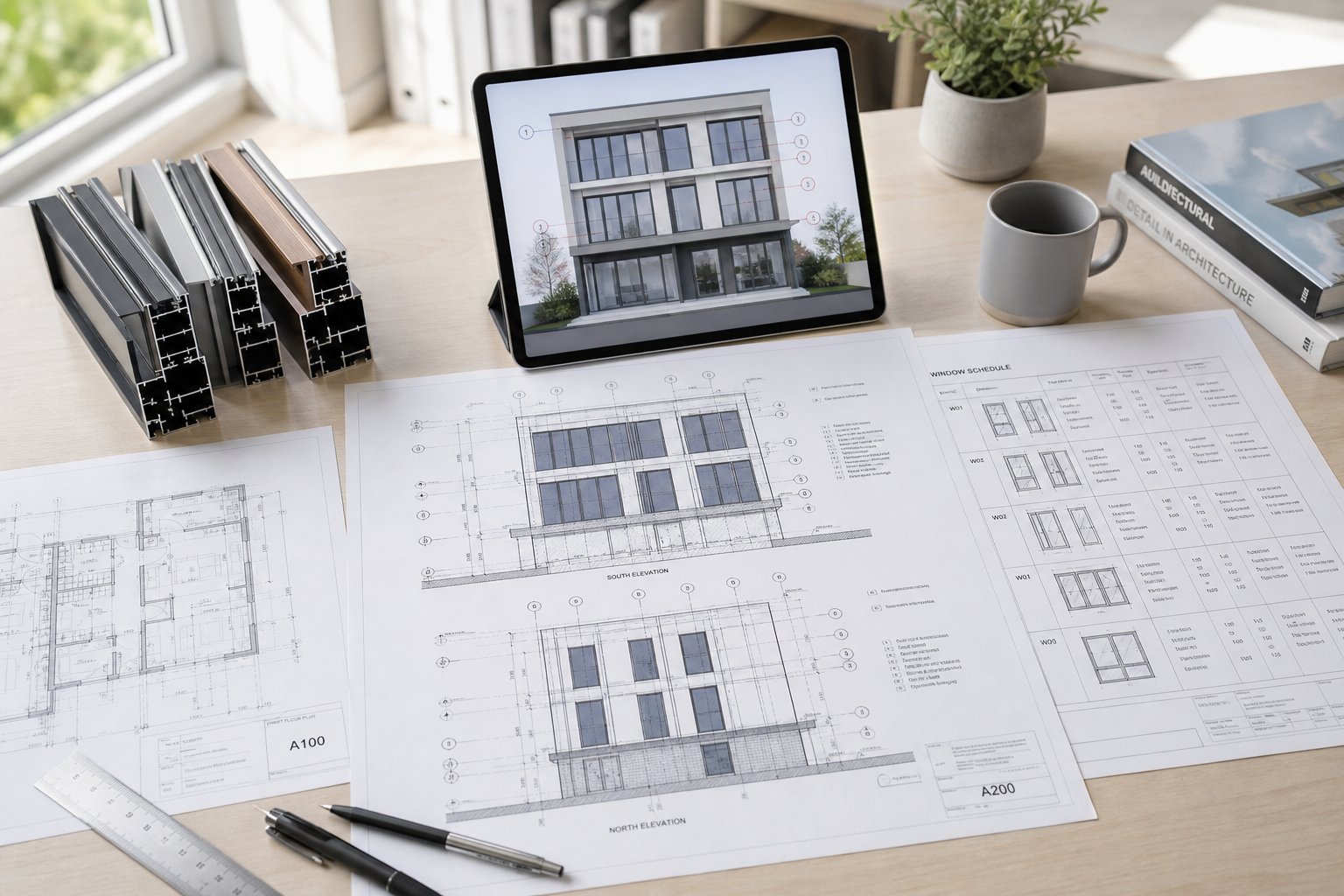
Aluminium window suppliers cannot quote meaningfully from a rough sketch and a suburb name. The more complete your documentation, the tighter and more competitive the pricing you receive. Before approaching aluminium window manufacturers for quotes, prepare the following details:
- Window schedule: A complete list of every opening, specifying quantity, dimensions (width x height in mm), operating style, and location within the building. This is the single most important document for accurate pricing.
- Profile system preference: Whether you need standard, thermally broken, or slimline systems. If you are unsure, a capable supplier can recommend based on your NCC climate zone and performance targets.
- Glass specification: Single, double, or triple glazed. Low-E coatings, tinted glass, laminated layers, or acoustic requirements. Glass configuration can shift the per-unit cost by 20 to 40 per cent.
- Finish and colour: Standard powder coat palette or custom colour match. Specify the Colorbond or RAL code if known. Custom colours from aluminium window manufacturers typically attract a surcharge and may require minimum order quantities.
- Hardware grade: Standard residential, commercial-grade, or specific brand preferences for handles, locks, and hinges.
- Project scale and staging: Total number of units, delivery in a single batch or phased across construction stages, and any access constraints (multi-storey, tight laneway, crane required).
- Architectural drawings or elevations: Even preliminary drawings help an aluminum window manufacturer confirm sizing, mullion placement, and structural requirements before pricing.
Missing even one of these details forces suppliers to assume, and assumptions inflate pricing because they build in contingency. Industry professionals consistently note that homeowner-provided measurements and incomplete specifications are among the primary reasons online quotes fail to match final installed costs. A needs assessment at the property, or at minimum a thorough drawing review, catches variables that no calculator can anticipate: frame health in retrofits, structural adequacy, flashing conditions, and site-specific access logistics.
Why Project-Capable Partners Deliver Better Pricing
There is a material difference between an aluminum window supplier who simply prices a list of sizes and one who engages with your project as a whole. The first gives you a number. The second gives you a number you can actually build to.
A project-capable partner reviews your drawings and window schedule, recommends the appropriate profile system for your performance requirements, calculates material quantities accurately, coordinates manufacturing sequencing to match your construction programme, and flags potential issues before they become expensive site variations. This level of engagement does not just improve quote accuracy; it often reduces total cost. When a supplier identifies that three custom sizes on your schedule could be rationalised to two standard sizes without compromising design intent, the fabrication savings flow directly back to your budget.
For builders, developers, architects, and procurement teams running multi-dwelling or commercial projects, this distinction is especially sharp. A supplier handling custom aluminum windows across 50 or 100 units needs to manage batch consistency, finish matching, hardware alignment, packaging, and staged delivery. That coordination capability is what separates a competitive project price from a speculative one. Suppliers who offer end-to-end project support, from initial drawing review through to system selection, material calculation, quality control, and delivery planning, consistently deliver tighter pricing because they eliminate the unknowns that force others to pad their margins.
When comparing quotes from multiple aluminium window supplies sources, ensure you are comparing equivalent specifications. Frame depth, glass build-up, hardware grade, finish quality, and packaging standards must all align before a price comparison becomes meaningful. The cheapest quote built on unstated assumptions rarely remains the cheapest once variations, rework, and site delays are tallied at project close.
With the right information prepared and a capable supplier engaged, the quote you receive reflects your actual project rather than a statistical average. That precision is what transforms cost research into a confident purchasing decision.
Turning Your Cost Research into Confident Next Steps
You came looking for a number. What you found instead is a framework, one that explains why no single figure can answer the question of what aluminium windows and doors will cost on your project. The frame is shaped by style, finish, thermal break specification, commodity markets, and whether you are building new or retrofitting. The total installed price layers glazing, hardware, fabrication quality, and labour on top. Every project combination produces a different answer.
Your Next Steps Toward Accurate Project Pricing
The aluminium frame accounts for roughly 30 to 45 per cent of your window’s supply cost. Glazing, hardware, finish, fabrication, and installation make up the rest. Comparing quotes without understanding this split is comparing different products at different specifications — not prices.
Armed with that clarity, the path forward is practical. Finalise your window schedule with dimensions, styles, and performance targets. Confirm your finish preference and thermal requirements against your NCC climate zone. Gather your architectural drawings or elevations, even if preliminary. These inputs transform a vague enquiry into a quotable scope that suppliers can price with confidence.
Turning Cost Knowledge into Confident Decisions
For homeowners managing a single renovation, this preparation means receiving quotes you can trust rather than ranges you cannot act on. For builders, developers, and procurement teams coordinating aluminium doors and windows across larger projects, the stakes multiply. Accurate pricing depends on a supplier who reviews your drawings, recommends the right aluminium door window systems for each opening, and coordinates manufacturing to your construction programme.
If your project has moved beyond research and you need project-specific pricing for aluminum doors and windows, consider working with a partner who supports the full process. Suppliers offering end-to-end project capability, from drawing review and system selection through to manufacturing coordination and delivery planning, close the gap between online estimates and buildable numbers. That is one logical next step. The other is simply taking what you have learned here and asking sharper questions of whichever aluminum door and window supplier you approach next.
Either way, you are no longer guessing at what aluminium doors windows should cost. You understand where the money goes, what drives it up or down, and how to get a quote that reflects your actual project rather than someone else’s average.
Frequently Asked Questions About Aluminium Window Frames Cost
1. How much does an aluminium window frame cost on its own?
The aluminium frame typically accounts for 30 to 45 per cent of the total window supply cost. The remaining cost covers glazing, hardware, seals, fabrication, and packaging. For a standard residential aluminium window in Australia, the total supply-and-install price generally ranges from $600 to $1,800 AUD depending on size, style, thermal performance, and finish. The frame portion alone varies based on profile thickness, whether a thermal break is included, and powder coat colour selection. Requesting an itemised quote from your supplier helps isolate the frame cost from other components.
2. Are aluminium window frames more expensive than vinyl?
Yes, aluminium frames carry a 25 to 40 per cent upfront premium over comparable vinyl units in Australia. However, the lifetime cost picture differs significantly. Aluminium frames last 35 to 50 years compared to 20 to 30 years for vinyl, and in coastal areas vinyl lifespans can drop to just 10 to 15 years. When maintenance, replacement cycles, and durability in harsh Australian conditions are factored in, aluminium often delivers lower total cost of ownership over the building’s life, particularly for coastal properties and long-term holdings.
3. What factors affect the price of aluminium window frames?
Several variables drive aluminium frame pricing up or down. Frame finish is significant, with raw mill finish being cheapest and custom powder coat colours attracting a 10 to 15 per cent surcharge over standard options. Thermal break technology adds 15 to 25 per cent to the frame cost but improves energy performance. Window operating style matters too: fixed and sliding frames cost less than casement or awning styles due to reduced hardware and fabrication complexity. Profile thickness, aluminium commodity pricing on global markets, and project volume also influence the final figure.
4. Does window style affect aluminium frame cost?
Absolutely. Fixed windows have the lowest frame cost because they require no operating hardware or moving parts. Sliding windows follow closely due to their simple track-and-roller mechanism. Single hung and double hung styles sit in the moderate range, while casement and awning windows carry a 15 to 25 per cent premium over sliders because they require crank operators, multi-point locks, and hinged support arms. Bi-fold and stacking systems are the most expensive due to multiple hinged panels and heavy-duty track systems. Choosing the right style for each opening based on ventilation needs and budget is where smart specification saves money.
5. How can I get an accurate quote for aluminium window frames in Australia?
Prepare a complete window schedule listing every opening with dimensions, operating style, and location. Specify your profile system preference, glass configuration, finish colour, and hardware grade. Provide architectural drawings or elevations if available. This documentation allows suppliers to quote precisely rather than padding margins for unknowns. Working with a project-capable partner who reviews drawings, recommends systems, and coordinates manufacturing typically delivers tighter pricing than suppliers quoting sight-unseen. Avoid relying on online calculators, as they cannot account for site-specific variables like access conditions, structural requirements, or regional labour rates.
More Window & Door Guides