What Makes Aluminium Double Glazed Windows the Performance Leader
Aluminium conducts heat roughly 1,000 times faster than timber. That single fact shaped decades of scepticism around aluminium windows in residential construction. Yet pair an engineered aluminium frame with a properly specified insulated glass unit, and you get something neither material achieves alone: structural slenderness, design flexibility, and genuine thermal performance that satisfies Australian energy codes.
This guide examines the best aluminium double glazed windows through measurable performance data rather than brand popularity. Most online resources bury double glazing within broader aluminium window content, treating it as an afterthought. Here, the double glazed specification is the entire focus.
What Are Aluminium Double Glazed Windows
At their core, these are extruded aluminium frame profiles housing a sealed insulated glass unit (IGU). The IGU consists of two glass panes — typically 4mm to 8mm each — separated by a spacer cavity filled with an inert gas such as argon. That sealed air gap dramatically slows heat transfer through the glazed area, while a polyamide thermal break within the frame addresses the metal’s natural conductivity.
Aluminium’s exceptional strength-to-weight ratio allows sightlines as slim as 35mm, compared with 70mm or more for uPVC. The result is more visible glass, greater natural light, and the structural capacity to span larger openings without bulky mullions — all while double glazing compensates for the thermal weakness inherent in metal framing.
Why Performance Data Matters More Than Brand Names
Throughout this article, every recommendation ties back to measurable criteria: whole-window U-values (Uw), acoustic Rw ratings, weather resistance testing, compliance with AS 2047, and total cost of ownership across a 30-year-plus lifespan. These numbers give you an objective basis for comparison that marketing alone cannot provide.
Choosing the best aluminium double glazed windows means matching measurable performance to your project’s specific requirements — climate zone, building orientation, acoustic exposure, and regulatory obligations — rather than defaulting to whichever brand advertises most heavily.
Even among the best window manufacturers operating in Australia, product lines vary significantly in thermal break depth, glass specification, and certification rigour. Top window manufacturers earn that standing through tested performance, not logo recognition. The sections ahead give you the technical literacy to evaluate their claims with confidence.
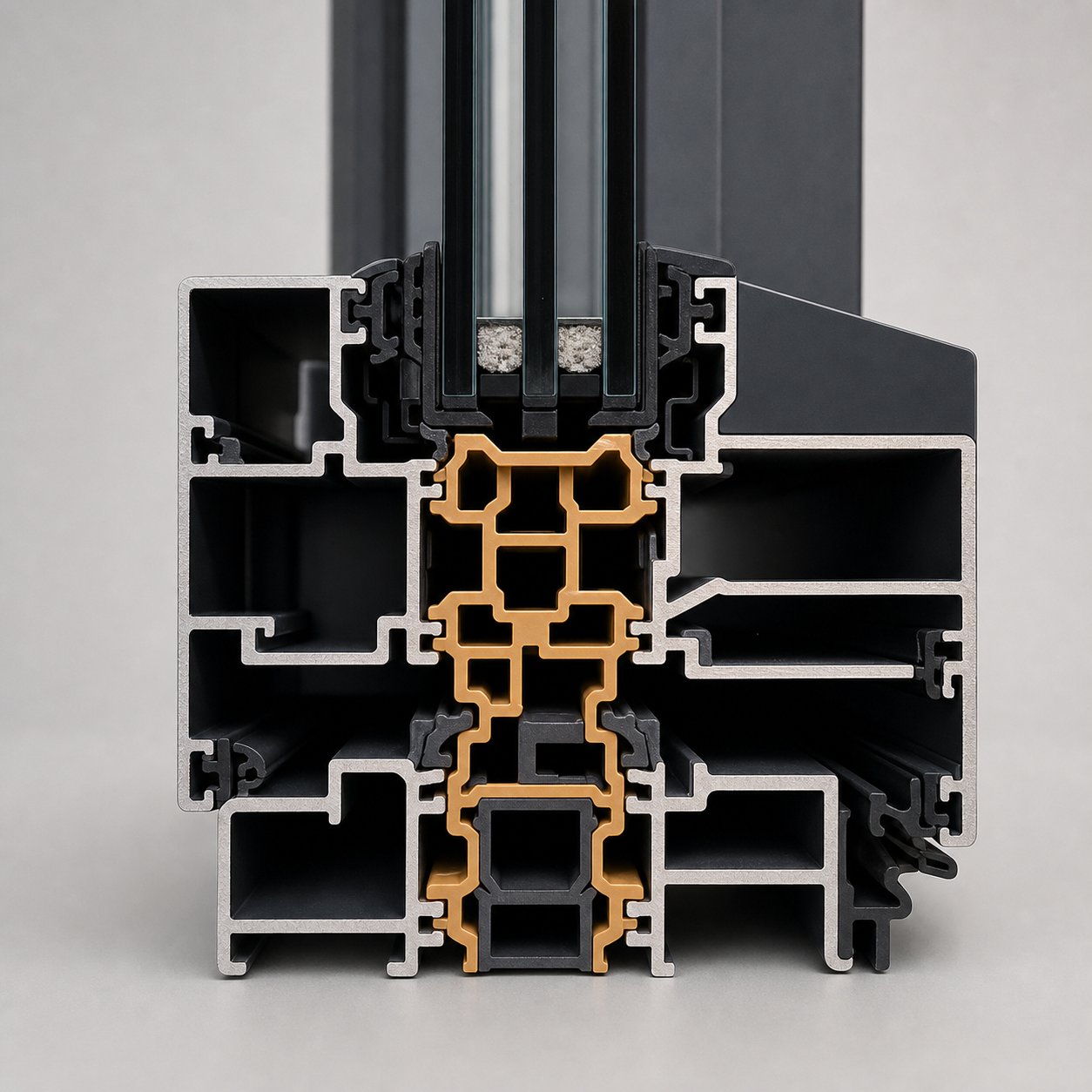
How Thermal Breaks Transform Aluminium Frame Performance
Aluminium conducts heat at approximately 160 W/m·K — over 1,000 times faster than uPVC and 5,000 times faster than timber. Left unchecked, that conductivity turns your window frame into a thermal highway, shuttling heat energy straight through to the other side regardless of how well-insulated the glass is. The solution sits hidden inside the profile itself: a thermal break.
How a Thermal Break Prevents Heat Transfer
Picture an aluminium window profile split into two distinct halves — an exterior section exposed to weather and an interior section facing your living space. Bridging the gap between them is a strip of polyamide (PA66 reinforced with glass fibre), a material with thermal conductivity of just 0.3 W/m·K. That single barrier reduces heat flow through the frame by a factor of more than 500 compared to solid aluminium.
The manufacturing process is precise. Each aluminium extrusion is produced as two separate pieces with machined channels. Polyamide strips — ranging from 14.8mm to 34mm in width depending on the performance specification — slot into those channels. A mechanical crimping process locks the polyamide permanently to the aluminium, creating a composite profile that acts as one structural unit while behaving as two thermally independent zones.
Without this intervention, even a high-specification double glazed IGU with low-e coatings and argon fill cannot compensate for frame-level heat loss. A non-thermally-broken aluminium frame typically produces a Uf value of 5.0 to 7.0 W/m²K. At that level, the frame bleeds energy so rapidly that it drags down the overall window performance — wasting the money spent on premium glass.
Standard aluminium window systems using a basic thermal break (14.8mm to 20mm polyamide) bring the frame Uf down to roughly 2.5 to 3.5 W/m²K. That represents a significant improvement, suitable for many residential applications. Enhanced aluminium window profiles with 24mm to 34mm thermal breaks push frame performance further, achieving Uf values between 0.8 and 1.8 W/m²K — comparable to high-performance timber frames while retaining the slim sightlines and structural capacity that aluminium delivers.
Thermal Break Design and Frame U-Value Relationship
A window’s published thermal performance — its whole-window U-value (Uw) — is not a single measurement. It combines three components: the centre-pane glass value (Ug), the frame value (Uf), and the linear thermal transmittance at the glass-to-frame junction (the spacer bar psi-value). Each element contributes to total heat loss, and a weakness in any one area limits the whole assembly.
This relationship catches many buyers off guard. You might specify expensive low-e coated, argon-filled double glazing with a Ug of 1.1 W/m²K, yet pair it with aluminium window frames carrying a mediocre thermal break and a Uf of 3.5 W/m²K. The result? A whole-window Uw that disappoints, because the frame and edge losses overwhelm the glass performance. In glazing-heavy designs — sliding doors, large fixed-lite panels, bi-folds — frame and edge effects typically add 30 to 50% to the centre-pane figure.
When evaluating aluminium window profiles from different system providers, look for these indicators of quality thermal break design:
- Thermal break depth: A minimum of 24mm polyamide width for high-performance applications. Premium aluminium window systems use 30mm to 34mm breaks, sometimes with additional foam insulation inserts within the profile cavity.
- Material composition: Glass-fibre-reinforced polyamide (PA66 GF25) remains the industry standard for structural stability and long-term thermal resistance. Polyurethane alternatives appear in some systems but are less common in Australian-specified profiles.
- Gasket integration: The thermal break must work in concert with multiple compression gaskets to create continuous air and weather seals. Poor gasket detailing introduces air leakage that undermines thermal performance regardless of break depth.
- Tested Uf values: Reputable system companies publish independently tested Uf data for their profiles. Request this figure from your fabricator and compare it against the system designer’s published specifications — any discrepancy may indicate non-standard assembly or substituted components.
Requesting Uf values before committing to a quote gives you a direct, comparable metric. Two aluminium window systems may look identical from the outside, yet a 10mm difference in thermal break depth can shift the Uw by 0.3 to 0.5 W/m²K — enough to move a window from barely compliant to genuinely high-performing under NCC Section J energy requirements.
The thermal break is, in many respects, the defining specification choice in any aluminium double glazed window. It determines the ceiling of achievable performance for the entire assembly. With that foundation understood, the next question becomes practical: how do you read and compare the U-value numbers that thermal break quality directly influences?
Understanding U-Values and Energy Efficiency Ratings
A product datasheet lists a U-value. A competitor’s datasheet lists a different one. Without knowing which number refers to what — or how the test conditions compare — you cannot make an informed decision. This section breaks the jargon into plain language so you can evaluate high quality aluminium windows on their actual thermal merit.
Reading and Comparing U-Values for Double Glazed Units
Three distinct U-values appear on aluminium window specifications, and confusing them is one of the most common mistakes buyers make:
- Ug (glass centre-pane): Measures heat transfer through the middle of the glass only, ignoring edge and frame effects. This is the most flattering number and the one manufacturers tend to highlight.
- Uf (frame): Measures heat transfer through the aluminium frame profile alone. As covered in the thermal break section, this value varies dramatically based on break depth and design.
- Uw (whole window): Combines Ug, Uf, and the spacer bar psi-value into a single figure representing real-world performance of the complete assembly. This is the number that matters for regulatory compliance and actual energy savings.
The critical principle is straightforward: the lower the Uw, the better the insulation. In Australia, NCC Section J glazing requirements vary by climate zone and building orientation, but a Uw of 1.4 W/m²K or below is generally considered strong performance for residential aluminium double glazing. Triple glazing can push below 1.0 W/m²K, though at increased cost and weight.
To give you a practical comparison framework, here’s how aluminium double glazed windows typically tier by performance:
| Performance Tier | Whole-Window Uw (W/m²K) | Typical Thermal Break Depth | Typical Glass Specification |
|---|---|---|---|
| Entry-level | 2.0 – 2.4 | 14.8 – 20mm | Standard double glazing, air-filled cavity, clear or basic low-e glass |
| Mid-range | 1.4 – 1.9 | 20 – 24mm | Argon-filled cavity, soft-coat low-e, aluminium or warm-edge spacer |
| High-performance | 1.0 – 1.3 | 24 – 34mm | Argon-filled, high-performance low-e, warm-edge spacer, possible foam-filled profile |
Entry-level specifications may satisfy minimum compliance in mild Australian climate zones but leave little margin. Mid-range products represent the sweet spot for most residential aluminium windows — balancing performance, cost, and broad regulatory compliance. High-performance units suit projects targeting NatHERS ratings above 7 stars or properties in heating-dominated climates like alpine Victoria or Tasmania.
When comparing quotes, always confirm that the stated Uw is tested to AS 2047 or calculated per EN ISO 10077. A Ug figure presented in isolation looks impressive but tells you nothing about how the finished window will actually perform once frame losses and edge effects are factored in. For anyone researching the best replacement windows 2025 has to offer, insisting on whole-window data is the single most effective way to cut through marketing noise.
Why Gas Fill and Low-E Coatings Matter
The sealed cavity between the two panes is where most of the insulating work happens. Three components within that cavity determine how effectively the IGU resists heat transfer.
Gas fill: A standard air-filled cavity allows convective heat transfer between panes. Replacing that air with argon — a denser, less conductive noble gas — improves the insulating value by up to 16%. Krypton gas offers even greater gains (up to 27% improvement), but its scarcity makes it roughly 40 times more expensive than argon — impractical for most residential projects. Argon remains the standard fill for high quality aluminium windows across the Australian market.
Concerns about gas leakage over time are largely addressed by modern fabrication standards. Properly sealed IGUs lose argon at less than 1% per year, and that rate slows further as the pressure differential between internal gas and external atmosphere decreases. Over a typical 20-year service life, the performance degradation from gas loss is essentially negligible in well-fabricated units.
Low-e coatings: A low-emissivity coating is a microscopically thin metallic layer — usually silver-based — applied to one of the interior pane surfaces. Soft-coat (pyrolytic) low-e glass positioned on surface 3 (the inner face of the outer pane) reflects long-wave heat radiation back into the room during winter while still admitting visible light and beneficial solar warmth. In cooling-dominated climates, positioning the coating on surface 2 helps reject solar heat gain before it enters the building.
Warm-edge spacer bars: Traditional aluminium spacers at the perimeter of the IGU create a thermal bridge right at the glass edge — the coldest point on any window. Warm-edge spacers made from composite materials or stainless steel reduce this edge loss significantly, improving both condensation resistance and overall Uw. For best windows for residential homes 2025, specifying warm-edge spacers is increasingly standard practice rather than an optional upgrade.
These three elements work together as a system. Argon fill reduces convection, low-e coatings reduce radiation, and warm-edge spacers reduce conduction at the perimeter. Combined within a well-sealed IGU, they can achieve centre-pane Ug values between 1.0 and 1.3 W/m²K for double glazing — performance that was exclusive to triple-glazed units a decade ago.
Yet U-values, however important, measure only thermal transmission. They reveal nothing about how a window handles noise — a performance dimension that matters enormously for properties facing busy roads, flight paths, or rail corridors. That acoustic story requires an entirely different set of metrics.
Acoustic Insulation and Sound Reduction Explained
Thermal performance dominates most window conversations, yet for thousands of Australian homeowners living near arterial roads, rail corridors, or under flight paths, noise is the problem that actually keeps them awake. A window can achieve a stellar Uw of 1.2 W/m²K and still allow traffic rumble to pour through if its acoustic design is an afterthought. Sound insulation and thermal insulation rely on different physical principles, demand different specifications, and are measured by entirely separate rating systems.
Aluminium double glazed windows can deliver strong acoustic performance — but only when the glass configuration, cavity design, and frame sealing are specified with noise reduction as a deliberate goal rather than a side benefit.
How Double Glazing Reduces Noise Transmission
Sound reaches a window as vibration travelling through air. When that vibration strikes the outer pane, some energy reflects, some transmits through the glass, and some causes the pane itself to vibrate — re-radiating sound into the room. The role of a double glazed aluminium window with glass specified for acoustic control is to weaken that energy at every transition point: outer pane, cavity, inner pane, and frame junction.
In Australia, acoustic window performance is reported using the Rw (weighted sound reduction index) rating system. Rw expresses, as a single number, how many decibels of airborne sound a window assembly reduces across a range of frequencies weighted to reflect typical human hearing. A higher Rw means greater noise reduction under laboratory test conditions.
To put the numbers in perspective: a standard single-glazed aluminium window might achieve an Rw of around 22 to 25. A basic double glazed unit with matched 4mm panes typically reaches Rw 28 to 30. Acoustic-optimised double glazing — using asymmetric glass thickness, laminated interlayers, and wider cavities — can push that figure to Rw 35 to 40 or higher. Since a 10 dB reduction is generally perceived as roughly halving loudness, the difference between Rw 25 and Rw 35 represents a transformative improvement in daily comfort.
The key mechanism is asymmetric glass thickness. When both panes are identical — say, two 4mm sheets — they resonate at the same frequency. Incoming sound energy at that resonant frequency passes through with relatively little attenuation. Specifying different thicknesses (for example, 6mm outer and 4mm inner) forces each pane to respond differently to incoming vibrations. This mismatch disrupts resonance and weakens sound transmission more effectively than simply adding mass to both panes equally.
Cavity width also plays a role. Narrower cavities (less than 12mm) limit acoustic benefit because the trapped air couples the two panes too closely. Wider gaps — 16mm to 20mm — allow more effective decoupling, particularly for low-frequency sound such as trucks and heavy traffic. There is a practical ceiling, however. Extremely wide cavities can introduce their own resonance problems, and the overall unit thickness must fit within standard aluminium window profiles without compromising sealing or hardware function.
When to Specify Acoustic Aluminium Double Glazing
Not every project requires acoustic-grade glass. Standard double glazing already offers a worthwhile improvement over single glazing for general suburban noise. Acoustic specification becomes a priority when the property faces sustained, high-intensity, or low-frequency sound sources.
Scenarios that warrant dedicated acoustic specification include:
- Properties fronting arterial roads, highways, or intersections with heavy vehicle traffic
- Homes within 500 metres of active rail corridors — especially freight lines operating at night
- Residences beneath airport flight paths or within ANEF (Australian Noise Exposure Forecast) contour zones
- Dwellings adjacent to commercial or industrial premises — loading docks, workshops, or entertainment venues
- Inner-city apartments exposed to mixed urban noise from multiple directions
When specifying luxury aluminium windows for these situations, the acoustic design decisions that matter most are:
- Glass thickness asymmetry: Different pane thicknesses (e.g., 6.38mm laminated outer / 4mm inner, or 8mm outer / 5mm inner) reduce coincidence resonance and improve performance across a broader frequency range.
- Laminated acoustic interlayers: A PVB (polyvinyl butyral) or specialised acoustic resin interlayer bonded between glass sheets absorbs vibration energy rather than transmitting it. This is particularly effective against persistent low-frequency rumble that standard float glass struggles to attenuate.
- Cavity width: Specifying 16mm to 20mm cavities improves low-frequency performance. For projects where overall unit thickness is constrained, even moving from 12mm to 16mm delivers measurable gains.
- Seal integrity and gasket compression: Sound travels through the weakest point. Even a small gap at the frame-to-sash junction can undermine an otherwise excellent glass specification. Multi-point locking hardware that compresses weatherseals evenly around the entire perimeter is essential for acoustic performance.
This last point is where aluminium frames offer a structural advantage over more flexible materials. The rigidity of aluminium means the frame resists deflection under wind load and operational stress — maintaining consistent gasket compression over decades. High end window manufacturers engineer their aluminium profiles with tight manufacturing tolerances that keep seals intact and prevent the gradual air leakage which degrades acoustic (and thermal) performance in less dimensionally stable frame materials like uPVC.
Fixed windows deliver the highest potential Rw ratings because they have no operable joints for sound to exploit. Awning and casement configurations perform well due to compression seal design. Sliding windows present more of a challenge — their interlocking meeting stiles create longer seal interfaces — but quality high end window brands engineer multi-fin weatherstripping and interlocking profiles that achieve respectable acoustic results even in sliding configurations.
One common misconception deserves correction: thicker glass is not automatically better for noise. Doubling the thickness of both panes adds mass, which helps, but it can also shift the resonant frequency into a range that coincides with the dominant noise source — producing minimal perceived improvement despite the additional cost and weight. Targeted asymmetry and lamination almost always outperform brute-force thickness increases for residential acoustic applications.
Acoustic performance is felt immediately — quieter sleep, easier conversation, reduced fatigue — in ways that thermal improvements often take months to register on an energy bill. Yet the specification decisions that deliver strong Rw ratings do not exist in isolation. They interact directly with climate, building orientation, and local regulatory requirements, which together determine what constitutes the right overall window specification for any given project.
How Climate and Building Regulations Affect Your Choice
A window that performs brilliantly in Melbourne’s heating-dominated winters may actively work against you in Darwin’s relentless tropical heat. Climate zone, building orientation, and regulatory obligations shape what “best” actually means for any given project — and ignoring these variables leads to either wasted money on unnecessary specification or a system that fails to comply when the energy assessor runs the numbers.
This context matters whether you are specifying aluminium windows and doors for a single residential renovation or an entire commercial aluminium windows package across a multi-storey development. The performance sweet spot shifts with geography, and the regulations that enforce minimum standards shift with it.
Matching Window Specification to Climate Zone
Australia spans eight distinct climate zones under the NCC framework, from the hot humid tropics of Zone 1 (Darwin, Cairns) through temperate coastal zones (Sydney, Perth) to the alpine cold of Zone 8 (Mount Buller, Thredbo). Each zone creates fundamentally different thermal demands on aluminium doors and windows.
Heating-dominated climates (Zones 6, 7, 8): In Canberra, Hobart, alpine Victoria, and highland NSW, the priority is retaining interior warmth. Low Uw values matter enormously here — every fraction of a watt saved through the glazing reduces heating load directly. Equally important is solar heat gain coefficient (SHGC). A higher SHGC on north-facing glass allows passive solar warmth to enter during winter, reducing reliance on mechanical heating. Specifying low-SHGC glass indiscriminately in these climates actually increases energy consumption by blocking beneficial free heat.
Cooling-dominated climates (Zones 1, 2, 3): In Queensland’s tropical north, the NT, and coastal WA above Geraldton, keeping heat out is the primary concern. Solar control coatings that limit SHGC to 0.3 or below prevent excessive solar gain from driving up cooling loads. Uw remains relevant — heat still transfers through the assembly — but SHGC often governs compliance and comfort in these regions.
Mixed climates (Zones 4, 5): Sydney, Perth, Adelaide, and much of regional NSW and Victoria experience both significant heating and cooling seasons. Here the balance between SHGC and Uw is most complex, often requiring different glass specifications on different elevations of the same building.
Coastal environments: Salt-laden air accelerates corrosion in exposed hardware and can attack poorly protected aluminium finishes. Properties within 1 km of the coastline — particularly in surf zones — require enhanced powder coating systems (Qualicoat Class 2 minimum), stainless steel hardware, and marine-grade sealants. This applies equally to alu windows and doors in beachside apartments and standalone coastal homes. Without these protective measures, even premium aluminium windows doors systems degrade prematurely in marine atmospheres.
Building Orientation and Regulatory Compliance
In Australia’s southern hemisphere position, north-facing windows receive the most winter sun and the least harsh summer sun (due to higher solar angles). South-facing glazing gets minimal direct sunlight year-round. East and west elevations cop the worst summer heat from low-angle morning and afternoon sun that is difficult to shade effectively.
This orientation logic directly influences glass specification. Research on a typical Perth home demonstrated that glazing with an SHGC of 0.6 on the south facade reduced heating demand substantially by admitting passive solar gain — while the same high-SHGC glass on western elevations caused significant overheating requiring additional cooling energy. The practical takeaway: identical aluminium windows and doors on opposite sides of the same building can produce vastly different energy outcomes depending on their glass specification.
NCC Section J governs energy efficiency for commercial buildings, while NCC Section 13 (housing provisions) sets requirements for residential glazing. Both reference maximum allowable Uw and SHGC values that vary by climate zone and orientation. The NCC 2025 update introduces more stringent solar admittance requirements for wall-glazing constructions across all building classifications and climate zones — including requirements to assess thermal performance for each storey individually, a significant tightening from previous provisions.
When specifying aluminium windows and doors for compliance, these are the regulatory checkpoints to confirm with your energy assessor:
- Maximum allowable Uw by orientation: NCC provisions set different thermal performance limits depending on whether glazing faces north, east, south, or west. North-facing glass in heating zones often permits higher Uw if SHGC compensates through passive solar gain.
- Required SHGC limits: East and west elevations in cooling-dominated zones face the strictest SHGC caps. Some climate zones require SHGC below 0.25 on western facades — achievable with tinted or coated double glazing but impossible with clear glass.
- Condensation resistance: Particularly relevant in cold climates (Zones 6–8), where interior humidity and low external temperatures create condensation risk at glass edges and frame junctions. Warm-edge spacers and adequate thermal break depth directly affect condensation performance.
- Shading and adjustment provisions: Fixed or operable shading devices (eaves, louvres, external blinds) can offset SHGC requirements, effectively allowing higher-transmittance glass where shading geometry blocks direct sun during peak periods.
For aluminum windows and doors manufacturers supplying the Australian market, compliance documentation should specify tested Uw and SHGC values for their standard configurations — not just the glass component, but the total system including frame. The WERS (Window Energy Rating Scheme) star rating system provides a consumer-facing shortcut, but the underlying numbers matter more for NCC compliance calculations performed through tools like NatHERS-accredited software.
The essential point is this: the best aluminium double glazed window for a south-facing bedroom in Hobart is a completely different specification from the best choice for a west-facing living area in Townsville. Climate zone dictates priority (heating versus cooling), orientation determines solar exposure, and regulations set the minimum performance floor. Specifying without accounting for all three variables risks either over-engineering (wasted cost) or under-engineering (failed compliance and poor comfort).
These environmental and regulatory factors determine the minimum performance standard your windows must meet. What determines how long they continue meeting it — across decades of UV exposure, thermal cycling, and weather — comes down to material durability and maintenance practices that are rarely discussed with the detail they deserve.
Longevity, Maintenance, and Long-Term Durability
Selecting the right specification is only half the equation. What happens over the following 30 to 40 years — as UV cycles through summer after summer, salt air drifts inland, and sealed units quietly age — determines whether your investment delivers lasting returns or disappointing decline. Durable aluminium windows earn their reputation through material science and finishing quality, not just frame strength alone. Yet practical information about coating lifespan, seal degradation, and realistic maintenance expectations is almost entirely absent from buyer guides.
Here is what long-term ownership actually looks like.
Powder Coating Lifespan and Finish Maintenance
The visible surface of every modern aluminium window is not raw metal — it is an electrostatically applied powder coating, typically 60 to 80 microns thick, cured at around 200°C to form a continuous protective film. The quality of that finish, and how long it maintains colour and integrity, depends on two factors most buyers never consider: the pretreatment process beneath the coating, and the powder classification specified.
Qualicoat-licensed applicators must meet independently audited standards for aluminium substrate preparation — a process that completely seals the metal surface and provides adhesion for the coating above. Without proper pretreatment, powder coatings are air-permeable enough that oxidation can develop underneath, eventually causing the finish to lift regardless of coating thickness. This is why specifying a Qualicoat-certified finish matters more than simply choosing a colour.
Qualicoat classifies architectural powder coatings into performance tiers based on their resistance to UV, temperature, and humidity over time:
- Class 1: Standard durability suitable for most residential and commercial installations. Maintains acceptable colour and gloss retention under normal atmospheric exposure for approximately 15 to 20 years with regular cleaning.
- Class 2: Enhanced durability using premium powder compositions with more robust pigments and binders. Designed for prestigious projects or harsh environments, with life expectancy well beyond 30 years — often matching the building’s own lifespan.
- Class 3: The highest weathering classification, specified for extreme exposure situations. Less commonly available but offers maximum long-term colour stability.
For premium aluminium windows in Australian conditions — where UV intensity exceeds European norms significantly — Class 2 is the recommended minimum for north and west elevations. Rich, bold colours (deep reds, blues, dark charcoals) are more susceptible to UV fading than lighter shades, so colour choice itself becomes a durability decision.
Over time, UV exposure can produce surface “chalking” — a whitish residue where the binder migrates to the coating surface. This is not a coating failure. It is a sign that cleaning has been neglected. Regular washing with clean water or a pH-neutral detergent prevents chalking from developing, and specialist restoration can reverse it if the finish has been allowed to deteriorate.
Marine and industrial atmospheres demand extra vigilance. Properties within direct sea spray zones — or near heavy industrial operations — experience accelerated surface degradation from salt deposition and chemical pollutants. Qualicoat’s “Seaside” specification addresses coastal installations, and cleaning frequency should increase to at least quarterly rather than annual intervals in these environments. Protective wax or silicone-based coatings applied after cleaning add another moisture barrier.
Anodised finishes offer an alternative approach. Rather than applying a coating on top of the aluminium, anodising converts the surface layer into a hard aluminium oxide through an electrolytic process. The resulting finish is integral to the metal — it cannot peel or flake. Anodised aluminium resists abrasion better than powder coating and performs well in coastal environments. The trade-off is a more limited colour palette (typically natural silver, bronze, black, and gold tones) and higher initial cost. For modern aluminium windows where design flexibility matters, powder coating remains dominant, but anodising deserves consideration for exposed coastal or high-traffic applications.
Sealed Unit Failure and Condensation Between Panes
The aluminium frame itself is essentially permanent — typical lifespan sits at 40 years or more, with minimal structural degradation. The component that limits overall window longevity is the sealed insulated glass unit, which relies on a perimeter edge seal to maintain its gas fill and prevent moisture ingress.
Over time, that edge seal degrades. UV exposure, thermal cycling (daily expansion and contraction), and atmospheric moisture all contribute to gradual breakdown. Once the seal is compromised, two things happen: the insulating gas escapes — reducing thermal performance — and external moisture enters the cavity. The visible result is condensation or misting trapped between the panes, often appearing as a persistent haze or milky cloudiness that cannot be cleaned from either side.
An important distinction for homeowners: condensation on the interior room-side surface of glass is a humidity issue within the house — not a window failure. Condensation between the panes is definitive evidence of seal failure in the IGU.
Well-made modern sealed units typically last 20 to 30 years, benefiting from improved spacer bar technology, better edge seal compounds, and superior gas retention compared to units manufactured two decades ago. Quality matters here — cheaper IGUs using basic butyl seals and aluminium spacers tend to sit at the lower end of that range, while units with dual-seal construction and warm-edge composite spacers push toward or beyond 25 years.
When seal failure does occur, all aluminium windows generally allow the IGU to be replaced without removing or replacing the frame. This is a significant cost advantage — glass-only replacement typically costs 40 to 60% less than full window replacement and restores both clarity and insulation performance. It also means that upgrading glass specification in future — taking advantage of improved coatings or gas fills developed over coming decades — remains straightforward within the existing aluminium frame.
Factors that shorten sealed unit lifespan include:
- Poor original fabrication or seal application
- Blocked drainage channels in the frame that trap water against the unit edge
- Excessive thermal stress from dark-coloured glass absorbing heat without adequate ventilation
- Building settlement causing frame distortion and stress on the glazing
- Failure to maintain gaskets, allowing water to pool at the glass-to-frame junction
The good news is that most of these risks are controllable through quality fabrication and basic ongoing maintenance.
For anyone researching the most durable replacement windows brands 2025 has to offer, aluminium framing combined with high-quality IGUs represents a compelling long-term proposition: the frame outlasts virtually every other component in the building envelope, and the glass unit — the only part with a finite lifespan — is replaceable without structural disruption. Among the toughest replacement windows 2025 buyers can specify, thermally broken aluminium consistently delivers the best ratio of structural longevity to maintenance demand.
A practical maintenance schedule keeps everything performing at its designed level:
- Monthly: Wipe down frames and glass with a soft cloth to remove surface dust and atmospheric deposits. This takes minutes and prevents build-up that degrades finishes over time.
- Quarterly: Inspect gaskets and weatherseals for cracking, compression loss, or displacement. Check that drainage slots in the frame sill are clear of debris — blocked drainage paths trap water against seals and accelerate IGU edge failure.
- Biannually: Lubricate all moving hardware — hinges, locks, friction stays, and sliding tracks — with a silicone-based lubricant. Avoid grease-based products that attract grime. Check multi-point locking mechanisms engage fully and maintain even gasket compression.
- Annually: Perform a deeper clean of the powder-coated surfaces using pH-neutral detergent and clean water. Inspect for any impact damage or scratches exposing bare aluminium, and arrange professional touch-up repair promptly — exposed aluminium will oxidise if left untreated.
- Every 5 years: Have a glazier inspect sealed units for early signs of seal degradation, particularly on western and northern elevations with highest UV exposure. Catching early-stage failure allows planned replacement rather than emergency response.
The total time investment is modest — perhaps two to three hours across an entire year for an average home. Compare that with timber windows requiring cyclical repainting every 5 to 7 years, or uPVC frames that maintain appearance but gradually lose structural rigidity and gasket performance beyond year 20. All aluminum windows deliver what is arguably the best maintenance-to-longevity ratio available in residential fenestration: frames that outlast the building, finishes that hold for decades with basic care, and glass units that are replaceable rather than permanent.
That longevity equation feeds directly into the financial side of the decision. A window lasting 40-plus years amortises differently from one lasting 20 — and the pricing conversation around aluminium double glazing is one that almost no existing resource addresses with any useful specificity.
Typical Pricing and How to Budget Effectively
Pricing is the question every buyer asks first and the one most guides refuse to answer directly. The reason is genuine complexity — aluminium windows price out differently depending on a stack of interrelated variables, and quoting a single dollar figure without context would be misleading. Still, understanding what drives cost puts you in a far stronger negotiating position than walking into a showroom blind.
Factors That Determine Aluminium Double Glazed Window Pricing
No flat-rate aluminium windows price list exists because too many specification decisions sit between you and a final number. Australian supply-only pricing for standard-sized aluminium windows starts from around $150 for a small fixed unit (600 x 600mm) and climbs to $755 or more for larger fixed panels (1800 x 1810mm). Sliding windows range from approximately $165 to $680 supply-only depending on size, while hinged and awning configurations fall between $180 and $788. Premium double glazed aluminium with low-e glass can reach $820 per square metre for operable windows and $1,250 per square metre for bifold systems.
Those figures represent starting points. The actual aluminium windows price for your project shifts based on several key cost drivers:
- System profile choice: A standard thermal break system (14.8–20mm polyamide) costs less to fabricate than a high-performance profile with a 30mm+ break. The frame accounts for a meaningful portion of total unit cost.
- Glass specification: Stepping from basic clear double glazing to argon-filled, low-e coated, or acoustic-laminated units adds 25 to 50% to the IGU cost alone.
- Opening type: Fixed windows are cheapest — no hardware, no moving parts. Casement and awning windows add friction stays, locking mechanisms, and precision-machined hinges. Tilt-and-turn and lift-and-slide systems carry the highest hardware costs.
- Size and custom dimensions: Oversized panels require thicker profiles, heavier glass, and sometimes structural engineering — all multiplying cost beyond a linear square-metre rate.
- Finish complexity: Standard single-colour powder coating is included in base pricing. Dual-colour finishes (different colours inside and out), woodgrain textured coatings, or anodised options add a premium.
- Project scale: Volume orders reduce per-unit cost through fabrication efficiencies. A full-home replacement of 15 to 20 windows typically attracts better per-opening pricing than a single window replacement.
Searching for cheap aluminium windows is understandable when budgets are tight, but the lowest-priced option almost always reflects compromises invisible to the untrained eye — thinner thermal breaks, basic hardware, and narrower weatherseals that cost more in energy loss and earlier replacement than the initial saving justified.
How to Compare Quotes and Avoid Hidden Costs
Industry data suggests that quotes for seemingly identical windows can differ by 20 to 30% — sometimes more. In most cases, those differences stem not from profit margins but from variations in specification, scope, and service inclusions that are not immediately visible on the bottom line.
The first critical distinction is between supply-only and supply-and-install pricing. A supply-only quote covers the manufactured window delivered to site. Supply-and-install adds measurement, fitting, sealing, making good of internal reveals, and removal of existing windows. Comparing a supply-only figure against a supply-and-install package is meaningless, yet it happens constantly when buyers collect multiple quotes without checking scope.
A complete and transparent quote for aluminium double glazed windows should itemise:
- Supply of windows including system profile name and thermal break specification
- Glass specification — Ug value, gas fill type, coating, and spacer bar material
- Hardware brand and grade (handles, locks, hinges, stays)
- Colour and finish classification (Qualicoat Class 1 or 2)
- Delivery to site and any access surcharges
- Installation scope — fixing method, weatherproofing materials, and making good
- Removal and disposal of existing windows if applicable
- Guarantee terms — frame, hardware, sealed unit, and finish warranties listed separately
- Compliance documentation — tested performance data and any relevant AS 2047 certification
If any of these elements are missing or bundled into a single lump sum, you cannot compare that quote fairly against a more detailed alternative. A lower price often reflects a thinner thermal break, basic hardware, standard rather than enhanced weatherstripping, or an installation scope that excludes making good — leaving you to engage a plasterer or painter separately at additional cost.
The practical advice: request itemised breakdowns from every supplier and compare on a like-for-like specification basis. Identify exactly which system profile, glass build-up, and hardware package each quote includes. Where one supplier offers affordable aluminium windows at a noticeably lower figure, ask specifically what differs from the higher-priced alternative. The answer usually reveals specification trade-offs that affect performance, longevity, or both.
Pricing tells you what a window costs today. What it does not tell you is whether the product behind that price can prove its performance claims through independent testing and recognised certification — the subject that separates verified quality from unsubstantiated promises.
Certifications and Standards That Guarantee Quality
A fabricator can claim any U-value, any acoustic rating, any weather resistance figure. Without independent testing and formal certification, those numbers are just marketing copy on a brochure. The gap between what a window is said to do and what it is proven to do often comes down to a single question: has this product been tested to a recognised standard, and can the supplier show you the documentation?
Understanding which certifications matter — and who is responsible for obtaining them — gives you a reliable filter for separating credible aluminium window manufacturers from those trading on appearance alone.
Key Certifications for Aluminium Double Glazed Windows
The aluminium window supply chain involves two distinct entities that are often confused. Systems companies design, engineer, and test the aluminium profile system — the extruded shapes, thermal break integration, gasket geometry, and hardware compatibility. They invest heavily in research, tooling, and laboratory testing to validate performance across their range. Fabricators then license those profile systems and manufacture finished windows to order, cutting, machining, and assembling the profiles with glass and hardware for specific projects.
This distinction matters because certification can exist at either level — and the presence of one does not guarantee the other. A well-tested profile system can still produce a poorly performing window if the fabricator’s assembly quality is substandard. Conversely, a skilled fabricator cannot overcome the limitations of an untested or poorly engineered profile system.
In Australia, AS 2047 is the governing standard for windows and external glazed doors. It mandates testing for structural adequacy under wind pressure, resistance to water penetration, air infiltration limits, and operating force. Compliance is not optional — the National Construction Code references AS 2047 directly, making it a legal requirement for all new installations and replacements. Compliant windows carry a performance label (typically on the frame head or jamb) displaying tested wind and water ratings in Pascals, and should be accompanied by a certificate of compliance from the manufacturer.
Internationally, the standards landscape differs but serves the same fundamental purpose:
- BS EN 14351-1 (Europe): A harmonised standard under the Construction Products Regulation covering performance characteristics for windows and external pedestrian doors. It establishes material-independent testing requirements for air permeability, watertightness, wind resistance, thermal transmittance, and acoustic performance — enabling CE marking across European markets.
- AAMA/WDMA/CSA 101 (North America): The combined standard from the American Architectural Manufacturers Association, Window and Door Manufacturers Association, and Canadian Standards Association. It classifies windows by performance grade (R, LC, CW, AW) based on tested resistance to air, water, and structural loads at increasing severity levels.
For Australian projects, AS 2047 compliance is the non-negotiable baseline. However, aluminium windows manufacturers operating at the premium end often test their systems against multiple international standards — providing additional confidence that performance holds up under rigorous and varied test protocols, not just the minimum local requirement.
| Certification Type | What It Covers | Key Standards | Who Holds It |
|---|---|---|---|
| Performance Testing | Air infiltration, water penetration, wind load resistance, operating force | AS 2047 (Australia), EN 12207/12208/12210 (Europe), AAMA 101 (North America) | Systems company and/or fabricator |
| Thermal Performance | U-values (Uw, Uf, Ug), condensation resistance | AS 2047, EN ISO 10077, NFRC 100 (North America) | Systems company (tested at profile level); fabricator (verified at assembly level) |
| Material Quality — Finishes | Powder coating durability, UV resistance, adhesion, corrosion protection | Qualicoat (Class 1, 2, 3), Qualanod (anodising), AS 3715 | Coating applicator (audited facility) |
| System-Level Accreditation | Complete system validation including profile, thermal break, hardware, and sealing integration | Systems company internal testing + third-party lab verification (NATA-accredited in Australia) | Systems company |
When evaluating quotes from aluminium windows and doors manufacturers, ask which row of this table each supplier can document. A fabricator offering certified performance test results from a NATA-accredited laboratory provides far stronger assurance than one pointing vaguely to the profile system’s general marketing material.
How Documented Compliance Protects Your Project
Verbal assurances carry zero weight when a building certifier inspects your installation, an insurance claim arises from water damage, or a property sale triggers due diligence on compliance records. Documented certification is the only form of proof that matters in these scenarios.
For specifiers, architects, and builders, demanding compliance documentation upfront protects against several real risks:
- Regulatory rejection: Building certifiers can refuse to sign off on installations that lack AS 2047 compliance evidence. Retrospective testing or replacement at that stage is enormously expensive.
- Insurance exposure: Non-compliant windows that fail during storms may not be covered under building insurance if the installation lacked proper certification at the time of fitting.
- Warranty enforcement: A warranty is only as strong as the documentation behind it. Without tested performance data linking the installed product to its claimed ratings, warranty claims become difficult to substantiate.
- Resale implications: Buyers and their building inspectors increasingly request compliance documentation during property transactions. Missing certificates can reduce perceived value or stall sales.
The Australian Glass and Window Association (AGWA) provides a framework where member manufacturers have products tested by NATA-accredited laboratories and offer documented warranties — often up to 7 years. Membership signals a commitment to verified performance rather than self-assessed claims.
Certified testing spans the full spectrum of performance characteristics that define quality aluminium door and window manufacturing: energy efficiency (U-values tested per AS 2047 or EN ISO 10077), weather resistance (water penetration and air infiltration under controlled pressure), structural adequacy (wind load resistance matched to site-specific conditions), acoustic attenuation (Rw ratings from laboratory measurement), and condensation resistance (critical for cold-climate installations). Each test produces a documented result that can be compared directly against project requirements.
Manufacturers of aluminium windows who take compliance seriously make this documentation accessible rather than buried. MEICHEN’s Compliance and Certifications page illustrates this approach — transparently presenting documented compliance with Australian standards in a format that architects, builders, and specifiers can reference directly when verifying that proposed systems align with project performance requirements. This kind of upfront documentation access is precisely what professionals should expect from any aluminium windows manufacturer they are considering for a project.
The practical rule is simple: if a supplier cannot produce tested performance data, certificates of compliance, and clear traceability between their finished product and the certified profile system, treat their performance claims with scepticism regardless of price point or brand recognition. Certification is not a marketing badge — it is measurable proof that the window will perform as specified once installed in your building.
That installation, of course, introduces its own set of variables. A certified window fitted poorly delivers compromised performance just as surely as an untested window fitted perfectly. The gap between laboratory ratings and real-world results often comes down to who fabricates the window and how it gets installed — decisions that deserve as much scrutiny as the product specification itself.
Selecting a Fabricator and Getting Installation Right
A window tested to Uw 1.4 W/m²K in a laboratory can deliver Uw 2.0 or worse once installed — if the fitting introduces air gaps, thermal bridges at fixings, or compromised weatherproofing. Research into field performance consistently shows that installed windows underperform their rated specifications due to variation in installation methods and imperfect site conditions. The product you select matters. How it reaches your wall — and who puts it there — matters just as much.
Choosing Between Systems Companies, Fabricators, and Installers
Three distinct players operate in the aluminium window supply chain, and most buyers interact with only one of them without realising the others exist.
Systems companies design the profile geometry, engineer the thermal break integration, specify gasket systems, and commission laboratory testing. They invest in tooling, R&D, and certification — then license their profile systems to a network of approved fabricators. You rarely buy from a systems company directly, but their engineering determines the performance ceiling of whatever window you end up with.
Fabricators purchase extruded profiles from the systems company and manufacture finished windows to order. They cut, machine, assemble frames, glaze IGUs, fit hardware, and produce the actual product delivered to your site. Fabrication quality — tight mitres, correctly seated thermal breaks, properly compressed gaskets — determines whether the finished window achieves the system’s tested performance or falls short. A reputable aluminium window company will hold its own fabrication certifications and operate documented quality control processes, not simply rely on the profile system’s brand name.
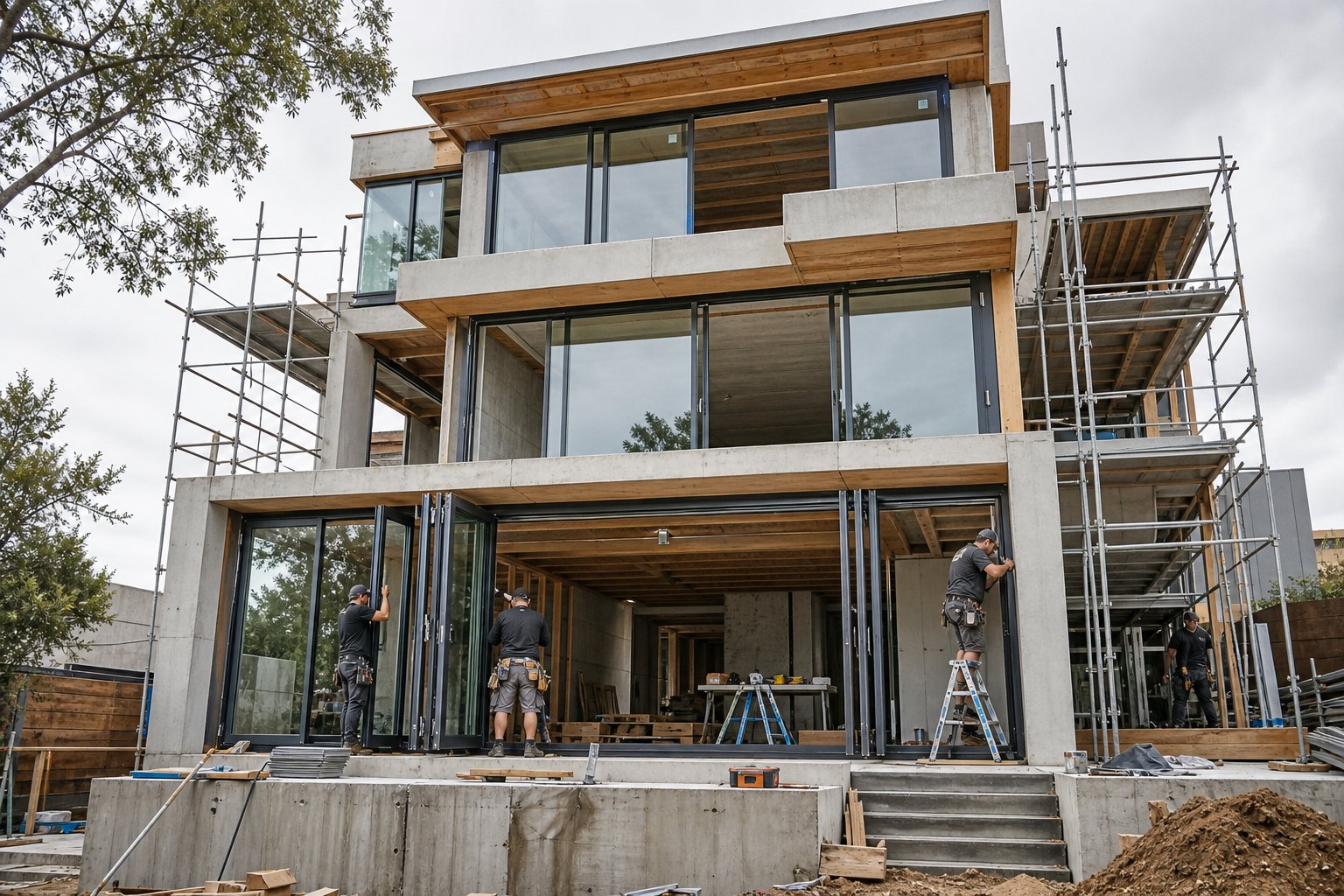
Installers fit the finished windows into the building envelope. Sometimes the fabricator handles installation with their own team. Sometimes an independent aluminium windows contractor does the fitting. Either way, installer competence is the final variable between rated performance and real-world results.
When evaluating aluminium window suppliers, assess credentials at every level:
- System level: Which profile system is being used? What are its published and independently tested Uf and Uw values? Is the system current or a discontinued legacy range?
- Fabrication level: Does the fabricator hold AS 2047 compliance? Are their products tested by a NATA-accredited laboratory? Can they provide certificates of compliance for your specific order?
- Installation level: Are aluminium window installers accredited by the fabricator or systems company? Do they carry appropriate licensing and insurance for your state? Will they provide a separate installation warranty?
The strongest aluminium windows specialists operate across at least two of these levels — typically fabrication and installation — giving you a single point of accountability for the finished result rather than finger-pointing between separate parties when problems arise.
Installation Quality and Performance Verification
Laboratory testing installs windows plumb, level, and square in a precision test opening under controlled conditions. Your building site offers none of those luxuries. Openings are rarely perfectly square. Substrate materials vary. Weather does not wait for sealant to cure. That gap between lab conditions and reality is where performance gets lost — or preserved — depending on installation practice.
BRANZ research highlights that current installation methods for thermally broken aluminium windows often reduce the thermal effectiveness of the frame by creating easy paths for heat to bypass the insulation. The frame-to-structure junction is a critical weak point: fix an aluminium window directly to a steel lintel without thermal isolation, and you have created a conductive bridge that the thermal break inside the profile was specifically designed to prevent.
Critical installation factors that preserve tested performance:
- Correct fixing methods: Mechanical fixings must secure the frame without distorting the profile or compressing the thermal break cavity. Over-tightened fixings can bow frame members, breaking gasket contact and creating air leakage paths.
- Thermal isolation at frame-to-structure junction: Thermal break tape, compressible foam packing, or purpose-designed mounting brackets prevent the aluminium frame from thermally coupling to steel or concrete structure — maintaining the continuity of the thermal envelope at the window perimeter.
- Weatherproofing tape and sealant specification: Self-expanding foam tape on the exterior and vapour-permeable membranes integrated with the wall’s weather-resistive barrier create a sealed but breathable junction. Silicone or polyurethane sealants must be compatible with both the aluminium finish and the adjacent substrate.
- Drainage provision: Every aluminium window frame incorporates drainage slots at the sill to evacuate any moisture that penetrates the outer weather seal. These slots must remain clear and align with the building’s overall drainage cavity strategy — blocked drainage is a leading cause of premature sealed unit failure and concealed water damage.
Poor installation undermines even the highest-rated window system. A Uw 1.2 window installed with unsealed perimeter gaps, no thermal isolation at fixings, and blocked drainage effectively performs like a far cheaper product — while costing you premium-product money. Field quality control testing performed early in a project can identify these issues before they become systemic, but such testing is rarely specified for residential projects unless the architect or builder insists on it.
For specifiers and builders evaluating potential aluminium window suppliers for performance-critical projects, the documentation trail matters as much at the installation stage as it does at product selection. You need evidence that the proposed system meets your project’s tested performance requirements — and that the fabricator can demonstrate compliance traceability from profile system through to finished, installed product. MEICHEN’s Compliance and Certifications page provides an example of how this documentation should be structured: accessible, specific to Australian standards, and directly useful for architects, developers, and consultants undertaking performance-led specification decisions. When an aluminium window supplier presents compliance data this transparently, it signals accountability — and gives you something concrete to hold them to if installed performance does not match the paperwork.
The practical takeaway is this: selecting the best aluminium double glazed windows is not a single decision but a chain of decisions — system, fabricator, installer — where quality at each link determines the final outcome. Specify rigorously, verify documentation at every stage, and treat installation as a performance-critical activity rather than a simple fitting exercise. The window that arrives on site is only as good as the hands that put it in the wall.
Frequently Asked Questions About Aluminium Double Glazed Windows
1. What is a good U-value for aluminium double glazed windows in Australia?
A whole-window U-value (Uw) of 1.4 W/m²K or below is considered strong performance for residential aluminium double glazing in Australia. Entry-level products range from Uw 2.0 to 2.4, mid-range sits between 1.4 and 1.9, and high-performance units achieve 1.0 to 1.3. The appropriate target depends on your climate zone, building orientation, and NCC Section J requirements. Always compare Uw figures rather than centre-pane Ug values, as the whole-window number accounts for frame losses and edge effects that significantly affect real-world performance.
2. How long do aluminium double glazed windows last?
Aluminium frames themselves are essentially permanent, with typical lifespans exceeding 40 years and minimal structural degradation. The sealed insulated glass unit is the component with a finite lifespan — well-made modern units last 20 to 30 years before edge seals degrade. When seal failure occurs, the IGU can be replaced without removing the frame, costing 40 to 60% less than full window replacement. Powder-coated finishes meeting Qualicoat Class 2 maintain appearance for 25 to 30 years with periodic cleaning, making aluminium one of the lowest-maintenance framing options available.
3. What is a thermal break in aluminium windows and why does it matter?
A thermal break is a strip of polyamide (PA66 reinforced with glass fibre) inserted between the interior and exterior halves of an aluminium window profile. It reduces heat flow through the frame by a factor of more than 500 compared to solid aluminium. Without a thermal break, the frame bleeds energy so rapidly that even premium double glazed glass cannot compensate. Break depth directly affects performance — a minimum of 24mm is recommended for high-performance applications, with premium systems using 30 to 34mm breaks to achieve frame U-values comparable to timber.
4. Are aluminium double glazed windows good for noise reduction?
Yes, when specified correctly. Standard double glazing with matched panes achieves an Rw rating of 28 to 30, while acoustic-optimised configurations using asymmetric glass thickness, laminated interlayers, and wider cavities can reach Rw 35 to 40 or higher. Aluminium frames contribute positively through rigid mounting and consistent gasket compression that prevents sound leakage at seal interfaces. For properties near busy roads, railways, or flight paths, specifying 6mm outer and 4mm inner panes with a 16 to 20mm cavity width delivers meaningful noise reduction without requiring triple glazing.
5. How much do aluminium double glazed windows cost in Australia?
Australian supply-only pricing starts from around $150 for small fixed units and ranges up to $788 for larger operable windows. Premium double glazed aluminium with low-e glass can reach $820 per square metre for operable windows and $1,250 per square metre for bifold systems. Key cost drivers include thermal break depth, glass specification, opening type, size, and finish complexity. Supply-and-install pricing adds measurement, fitting, weatherproofing, and making good. Always compare quotes on a like-for-like specification basis, as lower prices typically reflect thinner thermal breaks or basic hardware.
More Window & Door Guides