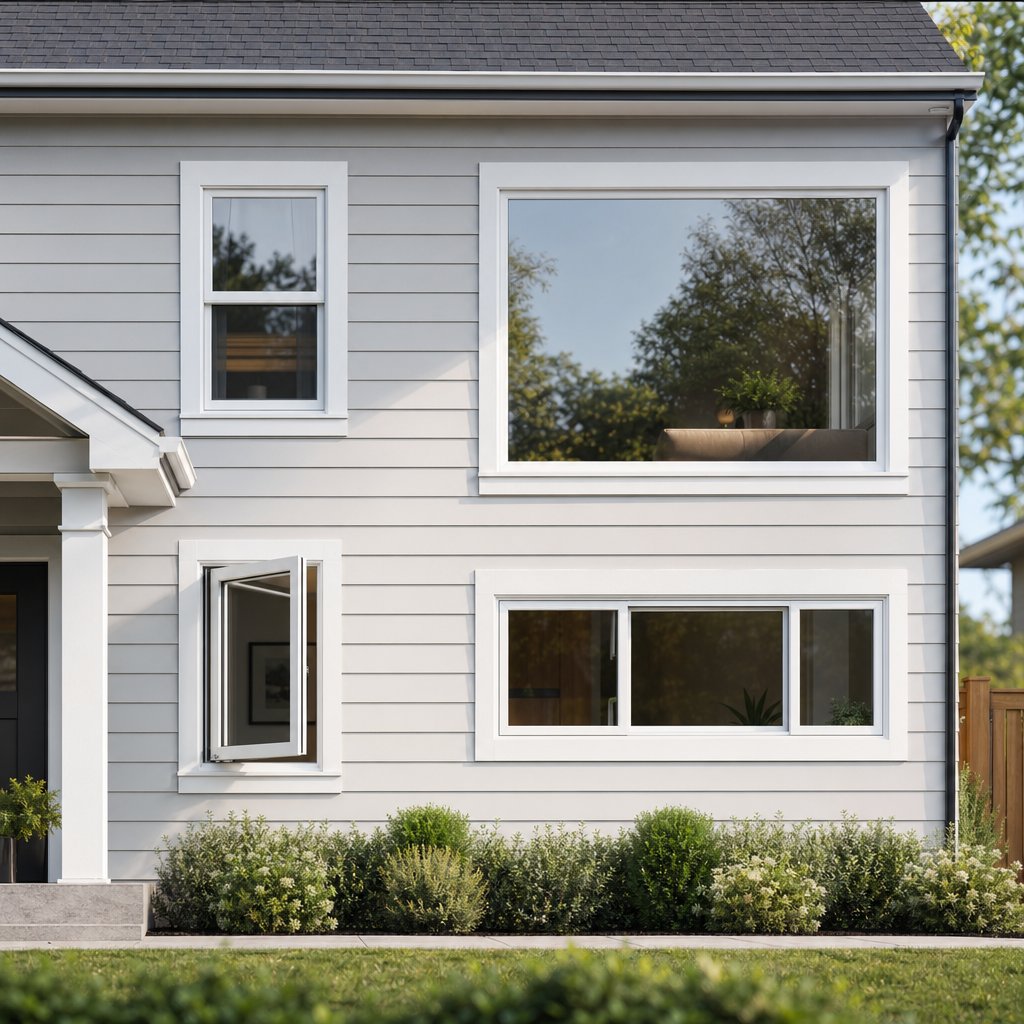
Understanding Aluminium Window Frame Dimensions
Every window sits inside a hierarchy of measurements, and confusing one for another is where projects go sideways. Aluminium window frame dimensions refer specifically to the physical measurements of the frame profile itself: its depth, width, sightline, and outer perimeter. They are not the same as your rough opening, and they are not the same as the glass area you see from inside the room.
What Aluminium Window Frame Dimensions Actually Refer To
Three distinct measurements work together in every window installation. The structural opening is the gap framed into your wall. The frame outer dimension is the overall size of the aluminium frame unit that slots into that opening. The daylight opening is the visible glass area once the frame is in place. Each one nests inside the previous, and each serves a different purpose during specification.
When someone searches for an aluminium window frame size guide, they typically need the profile measurements, not just the unit’s overall width and height. Profile dimensions dictate how much wall depth the frame occupies, how much glass you actually get, and whether a replacement frame will sit flush with your existing reveals.
Frame dimensions are not the same as overall window unit sizes. The frame profile, its depth and sightline width, determines how the window interacts with your wall, your glazing, and your line of sight.
Why Dimensional Accuracy Matters for Your Project
A measurement error of even 3 mm can mean the difference between a clean install and a costly reorder. Custom aluminium windows in Australia often carry lead times of several weeks, so getting dimensions right the first time saves both time and budget. For renovators replacing timber or steel frames with aluminium, understanding how to measure aluminium window frames correctly prevents surprises when the new profile doesn’t match the existing cavity depth or reveal width.
Most online resources cover overall window sizes, the kind you find in a catalogue. This article goes deeper into the frame profile itself, the component that determines structural fit, thermal performance, and the amount of glass your design actually delivers.
Anatomy of an Aluminium Window Frame Profile
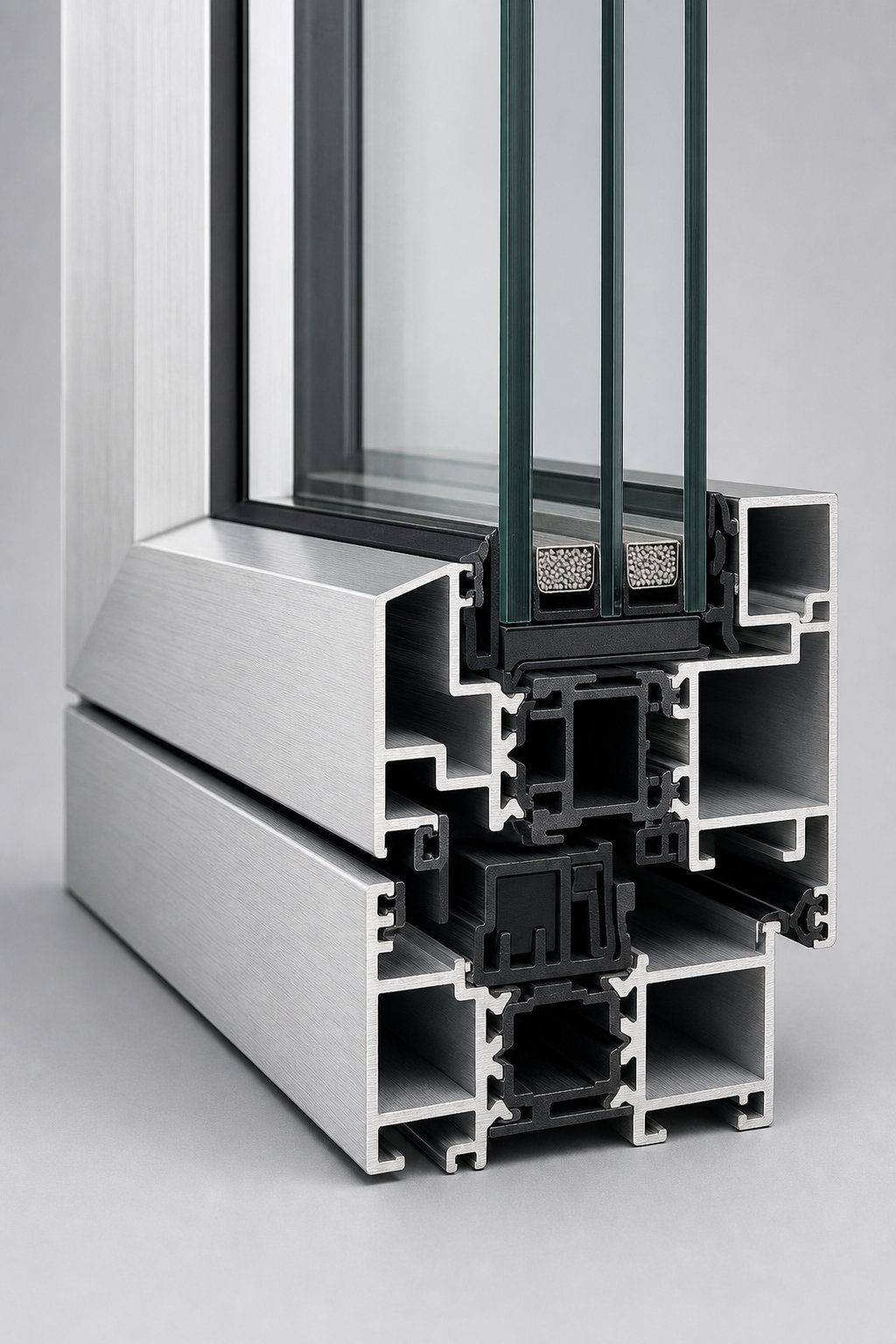
A single cross-section through an aluminium frame reveals half a dozen distinct measurements, each serving a specific structural or performance function. Knowing where one dimension ends and another begins is what separates a clean specification from a frustrating back-and-forth with your fabricator. Here is how the aluminium window frame profile dimensions break down in practice.
Frame Depth and Sightline Width Explained
Frame depth is the measurement from the exterior face of the profile to the interior face, essentially how far the frame extends through your wall. This dimension governs how the window sits within the reveal and how much wall thickness it consumes. A shallow frame depth suits thin-walled constructions, while deeper profiles accommodate higher-performance glazing and thermally broken systems.
Sightline width is the visible portion of the frame you see from inside or outside the building, the band of aluminium surrounding your glass. Slimmer sightlines mean more daylight and a more contemporary aesthetic. High-strength aluminium alloys like 6063-T5 allow window frame sightline width measurements as narrow as 45 to 55 mm while still meeting structural requirements, something timber and uPVC struggle to match at equivalent spans.
Mullion and Transom Dimensional Components
Where windows combine into multi-panel configurations, mullions (vertical dividers) and transoms (horizontal dividers) introduce additional dimensional considerations. Mullion and transom dimensions in aluminium typically range from 50 mm to 120 mm in visible width, depending on the structural load they carry. A mullion supporting two large sliding panels under wind load needs more material than one separating small fixed panes.
These members carry both glazing weight and wind pressure, so their depth usually matches or exceeds the outer frame depth. Architects often specify the slimmest possible mullions for aesthetic reasons, but the profile must still satisfy deflection limits under the wind loads calculated for the site.
Glazing Rebate and Weatherseal Clearances
The glazing rebate is the channel machined into the profile where the glass unit sits. Its depth determines what thickness of insulated glass unit (IGU) the frame can accept. This is where glazing capacity directly drives the aluminium window frame depth explained in practical terms: a frame designed for a 20 mm double-glazed unit needs a shallower rebate than one engineered to hold a 36 mm triple-glazed IGU with laminated outer panes.
Surrounding the rebate, weatherseal grooves accommodate EPDM or TPE gaskets that prevent air and water infiltration. These grooves add 3 to 5 mm per side to the profile’s overall cross-section, a small but measurable contribution that fabricators account for during design.
- Frame depth (front to back): Total profile thickness through the wall, typically 44 mm to 70 mm+ depending on performance level
- Sightline width (face width): Visible aluminium surrounding the glass, generally 45 mm to 65 mm for modern profiles
- Mullion/transom width: Visible divider width between panels, ranging from 50 mm to 120 mm based on structural demand
- Glazing rebate depth: Channel depth accommodating the glass unit, scaled to IGU thickness (typically 18 mm to 40 mm)
- Weatherseal groove: Precision channel for gaskets, adding 3 mm to 5 mm per seal line to the profile section
- Wall thickness (aluminium extrusion): The thickness of the aluminium material itself, commonly 1.4 mm to 1.6 mm for residential profiles and up to 2.0 mm for commercial applications
These components are not independent. A deeper glazing rebate demands a deeper overall frame. Wider weatherseal grooves push sightlines slightly wider. And the shift from single glazing to double or triple glazing cascades through the entire profile: a single-glazed frame might sit at 44 mm deep, a standard double-glazed profile around 52 mm, and a high-performance triple-glazed thermally broken system at 70 mm or more. Each step up in glazing capacity requires the extrusion die to deliver a proportionally deeper section, which is why manufacturers optimise specific dies for specific performance tiers rather than trying to make one profile do everything.
Standard Aluminium Window Sizes and Frame Profiles
Profile anatomy only tells half the story. The other half is knowing what sizes those profiles actually come in across different window types, and how those sizes relate to the opening framed into your wall. Standard aluminium window frame sizes exist for a reason rooted in manufacturing economics: extrusion dies are expensive to produce, and fabricators concentrate their tooling investment on profiles that serve the broadest range of projects. Recognising these common dimensions helps you determine whether your project fits within off-the-shelf territory or requires a custom solution.
Common Frame Dimensions by Window Type
Each window type demands a slightly different frame profile to accommodate its operating mechanism, hardware, and structural loads. A casement window hinges outward and needs space within the frame for friction stays or heavy-duty hinges, which pushes aluminium casement window frame dimensions toward slightly deeper profiles. A sliding window requires track channels machined into both head and sill sections, resulting in a taller overall frame depth but often slimmer sightlines on the jamb sides.
Awning windows, popular across Australian homes for their rain-resistant ventilation, use top-hung hardware that adds modest depth to the head section. Fixed windows carry no operating hardware at all, allowing manufacturers to use the slimmest profiles in their range while still meeting structural and glazing requirements.
The table below captures typical aluminium frame profile dimensions for these common window types, based on standard double-glazed configurations commonly specified in Australian residential construction:
| Window Type | Typical Frame Depth (mm) | Sightline Width (mm) | Common Unit Size Range (W x H) |
|---|---|---|---|
| Casement | 52 – 60 | 50 – 65 | 600 x 900 mm to 900 x 1500 mm |
| Sliding | 50 – 62 | 45 – 55 | 900 x 600 mm to 2400 x 1500 mm |
| Awning | 52 – 60 | 50 – 60 | 600 x 600 mm to 1800 x 1200 mm |
| Fixed | 44 – 52 | 45 – 55 | 600 x 600 mm to 2400 x 1800 mm |
These figures represent double-glazed, non-thermally-broken aluminium profiles in standard residential ranges. Thermally broken systems add depth (covered in a later section), and commercial-grade profiles for high-rise or large-span applications may exceed these ranges significantly.
Notice the fixed window sits at the slimmest end of the spectrum. Without hinges, locks, or tracks competing for space inside the profile, fixed frames can dedicate nearly all their cross-section to holding glass and sealing against weather. This is why architects pair fixed panels with operable sashes in combination units to maximise glass area where ventilation is not required.
The Relationship Between Stud Openings and Frame Outer Dimensions
Your structural opening, often called a stud opening or rough opening, is always larger than the aluminium frame that sits inside it. The gap between the two allows for shimming, levelling, insulation, and flashing. In Australian timber-framed construction, fabricators typically recommend 10 mm clearance on each side and at the head. This means the frame’s outer dimension (ordering size) sits roughly 20 mm narrower in width and 10 to 15 mm shorter in height than the stud opening.
For example, a stud opening measuring 920 mm wide by 1220 mm high would suit a window frame with outer dimensions of approximately 900 mm x 1200 mm. That 10 mm gap per side gets packed with expanding foam or polyester insulation and sealed with appropriate flashing. Too little clearance creates installation headaches; too much compromises weatherproofing and structural engagement with the fixing points.
Brick veneer construction, common across much of southeastern Australia, introduces a slightly different dynamic. Here the window often fixes to an internal timber frame while the brick course finishes around the exterior. Reveal depth becomes critical, and the aluminium frame’s overall depth must coordinate with the reveal size to avoid awkward step-outs or exposed gaps between frame and render or brickwork.
Metric and Imperial Measurement Reference
Australia works in metric, and all local manufacturers specify aluminium sliding window frame dimensions and other profiles in millimetres. However, if you are sourcing internationally, reviewing older plans, or referencing North American technical literature, you will encounter imperial measurements. Common metric-to-imperial conversions for standard window frame sizes include:
- 600 mm = approximately 23.6 inches (roughly 2 feet nominal)
- 900 mm = approximately 35.4 inches (roughly 3 feet nominal)
- 1200 mm = approximately 47.2 inches (roughly 4 feet nominal)
- 1500 mm = approximately 59.1 inches (roughly 5 feet nominal)
- 1800 mm = approximately 70.9 inches (roughly 6 feet nominal)
- 2400 mm = approximately 94.5 inches (roughly 8 feet nominal)
North American window sizing uses a four-digit code system (like 3040 or 4060) representing nominal feet and inches. These do not translate directly to metric equivalents because the actual manufactured size sits slightly below the nominal figure. A “3050” window is nominally 3 feet wide by 5 feet tall, but its actual frame measures closer to 902 mm x 1511 mm. For Australian projects, always work from the metric dimension on the manufacturer’s spec sheet rather than converting from imperial codes.
Wideline, an Australian manufacturer, publishes standard size charts for their Horizon range covering sliding, awning, and double-hung windows. These charts list frame outer dimensions in millimetres and provide a practical baseline for homeowners and builders checking whether a project falls within standard territory.
Knowing these standards matters for a practical reason: if your required dimensions sit within or close to a manufacturer’s standard range, you benefit from shorter lead times and lower cost per unit. Standard extrusion dies already exist for these profiles, and fabricators keep common lengths in stock. Step outside those ranges, even by 50 mm, and you may trigger custom fabrication with longer lead times and a price premium. The key is checking early in the design phase whether your opening dimensions align with available standard aluminium window frame sizes, or whether the design intent demands custom profiles from the outset.
How Thick Is an Aluminium Window Frame and Why It Matters
Standard sizes tell you the height and width of a frame unit, but they skip a dimension that causes real headaches during installation: thickness. So, how thick is an aluminium window frame? The short answer is somewhere between 40 mm and 75 mm, but that range exists because no single number applies to every scenario. The profile’s front-to-back depth shifts depending on what the frame needs to do, hold, and resist.
Typical Frame Thickness Ranges for Aluminium
At the slim end, basic single-glazed aluminium frames sit around 40 to 44 mm deep. These profiles suit internal partitions, shopfronts in sheltered locations, or secondary glazing where thermal performance is not the priority. Step up to a standard double-glazed residential frame and the aluminium window frame thickness in mm lands between 50 and 60 mm, the range most Australian homes fall into. High-performance thermally broken systems push beyond 70 mm to accommodate wider polyamide thermal barriers and triple-glazed units.
For context, engineering data from precision extrusion manufacturers shows depths ranging from 32 mm for ultra-minimal sliding profiles up to 71 mm for fixed frames with 39 mm thermal breaks built in. Most residential projects in Australia land somewhere in the middle: a 52 to 60 mm profile that balances window frame depth for double glazing with reasonable wall integration.
Factors That Determine Frame Thickness
Frame thickness is not arbitrary. It is the direct result of several competing engineering requirements stacking up inside a single cross-section. What determines window frame thickness comes down to these key drivers:
- Glazing unit depth: A 20 mm double-glazed IGU needs less rebate space than a 36 mm triple-glazed unit with laminated panes. Thicker glass assemblies demand deeper frames to house them securely.
- Hardware mechanisms: Hinges, friction stays, espagnolette locks, and sliding tracks all occupy space within the profile. Casement and awning windows with concealed hardware need more internal volume than fixed panels.
- Structural load capacity: Wider spans and taller panels face greater wind pressure. Deeper profiles provide a higher moment of inertia, resisting deflection without resorting to visible reinforcement or oversized sightlines.
- Thermal performance targets: Polyamide thermal breaks typically measure 20 to 39 mm wide. Inserting that barrier between inner and outer aluminium sections adds directly to overall frame depth, with wider breaks delivering lower U-values.
- Weatherseal accommodation: Multiple gasket lines for air and water resistance each consume 3 to 5 mm within the profile. High-exposure rated frames often use three seal lines rather than two, adding measurable depth.
These factors interact rather than simply stacking. A skilled extrusion designer optimises internal geometry, placing hollow chambers and material webs to satisfy structural, thermal, and hardware requirements within the shallowest possible section.
Where this gets practical is at the wall. A 90 mm timber stud wall with plasterboard both sides gives roughly 110 mm of total wall thickness. A 52 mm aluminium frame leaves plenty of room for reveals and finishing on both faces. Push to a 70 mm thermally broken profile in the same wall and the reveal depth shrinks noticeably, which can complicate trim detailing and limit options for a flush interior finish. For thicker frames, cavity brick or double-stud walls accommodate the depth comfortably, but lightweight constructions and retrofits into older weatherboard homes need careful checking before the frame is ordered.
Thermally Broken vs Non-Thermally Broken Frame Dimensions
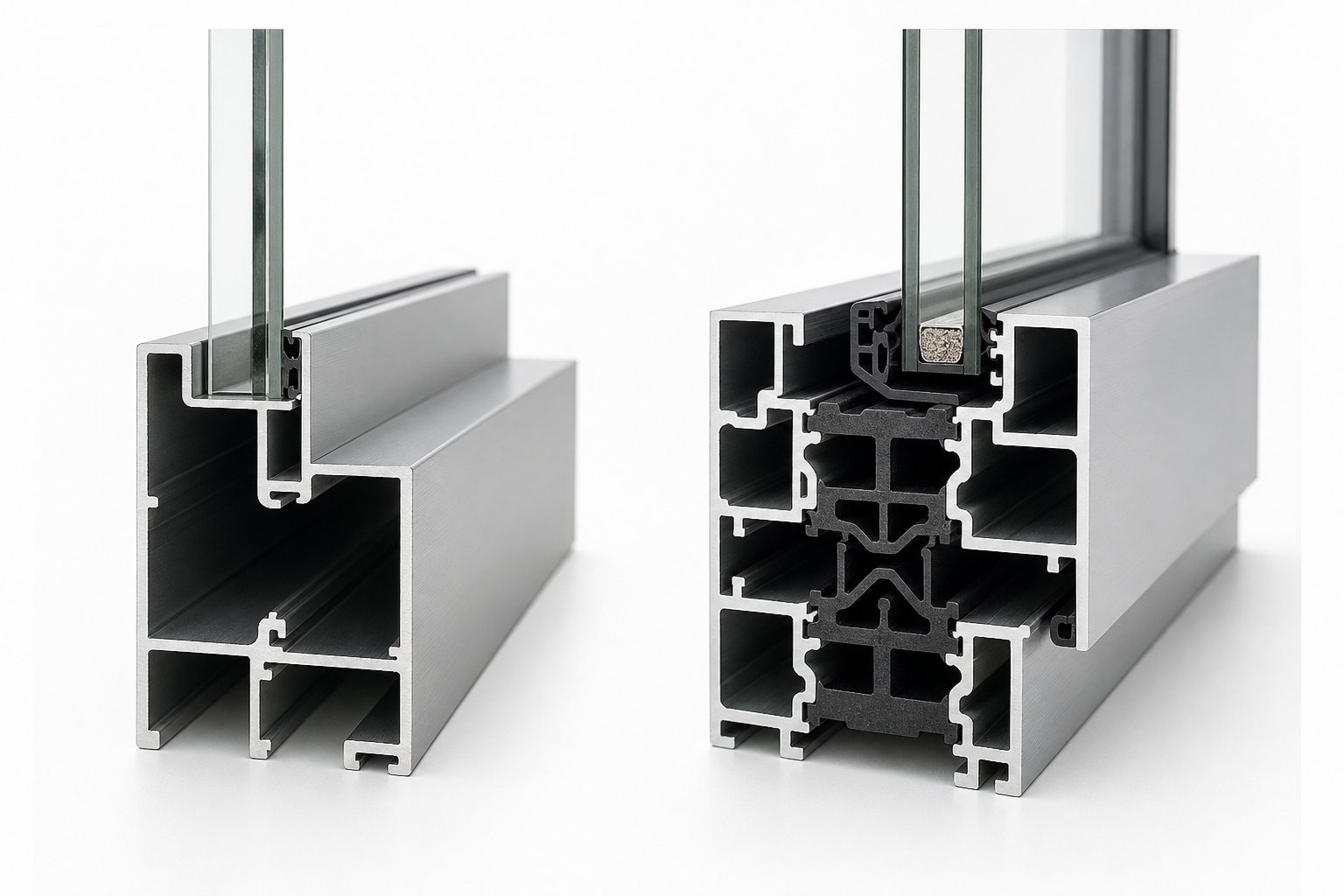
That extra depth from a thermally broken system is not filler. It is a polyamide barrier, typically reinforced PA66 GF25, physically separating the inner and outer aluminium sections so heat cannot conduct straight through the frame. The dimensional consequence is straightforward: thermally broken aluminium frame dimensions are always greater front-to-back than their non-thermally-broken equivalents in the same window series.
How Thermal Breaks Increase Frame Depth
A standard (non-thermal) aluminium casement frame might measure 52 mm deep. Introduce a polyamide strip between the two halves of that profile and the overall depth jumps to 65 mm or more. The thermal break window frame depth increase depends on the width of the insulating strip itself, which commonly ranges from 20 mm for entry-level systems up to 35 mm or beyond for high-performance profiles. Wider strips deliver lower frame U-values but demand a proportionally deeper extrusion to house them structurally.
The trade-off is measurable in energy terms. A standard aluminium frame conducts heat at roughly 5.5 to 6.5 W/m²K. A thermally broken equivalent using a quality polyamide barrier drops that to 2.0 to 3.5 W/m²K, a reduction of 40 to 60 percent. That performance gain comes from those extra 10 to 20 mm of frame depth occupied by the insulating strip.
| Window Type | Non-Thermally Broken Depth (mm) | Thermally Broken Depth (mm) | Approximate Depth Increase (mm) | Frame U-value Improvement |
|---|---|---|---|---|
| Casement | 52 – 56 | 65 – 72 | 12 – 16 | ~50% reduction |
| Sliding | 50 – 55 | 62 – 70 | 12 – 15 | ~45% reduction |
| Awning | 52 – 56 | 65 – 72 | 12 – 16 | ~50% reduction |
| Fixed | 44 – 50 | 56 – 65 | 10 – 15 | ~55% reduction |
Dimensional Planning for Thermally Broken Profiles
In new builds, that extra depth rarely causes problems. You design the wall and reveal around the profile. Retrofit is another story. Many older Australian homes, particularly weatherboard and fibro constructions from the 1960s through 1980s, were fitted with slim non-thermally-broken aluminium or steel frames sitting in shallow reveals. Swapping those for a thermally broken system means the new frame may project further into the room or beyond the external cladding line unless the reveal is modified.
Practically, this means checking the existing reveal depth before committing to a thermally broken vs standard aluminium frame size. If the existing cavity offers 55 mm of depth and the thermally broken profile needs 68 mm, you either rework the reveals, accept an internal or external step-out, or select a shallower thermal break system with a narrower polyamide strip and slightly reduced thermal performance.
Surface treatments add one more layer to the dimensional picture. Powder coating applies a 60 to 80 micron film on each exposed face, a negligible addition in most contexts. Anodised aluminium window frame dimensions grow even less, typically 20 to 25 microns of oxide layer per surface. Neither finish meaningfully changes installation clearances, but for extremely tight tolerances in retrofit scenarios, even fractions of a millimetre compound across multiple seal surfaces. Specifiers working to sub-millimetre clearances should confirm finished profile dimensions rather than relying solely on bare extrusion measurements.
Industry Standards That Govern Frame Dimensions
Profile depth and thermal performance do not exist in a vacuum. They sit within a regulatory framework that dictates minimum structural adequacy, weather resistance, and energy performance for every aluminium window installed in a building. Whether you are specifying for a residential renovation or a multi-storey commercial fitout, window frame dimension compliance standards determine which profiles are acceptable and which fall short.
Australian Standard AS2047 and Frame Requirements
In Australia, AS 2047 is the benchmark. This standard governs the design, construction, and performance testing of windows and external glazed doors. It does not prescribe a single set of frame dimensions, but it sets the performance envelope that those dimensions must deliver. Frame profiles must withstand site-specific wind pressures, resist water penetration under driving rain, and limit air infiltration to acceptable thresholds.
AS2047 aluminium window frame requirements include structural performance ratings expressed in Pascals, water resistance classifications, and operating force limits. The frame’s depth, wall thickness, and internal geometry all contribute to meeting these targets. A profile that satisfies deflection limits at L/150 under rated wind load earns its compliance, regardless of whether it measures 52 mm or 70 mm deep. The standard is performance-based rather than prescriptive about exact dimensions.
Compliance is verified through performance labels affixed to the frame, certificates issued by the manufacturer, and test reports from NATA-accredited laboratories. The National Construction Code (NCC) references AS 2047 directly, making compliance mandatory for all new construction and regulated renovation work across Australia. Non-compliant windows risk safety failures, insurance complications, and reduced property value.
International Standards Comparison
Projects sourcing windows internationally or readers researching from outside Australia encounter different regulatory regimes. Europe operates under EN 14351-1, a harmonised product standard under the Construction Products Regulation that defines performance characteristics for windows and external pedestrian doors. It is material-independent, covering aluminium, timber, and uPVC equally, and requires CE marking for products placed on the European market.
North America relies on AAMA/WDMA/CSA 101/I.S.2/A440, a joint standard from the American Architectural Manufacturers Association, Window and Door Manufacturers Association, and Canadian Standards Association. It classifies windows by performance grade (R, LC, CW, AW) with escalating requirements for structural load, water resistance, and air leakage at each tier.
| Aspect | AS 2047 (Australia) | EN 14351-1 (Europe) | AAMA/WDMA 101 (North America) |
|---|---|---|---|
| Scope | Windows and external glazed doors | Windows, roof windows, external pedestrian doorsets | Windows, doors, skylights |
| Frame dimension requirements | Performance-based: profile must meet structural deflection and pressure ratings for the site | Performance-based: no prescribed dimensions, but tested specimen must pass declared class | Performance grade system (R, LC, CW, AW) with increasing structural demand |
| Structural testing | Wind pressure resistance rated in Pascals; deflection limited to L/150 | Wind resistance classified (Class 1–5 or Exxxx); deformation measured under pressure | Uniform load structural test; design pressure rated in Pascals |
| Water resistance | Rated in Pascals under simulated driving rain | Classified 1A–9A (or Exxxx) based on test pressure | Tested at 15% of design pressure or minimum 720 Pa |
| Air infiltration | Maximum leakage rate at rated pressure | Classified (Class 1–4) per reference area or length | Maximum allowable air leakage at 75 Pa differential |
| Certification mechanism | Performance label, AGWA certificate, NATA test reports | CE marking with Declaration of Performance (DoP) | AAMA certification label, third-party audit |
| Mandatory for | All new builds and regulated renovations (referenced in NCC) | All products placed on EU/EEA market | Adopted by reference in IBC/IRC building codes |
Each standard shares a common logic: the frame profile must deliver measurable performance under test, and the dimensions required to achieve that performance are left to the manufacturer’s engineering. A deeper, heavier profile is not inherently better. A slimmer one that passes the same pressure, water, and air tests at the same ratings is equally compliant.
For Australian projects, aluminium window frame standards Australia readers need to focus on are AS 2047 for the window itself and AS 1288 for glazing selection. Commercial builds often layer additional requirements such as AS 4284 for curtain wall testing. These standards evolve with each edition, so always verify the current version applies to your project approval timeline. A window specified to a superseded edition may not satisfy the certifier at sign-off, regardless of how well it performs in practice.
Aluminium Frame Dimensions Compared to Timber and uPVC
Standards govern what a frame must achieve, but they say nothing about how much visual real estate the frame consumes. That question, how much glass versus how much frame, depends entirely on material choice. If you are researching aluminium window frame dimensions, chances are you are weighing aluminium against timber or uPVC and wondering how the profiles physically stack up when fitted into the same rough opening.
Aluminium vs Timber Frame Dimensions
Timber is a natural insulator, but that thermal advantage comes at a dimensional cost. A standard hardwood casement frame typically measures 65 to 80 mm deep and carries a sightline width of 55 to 70 mm. An equivalent aluminium casement delivering comparable structural performance sits at 52 to 60 mm deep with sightlines as slim as 45 to 55 mm. The aluminium vs timber window frame thickness gap is roughly 15 to 25 mm in depth and 10 to 20 mm in visible face width.
That difference compounds across multi-panel configurations. Every mullion and transom in a timber system adds more visible frame area than its aluminium counterpart, gradually eating into the glass proportion of the overall unit. For large combination windows or stacking doors, the accumulated effect is noticeable from across the room.
Aluminium vs uPVC Frame Dimensions
uPVC relies on multi-chambered hollow profiles reinforced with internal steel to achieve structural adequacy. Those chambers need volume, which pushes uPVC sightlines to 70 mm or wider for a standard casement, with frame depths reaching 70 to 80 mm. In an aluminium vs uPVC frame dimensions comparison, aluminium profiles are typically 20 to 30 mm slimmer on the visible face and 15 to 25 mm shallower in depth.
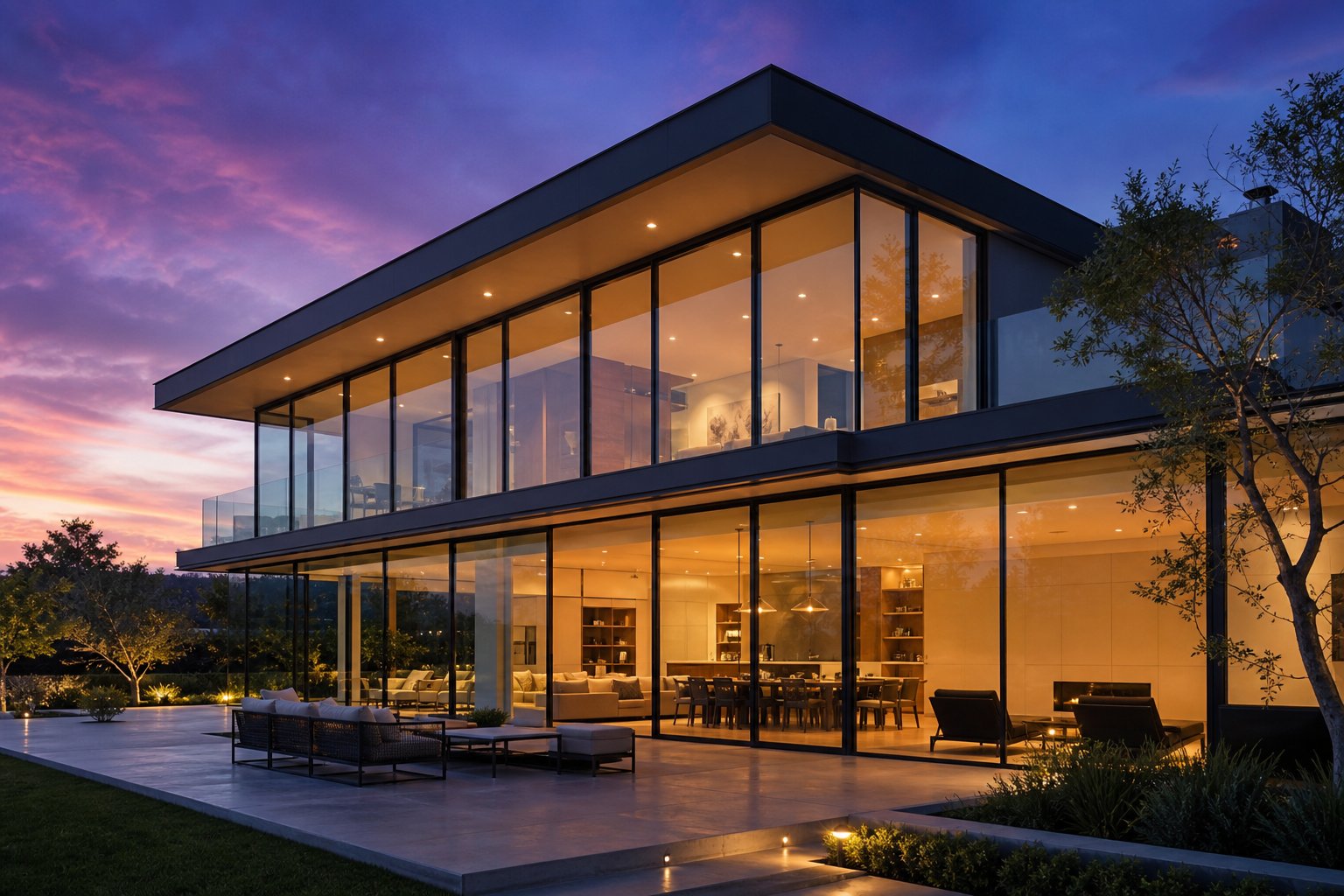
uPVC also struggles with span limitations. Large windows require heavier steel reinforcement inside the plastic profile, further increasing section size. Aluminium handles the same span with less material and a slimmer cross-section, which is why architects specify it for floor-to-ceiling glazing and expansive sliding systems where uPVC would look disproportionately bulky.
Glass-to-Frame Ratio by Material
Glass-to-frame ratio measures how much of the overall window unit is actual glazing versus frame material. For a standard 1200 mm x 1500 mm casement, the numbers shift meaningfully across materials:
| Dimension | Aluminium | Timber | uPVC |
|---|---|---|---|
| Typical frame depth (mm) | 52 – 60 | 65 – 80 | 70 – 80 |
| Sightline width (mm) | 45 – 55 | 55 – 70 | 70 – 85 |
| Approximate glass-to-frame ratio | 80 – 85% | 70 – 75% | 65 – 72% |
| Daylight opening loss vs aluminium | Baseline | ~30 – 40 mm per side | ~25 – 35 mm per side |
In practical terms, fitting uPVC into the same rough opening as aluminium costs you up to 20 percent of your visible glass area. That is the aluminium window frame size advantage distilled into a single metric. For the same structural opening, aluminium delivers the largest daylight opening of any mainstream frame material, making it the slimmest window frame material comparison winner by a clear margin.
This matters most when daylight modelling, passive solar gain, or simply uninterrupted views drive the design brief. A homeowner replacing old timber windows with aluminium in the same openings gains noticeably more glass without touching the surrounding brickwork or framing. The dimensional efficiency also explains why glass-to-frame ratio in aluminium windows consistently outperforms alternatives in architectural specifications where maximising natural light is a stated objective.
Material choice shapes more than just aesthetics. It determines whether a given rough opening delivers a generous view or a framed glimpse, and that dimensional difference carries through to how the window is specified, ordered, and installed.
Specifying the Right Frame Dimensions for Your Project
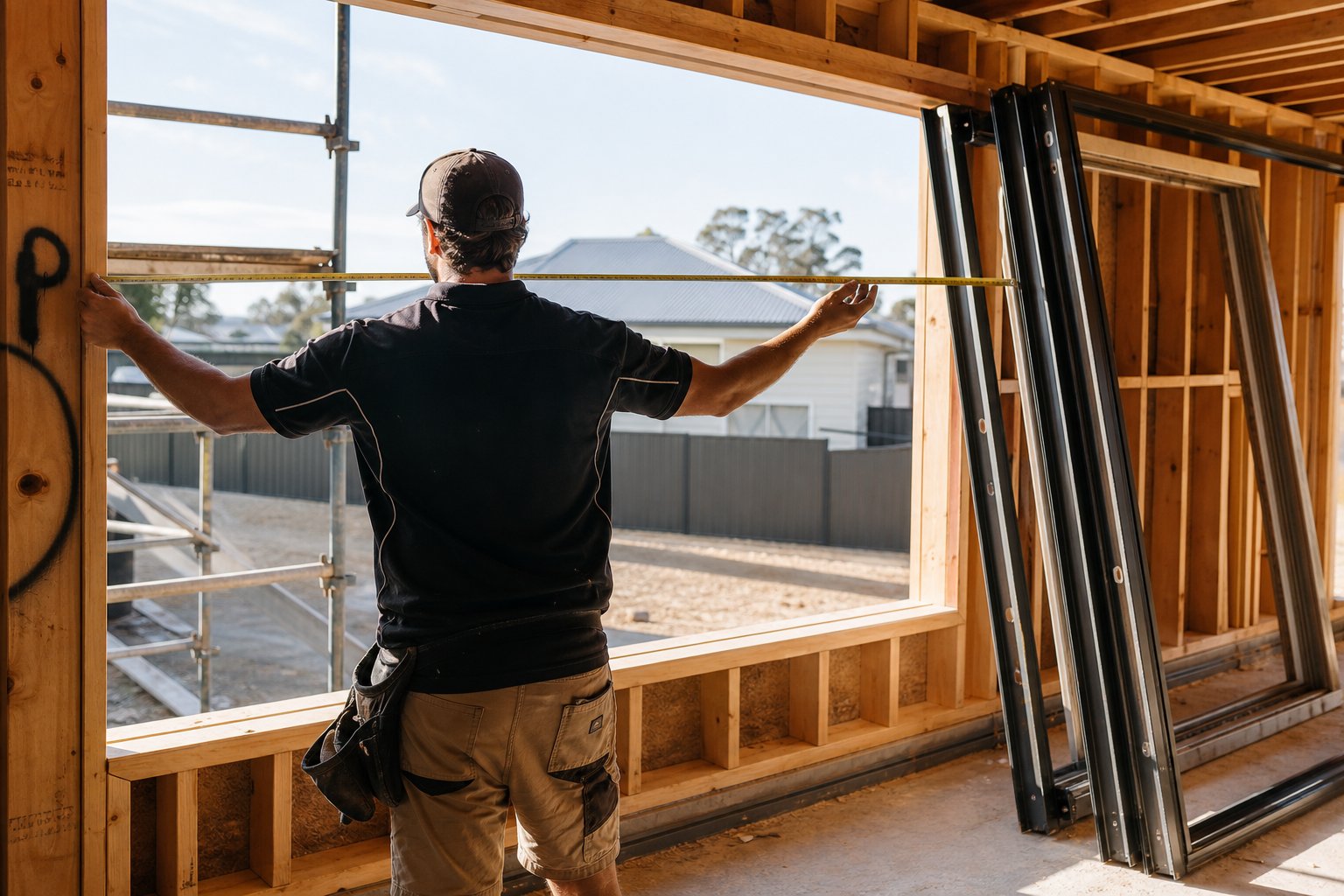
Comparing materials is useful research, but at some point the tape measure comes out and real numbers go onto a purchase order. Getting from rough opening to correctly specified frame profile follows a sequence, and skipping steps is how projects end up with windows that arrive 10 mm too deep for the reveal or 15 mm too narrow for the opening. Here is how to specify aluminium window frame dimensions methodically, whether you are building new or measuring for aluminium window frame replacement in an existing home.
Step-by-Step Measurement for Frame Specification
The process moves from the wall inward toward the glass. Each step narrows the available choices until you land on the exact profile that fits your structural opening, performance targets, and design intent.
- Measure the structural opening: Take three width measurements (top, middle, bottom) and three height measurements (left, centre, right) of the rough or existing opening. Use the smallest figure in each direction. A steel tape in millimetres is non-negotiable for accuracy.
- Check for square: Measure both diagonals. If they differ by more than 3 mm, the opening is out of square and may need correction or packing allowance built into the specification.
- Determine frame clearance: Subtract 10 to 15 mm from width and height for new builds (allowing packing and shimming space on each side), or 5 to 10 mm for retrofit installations into existing reveals. The result is your ordering size.
- Measure reveal depth: Check the front-to-back depth of the wall cavity or existing reveal at multiple points. This dictates the maximum frame depth your opening can accommodate without the profile projecting past the wall face.
- Select the frame profile depth: Match the available reveal depth to a profile that houses your chosen glazing type. A standard double-glazed unit typically needs a 52 to 60 mm frame; a thermally broken system with the same glazing needs 65 mm or more.
- Confirm daylight opening: Subtract the sightline width from both sides, top, and bottom of the ordering size. The remaining figure is your visible glass area. Verify this meets your design intent, ventilation requirements, or NCC minimum natural lighting provisions.
- Document and communicate: Record each measurement with a window reference (location in the house), note any out-of-square conditions, and photograph the opening with a ruler visible for the fabricator’s reference.
The critical distinction here is between the aluminium window ordering size vs opening size. Your structural opening is the hole in the wall. Your ordering size is the frame’s outer dimension, always smaller than the opening by the clearance gap. Confusing the two is the single most common cause of windows arriving too large to fit or too small to seal properly.
Working with Suppliers on Custom Dimensions
Standard profiles cover a wide range of residential projects, particularly where openings align with common increments (600, 900, 1200, 1500, 1800 mm). But renovations in older homes, architecturally designed builds, and heritage conversions regularly produce openings that sit outside those standard bands. That is when custom aluminium window frame sizes become necessary.
Custom does not always mean a bespoke extrusion die. Most fabricators can cut standard profile lengths to non-standard overall dimensions without additional tooling. True custom extrusion, designing a new profile cross-section, only becomes relevant when the frame depth, sightline, or internal geometry of existing profiles cannot satisfy the project’s structural or aesthetic requirements. This typically applies to large commercial facades, unusual glazing thicknesses, or slim-profile architectural features.
When sourcing custom aluminium window frame sizes in Australia, look for suppliers who fabricate to order rather than simply stocking fixed catalogue sizes. Manufacturers like MEICHEN offer project-ready specifications across residential and commercial builds, accommodating non-standard dimensions and performance requirements without forcing your design to conform to a limited size chart. The ability to specify exact frame depths, sightlines, and glazing configurations against your measured openings eliminates the compromise that comes with adapting a project to off-the-shelf constraints.
Before placing an order with any supplier, confirm three things: that the quoted ordering size matches your measured opening minus clearances, that the profile depth fits within your available reveal, and that the quoted daylight opening delivers the glass area your design requires. These three checks close the loop between what you measured at the wall and what arrives on site ready to install.
Getting Custom Aluminium Windows That Fit Your Dimensions
Correct measurements and a well-chosen profile only deliver results if the supplier on the other end can actually fabricate what you need. Not every manufacturer handles non-standard sizes willingly, and not every quote includes the dimensional detail required to verify fit before production begins. Asking the right questions upfront separates a smooth install from weeks of back-and-forth after delivery.
Key Questions to Ask Your Window Supplier
Before signing off on any order, run through this checklist with your fabricator. Each question targets a specific area where dimensional mismatches typically surface:
- What are the exact frame outer dimensions for my ordering size? Confirm the quoted width and height correspond to your measured opening minus clearances, not the structural opening itself.
- What is the profile depth, and will it sit within my available reveal? Ask for the front-to-back measurement including any thermal break, gaskets, and finished surface treatment.
- What manufacturing tolerances apply? Aluminium window frame tolerance specifications typically allow +/- 1 to 2 mm on overall frame dimensions. Verify this against your clearance budget, especially in tight retrofit situations where walls are not perfectly plumb.
- What glazing unit thickness does this profile accept? Confirm the rebate depth supports your specified IGU, whether that is a standard 20 mm double-glazed unit or a thicker acoustic or triple-glazed configuration.
- Can you provide AS 2047 compliance documentation for this frame at my specified size? Performance ratings apply to tested configurations. If your window exceeds the tested size range, ask how compliance is demonstrated.
- What is the lead time for custom aluminium window sizes for renovation projects? Non-standard dimensions may add one to three weeks over catalogue sizes. Factor this into your build programme early.
- Do you supply a site-measure service or installation guide? Some fabricators verify openings before production, catching discrepancies that tape-and-paper measurements can miss.
These questions apply whether you are sourcing a single replacement sash or a full set of windows for a new build. The answers reveal how much dimensional control the manufacturer actually offers versus how much guesswork they leave to the installer.
Getting Custom Aluminium Windows That Fit
Renovation projects rarely present textbook openings. Walls settle, brickwork shifts, and original frames were often sized to standards that no longer align with current profiles. If you are wondering where to buy custom size aluminium windows in Australia, prioritise manufacturers who fabricate to measured dimensions rather than rounding your opening to the nearest catalogue increment.
Suppliers like MEICHEN offer a range of aluminium window types with custom sizing across casement, sliding, awning, and fixed configurations, giving project teams the flexibility to match frames precisely to existing or designed openings without compromising on performance or aesthetics.
The core takeaway from everything covered in this article is straightforward: aluminium window frame dimensions are not a single number on a spec sheet. They are a layered set of measurements, from profile depth and sightline width through to glazing rebate and thermal break accommodation, each influencing how the window fits your wall, performs in your climate, and delivers the glass area your design demands. Understanding those layers puts you in control of the specification rather than leaving it to catalogue defaults. Measure carefully, ask precisely, and specify with confidence.
Frequently Asked Questions About Aluminium Window Frame Dimensions
1. What is the standard thickness of an aluminium window frame?
Standard aluminium window frame thickness ranges from 40 mm to 75 mm depending on the application. Basic single-glazed frames sit around 40 to 44 mm deep, standard double-glazed residential profiles measure 50 to 60 mm, and high-performance thermally broken systems exceed 70 mm. The exact thickness is determined by glazing unit depth, hardware requirements, structural load capacity, and thermal performance targets. Most Australian homes use frames in the 52 to 60 mm range for standard double-glazed configurations.
2. How do aluminium window frame dimensions compare to timber and uPVC?
Aluminium frames are the slimmest option among mainstream materials. A typical aluminium casement measures 52 to 60 mm deep with 45 to 55 mm sightlines, while timber requires 65 to 80 mm depth with 55 to 70 mm sightlines, and uPVC needs 70 to 80 mm depth with sightlines reaching 70 to 85 mm. This means aluminium delivers an 80 to 85 percent glass-to-frame ratio compared to 70 to 75 percent for timber and 65 to 72 percent for uPVC in the same rough opening.
3. How much deeper is a thermally broken aluminium frame than a standard one?
Thermally broken aluminium frames add approximately 10 to 16 mm of depth compared to non-thermally-broken equivalents. A standard casement at 52 to 56 mm deep becomes 65 to 72 mm with a thermal break. This increase comes from the polyamide barrier inserted between the inner and outer aluminium sections, which typically measures 20 to 35 mm wide. The trade-off delivers a 40 to 60 percent improvement in frame U-values, reducing heat transfer significantly. Retrofit projects need to verify existing reveal depth can accommodate the deeper profile before specifying thermally broken systems.
4. What is the difference between ordering size and structural opening size for aluminium windows?
The structural opening (rough or stud opening) is the gap framed into your wall, while the ordering size is the aluminium frame’s outer dimension that fits inside it. The ordering size is always smaller, typically 20 mm narrower in width and 10 to 15 mm shorter in height than the structural opening. This gap allows for shimming, levelling, insulation, and flashing during installation. Confusing the two measurements is the most common cause of windows arriving too large to fit or too small to seal properly. Suppliers like MEICHEN (meichenwindows.com.au/aluminium-windows/) can help verify correct ordering dimensions for your project.
5. What Australian standards govern aluminium window frame dimensions?
AS 2047 is the primary Australian standard governing aluminium window performance, referenced directly by the National Construction Code for all new builds and regulated renovations. Rather than prescribing specific frame dimensions, AS 2047 sets performance-based requirements for wind pressure resistance, water penetration, and air infiltration that the frame profile must satisfy. Compliance is verified through NATA-accredited laboratory testing and performance labels affixed to each window. Additionally, AS 1288 governs glazing selection, and commercial projects may also require compliance with AS 4284 for curtain wall testing.
More Window & Door Guides