What Are Aluminium Single Glazed Windows
Millions of Australian homes still have them. Before you decide whether to keep or replace yours, it helps to understand exactly what you are working with.
Definition and Basic Anatomy
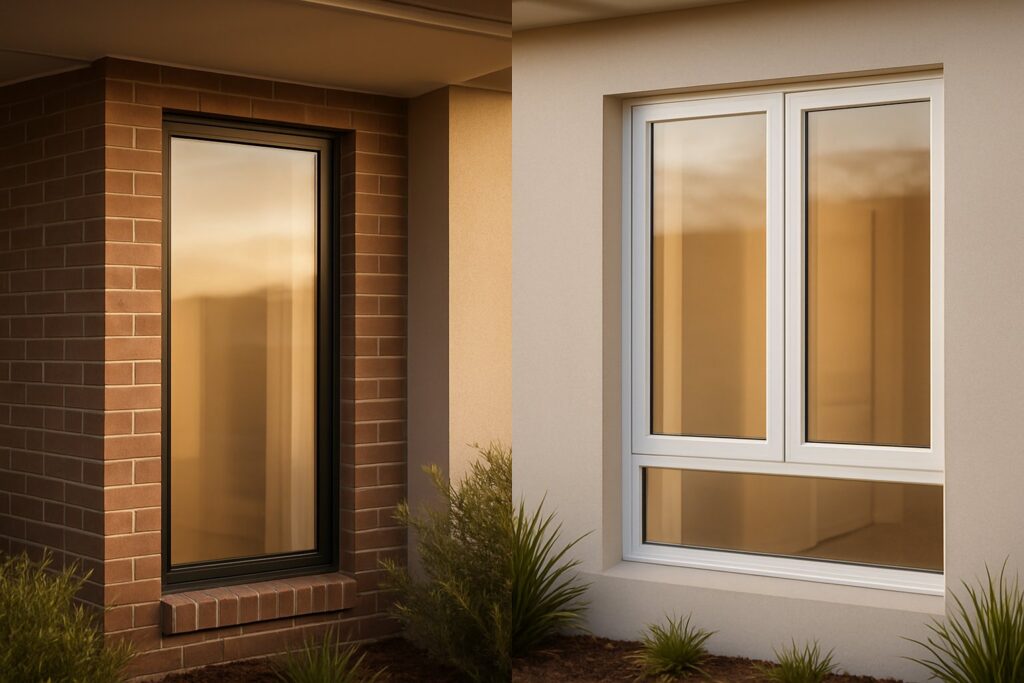
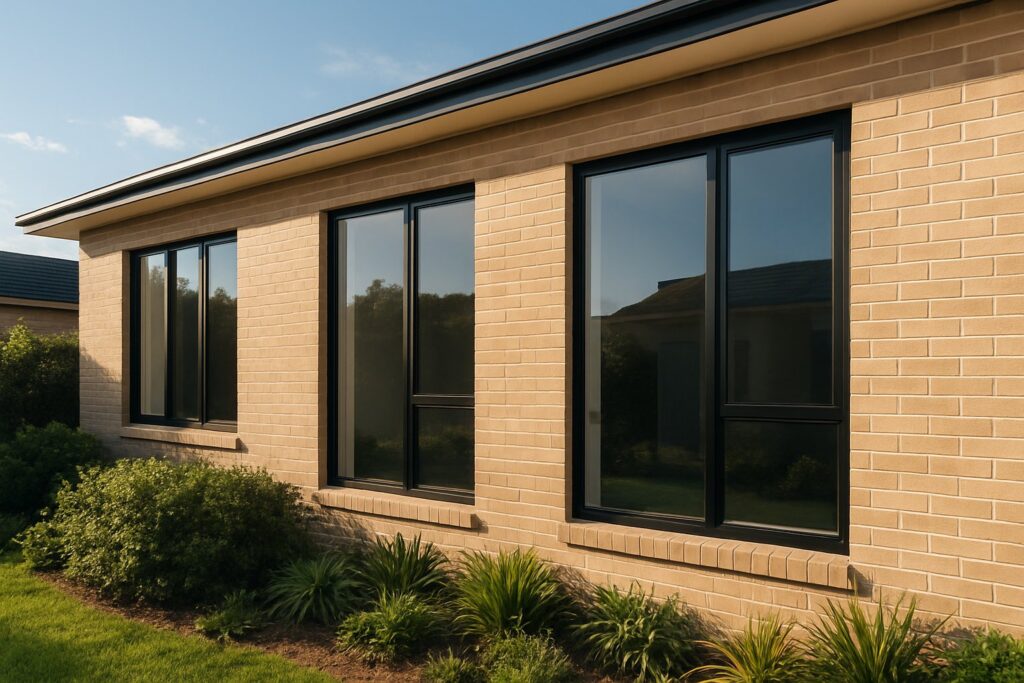
Aluminium single glazed windows consist of a single pane of glass set within a lightweight aluminium frame. Unlike double or triple glazed units, they contain no insulating air gap or gas-filled cavity between panes. The frame, glass, hardware (hinges, locks, handles), and rubber or neoprene seals together form the complete window assembly.
So what is a single pane window in practical terms? It is the simplest glazing configuration available — one layer of glass doing all the work. The aluminium frame holds that glass in place using glazing beads or compression seals, while weather seals around the sash edges help resist wind and water penetration. Drainage weep holes along the bottom rail allow any trapped moisture to escape.
These components are straightforward, which partly explains why single paned windows remain so common across Australian housing stock from the 1960s through the 1990s.
How Single Glazing Differs From Double and Triple
The core difference is the number of glass layers. Double glazed windows sandwich two panes around a sealed air or gas-filled gap, creating an insulating barrier. Triple glazed units add a third pane and a second cavity. Each additional layer dramatically reduces heat transfer — single glazing typically has a U-value around 4.8 to 5.8 W/m2K, while double glazing drops to roughly 1.2 to 3.7 W/m2K. Sound reduction follows a similar pattern: a 6 mm single pane achieves around 27 dB reduction versus approximately 42 dB for double glazed units with a 100 mm air space.
Single-pane windows simply lack that insulating buffer, which makes them less effective thermal barriers but also lighter, thinner, and less expensive per unit.
Why They Still Matter Today
Given those numbers, you might wonder why anyone would keep aluminium single glazed windows at all. The reality is more nuanced than the “replace everything” narrative suggests. Across Australia, these windows serve garages, sheds, workshops, heritage-listed properties, and buildings where climate control is not the priority. They are also installed in regions with mild coastal climates where extreme insulation offers diminishing returns.
This article takes a balanced look — acknowledging where single glazed aluminium genuinely falls short and where it still earns its place. The goal is practical guidance, not a sales pitch in either direction.
Types and Configurations Available in Single Glazed Aluminium
Knowing the anatomy is one thing. Picking the right opening style is where the practical decisions live. Single glazed aluminium comes in several configurations, each suited to different spaces, ventilation needs, and aesthetic goals. The frame material stays the same — what changes is how the window operates.
Single Hung and Sliding Configurations
Single hung aluminium windows feature two sashes stacked vertically, but only the bottom sash slides up and down. The top sash stays fixed. This simple mechanism means fewer moving parts, less hardware to maintain, and a clean sightline from the exterior. They suit bedrooms, hallways, and traditional facades where you want ventilation without a sash protruding outward into a walkway or deck.
An aluminium window in a single hung configuration also works well in tighter spaces — there is no outward swing to worry about, making it practical beside footpaths or under eaves.
Single pane sliding windows operate on a similar principle but move horizontally along a track. One or both sashes can be operable, depending on the design. Sliders are popular in Australian homes for bedrooms, living areas, and anywhere you want a wide opening without vertical height restrictions. The horizontal track system is straightforward to maintain — occasional cleaning and lubrication keeps things running smoothly for years.
Casement and Awning Styles
Single pane casement windows hinge at the side and crank or push open outward. Because the entire sash swings away from the frame, you get full-width ventilation — the opening is essentially the same size as the glass itself. Single frame casement windows also press tightly against their seals when closed, which makes them one of the better-sealing operable configurations even in single glazed form.
They work particularly well in kitchens and bathrooms where you want to catch a breeze and direct it into the room. The trade-off is that they protrude externally when open, so they are not ideal next to high-traffic outdoor areas.
Awning windows operate similarly but hinge at the top, swinging outward from the bottom. This creates a rain-shielding effect — you can leave them open during light showers without water entering. They are commonly placed higher on walls, often above fixed panes, in bathrooms or laundries where privacy and continuous airflow both matter.
Fixed Pane Windows for Light and Views
An aluminium fixed window has no moving parts at all. The glass is sealed directly into the frame, which means no ventilation but also no air leakage, no hardware to fail, and no operational limits on size. Fixed pane windows are the go-to choice when the goal is maximising natural light or framing a view — think stairwells, feature walls, or living areas facing the garden.
Because the sash never moves, these windows tend to last longer with fewer maintenance demands than operable styles. They are also frequently paired with casement or awning windows on either side, giving you the best of both worlds: an uninterrupted central view with ventilation from the flanking operable units.
| Configuration | Operation Method | Ventilation Level | Best Use Case |
|---|---|---|---|
| Single Hung | Bottom sash slides vertically | Moderate (up to 50% of opening) | Bedrooms, hallways, street-facing walls |
| Sliding | Sash moves horizontally on track | Moderate to high (50–100% depending on configuration) | Living areas, wide openings, compact spaces |
| Casement | Side-hinged, cranks or pushes outward | High (full opening area) | Kitchens, bathrooms, rooms needing directed airflow |
| Awning | Top-hinged, opens outward from bottom | Moderate | Bathrooms, laundries, wet-climate areas |
| Fixed | Non-operable | None | Feature walls, stairwells, view framing |
Each configuration suits a different job. The right choice depends on where the window sits, how much airflow you need, and whether external clearance is available for outward-opening styles. That said, configuration only tells half the story — where and how these windows are installed determines whether single glazing is a sensible fit or a thermal compromise.
Where Single Glazed Aluminium Windows Work Best
Not every space needs the thermal performance of double or triple glazing. In plenty of real-world applications, aluminium single glazed windows are not a compromise — they are the practical, cost-effective choice that actually fits the brief.
Sheds, Garages, and Outbuildings
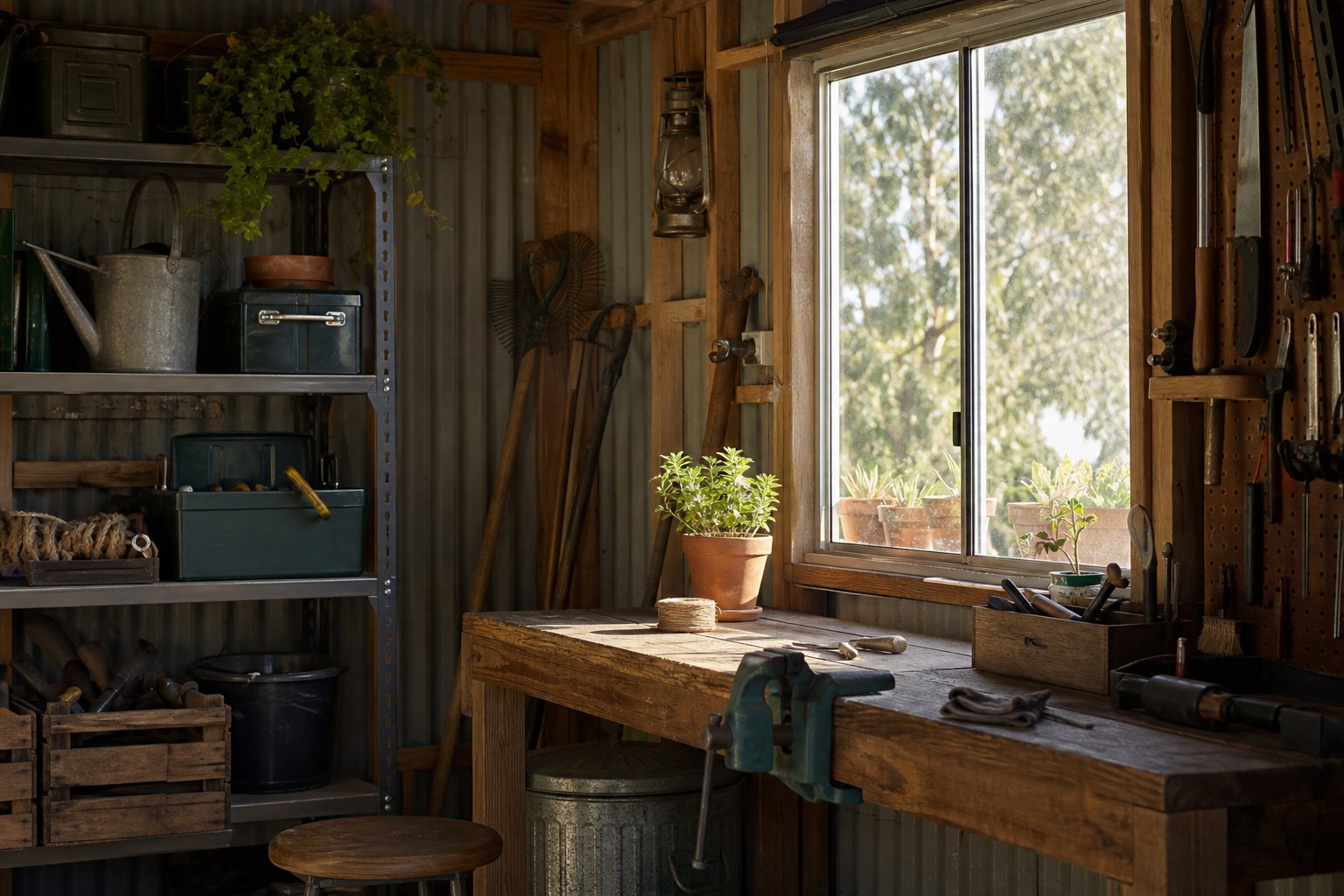
A shed window does not need to meet the same energy performance targets as one in your bedroom. You are not heating or cooling the space year-round, so the thermal advantages of double glazing become largely irrelevant. What matters is natural light, basic ventilation, corrosion resistance, and keeping the budget reasonable.
Aluminium frames handle these environments well. They resist moisture, do not rot like timber in a damp garden shed, and shrug off the temperature swings that crack lesser materials. For small shed windows — the kind you find in prefabricated metal or timber sheds — single glazed aluminium units slot in easily. They let you see what you are doing at the workbench without running electrical lighting all day.
If you are shopping for inexpensive shed windows that still perform reliably, aluminium single glazed options typically cost a fraction of double glazed alternatives. The savings make sense because you are not paying to insulate a space that has no climate control system to protect. The same logic applies to garages, carports, and detached workshops — anywhere the building envelope is not sealed or conditioned.
When older metal shed windows deteriorate, shed replacement windows in aluminium are a straightforward swap. Standard sizes are widely available, and the lightweight frames make installation manageable even as a weekend DIY project.
Heritage and Conservation-Listed Properties
Heritage restrictions add a completely different dimension to the glazing conversation. If your property sits within a heritage conservation area or is individually heritage-listed, replacing original windows with modern double glazed units is rarely a simple decision — and sometimes it is not permitted at all.
In NSW, for example, alterations to original windows on heritage-listed properties typically require development consent from council. The same applies to buildings within conservation areas where the streetscape character is protected. Councils assess changes against statements of significance, and swapping original aluminium frames for thicker double glazed profiles can alter the proportions and appearance that heritage controls are designed to preserve.
Like-for-like repairs — replacing a deteriorated single glazed pane or worn seal with matching materials — generally fall under maintenance exemptions. But upgrading to a visually different window system usually triggers a formal development application. Some councils draw hard lines on street-facing facades while allowing more flexibility at the rear of the property.
For owners of mid-century and post-war homes with original aluminium windows, this often means retaining single glazing on principal elevations is not just acceptable but required. The focus shifts to maintaining the existing windows properly rather than replacing them outright.
Commercial and Seasonal-Use Structures
Commercial and industrial buildings operate under different sections of the National Construction Code than residential dwellings. Warehouses, factories, and storage facilities classified as low-risk occupancies face less stringent energy performance requirements for their fenestration. A small aluminium shed window in a warehouse wall — there purely for daylighting or emergency egress — does not need the thermal ratings demanded of a living room window in a Class 1 dwelling.
Seasonal-use structures occupy a similar grey area. A conservatory used only during the warmer months, an enclosed patio for entertaining in spring and autumn, or a sunroom that sits idle through winter — these spaces benefit from the light and views that glazing provides without needing year-round thermal control.
- Garden sheds and workshops — Natural light and ventilation in unconditioned spaces where thermal performance is irrelevant.
- Detached garages and carports — Durable, low-maintenance glazing that withstands temperature swings and humidity.
- Heritage-listed buildings — Retention of original fabric to satisfy conservation controls and preserve streetscape character.
- Warehouses and storage facilities — Daylighting and ventilation under less demanding NCC energy requirements for non-habitable commercial classifications.
- Seasonal conservatories and enclosed patios — Light-filled spaces used in fair weather where heating or cooling is not provided.
- Farm buildings and rural outbuildings — Robust aluminium frames that resist corrosion in exposed rural environments without ongoing maintenance.
- Covered outdoor entertaining areas — Weather protection and insect screening where full insulation adds no functional benefit.
The common thread across all these applications is that the building either lacks climate control entirely or operates under different performance expectations than a primary residence. In those contexts, the lower upfront cost of single glazing, combined with aluminium’s longevity and minimal maintenance, makes genuine financial sense rather than representing a corner cut. The question gets more complex, though, when you look at the actual thermal and acoustic numbers — and what they mean for spaces that are heated or cooled.
Technical Performance of Single Glazed Aluminium Windows
Numbers do not lie, and they do not flatter single glazing either. If you are trying to decide whether your existing windows are costing you real money or simply offending modern sensibilities, understanding the actual performance metrics is where that clarity comes from.
Thermal Performance and U-Values Explained
U-value measures how much heat passes through a window assembly — lower numbers mean better insulation. A single pane window in an aluminium frame sits at the high end of the scale. According to default window data published by the Australian Fenestration Rating Council (AFRC) for use in NatHERS software, a single glazed clear aluminium window carries a U-value of 6.7 W/m²K regardless of whether it is a hinged, fixed, or sliding type. Tinted single glazing drops only marginally to 6.6.
For comparison, double glazed aluminium with an air-filled cavity comes in around 4.8. Step up to thermally broken aluminium frames with argon-filled double glazing and you reach approximately 3.5. The gap is significant — a single pane glass window loses heat roughly 40% faster than a standard double glazed equivalent in the same frame material.
Then there is solar heat gain coefficient (SHGC), which quantifies how much solar radiation enters through the window. A clear single glazed fixed or sliding aluminium unit has an SHGC of 0.70, meaning 70% of the sun’s heat passes straight through. Hinged configurations score lower at 0.57, partly due to frame-to-glass ratios. In summer, large single pane windows on western elevations become radiators — flooding rooms with heat that your air conditioner must then fight against.
Aluminium itself compounds the issue. Metal conducts heat roughly 1,000 times faster than timber, and without a thermal break the window aluminium frame becomes a highway for energy transfer. On cold winter mornings, that frame chills to near-outdoor temperatures on its interior face, creating a cold zone around the window perimeter and encouraging condensation where moist indoor air meets the cold surface.
Sound Insulation and Air Infiltration
A single pane of standard 4–6 mm glass provides an STC (Sound Transmission Class) rating in the low-to-mid twenties. In real terms, traffic noise, barking dogs, and neighbourhood conversations pass through with little resistance. Thicker glass helps marginally, but the single layer simply cannot match the mass-air-mass dampening effect of double glazed units.
Air infiltration adds another layer. Over time, rubber seals in an aluminium frame window compress, harden, and crack. Older windows from the 1970s and 1980s often have visible gaps where seals have deteriorated — gaps that allow draughts, dust, and exterior noise to bypass the glass entirely. Even well-maintained single glazed units rely on minimal seal depth compared with modern multi-point locking systems that compress seals more uniformly around the entire sash perimeter.
Climate Considerations for Australian Conditions
These performance figures hit differently depending on where you live. Australia spans eight NatHERS climate zones, and single glazing behaves very differently across them.
In mild coastal climates — parts of Sydney, Perth, and southern Queensland — winter lows rarely plunge below 5°C and summers are moderated by sea breezes. Here, a single pane window in a shed, sunroom, or garage causes minimal discomfort. The thermal penalty exists but may not justify the cost of upgrading non-habitable spaces.
Inland and elevated regions tell a different story. Canberra, Melbourne’s outer suburbs, and regional centres across NSW and Victoria experience winter nights well below zero. In those conditions, the 6.7 U-value means rapid heat loss through every square metre of glazing. Energy bills spike, condensation forms nightly, and rooms near large single pane glass windows feel perpetually cold regardless of how hard the heater works.
Hot, dry climates — inland Queensland, western NSW, parts of South Australia — present the opposite extreme. An SHGC of 0.70 on an unshaded west-facing window turns the afternoon into an oven. The aluminium frame stores that heat well into the evening, working against natural cool-down.
The takeaway is context-dependent. A single glazed aluminium window is not universally terrible — it is specifically terrible in conditioned spaces within harsh climates. Knowing where your situation sits on that spectrum shapes every decision that follows, from whether a simple retrofit might bridge the gap to whether full replacement is the only honest answer.
Honest Pros and Cons of Single Glazed Aluminium Windows
Performance data paints a clear picture of how these windows behave thermally. But raw numbers do not capture the full decision — because cost, durability, aesthetics, and intended use all sit alongside energy ratings in any practical evaluation. Here is a straightforward look at where aluminium single glazed windows genuinely deliver and where they fall short.
Key Advantages of Aluminium Single Glazing
There are real, measurable reasons these windows remain in production and in service across thousands of Australian buildings. The benefits are not imaginary — they are simply context-dependent.
- Lower upfront cost — Single pane aluminum windows cost significantly less per unit than double or triple glazed equivalents. For outbuildings, sheds, and non-habitable spaces where thermal performance is irrelevant, that price difference represents genuine savings rather than a false economy.
- Lightweight construction — Aluminium is roughly one-third the weight of steel. Combined with a single pane of glass rather than two or three, the overall assembly is lighter, placing less structural load on walls and making handling easier during installation.
- Corrosion resistance — Aluminium forms a natural oxide layer that protects it from moisture, salt air, and general weathering. In coastal areas of Queensland, NSW, and Western Australia, windows in aluminium resist degradation far better than unprotected steel or untreated timber frames.
- High recyclability — Aluminium is one of the most recyclable building materials available. It can be remelted and reformed indefinitely without losing structural properties, and recycling uses roughly 5% of the energy required to produce primary aluminium. End-of-life frames have genuine scrap value.
- Slim frame profiles — Because aluminium is structurally strong relative to its weight, frames can be narrower than timber or vinyl equivalents while still meeting load requirements. This maximises the glass-to-frame ratio, letting more natural light into the room and providing cleaner sightlines.
- Wide colour range through powder coating — An aluminium window can be finished in virtually any colour. Powder coating bonds electrostatically and cures under heat, creating a durable finish that resists chipping and fading for 15 to 20 years in typical conditions. Standard ranges include dozens of options; custom colours are available at modest additional cost.
- Dimensional stability — Unlike timber, aluminium does not swell, shrink, warp, or twist with changes in humidity and temperature. The frame retains its shape across seasons, which helps maintain seal integrity and smooth operation over time.
- Suitability for unconditioned spaces — In garages, workshops, covered patios, and storage buildings where no heating or cooling operates, the thermal limitations of single glazing create no measurable disadvantage. You get light and ventilation without paying for insulation you will never benefit from.
Limitations and Drawbacks to Consider
Fairness requires equal honesty about the weaknesses. For conditioned living spaces in most Australian climate zones, the limitations are substantial.
- Poor thermal insulation — With a U-value around 6.7 W/m²K, single glazed aluminium allows rapid heat transfer. In winter, warmth escapes. In summer, heat floods in. The energy your HVAC system spends counteracting this loss translates directly to higher electricity and gas bills.
- Condensation risk in heated spaces — When warm, moist indoor air contacts the cold glass surface and unbroken aluminium frame, water condenses. Over time, persistent condensation damages paint, timber reveals, and plasterwork around the window, and creates conditions favourable to mould growth.
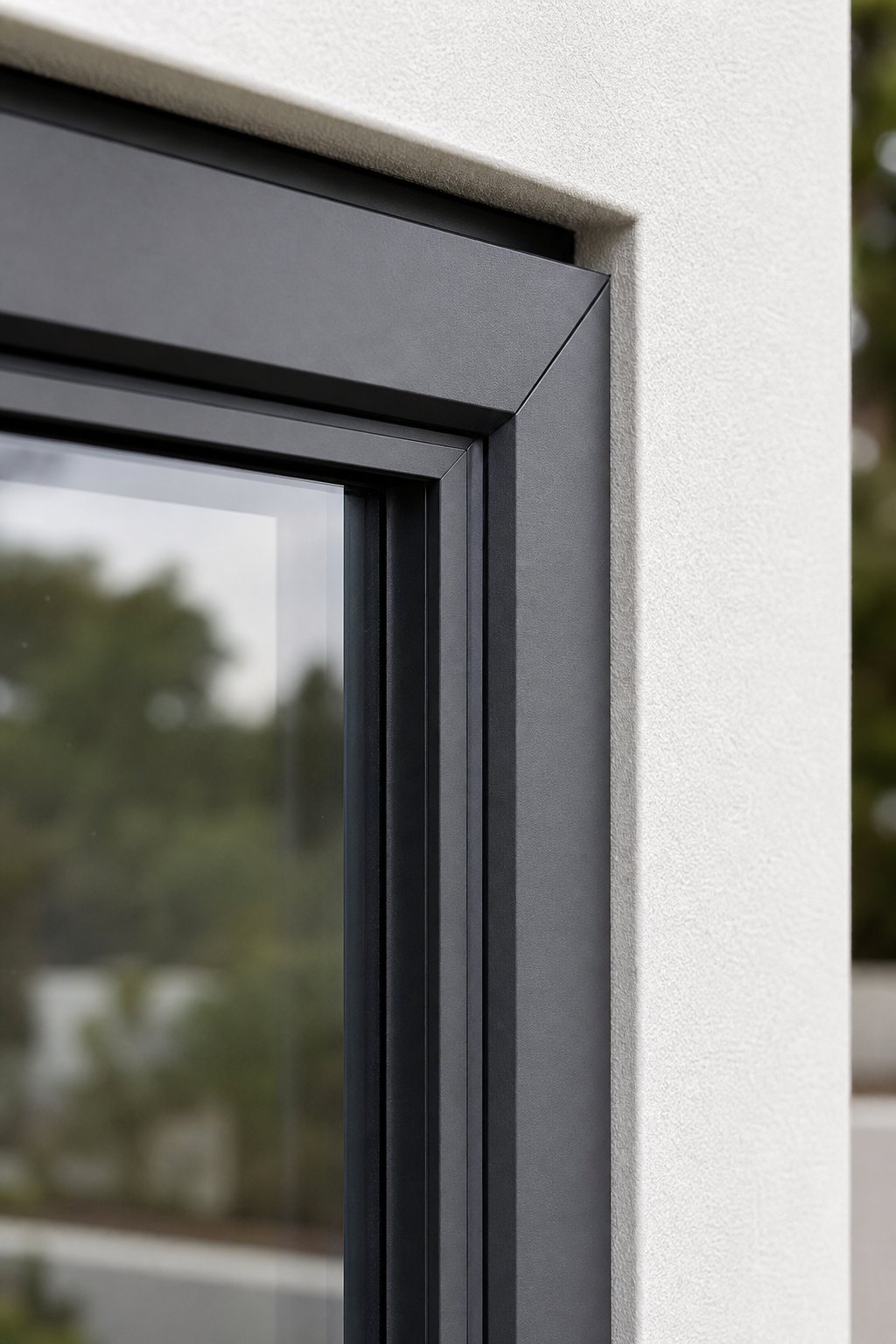
- Thermal bridging through the frame — Without a thermal break (an insulating strip between the interior and exterior faces of the frame), the aluminium conducts heat across its entire cross-section. The U.S. Department of Energy notes that metal frames conduct heat very rapidly, making them poor insulating materials unless thermally broken. The same physics applies regardless of geography.
- Limited compliance with current energy codes — Under the National Construction Code (NCC) 2022 and the NatHERS requirements for new habitable rooms, single glazed aluminium rarely meets minimum energy performance standards without substantial trade-offs elsewhere in the building envelope. Renovations triggering compliance upgrades may force replacement regardless of the window’s physical condition.
- Higher long-term energy costs — Cheap aluminum windows save money upfront, but in climate-controlled spaces across inland and southern Australian regions, the ongoing energy penalty can exceed the initial savings within a few years. The total cost of ownership — purchase price plus lifetime energy consumption — often favours the more expensive double glazed unit.
- Limited sound reduction — A single pane offers minimal acoustic insulation. Homes near busy roads, flight paths, or commercial areas will struggle with noise intrusion that thicker, multi-layered glazing systems handle far more effectively.
- Lower security than laminated alternatives — A single sheet of standard annealed glass is easier to break than laminated or toughened double glazed units. Ground-floor windows in security-conscious locations may benefit from the added resistance that multi-pane assemblies provide.
When Cost Savings Are Real vs Illusory
The critical distinction is simple: does the space have climate control or not?
If the answer is no — a detached garage, a garden shed, a covered patio — then the lower aluminium windows cost is a genuine saving. You are not losing energy through the glass because no energy system is trying to condition the air on the other side. The thermal performance gap between single and double glazing becomes academic when there is no heating or cooling bill to inflate.
If the answer is yes — a bedroom, living room, home office, or any space with ducted air conditioning, a split system, or heating — then the upfront saving shrinks against the backdrop of ongoing energy waste. In Melbourne, Canberra, or Adelaide, where heating dominates winter energy use, every square metre of single glazing at U-value 6.7 bleeds warmth that your system must constantly replace. In Brisbane or Darwin, where cooling drives consumption, an SHGC of 0.70 on unshaded glass forces your air conditioner to work harder across six or more months each year.
The honest summary: for primary living spaces in most Australian climates, single glazing within an aluminium frame is rarely the best thermal or financial choice over a 10- to 15-year ownership horizon. But for the right application — unconditioned, non-habitable, heritage-restricted, or seasonal — it remains a perfectly rational decision. Knowing which category your project falls into determines whether retaining these windows is practical sense or an expensive habit. And for those whose windows are aging, the next question is maintenance — what keeps them performing and what signals that their useful life is ending.
Maintenance and Lifespan of Aluminium Single Glazed Windows
An aluminium window frame will outlast the components attached to it. That distinction matters, because homeowners often confuse a failed seal or stiff latch with a window that needs replacing entirely. In reality, the frame itself is usually the last thing to give up — and a small amount of routine attention keeps the whole assembly working well beyond the point where single pane wood windows of the same era would have rotted out completely.
Routine Care and Cleaning
Aluminium demands far less ongoing effort than timber. There is no repainting cycle, no sanding, no risk of termite damage or moisture-driven decay. But “low maintenance” is not the same as “no maintenance.” Dirt accumulates in tracks, hardware stiffens without lubrication, and seals quietly deteriorate out of sight. A simple routine, repeated two to four times a year depending on your environment, prevents small issues from becoming costly failures.
- Clean the tracks and sills — Use a stiff brush or vacuum with a crevice attachment to remove grit, leaves, and insect debris from sliding tracks and sill channels. Built-up debris is the most common reason sliding sashes jam or jump off their rails.
- Wash the frames — Wipe window frames aluminium down with warm water and a mild detergent using a soft cloth or non-abrasive sponge. Avoid scouring pads or alkaline cleaners — these damage powder-coated finishes. Rinse with clean water and dry to prevent water spots.
- Clean weep holes — Check the small drainage slots along the bottom rail of each sash or outer frame. Poke out any blockages with a thin wire or pipe cleaner. Blocked weep holes trap water inside the frame, accelerating seal deterioration and potentially causing water to overflow into the wall cavity.
- Lubricate hardware and moving parts — Apply a light silicone-based lubricant to hinges, locking mechanisms, rollers, and cranking gear. For a window with metal guide rails, a dry silicone spray prevents corrosion and keeps sashes gliding without resistance. Avoid petroleum-based oils — they attract dust and gum up over time.
- Inspect and replace seals — Run a finger along the rubber or neoprene weather seals around the sash perimeter. If they feel hard, cracked, or have visible gaps, they are no longer doing their job. Replacement weatherstripping is inexpensive and available in standard profiles from hardware stores.
- Check glass condition — Look for chips, cracks, or failed glazing putty along the edges where glass meets frame. Even a hairline crack in a single pane compromises the window’s weather resistance and structural integrity.
- Test locking mechanisms — Ensure all locks engage fully and hold the sash firmly against its seals. A lock that no longer pulls the sash tight allows air infiltration regardless of seal condition.
Coastal properties need more frequent attention. Salt deposits accelerate oxidation of any exposed raw aluminium and can pit powder-coated surfaces if left unchecked. A monthly freshwater rinse of exterior frames goes a long way in areas within a few kilometres of the shoreline.
Common Issues With Older Aluminium Windows
Homes built during the 1970s and 1980s — the peak era for aluminium window installation across Australian suburbs — present a specific set of age-related problems. These old style aluminium windows were solid products for their time, but four or five decades of service take a toll on the non-frame components.
Seal degradation is the most universal issue. Rubber and vinyl gaskets from that era were not engineered for 50-year lifespans. They harden, shrink, and crack — leaving gaps that allow draughts, dust, and water to bypass the glass. In many 1970s aluminum windows, the original seals have been degraded for years without the homeowner realising, because the deterioration is gradual and often hidden within the frame channel.
Surface oxidation appears as a chalky white or grey film on bare aluminium surfaces. It is cosmetic rather than structural in most cases — aluminium naturally forms a protective oxide layer — but it dulls the appearance and can worsen if protective coatings have been scratched or worn through over decades of cleaning.
Hardware failure is the third common complaint. Rollers on an old aluminum window flatten or seize, making sliding sashes heavy and difficult to operate. Winder mechanisms on casement windows strip their gears. Locks lose spring tension. These are all replaceable components, but finding exact-match hardware for discontinued systems sometimes requires specialist suppliers.
Track wear is particularly noticeable on older sliding windows. Decades of sash movement wears grooves into the aluminium track, and once those grooves become pronounced, the sash rattles, sticks, or fails to seal properly against the frame even with new weatherstripping. At that point, the issue has moved beyond simple maintenance into structural decline of the frame itself.
Signs Your Windows Need Attention
How do you know whether your existing aluminium single glazed windows are still performing adequately — or whether they have crossed the line from maintainable to end-of-life? A few diagnostic signals help you decide before calling a glazier.
Visible daylight around closed sashes — If you can see light between the sash and frame with the window fully closed and locked, the seals have failed or the frame has distorted. Seal replacement may fix it; frame distortion usually means the window is done.
Persistent condensation on the frame interior — All single glazed aluminium produces some condensation in cold conditions, but if moisture streams down the frame and pools on the sill daily, the thermal bridging is causing material damage to surrounding finishes.
Difficulty operating — Sticking, jamming, or a sash that will not stay open usually points to hardware failure or track wear. If lubricating and cleaning does not restore smooth operation, the mechanical life of the window has likely expired.
Rattling in wind — A well-sealed window sits quietly in its frame regardless of conditions. Rattling indicates loose sashes, worn seals, or degraded locking mechanisms that no longer hold everything firm.
Water entry during rain — Water appearing inside the frame or on the sill during storms is a clear sign that weatherproofing has failed. Check weep holes first — a blocked drain can simulate a seal failure — but persistent leaks from multiple points usually indicate systemic deterioration.
The aluminium frame itself typically lasts 30 years or more without structural concern. Seals and weatherstripping have a realistic lifespan of 10 to 20 years. Hardware sits somewhere in between — perhaps 15 to 25 years depending on frequency of use and maintenance. When only seals or hardware have failed but the frame remains true and straight, targeted repairs make financial sense. When the frame shows deformation, severe pitting, or worn-through tracks, the window has reached its practical end of life — and the conversation shifts from maintenance to improvement or replacement.
How to Improve Existing Single Glazed Aluminium Windows
A window that rattles, leaks draughts, or sweats condensation every winter morning is not necessarily a window that needs ripping out. Between doing nothing and full replacement sits a range of retrofit options — each targeting a specific weakness of aluminum single pane windows without the cost or disruption of starting from scratch. The trick is matching the right fix to the right problem and knowing when you have pushed a retrofit as far as it can go.
Secondary Glazing as a Middle Ground
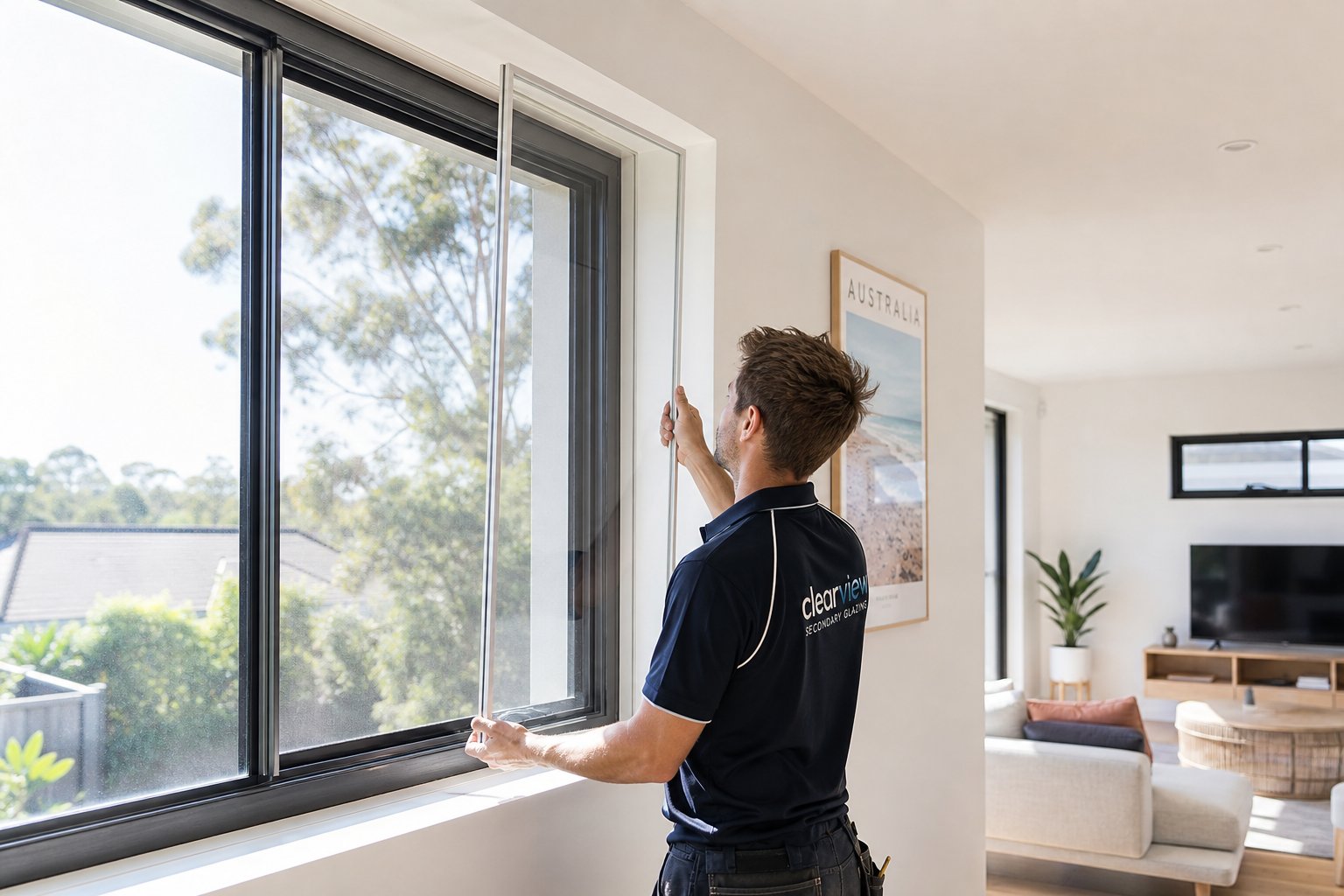
Secondary glazing adds a second layer of glass or acrylic inside your existing aluminium frame, creating an insulating air gap without touching the original window. It is the most effective retrofit available for improving both thermal and acoustic performance on single pane windows with storm windows being the closest conceptual equivalent in traditional terminology.
The approach works in two main forms. Permanent secondary glazing uses a slim aluminium or PVC sub-frame fixed to the interior reveal, holding a sealed pane several centimetres inside the primary window. The trapped air pocket acts as an insulating barrier — similar in principle to double glazing, though typically with a wider cavity. DIY magnetic acrylic panels offer a lighter-touch version: a clear acrylic sheet held against the frame by magnetic strips, easily removed for cleaning or ventilation.
In practical terms, secondary glazing can reduce heat loss by up to 60% and noticeably cuts external noise penetration. For a single pane fixed window in a living area where heritage restrictions prevent external changes, or where budget constraints rule out full replacement, secondary glazing bridges the performance gap without altering the building’s exterior appearance.
The limitations are real, though. You are adding depth to the window reveal, which can look bulky on narrow frames. Condensation can form between the primary and secondary panes if the seal is not airtight. And operable windows become less convenient — you need to remove or open the secondary panel before accessing the original sash. For single pane porch windows that you rarely open, this is barely an inconvenience. For a kitchen casement you crank open daily, it becomes a genuine friction point.
Expect to pay roughly $50 to $150 per window for DIY magnetic kits, or $200 to $500 per opening for professionally installed framed secondary glazing, depending on size and material.
Weatherstripping and Draught-Proofing
If your main complaint is cold air sneaking in around closed sashes rather than heat radiating through the glass itself, upgraded weatherstripping targets the problem directly — and at minimal cost.
Older aluminium windows lose their seal integrity gradually. The original rubber or vinyl gaskets compress, crack, and shrink over decades. Replacing them restores the window’s ability to block air movement between the sash and frame. Self-adhesive foam strips are the cheapest option (around $5 to $10 per window), though they compress quickly and typically last only one to three years. V-strips (tension seals) and brush pile strips offer better durability — three to five years of service — and suit sliding sashes where the seal must accommodate movement without restricting operation.
Beyond seal replacement, basic draught-proofing includes:
- Caulking fixed gaps — Silicone sealant between the window frame and surrounding wall eliminates air paths that bypass the glass entirely. This is a permanent fix for gaps that do not need to accommodate movement.
- Insulating window film — A clear plastic film applied over the window interior with double-sided tape, then heat-shrunk tight with a hairdryer. It creates a still-air pocket similar to secondary glazing but at a fraction of the cost ($10 to $30 per window). The trade-off is durability — most films last a single season and must be removed to operate the window. The U.S. Department of Energy lists solar control film and storm panels among effective efficiency improvements for existing windows, and the same principles apply regardless of climate zone.
- Heavy thermal curtains — Floor-length curtains with thermal backing add a buffering layer between room air and cold glass. They do not improve the window itself but reduce the perceived impact of poor glazing performance, particularly overnight when curtains remain drawn.
Each of these solutions addresses air infiltration or radiant heat loss to varying degrees, but none fundamentally change the thermal properties of the glass or frame. They buy time and comfort — especially valuable if your budget allows window replacement in stages rather than all at once.
| Method | Approximate Improvement | Cost Level (AUD per window) | DIY Feasibility |
|---|---|---|---|
| Secondary glazing (professional) | Up to 60% heat loss reduction; significant noise reduction | $200–$500 | Low — best installed by specialist |
| Magnetic acrylic panels (DIY) | 30–50% heat loss reduction; moderate noise reduction | $50–$150 | Moderate — requires accurate measurement and cutting |
| Insulating window film | Up to 30% heat loss reduction | $10–$30 | High — simple application with household tools |
| Weatherstrip replacement (V-strip/brush) | Reduces air infiltration; minimal thermal improvement to glass | $5–$15 | High — straightforward press-in or adhesive install |
| Silicone caulking (frame-to-wall gaps) | Eliminates fixed air leaks; no glass improvement | $5–$10 | High — standard DIY skill level |
| Thermal curtains | Reduces perceived heat loss overnight; no structural improvement | $80–$300 | High — hang on standard curtain hardware |
When Retrofit Is Not Enough
Every retrofit option shares one fundamental constraint: it works around the existing window rather than replacing its core weakness. You can seal every gap, add secondary glazing, and hang thermal curtains — and the single pane of glass in that aluminium frame still carries a U-value near 6.7 W/m²K. The frame still conducts heat without a thermal break. The glass still allows 70% of solar radiation straight through on unshaded elevations.
Retrofit makes financial sense when:
- The existing frame is structurally sound and true.
- The space is only partially conditioned or used seasonally.
- Heritage controls prevent external changes.
- Budget requires staging improvements over several years.
Retrofit stops making sense when:
- Frames are warped, pitted, or have worn-through tracks that prevent proper sealing regardless of new weatherstripping.
- Energy bills in conditioned rooms remain unacceptably high despite draught-proofing efforts.
- Condensation persists because the glass surface temperature cannot be raised without changing the glazing unit itself.
- Multiple windows across the home need attention — at which point the cumulative cost of retrofitting every opening approaches the price of replacement aluminium windows with proper double glazing built in.
When you reach that tipping point, the conversation shifts from patching to upgrading. Suppliers like MEICHEN offer aluminium window systems with multiple glazing choices, allowing homeowners to step from single to double glazed units within the same aluminium frame material. This keeps the aesthetic continuity — slim profiles, powder-coated colour options, the same modern look — while fundamentally upgrading thermal and acoustic performance to levels no retrofit can match.
The decision is not always dramatic. Sometimes a few windows warrant replacement while others in unconditioned spaces remain perfectly serviceable as-is. A targeted approach — retrofit where it works, replace where it does not — often delivers the best balance of spending and comfort improvement across the whole home. The remaining question is how to make that call systematically, which comes down to assessing each window against its space, its climate, and the building’s compliance obligations.
When to Keep and When to Replace Single Glazed Aluminium Windows
Retrofit or replace — it is the question every homeowner with aging single pane aluminum windows eventually faces. The answer is rarely universal. It depends on a handful of specific factors unique to your property, your climate, and your goals. Rather than guessing, you can work through a structured assessment that leads to a clear, defensible decision for each window in your home.
Assessing Your Space and Climate Needs
Start with the most fundamental question: what is the room actually used for?
A habitable space — a bedroom, living room, kitchen, or home office — carries entirely different expectations from a detached garage, garden shed, or storage area. In conditioned rooms, your heating and cooling system actively fights against every watt of energy that escapes through the glass. A single pane aluminum window with a U-value near 6.7 W/m²K becomes a constant energy drain. In unconditioned spaces, that same window loses you nothing because there is no thermal envelope to compromise.
Climate zone amplifies or diminishes the penalty. An aluminium single glazed window in a garage on the Sunshine Coast barely registers as a problem — mild winters, ocean-moderated summers, minimal temperature extremes. The same window in a living room in Ballarat or Orange, where winter mornings regularly dip below zero, creates real discomfort and real costs. Inland regions with hot summers and cold winters get hit from both directions: solar heat gain through the glass in January, rapid heat loss through the frame in July.
Map your windows against these two axes — room purpose and local climate severity — and you already have a strong indication of which ones genuinely need upgrading and which ones are fine left alone.
Other practical factors sharpen the picture:
- Current window condition — Frames that are straight, true, and free of deep pitting can support retrofit improvements. Distorted or heavily worn frames point toward replacement.
- Energy costs — If your quarterly heating or cooling bill seems disproportionately high for the size of your home, poor-performing glazing in conditioned rooms is often a significant contributor.
- Budget and staging — Full replacement of every window in one project is expensive. Prioritising the worst-performing windows in the most-used rooms and leaving unconditioned spaces for later (or never) is a valid strategy.
- Heritage restrictions — Properties in conservation areas or with heritage listings may require retention of original windows on key elevations, limiting your options to internal retrofits regardless of performance concerns.
Building Code and Compliance Factors
Beyond personal comfort and energy bills, building compliance introduces hard boundaries that override preference. The National Construction Code (NCC) sets minimum energy performance requirements for habitable buildings, and those requirements have tightened significantly in recent years.
Under NCC 2022 provisions, new residential dwellings must achieve a minimum 7-star NatHERS energy rating — up from the previous 6-star benchmark. Windows contribute substantially to that rating through their U-value, SHGC, and air leakage characteristics. Single glazed aluminium, with its high U-value and lack of thermal break, makes reaching 7 stars extremely difficult without massive compensation elsewhere in the building envelope.
For renovations, the trigger point matters. Minor maintenance and like-for-like repairs generally do not invoke compliance upgrades. But substantial renovations — particularly those requiring a development application or building approval — can trigger a requirement to bring affected areas up to current energy performance standards. If your renovation scope reaches that threshold, replacing single glazed windows in habitable rooms often becomes a compliance necessity rather than an optional improvement.
Windows must also comply with AS 2047 (windows and external doors) and AS 1288 (glass in buildings) for structural and safety performance. Older single glazed windows may contain annealed glass in locations where current codes now mandate safety glass — another factor that can force replacement during renovation regardless of thermal considerations.
The sustainability question deserves a direct answer here too. Aluminium is highly recyclable — roughly 95% of the energy used in primary production is recoverable through remelting, and the material can be recycled indefinitely without degradation. That is a genuine environmental credential. However, keeping a poorly insulating single glazed window in a conditioned living space because the frame is recyclable does not hold up to scrutiny. The operational energy wasted over 10 or 15 years of poor thermal performance — all the extra gas and electricity consumed to maintain comfort — vastly exceeds the embodied energy saved by avoiding a replacement window. Sustainability in practice means minimising total lifecycle impact, not just protecting the embodied energy already spent.
Making the Right Choice for Your Project
Pulling these threads together, the decision framework distils into clear guidance based on your specific circumstances.
Keep your aluminium single glazed windows if they serve unconditioned spaces (sheds, garages, storage), if heritage controls mandate retention, or if the frame is sound and a retrofit adequately addresses your comfort needs in mildly conditioned or seasonal-use areas.
Replace when windows serve habitable rooms in climate zones with significant heating or cooling demand, when frames have deteriorated beyond practical repair, when building compliance requires upgraded performance, or when cumulative retrofit costs approach the price of proper double glazed aluminium replacements.
For homeowners searching for single pane windows for sale as replacements in sheds, outbuildings, or other unconditioned applications, single glazed aluminium remains widely available and fit for purpose. There is nothing wrong with buying new single glazed units for spaces where the thermal argument simply does not apply.
For habitable spaces, the path forward usually means stepping up to thermally broken aluminium frames with double glazing. Aluminum single hung windows, sliding configurations, casement styles, and aluminum fixed window options are all available with modern glazing packages built in — so upgrading performance does not mean sacrificing the operational style or aesthetic you already have.
If your assessment points toward replacement, MEICHEN’s aluminium window range offers custom configurations across single hung, sliding, casement, and fixed styles with various glazing and colour options suited to Australian residential and commercial projects. It is a practical starting point for homeowners and builders who want to retain aluminium’s durability and slim profiles while gaining the thermal performance that single glazing cannot deliver.
The bottom line is pragmatic rather than dogmatic. Not every aluminium single glazed window in your home needs replacing — but the ones in your bedrooms, living areas, and offices almost certainly do if comfort and energy efficiency matter to you. Assess each opening on its own merits, match the solution to the problem, and spend your budget where the returns are real.
Frequently Asked Questions About Aluminium Single Glazed Windows
1. Are aluminium single glazed windows still compliant with Australian building codes?
For new habitable rooms in residential dwellings, aluminium single glazed windows rarely meet NCC 2022 energy performance requirements, which now mandate a minimum 7-star NatHERS rating. Their high U-value of approximately 6.7 W/m²K makes compliance extremely difficult without significant compensation elsewhere in the building envelope. However, they remain compliant in non-habitable spaces such as sheds, garages, and certain commercial classifications where energy performance thresholds are less stringent. Renovations triggering a development application may also require upgrading affected windows to current standards.
2. Can you improve the thermal performance of single glazed aluminium windows without replacing them?
Yes, several retrofit options exist. Secondary glazing — adding a second pane inside the existing frame — can reduce heat loss by up to 60% and noticeably improves acoustic performance. Magnetic acrylic panels offer a DIY-friendly alternative at lower cost. Upgraded weatherstripping addresses air infiltration, while insulating window film creates a basic still-air pocket for around $10 to $30 per window. These solutions work best when the existing aluminium frame remains structurally sound. When frames are warped or severely deteriorated, or when cumulative retrofit costs approach replacement pricing, upgrading to double glazed aluminium systems from suppliers like MEICHEN provides a more permanent performance gain.
3. How long do aluminium single glazed windows last?
The aluminium frame itself typically lasts 30 years or more without structural concern, as the material resists rot, warping, and termite damage. However, the surrounding components have shorter lifespans: rubber and neoprene seals last 10 to 20 years before hardening and cracking, while hardware such as rollers, hinges, and locks typically serves 15 to 25 years depending on use frequency and maintenance. Regular cleaning of tracks, lubrication of moving parts, and periodic seal replacement can extend the overall assembly’s functional life well beyond the point where equivalent timber windows would have deteriorated.
4. What spaces are aluminium single glazed windows best suited for?
They perform well in unconditioned or non-habitable spaces where thermal insulation offers no practical benefit. Garden sheds, detached garages, workshops, covered patios, warehouses, and seasonal-use structures like conservatories used only in warmer months are all ideal applications. Heritage-listed properties where council controls mandate retention of original window fabric also justify keeping single glazed aluminium. In these contexts, the lower upfront cost, corrosion resistance, and minimal maintenance requirements represent genuine value rather than a compromise on performance.
5. Is it worth replacing single glazed aluminium windows with double glazed?
For habitable rooms in climate zones with significant heating or cooling demand — which includes most of inland and southern Australia — replacing single glazed with double glazed aluminium windows typically pays for itself through reduced energy bills within 7 to 12 years, while immediately improving comfort and reducing condensation. The upgrade is especially worthwhile when existing frames show signs of distortion, severe pitting, or worn tracks. For unconditioned spaces like sheds and garages, the thermal upgrade offers no measurable return, so retaining serviceable single glazed units remains the practical choice.
More Window & Door Guides