What Makes Aluminium the Preferred Mosquito Net Material
Every open window is an invitation. Fresh air flows in, but so do mosquitoes, flies, and whatever else is buzzing around your garden at dusk. The solution sounds simple enough — put a screen over the opening. The material you choose for that screen, though, determines whether you get years of reliable protection or a sagging, torn mess within a couple of seasons.
What Is an Aluminium Window Mosquito Net
An aluminium window mosquito net is a woven metal mesh secured within a frame that fits over or inside your window opening. Its job is straightforward: block insects while still letting air circulate and light pass through. Unlike fabric-based alternatives, this type of insect screen uses thin aluminium wire woven into a tight grid pattern — typically 18×16 strands per inch — creating openings small enough to stop mosquitoes but large enough to maintain decent airflow and outward visibility.
As a window accessory, the aluminium mosquito screen for windows sits alongside flyscreens, security screens, and decorative grilles. What sets it apart is the balance it strikes between strength, weight, and longevity. The mesh holds its shape for years without stretching or sagging, and the frame systems available — fixed, sliding, hinged, or retractable — accommodate virtually every window style found in Australian homes.
Why Homeowners Are Choosing Metal Mesh Over Plastic
Fiberglass and polyester screens still dominate the budget end of the market, but a growing number of homeowners are making the switch to screen aluminium options. The reasons stack up quickly: metal mesh resists tearing from pets and accidental impacts, it holds tension across wide openings without sagging, and it stands up to Australia’s intense UV exposure far better than plastic alternatives that become brittle and discoloured over time.
Aluminium delivers a rare combination — it is light enough for easy handling and installation, strong enough to resist punctures and pet damage, and naturally corrosion-resistant thanks to the protective oxide layer that forms on its surface within seconds of exposure to air.
There is also the sustainability factor. Aluminium mesh is fully recyclable at end of life, whereas fiberglass and polyester screens typically end up in landfill. For environmentally conscious households, that difference matters.
This guide covers everything you need to confidently evaluate, purchase, and maintain an aluminium window mosquito net — from material science and mesh specifications through to measurement techniques, installation types, and long-term care. Whether you are building new, renovating, or simply replacing worn-out screens, the information ahead will help you get the decision right the first time.
Material Properties That Make Aluminium Mesh Last
That protective oxide layer mentioned earlier is worth a closer look — because it explains why aluminium net outlasts plastic alternatives by such a wide margin. The science behind the material is surprisingly straightforward, and understanding it helps you assess product quality when shopping for a metal insect screen.
Core Properties of Aluminium Mesh
Aluminium is roughly one-third the weight of steel, yet its strength-to-weight ratio is high enough to hold tension across a window opening without bowing or sagging. For a mosquito screen, this matters in practical terms: lighter mesh is easier to handle during installation, places less stress on frame clips and corner joints, and reduces the load on retractable spring mechanisms over time.
When exposed to air, aluminium instantly forms a thin, transparent oxide film on its surface. This layer is self-healing — scratch it, and it reforms within seconds. The result is a corrosion resistant mosquito net that handles moisture, humidity, and even mild salt exposure without rusting or degrading the way steel can. According to Vulcan Cladding Systems, this passive oxide layer is self-regenerating and does not flake or peel, which is the primary reason aluminium thrives in outdoor environments for 40 to 60-plus years.
Thermal behaviour is another practical advantage. Aluminium expands and contracts predictably with temperature shifts but does not overheat in direct sun the way dark-coloured steel mesh can. Your screen stays dimensionally stable through summer heat and cool winter nights without warping. It is also non-magnetic, so it will not attract fine metallic particles or interfere with electronic devices near the window.
- Lightweight — easy to lift, position, and secure during DIY or professional installation
- Self-healing oxide layer — delivers natural corrosion resistance without coatings
- UV stable — maintains structural integrity and does not become brittle under prolonged sun exposure
- Non-magnetic — will not collect metallic dust or debris
- Fully recyclable — can be re-smelted and reused indefinitely without quality loss
- Predictable thermal expansion — holds shape through seasonal temperature swings
Aluminium Alloy Grades and Why They Matter
Not every aluminium net is made from the same raw material. Aluminium comes in alloy families, each blended with different elements to enhance specific properties. For mesh and screen applications, two series dominate.
The 3000 series (alloyed with manganese) is the standard choice for general residential use. It forms well without cracking, offers reliable tensile strength, and provides strong corrosion resistance suited to most Australian climates. As detailed by Fairview, 3000 series aluminium is considered architectural grade — more rigid than the 5000 series, with better machinability and a lower thermal expansion rate that reduces distortion over time.
The 5000 series (alloyed with magnesium) is known as marine-grade aluminium. It delivers higher corrosion resistance in salt-heavy environments, making it relevant for coastal homes within a few kilometres of the ocean. However, it is softer and expands more with heat, which can be a drawback for mesh that needs to stay taut across a frame.
For most inland and suburban homes, a quality 3000 series aluminium mesh handles everything Australian conditions throw at it. Coastal properties — particularly in tropical Queensland or exposed seaside locations — benefit from specifying 5000 series or ensuring the mesh carries a marine-grade designation. When evaluating aluminium mesh properties on a product listing, look for the alloy series number or ask the manufacturer directly. That single detail tells you more about long-term durability than almost any other specification on the label.
The alloy grade also influences how the mesh performs if it ever needs repair. Softer 5000 series wire can be slightly easier to re-tension, while the stiffer 3000 series holds its original shape longer but is less forgiving if bent sharply. Either way, both outperform plastic screens by years — which brings up an obvious question: how does aluminium stack up against every other mesh material on the market?
How Aluminium Compares to Fiberglass and Steel Mesh
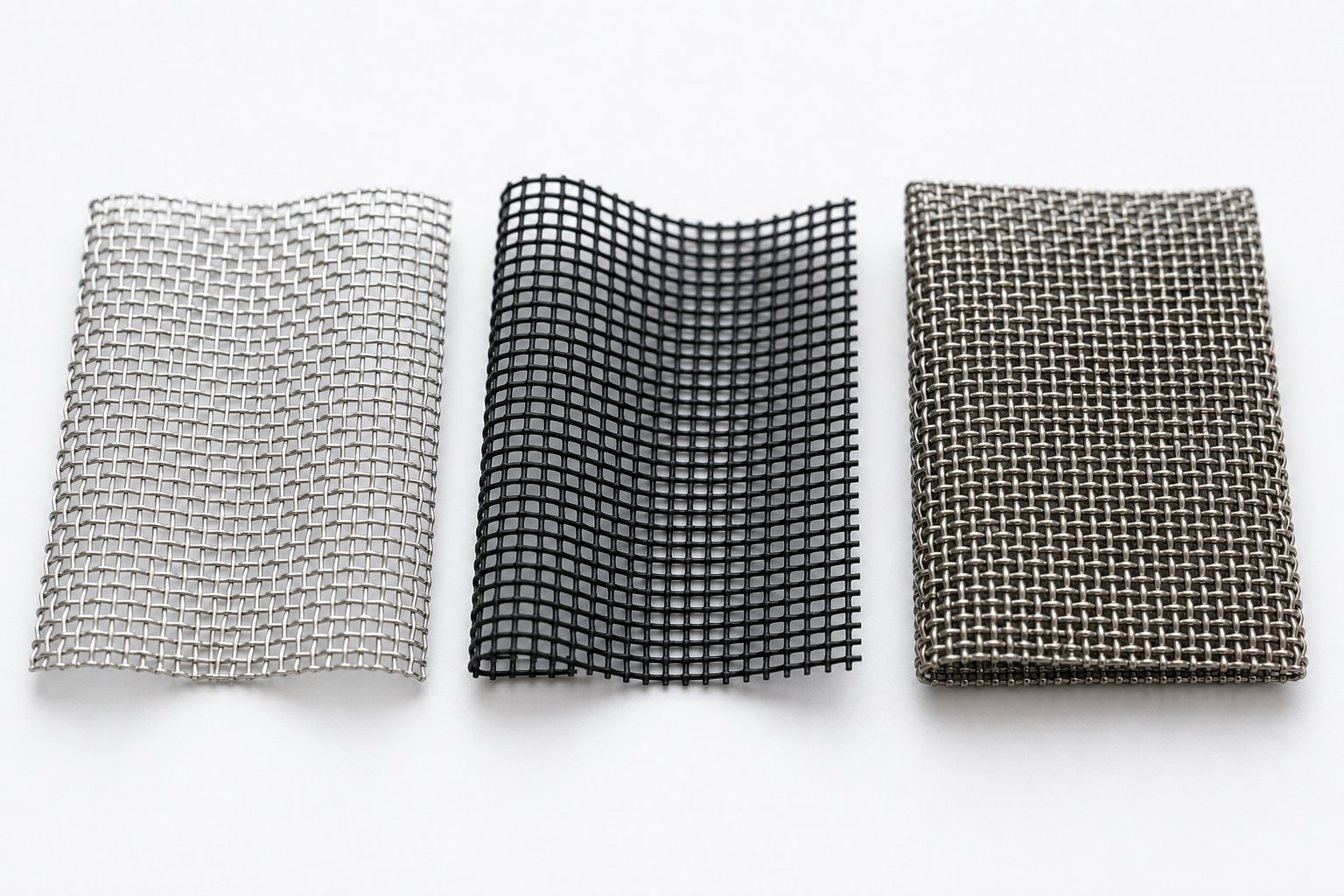
Picking the best material for window screen protection depends on where you live, what your household looks like, and how long you want the mesh to last before replacement. Each option has genuine strengths — and genuine deal-breakers depending on your situation. Here is how aluminium stacks up against the alternatives in a real-world, side-by-side breakdown.
Aluminium vs Fiberglass Mesh
The aluminium vs fiberglass mosquito net debate comes down to longevity versus upfront cost. Fiberglass is the budget pick — it is lightweight, flexible, and offers slightly better outward visibility thanks to its finer vinyl-coated strands. RiteScreen notes that roughly 80% of residential homes use fiberglass for its balance of cost, visibility, and performance.
The problem is durability. Fiberglass tears easily under pet claws, stretches and sags over time (especially in large openings), and degrades under UV exposure as the vinyl coating breaks down. In Australia’s harsh sun, that means replacement every 8 to 12 years — sometimes sooner on north-facing windows. It is also not recyclable, so every replacement ends up in landfill.
Aluminium holds its shape indefinitely, resists punctures that would shred fiberglass, and handles decades of UV exposure without going brittle. If you have cats, dogs, or active kids pushing against screens, a metal bug screen pays for itself through avoided repairs alone.
Aluminium vs Stainless Steel Mesh
Stainless steel is the strongest option available — it resists cutting, forced entry, and fire. For security-rated screens in high-risk locations or bushfire-prone areas, it is the gold standard. But for a standard bug proof screen on a suburban home, it introduces trade-offs most people do not need.
Stainless steel mesh is significantly heavier than aluminium, harder to cut and work with during installation, and costs three to five times more. North Coast Blinds highlights that stainless steel’s weight can complicate installation and may require additional support structures for larger openings. Visibility is also slightly reduced due to the denser weave pattern typically used in security applications.
For most residential windows where insect protection — not intruder resistance — is the primary goal, aluminium delivers the performance needed at a fraction of the weight and cost.
Aluminium vs Polyester Mesh
Polyester screens are PVC-coated synthetic meshes that offer reasonable weather resistance and moderate durability. They sit between fiberglass and aluminium in terms of lifespan, but they share the same fundamental weakness as all plastic-based options: UV degradation accelerates in Australian conditions, and the material lacks the rigidity needed to stay taut across wider openings.
Polyester also cannot match aluminium’s recyclability or its resistance to pet damage. It works as a temporary or budget solution, but homeowners looking for a long-term insect screen that holds its shape across seasons will find aluminium the stronger investment.
| Material | Durability | Cost Range (per m²) | UV Resistance | Pet Resistance | Recyclability | Weight | DIY Ease |
|---|---|---|---|---|---|---|---|
| Aluminium | High — 20+ years | $15–$35 AUD | Excellent | Good | Fully recyclable | Light | Moderate |
| Fiberglass | Moderate — 8–12 years | $8–$18 AUD | Poor to moderate | Poor | Not recyclable | Very light | Easy |
| Stainless Steel | Very high — 25+ years | $50–$120 AUD | Excellent | Excellent | Recyclable | Heavy | Difficult |
| Polyester | Moderate — 6–10 years | $10–$22 AUD | Moderate | Moderate | Not recyclable | Very light | Easy |
| Galvanised Steel | Moderate — 10–15 years | $12–$30 AUD | Good | Good | Recyclable | Heavy | Moderate |
Galvanised steel deserves a brief mention as it occasionally appears in older installations. It offers decent strength and lower cost than stainless steel, but the zinc coating eventually wears through — particularly in coastal or high-humidity zones — leading to rust. Aluminium’s self-healing oxide layer gives it a clear edge for long-term corrosion resistance without relying on an applied coating that can fail.
The table above paints a clear picture: aluminium occupies the middle ground across nearly every dimension. It is not the cheapest (that is fiberglass) and not the strongest (that is stainless steel), but it delivers the best all-round balance for standard residential insect screening. The real question becomes not which material to choose, but which style of screen suits your particular window configuration.
Choosing the Right Mosquito Net Type for Your Windows
Your window style dictates your screen options more than most people realise. A retractable screen that works perfectly on a double-hung window can be completely wrong for a casement, and a fixed frame that suits one opening may block access on another. Getting the type right means matching the screen’s operation to how you actually use the window day to day.
Five main configurations cover virtually every residential scenario in Australia. Each uses aluminium mesh window screens, but the frame mechanism and mounting method differ significantly.
Fixed Frame and Sliding Mosquito Screens
Fixed frame screens are the simplest and most affordable option. A rigid aluminium frame holds the mesh taut, and the entire unit clips or screws into the window reveal. There are no moving parts to wear out, no springs to fail, and no tracks to jam. If you have windows that rarely need full unobstructed access — say, a bathroom window or a high-set louvred panel — a fixed frame delivers decades of quiet, reliable insect protection with almost zero maintenance.
The trade-off is obvious: you cannot move it aside without physically removing the frame. That is where a sliding window mosquito net earns its place. Sliding screens run along horizontal tracks mounted to the window frame, letting you push the screen to one side for cleaning or full access. They pair naturally with horizontal slider windows, where you are already used to opening one panel at a time. The screen covers the open half while the closed glass panel handles the other side. Oridow notes that sliding insect screens are particularly suited to high-traffic areas like living rooms and kitchens where people pass through regularly.
Roller Retractable and Hinged Options
A retractable mosquito screen aluminium system uses a spring-loaded cassette that houses the mesh when it is not deployed. Pull the screen across the opening when insects are active, then let it roll back into its housing when you want an unobstructed view. This suits windows where aesthetics matter — picture windows, feature openings, or any spot where you do not want permanent mosquito mesh for windows blocking the outlook.
Retractable screens work on both vertical and horizontal axes. Vertical roll-down versions suit awning and double-hung windows, while horizontal retractable units fit casement or bi-fold openings. The trade-off is mechanical complexity — the spring mechanism and tracks require occasional cleaning and lubrication, and replacement cassettes are more expensive than a simple fixed frame.
Hinged screens open outward like a small door, swinging on one or two side-mounted hinges. They are the preferred choice for casement windows where the glass panel cranks open and needs full clearance. A hinged screen gives you complete unobstructed access to the window hardware for cleaning, and it closes securely with a magnetic catch or latch. For awning windows that tilt outward from the bottom, a hinged screen mounted on top-edge hinges mirrors the window’s own movement.
Magnetic Screens for Rental Properties
Renters face a specific problem: most landlords and property managers will not allow permanent modifications to window frames. Magnetic screens solve this by using magnetic strips or adhesive-backed magnetic tape that attaches to the frame surround without drilling. The mesh panel lifts on and off in seconds, and removal leaves little to no marking on the frame.
Homiva highlights that self-adhesive and magnetic options are practical for apartments, dorm rooms, and temporary living spaces where drilling is restricted or impractical. They are not as rigid or long-lasting as a permanently mounted aluminium frame, but they provide genuine insect protection during a lease without risking your bond.
Adhesive mesh alternatives occupy a similar niche — lightweight nets trimmed to size and stuck directly to the window surround. They work in a pinch, though they lack the structural tension of a proper framed screen and may peel in humid conditions or extreme heat.
Choosing the right type comes down to matching screen operation to window operation:
- Fixed frame — louvre windows, fixed-pane windows, high-set bathroom windows
- Sliding — horizontal slider windows, sliding doors
- Retractable (vertical roll-down) — double-hung windows, awning windows, feature windows with views
- Retractable (horizontal) — casement windows, bi-fold windows
- Hinged — casement windows, awning windows needing full-open access
- Magnetic or adhesive — any window type in rental properties or temporary installations
One factor that often gets overlooked is the aluminium frame profile of the window itself. Newer window systems typically include a dedicated screen channel — a recessed track machined into the frame that accepts a screen without aftermarket brackets. Older windows, or budget profiles without this channel, require face-mounted or clip-on frames that sit proud of the window and can look bulky. Before settling on a screen type, check whether your window frames have integrated screen tracks. That single detail narrows your options quickly and determines whether installation is a clean, flush fit or requires additional hardware to bridge the gap.
With the right type selected, the next challenge is understanding the numbers stamped on the mesh itself — mesh count, wire diameter, and roll dimensions all sound technical, but they directly control how well your screen blocks insects while still letting you breathe.
Understanding Mesh Count and Wire Specifications
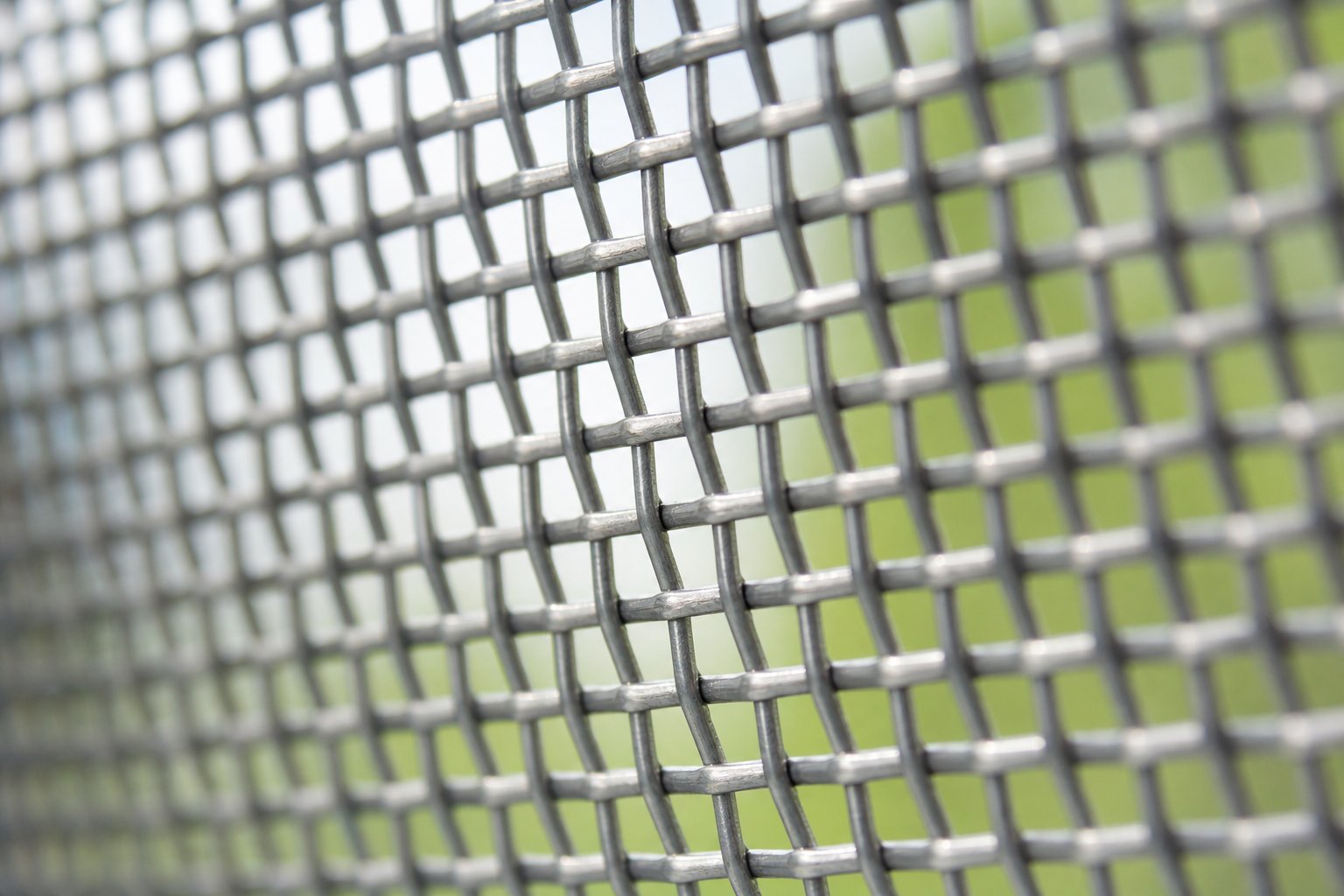
Product listings for mosquito screen mesh are full of numbers — 18×16, 0.28 mm wire, 1200 mm x 30 m rolls — yet almost none of them explain what those figures actually mean for keeping insects out of your home. Two specifications matter more than any others: mesh count and wire diameter. Get these right, and you have a screen perfectly matched to your local insect threats. Get them wrong, and you are either blocking airflow unnecessarily or leaving gaps big enough for sandflies to cruise through.
Mesh Count and What It Means for Insect Protection
Mesh count refers to the number of openings per linear inch (25.4 mm) counted in each direction — horizontal and vertical. A screen labelled 18×16 has 18 openings per inch across its width and 16 openings per inch down its length. The higher the numbers, the smaller the holes, and the smaller the insects it can block.
Think of it this way: a 14×14 mesh count creates relatively large openings that stop flies, bees, and standard-sized mosquitoes. That works fine for regions where common Aedes mosquitoes are the primary concern. But if your area also deals with sandflies (biting midges), drain flies, or no-see-ums — particularly common along Australian coastlines, estuaries, and tropical zones — those tiny pests pass straight through a 14×14 grid.
Stepping up to 18×16 or 18×18 closes the gaps enough to block most small biting insects while still letting a reasonable volume of air through. A 20×20 mesh count for insect screen applications stops virtually everything, including the finest midges, but noticeably reduces airflow and makes the mesh more visible from inside.
Matching mesh density to your local threats avoids overspending on unnecessarily tight weave in low-midge areas or underspending where sandflies are a nightly problem:
| Mesh Count | Approx. Hole Size | Insects Blocked | Airflow | Visibility |
|---|---|---|---|---|
| 14×14 | ~1.4 mm | Flies, bees, large mosquitoes | Excellent | Excellent |
| 16×16 | ~1.2 mm | Standard mosquitoes, moths, wasps | Very good | Very good |
| 18×16 | ~1.0 mm | Mosquitoes, small moths, most midges | Good | Good |
| 18×18 | ~0.9 mm | Sandflies, drain flies, fine midges | Moderate to good | Good |
| 20×20 | ~0.7 mm | No-see-ums, fruit flies, all common insects | Moderate | Moderate |
For most Australian homes, an 18×16 mosquito screen mesh provides the strongest balance between insect protection, airflow, and outward visibility. It blocks the vast majority of biting insects — including common mosquitoes — without making your home feel closed in. Step up to 18×18 or 20×20 only if sandflies or no-see-ums are a persistent issue in your area.
Wire Diameter and Material Grade Explained
Wire diameter — sometimes called gauge or strand size — measures the thickness of each individual aluminium strand in the weave. Standard aluminium wire mesh specifications for residential screens typically range from 0.23 mm to 0.28 mm (0.009 to 0.011 inch in imperial terms still used by some manufacturers).
The trade-off is straightforward. Thicker wire at 0.28 mm produces a stronger, more rigid mesh that resists denting and holds tension across wider openings without sagging. Thinner wire at 0.23 mm is slightly less robust but offers marginally better visibility and a lighter feel. For standard residential windows up to about 1200 mm wide, thinner wire performs well. Wider openings, ground-floor screens exposed to pet traffic, or areas prone to debris benefit from the heavier gauge.
Combined with mesh count, wire diameter determines the overall rigidity of your screen. A tighter mesh count paired with thicker wire creates maximum integrity and can span larger distances without needing a centre support rail — useful for oversized windows or sliding doors.
When shopping for a mosquito screen roll, you will see dimensions listed as width x length — for example, 1200 mm x 30 m. To calculate coverage, simply divide the roll length by the height of your window (plus a 50 mm trimming allowance per screen) to determine how many screens you can cut from a single roll. A 30 m roll at 1200 mm wide covers roughly 20 standard windows at 1400 mm height each, accounting for trim waste.
These aluminium wire mesh specifications — mesh count, wire diameter, and roll dimensions — are the three numbers that actually determine performance. Everything else on the label is secondary. Knowing what they mean puts you in a position to order with confidence, but accurate ordering also demands precise measurements of the windows themselves — and that is where most DIY mistakes happen.
How to Measure Your Windows for a Perfect Screen Fit
A screen that is 5 mm too wide will not slide into its track. One that is 5 mm too narrow leaves a gap insects treat as an open door. Knowing how to measure window for mosquito net fitting is the difference between a clean, flush result and a frustrating re-order — yet specific measurement instructions remain one of the hardest things to find online. Here is the process, broken down by window type.
Measuring for Fixed and Sliding Window Screens
Start by deciding whether you are mounting inside the reveal (recess fit) or on the face of the frame (face fit). A recess fit tucks the screen inside the window opening, sitting flush with the wall. A face fit mounts on the outer edge of the architrave, overlapping the frame entirely. Your choice depends on whether the window has enough depth inside the reveal — roughly 35 mm minimum — to accommodate the screen frame without fouling the glass or hardware.
For a recess fit, measure the inside width of the opening at three points: top, middle, and bottom. Then measure the inside height on the left side, centre, and right side. Record the smallest width and the smallest height. Windows are rarely perfectly square — timber frames shift with moisture, and even aluminium frames can settle fractionally over years — so those minimum figures ensure the screen fits the tightest point without jamming.
For a face fit, measure from where you want the outer edges of the screen frame to sit. Include the architrave or frame overlap in your measurements. No deductions are needed because the screen sits over the opening rather than inside it.
Sliding window screens follow the same logic, but also require measuring the depth of the track channel to confirm the screen frame thickness will seat properly. Standard aluminium window screen mesh frames are typically 8 mm to 10 mm deep — check that the track accommodates this before ordering.
Measuring Casement and Awning Windows
Casement windows crank outward, and awning windows hinge at the top and tilt out from the bottom. Both create a clearance challenge: the winder mechanism and handle protrude past the frame, and the hinge arm swings into the space where a screen would normally sit.
For these window types, measure the reveal opening the same way — three widths, three heights, smallest figures. Then check for obstructions. Hold a straight edge or small block of timber (around 35 mm deep) against the frame and close the window. If the handle or winder mechanism hits the block, you will need either a face-mounted screen that sits clear of the hardware or an inset screen with a recessed channel that accommodates the protruding hardware.
Hinged screen frames for casement windows require an additional 2 mm to 3 mm clearance per side to allow the screen to swing open without scraping the reveal edges. Factor this into your measurements by subtracting that clearance from your reveal width and height.
Common Measurement Mistakes to Avoid
Even a small error compounds when you are ordering a custom size mosquito screen aluminium frame cut to your dimensions. These are the mistakes that lead to returns, gaps, and sagging:
- Not accounting for window hardware — Handles, winders, locks, and alarm sensors protrude past the frame. Measure their projection and confirm the screen will clear them when closed.
- Measuring with the window open — An open sash can shift the frame slightly. Close the window fully before taking measurements so the reveal dimensions reflect normal operating conditions.
- Confusing reveal and frame-to-frame dimensions — The reveal is the clear internal opening. The frame-to-frame measurement includes the frame members themselves and will be larger. Ordering based on the wrong figure gives you a screen that either will not fit or rattles loosely.
- Forgetting to check for square — Measure both diagonals of the opening. If they differ by more than 3 mm, the opening is out of square. Use your smallest width and smallest height, and consider ordering a custom frame that can be shimmed to fit rather than forcing a standard rectangle into a skewed space.
- Using a fabric tape measure — Cloth tapes stretch. Use a rigid metal retractable tape and record everything in millimetres. That is the industry standard for flyscreen ordering in Australia.
One final consideration: should you order a custom size mosquito screen aluminium frame or buy a standard roll and trim it yourself? Custom frames arrive ready to install with mitred corners and pre-tensioned aluminium window screen mesh — ideal for anyone who values a clean finish and minimal effort. Trimming from a roll suits DIY-confident homeowners with multiple windows of varying size, where cutting to fit is more economical than ordering individual frames. Either way, proper measurements are the foundation. Get them right and the screen sits flat, stays taut, and leaves no gap for insects to exploit — which makes ongoing maintenance far simpler than chasing problems caused by a poor fit from day one.
Maintenance Schedule and Troubleshooting Common Issues
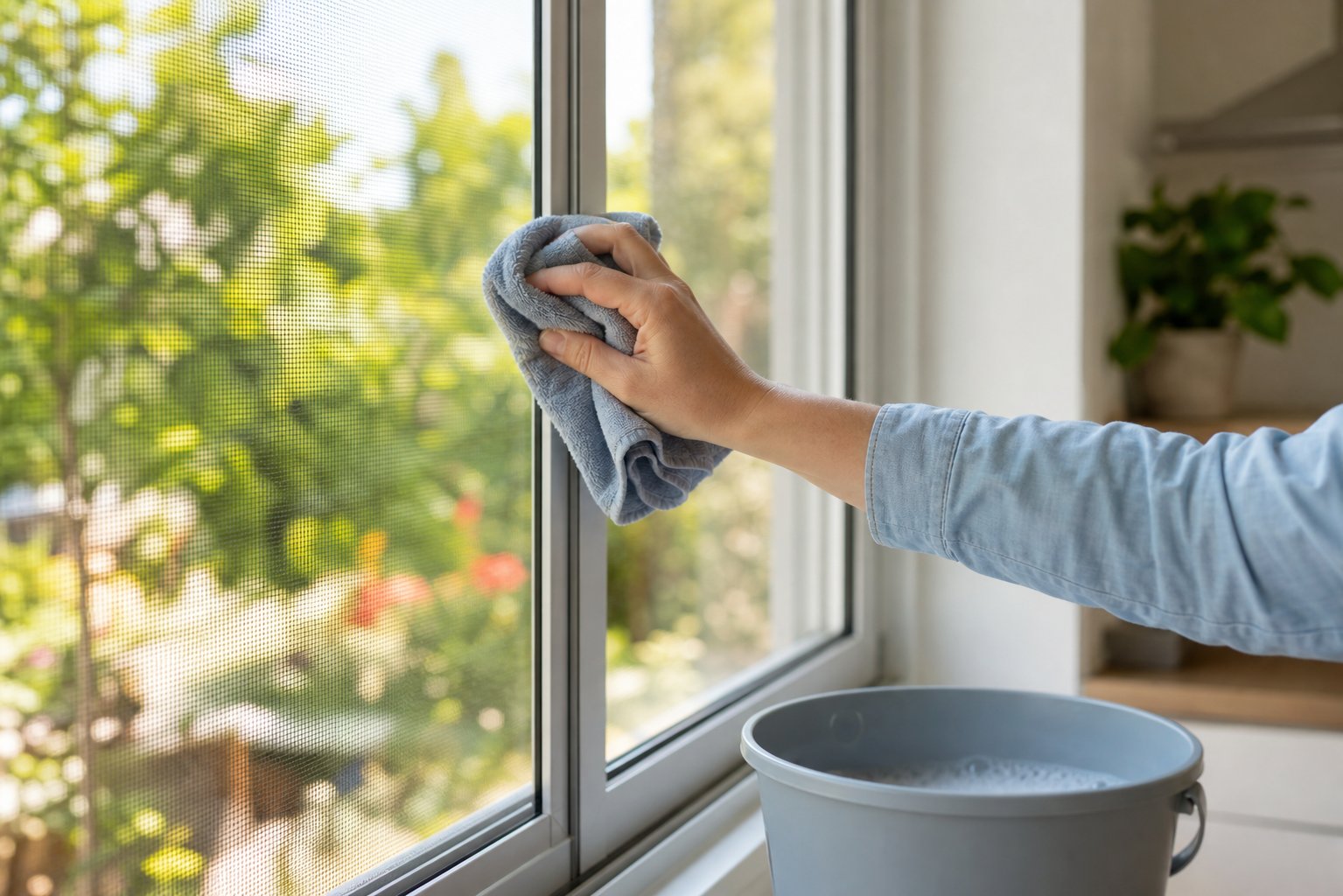
A well-fitted aluminium insect screen can last two decades or more — but only if it receives basic seasonal care. The good news is that aluminium is one of the lowest-maintenance screen materials available. The bad news is that “low maintenance” does not mean “no maintenance,” and neglect allows minor issues to compound into problems that shorten the screen’s useful life by years. Knowing how to clean aluminium mosquito net surfaces properly, and recognising early signs of trouble, keeps your screens performing at their best without expensive professional intervention.
Seasonal Cleaning Methods for Aluminium Screens
Quarterly cleaning is the baseline. Four times a year — once each season — give every screen a straightforward wash that takes less than ten minutes per window. The process is simple:
- Dry brush first — Use a soft-bristled brush or microfibre cloth to sweep dust, cobwebs, and loose debris from both sides of the mesh. A vacuum with a soft brush attachment works well for screens that are easy to access.
- Wash with mild soapy water — Mix a few drops of gentle dish soap (something like Morning Fresh or similar) into a bucket of warm water. Apply with a soft sponge or cloth, working gently across the mesh without pressing hard enough to dent or distort the weave.
- Rinse with low-pressure water — Use a standard garden hose to rinse soap residue from the screen. Let the water flow across the surface rather than blasting it. Rinse from top to bottom so dirty runoff does not pool in the lower frame channel.
- Air dry — Shake off excess water and leave the screen to dry naturally. Avoid wiping with abrasive towels that could scratch the oxide layer.
That four-step routine is the foundation of solid aluminium screen maintenance tips that apply to every climate and screen type. What matters just as much, though, is what you avoid doing.
Harsh chemicals — ammonia-based cleaners, bleach, acidic solutions, or alkaline degreasers — attack aluminium’s protective oxide film. As Linetec explains, strong alkaline or acidic cleaners can damage aluminium finishes and expose the bare substrate to accelerated corrosion, with negative effects appearing within weeks once the oxide layer is compromised. Stick to mild, pH-neutral soap. That is all the mesh needs.
Pressure washers are equally damaging. The concentrated jet of water can dent thin aluminium wire, distort the weave pattern, and force water into frame joints where it sits and promotes oxidation. A standard garden hose at normal mains pressure provides more than enough flow to rinse soap and debris without risking damage.
Coastal-specific maintenance demands a higher frequency. Salt deposits from ocean spray have been found more than 80 kilometres from the coastline, and homes within a few kilometres of the shore accumulate salt rapidly on exposed surfaces. Chloride in salt overwhelms aluminium’s natural oxide layer over time, leading to visible pitting if left unchecked. The fix is simple: rinse screens with fresh water at least monthly — fortnightly if your home faces the prevailing sea breeze. No soap needed for these interim rinses; plain water displaces the salt before it can do harm.
Troubleshooting Common Problems
Even with regular cleaning, screens develop issues over their lifespan. Most problems have straightforward causes and solutions if caught early.
Sagging mesh — The mesh visibly bows inward or outward instead of sitting flat across the frame. This usually results from one of two things: heat expansion loosening the tension over repeated seasonal cycles, or insufficient tensioning during the original installation. Minor sags on a spline-retained screen can sometimes be corrected by removing the frame, pulling the mesh taut, and re-rolling the spline into the channel. If the mesh itself has permanently stretched — common after years of heat cycling — replacement mesh rolled into the existing frame is the most reliable fix.
White powder on the frame — A chalky white residue forming on the aluminium frame is normal surface oxidation. It is the oxide layer doing its job — sacrificing itself to protect the metal underneath. Wipe it away with a damp cloth during your regular clean. However, if you see pitting (small craters in the metal surface) beneath the powder, that indicates deeper corrosion, often from prolonged salt exposure or contact with incompatible metals creating galvanic corrosion. Pitted frames in non-structural areas can be sanded lightly and treated with a clear protective sealant, but heavily pitted sections weaken the frame and warrant replacement.
Gaps at edges — Light visible between the screen frame and the window reveal means insects have a way in. Gaps develop when frames settle, when timber architraves swell and shrink seasonally, or simply when the screen was cut slightly undersized. TD Screen recommends regularly checking for loose or missing parts as a preventive measure. Foam weatherstrip tape applied to the back of the screen frame seals minor gaps (1 mm to 3 mm). Larger gaps suggest the screen needs re-measuring and replacing with a correctly sized frame — a sign the original measurements may have been taken with the errors described in the previous chapter.
Bent frames — Impact damage from opening windows too forcefully, leaning objects against the screen, or wind-driven debris can bow or kink the frame extrusion. Gentle re-bending by hand works for minor bows (under 5 mm deflection across the frame length) — clamp the frame on a flat surface and apply slow, even pressure back towards straight. Kinks with a visible crease in the metal have structurally weakened the aluminium at that point. These do not straighten reliably and create a stress point likely to crack later. Replace that frame section or the full frame.
Quick-Reference Seasonal Checklist
- Every quarter (all climates) — Brush, wash, rinse, and air-dry all screens. Inspect mesh for tears, sags, or loose spline. Check frame corners for separation.
- Monthly (coastal homes within 10 km of shore) — Freshwater rinse of all exposed screens to remove salt deposits. Inspect for early pitting on frames.
- Spring — After winter rain and wind, check for debris caught in frame channels. Clear drainage weep holes in window frames so water does not pool against screen edges.
- Summer — Monitor for mesh sag caused by heat expansion, particularly on west-facing windows with full afternoon sun exposure.
- Autumn — Remove leaf litter and organic debris that traps moisture against the frame and promotes oxidation.
- Winter — Inspect frame hardware (clips, hinges, spline) for corrosion from prolonged wet weather. Lubricate retractable screen mechanisms with a silicone-based spray — never oil-based products that attract grime.
Repair or Replace: Where Is the Line?
Aluminium screens reward repair more than any other mesh material. A torn section of mesh can be cut out and patched, a loose spline can be re-rolled, and a slightly bent frame can be straightened — all without specialist tools. Fiberglass, by contrast, cannot be patched effectively because it frays at the cut edges and will not hold tension around a repair.
Replacement becomes the better investment when multiple issues stack up on the same screen: a sagging mesh combined with a corroded frame and failing corner joints is not worth repairing individually. At that point, a new frame and fresh mesh costs less in time and materials than piecemeal fixes that only buy another year or two.
As a general guide, aluminium insect screens in good condition and maintained quarterly will deliver 15 to 25 years of service — comfortably double the lifespan of a fiberglass equivalent exposed to the same conditions. The maintenance overhead is minimal: a few minutes per screen, four times a year, using nothing more exotic than soapy water and a soft brush. That small investment in routine care protects a far larger investment in your home’s comfort and insect-free living.
Where maintenance demands increase noticeably is in specific environments — coastal salt zones, homes with pets, high-rise apartments exposed to wind load, and rental properties with restrictions on permanent fixtures. Each of these scenarios introduces unique challenges that standard care advice does not fully address.
Special Considerations for Coastal Homes, Rentals, and Pet Owners
Standard advice works for standard situations. But if your home sits within earshot of crashing waves, your cat treats window screens as a climbing frame, or your lease agreement prohibits drilling into frames, generic recommendations fall short. Each of these scenarios demands specific choices about mesh grade, frame mounting, and screen type — choices that determine whether your aluminium bug screen lasts a decade or deteriorates within a few years.
Coastal and High-Humidity Environments
Salt air does not just affect security screens and window frames. It attacks mosquito mesh with the same slow persistence. Research confirms that marine atmospheric environments near the coastline contain significantly higher concentrations of chloride ions, which dramatically accelerate metal corrosion compared to inland conditions. Over 85% of Australians live within 50 kilometres of the coast, so this is not a niche problem — it affects the majority of households.
For a coastal aluminium window mesh installation, the standard 3000 series alloy discussed earlier may not provide adequate long-term protection. Homes within 500 metres of the waterfront, or on exposed escarpments where prevailing winds carry salt spray up to 2 kilometres inland, need marine-grade 5000 series aluminium mesh at minimum. The higher magnesium content in 5000 series alloys resists chloride-driven pitting that would eat through standard residential mesh within five to eight years in these harsh zones.
Frame selection matters equally. A quality mesh paired with a poorly protected frame still fails — corrosion migrates from the frame to the mesh contact points through galvanic interaction. Powder-coated aluminium frames provide an additional barrier between the base metal and salt-laden air. Look for coatings independently tested to at least 1,000 hours of salt spray exposure under AS 2331.3.1. Premium coastal products exceed 3,000 hours, though that level of protection typically applies to security-rated screens rather than standard insect mesh frames.
Tropical monsoon climates — think far north Queensland, the Top End, and the Kimberley — layer sustained high humidity on top of seasonal salt exposure. Humidity keeps surfaces damp longer, extending the contact time between corrosive salts and the metal surface. In these regions, increase your freshwater rinse frequency to fortnightly during the wet season. Ensure frame drainage weep holes remain clear so water does not pool against the mesh and accelerate localised corrosion.
Pet Owners and High-Rise Buildings
Cats and dogs test window screens in ways no lab simulation replicates accurately. Cats hook claws into mesh while climbing or stretching against windows, applying concentrated point loads that puncture fiberglass almost instantly. Dogs nose and paw at screens when they see birds or other animals outside, creating broad-area pressure that causes plastic mesh to sag and tear from its spline channel.
A pet proof mosquito screen aluminium setup handles both scenarios far better than any synthetic alternative. Aluminium wire resists claw punctures because the metal deforms slightly under point loads rather than tearing — the claw slides off or leaves a small dent instead of ripping a hole. For households with persistent scratchers, stepping up to a heavier gauge wire (0.28 mm rather than 0.23 mm) and a tighter mesh count provides additional resilience without moving to the expense and weight of stainless steel security mesh.
High-rise apartments introduce a different physical challenge: wind load. Above the third or fourth storey, wind speeds increase substantially, and screens mounted in exposed openings experience significant positive and negative pressure cycles during gusts. A poorly secured screen frame can bow inward, pop its clips, or in extreme cases detach entirely — creating both a safety hazard for people below and a sudden entry point for insects.
For high-rise installations, secure frame mounting is non-negotiable. Screw-fixed frames anchored into the window reveal at maximum 300 mm spacing handle wind loads far better than friction-fit or clip-mounted alternatives. Corner joints must be reinforced — crimped and screwed rather than simply pushed together — to resist the racking forces that wind creates across a frame. Retractable screens are generally unsuitable above five storeys unless the cassette housing is specifically rated for high wind exposure, as the extended mesh acts as a sail under gust loading.
Rental Properties and Non-Permanent Solutions
Renters need insect protection too, but permanent frame modifications risk bond deductions and landlord disputes. The good news is that several effective non-permanent systems exist for virtually any window type.
Magnetic frame screens use strong neodymium magnets embedded in a lightweight frame that attaches to a thin steel strip adhered to the window surround. The steel strip uses 3M-type adhesive that peels cleanly at the end of a lease without damaging paint or timber finishes. The screen lifts off in seconds for cleaning or window access, then snaps back into position magnetically. These provide close to the rigidity of a permanently mounted frame without any drilling.
Tension-fit systems use adjustable spring-loaded frames that wedge into the window reveal by friction. They work best in openings with square, consistent dimensions — if your reveal is out of square by more than 3 mm to 4 mm, the tension fit will not hold reliably. They leave no marks at all, making them ideal for short-term leases.
Neither option matches the performance of a screw-fixed frame in terms of wind resistance or longevity, but both provide genuine insect blocking for the duration of a typical lease — usually two to five years — which is often all that is needed.
Environment-Specific Recommendations
- Coastal (within 2 km of shore) — 5000 series marine-grade mesh, powder-coated frame, fortnightly freshwater rinse, stainless steel fasteners to prevent galvanic corrosion between dissimilar metals
- Tropical and high-humidity — Marine-grade mesh, ensure frame drainage is unobstructed, increase cleaning frequency during wet season, consider hinged screens for easy removal and maintenance access
- Pet households — Heavier gauge wire (0.28 mm minimum), 18×16 or tighter mesh count, screw-fixed frame mounting rather than clip-on, avoid retractable screens in rooms where pets access windows unsupervised
- High-rise apartments (above 3 storeys) — Screw-fixed frames with reinforced corners, avoid large unsupported mesh spans, use centre rails for openings wider than 900 mm to resist wind deflection
- Rental properties — Magnetic frame systems for medium-term leases, tension-fit for short stays, adhesive mesh for temporary cover in single rooms
- Dusty inland environments — Higher mesh counts (18×18 or 20×20) filter fine airborne particles while still allowing airflow; expect more frequent cleaning as dust accumulates faster on tighter weave patterns
One factor links all these scenarios: sustainability. Regardless of where or how you install your aluminium mesh, at end of life the material is fully recyclable. Aluminium can be re-smelted and reformed indefinitely without any loss of quality or structural performance. Fiberglass and polyester screens, by contrast, are not recyclable in any mainstream Australian waste stream — they go to landfill. For homeowners running multiple screens across an entire house, that difference adds up to a meaningful reduction in waste over a home’s lifetime, particularly when screens eventually need replacement after 15 to 25 years of service.
These environmental and lifestyle considerations shape your mesh, frame, and mounting choices. But there is one more variable that ties everything together — the quality and design of the window itself. A well-engineered aluminium window frame simplifies every aspect of screen fitting, from initial measurement accuracy through to long-term gap-free performance.

Selecting Quality Aluminium Windows for Seamless Screen Integration
Every issue discussed in this guide — gaps, sagging mesh, measurement headaches, aftermarket bracket clutter — traces back to one root cause more often than any other: the window frame itself. A screen is only as good as the surface it mounts to. Precision-manufactured aluminium windows with dedicated screen channels eliminate most of the fitting problems that plague retrofit or add-on installations, turning what can be a frustrating DIY project into a clean, predictable result.
Why Window Frame Quality Affects Screen Performance
Aluminium window frames manufactured to tight tolerances produce consistent reveal dimensions across every opening in your home. That consistency matters enormously for window frame mosquito net integration. When reveal widths vary by less than 1 mm from top to bottom and heights stay uniform from left to right, screens slide into position without shimming, forcing, or trimming. The three-point measurement approach described earlier becomes almost redundant when the frame is machined square from the factory.
Integrated screen channels — recessed tracks milled directly into the window profile during manufacturing — are the single most important feature for long-term screen performance. These channels accept the screen frame flush with the window surround, holding it secure without visible brackets, clips, or face-mounted hardware. The screen sits within the frame’s own geometry rather than bolted onto it as an afterthought.
This matters for more than aesthetics. A screen seated in a dedicated channel cannot rock or vibrate under wind pressure the way a clip-mounted frame can. It maintains contact with brush seals or rubber gaskets along its full perimeter, closing the micro-gaps that insects exploit. And because the channel is designed for the screen’s exact frame depth, there is no guesswork about whether your chosen screen type will physically fit the opening.
Windows designed without screen integration force homeowners into compromises: face-mounted brackets that protrude past the architrave, adhesive-backed tracks that peel in summer heat, or undersized frames wedged into reveals they were never engineered to fit. Each compromise introduces a potential failure point — a gap, a rattle, a screen that pops loose during a storm.
Selecting Windows with Built-In Screen Integration
Whether you are specifying windows for a new build, a major renovation, or replacing ageing frames one at a time, the screen compatibility question belongs at the top of your evaluation checklist — not as an afterthought once the windows are already installed.
Aluminium windows with insect screen integration share several features that distinguish them from basic window profiles:
- Dedicated screen tracks — Factory-milled channels sized for standard screen frame extrusions, accommodating both fixed and sliding screen types without modification
- Removable screen access — Screen panels that lift out from inside the home for cleaning without tools or disassembly of the window hardware
- Multi-profile compatibility — Frame sections deep enough to accept fixed, retractable, or hinged screen systems interchangeably, giving you flexibility to change screen type later without replacing the window
- Powder-coat finish matching — Screen frame colours coordinated with the window frame finish for a cohesive appearance across the facade, avoiding the mismatched look of aftermarket additions
- Thermal break continuity — Screen mounting points that do not interrupt the window’s thermal break, maintaining energy efficiency even with the screen installed
- Drainage integration — Weep holes and drainage channels positioned so that water running off the screen exits the frame system rather than pooling against the mesh or frame joints
For new builds and substantial renovations, specifying these features at the window selection stage costs little or nothing extra compared to adding screen compatibility later. Retrofitting screen tracks into existing frames is often impractical — the profile simply is not deep enough — meaning the window itself becomes the limiting factor for screen quality.
Australian suppliers increasingly engineer their aluminium window systems with integrated screening as a standard consideration rather than an optional extra. MEICHEN’s aluminium window range, for example, is designed with screen integration in mind across their residential and commercial profiles — offering homeowners, builders, and architects window types and custom specifications that accommodate aluminum mosquito screen fitting from the outset. Exploring options like these early in a project ensures the frame and screen work as a unified system rather than two separate products forced to coexist.
When evaluating any aluminium window supplier for screen compatibility, ask these questions before committing:
- Does the frame profile include a factory-milled screen channel, and what screen frame depth does it accept?
- Can the screen be removed from inside for cleaning without dismounting the window hardware?
- Are screen frame extrusions available in matching powder-coat colours?
- Does the window system accommodate both fixed and retractable screen types in the same track?
- How does the screen mounting interact with the window’s thermal break and weather seals?
- What warranty coverage applies to the screen channel and mounting hardware specifically?
The answers tell you whether the manufacturer treats screens as part of the window system or as someone else’s problem. Windows engineered for integration — where the screen channel, drainage, and seal design are considered during the profile’s development — deliver better long-term results than any aftermarket solution bolted onto a frame that was never designed to hold one.
An aluminium window mosquito net is ultimately a system, not just a piece of mesh. The mesh, the screen frame, the mounting method, and the window profile all work together. Get any one element wrong and the others compensate poorly. Get them all right — starting with a quality window frame built for the purpose — and you have insect protection that performs quietly and reliably for decades, requiring nothing more than a soft brush and soapy water a few times a year.
Frequently Asked Questions About Aluminium Window Mosquito Nets
1. How long does an aluminium window mosquito net last compared to fiberglass?
An aluminium window mosquito net typically lasts 20 to 25 years with quarterly maintenance, which is roughly double the lifespan of fiberglass screens that usually need replacement every 8 to 12 years in Australian conditions. Aluminium’s self-healing oxide layer protects it from UV degradation and corrosion, while fiberglass becomes brittle and tears as its vinyl coating breaks down under intense sun exposure. For homes with pets or high-traffic areas, aluminium’s puncture resistance extends its practical lifespan even further.
2. What mesh count should I choose for my aluminium mosquito screen?
For most Australian homes, an 18×16 mesh count offers the strongest balance of insect protection, airflow, and visibility. This blocks standard mosquitoes and most midges effectively. If you live near coastal estuaries or tropical zones where sandflies and no-see-ums are persistent, step up to 18×18 or 20×20 mesh. Inland areas dealing mainly with larger insects like flies and standard mosquitoes can use 14×14 or 16×16, which provides better airflow and outward visibility while still keeping common pests out.
3. Can aluminium mosquito nets withstand coastal salt air in Australia?
Standard 3000 series aluminium mesh handles most suburban and inland Australian climates well, but coastal homes within 2 kilometres of the shore need marine-grade 5000 series aluminium for adequate salt resistance. The higher magnesium content in 5000 series alloys resists chloride-driven pitting that would compromise standard mesh within five to eight years in exposed seaside locations. Pairing marine-grade mesh with powder-coated frames and stainless steel fasteners, plus fortnightly freshwater rinsing, ensures reliable long-term performance in salt-heavy environments.
4. How do I measure my windows correctly for an aluminium mosquito net?
Measure the window reveal at three points for width (top, middle, bottom) and three points for height (left, centre, right), then use the smallest measurement in each direction. Always measure with the window closed, use a rigid metal tape in millimetres, and check for square by comparing diagonal measurements — if they differ by more than 3 mm, the opening is out of square and may need a custom frame. Account for protruding hardware like handles and winders, and confirm whether you need a recess fit (inside the reveal) or face fit (over the architrave) before ordering.
5. What type of aluminium mosquito screen works best for rental properties?
Magnetic frame screens are the most practical option for renters. They use neodymium magnets attached to a thin steel strip adhered to the window surround with removable adhesive, providing close to the rigidity of a permanent frame without drilling. Tension-fit systems that wedge into the reveal by friction are another option for short-term leases, leaving no marks at all. Both solutions work effectively for typical lease durations of two to five years and can be removed cleanly without risking bond deductions.
More Window & Door Guides