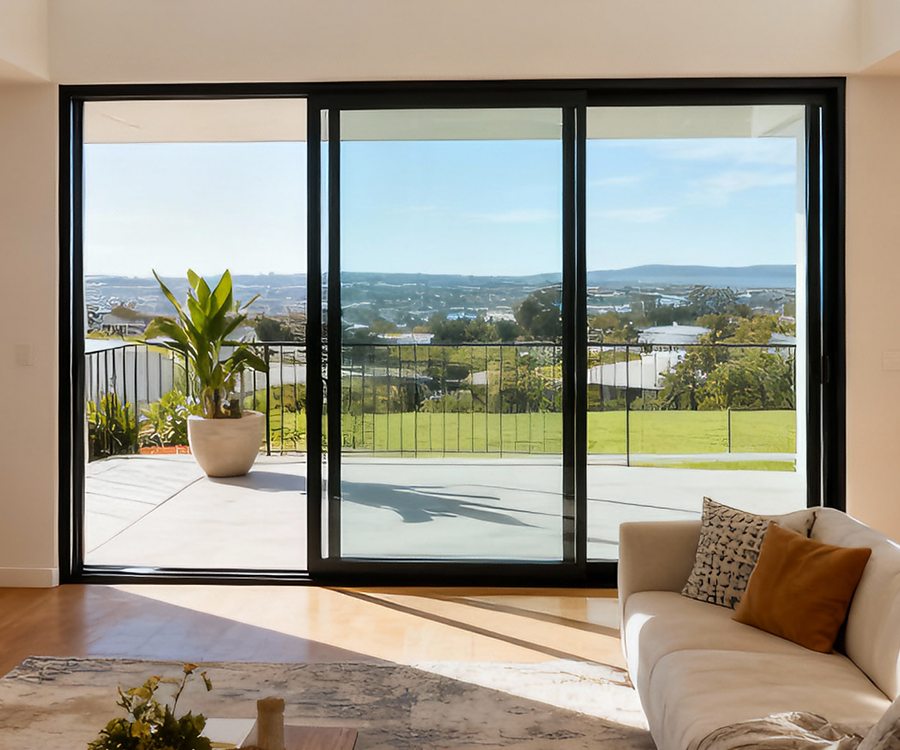
What Is an Aluminium Sidelight Window
An aluminium sidelight window is a narrow, vertical glazed panel with an extruded aluminium frame, installed beside an entry door to allow natural light into a foyer, hallway, or entrance lobby. Sidelights typically range from 200 mm to 400 mm wide and match the full height of the adjacent door.
Whether you spell it sidelite or sidelight, the concept is the same: a slim window flanking one or both sides of a doorway. These panels have appeared on Australian homes for generations, from Federation-era entries to sleek contemporary facades. What makes the aluminium version distinct is its ability to hold glass in an extremely narrow profile without sacrificing structural integrity.
A sidelight differs from a standalone sidelight window in one important way. When paired with a door, it forms part of an integrated entry system sharing a common frame and head. Used independently, a sidelight window functions as a fixed or operable narrow panel set into a wall, sometimes serving as interior sidelights between rooms or alongside internal feature doors.
Definition and Core Purpose of a Sidelight Window
The primary job of a sidelight is straightforward: bring daylight into spaces that a solid door alone would leave dim. Entryways, corridors, and reception areas all benefit. Beyond illumination, sidelights extend sightlines so you can see who is approaching before opening the door, a practical safety feature for any household.
Where Aluminium Sidelights Are Commonly Installed
In residential builds, you will find them flanking front doors on brick veneer homes, rendered facades, and weatherboard Queenslanders alike. Commercial applications include office lobbies, medical clinics, and retail shopfronts where an aluminium door window assembly creates a polished, unified entrance. Double-storey homes often pair tall sidelights with pivot or hinged entry doors for dramatic street presence.
Anatomy of an Aluminium Sidelight Panel
Every aluminium sidelight assembly shares the same core components:
- Frame – extruded aluminium sections forming the structural perimeter, powder-coated or anodised for weather resistance
- Glazing – single, double, or triple-glazed glass seated within the frame using compression gaskets
- Weatherstripping – rubber or brush seals preventing air and water infiltration at joints
- Sill – the bottom horizontal member, sloped to direct water away from the threshold
Understanding these parts matters because each one can be a failure point if specified incorrectly, and the wrong combination is where costly mistakes begin.
How Sidelights Differ From Other Aluminium Window Types
One of the most expensive ordering mistakes homeowners make is confusing a sidelight with a standard aluminium window type that looks vaguely similar on a spec sheet. A narrow aluminum casement window and a sidelight may share comparable widths, yet they serve fundamentally different roles in a building envelope. Getting this wrong means return freight, custom reorder delays, and installer call-out fees that add up fast.
Sidelights Compared to Casement and Awning Windows
A casement window is hinged along one vertical side and cranks outward to catch breezes. Aluminium awning windows hinge at the top and push out from the bottom, making them popular in bathrooms and laundries where rain protection matters. Both types are designed as standalone ventilation openings that can be placed almost anywhere on a wall.
Sidelights, by contrast, are purpose-built to sit beside a door. Their proportions are deliberately narrow, typically 200 mm to 400 mm wide, so they complement a door leaf rather than compete with it. An aluminum clad awning window might span 600 mm or more and requires exterior clearance for its outward swing, something impractical in the tight space beside a front entry. Sidelights also integrate with a door frame at the head and sill, meaning they share flashing and weatherproofing details that freestanding windows do not.
Key Differences Between Sidelights and Fixed Picture Windows
Picture windows and sidelights are both commonly fixed, so the confusion is understandable. The distinction lies in proportion and placement. A picture window is broad, often 1200 mm or wider, engineered to frame a view. A sidelight is tall and slim, engineered to frame a doorway. Structurally, picture windows carry larger glass loads and need heavier aluminium sections, while sidelights use slender profiles that keep sightlines minimal beside the door.
Ordering a picture window cut to sidelight dimensions might seem like a shortcut, but the frame depth and mullion detailing will rarely match the adjacent door assembly. The result is misaligned head heights, inconsistent shadow lines, and a retrofit that looks bolted on rather than designed in.
When a Sidelight Is the Better Choice Over a Standard Window
If the opening sits directly beside an entry door and the goal is to bring light into a foyer without adding a full-width window, a sidelight is the correct specification. Standard aluminum sliding windows or aluminium sash windows belong on walls away from doors, where their wider profiles and operational hardware make sense. Sliding aluminium windows, for example, need horizontal track space that a door-adjacent position simply cannot accommodate without crowding the entry.
The table below summarises the practical differences across four common aluminium window types and sidelights, so you can confirm which product suits your opening before placing an order.
| Window Type | Typical Width | Operation Type | Primary Placement | Ventilation Capability |
|---|---|---|---|---|
| Sidelight | 200–400 mm | Fixed (operable options available) | Beside entry doors | None (fixed) or limited (operable) |
| Casement | 400–900 mm | Side-hinged, cranks outward | Bedrooms, living areas, kitchens | Excellent; full opening area |
| Awning | 500–1200 mm | Top-hinged, pushes outward | Bathrooms, laundries, below fixed panels | Good; rain-protected airflow |
| Sliding | 900–3000 mm+ | Horizontal track glide | Living areas, patios, wide wall openings | Moderate; 50% of frame opens |
Notice how sliding aluminum windows occupy the widest openings on the spectrum, while sidelights sit at the narrowest. Proportion alone should guide your decision. If your rough opening is under 450 mm wide and sits adjacent to a door, you almost certainly need a sidelight, not a casement or slider. Getting that distinction right before you order saves both time and money, and sets you up to make the next critical choice: whether your sidelight should be fixed or operable.
Fixed vs Operable Sidelights and Ventilation Options
Most product pages treat sidelights as purely decorative, fixed panels. That assumption costs homeowners comfort. Both fixed and operable configurations exist in aluminium sidelight windows, and choosing the wrong one for your climate means either paying for ventilation you never use or missing out on airflow you desperately need.
Fixed Sidelights and When They Make Sense
A fixed sidelight has no moving parts. The glass is permanently sealed within the aluminium frame, which makes it the most airtight and cost-effective option. If your entry faces a busy road, a high-security zone, or a climate where you rarely open windows, fixed panels deliver light without mechanical complexity. They also require less maintenance since there are no hinges, seals, or hardware to service over time.
Operable Sidelights for Ventilation and Airflow
Operable sidelights turn that narrow panel beside your door into a functional vent. Unlike an aluminium sliding window or alu slider that needs horizontal track space, operable sidelights use mechanisms adapted to their slim profile. Common options include side-hinged casement action (the panel swings inward on concealed hinges), tilt-and-turn hardware that allows the top to tilt inward for controlled airflow, and louvre-style blades set within the frame for persistent ventilation without fully opening the panel.
Security remains intact because modern operable sidelights incorporate multi-point locking technology and recessed strike plates. You can let a breeze through while the front door stays locked, and removable insect screens keep pests out.
Choosing Between Fixed and Operable Based on Your Climate
Your local conditions should drive this decision. Here are the trade-offs:
- Fixed sidelights — superior airtightness, lower cost, zero maintenance on hardware, ideal for air-conditioned homes in extreme heat or cold, and best for high-traffic commercial entries where security is paramount
- Operable sidelights — cross-ventilation beside the entry without opening the door, excellent for temperate coastal climates (Sydney, Perth, Brisbane), reduces reliance on mechanical cooling during mild seasons, but adds hardware cost and requires periodic seal inspection
In tropical northern Queensland, where homes benefit from constant airflow, a louvre-style operable sidelight outperforms a fixed panel for comfort. In cooler southern climates like Melbourne or Hobart, a fixed sidelight paired with high-performance glazing keeps heat where it belongs. Neither choice is universally correct, and that is precisely why understanding the distinction matters before you sign a supply contract. The frame material plays an equally important role in performance, which raises the next question: how does aluminium compare to timber, vinyl, and fibreglass for sidelight applications?
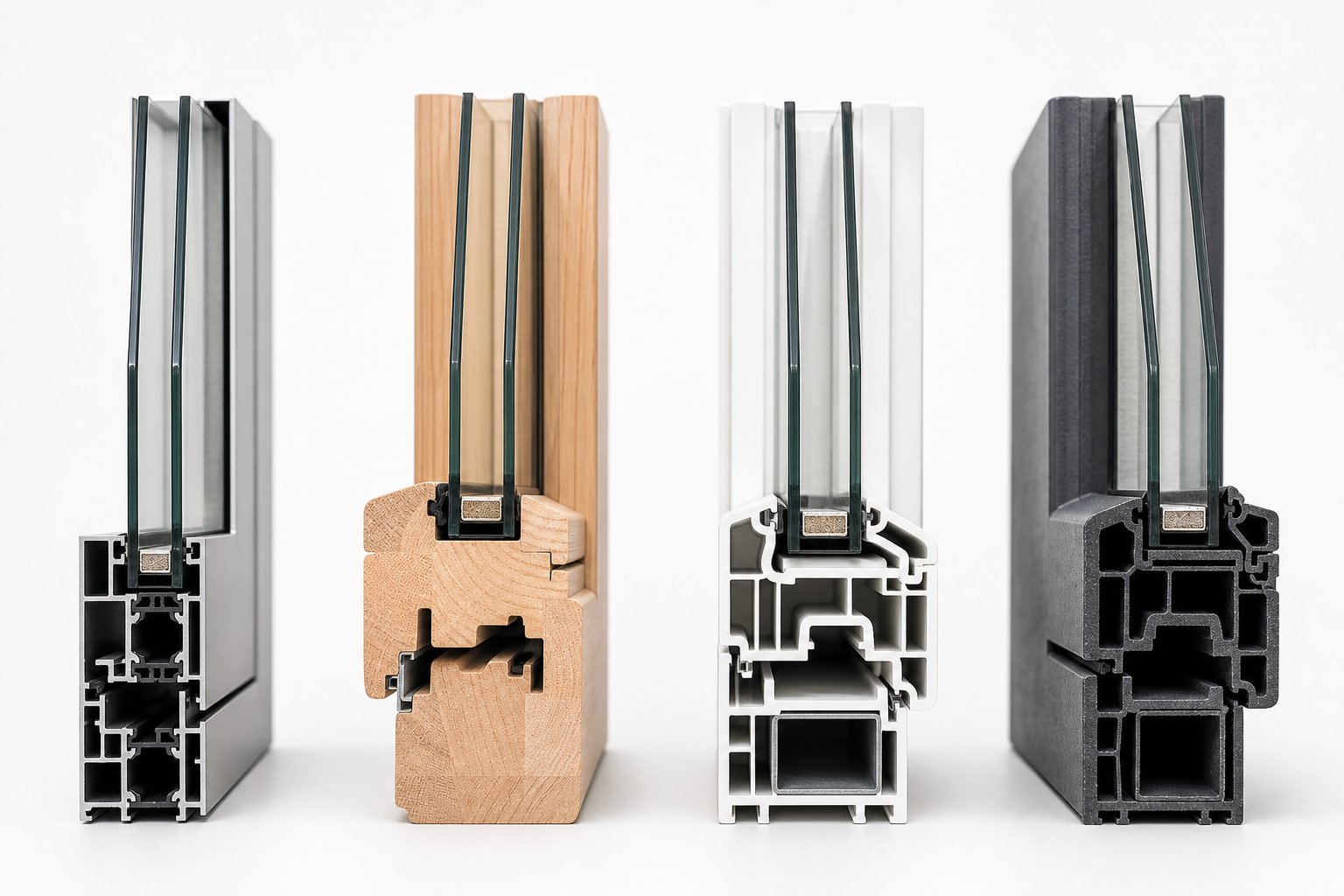
Aluminium vs Wood vs Vinyl vs Fibreglass for Sidelights
Sidelights demand something from their frame material that broader windows do not: structural confidence in an extremely narrow profile. A standard living-room window can hide bulky framing behind curtains, but a sidelight sits exposed beside your front door where every millimetre of visible frame competes with your glass area. That constraint makes material choice more consequential here than almost anywhere else on the building envelope.
Aluminium Frame Advantages for Narrow Sidelight Profiles
Aluminium’s strength-to-weight ratio is the reason slim sightlines are far more common in aluminium than in PVC systems. High-grade aluminum alloy windows achieve rigidity through profile geometry and internal reinforcement zones rather than sheer bulk, so frame faces can sit as narrow as 45 mm while still meeting Australian wind-load requirements under AS 2047. That slimness translates directly into more glass and more light beside the door.
Beyond profile dimensions, aluminium frames resist corrosion when properly powder-coated or anodised, retain colour for decades without fading or chalking, and are fully recyclable at end of life with no loss of quality. For all aluminum windows, longevity typically sits around 30 to 40 years with minimal upkeep: periodic cleaning and occasional seal replacement.
Wood and Vinyl Frames in Sidelight Applications
Timber sidelights offer a warmth that no metal or composite can replicate. Hardwood frames suit heritage homes and high-end renovations where a natural aesthetic justifies the maintenance investment: sanding, resealing, and repainting every few years to defend against Australian UV exposure and moisture. Timber profiles also tend to be thicker than aluminium for equivalent strength, reducing the glass area in an already narrow opening.
Vinyl (uPVC) frames sit at the budget end. They insulate well and never need painting, but their material stiffness is lower, which forces manufacturers to use wider sections and internal steel reinforcement in narrow panels. That extra width eats into sightlines. Design flexibility is limited too; colour options are fewer, and vinyl cannot be re-coated as easily as aluminium. Some homeowners combine vinyl windows aluminum doors in a mixed-material approach, though this introduces colour-matching challenges at the entry where sidelights and doors meet.
Fibreglass as an Alternative and Where It Falls Short
Fibreglass delivers excellent thermal performance, with inherent conductivity roughly 500 times lower than aluminium. It handles temperature swings without expanding or contracting noticeably, and lifespan can exceed 50 years. For sidelights in extreme climates, those credentials are compelling.
The trade-off is availability and profile slimness. Fibreglass frames are more rigid than vinyl yet still require slightly wider sections than aluminium to achieve comparable structural ratings in tall, narrow formats. Availability in Australia is also more limited compared to aluminium or uPVC, and pricing sits at the premium end. For projects specifying aluminum alloy doors and windows across the full facade, fibreglass sidelights may introduce inconsistency in frame appearance and finish matching.
| Criteria | Aluminium | Timber | Vinyl (uPVC) | Fibreglass |
|---|---|---|---|---|
| Profile slimness | Excellent (45–55 mm faces) | Moderate (65–80 mm) | Poor (70–90 mm with steel core) | Good (55–65 mm) |
| Lifespan | 30–40 years | 25–40 years (with maintenance) | 15–25 years | 50+ years |
| Maintenance | Low; clean and inspect seals | High; sand, seal, repaint | Very low; wipe clean | Low; wipe clean |
| Corrosion resistance | High (powder-coated/anodised) | Low; vulnerable to rot | High; immune to rot | High; immune to rot |
| Recyclability | Fully recyclable, retains quality | Biodegradable, limited recycling | Difficult to recycle | Limited recycling pathways |
| Relative cost (AUD, supply only) | Mid-range | High | Low | High to premium |
No single material wins every category. But for sidelights specifically, the geometry of the opening rewards slimness above all else. Aluminium earns its dominance in windows in aluminium-framed entry systems precisely because it delivers the narrowest sightlines without compromising strength or longevity. That structural advantage, however, only performs as intended when paired with the right glazing and thermal break technology, the layer of engineering that addresses aluminium’s one well-known weakness: conductivity.
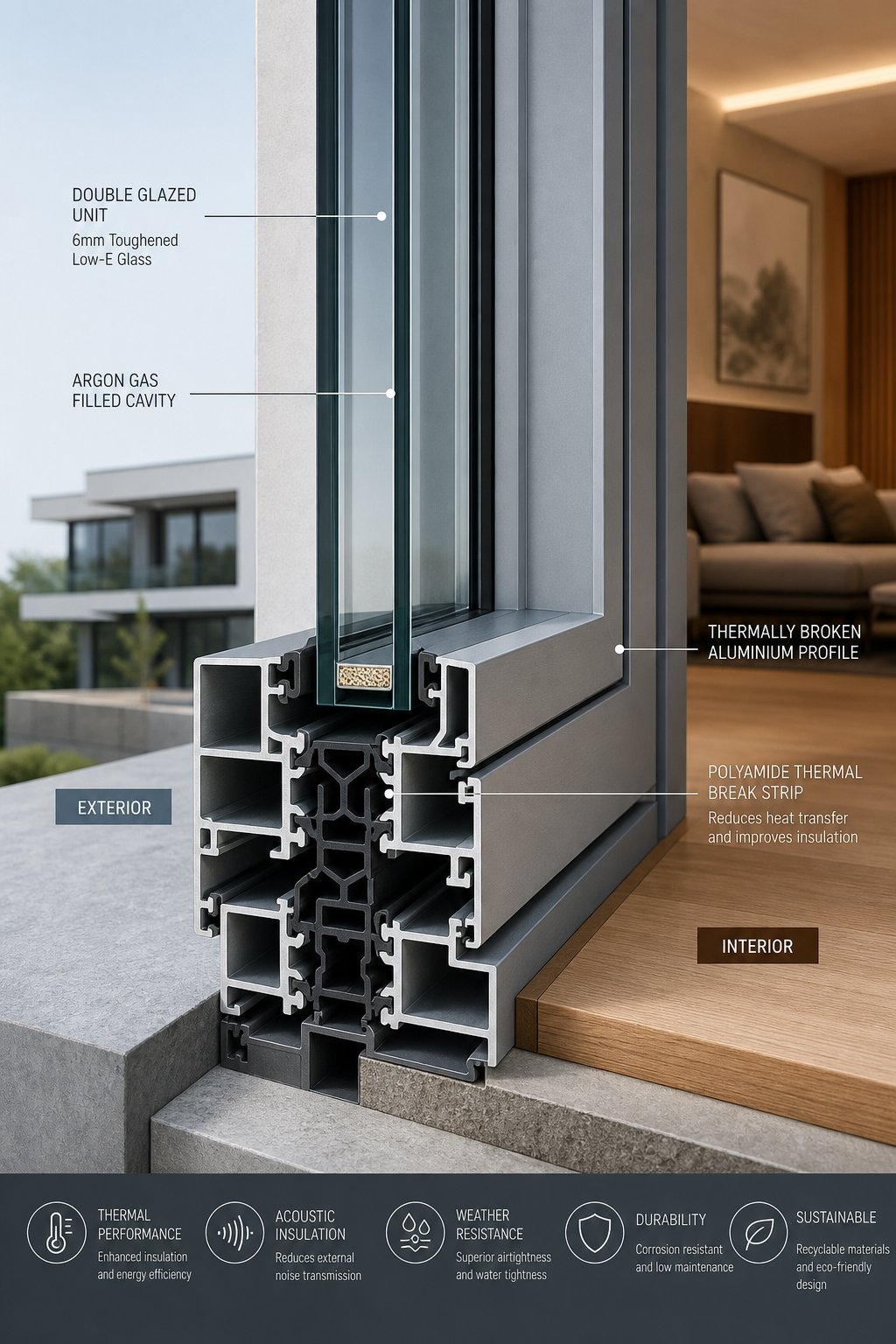
Energy Efficiency and Thermal Break Technology
Aluminium conducts heat roughly 1,000 times more efficiently than timber. Left unaddressed, that conductivity turns a sidelight frame into a thermal highway, funnelling heat out during winter and pulling it in during summer. It is the single most cited objection to aluminium windows, and it was a legitimate concern 30 years ago. Modern aluminium windows solve it with a straightforward piece of engineering: the thermal break.
How Thermal Breaks Solve Aluminium Conductivity
A thermally broken aluminium profile is not one continuous piece of metal. It is two separate aluminium sections, one facing the interior and one facing the exterior, joined by a structural strip of polyamide (nylon). This polyamide barrier is an excellent insulator that interrupts the conductive path through the frame, effectively breaking the thermal bridge that would otherwise exist if the profile were solid.
Because polyamide is rigid and bonds mechanically to each aluminium half, the frame retains full structural integrity while dramatically reducing heat transfer. High quality aluminum windows specified for Australian projects routinely use polyamide strips 20 mm to 35 mm wide. The wider the strip, the greater the insulation value, which matters in climate zones where temperature differentials between indoors and outdoors are severe.
Glazing Options and Their Impact on U-Values
The frame is only half the equation. Glass accounts for the majority of the panel area, especially in a narrow sidelight where frame-to-glass ratios favour glazing. Each step up in glazing layers cuts heat transfer significantly:
- Single glazing — U-values around 5.5 W/m²·K; minimal insulation, now rarely compliant with NCC Section J energy provisions for conditioned spaces
- Double glazing — U-values around 1.2 to 1.7 W/m²·K with argon fill and Low-E coating; the standard for aluminum double glazed windows in most Australian builds
- Triple glazing — U-values as low as 0.7 to 1.0 W/m²·K; suited to Passivhaus-level performance or extreme cold climates in southern highland regions
Between those glass layers, inert gas fills do the heavy lifting. Argon is the most common choice, denser than air and far less conductive, creating an effective thermal barrier within the cavity. Krypton offers even better insulation in slimmer cavities, which can be useful in sidelight panels where overall unit thickness is constrained. On each glass surface, Low-E (low-emissivity) coatings reflect radiant heat back toward its source: keeping warmth indoors during cooler months and bouncing solar heat away in summer, all while letting visible light pass through.
Weatherstripping and Sealing for Sidelight Panels
Even the best frame and glazing assembly leaks energy if the seals fail. Sidelights face particular exposure because they sit beside a door that opens and closes hundreds of times a year, generating vibration and slight frame movement. Quality weatherstripping, typically multi-fin rubber or compression-type seals around the perimeter, prevents air infiltration at the frame-to-wall junction and at any operable sash interface. Warm-edge spacer bars within the glazing unit reduce heat loss at the glass edge, where condensation otherwise forms first.
For allweather windows that perform consistently across Australian seasons, these layers must work together as a system rather than in isolation. A thermally broken frame paired with single glazing still underperforms; triple glazing seated in a non-thermally-broken profile still conducts heat at the perimeter. The combination is what delivers results.
A complete energy-efficiency stack in a modern aluminium sidelight looks like this:
- Thermally broken aluminium frame with polyamide strip
- Low-E coated glass (single or multiple surfaces)
- Argon or krypton gas fill between panes
- Warm-edge spacer bars at the glass perimeter
- Multi-fin weatherstripping at all frame joints
- Correct installation with sealed frame-to-wall junctions
Skip any one layer and the system underperforms. Specify all of them correctly and your sidelight becomes part of the thermal envelope rather than a weak point in it. That performance, though, only matters if you can see through the glass comfortably, which raises a question many homeowners overlook until their sidelight is already installed: how do you balance energy efficiency with privacy when the panel sits right beside your front door?
Glass Selection, Privacy and Design Customisation
A sidelight beside your front door sits at eye level, centimetres from the footpath. Choosing clear glass in that position is like leaving your curtains permanently open to every passing neighbour, delivery driver, and dog walker. Yet too many homeowners default to transparent aluminum windows in their sidelight specification because they never realised how many privacy-preserving glass options exist that still flood the entry with natural light.
Glass Types for Balancing Light and Privacy
Privacy glass does not mean dark glass. Modern options scatter and redirect light rather than blocking it, so your foyer stays bright while outlines and details become unreadable from the street. The key is understanding where each glass type sits on the spectrum from fully open to fully private.
Ranked from most transparent to most private:
- Clear glass — maximum light and full visibility in both directions; only appropriate where setback distance or landscaping already provides screening
- Tinted glass — reduces glare and solar heat gain with a subtle grey, bronze, or green tone; softens views slightly but still allows recognisable shapes
- Frosted (acid-etched) glass — uniform satin finish that blurs outlines while transmitting even, diffused light; a popular mid-privacy choice for street-facing entries
- Obscure (textured) glass — patterns pressed into the surface such as reeded, rain, or spotswood that break up sight lines more aggressively; suited to sidelights on homes with minimal front-yard buffer
- Decorative patterned glass — leaded designs, geometric motifs, or coloured panels that offer near-complete privacy while adding architectural character; the most opaque option short of a solid panel
Privacy ratings from glass suppliers typically use a 1 to 10 scale, where 1 is essentially clear and 10 is heavily obscured. For a sidelight beside a front door facing a street, aiming for a rating of 7 or above ensures comfortable everyday living without feeling exposed. Homes set further back with deeper front gardens can comfortably sit in the 4 to 6 range, balancing openness with some visual screening.
Decorative and Textured Glass Options
Beyond basic privacy, glass choice shapes the character of your entry. Textured patterns like gluechip produce an organic, fern-like frosting that catches light beautifully at different times of day. Reeded glass creates strong vertical lines that echo the slim proportions of the sidelight itself. Seeded glass, with its scattered bubbles, adds a heritage feel suited to Federation or Edwardian homes without sacrificing too much privacy.
For homeowners who want privacy they can control, two technologies stand out. Integral blinds sit sealed between double-glazed panes, operated by a magnetic slider or remote control. They never collect dust, cannot be damaged by children or pets, and function as aluminium window covers that retract completely when you want full light. Smart switchable glass using PDLC technology goes further, shifting from clear to frosted at the touch of a button. The unpowered state defaults to frosted, meaning a power outage leaves you private rather than exposed. Smart glass draws only around 3 to 5 watts per square metre when clear, though the upfront cost remains substantial, generally in the range of $160 to $280 AUD per square metre for the glass alone.
Decorative leading offers another path. Aluminium or zinc caming divides the glass into smaller sections that naturally disrupt direct views while adding a crafted, architectural feel. This approach works particularly well when you want transparent aluminum windows for the glass itself but need the overall panel to feel private through design rather than surface treatment.
Frame Finishes and Colour Customisation
Glass is only half the visual equation. The aluminium frame surrounding it sets the tone for the entire entry, and the finish you choose determines both aesthetics and long-term durability.
Powder coating is the most common finish for residential aluminium sidelights in Australia. A dry pigmented powder is electrostatically sprayed onto the frame and baked at high temperature, creating a smooth, even film available in hundreds of aluminium window shades from matte black and charcoal through to bold reds and coastal whites. Powder coating delivers strong colour freedom and typically lasts 15 to 25 years before any sign of chalking or fading, depending on UV exposure and proximity to salt air.
Anodising takes a different approach entirely. Rather than applying a coating on top, the process grows a layer of aluminium oxide from the metal itself through an electrochemical reaction. The result is a finish that cannot peel, flake, or chip, with a subtle metallic lustre in silver, bronze, champagne, or black tones. Anodised finishes routinely last 40 years or more and suit projects where minimal maintenance and a sophisticated, understated appearance matter most.
Woodgrain finishes bridge the gap between aluminium performance and timber aesthetics. A sublimation process transfers realistic timber patterns onto a powder-coated base, giving you the low-maintenance benefits of aluminium with the warmth of a jarrah, spotted gum, or oak look. For homeowners renovating older homes who want to match existing timber joinery without inheriting the maintenance burden, woodgrain-finished sidelights offer a credible compromise in aluminum window colors.
Whichever finish you select, consistency matters. The frame colour and texture of your sidelight should relate directly to the entry door beside it, the hardware on both, and the broader facade palette. That relationship between sidelight and door is where many design mistakes happen, and getting proportions, finishes, and configurations aligned from the start avoids the kind of mismatched entry that devalues rather than elevates a home.
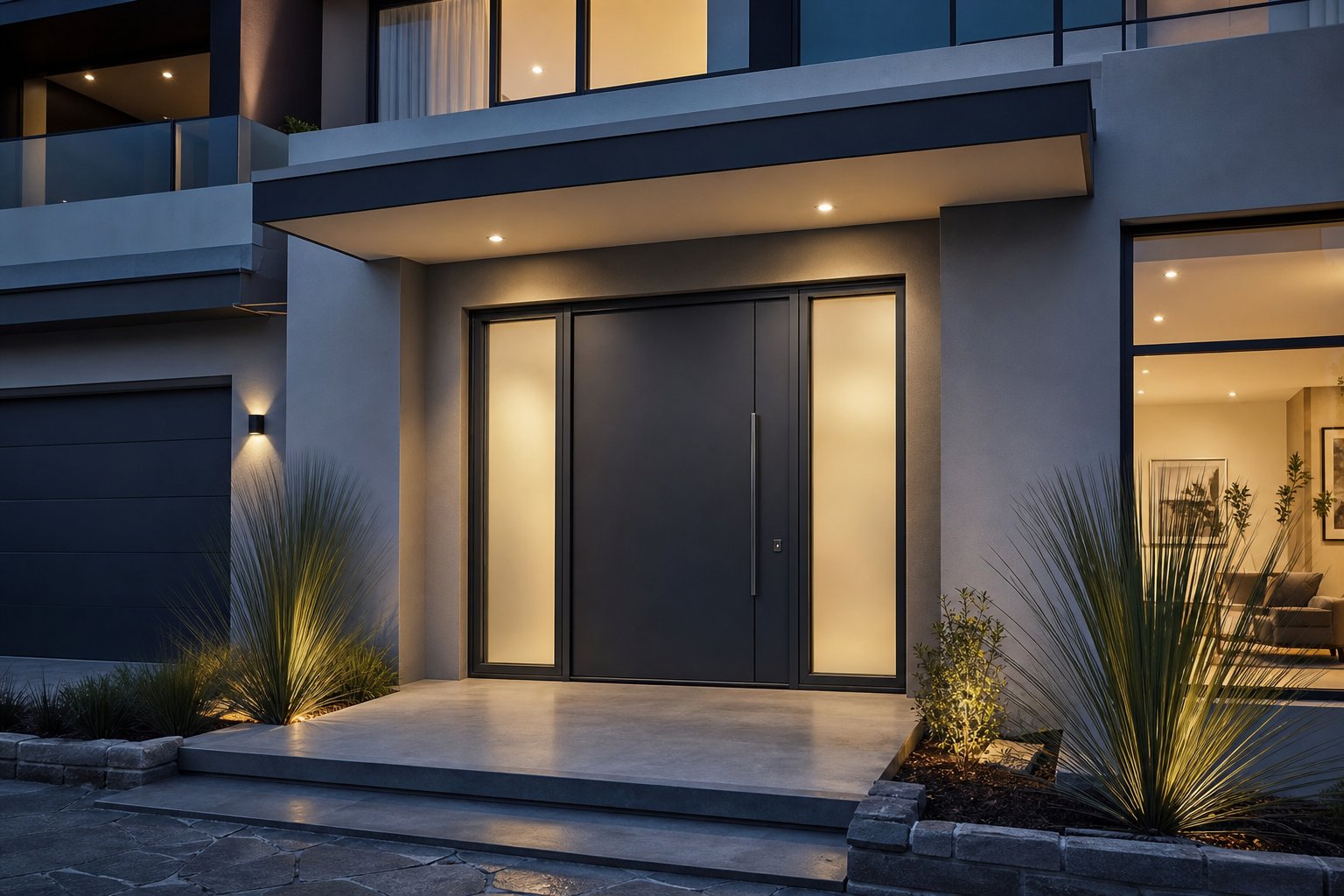
Matching Sidelights to Your Entry Door Design
A sidelight that clashes with the door beside it draws the wrong kind of attention to your entry. Mismatched colours, conflicting proportions, or inconsistent profiles signal a retrofit rather than a considered design. Coordinating your aluminium door with window panels beside it requires deliberate choices about width, finish, glass treatment, and hardware from the very first specification meeting.
Proportion Guidelines for Sidelight and Door Pairing
Width is where most proportion errors start. A sidelight that is too wide visually competes with the door; too narrow and it reads as an afterthought. The relationship between the two needs to feel intentional.
As a reliable design rule, keep your sidelight width to no more than half the width of the entry door. For a standard 920 mm door leaf, that means sidelights between 200 mm and 450 mm deliver balanced proportions without overwhelming the composition.
Height alignment matters equally. The head of the sidelight should meet the head of the door frame precisely, with no visible step or filler panel breaking the horizontal line. Full-height sidelights that run from threshold to head create cleaner framing, fewer transitions, and a stronger sense of unity across the entry assembly. Where a transom sits above, the sidelight should extend upward to meet it, maintaining vertical continuity.
Matching Materials, Finishes and Hardware Across the Assembly
When sidelights and doors share the same aluminium frame system, profiles align flush and colour consistency is guaranteed from factory. Mix materials, say a timber door beside an aluminium sidelight, and you introduce different expansion rates, different ageing patterns, and a visible junction where the two meet that rarely looks seamless over time.
Sourcing your aluminium doors windows and sidelight panels from a single manufacturer eliminates these mismatches. Systems designed as a family share identical profile depths, corner detailing, and powder-coat batches. MEICHEN’s aluminium window and door range, for instance, allows Australian builders to specify sidelights alongside entry doors, curtain walls, and facade elements within one project-ready system, ensuring material and colour consistency from a single source.
Hardware should follow the same logic. Handle finishes on the door (matte black, brushed nickel, satin chrome) need to carry through to any operable sidelight hardware and visible hinges. Even small details like screw-cap covers and drainage slots benefit from a unified palette.
Single vs Double Sidelight Configurations
A single sidelight suits asymmetrical facades, narrow frontages, or entries where interior layout constraints prevent glass on both sides. It works well when placed on the handle side of the door, improving visibility near the lockset and creating a more welcoming approach. The trade-off is visual imbalance if proportions are not carefully managed through trim width, porch elements, or landscaping.
Double sidelights, one on each side, deliver immediate symmetry and flood the foyer with even light. They suit wider facades and homes where the entry sits centrally. The additional glazed area does increase cost, both in aluminium windows and doors supply and in structural support for the wider rough opening.
Either configuration can look intentional when proportions, finishes, and glass treatments align. The mistake is treating sidelight selection as an afterthought bolted on after the aluminium door with window specification is locked in. Treat them as one architectural element from day one, and the entry reads as a unified composition rather than a collection of parts. That compositional thinking, however, means nothing if the installation itself introduces failures, which is exactly where the next set of costly homeowner mistakes tends to surface.
Installation Considerations and Common Mistakes to Avoid
A perfectly specified aluminium sidelight window can still fail within a few years if the installation ignores structural realities. Unlike broader window types where minor errors hide behind trim, a sidelight sits in the most visible, most weather-exposed part of any facade: right beside the front door. Mistakes here show early and cost dearly.
Structural and Waterproofing Requirements for Installation
Every sidelight installation starts with the rough opening. This framed cavity must be plumb, square, and sized to allow 5 mm to 10 mm clearance on each side for shimming and sealing. If the opening is out of square by even a few millimetres, the frame racks under load and seals fail prematurely. For double-sidelight configurations flanking a door, the combined span of the lintel above needs engineering to carry masonry or cladding loads without deflection that pinches the panels below.
Waterproofing is where the highest-cost failures occur. Fluid-applied flashing membranes have replaced the old cut-metal approach as the industry standard, creating a seamless barrier around the opening before the frame goes in. As building envelope specialists note, incompatible flashing and sealant products remain one of the most common failure points on site, particularly when different trades apply each layer without coordinating material chemistry. The flashing must wrap the sill, jambs, and head in a shingle pattern so any moisture that penetrates the outer seal drains outward rather than pooling behind the frame.
Retrofit vs New-Build Installation Differences
In a new build, the aluminium window and door assembly installs while studs or blockwork are still exposed. A nailing fin or fixing lug anchors the frame directly to structure, and exterior cladding laps over the flashing afterward to create layered protection. Timing is flexible: flashings can cure fully before frames arrive.
Retrofit work is more constrained. The existing frame comes out, often revealing deteriorated flashing or no flashing at all. Installers must assess whether the surrounding substrate is sound enough to accept new fixings and fresh membrane. Retrofit (replacement) windows fit inside the existing opening without disturbing exterior cladding, but this reduces the visible glass area slightly because the new frame sits within the old rebate. If the original rough opening has shifted out of square over decades, the aluminium window track and frame alignment become critical checkpoints before any sealant is applied. Skipping this assessment is how aluminum replacement windows end up with draughty gaps or binding operation within months.
Common Mistakes and How to Avoid Them
Sales brochures rarely mention what goes wrong on site. These are the pitfalls we see repeatedly, ranked from most to least damaging:
- Omitting or incorrectly layering flashing — Water finds the path of least resistance. If the sill flashing does not lap under the jamb flashing, or if a peel-and-stick membrane lifts at corners, moisture migrates into the wall cavity. Timber framing rots; steel studs corrode. Remediation means removing cladding, the sidelight, and often the adjacent door to re-flash from scratch. On commercial aluminum sliding windows and sidelight assemblies in shopfronts, this single error can affect multiple openings sharing a continuous head flashing.
- Ignoring thermal expansion — Aluminium expands approximately 2.4 mm per metre for every 100°C temperature range. A sidelight in direct western sun can see surface temperatures above 70°C on a summer afternoon. Without adequate clearance between the frame and structure, expansion buckles the profile or cracks glazing seals. Rigid foam packing instead of compressible shims compounds the problem.
- Skipping structural support above wide openings — A double-sidelight-and-door combination can span 2,000 mm or more. Without a properly engineered lintel, the load above deflects downward over time, compressing the head of the sidelight. The result is cracked glass, jammed operable panels, and water ingress where seals distort.
- Using non-thermally-broken profiles in extreme climates — In cooler regions like Hobart or the Victorian highlands, a non-thermally-broken aluminium sidelight sweats with condensation every winter morning. That moisture runs down the frame, stains the sill, and feeds mould growth. In tropical zones, the same profile radiates exterior heat inward, undermining the entire cooling system.
- Poor coordination between trades — Incorrect anchoring, misaligned shims, and incompatible sealing products result from waterproofers, frame installers, and renderers working in isolation. One trade applies a flashing with an alcohol-cure chemistry; the next applies a polyurethane perimeter seal that never cures properly because the chemistry conflicts. A single coordination meeting before installation prevents thousands in rework.
- Neglecting climate-specific detailing — Coastal homes from the Gold Coast to the Mornington Peninsula need marine-grade powder coating and stainless-steel fixings to resist salt-air corrosion. Cyclone-rated areas in northern Queensland demand specific fixing centres and glazing thickness under AS 2047. Failing to specify these requirements up front means re-doing work later at full cost, or worse, a failed insurance claim after a storm.
Most of these mistakes share a root cause: treating installation as simple when it is actually a coordinated sequence of trades, materials, and timing. Understanding how to aluminum wrap windows and seal the surrounding substrate correctly is not optional knowledge; it is the difference between a sidelight that performs for 30 years and one that leaks within three. Whether you hire a professional or manage the project yourself, knowing these pitfalls gives you the vocabulary to ask the right questions before work begins, and the confidence to choose the right specification from the outset.
Choosing the Right Aluminium Sidelight Window for Your Project
Knowing what can go wrong is half the battle. The other half is walking into the specification process with a clear framework so you do not second-guess every decision or default to the cheapest option that later costs more in remediation.
Key Decision Factors for Your Sidelight Specification
Before requesting quotes, work through this checklist mentally. Each point narrows your options toward the right product rather than the most heavily marketed one:
- Fixed or operable? — Determine whether cross-ventilation beside the entry adds value in your climate, or whether a sealed panel with superior airtightness serves you better year-round.
- Glass type and privacy level — Match your glass choice to street proximity. A sidelight 2 metres from the footpath needs obscure or frosted glass; one screened by a deep verandah can stay clear.
- Thermal performance tier — Specify thermally broken profiles and at minimum double glazing with Low-E coating and argon fill. Triple glazing suits alpine or passive-house projects; it is overkill for a temperate coastal entry.
- Frame finish — Choose powder coating for colour freedom or anodising for decades of maintenance-free durability. Match the finish to your door and broader facade palette before locking in orders.
- Single or double configuration — Let facade width and interior layout decide. Symmetrical entries suit double sidelights; narrow frontages or asymmetrical porches work better with one.
Resist the temptation to chase the lowest price alone. Bargain-priced alu windows often skip thermal breaks or use thinner profiles that flex under wind load. The upfront saving disappears once condensation damage, seal failure, or reglasing costs arrive within a few years.
Maintenance Expectations and Long-Term Care
Aluminium sidelights are genuinely low-maintenance, but low does not mean zero. A practical maintenance schedule keeps them performing for their full 30- to 40-year lifespan:
- Monthly — Wipe frames and glass with a soft cloth and mild soapy water to remove grime and salt deposits. Coastal properties benefit from fortnightly attention.
- Quarterly — Inspect weatherstripping seals for compression loss or cracking. Lubricate hinges, locks, and any operable hardware with a silicone-based spray.
- Annually — Check the frame-to-wall junction sealant for gaps. Look for early signs of oxidation (a chalky residue) on exposed aluminium edges and treat with a specialist aluminium cleaner before it progresses.
Avoid abrasive cleaners, alkaline chemicals, or high-pressure washers directly against seals. These accelerate deterioration rather than preventing it. If your sidelight sits in a salt-air zone, applying a thin protective wax to the frame once a year adds a barrier against corrosion at negligible cost.
When to Consult a Specialist for Custom Solutions
Standard off-the-shelf aluminium windows and doors work well for straightforward single-sidelight installations beside common door sizes. You can confidently specify these through most fenestration suppliers when the opening is square, the climate is temperate, and no unusual structural loads exist above.
Specialist input becomes essential when your project involves any of the following: custom aluminium windows for non-standard heights or curved-head openings, cyclone-rated installations in northern Australia, bushfire-rated assemblies requiring BAL-compliant glazing, or multi-panel configurations integrating sidelights with transoms, pivot doors, and curtain wall elements.
For Australian builders and architects working on projects of that complexity, MEICHEN’s full aluminium window and facade product range offers sidelight-compatible systems alongside doors, curtain walls, louvres, and balustrades, allowing cohesive specification across every opening from a single source. That kind of integrated approach ensures profile consistency and simplifies procurement when multiple aluminium windows doors elements need to coordinate.
Whether your project is a single sidelight beside a front door or a full entry system across a double-storey facade, the principle stays the same: specify deliberately, install correctly, and maintain consistently. The homeowners who spend thousands fixing sidelight failures almost always skipped one of those three steps. The ones who get it right enjoy decades of natural light, street presence, and thermal comfort without revisiting the decision.
Frequently Asked Questions About Aluminium Sidelight Windows
1. What is the difference between a sidelight and a regular aluminium window?
A sidelight is a narrow vertical panel typically 200 mm to 400 mm wide, purpose-built to sit beside an entry door and share its frame system. Regular aluminium windows like casements, awnings, or sliders are wider, designed as standalone openings on walls away from doors, and use different operational hardware. Sidelights use slimmer aluminium profiles suited to their narrow proportions and integrate with the door assembly at the head and sill for unified weatherproofing.
2. Can aluminium sidelight windows be opened for ventilation?
Yes. While many sidelights are fixed panels, operable configurations exist using side-hinged casement action, tilt-and-turn hardware, or louvre-style blades. These allow airflow beside the entry without opening the front door, and modern multi-point locking ensures security is maintained. Operable sidelights suit temperate Australian climates like Sydney, Perth, and Brisbane where cross-ventilation reduces reliance on mechanical cooling during milder months.
3. How do you prevent condensation on aluminium sidelight windows?
Condensation on aluminium sidelights is prevented by specifying thermally broken profiles. These frames use a polyamide strip between the interior and exterior aluminium sections, interrupting heat transfer and keeping the indoor frame surface warmer than the dew point. Pairing thermally broken frames with double or triple glazing featuring argon gas fill and Low-E coatings further reduces condensation risk. In cooler regions like Melbourne or Hobart, non-thermally-broken profiles will sweat every winter morning, so always confirm the thermal break specification before ordering.
4. What glass options provide privacy for a sidelight beside a front door?
Multiple glass types balance light and privacy for street-facing sidelights. Frosted (acid-etched) glass offers a popular mid-privacy solution that diffuses light evenly. Obscure textured patterns like reeded or rain glass break sight lines more aggressively. Decorative patterned glass with leading provides near-complete privacy with architectural character. For adjustable privacy, integral blinds sealed between double-glazed panes or smart switchable PDLC glass allow you to shift from clear to frosted on demand. Aim for a privacy rating of 7 or above for sidelights within 2 metres of a footpath.
5. How much maintenance do aluminium sidelight windows need?
Aluminium sidelights require minimal upkeep compared to timber alternatives. Monthly cleaning with mild soapy water removes grime and salt deposits. Quarterly inspections should check weatherstripping seals and lubricate any operable hardware with silicone spray. Annually, examine the frame-to-wall sealant for gaps and look for early oxidation on exposed edges. Coastal properties benefit from fortnightly cleaning and an annual protective wax application. With this routine, powder-coated aluminium sidelights typically last 30 to 40 years, while anodised finishes can exceed 40 years without recoating.
More Window & Door Guides