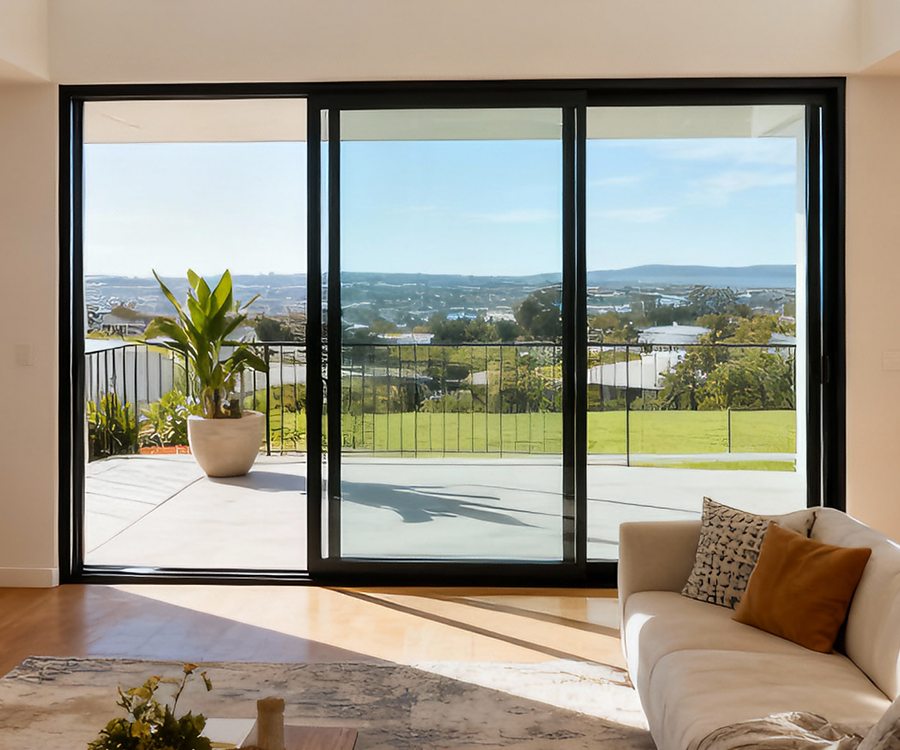
What Are Dual Colour Aluminium Windows
Picture this: your home’s exterior calls for a sleek anthracite grey that complements dark roof tiles and charcoal guttering, yet inside, you want clean white frames that blend with your skirting boards and brighten every room. Dual colour aluminium windows let you have both without compromise.
Dual colour aluminium windows are frames finished in one powder-coated colour on the exterior face and a completely different colour on the interior face, giving homeowners independent control over how their windows look from the street and from the living room.
The concept is straightforward. Rather than settling for a single shade that works passably from both sides, dual colour windows use the frame’s built-in thermal break as a natural dividing line. Each half receives its own factory-applied powder-coat finish, so the exterior colour can match brickwork, render, or cladding while the interior shade coordinates with wall paint, cabinetry, or timber flooring.
This guide covers the full picture: how aluminium makes dual colour finishing possible, the powder coating process behind it, RAL colour selection, cost considerations, maintenance expectations, and how two-tone aluminium stacks up against timber and uPVC alternatives.
What Dual Colour Actually Means
In plain terms, two independently chosen powder-coat colours are applied to opposite faces of the same aluminium window frame. The outer aluminium section and the inner aluminium section are coated separately during manufacturing, then joined together around an insulating polyamide thermal break. The result is a single window unit with two distinct finishes that never bleed into one another.
This differs from painting an existing frame after installation. Factory-applied powder coating bonds electrostatically to the aluminium surface and is oven-cured, producing a finish far more resilient than brush- or spray-applied paint. Both windows and frames receive this treatment before they leave the production line, so what arrives on site is ready to install with no on-site finishing required.
Who Benefits From Two-Tone Frames
Dual colour aluminium windows serve several distinct groups. Homeowners renovating an older property can match heritage-appropriate exterior tones, like muted greens or traditional creams, while keeping bright, modern interiors. Architects designing new builds gain the freedom to specify bold facades without dictating interior palettes to their clients. Builders delivering display homes or multi-unit developments can offer genuine customisation as a standard inclusion rather than a costly afterthought.
For anyone who has ever stood in a showroom choosing a single frame colour and felt forced to pick a middle-ground shade that satisfies neither the street view nor the interior, dual colour windows and window frames remove that compromise entirely. The question then becomes: which colours, and why does aluminium handle this better than any other frame material?
Why Aluminium Is the Best Frame Material for Dual Colour Finishes
Aluminium has a structural advantage that timber and uPVC simply cannot replicate when it comes to carrying two independent finishes on a single frame. The metal’s non-porous surface accepts powder coating uniformly across every millimetre, its natural rigidity allows slimmer sightlines that keep the focus on glass rather than frame, and its modern thermal break design physically separates the interior and exterior sections — creating two distinct canvases ready for colour.
Aluminium’s Compatibility With Powder Coating
Before any colour touches the surface, aluminium window frames undergo a chemical pre-treatment that creates the foundation for a permanent bond. This involves either a chromate or chrome-free conversion coating that cleans, etches, and seals the metal surface at a microscopic level. As Qualicoat explains, this conversion coating provides both corrosion resistance and a “key” for the powder to grip.
Once pre-treated, the aluminium is earthed and sprayed with electrostatically charged polyester-based powder particles. These particles cling evenly to the metal window frame surface before the entire section enters a curing oven. Heat melts the powder, allowing it to flow and chemically cross-link into a continuous, resilient coating. The result is a finish far tougher than the wet-paint systems used on timber — one that resists peeling, chipping, and UV degradation for decades rather than years.
This process works so well on aluminium precisely because the substrate is smooth, stable, and chemically receptive. Timber’s porous grain absorbs coatings unevenly, and uPVC relies on adhesive-backed vinyl foils rather than a true chemical bond.
How Thermal Breaks Enable Separate Colours
The real enabler of dual colour finishing is the polyamide thermal break found in modern aluminium frame windows. Rather than a single solid extrusion, today’s window metal frame consists of three components: an outer aluminium section, an inner aluminium section, and a high-strength polyamide bar connecting them. This insulating bar prevents cold bridging while physically separating the two metal halves.
Because the inner and outer sections exist as independent extrusions before assembly, each piece can be powder coated in its own colour, then rolled together onto the polyamide strip afterwards. The thermal break becomes the invisible boundary between your exterior anthracite and your interior white — no masking tape, no overspray, no bleed.
- Uniform powder adhesion — aluminium’s non-porous surface bonds evenly with electrostatic powder, unlike timber’s variable grain or uPVC’s reliance on foil lamination
- Slimmer sightlines — aluminium profiles achieve narrower frame widths than uPVC, maximising glass area while still accommodating two colour zones
- Independent coating passes — the thermal break separates inner and outer extrusions, allowing each to be factory-finished in any RAL colour before assembly
- Superior durability — oven-cured powder coat on aluminium outlasts painted timber and foil-wrapped uPVC, retaining colour fastness in harsh Australian UV and coastal conditions
- 200+ colour options — powder coating gives aluminium access to the full RAL palette, far exceeding the roughly 30 finishes available on standard uPVC systems
This combination of material science and modern engineering is what makes aluminium the only frame material that delivers genuine dual colour finishing as a standard manufacturing process rather than a workaround or afterthought.
The Powder Coating Process Behind Dual Colour Frames
Aluminium’s suitability for dual colour treatment only matters if the coating itself performs over time. The finish technology applied to your aluminum window frames determines how long those colours stay vivid, how well they resist the elements, and whether you will ever need to repaint. Two coating systems dominate the market — and understanding the difference helps you specify the right one for your project and location.
Polyester vs Fluorocarbon Powder Coating
Standard polyester powder coating is the workhorse of the Australian aluminium window framing industry. It delivers excellent colour accuracy, a smooth or textured finish depending on preference, and proven exterior durability well beyond 25 years in most residential environments. For the majority of homes — especially those located inland or in temperate coastal regions — polyester is the cost-effective choice that performs reliably without over-engineering the budget.
Fluorocarbon coatings, often referred to as PVDF (polyvinylidene fluoride), sit at the premium end. Composed of at least 70% PVDF resin, these finishes offer superior UV resistance and chemical resilience. They are the go-to specification for aluminium frames for windows exposed to aggressive salt air along the Queensland or Western Australian coastline, high-pollution zones near industrial areas, or any project where long-term colour retention is non-negotiable. PVDF finishes resist chalking and fading at a rate that outperforms standard polyester in accelerated weathering tests, making them the preference for architects specifying high-end residential and commercial facades.
Specific warranty durations vary between manufacturers and finish suppliers, so it pays to request technical data sheets and compare like-for-like guarantees when quoting your project. As a general rule, polyester suits most Australian homes while PVDF earns its premium in harsh-exposure environments.
Step-by-Step Production of a Dual Colour Frame
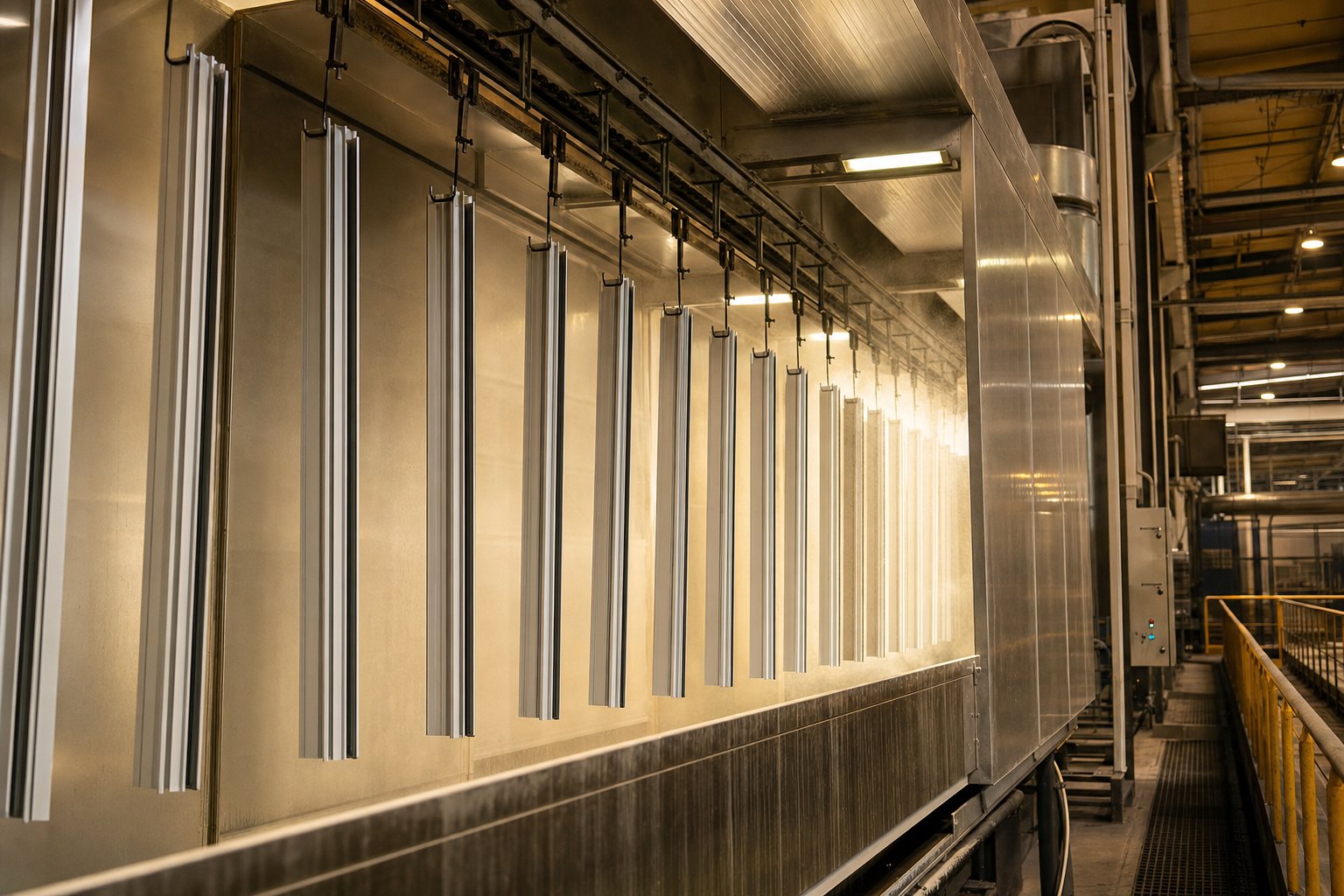
Producing a dual colour frame differs from single-colour production in one critical way: the inner and outer aluminium sections travel through the coating line separately, each receiving their own colour, before being united around the thermal break. Here is how the full sequence unfolds:
- Aluminium extrusion — heated billets are pressed through a die to form the inner and outer profile sections as independent components.
- Surface pre-treatment — each section passes through a multi-stage chemical process: degreasing, etching, rinsing, and application of a chrome-free conversion coating that seals the surface and provides a bonding key for the powder.
- Electrostatic powder application — fine polyester or PVDF powder is sprayed onto the earthed aluminium sections. The exterior sections receive the chosen outer RAL colour; the interior sections receive the inner colour in a separate coating run.
- Oven curing — coated sections enter a curing oven where heat melts the powder, allowing it to flow and chemically cross-link into a continuous, tough film typically 60 to 80 microns thick.
- Quality inspection — cured sections are checked for coating thickness, adhesion, colour consistency, and surface defects before progressing.
- Thermal-break insertion — the separately coated inner and outer sections are mechanically crimped together around the polyamide thermal break strip, locking both colour zones into a single structural frame.
- Final assembly — completed profiles are cut, machined, fitted with hardware, glazed, and assembled into finished window units ready for delivery.
This separation of coating passes is why dual colour adds production time compared to single-colour aluminum framed windows. Each colour requires its own dedicated run through the spray booth and oven, effectively doubling the coating stage. The trade-off is a factory-perfect finish on both faces with zero risk of colour bleed at the thermal break junction.
Quality Standards and Finish Warranties
Reputable manufacturers coat their aluminium to recognised standards that give you measurable assurance of quality. In Australia, powder-coated aluminium window products should comply with AS 3715, which specifies requirements for metal pre-treatment and organic powder coating of aluminium used in architectural applications. This standard governs coating thickness, adhesion, flexibility, and resistance to weathering.
Globally, the Qualicoat specification is considered the benchmark for architectural powder coating quality. Qualicoat-licensed applicators must use approved pre-treatment systems and powder products, and they undergo random third-party inspections twice a year. Specifying a Qualicoat-certified finish means the aluminium window frame kit you receive has passed rigorous process controls — not just a final visual check.
Warranty terms differ between finish types and suppliers. Polyester finishes commonly carry guarantees on colour fastness and adhesion in the range of 15 to 25 years, while PVDF coatings may extend further. When comparing quotes, ask whether the warranty covers both the interior and exterior colour independently, as some aluminium window frame kits are covered by a single blanket warranty while others itemise each face. This distinction matters — the exterior coating weathers harder than the interior and may carry different terms accordingly.
With the manufacturing process and quality framework in place, the next consideration is colour itself — specifically, how the RAL numbering system works and which combinations deliver the best visual results on Australian homes.
Understanding the RAL Colour System for Window Frames
Telling your supplier you want “a dark grey, sort of charcoal but not quite black” is a recipe for disappointment. Colour perception varies between screens, lighting conditions, and people’s eyes. The RAL system eliminates that ambiguity entirely — and it is the language every aluminium window manufacturer speaks when specifying dual colour finishes.
How RAL Numbers Work
The RAL Classic system originated in Germany during the 1920s as a way to standardise colour communication between manufacturers and customers. Instead of exchanging physical samples or relying on vague descriptions, every shade receives a unique four-digit code. The first digit indicates the colour family (1 for yellows, 7 for greys, 9 for whites and blacks), while the remaining digits identify the specific shade within that family.
The RAL Classic collection includes 213 solid colours, and this is the palette most commonly referenced for architectural powder coating. When you quote RAL 7016 to any supplier in Australia or anywhere else, you will receive anthracite grey — the same anthracite grey — regardless of batch, factory location, or production date. That consistency is particularly valuable for dual colour projects where precision matters on both faces of the frame.
Most aluminium window suppliers offer between 150 and 200 standard RAL options as part of their colour range. Selecting a shade from within this standard palette keeps lead times short and avoids non-standard colour surcharges. If you want something outside the standard offering, the full RAL library remains accessible — typically for a small premium and slightly longer production window.
Popular Exterior and Interior RAL Choices
Exterior colour selection tends to follow a simple logic: match or complement what already exists on the facade. Guttering, fascia boards, roofing, and neighbouring properties all influence the decision. Dark tones dominate exterior choices because they create contrast against lighter walls and suit both contemporary and traditional architecture.
Interior colours lean the opposite direction. Lighter, neutral shades keep rooms feeling open and allow frames to recede visually against white walls and pale cabinetry. So what colour is aluminium in its raw state? A silvery grey — but powder coating means you are not limited to the metal’s natural appearance on either side.
Black aluminum windows using RAL 9005 (jet black) deliver a bold, minimalist look that pairs well with rendered facades and modern flat-roof designs. Bronze aluminum windows using warm metallic tones like RAL 8001 or RAL 8024 complement natural stone and aged brickwork on period homes. Meanwhile, white aluminum windows using RAL 9010 (pure white) remain the most requested interior finish across nearly every project type — they are clean, timeless, and coordinate effortlessly with skirting boards and architraves.
| Exterior Colour | RAL Code | Interior Colour | RAL Code | Suits |
|---|---|---|---|---|
| Anthracite Grey | 7016 | Pure White | 9010 | Modern rendered homes, new builds, extensions |
| Jet Black | 9005 | Cream | 9001 | Contemporary architecture, flat-roof designs |
| Moss Green | 6005 | Pure White | 9010 | Heritage properties, conservation areas, sandstone facades |
| Basalt Grey | 7012 | Light Grey | 7035 | Coastal homes, weatherboard, mixed-material facades |
| Agate Grey | 7038 | Pure White | 9010 | Red brick, Federation-style homes, subtle contrast |
| Chocolate Brown | 8017 | Cream | 9001 | Timber cladding, rural properties, warm-toned brick |
The most popular combination across the Australian market mirrors what suppliers report globally: anthracite grey or jet black on the exterior paired with pure white or cream on the interior. This pairing delivers modern street appeal without darkening living spaces — a balance that works for everything from a single-storey brick veneer in suburban Melbourne to a double-storey coastal build on the NSW South Coast.
Knowing which RAL codes exist is one thing. Choosing the right pairing for your specific facade, room layout, and natural light conditions is another challenge entirely — one that depends on factors well beyond the colour chart.
How to Choose Complementary Interior and Exterior Colours
A RAL chart gives you 200+ options. Your facade, your rooms, and your light conditions narrow that field dramatically — if you know what to look for. Selecting a dual colour pairing is less about personal taste in isolation and more about responding to the physical context your windows sit within. The exterior faces outward into a fixed environment of brick, render, or cladding. The interior faces inward into spaces shaped by furniture, paint, and the quality of natural light at different times of day.
Matching Exterior Colour to Your Facade
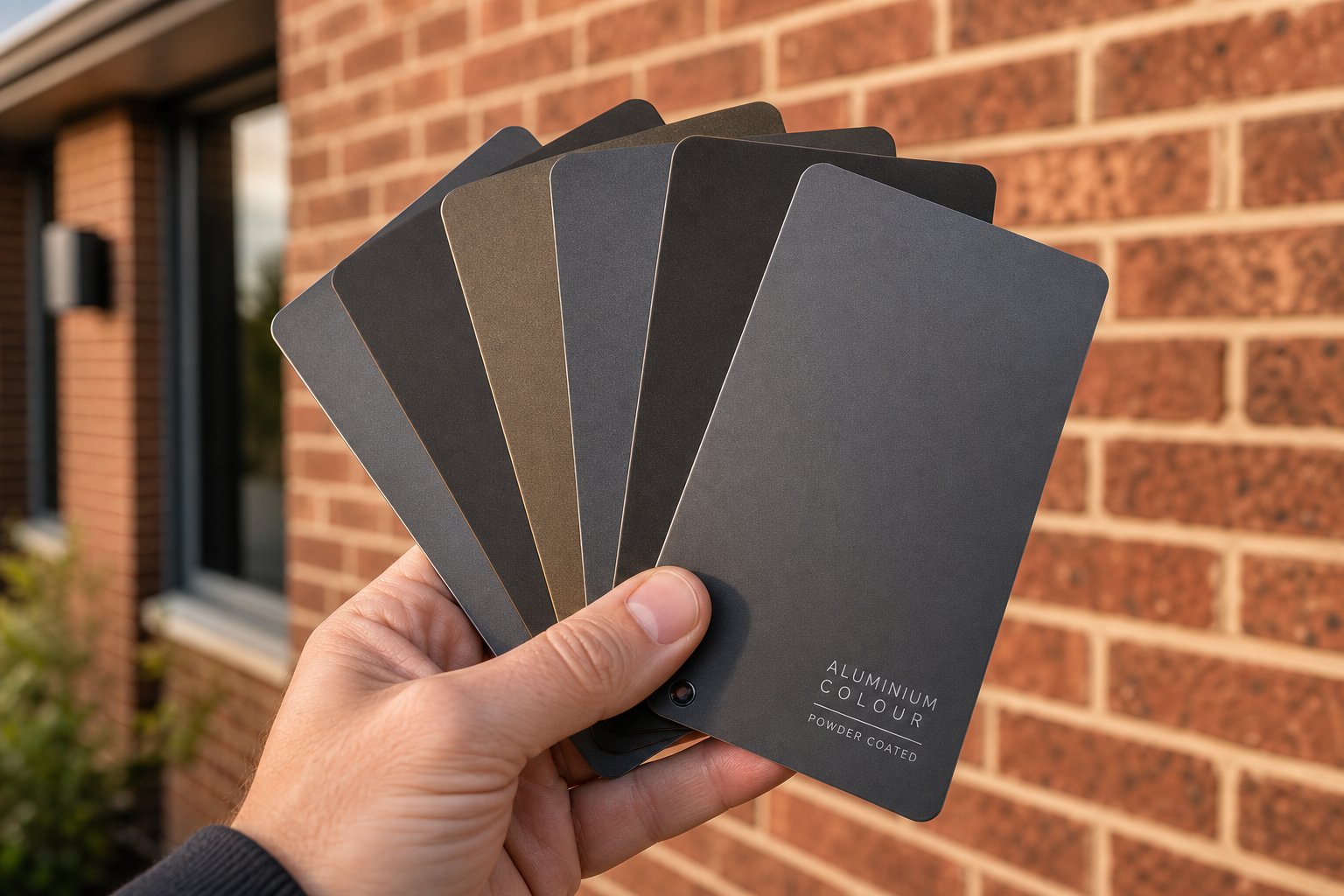
Your facade material is the single biggest constraint on exterior colour choice, and working with it rather than against it produces the most cohesive results. Warm-toned brick — the reds and oranges common across Australian suburban homes — pairs naturally with charcoal, bronze, or deep grey metal window frames. These darker tones create contrast without clashing against the brick’s warmth. A white or light-rendered facade offers more freedom; bold anthracite, jet black, or even a muted forest green can anchor the design and give the elevation visual weight.
Timber cladding introduces natural grain tones that respond well to blacks, dark greens, or warm browns. The principle from exterior design holds true here too: your window frame metal colour should either complement or deliberately contrast the dominant facade material — sitting in between tends to look indecisive. Consider your roof colour and any existing guttering or fascia; colour coordination experts recommend treating these fixed elements as part of a unified exterior palette rather than choosing window colours in isolation.
Selecting Interior Colours Room by Room
Here is where dual colour aluminium truly earns its flexibility. Can window frames be different colours on the inside compared to the outside? Absolutely — and some manufacturers even support varying the interior shade from room to room while maintaining a consistent exterior. This means your living room might feature warm cream frames that echo timber flooring, while the kitchen uses clean white to match cabinetry, all presenting the same unified colour to the street.
Lighter interior finishes work hardest in rooms that need to feel open. Living areas and studies benefit from white or pale grey frames that reflect light back into the space rather than absorbing it. Bedrooms can handle slightly warmer tones — a soft cream or linen white creates a cosier atmosphere without darkening the room. Kitchens and bathrooms, where surfaces tend toward gloss and neutral tile, suit pure white frames that disappear into the backdrop. Each window with frame visible from inside becomes part of the room’s palette, so treat it with the same intention you would give to skirting boards or architraves.
Using Colour Samples Before Committing
Screens lie. Even calibrated monitors cannot replicate how a powder-coated surface looks under morning sun versus overcast skies versus tungsten downlights. Before locking in your dual colour specification, request physical colour swatches or sample panels from your supplier. Hold them against your brickwork at midday and again at dusk. Place interior samples next to your wall paint, your flooring, and your benchtop — the relationships shift depending on surrounding surfaces and light temperature.
A guide from Precision Aluminium reinforces this point: viewing colours on site under real conditions is the single most reliable way to avoid regret. Most reputable suppliers are happy to provide sample chips at no cost, and some offer painted aluminium corner pieces that show both the colour and the finish texture together — far more informative than a flat swatch alone.
- Facade material — identify your dominant external surface (brick, render, stone, timber cladding) and choose an exterior frame colour that complements or deliberately contrasts it
- Roof and fixed elements — factor in roof colour, guttering, fascia, and downpipes so the window with frame colour sits within a cohesive exterior scheme
- Room function — lighter interior tones for living areas and kitchens, warmer neutrals for bedrooms and private spaces
- Natural light levels — south-facing rooms in Australia receive less direct sun, so lighter frame colours help preserve brightness
- Neighbouring properties — particularly in terraces or estates with consistent streetscapes, check whether local guidelines or covenants restrict exterior colours
- Long-term flexibility — neutral interior shades like white or light grey adapt as you repaint walls or change furniture over the years
- Physical samples viewed in situ — always assess real swatches under natural and artificial light before confirming your glass aluminium frame specification
Getting these factors right means your dual colour pairing will still feel intentional a decade from now — long after trends have shifted and rooms have been redecorated. The durability of the finish itself is equally important, though, and that raises a practical question: how does powder-coated aluminium hold up against the alternatives over time?
Dual Colour Aluminium vs Timber and uPVC Alternatives
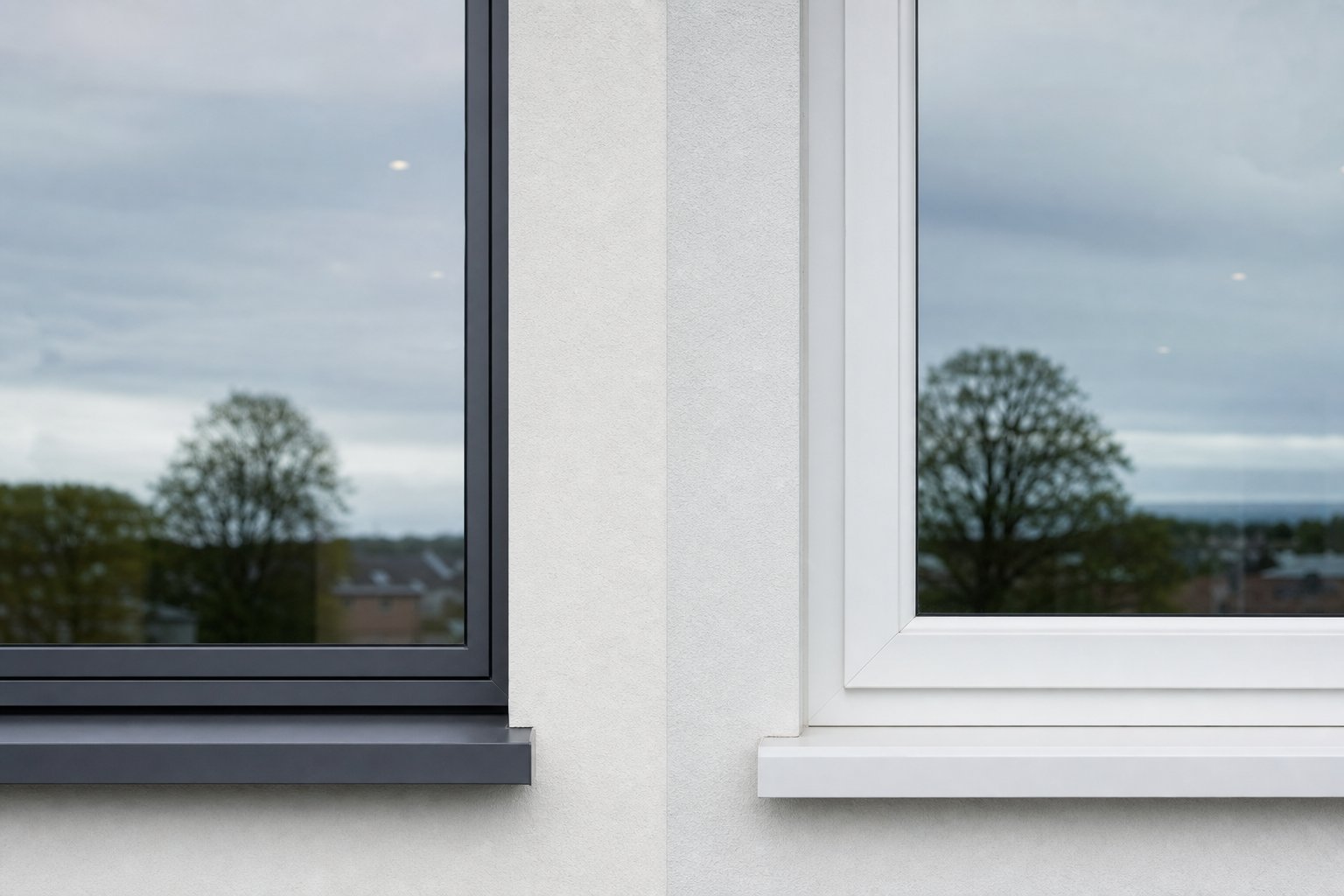
Aluminium is not the only material that can present different colours on each face. uPVC achieves a two-tone effect through vinyl foil lamination, and timber can simply be painted one colour inside and another outside. Both approaches deliver the visual result — at least initially. The differences emerge over years of Australian sun, rain, and coastal air, where material properties and finish methods separate lasting performance from gradual decline.
Dual Colour Aluminium vs Foil-Wrapped uPVC
uPVC frames achieve their colour through a thin vinyl foil heat-bonded to the plastic substrate. The foil can simulate woodgrain textures or solid colours, and applying different foils to each face creates a dual colour appearance. The limitations, however, are real. Foil catalogues typically offer 20 to 30 finishes — a fraction of the 200+ RAL options available with powder-coated aluminium. Industry comparisons note that prolonged UV exposure can cause foils to fade, bubble, or peel at the edges over time, particularly on north-facing elevations that cop direct sun year-round in Australia.
Frame width compounds the aesthetic gap. uPVC profiles need more bulk to achieve structural rigidity, resulting in thicker sightlines that eat into glass area. Where aluminium metal frame windows might present a 55 mm face width, an equivalent uPVC frame can measure 70 mm or more — a difference clearly visible when the two sit side by side. For homeowners wanting maximum daylight and minimal frame intrusion, that extra 15 mm per sightline adds up across a full elevation of framed windows.
Dual Colour Aluminium vs Painted Timber
Timber offers unlimited colour choice — any paint shade can go on either face. That flexibility sounds appealing until you factor in maintenance. Painted timber frames in Australian conditions typically require sanding and recoating every three to five years, more frequently in exposed coastal or tropical locations. Moisture penetration causes swelling, cracking, and eventual rot if maintenance lapses, and the thicker profiles needed for structural timber reduce the glass-to-frame ratio compared to slim metal framed windows.
There is also the practical reality of repainting dual colours on timber. Masking off one face to repaint the other without cross-contamination is fiddly, time-consuming, and rarely produces factory-clean results. Each repaint cycle adds cost and disruption that powder-coated aluminium simply does not require.
Why Aluminium Comes Out Ahead for Longevity
The core advantage is permanence. A factory-applied powder coat on aluminium does not peel like vinyl foil, does not crack like aged paint on timber, and does not require cyclical recoating. Metal clad windows built from thermally broken aluminium deliver both thermal performance and slim aesthetics without sacrificing durability. Aluminium is also infinitely recyclable at end of life — a point that matters as sustainability requirements tighten across Australian building standards.
| Feature | Dual Colour Aluminium | Foil uPVC | Painted Timber |
|---|---|---|---|
| Colour range | 200+ RAL colours per face | 20–30 foil options per face | Unlimited (any paint colour) |
| Maintenance | Periodic wash only | Periodic wash; foil not repairable if damaged | Sand and repaint every 3–5 years |
| Expected lifespan | 30–45+ years | 20–25 years | 20–30 years (with ongoing maintenance) |
| Frame width (typical) | 45–65 mm | 65–80 mm | 55–75 mm |
| Finish durability | Oven-cured powder coat; no peeling or fading | Foil may peel, bubble, or fade under UV | Paint weathers; requires regular recoating |
| Eco credentials | 100% recyclable aluminium | Recyclable but limited infrastructure | Renewable resource; disposal of paint waste |
For anyone weighing up an aluminum clad window solution against the alternatives, the comparison consistently favours aluminium where longevity, colour precision, and minimal upkeep sit high on the priority list. The trade-off, naturally, is cost — and that is where the conversation turns next.
Cost Considerations for Choosing Dual Colour Over Single Colour
Aluminium wins on longevity and aesthetics, but what does that second colour actually add to the invoice? The honest answer: less than most people assume. Dual colour is not a luxury surcharge — it is a production variable, and understanding what drives the premium helps you budget accurately rather than fearing an inflated quote.
What Drives the Price Difference
Single-colour aluminium windows move through the coating line in bulk. Every frame section — interior and exterior — enters the spray booth together, receives the same powder, and cures in the same oven cycle. Dual colour breaks that efficiency. The outer extrusions run through one coating pass in your chosen exterior shade, then the inner extrusions run through a second, independent pass in the interior colour. That means two setups, two booth clean-downs (essential to prevent cross-contamination between colours), and two curing cycles before the thermal break brings both halves together.
This additional labour and production time is where the price difference lives. Powder coating specialists note that batch size directly influences per-piece cost — coating multiple items in a single run reduces the unit price, while smaller or split runs increase it. Choosing non-standard RAL colours outside a manufacturer’s core palette can attract a further surcharge, as these require dedicated powder stock and cannot piggyback on scheduled production batches.
When Dual Colour Offers Better Value Than You Expect
Cost is relative to what you avoid spending later. Homeowners undertaking an aluminium window replacement often discover that a single-colour frame in a compromise shade leads to repainting interior trims or even replacing mismatched window furnishings to restore visual coherence. Dual colour eliminates that downstream expenditure entirely — the interior finish arrives already coordinated with your decor.
Resale appeal matters too. A well-specified facade with replacement windows aluminium frames in a considered exterior tone, paired with neutral interiors, signals quality to buyers without any renovation required. For those searching for aluminum replacement windows that add genuine value to a property, dual colour delivers street presence and interior refinement in a single product rather than requiring separate cosmetic fixes after installation.
- Number of openings — more windows in the same dual colour combination reduce the per-unit premium as production efficiency improves across the batch
- Colour standardisation — sticking to popular RAL codes (7016, 9005, 9010) avoids non-standard surcharges that apply to uncommon shades
- Finish type — polyester powder coat is more affordable than fluorocarbon (PVDF); choose PVDF only where coastal or high-UV exposure demands it
- Glazing specification — double glazing, low-E coatings, and acoustic glass affect overall window cost independently of the frame colour
- Installation complexity — structural modifications, scaffolding, or difficult access influence install pricing regardless of whether frames are single or dual colour
The practical step? Request itemised quotes from two or three suppliers so you can see the dual colour line item separated from glazing, hardware, and installation. In many cases, the colour upgrade represents a modest fraction of the total project cost — particularly for aluminum window replacement projects where the expense of removal, structural preparation, and fitting dwarfs the coating premium. Knowing the numbers lets you make a confident decision rather than defaulting to single colour out of cost anxiety alone.
What you spend upfront on finish quality also determines what you spend — or do not spend — on maintenance over the following decades.
Maintaining and Protecting Your Dual Colour Finish
A dual colour finish doubles the visual impact — but it does not double the maintenance. Powder-coated aluminium remains one of the lowest-upkeep frame materials available, and caring for two colours requires the same straightforward routine as caring for one. The difference is awareness: both your exterior and interior coatings face distinct environmental pressures, and a small amount of regular attention keeps each performing independently for decades.
Cleaning and Routine Care
Dirt, dust, airborne salt, and pollution particles settle on frame surfaces over time. Left unchecked, these deposits create a gritty film that can cause micro-abrasion every time you wipe the frame or when wind-driven rain drags particles across the coating. The solution is simple and inexpensive — periodic washing with mild soapy water and a soft, non-abrasive cloth.
A cleaning guide from Window Factory recommends a small squirt of dishwashing liquid in a bucket of warm water as the ideal cleaning solution. Microfibre cloths or soft sponges do the job without risking surface scratches. Rinse thoroughly with clean water afterwards to prevent soap residue drying into streaks — particularly on darker exterior finishes where residue shows more readily.
What to avoid matters just as much as what to use. Steel wool, abrasive pads, and scrubbing brushes will scratch through the powder coat’s surface layer. Solvent-based cleaners, turpentine, bleach, and heavy-duty chemical sprays can dull or discolour the finish permanently. Pressure washers seem efficient but can force water past seals or damage the coating if held too close. Stick to gentle hand washing and your dual colour finish stays factory-fresh.
For the interior face, cleaning demands are lighter — indoor frames avoid rain, UV, and airborne grit. A wipe-down with a damp cloth every few months removes household dust and cooking residue, keeping lighter interior shades like white or cream looking crisp against your walls.
Long-Term Durability and Warranty Coverage
Australian conditions test exterior coatings harder than most climates globally. Intense UV radiation, wide temperature swings, and — for coastal properties — salt-laden air all place ongoing stress on powder-coated surfaces. Facade coating specialists note that Australia presents one of the most demanding environments for exterior aluminium finishes, making coating specification and maintenance critical to long-term performance.
Standard polyester powder coatings hold up well in moderate inland and temperate coastal environments, maintaining colour fastness and gloss for 20 to 30 years under normal conditions. Fluorocarbon (PVDF) finishes extend that performance further — their superior UV and chemical resistance makes them the better choice for homes directly exposed to salt spray or located in tropical regions with relentless sun. Old aluminum windows that were anodised or painted decades ago simply cannot match this longevity, which is why many homeowners replacing single pane aluminum windows from the 1970s and 1980s find modern powder-coated dual colour frames a generational upgrade in durability.
Warranty terms vary between manufacturers, and this is an area worth scrutinising before you sign. Reputable suppliers typically offer separate guarantees covering powder-coat adhesion, colour retention, and chalk resistance. The key question for dual colour buyers: does the warranty cover both the interior and exterior finish independently? The exterior face weathers harder — UV, rain, temperature cycling — so some manufacturers apply different warranty durations to each side. Others provide a single blanket guarantee covering both faces equally. Confirm this detail in writing before committing.
Suppliers like MEICHEN provide detailed maintenance guidance and finish warranty information for their aluminium window systems, making it straightforward for Australian homeowners and project teams to understand exactly what coverage applies to their chosen custom colour options and how to preserve performance across the frame’s lifespan.
For aluminum retrofit windows or replacement projects, verifying warranty coverage is especially important. Ensure the guarantee applies to the specific environmental exposure your property faces — a blanket warranty that excludes coastal zones or high-UV areas offers little protection if your home sits 500 metres from the ocean.
- Every 3–4 months (coastal or high-exposure sites) — wash exterior frames with mild soapy water and a soft cloth; rinse thoroughly and clear drainage holes of debris
- Every 6 months (standard inland sites) — full exterior wash, inspect seals and hardware, wipe interior frames with a damp microfibre cloth
- Annually — check for any signs of coating damage (chips from impact, scratches from landscaping equipment), clean tracks and drainage channels, lubricate hardware as per manufacturer instructions
- After storms or high-salt events — rinse aluminum frame glass and frame surfaces promptly to remove salt residue before it can etch the coating
- Avoid year-round — abrasive cleaners, solvent-based products, pressure washers at close range, and leaving grime to accumulate between scheduled cleans
Follow this routine and your dual colour finish — both faces — will retain its factory appearance for the full extent of its warranted life and well beyond. The maintenance commitment amounts to a few minutes per window, a few times per year. Compare that to sanding and repainting timber every three to five years, and the long-term value of powder-coated aluminium becomes difficult to argue against.
Knowing how to care for your frames is the final piece of the knowledge puzzle. The remaining question is purely practical: how do you move from research into action and get a dual colour project underway?
Getting Started With Your Dual Colour Aluminium Window Project
Research only delivers value when it translates into action. You understand the coating process, the RAL system, the maintenance demands, and the cost structure. The next step is assembling the information your supplier needs to produce an accurate quote — and knowing what to ask so you can compare offerings with confidence rather than guesswork.
Preparing Your Project Brief
A clear brief saves time for everyone. Before reaching out to any supplier of aluminium windows and doors, document the essentials that shape both pricing and production:
- Window openings — measure each opening (width x height in millimetres), note whether it is a new build or replacement situation, and photograph the existing facade for context
- Preferred RAL codes — specify your chosen exterior and interior colours by number, or shortlist two to three options if undecided
- Window types — identify which openings require fixed panes, awning sashes, casement configurations, or aluminium sliding windows based on room function and ventilation needs
- Glazing performance — note any thermal (U-value), acoustic (STC rating), or safety (toughened, laminated) requirements dictated by your climate zone or NCC compliance needs
- Hardware finish — consider whether handles, locks, and hinges should coordinate with the interior frame colour or provide deliberate contrast
- Budget range — even a broad figure helps suppliers recommend appropriate finish types (polyester vs PVDF) and glazing specifications without over- or under-engineering the quote
For larger developments or commercial aluminium windows projects, include elevation drawings, window schedules, and any relevant planning approvals. The more complete your brief, the fewer revision rounds you will face before production begins.
Questions to Ask Your Window Supplier
Not every supplier handles dual colour with the same capability or care. These questions separate experienced manufacturers from those treating two-tone as an afterthought:
- What is your available RAL range — and are there standard colours that avoid surcharges?
- Is there a minimum order quantity for non-standard or custom RAL codes?
- What warranty terms apply to the powder-coat finish — and does the guarantee cover the interior and exterior colour independently?
- What is the estimated lead time from colour confirmation to delivery?
- Can you provide physical colour samples or painted aluminium corner pieces for on-site evaluation?
- Which coating standard do you manufacture to — Qualicoat, AS 3715, or both?
- Do you support different interior colours across individual windows within the same order?
As window specification experts emphasise, the questions most buyers forget to ask are often the ones that determine long-term satisfaction. Coating class, micron thickness, and fabrication oversight matter as much as colour choice itself.
What to Expect From Order to Installation
Dual colour aluminium windows follow a production timeline slightly longer than single-colour orders due to the additional coating pass. Based on industry process timelines, a typical residential project moves through these phases:
- Consultation and measurement — a site visit or detailed brief submission confirms opening sizes, colour selections, and glazing requirements (allow one to two weeks)
- Colour confirmation — physical samples reviewed and approved in writing, locking in the specification for production
- Manufacturing — extrusion, dual-pass powder coating, thermal break assembly, glazing, and hardware fitting (typically three to six weeks for residential orders; commercial aluminum windows projects with larger volumes may require longer)
- Delivery — finished units arrive site-ready, fully glazed and hardware-fitted, requiring no on-site painting or finishing
- Professional installation — qualified installers fit, seal, and commission each window, with a final walkthrough to confirm operation and finish quality
The total timeline from initial enquiry to completed installation generally spans six to ten weeks for a standard residential project. Custom configurations, non-standard colours, or aluminum sliding windows with complex hardware can push toward the longer end. Planning ahead — particularly locking in colour selections early — prevents delays once manufacturing begins.
For Australian homeowners, builders, and project teams ready to move from research into specification, MEICHEN’s aluminium windows page offers a practical starting point. Their range covers aluminium doors and windows across residential and commercial applications, with custom dual colour options, detailed performance specifications, and project-ready support for everything from a single-room renovation to a full multi-storey development. Whether you need aluminum windows and doors for a coastal weekender or a commercial fitout in the CBD, having a supplier that understands both the colour process and Australian compliance requirements streamlines the path from concept to installation.
Frequently Asked Questions About Dual Colour Aluminium Windows
1. What is the price difference between dual colour and single colour aluminium windows?
Dual colour aluminium windows cost more than single colour due to the requirement for two separate powder-coating passes through the spray booth and oven. Each colour run involves an independent setup and booth clean-down to prevent cross-contamination. The premium is influenced by the number of openings ordered, whether you choose standard or non-standard RAL codes, and the finish type (polyester vs fluorocarbon). For most residential projects, the colour upgrade represents a modest fraction of the total window cost once glazing, hardware, and installation are factored in. Requesting itemised quotes from suppliers helps you see exactly where the dual colour line item sits relative to the overall project budget.
2. Can you have different colours on the inside and outside of aluminium window frames?
Yes. Dual colour aluminium windows are specifically engineered for this purpose. The frame consists of separate inner and outer aluminium extrusions joined by a polyamide thermal break. Because these sections exist as independent components during manufacturing, each receives its own powder-coat colour before assembly. Some manufacturers even support varying the interior colour from room to room while maintaining a consistent exterior shade across the entire elevation, giving homeowners complete control over both the street-facing and interior appearance of their windows.
3. How long does a dual colour powder-coated finish last in Australian conditions?
Standard polyester powder coatings on aluminium maintain colour fastness and gloss for 20 to 30 years in moderate inland and temperate coastal environments across Australia. Fluorocarbon (PVDF) finishes extend performance further and are recommended for homes exposed to direct salt spray or intense tropical UV. Longevity depends on environmental exposure, coating quality, and adherence to basic maintenance — periodic washing with mild soapy water. Reputable suppliers offer warranties covering adhesion and colour retention, though terms vary between manufacturers and finish types. Always confirm whether warranty coverage applies to both the interior and exterior face independently.
4. What RAL colours are most popular for dual colour aluminium windows in Australia?
The most requested combination across the Australian market is anthracite grey (RAL 7016) or jet black (RAL 9005) on the exterior paired with pure white (RAL 9010) or cream (RAL 9001) on the interior. Dark exterior tones create strong contrast against rendered or brick facades, while light interior finishes keep rooms feeling open and coordinate with white skirting boards and cabinetry. Other popular exterior choices include moss green (RAL 6005) for heritage properties and basalt grey (RAL 7012) for coastal homes. Most suppliers offer 150 to 200 standard RAL options without surcharge, with the full 213-colour RAL Classic library available for a small premium.
5. How do dual colour aluminium windows compare to foil-wrapped uPVC for a two-tone look?
Aluminium outperforms foil-wrapped uPVC on colour range, durability, and frame slimness. Powder-coated aluminium offers access to 200+ RAL colours per face with a factory-cured finish that resists peeling and fading, while uPVC foil catalogues typically provide only 20 to 30 options and the vinyl lamination can bubble or lift under prolonged Australian UV exposure. Aluminium frames also achieve narrower sightlines — often 45 to 65 mm compared to 65 to 80 mm for uPVC — maximising glass area and daylight. The expected lifespan of aluminium frames (30 to 45+ years) exceeds foil uPVC (20 to 25 years), and aluminium is fully recyclable at end of life.
More Window & Door Guides